Click On Image
For Full Size Image |
Size |
Image Description |
Contributed
By And/Or Copyright |
Namesake
|
0500115 |
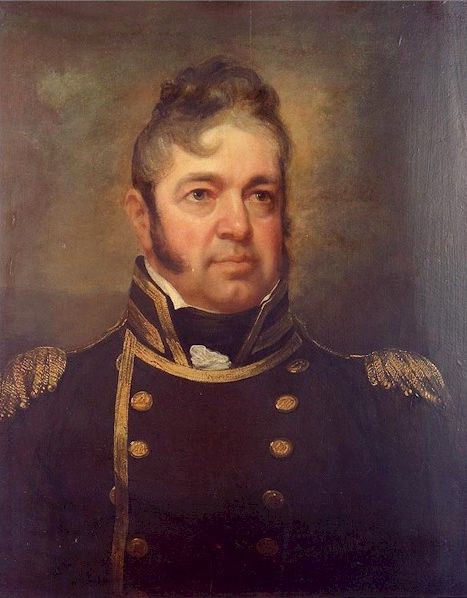
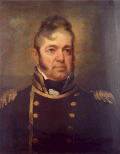
72k | Born in Princeton,New Jersey, 07 May 1774. Appointed Lieutenant, 03 August 1798: Master Commandant (Commander), 29 March 1799: Captain, 20 May 1800. Died 27 July 1833. At the age of 15 he entered the merchant service where he made an unusual and distinguished record. Upon his appointment as lieutenant in the Navy he was ordered to command the schooner or galley Retaliation, cruising in the West Indies. November 1798 - after a brave resistance, she was captured by the French frigates Volunteer and Insurgente and carried into Guadeloupe. While here Bainbridge secured the release of a number of American prisoners and the Retaliation was restored to him by order of the Governor, that he might take them to the United States. Upon his return he was given command of Norfolk and during the years 1799-1800 made a number of captures of French privateers. May 1800 - he was ordered to the frigate George Washington to carry “tribute” from the United States to the Dey of Algiers. He was employed by the Dey of Algiers to carry his ambassador and gifts to the Sultan of Turkey and was instrumental in securing an order from the Sultan to the Dey obliging him to release 400 prisoners. He returned to the United States and on 2 May 1801 was ordered to Essex, one of the vessels of the squadron of Commodore Richard Dale fitted out to cruise against the Barbary Powers. March 1803 he was superintending the building of vessels for the US Navy at Philadelphia and Baltimore. 21 May 1803 ordered to command the Philadelphia, 44-gun frigate, of Commodore Edward Preble’s Squadron, to cruise against Tripolitan cruisers in the Mediterranean. 13 July 1803 ordered by the Department to sail in advance of the squadron. 26 August 1803 off Cape de Gatt, captured the Moorish ship Meshboha and recaptured from the Moors the American brig Cecelia. 31 October 1803 while in chase of a Tripolitan cruiser, the Philadelphia struck on a rock in the harbor of Tripoli, struck fast in the sands, was surrounded by Tripolitan gunboats and captured. Captain Bainbridge, his officers and men were taken on shore and imprisoned in the castle overlooking the harbor for 19 months. Upon the establishment of a treaty of peace with Tripoli, 3 June 1805, Captain Bainbridge returned to the United States in the frigate President. He was granted furlough during the years 1806-1807 and made a voyage in a merchant vessel. 1809-1810 again on duty in the Navy commanding the President. 1810-1811 on furlough and made voyages in merchant vessels to India and Russia, where hearing rumors of trouble with England he gave up his ship and returned home. 28 July 1812 he was ordered to command the Constitution and sailed on a cruise 28 October 1812. 9 November 1812 captured the brig South Carolina. 29 Dec 1812 after an engagement of 1 hour and 45 minutes captured the British frigate, Java, of 49 guns and 400 men. During this fight Bainbridge was twice wounded. His next duty was in command of the Navy Yard, Charlestown, Massachusetts. July-December 1815 commanded the Independence, Mediterranean Squadron.1816-1819 on shore duty at various stations.1819-1821 commanding the Columbus, flagship Mediterranean Squadron.1821-1823 commanding first the Philadelphia, then the Boston Stations.December 24, 1824 - June 1827 Naval Commissioner. 1829-1831 commanding Philadelphia Station. He was again in command of the Charlestown Navy Yard until 19 November 1832, when he was granted leave. His health failed and his death occurred at Philadelphia in 1833. He was buried in the churchyard of Christ Church that city.
Commodore William Bainbridge, USN (1774-1833), oil on wood, 30" by 21", by John Wesley Jarvis (1780-1840). Painted circa 1814. Painting in the U.S. Naval Academy Museum Collection. Transferred from the U.S. Naval Lyceum, 1892.
Naval History & Heritage Command photo KN-1365. | Bill Gonyo |
USS Bainbridge (Destroyer No. 1)
|
0500101 |
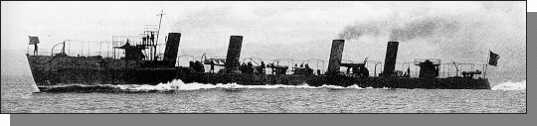
22k | Undated, location unknown. | USN |
0500102 |
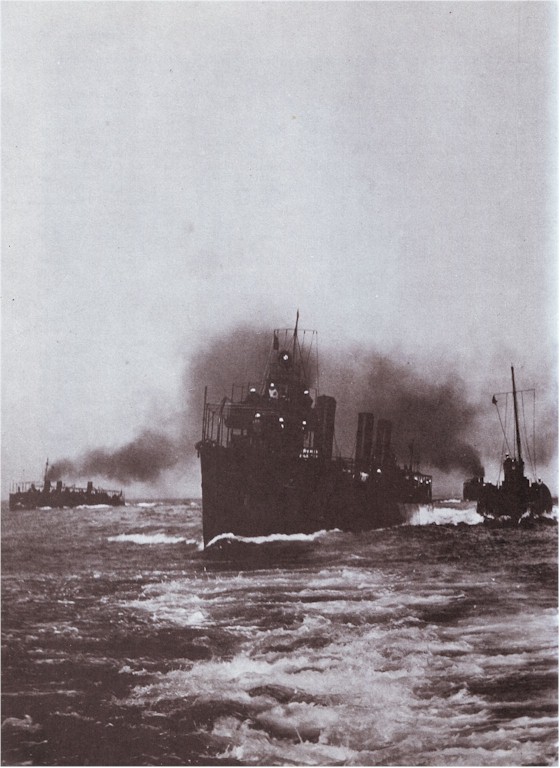
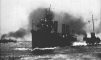
104k | Undated image of Bainbridge leading the older, smaller torpedo boats. The first destroyers dwarfed their predecessors. | Robert Hurst |
0500119 |
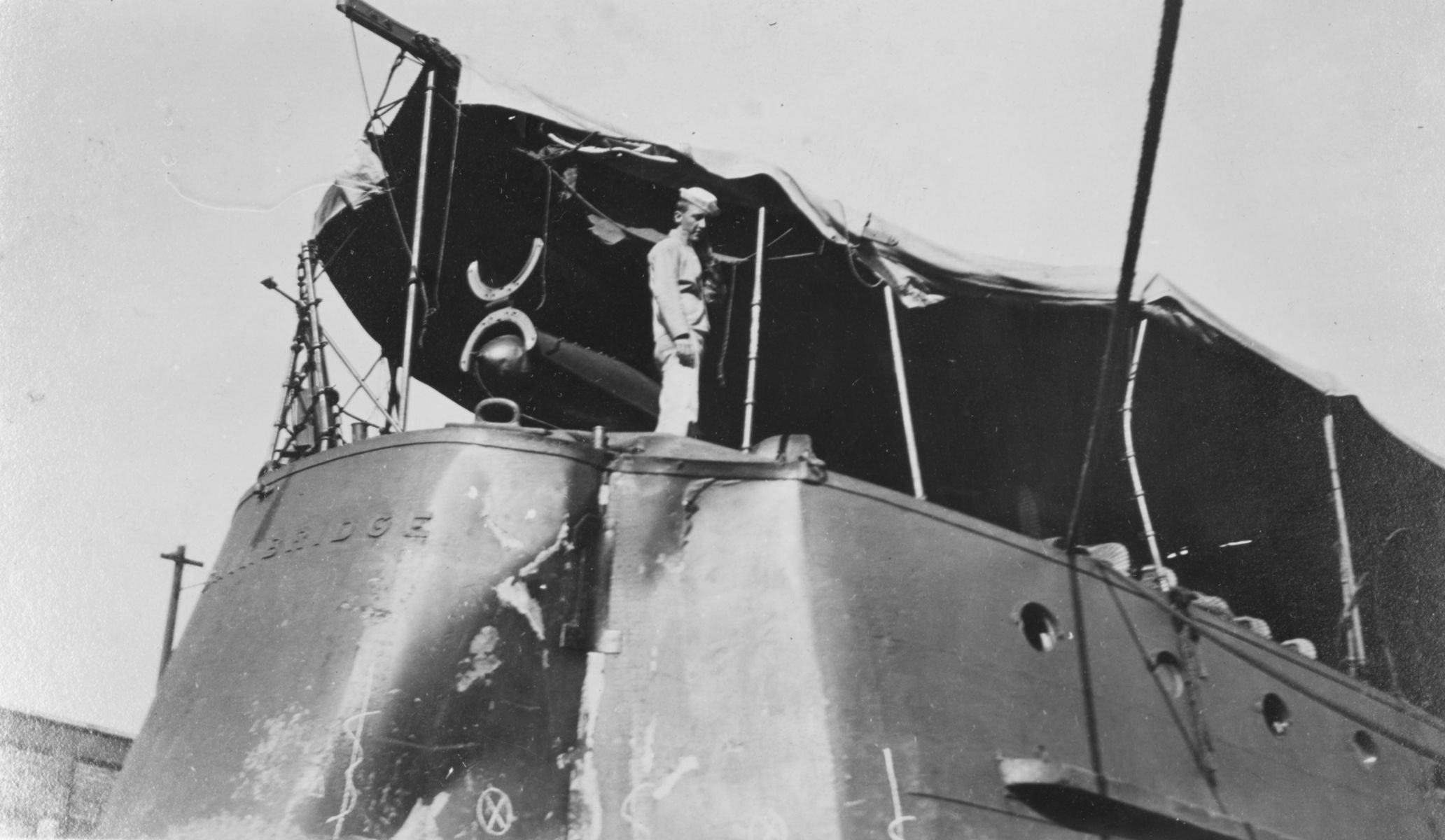
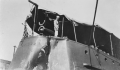
198k | Image showing damage to Bainbridge's stern, date and location unknown. Note the torpedo in her stern tube, with the spoon folded back over the tube.
Naval History & Heritage Command photo NH 106700 | Paul Rebold |
0500120 |
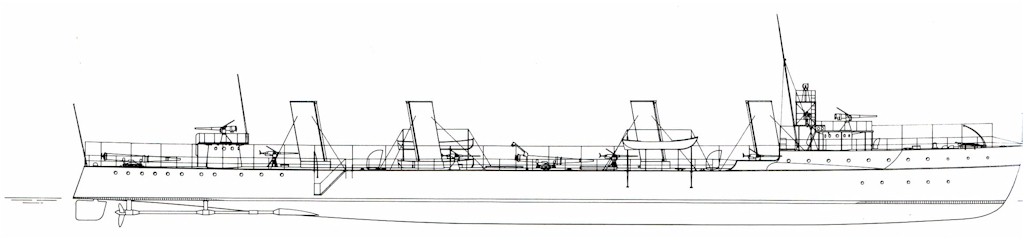
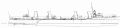
102k | Starboard profile drawing by A. D. Baker III of USS Bainbridge (Destroyer No. 1) as she appeared in 1901. Image scanned from U.S. Destroyers: An Illustrated Design History by Norman Friedman. | Robert Hurst |
0500137 |
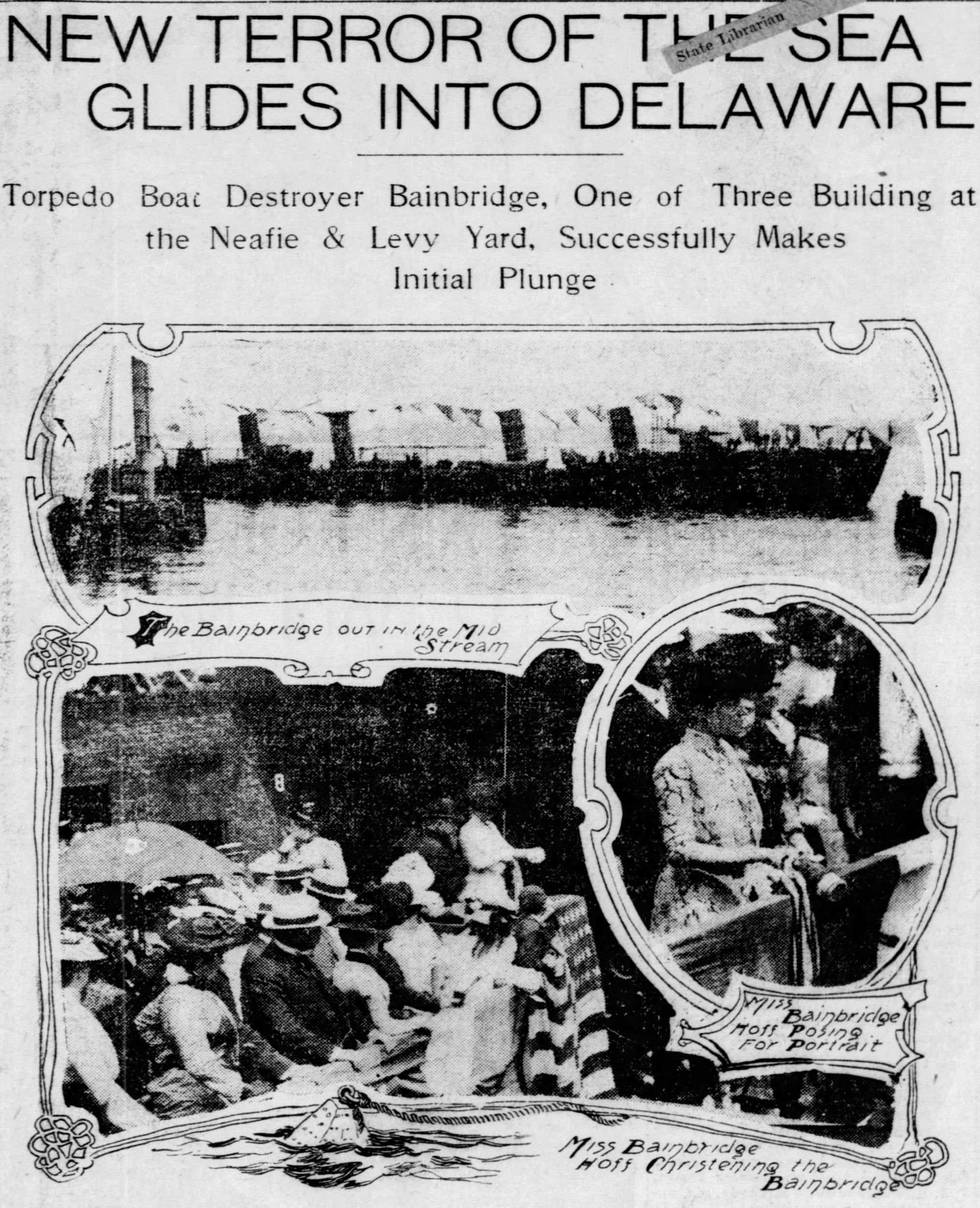
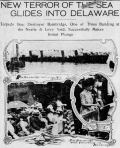
787k | Images of the launching of Bainbridge, the "new terror of the sea," 27 August 1901.
Clipping from The Philadelphia Inquirer, 28 August 1901 | Dave Wright |
0500138 |
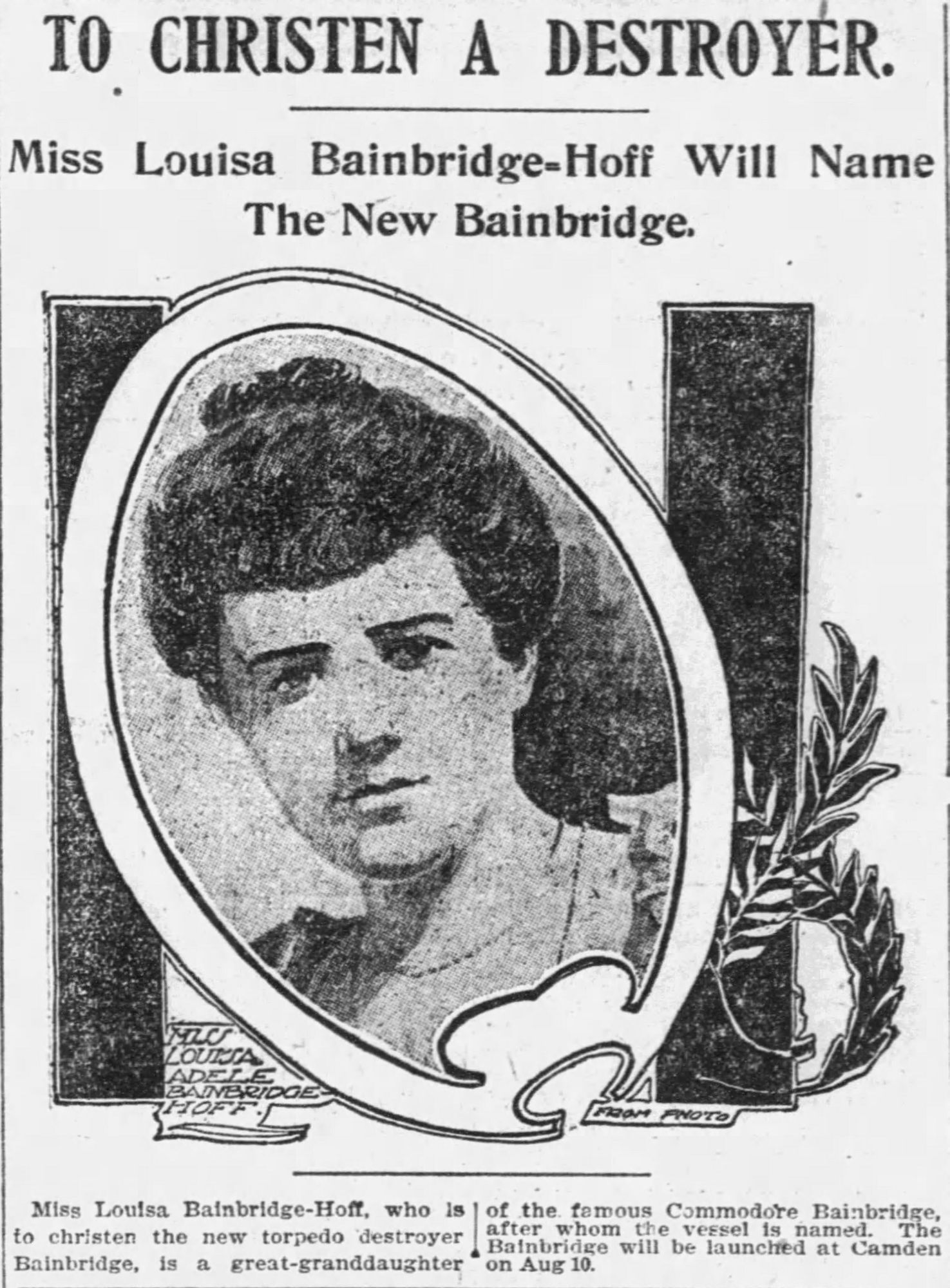
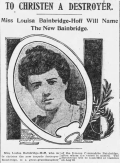
356k | Bainbridge's sponsor was Miss Louise Adele Hoff (1871-1950), great-grandaughter of the destroyer's namesake.
Clipping from The Boston Globe, 05 August 1901 | Dave Wright |
0500105 |
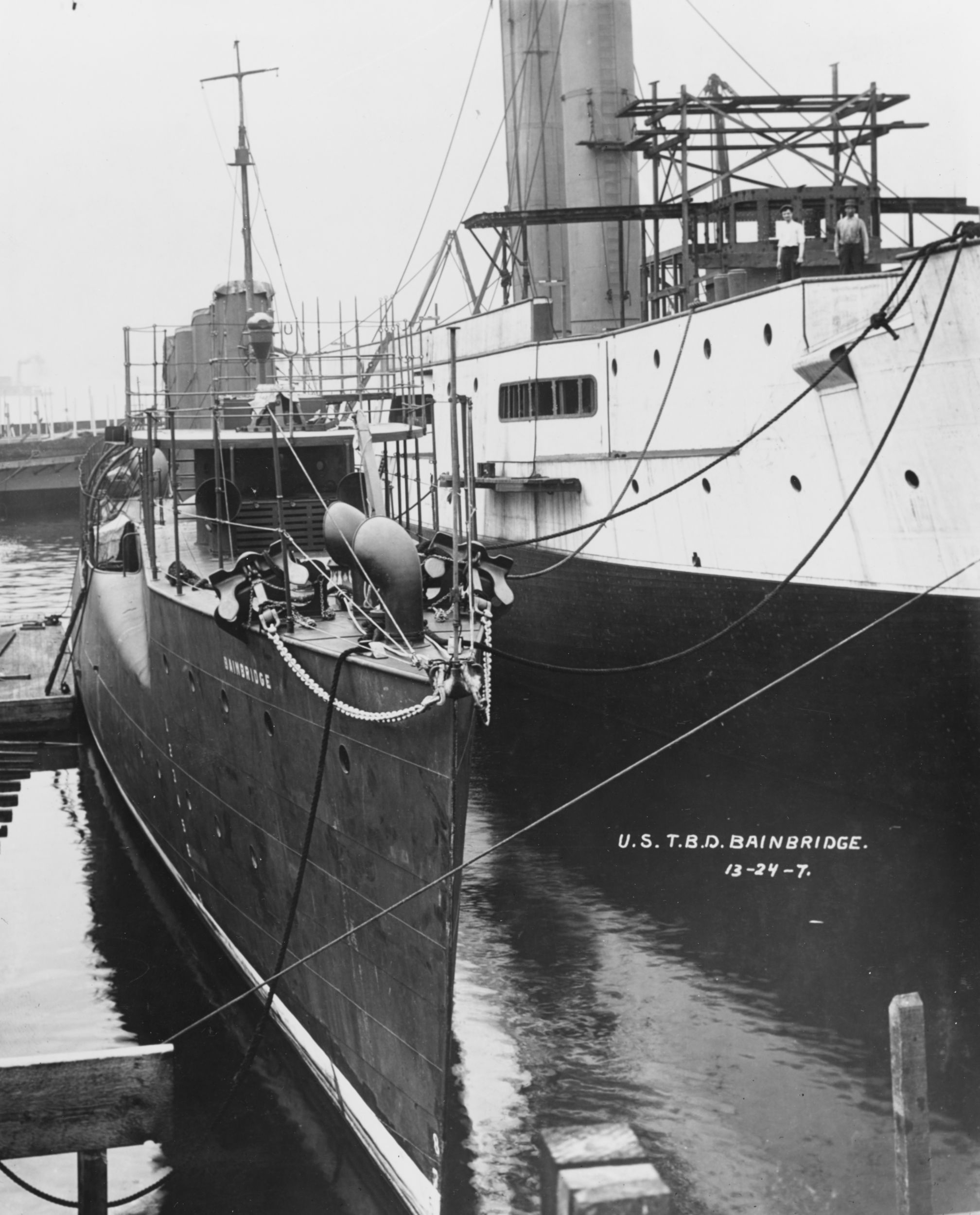
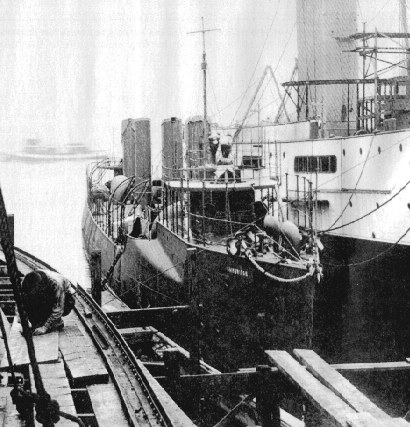
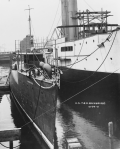
388k | Bainbridge fitting out at Neafie & Levy Ship & Engine Building Company shipyard, circa June-November 1902. USS Denver (Cruiser No. 14) is at right, also fitting out.
National Archives photo 19-N-13135 | Ric Hedman |

0500103 |
150k | A very similar image of Bainbridge fitting out, date and source unknown. | USN |
0500510 |
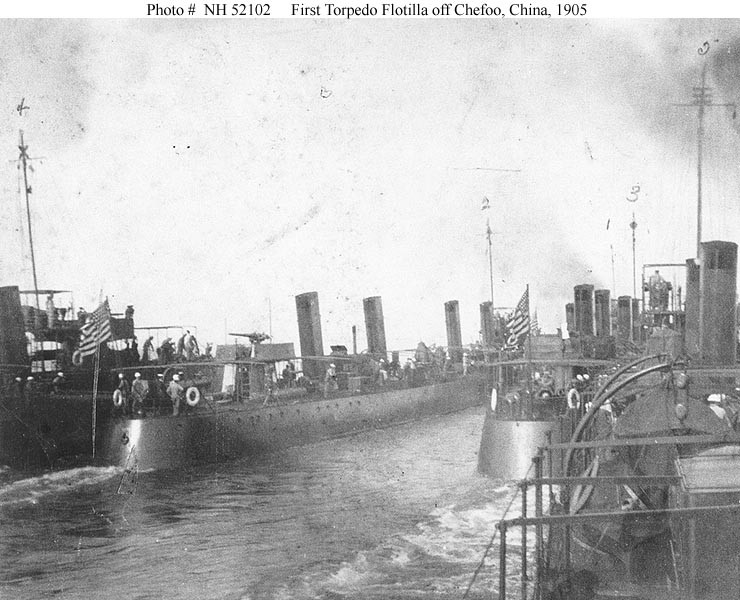
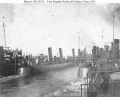
122k | The First Torpedo Flotilla steaming in close formation off Chefoo, China during 1905, while under the command of Lieutenant Dudley W. Knox. Ships present are (as numbered): 1 USS Decatur (Destroyer No. 5); 2 USS Dale (Destroyer No. 4); 3 USS Barry (Destroyer No. 2); 4 USS Chauncey (Destroyer No. 3) and 5 USS Bainbridge (Destroyer No. 1).
Naval History & Heritage Command photo NH 52102, donation of Mrs J.R.Kean. 1938, courtesy of Captain Dudley W.Knox, USN (Retired). | Robert Hurst |
0500129 |
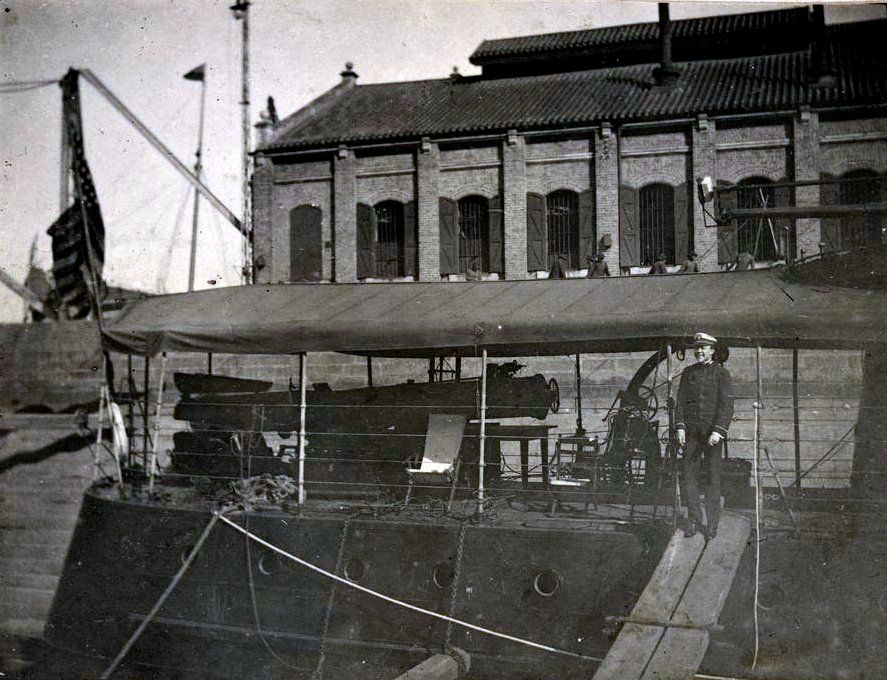
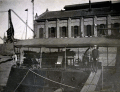
120k | View of Bainbridge in dry dock at Kowloon, Hong Kong, probably during March 1905. The photo shows Lieutenant Martin K. Metcalf on the gangway. (The original caption dates the photo to 1907-1910, but the 1st Torpedo Flotilla was at Hong Kong for drydocking in March 1905).
State Library Victoria, Photo No. H91.48/1/19b | Mike Green |
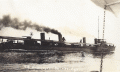
0500121 |
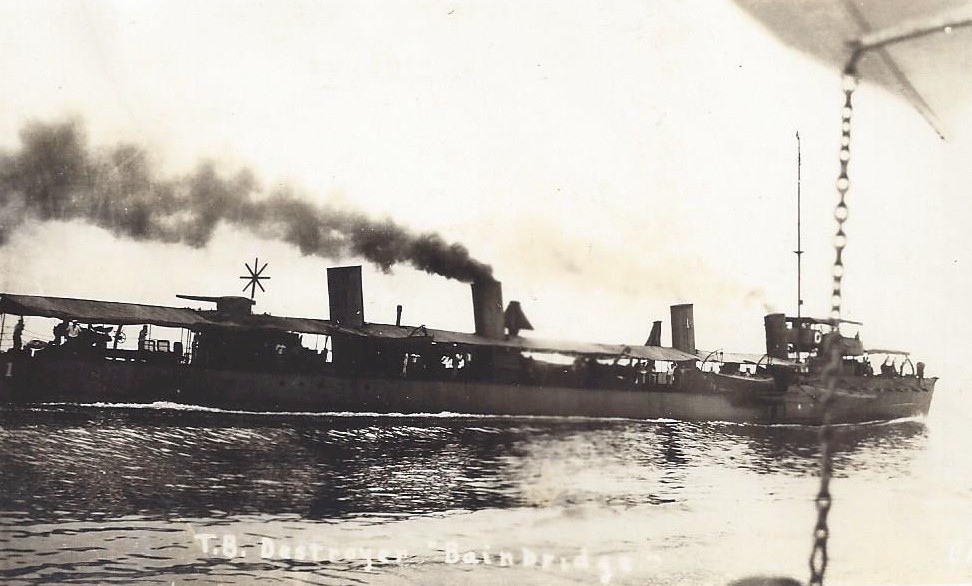
120k | Real photo postcard cancelled Olongapo 1910. Note she appears to have a "1" on her stern. | Frank Hoak III, Captain US Navy (Ret.) |
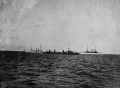
0500104 |
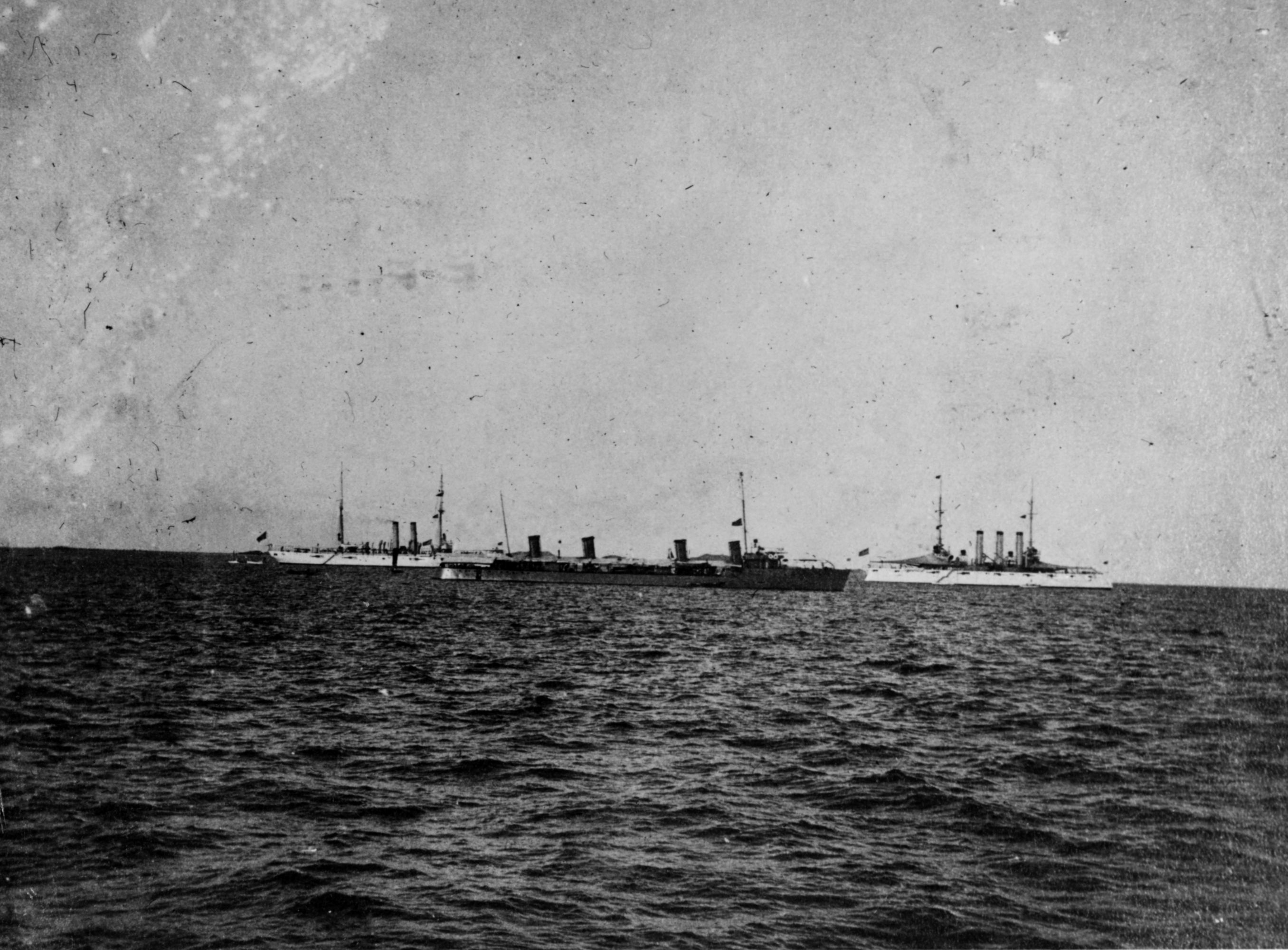
593k | Asiatic Fleet units off Chefoo, China circa 1914-1916. Ships present are (from left to right): Cruiser USS Galveston (Cruiser No. 7); destroyer USS Bainbridge (Destroyer No. 1) and armoured cruiser USS Saratoga (Armored Cruiser No. 2).
Naval History & Heritage Command photo NH 88587 | Robert Hurst |
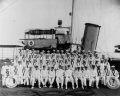
0500111 |
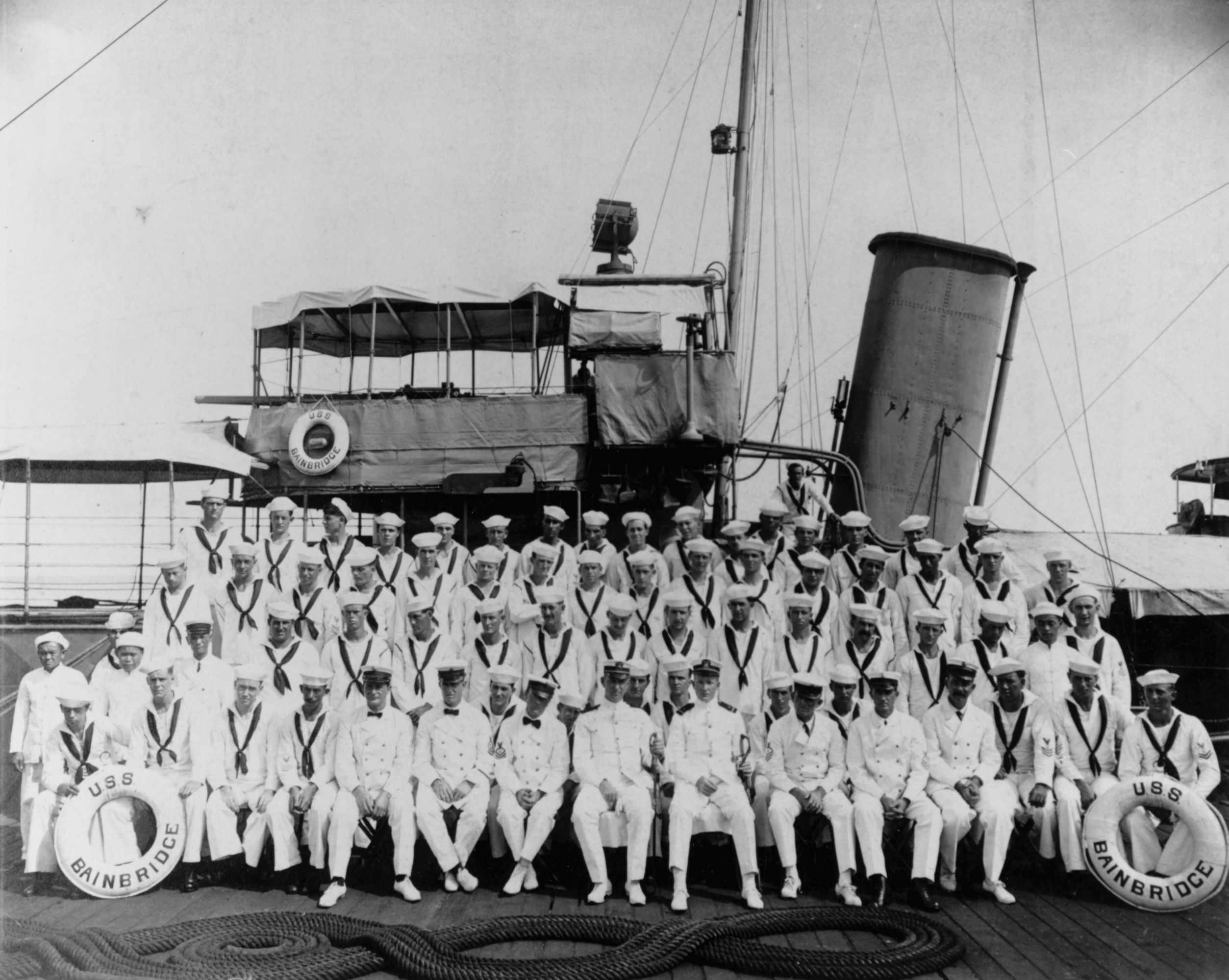
473k | Officers and men of Bainbridge pose on a pier, alongside their ship, circa 1914-1916, while she was serving in Asiatic waters. Note life rings and neatly arranged line.
Naval History & Heritage Command photo NH 88538, collection of C.A. Shively, 1978. | Fred Weiss/Ed Zajkowski |
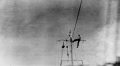
0500139 |
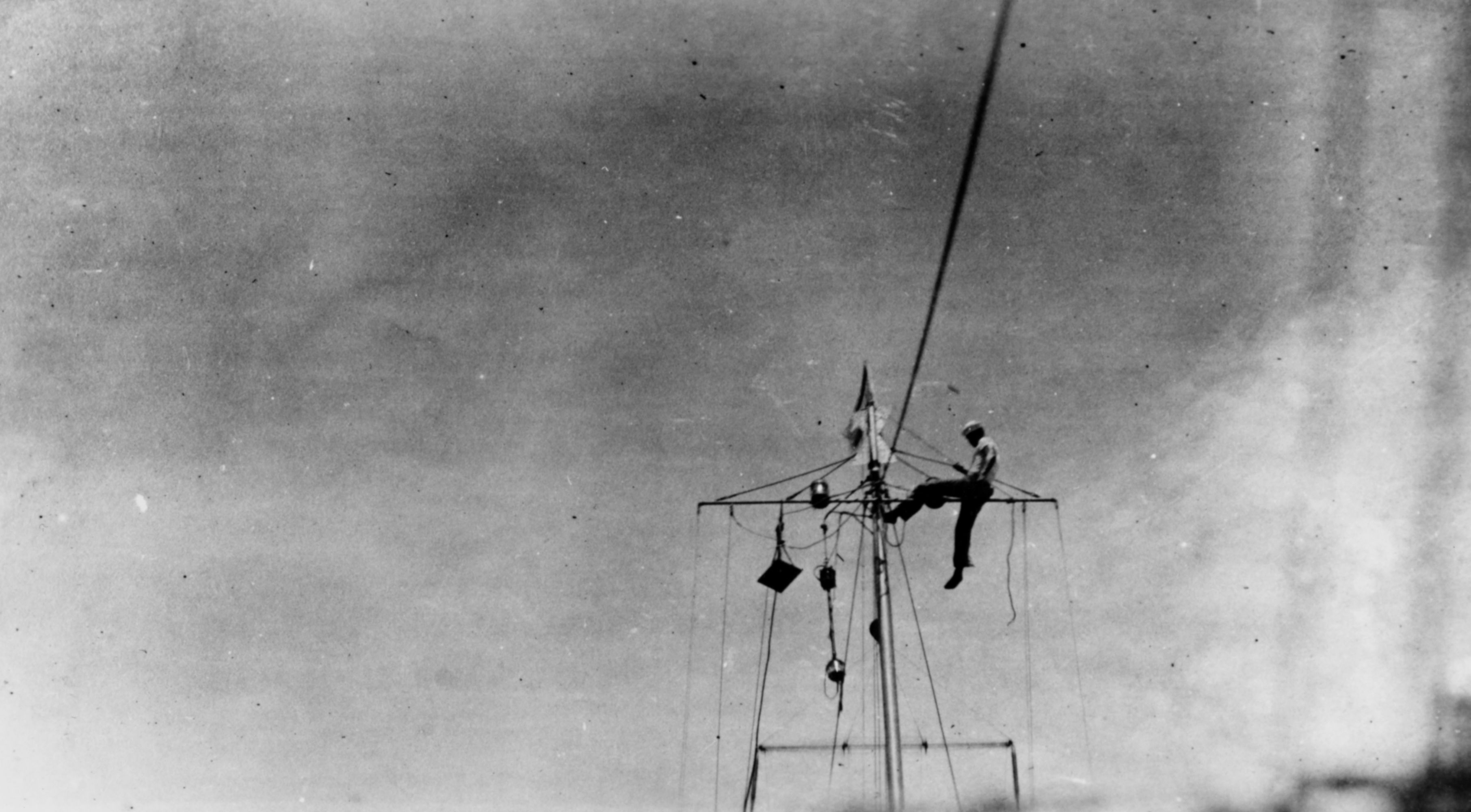
486k | Seaman Claxton working aloft, atop Bainbridge's foremast, circa 1914.
Naval History & Heritage Command photo NH 88542, collection of C.A. Shively, 1978. | Dave Wright |
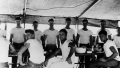
0500140 |
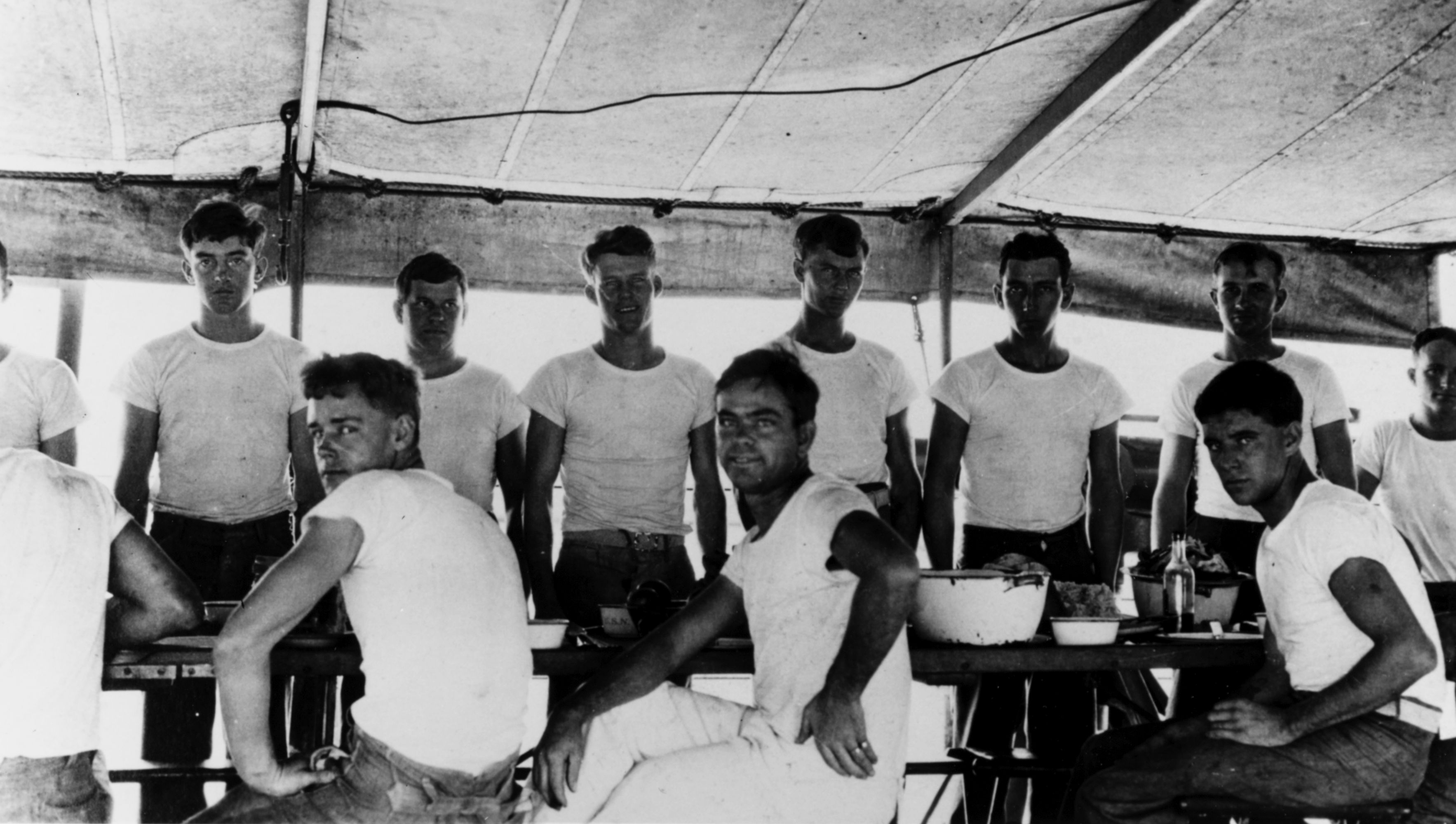
515k | Washington's Birthday dinner aboard Bainbridge, while the ship was serving in Philippine waters. Photographed on either 22 February 1915 or 22 February 1916. Note awning spread over the mess table.
Naval History & Heritage Command photo NH 88543, collection of C.A. Shively, 1978. | Dave Wright |
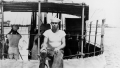
0500110 |
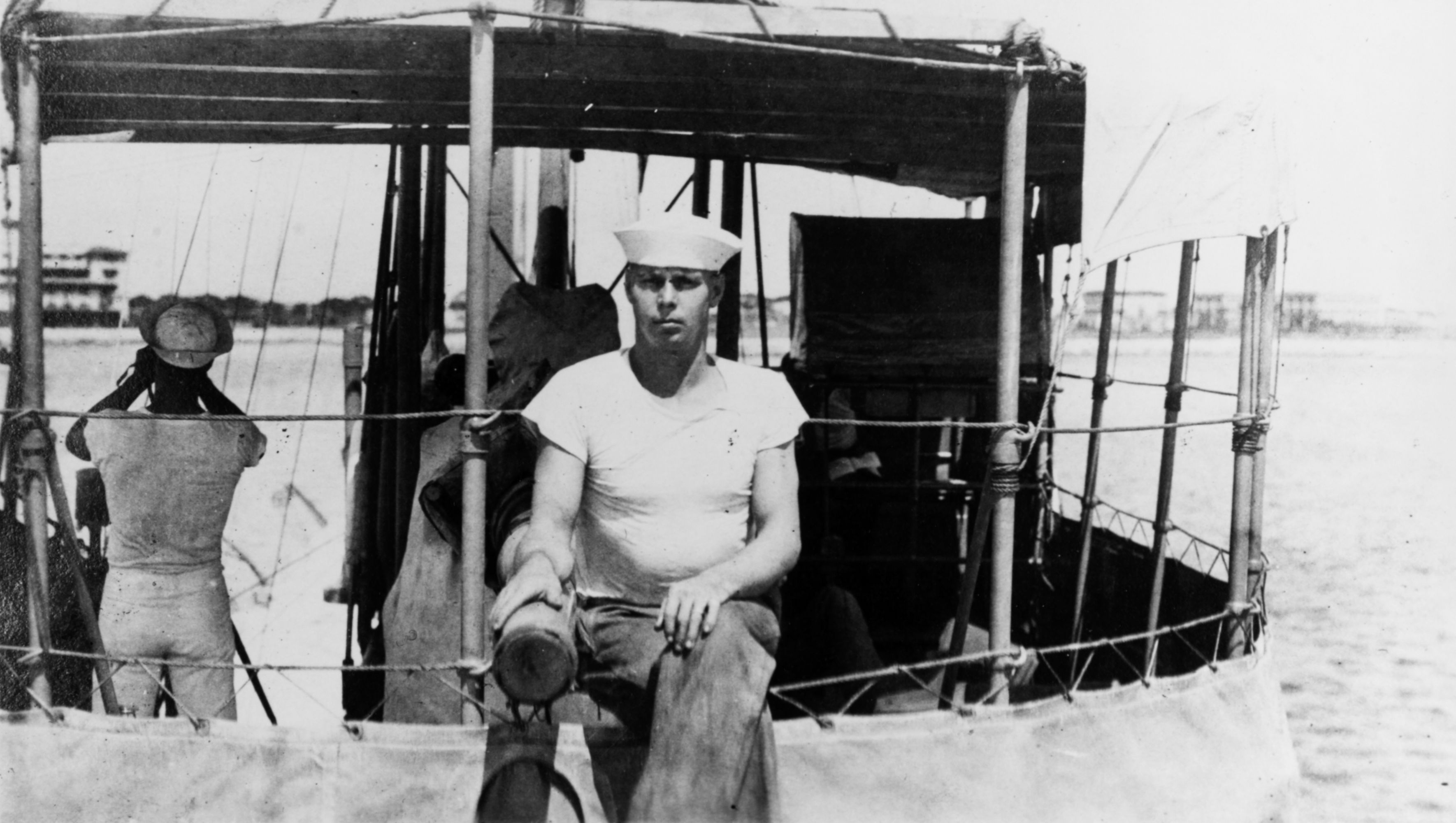
489k | A Bainbridge crewman poses on her bridge with the ship's forward 3"/50 gun, circa 1914-1916. Bainbridge was then serving in Asiatic waters.
Naval History & Heritage Command photo NH 88550, collection of C.A. Shively, 1978. | Fred Weiss |
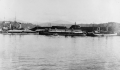
0500113 |
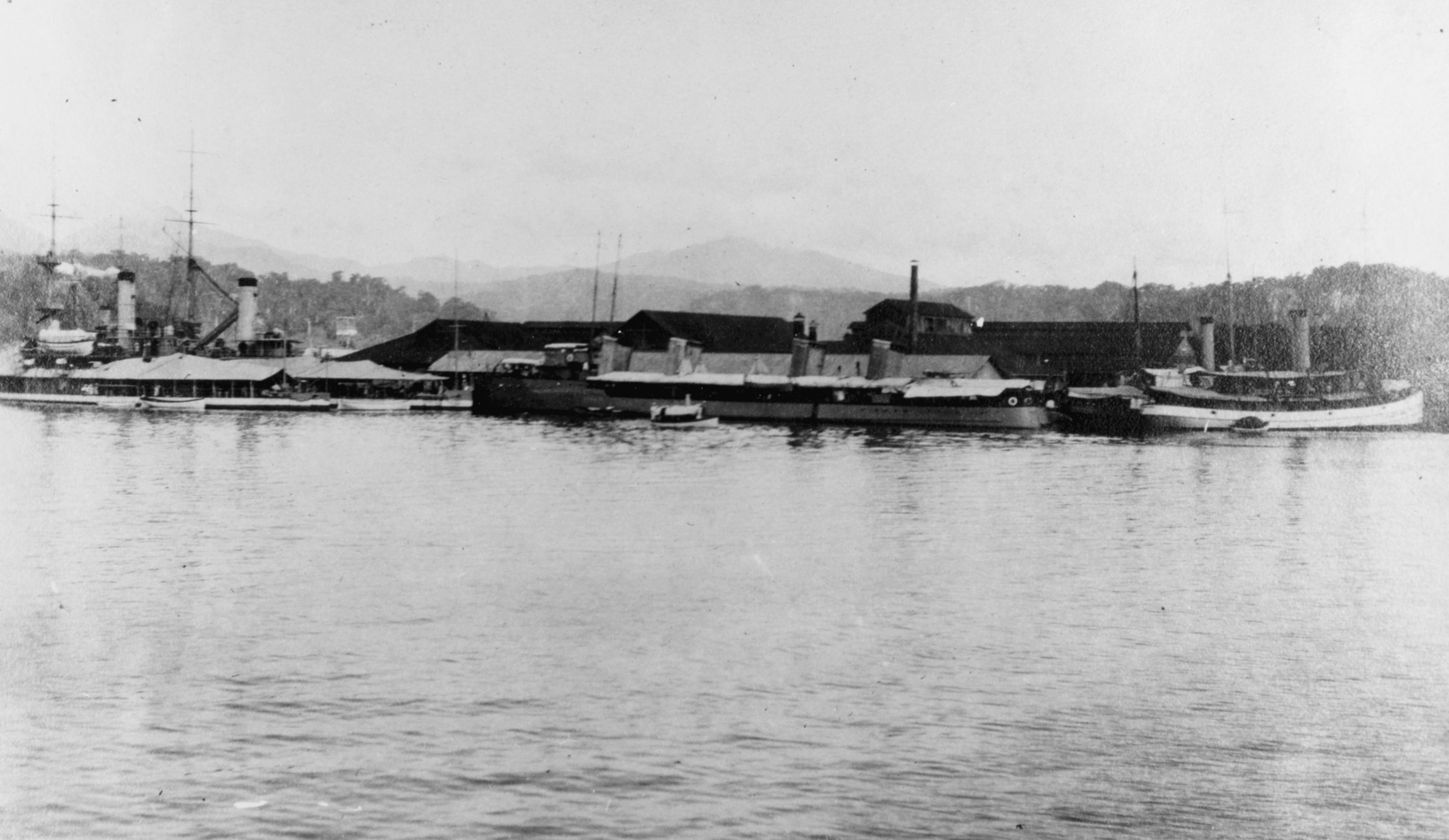
471k | The waterfront at Olongapo Naval Station, Philippine Islands, circa 1914-16. Ships present (from left to right) are: USS Monadnock (Monitor No. 3), USS Monterey (Monitor No. 6), USS Bainbridge (Destroyer No. 1), USS Decatur (Destroyer No. 5), USS Pampanga (Gunboat No. 39) and tug USS Piscataqua (Fleet Tug No. 49).
Naval History & Heritage Command photo NH 88559. | Robert Hurst |
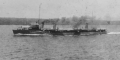
0500106 |
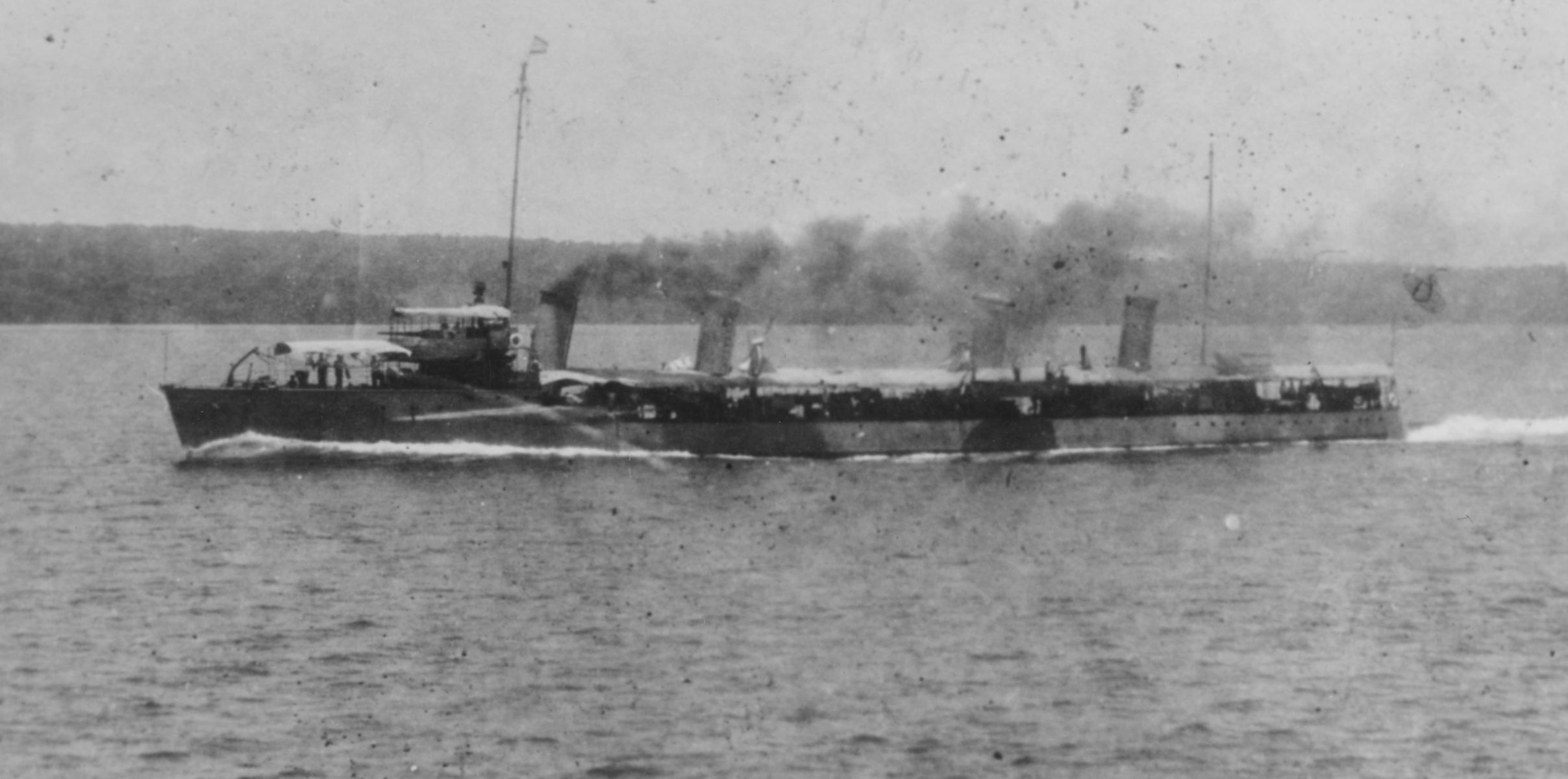
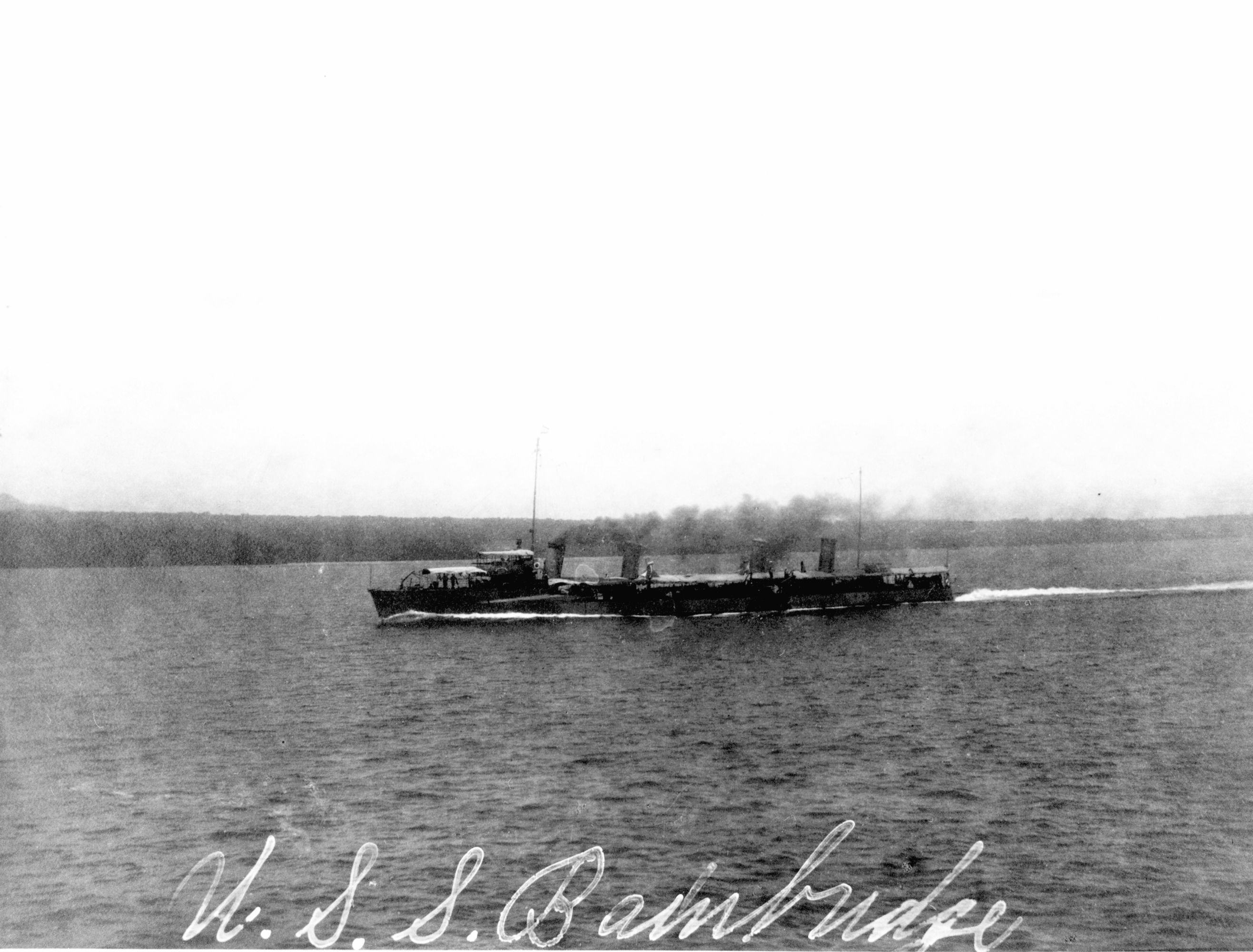
187k | Bainbridge underway in Subic Bay, Philippines, about sixty miles up the coast from Manila, 1915. She was returning from outside Subic Bay, where she had been participating in target practice. Photographed by Seaman Arthur B. Furnas, who was stationed on board USS Yorktown (Gunboat No. 1), flagship of the Asiatic Fleet.
Naval History & Heritage Command photo NH 69702 (cropped), courtesy of Arthur B. Furnas, 1969. | Fred Weiss |
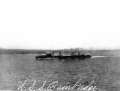
0500112 |
511k | Bainbridge underway in Subic Bay, Philippines, about sixty miles up the coast from Manila, 1915. She was returning from outside Subic Bay, where she had been participating in target practice. Photographed by Seaman Arthur B. Furnas, who was stationed on board USS Yorktown (Gunboat No. 1), flagship of the Asiatic Fleet.
Naval History & Heritage Command photo NH 68868, courtesy of Arthur B. Furnas, 1969. | Paul Rebold |
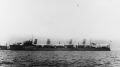
0500107 |
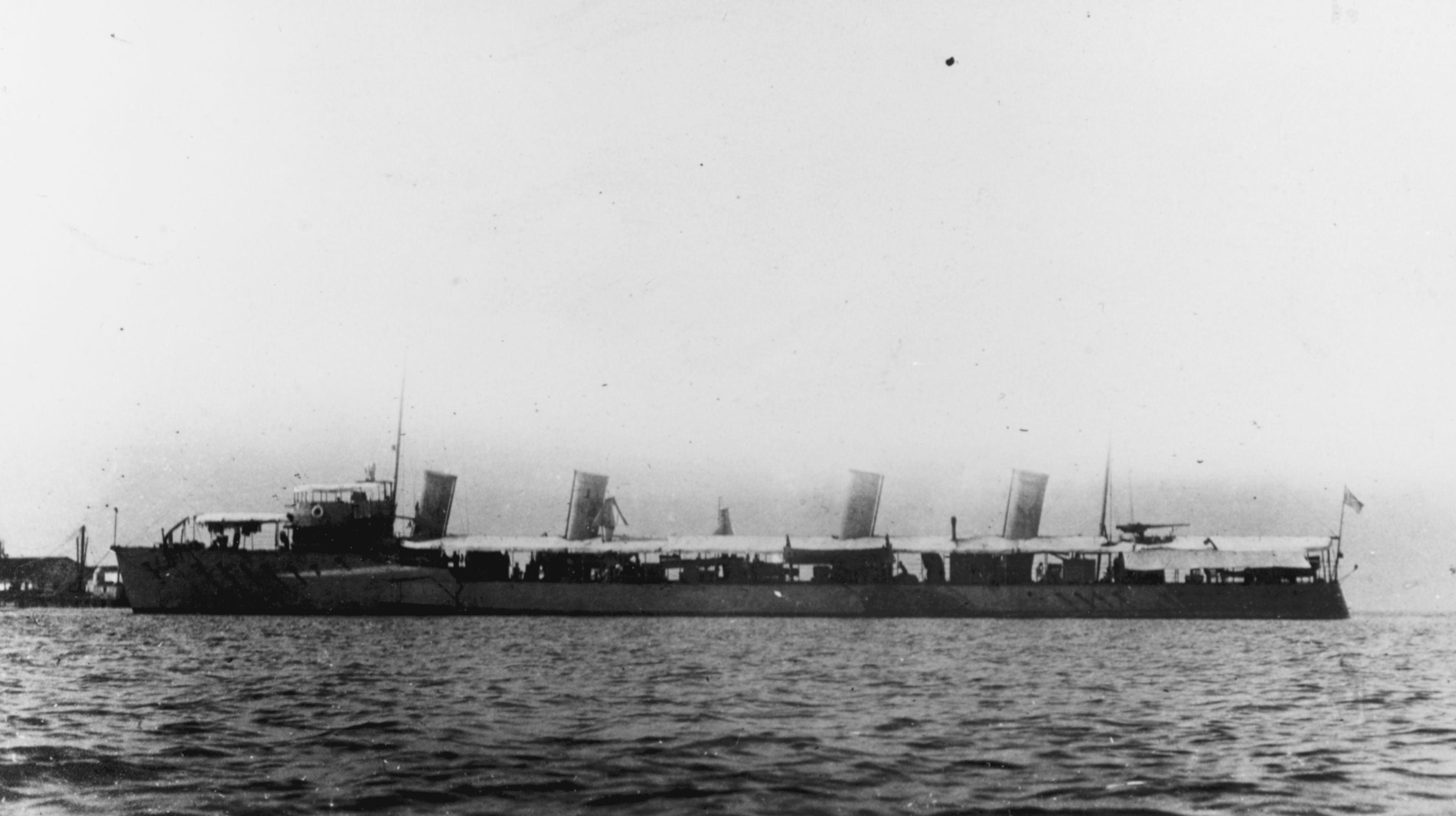
334k | Bainbridge in an Asiatic port, circa 1915-1916.
Naval History & Heritage Command photo NH 88544, courtesy of C.A. Shively, 1978. | Fred Weiss / Ed Zajkowski |
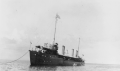
0500108 |
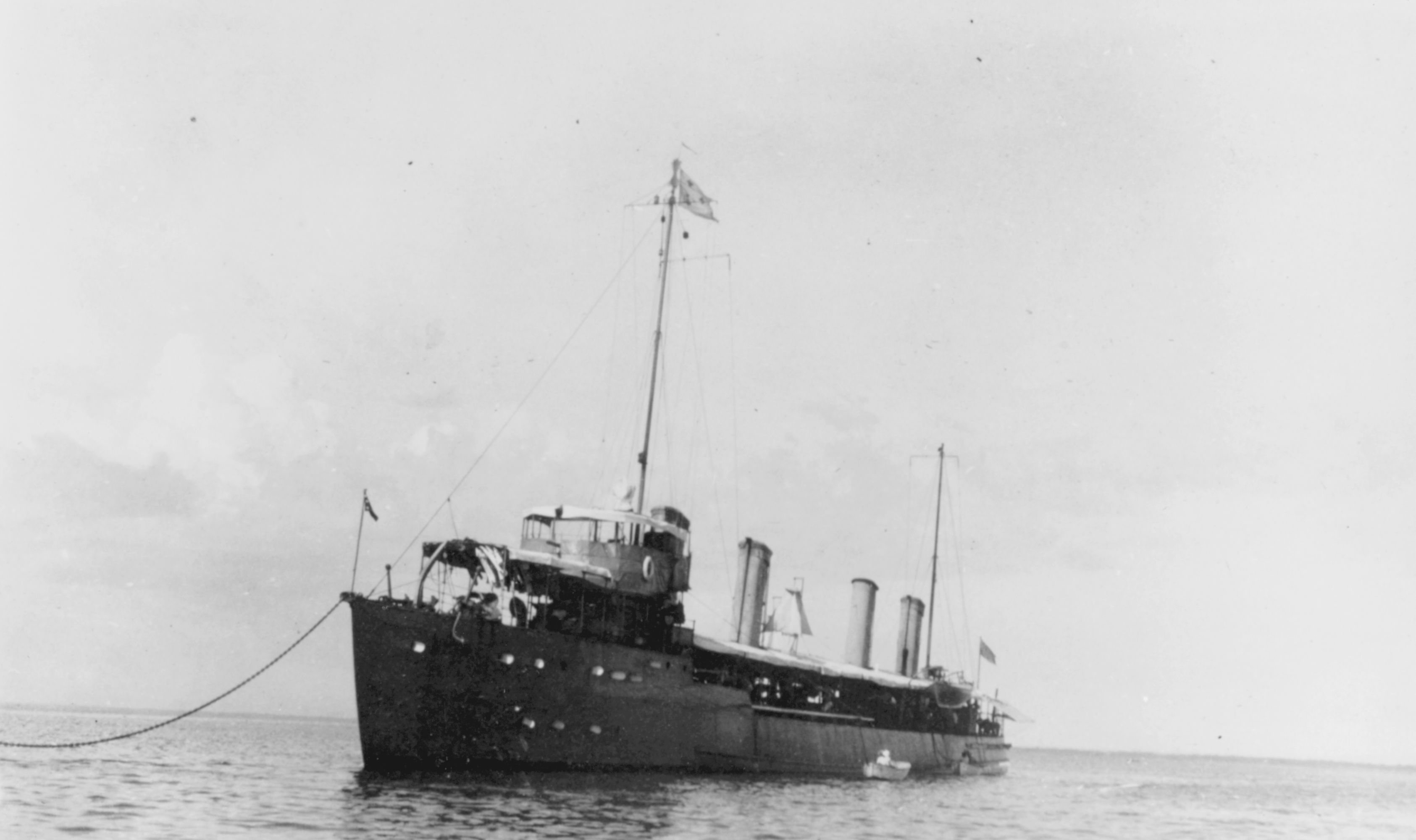
229k | Bow view of Bainbridge moored in Asiatic waters, circa 1915-1916.
Naval History & Heritage Command photo NH 88545, courtesy of C.A. Shively, 1978. | Fred Weiss |
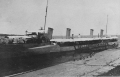
0500114 |
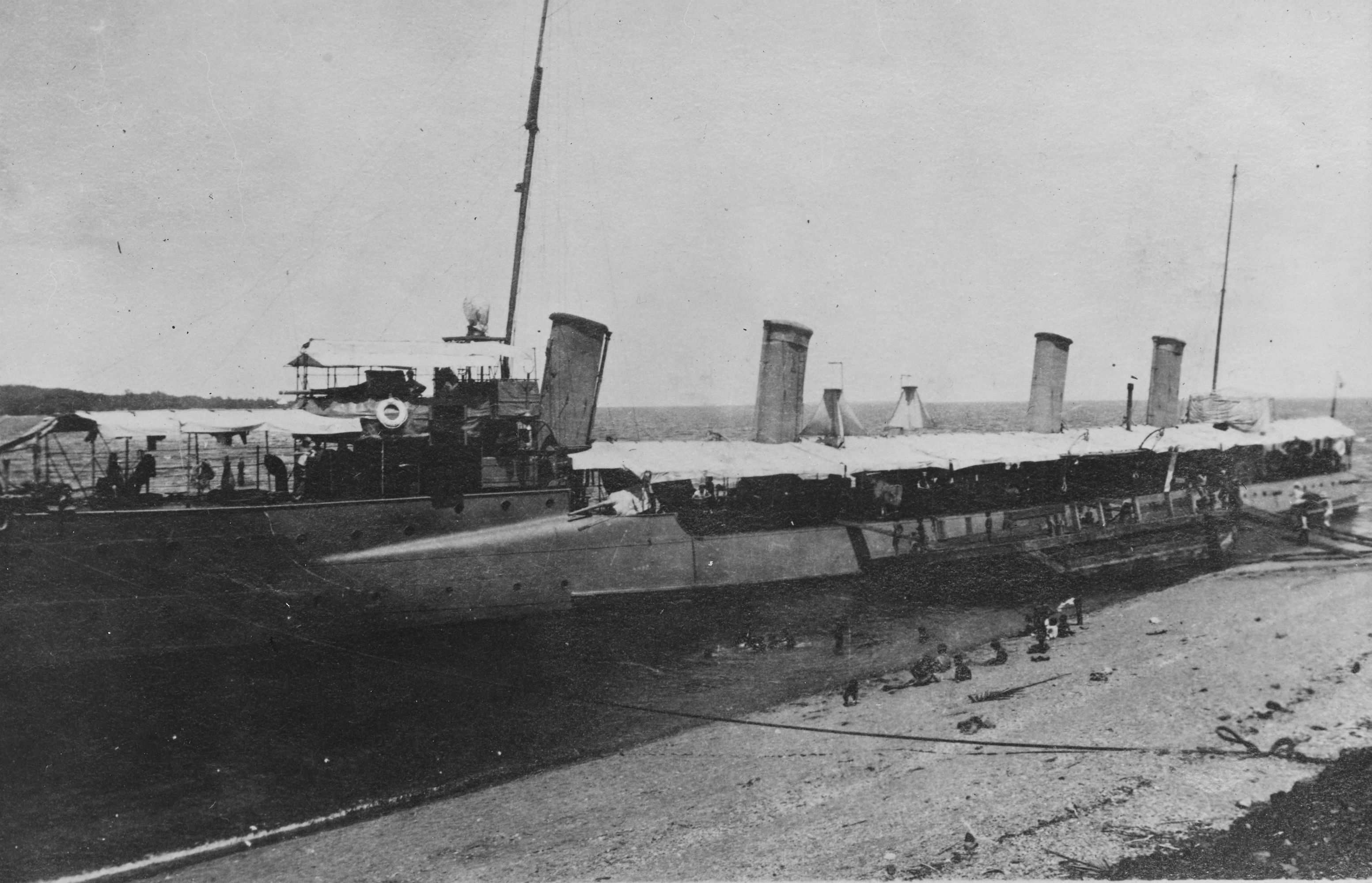
766k | A Bainbridge class destroyer coaling from the beach in the Philippine Islands. This destroyer is either USS Bainbridge (Destroyer No. 1), USS Barry (Destroyer No. 2) or USS Chauncey (Destroyer No. 3). The donor's original caption, which incorrectly indentifies the ship as USS Decatur, reads "coaling from the beach near Zamboanga, P.I. 1916. Mooring Lines are tied to old stock anchors on the beach. The coal was carried aboard in baskets on a pole by two natives. This was Pocahontas coal from West Va. The rest of the Asiatic fleet used Japanese coal."
Naval History & Heritage Command photo NH 54426, courtesy Naval Historical Foundation, Collection of Fred C. Iverson, 1957. | Robert Hurst |
0500109 |
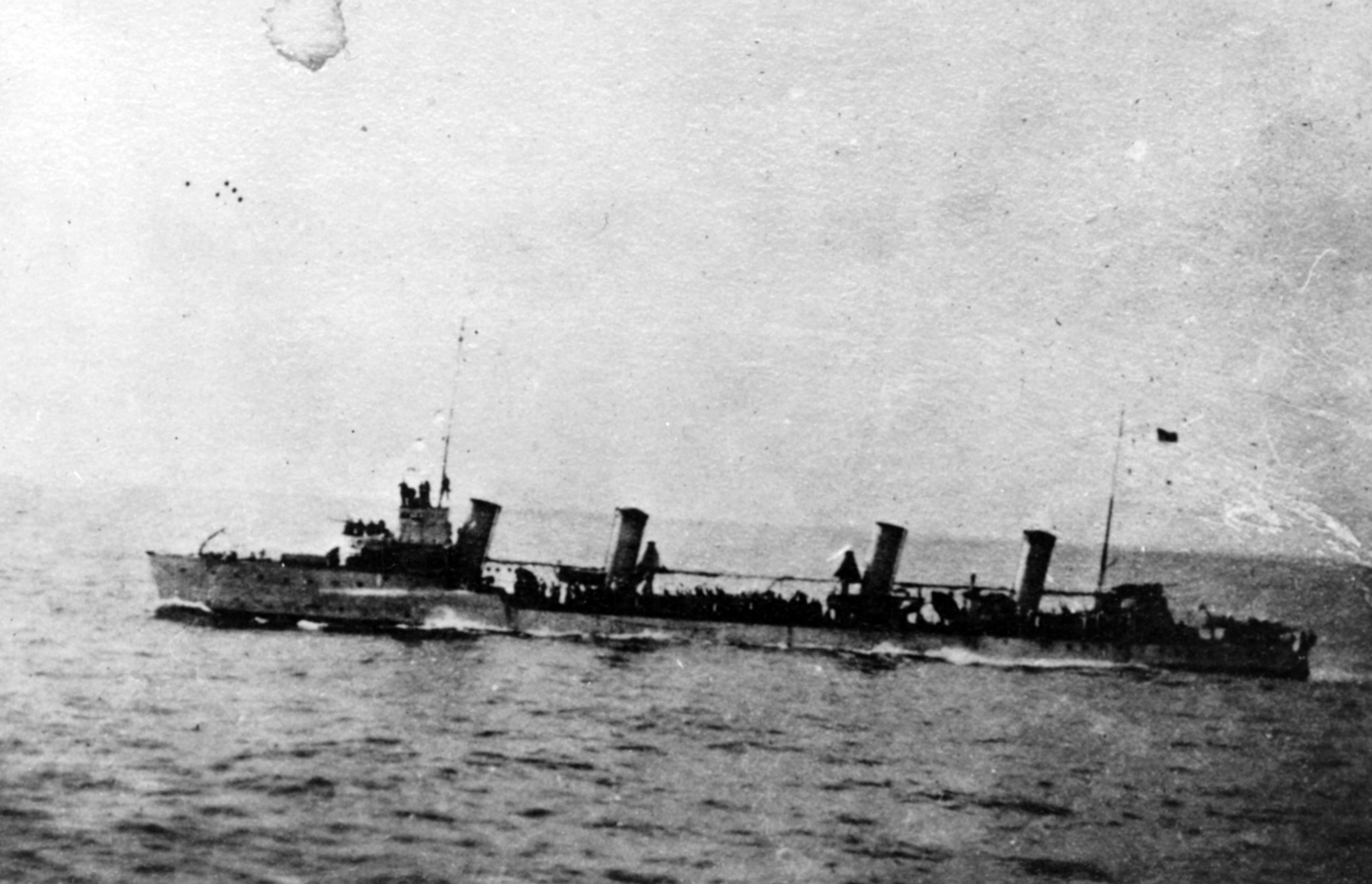
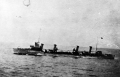
494k | Bainbridge at sea, bound from Gibraltar to Charleston, South Carolina, July 1918.
Naval History & Heritage Command photo NH 56311, courtesy of the Naval Historical Foundation. Collection of Fred C. Iverson, 1957. | Fred Weiss |
0500203 |
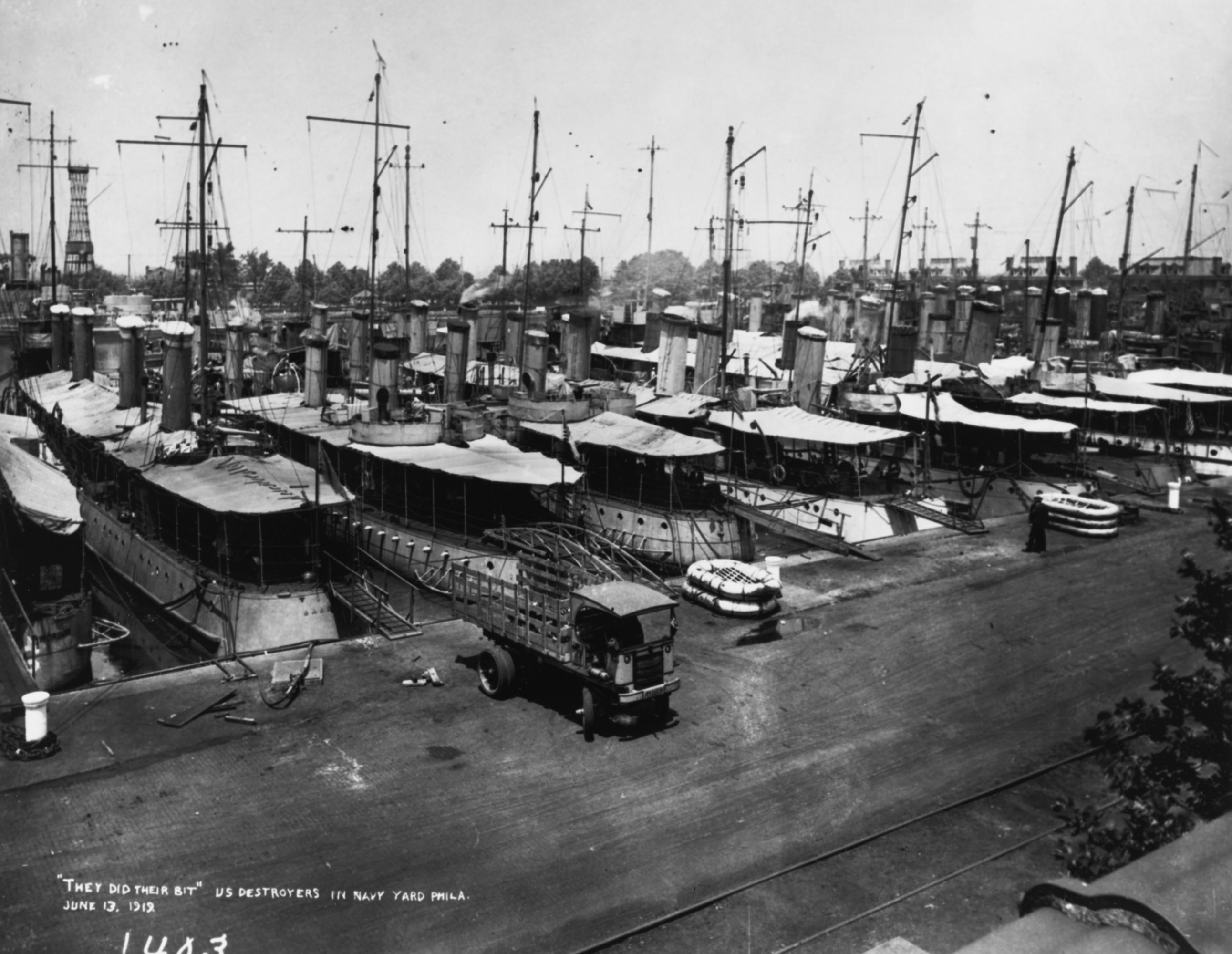
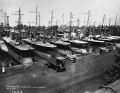
445k | Old destroyers awaiting decommissioning in the Reserve Basin at Philadelphia Navy Yard, 13 June 1919. Note the truck and liferafts on the pier. These ships are (from left to right): USS Worden (Destroyer No. 16); USS Barry (Destroyer No. 2); USS Hull (Destroyer No. 7); probably USS Hopkins (Destroyer No. 6); USS Bainbridge (Destroyer No. 1); USS Stewart (Destroyer No. 13); USS Paul Jones (Destroyer No. 10); and USS Decatur (Destroyer No. 5). Ships further to the right can not be identified.
Naval History & Heritage Command photo NH 92301, courtesy of Frank Jankowski, 1981. | Fred Weiss |
0501608 |
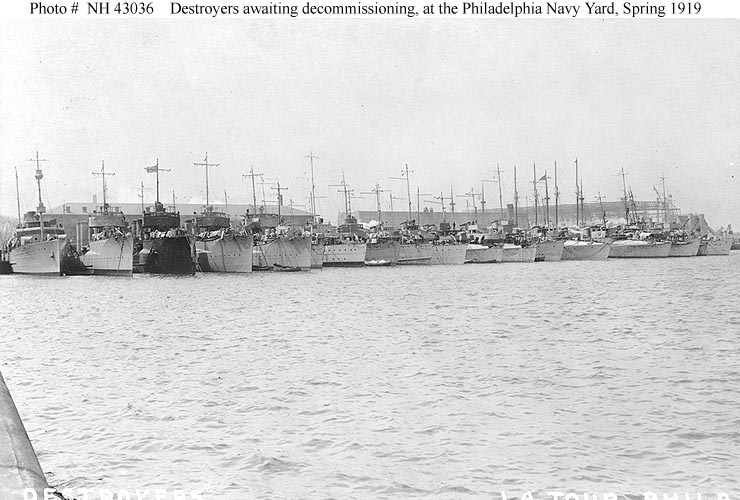
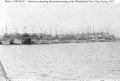
81k | Old destroyers awaiting decommissioning in the Reserve Basin at Philadelphia Navy Yard, spring 1919. Ships present are (from left to right): USS Isabel (SP-521); four unidentified "750-ton" type destroyers; USS Preble (Destroyer No. 12); USS Decatur (Destroyer No. 5); USS Paul Jones (Destroyer No. 10); USS Stewart (Destroyer No. 13); USS Bainbridge (Destroyer No. 1); USS Hopkins (Destroyer No. 6); USS Hull (Destroyer No. 7); USS Barry (Destroyer No. 2); USS Worden (Destroyer No. 16); USS Truxtun (Destroyer No. 14); USS Whipple (Destroyer No. 15); USS Perry (Destroyer No. 11); USS Lawrence (Destroyer No. 8); and
USS Dale (Destroyer No. 4). Photographed by LaTour of Philadelphia.
Naval History & Heritage Command photo NH 43036 | Tony Cowart |
Crew
|
0500148 |
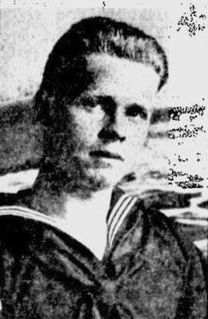
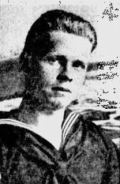
23k | George Leo McCain was born 01 October 1897 in Robinson, Illinois. Attached to USS Bainbridge, Seaman 2nd Class McCain died of heart disease at the US Naval Dispensary at Gibraltar on 03 July 1918. Intitally buried at Gibraltar, his body was brought home after the war and interred in Robinson New Cemetery in his hometown.
Photo from unidentified newspaper via findagrave.com | Dave Wright |
Memorabilia
|
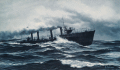
0500147 |
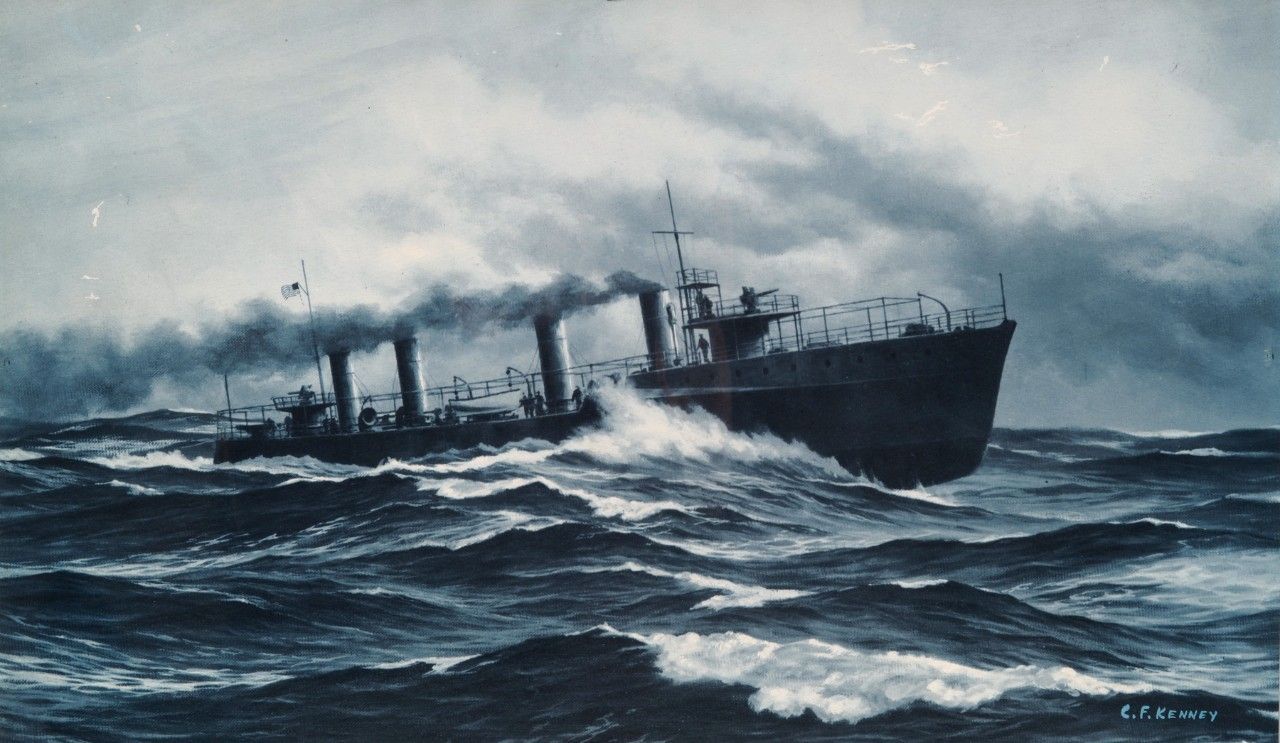
140k | Lithograph of Bainbridge at speed, by C.F. Kenney, circa 1950.
Naval History & Heritage Command accession number 07-572-A. | Dave Wright |



 One man died in service aboard and remains on duty