Click On Image
For Full Size Image |
Size |
Image Description |
Contributed
By And/Or Copyright |
Namesake
|
0500201
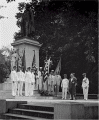
0500210
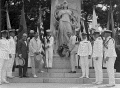
0500211
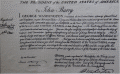
0500217
| [0500201] 97k
[0500210] 154k
[0500211] 214k
[0500217] 186k |
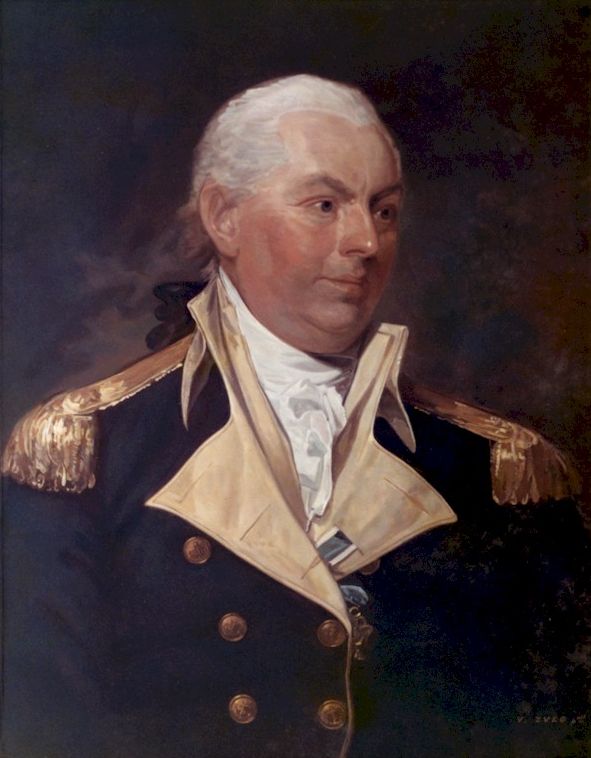
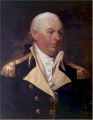
John Barry (1745 - 13 September 1803) was an officer in the Continental Navy during the American Revolutionary War and later in the United States Navy. Barry was born in Tacumshane, County Wexford, Ireland and appointed a Captain in the Continental Navy 07 December 1775. He commanded Lexington and Alliance. He and his crew of the Alliance fought and won the final naval battle of the American Revolution off the coast of Cape Canaveral on March 10, 1783. He was seriously wounded 29 May 1781 while in command of Alliance during her capture of HMS Atalanta and Trepassey. Barry was successful in suppressing three mutinies during his career as an officer in the Continental Navy. Appointed senior captain upon the establishment of the U.S. Navy, he commanded the frigate United States in the Quasi-War with France. Barry authored a Signal Book published in 1780 to improve communications at sea among vessels traveling in formation. Barry also suggested the creation of a Department of the Navy with separate cabinet status from the Secretary of War. This was finally realized with the formation of the United States Department of the Navy in 1798. Barry's suggestions about establishing government-operated navy yards were also realized, and in particular he had a hand in the establishment of the Brooklyn Navy Yard. His 17-year span of national service and his training of so many of the heroes of the War of 1812 under Barry's tutelage earned him the sobriquet, "Father of the Navy." Barry, having recruited a company of volunteers for land service, took part in the Trenton campaign in December 1776. These volunteers and the marines cooperating with them were commended by General George Washington. Barry acted as an aide to General John Cadwalader, and was sent on several occasions as a bearer of important dispatches. His next duty was assisting in the defense of Philadelphia and operations in the upper Delaware River. When the British took possession of Philadelphia in September 1777, Captain Barrywas ordered to take the uncompleted Continental frigate Effingham up the Delaware River to a place of safety. In October, the ship was ordered sunk or burned. She was sunk on 02 November, near Bordentown, New Jersey, to deny her use to the British. Commodore Barry died at Strawberry Hill, in present-day Philadelphia on 13 September 1803, and was buried there in St. Mary's Cemetery. 0500201: Portrait of Commodore John Barry, USN by V. Zveg, 1972, after the portrait by Gilbert Stuart. Naval History & Heritage Command photo NH 76537-KN
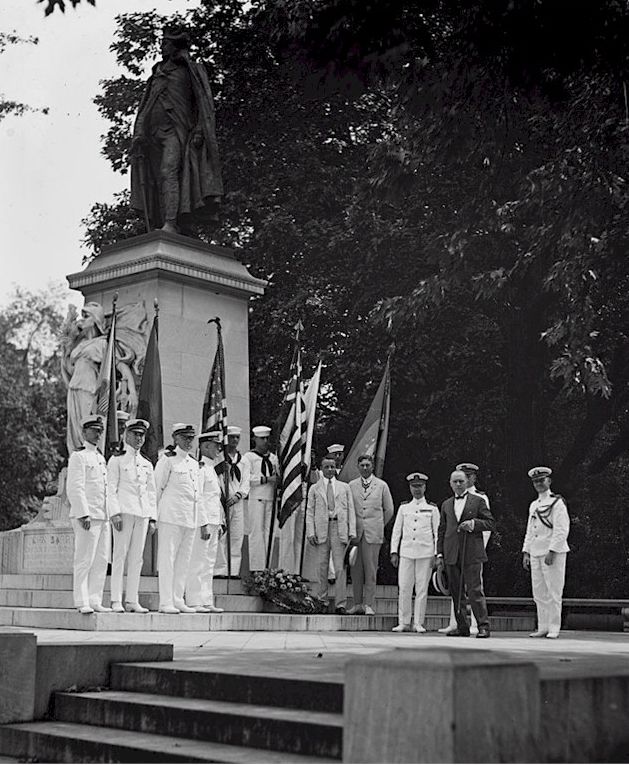
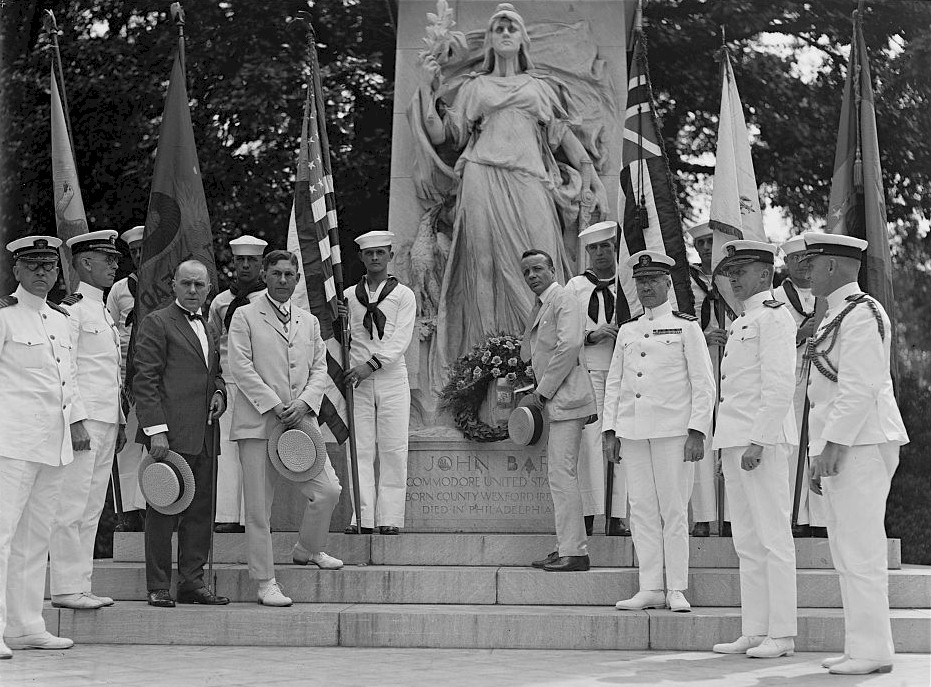
0500210: Members of the United States Navy and dignitaries gather at Commodore John Barry’s monument in Philadelphia for the 185th anniversary honoring the birth of the Sons of Revolution on 02 August 1924. The monument was first unveiled in 1914. Library of Congress Prints and Photographs Division, digital ID npcc 11902.
0500211: As above, Library of Congress Prints and Photographs, digital ID npcc 11901.
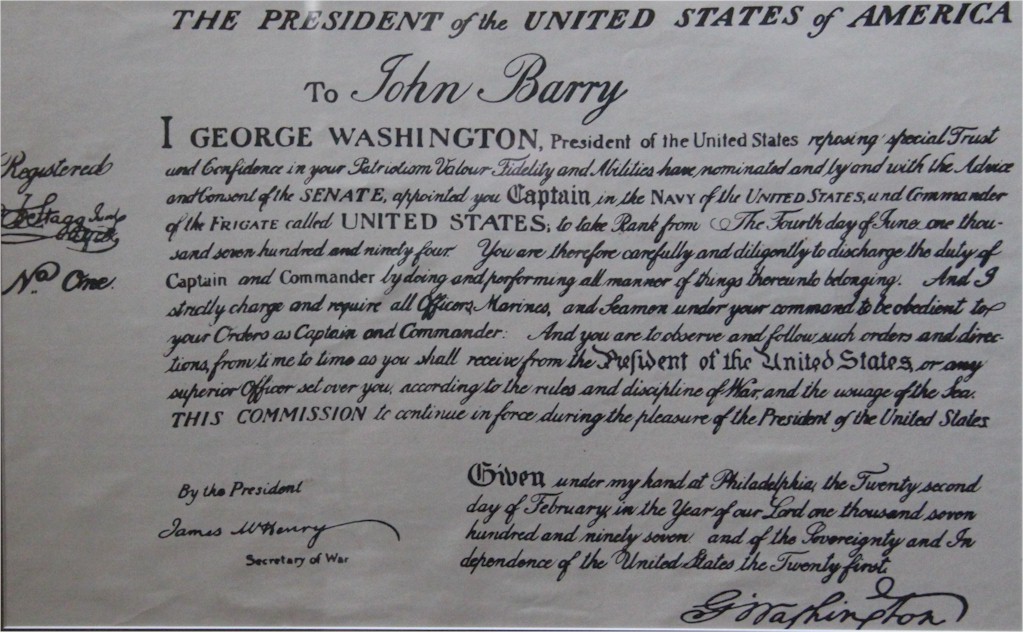
0500217: Barry's Commission as Captain signed by President Washington. | Bill Gonyo/Robert Hurst/Phil Gilson |
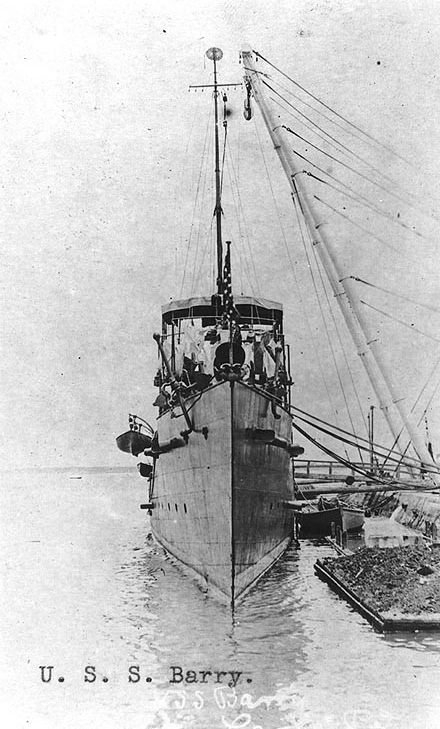
USS Barry (Destroyer No. 2)
|
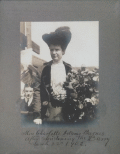
0500218 |
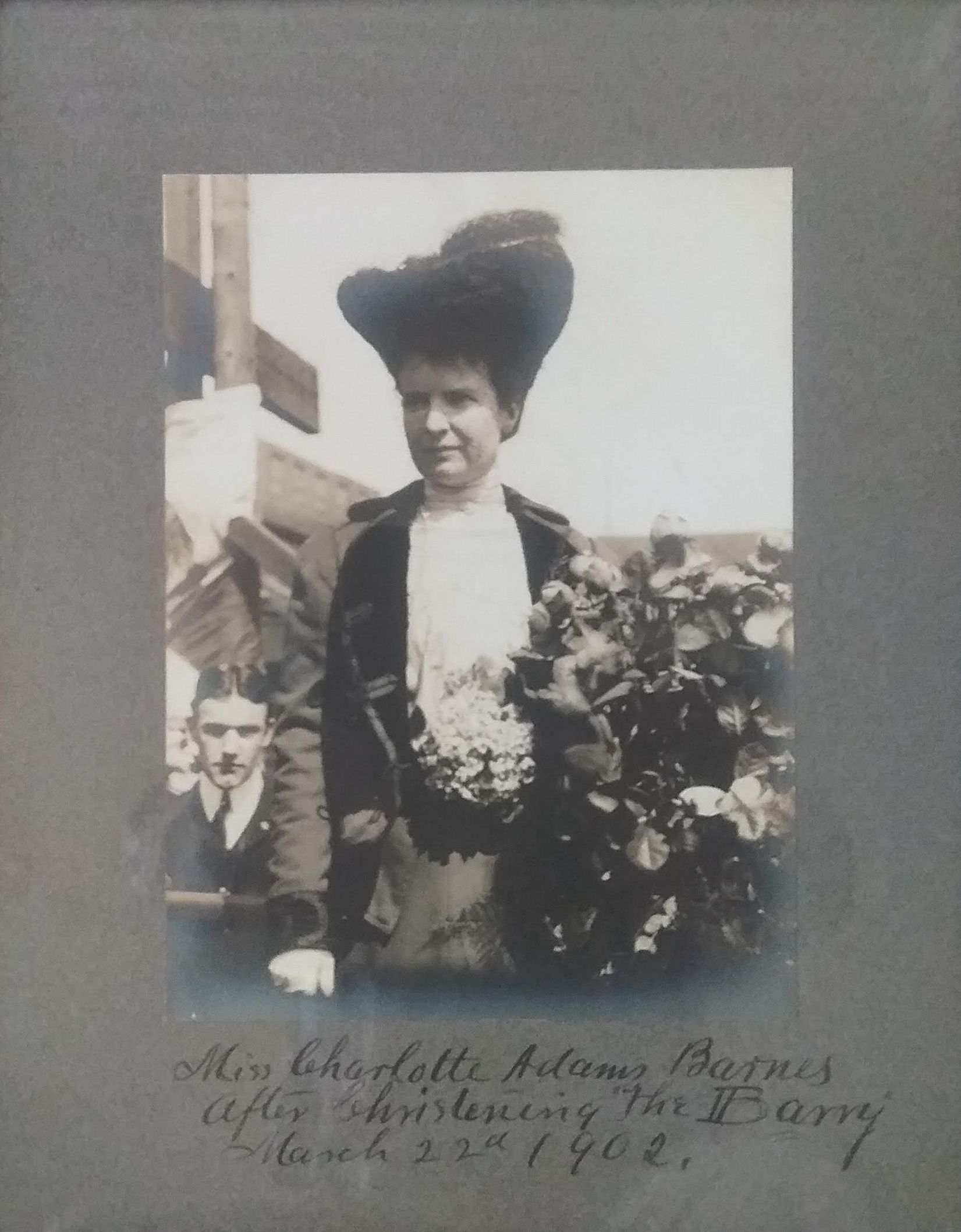
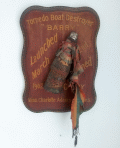
299k | Barry's christening was performed by Miss Charlotte Adams Barnes, great-great-grandniece of Commodore Barry and daughter of Captain John S. Barnes, USN. | Doug Martin |
0500219 |
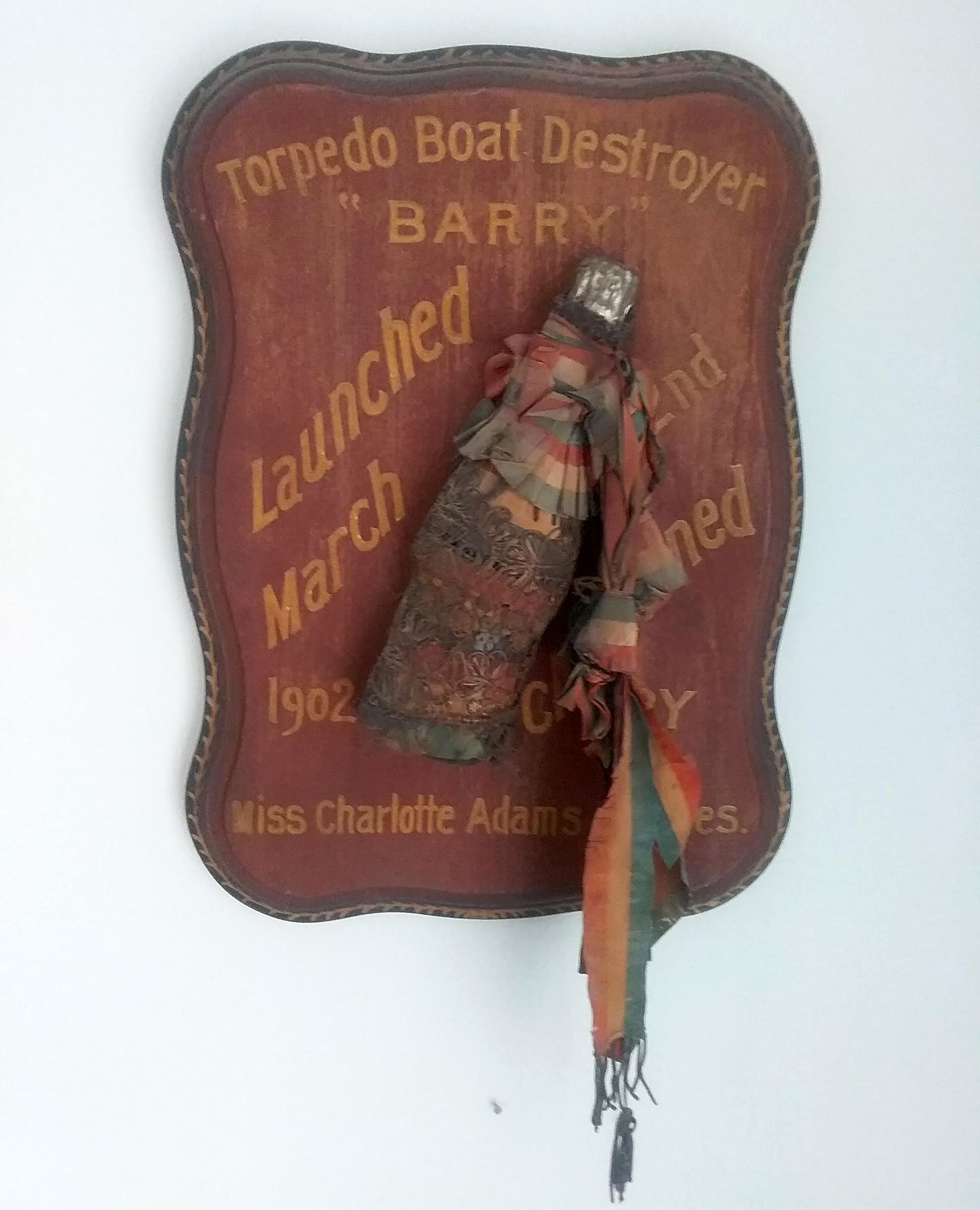
347k | The original bottle of champagne used to christen Barry, well-preserved as a family heirloom. | Doug Martin |
0500206 |
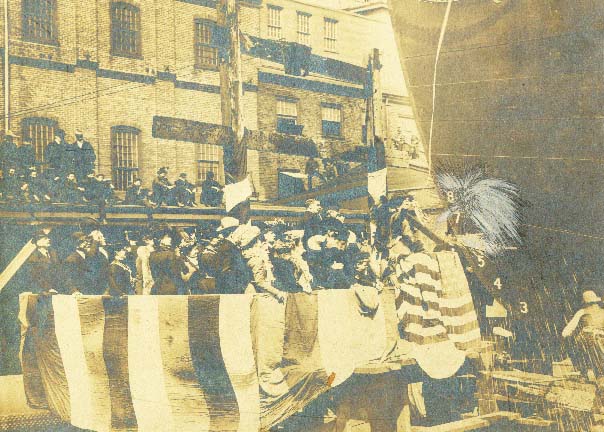
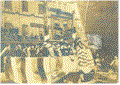
76k | The launching and christening ceremony for Barry at Philadelphia, 22 March 1902. | PAHRC |
0500207 |
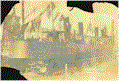
58k | The launching and christening ceremony for Barry at Philadelphia, 22 March 1902.The launching and christening ceremony Philadelphia March 22 1902. | PAHRC |
0500204 |
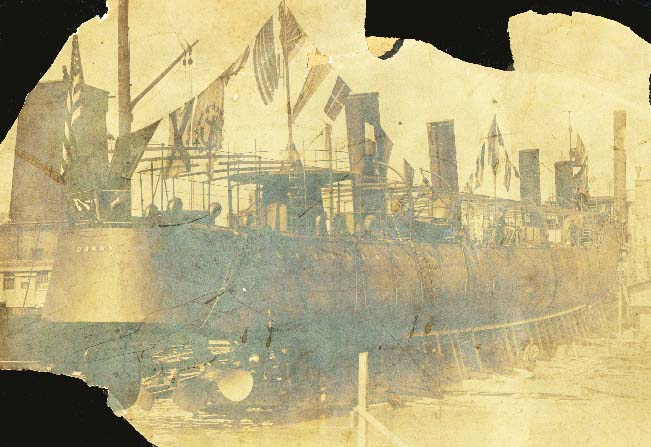
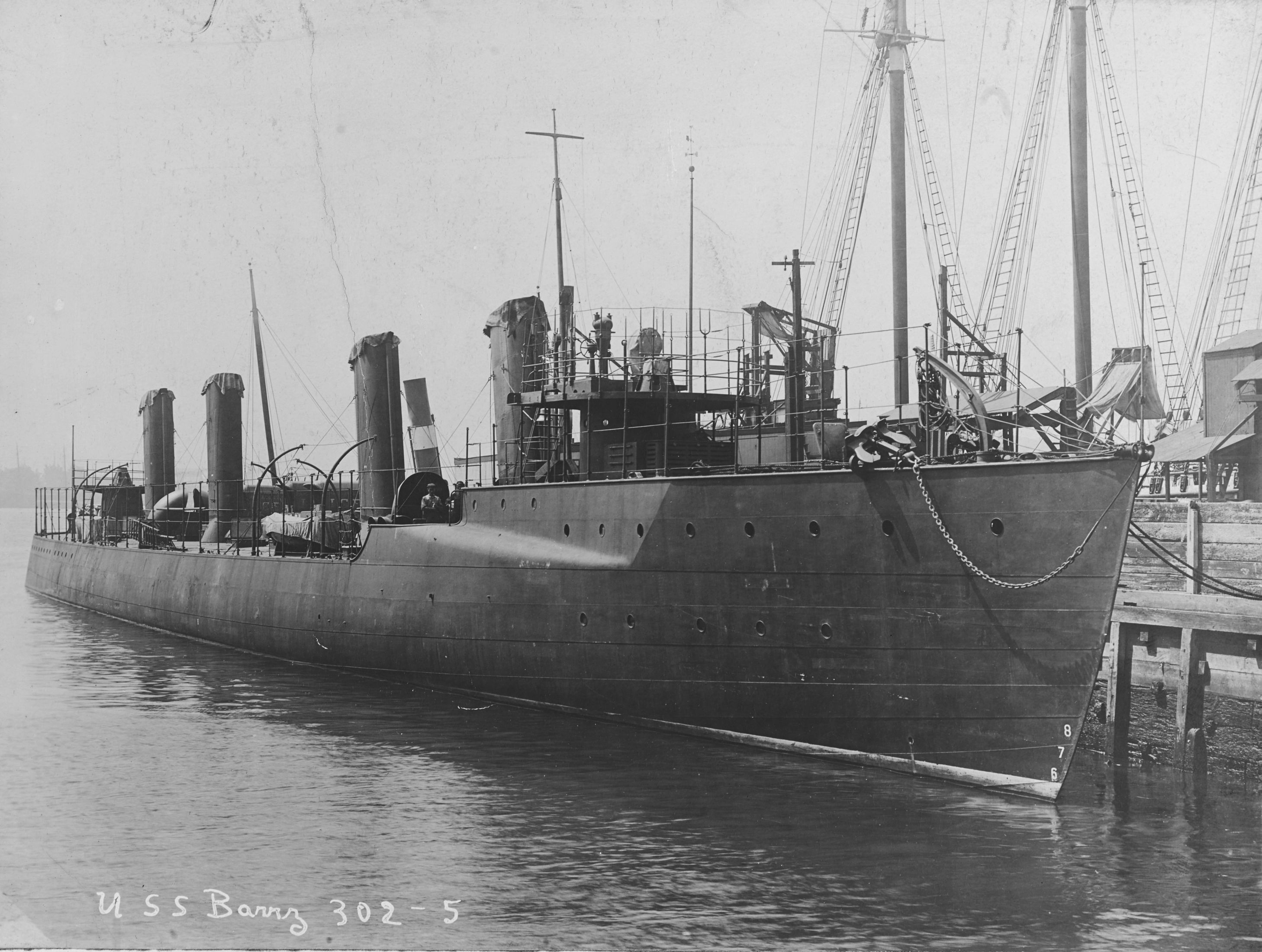
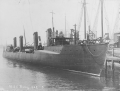
765k | USS Barry (Destroyer No. 2) fitting out at Neafie & Levy, 1902. The NHHC caption "Photographed in port soon after completion, circa 1902-1903" is inaccurate; note she lacks any armament and has tarps over each stack, as well as the civilian workmen aboard.
Naval History & Heritage Command photo NH 498 | Fred Weiss |
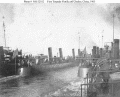
0500510 |
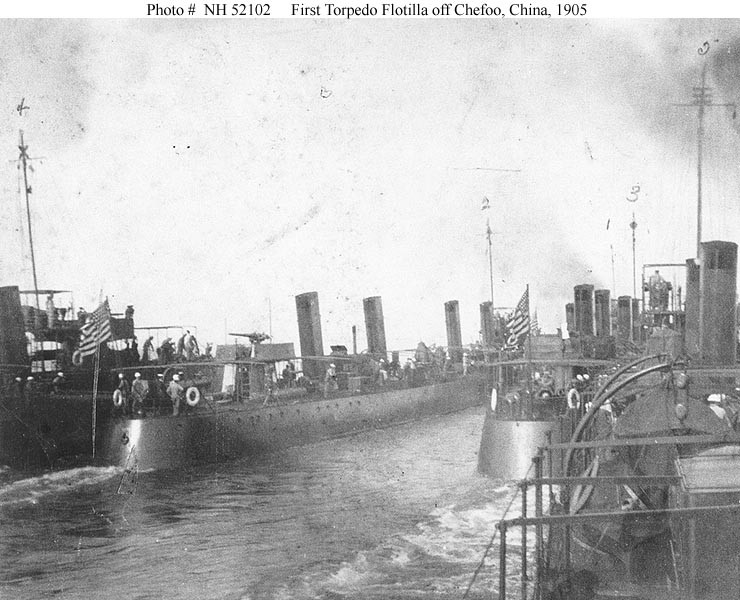
122k | The First Torpedo Flotilla steaming in close formation off Chefoo, China, during 1905, while under the command of Lieutenant Dudley W. Knox. Ships present are (as numbered): 1 USS Decatur (Destryer No. 5); 2 USS Dale (Destroyer No. 4); 3 USS Barry (Destroyer No. 2); 4 USS Chauncey (Destroyer No. 3) and 5 USS Bainbridge (Destroyer No. 1).
Naval History & Heritage Command photo NH 52102, donation of Mrs J.R. Kean. 1938. Courtesy of Captain Dudley W. Knox, USN (Retired) | Robert Hurst |
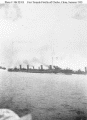
0500511 |
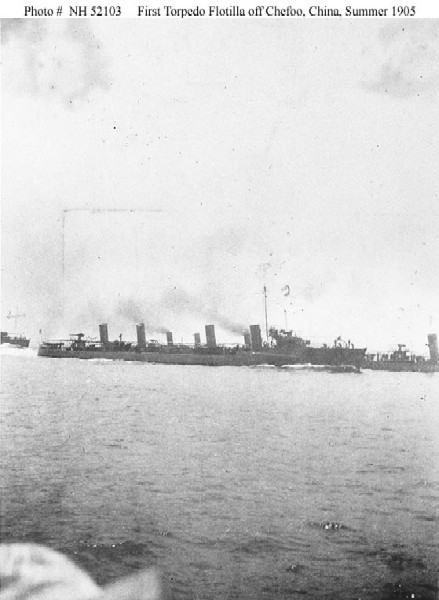
60k | The First Torpedo Flotilla forming a 'wedge' formation while steaming off Chefoo, China, during the summer of 1905. Photographed from USS Dale. The other ships present are (as numbered). 1 USS Decatur (Destroyer No. 5), 2 USS Barry (Destroyer No. 2); USS Chauncey (Destroyer No. 3) and 4 USS Bainbridge (Destroyer No. 1). The Flotilla was commanded by Lieutenant Dudley W. Knox.
Naval History & Heritage Command photo NH 52103, donation of Mrs. J.R. Kean, 1938. Courtesy of Captain Dudley W. Knox, USN (Retired) | Robert Hurst |
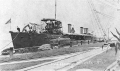
0500202 |
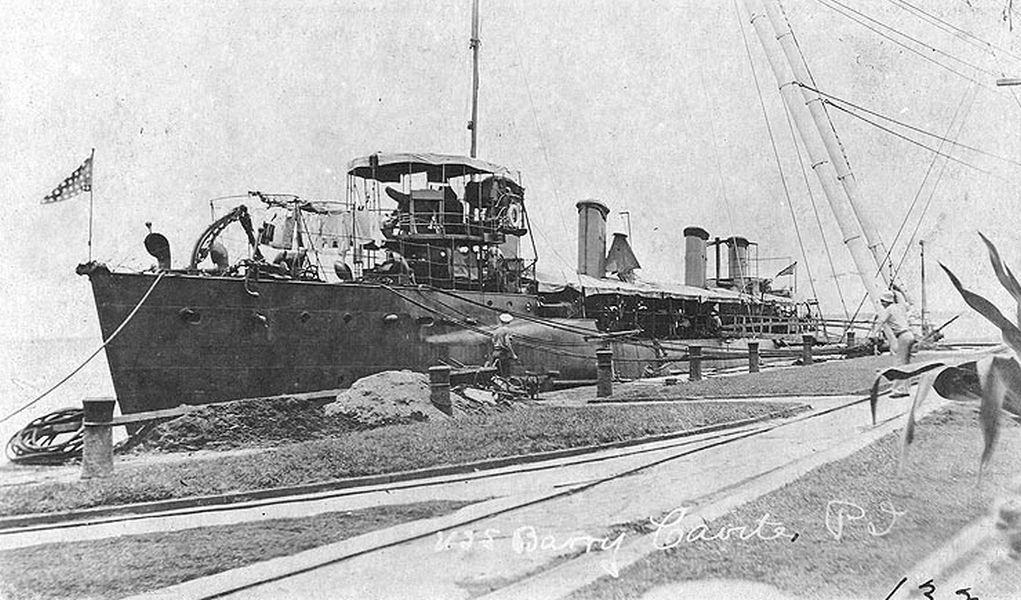
139k | USS Barry (Destroyer No. 2) alongside the Sheer Wharf at Cavite Navy Yard, Philippines, circa 1910-1913.
Naval History & Heritage Command photo NH 98140, collection of Phillip H. Wilson. Donated by Mrs. Pauline M. Wilson, 1979. | Robert Hurst |
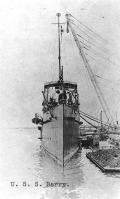
0500209 |
69k | USS Barry (DD-2) coaling at the Cavite Navy Yard, Philippine Islands, circa 1912.
Naval History & Heritage Command photo NH 90178, collection of Phillip H. Wilson, USN | Robert Hurst |
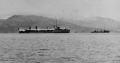
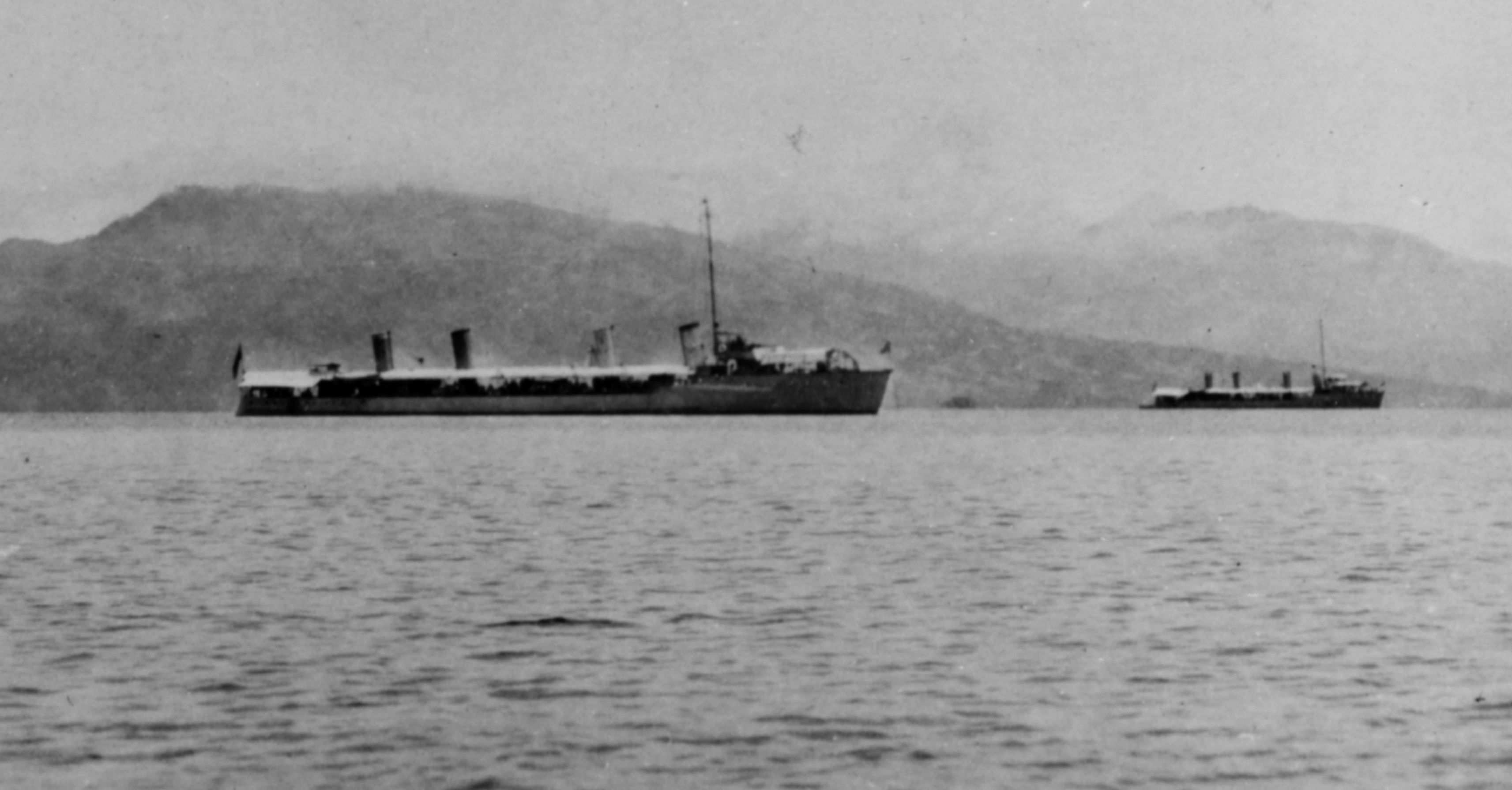
0500205 |
301k | USS Chauncey (Destroyer No. 3) and USS Barry (Destroyer No. 2) anchored in Philippine waters, circa 1914-1916.
Naval History & Heritage Command photo NH 88584, collection of C.A. Shively (cropped) | Fred Weiss |
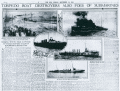
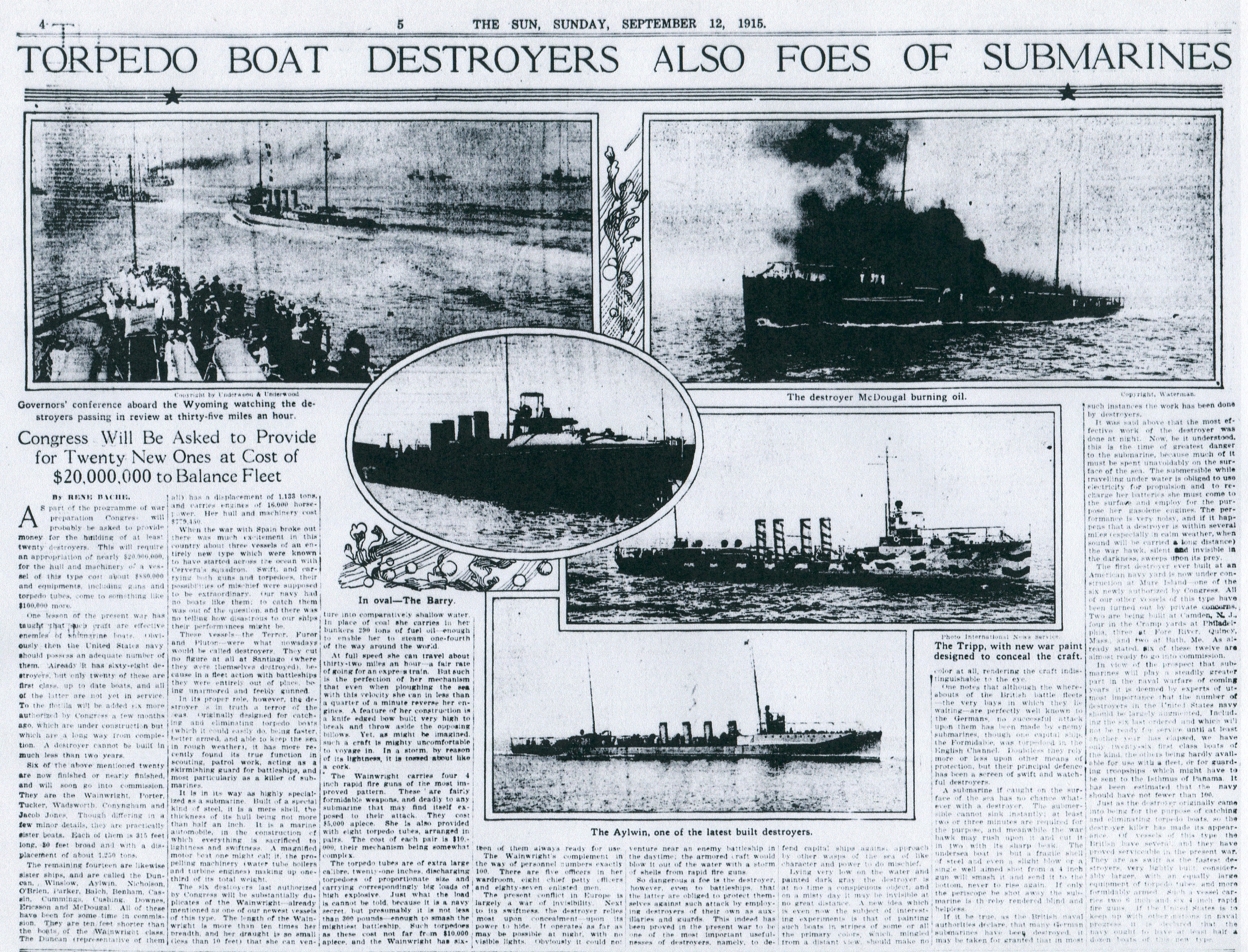
0500216 |
3217k | A very large newspaper clipping of the USS Barry (Destroyer No. 2), USS Tripp (Destroyer No. 33), USS Aylwin (Destroyer No. 47) and the USS McDougal (Destroyer No. 54) from the Baltimore Sun, 12 September 1915. | Mike Mohl |
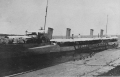
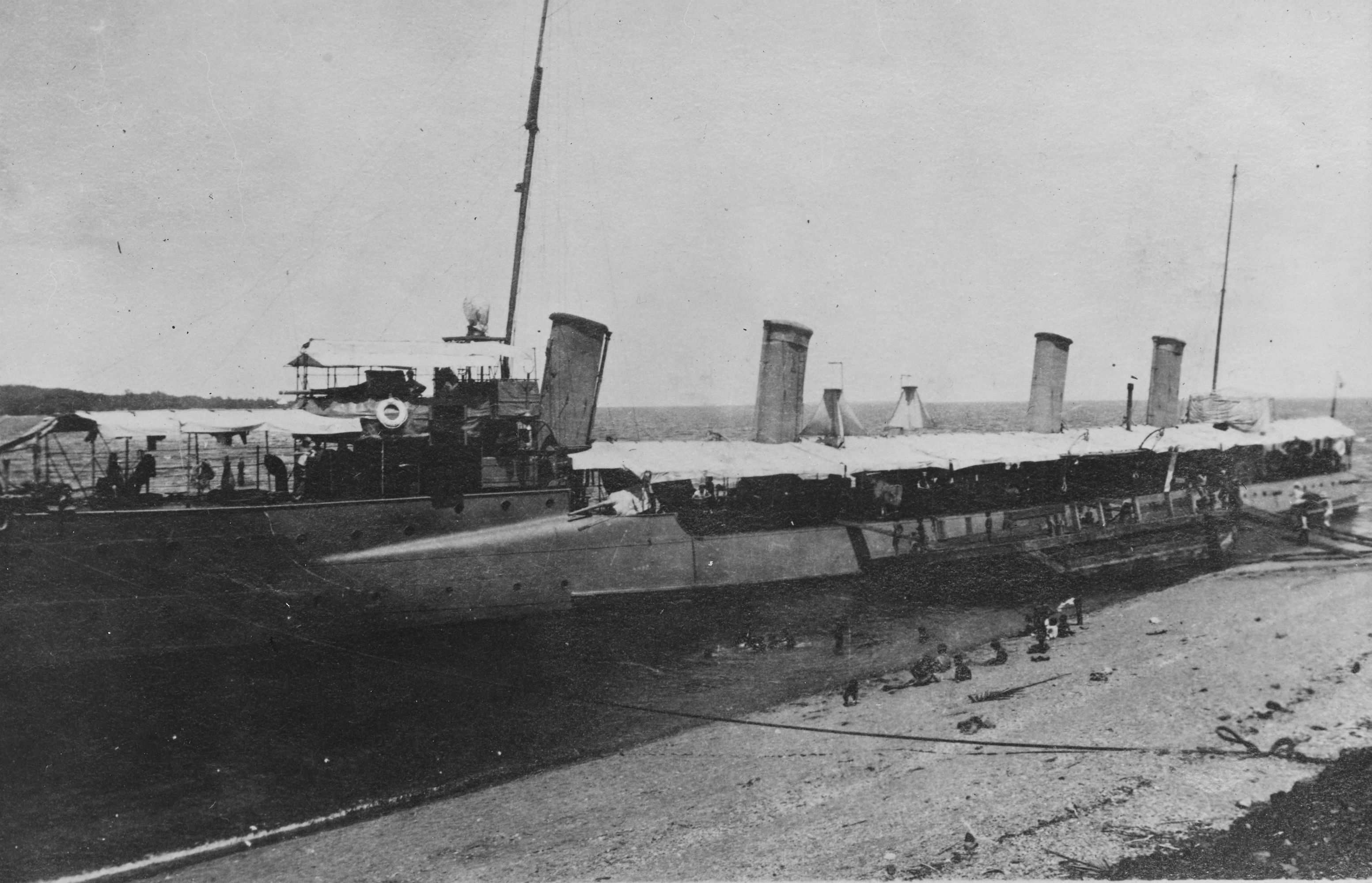
0500114 |
766k | A Bainbridge class destroyer coaling from the beach in the Philippine Islands. This destroyer is either USS Bainbridge (Destroyer No. 1), USS Barry (Destroyer No. 2) or USS Chauncey (Destroyer No. 3). The donor's original caption, which incorrectly indentifies the ship as USS Decatur, reads "coaling from the beach near Zamboanga, P.I. 1916. Mooring Lines are tied to old stock anchors on the beach. The coal was carried aboard in baskets on a pole by two natives. This was Pocahontas coal from West Va. The rest of the Asiatic fleet used Japanese coal."
Naval History & Heritage Command photo NH 54426, courtesy Naval Historical Foundation, Collection of Fred C. Iverson, 1957. | Robert Hurst |
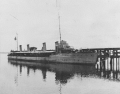
0500208 |
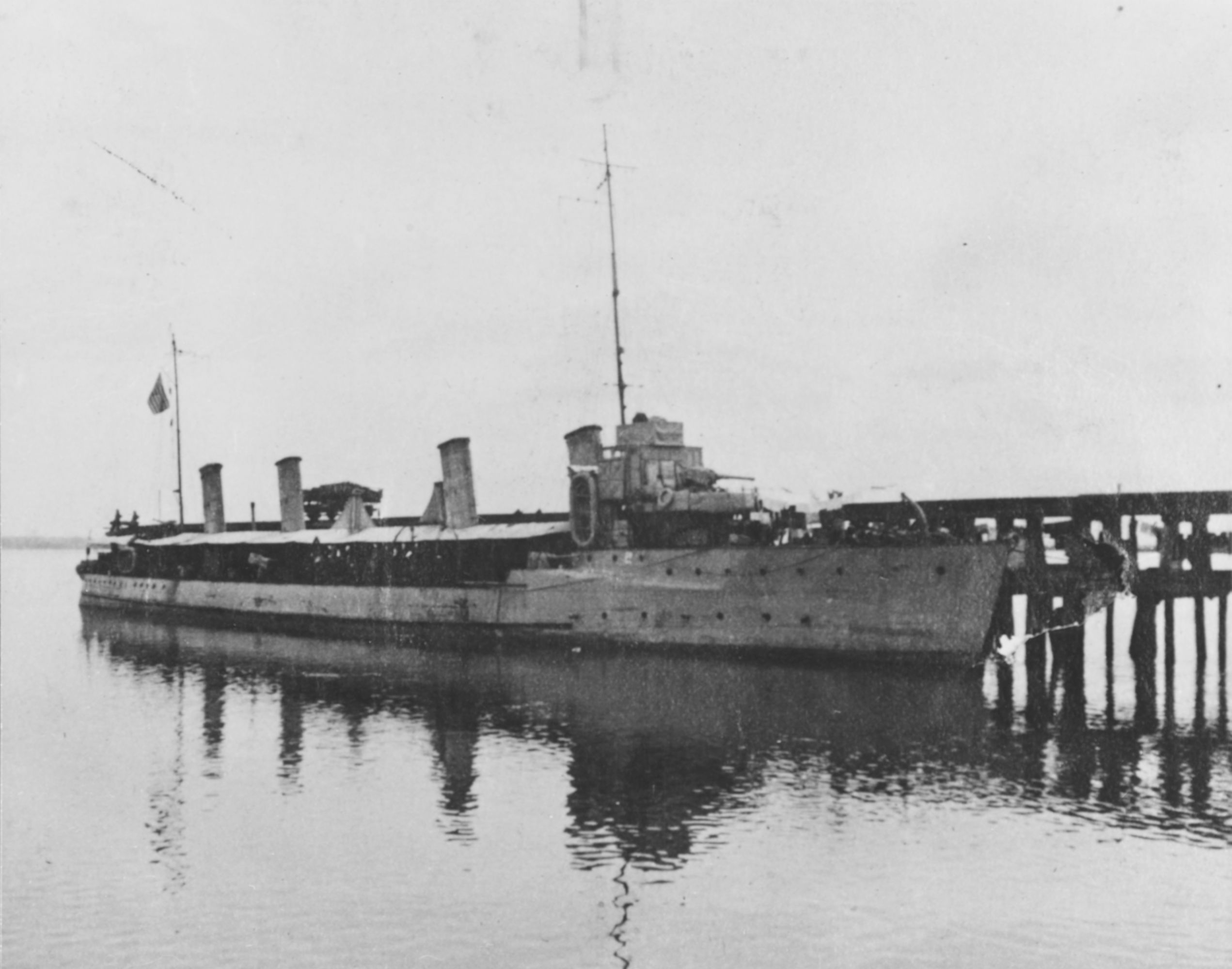
261k | USS Barry (Destroyer No. 2) at the Charleston Navy Yard, South Carolina, circa late 1918.
Naval History & Heritage Command photo NH 56348 | Paul Rebold |
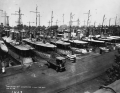
0500203 |
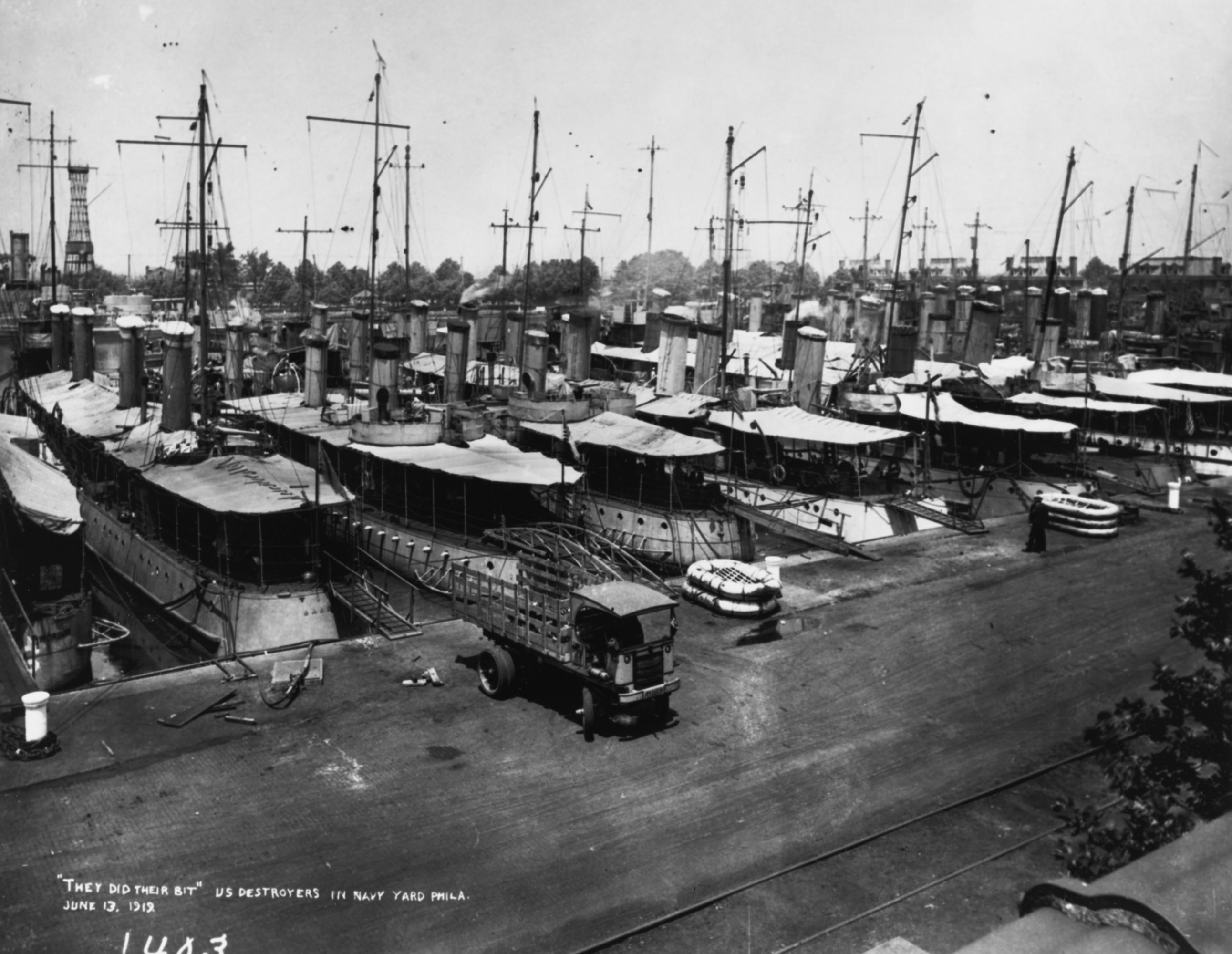
445k | Old destroyers awaiting decommissioning in the Reserve Basin at Philadelphia Navy Yard, 13 June 1919. Note the truck and liferafts on the pier. These ships are (from left to right): USS Worden (Destroyer No. 16); USS Barry (Destroyer No. 2); USS Hull (Destroyer No. 7); probably USS Hopkins (Destroyer No. 6); USS Bainbridge (Destroyer No. 1); USS Stewart (Destroyer No. 13); USS Paul Jones (Destroyer No. 10); and USS Decatur (Destroyer No. 5). Ships further to the right can not be identified.
Naval History & Heritage Command photo NH 92301, courtesy of Frank Jankowski, 1981. | Fred Weiss |
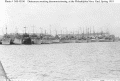
0501608 |
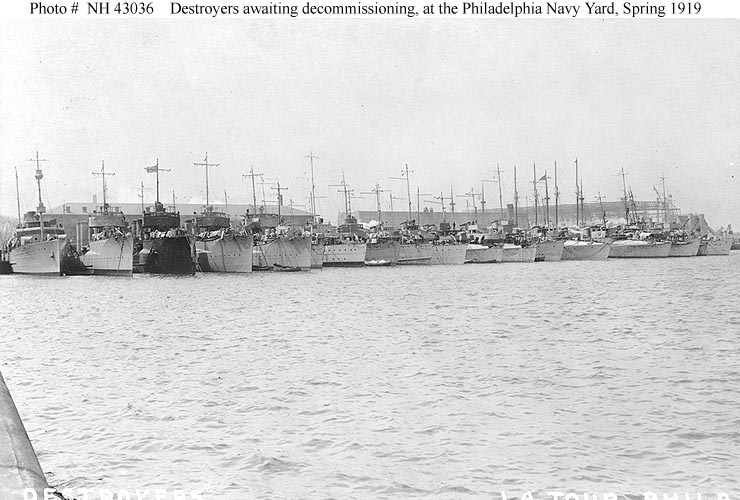
81k | Old destroyers awaiting decommissioning in the Reserve Basin at Philadelphia Navy Yard, spring 1919. Ships present are (from left to right): USS Isabel (SP-521); four unidentified "750-ton" type destroyers; USS Preble (Destroyer No. 12); USS Decatur (Destroyer No. 5); USS Paul Jones (Destroyer No. 10); USS Stewart (Destroyer No. 13); USS Bainbridge (Destroyer No. 1); USS Hopkins (Destroyer No. 6); USS Hull (Destroyer No. 7); USS Barry (Destroyer No. 2); USS Worden (Destroyer No. 16); USS Truxtun (Destroyer No. 14); USS Whipple (Destroyer No. 15); USS Perry (Destroyer No. 11); USS Lawrence (Destroyer No. 8); and
USS Dale (Destroyer No. 4). Photographed by LaTour of Philadelphia.
Naval History & Heritage Command photo NH 43036 | Tony Cowart |


 Three men died in service aboard and remain on duty