Photographic History of the United States Navy
ARCHIVE
| NavSource Main Page | FAQ | Contact us | Search NavSource |
| |
NavSource Naval History Photographic History of the United States Navy |
DESTROYER ARCHIVE |
| Click On Image For Full Size Image |
Size | Image Description | Contributed By And/Or Copyright |
|
|---|---|---|---|---|
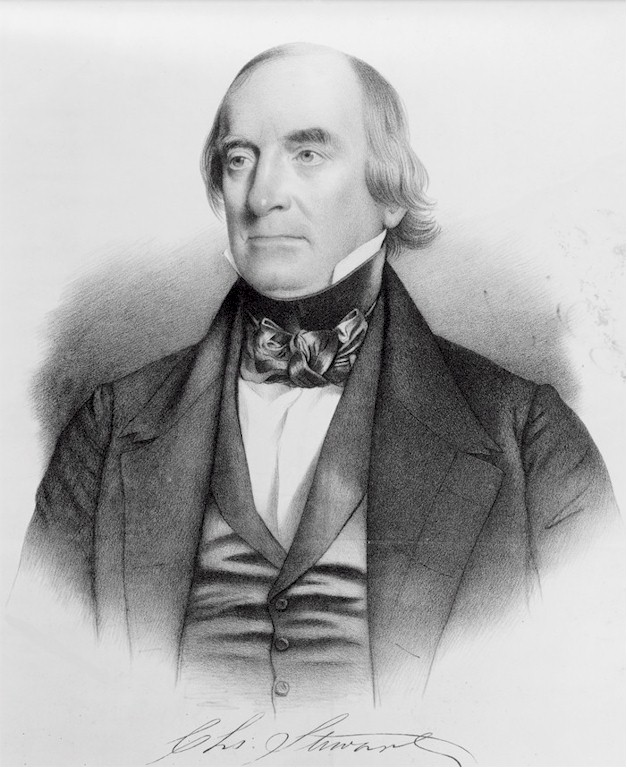 |
115k | Charles Stewart was born at Philadelphia, Pa., on 28 July 1778. He went to sea at the age of thirteen as a cabin boy and rose through the grades to become master of a merchantman. During the Quasi-War with France, Stewart was commissioned a lieutenant in the United States Navy on 9 March 1798 and joined the frigate United States for a cruise in the West Indies. He took command of the schooner Experiment on 16 July 1800 and soon captured two armed French vessels and freed several captured American ships. After brief command of Chesapeake in 1801 and service in Constellation in 1802, Stewart sailed to the Mediterranean in command of the brig Siren. There he participated in the destruction of Philadelphia after her capture by Tripoli, helped to maintain the blockade of Tripoli, and distinguished himself in assaults on the enemy in August and September 1804. After the war, he participated in a show of force at Tunis and returned home as captain in 1806. On the outbreak of war in 1812, Stewart commanded, successively, Argus, Hornet, and Constellation. But, as the latter was closely blockaded in Norfolk, he took command of Constitution at Boston in 1813. He made two brilliant cruises in her between 1813 and 1815. The frigate captured HMS Cyane and HMS Levant on 20 February 1815. Stewart's later service included command of a squadron in the Mediterranean from 1816 to 1820 and of one in the Pacific from 1820 to 1824. He served as a Naval Commissioner from 1830 to 1832 and commanded the Philadelphia Navy Yard from 1838 to 1841, in 1846, and again from 1854 to 1861. By a bill passed on 2 March 1859, Congress made Stewart "senior flag officer," an office created for him in recognition of his distinguished and meritorious service. He became rear admiral on the retired list on 16 July 1862, and he died at Bordentown, N.J., on 6 November 1869. | Bill Gonyo | |
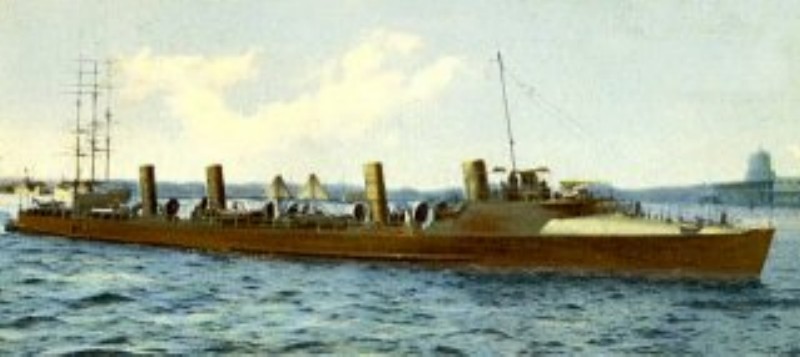 |
48k | Undated post card. | Robert Hurst | |
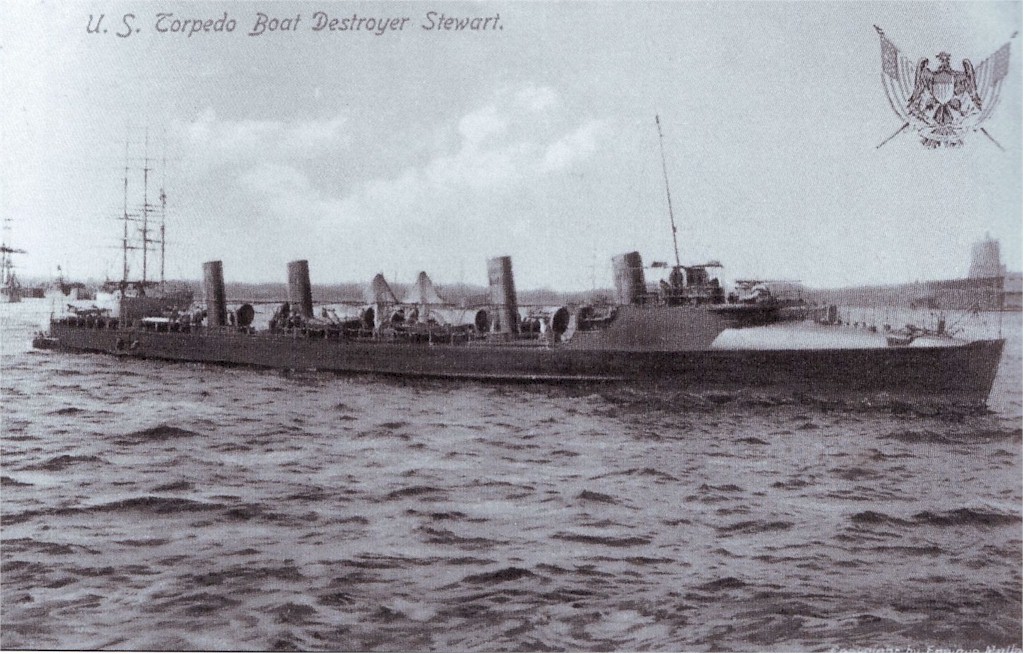 |
207k | Undated post card, Image from U. S Navy Records. | Robert Hurst | |
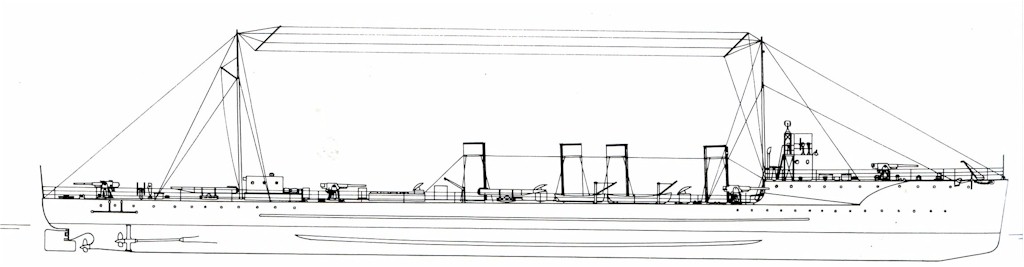 |
48k | Undated, inboard view drawn by A.D. Baker III of USS Stewart (Destroyer # 13). Image scanned from U.S. Destroyers: An Illustrated Design History by Norman Friedman. | Robert Hurst | |
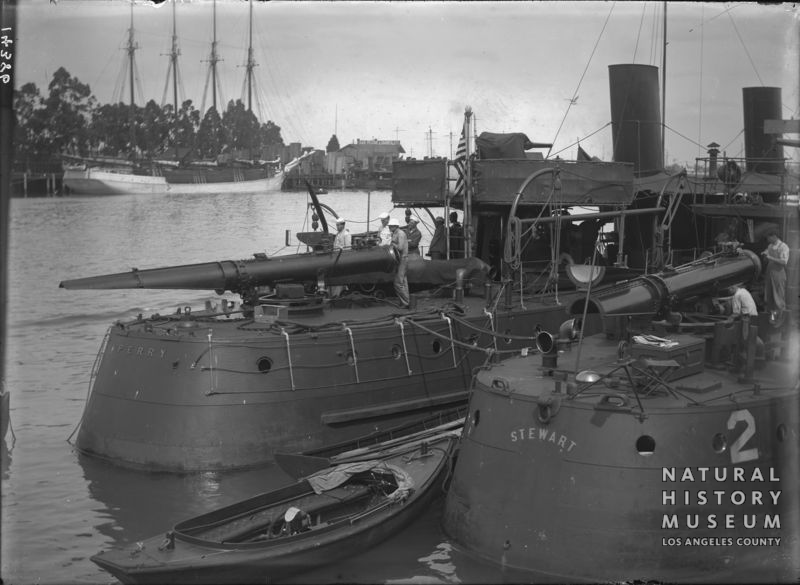 |
364k | USS Perry DD-11 and Stewart DD-13, probably at San Pedro. The photo is undated, but perhaps from circa 1908-10. | Mike Davison | |
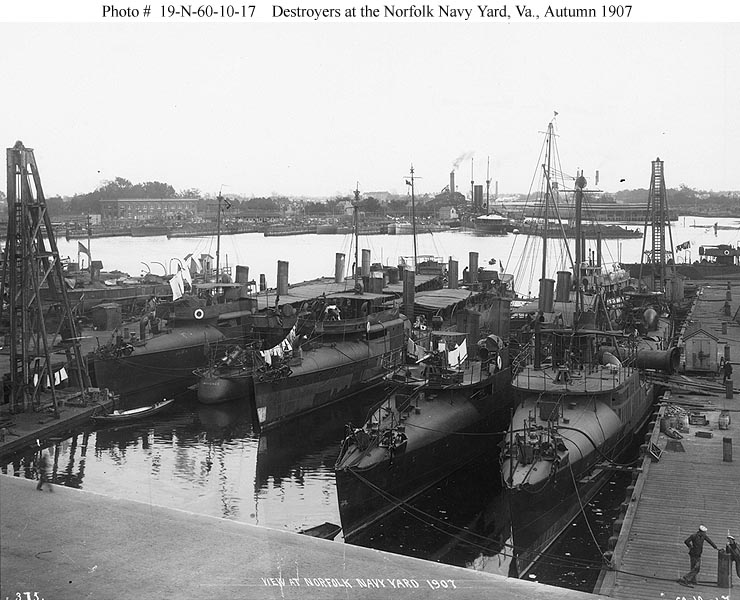 |
102k | Photo #: 19-N-60-10-17, destroyers at the Norfolk Navy Yard, Virginia, Autumn 1907. The destroyers in the foreground basin (from left to right): USS Hull (Destroyer # 7); USS Lawrence (Destroyer # 8); USS Hopkins (Destroyer # 6); USS Whipple (Destroyer # 15) and USS Truxtun (Destroyer # 14). USS Stewart (Destroyer # 13) is at the end of the dock, at right, and USS Talbot (Torpedo Boat # 15) is hauled out on the marine railway at left. On the opposite side of the river are several torpedo boats of the Reserve Torpedo Flotilla and their barracks ship, the old cruiser Atlanta. Photograph from the Bureau of Ships Collection in the U.S. National Archives. | Tony Cowart | |
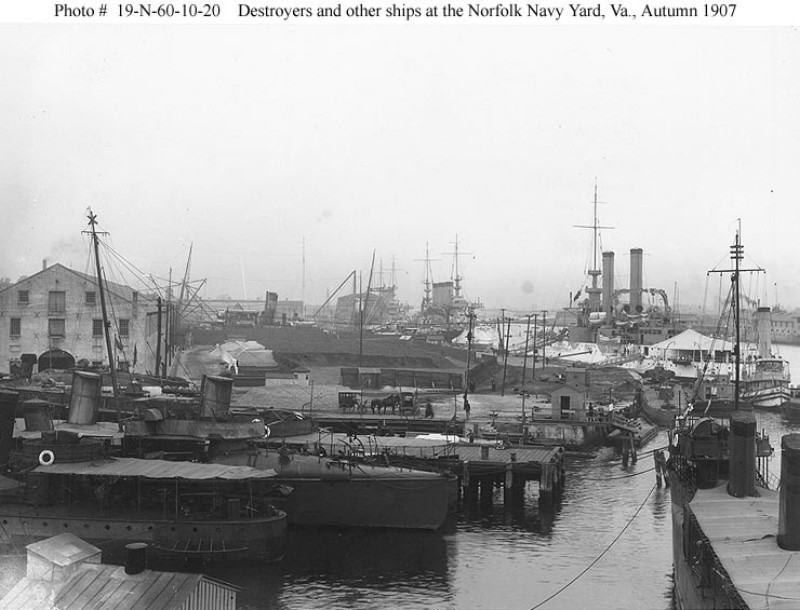 |
100k | Destroyers and other ships at the Norfolk Navy Yard, Virginia, Autumn 1907. Ships at left are (from front to rear): USS Hopkins (Destroyer # 6); USS Lawrence (Destroyer # 8); USS Hull (Destroyer # 7); USS Talbot (Torpedo Boat # 15) and USS Moccassin (Submarine # 5). The latter two are hauled out on the marine railway. USS Stewart (Destroyer # 13) is in the right foreground. Ahead of her are a torpedo boat, a barge and the tug Mohawk. Three battleships are docked beyond them, with USS Iowa (Battleship # 4) furthest to the right. Photograph from the Bureau of Ships Collection in the U.S. National Archives. Photo # 19-N-60-10-20. | Robert Hurst | |
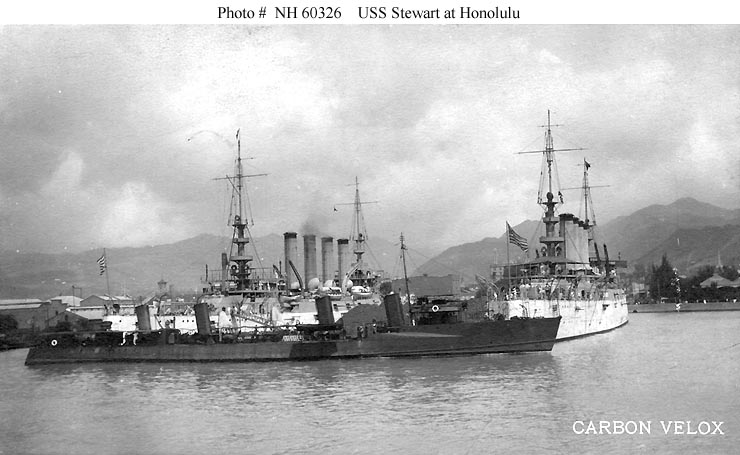 |
64k | USS Stewart (Torpedo Boat Destroyer # 13) underway in Honolulu Harbor, Hawaii Territory, circa 1908. Large ships in the background are USS West Virginia (ACR-5), at left, and USS Maryland (ACR-8). Note the "Carbon Velox" marking, identifying the type of Kodak photographic paper used. Donation of Rear Admiral Ammen Farneholt, USN (Medical Corps), 1932. U.S. Naval Historical Center Photograph #NH 60326. | Tom Bateman | |
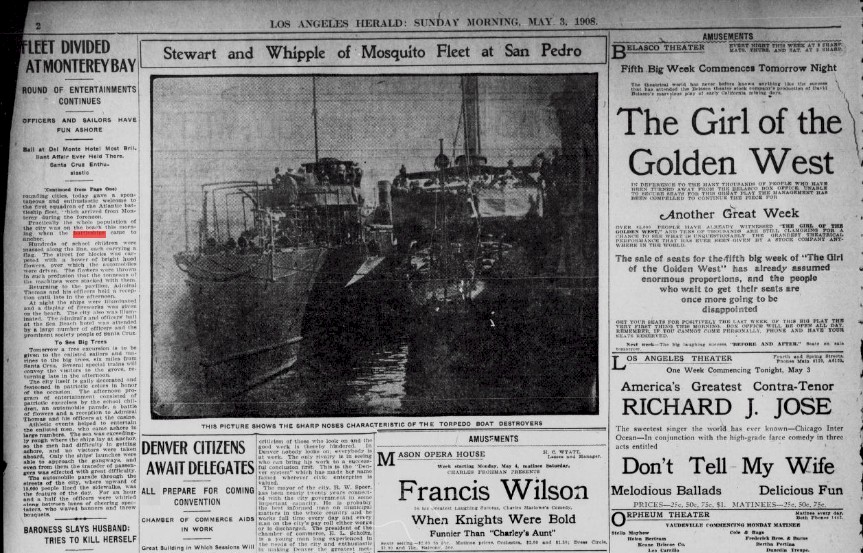 |
194k | Newspaper clipping of the USS Stewart and USS Whipple at San Pedro dated May 3 1908. | Mike Mohl | |
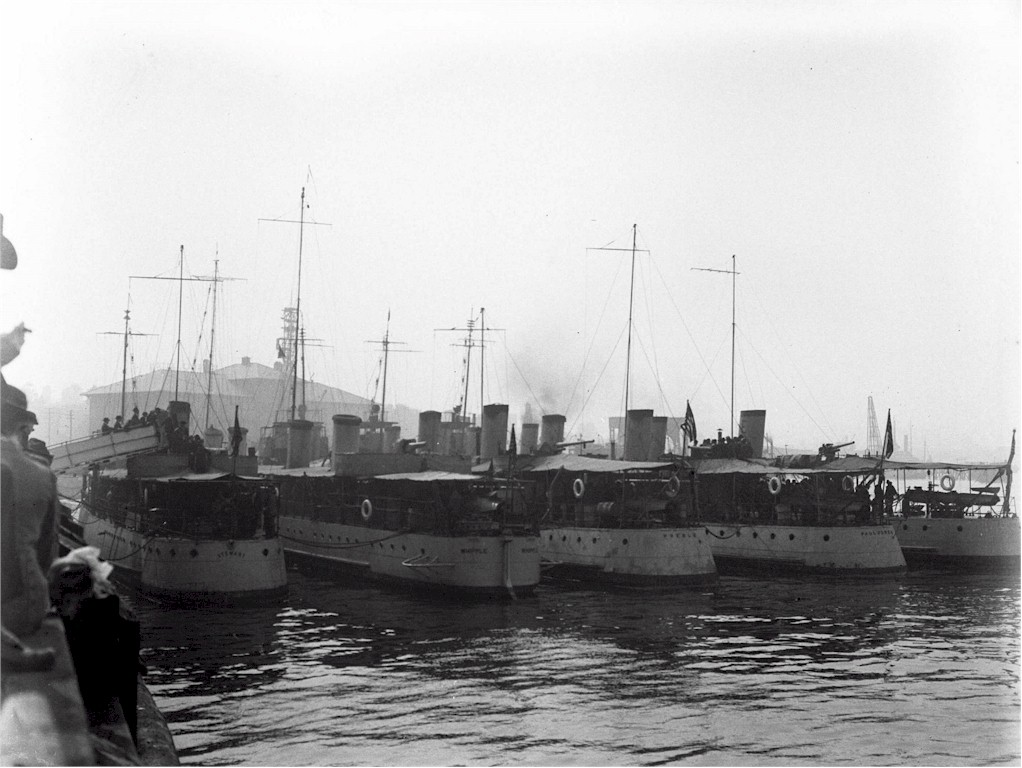 |
163k | Destroyers USS Stewart (DD-13), USS Whipple (DD-15), USS Preble (DD-12), USS Paul Jones (DD-10) and one unidentifiable sister moored together at Vancouver BC circa 1908-1910. Source: City of Vancouver Archives, Photo No. AM640-S1-: CVA 260-75, by James Crookall. | Mike Green | |
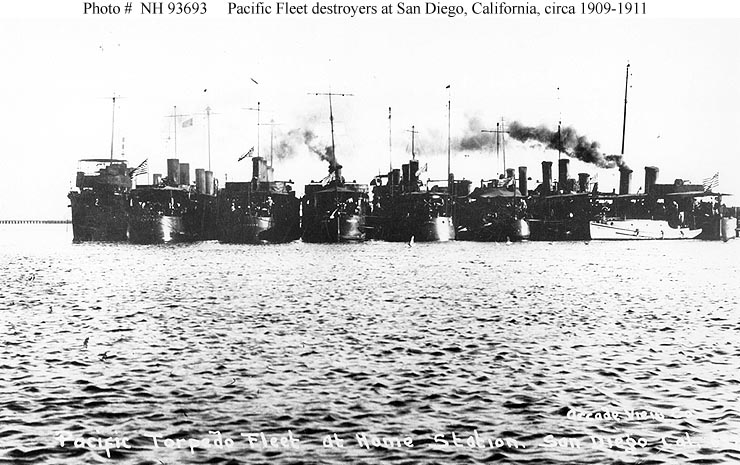 |
98k | Photo #: NH 93693, Pacific Fleet Destroyers moored together at San Diego, California, circa 1909-1911. Photographed by the Arcade View Company, San Diego. These ships are (from left to right): USS Paul Jones or Perry (Destroyer # 10 or 11); USS Preble (Destroyer # 12); USS Hopkins (Destroyer # 6); USS Truxtun (Destroyer # 14); USS Stewart (Destroyer # 13); USS Lawrence (Destroyer # 8); USS Hull (Destroyer # 7); and USS Whipple (Destroyer # 15). The numeral "2", painted on some of these destroyers, indicates they are members of the Second Torpedo Division. Courtesy of Jack Howland, 1982. U.S. Naval Historical Center Photograph. | Tony Cowart | |
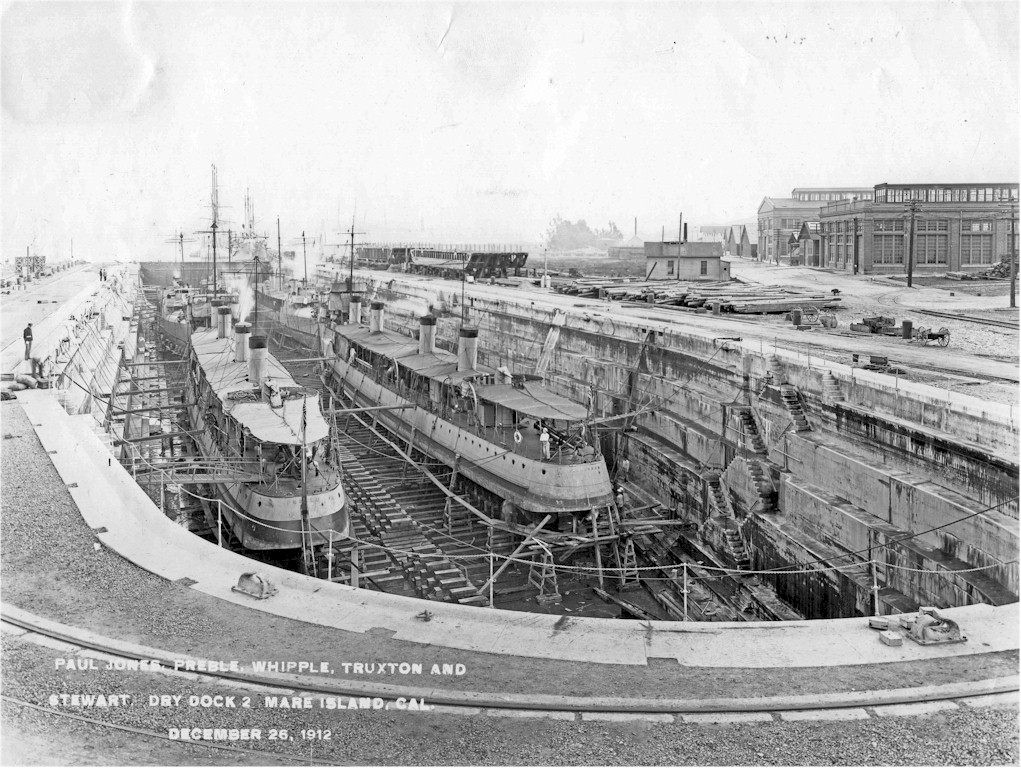
| 260k | A series of 3 images of the USS Paul Jones (DD 10), USS Preble (DD 12), USS Whipple (DD 15), USS Truxton (DD 14) and USS Stewart (DD 13) in dry dock #2 at Mare Island on December 26, 1912. | Darryl Baker | |
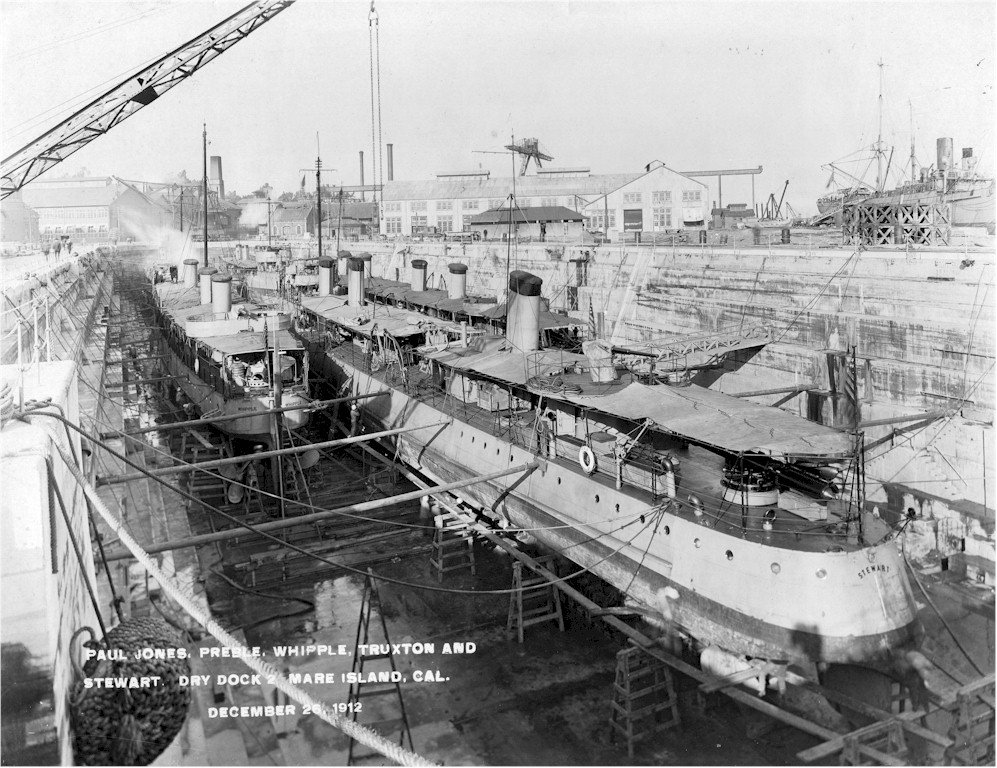
| 241k | As above, viewed from dock caisson. | Darryl Baker | |
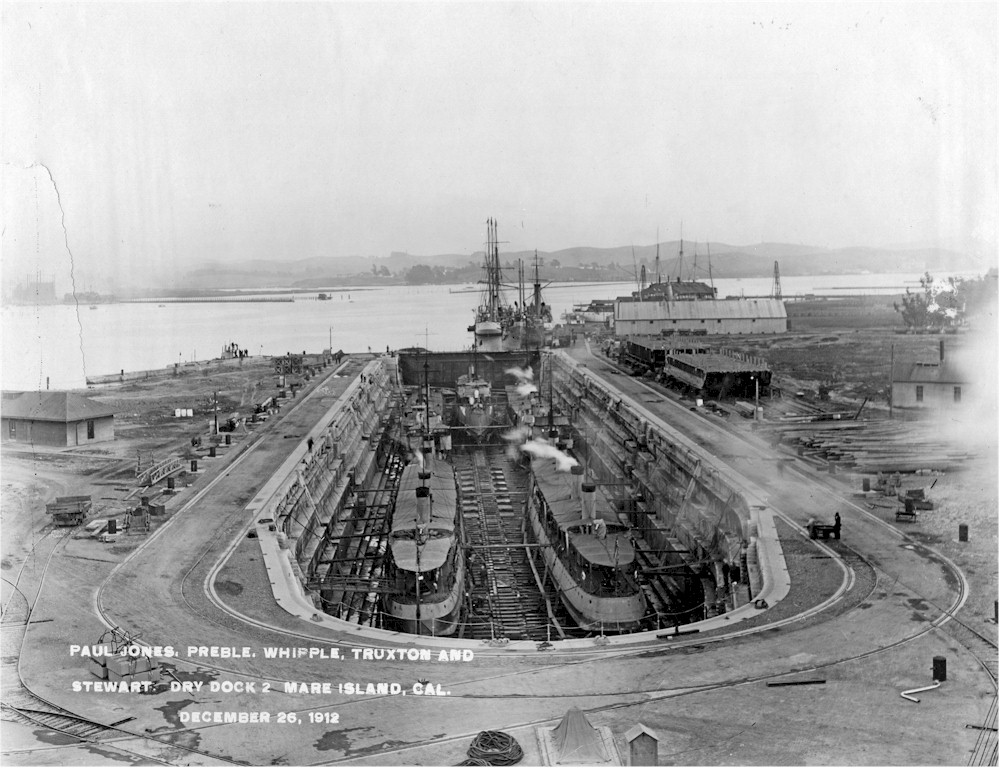
| 198k | As above, viewed from head of dock. The submarine F-1 (SS 20) can be seen to the left of the dry dock. | Darryl Baker | |
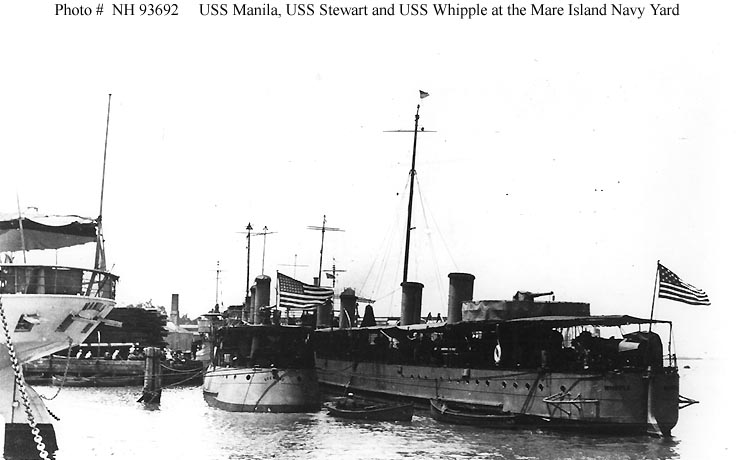 |
54k | Photo #: NH 93692, USS Stewart (Destroyer # 13), left center and USS Whipple (Destroyer # 15) -- right at the Mare Island Navy Yard, California, circa 1912-1913. Note that Stewart flies a 48-star National Ensign, while Whipple has a 13-star "boat" flag. Courtesy of Jack Howland, 1982. U.S. Naval Historical Center Photograph. | Tony Cowart | |
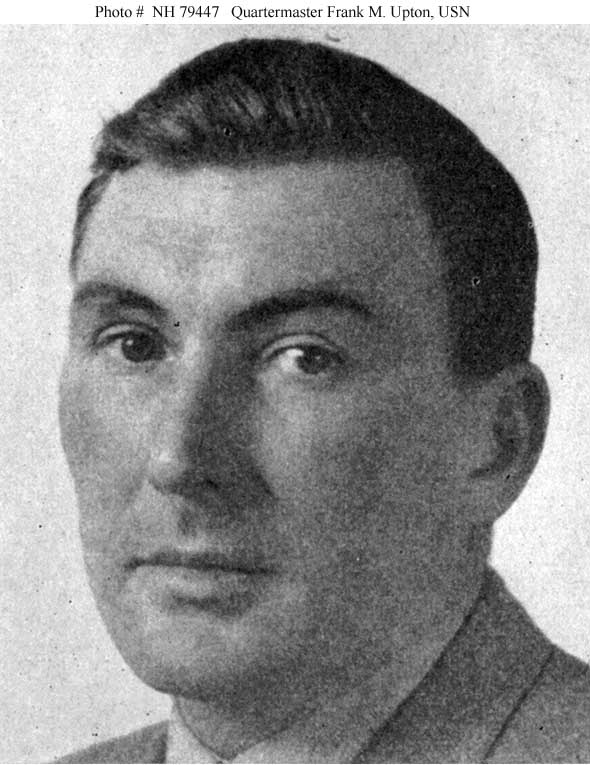 |
74k | Frank Monroe Upton was born on 29 April 1896 in Loveland, Colorado. He enlisted in the U.S. Navy from that state and served as a Quartermaster on the destroyer Stewart during World War I. On 17 April 1918, while his ship was serving on escort duty in Quiberon Bay, France, the nearby American steamship Florence H suffered an internal explosion. Though the sea in the vicinity was covered by exploding boxes of smokeless powder, Upton dove into the water and rescued an exhausted survivor. For his "extraordinary heroism" on this occasion, he was awarded the Medal of Honor. Medal of Honor citation of Quartermaster Frank Monroe Upton, USN (as printed in the official publication "Medal of Honor, 1861-1949, The Navy", page 126): "For extraordinary heroism following internal explosion of the Florence H, on 17 April 1918. The sea in the vicinity of wreckage was covered by a mass of boxes of smokeless powder, which were repeatedly exploding. FRANK M. UPTON, of the U.S.S. Stewart, plunged overboard to rescue a survivor who was surrounded by powder boxes and too exhausted to help himself. Fully realizing the danger from continual explosion of similar powder boxes in the vicinity, he risked his life to save the life of this man." | Bill Gonyo | |
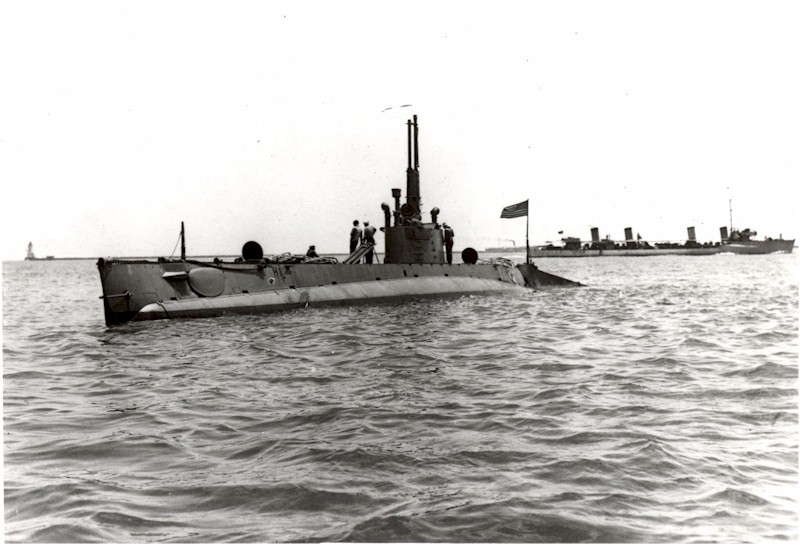 |
92k | The USS Stewart (DD 13) is shown in the background with the submarine USS H-1 (S 28) off the West coast circa 1914. | Darryl L. Baker | |
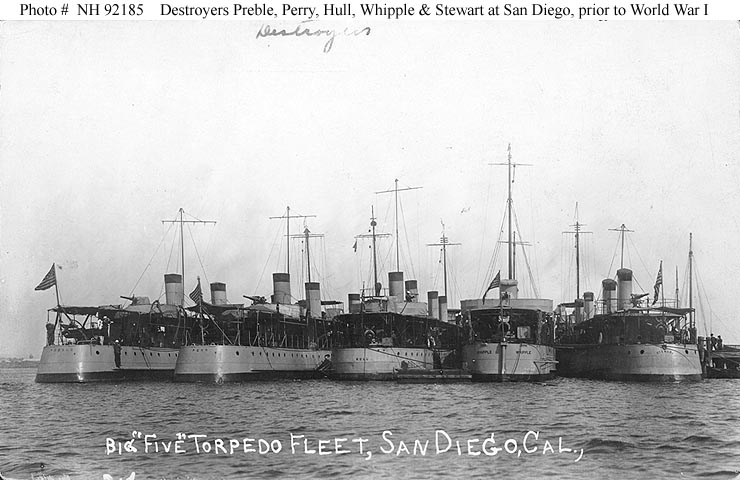 |
73k | Photo #: NH 92185, The Pacific Fleet's "Big Five" torpedo craft at San Diego, California, prior to World War I. These destroyers include (from left to right): USS Preble (Destroyer # 12); USS Perry (Destroyer # 11); USS Hull (Destroyer # 7); USS Whipple (Destroyer # 15); and USS Stewart (Destroyer # 13). Collection of Thomas P. Naughton, 1973. U.S. Naval Historical Center Photograph. | Tony Cowart | |
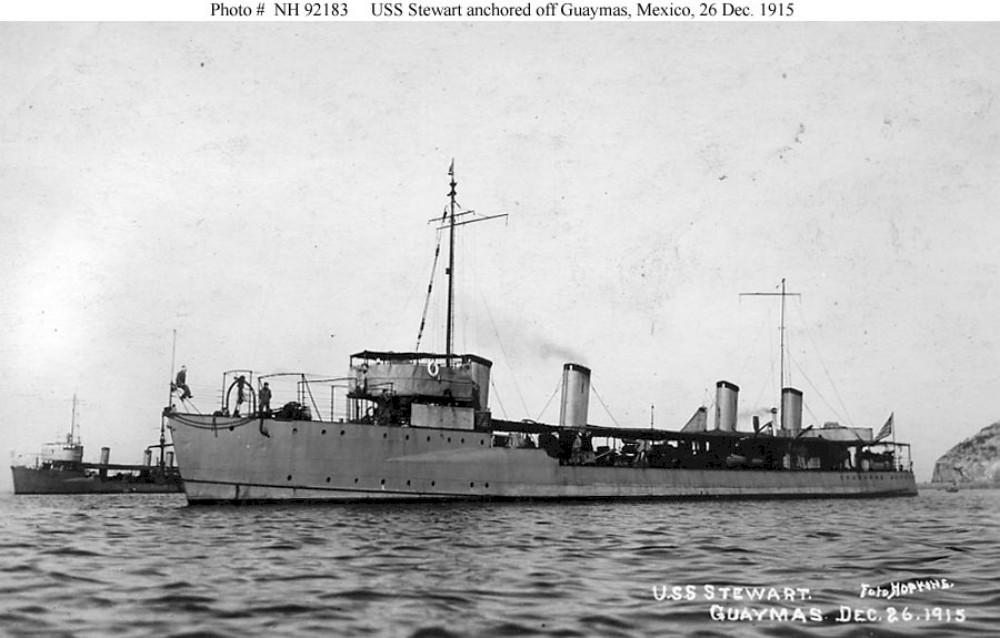 |
118k | USS Stewart (Destroyer # 13), anchored off Guaymas, Mexico, 26 December 1915. USS Preble (Destroyer # 12) is partially visible in the left background. Photographed by Hopkins. Collection of Thomas P. Naughton, 1973. U.S. Naval History and Heritage Command Photograph. Photo #: NH 92183. | Robert Hurst | |
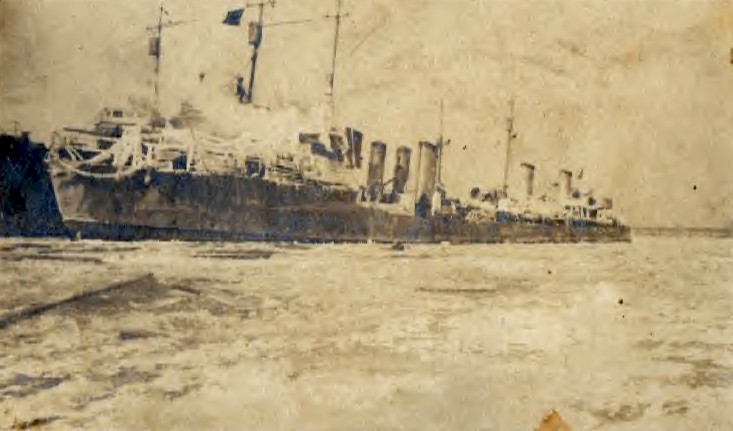 |
63k | Stewart moored at Philadelphia Navy Yard after trip from Norfolk & up the Delaware River December 1917. Courtesy of George B. Koktavy, QM2/c. | Charles Sprague | |
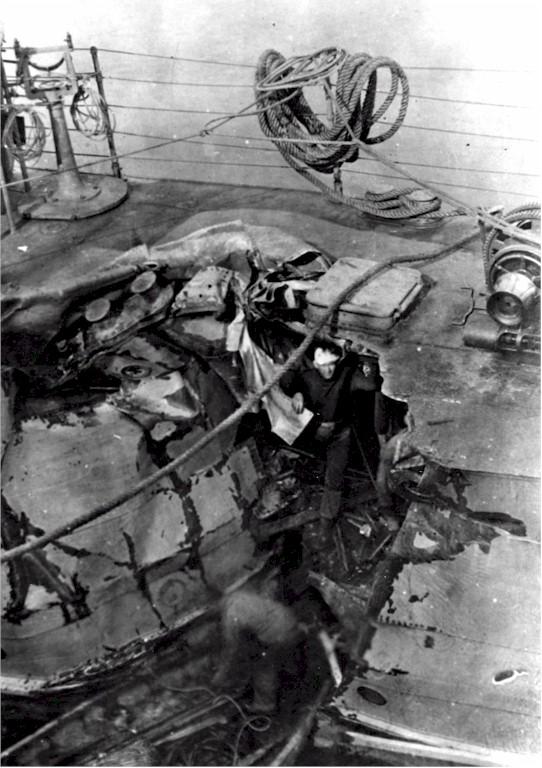
| 119k | Damaged received by USS Stewart (DD-13) in a collision with an unidentified steamer near Brest, France, on April 26, 1918. This damage was described as not too serious, and little water was made, but renewal of frames and plates was necessary. This photograph shows the Stewart just prior to dry docking at Brest, where repairs were made. Final repairs by USS Prometheus (AR-3) were completed on May 28, 1918. Collection of Mr. Peter K. Connelly. Loaned by Mr. William H. Davis in 1967. Source: Naval History Heritage and Command, Photo No. NH 64989. | Mike Green | |
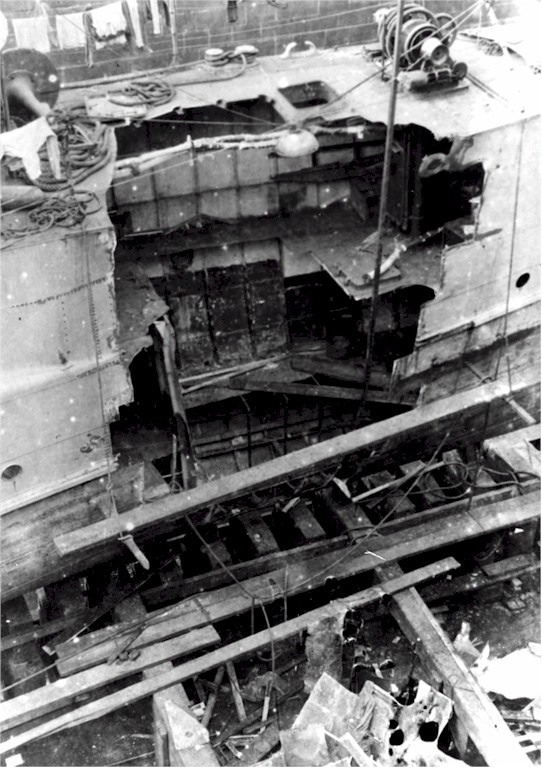
| 129k | Damaged received by USS Stewart (DD-13) in a collision with an unidentified steamer near Brest, France, on April 26, 1918. This damage was described as not too serious, and little water was made, but renewal of frames and plates was necessary.This photograph shows the destroyer in drydock at Brest after the damaged structure had been cut away. Final repairs by USS Prometheus (AR-3) were completed on May 28, 1918. Collection of Mr. Peter K. Connelly. Loaned by Mr. William H. Davis in 1967. Source: Naval History Heritage and Command, Photo No. NH 64990. | Mike Green | |
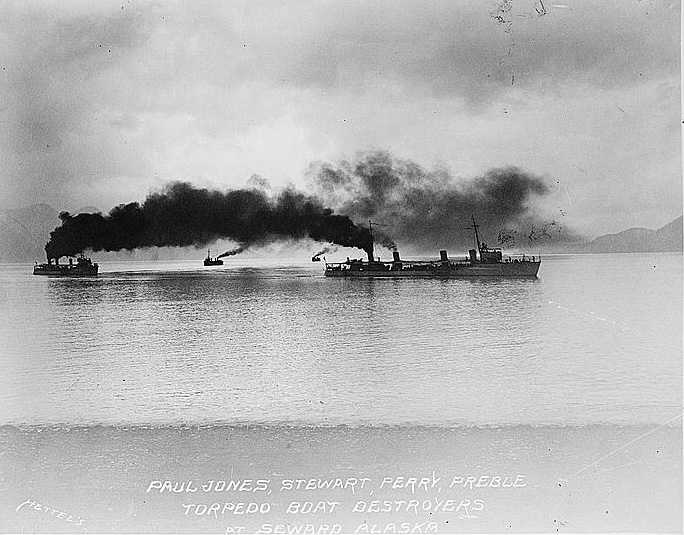
| 147k | USS Paul Jones (DD-10), USS Stewart (DD-13), USS Perry (DD-11) and USS Preble (DD-12) Destroyers at Seward, Alaska circa 1918-1920. Library of Congress Prints and Photographs Division photo # LC-DIG-npcc-00258. | Tom Kermen | |
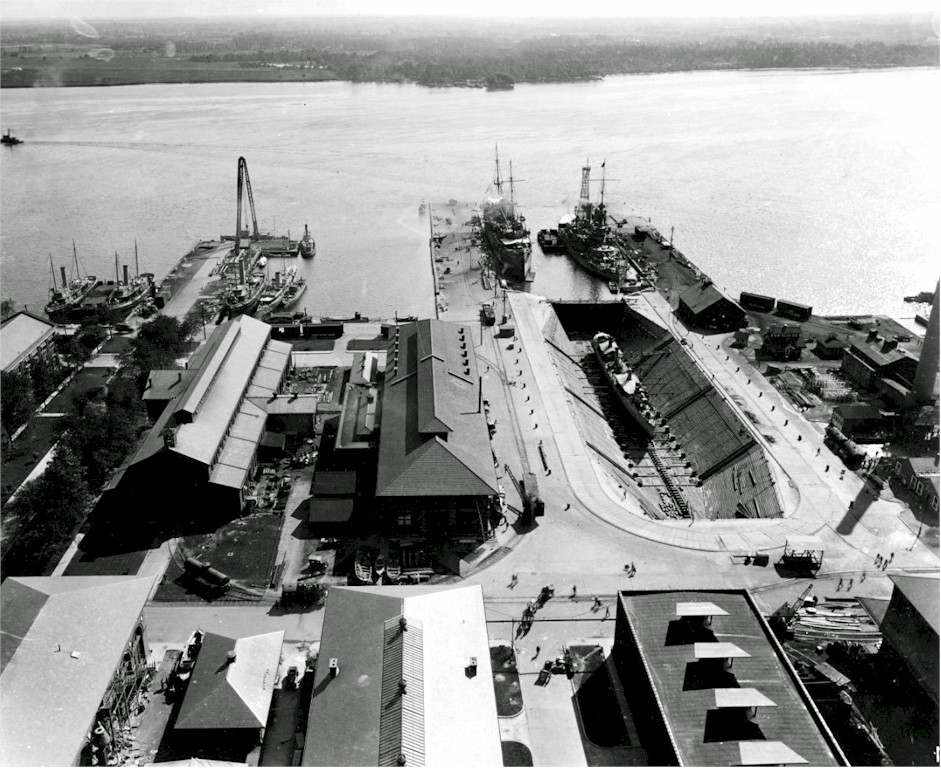
| 212k | View of Philadelphia Navy Yard taken on 17 October 1918. Ship in dry dock is USS Stewart (DD-13). Note several yard tugs alongside left pier. Source: Naval History and Heritage Command, Photo No. NH 52106. | Mike Green | |
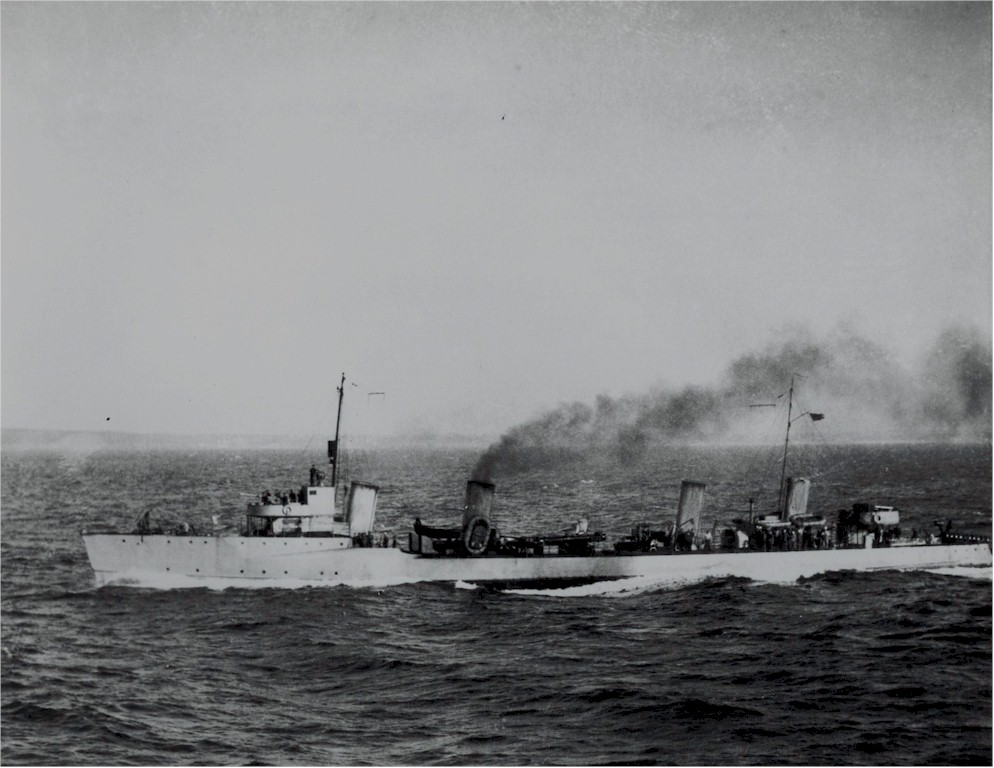 |
144k | Escorting a convoy from St. Nazaire to Brest, France, November 1918. Photo NHC 43486 by and courtesy of John Krieger. | Ed Zajkowski | |
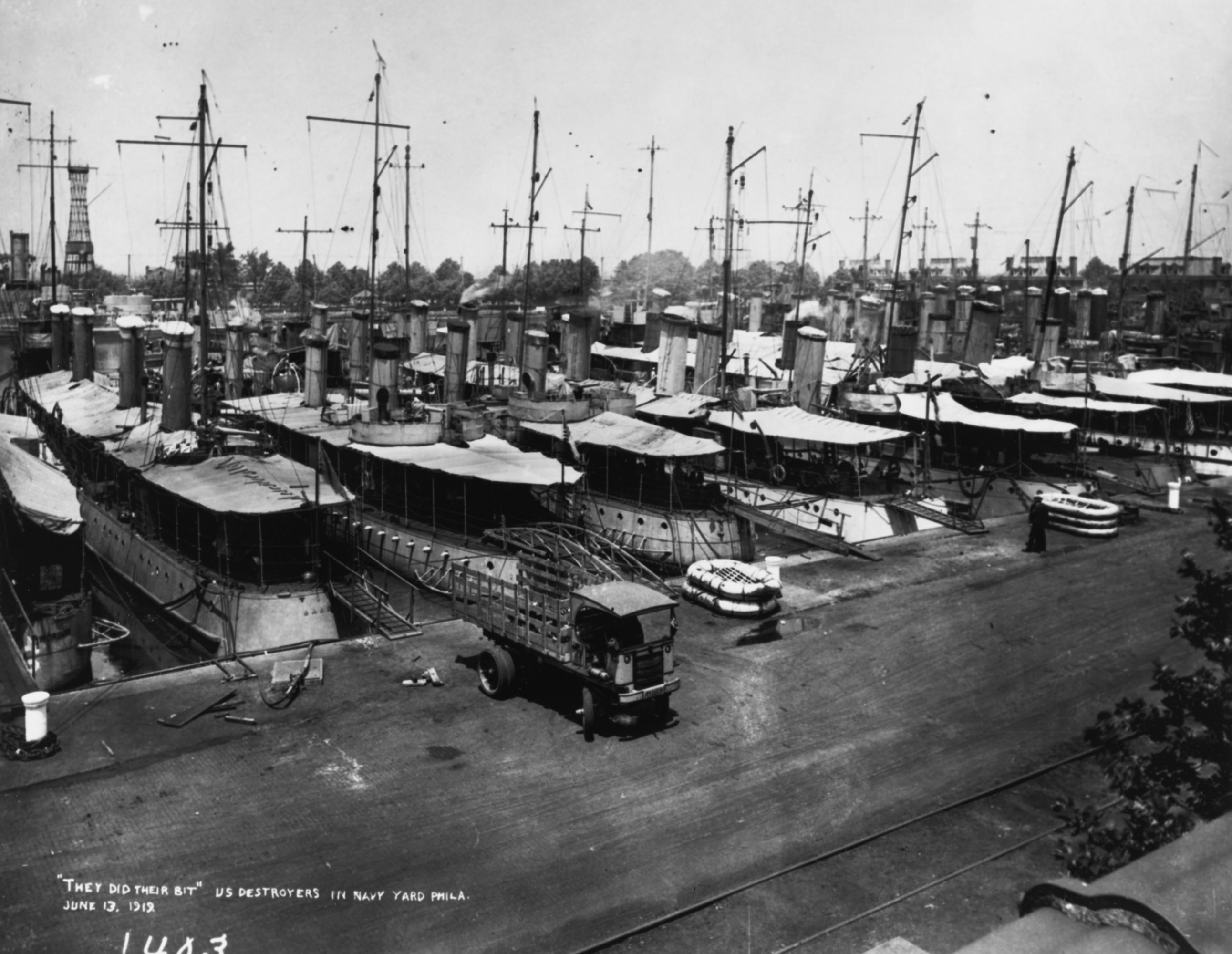 |
168k | Philadelphia Navy Yard, Pennsylvania, Old destroyers in the Reserve Basin, 13 June 1919, while awaiting decommissioning. Note the truck and liferafts on the pier. These ships are (from left to right): USS Worden (Destroyer # 16); USS Barry (Destroyer # 2); USS Hull (Destroyer # 7); USS Hopkins (Destroyer # 6) -- probably; USS Bainbridge (Destroyer # 1); USS Stewart (Destroyer # 13); USS Paul Jones (Destroyer # 10); and USS Decatur (Destroyer # 5). Ships further to the right can not be identified. Courtesy of Frank Jankowski, 1981. U.S. Naval Historical Center Photograph. | Fred Weiss | |
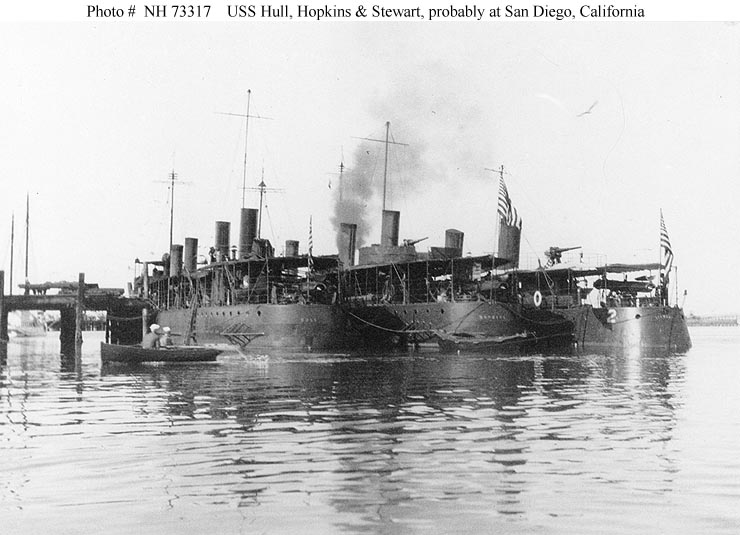 |
74k | USS Hull (Destroyer # 7); USS Hopkins (Destroyer # 6); and USS Stewart (Destroyer # 13) -- listed from left to right In port, probably at San Diego, California, circa 1909-1911. Photographed by Fred W. Kelsey. Courtesy of R.W. Cunningham, 1971. U.S. Naval Historical Center Photograph. | Fred Weiss | |
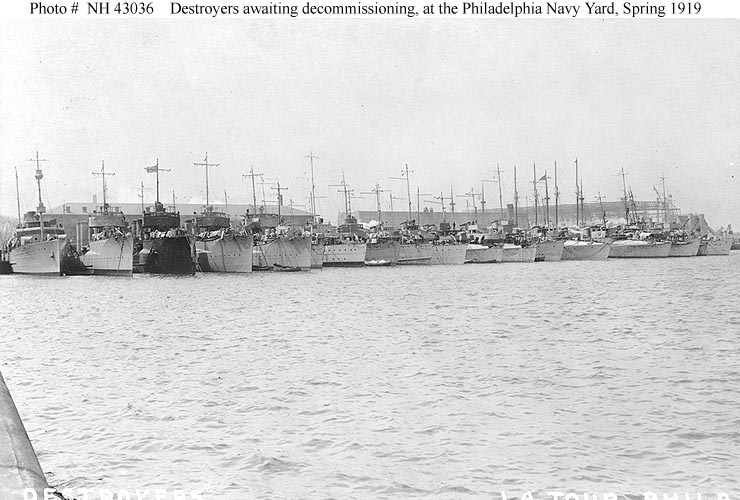 |
81k | Photo #: NH 43036, Philadelphia Navy Yard, destroyers awaiting decommissioning in the Navy Yard's Reserve Basin, during the Spring of 1919. Photographed by La Tour.dShips present are (from left to right): USS Isabel; four unidentified "750-ton" type destroyers; USS Preble (Destroyer # 12); USS Decatur (Destroyer # 5); USS Paul Jones (Destroyer # 10); USS Stewart (Destroyer # 13); USS Bainbridge (Destroyer # 1); USS Hopkins (Destroyer # 6); USS Hull (Destroyer # 7); USS Barry (Destroyer # 2); USS Worden (Destroyer # 16); USS Truxtun (Destroyer # 14); USS Whipple (Destroyer # 15); USS Perry (Destroyer # 11); USS Lawrence (Destroyer # 8); and USS Dale (Destroyer # 4). U.S. Naval Historical Center Photograph. | Tony Cowart | |
LT Andre Morton Proctor   Dec 17 1902 - Apr 8 1903
LT Frederick August Traut    Apr 8 1903 - Oct 17 1904
LT David Foote Sellers    Oct 17 1904 - Jul 25 1905
LT Roscoe Carlyle Bulmer    Jul 25 1905 - May 25 1906
LT Thomas Drayton Parker    May 25 1906 - Jun 30 1906
LT Irvin Van Gorder Gillis    Jun 30 1906 - May 11 1907
LT Julius Frederick Hellweg    May 11 1907 - May 28 1908 (Later RADM)
LT Charles Earl Smith    May 28 1908 - Jun 10 1909
LT William Tupper Lightle    Jun 10 1909 - Jul 8 1911
LTJG William Flewellen Newton    Jul 8 1911 - Jun 15 1912
LTJG Henry Gilbert Shoherd    Jun 15 1912 - Jul 20 1912
LT John Enoch Pond    Jul 20 1912 - Nov 8 1913
LT Charles Lewis Best    Nov 8 1913 - Jan 17 1914
LT Claude Sexton Gillette    Jan 17 1914 - May 6 1915
ENS Herbert Whitwell Underwood    May 6 1915 - Jul 12 1915
LT Willis Winter Bradley Jr.    Jul 12 1915 - Feb 28 1916
LT Bernard Oviait Wills    Feb 28 1916 - Jul 25 1916
LT Harry Jefferson Abett    Jul 25 1916 - Apr 6 1917
LT Eugene Thompson Oates    Apr 6 1917 - Jan 3 1918
LT Thomas Baxter    Jan 3 1918 - Jul 9 1919
| Back To The Main Photo Index | To The Destroyer Photo Index Page |
