| Click On Image For Full Size Image |
Size | Image Description | Contributed By And/Or Copyright |
|
|---|---|---|---|---|
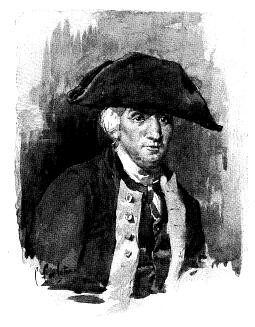 |
35k | Abraham Whipple, 1733-1819, American Revolutionary naval officer, b. Providence, R.I. In 1759-60, as captain of the privateer Game Cock in the French and Indian Wars, he captured numerous prizes. Whipple commanded the party of Rhode Islanders that captured and burned the British revenue cutter Gaspee in Narragansett Bay in 1772, one of the most provocative instances of resistance to the British in the pre-Revolutionary period. At the beginning of the American Revolution he was made commodore of Rhode Island's small fleet and then became fourth-ranking captain in the Continental navy. With the Columbus in 1776 he fought the first sea fight of the war. In 1778, Whipple, commanding the Providence, evaded the British blockade of Narragansett Bay and carried important government dispatches to France. His most daring exploit occurred in 1779 when, as commander of several vessels, he encountered the large, well-protected British Jamaica fleet. Whipple, concealing the guns of his flagship, the Providence, hoisted the British flag and fell in with the fleet for several days. Each night he cut out one of the merchant ships, manned it from his own crew, and sent it to an American port. Eight of the 11 captured ships reached port, making this one of the richest hauls of the war. In 1780 he was charged with the naval defense of Charleston, S.C.; the city fell and Whipple was captured and held prisoner for the rest of the war. | Bill Gonyo | |
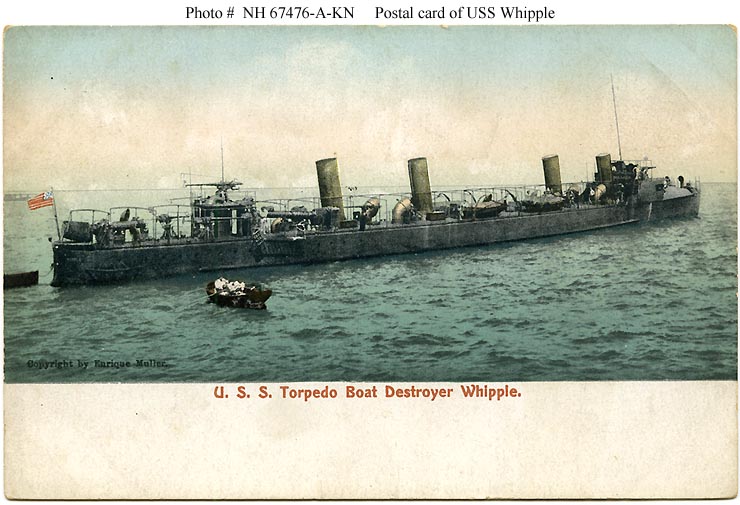 |
81k | USS Whipple (Torpedo Boat Destroyer # 15) undated color-tinted reproduction of a photograph by Enrique Muller, published on a "Polychrome" postal card by the American News Company of New York, Leipzig and Dresden. The card was printed in Germany. U.S. Naval Historical Center photograph. | Paul Rebold | |
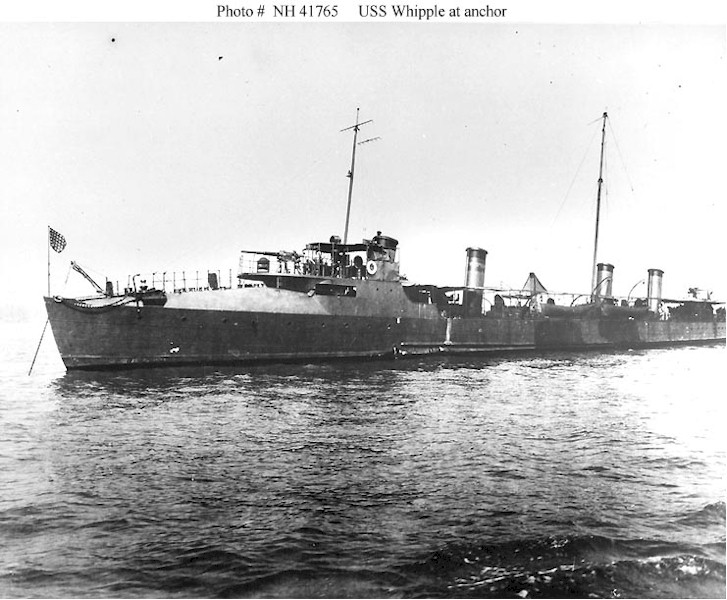 |
112k | Photo #: NH 41765, USS Whipple (Torpedo Boat Destroyer # 15) at anchor during the early 1900s. U.S. Naval Historical Center Photograph. | Tony Cowart | |
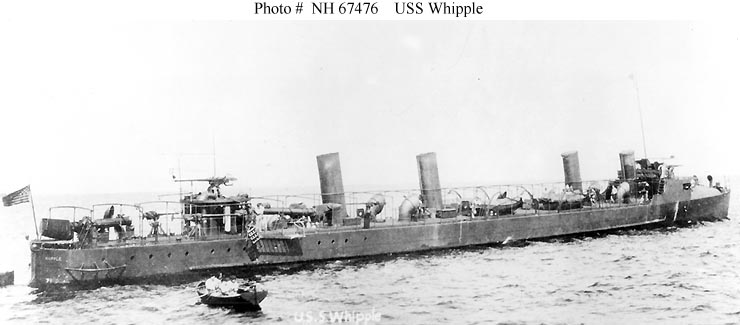 |
39k | Photo #: NH 67476, USS Whipple (Torpedo Boat Destroyer # 15) photographed during the early 1900s. Courtesy of Donald M. McPherson, 1969. U.S. Naval Historical Center Photograph. | Tony Cowart | |
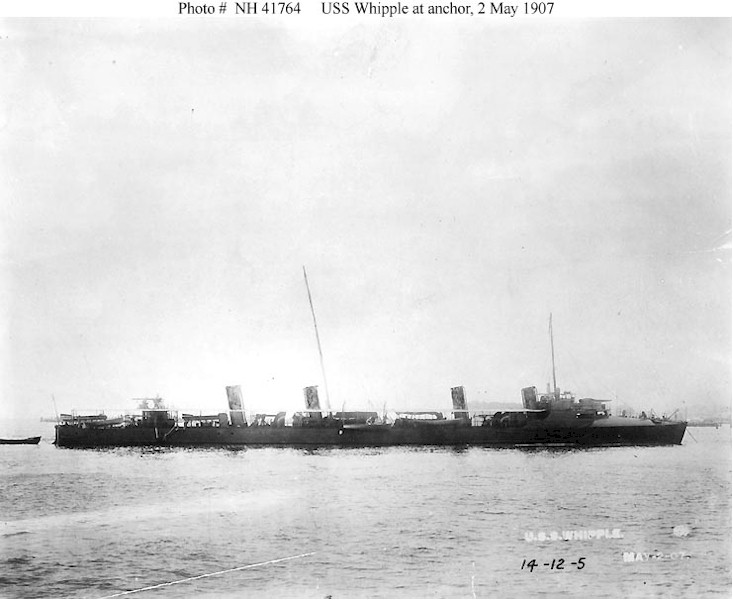 |
76k | Photo #: NH 41764, USS Whipple (Torpedo Boat Destroyer # 15) at anchor on 2 May 1907, probably in Hampton Roads, Virginia. Courtesy of Howard I. Chapelle, Smithsonian Institution. U.S. Naval Historical Center Photograph. | Tony Cowart | |
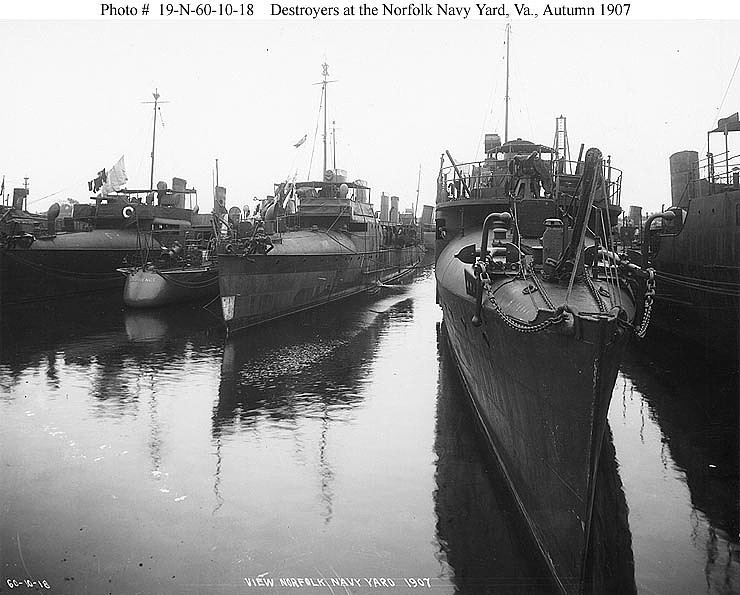 |
102k | Destroyers at the Norfolk Navy Yard, Virginia, Autumn 1907. These ships are (from left to right): USS Hull (Destroyer # 7); USS Lawrence (Destroyer # 8); USS Hopkins (Destroyer # 6); USS Whipple (Destroyer # 15) and USS Truxtun (Destroyer # 14). Photograph from the Bureau of Ships Collection in the U.S. National Archives. | Fred Weiss | |
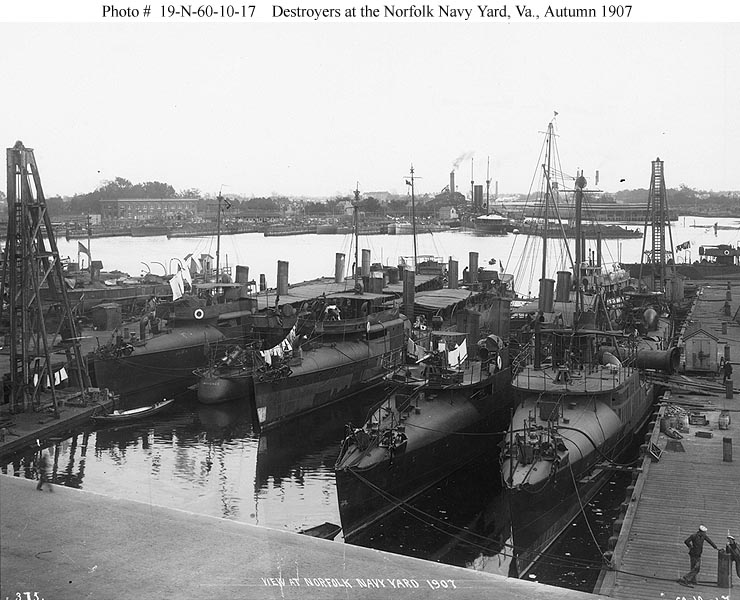 |
102k | Photo #: 19-N-60-10-17, destroyers at the Norfolk Navy Yard, Virginia, Autumn 1907. The destroyers in the foreground basin (from left to right): USS Hull (Destroyer # 7); USS Lawrence (Destroyer # 8); USS Hopkins (Destroyer # 6); USS Whipple (Destroyer # 15) and USS Truxtun (Destroyer # 14). USS Stewart (Destroyer # 13) is at the end of the dock, at right, and USS Talbot (Torpedo Boat # 15) is hauled out on the marine railway at left. On the opposite side of the river are several torpedo boats of the Reserve Torpedo Flotilla and their barracks ship, the old cruiser Atlanta. Photograph from the Bureau of Ships Collection in the U.S. National Archives. | Tony Cowart | |
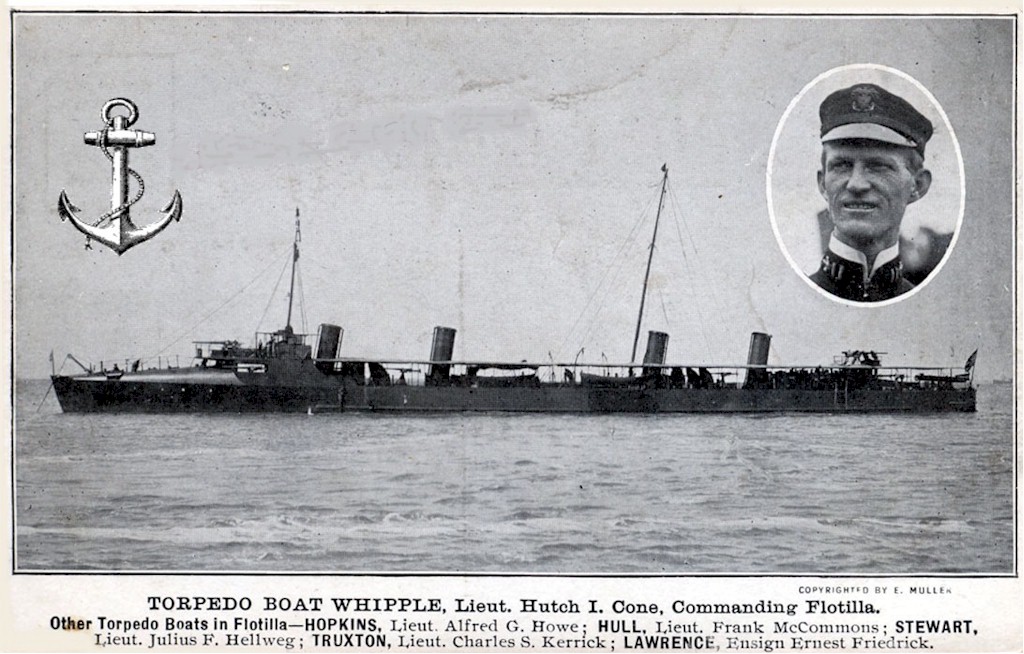 |
183k | With Lt. Hutch I. Cone in command the USS Whipple (DD-15) sailed as escort to the Battleships of The Great White Fleet on the 1st leg of their around the world voyage departing Hampton Roads in December 1907 and arriving in San Francisco in May 1908. The other ships in the flotilla included USS Hopkins (DD-6); USS Hull (DD-7); USS Lawrence (DD-8); USS Stewart (DD-13); and USS Truxtun (DD-14). Whipple and her flotilla made calls at Rio de Janeiro; rounded the Cape Horn for ports on the Chilean and Peruvian coasts; and conducted target practice at Magdalena Bay, Mexico. Whipple joined the Pacific fleet based out of San Diego and patrolled the west coast until 1917. During WWI, she patrolled the western approach to the Canal Zone, then was transferred to Hampton Roads, the Azores and finally operated out of Brest, France, escorting convoys. Lt. Hutch went on to become Rear Admiral Hutch I. Cone serving in various capacities until retiring in 1922 as a result of his war injuries. | Bill Gonyo | |
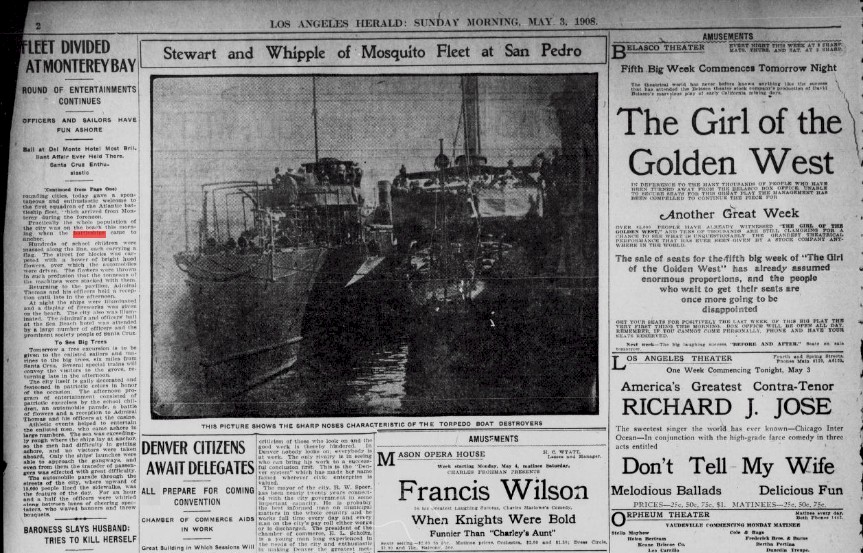 |
194k | Newspaper clipping of the USS Stewart and USS Whipple at San Pedro dated May 3 1908. | Mike Mohl | |
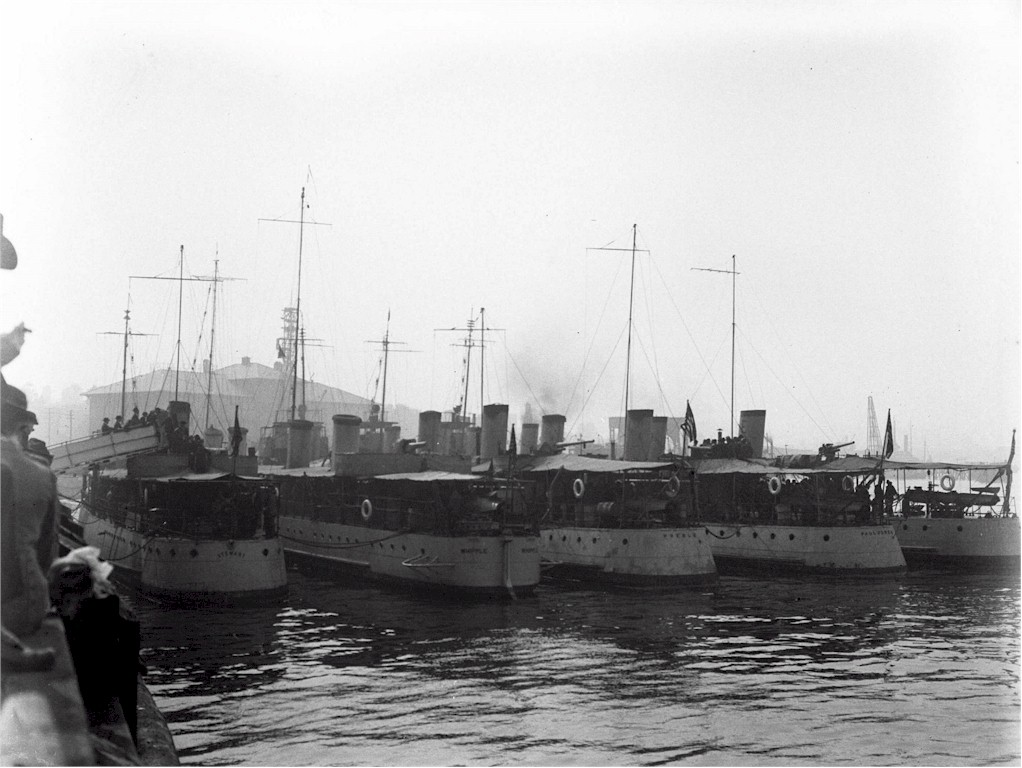 |
163k | Destroyers USS Stewart (DD-13), USS Whipple (DD-15), USS Preble (DD-12), USS Paul Jones (DD-10) and one unidentifiable sister moored together at Vancouver BC circa 1908-1910. Source: City of Vancouver Archives, Photo No. AM640-S1-: CVA 260-75, by James Crookall. | Mike Green | |
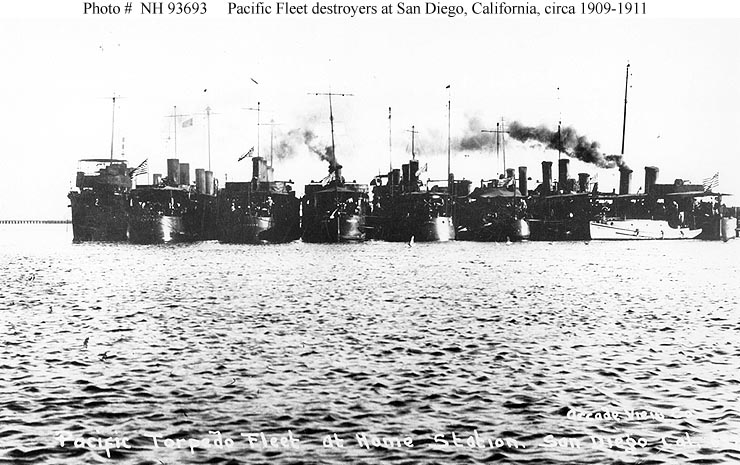 |
98k | Photo #: NH 93693, Pacific Fleet Destroyers moored together at San Diego, California, circa 1909-1911. Photographed by the Arcade View Company, San Diego. These ships are (from left to right): USS Paul Jones or Perry (Destroyer # 10 or 11); USS Preble (Destroyer # 12); USS Hopkins (Destroyer # 6); USS Truxtun (Destroyer # 14); USS Stewart (Destroyer # 13); USS Lawrence (Destroyer # 8); USS Hull (Destroyer # 7); and USS Whipple (Destroyer # 15). The numeral "2", painted on some of these destroyers, indicates they are members of the Second Torpedo Division. Courtesy of Jack Howland, 1982. U.S. Naval Historical Center Photograph. | Tony Cowart | |
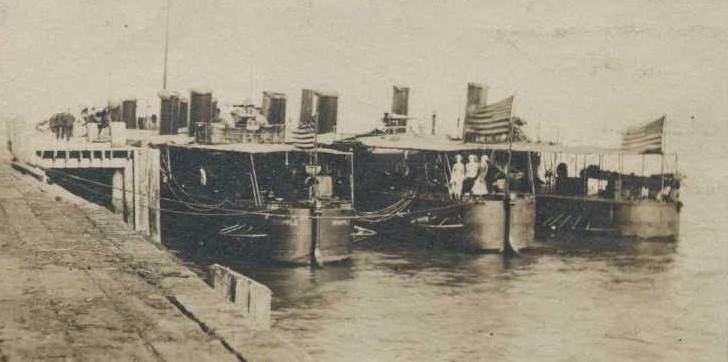 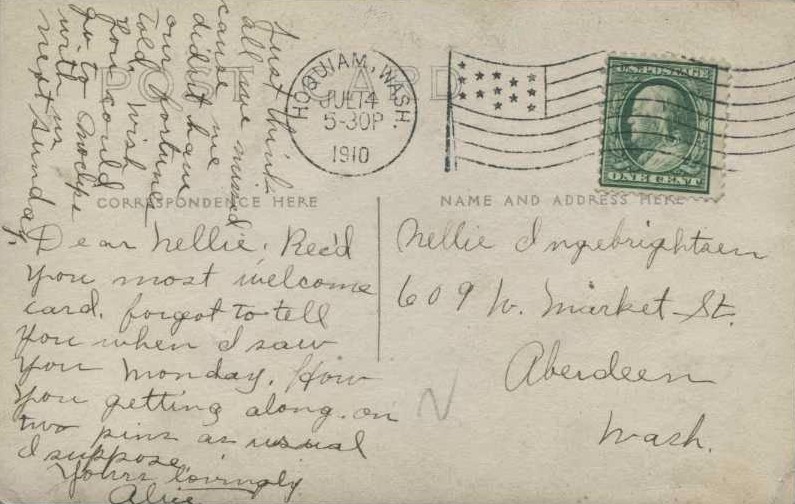 |
61k 107k | Postcard with July 14 1910 at Hoquiam, WA postmark. Whipple is on the left, the others are unidentified. | Tommy Trampp | |
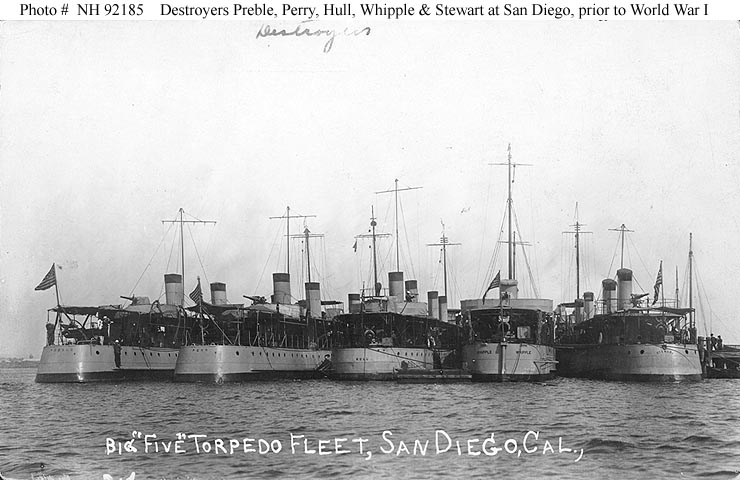 |
73k | Photo #: NH 92185, The Pacific Fleet's "Big Five" torpedo craft at San Diego, California, prior to World War I. These destroyers include (from left to right): USS Preble (Destroyer # 12); USS Perry (Destroyer # 11); USS Hull (Destroyer # 7); USS Whipple (Destroyer # 15); and USS Stewart (Destroyer # 13). Collection of Thomas P. Naughton, 1973. U.S. Naval Historical Center Photograph. | Tony Cowart | |
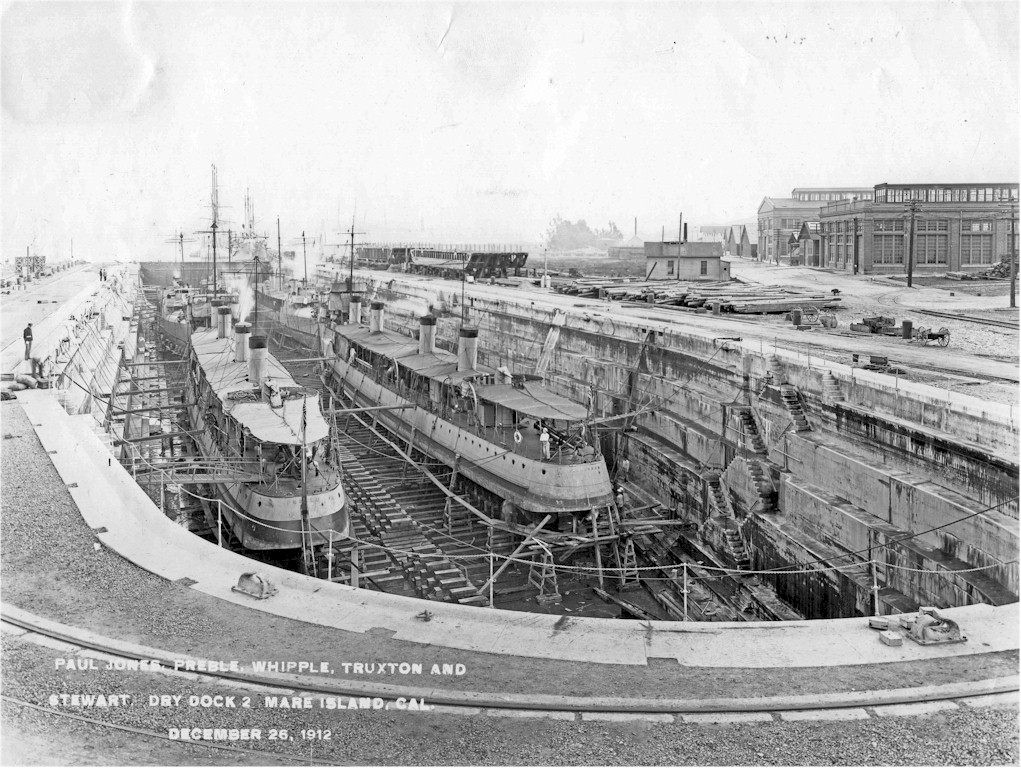
| 260k | A series of 3 images of the USS Paul Jones (DD 10), USS Preble (DD 12), USS Whipple (DD 15), USS Truxton (DD 14) and USS Stewart (DD 13) in dry dock #2 at Mare Island on December 26, 1912. | Darryl Baker | |
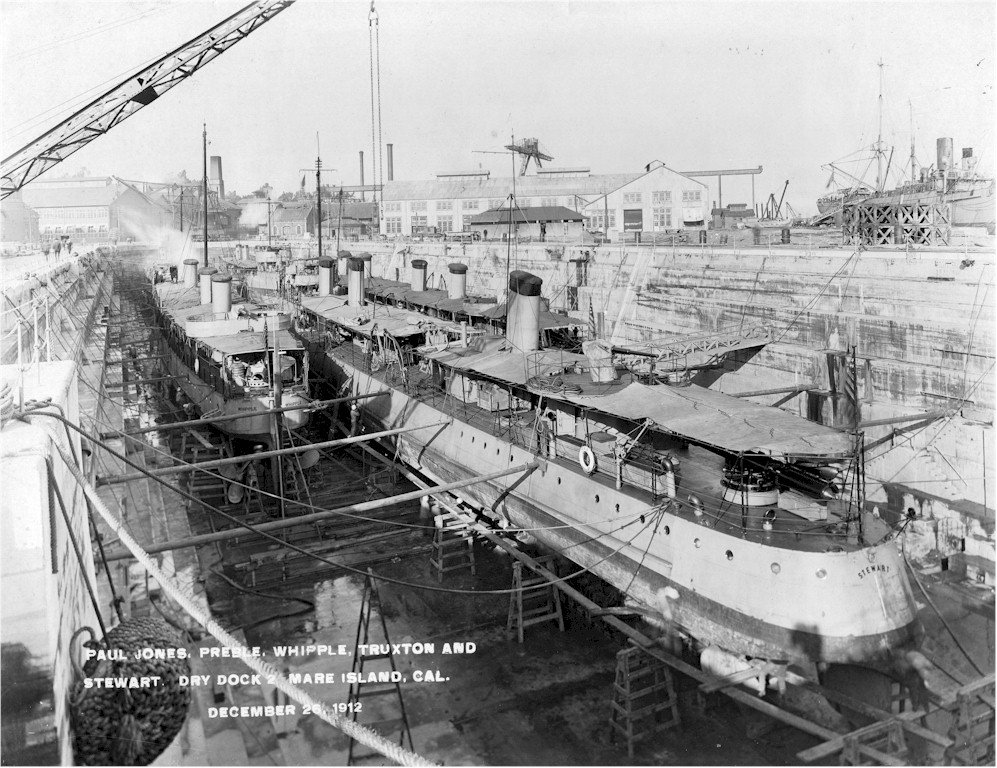
| 241k | As above, viewed from dock caisson. | Darryl Baker | |
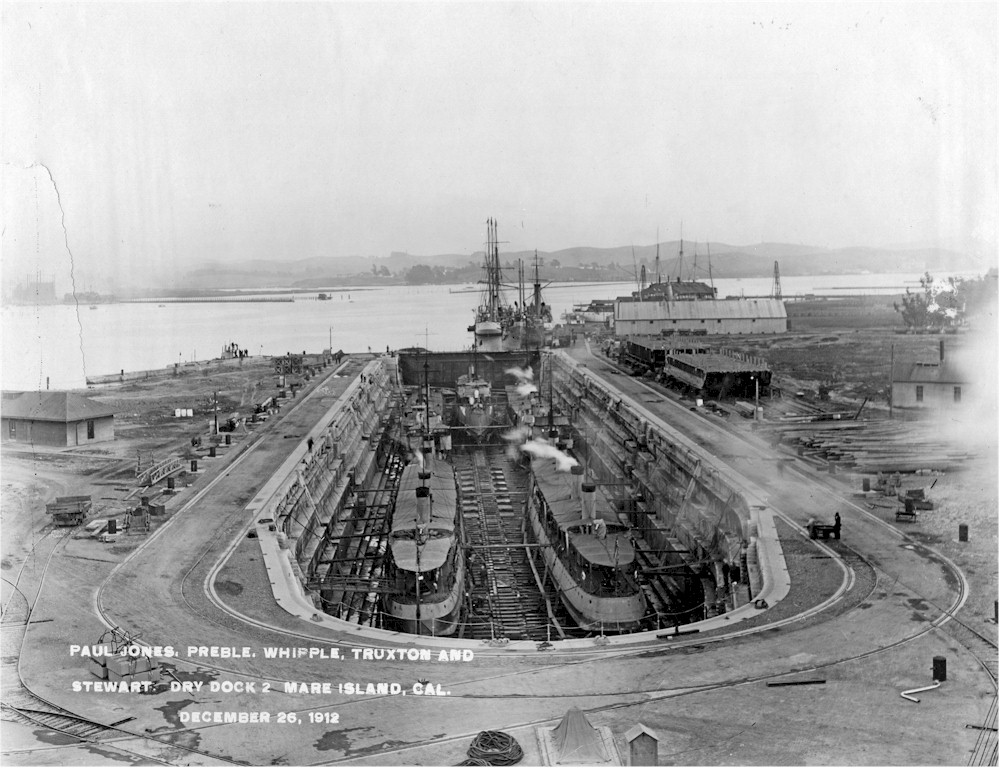
| 198k | As above, viewed from head of dock. The submarine F-1 (SS 20) can be seen to the left of the dry dock. | Darryl Baker | |
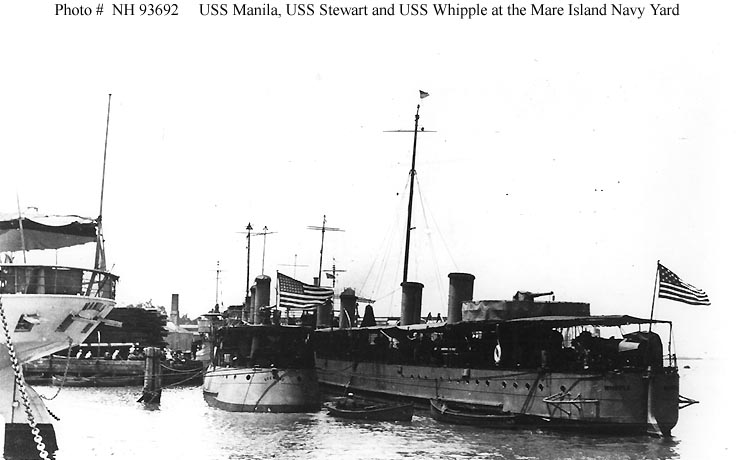 |
54k | Photo #: NH 93692, USS Stewart (Destroyer # 13) -- left center and USS Whipple (Destroyer # 15) -- right at the Mare Island Navy Yard, California, circa 1912-1913. Note that Stewart flies a 48-star National Ensign, while Whipple has a 13-star "boat" flag. Courtesy of Jack Howland, 1982. U.S. Naval Historical Center Photograph. | Tony Cowart | |
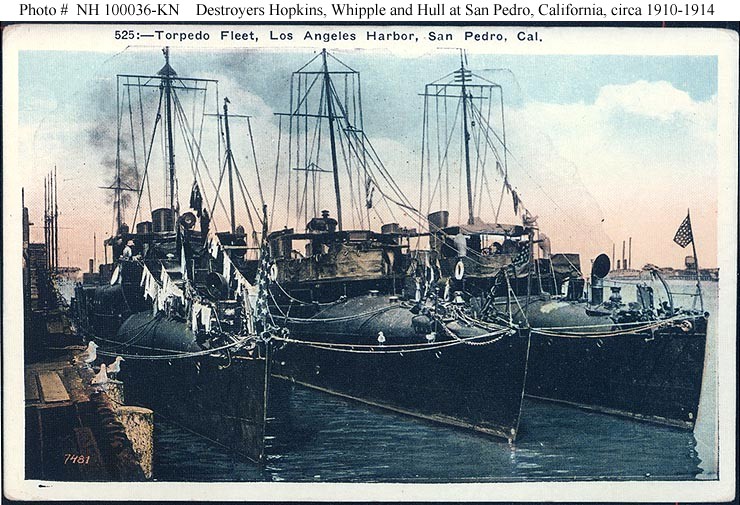 |
149k | U.S. Navy Destroyers at San Pedro, California, circa 1910-1914. The original photograph was published on a color-tinted postcard by the M. Kashower Company, Los Angeles, California, at about the time it was taken. These destroyers are (from left to right): USS Hopkins (Destroyer # 6); USS Whipple (Destroyer # 15); and USS Hull (Destroyer # 7). Courtesy of R.D. Jeska, 1984. U.S. Naval Historical Center Photograph. | Fred Weiss | |
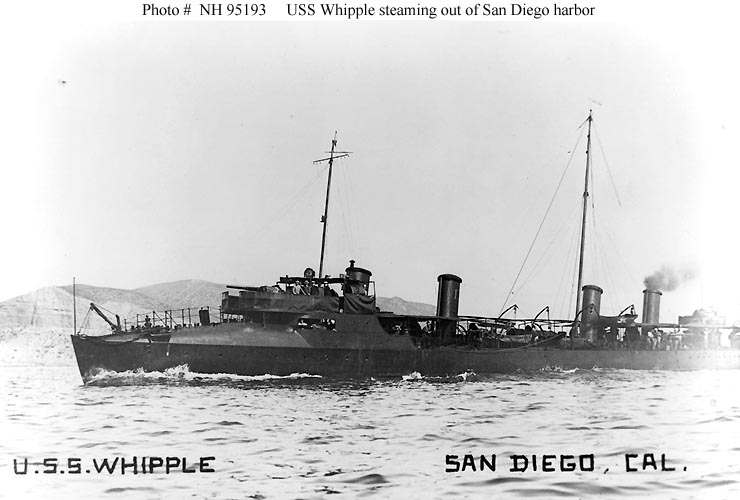 |
56k | Photo #: NH 95193, USS Whipple (Destroyer # 15) steaming out of San Diego harbor, California, prior to World War I. Courtesy of Jack L. Howland, 1983. U.S. Naval Historical Center Photograph. | Tony Cowart | |
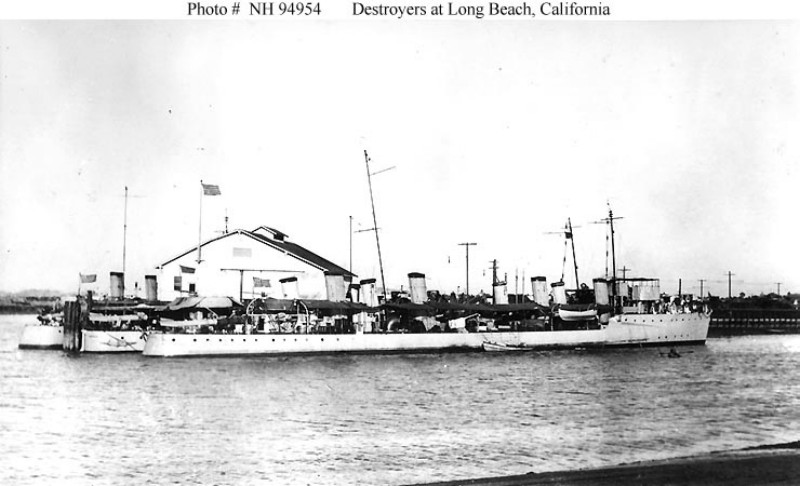 |
76k | U.S. destroyers of the First Division, Torpedo Flotilla, Pacific Fleet, at Long Beach, California, circa 1913-1916. USS Whipple (Destroyer # 15) is in the middle. The others are two of the following: USS Paul Jones (Destroyer # 10), USS Perry (Destroyer # 11) or USS Preble (Destroyer # 12). Courtesy of Jack Howland, 1983. U.S. Naval Historical Centre Photo # NH 94954. | Robert Hurst | |
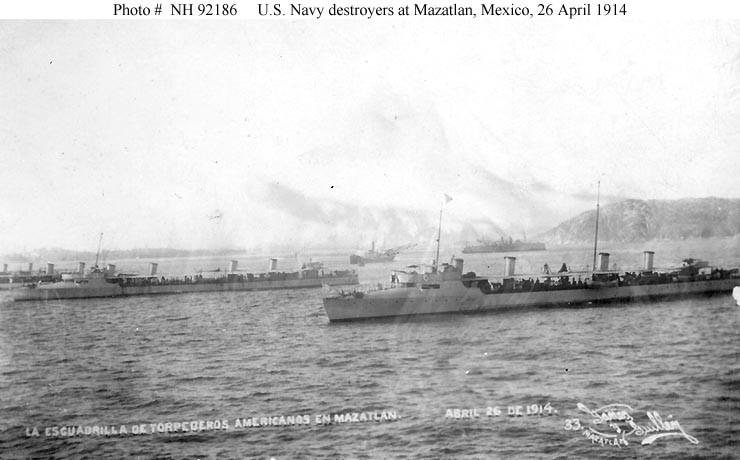 |
54k | Photo #: NH 92186, U.S. Pacific Fleet destroyers at Mazatlan, Mexico, 26 April 1914, keeping watch on the Mexican gunboat Morales (the two-funneled ship in the right center distance). The two destroyers nearest to the camera are (in no particular order): USS Truxtun (Destroyer # 14) and USS Whipple (Destroyer # 15). Collection of Thomas P. Naughton, 1973. U.S. Naval Historical Center Photograph. | Tony Cowart | |
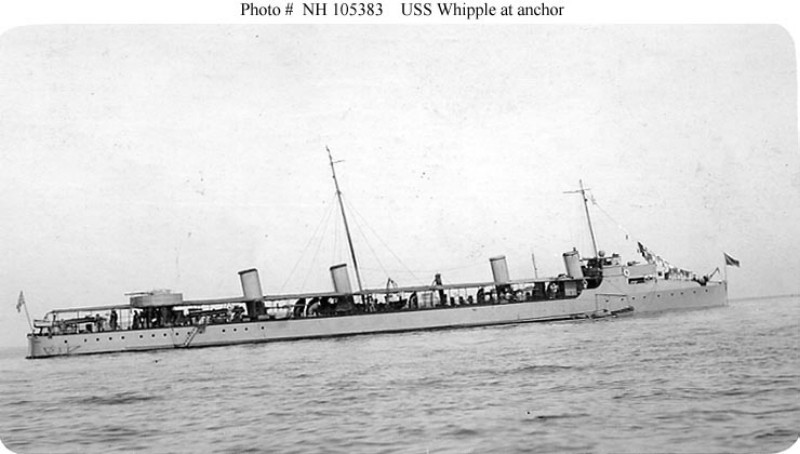 |
65k | USS Whipple (Destroyer # 15), at anchor, prior to World War 1. The original image is printed on postcard mailed at San Francisco, California, on 9 January 1920. Its front bears a hand-written inscription identifying the ship as USS "Bennington" (which is quite incorrect) and giving the location as Monterey Bay, California, and date as July 1914. Donation of Charles R. Haberlein Jr., 2007. Naval Historical Centre Photo # NH 105383. | Robert Hurst | |
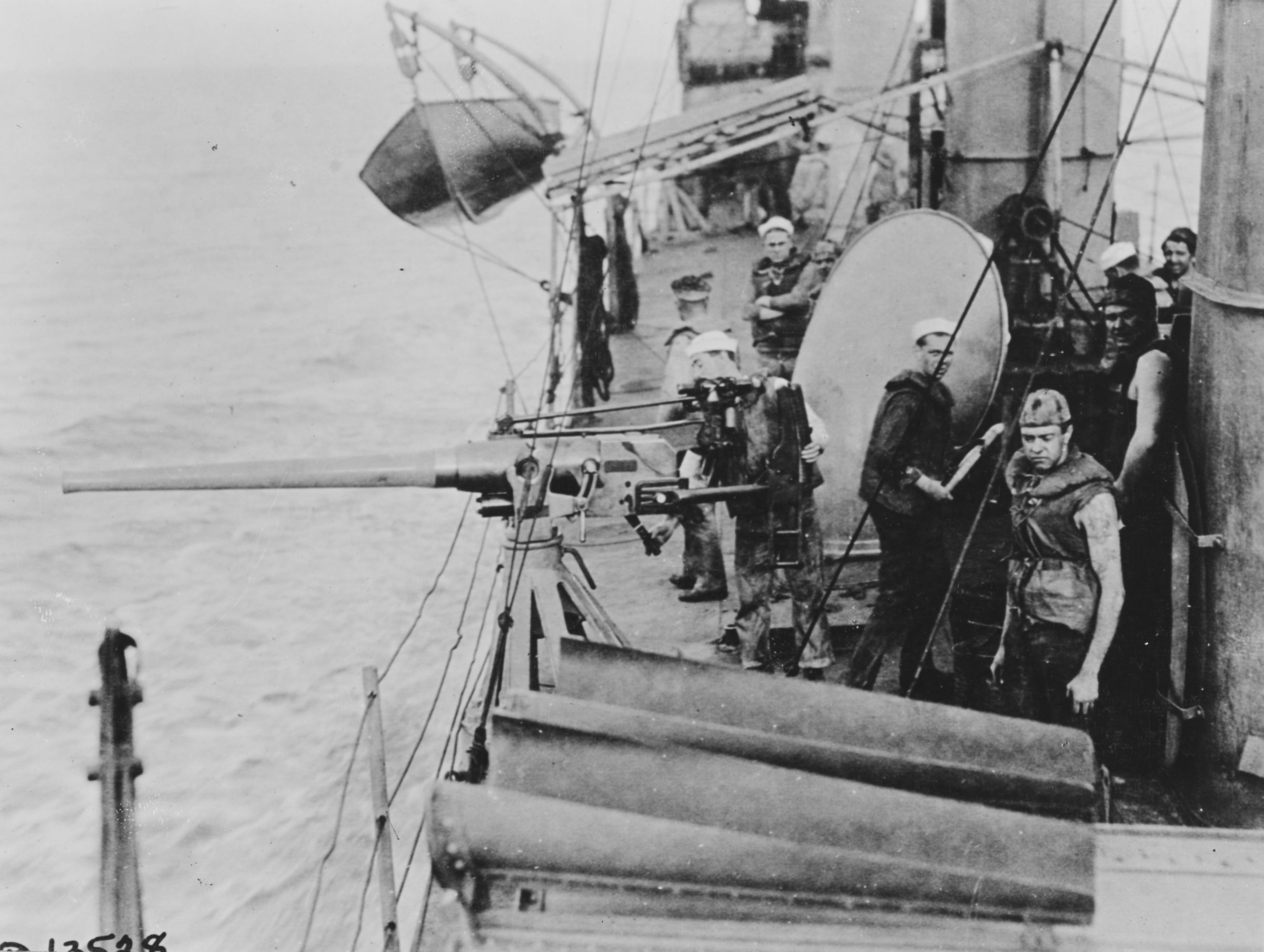 |
439k | Six pounder and crew aboard USS Whipple (Destroyer # 15), at sea, 18 May 1918. Naval History & Heritage Command photo NH 124180. | Robert Hurst | |
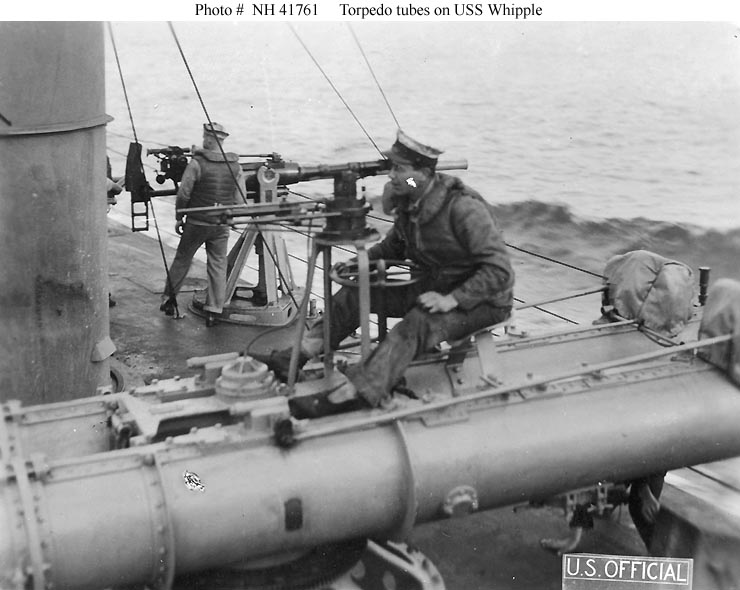 |
67k | Photo #: NH 41761, USS Whipple (Destroyer # 15) training a twin 18-inch torpedo tube mount installed just aft of the ship's after smokestack, 18 June 1918. Note telescopic sight on the torpedo tube mounting, and 6-pounder gun in the background. U.S. Naval Historical Center Photograph. | Tony Cowart | |
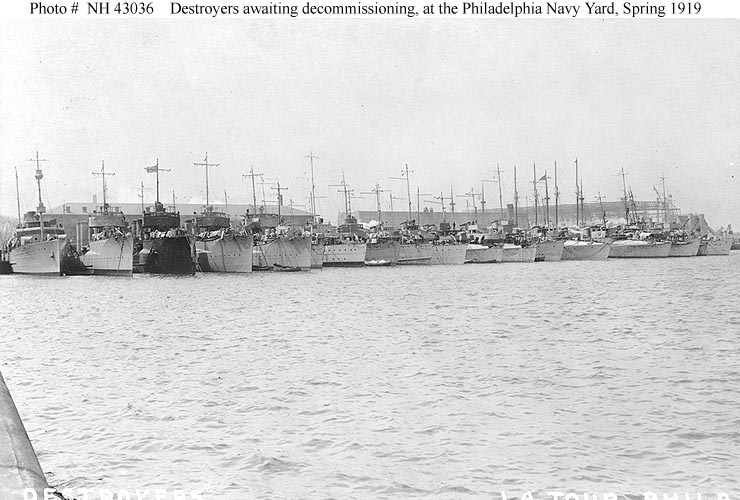 |
81k | Photo #: NH 43036, Philadelphia Navy Yard, destroyers awaiting decommissioning in the Navy Yard's Reserve Basin, during the Spring of 1919. Photographed by La Tour.dShips present are (from left to right): USS Isabel; four unidentified "750-ton" type destroyers; USS Preble (Destroyer # 12); USS Decatur (Destroyer # 5); USS Paul Jones (Destroyer # 10); USS Stewart (Destroyer # 13); USS Bainbridge (Destroyer # 1); USS Hopkins (Destroyer # 6); USS Hull (Destroyer # 7); USS Barry (Destroyer # 2); USS Worden (Destroyer # 16); USS Truxtun (Destroyer # 14); USS Whipple (Destroyer # 15); USS Perry (Destroyer # 11); USS Lawrence (Destroyer # 8); and USS Dale (Destroyer # 4). U.S. Naval Historical Center Photograph. | Tony Cowart | |
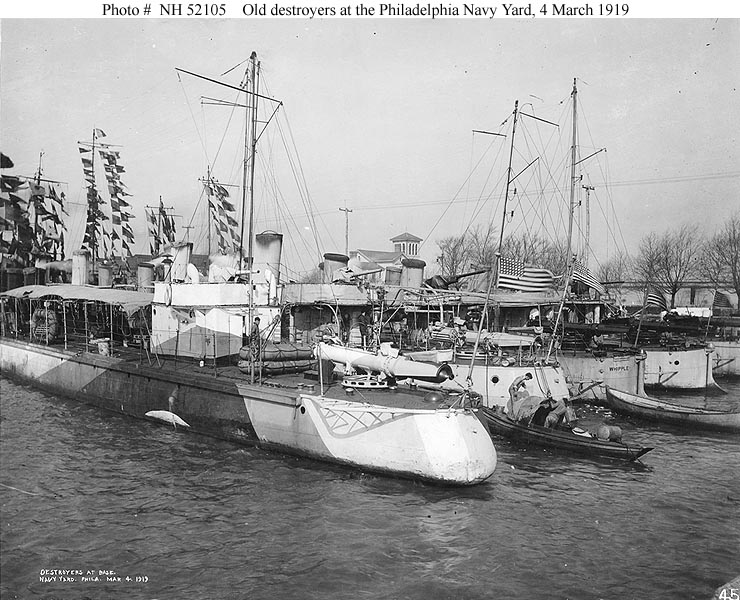 |
113k | Photo #: NH 52105, Philadelphia Navy Yard, Pennsylvania destroyers awaiting decommissioning, in the Yard's Reserve Basin, 4 March 1919. Ships present include (from left to right): USS Lawrence (Destroyer # 8); USS Perry (Destroyer # 11); USS Whipple (Destroyer # 15); USS Truxtun (Destroyer # 14); and USS Worden (Destroyer # 16). Note Lawrence's after torpedo tube (with torpedo visible) and pattern camouflage; 48-star flags, radio masts and signal flags on several of these destroyers; and small craft moored to the ships' sterns. U.S. Naval Historical Center Photograph. | Tony Cowart | |
USS WHIPPLE DD-15 History
View This Vessels DANFS History Entry
(Located On The hazegray Web Site, This Is The Main Archive For The DANFS Online Project.)
Commanding Officers
Thanks to Wolfgang Hechler & Ron Reeves
LT Jehu Valentine Chase    Feb 17 1903 - Jun 3 1905 (Later RADM)

LT Irvin Van Gorder Gillis    Jun 3 1905 - Jul 11 1906

LT Thomas Drayton Parker    Jul 11 1906 - Aug 8 1906

LT Frank Hardeman Brumby    Aug 8 1906 - Aug 25 1906 (Later ADM)

LT Edward Churchill Woods    Aug 25 1906 - Aug 11 1907

LT Hutchinson Ingham Cone    Aug 11 1907 - Nov 5 1907 (Later RADM)

LT John Gaylord Church    Nov 5 1907 - ?

LT Rufus Fairchild Zogbaum Jr.    Oct 7 1911 - Dec 17 1911

ENS Charles Lewis Best    Dec 17 1911 - Feb 24 1912

LT Ross Sherman Culp    Feb 24 1912 - Jun 20 1912

LT Martin Kellog Metcalf    Jun 20 1912 - ?

LT Harry Jefferson Abbett    Aug 25 1915 - Sep 15 1915

LTJG Frank Davis Pryor    Sep 15 1915 - Aug 14 1917

LCDR Robert Morris Doyle Jr.    Aug 14 1917 - Jul 20 1918

MACH William Burr Harrison    Jul 20 1918 - Jul 7 1919
Crew Contact And Reunion Information
Not Applicable To This Ship
Additional Resources and Web Sites of Interest
Tin Can Sailors Website
Destroyer History Foundation
Destroyers Online Website
Official U.S.Navy Destroyer Website
| Back To The Main Photo Index | To The Destroyer Photo Index Page |
Comments and Suggestions about this page, E-mail DestroyerInfo
Problems and site related matters, E-mail Webmaster
This page was created by Fred Willishaw (ex ARG-4, AS-11 & DD-692) and is maintained by David L. Wright
|