
Photographic History of the United States Navy
ARCHIVE
| NavSource Main Page | FAQ | Contact us | Search NavSource |
| |
NavSource Naval History Photographic History of the United States Navy |
DESTROYER ARCHIVE |


 Decommissioned and transferred to Britain November 26 1940, renamed HMS Salisbury (I52).
| Click On Image For Full Size Image |
Size | Image Description | Contributed By |
|
|---|---|---|---|---|
| No Photo Available | - | Thomas Claxton, born in Baltimore, Md., entered the Navy as a midshipman 17 December 1810. He was mortally wounded after gallant service in the Battle of Lake Erie 10 September 1813, dying at Erie, Pa., 17 October 1813. | Robert M. Cieri | |
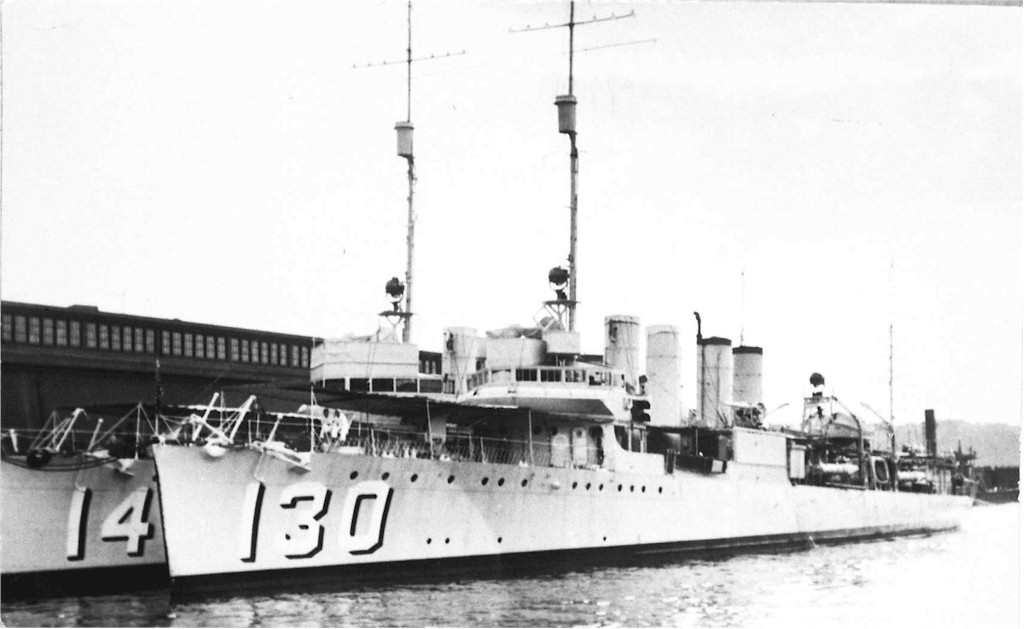 |
108k | Undated, New York City. USS Jacob Jones (DD 130) and USS Claxton (DD-140). Photo from the collection of Vallejo Naval and Historical Museum. | Darryl Baker | |
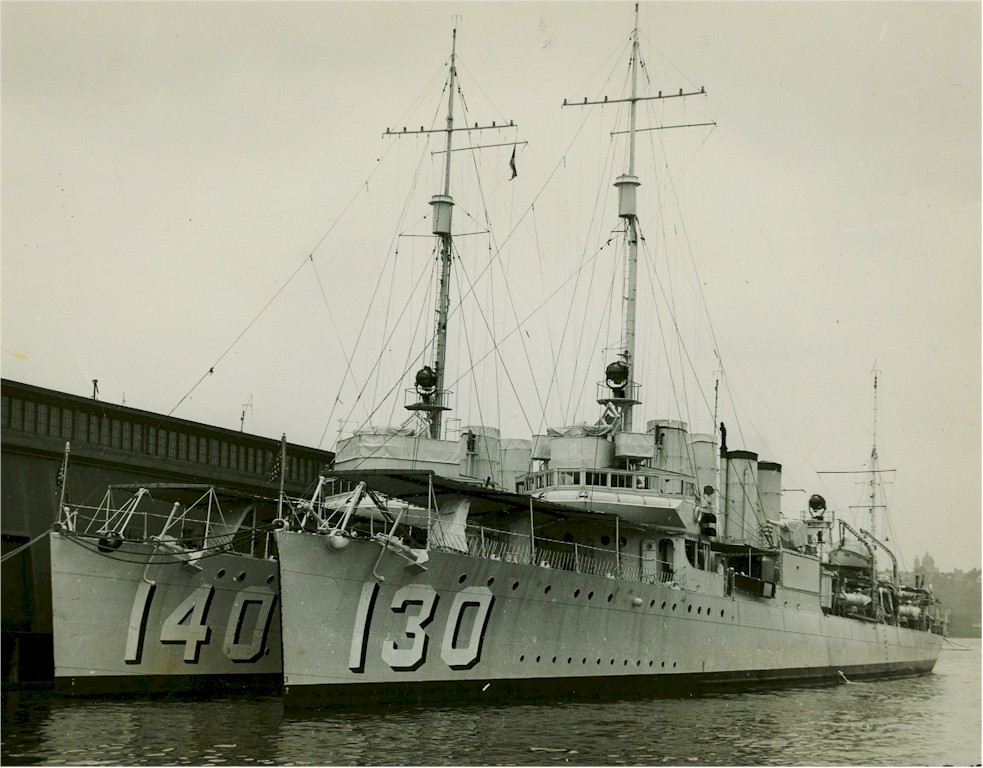 |
162k | Another view of the above. | Ed Zajkowski | |
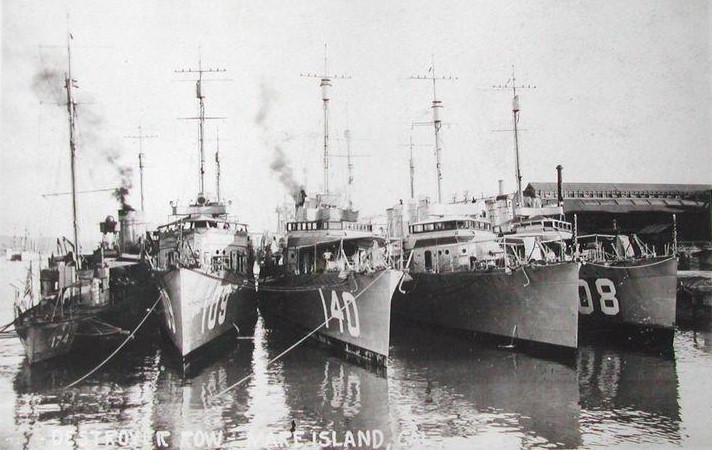
| 95k | Undated, at Mare Island (l-r) USS Rizal (DD-174), USS Crane (DD-109), USS Claxton (DD-140), unknown and USS Williams (DD-108). | Tommy Trampp | |
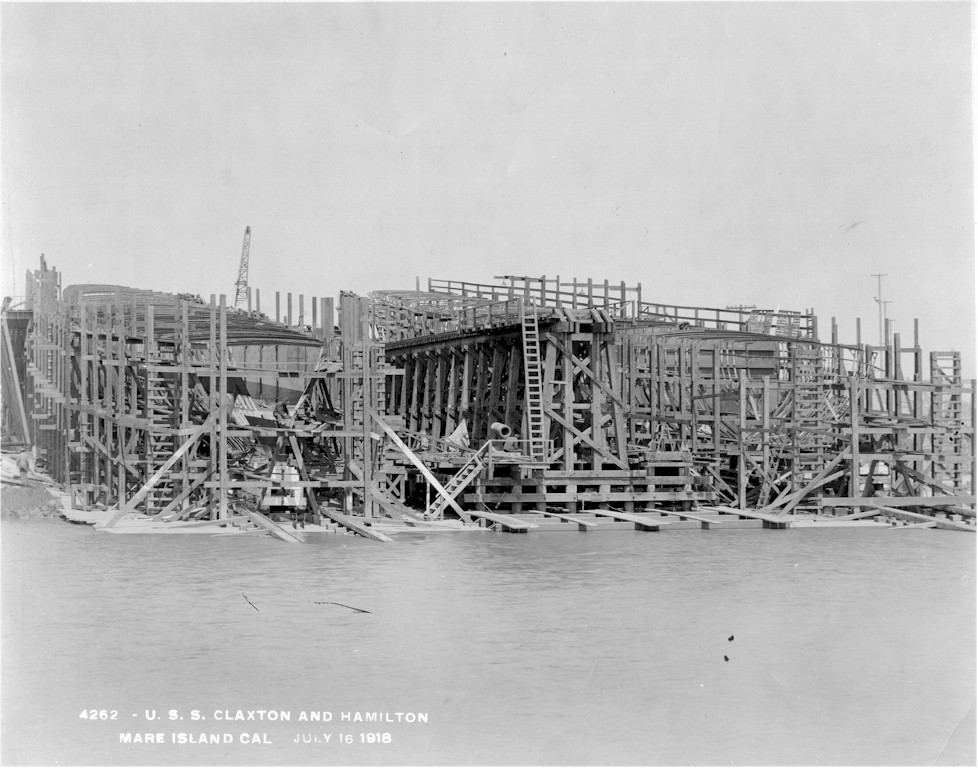
| 162k | USS Hamilton (DD 141) and USS Claxton (DD 140) on the building ways on July 16 1918 at Mare Island. | Darryl Baker | |
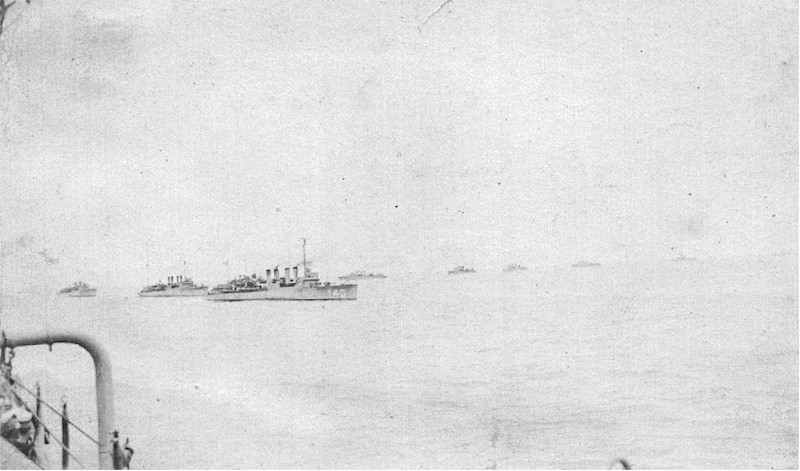
| 96k | Circa 1918-1926. Entering San Pedro harbor. | Jon Burdett | |
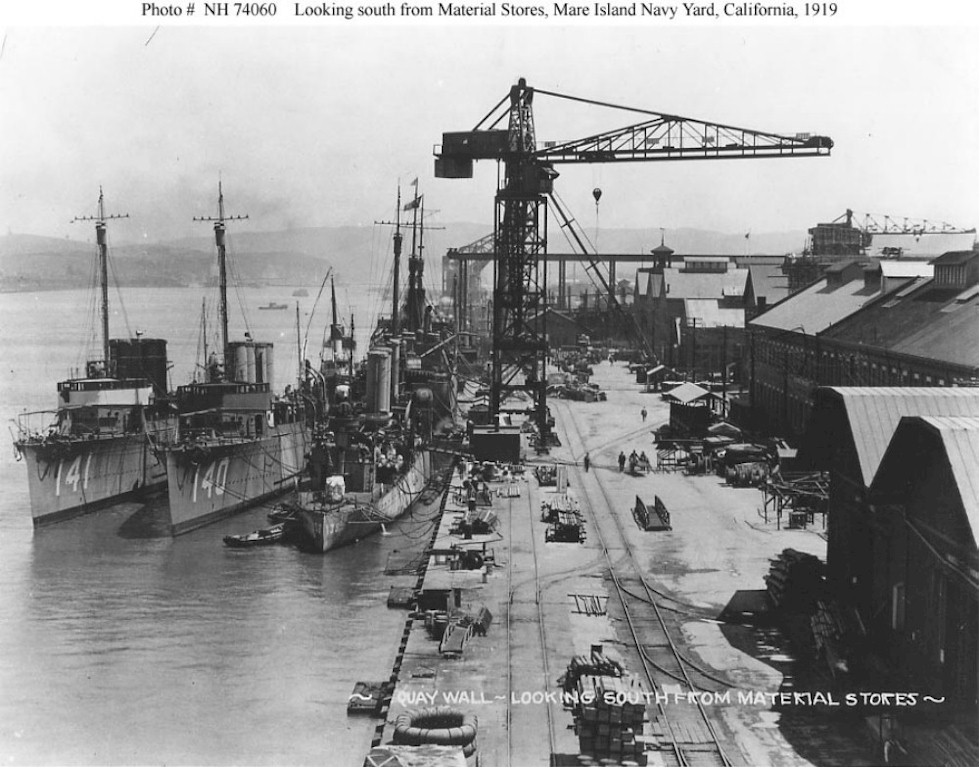
| 177k | Mare Island Navy Yard, California, View looking south along the quay wall from Material Stores, to the north of the ferry slip, in mid-1919. The destroyers fitting out at left are, from outboard to inboard: USS Hamilton (Destroyer # 141); USS Claxton (Destroyer # 140); and USS Kennison (Destroyer # 138). Collection of William H. Topley. Courtesy of Charles M. Loring, 1971. U.S. Naval History and Heritage Command Photograph. Photo #: NH 74060. | Robert Hurst | |
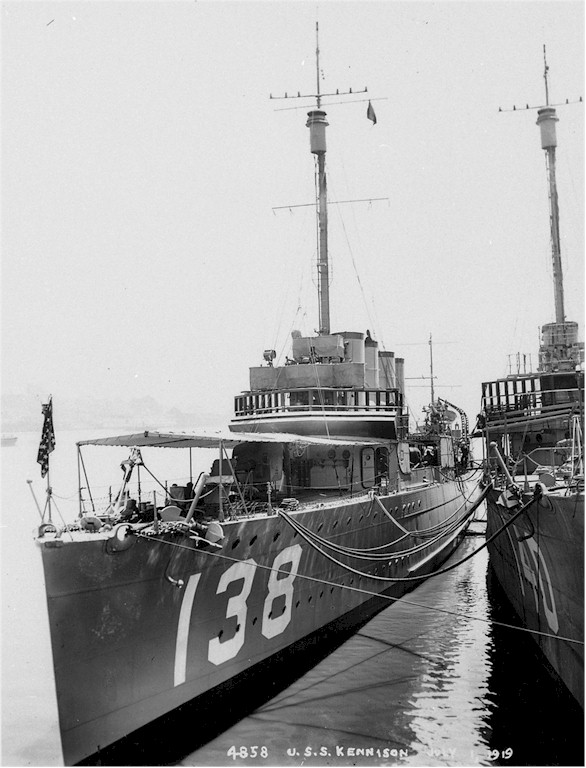
| 109k | USS Kennison (DD 138) alongside USS Claxton (DD 140) at Mare Island on July 1, 1919. | Darryl Baker | |
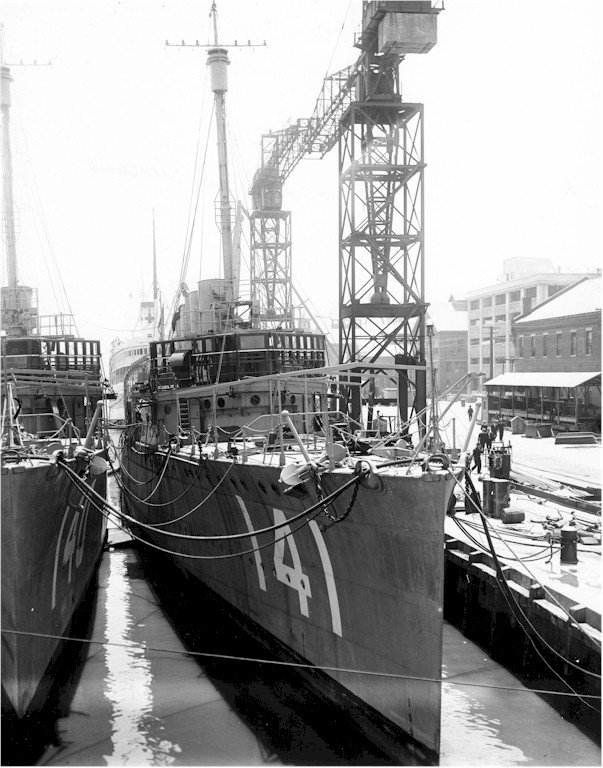
| 126k | Bow view of USS Hamilton (DD 141) with USS Claxton (DD 140) outboard at Mare Island on July 1, 1919. | Darryl Baker | |
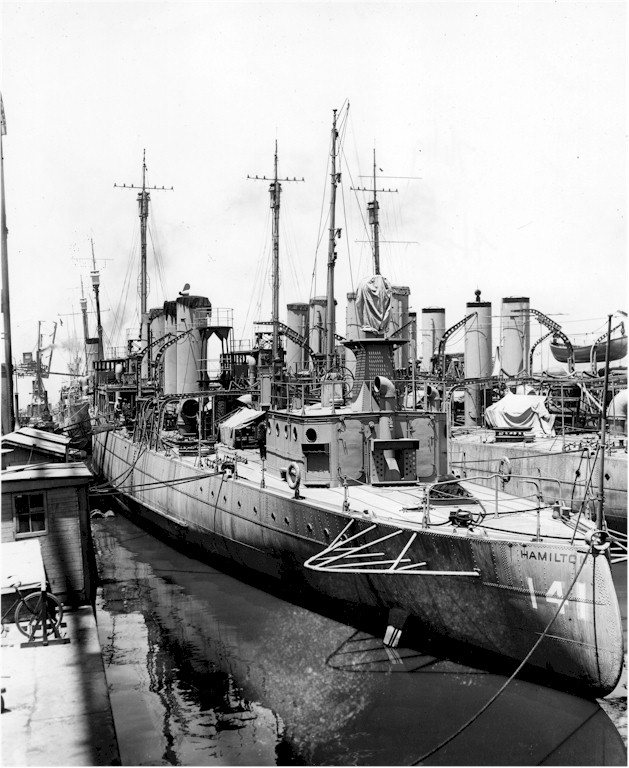
| 139k | Stern view of USS Hamilton (DD 141) with USS Claxton (DD 140) outboard at Mare Island on July 1, 1919. | Darryl Baker | |
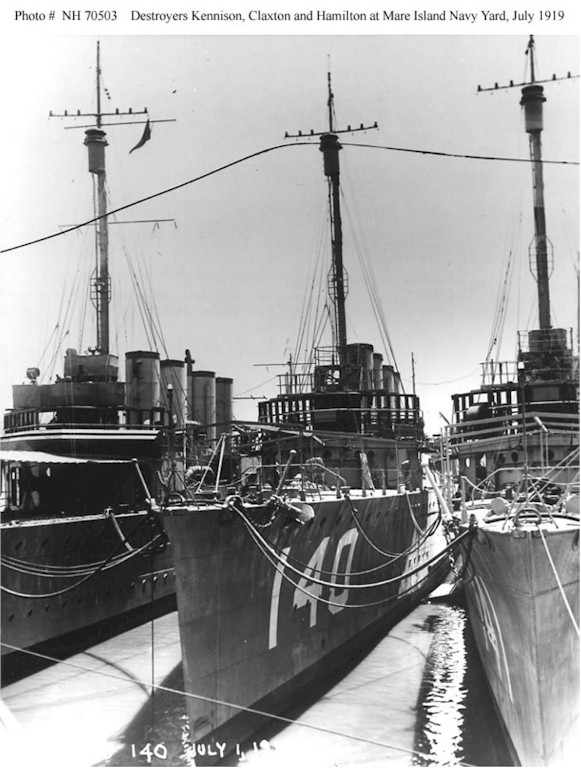
| 109k | USS Claxton (Destroyer # 140), Fitting out at the Mare Island Navy Yard, California, 1 July 1919. Two other destroyers, also fitting out, are on either side. USS Hamilton (Destroyer # 141) is at right, and USS Kennison (DD-138) is at left. Courtesy of the Mare Island Naval Shipyard, 1970. U.S. Naval History and Heritage Command Photograph. Photo #: NH 70503. | Robert Hurst | |
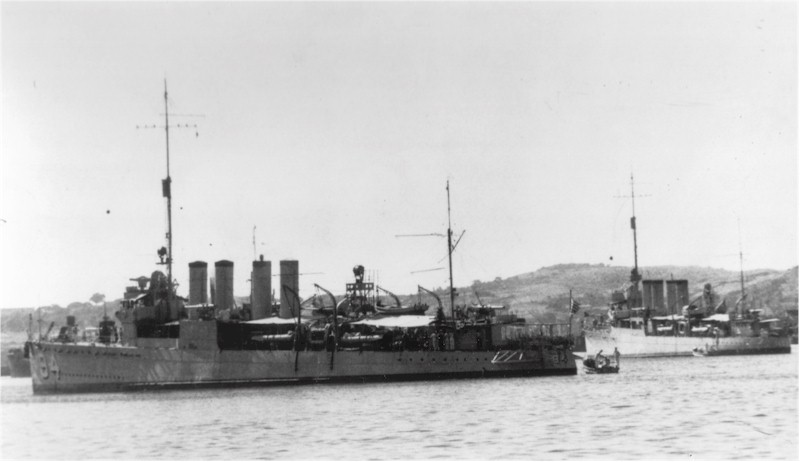
| 56k | USS Taylor (DD-94) and USS Claxton (DD-140) Havana, Cuba 1920. Naval Historical Center photo NH95508. | Daniel Dunham | |
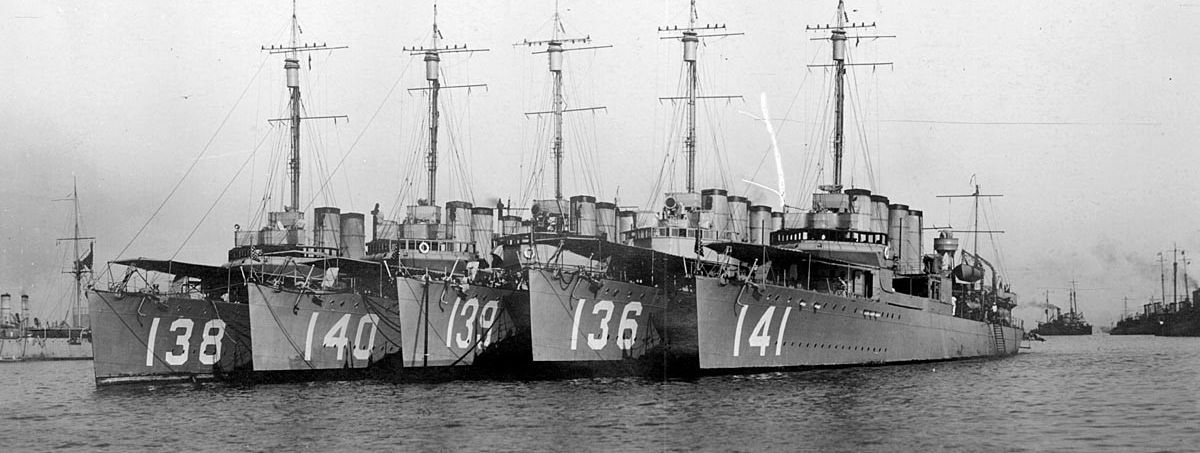
| 115k | Panoramic photograph of the Division's ships, taken by O.A.Tunnell in San Diego Harbour, California, probably on 14 August 1920. The ships are, from left to right: USS Kennison (DD-138); USS Claxton (DD-140); USS Ward (DD-139); USS Boggs (DD-136); and USS Hamilton (DD-141). The image is copied from the original print for Photo # NH106144. Donation of Rear Admiral Joe Stanton Thompson, USN (Retired), 2008. US Naval Historical Centre Photo # NH 106144-A. | Robert Hurst | |
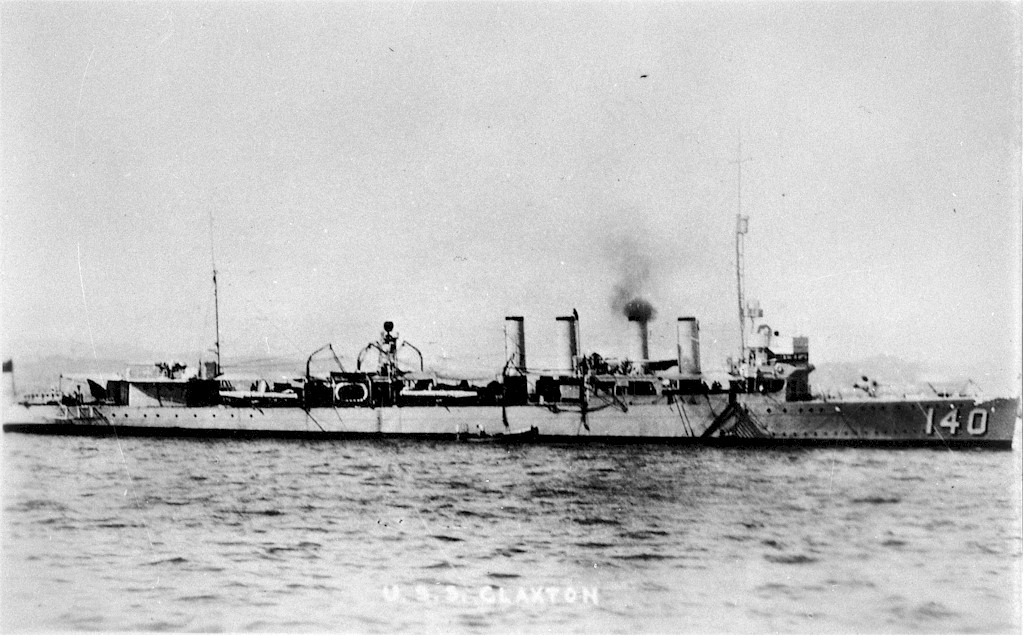
| 186k | USS Claxton (DD 140) circa 1922, location unknown. | Darryl Baker | |
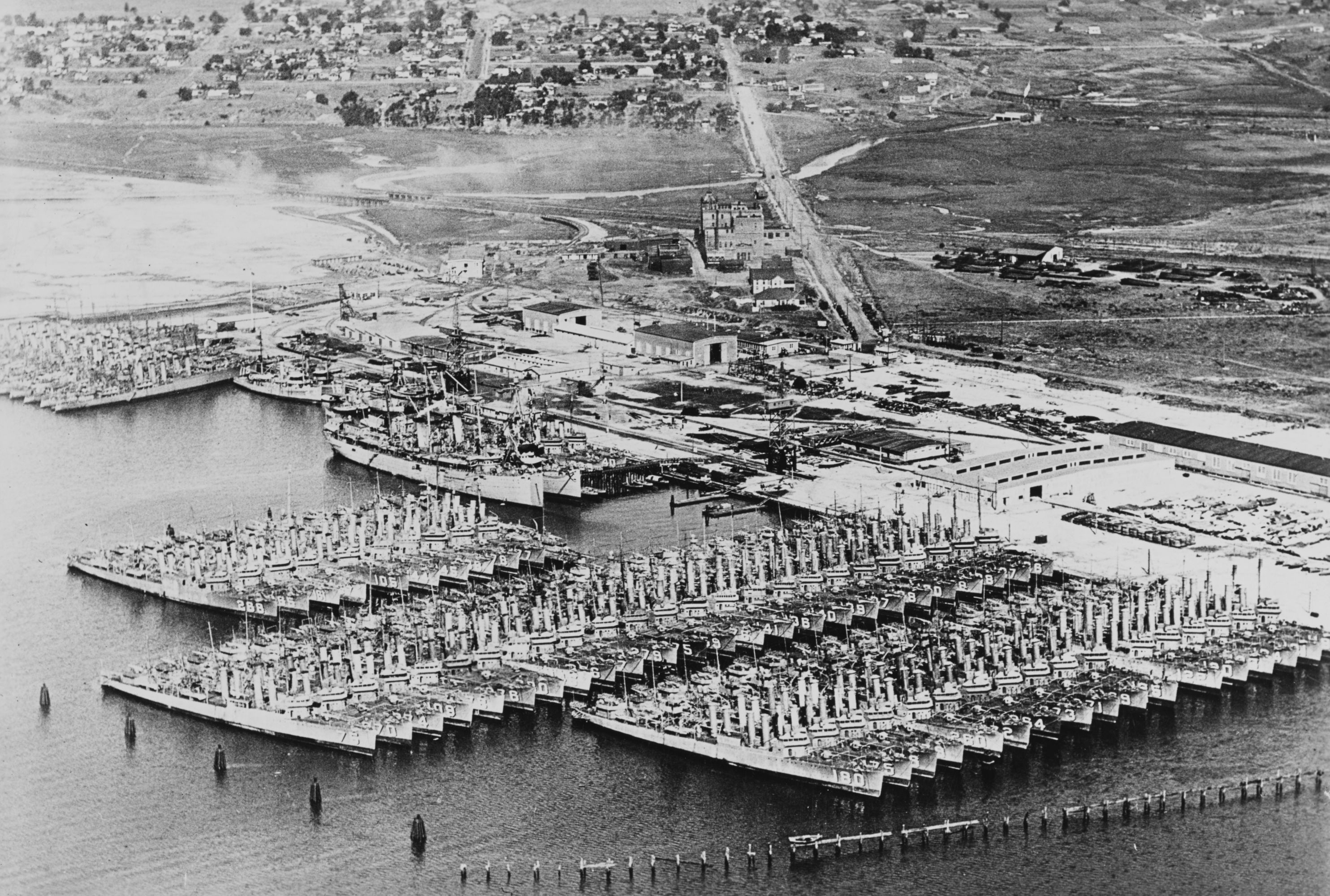 |
195k | Red Lead Row, San Diego Destroyer Base, California. Photographed at the end of 1922, with at least 65 destroyers tied up there. Ships present are identified as: (left to right, in the right diagonal row): Stansbury (DD-180); MacKenzie (DD-175); Renshaw (DD-176); Howard (DD-179); Gillis (DD-260); Tingey (DD-272); McLanahan (DD-264); Swasey (DD-273); Morris (DD-271); Bailey (DD-269); Tattnall (DD-125); Breese (DD-122); Radford (DD-120); Aaron Ward (DD-132) -- probably; Ramsey (DD-124); Montgomery (DD-121); and Lea (DD-118). (left to right, in the middle diagonal row): Wickes (DD-75); Thornton (DD-270); Meade (DD-274); Crane (DD-109); Evans (DD-78); McCawley (DD-276); Doyen (DD-280); Elliot (DD-146); Henshaw (DD-278); Moody (DD-277); Meyer (DD-279); Sinclair (DD-275); Turner (DD-259); Philip (DD-76); Hamilton (DD-141); Boggs (DD-136); Claxton (DD-140); Ward (DD-139); Hazelwood (DD-107) or Kilty (DD-137); Kennison (DD-138); Jacob Jones (DD-130); Aulick (DD-258); Babbitt (DD-128); Twiggs (DD-127); and Badger (DD-126). (left to right, in the left diagonal row): Shubrick (DD-268); Edwards (DD-265); Palmer (DD-161); Welles (DD-257); Mugford (DD-105); Upshur (DD-144); Greer (DD-145); Wasmuth (DD-338); Hogan (DD-178); O'Bannon (DD-177); and -- possibly -- Decatur (DD-341). (Nested alongside wharf in left center, left to right): Prairie (AD-5); Buffalo (AD-8); Trever (DD-339); and Perry (DD-340). Minesweepers just astern of this group are Partridge (AM-16) and Brant (AM-24). Nearest ship in the group of destroyers at far left is Dent (DD-116). The others with her are unidentified. U.S. Naval Historical Center Photograph. : NH 42539 | Robert Hurst | |
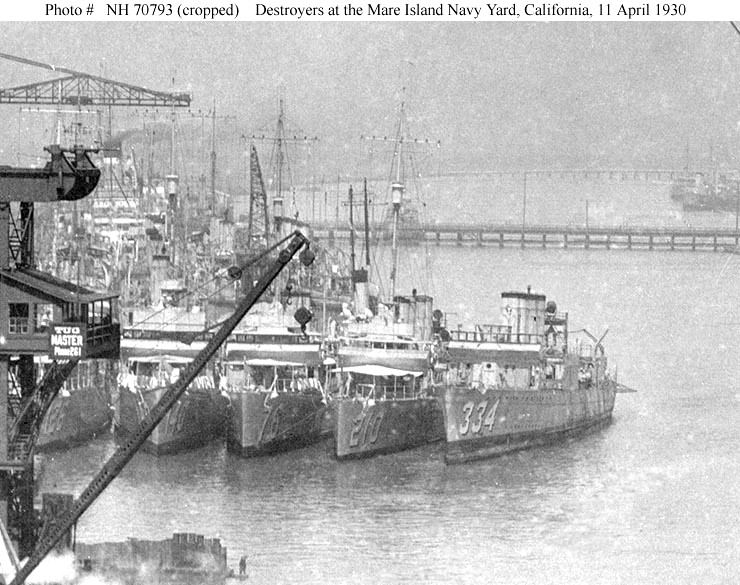
| 138k | Destroyers at the Mare Island Navy Yard, California, 11 April 1930 These ships are (from left to right): USS Badger (DD-126); USS Claxton (DD-140); USS Philip (DD-76); USS Broome (DD-210); and the stricken Corry (ex DD-334), which is being scrapped. | Fred Weiss | |
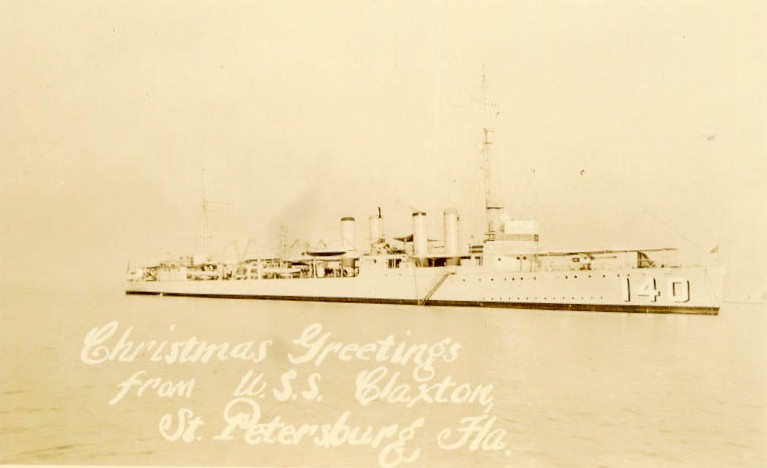
| 45k | From the scrapbook of Calvin Betterton who served aboard from 1934-1937. | Sam Betterton | |
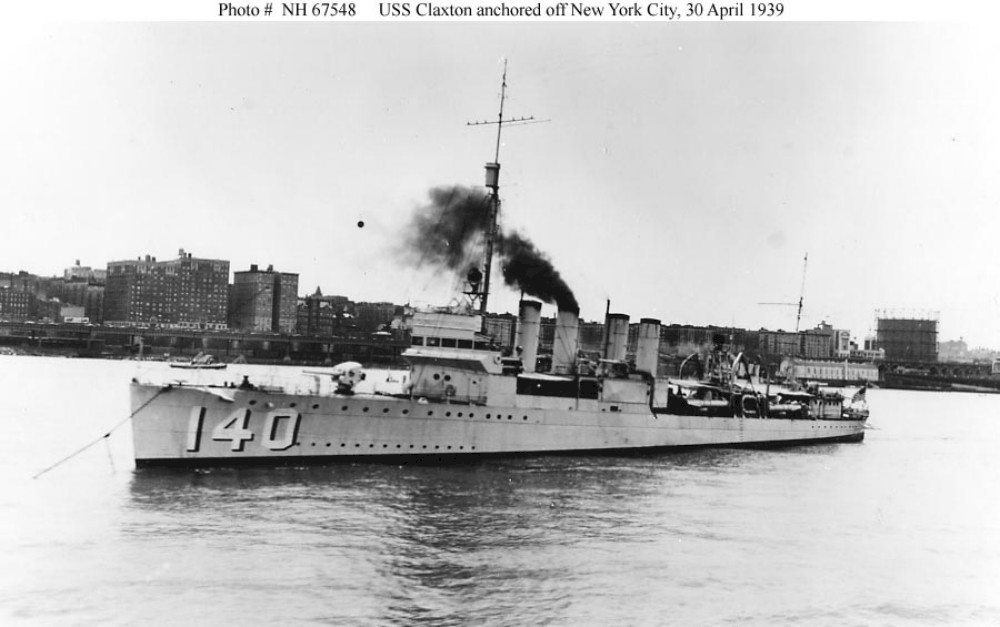
| 101k | USS Claxton (DD-140), Anchored off New York City, 30 April 1939. Courtesy of Donald M. McPherson, 1969. U.S. Naval History and Heritage Command Photograph. Photo #: NH 67548. | Robert Hurst | |
| On British Service |
||||
| Not commissioned at Halifax until 5 December 1940, HMS Salisbury arrived at Devonport on 9 January 1941 for a refit lasting until 3 March. Thereafter the ship worked up in the Channel prior to joining 2nd Escort Group for the North Atlantic. Transferring later to 4th Escort Group, HMS Salisbury worked up until 26 October 1941 when she arrived at Rosyth for further refit and alteration. On completion of refit, HMS Salisbury was employed as a special escort for specific convoys, including several of the WS series of troop convoys, the return of the US carrier USS Wasp from Operation "Calendar" and the subsequent passage of the same ship to Gibraltar for Operation "Bowery" (both operations being the supply of Spitfires to Malta, flown off USS Wasp). In September 1942, HMS Salisbury went to Halifax and joined WLEF, she needed major boiler repairs shortly after and went to Charleston, SC, from late November 1942 to mid-January 1943, and had a further lengthy spell at Boston from 6 April 1943 to 12 June 1943. Returning to duty at Halifax with WLEF, HMS Salisbury finally paid off due to defects and laid up at Halifax from 10 December 1943. She was offered to the USN as a source of spares for their flush deckers, but the offer was declined and she was listed for disposal on 22 April 1944 and sold on 26 June, eventually being broken up in the USA during April 1945. (Foreign service history thanks to Robert Hurst) | ||||
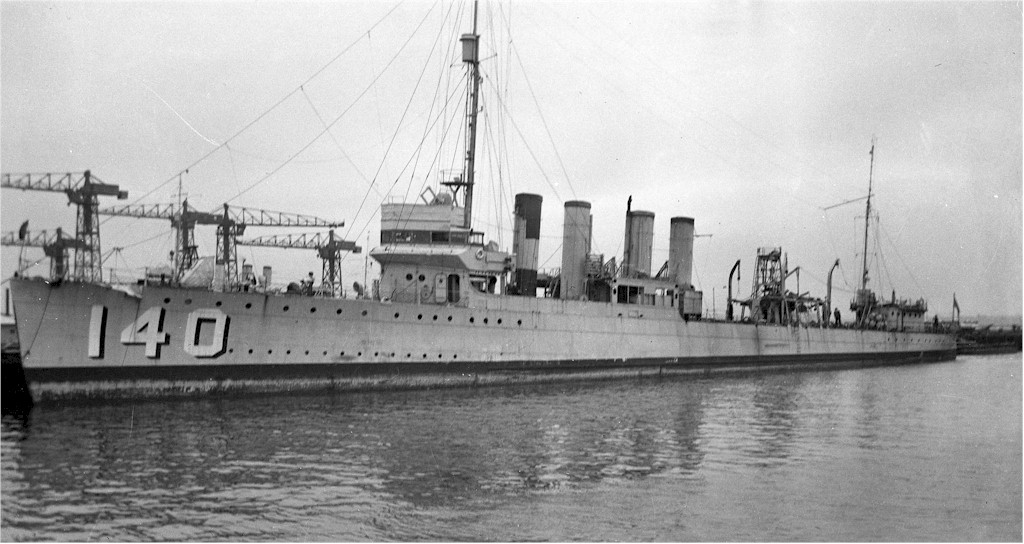
| 146k | USS Claxton (DD 140) at Halifax being converted for British duty in late 1940. | Darryl Baker | |
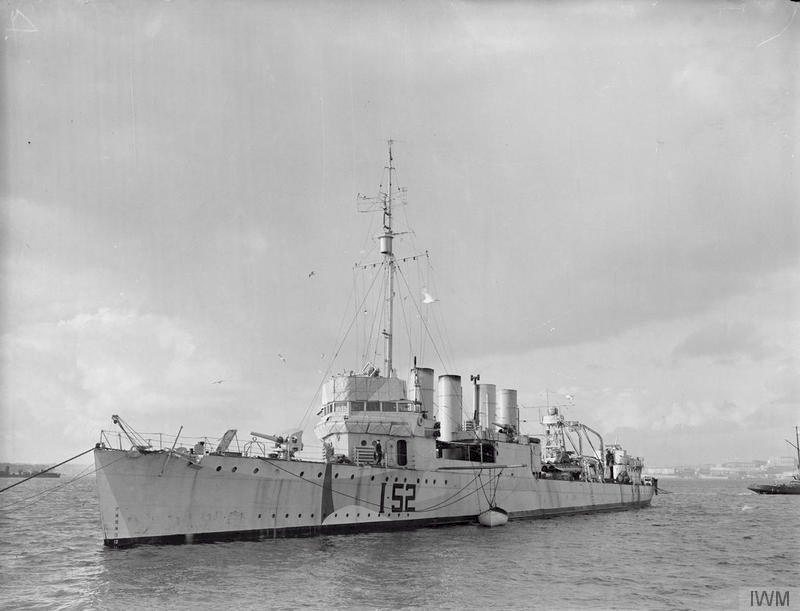
| 68k | Port bow view of the HMS Salisbury (I 52) moored, on February 19, 1941. Source: Imperial War Museum Admiralty Official Collection, Photo No. © IWM (A 3162). | Mike Green | |
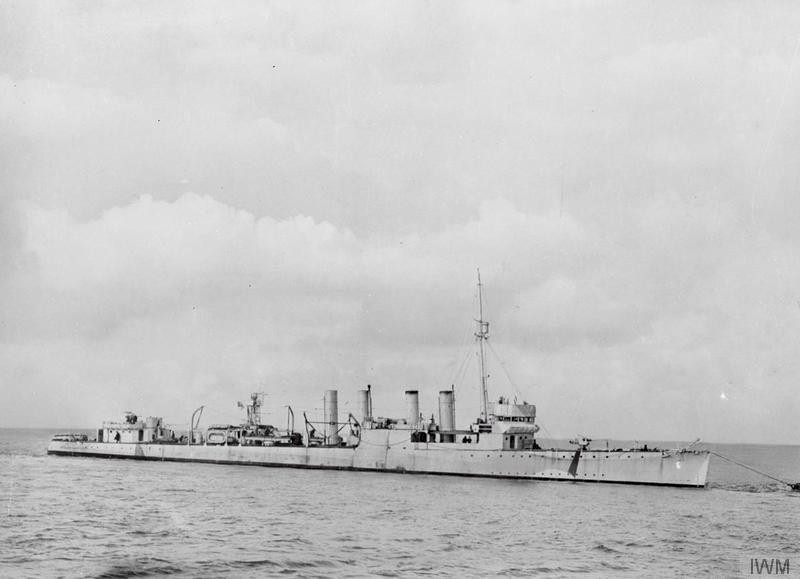
| 57k | Starboard side view of the HMS Salisbury (I 52) moored, on February 19, 1941. Source: Imperial War Museum Admiralty Official Collection, Photo No. © IWM (A 3161). | Mike Green | |
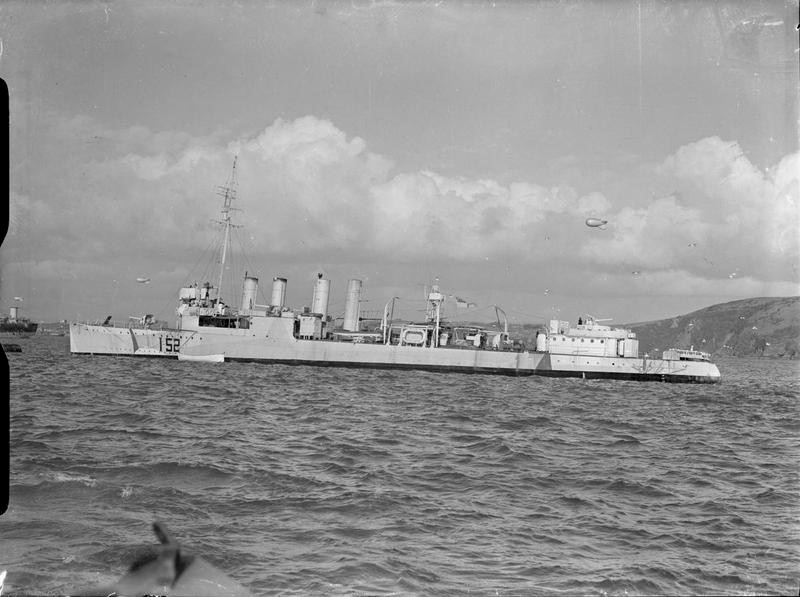
| 95k | Port side view of the HMS Salisbury (I 52) moored, on February 19, 1941. Source: Imperial War Museum Admiralty Official Collection, Photo No. © IWM (A 3159). | Mike Green | |
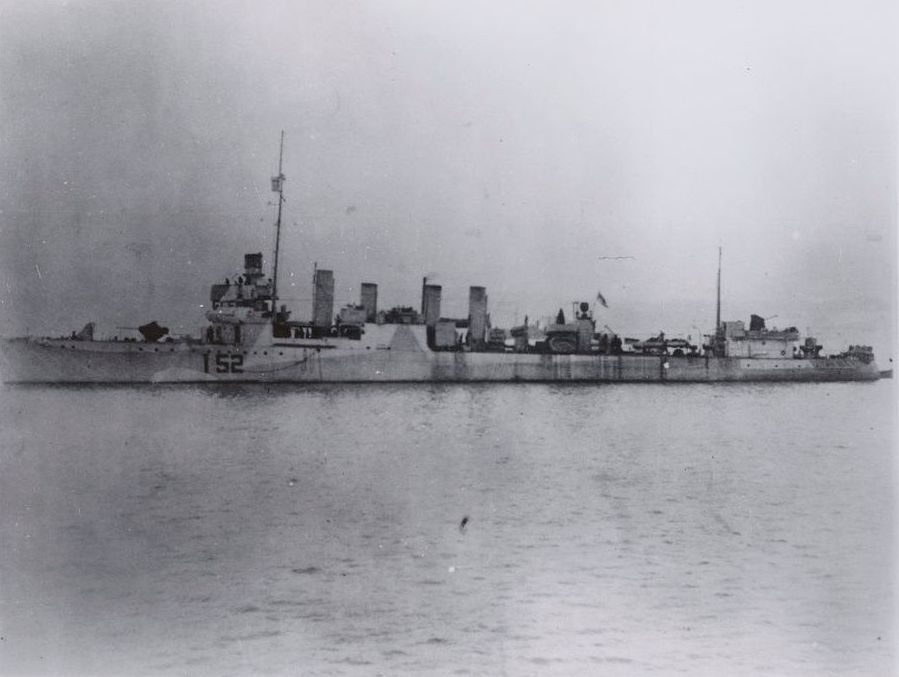
| 57k | HMS Salisbury (ex-USS Claxton, DD-140) between June and August 1942 showing the usual 1942 alterations: Type 271 radar, centreline torpedo tubes aft, HF/DF and 20 mm oerlikons in the beam positions and further aft. No Hedgehog is fitted (Admiralty official). | Robert Hurst | |
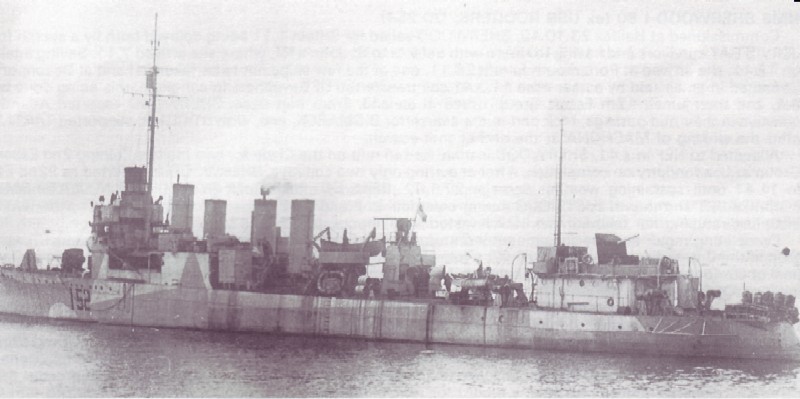
| 62k | As above. | Robert Hurst | |
LCDR Frank Thompson Leighton    Sep 15 1919 - Jul 11 1921 (Later RADM)

LT Charles Emery Rosendahl    Jul 11 1921 - Sep 3 1921 (Later VADM)

LCDR Carlton Eugene Battle Jr.    Sep 3 1921 - Feb 2 1922

LCDR Harry Dickinson McHenry    Feb 2 1922 - Jun 18 1922

(Decommissioned June 18 1922 - January 22 1930)

LCDR Kenneth Floyd-Jones    Jan 22 1930 - Oct 11 1933

LT Edward Benjamin Arroyo    Oct 11 1933 - Apr 19 1934

LCDR Francis Ellery Fitch    Apr 19 1934 - Jan 21 1936

LCDR John Berchmans Barrett    Jan 21 1936 - Jan 19 1937

LCDR Duncan Corry Jr.    Jan 19 1937 - Jul 20 1937

LCDR William Van Hamilton    Jul 20 1937 - Jul 9 1938 (Later RADM)

LCDR William Cyprian Cross    Jul 9 1938 - Sep 8 1940

LCDR John Keane Reybold    Sep 8 1940 - Oct 1 1940

LT Thomas Edward Fraser    Oct 1 1940 - Nov 26 1940
| Back To The Main Photo Index | To The Destroyer Index Page |
This page was created by Fred Willishaw (ex ARG-4, AS-11 & DD-692) and is maintained by David L. Wright
|