
Photographic History of the United States Navy
ARCHIVE
| NavSource Main Page | FAQ | Contact us | Search NavSource |
| |
NavSource Naval History Photographic History of the United States Navy |
DESTROYER ARCHIVE |


| Click On Image For Full Size Image |
Size | Image Description | Contributed By |
|
|---|---|---|---|---|
| Namesake |
||||
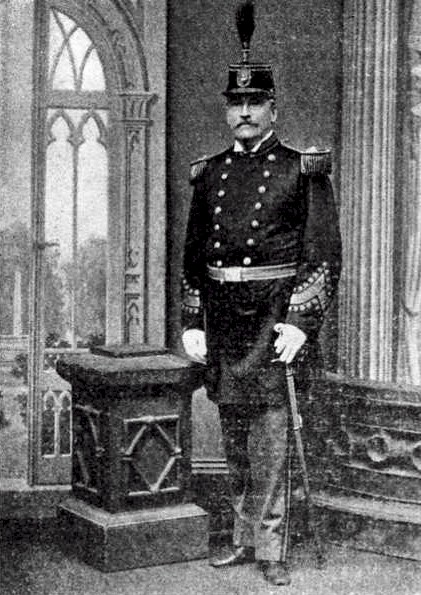 |
95k | Born in 1824 in New York City, John Lloyd Broome was commissioned a Second Lieutenant in the U.S. Marine Corps in 1848. His forty years of service included action at Veracruz, Alvarado, and Laguna del Carmen, Mexico, (1848); as senior Marine officer of the West Gulf Blockading Squadron during which he played a prominent part in the capture of New Orleans and all engagements of the Squadron on the Mississippi River. He was twice wounded; severely, at the second Battle of Vicksburg. Lieutenant Colonel Broome retired 8 March 1888 and died in 1898 at Binghamton, N.Y., where he was buried. Photo from the book The Story of the United States Marines, 1740 - 1919 by John W. Leonard and Frederick F.Chitty. | Robert M. Cieri/Bill Gonyo | |
| USS Broome (DD-210) |
||||
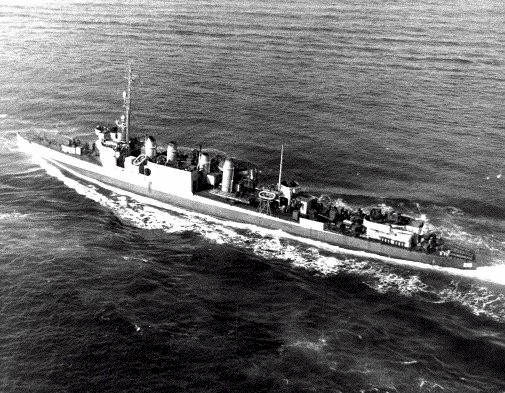 |
93k | Undated, location unknown. | Joe Radigan | |
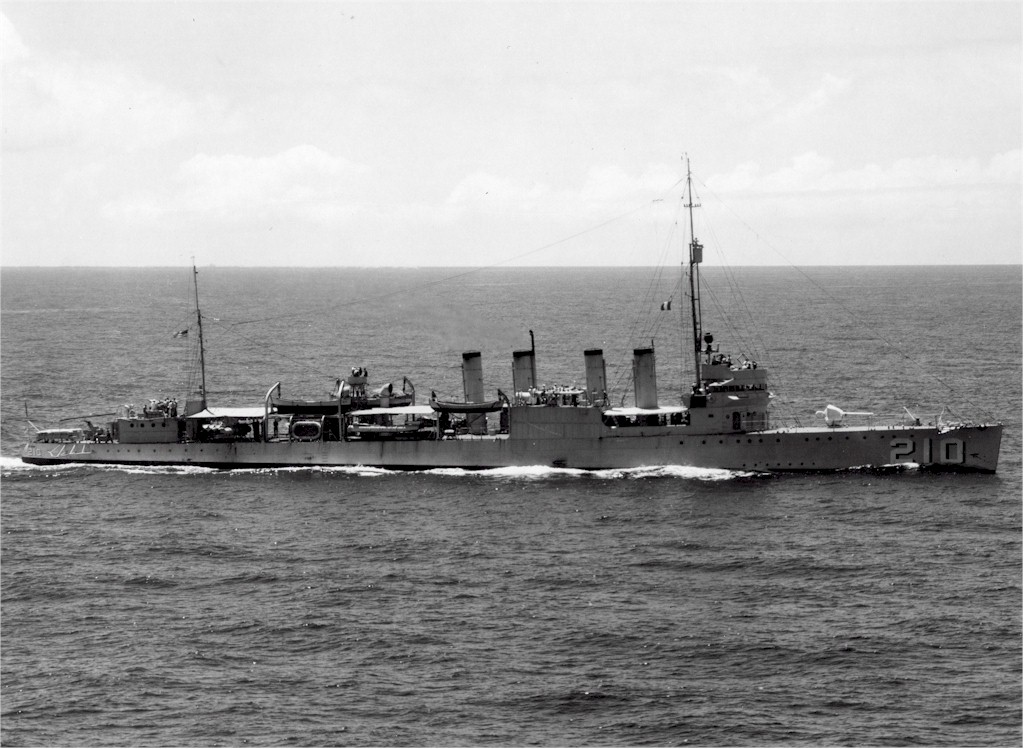 |
185k | Undated, location unknown. National Archives photo 80-G-1024923002 via Chris Wright | Ed Zajkowski | |
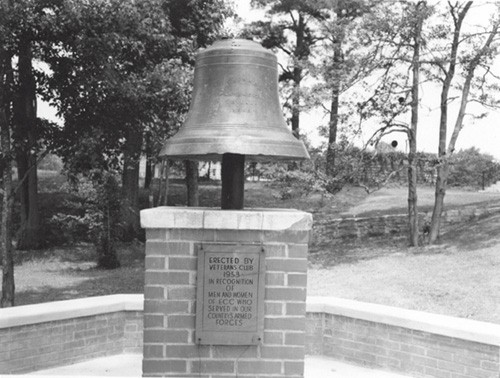 |
67k | The East Carolina University victory bell was used on the USS Broome (DD-210). It was cast in Philadelphia in 1855 and is made of brass, weighing 382 pounds and measuring 24" in height and 28" in width. It was donated to the school by the Deaprtment of the Navy in 1953. The bell rests on top of a brick column located on the west side of Christenbury Memorial Gym. The bell is a symbol of victory and is rung when East Carolina University wins a game. | Bill Gonyo | |
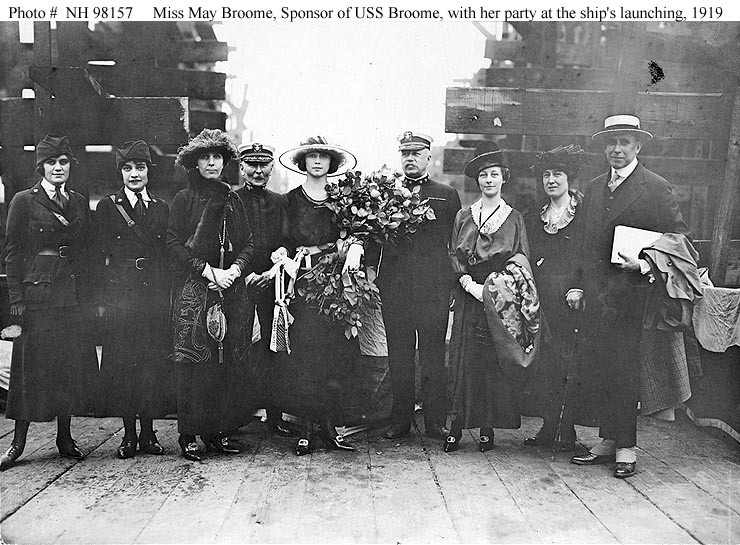 |
139k | USS Broome (Destroyer No. 210), Miss Mary Josephine Keyworth Broome, ship's sponsor, with her party at Broome's christening ceremonies, 14 May 1919. Miss Broome was granddaughter of Lieutenant Colonel John Lloyd Broome, USMC, in whose honor USS Broome was named. Her attendants, at left, are wearing the War Service uniform of the Emergency Aid. Collection of the Society of Sponsors of the United States Navy. Naval History & Heritage Command photo NH 98157 | Robert Hurst | |
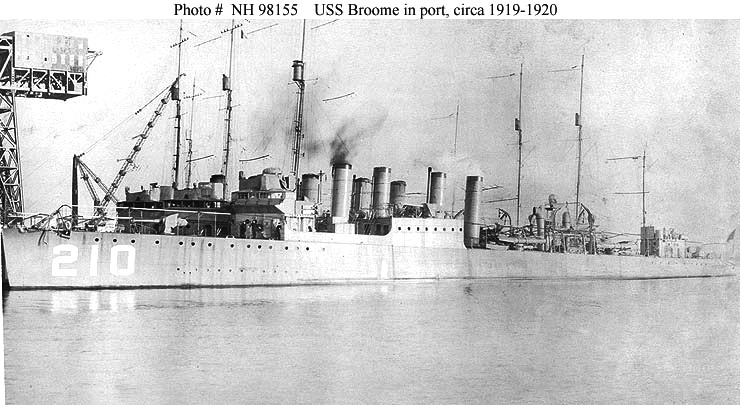 |
94k | USS Broome (Destroyer No. 210) Panoramic photograph, probably taken at the Philadelphia Navy Yard, Pennsylvania, 1919-1920. Naval History & Heritage Command photo NH 98155, Donation of Beverly Buchalski, October 2002 | Fred Weiss | |
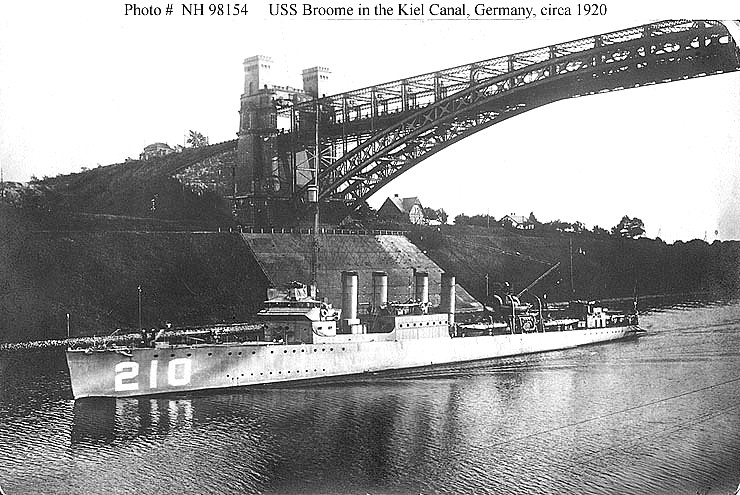 |
134k | USS Broome (DD-210) passes under the Levensau Bridge, while transiting the Kiel Canal, Germany, in 1920. Naval History & Heritage Command photo NH 98154, donation of Beverly Buchalski, October 2002 | Fred Weiss | |
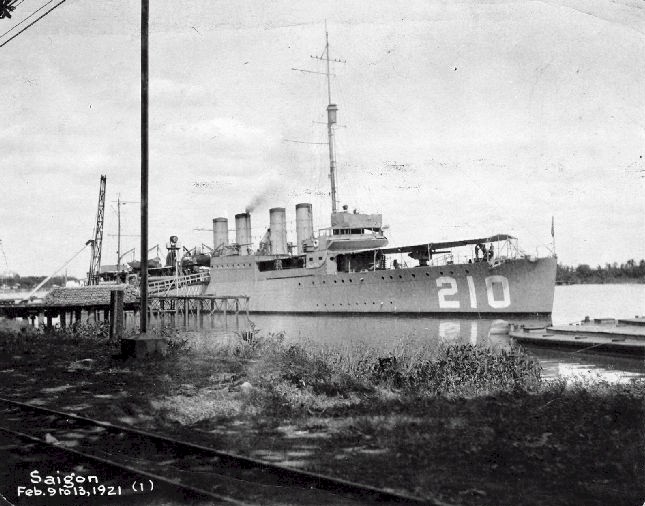 |
91k | USS Broome (DD-210) moored at Saigon, French Indochina, February 1921. Photo courtesy of the San Diego Air & Space Museum | Bill Gonyo | |
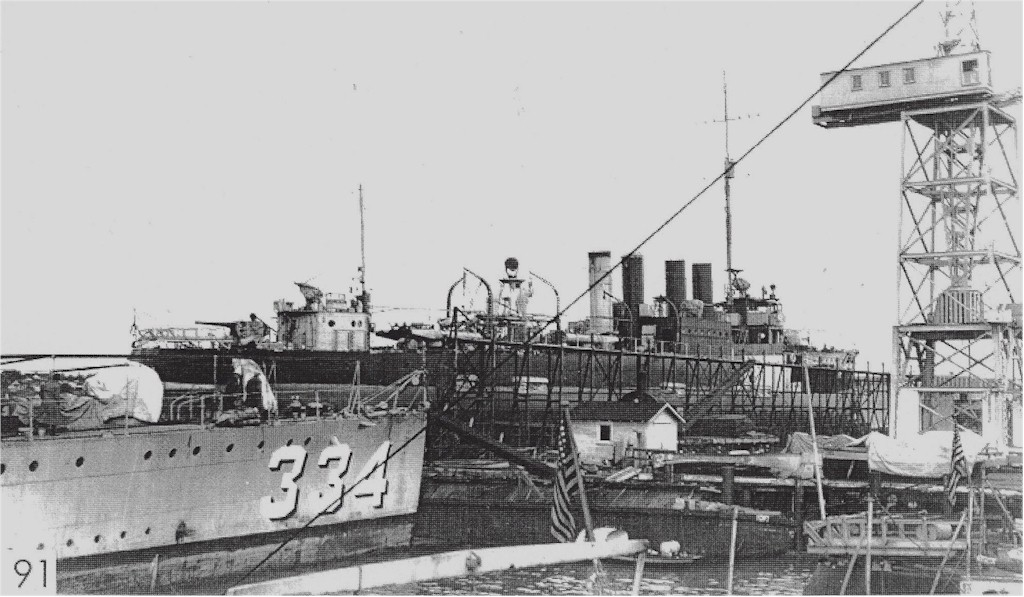 |
157k | USS Broome (DD-210) during 1930 in San Diego on a marine railway being readied for recommissioning with USS Corry (DD-334) in foreground. Photo from the John Dickey collection | Ed Zajkowski | |
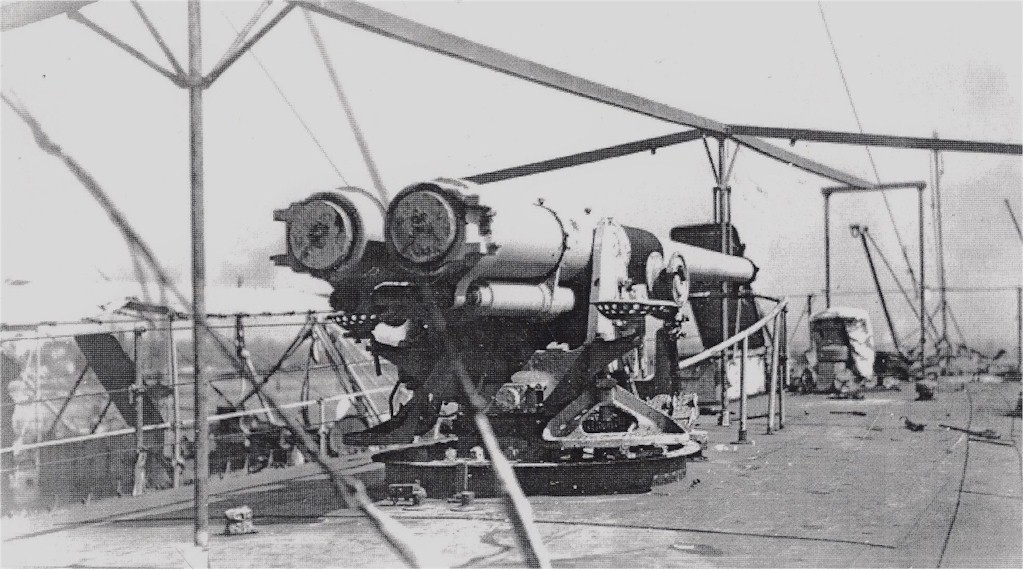 |
168k | USS Broome (DD-210) twin gun mount that was removed and replaced with USS Corry's (DD-334) 4-inch guns. Photo from the John Dickey collection | Ed Zajkowski | |
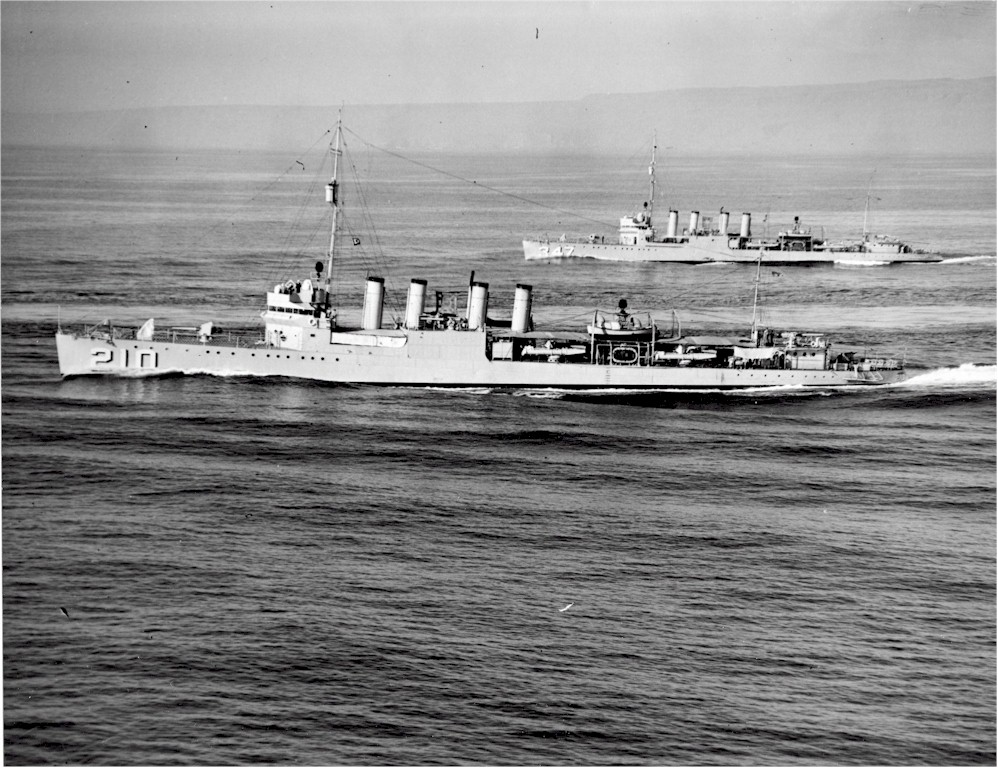 |
219k | Circa 1930's image at sea in her original configuration, Note sister and last of the "Flush Deckers" built Pruitt (DD-347), in background. | Ed Zajkowski | |
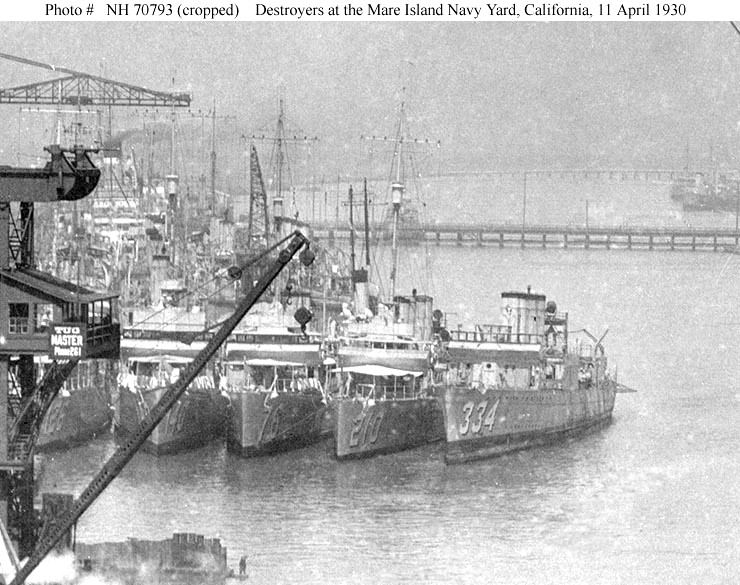 |
138k | Destroyers at Mare Island Navy Yard, California, 11 April 1930. These ships are (from left to right): USS Badger (DD-126); USS Claxton (DD-140); USS Philip (DD-76); USS Broome (DD-210); and the stricken Corry (ex DD-334), which is being scrapped. | Fred Weiss | |
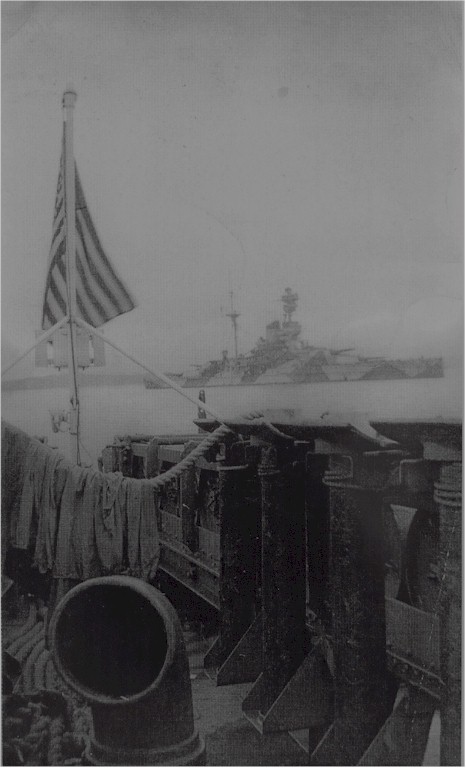 |
69k | Clothes drying on a line on the fantail in Halifax, Nova Scotia during May 1941 with a British battleship in the background. Photo from the John Dickey collection | Ed Zajkjowski | |
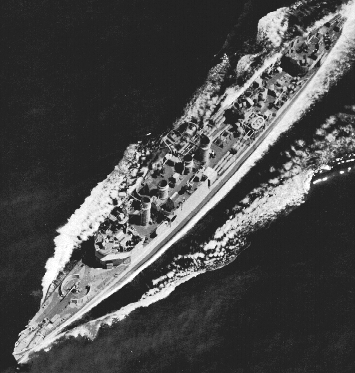 |
106k | Shown at sea during WW2, the Broome exhibits the typical flush deck destroyer convoy escort configuration. Her four 4" surface-only guns and two after torpedo tube sets have been removed and replaced by six 3"/50 caliber dual purpose guns. Splinter shields have been added for gun crew protection and she carries on her foremast an SE microwave radar set, specially designed for flush deck destroyers. | - | |
 |
92k | As above with more detail. | - | |
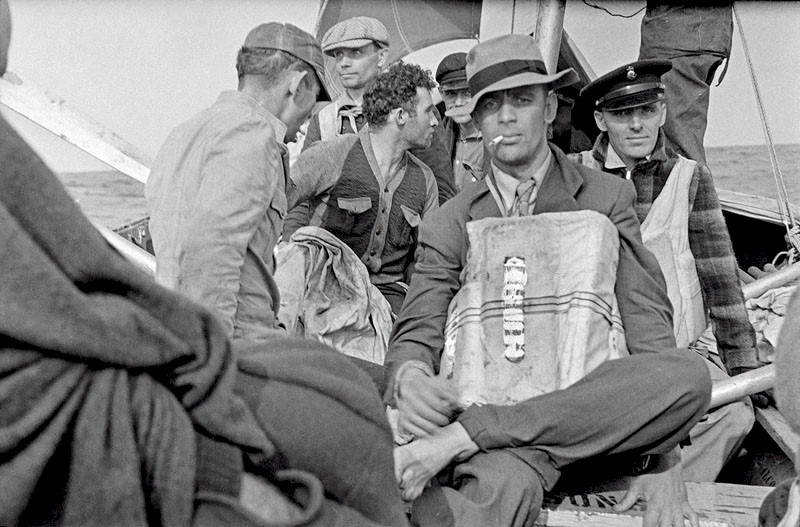 |
122k | On 16 April 1942, a German submarine surfaced near the SS Alcoa Guide off the coast of Cape Hatteras, North Carolina, and opened fire with its deck gun. Unarmed and without an escort, the ship sank in two hours. The 27 survivors climbed into two lifeboats and drifted for three days until they were spotted by a search plane. The next day, the USS Broome picked them up. | Bill Gonyo | |
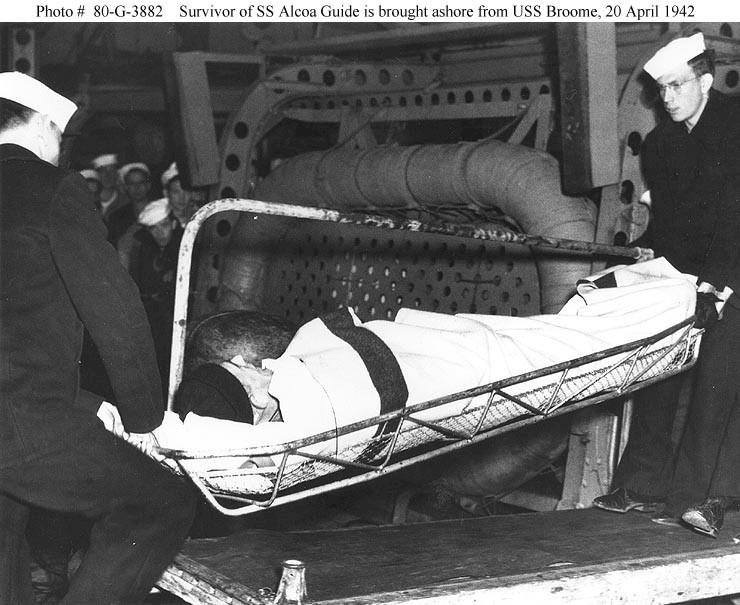 |
117k | A survivor of the Steamship Alcoa Guide is brought ashore from USS Broome(DD-210) at Naval Operating Base, Norfolk, Virginia, on 20 April 1942. Alcoa Guide had been sunk bygunfire of the German submarine U-123on 16 April. Broome rescued 27 of her survivors on 19 April. The last survivor of the ship was not picked up until 18 May. Six of Alcoa Guide's crew lost their lives as a result of this attack.
National Archives photo 80-G-3882 | Bill Gonyo | |
| USS Broome (AG-96) |
||||
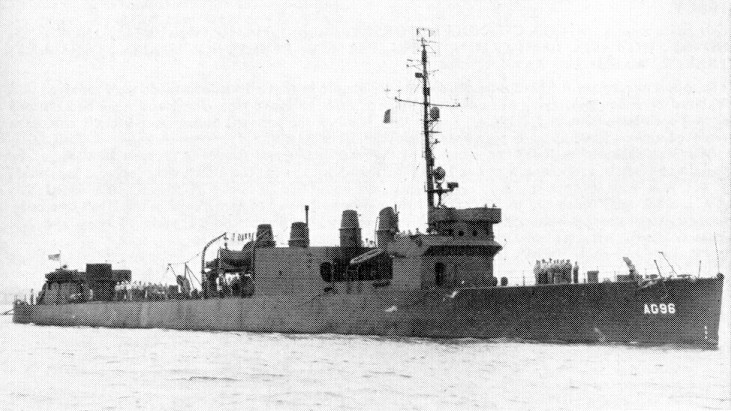 |
83k | Seen here in this 1945 image, she has had her main armament removed. | - | |
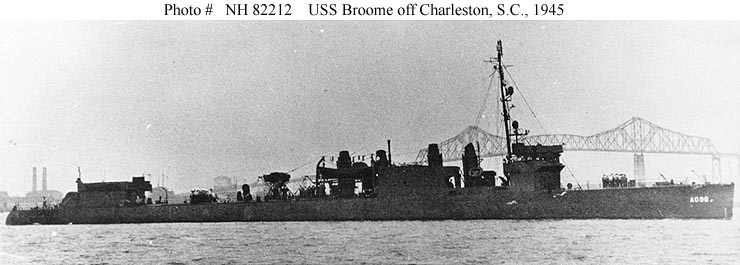 |
46k | USS Broome (AG-96) off Charleston, South Carolina, circa mid-1945. Note that she still retains four smokestacks, but has had her guns removed. Naval History & Heritage Comand photo NH 82212, courtesy of Donald M. McPherson, 1975 | Paul Rebold | |
CDR Charles Morrison Austin    Oct 31 1919 - Jan 15 1920

CDR Charles Stakely McWhorter    Jan 15 1920 - Sep 24 1922

LCDR Chasrles Clifford Windsor    Sep 24 1921 - Dec 30 1922

(Decommissioned Dec 30 1922 - Feb 5 1930)

LCDR Lawrence Fairfax Reifsnider    Feb 5 1930 - Oct 27 1931

LCDR Eugene George Herzinger    Oct 27 1931 - Mar 12 1934

LCDR Gale Aylett Poindexter    Mar 12 1934 - Apr 10 1936

LCDR Henry Ehrman Thornhill    Apr 10 1936 - Jun 29 1937

LCDR Charles Raymond Will    Jun 29 1937 - Apr 5 1938

LCDR John Yancey Dannenberg    Apr 5 1938 - Jan 16 1940 (Later RADM)

LCDR Thomas Edward Fraser    Jan 16 1940 - Dec 9 1941

LCDR Karl Frederick Poehlmann    Dec 9 1941 - May 23 1942 (Later RADM)

LCDR George Cameron Seay    May 23 1942 - Jul 1 1943 (Later RADM)

LCDR Charles Snowden Arthur Jr.    Jul 1 1943 - Sep 20 1944

LT Winthrop Barnes Walker    Sep 20 1944 - Oct 1 1945

LT Thomas Lawson Wallace    Oct 1 1945 - May 20 1946
The contact listed, Was the contact at the time for this ship when located. If another person now is the contact, E-mail me and I will update this entry. These contacts are compiled from various sources over a long period of time and may or may not be correct. Every effort has been made to list the newest contact if more than one contact was found.
| Back To The Main Photo Index | To The Destroyer Index Page |
This page was created by Fred Willishaw (ex ARG-4, AS-11 & DD-692) and is maintained by David L. Wright
|