Photographic History of the United States Navy
ARCHIVE
| NavSource Main Page | FAQ | Contact us | Search NavSource |
| |
NavSource Naval History Photographic History of the United States Navy |
DESTROYER ARCHIVE |


| Click On Image For Full Size Image |
Size | Image Description | Contributed By |
|
|---|---|---|---|---|
| Namesake |
||||
 [1] 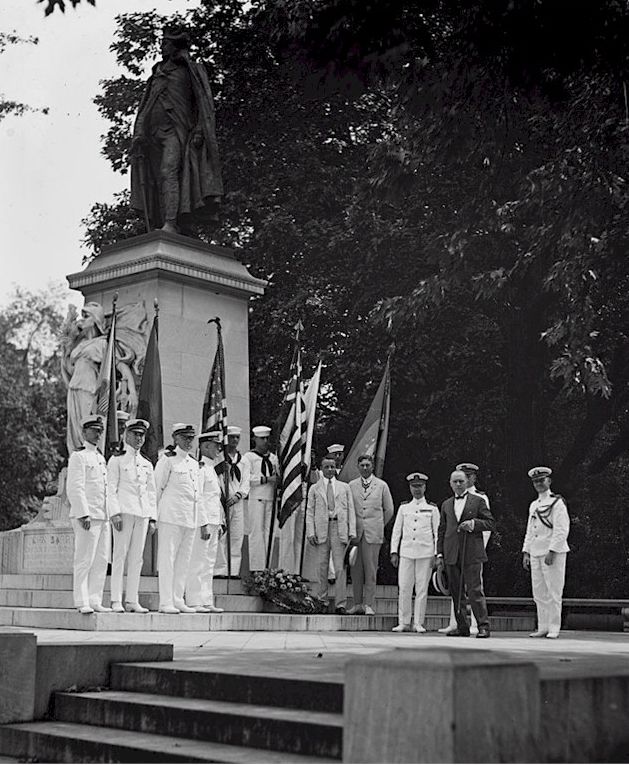 [2] 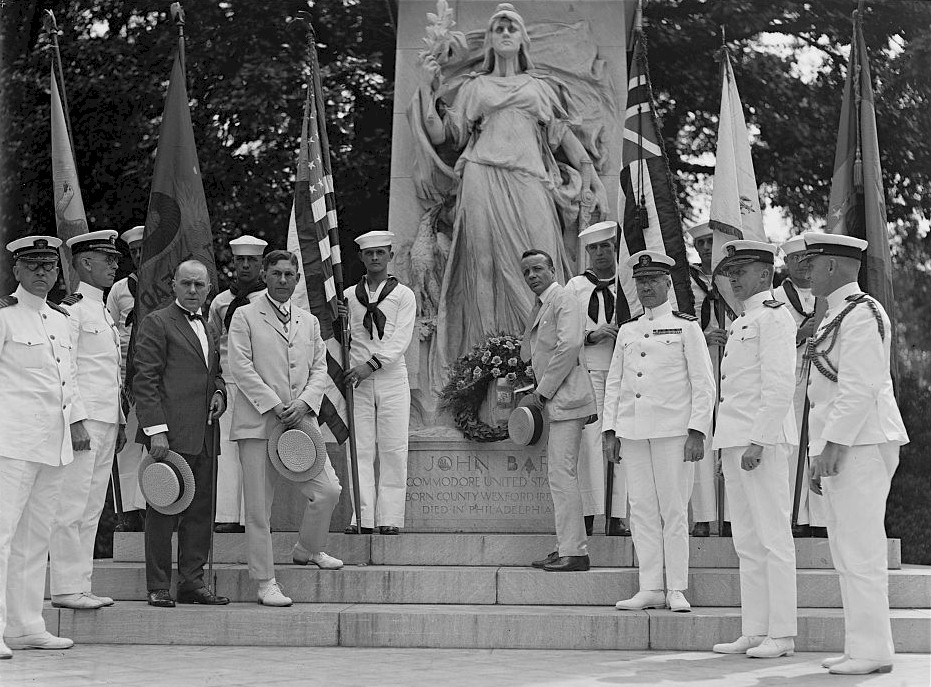 [3] 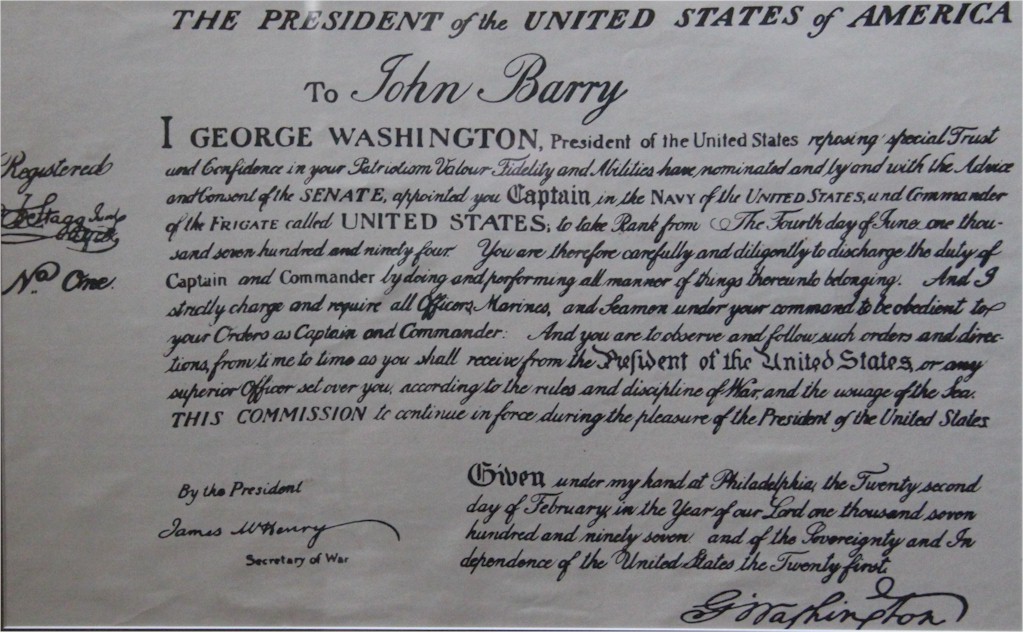 [4] | [1] - 97k [2] - 154k [3] -214k [4] -186k |
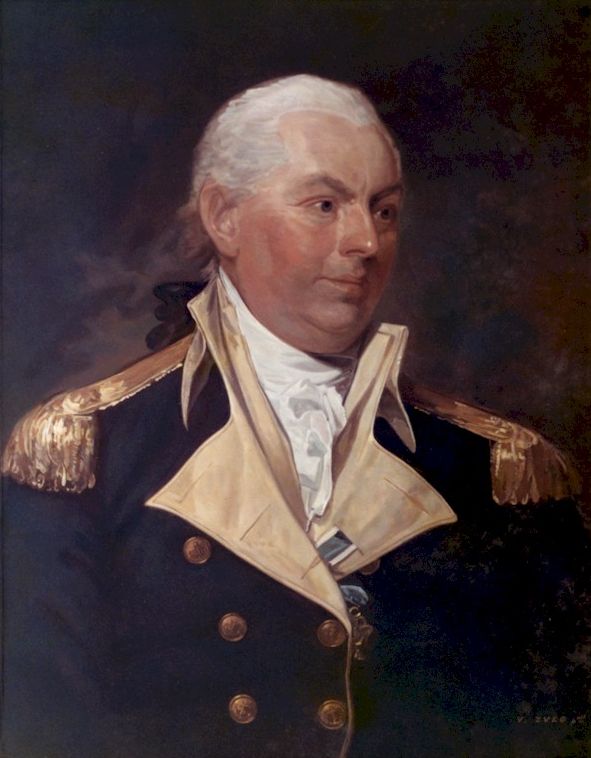
John Barry (1745 - 13 September 1803) was an officer in the Continental Navy during the American Revolutionary War and later in the United States Navy. Barry was born in Tacumshane, County Wexford, Ireland and appointed a Captain in the Continental Navy 7 December 1775. He commanded Lexington and Alliance. He and his crew of the Alliance fought and won the final naval battle of the American Revolution off the coast of Cape Canaveral on March 10, 1783. He was seriously wounded 29 May 1781 while in command of Alliance during her capture of HMS Atalanta and Trepassey. Barry was successful in suppressing three mutinies during his career as an officer in the Continental Navy. Appointed senior captain upon the establishment of the U.S. Navy, he commanded the frigate United States in the Quasi-War with France. Barry authored a Signal Book published in 1780 to improve communications at sea among vessels traveling in formation. Barry also suggested the creation of a Department of the Navy with separate cabinet status from the Secretary of War. This was finally realized with the formation of the United States Department of the Navy in 1798. Barry's suggestions about establishing government-operated navy yards were also realized, and in particular he had a hand in the establishment of the Brooklyn Navy Yard. His 17-year span of national service and his training of so many of the heroes of the War of 1812 under Barry's tutelage earned him the sobriquet, "Father of the Navy." Barry, having recruited a company of volunteers for land service, took part in the Trenton campaign in December 1776. These volunteers and the marines cooperating with them were commended by General George Washington. Barry acted as an aide to General John Cadwalader, and was sent on several occasions as a bearer of important dispatches. His next duty was assisting in the defense of Philadelphia and operations in the upper Delaware River. When the British took possession of Philadelphia in September 1777, Captain Barry was ordered to take the uncompleted Continental frigate Effingham up the Delaware River to a place of safety. In October, the ship was ordered sunk or burned. She was sunk on 2 November, near Bordentown, New Jersey, to deny her use to the British. Commodore Barry died at Strawberry Hill, in present-day Philadelphia on 13 September 1803, and was buried there in St. Mary's Cemetery. [1] Photo #: NH 76537-KN Commodore John Barry, USN painting by V. Zveg, 1972, after the portrait by Gilbert Stuart. U.S. Naval Historical Center Photograph. [2 & 3] Members of the United States Navy and dignitaries gather at Commodore John Barry’s monument in Philadelphia for the 185th anniversary honoring the birth of the Sons of Revolution on August 2 1924. The monument was unveiled in 1914. [2] Digital ID: npcc 11902, Library of Congress Prints and Photographs Division. [3] Digital ID: npcc 11901, Library of Congress Prints and Photographs. (4) Barry's Commission as Captain signed by President Washington. | Bill Gonyo/Robert Hurst/Phil Gilson | |
| USS Barry (DD-248) |
||||
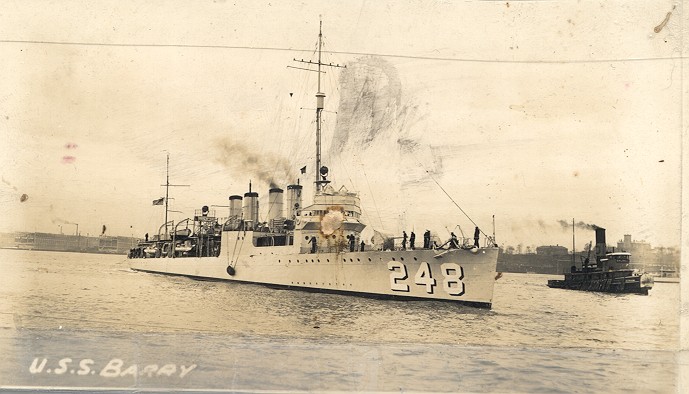 |
76k | Undated, location unknown. | Joe Radigan | |
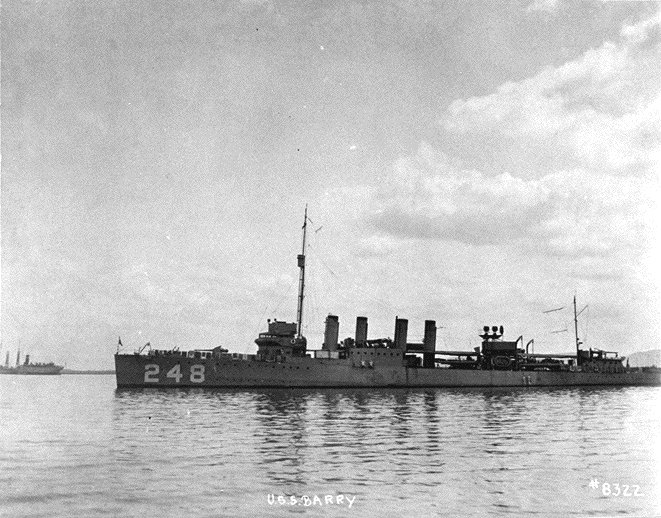 |
98k | Undated, location unknown. | Joe Radigan | |
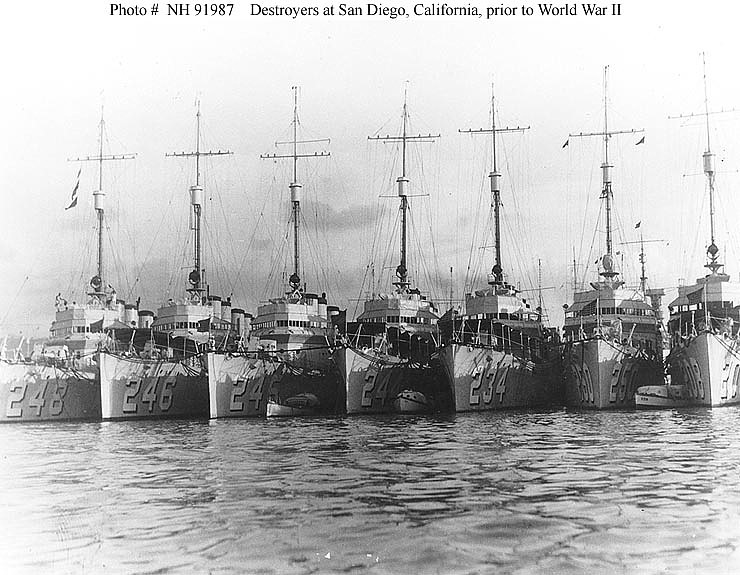 |
124k | Undated, destroyers moored at San Diego, California, prior to World War II. These ships are (from left to right): USS Barry (DD-248); USS Bainbridge (DD-246); USS Reuben James (DD-245); USS Williamson (DD-244); USS Fox (DD-234); USS Lawrence (DD-250); and USS Hovey (DD-208). Courtesy of the U.S. Naval Institute Photo Collection. U.S. Naval Historical Center Photograph. | Fred Weiss | |
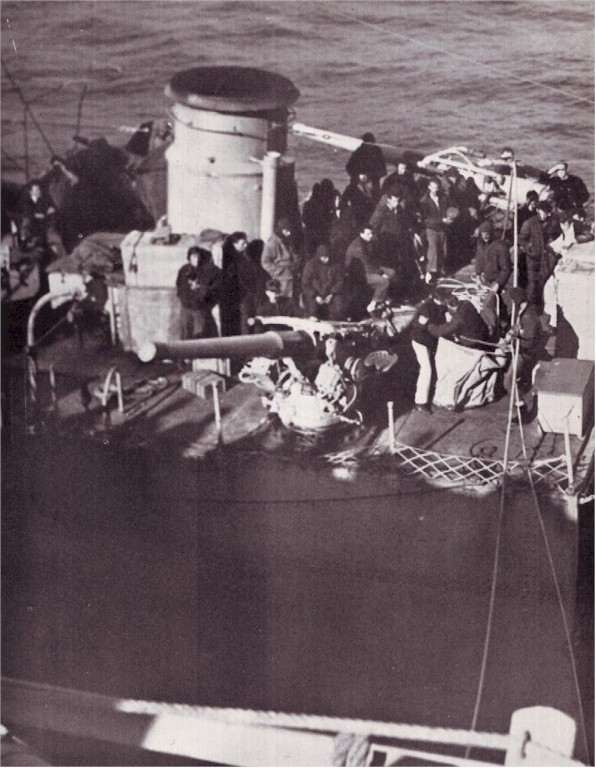 |
119k | Undated, USS Barry (DD-248), transferring survivors from USS Borie (DD-215) to USS Card (CVE-11). Photos from "United States destroyer Operations in World War II" by Theodore Roscoe. | Robert Hurst | |
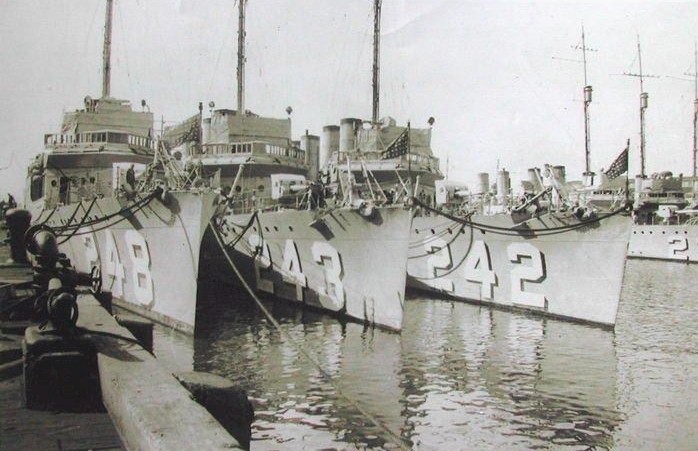 |
91k | USS Barry (DD-248), USS Sands (DD-243) and USS King (DD-242), undated, location unknown. | Tommy Trampp | |
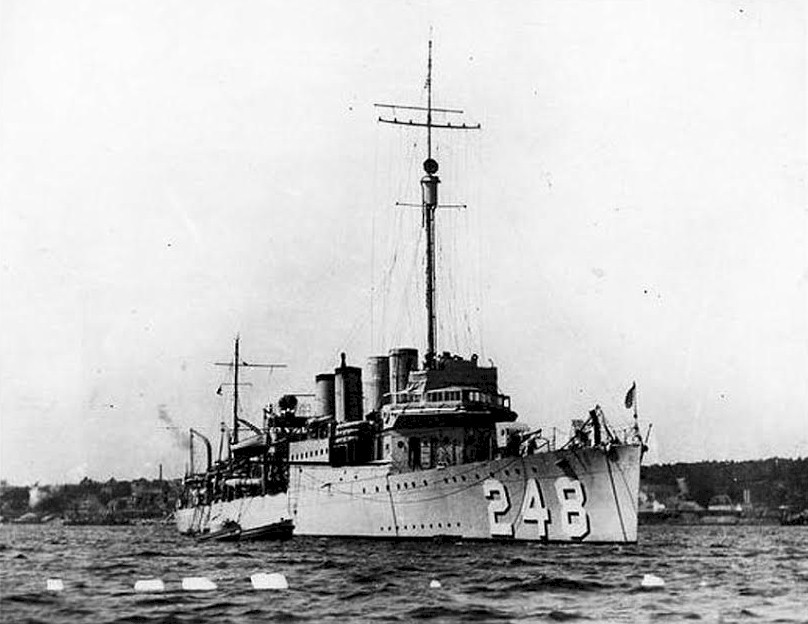 |
95k | Undated, location unknown. | Richard Miller BMCS USNR RET. | |
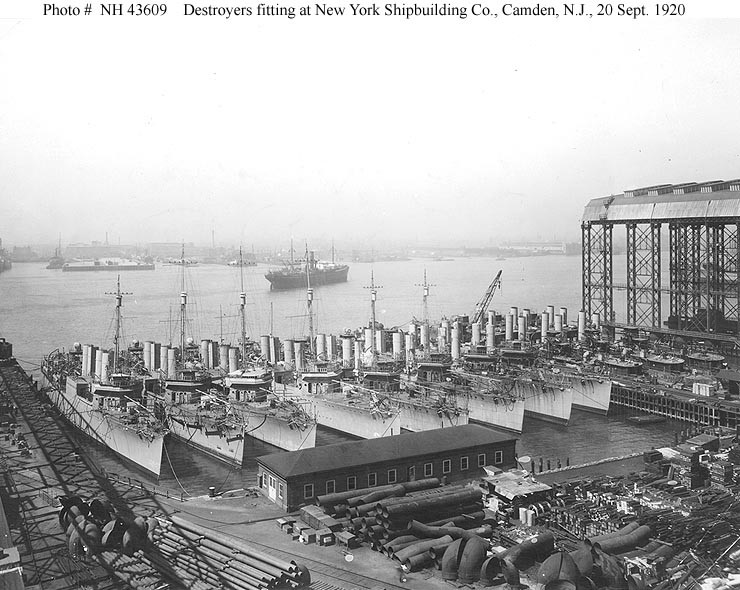
| 131k | New York Shipbuilding Corporation Shipyard, Camden, New Jersey. Eleven destroyers fitting out in the Wet Basin between Piers 3 and 4. Photo is dated 28 September 1920. Ships present are identified as (from left to right): Childs (DD-241), commissioned 22 Oct. 1920; Reuben James (DD-245), commissioned 24 Sept. 1920; McFarland (DD-237), commissioned 30 Sept. 1920; Sturtevant (DD-240), commissioned 21 Sept. 1920; Williamson (DD-244), commissioned 29 Oct. 1920; Sands (DD-243), commissioned 10 Nov. 1920; Lawrence (DD-250), commissioned 18 April 1921; Hopkins (DD-249), commissioned 21 March 1921; Bainbridge (DD-246), commissioned 9 Feb. 1921; Goff (DD-247), commissioned 19 Jan. 1921; and Barry (DD-248), commissioned 28 Dec. 1920. | Robert Hurst | |
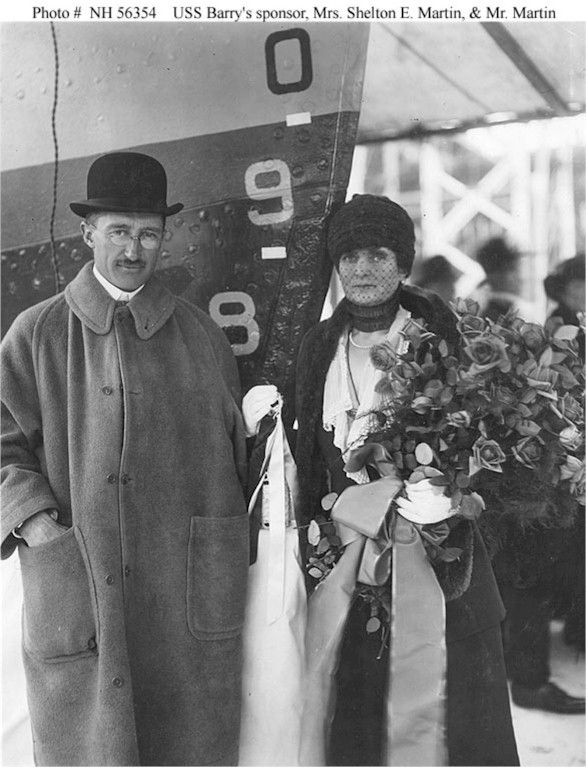 |
110k | Ship's Sponsor, Mrs. Shelton E. Martin, during christening ceremonies at the New York Shipbuilding Corporation shipyard, Camden, New Jersey, 28 October 1920. The Sponsor's husband, Mr. Shelton E. Martin, is at left. U.S. Naval Historical Center Photograph. Photo #: NH 56354. | Robert Hurst | |
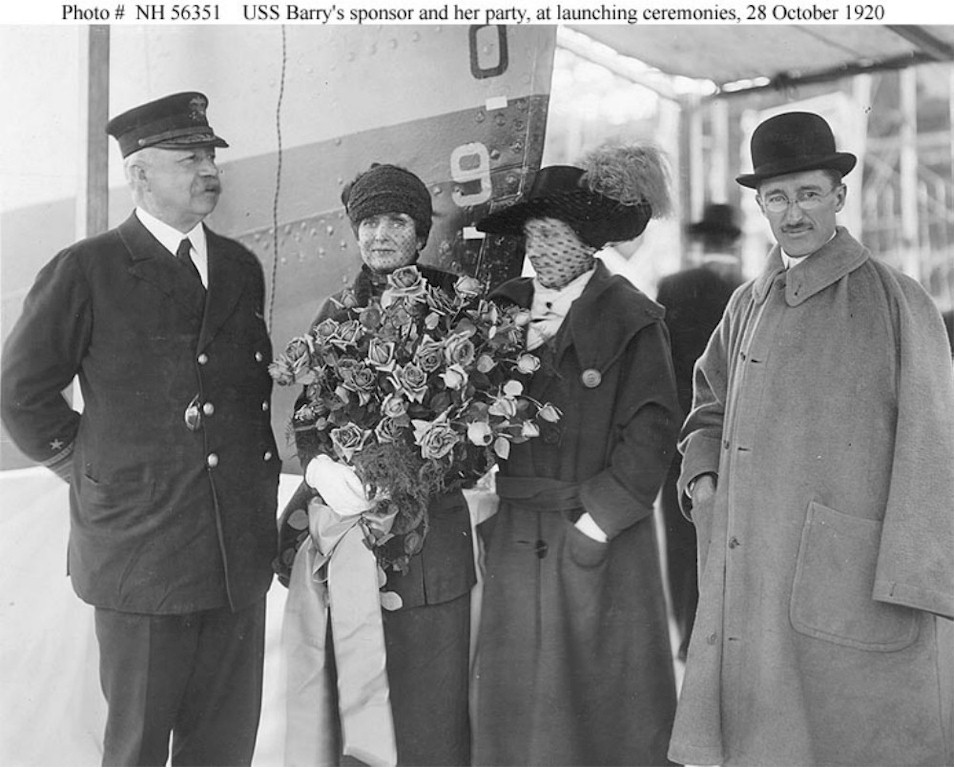 |
155k | Ship's Sponsor and her party during christening ceremonies at the New York Shipbuilding Corporation shipyard, Camden, New Jersey, 28 October 1920. Those present include (from left to right): Rear Admiral Reynold T. Hall, Inspector of Machinery at the shipyard; Mrs. Shelton E. Martin, Sponsor (Great grandniece of Commodore John Barry); Mrs. Reynold T. Hall; and Mr. Shelton E. Martin. U.S. Naval Historical Center Photograph. Photo #: NH 56351. | Robert Hurst | |
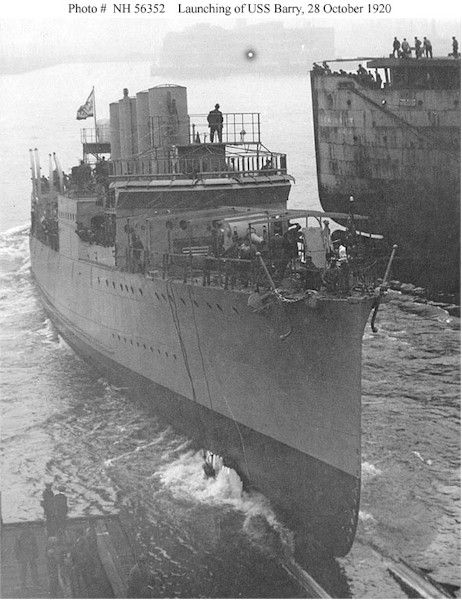 |
84k | Photo #: NH 56352, USS Barry (DD-248) enters the water, during her launching at the New York Shipbuilding Corporation shipyard, Camden, New Jersey, 28 October 1920. U.S. Naval Historical Center Photograph. | Paul Rebold | |
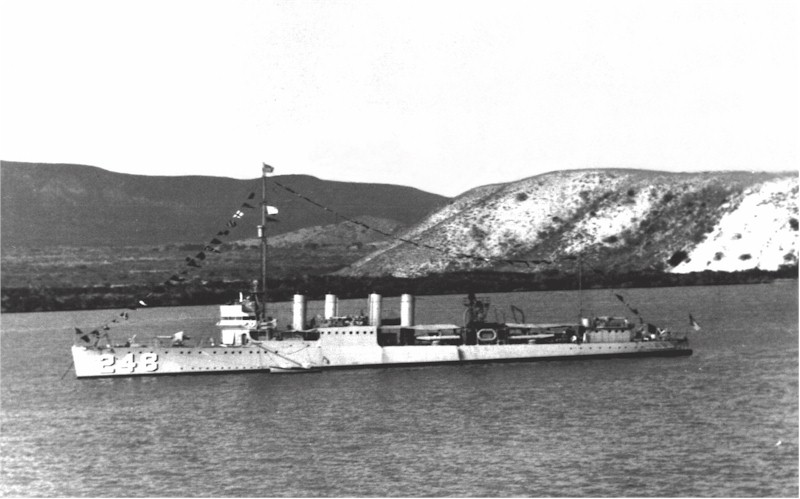 |
36k | At Gonaives, Haiti. Late 1920. | Curt Clark, Secretary of the Four Stack APD Veterans Association | |
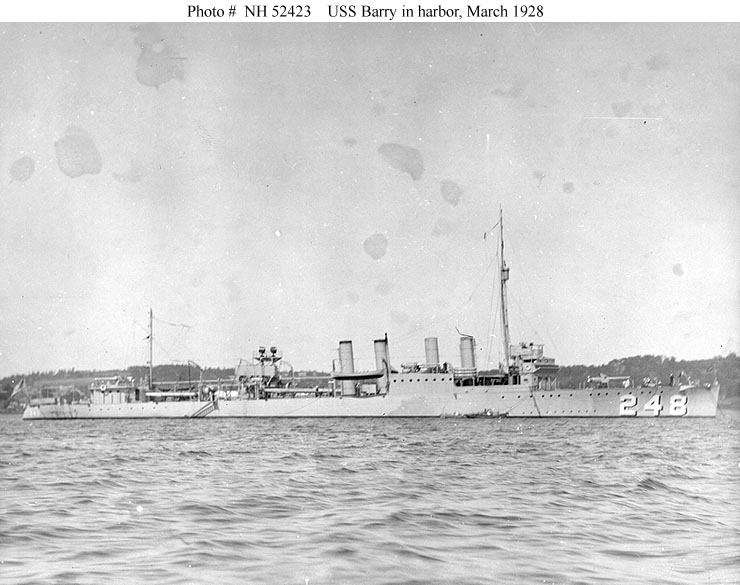 |
76k | Photo #: NH 52423, USS Barry (DD-248) Photographed in March 1928. U.S. Naval Historical Center Photograph. | Paul Rebold | |
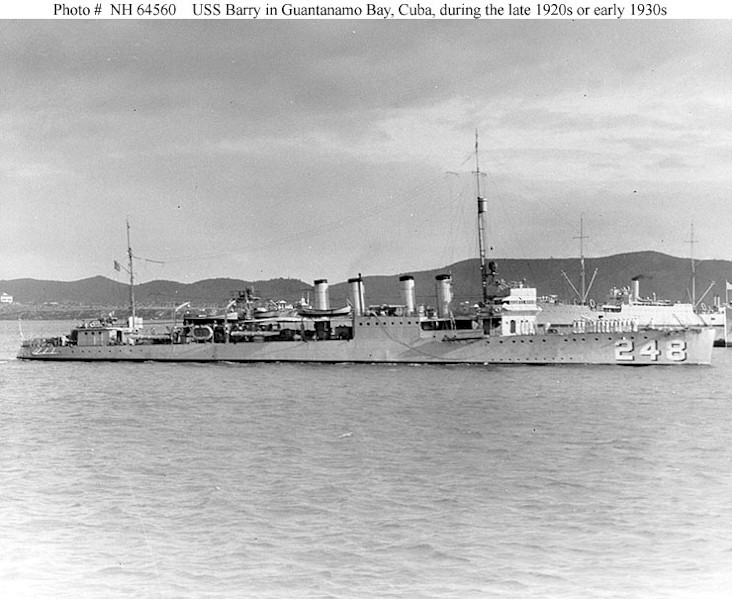 |
108k | Photo #: NH 64560, USS Barry (DD-248) in Guantanamo Bay, Cuba, during the late 1920s or early 1930s. Donation of Franklin Moran, 1967. U.S. Naval Historical Center Photograph. | Paul Rebold | |
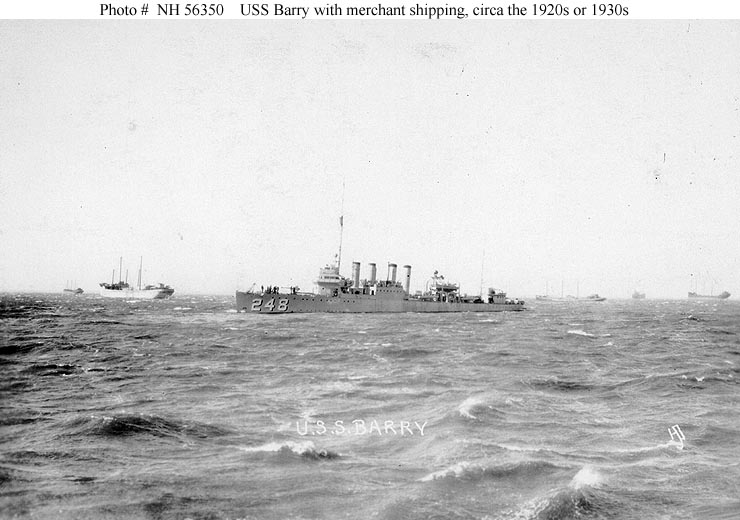 |
69k | Photo #: NH 56350, USS Barry (DD-248) photographed circa the 1920s or 1930s. Several merchant vessels are in the distance. U.S. Naval Historical Center Photograph. | Paul Rebold | |
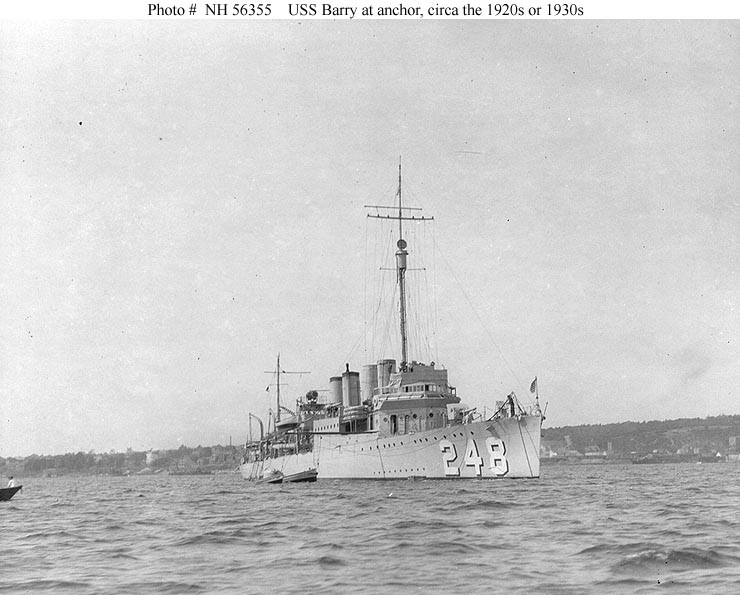 |
74k | Photo #: NH 56355, USS Barry (DD-248) at anchor, circa the 1920s or 1930s. U.S. Naval Historical Center Photograph. | Paul Rebold | |
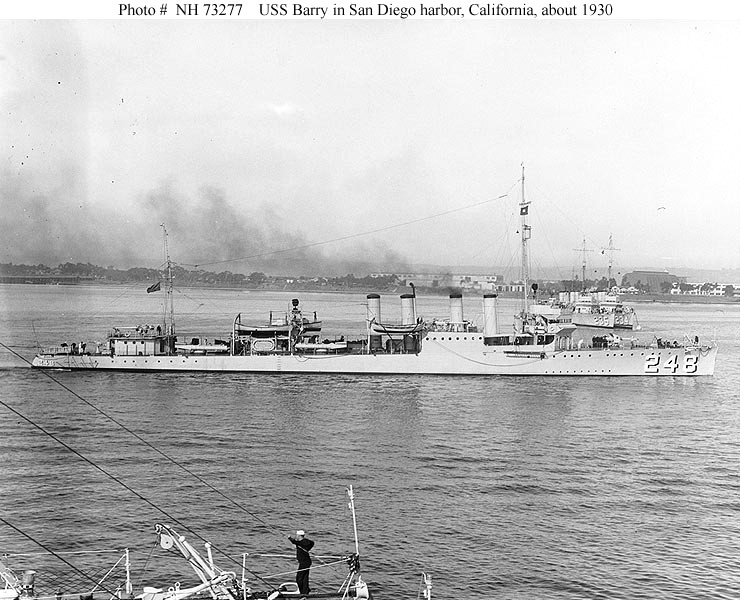 |
130k | USS Barry (DD-248) In San Diego harbor, California, about 1930. Ships in the right background are USS Kane (DD-235) and USS Fox (DD-234). U.S. Naval Historical Center Photograph. | Fred Weiss | |
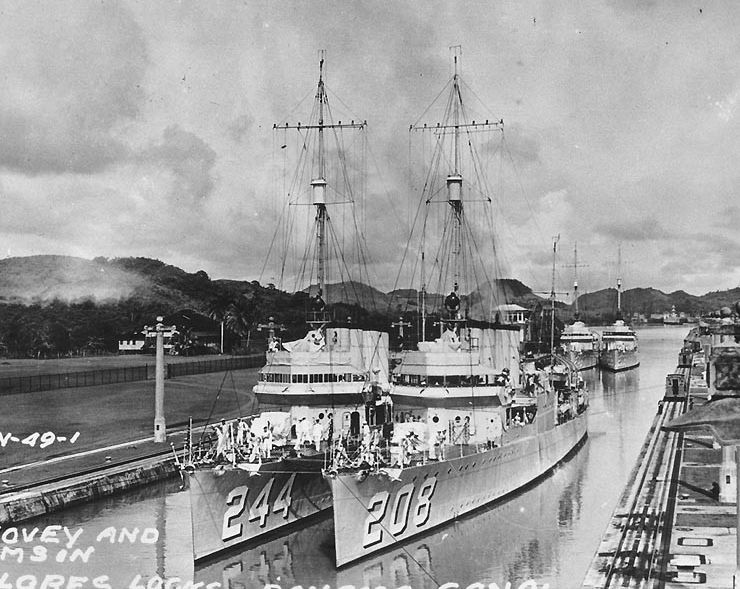 |
139k | USS Williamson (DD-244) and USS Hovey (DD-208) In the Miraflores Locks of the Panama Canal, during the 1930s. Destroyers next astern appear to be USS Barry (DD-248) and USS Long (DD-209). U.S. Naval Historical Center Photograph. | Fred Weiss | |
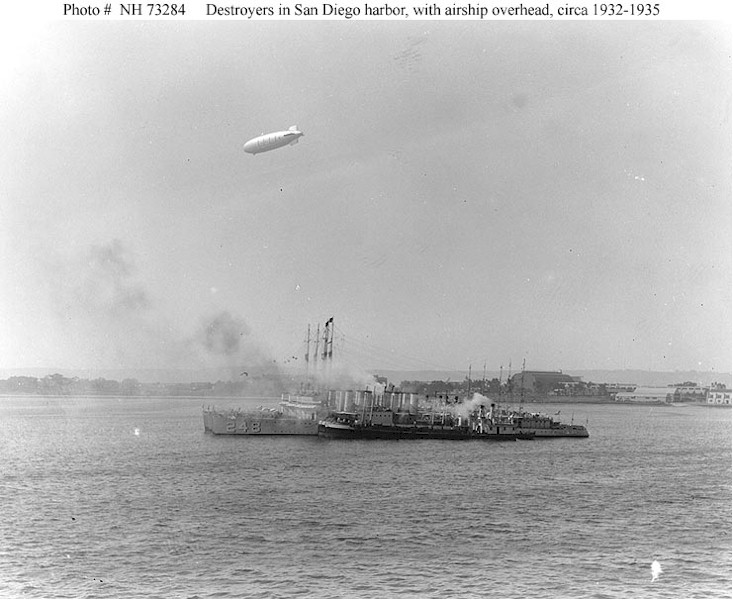 |
100k | Photo #: NH 73284, USS Barry (DD-248) nested with other destroyers in San Diego harbor, California, circa 1932-1935. Two fuel oil barges are moored alongside Barry. The airship in the distance is either USS Akron (ZRS-4) or USS Macon (ZRS-5). U.S. Naval Historical Center Photograph. | Paul Rebold | |
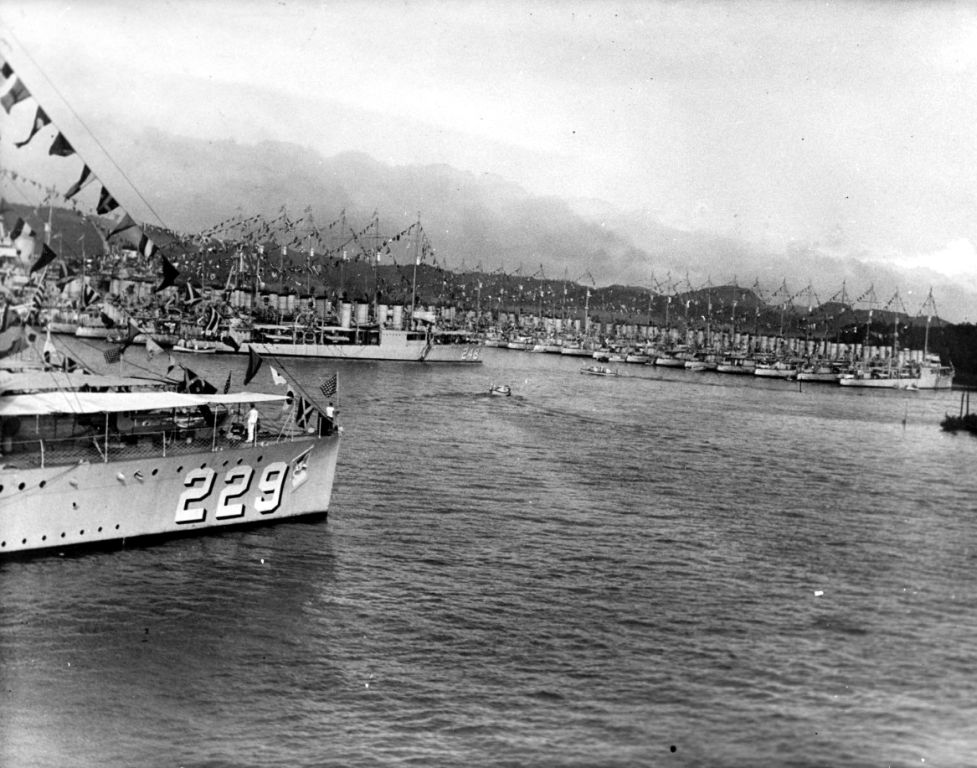
| 137k | Battle Force and Scouting Force destroyers are full-dressed with flags in honor of Navy Day while moored at Balboa, Panama Canal Zone, 27 October 1934. USS Truxtun (DD-229) is in the left foreground. Nearest ship in the left center background is USS Barry (DD-248). Donation of Franklin Moran, 1967. Source: Naval History and Heritage Command, Photo No. NH 65026. | Mike Green | |
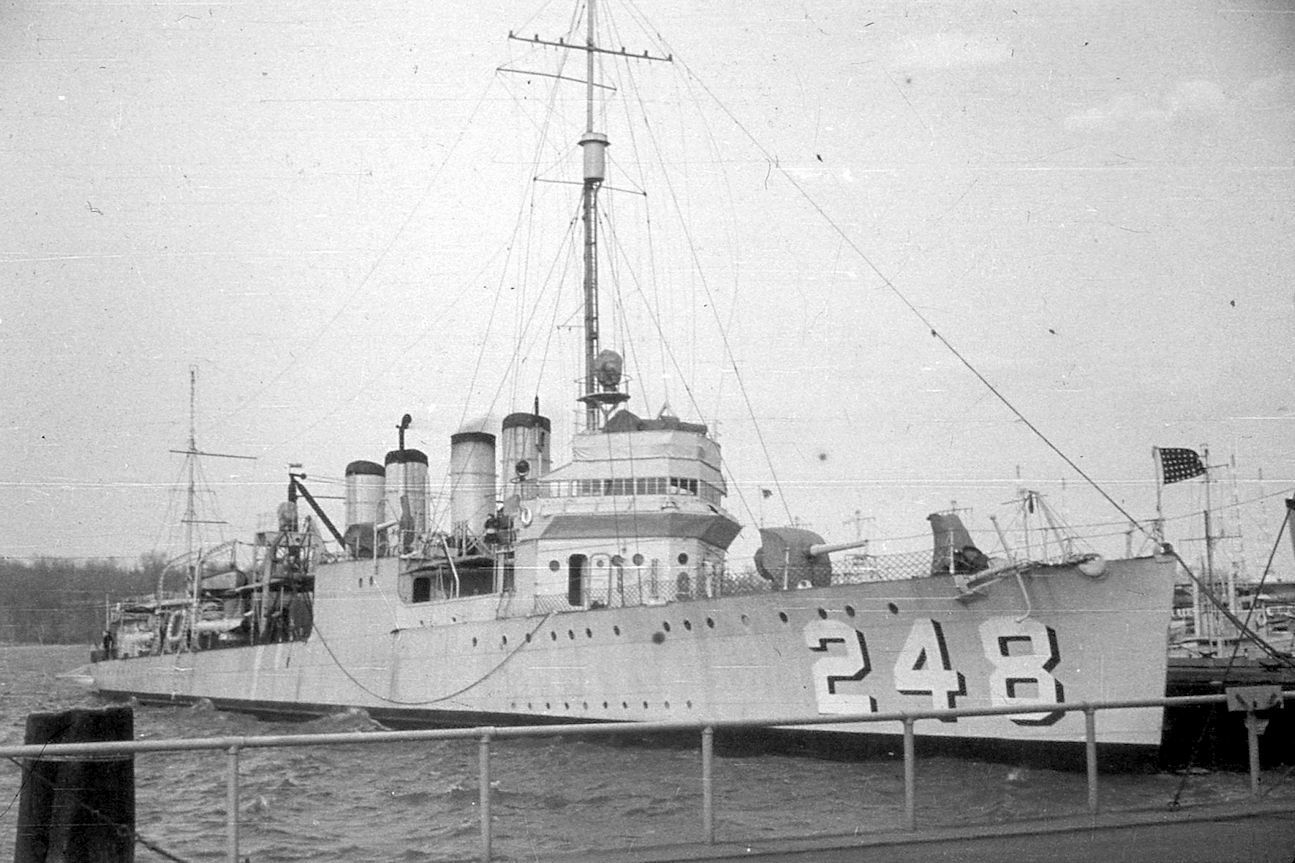 |
175k | Barry moored in an East coast port, 1940. | Dave Wright | |
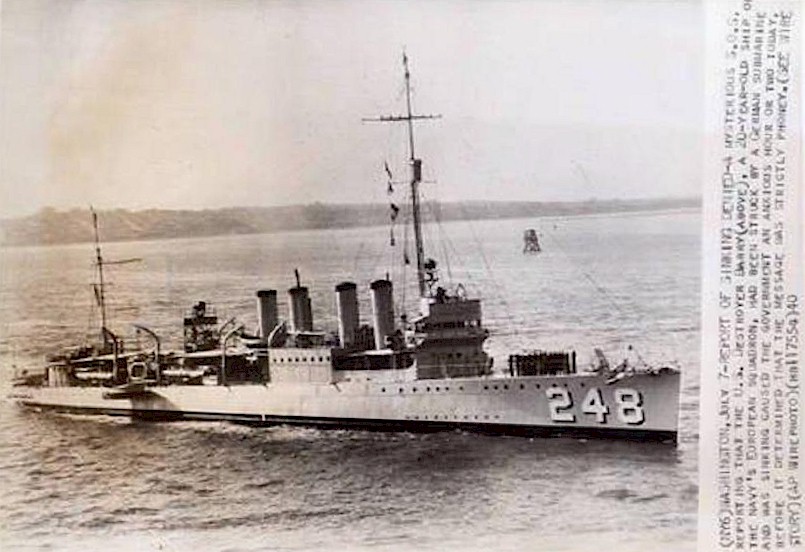 |
110k | Newpaper photo of the Barry after she had reportedly been sunk. This turned out to be in error. | Tommy Trampp | |
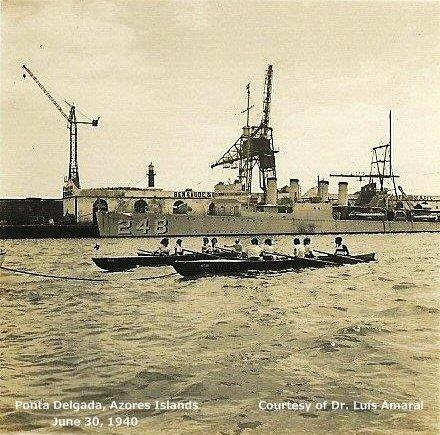 |
61k | Ponta Delgada, Azores June 30 1940. | Carlos Manuel Estrela | |
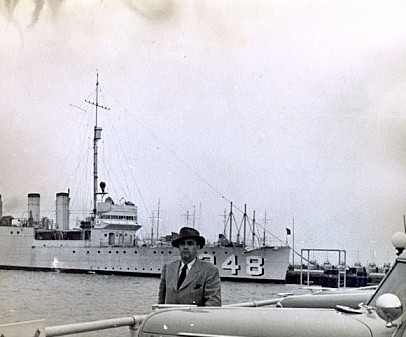 |
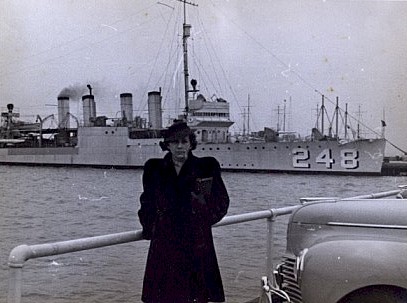
38k | Two views of the Barry in the Boston Area in the Spring of 1941. Bob's parents are in the images. | Bob Shoemaker | |
 |
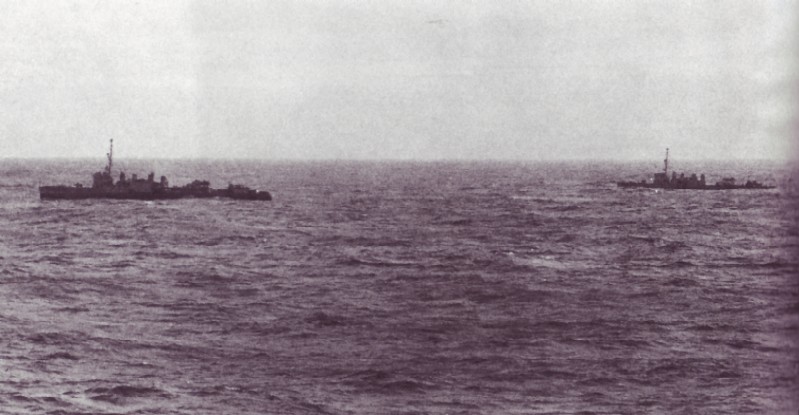
38k | As above. | Bob Shoemaker | |
 |
74k | USS Barry (DD-248) and USS Borie (DD-215) as photographed from the USS Card (CVE-11) on 2 November 1943 in the Atlantic. The Borie (low in the water, right) sank shortly after being photographed due to severe bow damage sustained after ramming U-405 the night before (Treasure Island Museum-SFCB). Photo from Warship Boneyards, by Kit and Carolyn Bonner. | Robert Hurst | |
LTJG Adolf Henry Bamberger    Dec 28 1920 - Jun 28 1921

LT Forrest Percival Sherman    Jun 28 1921 - Jul 26 1921 (Later ADM)

LCDR George Martin Cook    Jul 26 1921 - Jul 15 1922

LCDR Leslie LaFayette Jordan    Jul 15 1922 - Dec 17 1923

CDR Conant Taylor    Dec 17 1923 - Jun 1 1926

LCDR John Homer Holt Jr.    Jun 1 1926 - Jul 19 1929

CDR Raleigh Corwin Williams    Jul 19 1929 - Aug 10 1931

CDR Ellis Spencer Stone    Aug 10 1931 - Dec 20 1932

(Decommissioned December 20 1932 - June 20 1933)

LCDR Herbert Keeney Fenn    Jun 20 1933 - Jun 3 1934

LCDR Charles Allen    Jun 3 1934 - Jun 15 1936

LCDR Joseph Robert Lannom    Jul 15 1936 - May 21 1938

LCDR Burtnett Kent Culver    May 21 1938 - May 1 1939

LCDR William Marchant Cole    May 1 1939 - Feb 15 1941

LCDR Luther Kendrick Reynolds    Feb 15 1941 - Sep 21 1942 (Later RADM)

LCDR John Francis Flynn    Sep 21 1942 - Sep 22 1943

As the APD-29

LCDR Herbert Dudley Hill    Sep 22 1943 - Sep 5 1944

LCDR Clemens Francis Hand    Sep 5 1944 - Jun 21 1945
The contact listed, Was the contact at the time for this ship when located. If another person now is the contact, E-mail me and I will update this entry. These contacts are compiled from various sources over a long period of time and may or may not be correct. Every effort has been made to list the newest contact if more than one contact was found.
| Back To The Main Photo Index | To The Destroyer Index Page |
This page was created by Fred Willishaw (ex ARG-4, AS-11 & DD-692) and is maintained by David L. Wright
|