
Photographic History of the United States Navy
ARCHIVE
| NavSource Main Page | FAQ | Contact us | Search NavSource |
| |
NavSource Naval History Photographic History of the United States Navy |
DESTROYER ARCHIVE |


| Click On Image For Full Size Image |
Size | Image Description | Contributed By |
|
|---|---|---|---|---|
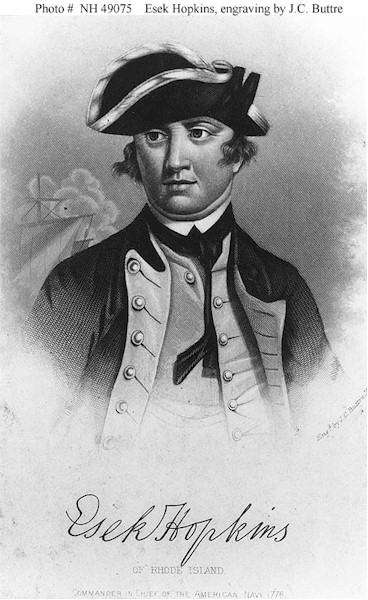 |
74k | Commodore Esek Hopkins, Continental Navy was born in Rhode Island on 26 April 1718. As a young man he began a career at sea, captaining merchant vessels and, during the French and Indian War, a successful privateer. After the American Revolution broke out in 1775, Rhode Island appointed Hopkins as commander of its military forces. Later in that year he became Commander in Chief of the still very small Continental Navy. In mid-February 1776, Commodore Hopkins sailed from Philadelphia, Pennsylvania, under orders from the Continental Congress to attack British maritime forces in the Chesapeake Bay, along the southern coast and off Rhode Island. Realizing that enemy strength was too great to permit execution of this ambitious task, Hopkins instead undertook what would be the Navy's first amphibious offensive. On 3 March, his squadron put a landing party ashore on New Providence Island, in the Bahamas, seized the local defensive works and captured a stock of equipment and supplies that were badly needed for military purposes in the rebellious American colonies. On 4 April 1776, while en route home, the Continental ships encountered and captured two small British warships. Two days later they had an inconclusive engagement with HMS Glasgow. Hopkins' squadron arrived at New London, Connecticut, on 8 April. Hopkins' conduct of his operations produced considerable controversy. Though censured by the Congress, he remained in charge of the American Navy for the next year, during which time his ships were based in southern New England. Continued dissatisfaction with his performance led to loss of his command in 1777 and dismissal from the service early in 1778. Esek Hopkins retained his local popularity, however, serving in the Rhode Island legislature during most of the next decade and remaining active in the state's affairs until his death on 26 February 1802. Photo #: NH 49075. Commander in Chief of the Continental Navy, 1775-1777 Line engraving by J.C. Buttre, New York, published during the 19th Century. It includes a facsimile of Hopkins' signature. U.S. Naval Historical Center Photograph. | Bill Gonyo | |
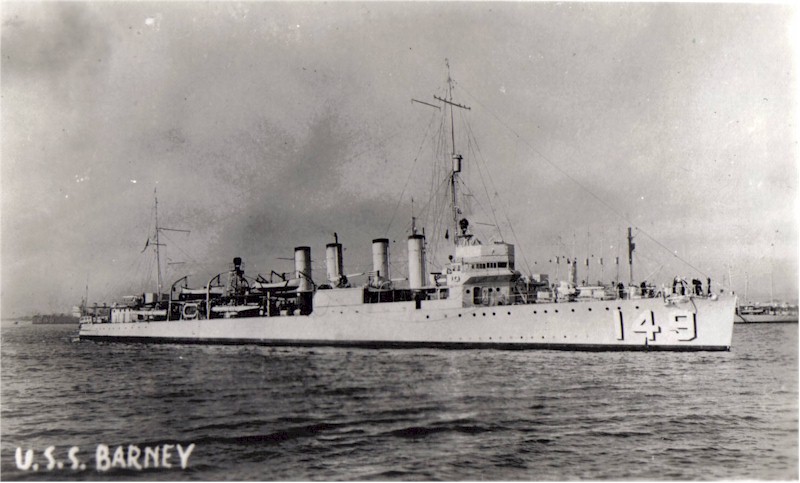 |
91k | Undated, location unknown. USS Barney (DD-149) in the foreground and USS Hopkins (DD-249) in the left background. | Paul Rebold | |
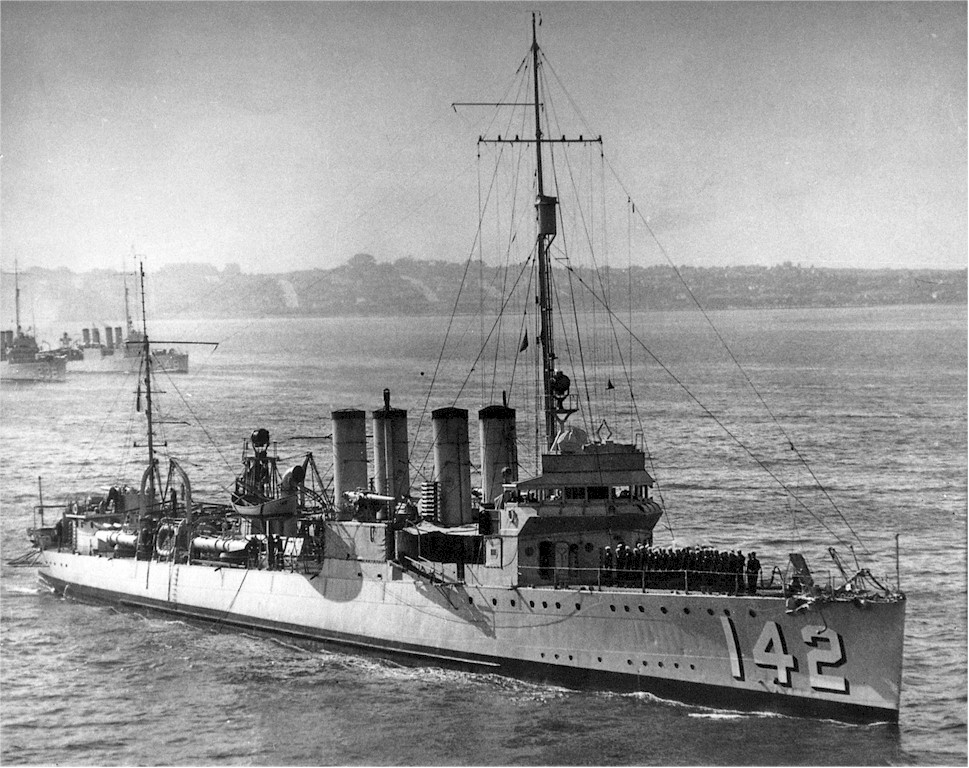
| 236k | Undated, location unknown. USS Tarbell (DD 142) with USS Humphreys (DD 236) and USS Hopkins (DD 249) aft of her. Photo from the collection of the Vallejo Naval and Historical Museum. | Darryl Baker | |
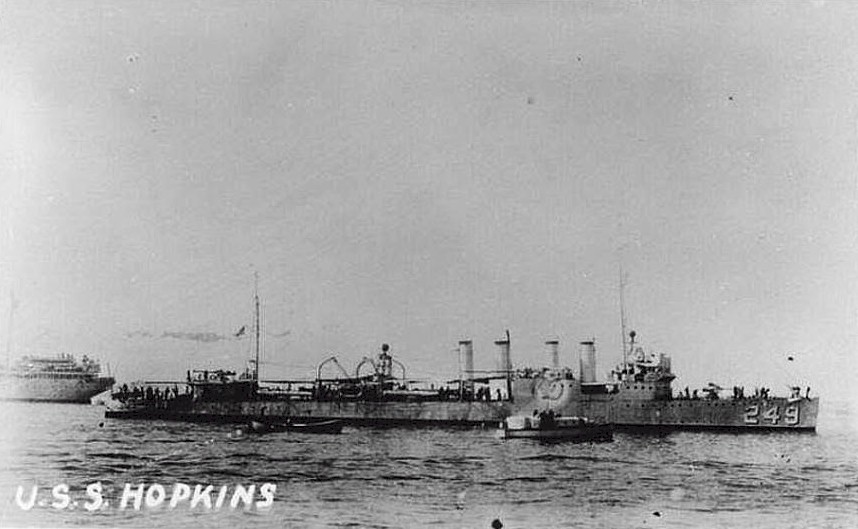 |
91k | Undated, location unknown. | Richard Miller BMCS USNR RET. | |
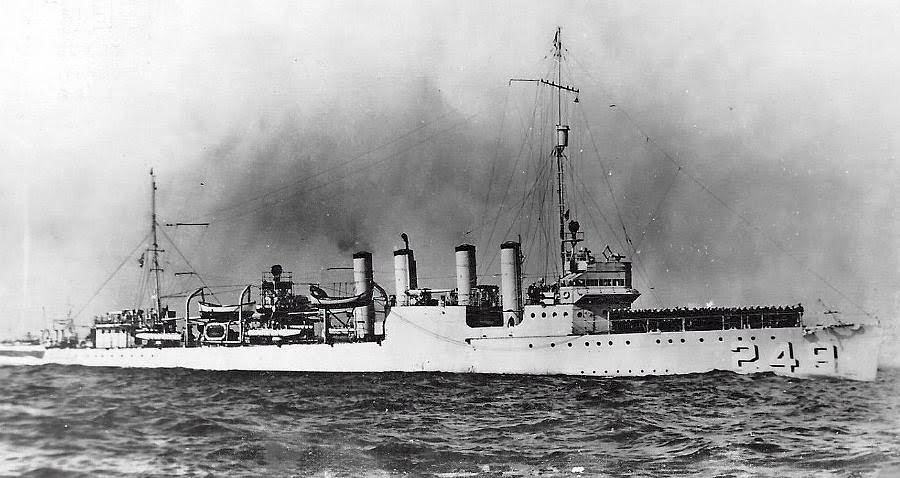 |
108k | Undated, location unknown. | Richard Miller BMCS USNR RET. | |
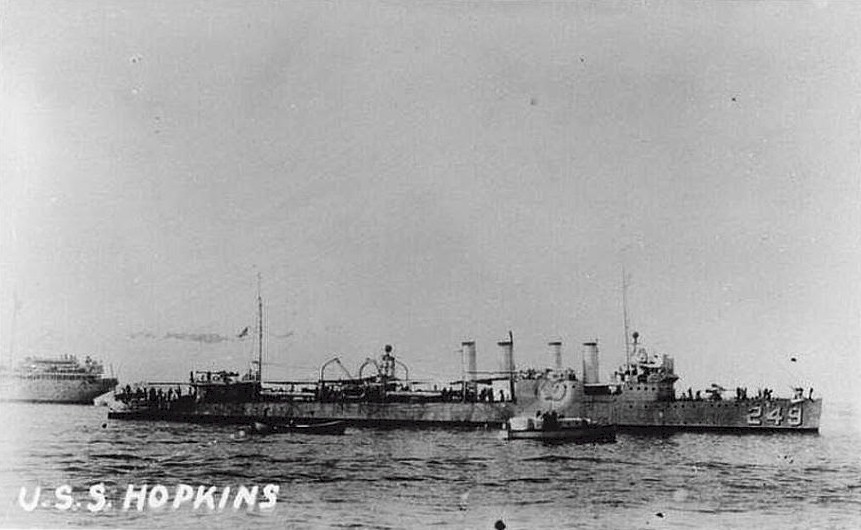 |
93k | Undated, location unknown. | Richard Miller BMCS USNR RET. | |
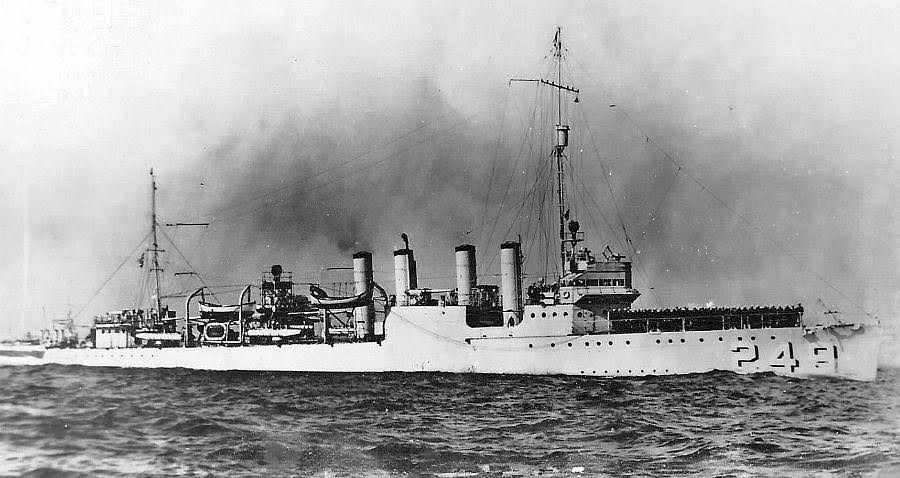 |
108k | Undated, location unknown. | Richard Miller BMCS USNR RET. | |
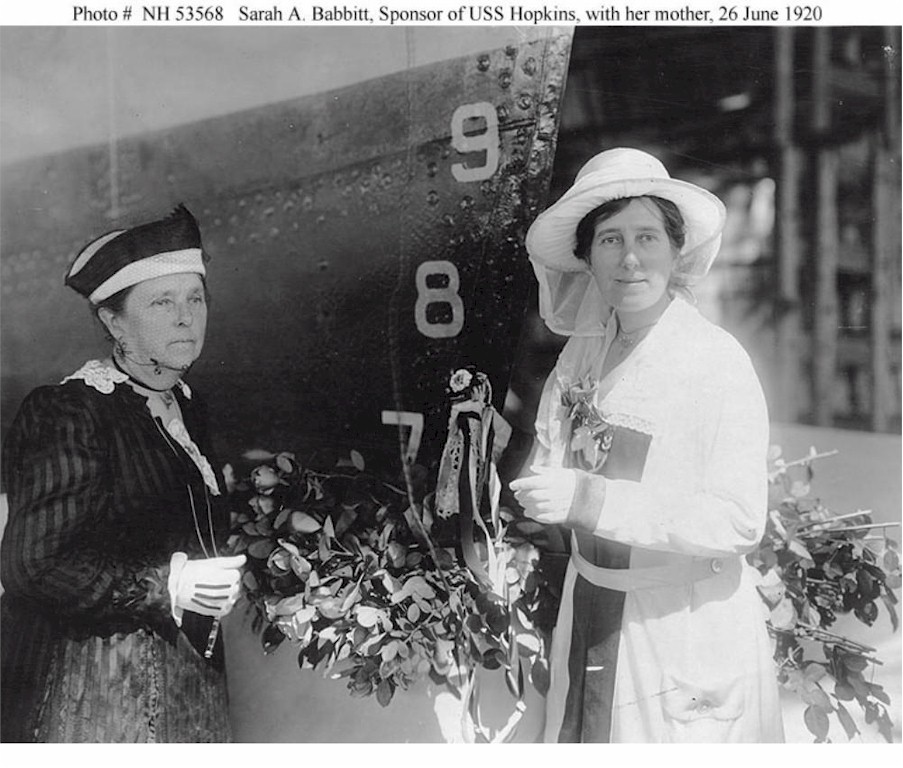 |
150k | Miss Sarah A. Babbitt, Sponsor of USS Hopkins (DD-249), with her mother, at the ship's launching, 26 June 1920. The ceremonies took place at the New York Shipbuilding Corporation shipyard, Camden, New Jersey. U.S. Naval Historical Center Photograph. Photo #: NH 53568. | Robert Hurst | |
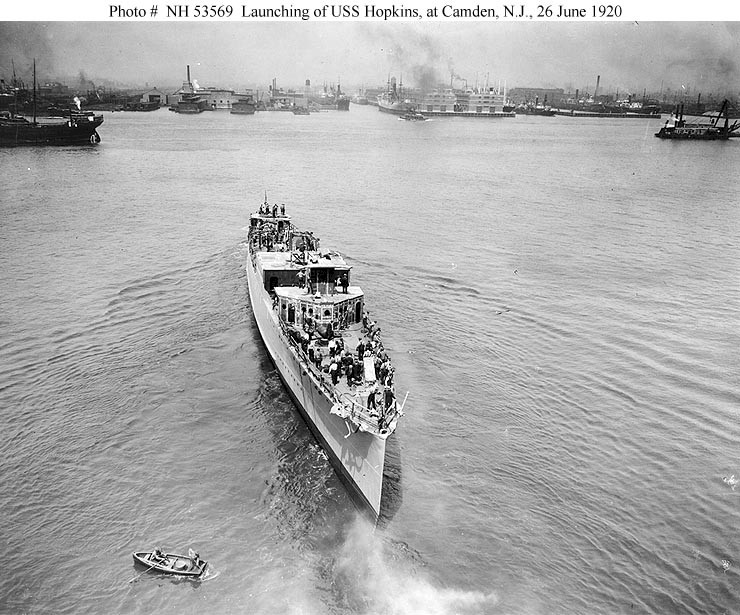 |
150k | USS Hopkins (DD-249), Launching, at the New York Shipbuilding Corporation shipyard, Camden, New Jersey, on 26 June 1920. U.S. Naval Historical Center Photograph. Photo #: NH 53569. | Robert Hurst | |
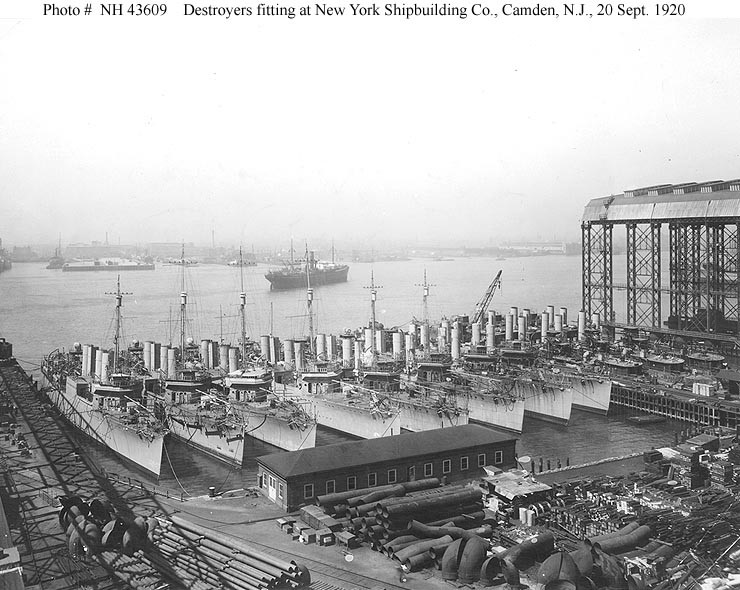
| 131k | New York Shipbuilding Corporation Shipyard, Camden, New Jersey. Eleven destroyers fitting out in the Wet Basin between Piers 3 and 4. Photo is dated 28 September 1920. Ships present are identified as (from left to right): Childs (DD-241), commissioned 22 Oct. 1920; Reuben James (DD-245), commissioned 24 Sept. 1920; McFarland (DD-237), commissioned 30 Sept. 1920; Sturtevant (DD-240), commissioned 21 Sept. 1920; Williamson (DD-244), commissioned 29 Oct. 1920; Sands (DD-243), commissioned 10 Nov. 1920; Lawrence (DD-250), commissioned 18 April 1921; Hopkins (DD-249), commissioned 21 March 1921; Bainbridge (DD-246), commissioned 9 Feb. 1921; Goff (DD-247), commissioned 19 Jan. 1921; and Barry (DD-248), commissioned 28 Dec. 1920. | Robert Hurst | |
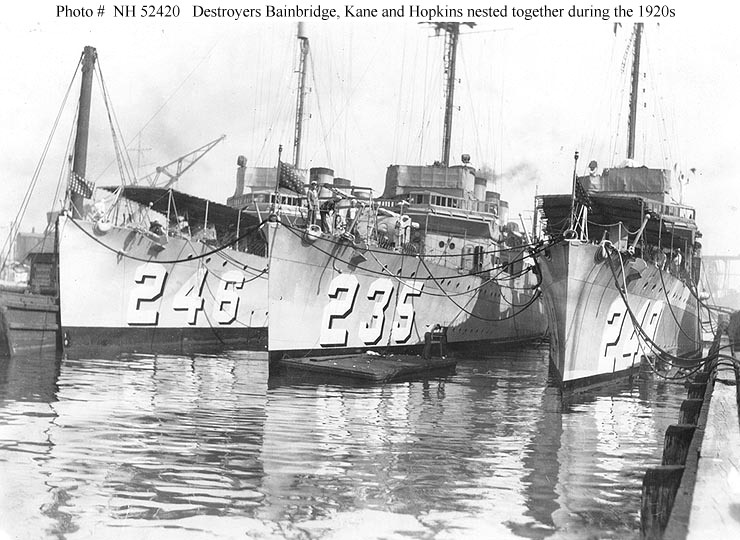 |
124k | USS Bainbridge (DD-246); USS Kane (DD-235); and USS Hopkins (DD-249) Nested together during the 1920s. U.S. Naval Historical Center Photograph. | Fred Weiss | |
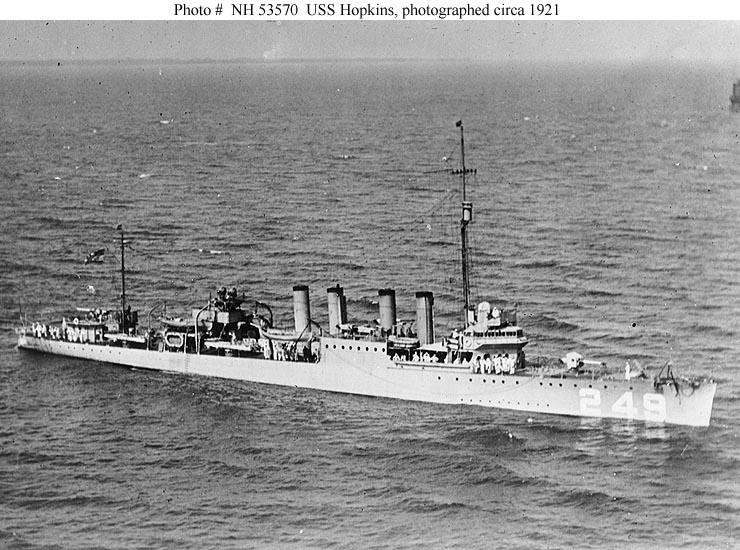 |
110k | USS Hopkins (DD-249) photographed circa 1921 (USN photo No: 53570). | Robert Hurst | |
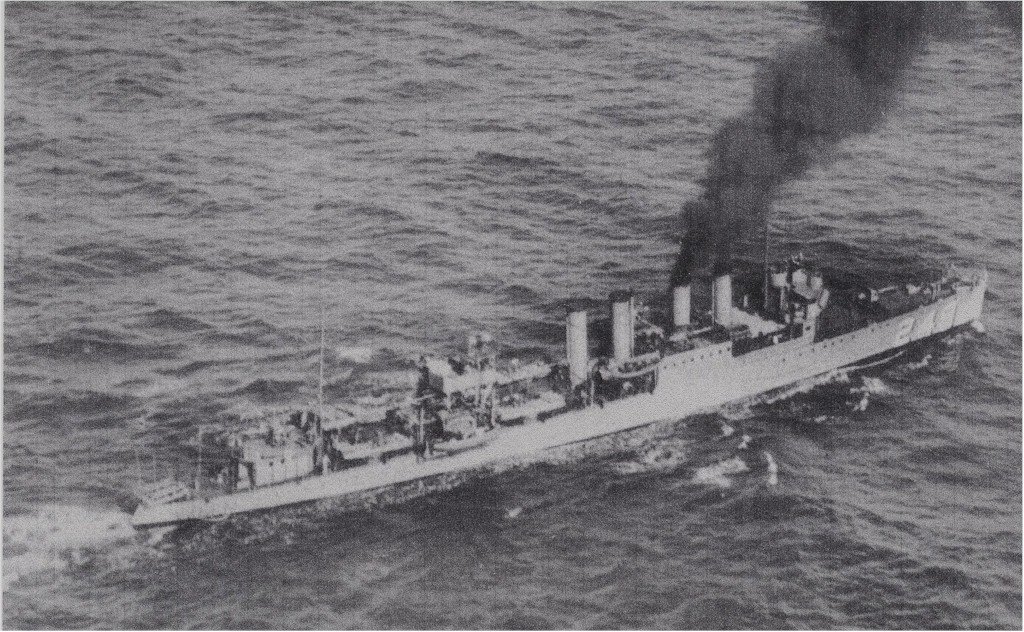 |
251k | August 11 1923, location unknown. From the John Dickey collection. | Ed Zajkowski | |
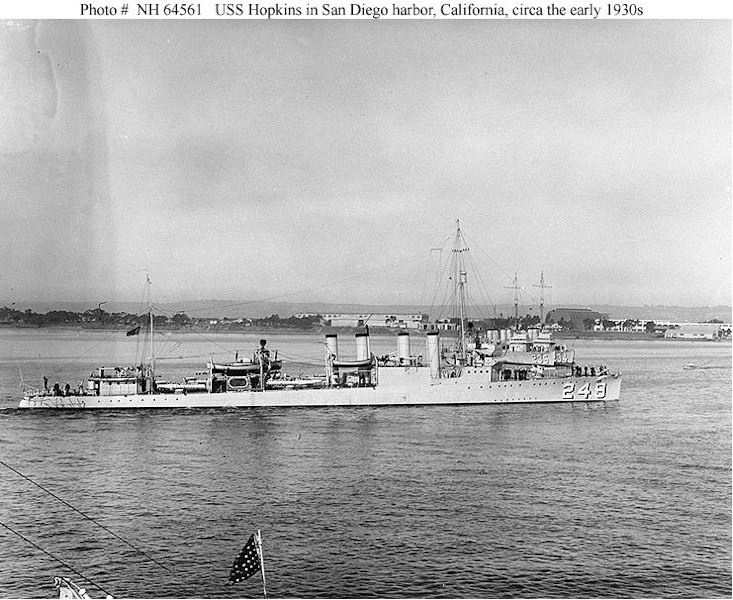 |
148k | USS Hopkins (DD-249) In San Diego harbor, California, during the early 1930s. USS Kane (DD-235) and USS Fox (DD-234) are moored in the right center background, with Naval Air Station North Island beyond them. Donation of Franklin Moran, 1967. U.S. Naval Historical Center Photograph. | Fred Weiss | |
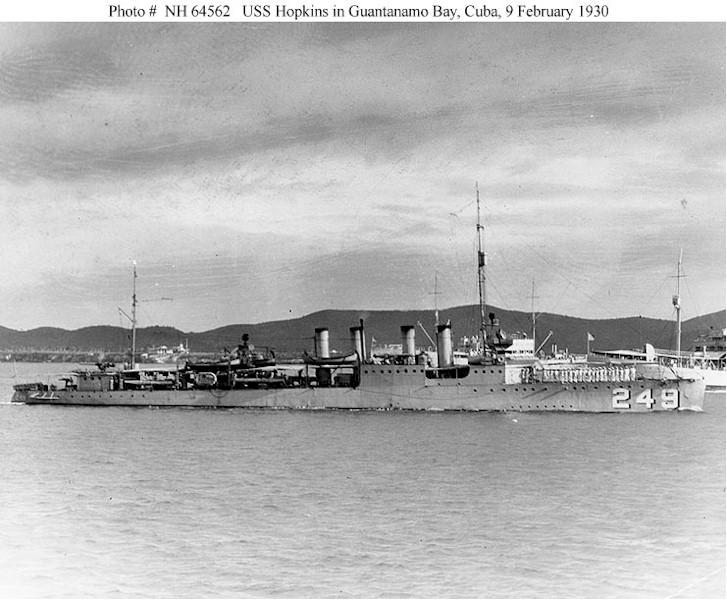 |
110k | Photo #: NH 64562, USS Hopkins (DD-249) underway in Guantanamo Bay, Cuba, 9 February 1930. Donation of Franklin Moran, 1967. U.S. Naval Historical Center Photograph. | Paul Rebold | |
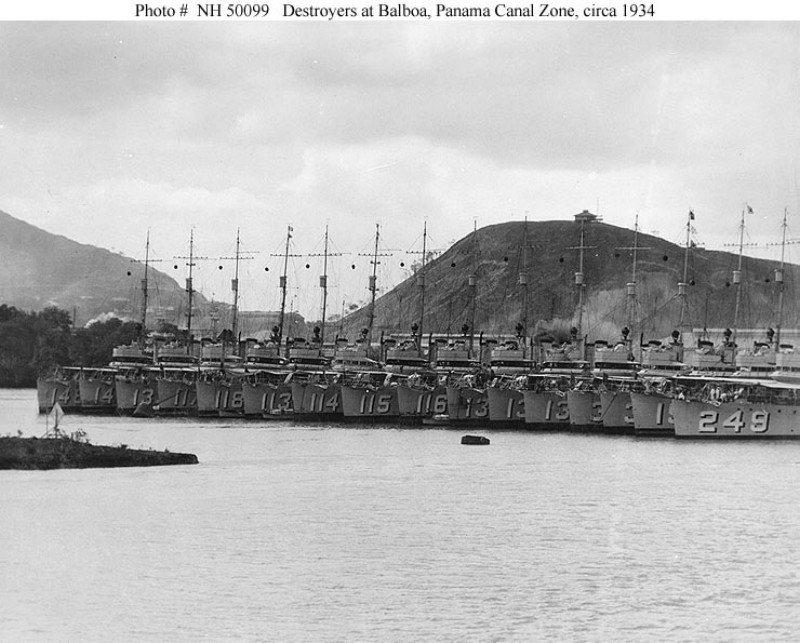 |
115k | U.S. Navy destroyers moored together at Balboa, Panama Canal Zone, circa 1934. Ships present include (from left to right): USS Breckinridge (DD-148); two unidentified destroyers; USS Dorsey (DD-117); USS Lea (DD-118); USS Rathburne (DD-113); USS Talbot (DD-114); USS Waters (DD-115); USS Dent (DD-116); six unidentified destroyers and USS Hopkins (DD-249). U.S.Naval Historical Centre photo # NH 50099. | Robert Hurst | |
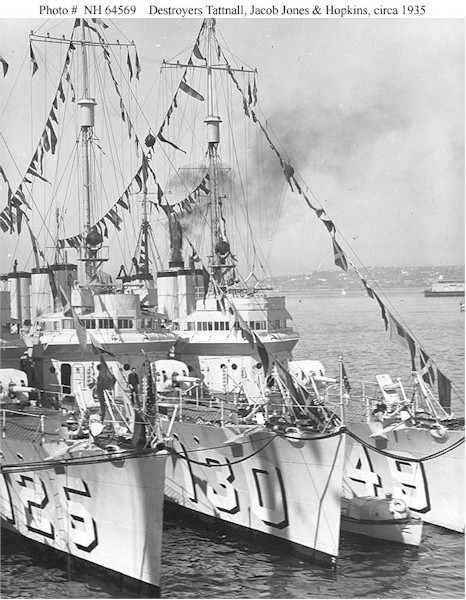 |
102k | Photo #: NH 64569: USS Tattnall (DD-125), USS Jacob Jones (DD-130), and USS Hopkins (DD-249) (listed left to right) moored together off San Diego, California, circa 1935. This view shows the ships' bows, with signal flags hoisted in the rigging in honor of a special occasion. Donation of Franklin Moran, 1967. U.S. Naval Historical Center Photograph. | - | |
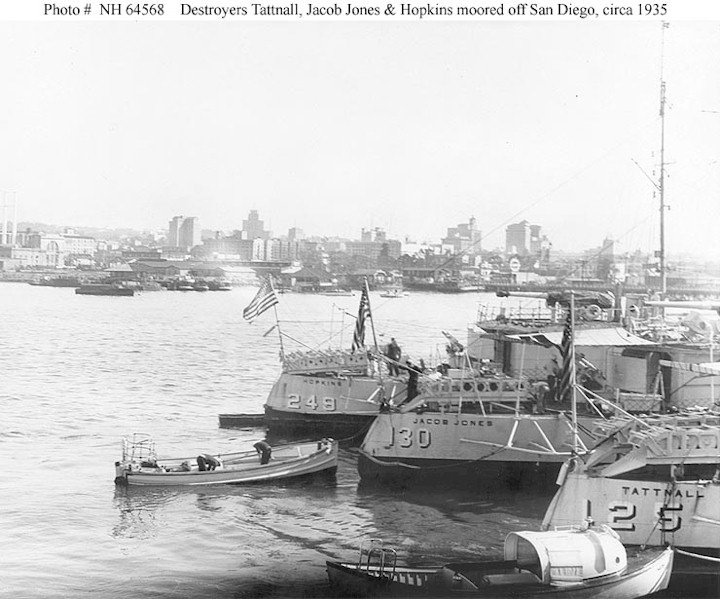 |
102k | Photo #: NH 64568: USS Hopkins (DD-249), USS Jacob Jones (DD-130), and USS Tattnall (DD-125) (listed left to right) moored together off San Diego, California, circa 1935. This view shows the ships' sterns, with propeller guards, depth charge racks and small craft visible. Donation of Franklin Moran, 1967. U.S. Naval Historical Center Photograph. | - | |
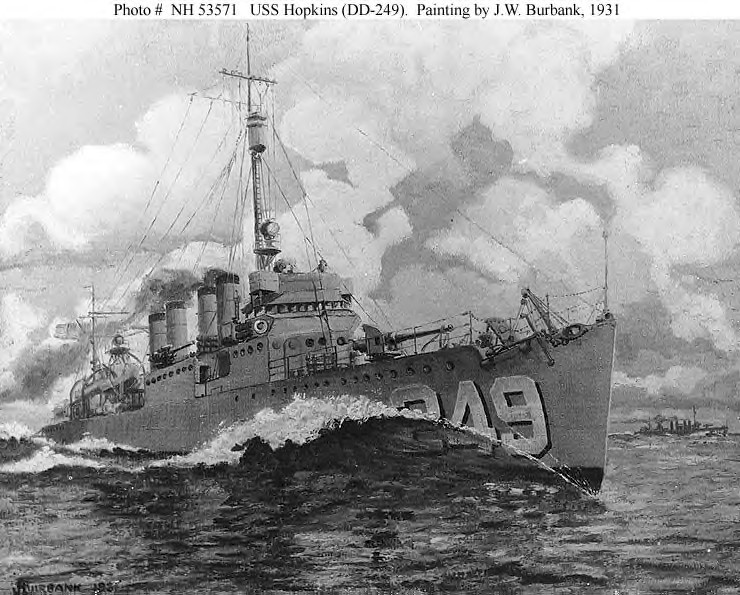
| 149k | USS Hopkins (DD-249) painting by J.W. Burbank, 1931. U.S. Naval Historical Center Photograph NH 53571. | Mike Mohl | |
LCDR Carlos Augustus Bailey    Mar 21 1921 - Feb 17 1922
LCDR William Faulkner Amsden    Feb 17 1922 - Jun 12 1923
CDR Rufus Wellington Mathewson    Jun 12 1923 - Nov 20 1924
CDR John Walter Wilcox, Jr.    Nov 20 1924 - Jun 24 1926
LCDR Roman Burchart Hammes    Jun 24 1926 - Nov 1 1927
LCDR Arthur Wallace Dunn Jr.    Nov 1 1927 - Oct 15 1930
LT Myron Argyle Baber    Oct 15 1930 - Dec 10 1930 (XOIC)
LCDR Robert Dudley Kirkpatrick    Dec 10 1930 - Jul 11 1931
CDR Scott Bartlett McFarlane    Jul 11 1931 - Nov 9 1932
LCDR Philip Van Horn Weems    Nov 9 1932 - Jun 17 1933
LCDR Thomas Benjamin Fitzpatrick    Jun 17 1933 - Jun 21 1934
LCDR James Lemuel Holloway, Jr.    Jun 21 1934 - Jun 19 1935 (Later ADM)
LCDR Henry Young McCown    Jun 19 1935 - Jul 9 1937
LCDR John Stewardson Crenshaw    Jul 9 1937 - Apr 4 1939
LCDR Omer Archibald Kneeland    Apr 4 1939 - Aug 8 1940
As the DMS-13
LCDR Robley Westland Clark    Aug 8 1940 - Nov 27 1941
LT H. Still    Nov 27 1941 - Dec 10 1941
LT William Tenney Dutton    Dec 10 1941 - Apr 10 1941
LCDR Benjamin Coe    Apr 10 1942 - Dec 12 1942 (Later RADM)
LCDR Francis Marion Peters Jr.    Dec 12 1942 - Jul 26 1943
LT Alton Louis Clifford "Red" Waldron    Jul 26 1943 - May 26 1944
LCDR Douglas P. Payne    May 26 1944 - Sep 6 1945
LT Robert Louis Jacobs    Sep 6 1945 - Dec 21 1945
| Back To The Main Photo Index | To The Destroyer Index Page |
