Photographic History of the United States Navy
ARCHIVE
| NavSource Main Page | FAQ | Contact us | Search NavSource |
| |
NavSource Naval History Photographic History of the United States Navy |
DESTROYER ARCHIVE |


| Click On Image For Full Size Image |
Size | Image Description | Contributed By |
|
|---|---|---|---|---|
| Namesake |
||||
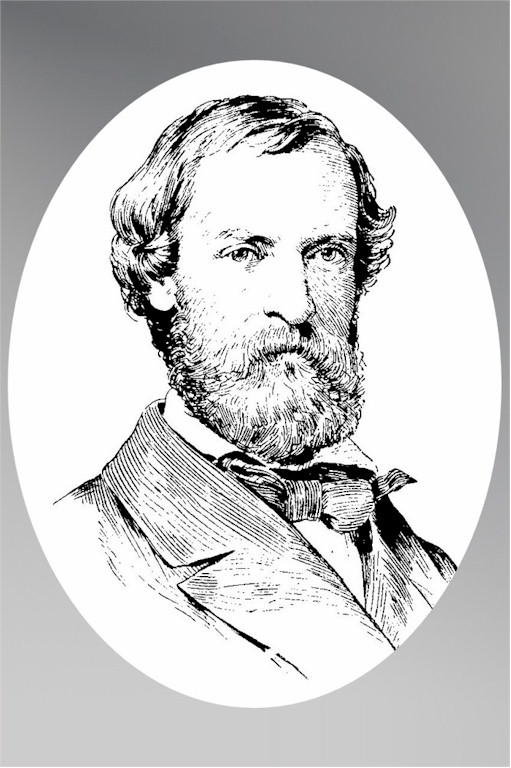
| 96k | Alexander Colden Rhind, born in New York City 31 October 1821, was appointed midshipman, 3 September 1838. He served with the Home Squadron off the coast of Mexico and with both the South and North Atlantic Blockading Squadrons during the Civil War. He was ordered to command Crusader, 14 December 1861. While commanding her, he earned the thanks of Congress for the capture and destruction of Confederate works commanding the South Edisto, Dawho, and Pon-Pon Rivers in April 1862. A year later, he participated in the attacks on Charleston's defenses as commanding officer of ironclad Keokuk. During the attack on 7 April 1863, Keokuk was struck ninety times, suffering 19 holes at or near her waterline. Retiring, she was kept afloat until the following morning, by which time the crew had been taken off. Later, after commanding Paul Jones and Wabash, he assumed command of Agawam, North Atlantic Blockading Squadron, 23 October 1863, and earned praise from Rear Admiral Samuel Lee for the "gallantry and endurance displayed" by himself and his crew during an engagement with three batteries at Deep Bottom, 13 August 1864. In December 1864 he was detailed to command the powder boat Louisiana, which was towed by Wilderness to a point 250 yards off Fort Fisher. There Commander Rhind and his crew set the fuzes and started a fire before escaping to Wilderness. The blast from the explosion, although loud, did little damage and two days later Rhind returned to close proximity to the fort to plant a marker buoy as near to the fort as possible to allow the fleet to bombard Fort Fisher at close range. For his feats he was commended by Admiral Porter and recommended for promotion. Rear Admiral Rhind died at New York, 8 November 1897. | Bill Gonyo | |
| USS Rhind (DD-404) |
||||
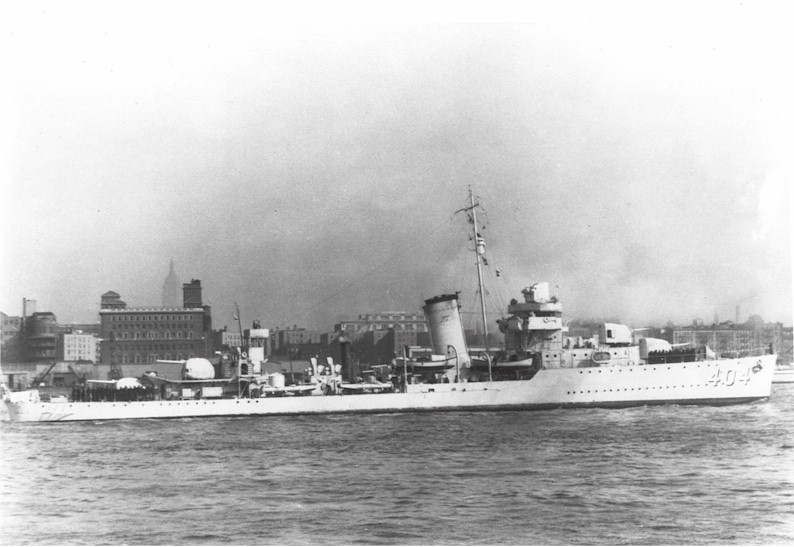
| 93k | Undated, location unknown. | David Buell | |
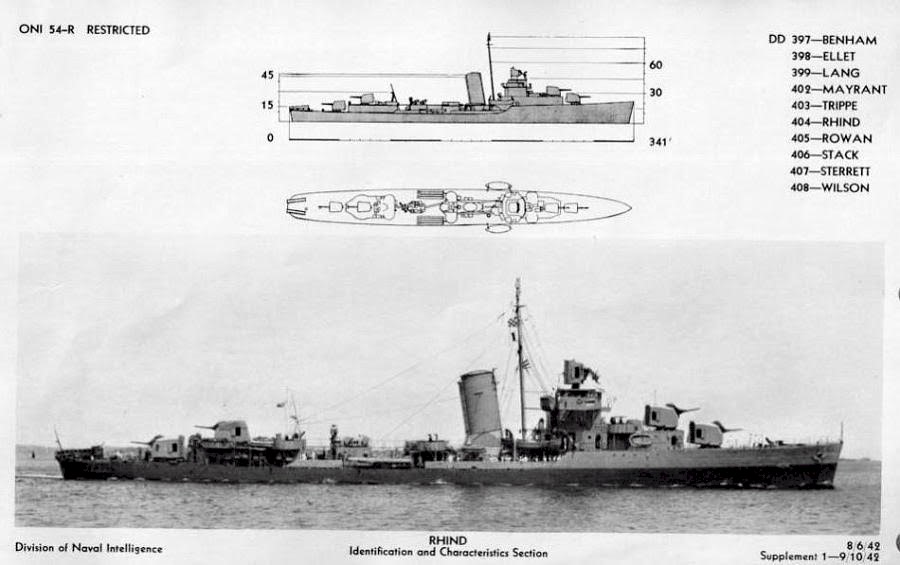
| 78k | Undated, location unknown. Identification card from ONI 54-R. | Richard Miller BMCS USNR RET. | |
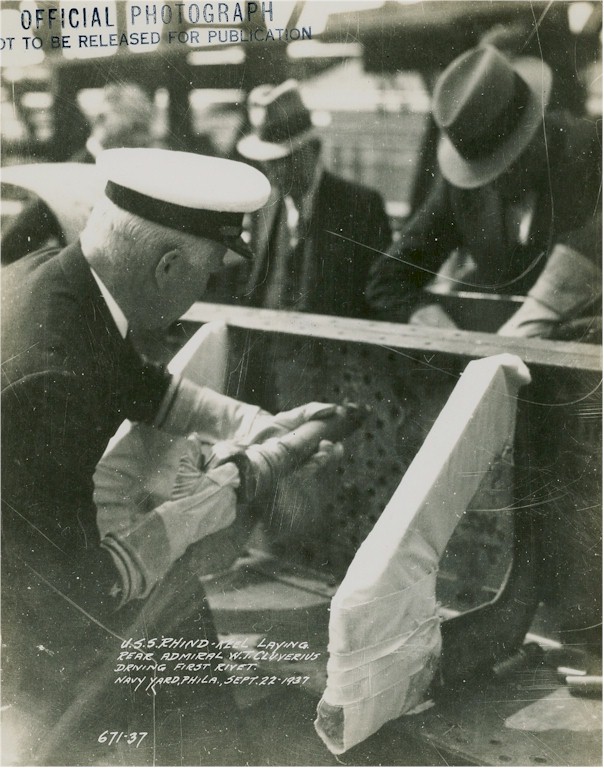
| 159k | Rear Admiral Wat T. Cluverius, Commandant of the Fourth Naval District, driving the first rivet for Rhind's keel at Philadelphia Navy Yard, 22 September 1937. | Ed Zajkowski | |
 0540423 |
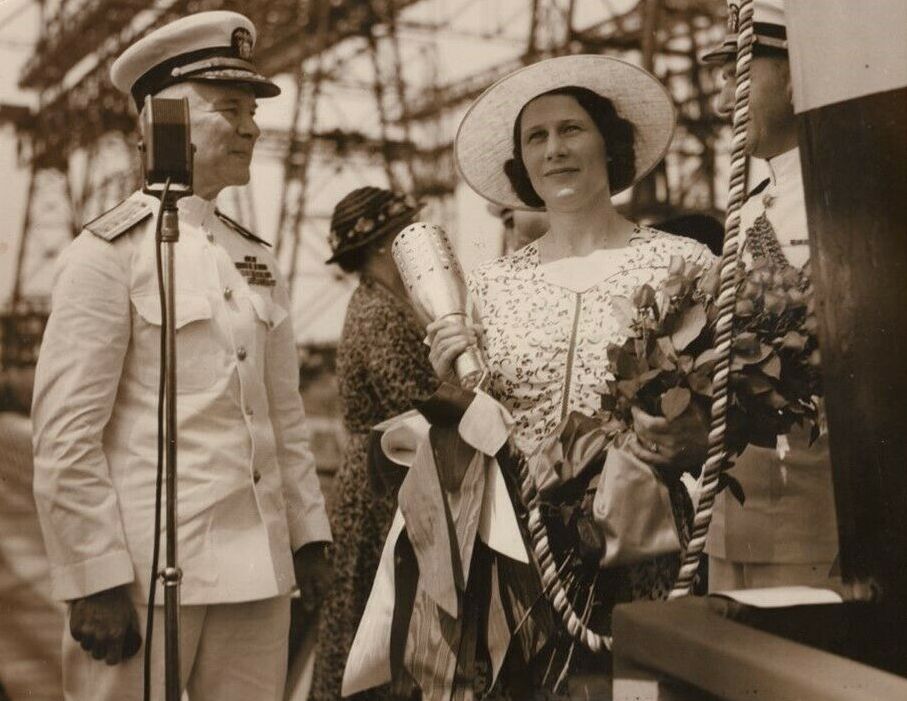
95k | Rear Admiral Wat T. Cluverius, Commandant of the Fourth Naval District, instructs Mrs. Frederick S. Camp, of Norwich, Conn., sponsor of the new destroyer Rhind, how to hold the bottle of champagne which she broke against the nose of the new 1,500 ton destroyerbefore she slid down the ways at the Navy Yard here, July 28th. Acme press photo. | Dave Wright | |
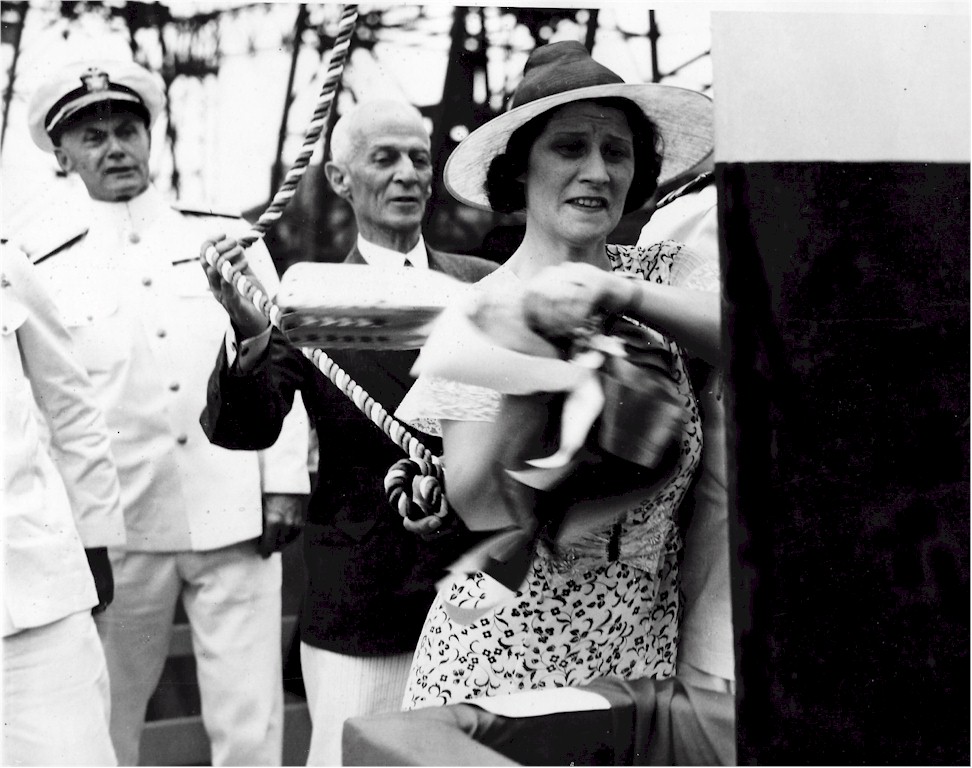
| 166k | Mrs. Frederick S. Camp, Great Grandniece of Rear Admiral Alexander Colden Rhind, Civil War Hero, swings the bottle of champagne against the hull of the new destroyer U.S.S. Rhind with plenty of vigor as she christens the 1,500-ton greyhound of the fleet at launching ceremonies in the Navy Yard here on July 28th. Image courtesy of Acme Newspictures. | Bill Gonyo | |
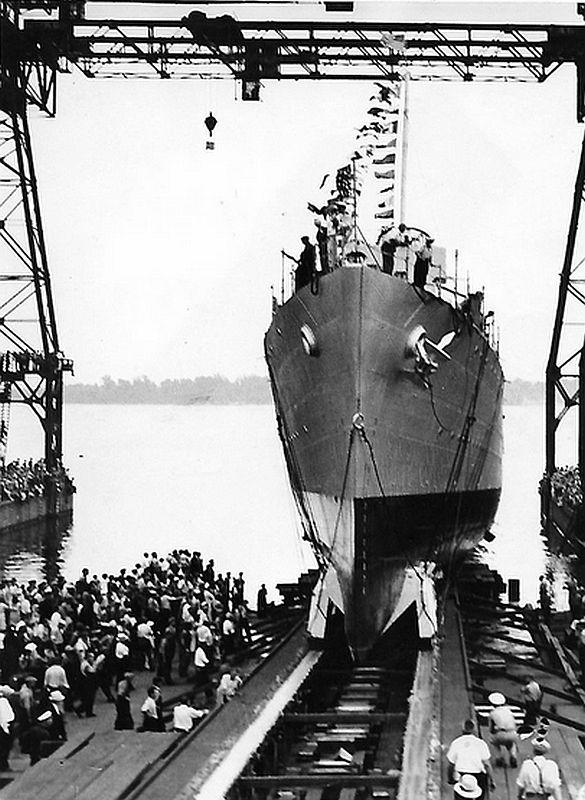
| 100k | Rhind sliding down the ways at Philadelphia Navy Yard, 28 July 1938. | Dave Wright | |
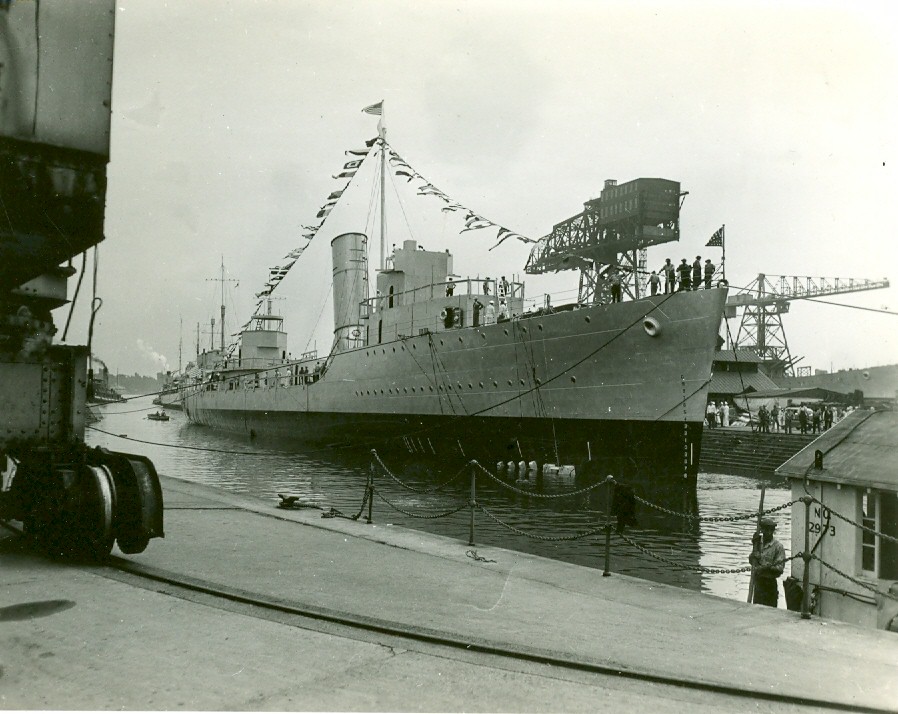
| 159k | Rhind after her launch at Philadelphia Navy Yard, 28 July 1938. | Ed Zajkowski | |
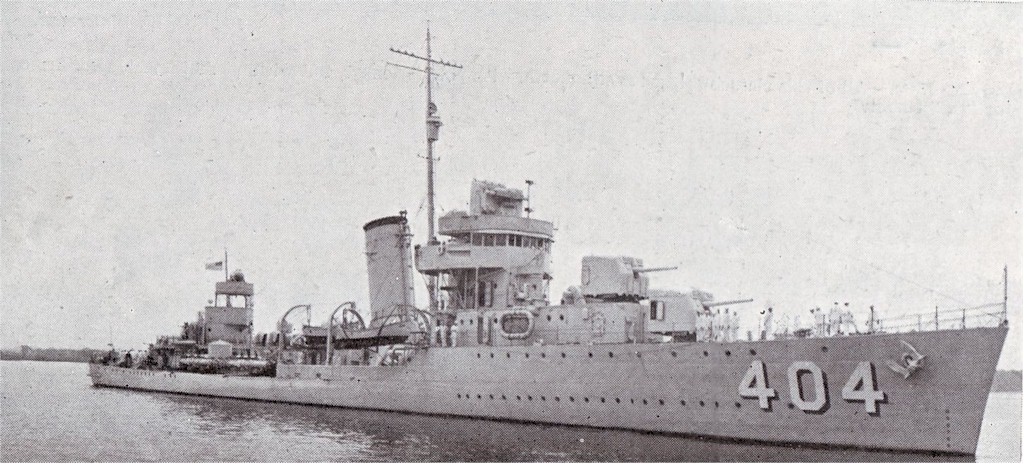
| 153k | Circa 1940, location unknown. Image from the 1943-44 Edition of Jane's Fighting Ships. | Robert Hurst | |
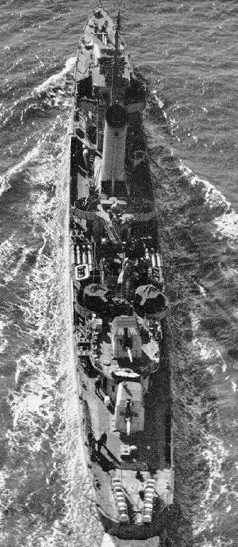
| 65k | Off Philadelphia Navy Yard, 05 June 1940. | Robert Hurst | |
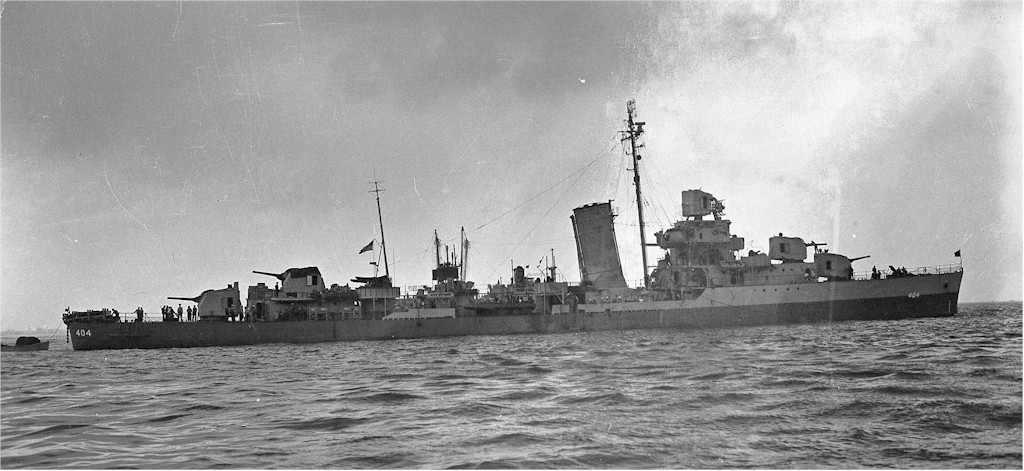
| 143k | Circa 1942, location unknown. | Darryl Baker | |
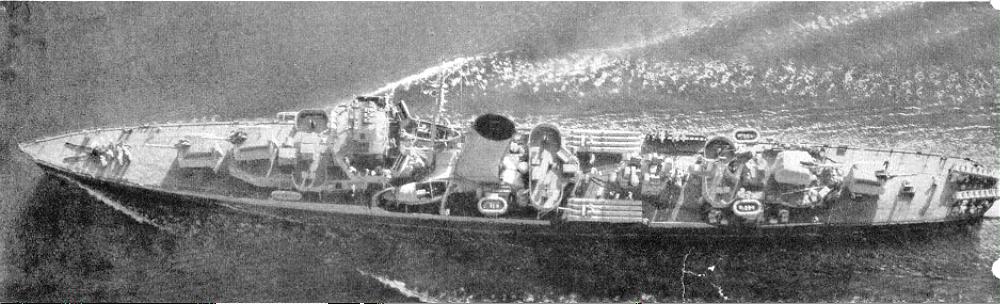
| 71k | Photo from the 1943-45 Naval Recognition Manual. Portside overhead view of the Craven class destroyer USS Rhind (DD-404), as seen on September 17 1942. Two sets of her torpedo batteries have been removed. Her after 5"/38 batteries are enclosed, as was done on most of the ships of the Benham sub-class. The group of 22 Craven class ships actually consisted of three similar sub-classes; Gridley, Bagley and Benham. The Rhind was part of the Benham sub-class. | Mike Green | |
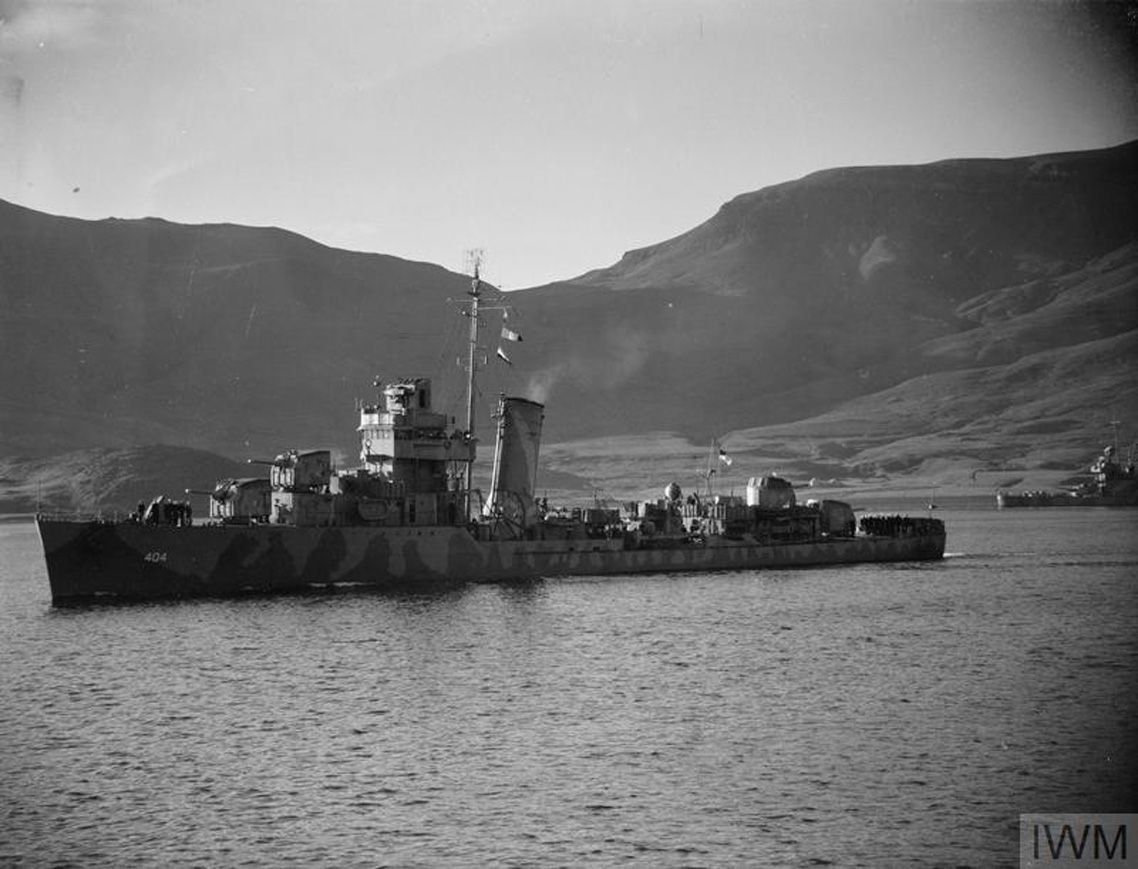
| 239k | USS Rhind anchored at Hvalfjord, Iceland between 15 and 25 June 1943. Rhind, Wainwright, Rowan, and Mayrant were operating with TF99 jointly with the Home Fleet. Imperial War Museum photo A10103. Used for educational and non-commercial purpose. | Robert Hurst | |
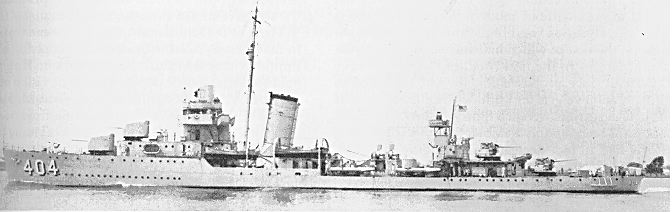
| 25k | Circa 1944, location unknown. | Ed Zajkowski | |
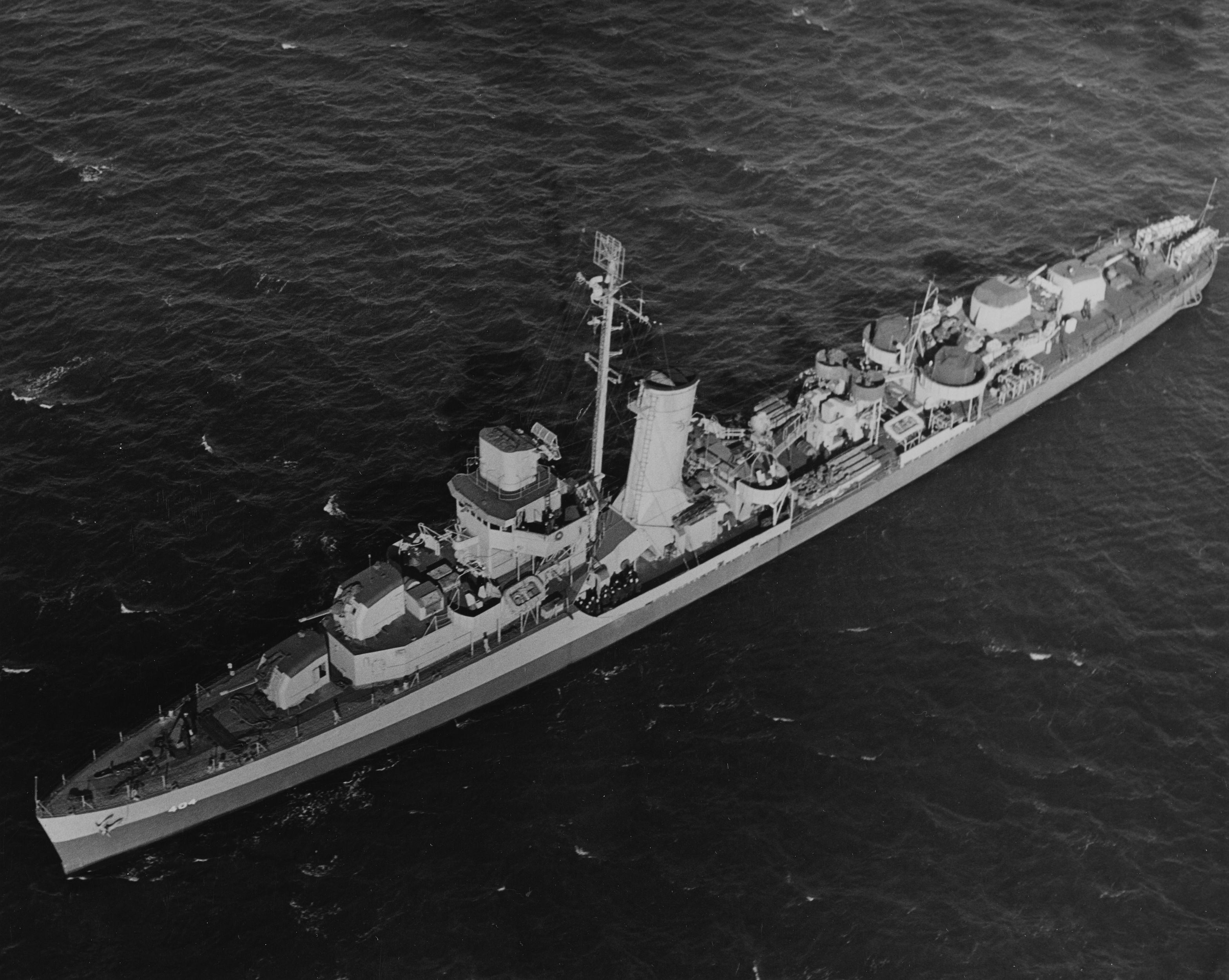
| 819k | USS Rhind (DD-404) at sea near New York City, 16 January 1944. Rhind was underway from Smithtown Bay compensating compasses and radio direction finders. She then moored at 33rd Street Pier in Brooklyn to fuel. Photographed by Naval Air Station New York, New York. Naval History and Heritage Command photo NH 107279. | Robert Hurst | |
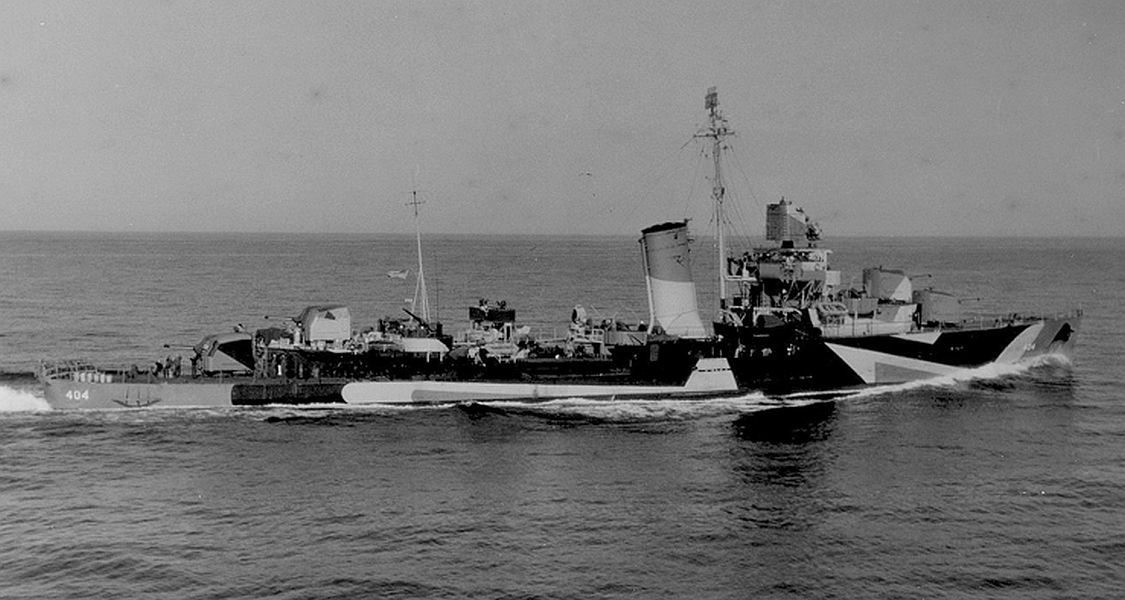
| 103k | USS Rhind (DD-404) underway along the Atlantic coast, 11 September 1944. On this date, Rhind was enroute from New York City to Casco Bay, Maine after a brief yard availability period. She is wearing 32/3D. This photo was taken by an aircraft from blimp squadron ZP-11. Notice that Rhind has a short mainmast with an HF/DF antenna. National Archives photo 80-G-280052, courtesy of C. Lee Johnson, usndazzle.com. | Mike Green | |
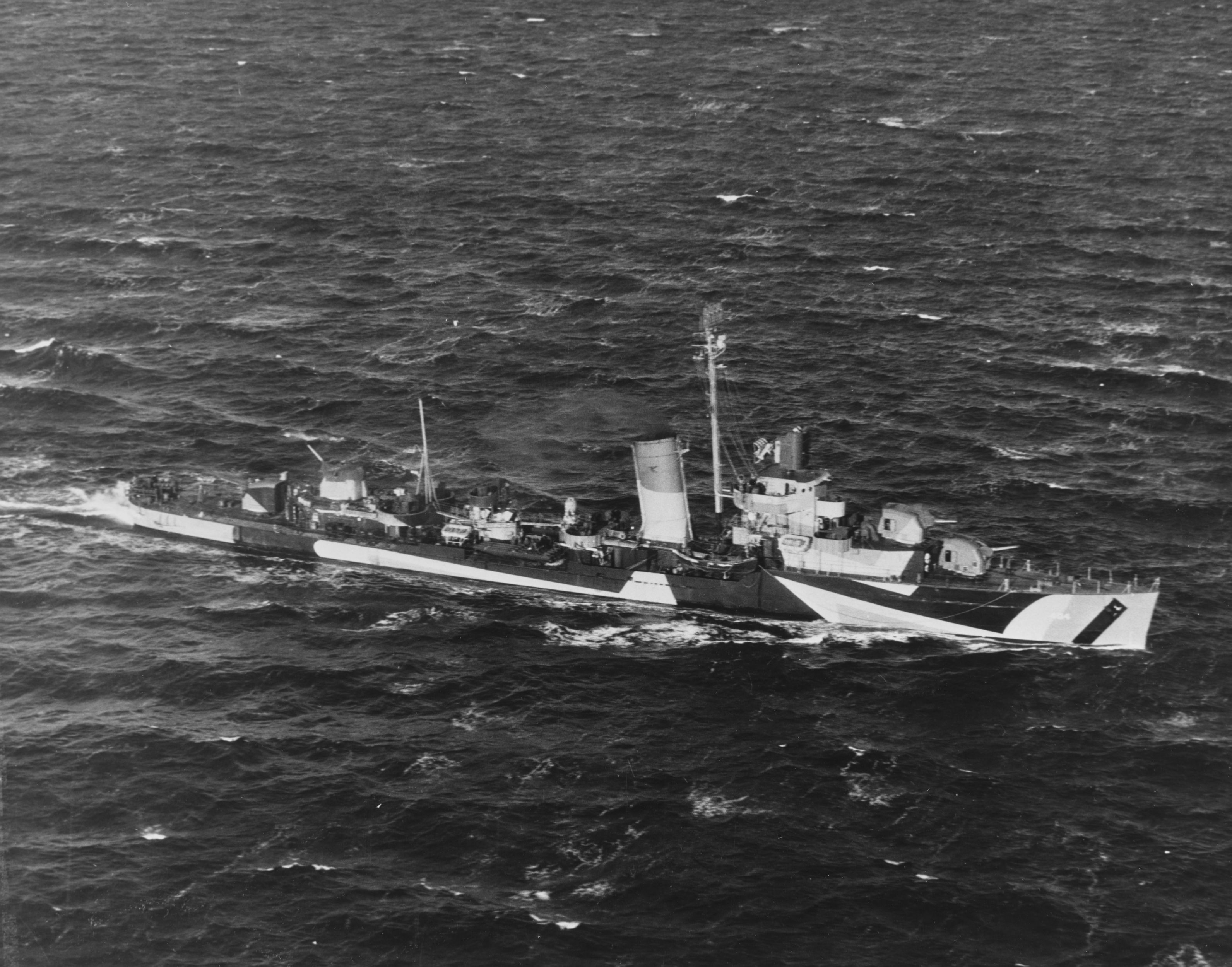
| 840k | USS Rhind (DD-404) on torpedo exercises off the coast of Maine, 19 January 1945. Photographed from an aircraft belonging to squadron VJ-15. Rhind is painted in Camouflage Measure 32, Design 3D. National Archives photo 80-G-302260. | Tracy White | |
| Commanding Officers | ||
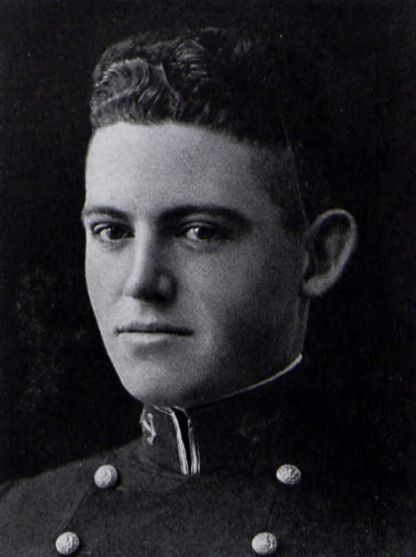
| 01 | LCDR George Randolph Cooper (USNA 1922) | 10 November 1939 - 01 April 1942 |
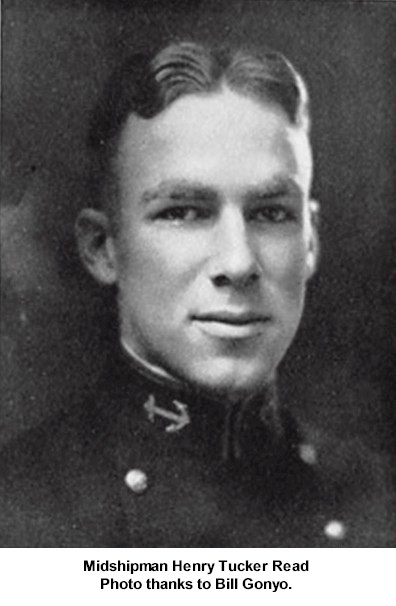
| 02 | CDR Henry Tucker Read (USNA 1924) | 01 April 1942 - 14 January 1943 |
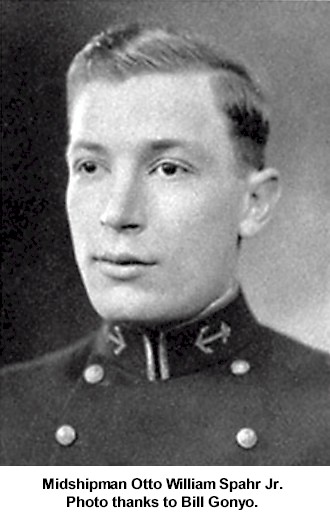
| 03 | CDR Otto William Spahr, Jr. (USNA 1933) | 14 January 1943 - 03 January 1945 |
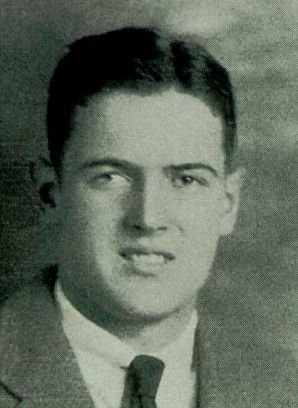
| 04 | LCDR George Towne Baker (USNA 1935) | 03 January 1945 - 15 January 1946 |
| 04 | LCDR Thomas Chapin Buell (USNA 1941) | 15 January 1946 - 23 May 1946 |
| 04 | LCDR David Max Sharer, Jr. USN (Northwestern Univ. 1941) | 23 May 1946 - 28 August 1946 |
|
|
| Back To The Main Photo Index | To The Destroyer Index Page |
This page was created by Fred Willishaw (ex ARG-4, AS-11 & DD-692) and is maintained by David L. Wright
|