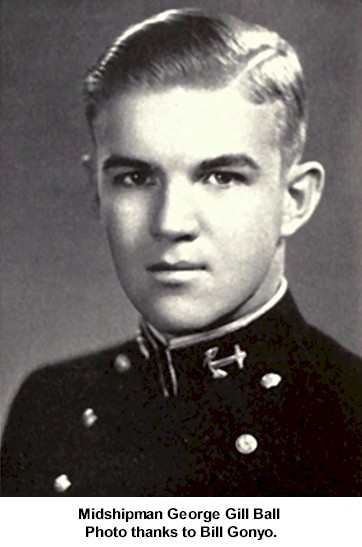
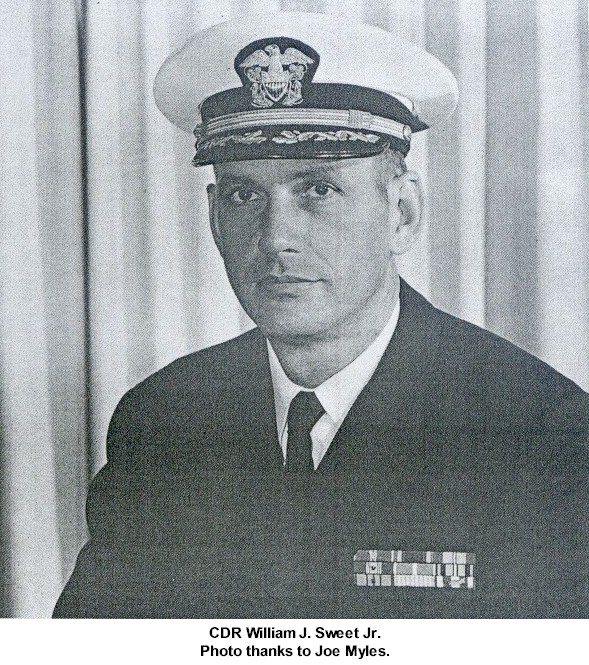
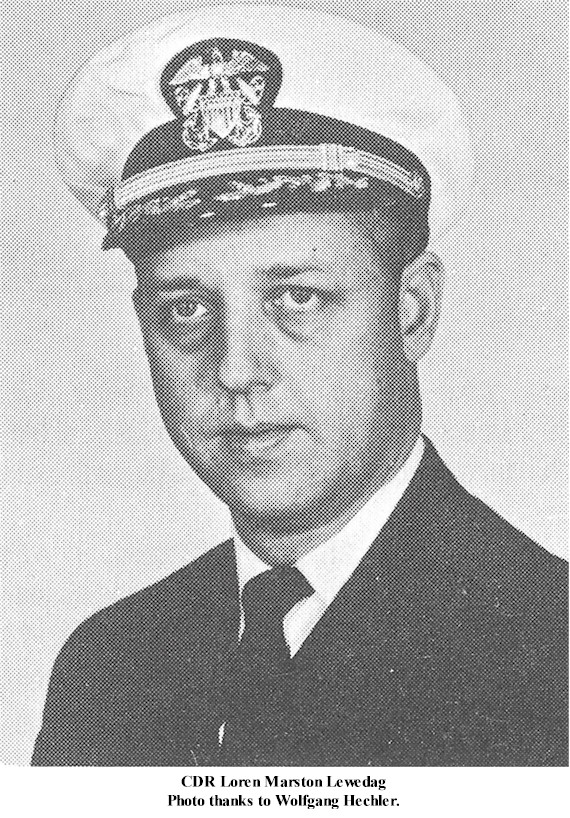
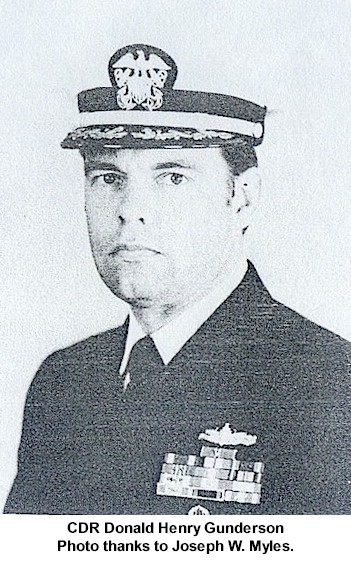
Click On Image
For Full Size Image |
Size |
Image Description |
Contributed
By |
Namesake
|
0593759
0593719
| 97k
154k |
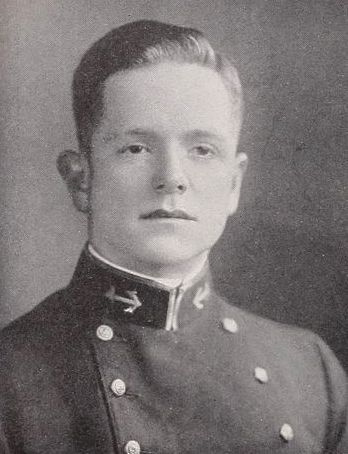
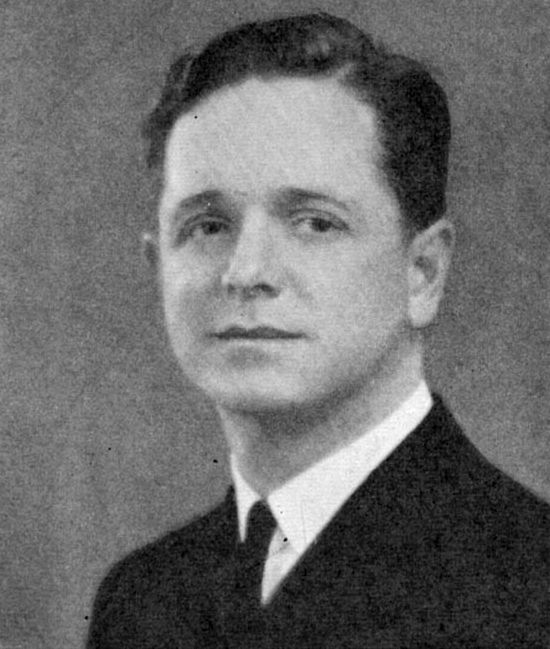
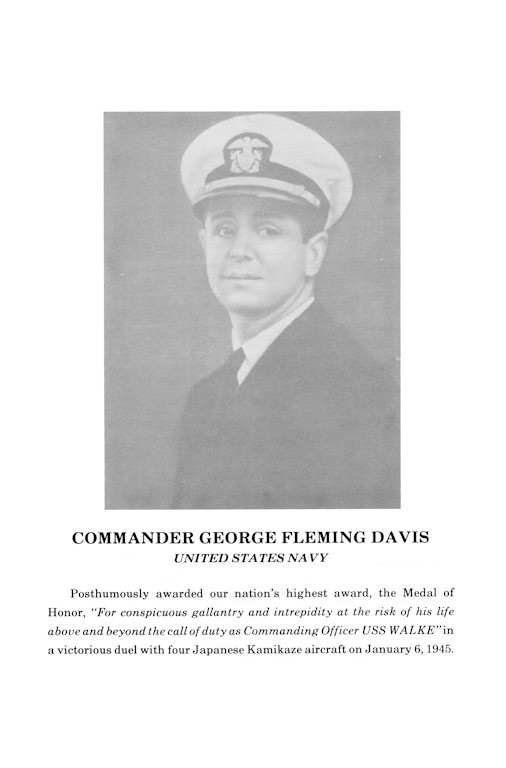
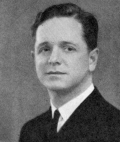
George Fleming Davis was born in Manila, Philippines, 23 March 1911. He was appointed to the United States Naval Academy from the Naval Reserve in 1930 and graduated in May 1934. Ensign Davis' first duty station was the new heavy cruiser Tuscaloosa (CA-37). While in that ship he served as an aircraft gunnery observer with her embarked aviation units. From 1939 to 1941 Lieutenant (Junior Grade) Davis served as an officer aboard destroyer Broome (DD-210) and fast minesweeper Hopkins (DMS-13). Following promotion to the rank of Lieutenant in mid-1941 he was assigned to the battleship Oklahoma (BB-37), which was sunk on 07 December 1941 when Japan's surprise attack on Pearl Harbor opened the Pacific War. In January 1942 Lieutenant Davis was transferred to the light cruiser Honolulu (CL-48), in which he participated in operations in the Aleutian Islands, the hard fighting over Guadalcanal and the Central Solomons, and the campaign to recover Guam. While serving as Honolulu's First Lieutenant and Damage Control Officer, Davis received the Legion of Merit with Combat "V" for "exceptionally meritorious conduct." He was promoted to Lieutenant Commander and Commander while serving in Honolulu, which he left in mid-1944. Following training in advanced surface warfare techniques, he was given command of the destroyer Walke (DD-723) in late November 1944. On 07 December 1944, Walke rescued all the survivors of stricken destroyer Mahan (DD-364) in Ormoc Bay amidst the Mahan's exploding magazines and persistent enemy air attack. For this action, Davis received the Silver Star. On 06 January 1945 his ship was covering minesweeping operations in advance of the Lingayen Gulf invasion when she was attacked by four Japanese Kamikazes. Though Walke shot down two, the third plane struck the ship, enveloping her bridge area in burning gasoline. Though horribly burned, Commander Davis remained on his feet, conned the ship, directed damage control efforts and saw to the destruction of the fourth suicide plane. Only when Walke's survival was assured did he relinquish his post to be taken below, where he died a short time later. For his conduct, Commander George F. Davis was posthumously awarded the Medal of Honor. His body was buried at sea.
Davis' Medal of Honor citation reads:
"For conspicuous gallantry and intrepidity at the risk of his life above and beyond the call of duty as Commanding Officer of the U.S.S. Walke engaged in a detached mission in support of minesweeping operations to clear the waters for entry of our heavy surface and amphibious forces preparatory to the invasion of Lingayen Gulf, Luzon, Philippine Islands, 6 January 1945. Operating without gun support of other surface ships when four Japanese suicide planes were detected flying low overland to attack simultaneously, Commander Davis boldly took his position in the exposed wings of the bridge and directed control to pick up the leading plane and open fire. Alert and fearless as the Walke's deadly fire sent the first target crashing into the water and caught the second as it passed close over the bridge to plunge into the sea off portside, he remained steadfast in the path of the third plane plunging swiftly to crash the after end of the bridge structure. Seriously wounded when the plane struck, drenched with gasoline and immediately enveloped in flames, he conned the Walke in the midst of the wreckage; he rallied his command to heroic efforts; he exhorted his officers and men to save the ship and, still on his feet, saw the barrage from his guns destroy the fourth suicide bomber. With the fires under control and the safety of the ship assured, he consented to be carried below. Succumbing several hours later, Commander Davis, by his example of valor and his unhesitating self-sacrifice, steeled the fighting spirit of his command into unyielding purpose in completing a vital mission. He gallantly gave his life in the service of his country."
0593759 - Midshipman George Fleming Davis, from 1934 Lucky Bag.
0593719 - Commander George Fleming Davis, USN (1911-1945) Halftone photo from Medal of Honor, 1861-1949, The Navy, page 173. Naval History & Heritage Command photo NH 99875.
| Bill Gonyo / Dave Wright |
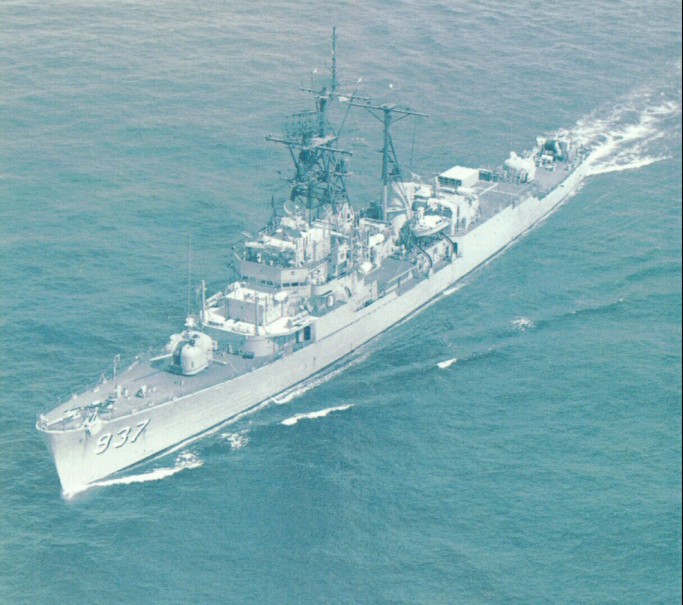
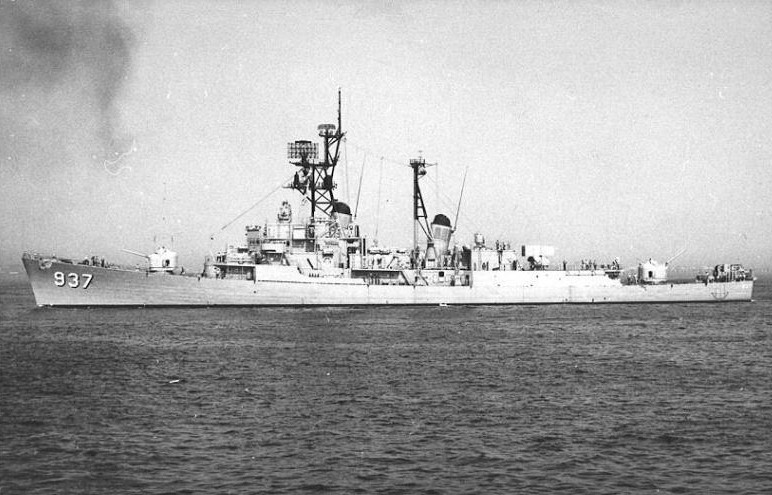
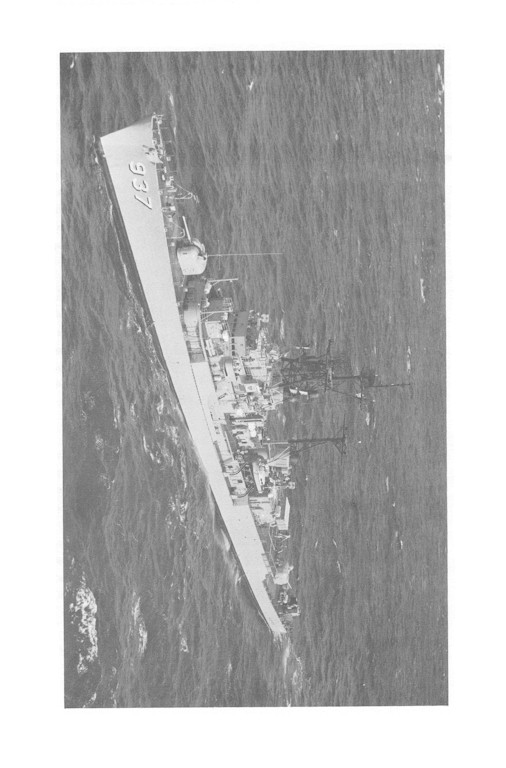
USS Davis (DD-937)
|
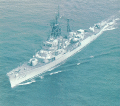
0593701 |
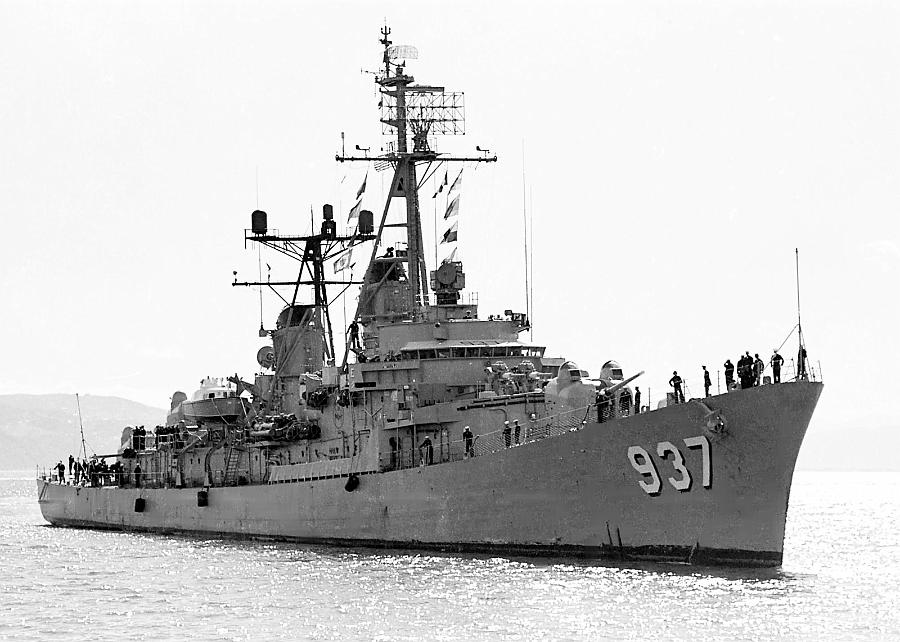
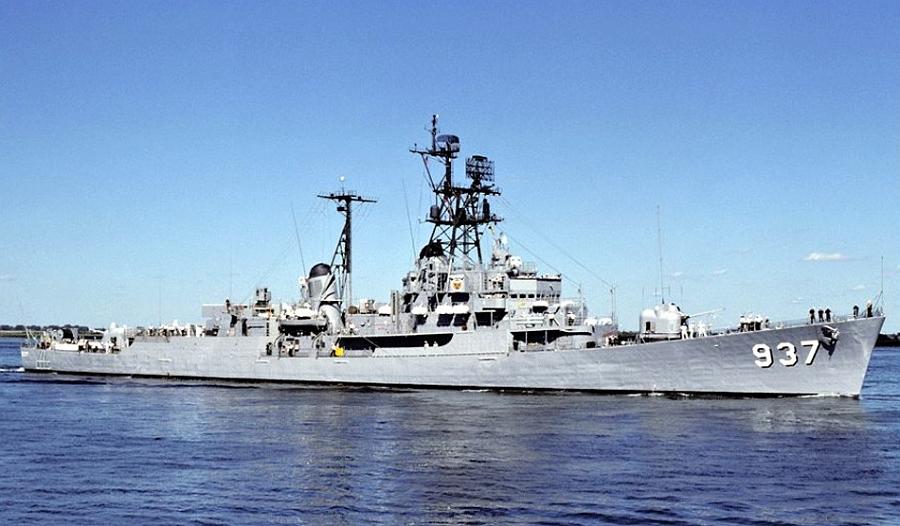
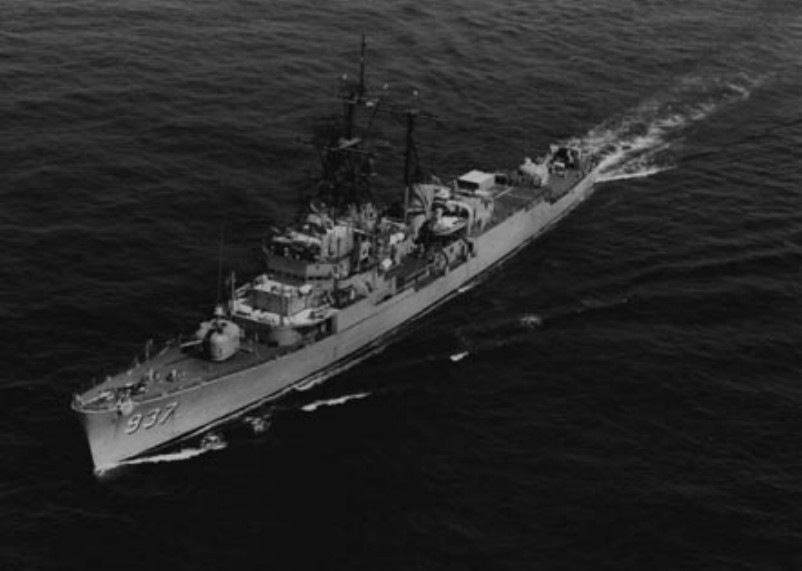
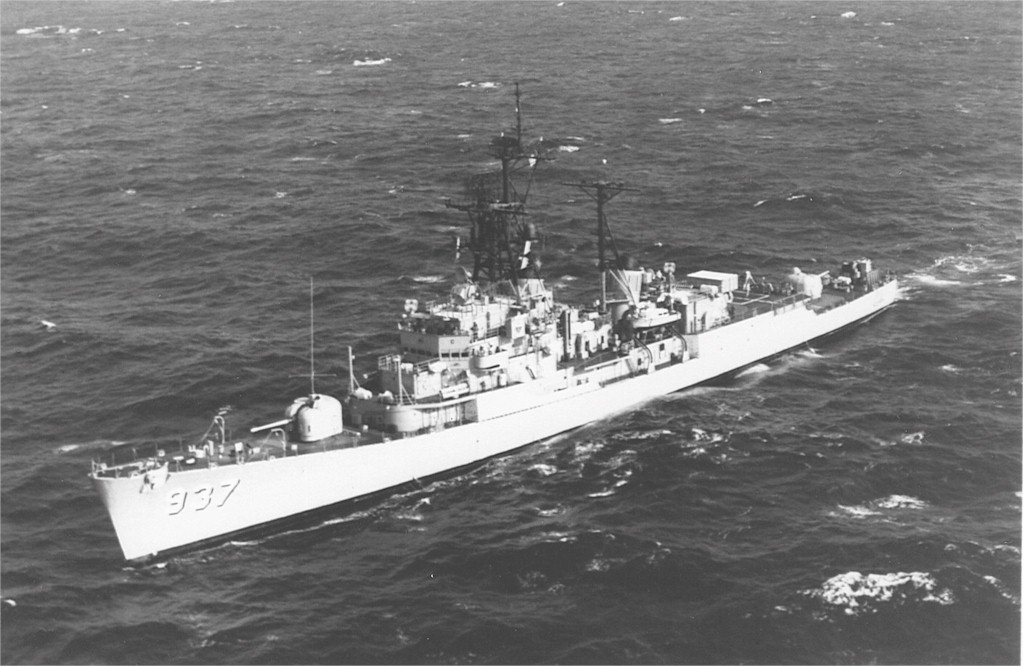
107k | Undated, location unknown. | - |
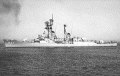
0593753 |
106k | Undated, location unknown. | Richard Miller BMCS USNR RET. |
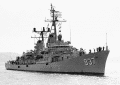
0593755 |
81k | Undated, location unknown. | Richard Miller BMCS USNR RET. |
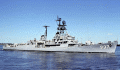
0593756 |
65k | Undated, location unknown. | Richard Miller BMCS USNR RET. |
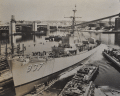
0593749 |
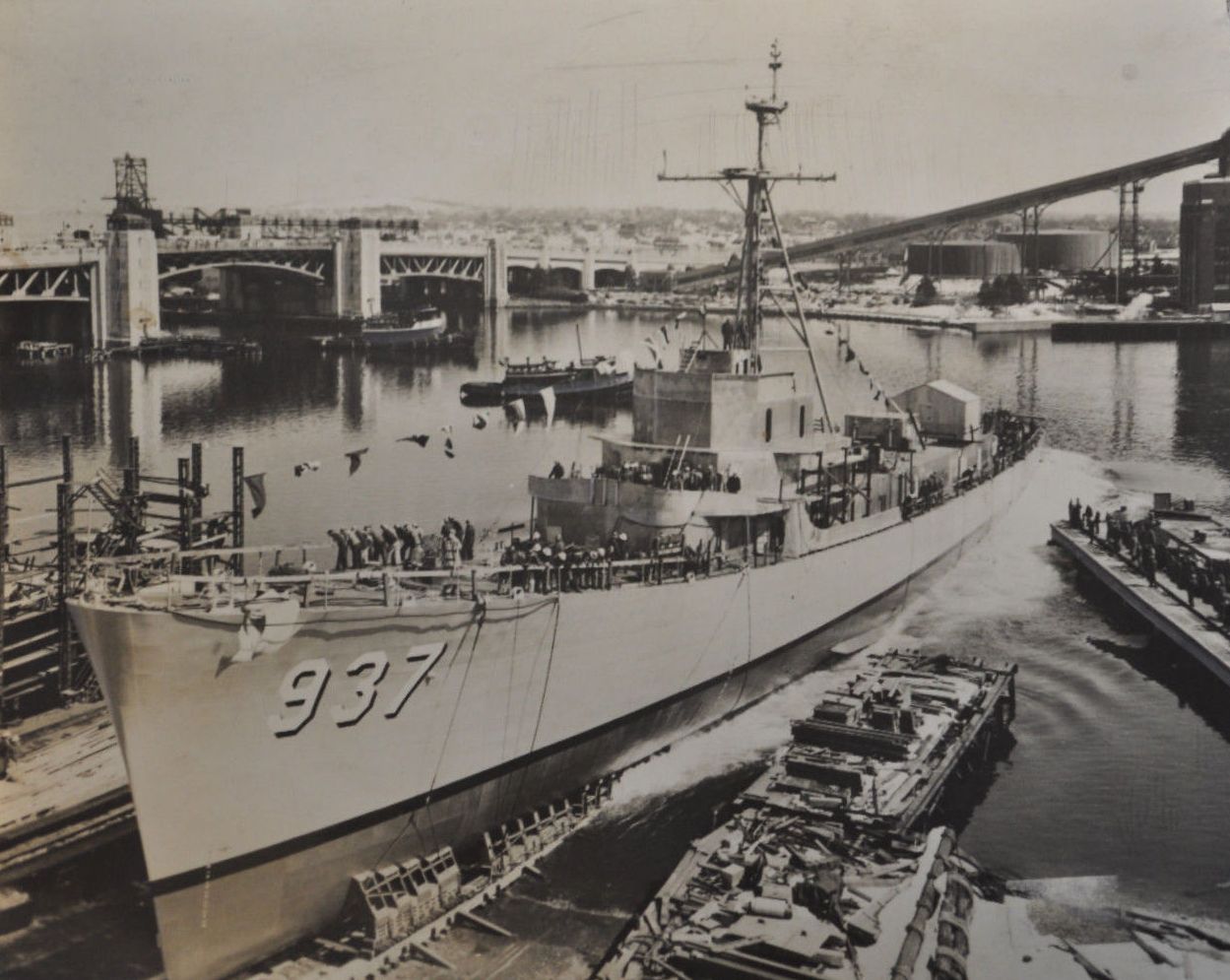
161k | Launch of Davis (DD-937) at Quincy, Massachusetts, 28 March 1956. | Dave Wright |
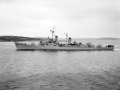
0593758 |
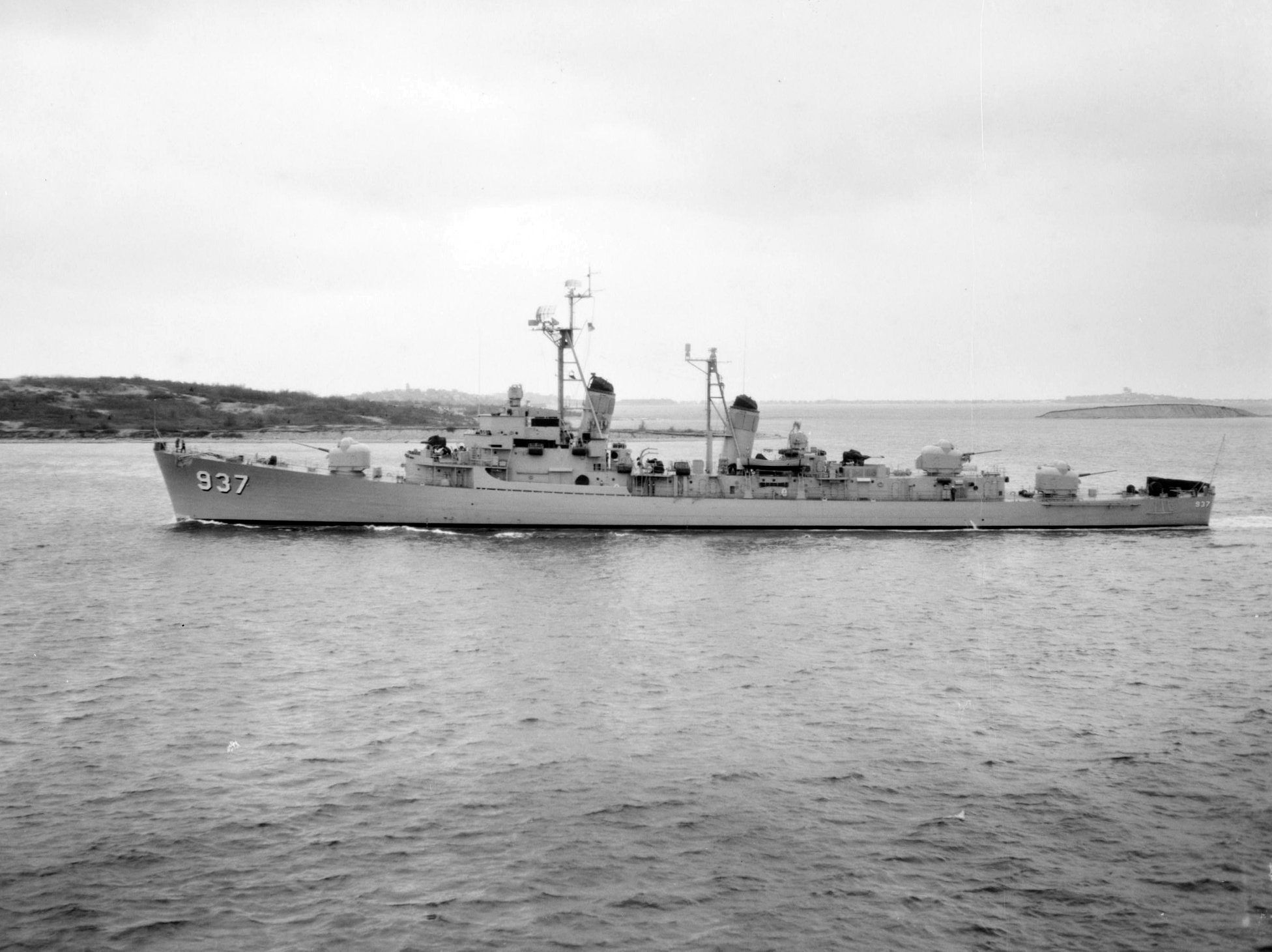
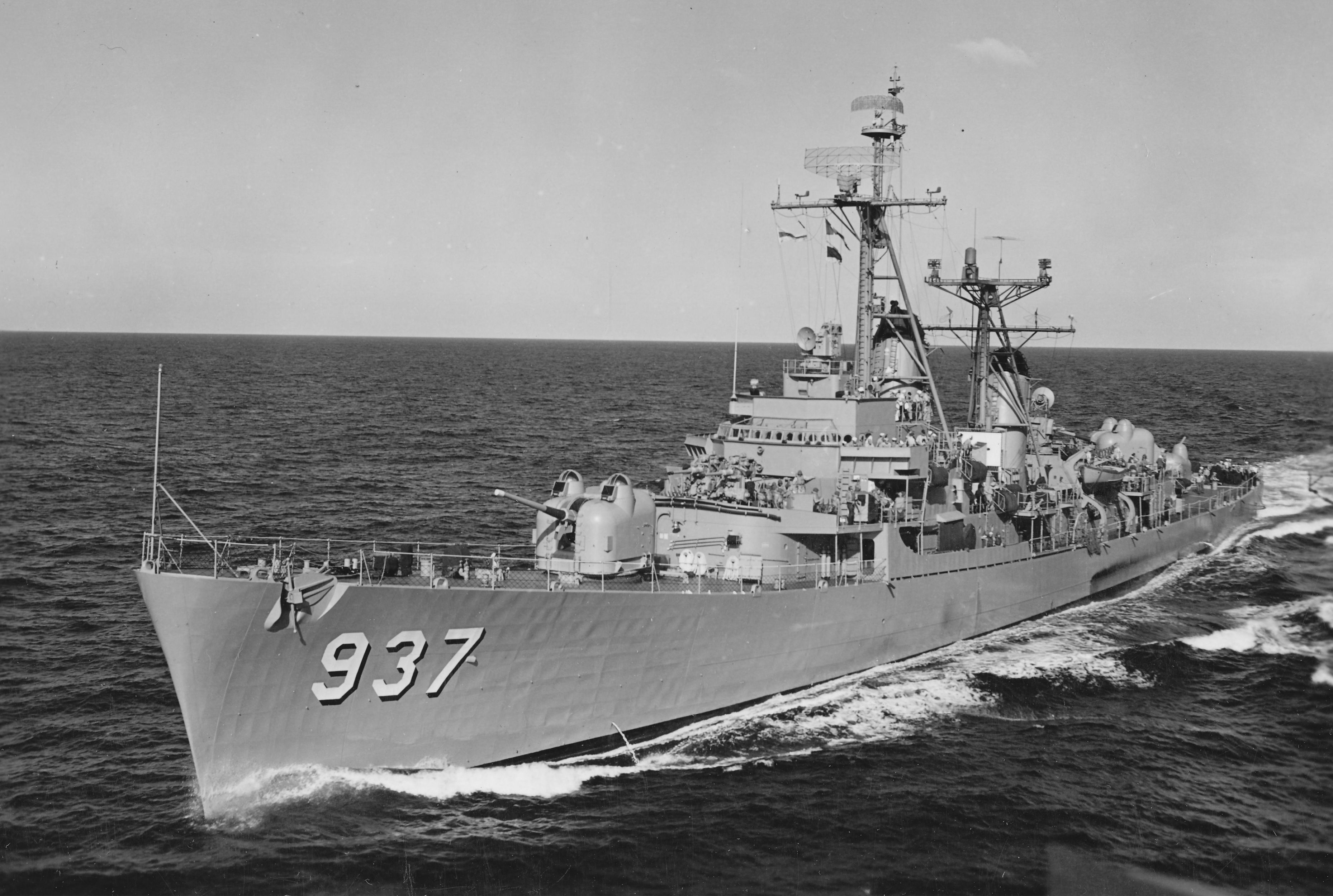
283k | Davis (DD-937) underway from her builder's yard to Norfolk for commissioning, 28 February 1957. Davis was commissioned there a week later. | Senior Chief Erling Baldorf
Royal Danish Navy (Ret.) |
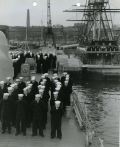
0593760 |
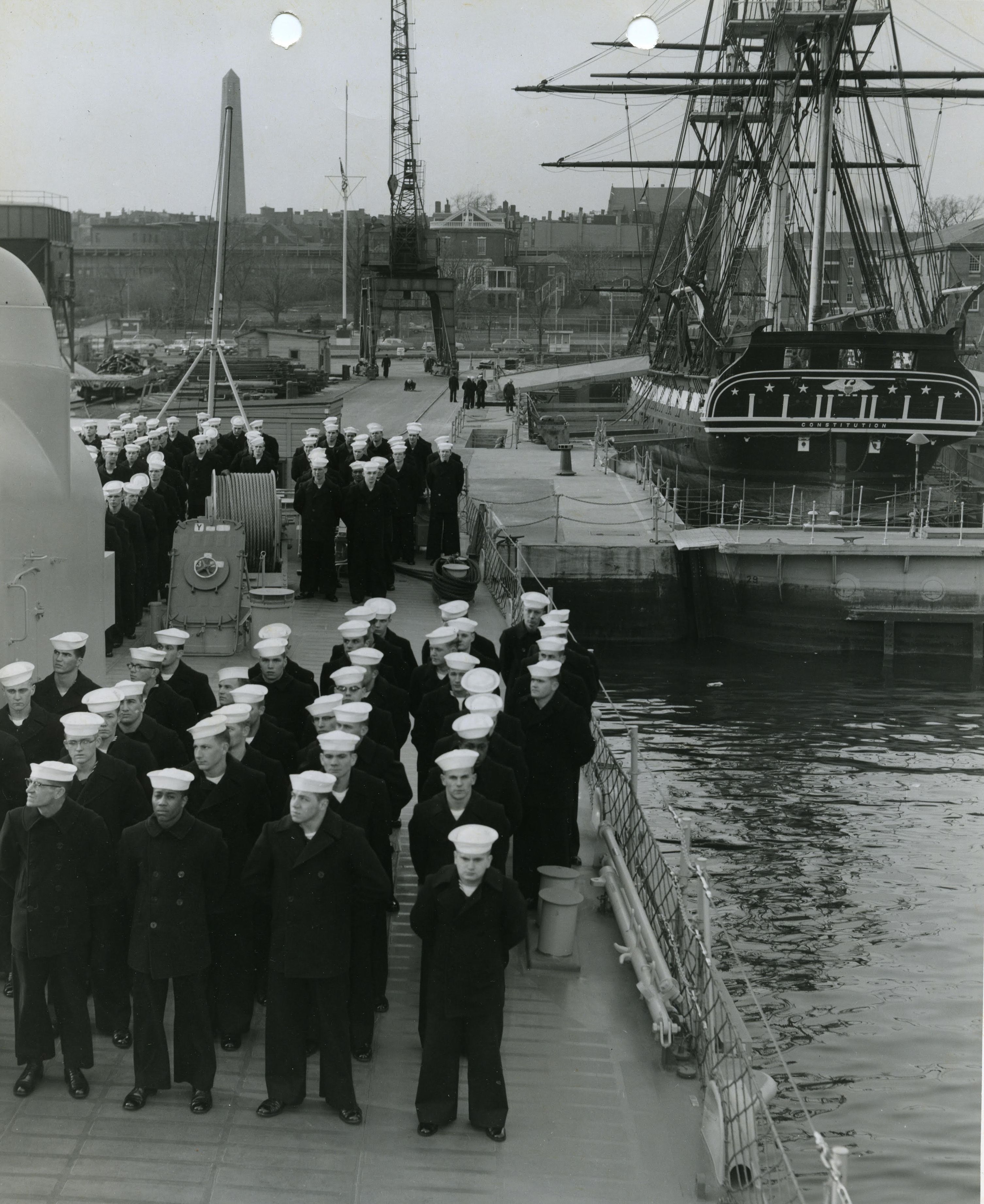
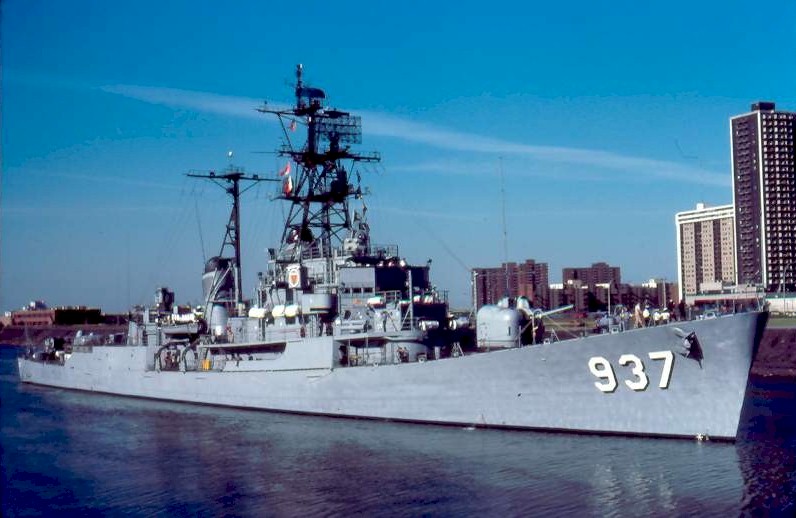
1183k | Davis (DD-937) at Boston Navy Yard, 28 February 1957. She would be placed into commission on 06 March. Note Constitution in Drydock 1 in the background. Davis is moored where museum ship Cassin Young (DD-793) is currently moored.
USN photo from Charlestown Navy Yard NPS collection, BOSTS 10879a | Rick E. Davis |
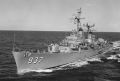
0593757 |
881k | Davis coming alongside Intrepid (CVA-11) about July 1957. National Archives photo 80-G-1035170 | Rick E. Davis |
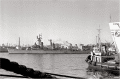
0593721 |
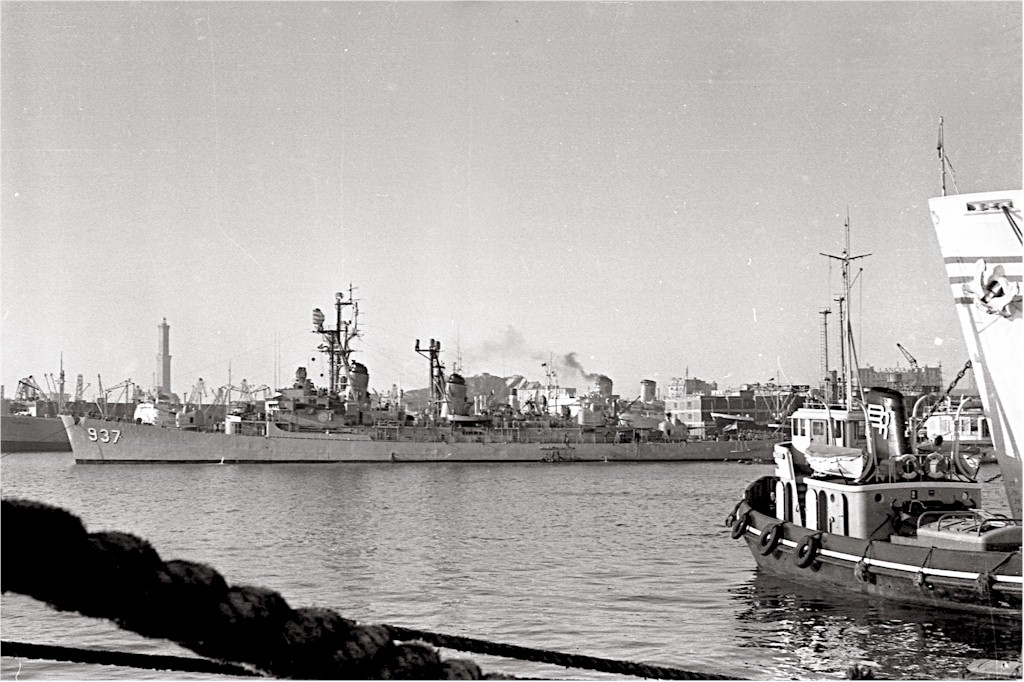
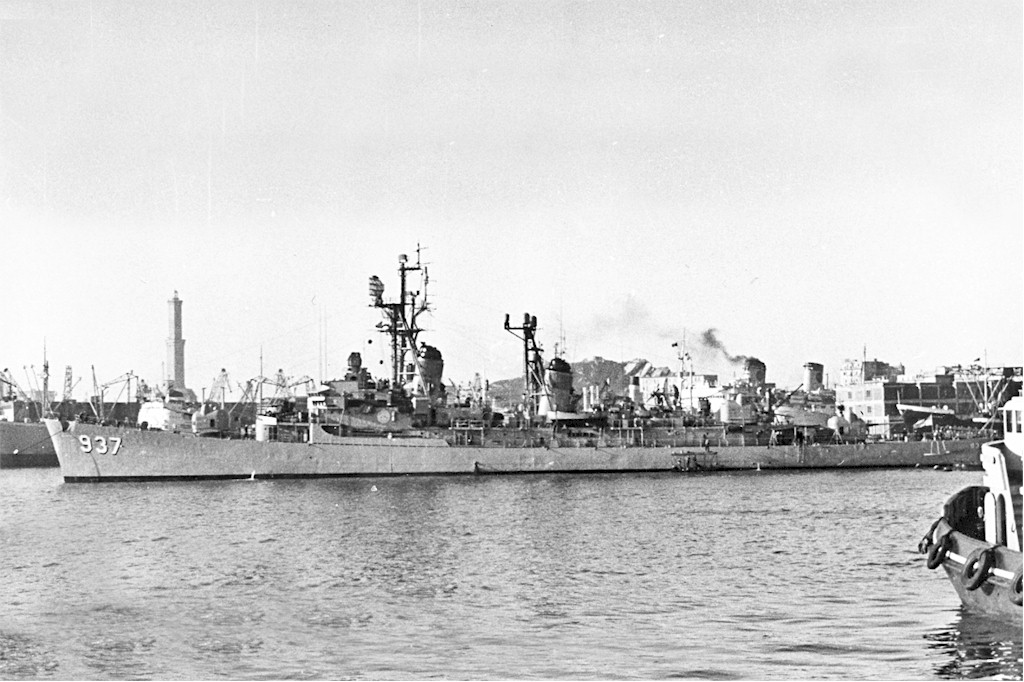
196k | USS Davis (DD-937) at Genoa, Italy, 26 December 1960. | Carlo Martinelli |
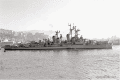
0593722 |
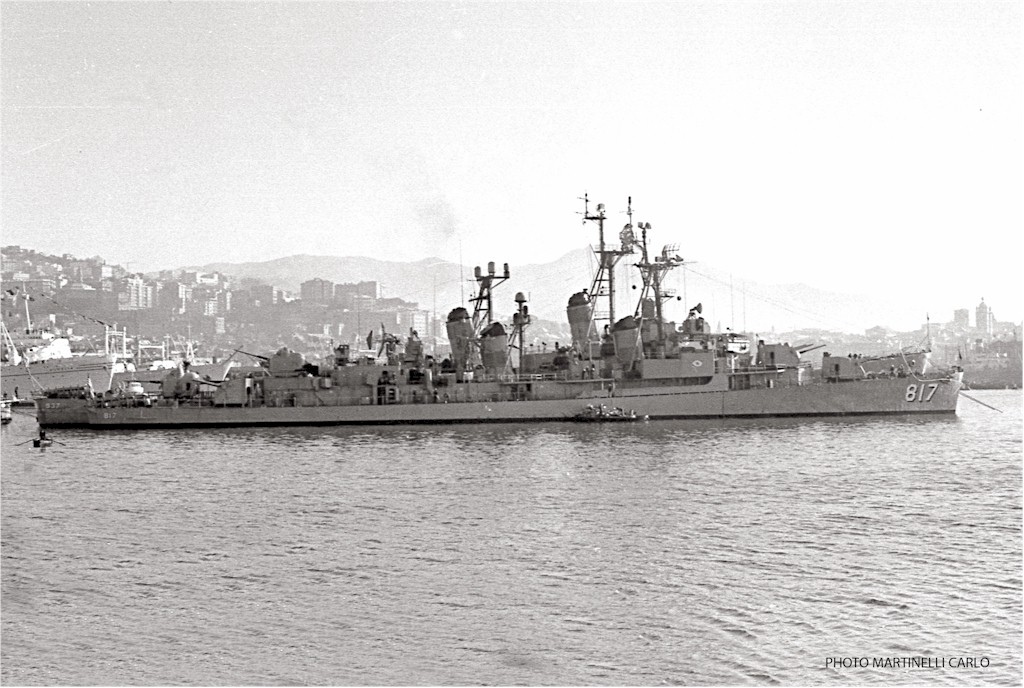
186k | USS Davis (DD-937) and USS Corry (DD-817) at Genoa, Italy, 26 December 1960. | Carlo Martinelli |
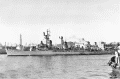
0593743 |
176k | USS Davis (DD-937) in Genoa, Italy, 26 December 1960. | Carlo Martinelli |
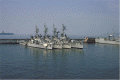
0593718 |
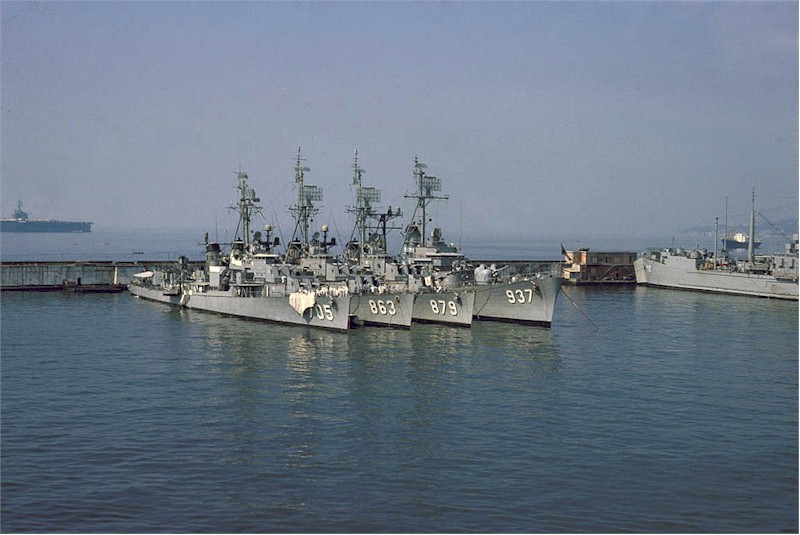
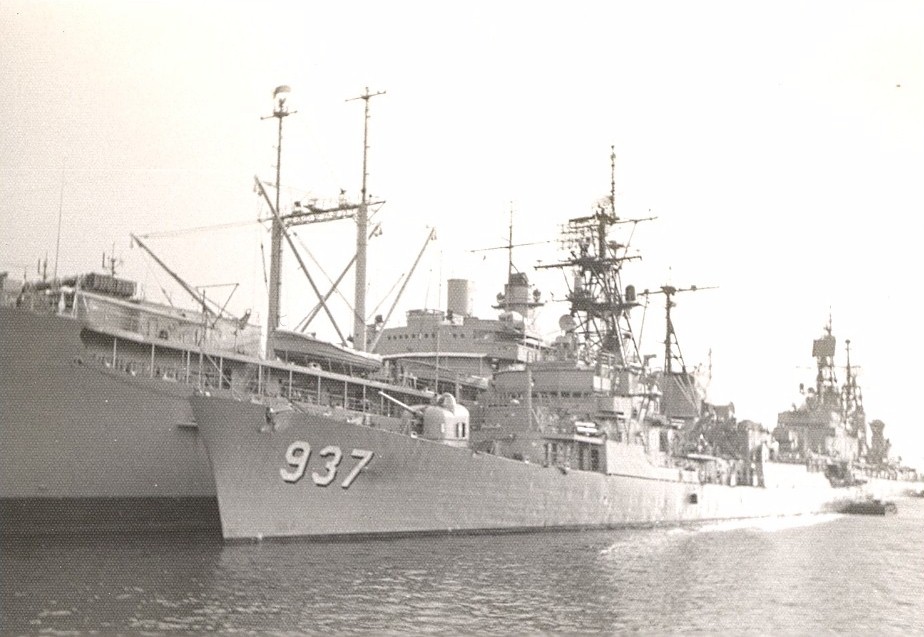
91k | USS Compton (DD-705), USS Steinaker (DD-863), USS Leary (DD-879) and USS Davis (DD-937) at Naples, Italy, May 1962. | Jack C. Sofield |
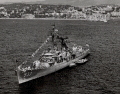
0593741 |
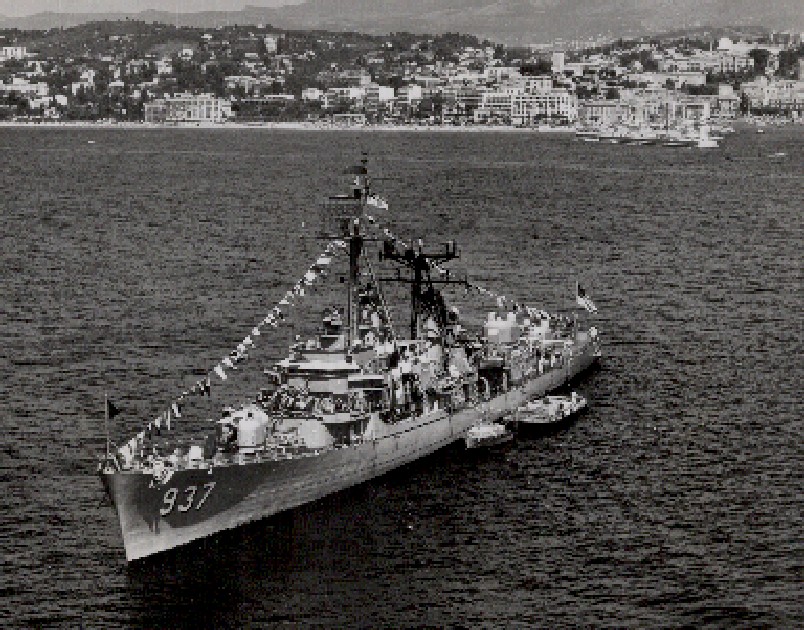
204k | USS Davis at anchor off Cannes, France, 04 July 1962. She is in "dressed ship" stste for Independence Day.
USN Photograph CVA-62-1232-7-62, Naval History & Heritage Command, Curator Branch "L" File. | Robert Hurst |
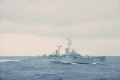
0593704 |
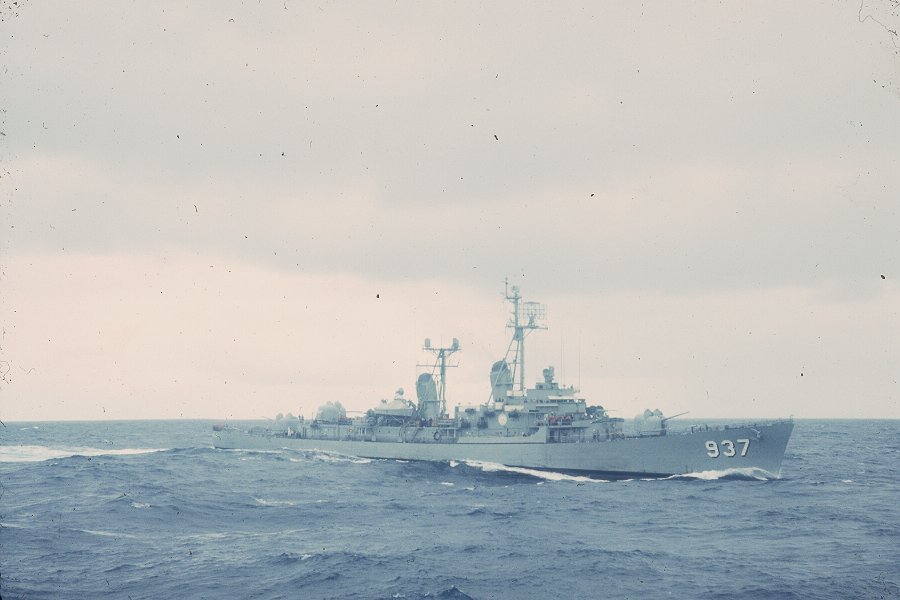
62k | Underway in Pacific from San Diego to Pearl Harbor, 08 February 1966. | © Richard Leonhardt |
0593710 |
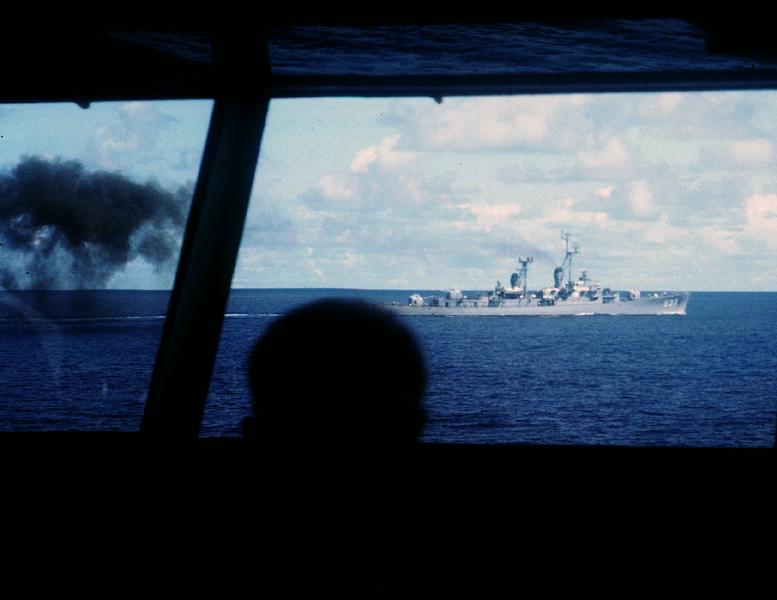
37k | Underway in South China Sea, 07 July 1966. | © Richard Leonhardt |
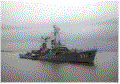
0593702 |
43k | Moored off Cochin India, 16-18 July 1966 | © Richard Leonhardt |
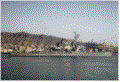
0593703 |
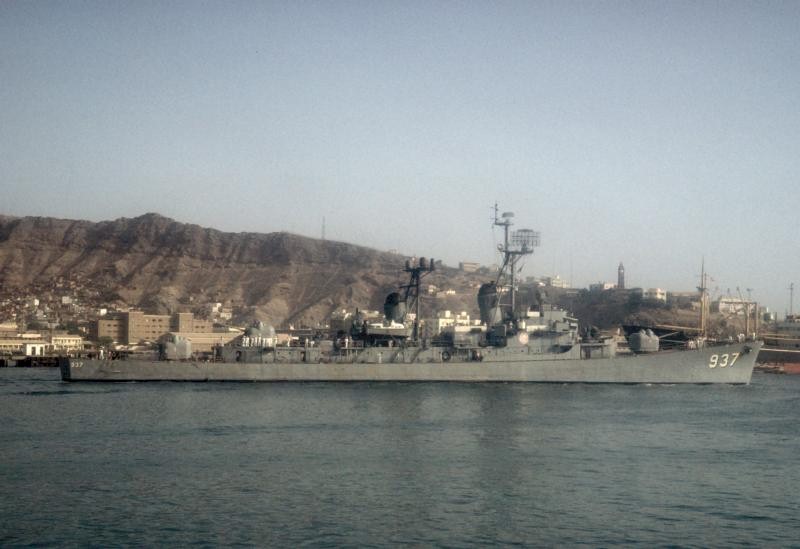
69k | Port call at Aden, British Protectorate, 23 July 1966. | © Richard Leonhardt |
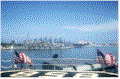
0582415 |
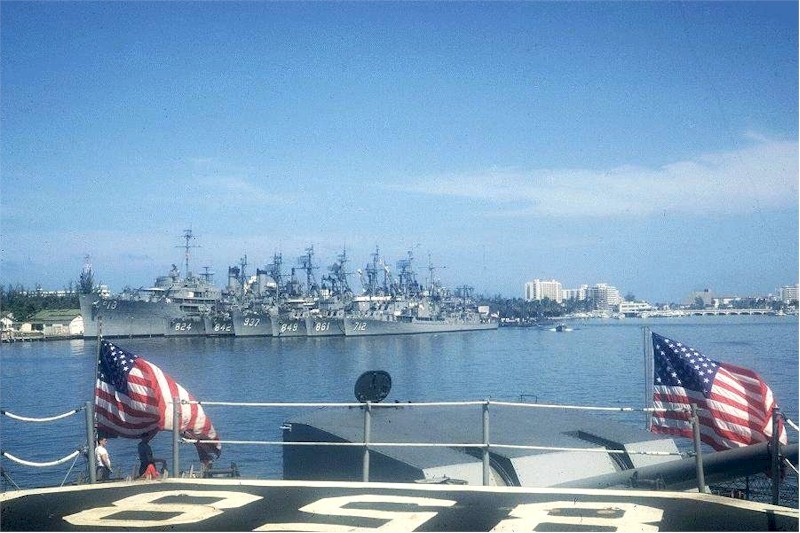
129k | USS Sierra (AD-18) at San Juan, Puerto Rico, 26 February 1967, with six destroyers alongside including the Basilone (DD-824), Fiske (DD-842), Davis (DD-937), Richard E Kraus (DD-849), Harwood (DD-861), and the Gyatt (DD-712). Taken from the USS Fred T. Berry (DD-858). | © Richard Leonhardt |
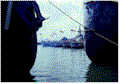
0593717 |
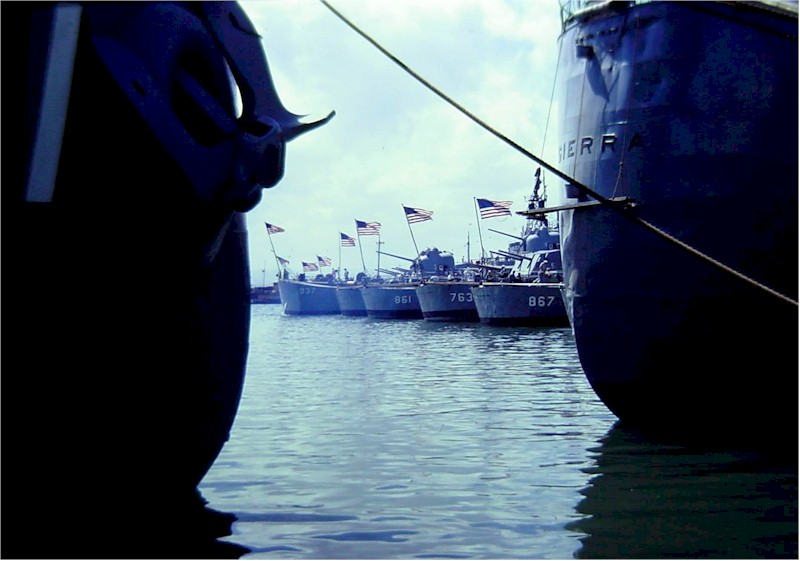
82k | USS Fulton (AS-11) and USS Sierra (AD-18) stern to stern at San Juan, Puerto Rico, May 1967, with the USS Davis (DD-937), unknown, USS Harwood (DD-861), USS William C. Lawe (DD-763) and USS Stribling (DD-867) alongside the Sierra. | Sheridan Carey |
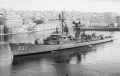
0593754 |
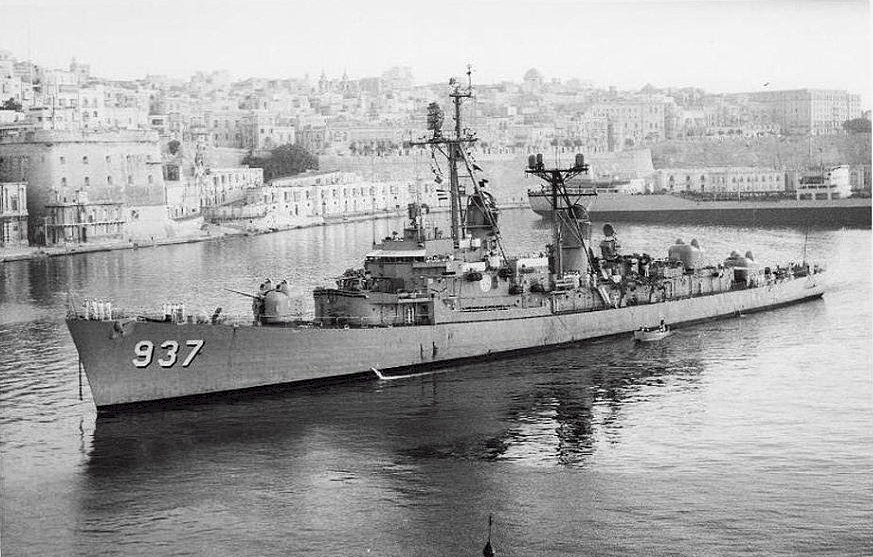
147k | At Grand Harbour, Valletta, Malta, probably June 1967. | Richard Miller BMCS USNR RET. |
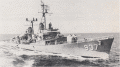
0593752 |
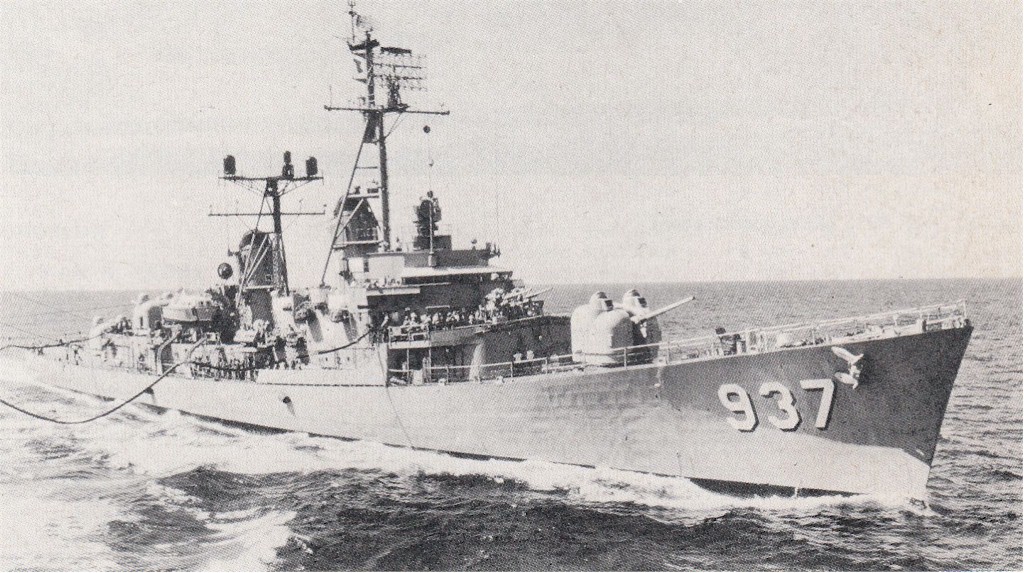
210k | USS Davis (DD-937) refuelling while underway in 1968, location unknown. United States Navy, by PHC B. L. Alley. | Robert Hurst |
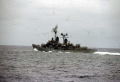
0593738 |
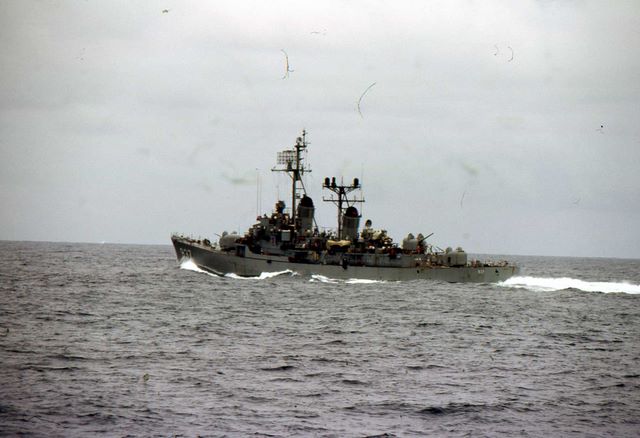
43k | On patrol in the South China Sea during 1969. | Masao Aochi |
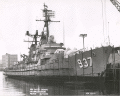
0593709 |
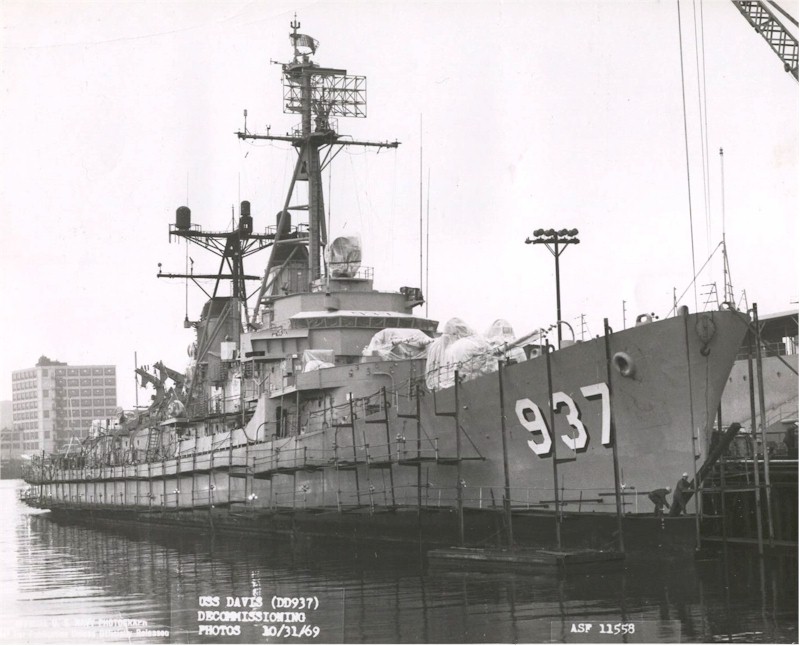
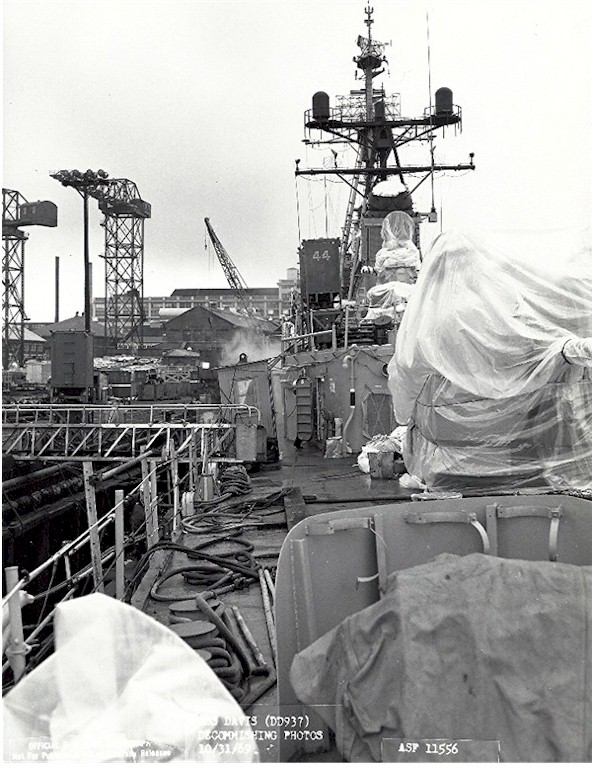
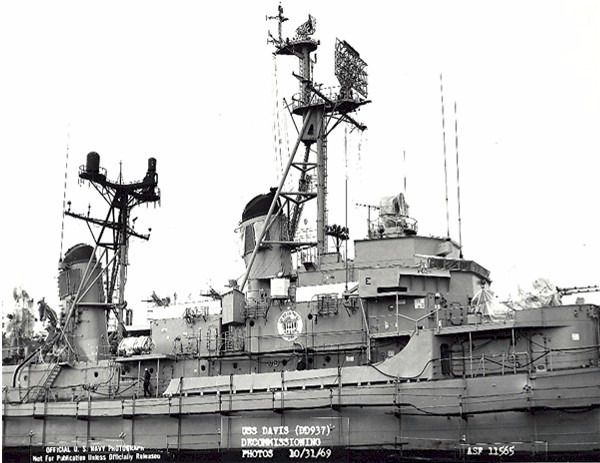
109k | US Navy file picture of Davis being prepared for superstructure conversion - October 31 1969. This picture was given to me by former CO, Capt Edward J. Mountford, USN (Ret). | Jim Hocking |
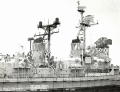
0593744 |
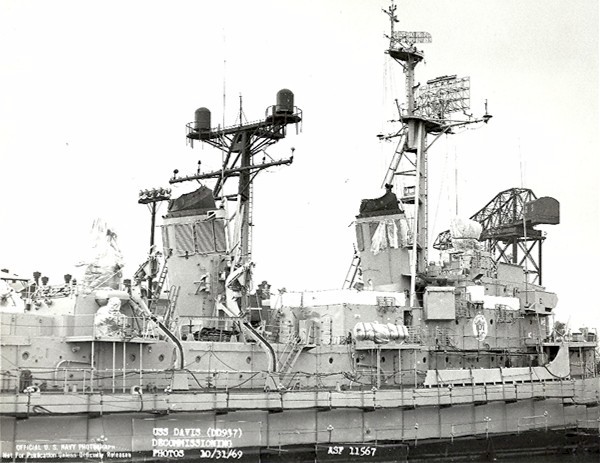
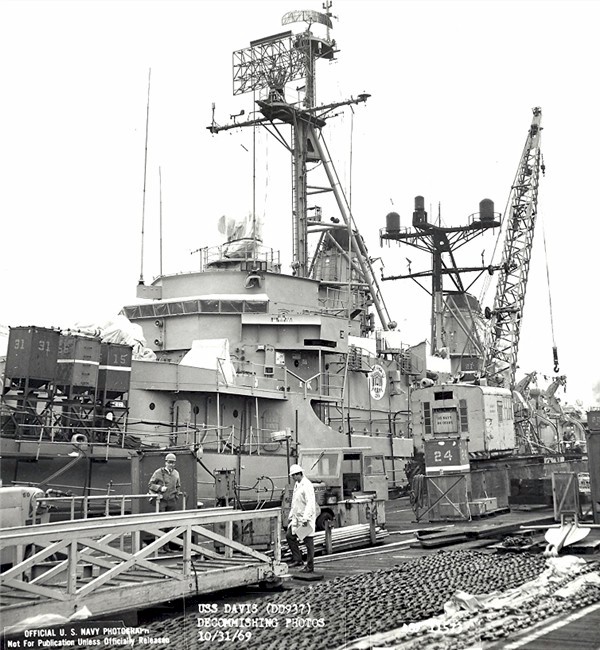
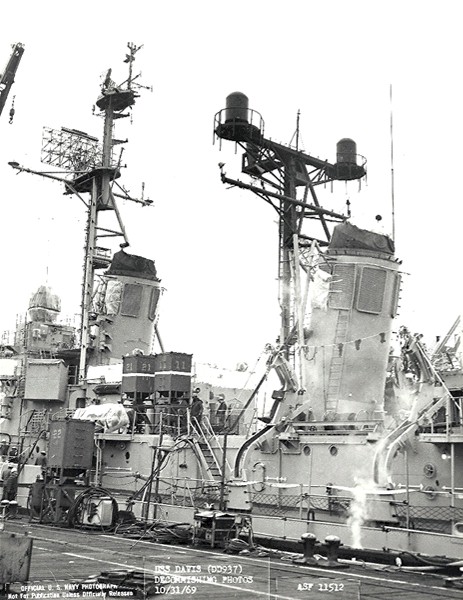
127k |
Five more views of the Davis as she began conversion at Boston Naval Shipyard, all dated 31 October 1969. |
Wayne VanDerVoort |
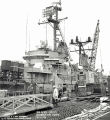
0593745 |
51k |
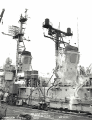
0593746 |
211k |
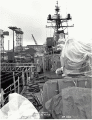
0593747 |
65k |
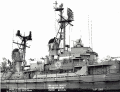
0593748 |
65k |
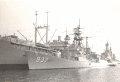
0593749 |
125k | Alongside the USS Grand Canyon (AD/AR-28) at Newport, Ri, circa 1972. | ctorbann |
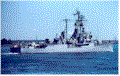
0593713 |
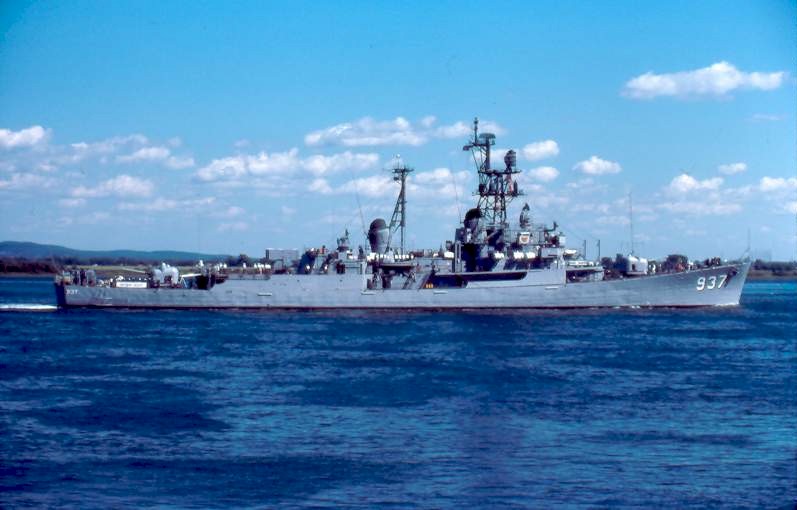
81k | At Montreal, 10 August 1978. | Marc Piché |
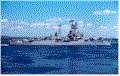
0593714 |
71k | At Montreal 10 August 1978. | Marc Piché |
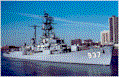
0593712 |
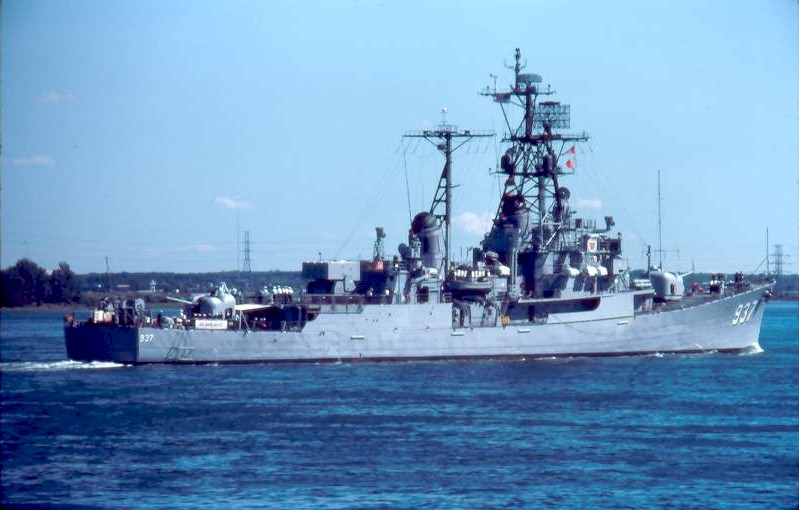
89k | In the St. Lawrence Seaway, 11 August 1978. | Marc Piché |
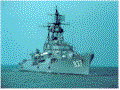
0593715 |
27k | In the Welland Canal, 13 August 1978. | Marc Piché |
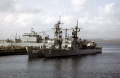
0593750 |
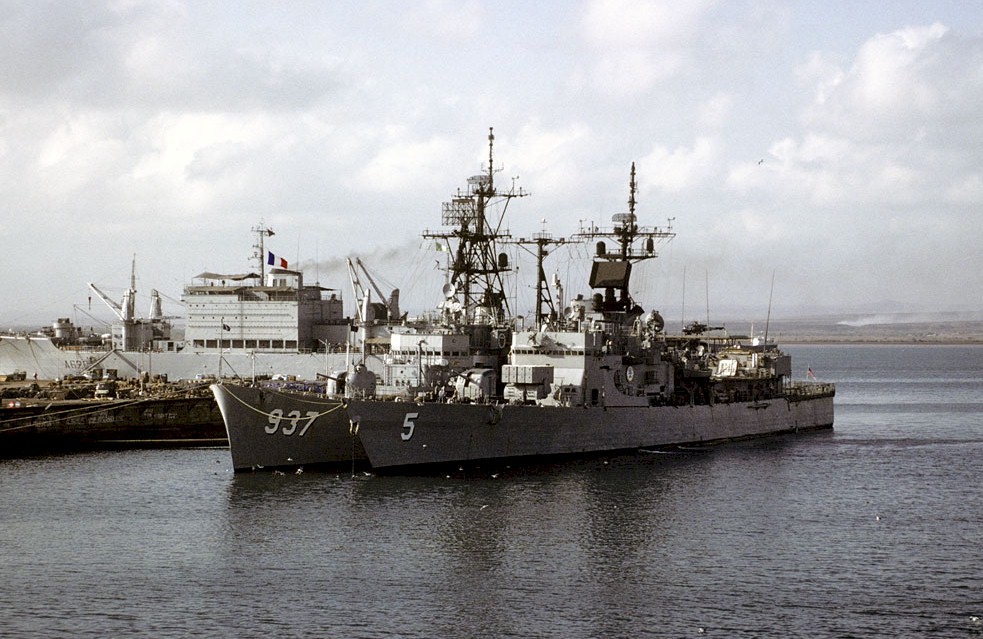
172k | USS Davis (DD-937) moored alongside guided missile destroyer escort USS Richard L. Page (DEG-5) at Djibouti, 07 March 1979. Photo courtesy of Karsten Petersen. | Robert Hurst |
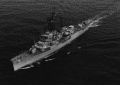
0593742 |
59k | USS Davis underway in the Indian Ocean, photographed by PH2 Patrick D. Tiffany of the carrier USS Constellation (CV-64), 19 March 1979.
USN photo 1174656, Ships History and Archives Branch. | Robert Hurst |
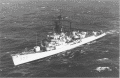
0593720 |
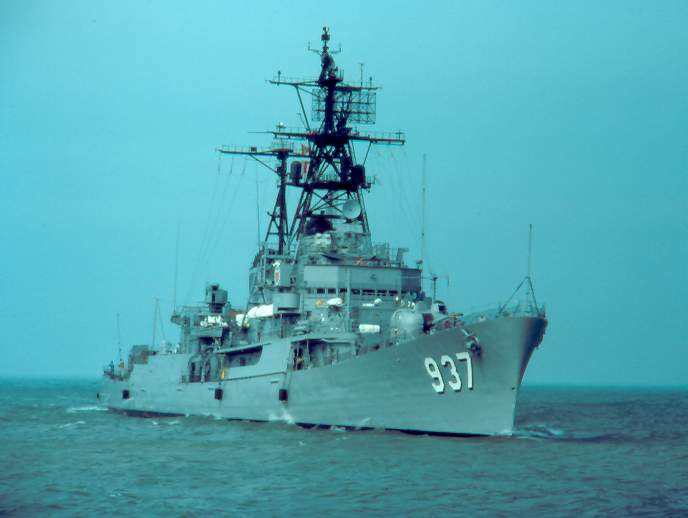
155k | 1980, location unknown. | David Buell |

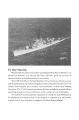
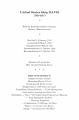
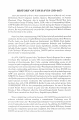
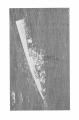
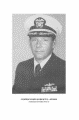
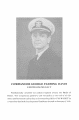

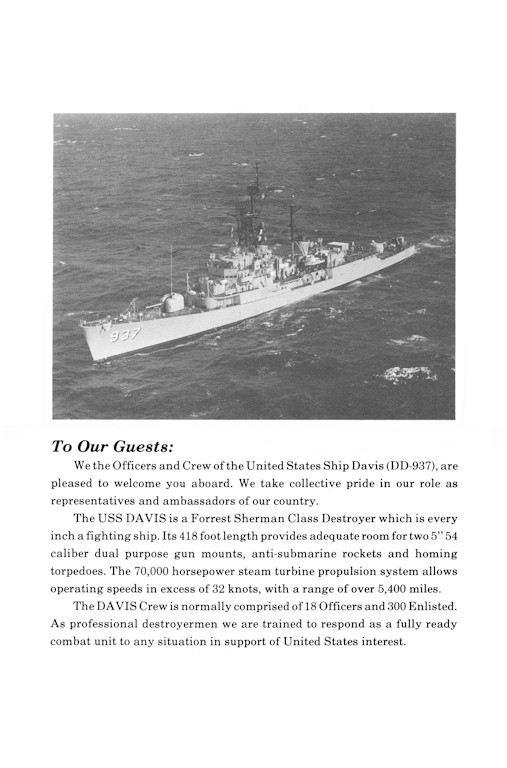
Welcome Aboard pamphlet - circa 1982 | Wolfgang Hechler |
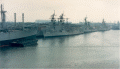
0593721 |
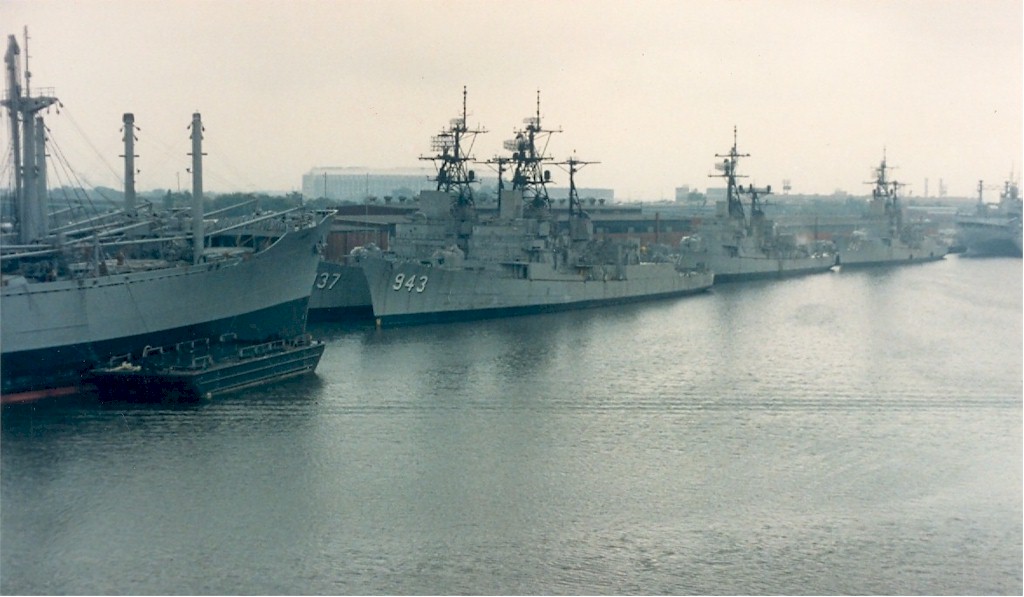
122k | Mothballed destroyers at Philadelphia Navy Yard: USS Blandy (DD-943), USS Davis (DD-937), USS Forrest Sherman (DD-931) and USS Manley (DD-940), probably in late 1980s. | Ed Zajkowski |
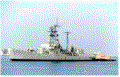
0593716 |
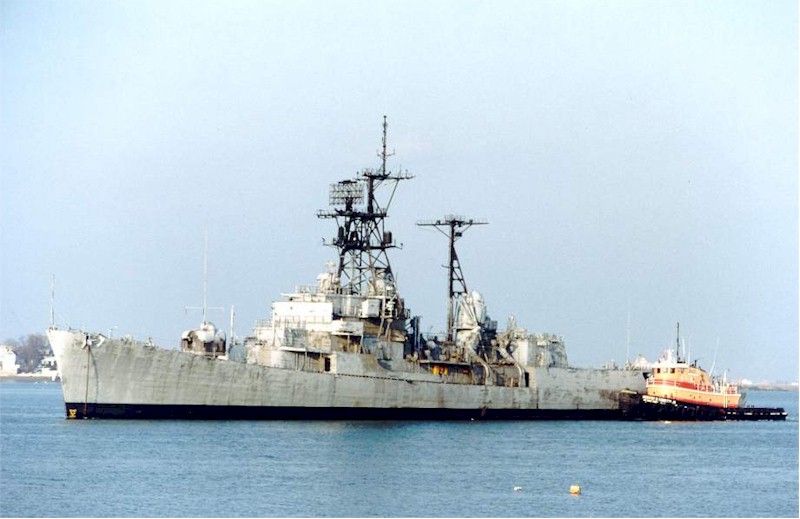
79k | On the way to scrappers, 17 January 1992. | Marc Piché |
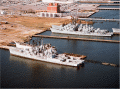
0593740 |
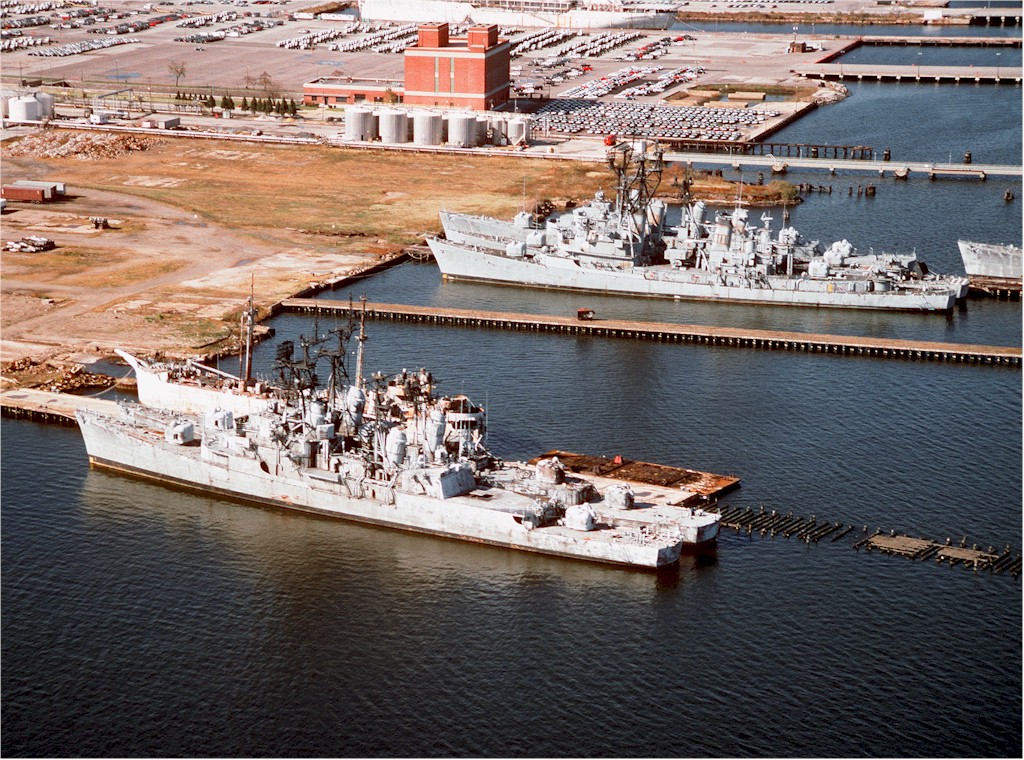
314k | An aerial view of the Baltimore Fairfield Terminal area showing various former U.S. Navy destroyers awaiting the scrapper's torch. From bottom to top: the destroyers Blandy (DD-943) and Forrest Sherman (DD-931), the former U.S. Army N-3 type port repair ship Madison Jordon Manchester (ex USS Hydra (AK-82)), the guided missile destroyers USS Claude V. Ricketts (DDG-5) and USS Lawrence (DDG-4), the destroyer USS Davis (DD-937) and the bow of the USS Bigelow (DD-942), November 11 1994. Photo courtesy of the National Archives. | Bill Gonyo |
Memorabilia
|
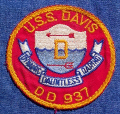
0593706 |
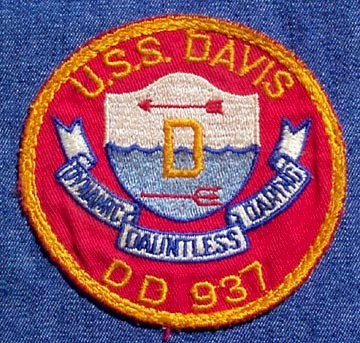
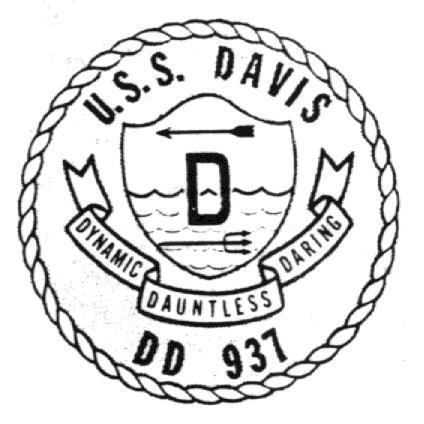
68k | Ship's patch. | Jim Hocking |
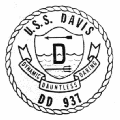
0593707 |
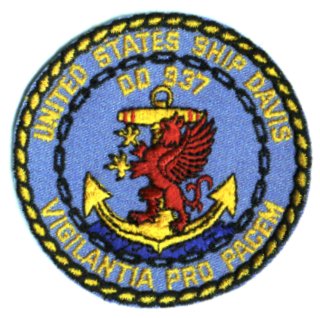
42k | Ship's patch. | Jim Hocking |
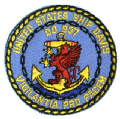
0593705 |
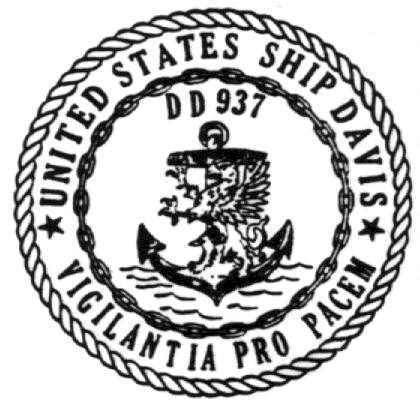
45k | Ship's patch | Mike Smolinski |
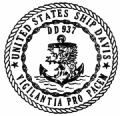
0593708 |
51k | Ship's patch. | Jim Hocking |
0593751 |
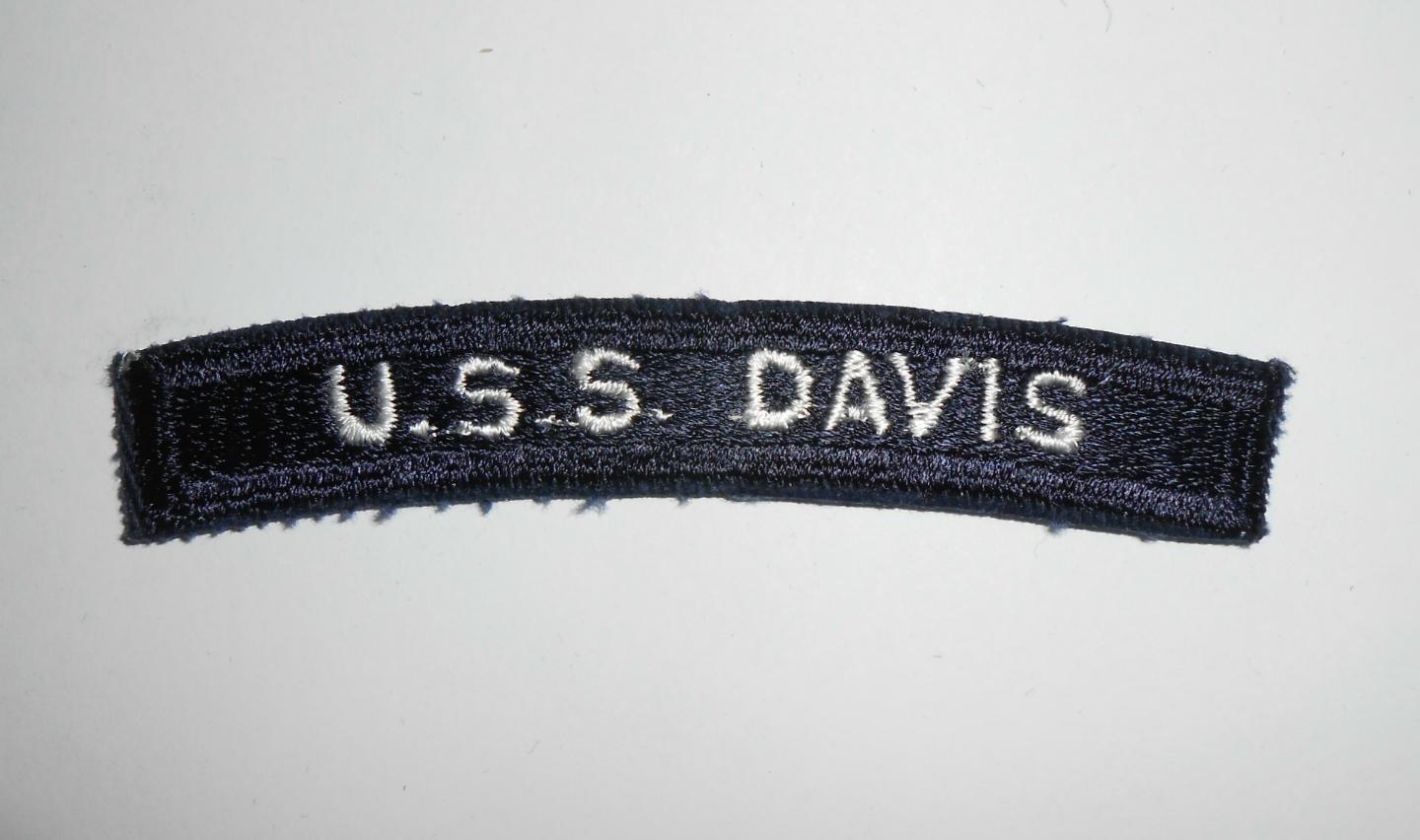
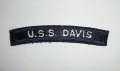
100k-120k | Uniform Ship's name shoulder patch. | Al Grazevich |