Photographic History of the United States Navy
ARCHIVE
| NavSource Main Page | FAQ | Contact us | Search NavSource |
| |
NavSource Naval History Photographic History of the United States Navy |
DESTROYER ARCHIVE |
| Click On Image For Full Size Image |
Size | Image Description | Contributed By And/Or Copyright |
|
|---|---|---|---|---|
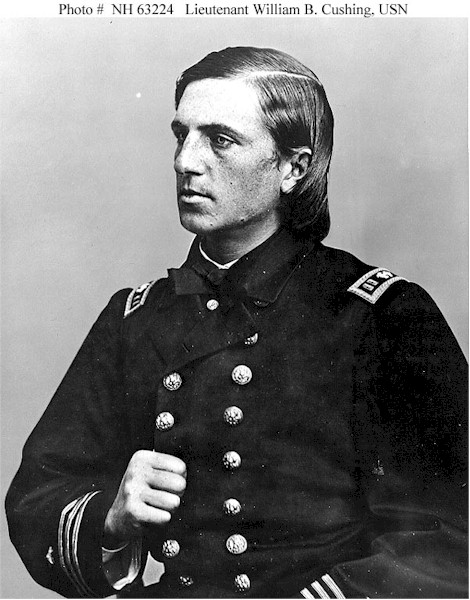 |
82k | Commander William B. Cushing, USN, (1842-1874), was born in Delafield, Wisconsin, on 4 November 1842, but spent most of his childhood in Fredonia, New York. He attended the U.S. Naval Academy from 1857 until March 1861, when his high-spirited behavior led to his resignation. The outbreak of the Civil War brought him back into the service, and he soon distinguished himself as an officer of extraordinary initiative and courage. Promoted to the rank of Lieutenant in mid-1862, Cushing served as Executive Officer of the gunboat Commodore Perry, then was given command of the tug Ellis, which was lost under heroic circumstances on 25 November 1862. He subsequently commanded the gunboats Commodore Barney, Shokokon and Monticello. During this time, he led several daring reconnaissance and raiding excursions into Confederate territories. On the night of 27-28 October 1864, Cushing and a small crew took the Navy steam launch Picket Boat Number One upriver to Plymouth, NC, where they attacked and sank the Confederate ironclad ram CSS Albemarle with a spar torpedo. This action made him a national celebrity, and he was quickly promoted to the rank of Lieutenant Commander. In January 1865, Cushing helped lead the Navy landing force in the conquest of Fort Fisher, NC, again distinguishing himself. Following the Civil War, LCdr. Cushing was executive officer of USS Lancaster and commanding officer of USS Maumee. Promoted to Commander in 1872, he was captain of USS Wyoming in 1873-74. In November 1873, he boldly confronted Spanish authorities in Cuba to save the lives of many passengers and crew of the steamer Virginius, which had been captured bringing men and supplies to Cuban revolutionaries. While serving as Executive Officer of the Washington Navy Yard, DC, Commander Cushing's always delicate health gave way and he died on 17 December 1874. | NHC | |
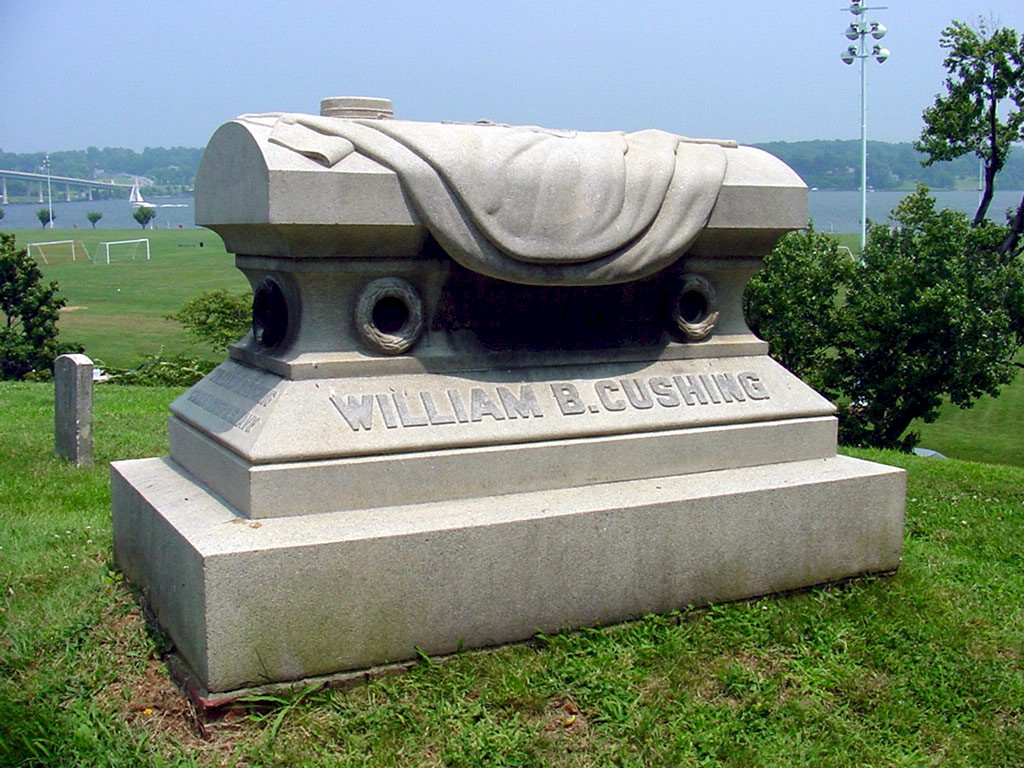
| 260k | William Barker Cushing’s grave at the United StatesNaval Academy. | Bill Gonyo | |
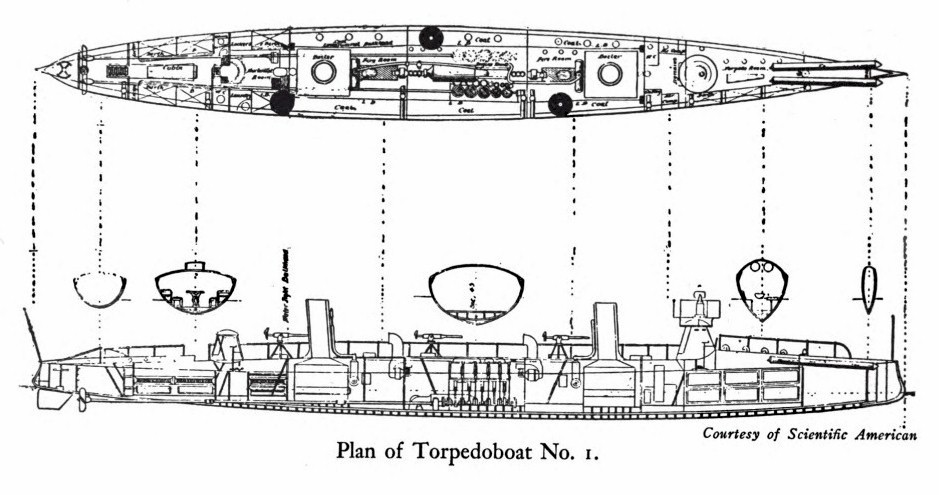 |
110k | Deck plan. | Bill Gonyo | |
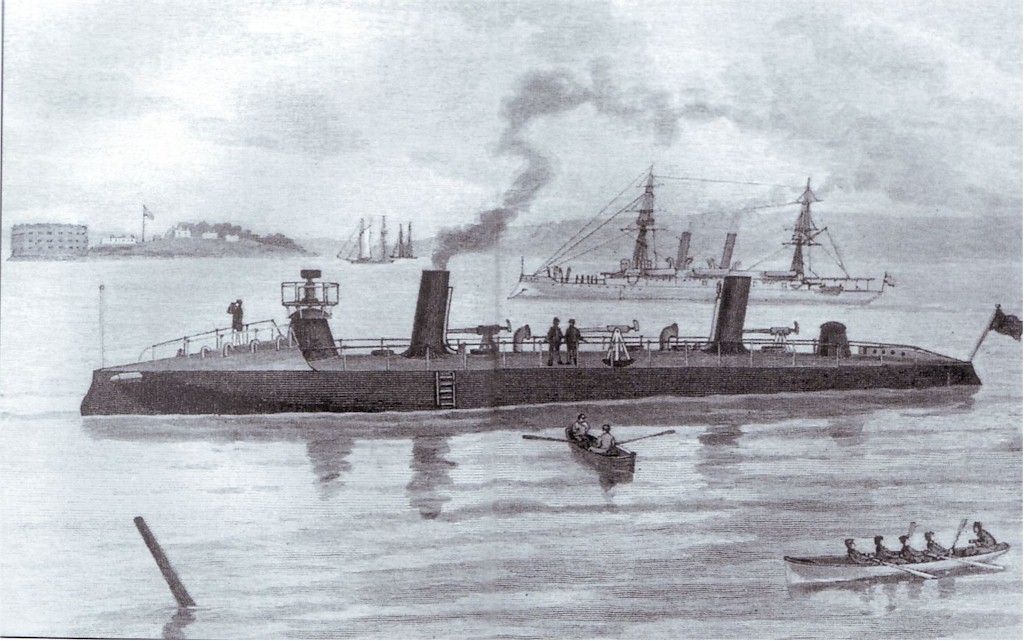 |
169k | Undated, an illustration of the torpedo boat USS Cushing (Torpedo Boat # 1) in Newport Harbor. Old Fort Dumpling can be seen in the left background. Courtesy of Scientific American. | Robert Hurst | |
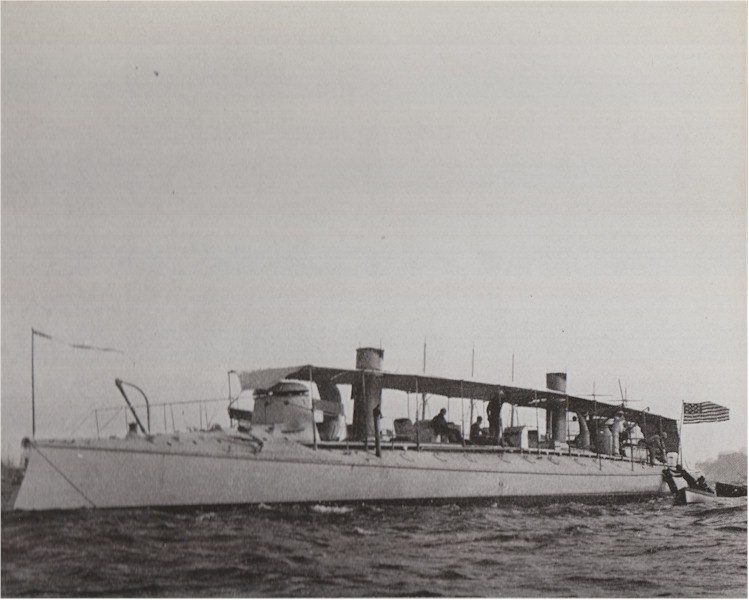 |
76k | Undated, location unknown. NHC photo 63743 from "U.S. Warships of World War One" by P.H. Silverstone. | Robert Hurst/Terry Miller, Executive Director, Tin Can Sailors Inc. | |
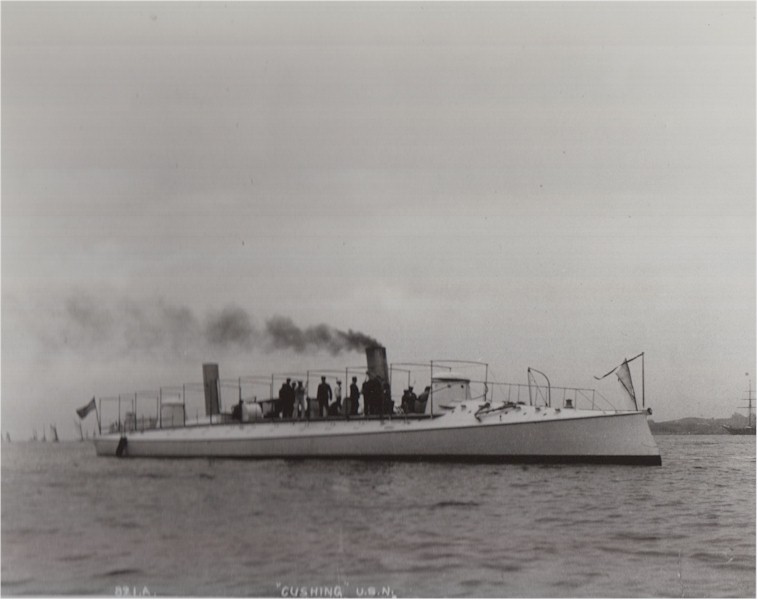 |
58k | Undated, location unknown. | Terry Miller, Executive Director, Tin Can Sailors Inc. | |
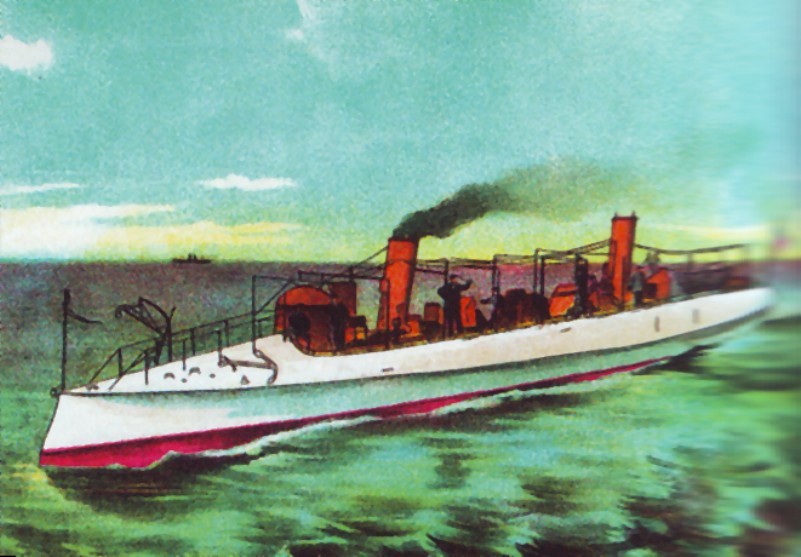 |
96k | Undated colored post card of the Torpedo Boat USS Cushing (Torpedo Boat # 1). Source unknown. | Robert Hurst | |
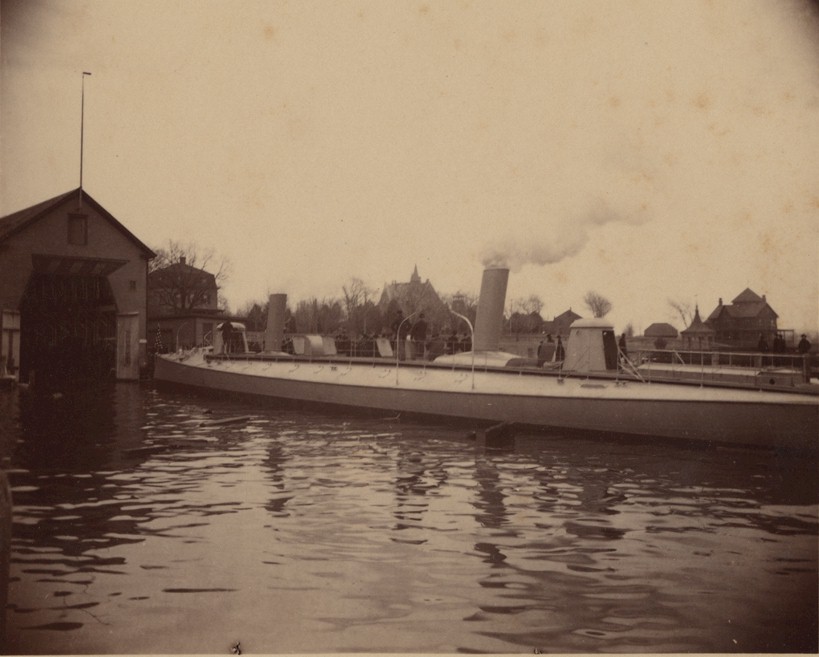 |
96k | Undated, USS Cushing (Torpedo Boat # 1) with its steam up at the Herreshoff Manufacturing Co.'s South Pier, Bristol, Rhode Island, following its launching from the South Building Shop. It was launched on 23 January 1890, and its steam was raised that afternoon. Photographer unknown. Source: John Palmieri, Curator Herreshoff Marine Museum/America's Cup Hall of Fame; www.herreshoff.org. Part Of: George Albert Converse papers and photographs, 1861-1897. Courtesy DeGolyer Library, Southern Methodist University. | Robert Hurst | |
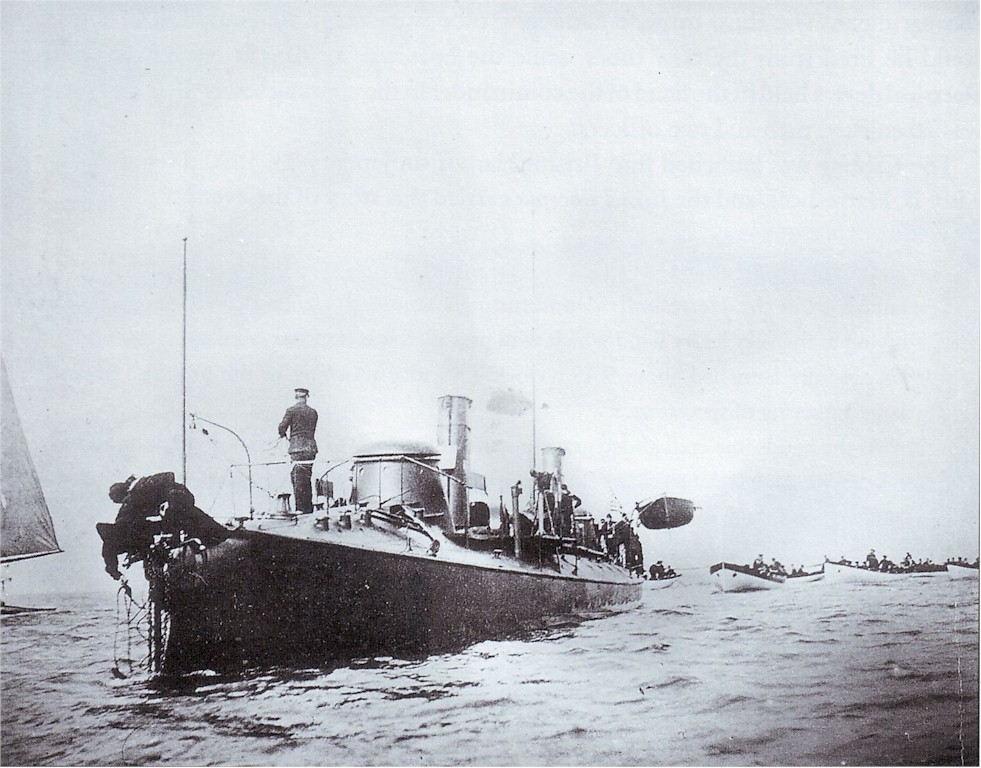 |
174k | Undated, USS Cushing (Torpedo Boat # 1) involved in lifeboat rescue exercises, location uknown. | Robert Hurst | |
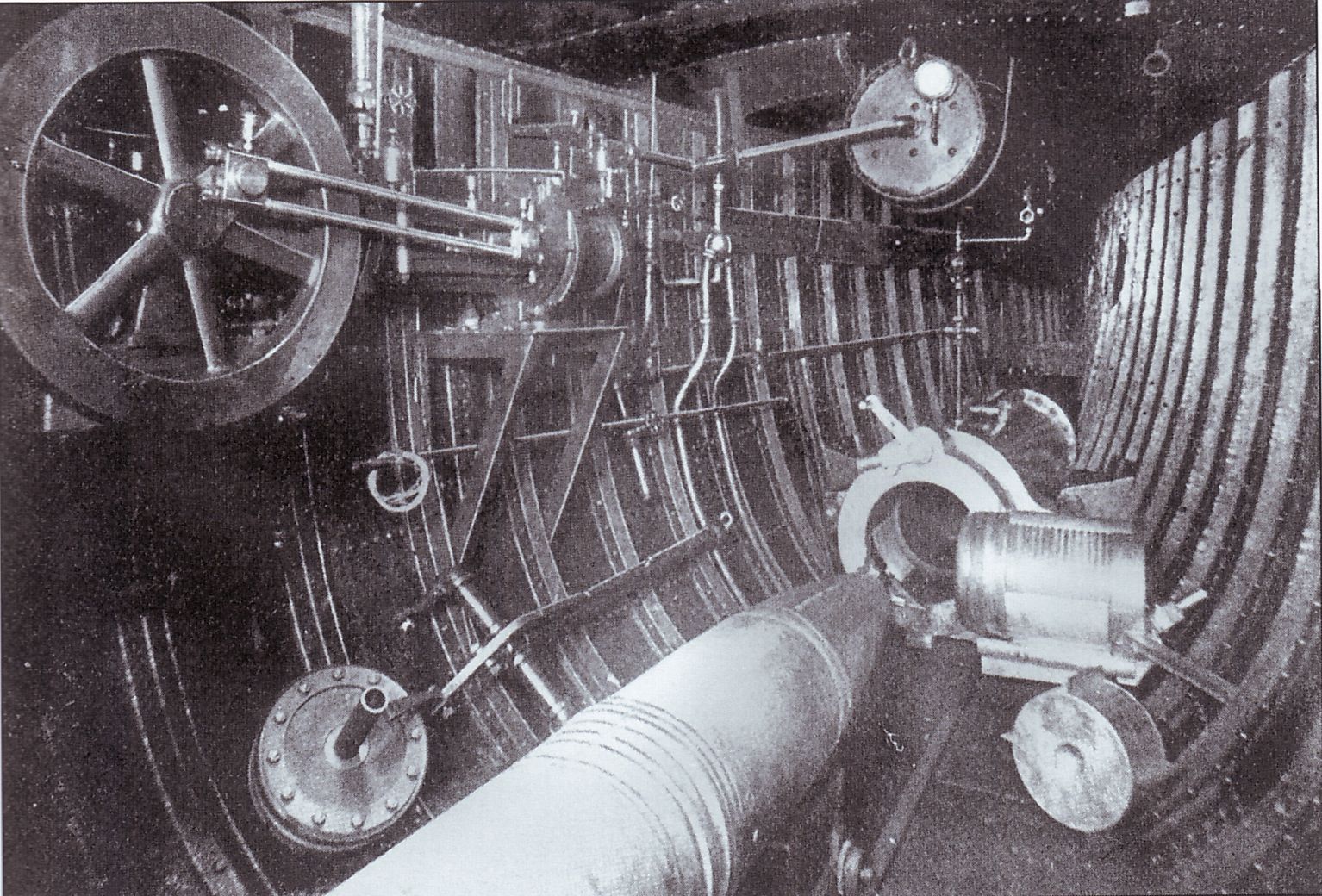 |
178k | Undated, the torpedo room of USS Cushing. A second enclosed torpedo tube was added to Cushing's armament. This interior view is representative of the torpedo launching machinery on all early U.S. Navy torpedo boats. In the foreground is an 18-inch Whitehead torpedo ready for loading. Images and text from Building The Mosquito Fleet: The U.S. Navy's First Torpedo Boats, by Richard V. Simpson. | Robert Hurst | |
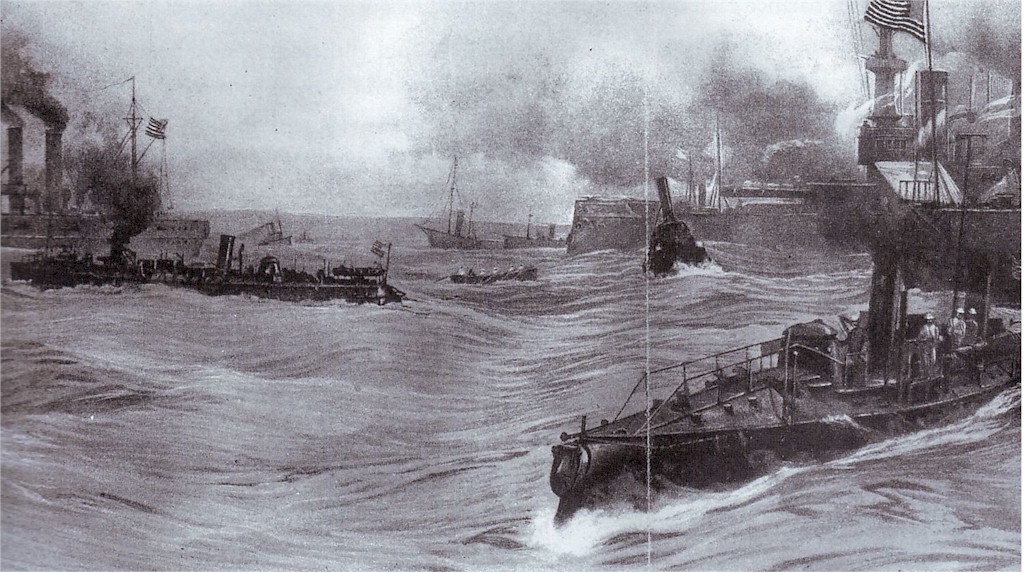 |
208k | Undated, a drawing of the flagship USS New York signals orders off Havana. In this improbable scenario, the artist has depicted USS Cushing with her bow torpedo tube installed during the Spanish-American War of 1898. This however, was not in place until after November 1900. Image from Leslie's Official History of the Spanish-American War. Image from Building The Mosquito Fleet: The U.S. Navy's First Torpedo Boats, by Richard V. Simpson. | Robert Hurst | |
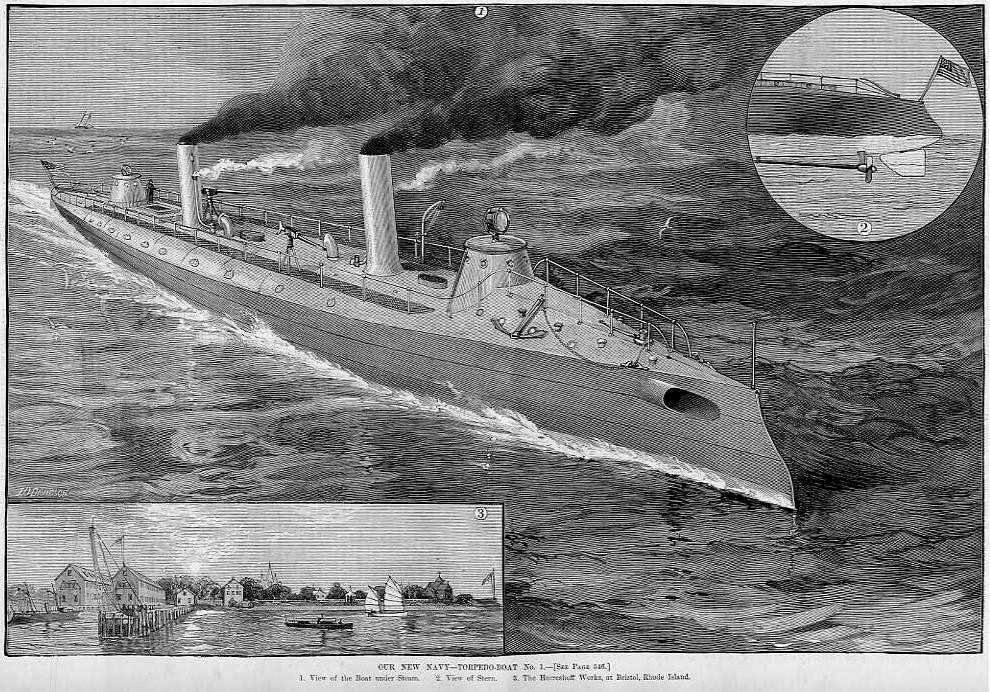 |
340k | Image entitled Our New Navy - Torpedo Boat No. 1. Reproduced from an original wood engraving by Julian Oliver Davidson (1853-1894) published in Harper's Weekly, 1 June 1889. | Robert Hurst | |
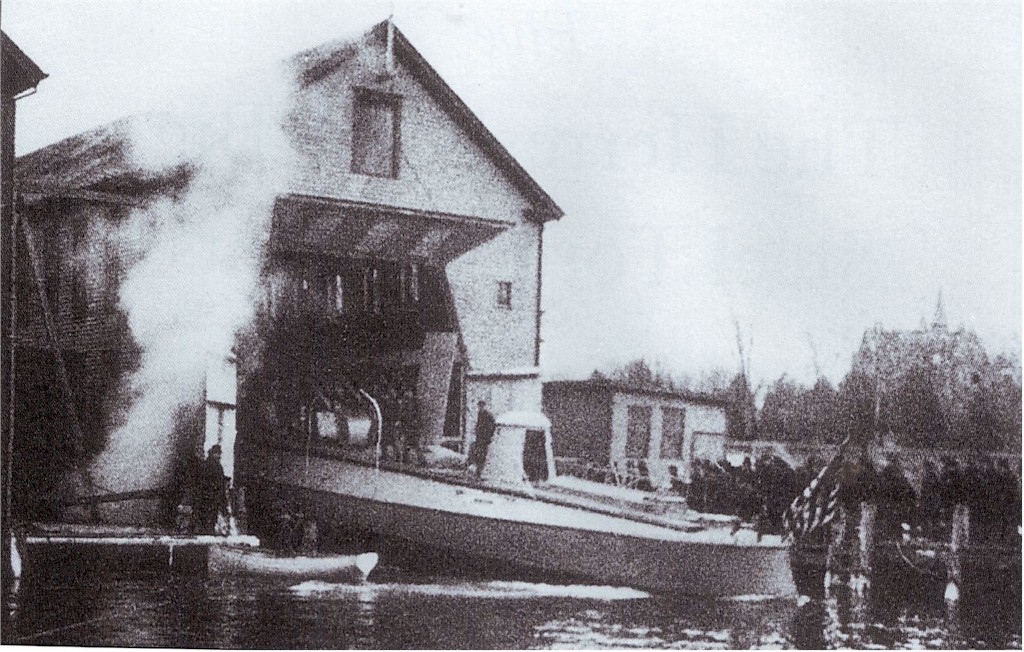 |
228k | Torpedo Boat # 1, Cushing, is launched into Bristol, Harbour, on January 23 1890. Image scanned from Building The Mosquito Fleet: The U.S. Navy's First Torpedo Boats, by Richard V. Simpson. | Robert Hurst | |
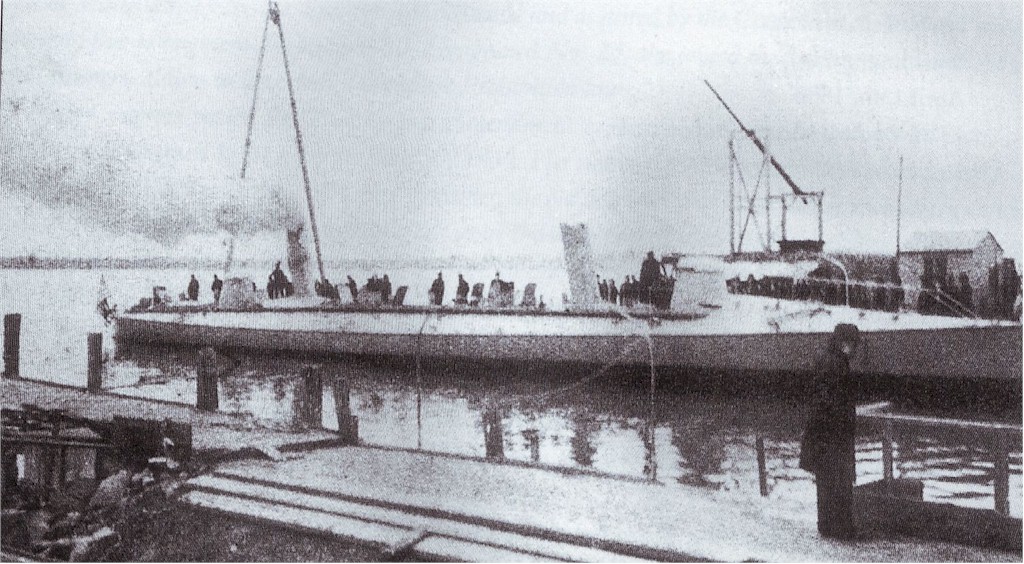 |
199k | Cushing undergoes dock trials at the Herreshoff Manufacturing Company's boatyard, Bristol, Rhode Island. Image scanned from Building The Mosquito Fleet: The U.S. Navy's First Torpedo Boats, by Richard V. Simpson. | Robert Hurst | |
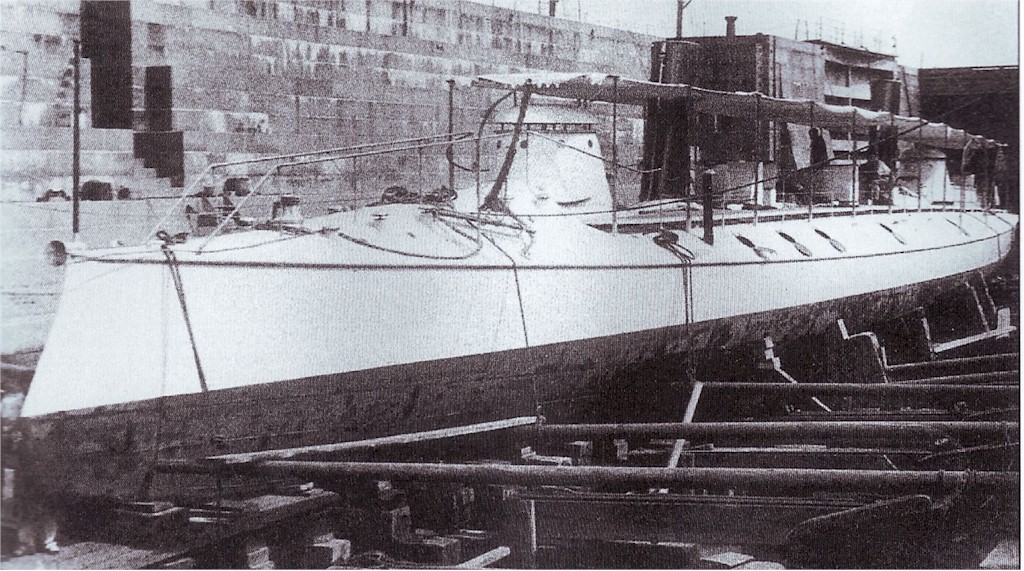 |
231k | Cushing undergoes a Navy inspection in dry dock before being fitted with her armament. Image scanned from Building The Mosquito Fleet: The U.S. Navy's First Torpedo Boats, by Richard V. Simpson. | Robert Hurst | |
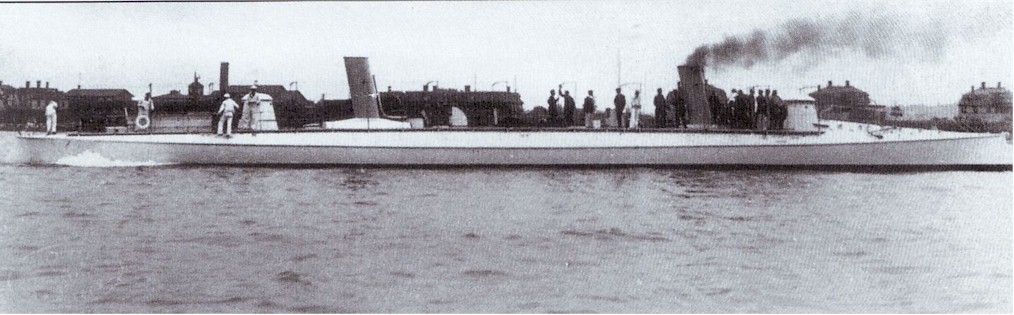 |
95k | Undated, USS Cushing steaming past Goat Island. Cushing's uncluttered lines cam be admired in this full starboard view. Buildings of the Naval Torpedo Station at Newport are visible in the background. Image and text from Building The Mosquito Fleet: The U.S. Navy's First Torpedo Boats, by Richard V. Simpson. | Robert Hurst | |
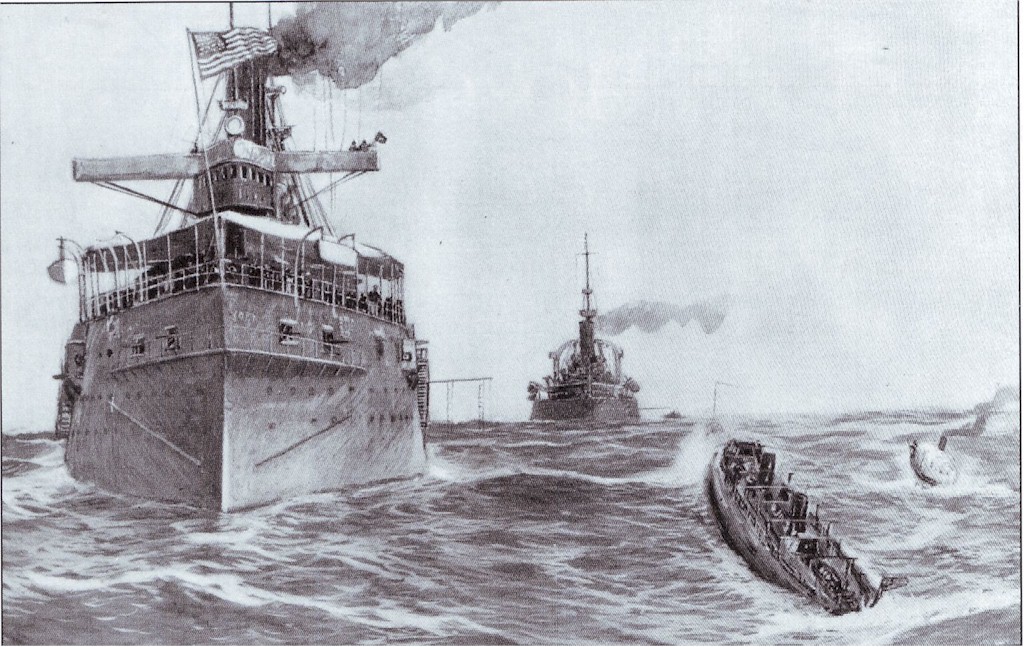 |
222k | Picture entitled With our fleet at key West, torpedo boat Cushing carrying dispatches to the flagship. Drawing from Carlton T. Chapman for Harper's Weekly. Image scanned from Building The Mosquito Fleet: The U.S. Navy's First Torpedo Boats, by Richard V. Simpson. | Robert Hurst | |
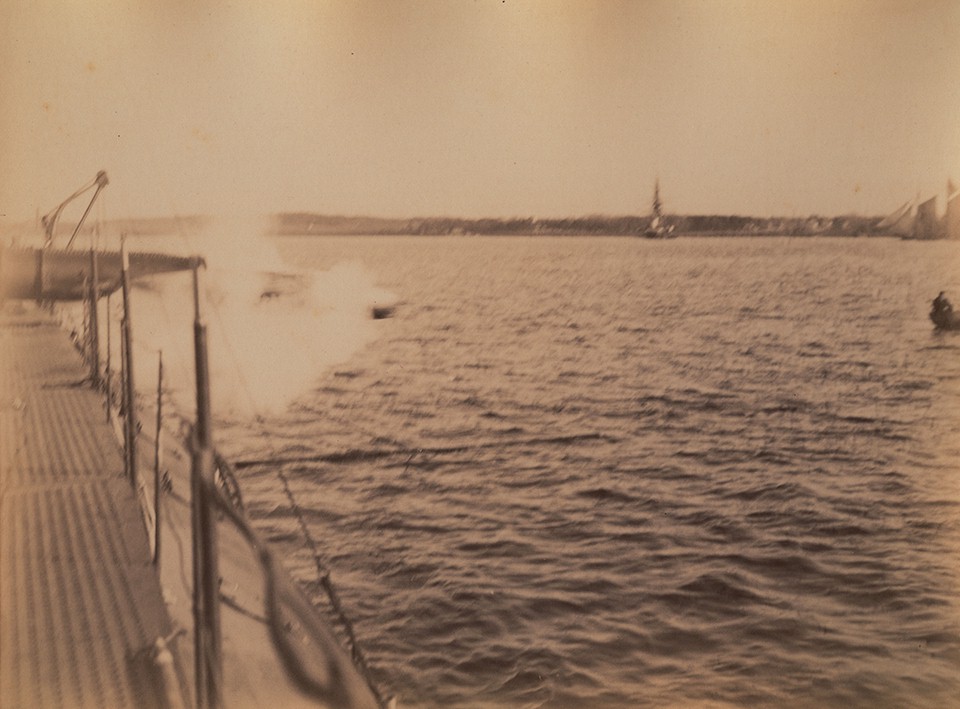
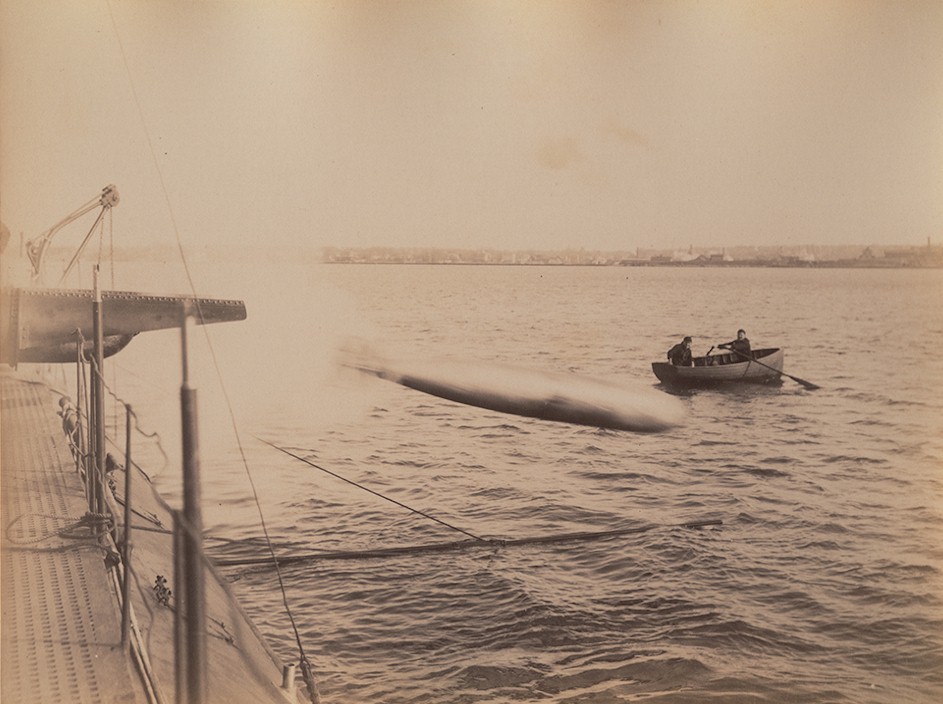
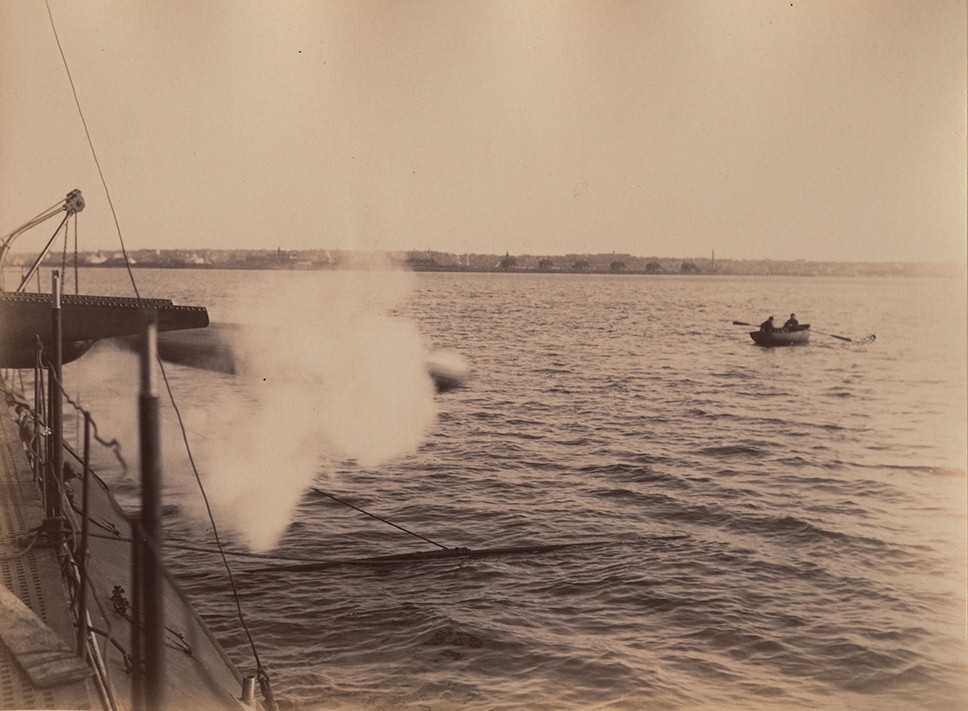
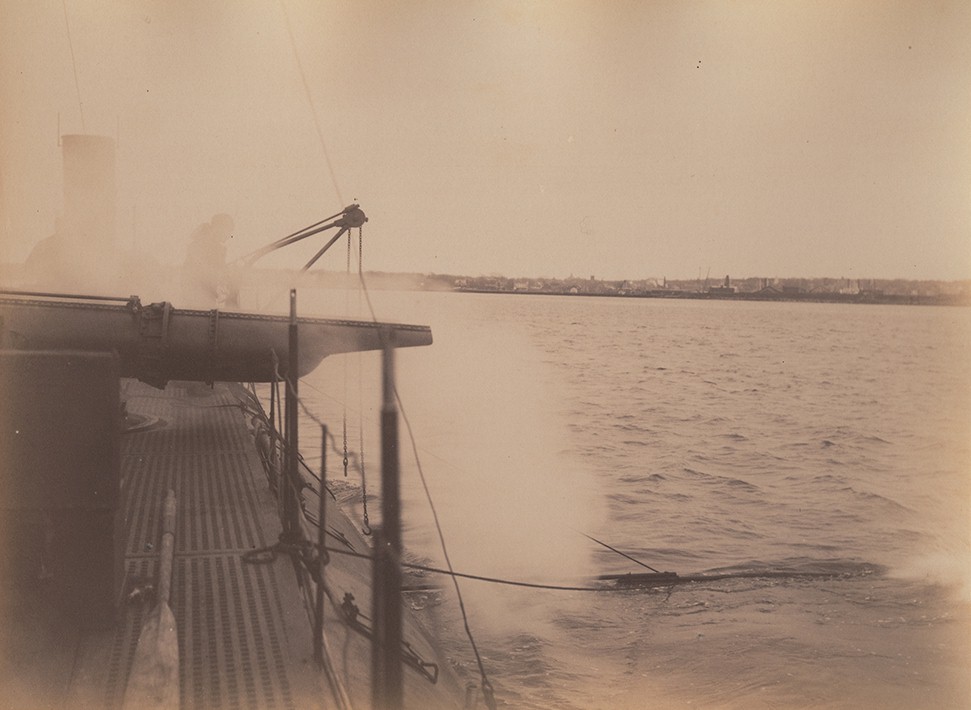
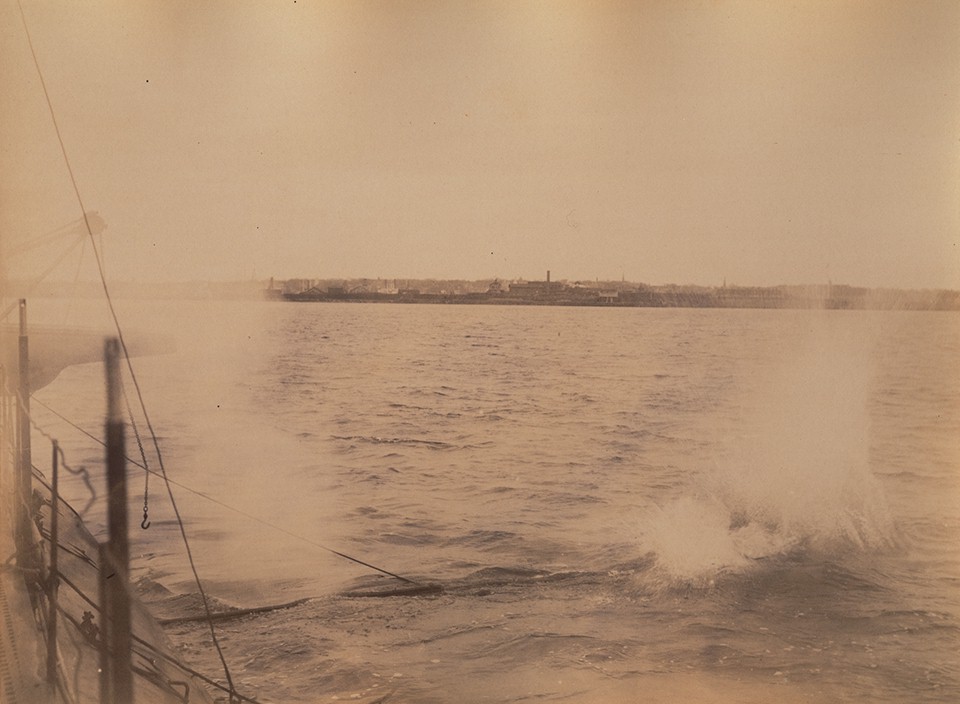 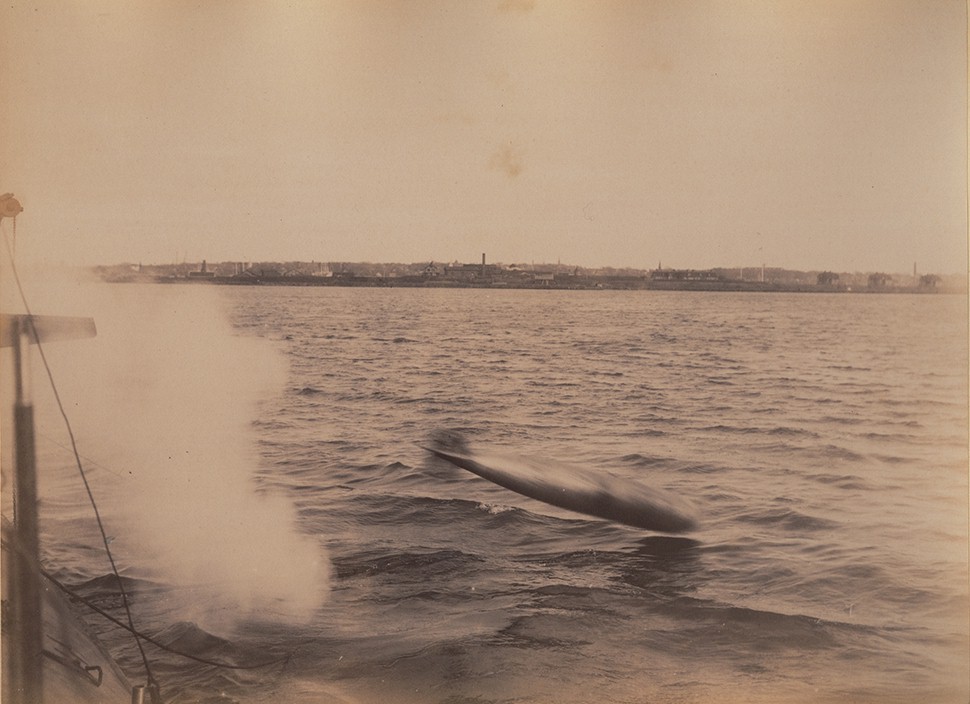 A series of five images of USS Cushing (Torpedo Boat No.1) undertaking torpedo firing experiments at Newport, Rhode, Island, circa 1890. Photographer unknown. DeGolyer Library, SMU. Part Of: George Albert Converse papers and photographs, 1861-1897. Images Courtesy of Southern Methodist University, Central University Libraries, DeGolyer Library. | Robert Hurst | |||
 |
64k | Circa 1890, location unknown. | Robert Hurst | |
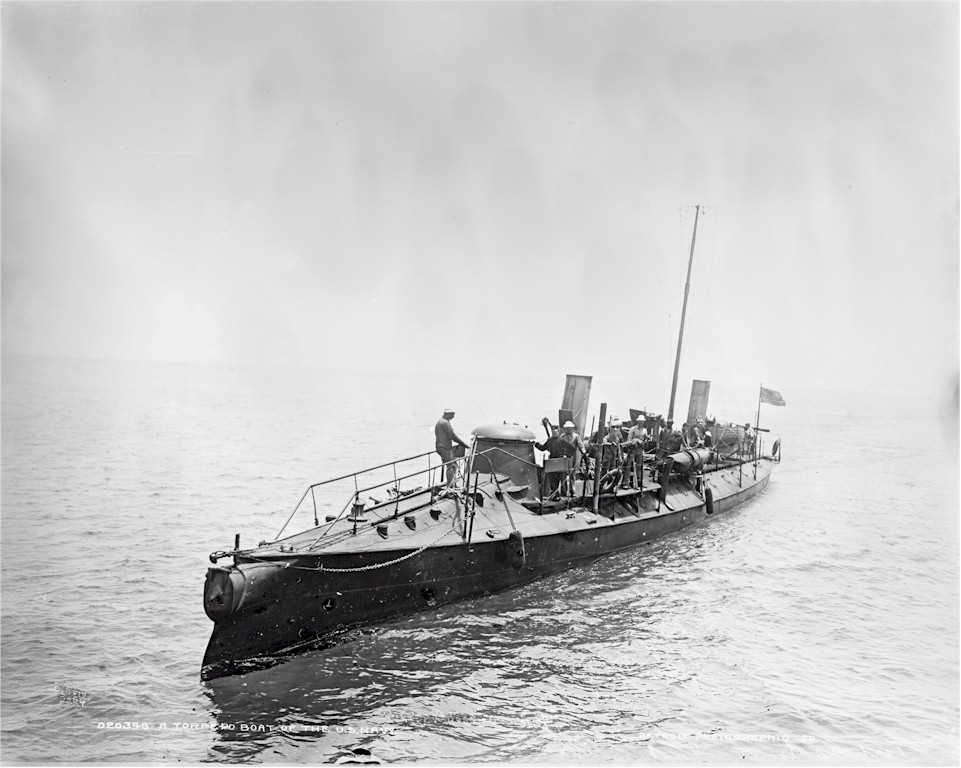 |
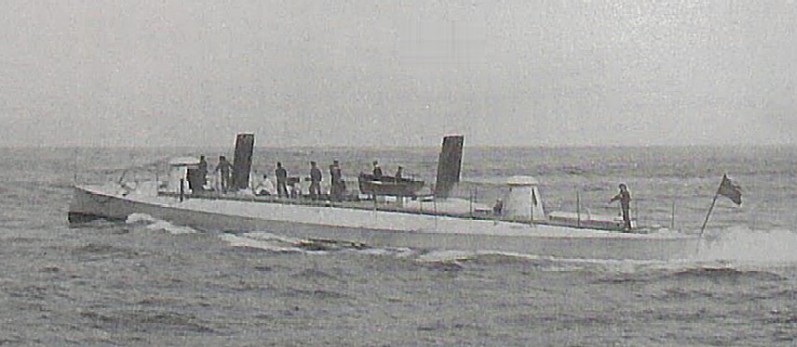
138k | The USS Cushing, a 116-ton torpedo boat, was built in Bristol, Rhode Island. When commissioned in April 1890, she was the Navy's only modern torpedo boat, and spent most of her career assisting in torpedo development efforts. The first torpedo boat built for the Navy, Cushing was attached to the Squadron of Evolution and equipped for experimental work to complete the development of torpedo outfits and to gather data for the service. The tube on her bow was removed later after her commissioning on as it was ineffective and kept flooding out. On 8 September 1891 she reported to Newport for duty at the Naval Torpedo Station, and except for a brief period out of commission, 11 November 1891-11 January 1892, Cushing continued her torpedo experiments in this area until 1893. Photo courtesy of the Library of Congress Prints and Photographs Division. | Bill Gonyo | |
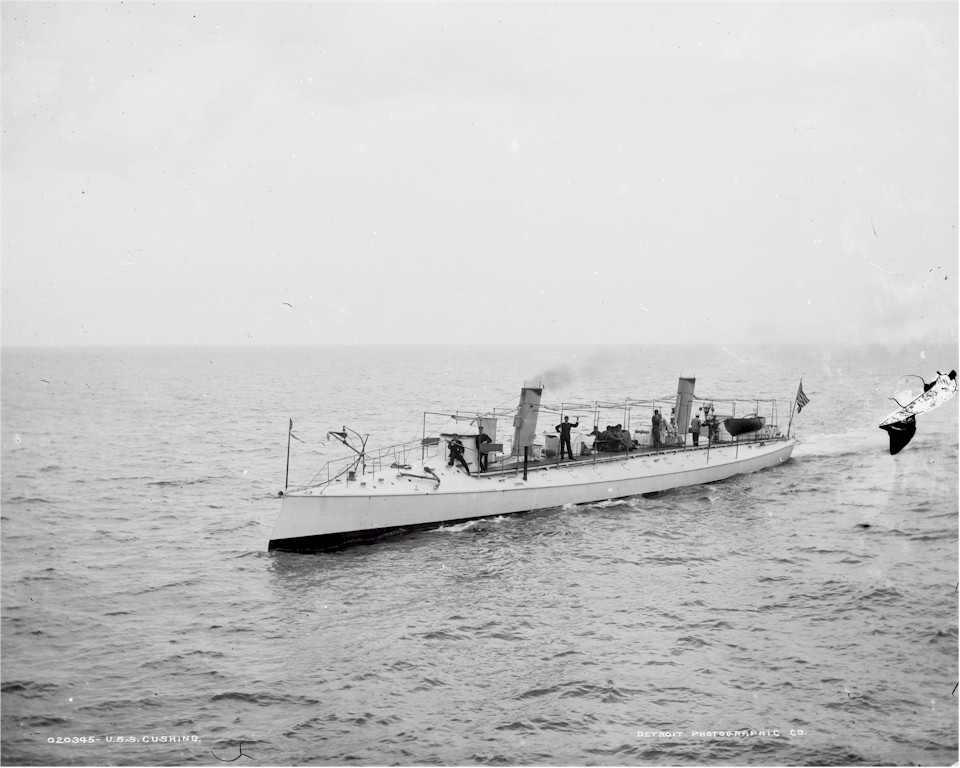 |
134k | U.S.S. Cushing underway in the Atlantic sometime between 1890 and 1901. Photo courtesy of the Library of Congress Prints and Photographs Division. | Bill Gonyo | |
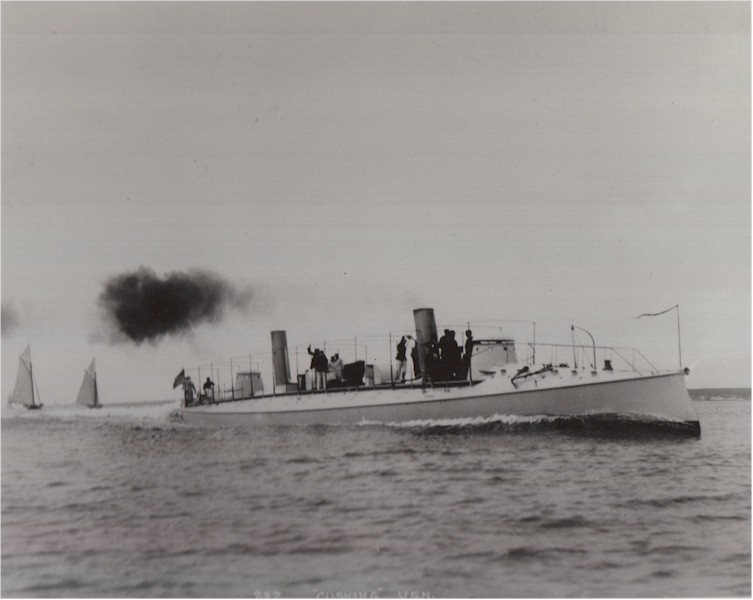 |
63k | Photo #: NH 63743-A. USS Cushing (TB-1) Photographed during the 1890s. U.S. Naval Historical Center Photograph. | Terry Miller, Executive Director, Tin Can Sailors Inc. | |
 |
126k | A starboard side view of the USS Cushing (Torpedo Boat # 1) underway on 1 January 1891, location unknown. Photographer unknown. Department of the Navy. Bureau of Construction and Repair. This image is available in the holdings of the National Archives and Records Administration, cataloged under the ARC Identifier (National Archives Identifier) 512898. | Robert Hurst | |
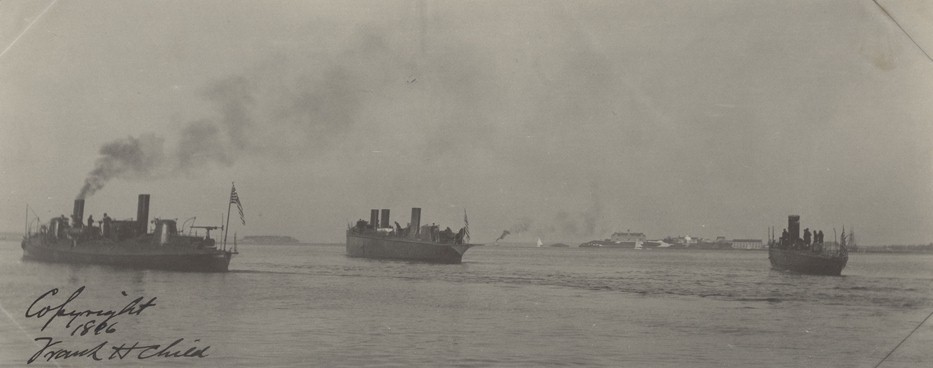 |
52k | From left to right USS Cushing (Torpedo Boat # 1), USS Porter (Torpedo Boat # 6) and the USS Stiletto (Wooden Torpedo Boat 1), in Narragansett Bay, Rhode Island Sound, Rhode Island, 18 December 1896. Photographer Frank H. Child. Nathanael Herreshoff was on board the Porter when this photograph was taken, and recorded the date in his diary as having been on December 18, 1896. Source: John Palmieri, Curator Herreshoff Marine Museum/America's Cup Hall of Fame; www.herreshoff.org. Part of George Albert Converse papers and photographs, 1861-1897. Courtesy of DeGolyer Library, Southern Methodist University. | Robert Hurst | |
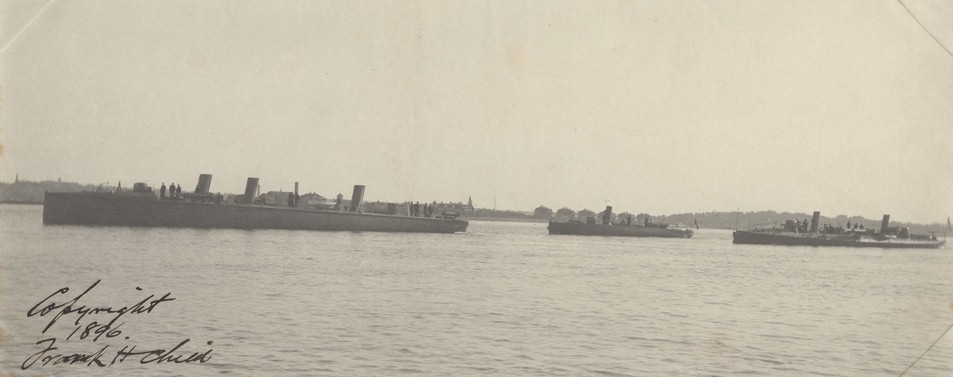 |
61k | From left to right USS Cushing (Torpedo Boat # 1), USS Porter (Torpedo Boat # 6) and the USS Stiletto (Wooden Torpedo Boat 1), in Narragansett Bay, Rhode Island Sound, Rhode Island, 18 December 1896. Photographer Frank H. Child. Nathanael Herreshoff was on board the Porter when this photograph was taken, and recorded the date in his diary as having been on December 18, 1896. Source: John Palmieri, Curator Herreshoff Marine Museum/America's Cup Hall of Fame; www.herreshoff.org. Part of George Albert Converse papers and photographs, 1861-1897. Courtesy of DeGolyer Library, Southern Methodist University. | Robert Hurst | |
|
|
111k | From left to right, USS Stiletto (Wooden Torpedo Boat # 1) and USS Cushing (Torpedo Boat # 1) in Narragansett Bay, Rhode Island Sound, Rhode Island. This photograph was taken during a series of maneuvres between the USS Cushing (Torpedo Boat # 1), USS Porter (Torpedo Boat # 6), and USS Stiletto (Wooden Torpedo Boat # 1). Nathanael Herreshoff was on board the Porter during these maneuvers, and recorded the date in his diary as having been on December 18, 1896. Photograph taken by Frank H. Childe. Source: John Palmieri, Curator Herreshoff Marine Museum/America's Cup Hall of Fame; www.herreshoff.org. Part Of: George Albert Converse papers and photographs, 1861-1897. Courtesy DeGolyer Library, Southern Methodist University. | Robert Hurst | |
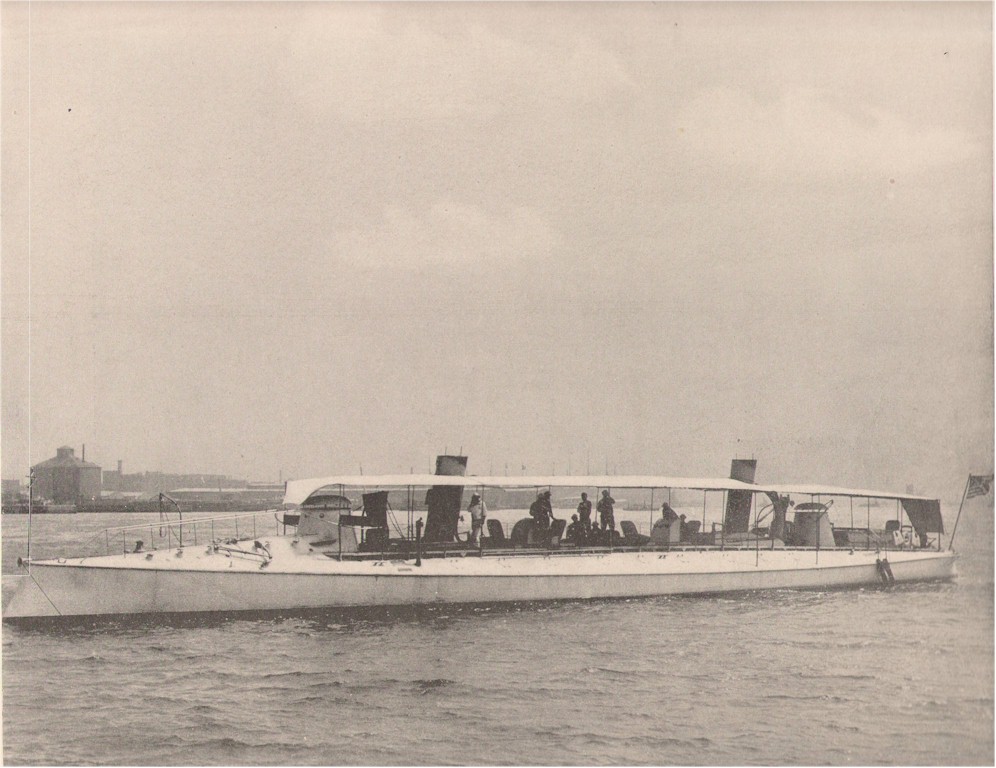 |
161k | At New York, during the Columbian Naval Parade, on 27 April 1893, from the book The American Navy Belford, Middlebrook & Co. - Chicago - 1898. | Thomas Becher/Robert Hurst | |
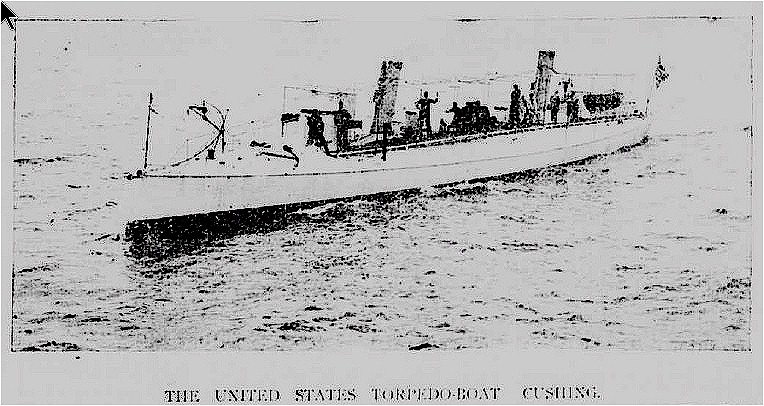 |
111k | Newspaper clipping from the New York Tribune dated October 3 1897. | Mike Mohl | |
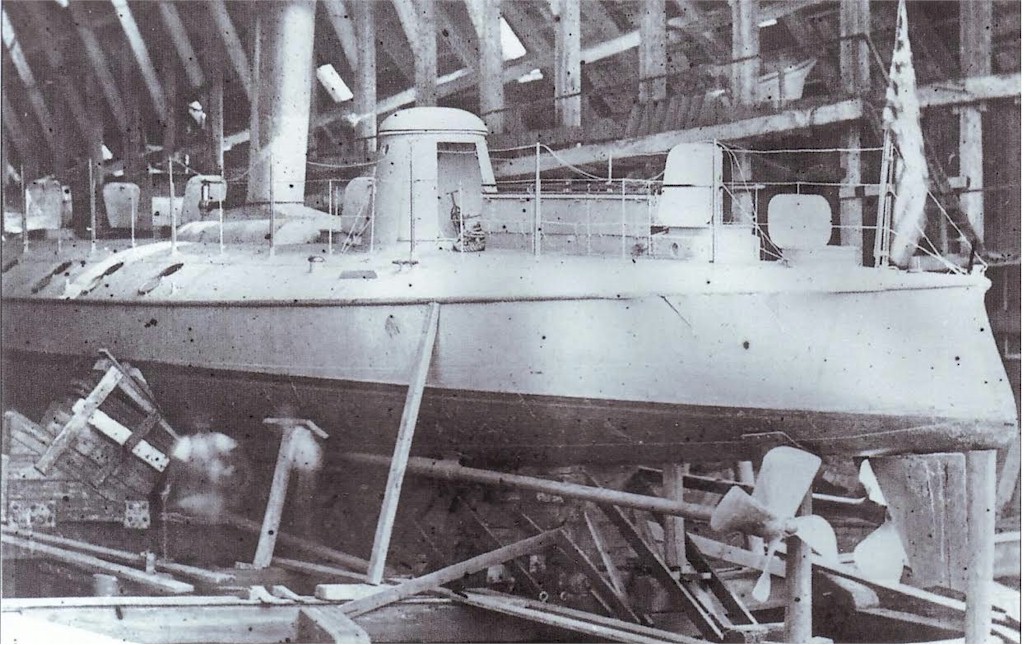 |
240k | USS Cushing (TB-1) hauled out sometime pre 1898. Note odd looking screws. Source: United States National Archives, Photo No. 19-N-14-19-7. | Mike Green | |
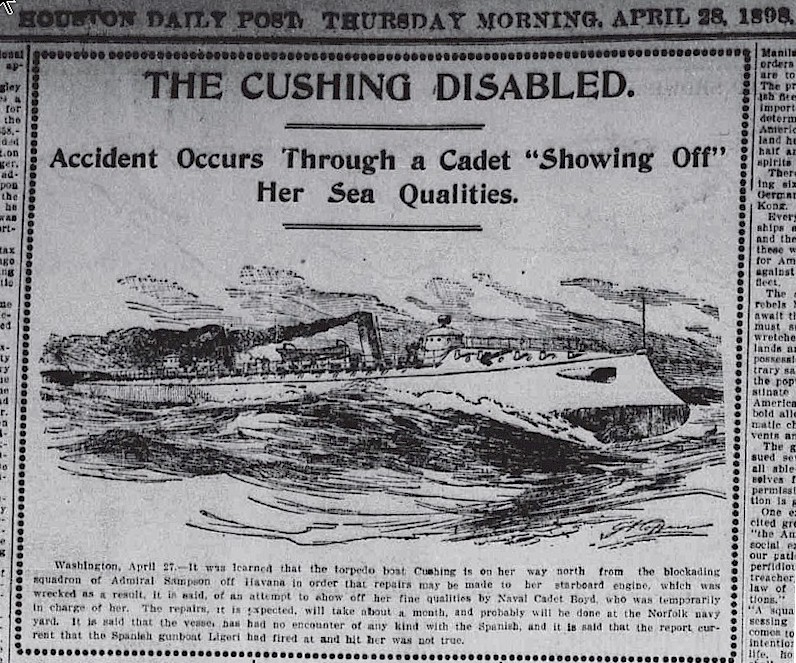 |
228k | Newspaper clipping from the Houston Daily Post dated April 28 1898. | Mike Mohl | |
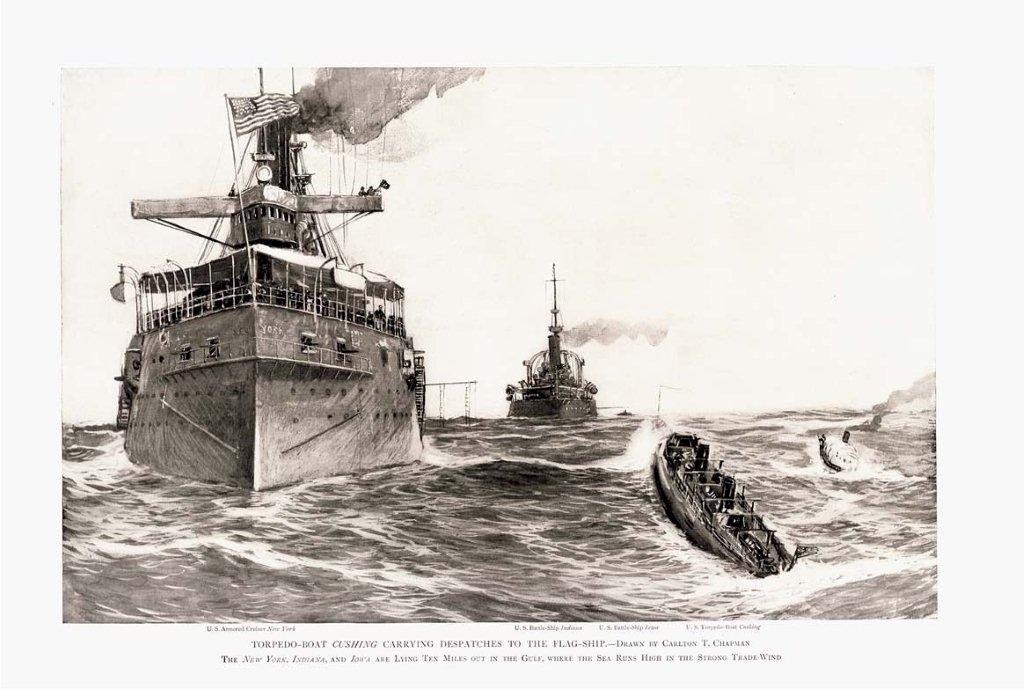 |
140k | Black & white print from 1899 depicting Torpedo Boat dispatches. Illustrated by Carlton T. Chapman. | Tommy Trampp | |
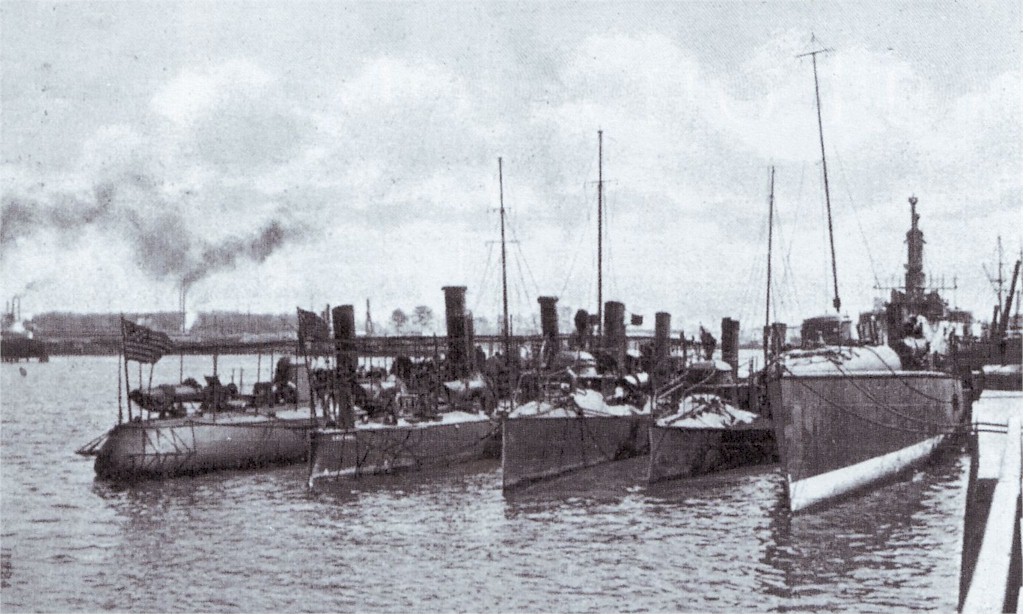 |
174k | Foote (TB # 3), Ericsson (TB # 2), Morris (TB # 14) Cushing (TB # 1) and Porter (TB # 6) (or Dupont TB # 7) at Norfolk Navy Yard, circa early 1900s. Period postcard. Image and text from Building The Mosquito Fleet: The U.S. Navy's First Torpedo Boats, by Richard V. Simpson. | Robert Hurst | |
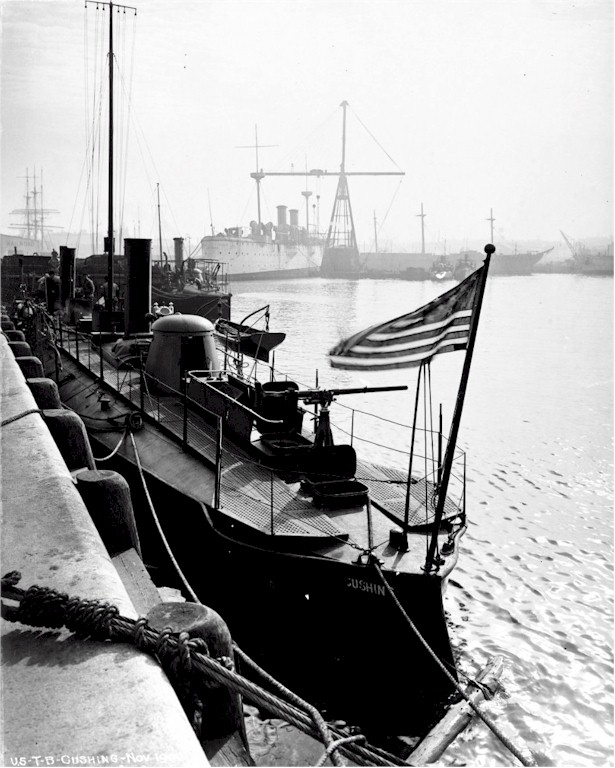 |
171k | USS Cushing (TB-1) moored in November 1900. Note the 1-PDR quick firing gun at the stern. Source: United States National Archives, Photo No. 19-N-14-19-8. | Mike Green | |
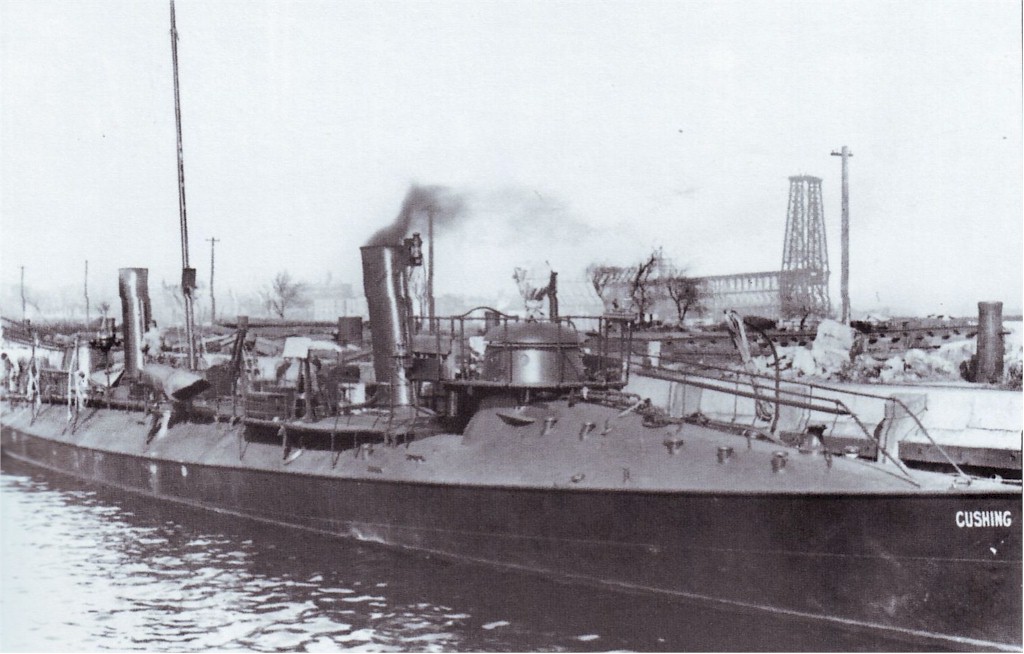 |
151k | USS Cushing (Torpedo Boat # 1) tied up pier side, November 1900, location unknown. Cushing is shown with a new coat of dark night camouflage paint. Her decks are now cluttered with gear, her deck-mounted starboard torpedo launching tube is visible, and her small guns are shrouded. At this late date, Cushing still retains the distinctively sleek curve of her bow. U.S. Navy photograph. | Robert Hurst | |
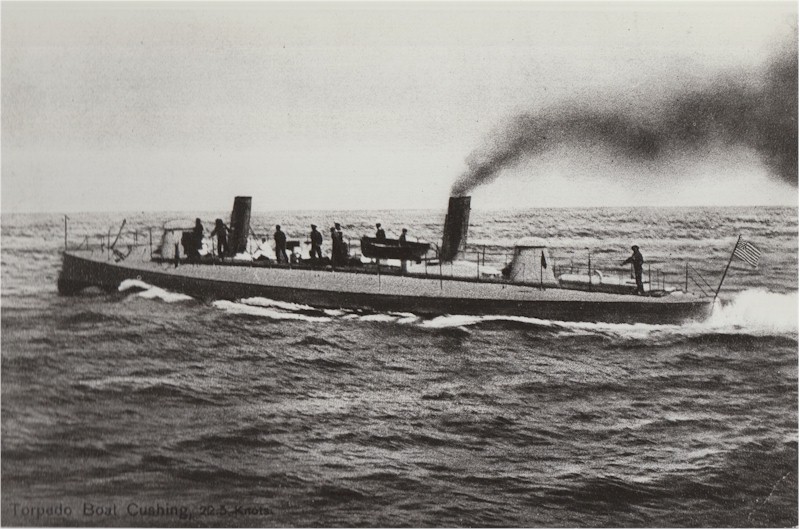 |
125k | Photo #: NH 91485. Postcard view by the Hugh C. Leighton Co. from the early 1900's. Courtesy of CDR D. J. Robinson, USN (Ret.). | Terry Miller, Executive Director, Tin Can Sailors Inc. | |
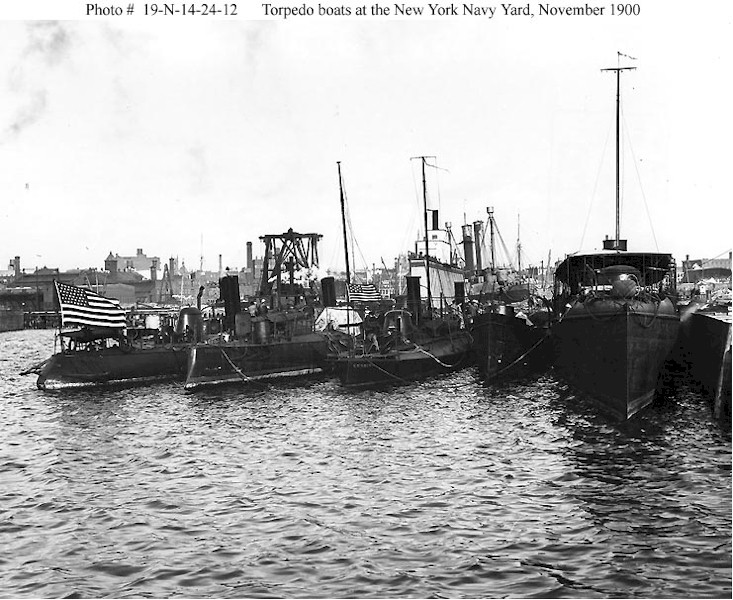 |
138k | Photo #: 19-N-14-24-12. Torpedo Boats at the New York Navy Yard, Brooklyn, New York In November 1900. They are, from left to right: USS Winslow (Torpedo Boat # 5); USS Ericsson (Torpedo Boat # 2); USS Cushing (Torpedo Boat # 1); USS MacKenzie (Torpedo Boat # 17); and USS Porter (Torpedo Boat # 6). Photograph from the Bureau of Ships Collection in the U.S. National Archives. | NHC | |
|
|
151k | USS Cushing (Torpedo Boat # 1) photographed in November 1900 at the New York Navy Yard. The decommissioned supply ship USS Supply (1898-1921) is in the background. Photograph from the Bureau of Ships Collection in the U.S. National Archives. Photo #: 19-N-14-19-10. | Robert Hurst | |
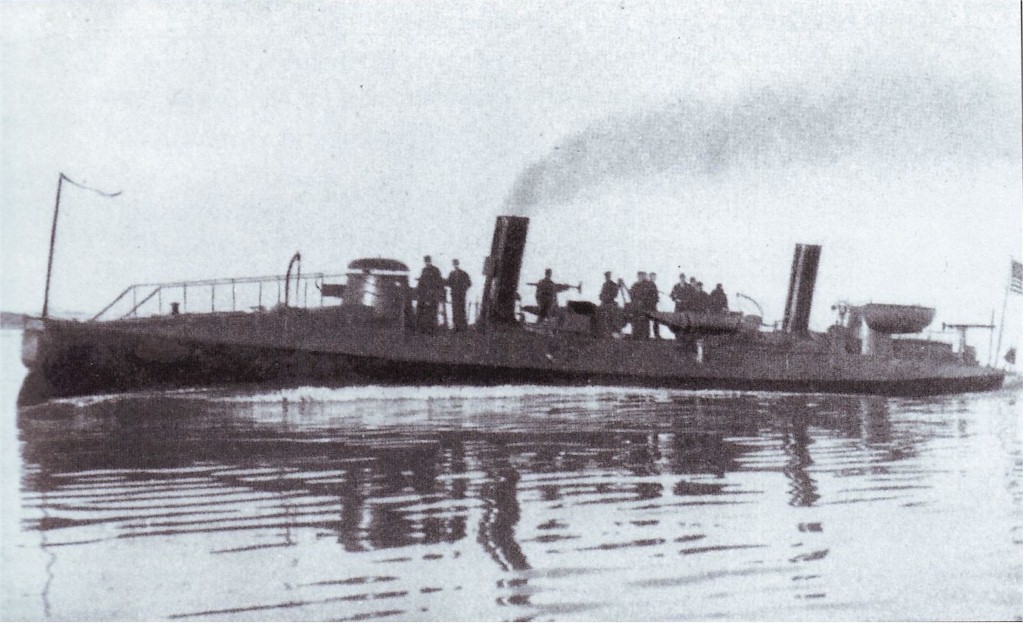 |
159k | USS Cushing (Torpedo Boat # 1) underway in 1903, location unknown. In this view of the fully armed Cushing, her three 6 pdr rapid fire guns and two deck-mounted torpedo tubes are clearly visible. The once sleek beauty of Cushing's bow has been transformed into a snub-nosed affair to accommodate the enclosed bow torpedo tube. Photograph by F.M. child. | Robert Hurst | |
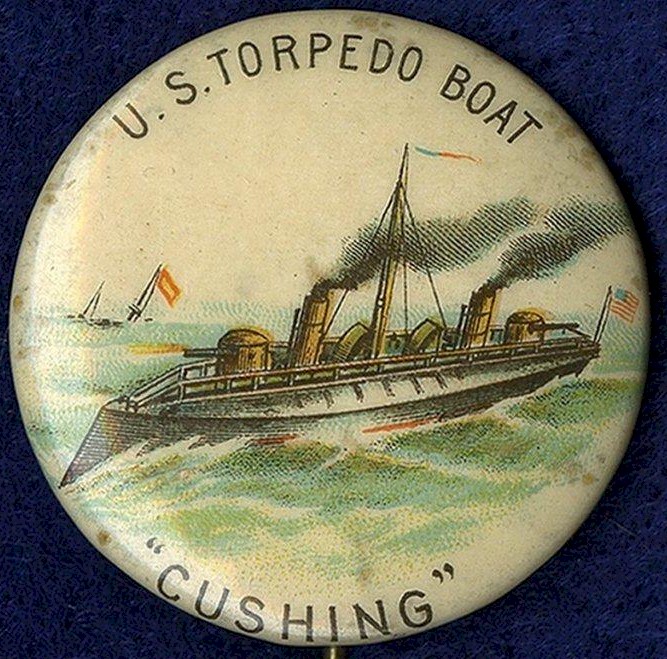 |
228k | Undated souvenir button. | Tommy Trampp | |
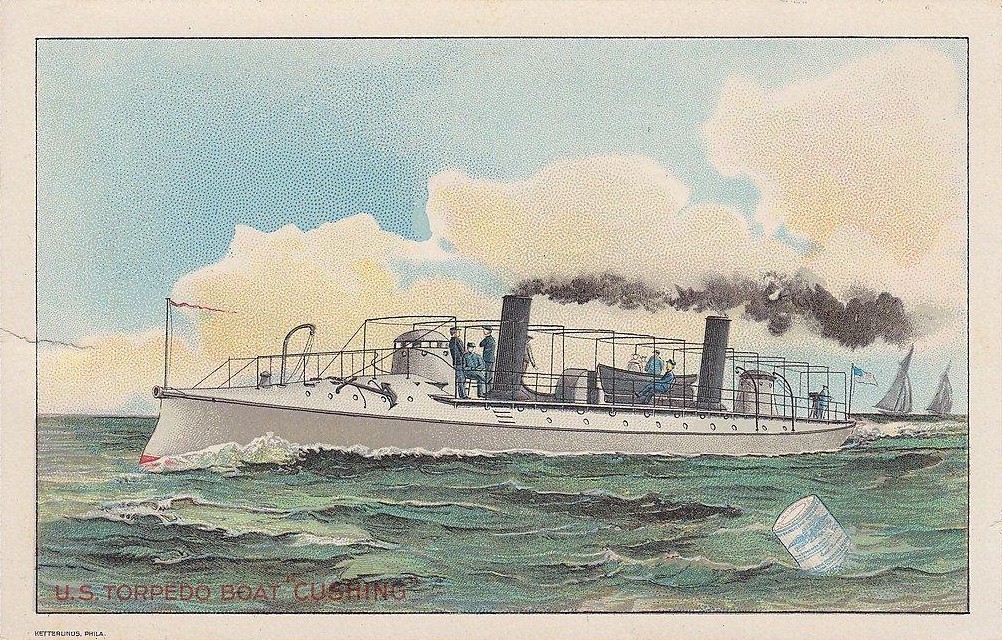 |
336k | N.Y. Condensed Milk Co. collectors card. | Tommy Trampp | |
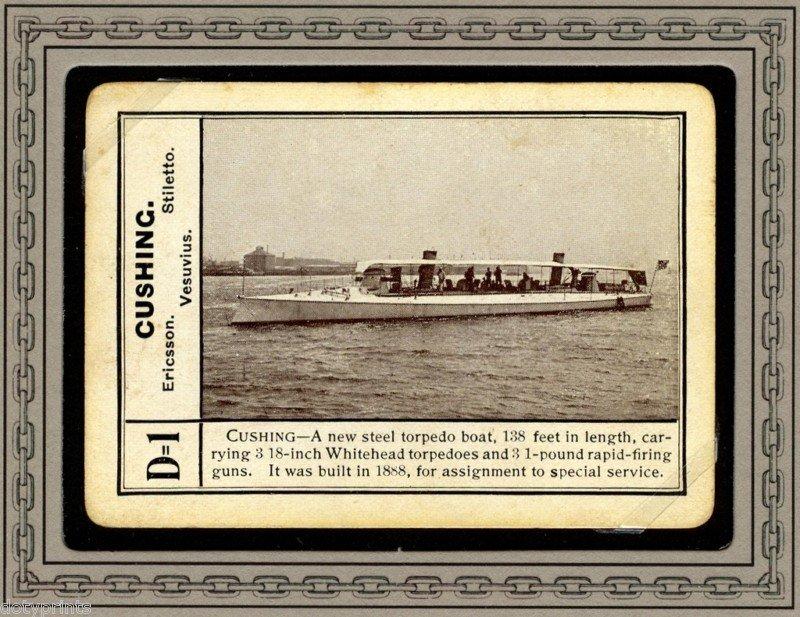 |
126k | Souvenir collectors card. | Tommy Trampp | |
LT Cameron McRae Winslow    Apr 22 1890 - ? (Later ADM)
Frank F. Fletcher    1892 - 1895
LT Albert Gleaves    Jul 1896 - May 1898 (later RADM)
| Back To The Main Photo Index | To The Destroyer Index Page |
