


C Class Submarine: Laid down, 17 March 1908, at Fore River Shipbuilding Co., Quincy, MA.; Launched, 16 June 1909; Commissioned USS Snapper, 2 February 1910; Renamed USS C-5, 17 November 1911; Decommissioned and struck from the Naval Register, 23 December 1919, at Coco Solo, C.Z.; Final Disposition, sold for scrapping, 13 April 1920.Specifications: Displacement, surfaced 238 t., submerged 275 t.; Length 105' 4"; Beam 13' 11"; Draft 10' 7"; Speed, surfaced 10.5 kts, submerged 9 kts; Depth Limit 200'; Complement 1 Officer, 14 Enlisted; Armament, two 18" torpedo tubes, four torpedoes; Propulsion, gasoline electric, Craig Shipbuilding Co. gasoline engines, 250 hp, Fuel Capacity 1,880 gal., Electro Dynamic Co, electric motors, 150 hp, Battery Cells 60, single propeller.
| Click On Image For Full Size | Size | Image Description | Source | |
|---|---|---|---|---|
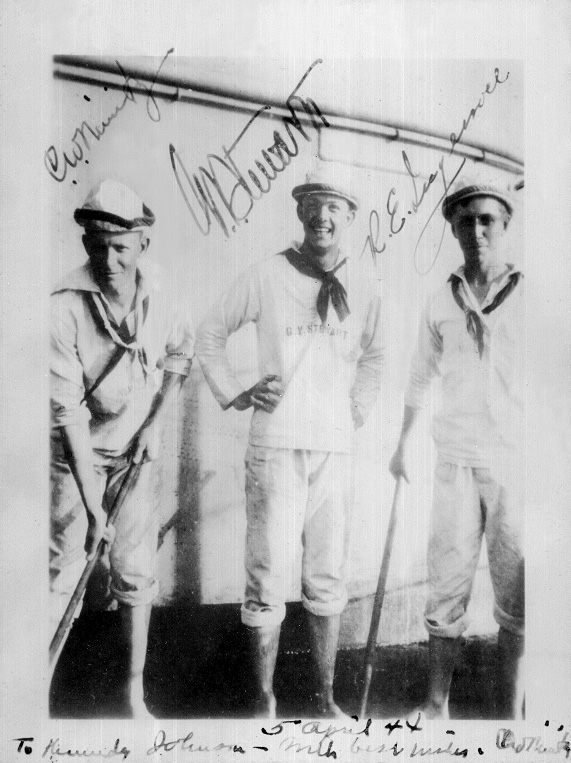 | 153k | C-5's (SS-16) first skipper, Chester William Nimitz (before photo). Nimitz on the left, center is George Vanderbilt Stewart, Lineal # 02746, USNA Class of '05. and R.E. Ingersoll (later Atlantic Fleet Admiral). Photo taken about 1905. Nimitz Lineal # 02705, and Ingersoll 02702." I believe Stewart retired in June 1940 as a Captain. | Photo courtesy of Kennedy Johnson & submitted by Tom Kermen. Photo i.d. courtesy of Ron Reeves (of blessed memory). | |
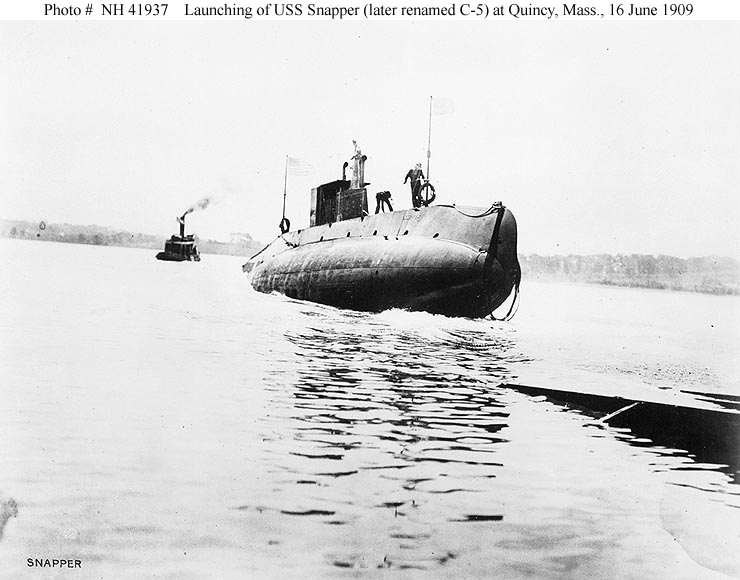 | 67k | Launching of the Snapper (SS-16) at the Fore River shipyard, Quincy, Massachusetts, 16 June 1909. | Courtesy of Howard I. Chapelle, Smithsonian Institution. USNHC photograph, # NH 41937. | |
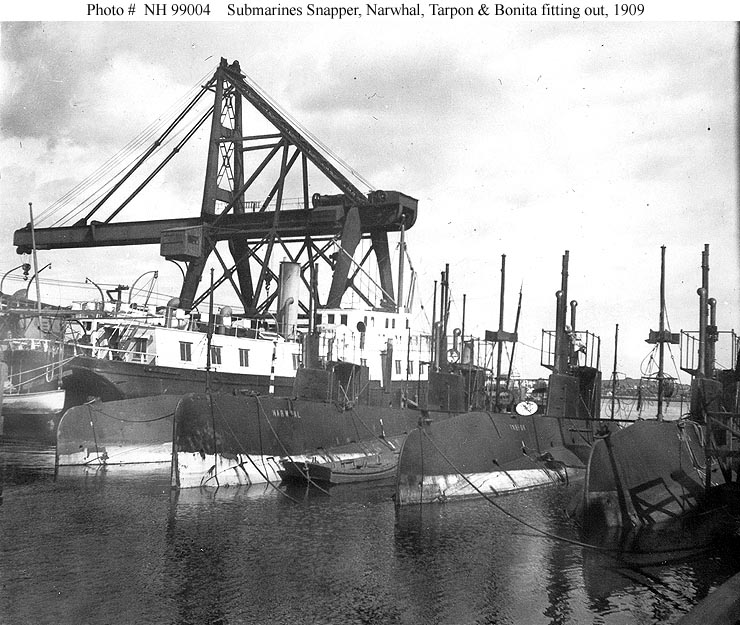 | 126k | From left to right: Snapper (SS-16); Narwhal (SS-17); Tarpon (SS-14); and Bonita (SS-15); Fitting out at the Fore River Shipyard, Quincy, Massachusetts, during the summer or fall of 1909. | Photograph # NH 99004 courtesy of the U.S. Naval Historical Center. | |
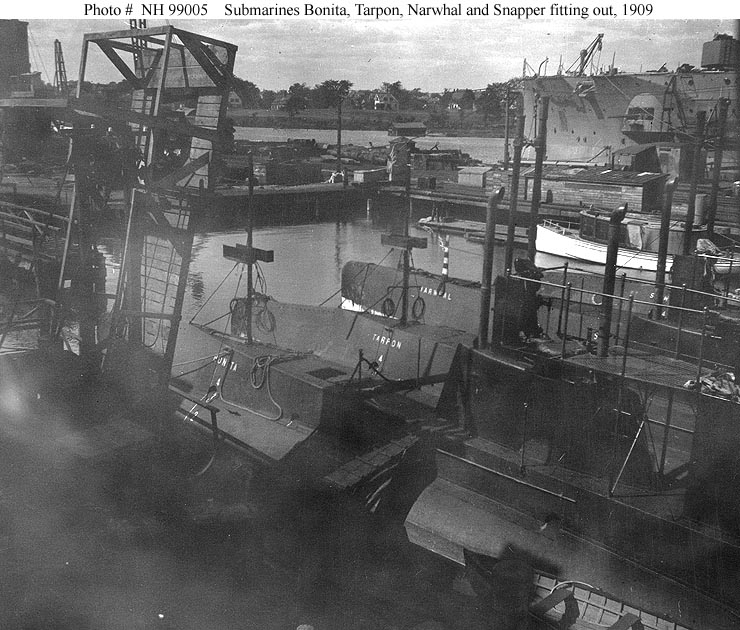 | 121k | From left to right: Bonita (SS-15); Tarpon (SS-14); Narwhal (SS-17); and Snapper (SS-16); Fitting out at the Fore River Shipyard, Quincy, Massachusetts, during the summer or fall of 1909. North Dakota (BB-29) is in the right background, also fitting out. | Photograph # NH 99005 courtesy of the U.S. Naval Historical Center. | |
 | 116k | Snapper (SS-16); outboard; and Grayling (SS-18), by the dock, fitting out at the Fore River Shipyard, Quincy, Massachusetts, during the summer or fall of 1909. | USNHC photograph, # NH 99006. | |
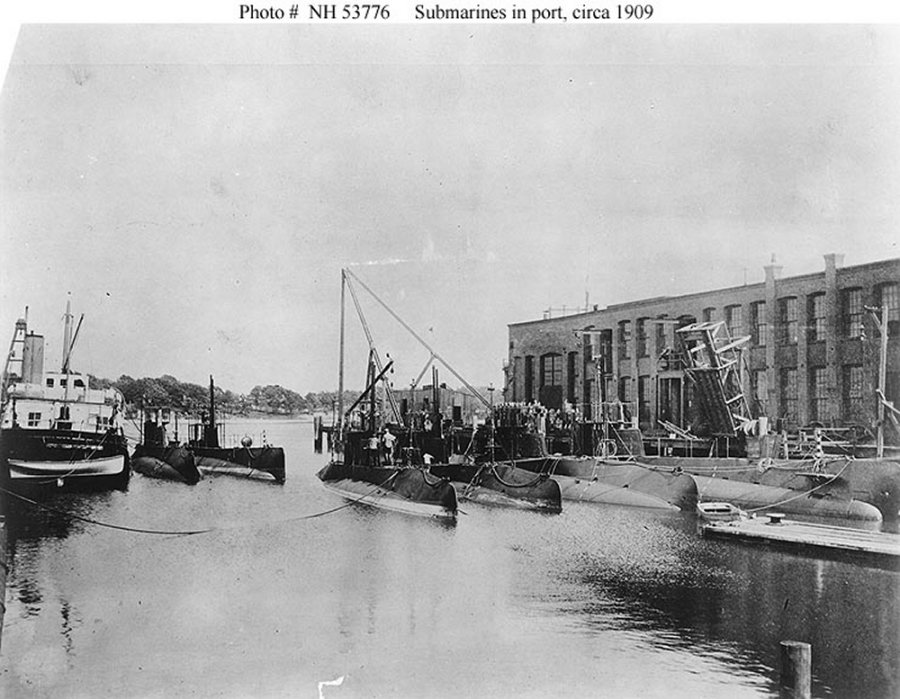 | 53k | Navy submarines in port, circa 1909. Possibly photographed at the Fore River Shipyard, Quincy, Massachusetts, these submarines are (from left to right): Tarpon (SS-14); either Narwhal (SS-17); or Salmon (SS-19); Snapper (SS-16); Stingray (SS-13); Bonita (SS-15); and Grayling (SS-18). | Photograph # NH 53776, courtesy of the U.S. Naval Historical Center. | |
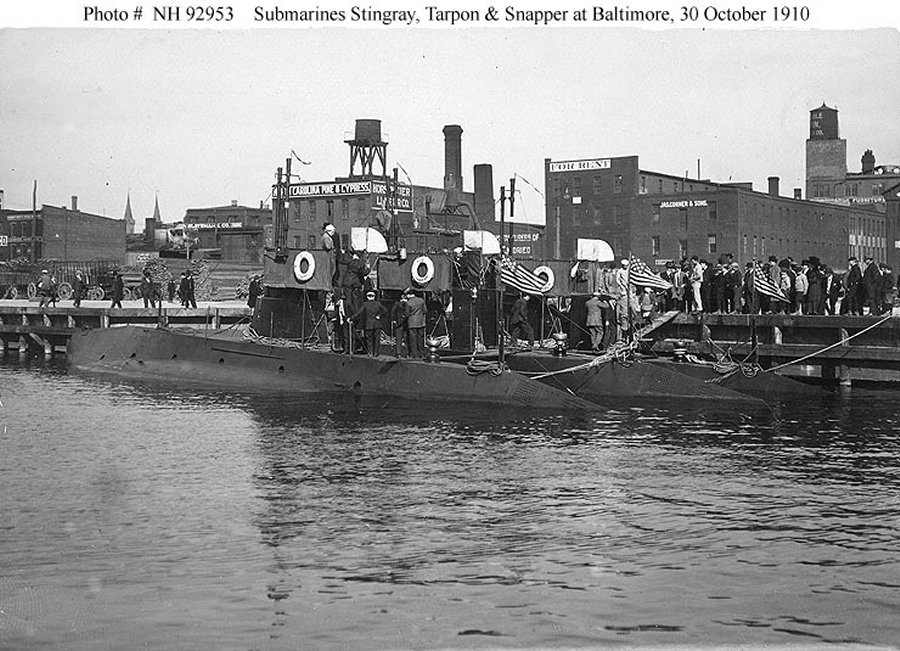 | 153k | Atlantic Fleet Submarines
at Baltimore, Maryland, on 30 October 1910.
These submarines are (from left to right): C-2 (SS-13); C-3 (SS-14); and C-5 (SS-16). Note their 13-star "boat" flags. | Photograph # NH 92953 courtesy of the U.S. Naval Historical Center. | |
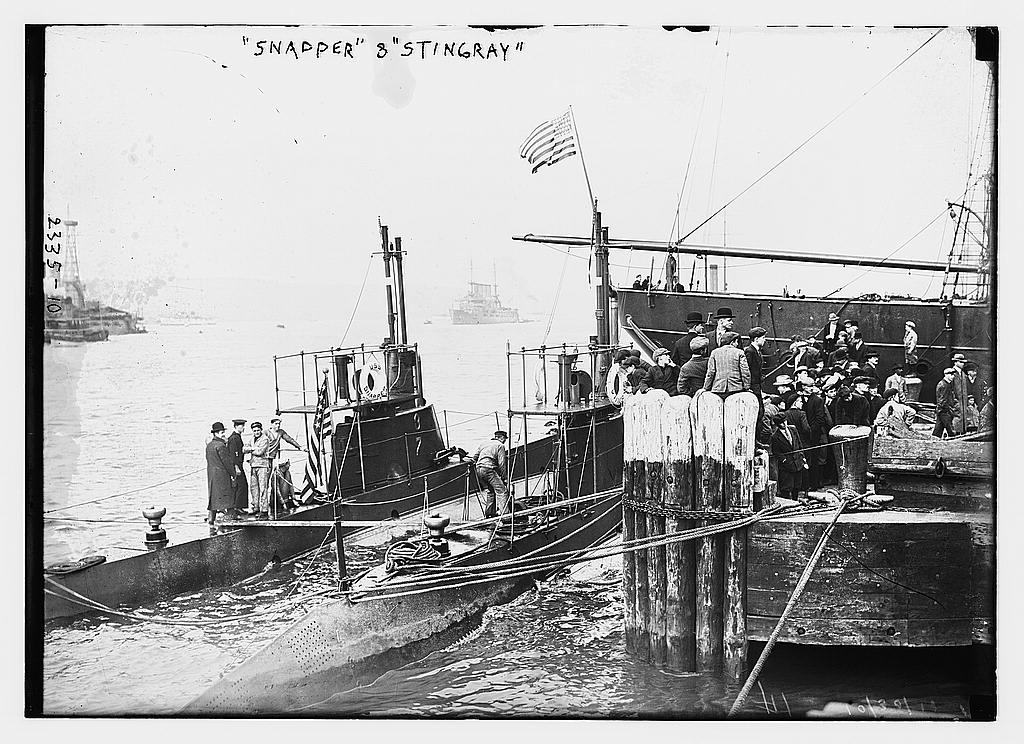 | 163k | Snapper (SS-16) & Stingray (SS-13) near the bow of their tender Severn between 1910 and 1915. | Digital ID # ggbain.09978, LC-B2-2335-10. Source: Library of Congress Prints and Photographs Division, from the George Grantham Bain Collection, courtesy of Tom Kermen. | |
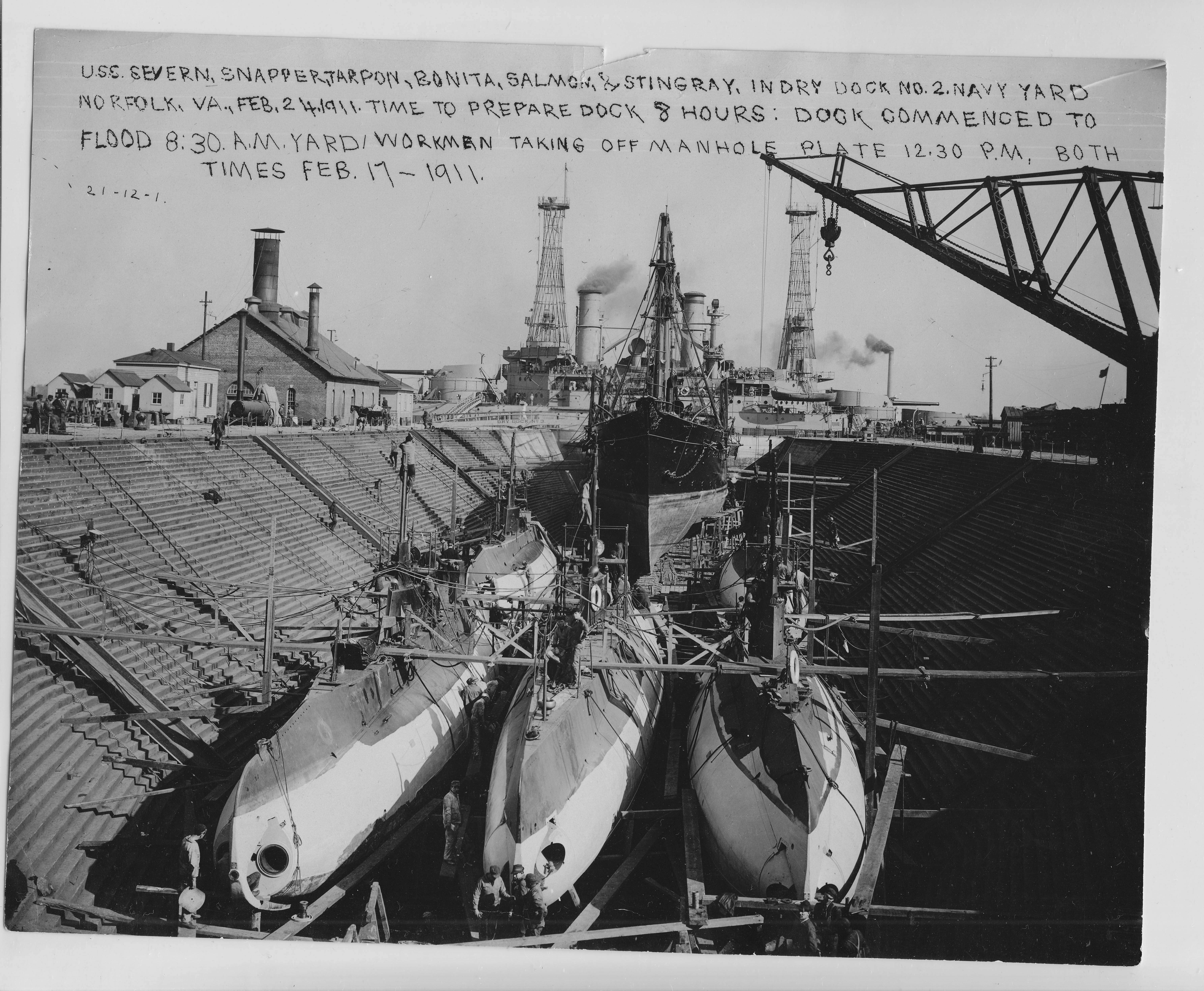 | 2.76k | Tender Severn, Snapper (SS-16), Tarpon (SS-14), Bonita (SS-15), Salmon (SS-19), Stingray (SS-13) in Dry Dock # 2, Navy Yard Norfolk VA., 24 February 1911. Time to prepare dock 8 hours: Dock commenced to flood 8:30 AM. Yard workmen taking off manhole plate 12:30 PM. Between 1 November 1910 and 12 January 1911, South Carolina (BB-26) voyaged to Europe and back with the 2d Battleship Division. This visit took her to Cherbourg, France, and Portland, England. Upon her return to Norfolk, she entered the navy yard for repairs, and then conducted tactics training and maneuvers off the New England coast. The South Carolina is the battleship in the background. | Partial text courtesy of DANFS. US National Archives photo from National Archives and Records Administration (NARA), College Park, Maryland, courtesy of Sean Hert. |
|
 | 2.47k | Tender Severn, Snapper (SS-16), Tarpon (SS-14), Bonita (SS-15), Salmon (SS-19), & Stingray (SS-13) in Dry Dock # 2, Navy Yard Norfolk VA., 24 February 1911. Time to prepare dock 8 hours: Dock commenced to flood 8:30 AM. Yard workmen taking off manhole plate 12:30 PM. both times. Note the # 32 on the sail of the Salmon. | US National Archives photo from National Archives and Records Administration (NARA), College Park, Maryland, courtesy of Sean Hert. | |
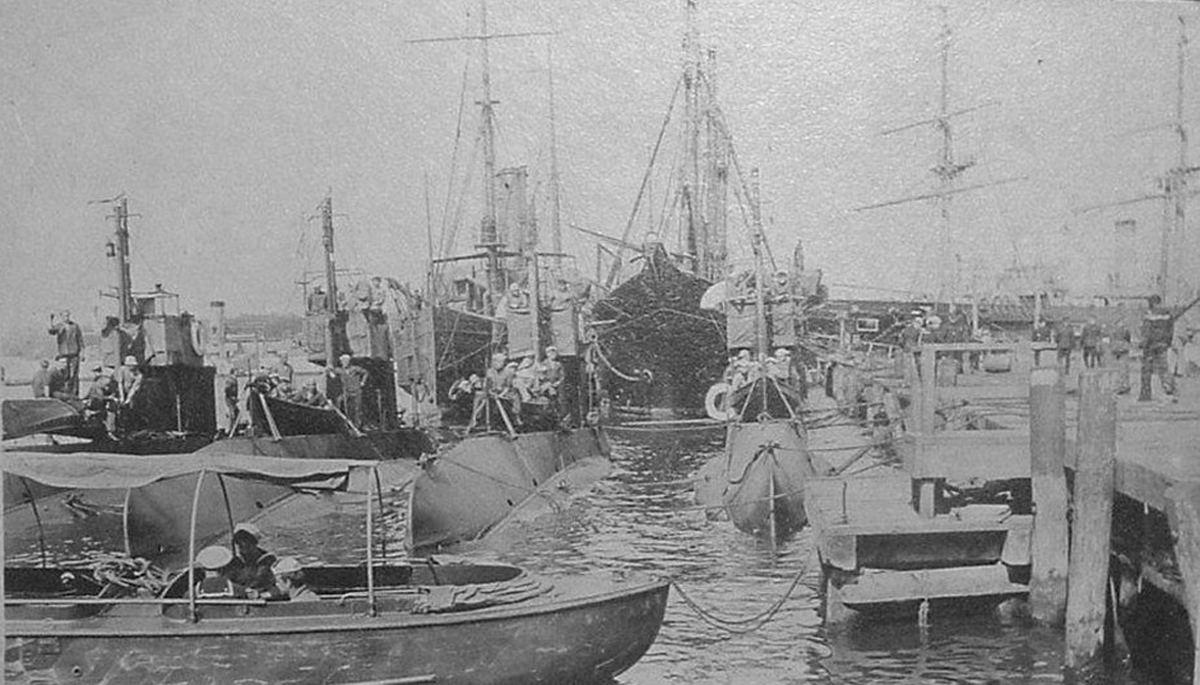 | 459k | Tender Severn with 4 C-boats & dinghies alongside, circa 1911. | Photo i.d. courtesy of Ric Hedman. USN photo courtesy of Tommy Trampp. |
|
 |
1.25k | In Wake of Craft That Cleaves the Depths Lie Many Dead Pioneers Experiments That Led Up to Wonderful Feat of a Squadron of American Submarines the Other Day Have Cost Hundreds of Lives and Millions of Money. | Embedded text courtesy of U.S. Submarines Through 1945, An Illustrated Design History by Norman Friedman. Naval Institute Press. PDF Image and text provided by Library of Congress, Washington, DC. Photo from New-York Tribune. (New York [N.Y.]) 1866-1924, 2 July 1911, Image 17, via chroniclingamerica.loc.gov. | |
 | 343k | C-5 (SS-16) underway, October 1912, during the naval review week off of New York City. | National Archives Identifier: 45513742 Local Identifier: 165-WW-338B-025 Photo courtesy of catalog.archives.gov | |
 0801818d |
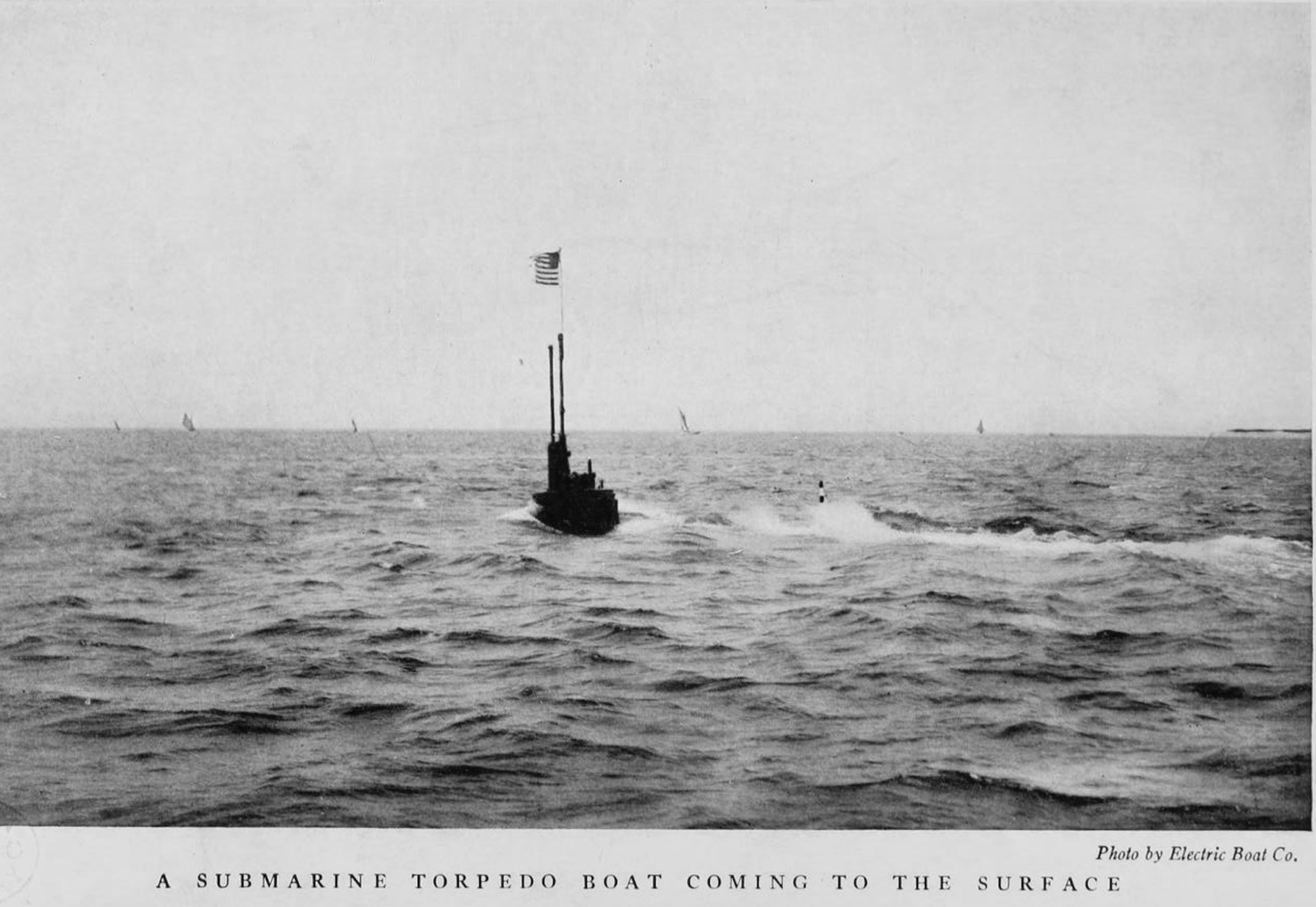
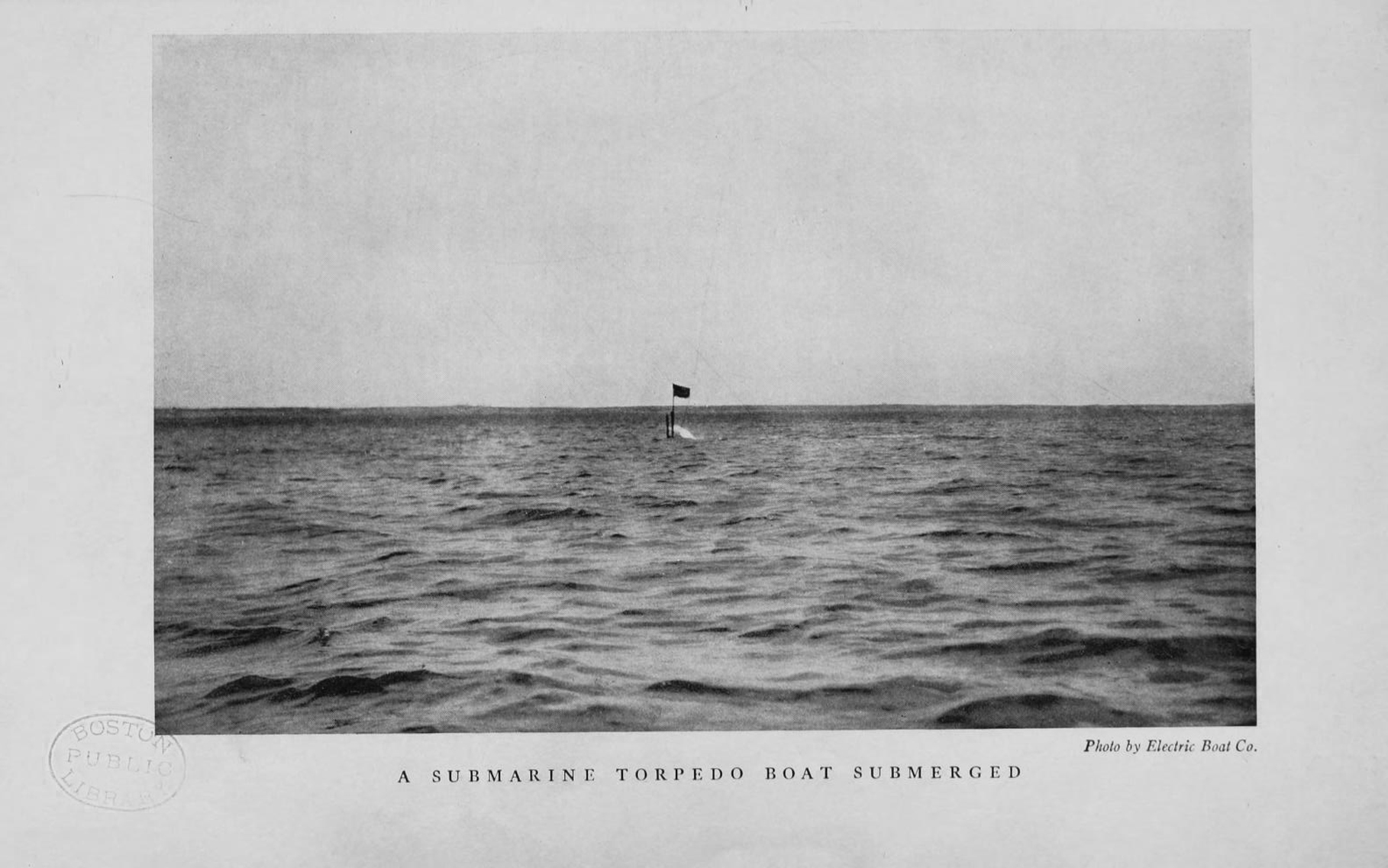
710k | A C or D-class boat diving, not surfacing, in spite of what the caption says, circa 1913. | Photo & text i.d. courtesy of Dave Johnston. Photos courtesy of Sponsors of the United States navy; Benham, Edith Wallace, comp; Hall, Anne Martin, comp 1797-1913, pg. 94, courtesy of Boston Public Library. |
|
 | 121k | First Division, Atlantic Submarine Flotilla with their crews posed on deck, while moored alongside their tender, (Severn), circa 1913. These submarines are (from left to right): C-4 (SS-15); unidentified submarine, possibly "D" class; C-5 (SS-16); and C-2 (SS-13). | USNHC photograph # NH 85090. | |
 |
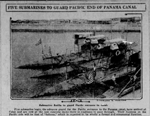
2.35k | UNCLE SAM'S SUBMARINES TO PROTECT PACIFIC END OF THE PANAMA CANAL. Washington, December 3. A submarine flotilla, consisting of the vessels C-1 (SS-9), C-2 (SS-13), C-3 (SS-14), C-4 (SS-15), and C-5 (SS-16) has been sent to Colon, to wait until a passage through the Panama canal is opened. Then the submarines will go through to the Pacific entrance of the canal and be permanently station there to guard it. The Atlantic entrance of the canal will be protected from the naval station at Guantanamo, Cuba. | Image and text provided by State Historical Society of North Dakota. Photo from Bismarck Daily Tribune. (Bismarck, Dakota [N.D.]) 1881-1916, 04 December 1913, Image 1, via chroniclingamerica.loc.gov. | |
 |
567k | SUBMARINES AT COLON FOR DEFENSE OF CANAL Four of the five submarines which, accompanied by a collier and the monitor Montauk, made the record breaking voyage from Guantanamo, Cuba, to Colon, Panama, where they are now anchored at the new concrete docks,waiting to pass through the canal. They will be used in the defense of the Pacific entrance to the canal. This is the first time that submarines have made such a long sea voyage. | Image and text provided by Arizona State Library, Archives and Public Records; Phoenix, AZ Photo from Bisbee Daily Review. (Bisbee, Ariz.) 1901-1971, 04 January 1914, Image 6, via chroniclingamerica.loc.gov. | |
 0800932 |
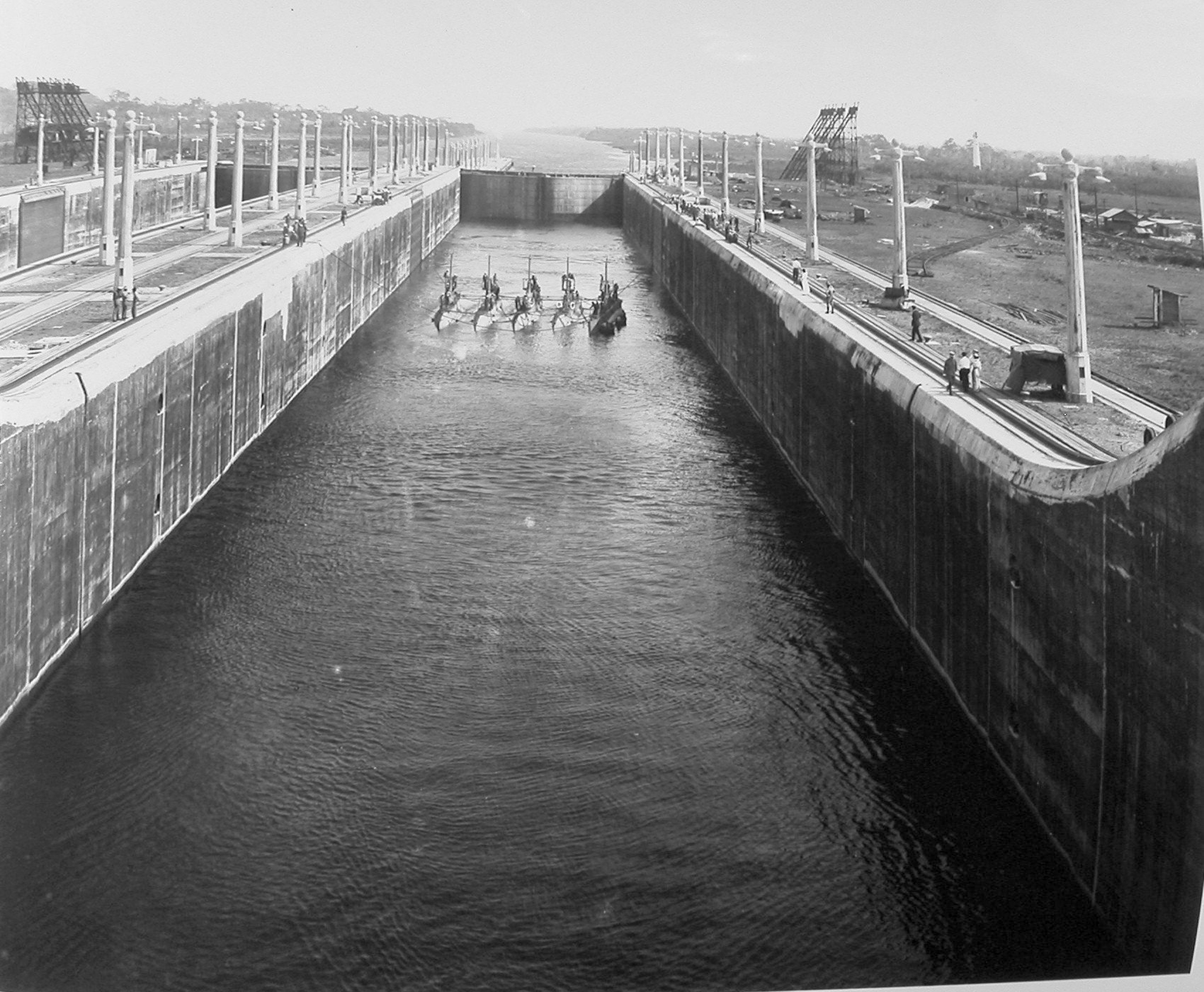
1.30k | Five Submarines in Lower East Chamber, Looking South, 9 March 1914. | National Archives Identifier: 100998702 Agency-Assigned Identifier: 185-G-2067 Photo courtesy of catalog.archives.gov |
|
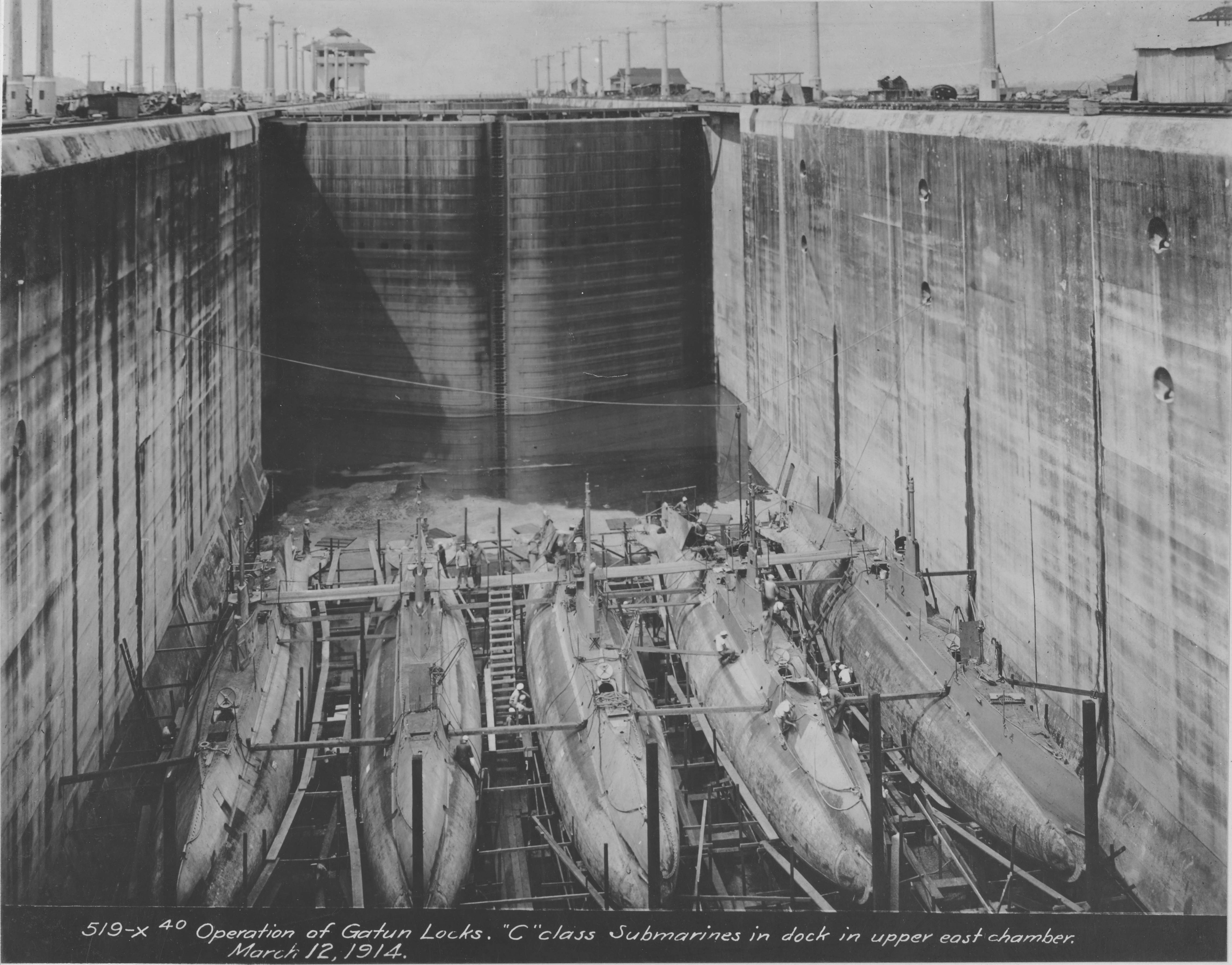 |
1.31k | C boats in Canal, 12 March 1914. From Left to right, C-1 (SS-9), [#13 on her conning tower]; C-2 (SS-13), [#15 on her conning tower]; C-3 (SS-14), [no visible number on her conning tower]; C-5 (SS-16), [#14 on her conning tower]; & C-4 (SS-15), [#12 on her conning tower]; | National Archives Identifier: 45513793 Local Identifier: 165-WW-338B-050 Photo courtesy of catalog.archives.gov |
|
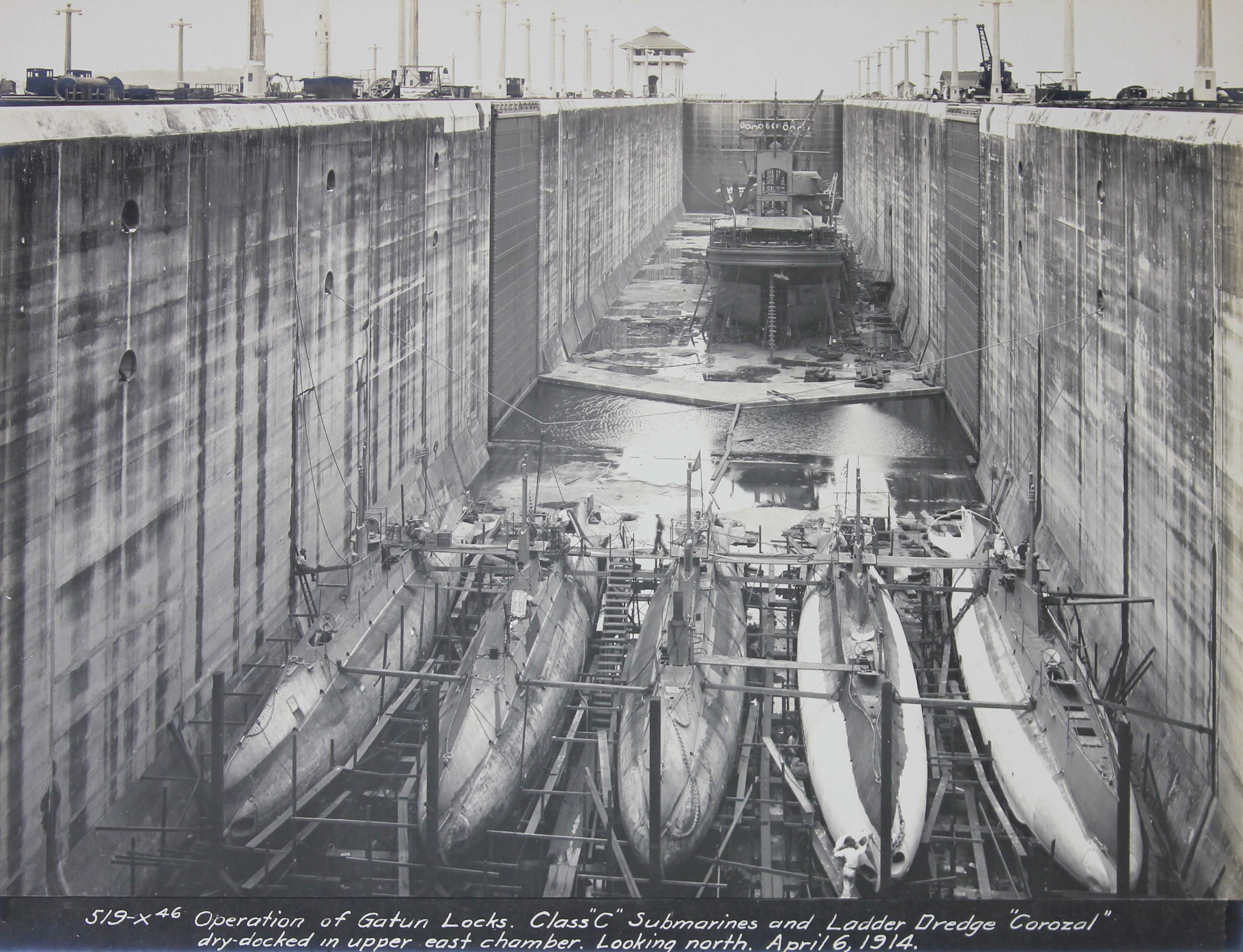 |
940k | Operation of Gatun Locks. Class C submarines and Ladder Dredge Corolzal dry docked in the upper east chamber. Looking North. 6 April 1914. From Left to right: C-1 (SS-9), [#13 on her conning tower]; & C-2 (SS-13), [#15 on her conning tower]. The next 2 boats can't be seen clearly, & the last boat boat on the right is C-4 (SS-15), [#12 on her conning tower]. | Photo by Ernest Hallen, from the digital collection of Ron Armstrong, author of The Panama Canal, the Invisible Wonder of the World Photo i.d. courtesy of Chuck Haberlein, Ric Hedman & David Johnston | |
 |
1.10k | Operation of the Gatun Locks. (Severn) (tender to the submarines) leaving lower lock under tow of electric locomotives. 15 April 1914. | Photo by Ernest Hallen, from the digital collection of Ron Armstrong, author of The Panama Canal, the Invisible Wonder of the World | |
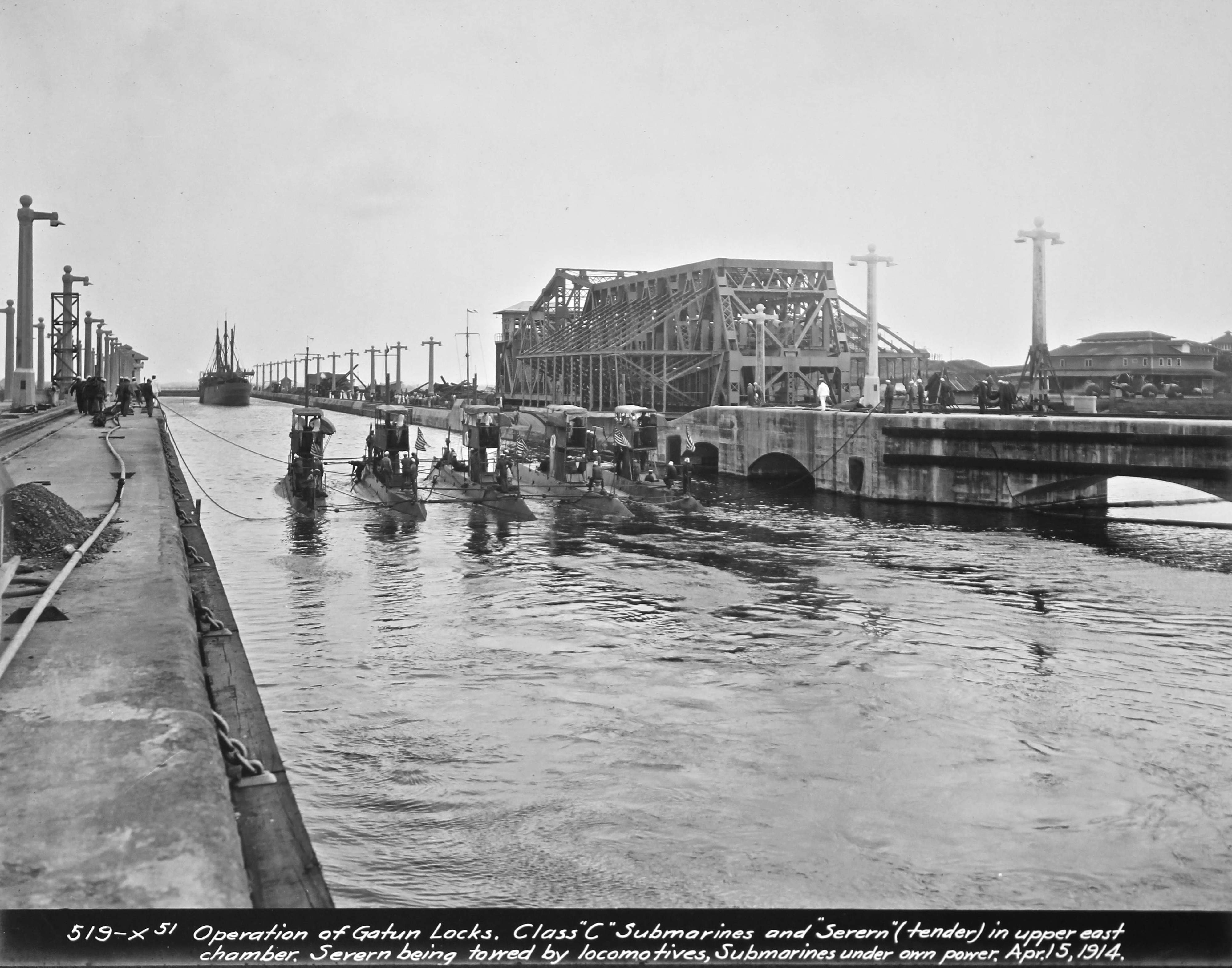 |
884k | Operation of the Gatun Locks. Class C submarines (Severn) (tender) in upper east chamber. (Severn) being towed by locomotives, submarines under own power. 15 April 1914. | Photo by Ernest Hallen, from the digital collection of Ron Armstrong, author of The Panama Canal, the Invisible Wonder of the World | |
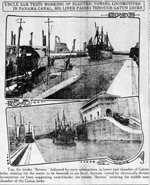 |
785k | UNCLE SAM TESTS WORKING OF ELECTRIC TOWING LOCOMOTIVES IN PANAMA CANAL; BIG LINER PASSES THROUGH GATUN LOCKS Top, the tender (Severn), followed by navy submarines, in lower east chamber of Gatun locks, waiting for the water to be lowered to sea level; bottom, towed by electrically-driven locomotives on lines suggesting switchbacks; the tender (Severn) entering the middle east chamber of the Gatun locks. | Image and text provided by University of Utah, Marriott Library. Photo from The Ogden Standard. (Ogden City, Utah) 1913-1920, 13 June 1914, 4 P.M. City Edition, Image 1, via chroniclingamerica.loc.gov. | |
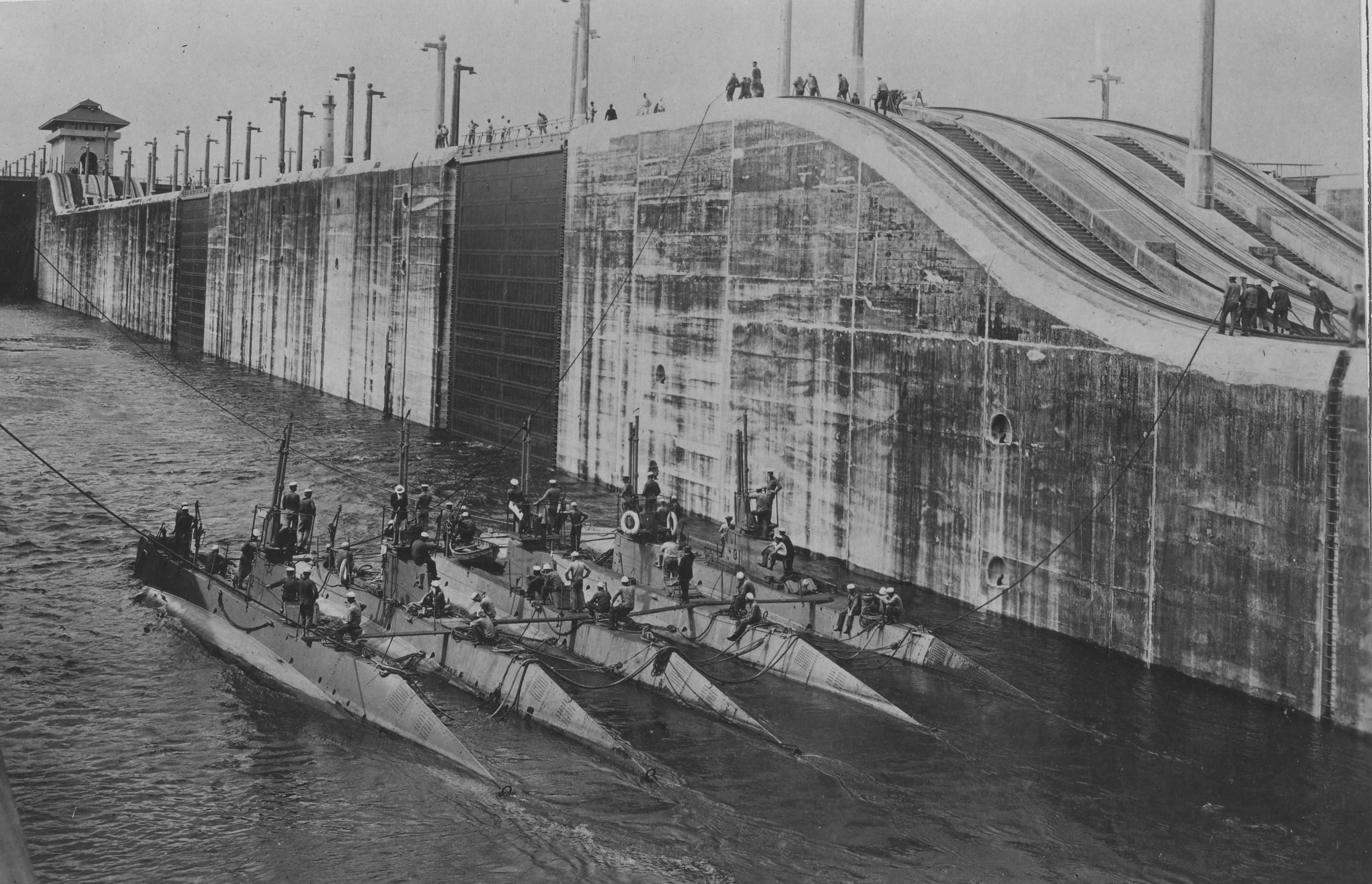 | 868k | C-Class submarines in the Gatun Locks, Panama Canal, circa 1914. The submarines present from Left to right are:C-4 (SS-15), [#12 on her conning tower], C-5 (SS-16), [#14 on her conning tower]; C-3 (SS-14), [no visible number on her conning tower]; C-2 (SS-13), [#15 on her conning tower]; C-3 (SS-14), [no visible number on her conning tower]; C-5 (SS-16), [#14 on her conning tower]; & C-1 (SS-9), [#13 on her conning tower]. | Photo i.d. courtesy of Ric Hedman. National Archives Identifier: 45513799 Local Identifier: 165-WW-338B-053. Photo courtesy of catalog.archives.gov | |
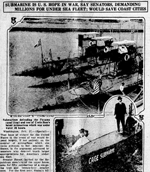 |
2.42k | SUBMARINE IS U. S. HOPE IN WAR, SAY SENATORS, DEMANDING MILLIONS FOR UNDER SEA FLEET; WOULD SAVE COAST CITIES Submarines defending the Panama canal (top) and one of Uncle Sam's latest submarines which was under water 36 hours. | Image and text provided by State Historical Society of North Dakota. Photo from Bismarck Daily Tribune. (Bismarck, Dakota [N.D.]) 1881-1916, 27 February 1915, Image 1, via chroniclingamerica.loc.gov. | |
 | 118k | C-Class submarines alongside Charleston (C-22) in Panama Canal Zone waters, circa 1916-1917.
These submarines are (from left to right): C-5 (SS-16); C-2 (SS-13); and C-3 (SS-14). Photographed by Pickard & Zell. Note the small rowboat, and Sailors washing clothing on the float between the cruiser and the submarines. | USNHC photograph # NH 100491. | |
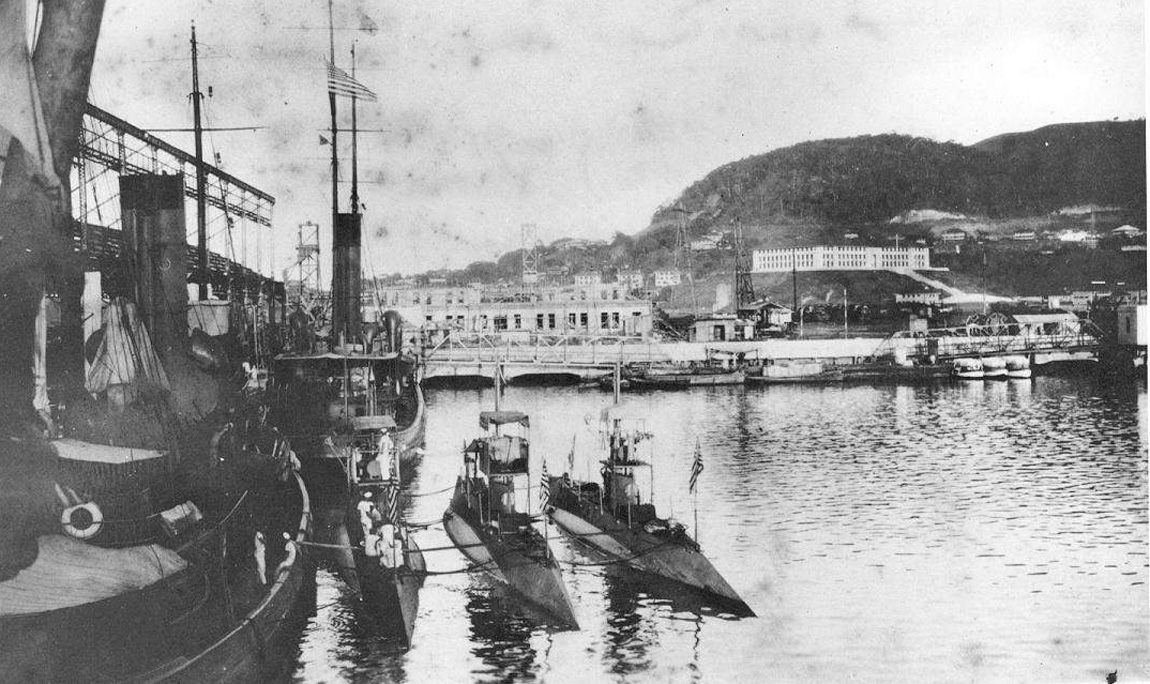 | 301k | Scenic port scene showing the Octopus (SS-9), C-2 (SS-13) & C-5 (SS-16) tied up alongside their tender with other vessels. | USN photo courtesy of Scott Koen & ussnewyork.com. | |
 | 145k | C-5 (SS-16) bow view, date and location unknown. | USN photo # 19-N-14893, from the National Archives and Records Administration (NARA), courtesy of Daniel Dunham. | |
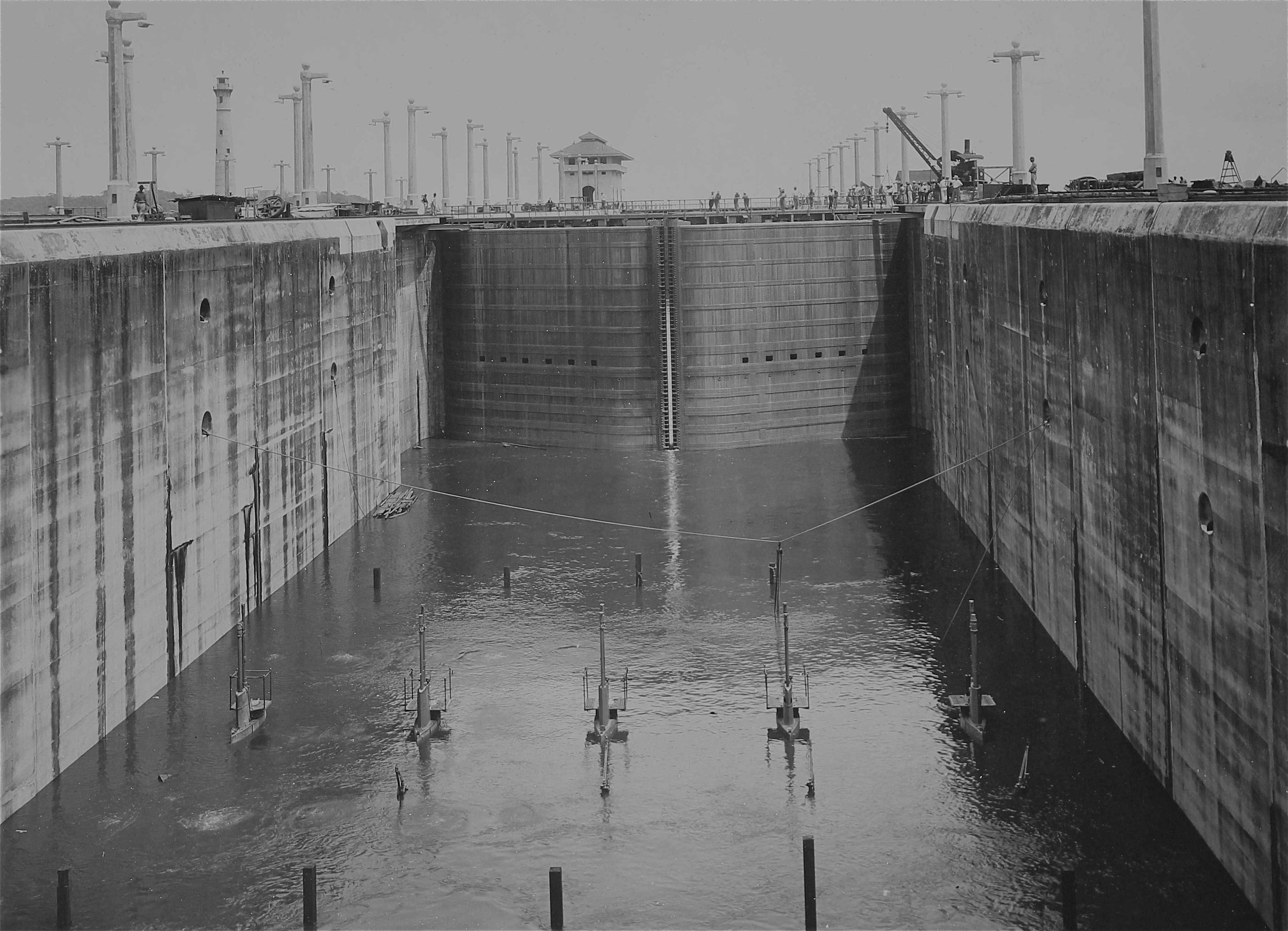 |
824k | Five United States submersibles in the Gatun lock on the Atlantic side of the canal. This photo is of a series that appears in the newspaper article below. | Photo by Ernest Hallen, from the digital collection of Ron Armstrong, author of The Panama Canal, the Invisible Wonder of the World Photo i.d. courtesy of Chuck Haberlein, Ric Hedman & David Johnston | |
 |
489k | SUBMARINES HELP PROTECT CANAL ZONE Five United States submersibles in the Gatun lock on the Atlantic side of the canal. Extraordinary precautions have been taken to guard the waterway. All Germans in the employ of the government were dismissed immediately when we broke with the kaiser. | Image and text provided by Arizona State Library, Archives and Public Records; Phoenix, AZ. Photo from Tombstone Epitaph. (Tombstone, Ariz.) 1887-current, 25 February 1917, WEEKLY EDITION, Image 1, via chroniclingamerica.loc.gov. | |
 |
728k | Coco Solo Submarine Base Oil Store House, 11 December 1917. The submarines C-2 (SS-13), C-3 (SS-14), C-4 (SS-15); and C-5 (SS-16) appear in the upper left. | Photo by Ernest Hallen, from the digital collection of Ron Armstrong, author of The Panama Canal, the Invisible Wonder of the World | |
View the Snapper / C-5 (SS-16)
DANFS history entry located on the Haze Gray & Underway Web Site.
Crew Contact And Reunion Information
Not Applicable to this Vessel
Additional Resources and Web Sites of Interest
PigBoats.COM TM, a Historic Look at Submarines
| Back To The Main Photo Index | Back To the Submarine Index |
| Problems and site related matters, E-mail Webmaster |
| This page is created by Gary Priolo and maintained by Michael Mohl All Pages © 1996 - 2025 NavSource History |