


D Class Submarine: Laid down, 16 April 1908, at Fore River Shipbuilding Co., Quincy, MA.; Launched, 8 April 1909; Commissioned USS Narwhal, 23 November 1909; Renamed USS D-1, 17 November 1911; Decommissioned and struck from the Naval Register, 8 February 1922, at the Philadelphia Navy Yard, Philadelphia, PA.; Final Disposition, sold for scrapping, 5 June 1922. Specifications: Displacement, surfaced 238 t., submerged 275 t.; Length 105' 4"; Beam 13' 11"; Draft 10' 7"; Speed, surfaced 10.5 kts, submerged 9 kts; Depth Limit 200'; Complement 1 Officer, 14 Enlisted; Armament, two 18" torpedo tubes, four torpedoes; Propulsion, gasoline electric, Craig Shipbuilding Co. gasoline engines, 250 hp, Fuel Capacity 1,880 gal., Electro Dynamic Co, electric motors, 150 hp, Battery Cells 60, single propeller.
| Click On Image For Full Size | Size | Image Description | Source | |
|---|---|---|---|---|
 | 81k | Contemporary newspaper clipping concerning the launching of the submarines Stingray (SS-13), Tarpon (SS-14) and Narwhal (SS-17) at the Fore River Shipyard on 8 April 1909. The piece also identifies the "boat"'s sponsors, Miss Elizabeth Stevens (Stingray), Miss Katherine E. Theiss (Tarpon) and Mrs. G.C. Davison (Narwhal). Mrs. G.C. Davison was the wife of Gregory C. Davison, who would later become a Vice President of Electric Boat and have a Destroyer named after him, and the daughter of Admiral Edwin M. Shepard. |
Photograph # NH 99000 courtesy of the U.S. Naval Historical Center. Collection of the Society of Sponsors of the United States Navy. | |
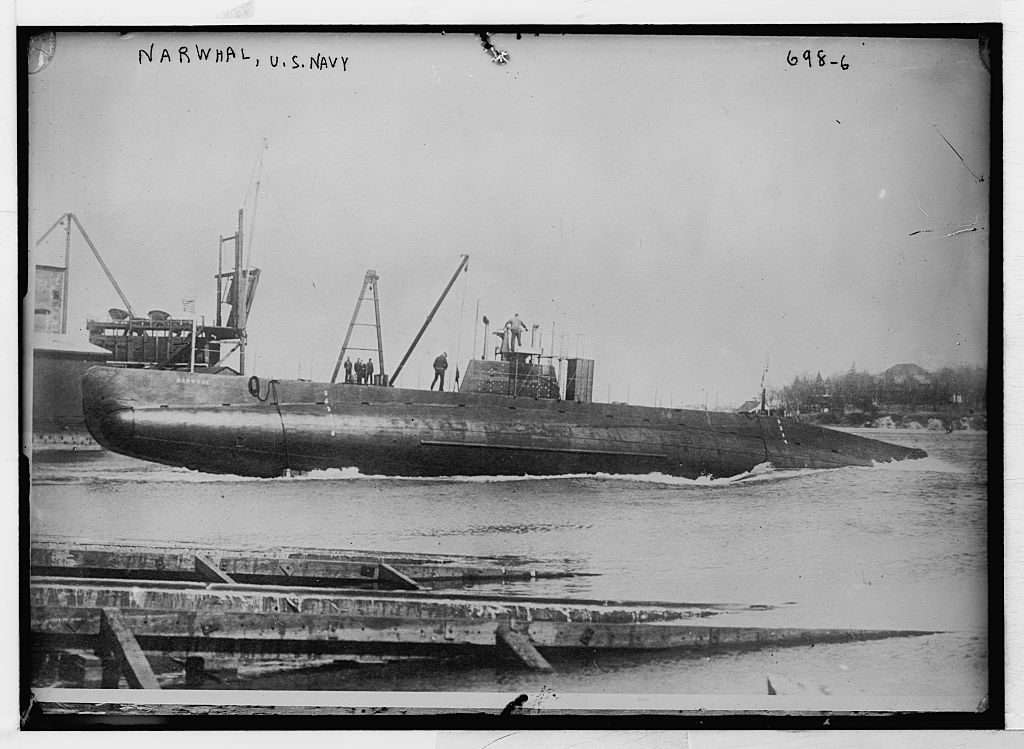 |
115k | Narwhal (SS-17) slides into the water, during her launch at the Fore River Shipbuilding Co. Yard, Quincy, MA on 8 April 1909. | Digital ID # ggbain 03337v, LC-B2-698-6. Source: Library of Congress Prints and Photographs Division, from the George Grantham Bain Collection, courtesy of Tom Kermen. | |
 |
700k | The new United States submarine, Narwhal (SS-17) of the Holland electric type, can now lay claim to the "queen of the underwater world," having successfully passed every test of the navy department and established a record for speed, which makes her the fastest as well as the largest submarine in the world. After making 13 nautical miles, surface speed, she was submerged and made 'a world's record for submerged speed. To crown all, she has recently established a new record for sustained surface speed at sea by running 300 nautical miles in 24 hours, making no stop in that time. That exhaustive trial was made between Cape Cod and Cape Ann, with two of the naval trial board officers, Smith and Armstrong, aboard. She is shortly to have a 200 foot underwater submergence test, north of Race point. Great things are also expected of the Tarpon (SS-14) & Stingray (SS-13), boats of the Narwhal type, but in smaller size. |
Image and text provided by Arizona State Library, Archives and Public Records; Phoenix, AZ. from the Bisbee Daily Review. (Bisbee, Ariz.) 1901-1971, 04 November 1909, Image 1 courtesy of chroniclingamerica.loc.gov. National Archives Identifier: 55174142 Local Identifier: 111-SC-6664 Photo courtesy of catalog.archives.gov | |
 |
127k | Port side view of the D-1 (SS-17) circa 1909, probably during builder's trials. | USN photo courtesy of ussubvetsofwwii.org. | |
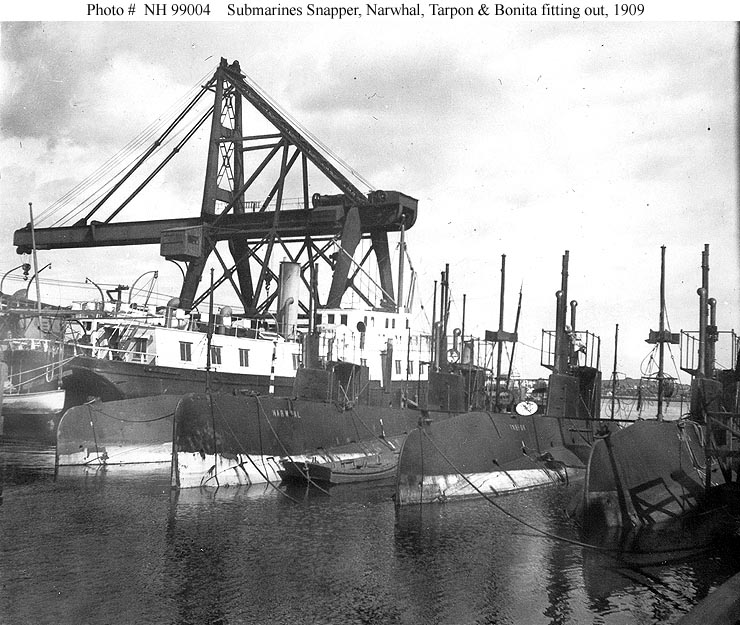 | 126k | From left to right: Snapper (SS-16); Narwhal (SS-17); Tarpon (SS-14); and Bonita (SS-15); Fitting out at the Fore River Shipyard, Quincy, Massachusetts, during the summer or fall of 1909. | Photograph # NH 99004 courtesy of the U.S. Naval Historical Center. | |
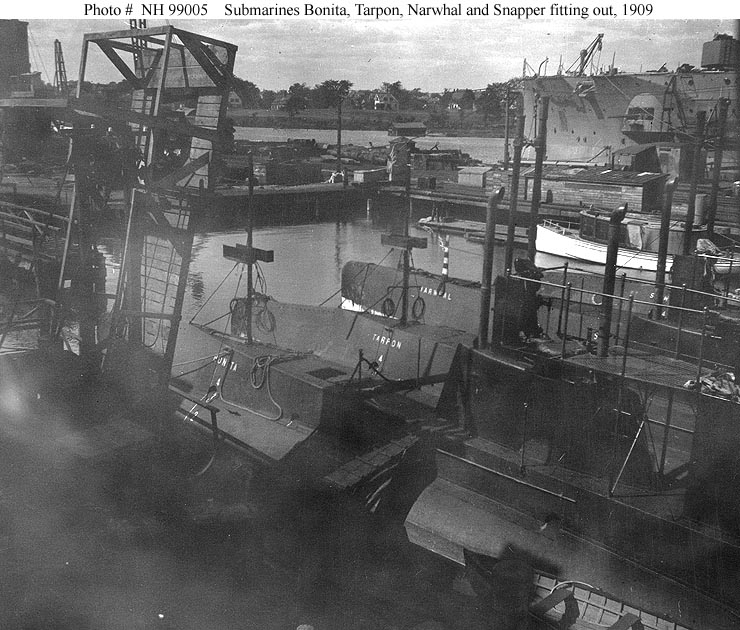 | 121k | From left to right: Bonita (SS-15); Tarpon (SS-14); Narwhal (SS-17); and Snapper (SS-16); Fitting out at the Fore River Shipyard, Quincy, Massachusetts, during the summer or fall of 1909. North Dakota (BB-29) is in the right background, also fitting out. | Photograph # NH 99005 courtesy of the U.S. Naval Historical Center. | |
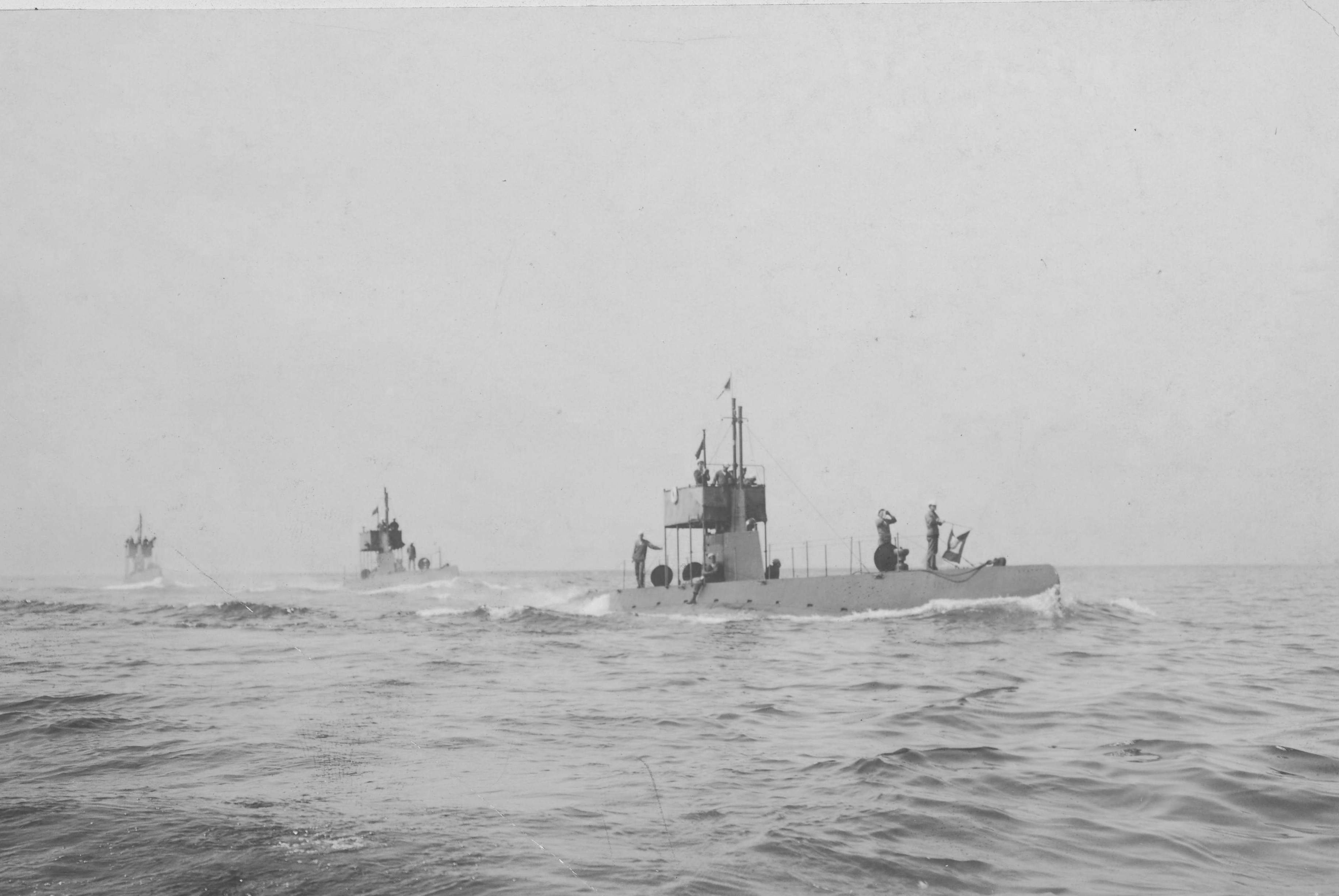 |
399k | Submarines Grayling (SS-18) in tandem (in no order) Narwhal (SS-17) & Salmon (SS-19), probably summer 1910 or 1911. | Photo i.d. courtesy of Ric Hedman. Photographer: Enrique Muller Jr. National Archives Identifier: 45513797 Local Identifier: 165-WW-338B-052. Photo courtesy of catalog.archives.gov | |
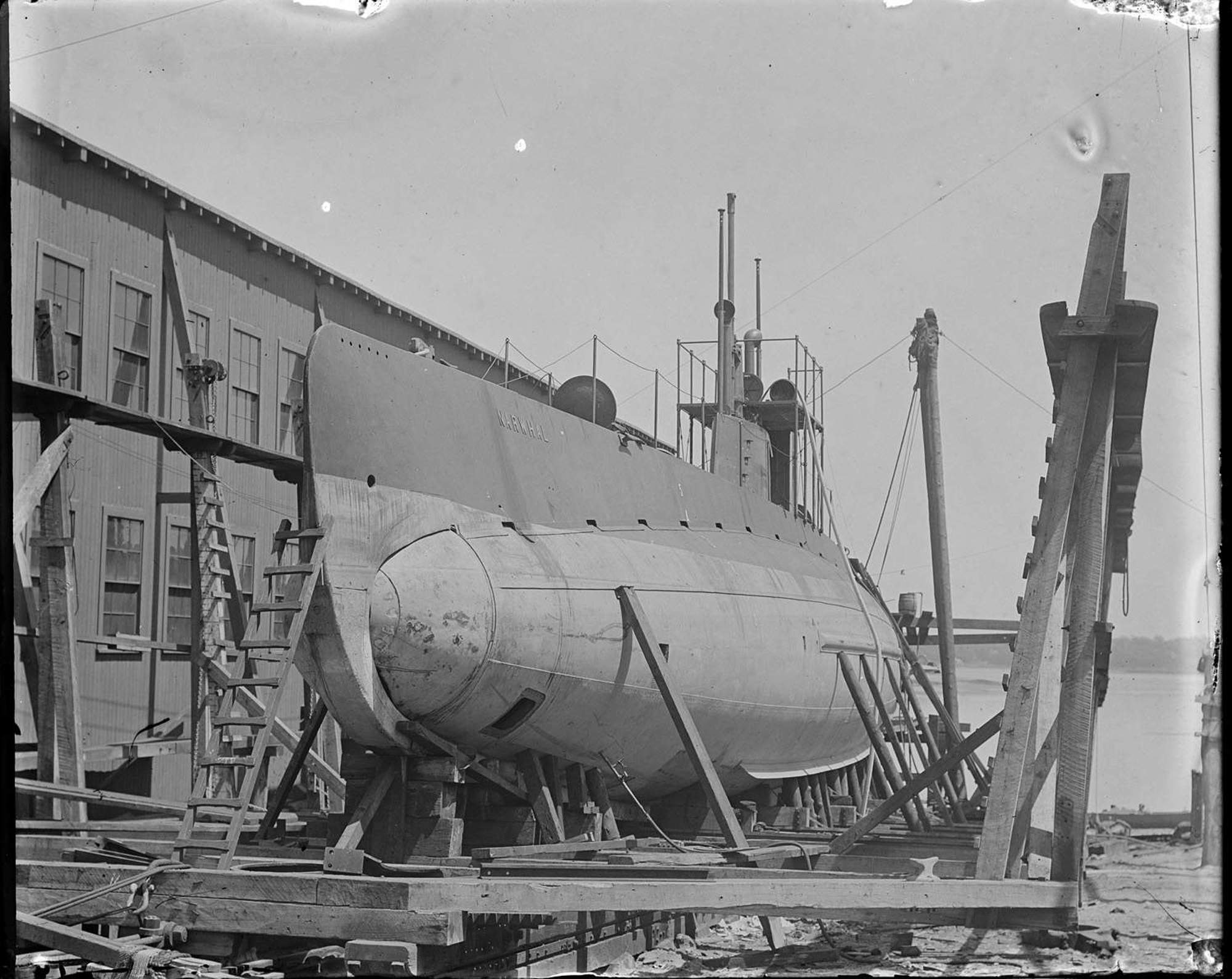 |
268k | Narwhal (SS-17) high and dry with no commissioning flag or other, circa 1909-1911 before her name change to D-1 on 17 November 1911. | Photo courtesy of the Boston Public Library, Leslie Jones Collection via Sean Hert & flickr.com | |
 | 140k | The internal helm stand of a voice tube on a D-class boat (SS-17/18/19). The watertight door to the torpedo room is seen to the right of the helm wheel. The helm wheel motor is attached via gearing to the transmission shaft, which ran aft to the rudder linkage. Directly above the helm wheel is a mirror into which the helmsman looked to obtain a view of the magnetic compass repeater above. Normal steering was by an electric switch that operated the motor. | The photo is on page 42 of "United States Submarines" by the Naval Submarine League. Photo submitted by Darryl L. Baker. | |
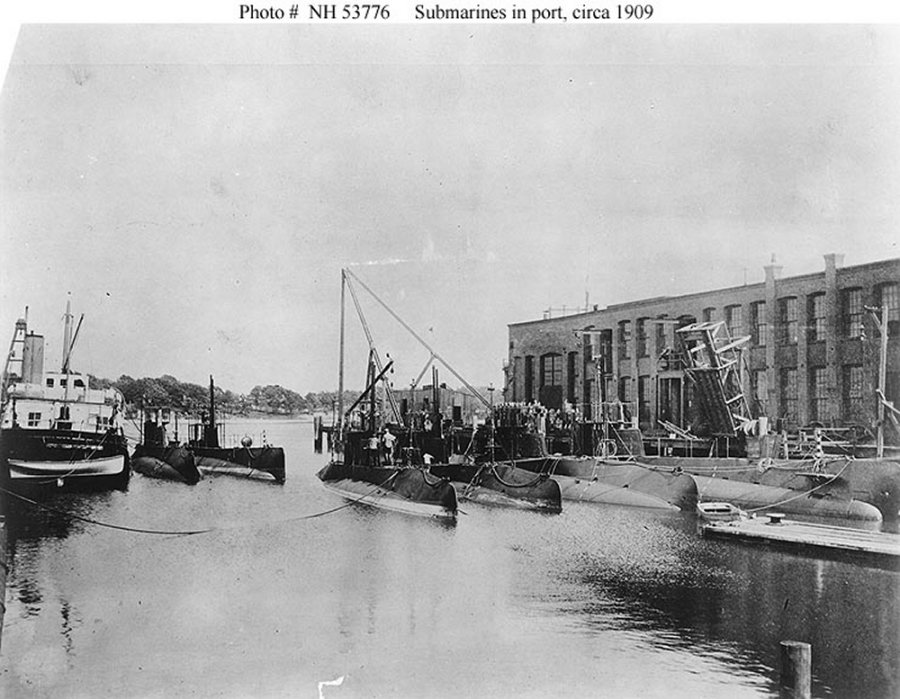 | 53k | Navy submarines in port, circa 1909. Possibly photographed at the Fore River Shipyard, Quincy, Massachusetts, these submarines are (from left to right): Tarpon (SS-14); either Narwhal (SS-17); or Salmon (SS-19); Snapper (SS-16); Stingray (SS-13); Bonita (SS-15); and Grayling (SS-18). | Photograph # NH 53776, courtesy of the U.S. Naval Historical Center. | |
 |
73k | Fine screen halftone reproduction of a photograph of Narwhal (SS-17) underway, circa 1909-1911. Copied from "The New Navy of the United States", by N.L. Stebbins, (New York, 1912). | Photograph # NH 99123 courtesy of the U.S. Naval Historical Center. Donation of David Shadell, 1987. | |
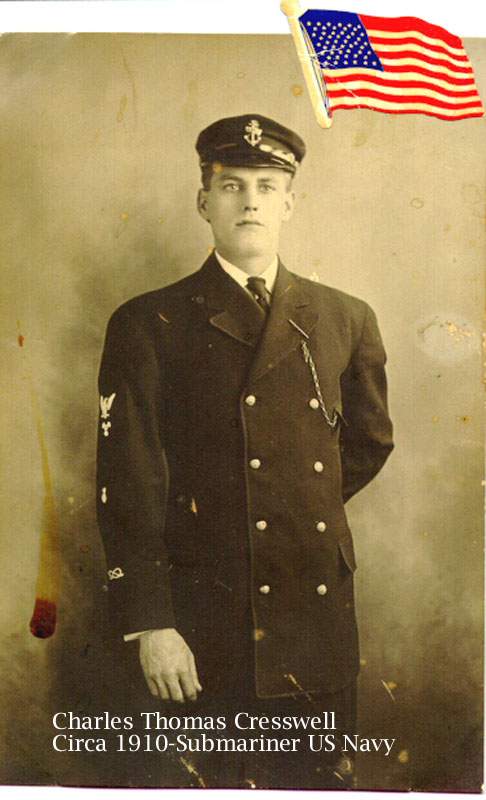 |
45k | Charles Cresswell, crew member of the Narwhal (SS-17), circa 1910. | Courtesy of his grandson, Charles Cresswell. | |
 |
1.25k | In Wake of Craft That Cleaves the Depths Lie Many Dead Pioneers Experiments That Led Up to Wonderful Feat of a Squadron of American Submarines the Other Day Have Cost Hundreds of Lives and Millions of Money. | Embedded text courtesy of U.S. Submarines Through 1945, An Illustrated Design History by Norman Friedman. Naval Institute Press. PDF Image and text provided by Library of Congress, Washington, DC. Photo from New-York Tribune. (New York [N.Y.]) 1866-1924, 2 July 1911, Image 17, via chroniclingamerica.loc.gov. | |
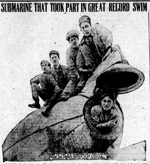 |
528k | SUBMARINE THAT TOOK PART IN GREAT RECORD SWIM | Image and text provided by University of Hawaii at Manoa; Honolulu, HI. Photo from Evening Bulletin. (Honolulu [Oahu, Hawaii) 1895-1912, 22 July 1911, 3:30 EDITION, Image 17, via chroniclingamerica.loc.gov. | |
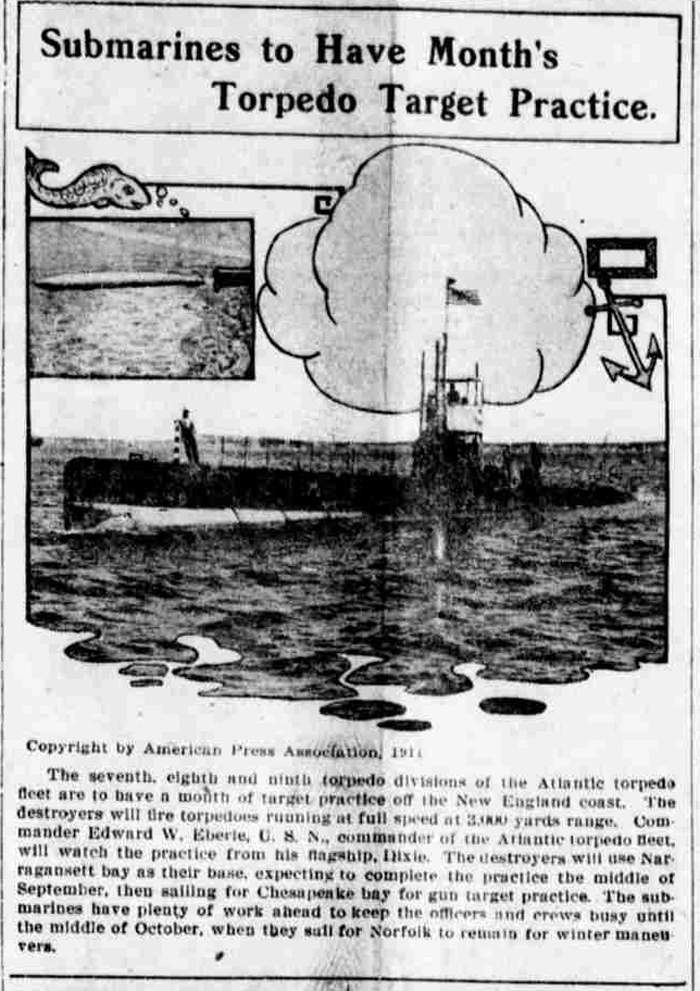 |
103k | Submarines to Have Month's Torpedo Practice | Photo from Logan Republican , Cache County, Utah, 1902-1924, 31 August 1911, Image 1, via chroniclingamerica.loc.gov. | |
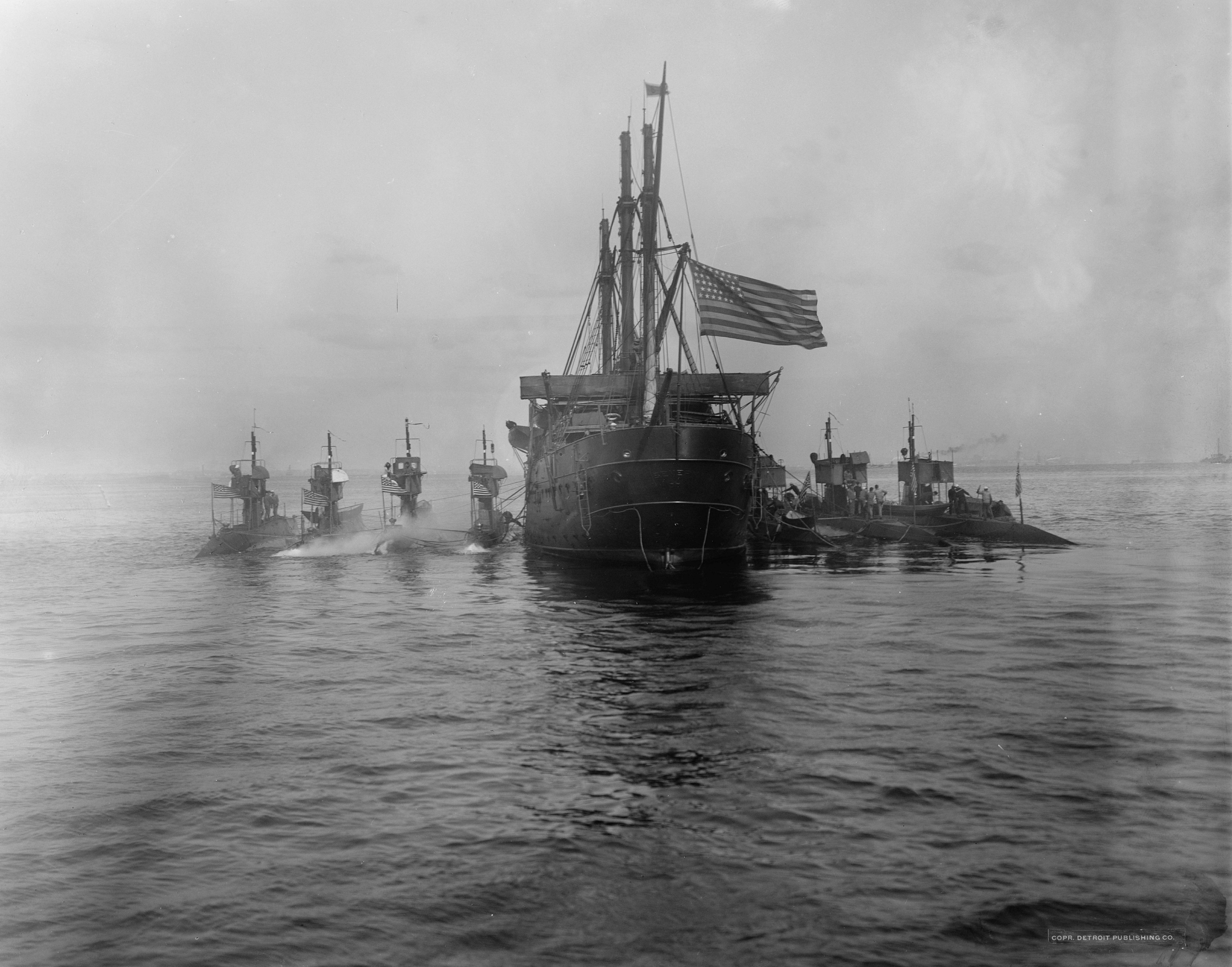 |
2.19k | Submarines and their tender The time frame is circa pre-November 1911. Location is possibly New York Harbor. The picture shows the Severn with 4 of the C class submarines lying along her port side, Tarpon (SS-14), Octopus (SS-9), Bonita (SS-15), and Stingray (SS-13) and what are most likely all the D class (in no particular order) on her starboard side: Narwhal (SS-17), Grayling (SS-18) & Salmon (SS-19). | Photo i.d. & text courtesy of Ric Hedman. Photo from loc.gov | |
 |
656k | SUBMARINES IN THE GREAT NAVAL REVIEW. NEXT to the big battleships, the submarines attracted the most attention at the recent review of the Atlantic fleet in the Hudson. The photograph shows the submarine D-1 (SS-17) with crew at attention as President Taft on the yacht Mayflower passed up the line. |
Image and text provided by University of Nebraska-Lincoln Libraries, Lincoln, NE. Photo from The North Platte Semi-Weekly Tribune. (North Platte, Neb.) 1895-1922, 05 November 1912, Image 7, via chroniclingamerica.loc.gov. | |
 0801818d |
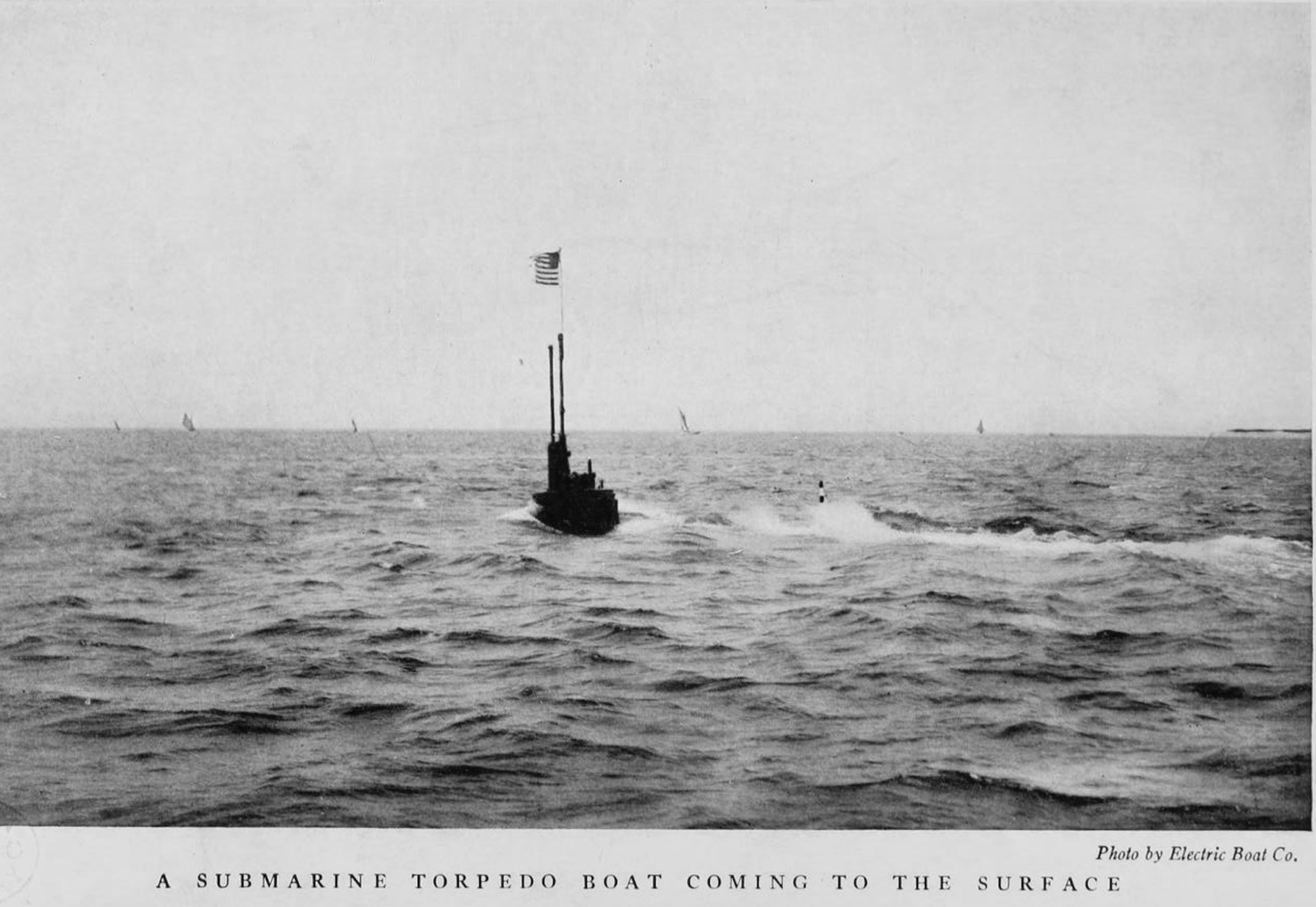
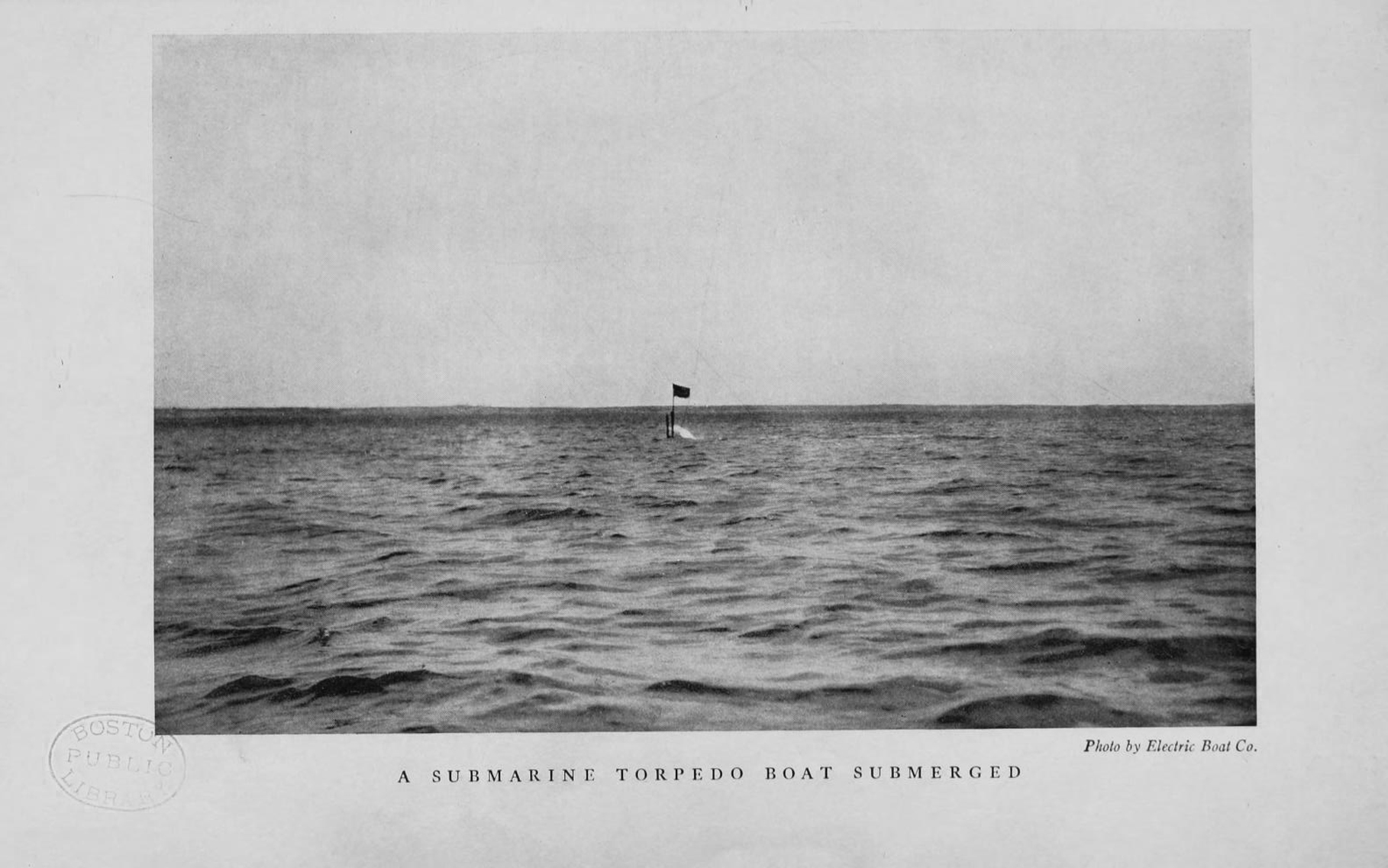
710k | A C or D-class boat diving, not surfacing, in spite of what the caption says, circa 1913. | Photo & text i.d. courtesy of Dave Johnston. Photos courtesy of Sponsors of the United States navy; Benham, Edith Wallace, comp; Hall, Anne Martin, comp 1797-1913, pg. 94, courtesy of Boston Public Library. |
|
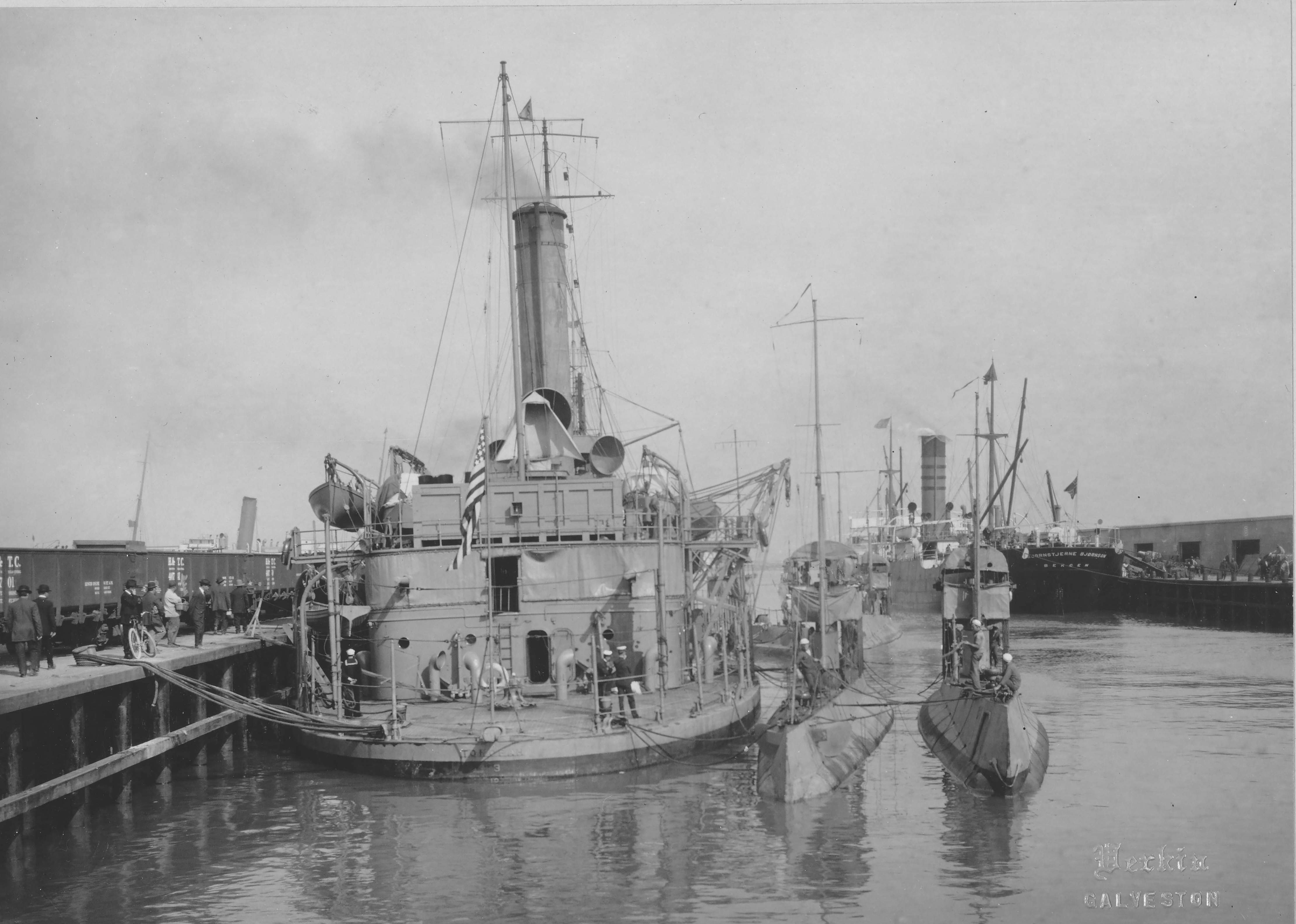 |
699k | Tonopah (M-8) with 2 submarines alongside in Galveston, Texas, the date is most likely February of 1914. The submarine on the left is an E-boat (SS-24 /25), boat to the right is D-1 (SS-17). There are two unknown boats behind them. | Photo i.d. courtesy of Ric Hedman. Photographer: Paul Verkin. National Archives Identifier: 45513822 Local Identifier: 165-WW-338B-64. Photo courtesy of catalog.archives.gov | |
 0801816 |
1.04k | A D class submarine loading torpedoes, circa 1915-20. | Photo courtesy of loc.gov, courtesy of the Bain News Service. Reproduction Number LC-DIG-ggbain-24779. | |
 0801817 |
2.35k | Canvas bridge over # 33. | Photo courtesy of loc.gov, courtesy of the National Photo Company. Reproduction Number LC-DIG-npcc-19751. | |
 |
614k | SUBMARINES TO DEFEND BIG CITY IN WAR GAMES In the huge naval maneuvers around New York in June, submersibles will be pitted against Dreadnought. |
Image and text provided by Library of Congress, Washington, DC. Photo & text by The Washington Herald. (Washington, D.C.) 1906-1939, 18 April 1915, PICTORIAL SECTION, Image 28, courtesy of chroniclingamerica.loc.gov. | |
 | 377k | "U.S. Submarines awaiting Orders" Halftone reproduction, printed on a postal card, of a photograph of five submarines nested together prior to World War I. The three "boats" at right are (from center to right): D-2 (SS-18); D-1 (SS-17); and D-3 (SS-19). The two at left are probably (in no particular order) E-1 (SS-24) and E-2 (SS-25). | Photograph # NH 78926 from the U.S. Naval Historical Center, courtesy of Commander Donald J. Robinson, USN (Medical Service Corps), 1973. Photo courtesy of ussnewyork.com. |
|
 | 640k | Torpedo Tubes, circa 1910-15. | USN photo # LC-B2- 3437-11, from the George Grantham Bain Collection, courtesy of the Library of Congress, from the National Museum of the U.S. Navy, courtesy of flickr.com. | |
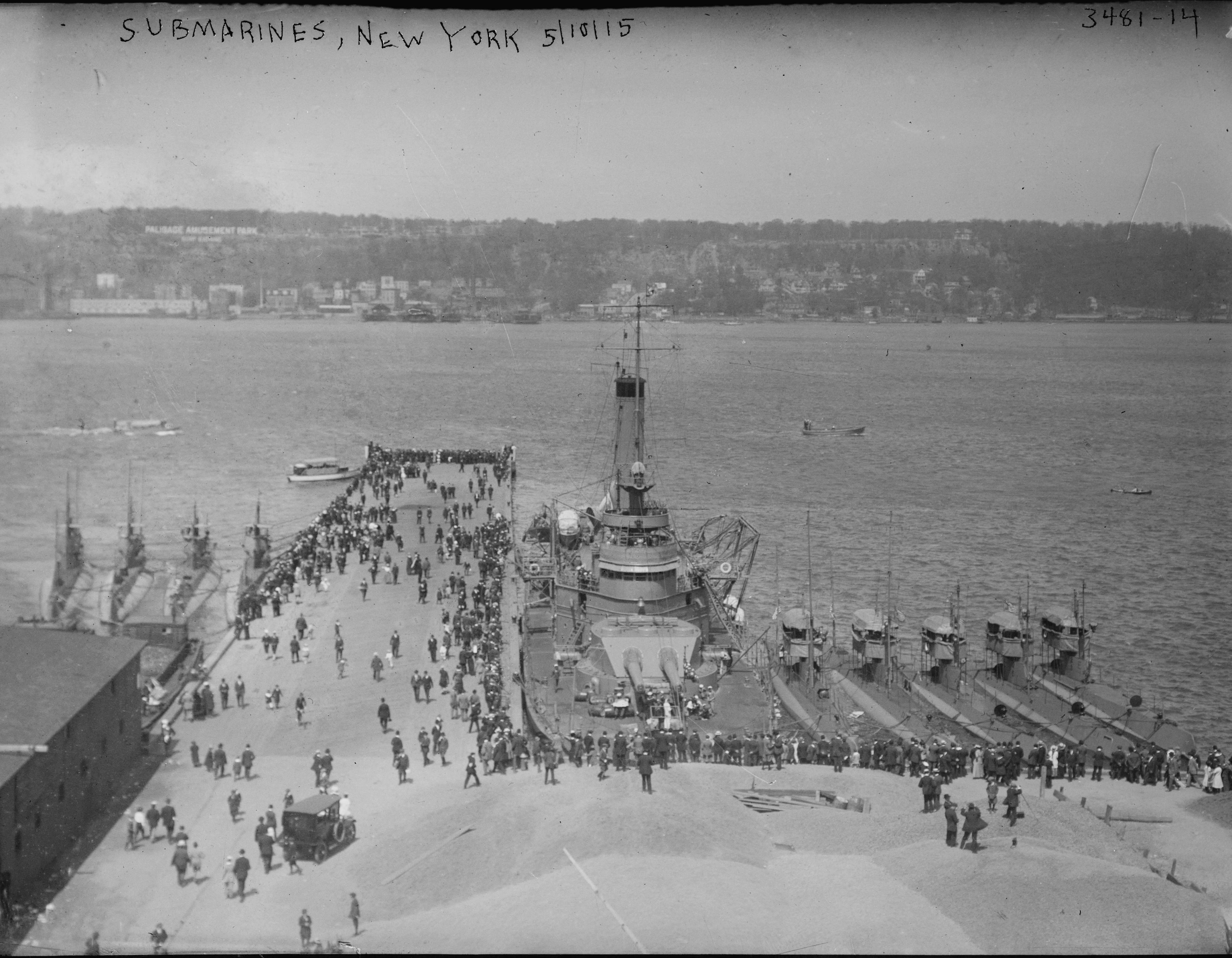 |
626k | Photograph shows US submarines moored at the 135th street pier on the Upper West Side of New York City as part of the Presidential review of the Atlantic Fleet. The picture shows the Tonopah (M-8) in the center, with the submarines E-1 (SS-24), E-2 (SS-25), D-2 (SS-18), D-1 (SS-17) and D-3 (SS-19) lying from left to right alongside the dock at 135th street. | Digital Source: Bain News Service. LOC photo # LC-B2-3481-14 / 19118v from lcweb2.loc.gov. |
|
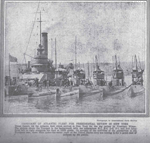 |
520k | VANGUARD OF ATLANTIC FLEET FOR PRESIDENTIAL REVIEW IN NEW YORK These vessels led the Atlantic fleet which arrived in New York for the big review by President Wilson. The picture shows the Tonopah (M-8) in the background, with the submarines E-1 (SS-24), E-2 (SS-25), D-2 (SS-18), D-1 (SS-17) and D-3 (SS-19) lying from left to right alongside the dock at 135th street. On recount of the activities of the submarines in the European War, these little under-the-water craft of the United States navy are coming in for a great deal of interest by the public. | Image and text provided by Penn State University Libraries; University Park, PA. Photo from Evening Public Ledger. (Philadelphia [Pa.]) 1914-1942, 08 May 1915, Night Extra, Image 18, via chroniclingamerica.loc.gov. | |
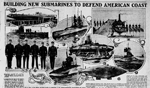 |
NR | BUILDING NEW SUBMARINES TO DEFEND AMERICAN COAST Submarine G-2 (SS-27) laid up for repairs. Submarine commanders—(a) K. Robottem, D-2 (SS-18),(b) C. M. Cooke, E-2 (SS-25), (c) T.Withers, commander second division of submarines, (d) Yates Stirling, commander, Atlantic squadron of submarines)(e), R. S. Fay, D-3 (SS-19), (f)E. C. Metz, D-1 (SS-17). | Image and text provided by State Historical Society of North Dakota. Photo from Grand Forks Daily Herald. (Grand Forks, N.D.) 1914-1916, 02 August 1915, Image 11, via chroniclingamerica.loc.gov. | |
 0801714 |
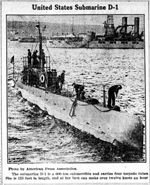
NR | United States Submarine D-1 (SS-17) Behind her is a battleship of the Virginia class. |
Image and text provided by Louisiana State University; Baton Rouge, LA. Photo & text by The Bossier Banner. [volume] (Bellevue, Bossier Parish, La.) 1859-1952, 12 August 1915, Image 4, courtesy of chroniclingamerica.loc.gov. | |
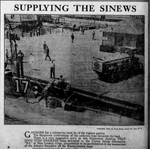 |
NR | SUPPLYING THE SINEWS. Gasoline for a submarine must be of the highest quality. The dangerous undertaking of the undersea boat demands the best. There is a very suggestive story in this illustration showing THAT GOOD GULF GASOLINE being delivered to the submarine D-1 (SS-17) at New London, Conn. preparatory to its participation in the maneuvers of the Atlantic squadron off the Massachusetts coast. Gasoline good enough for the submarine service is certainly good enough for you-and far better than others you can buy at the same price. |
Image and text provided by Penn State University Libraries; University Park, PA. Photo & text by Evening Public Ledger. (Philadelphia [Pa.]) 1914-1942, 27 October 1916, Night Extra, Image 8, courtesy of chroniclingamerica.loc.gov. | |
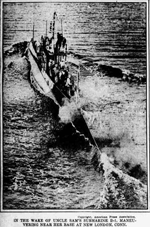 |
NR | IN THE WAKE OF UNCLE SAM'S SUBMARINE D-1 (SS-17) MANEUVERING NEAR HER BASE AT NEW LONDON, CONN. | Image and text provided by Penn State University Libraries; University Park, PA. Photo & text by Evening Public Ledger. (Philadelphia [Pa.]) 1914-1942, 17 February 1917, Night Extra, Image 16, courtesy of chroniclingamerica.loc.gov. | |
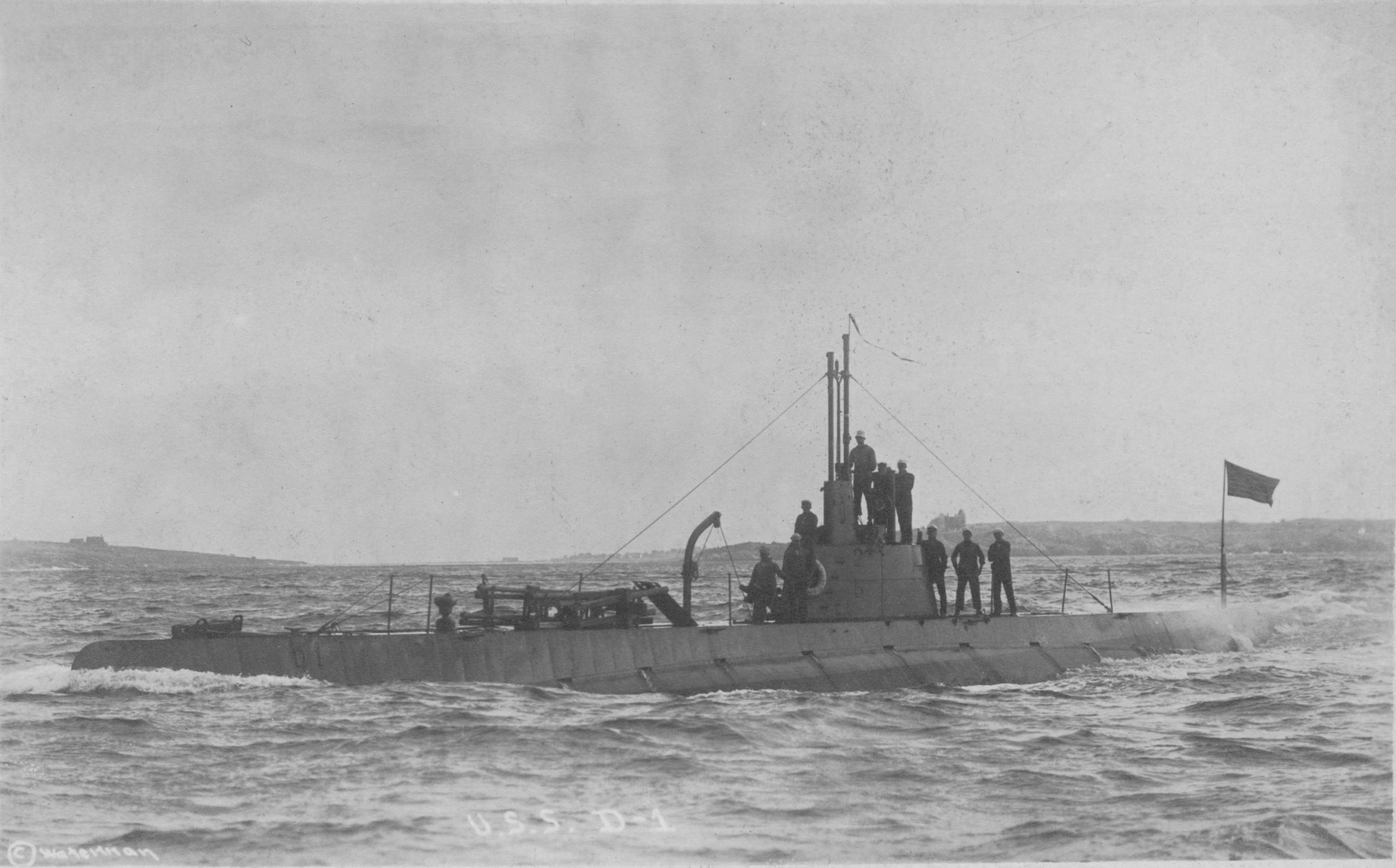 0801706 | 2.49k | D-1 (SS-17) operating off shore. | Photo by Waterman, courtesy of digitalcommonwealth.org via the Boston Public Library, Leslie Jones Collection. | |
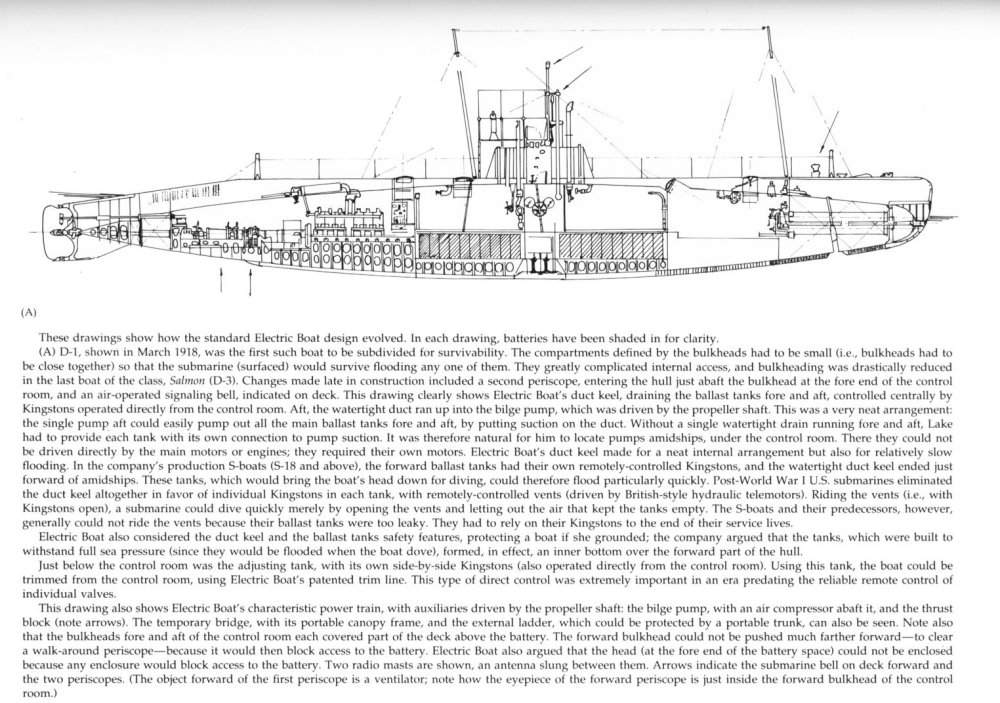 |
83k | D-1 (SS-17) shown in March 1918, was the first boat to be subdivided for survivability. The compartments defined by the bulkheads had to be small (i.e. bulkheads had to be close together) so that the submarine (surfaced) would survive flooding any one of them. They greatly complicated internal access, and bulk-heading was drastically reduced in the last boat of the class D-3 (SS-19). | Drawing by Norman Friedman. Photo & text courtesy of U.S. Submarines Through 1945, An Illustrated Design History by Norman Friedman. Naval Institute Press. | |
 | 380k | D-3 (SS-19) alongside a dock with other submarines on an icy day, circa 1918. Location is probably the Submarine Base at Groton, Connecticut. D-3 appears to be wearing pattern camouflage. Other submarines present are (moving outward from D-3: D-1 (SS-17); G-4 (SS-26); and G-3 (SS-31). | Photograph # NH 99157 via Robert Hurst. | |
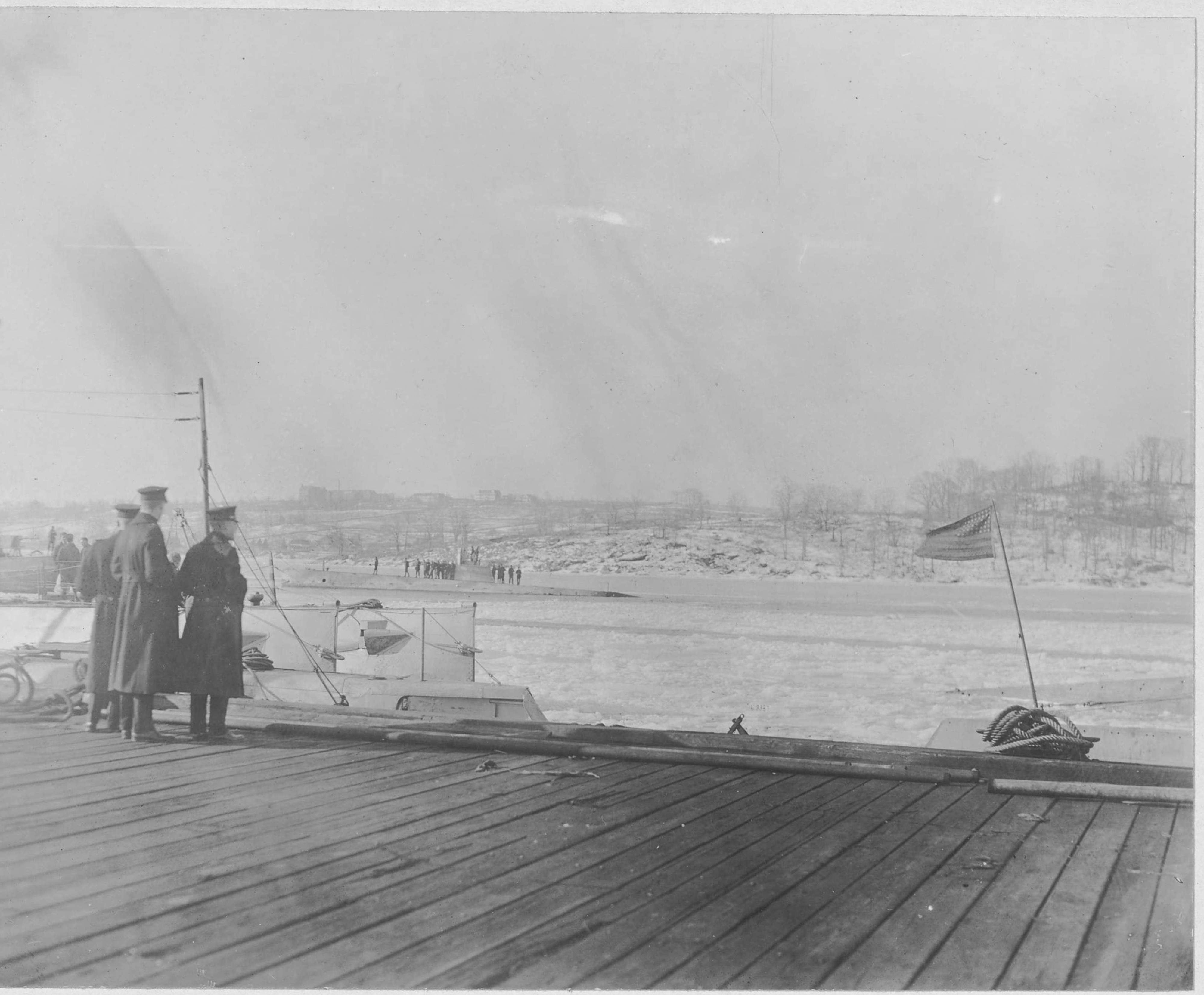 |
549k | U.S. submarine going to sea for practice, circa 1918: From right to left, two subs in the photo to the right, You can just see the sterns and a flag. Class/s unknown. D-boat in mid-river. She is ballasted down aft so that her props, rudder, and aft diving planes clear the ice in the river. Next to pier is the G-3 (SS-31), the other two boats alongside the pier are actually EB design N-class boats, ( N-1, 2 & 3). The arrangement of the towing fairlead bullnose, the towing shackle, and the bow plane arrangement all match EB design N-boats. You can see Conn College on the hill in the background. |
Photo & text i.d. courtesy of David Johnston & Ric Hedman. Photographer: Western Newspaper Union. National Archives Identifier: 45512000 Local Identifier: 165-WW-331E-7. Photo courtesy of catalog.archives.gov | |
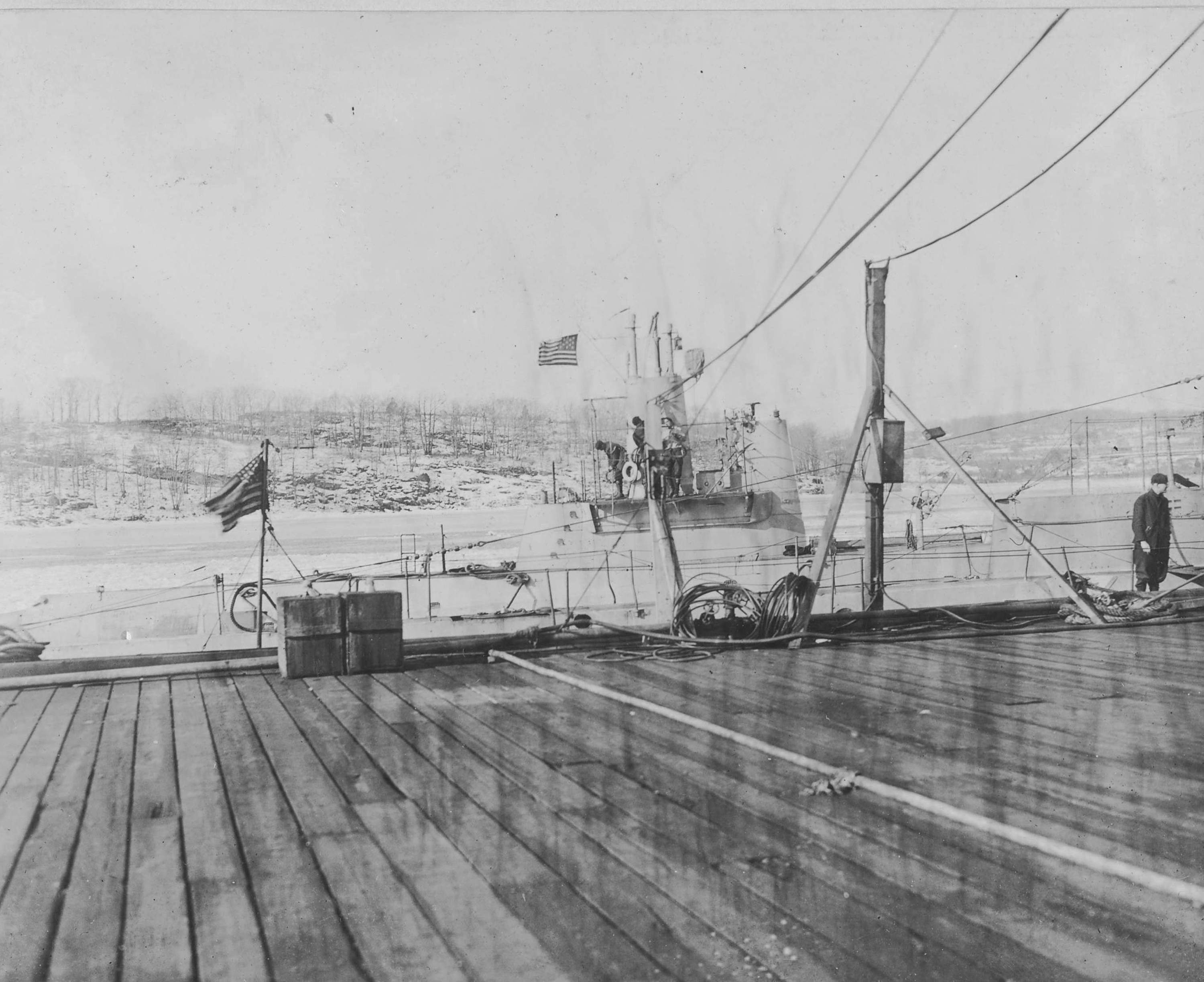 | 483k | U.S. SUBMARINE READY TO start its regular morning practice trip. New London, Conn. Unknown D-boat underway. | Photo i.d. courtesy of Ric Hedman. Photographer: Western Newspaper Union. National Archives Identifier: 45513803 Local Identifier: 165-WW-338B-055 Photo courtesy of catalog.archives.gov | |
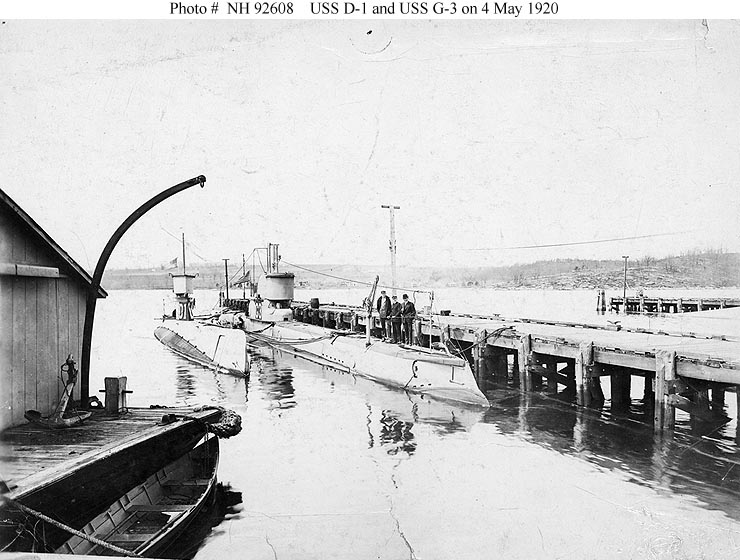 | 93k | D-1 (SS-17), left and G-3 (SS-31), inboard. Photographed on 4 May 1920, possibly at the Submarine Base New London, Groton, Connecticut. | USN photo # NH 92608 from the collections of the US Naval Historical Center. Collection of Admiral John S. McCain, Jr. | |
View the Narwhal / D-1 (SS-17)
DANFS history entry located on the Haze Gray & Underway Web Site.
Crew Contact And Reunion Information
Not Applicable to this Vessel
Additional Resources and Web Sites of Interest
PigBoats.COM TM, a Historic Look at Submarines
| Back To The Main Photo Index | Back To the Submarine Index |
|
Problems and site related matters, E-mail Webmaster |
|
This page is created by Gary Priolo and maintained by Michael Mohl All Pages © 1996 - 2025 NavSource History |