Click On Image
For Full Size | Size | Image Description | Source |
0824732 | 954k | Sealion (SS-315) was sponsored by Mrs. Emory Land. | Image and text provided by Library of Congress, Washington, DC.
Photo from Evening Star. [volume] (Washington, D.C.) 1854-1972, 07 February 1926, Image 92 via chroniclingamerica.loc.gov. |
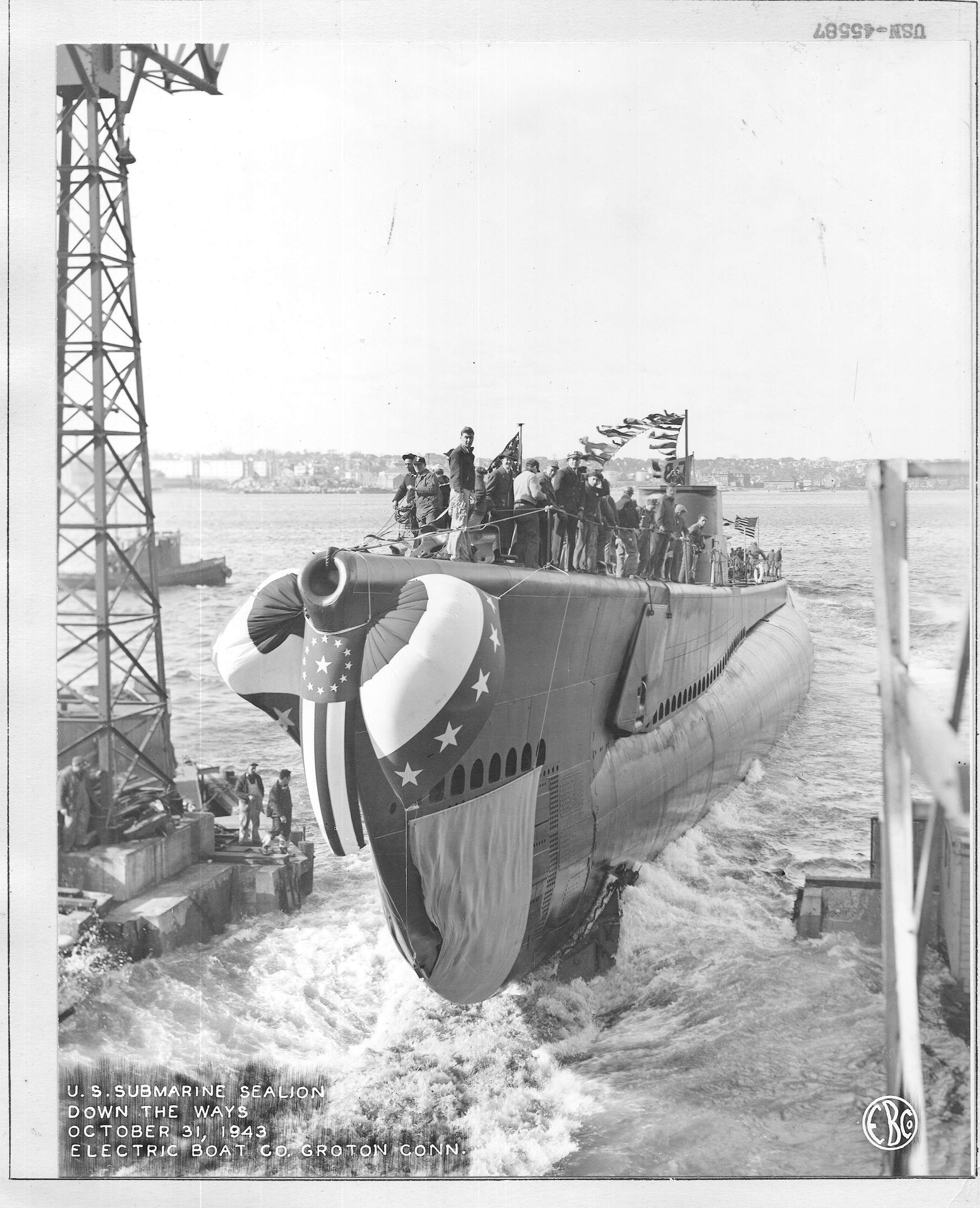
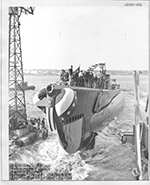 | 742k | Launching of the Sealion (SS-315), at Electric Boat Company, Groton, CT., 31 October 1943. | USN photo # 80-G-45587 courtesy of NARA, College Park, Maryland, courtesy of Sean Hert.
|
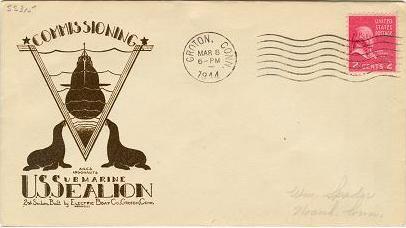
 | 16k | Commemorative postal cover on the occasion of the commissioning of the Sealion (SS-315), 8 March 1944. | Courtesy of Jack Treutle (of blessed memory). |
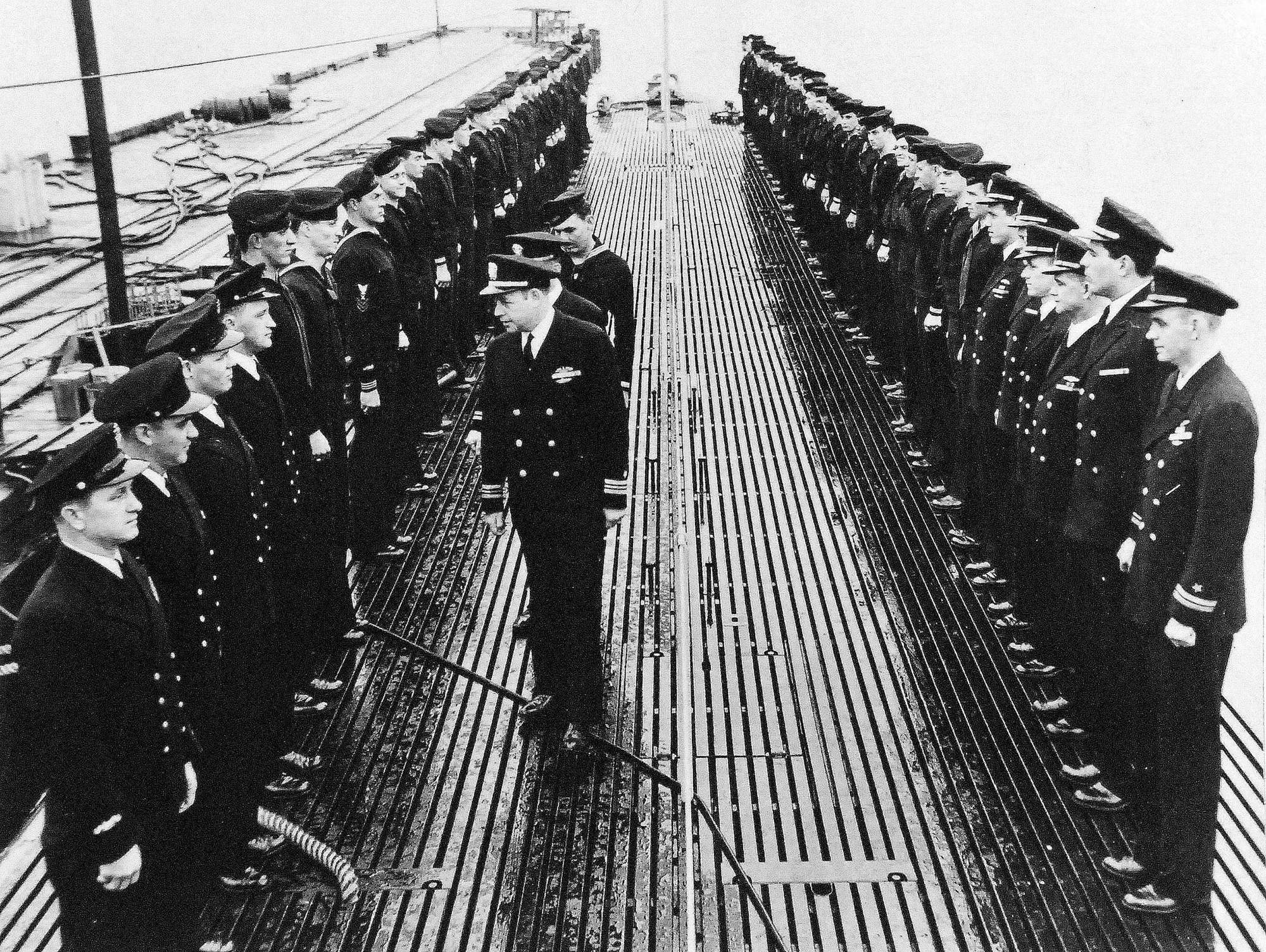
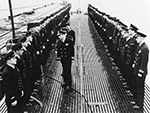 | 800k | Final inspection aboard Sealion (SS-315) before the ship put to sea for its First War Patrol. Lieutenant Commander Eli T. Reich, USN, leading the inspection party. | USN photograph # 80-G-700013 now in the collections of the National Archives, courtesy of National Museum of the U.S. Navy via flickr.com. |
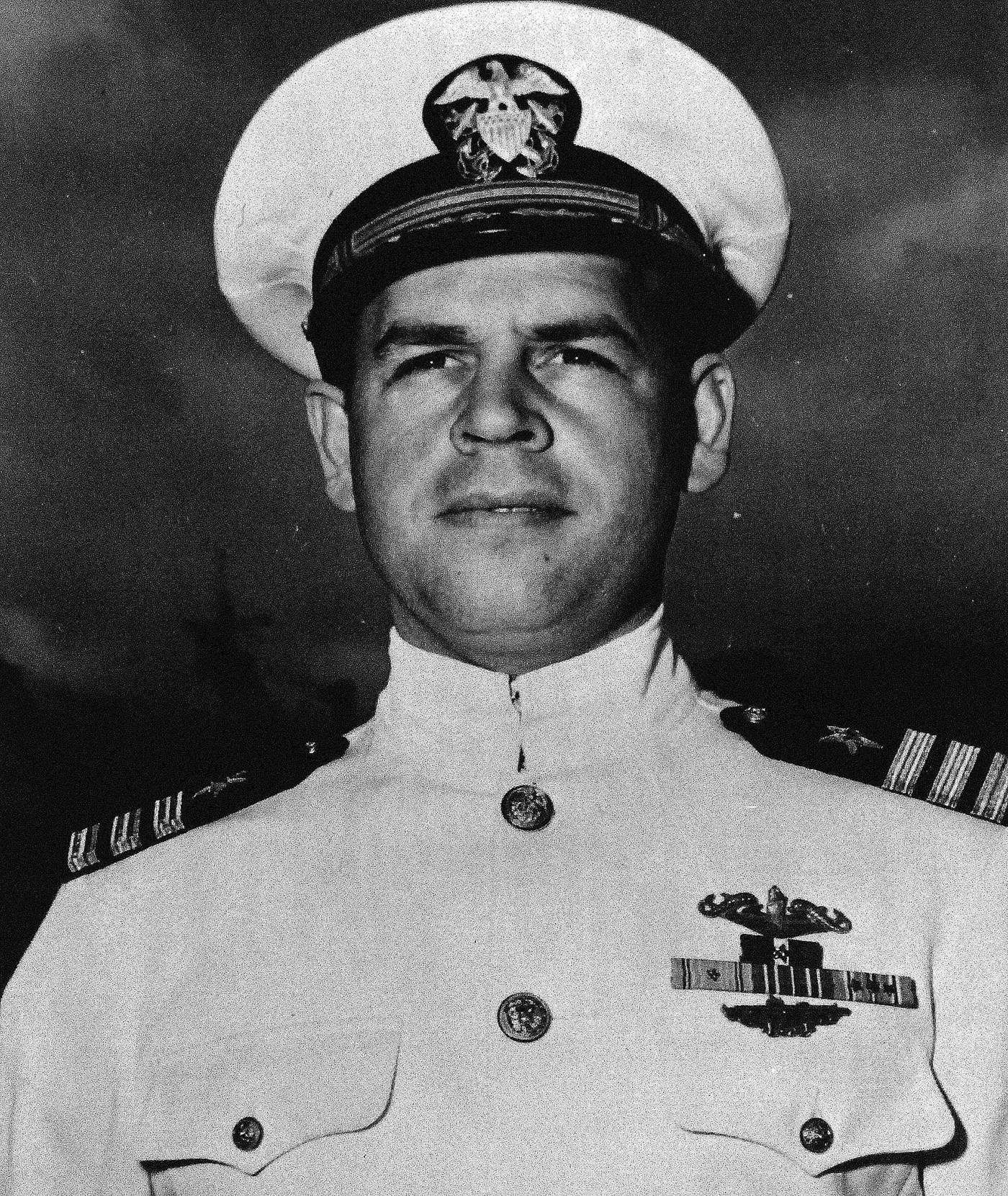
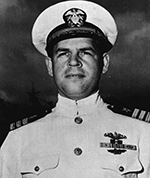 | 662k | Commander Eli T. Reich, USN, Commanding Officer of Sealion (SS-315). | USN photograph # 80-G-700014 now in the collections of the National Archives, courtesy of National Museum of the U.S. Navy via flickr.com. |
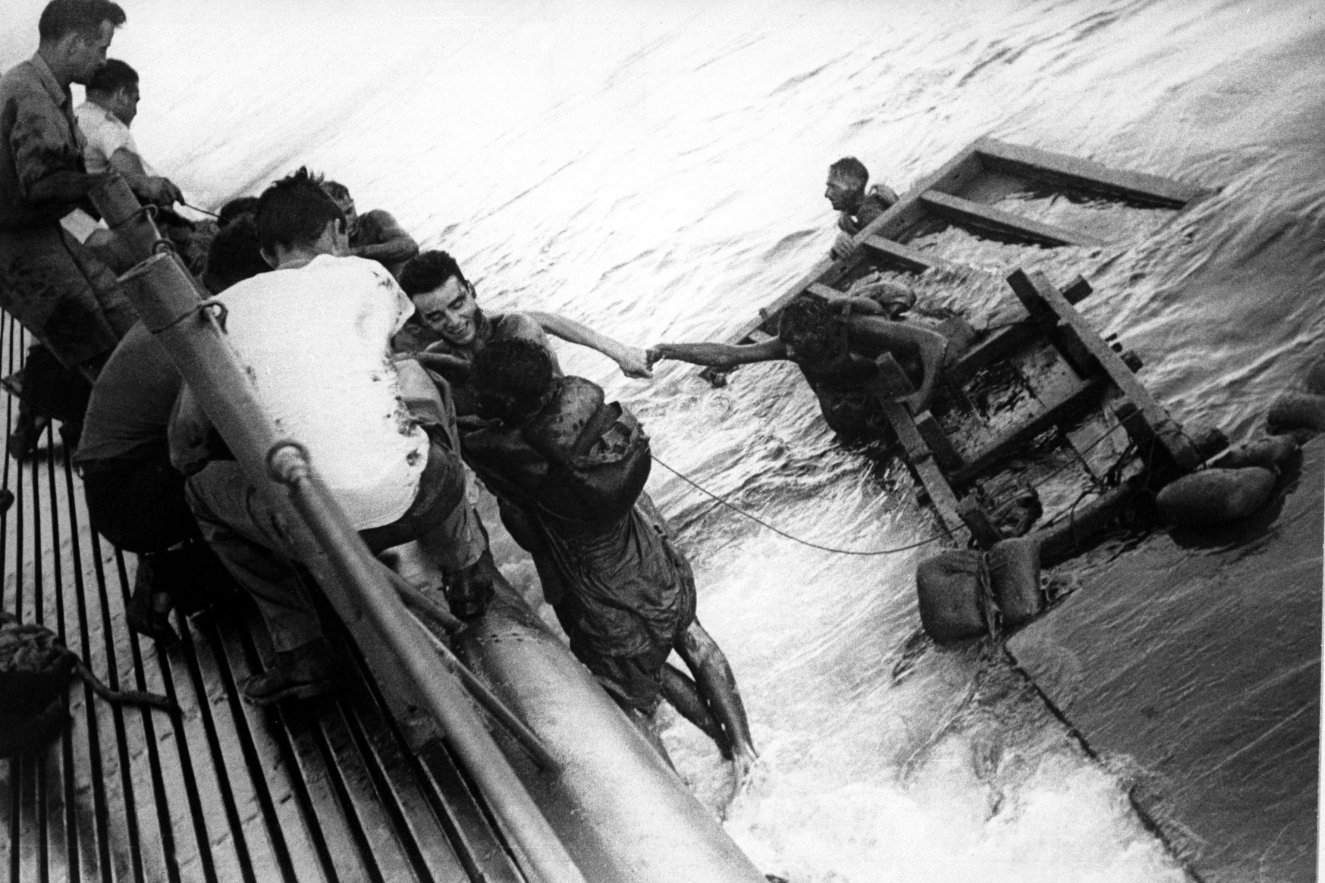
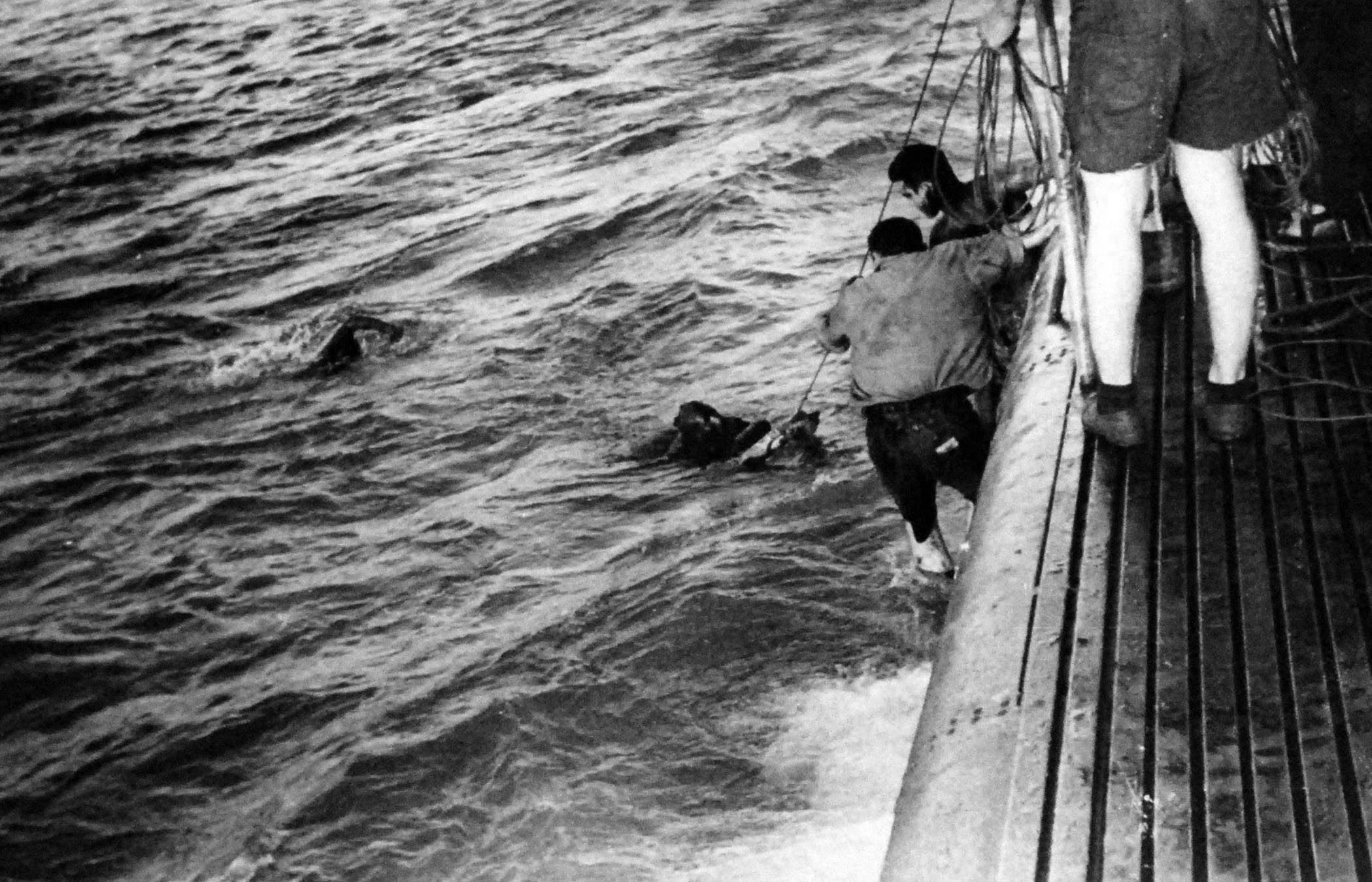
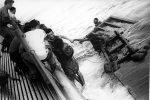 | 664k | Saved! British and Australian survivors of Japanese prison ship Rakuyo Maru, torpedoed by Sealion (SS-315). Rescue was by Sealion, Growler (SS-215), Queenfish (SS-393), & Barb (SS-220). | Text courtesy of Theodore Roscoe, from his book "U.S. Submarine Operations of WW II", published by USNI.
Photo from NARA FILE #: 80-G-281718, Photo # HD-SN-99-02609, courtesy of dodmedia.osd.mil, Defense Visual Information Center.
PDF courtesy of Steve Burton.
Photo 80-G-281731 courtesy of NARA via Rob Hanshew and Tracy White @ Researcher @ Large.
|
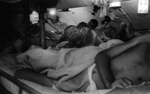
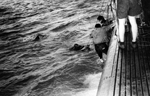 | 387k | British and Australian survivors rescued by Sealion (SS-315) on Second War Patrol, 15 October 1944. | Photo 80-G-281725 courtesy of NARA via Rob Hanshew and Tracy White @ Researcher @ Large.
|
 |
248k |
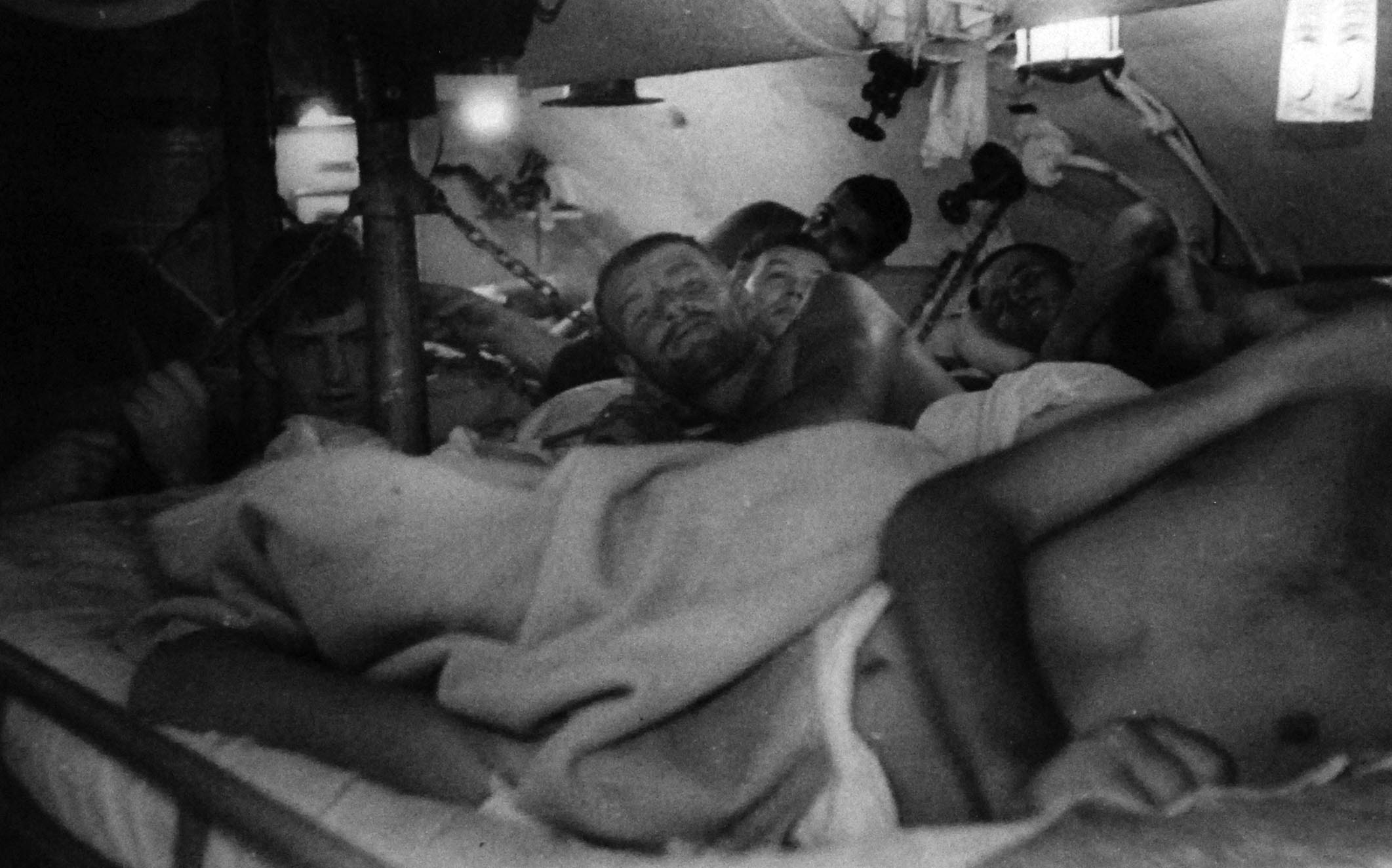
British and Australian survivors rescued by Sealion (SS-315) on Second War Patrol, 15 October 1944. Inside berthing compartment. |
Photo 80-G-281727 courtesy of NARA via Rob Hanshew and Tracy White @ Researcher @ Large.
|
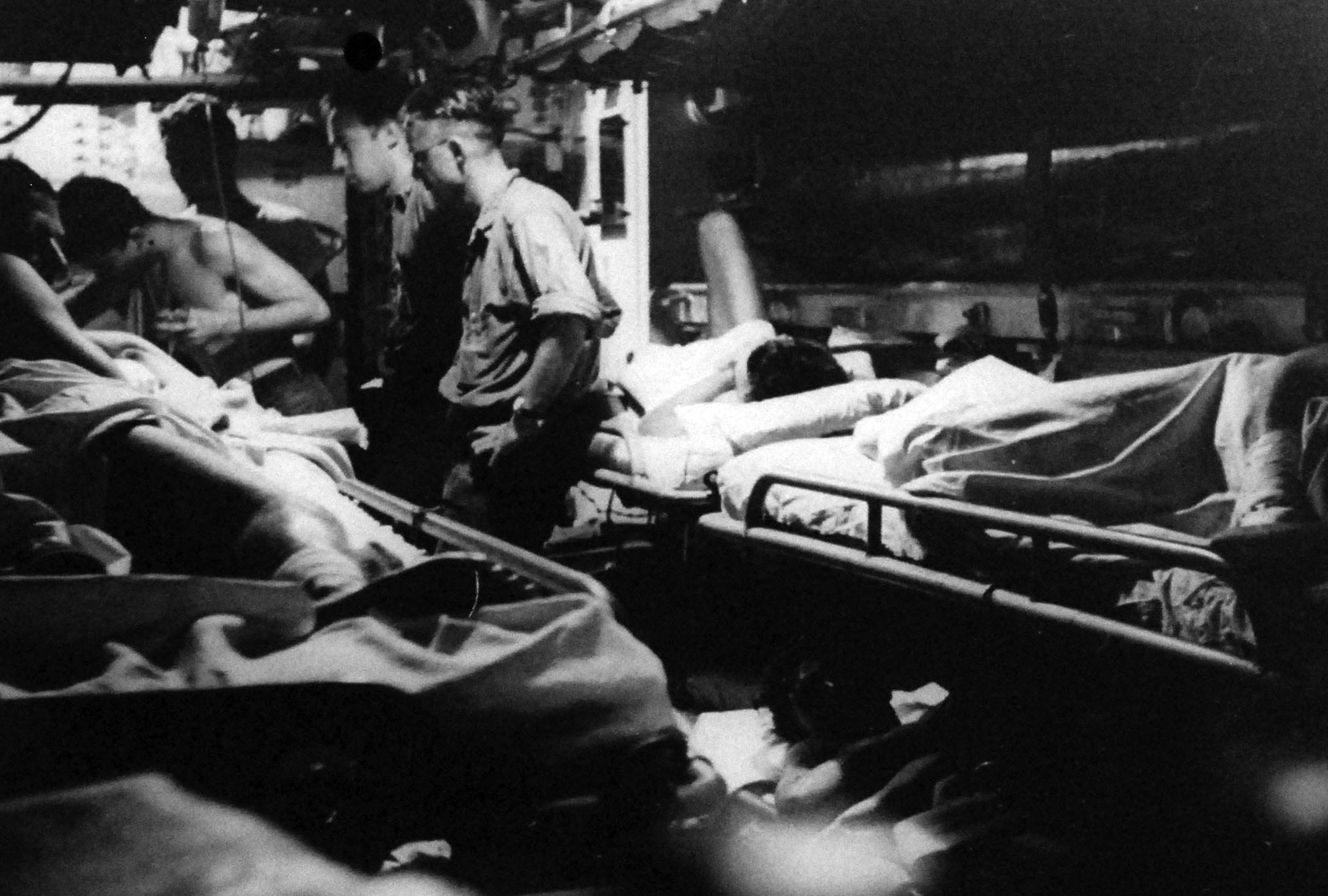
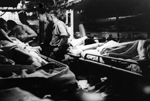 | 249k | Survivors of Japanese prison ship Rakuyo Maru, torpedoed by Sealion (SS-315), are treated for shock and exhaustion aboard one of the subs. Men were emaciated from overwork and starvation diet while in captivity. Four subs picked up 159-seven died en route home. | Text courtesy of Theodore Roscoe, from his book "U.S. Submarine Operations of WW II", published by USNI.
Photo 80-G-281731 courtesy of NARA via Rob Hanshew and Tracy White @ Researcher @ Large.
|
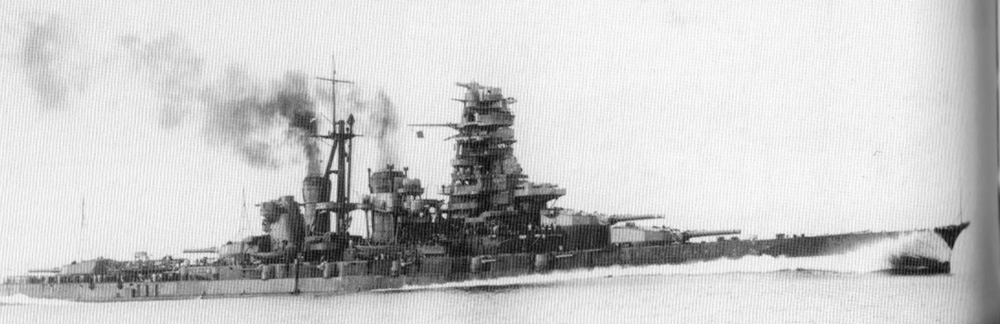
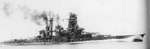 | 119k | IJN battleship Kongo sunk by Sea Lion (SS-315) on 21 November 1944 trying to return to Japan after the battle of Philippine Sea. Hit by two torpedoes; of over 1200 crew only a little over 200 survived. | Photo courtesy of John Hummel, USN (Retired). |
 |
180k |
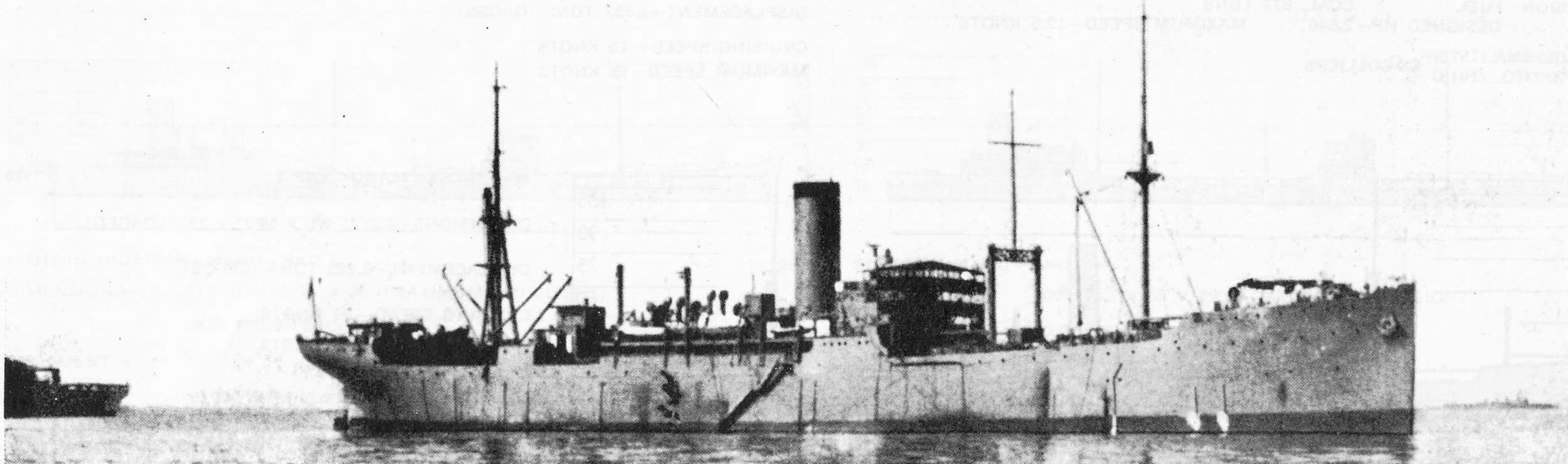
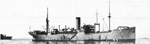
An undated photo of the supply ship HIJMS Mamiya at anchor. Mamiya was torpedoed and sunk on 20 December 1944 250 nm E of Hainan (17 degrees 48' N, 114 degrees 09' E) by Sealion (SS-315). |
Photo courtesy of Japanese Naval Vessels of World War Two as seen by U.S. Naval Intelligence".
Text taken from two sources: "Warships of the Imperial Japanese Navy, 1869-1945" by Jentschura, Jung and Mickel, translated by Antony Preston and J.D. Brown, and "The World's Merchant Fleets 1939" by Roger W. Jordan, courtesy of Robert Hurst. |
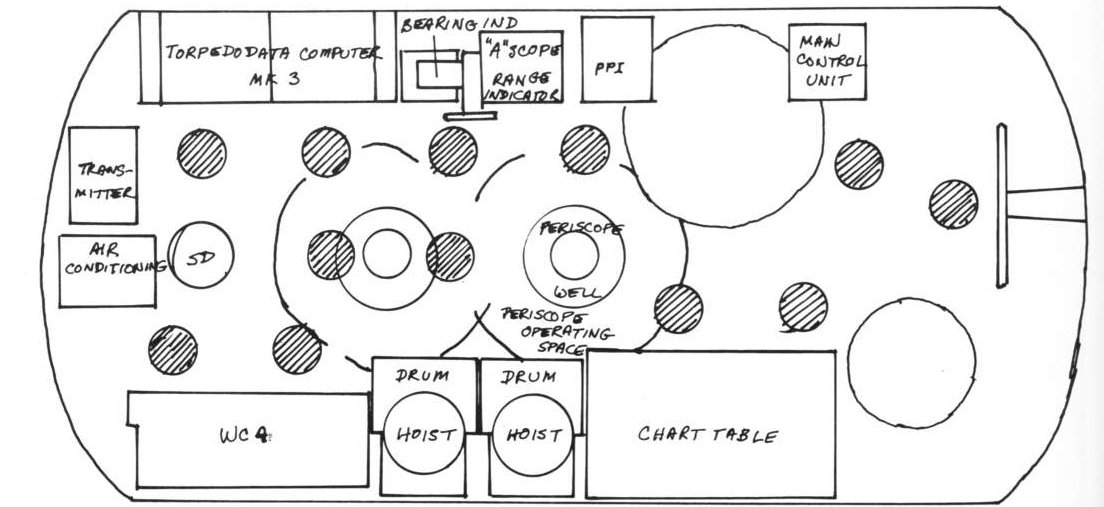
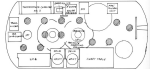 | 85k | By the end of WW II, conning towers were badly crowded. This drawing shows that of the Sealion (SS-315) in 1945. The two large open circles on the right are the hatches, up from the pressure hull (above) and up to the open bridge (below). Wartime additions included the third mast (for SD) passing through the conning tower to the left, and the radar scopes to the right of the torpedo data computer. The shaded circles indicate the location of the crew in the conning tower. | Drawing & text courtesy of U.S. Submarines Through 1945, An Illustrated Design History by Norman Friedman. Naval Institute Press.
|
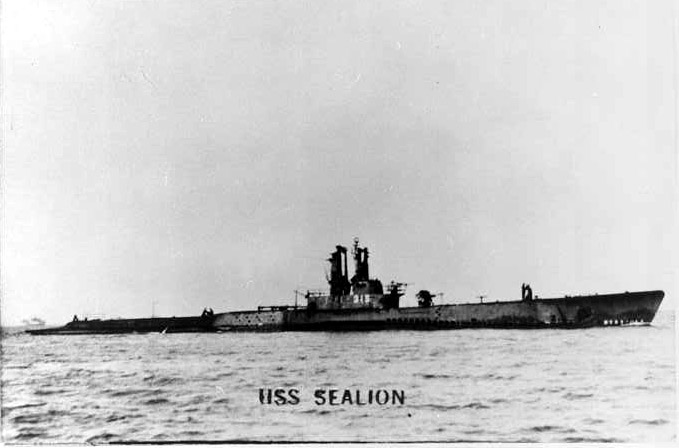
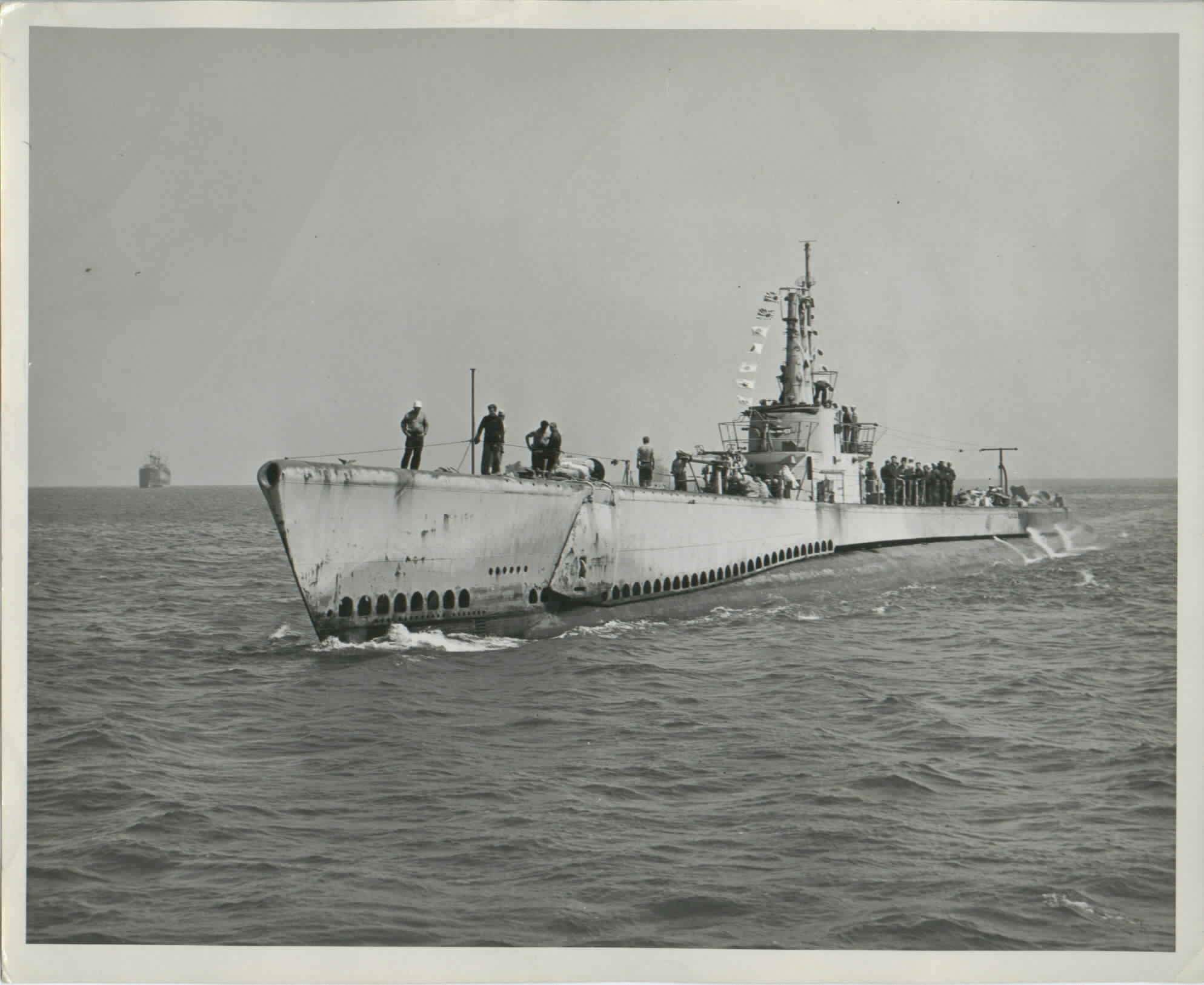
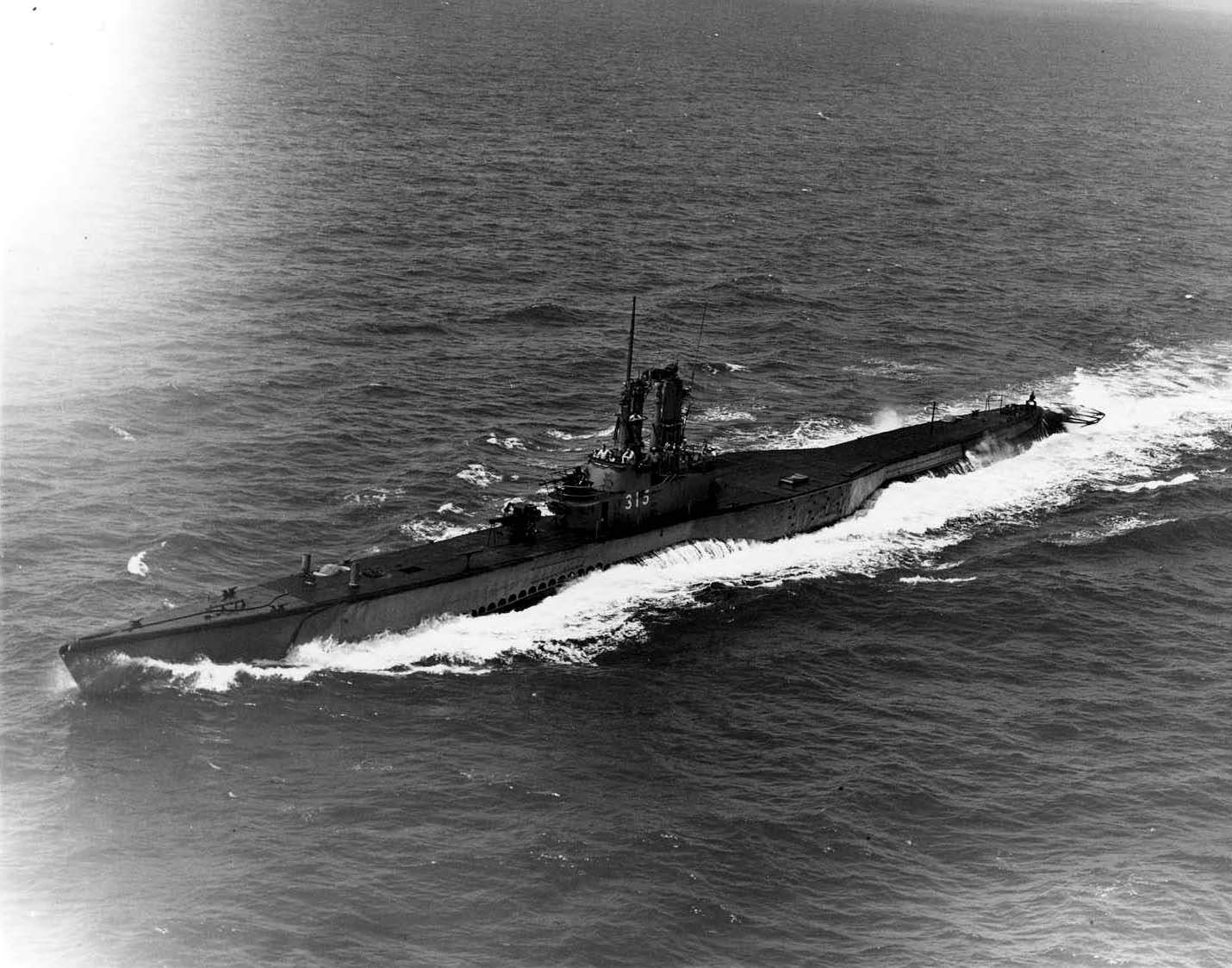
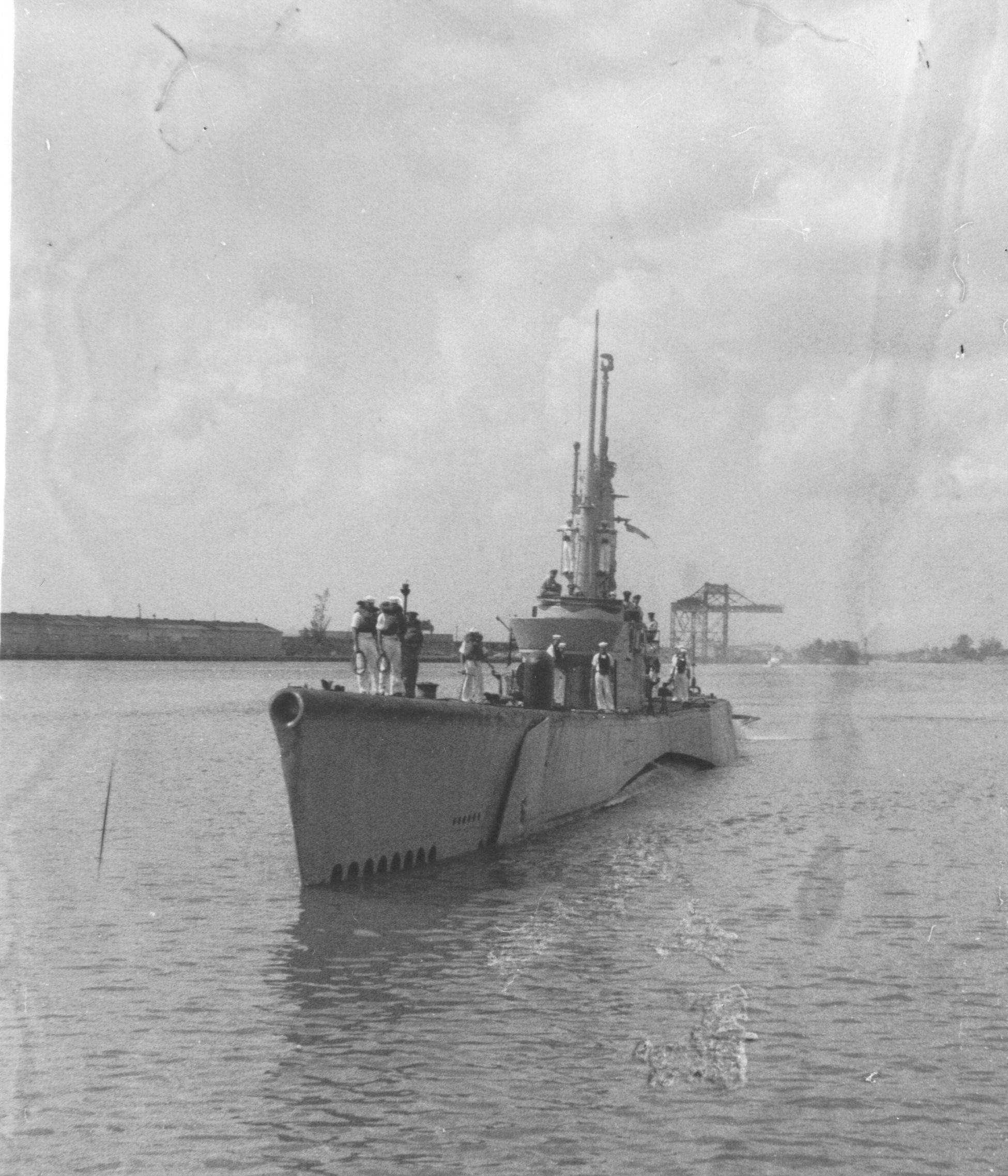
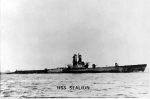 | 50k | Sealion (SS-315), starboard view underway, circa 1944-45. | Courtesy of usssubvetsofwwii.org |
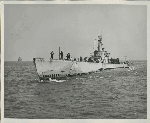 | 154k | Probable late war photo of the Sealion (SS-315) with Japanese ship kill flags flying from her mast. | Photo courtesy of John Hummel, USN (Retired). |
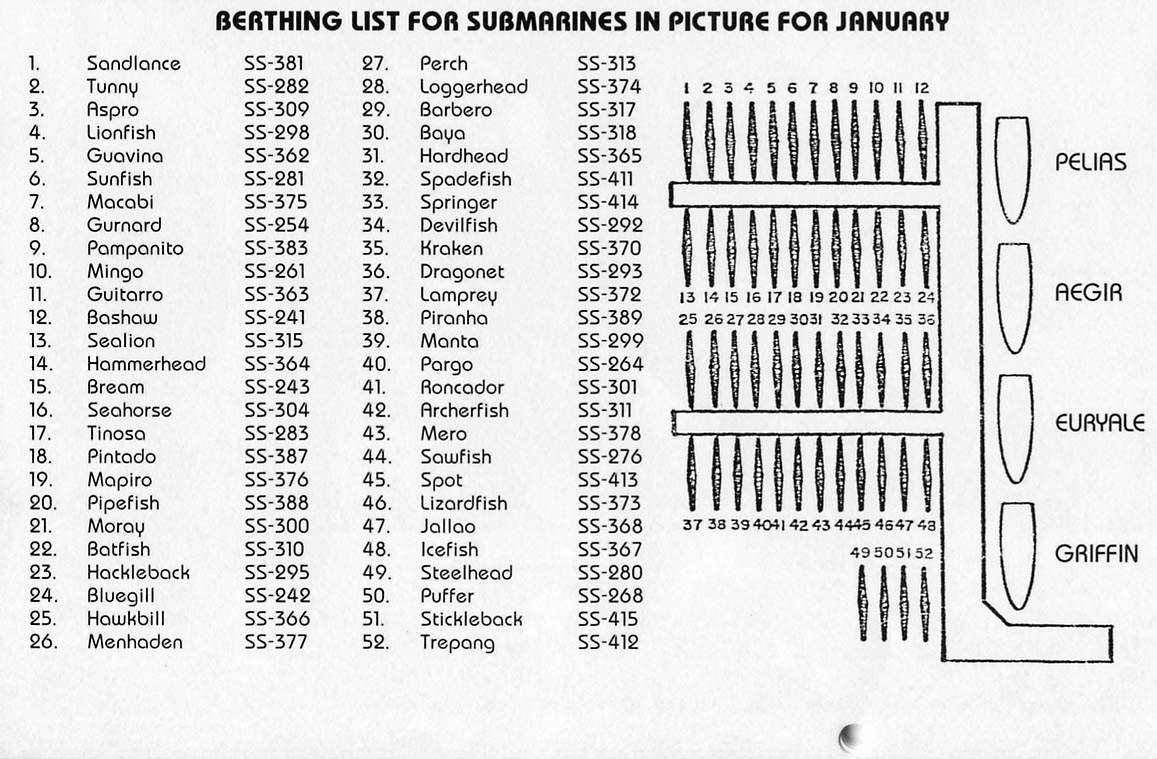
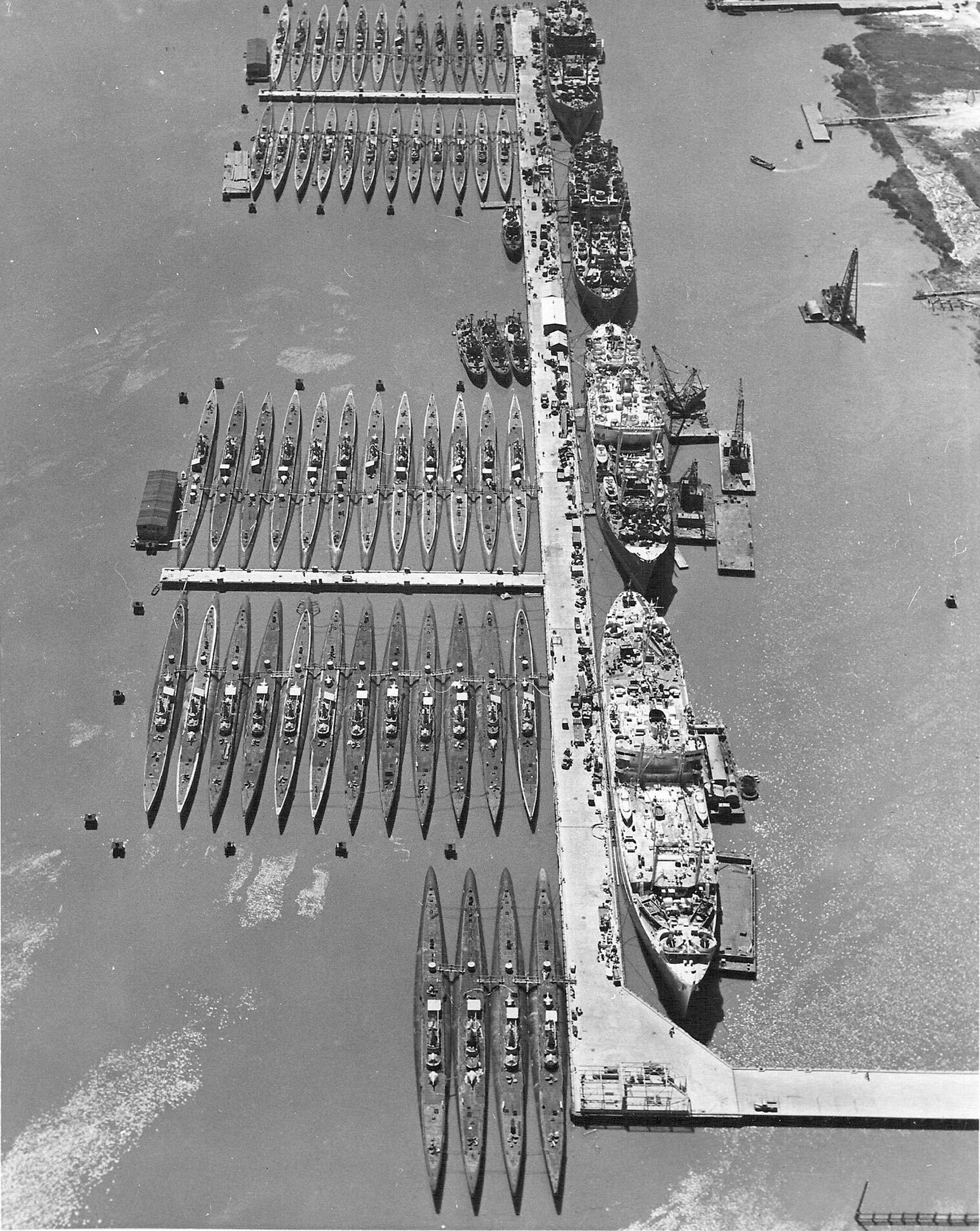
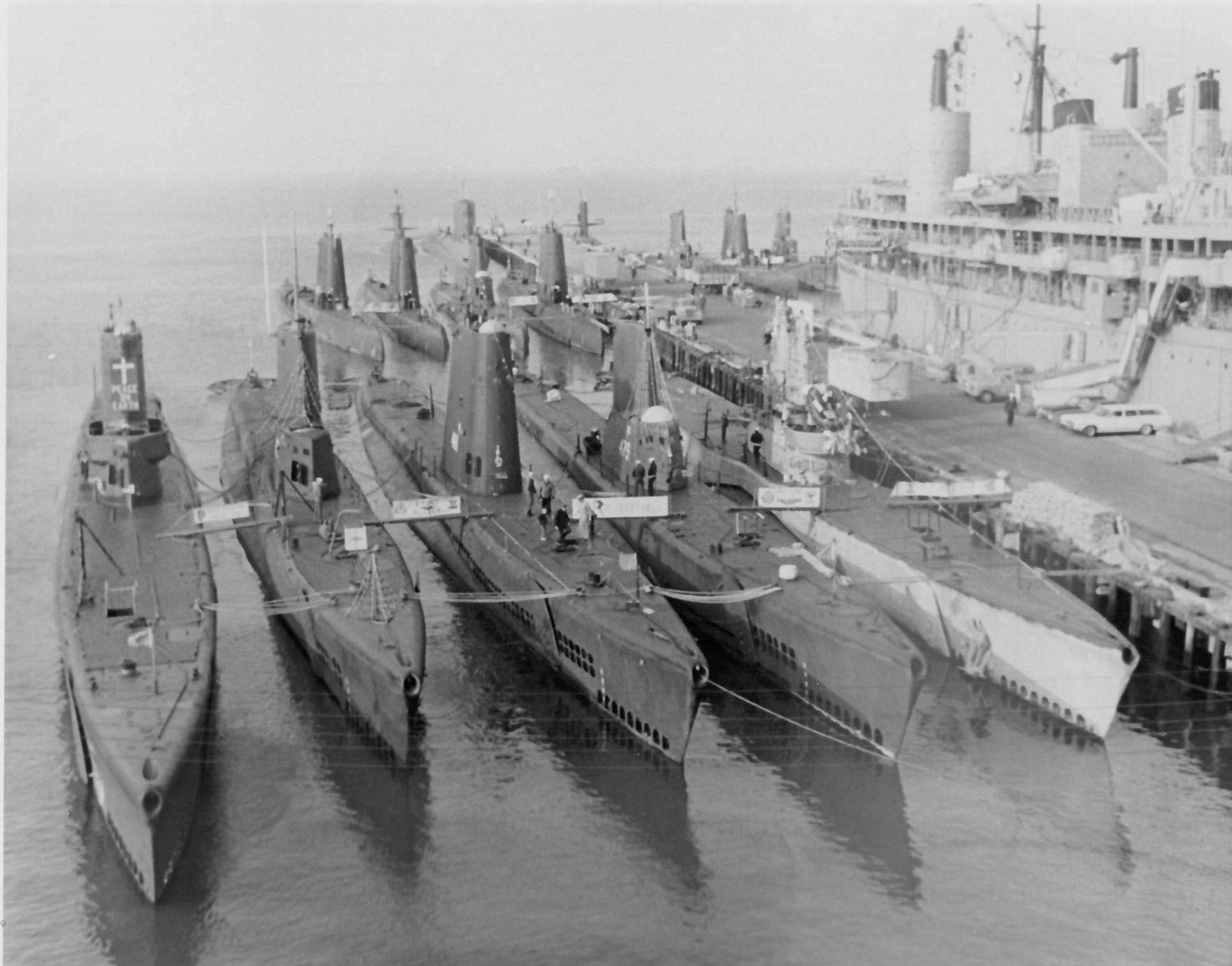
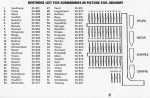 | 137k | Reserve fleet at Mare Island, circa January 1946. There are 52 submarines and 4 Sub Tenders in this photo. This photo is a Berthing list identifying the ships in the picture.
| Photo commemorating 50 years, U. S. Submarine Veterans of WW II 1996 calendar, courtesy of Darryl L. Baker. |
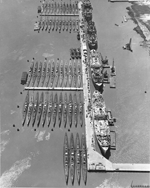 | 453k | Photo of the Reserve fleet at Mare Island, circa January 1946. There are 52 submarines and 4 Sub Tenders in this photo. Whether coincidental or on purpose, the number of boats in the photo is the same as that which were lost in WW II.
From back to front and left to right, first group of 12 boats:
Sand Lance (SS-381)
Tunny (SS-282)
Aspro (SS-309)
Lionfish (SS-298)
Guvania (SS-362)
Sunfish (SS-281)
Macabi (SS-375)
Gurnard (SS-254)
Pampanito (SS-383)
Mingo (SS-261)
Guitarro (SS-363)
Bashaw (SS-241)
From back to front and left to right, second group of 12 boats:
Sealion (SS-315)
Hammerhead (SS-364)
Bream (SS-243)
Seahorse (SS-304)
Tinosa (SS-283)
Pintado (SS-387)
Mapiro (SS-376)
Pipefish (SS-388)
Moray (SS-300)
Batfish (SS-310)
Hackleback (SS-295)
Bluegill (SS-242)
From back to front and left to right, third group of 12 boats:
Hawkbill (SS-366)
Menhaden (SS-377)
Perch (SS-313)
Loggerhead (SS-374)
Barbero (SS-317)
Baya (SS-318)
Hardhead (SS-365)
Spadefish (SS-411)
Springer (SS-414)
Devilfish (SS-292)
Kraken (SS-370)
Dragonet (SS-293)
From back to front and left to right, fourth group of 12 boats:
Lamprey (SS-372)
Piranha (SS-389)
Manta (SS-299)
Pargo (SS-264)
Rancador (SS-301)
Archerfish (SS-311)
Mero (SS-378)
Sawfish (SS-276)
Spot (SS-413)
Lizardfish (SS-373)
Jallao (SS-368)
Icefish (SS-367)
From back to front and left to right, last group of 4 boats:
Steelhead (SS-280)
Puffer (SS-268)
Stickleback (SS-415)
Trepang (SS-412)
From back to front, Submarine Tenders group of 4 ships:
Pelias (AS-14)
Aegir (AS-23)
Euryale (AS-22)
Griffin (AS-13)
| Photo commemorating 50 years, U. S. Submarine Veterans of WW II 1996 calendar, courtesy of Darryl L. Baker. |
 |
900k |
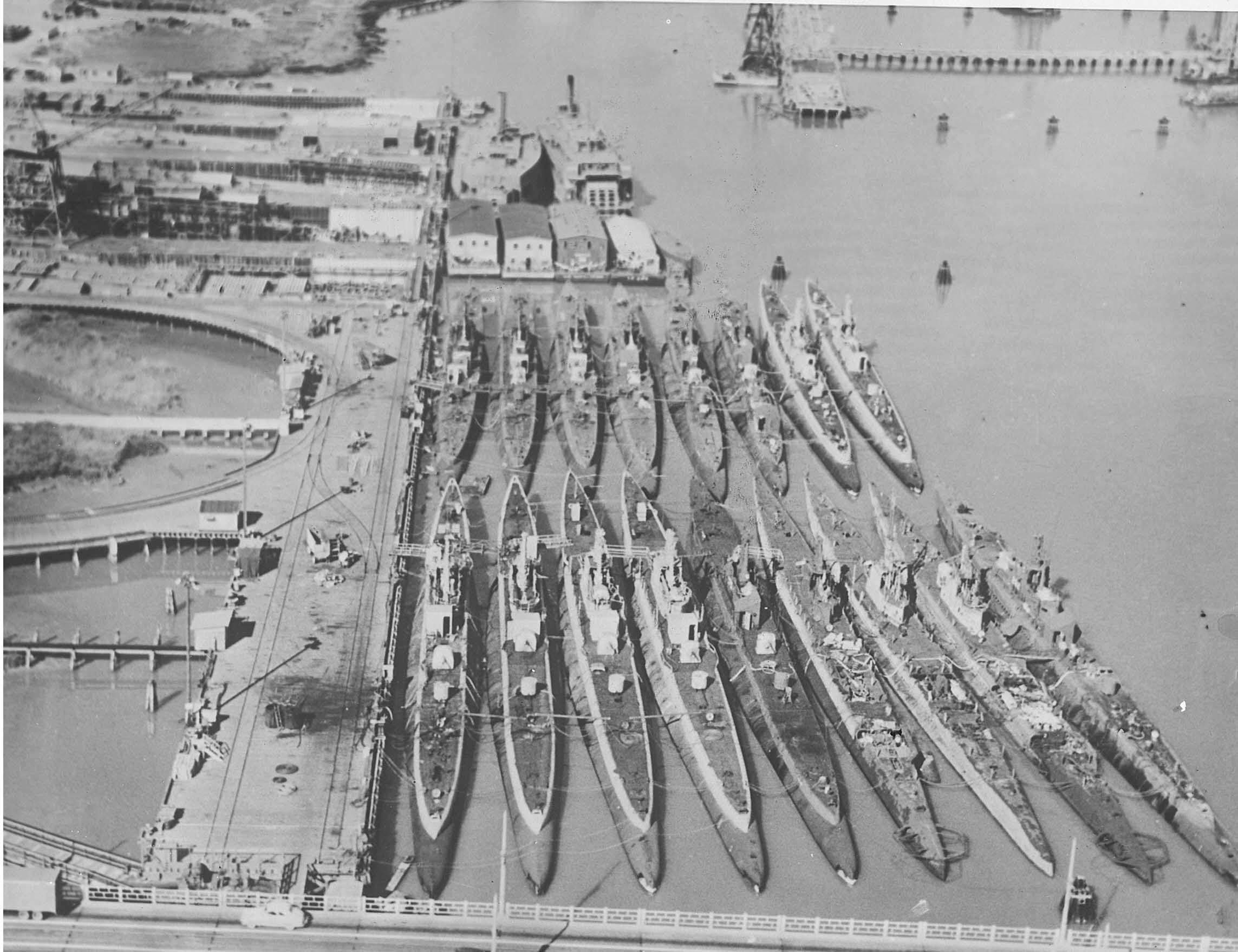
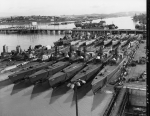
Inactivated submarines at Mare Island on 3 January 1946.
Front row left to right: Sand Lance (SS-381), next two could be Sealion (SS-315) and Seahorse (SS-304), Searaven (SS-196), Pampanito (SS-383), Gurnard (SS-254), Mingo (SS-261), Guitarro (SS-363), Bashaw (SS-241).
Back row left to right: Unknown, Tunny (SS-282), next three could be Sargo (SS-188), Spearfish (SS-190), and Saury (SS-189), Macabi (SS-375), Sunfish (SS-281), Guavina (SS-362), Lionfish (SS-298), Piranha (SS-389).
The Scabbardfish (SS-397) is docked in ARD-11 on the other side of the causeway.
The mixture of boats from the Salmon/Sargo, Gato, and Balao classes illustrate the clear
differences in the conning tower fairwaters and the periscope shears that
can be used to identify boats. The high bridges with the uncovered support
frames (the "covered wagon" look) of the Gato's and Salmon/Sargo's contrast
with the low and sleek look of the Balao's. The fatter, more robust
periscope shears of the Balao's are markedly different from the thinner
shears with more supporting structure of the Gato's and Salmon/Sargo's .
The differences in the pattern of the superstructure limber holes can also
be used for identification purposes. The single row of large semi-circular
holes identify Electric Boat or Manitowoc boats. A dual row of smaller
rectangular holes mark the government built boats. Also note that the
EB/Manitowoc boats have the deck mounted, T-shaped JP sonar head on the
starboard side of the forward deck, while the government boats have it on
the port side.
EB/Manitowoc boats had the anchor on the starboard side, the government
boats on the port side. A close look will show that some of the boats have
had the anchor removed and the hawsepipe plated over as part of the mothball
process.
Most of the boats have the late war radar outfit of the SJ surface search
(small dish) and SV air search (large dish). The Balao's and some of the
Gato's have the SS dish mounted on a separate large mast aft of the
periscopes. The older Salmon/Sargo's and Gato's have a much smaller mast.
Searaven appears to have had her radars already removed.
Searaven is
actually sporting a late war SJ surface search antennae mounted to starboard
of the periscopes. This is a rare installation. Most often it was mounted
forward (early war) or aft (late war) of the 'scopes shears. Her air search
set is a late war SD antennae mounted on a stub mast directly aft of the
'scopes. Searaven never received the much more capable SV air search set.
Having been assigned to training duties after November, 1944 it was probably
felt that the SV set was not necessary.
One strange thing: almost all of the boats appear to have the outer doors of
the forward torpedo tubes open. Even though the boats have an interlock
system that prevents the breech and outer doors from being opened at the
same time, this is an unusual thing to do and a potential source of
catastrophic flooding.
|
USN photo # 17-46, courtesy of Darryl L. Baker.
Text courtesy of David Johnston |
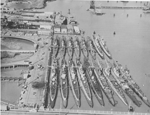 | 289k | Inactivated submarines at Mare Island in early 1946.
Front row left to right: Sand Lance (SS-381), next two could be Sealion (SS-315) and Seahorse (SS-304), Searaven (SS-196), Pampanito (SS-383), Gurnard (SS-254), Mingo (SS-261), Guitarro (SS-363), Bashaw (SS-241).
Back row left to right: Unknown, Tunny (SS-282), next three could be Sargo (SS-188), Spearfish (SS-190), and Saury (SS-189), Macabi (SS-375), Sunfish (SS-281), Guavina (SS-362), Lionfish (SS-298), Piranha (SS-389).
The Scabbardfish (SS-397) is docked in ARD-11 on the other side of the causeway.
Tiru (SS-416) is on the ways in upper left hand side of photo. Two ferry boats (to the right of Tiru's ways) are YHB-2 / [ex-Post of Stockton] and YHB-21 / [ex-Tamalpais]. | Photo i.d. courtesy of Darryl L. Baker.
USN photo courtesy of Scott Koen & ussnewyork.com. |
 |
1.93k |
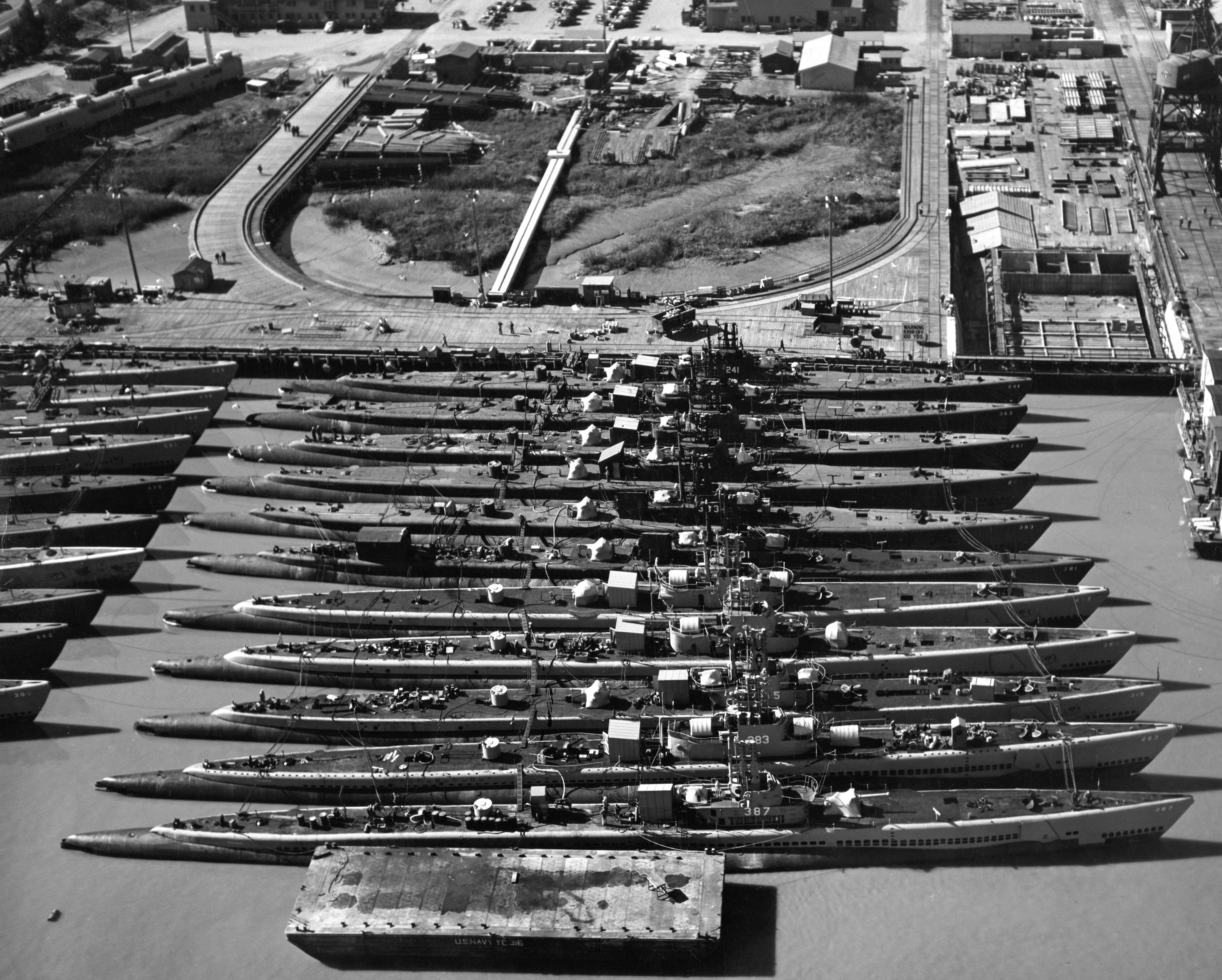
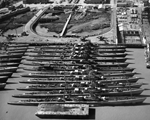
Aerial view of decommissioned submarine at Mare Island Reserve Fleet taken on 18 March 1946. The majority of the personnel topside are navy personnel. I would say they are still inactivating the subs.
Submarines are from top to bottom: Bashaw (SS-241), Guitarro (SS-363), Mingo (SS-261), Gurnard (SS-254), Pampanito (SS-383), Sand Lance (SS-381), Bream (SS-243), Hammerhead (SS-364) Sealion (SS-315), Tinosa (SS-283) & Pintado (SS-387) plus YC 316. |
USN photo courtesy of the Vallejo Naval & Historical Museum via Darryl L. Baker.
|
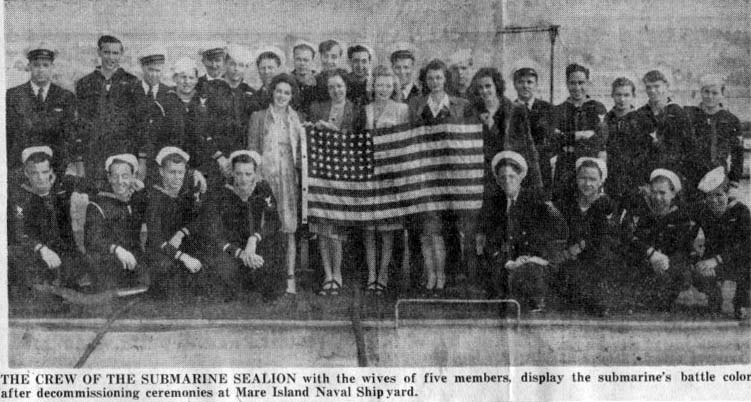
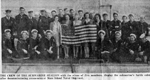 | 80k | News clipping of Sealion's (SS-315) decommissioning at Mare Island in 1946. | Photo courtesy of Darryl L. Baker. |
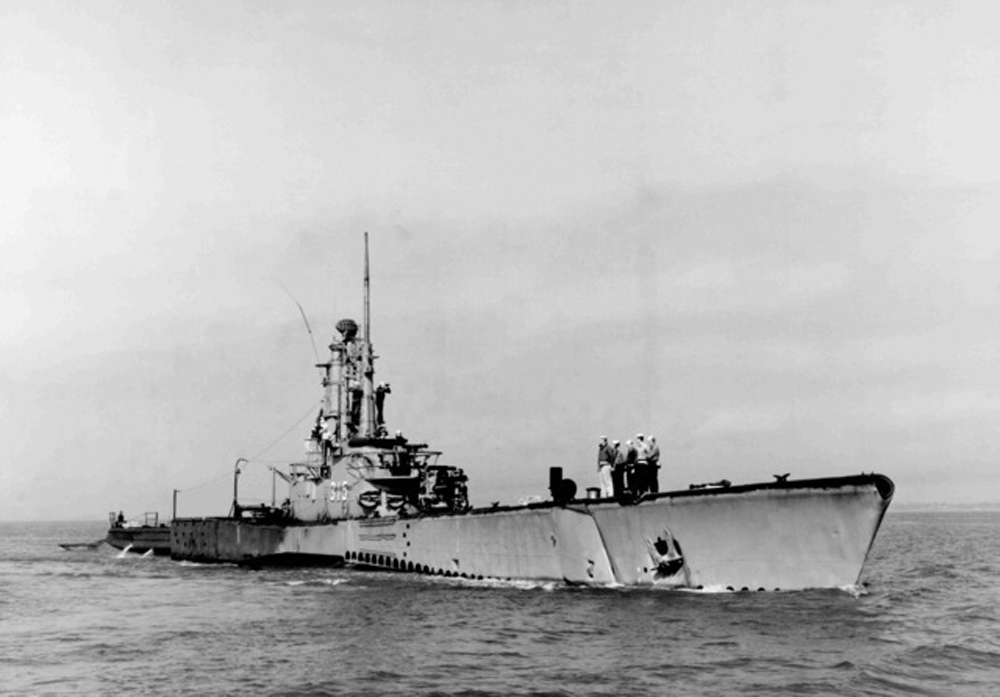
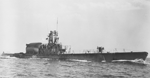
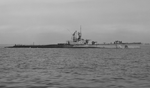 | 1.00k | Two views of Sealion (ASSP-315), pictured above in broadside and starboard quarter view here 28 April 1953, somewhere off of Norfolk, VA. | Photo # USN 483556 scanned by Ryan Crierie, via flickr, courtesy of Stephen Gower. Insert view courtesy of John Hummel, USN (Retired).
|
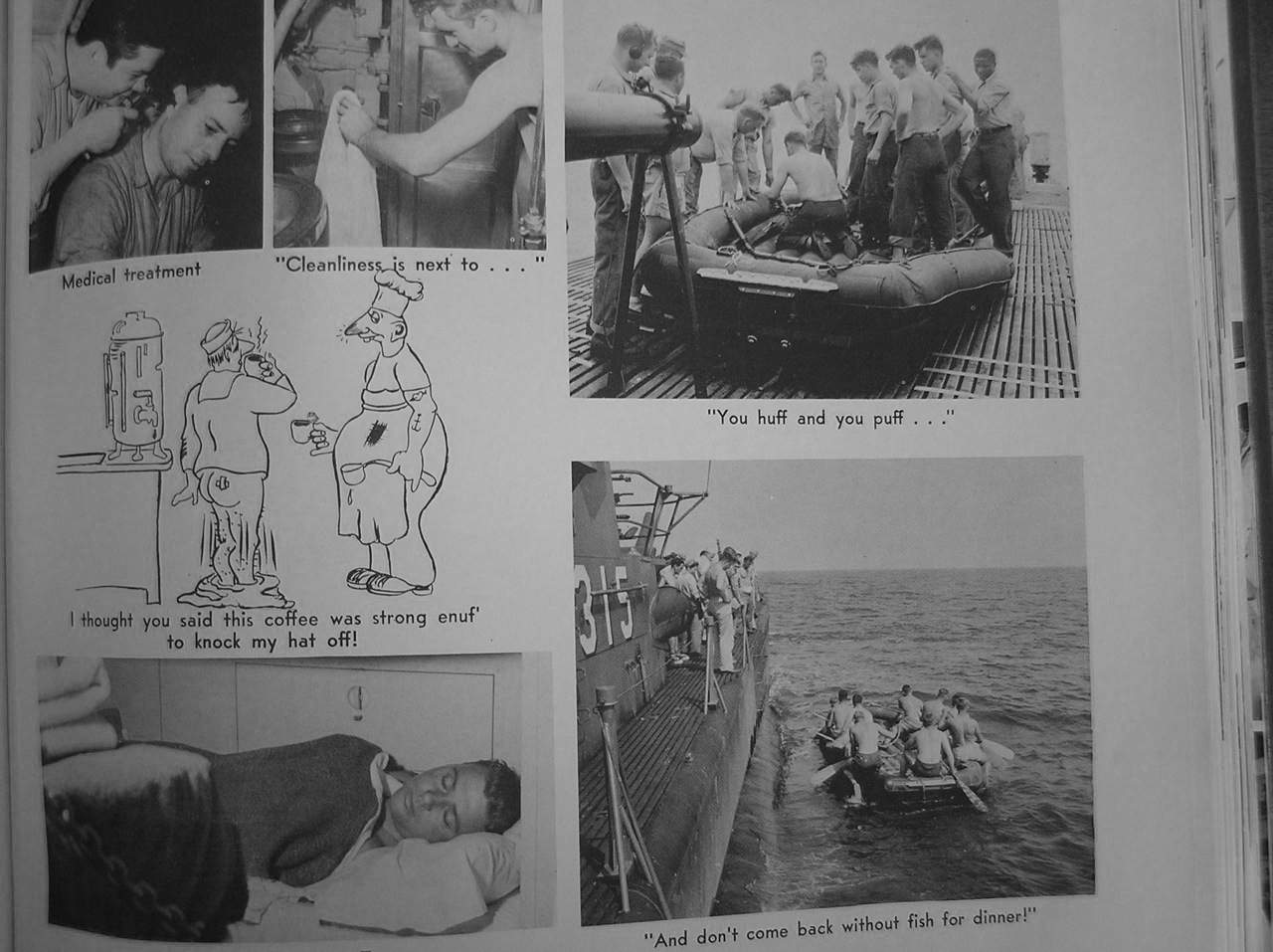
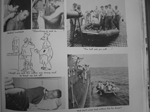 | 121k | Sealion (SS-315) shipboard life in 1953. | Photo courtesy of John Hummel, (USN) retired. |
 |
837k |
Marines on Sealion (APSS-315) - 16 June 1955. |
Photo # 80-G-442238 scanned by Ryan Crierie, via flickr, courtesy of Stephen Gower.
|
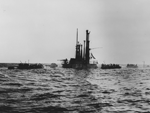 | 1.40k | Sealion (SS-315) starts to submerge to offload 3 rubber boat loads of marines for a recon mission. | Photo # 80-G-669974 scanned by Ryan Crierie, via flickr, courtesy of Stephen Gower.
|
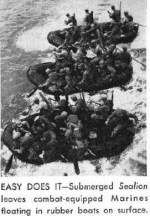 | 36k | Submerged Sealion (SS-315) leaves combat equipped marines floating in rubber boats on surface. | USN photo courtesy of Stan Svec via January 1956 edition of All Hands Magazine
|
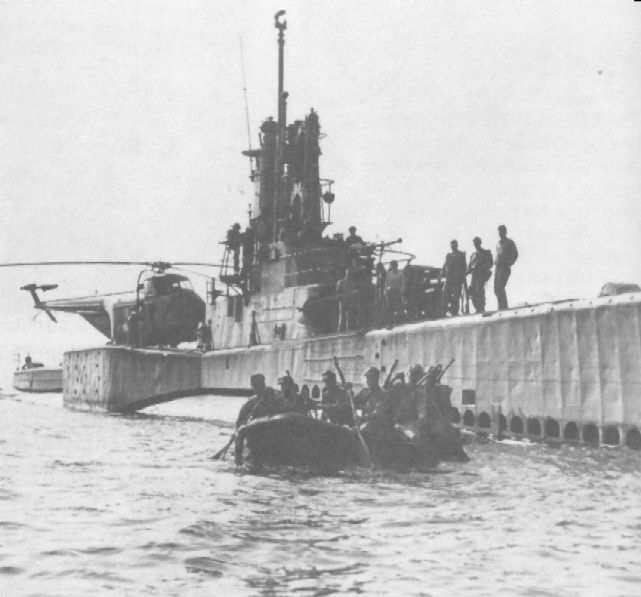
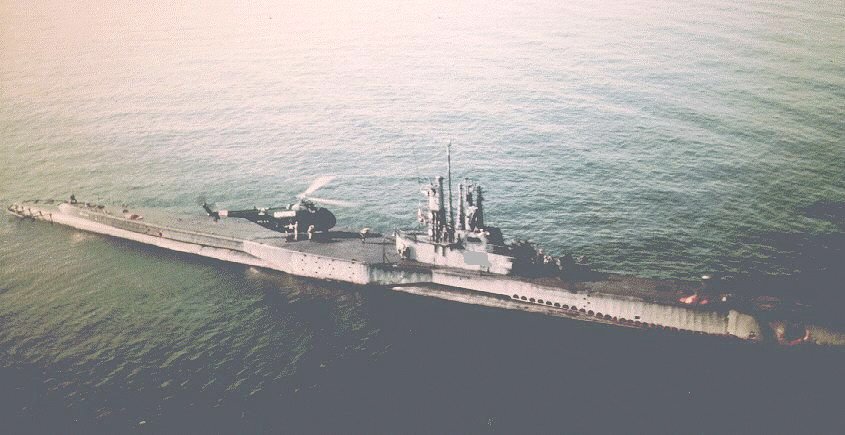
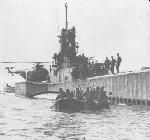 | 103k | Submerged Sealion (SS-315) during exercises with Marine scouts of the 2nd Marine Division circa May 1956. Note the HRS/H-19 helicopter resting on the after deck; 5-inch/25 and 40mm guns are still carried. Shortly after this photo was taken the boat was reclassified APSS-315.
| USN photo and text from The American Submarine by Norman Polmar, courtesy of Robert Hurst. |
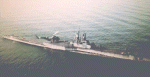 | 77k | Sealion (APSS-315) off Little Creek, VA on 4 May 1956, with an H-19 helicopter on deck. | USN photo courtesy of Haze Gray and Underway. |
 |
515k |
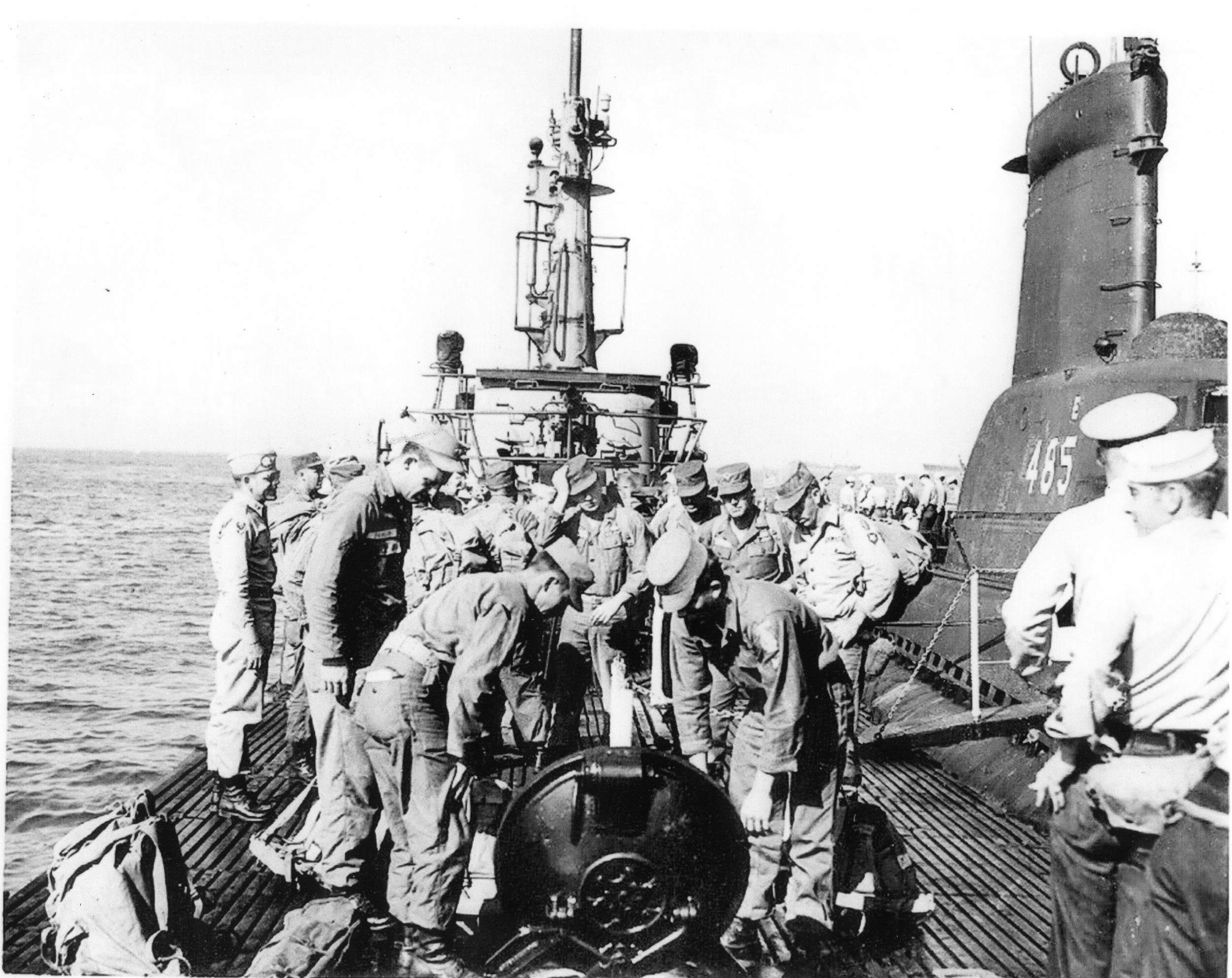
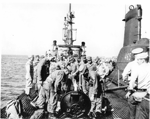
Loading equipment in forward hatch of the Sealion (APSS-315) during the Fall, 1956. The Sirago (SS-485) is inboard. |
Photo courtesy of Roxanne M. Merritt, Director, JFK Special Warfare Museum. |
 |
254k |
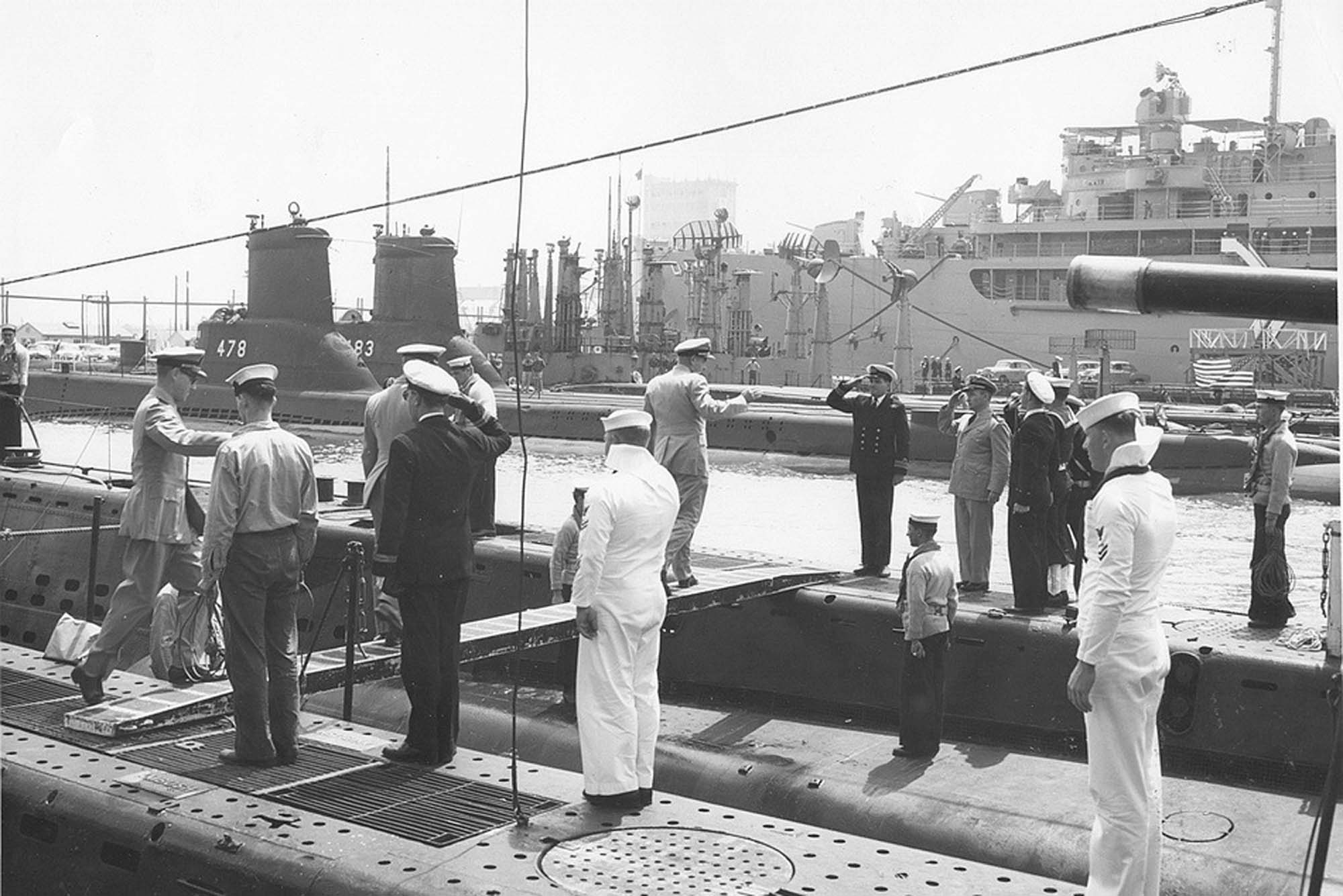
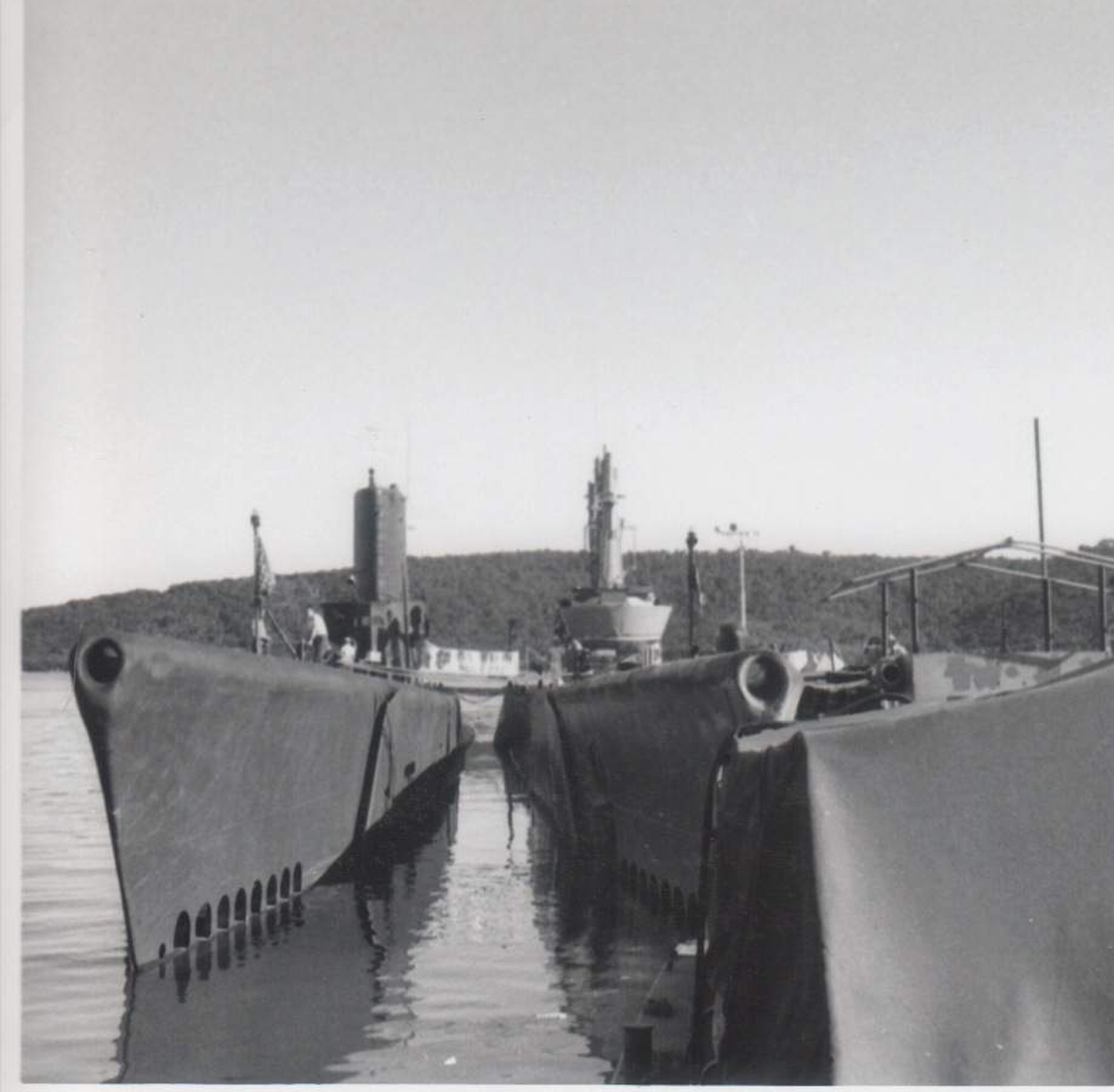
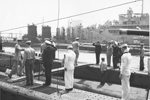
British subs visits Norfolk circa middle 1950's plus. Submarines lined up on the pier from outboard to inboard are: Cutlass (SS-478) and Sea Leopard (SS-483) with step sails. Followed by the Sealion (SS-315) & several SSR's which might be the Tigrone (SSR-419) and Burrfish (SSR-312). Both boats are in the Migraine I SSR version. If the last SSR is indeed the Burrfish, then this picture would have been taken sometime in the late spring of 1956.
The USN sailors are in dress whites (indicating the springtime changeover to whites), and the Burrfish departed Norfolk for the last time on 5 June 56, headed for New London and decommissioning. The tender is Sierra (AD-18), which was always located at the next pier down from the sub pier.
|
Photo courtesy of John Hummel, USN (Retired).
Photo i.d. & text courtesy of David Johnston |
 |
205k |
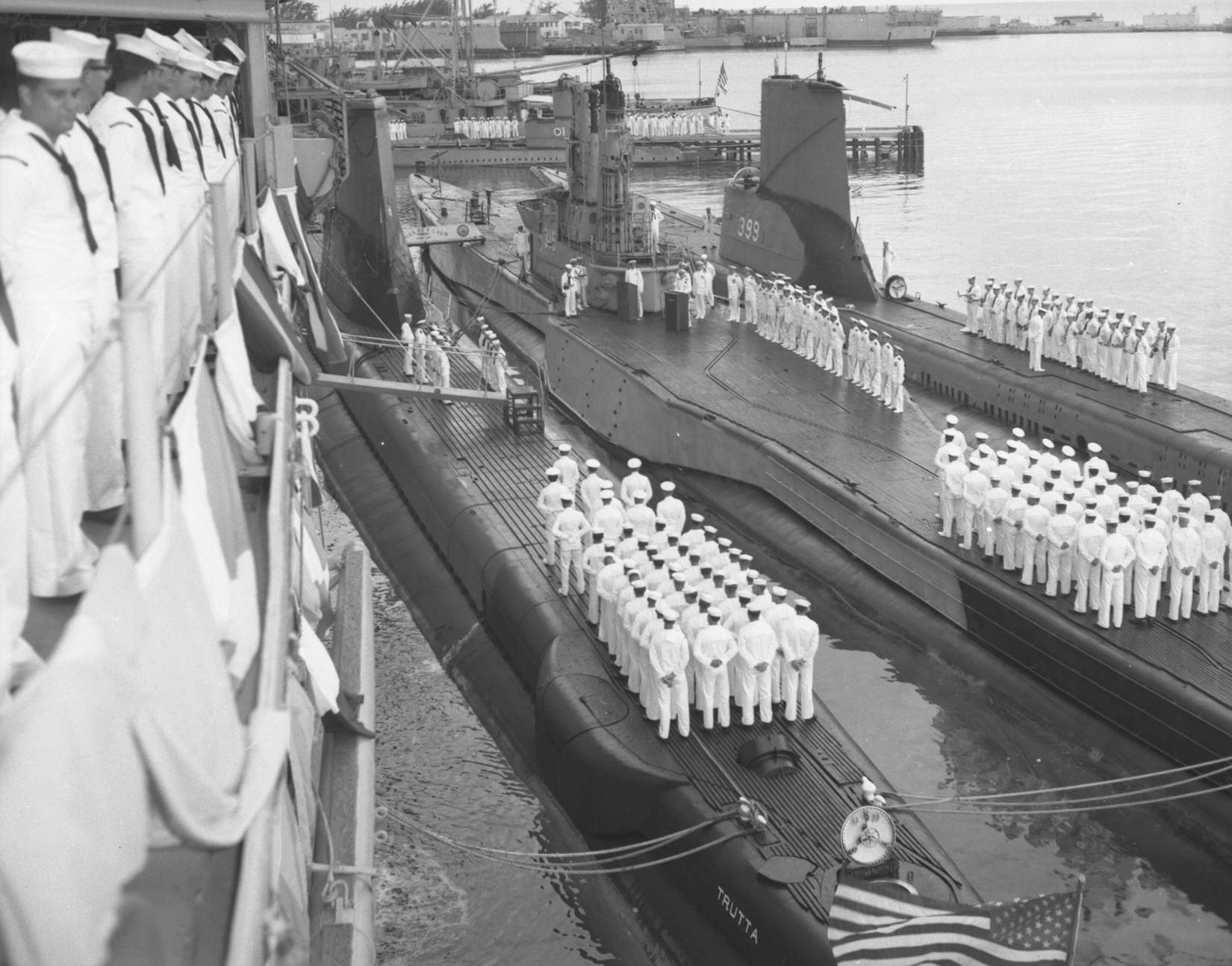
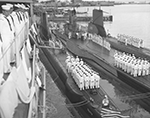
Ceremony for 4 boats at a pier in sea major.
Sealion (APSS-315), centre, with Trutta (SS-421), at left, alongside unidentified tender, and Sea Cat (SS-399), at right. The small boat at the other pier is the Mackerel (SST-1).
I believe this to be a Change of Command for the Commanding Officer of the submarine squadron, not just the Sealion. All of the boats have their crews topside and in whites, including the tender on the far left of the photo. This indicates something larger than just the Sealion. They used her deck to set up the podiums because she has the largest deck aft of the conning tower. Her deck was expanded during her amphibious conversion.
The Sealion would have left Key West not long after this photo was taken, for decommissioning in Philadelphia, so it is unlikely that she would be having a CoC at that time.
|
Photo i.d. & text courtesy of Ric Hedman & David Johnston
Photo # MM00041228x by Don Pinder from the Ida Woodward Baron Collection in the Florida Keys Public Library via flickr.com courtesy of Robert Hurst. |
 |
771k |
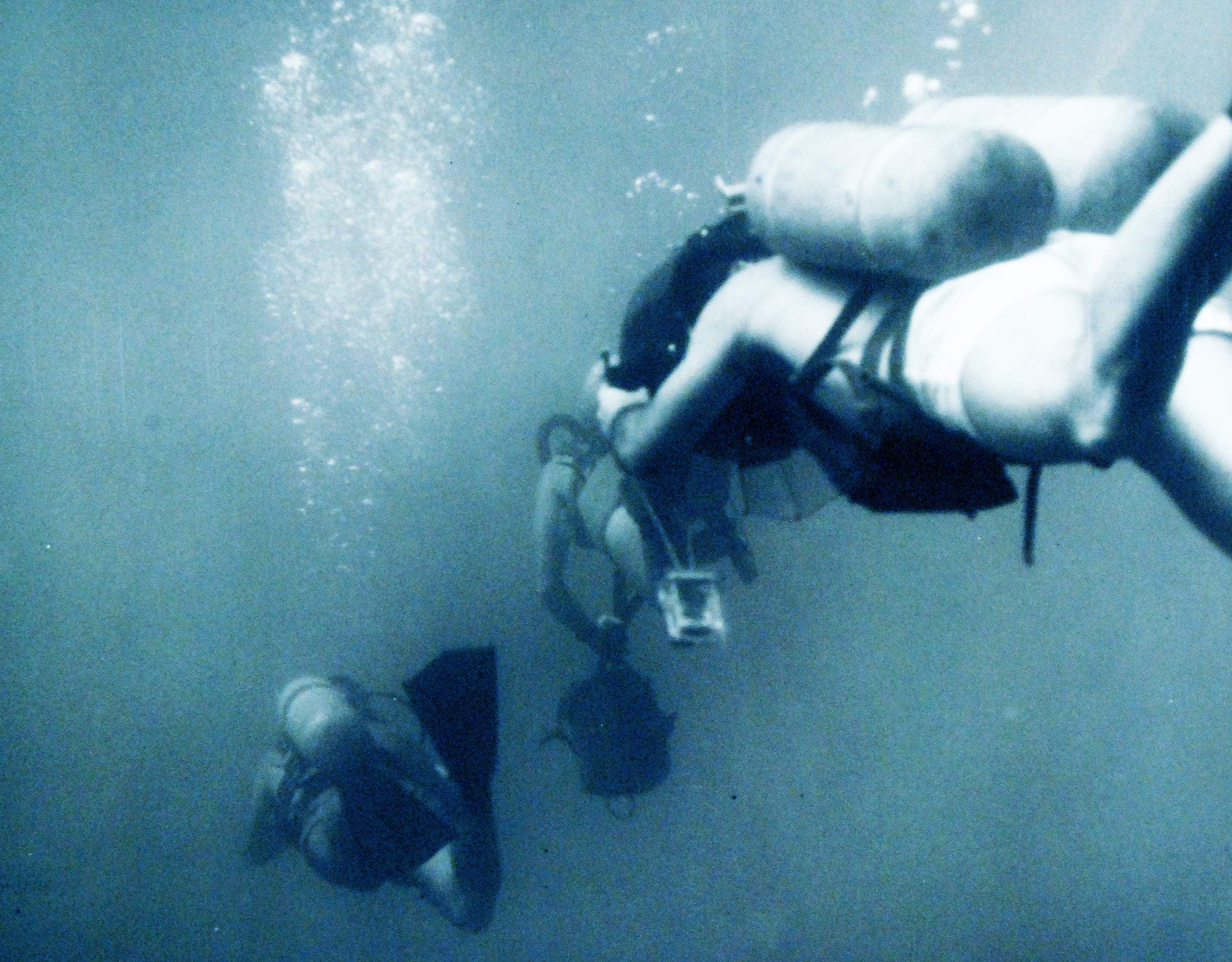
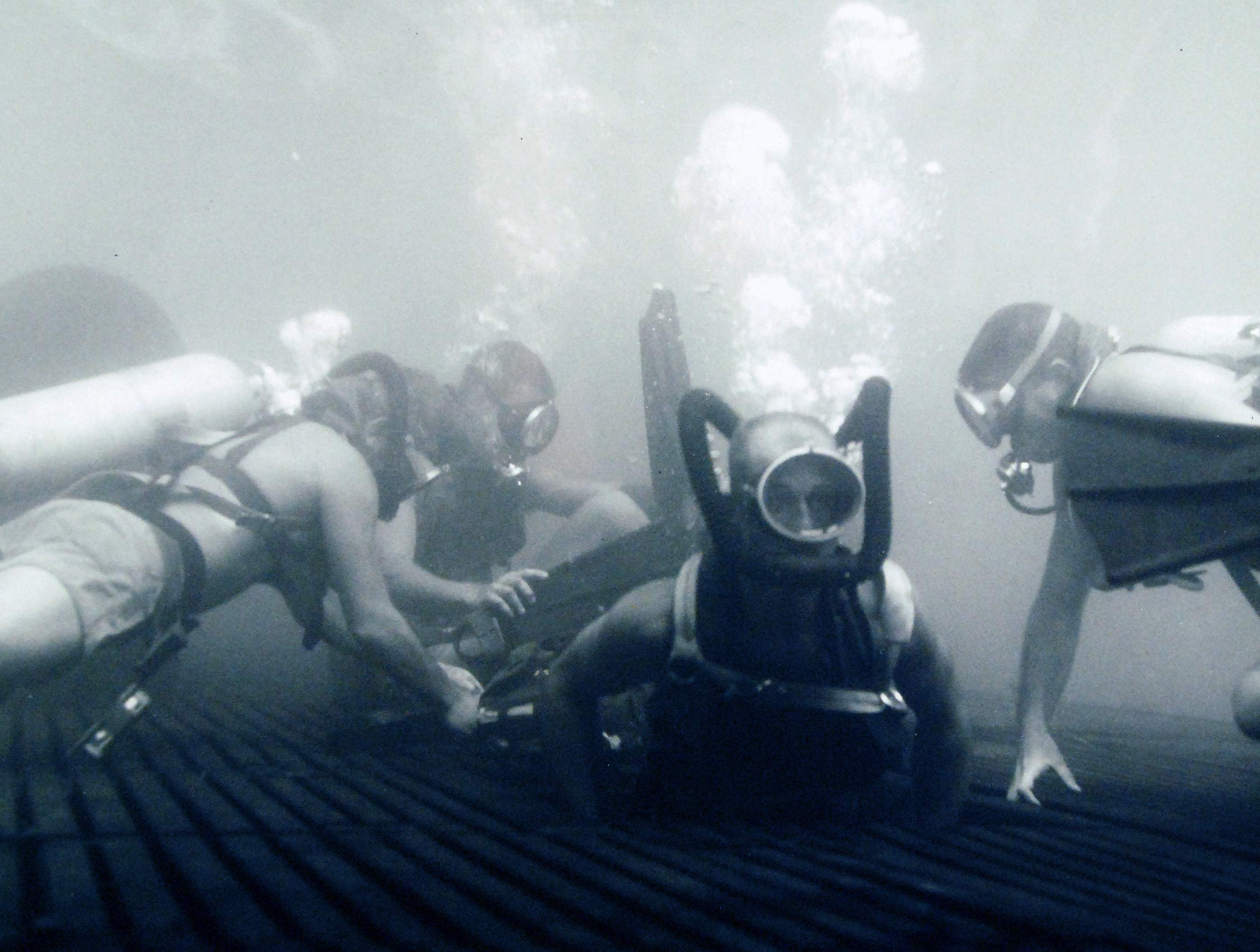
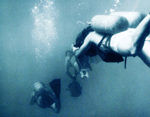
U.S. Navy Frogmen on training exercises at St. Thomas, Virgin Islands, leave the submerged submarine Sealion (APSS-315) through the forward escape trunk carrying their demolition equipment, proceed to the beach as the spearhead forces of an amphibious assault, and after their mission is accomplished, rendezvous with the submarine and reenter through the escape trunk.
Photograph released 13 March 1963. |
USN photo # USN 1066431 & 1066438, Photographed by PHC C.L. Wright, courtesy of the National Museum of the U.S. Navy, via flickr.com.
|
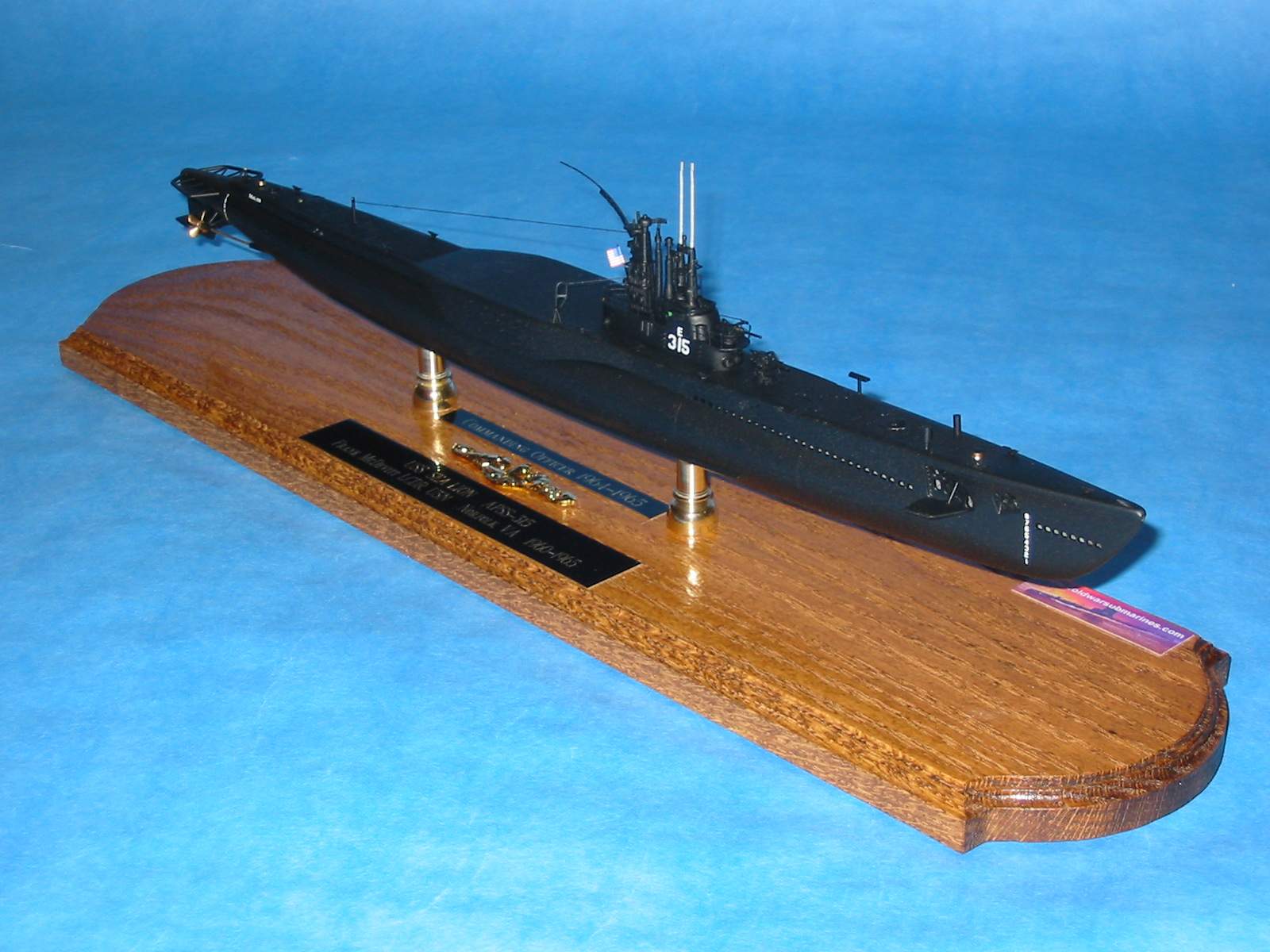
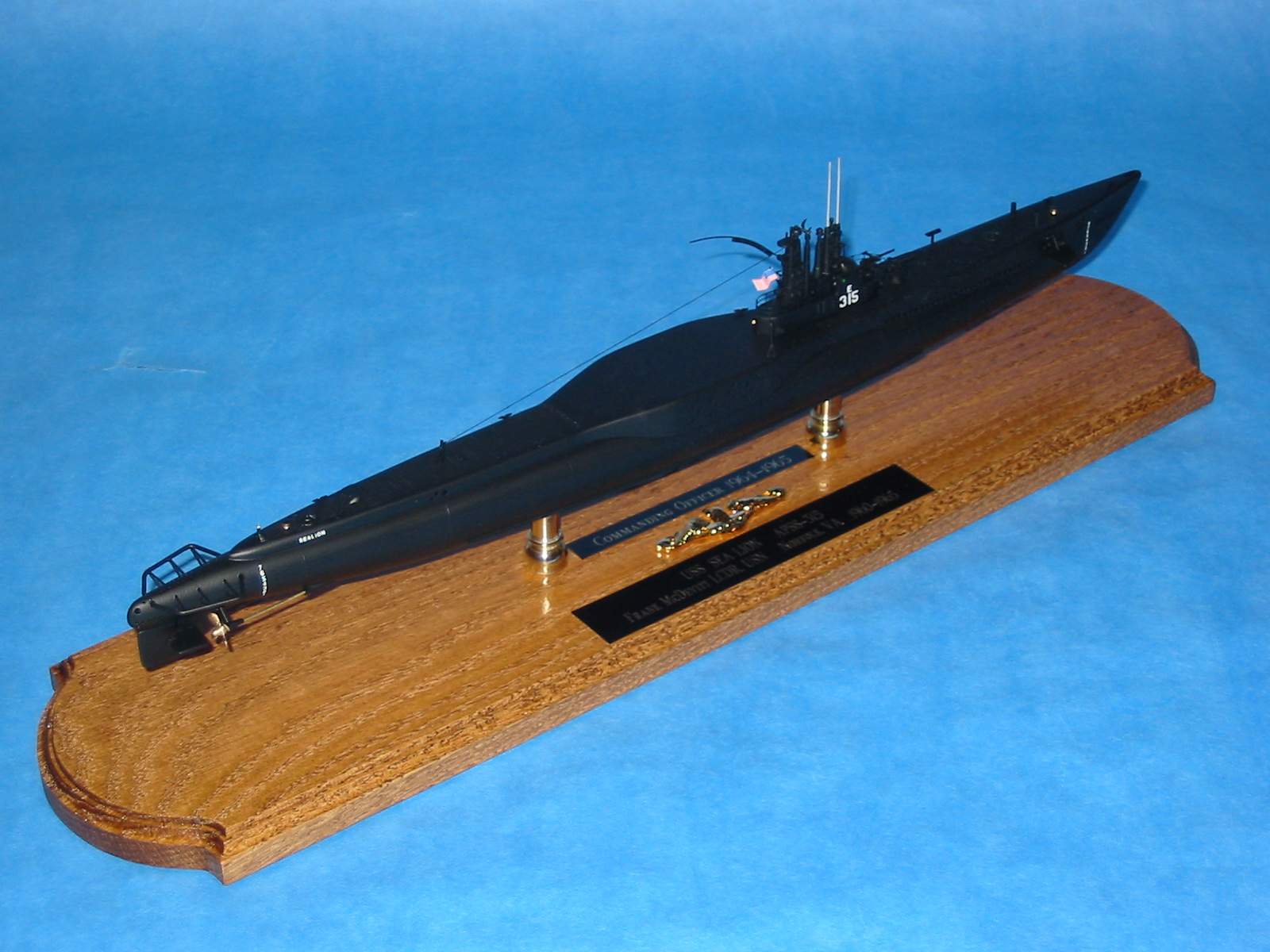
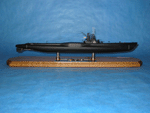 | 115k | Broadside & quarter view of the Sealion (APSS-315) bow & stern in 1/192 scale, solid cast resin, (circa 1960-1965). | Model & photo courtesy of Mel Douyette & coldwarsubmarines.com
|
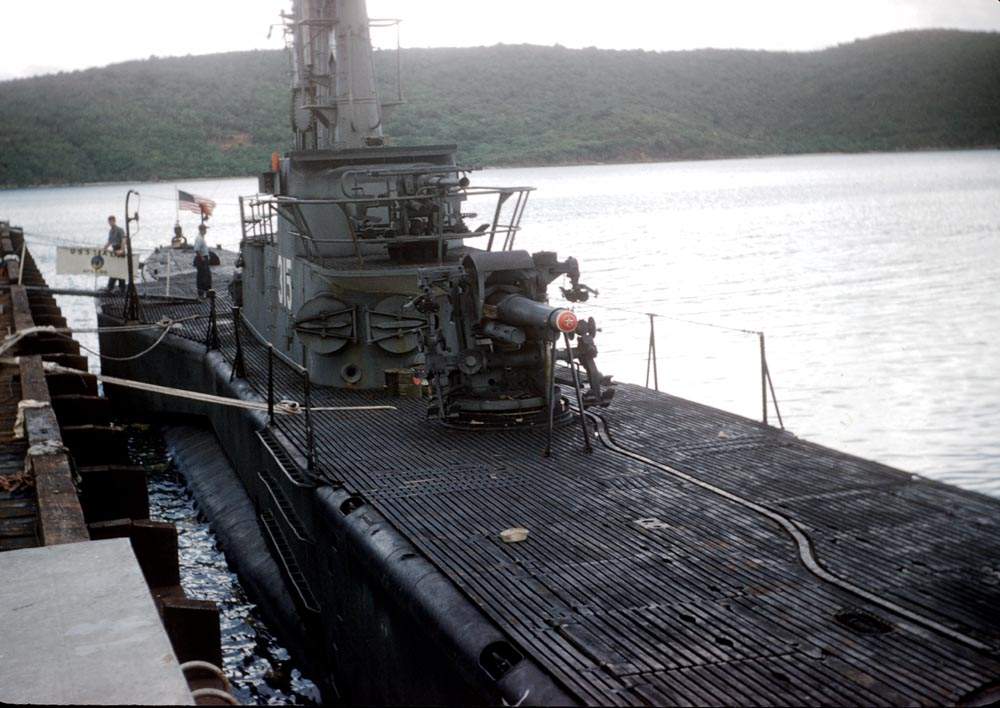
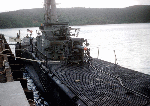 | 95k | Bow view of the Sealion (APSS-315) at St. Thomas US Virgin Islands, sometime before 1964. | Photo courtesy of John Hummel, USN (Retired). |
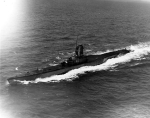 | 197k | On 3 December 1962 Sealion (APSS-315) returned to Norfolk and from then into 1967 she maintained her schedule of exercises with Marine Reconnaissance, UDT, and SEAL personnel. She is pictured here in October 1964. | USN photo # NPC 1106522 courtesy of usssubvetsofwwii.org. |
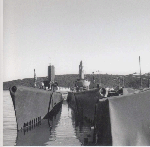 | 393k | Redfin (SS-272) & Sealion (APSS-315) in Saint Thomas, V.I. in 1966. | Photo courtesy of John Hummel, (USN) retired.
|
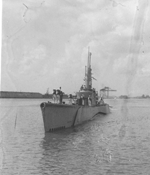 | 437k | Sealion (APSS-315) coming into San Juan harbor during operation Springboard 66. | Photo courtesy of John Hummel, USN (Retired). |
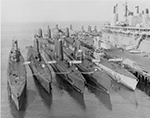 | 760k | From R to L: Sealion (SS-315), Argonaut (SS-475), Requin (SS-481), Runner (SS-476) & Redfin (SS-272).
Orion (AS-18) is on the other side of the pier together with other boats, end of year holidays in 1966.
Behind these five boats are four more Guppy diesel boats, and behind them at the end of the pier is a Skipjack class SSN moored next to the big nuclear boat Triton (SSN-586), formerly SSRN, and the flagship of the Submarine Force, Atlantic Fleet (SUBLANT). On the other side of the pier from Triton is another Skipjack class SSN and directly behind the tender are three more diesel Guppies. | Text I.d. courtesy of David Johnston
Photo courtesy of Richard Simpson via Authur Rebman IC1(SS).
|
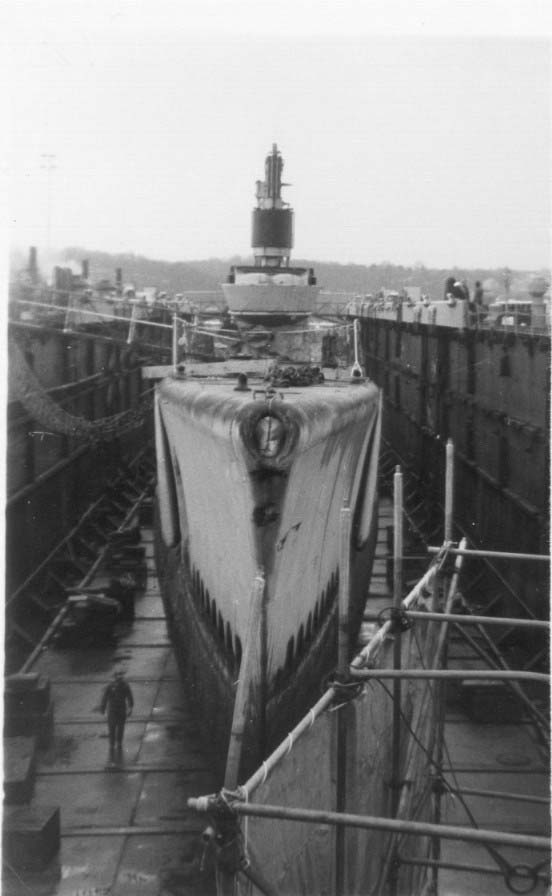
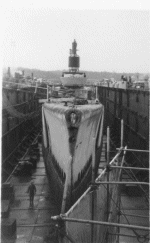 | 54k | Bow view of the Sealion (APSS-315), taken in floating drydock at sub base New London CT. in July 1978 before she was to be sunk as a target. | Photo courtesy of John Hummel, USN (Retired). |
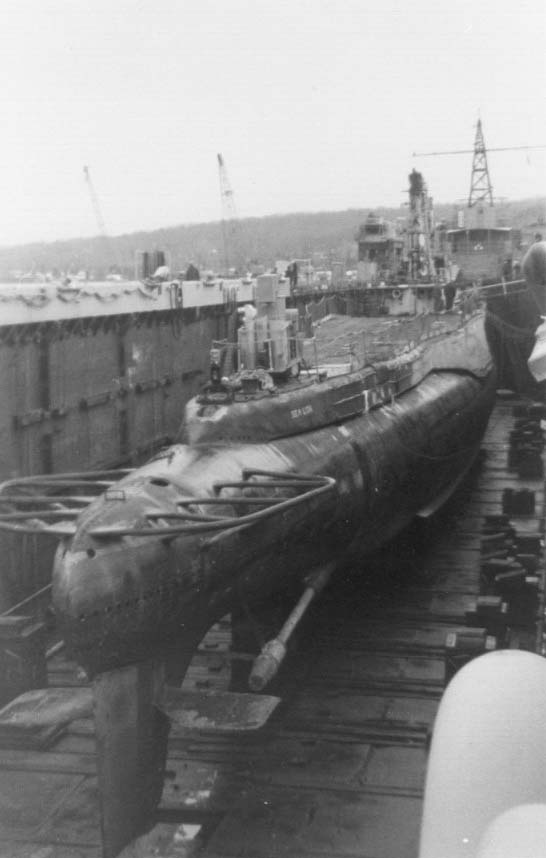
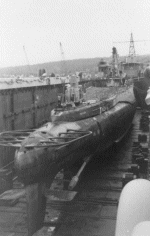 | 48k | Stern view of the Sealion (APSS-315), taken in floating drydock at sub base New London CT. in July 1978 before she was to be sunk as a target. | Photo courtesy of John Hummel, USN (Retired). |
 |
365k |
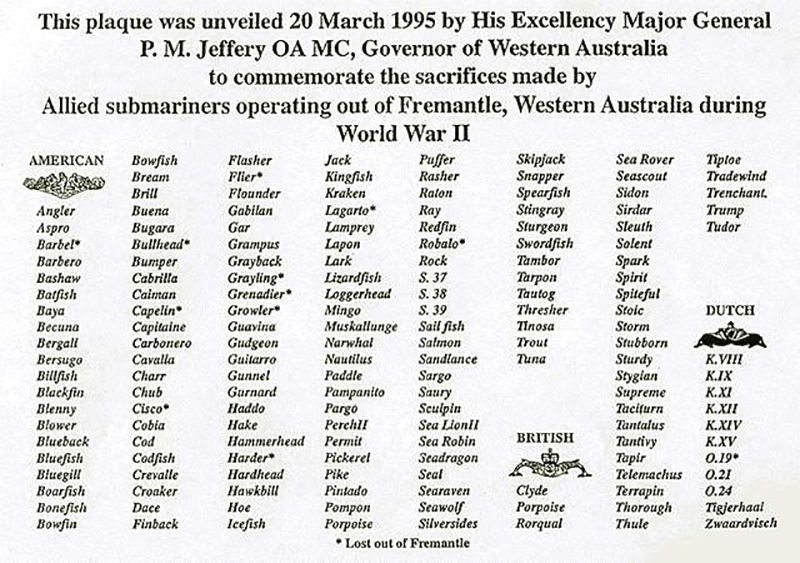
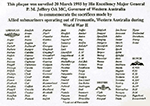
This plaque was unveiled 20 March 1995 by His Excellency Major General P.M. Jeffery OA MC, Governor of Western Australia to commemorate the sacrifices made by Allied submarines that operated out of Fremantle, Western Australia during WW II. |
Photo courtesy of Ron Reeves (of blessed memory).
|