NavSource Online: Submarine Photo Archive
Patches contributed by Mike Smolinski
Volador (SS-490)


Please report any broken links or trouble you might come across to the Webmaster.
Please take a moment to let us know so that we can correct any problems and make your visit as enjoyable and as informative as possible.
| Click On Image For Full Size | Size | Image Description | Source | |
|---|---|---|---|---|
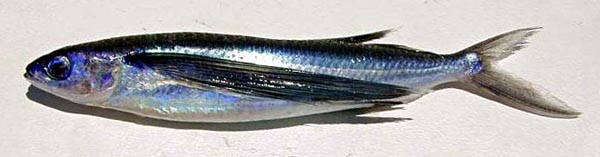 |
41k | Tropical Two-Wing Flying Fish, Exocoetus volitans. |
Photo courtesy Eric Brictson of Gordo Banks Pangas, La Playita, San Jose del Cabo, Baja California Sur, Mexico. Fish identification courtesy Peter Langstraat courtesy of mexfish.com. | |
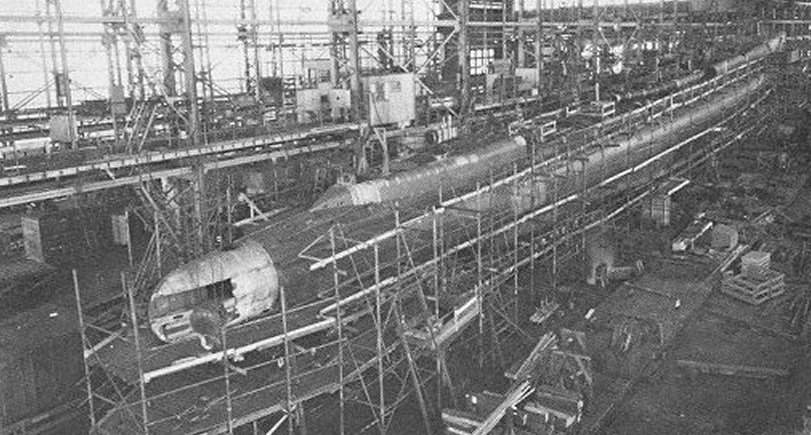 |
64k | Volador (SS-490) under construction at Portsmouth, 31 January 1946.
|
Courtesy of Leeward Publications Ships Data #4, USS Bowfin, submitted by Aryeh (Lee) Wetherhorn. | |
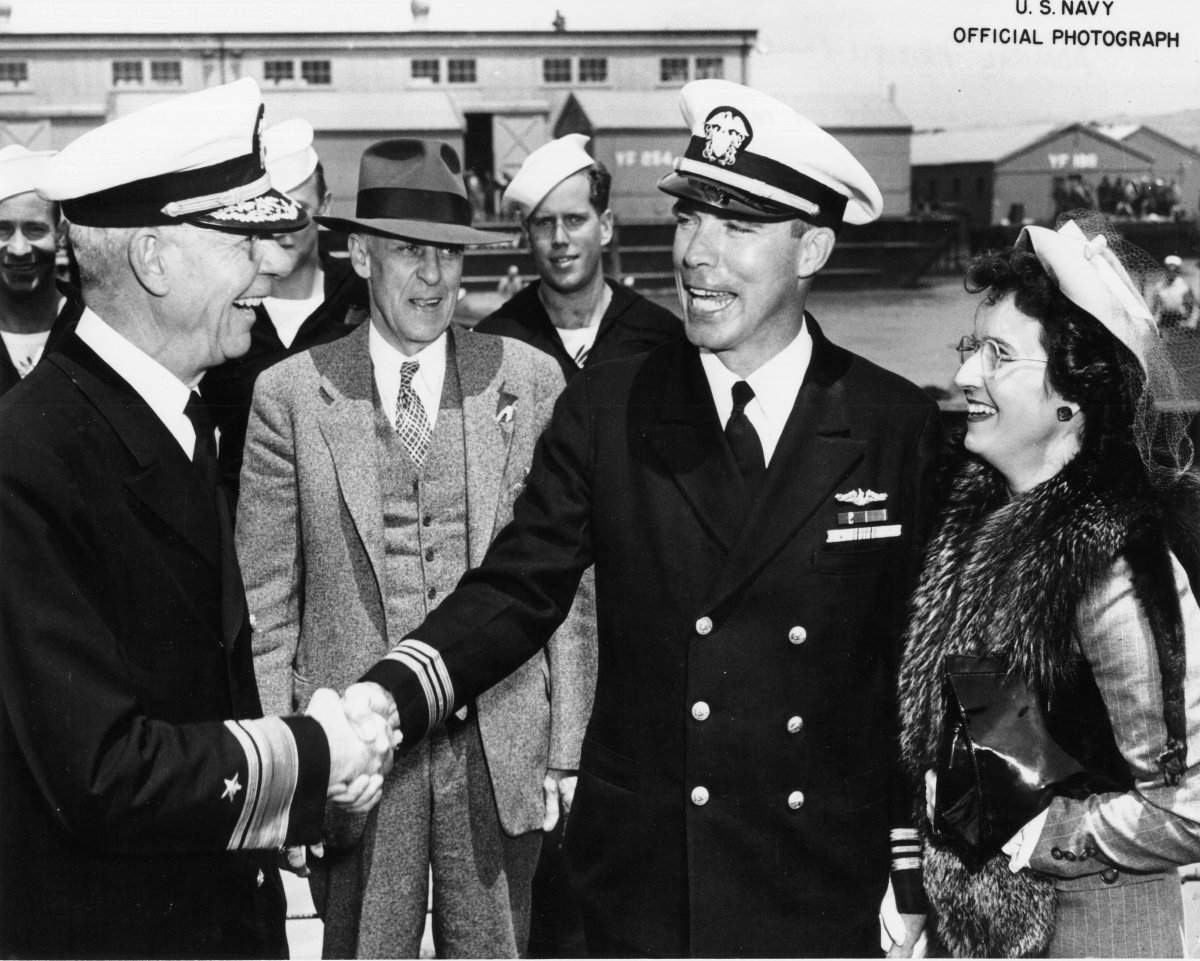 |
118k | Volador (SS-490) was sponsored by Mrs. Harriet Morton. In this photo, RADM W. L. Friedell, Commandant Mare Island Navy Yard, welcomes LCDR Mush Morton, Commanding Officer of the Wahoo (SS-238), back to Mare Island for an overhual on 29 May 1943. Morton is flanked by his father and his wife Harriet. |
USN photo courtesy of Darryl L. Baker. | |
 |
2.48k | Note that the last 2 submarines positions are incorrectly labeled in the photo, but are listed correctly here. SubRonFive picture 30 December 1949 featuring from upper left corner to right: Florikan (ASR-9), Pomodon (SS-486), Volador (SS-490), Catfish (SS-339), Cusk (SS-348), Diodon (SS-349), Carp (SS-338), Carbonero (SS-337), & Nereus (AS-17). |
Text I.D. courtesy of John Spivey. USN photo courtesy of usscusk.com. | |
 0849022 |
NR | SAILORS SWIM TO EDITORS RESCUE Sailors from the submarine Volador (SS-490) swim to rescue Charlotte Knight, associate editor of Collier's Magasine, and two Navy flyers after their helicopter crashed in the ocean and sank. The helicopter was transferring Miss Knight from a ship to the sub, operating in Korean waters. |
Image and text provided by Library of Congress, Washington, DC. Photo & text by Evening Star. [volume] (Washington, D.C.) 1854-1972, 21 December 1951, Image 3, courtesy of chroniclingamerica.loc.gov. | |
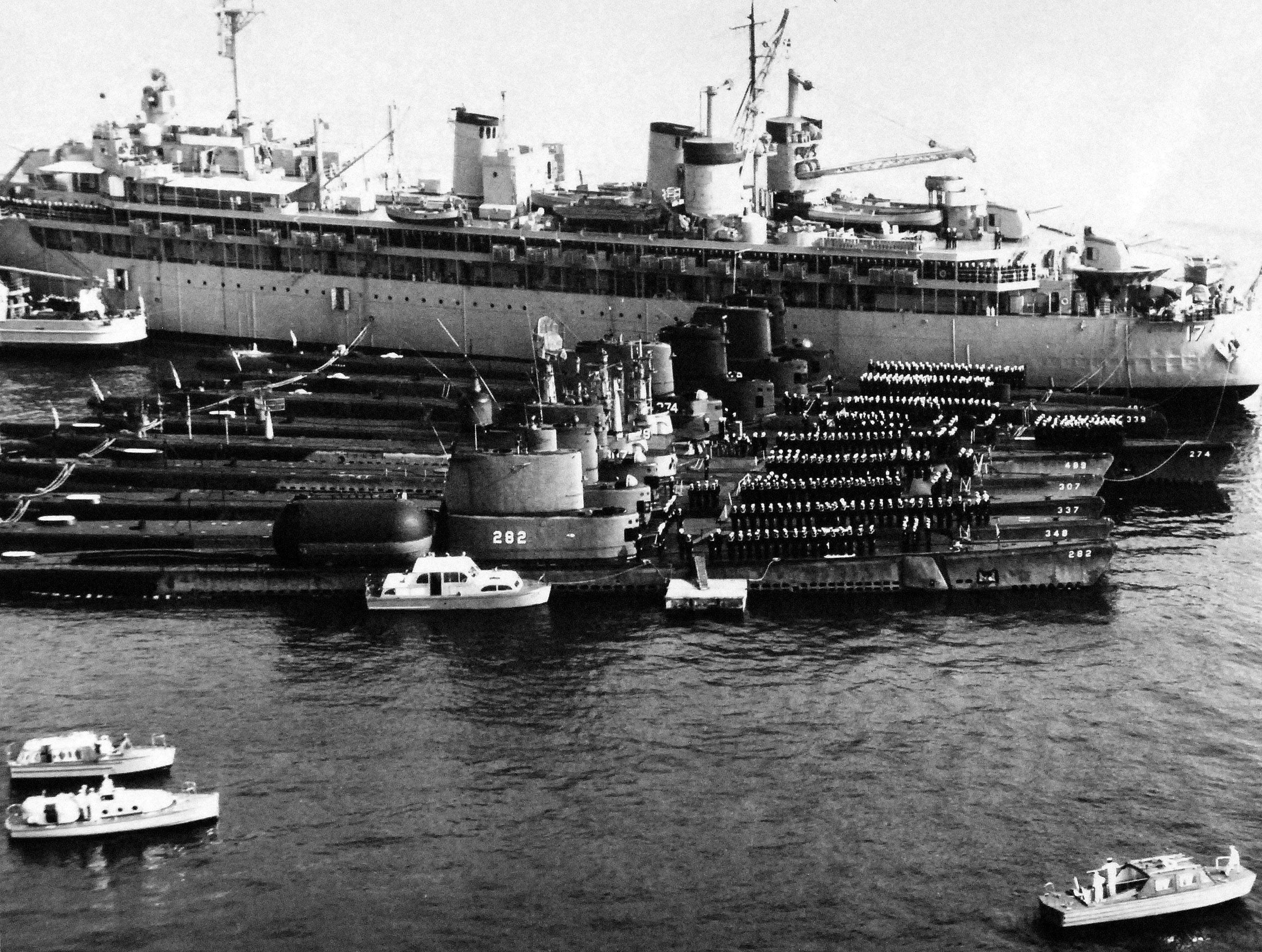 |
1.34k | This unusual view shows eleven vessels of Submarine Squadron Five (nine submarines, a submarine rescue vessel and a submarine tender) moored side by side for a recent change of command ceremony at San Diego, California. Captain Eugene B. Fluckey, USN, Medal of Honor recipient, relieved Captain Francis B. Scanland, USN, as Commander, Submarine Squadron Five on 1 August 1955. Nested alongside the submarine tender Nereus (AS-17) are: Tunny (SSG-282), Cusk (SS-348), Carbonero (SS-337), Tilefish (SS-307), Spinax (SSR-489), Rock (SSR-274), Remora (SS-487), Catfish (SS-339), and Volador (SS-490), and the submarine rescue vessel, Florikan (ASR-9). Photograph released 3 August 1955. | Photo # USN 681919 courtesy of the National Museum of the U.S. Navy, via flickr.com. | |
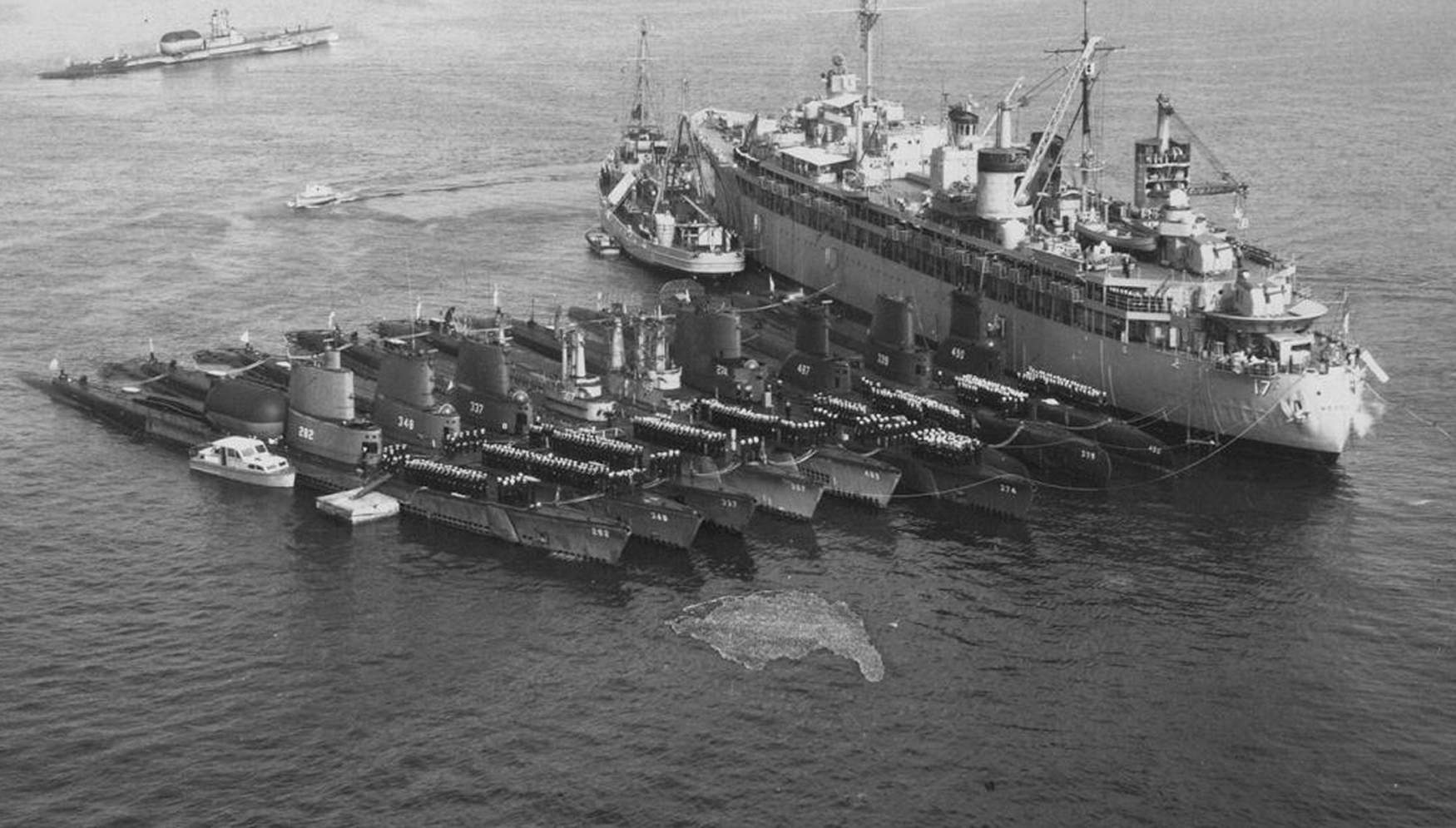 |
681k | Nereus (AS-17) with nine submarines; Tunny (SSG-282), Cusk (SS-348), Carbonero (SS-337), Tilefish (SS-307), Spinax (SSR-489), Rock (SSR-274), Remora (SS-487), Catfish (SS-339), Volador (SS-490) and the Submarine Rescue Vessel Florikan (ASR-9) moored alongside at San Diego. |
USN photo from "All Hands" magazine, November 1955, courtesy of Scott Koen & ussnewyork.com | |
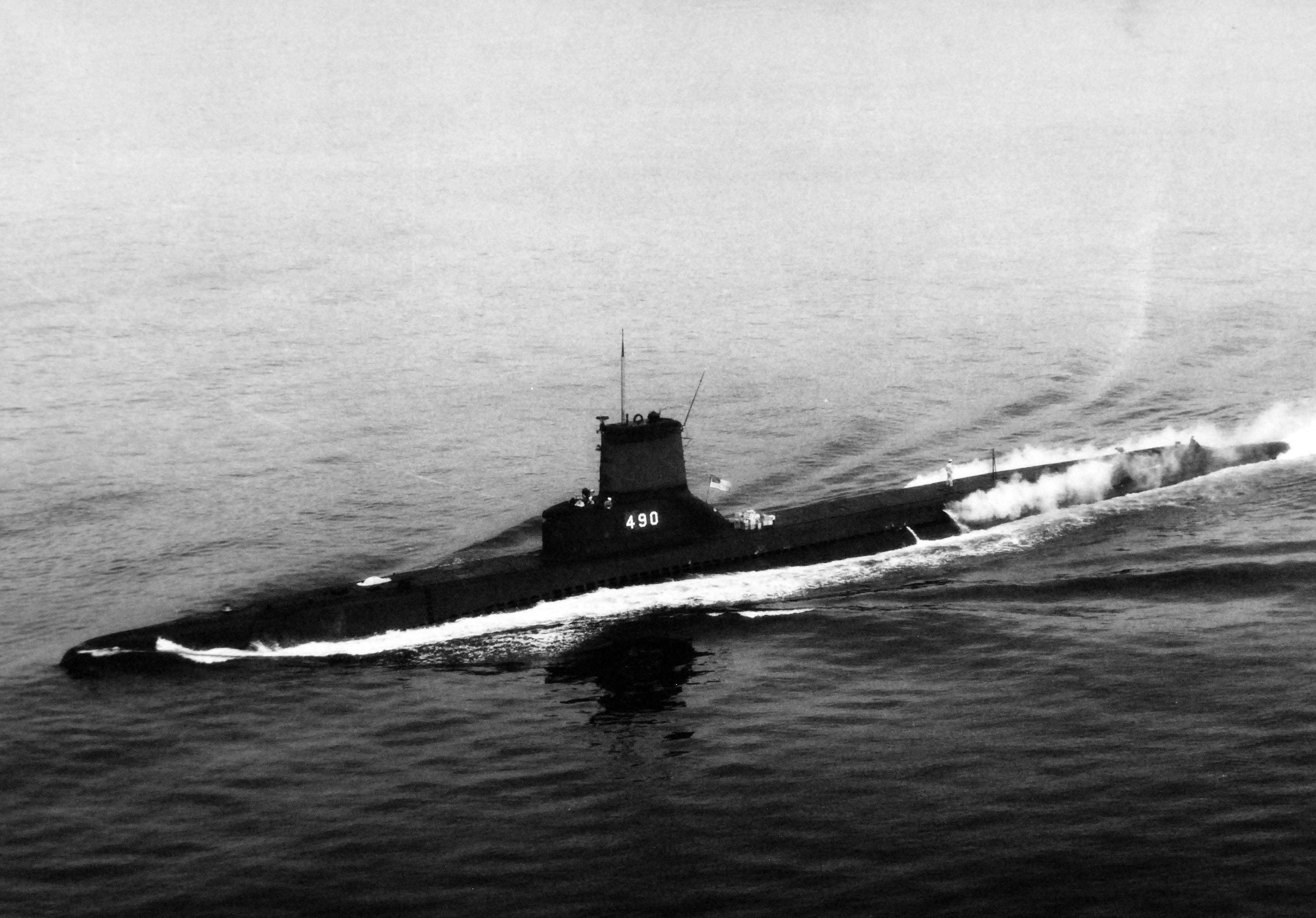 |
732k | Volador (SS-490) circa 1950's. | Photo # USN 680782 courtesy of the National Museum of the U.S. Navy, via flickr.com. | |
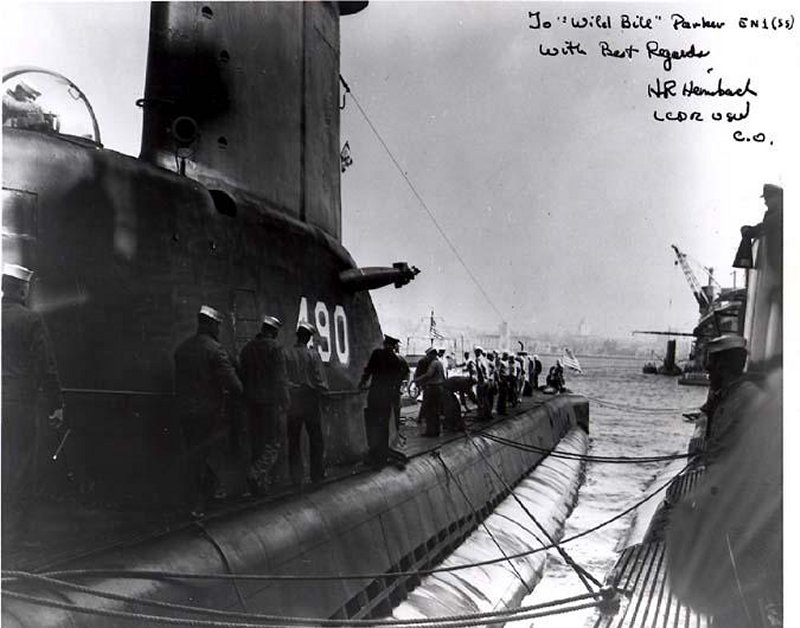 |
82k | ASROC torpedo sticking out of Volador's (SS-490) sail while the boat was a Guppy II. Photo circa 1961. By 1960, the US Navy was developing the MK44 rocket-thrown antisubmarine torpedo system, known as ASROC for Anti-Submarine Rocket. As part of the test program, King (DLG-10) and other ships had launcher systems installed and would soon give the weapons system a crucial test. Because ASROC and another US destroyer torpedo-delivery program, DASH - for Drone Anti-Submarine Helicopter, were intended to employ torpedoes that could have nuclear warheads, it was also necessary to develop long range active SONAR systems that would permit anti-submarine task forces to stand off a safe distance from their intended targets. These included the AN/SQS-23B and AN/SQS 26 sonar systems. Thus, the stage is set for multi-billion dollar, comprehensive multiple weapons systems developments intended to equip the US Navy to effectively counter the growing Soviet submarine threat. In August 1960, King was assigned the services of a "target" submarine, Volador, then a Guppy II diesel boat operating out of San Diego for the purpose of testing the new ASROC MK-44 torpedo system. With the submarine at periscope depth, being tracked by King's SQS-23B sonar, King fired an ASROC. Incredibly, the MK-44 torpedo separated from the rocket motor at the appropriate point and then punched through the thin skin of Volador's superstructure "sail" within a couple seconds of its entering the water. Other than requiring the services of a laundry, however, the only other damage done to Volador was a hole in its sail. In fact, the Chief of the Boat ("COB") Darryl Bailey STC(SS) reminded me during a Volador reunion in June, 2004, that Volador was scheduled to serve as "visit ship" at Broadway Pier that very weekend. In order to keep that commitment, COB Bailey had the topside gang tape a piece of newspaper over the hole caused by the MK-44 torpedo and then repaint the area. His ploy worked, not one single visitor noticed the hole in the sail. The point is that had the ASROC shot been for real, it would not have been a "kill" because the MK-44 torpedo struck Volador's sail immediately after entering the calm waters of the Pacific Ocean. It did not start, let alone complete its "enabling run" prior to lodging itself in Volador's sail area. Experience gained during wartime had taught the Navy to have a newly launched torpedo complete a short run before its warhead became fully armed - or "enabled." So this particular shot was a "dud" because King's fire control party had failed to enter the mandatory enabling run prior to firing their ASROC. The Navy, Norfolk Naval Shipyard, in particular, however, used the photos shot by SUBMARINE FLOTILLA ONE's photographer and incorporated them into a report as graphic testimony to the effectiveness of the ASROC weapons system! No mention was ever made of the firing solution error committed by the fire control party aboard King.The next encounter in the summer of 1961 saw Volador again providing target services to King for yet another ASROC systems test. This was to be the "qualification test" in which King would earn its credentials to carry - and employ - ASROCs in attacks on a hostile submarine. Volador was at periscope depth, rigged for collision. The Commanding Officer, LCDR H. Ray Heimback, USN, announced over Volador's 1MC as each critical point in King "attack" was reached. Finally, he announced "The torpedo is in the water!" Several seconds later, we felt a boat-jarring WHUMP!!! - King's torpedo had struck our after marker buoy fairing, leaving a sizable dent. That dent was still visible when I reported back aboard Volador in 1964 as an officer, but virtually none of that present crew had the slightest idea what had caused it. But King's crew had learned its lesson - had that been a war-shot, we would have been dead! |
Photo & text courtesy of Bill Parker LT, (USN Ret). | |
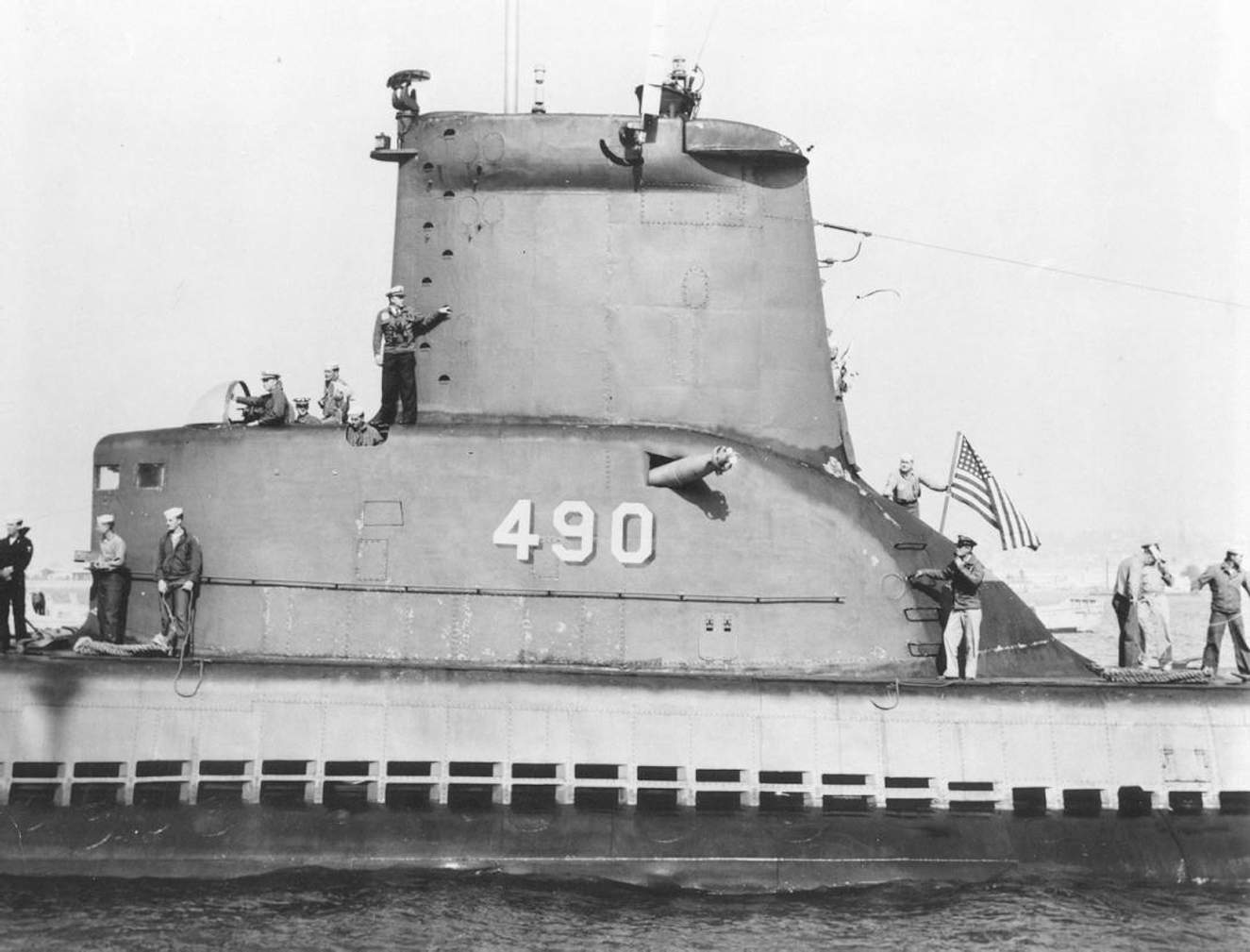 |
509k | Volador (SS-490) sporting the MK44 torpedo through her sail courtesy of the King (DLG-10) in August 1960. | USN photo courtesy of Scott Koen & ussnewyork.com | |
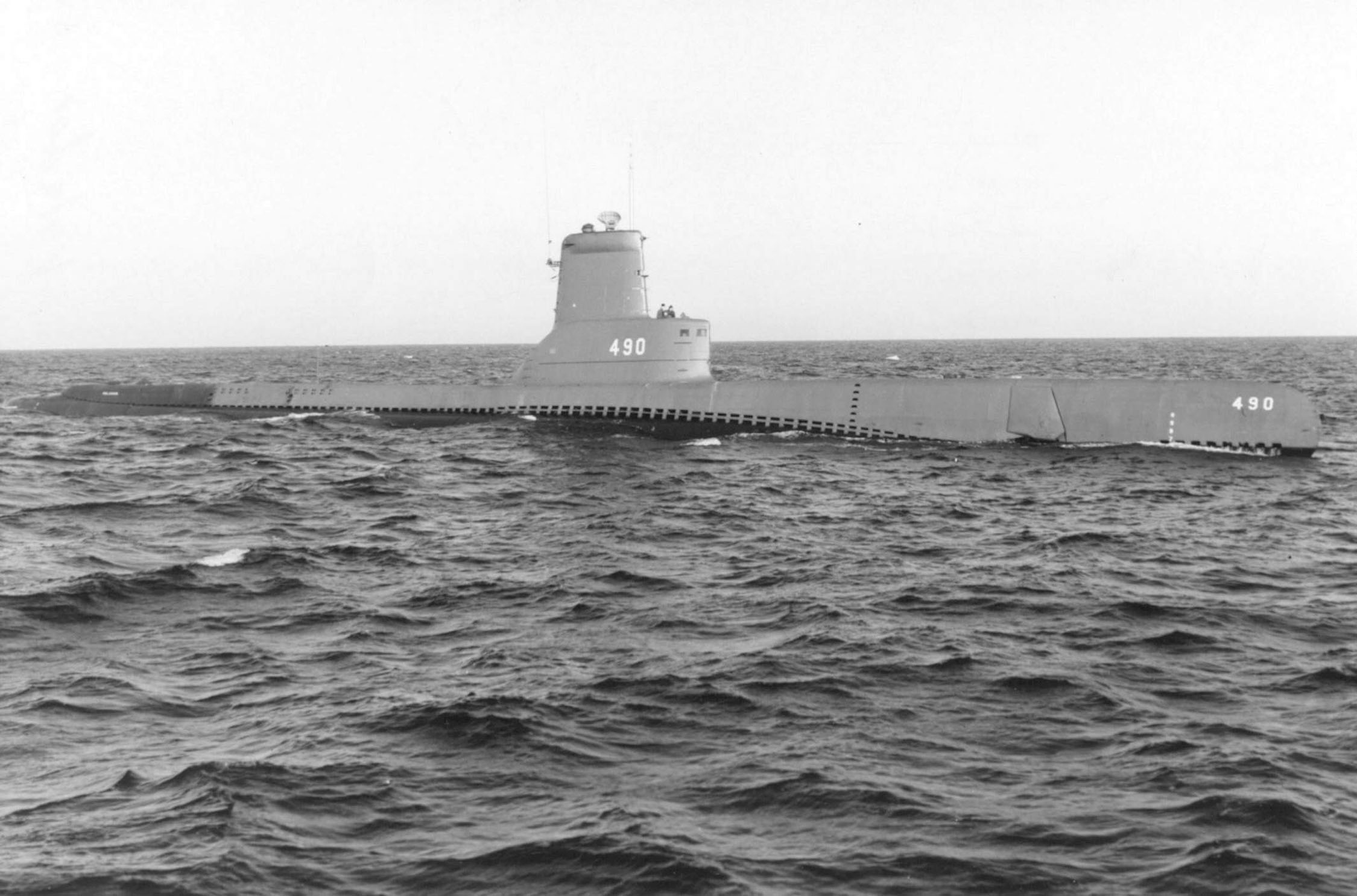 |
286k | Volador (SS-490) circa 1960. | USN photo courtesy of Scott Koen & ussnewyork.com | |
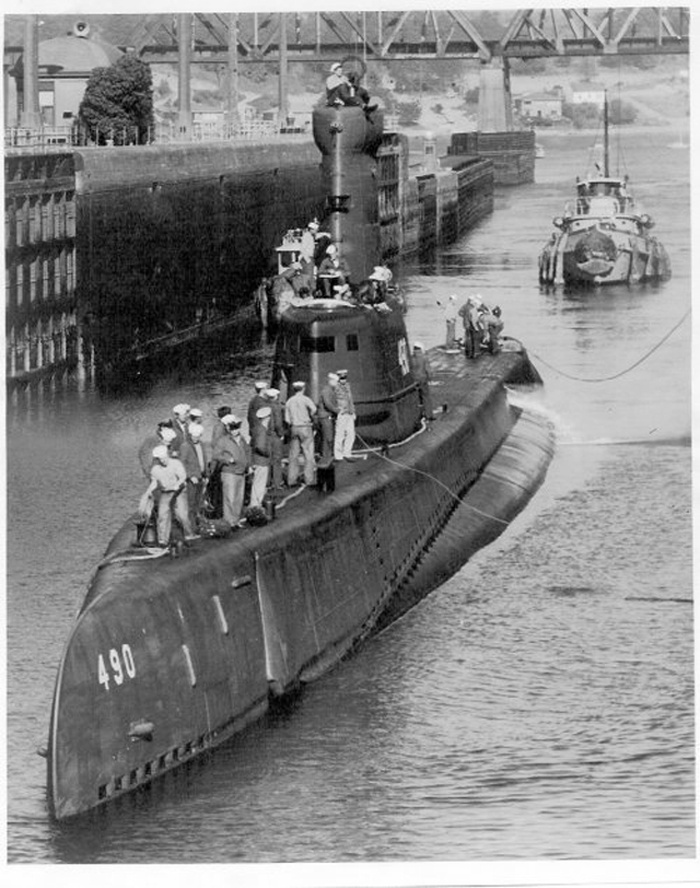 |
357k | Volador (SS-490) passes through the locks in Lake Washington. | Photo courtesy of John Hummel, USN (Retired). | |
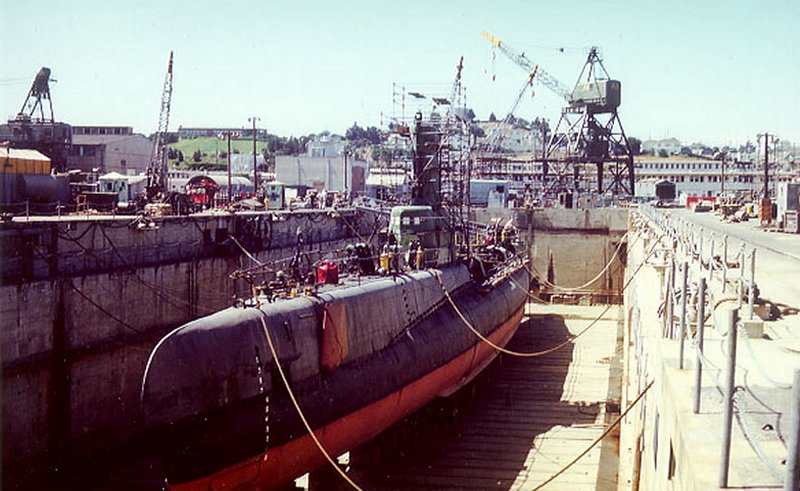 |
95k | Volador (SS-490) in drydock at Hunters Point August 1961. Still a Guppy II at the time, just before hull was cut open at Control/Forward Battery bulkhead, slid apart 15' and a new hull section added on the Control side. | Courtesy of Bill Parker. (USN Ret). | |
 |
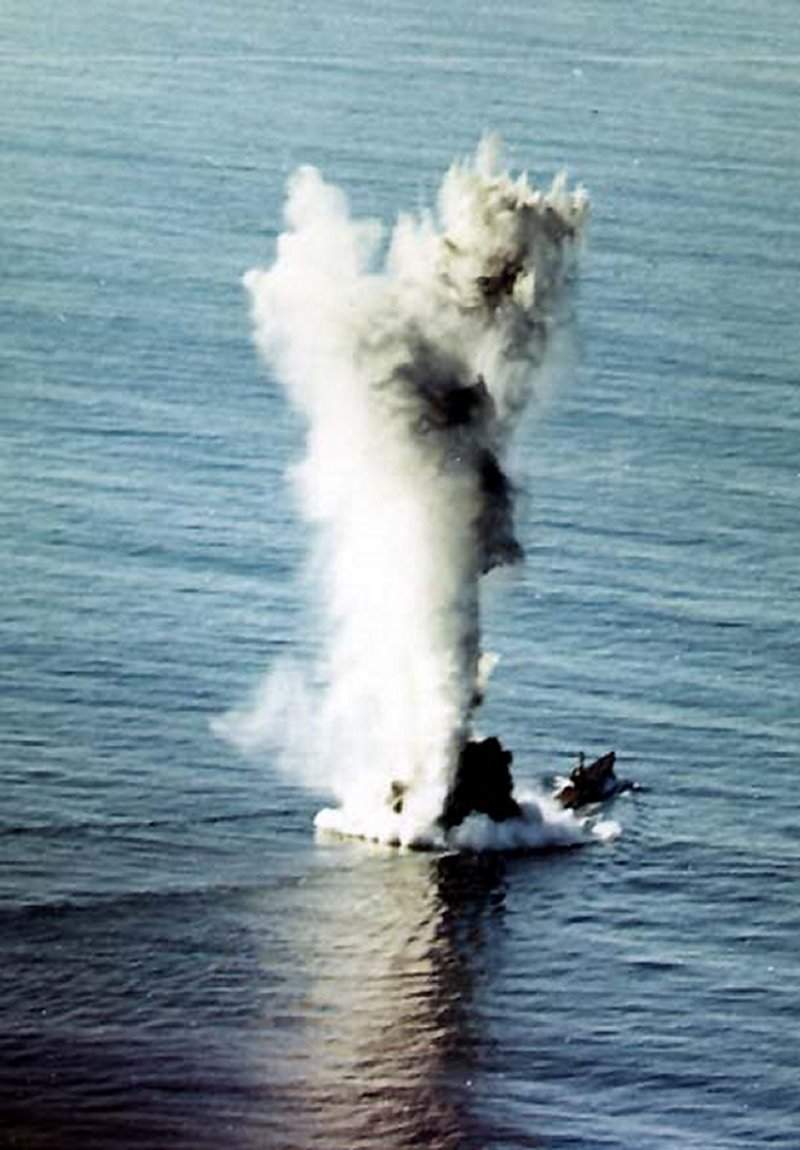
1.58k | Volador (SS-490) & Salmon (SSR-573) combined to send the ex-Howorth (DD-592) to the bottom of the Pacific on 8 March 1962. | USN photo courtesy of Scott Koen & ussnewyork.com. Photo i.d. courtesy of Darryl L. Baker. | |
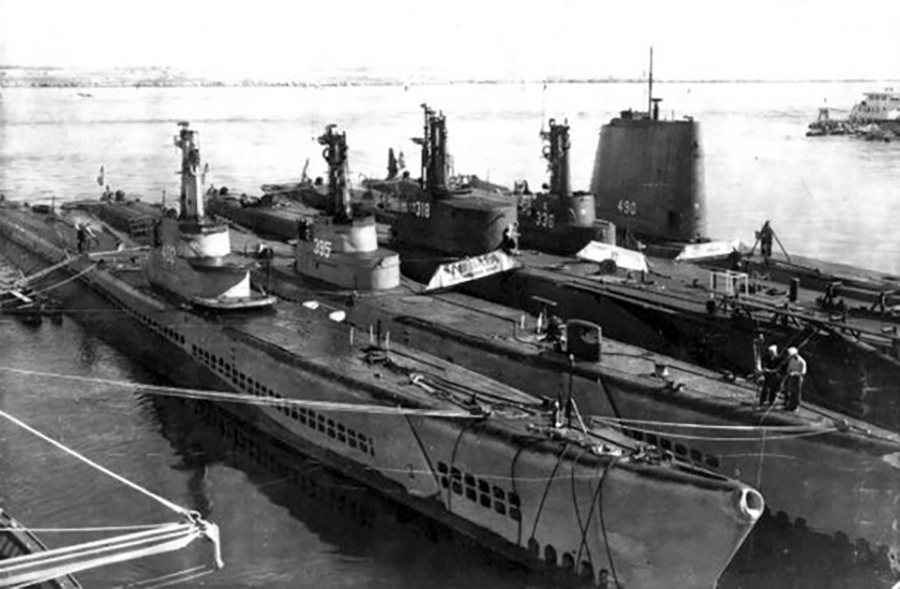 |
214k | A Pacific collection: From inboard to outboard: Sea Devil (SS-400), Redfish (SS-395), Baya (AGSS-318), Capitaine (SS-336) & Volador (SS-490). This picture was taken sometime after January, 1964. At that time the Baya had emerged from a conversion that gave her the configuration that is shown here. This also correlates to the Guppy III in the background, the Volador. She was converted to this configuration in 1963. The rest of the boats have what is called the "Queenfish Mod", a minimal attempt at streamlining by removing all the deck guns and topside ammo lockers and cutting away small portions of the fairwater. |
Text courtesy of David Johnston (USN, retired) . (USNR). Photo courtesy of John Hummel, USN (Retired). |
|
 |
218k | In late 1964, Volador (SS-490) again distinguished herself by sending the submarine hulk ex-Sea Devil (SS-400) to the bottom after firing one homing torpedo in a weapons system evaluation test, making her the only submarine in the Navy to claim two peace time "kills." | Text courtesy of DANFS. USN photo, courtesy of George M. Arnold. Insert photo courtesy of Sweet Old Bill (SOB) Parker & Photo enhanced by Royce Lewis courtesy of ussvolador-ss490.donmac.org |
|
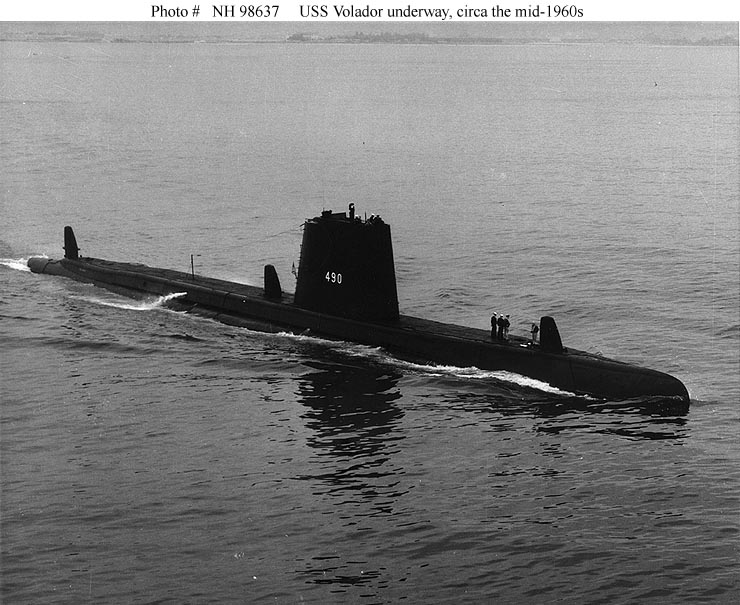 |
101k | Volador (SS-490) underway circa the mid-1960s, after her Guppy III modernization. This photograph was received by All Hands Magazine. magazine on 12 November 1965. | Official USN photo from the collections of the Naval Historical Center. # NH 98637 | |
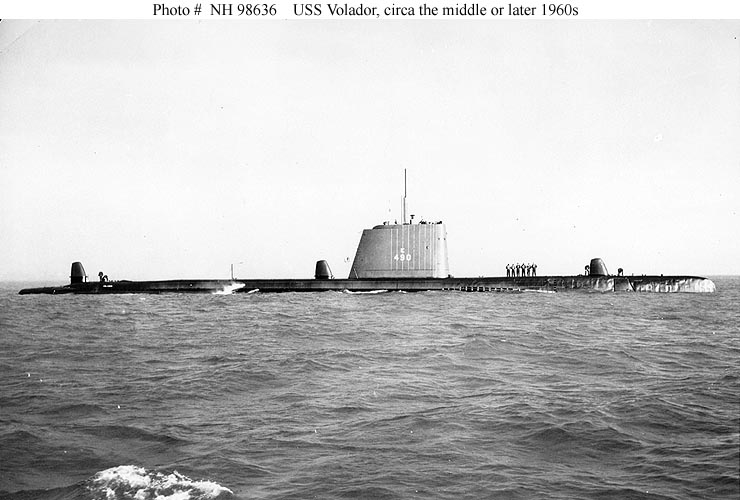 |
66k | Volador (SS-490) photographed circa the middle or later 1960s, after her Guppy III modernization.
|
Official USN photo from the collections of the Naval Historical Center. # NH 98636 | |
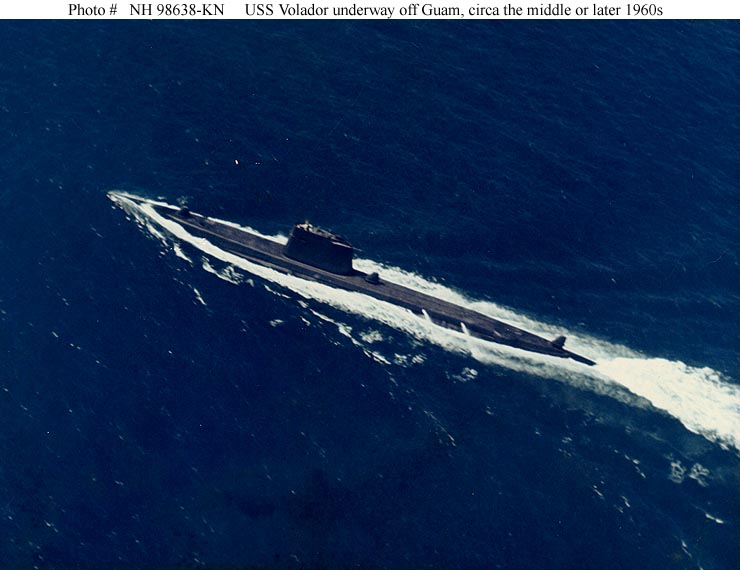 |
62k | Volador (SS-490) underway off Guam, circa the middle or later 1960s. Taken by Heavy Photographic Squadron 61, based at NAS Agana, Guam. | Official USN photo from the collections of the Naval Historical Center. # NH 72362 | |
 |
43k | Starboard stern view of the Volador (SS-490) in San Francisco Bay, 11 December 1965. | USN photo courtesy of navysite.de. | |
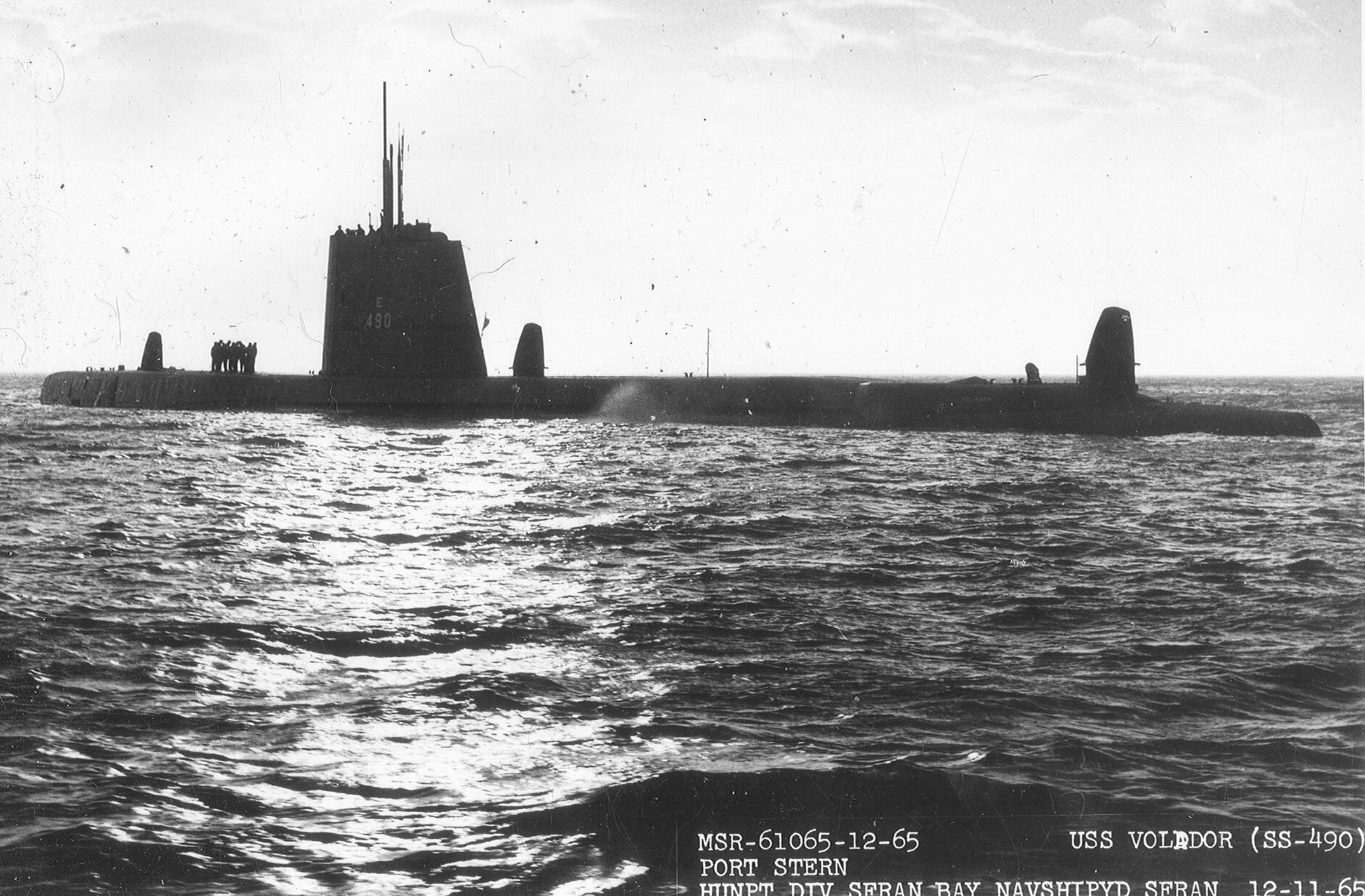 |
371k | Port stern view of the Volador (SS-490) in San Francisco Bay, 11 December 1965. | USN photo courtesy of Scott Koen & ussnewyork.com | |
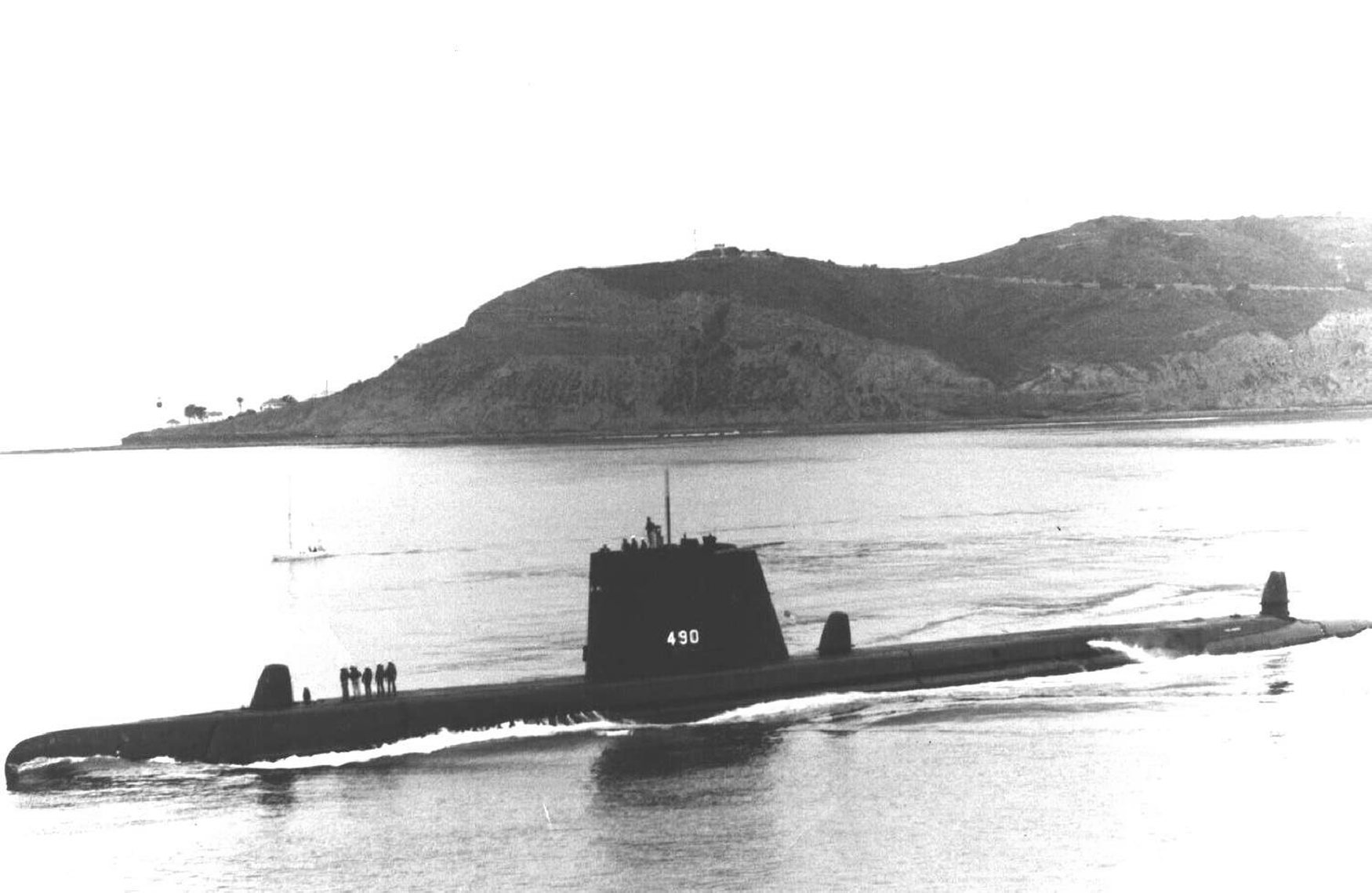 |
569k | Volador (SS-490) mid 1960's view | USN photo courtesy of Scott Koen & ussnewyork.com | |
 |
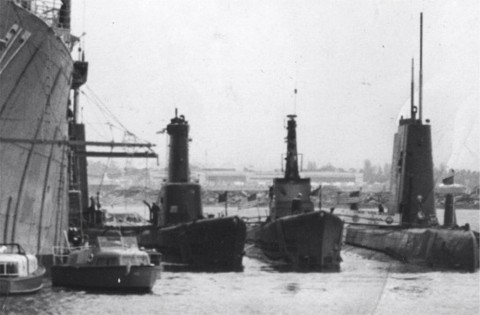
81k | Ballast Point Nest 1967: Volador (SS-490), Redfish (SS-395), Salmon (SS-573) & Rock (SS-274). | Photo by J.D. Decrevel EM2(SS). | |
 |
991k | Welcome Aboard PDF, circa 1967. | PDF courtesy of Scott Koen & ussnewyork.com | |
 |
526k | A P-3 Orion pictured in flight over the submarine Volador (SS-490) underway in the Pacific Ocean during a Joint Civilian Orientation Conference on 20 April 1970. An S-2 Tracker is visible flying in the background. | US Navy and Marine Corps Museum/Naval Aviation Museum, Photo No. 2011.113.333 via Mike Green. | |
 |
32k | Spinax (SS-489), Redfish (SS-395), and Volador (SS-490) nested alongside the Nereus (AS-17), at San Diego, date unknown. | Courtesy of Patrick Householder. | |
 Gianfranco Gazzana Priaroggia (S-502) Gianfranco Gazzana Priaroggia (S-502) |
||||
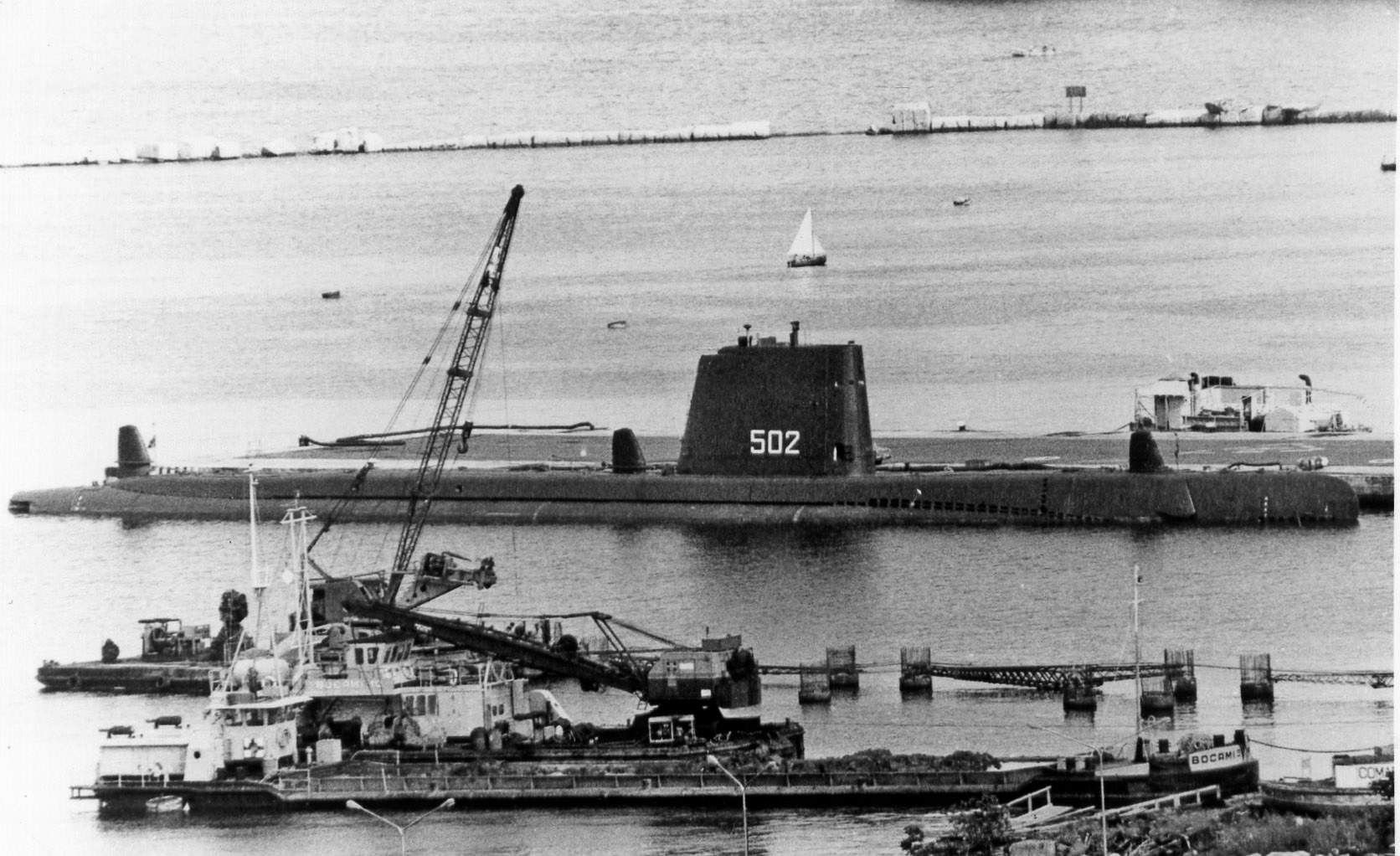 |
206k | Gianfranco Gazzana Priaroggia (S-502), ex-Volador (SS-490) at La Spezia, Italy in 1974. |
Photo from the Maurizio Brescia collection. | |
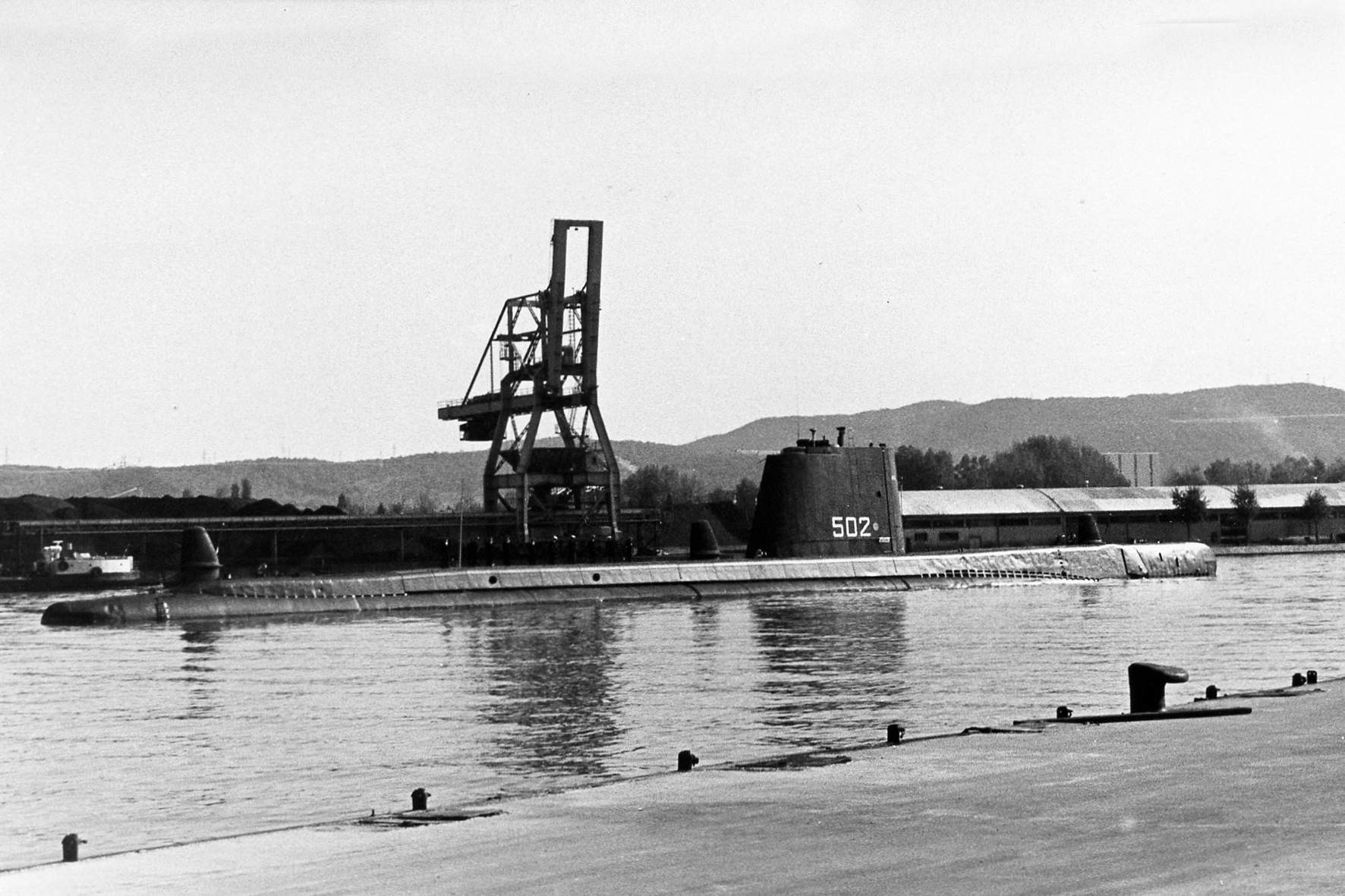 |
223k | Gianfranco Gazzana Priaroggia (S-502) on 20 October 1979 in Trieste. | Photo courtesy of Carlo Martinelli. | |
| Back To The Main Photo Index | Back To the Submarine Index |
|
Problems and site related matters, E-mail Webmaster |
|
This page is created by Gary Priolo, and maintained by Michael Mohl All Pages © 1996 - 2023, NavSource History All rights reserved. |