NavSource Online: Submarine Photo Archive
Patch on left & center contributed by Mike Smolinski, Decal on right by unlimiteddetails.com


Please report any broken links or trouble you might come across to the Webmaster.
Please take a moment to let us know so that we can correct any problems and make your visit as enjoyable and as informative as possible.
| Click On Image For Full Size | Size | Image Description | Source | |
|---|---|---|---|---|
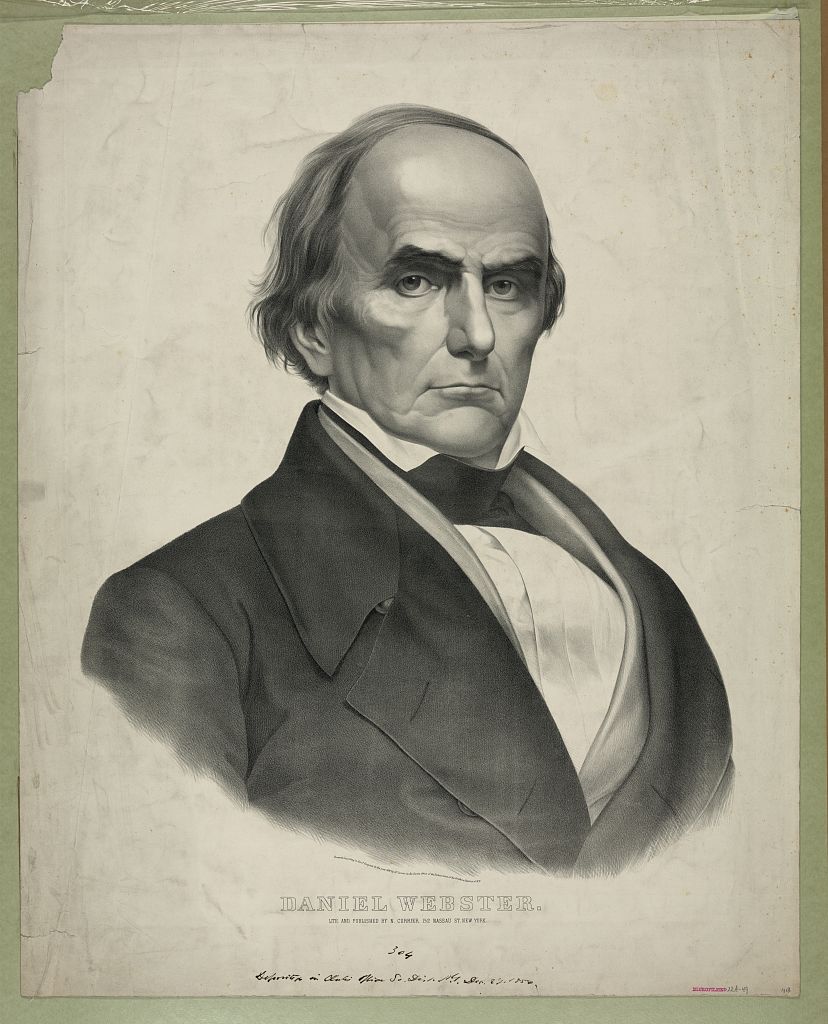 | 116k | Daniel Webster (18 January 1782 – 24 October 1852), was a leading American statesman during the nation's antebellum era. He first rose to regional prominence through his defense of New England shipping interests. His increasingly nationalistic views and the effectiveness with which he articulated them led Webster to become one of the most famous orators and influential Whig leaders of the Second Party System. Daniel Webster was an attorney, and served as legal counsel in several cases that established important constitutional precedents that bolstered the authority of the Federal government. As Secretary of State, he negotiated the Webster-Ashburton Treaty that established the definitive eastern border between the United States and Canada. Primarily recognized for his Senate tenure, Webster was a key figure in the institution's "Gogen days". So well-known was his skill as a Senator throughout this period that Webster became a third and northern counterpart of what was and still is known today as the "Great Triumvirate," with his colleagues Henry Clay from the west and John C. Calhoun from the south. His "Reply to Hayne" in 1830 was generally regarded as "the most eloquent speech ever delivered in Congress." Similar to Henry Clay, Webster's desire to see the Union preserved and conflict averted led him to search out compromises designed to stave off the sectionalism that threatened war between the North and South. Webster tried three times to achieve the Presidency; all three bids failed, the final one in part because of his compromises. Similarly Webster's efforts to steer the nation away from civil war toward a definite peace ultimately proved futile. Despite this, Webster came to be esteemed for these efforts and was officially named by the Senate in 1957 as one of its five most outstanding members. | Photo from the Library of Congress Prints and Photographs Division Washington, D.C. 20540 & submitted by Bill Gonyo. Partial text courtesy of Wikipedia. | |
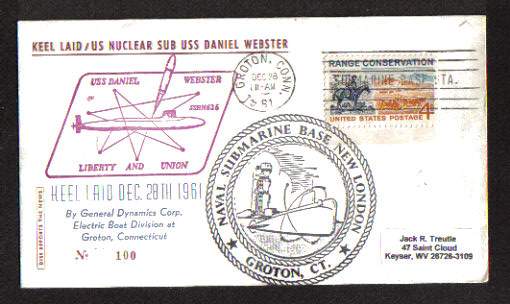 | 28k | This cover is one of 100 prepared by sponsor on the occasion of the keel laying of the Daniel Webster (SSBN-626), 28 December 1961. | Courtesy of Jack Treutle (of blessed memory). | |
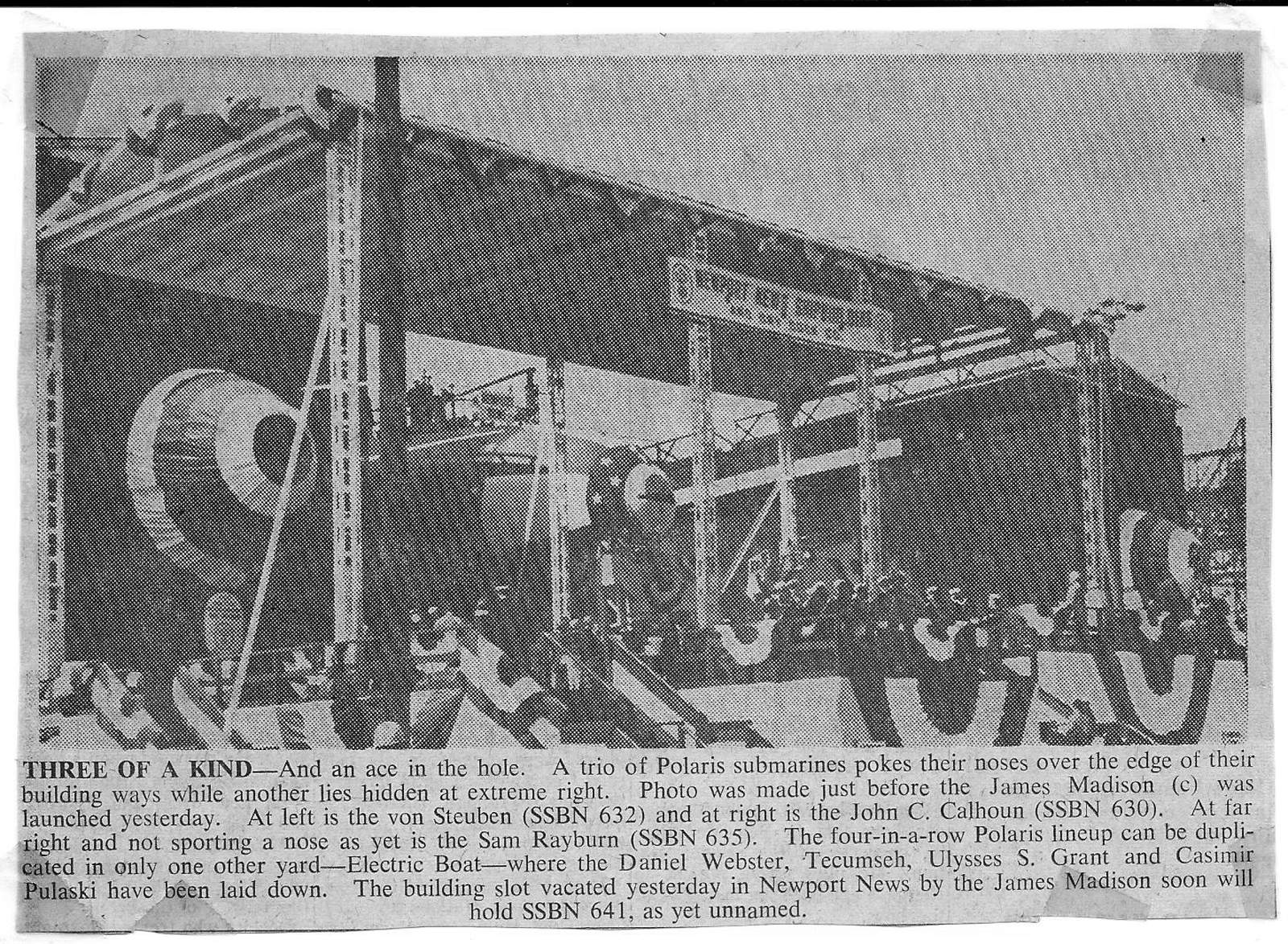 | 585k | THREE OF A KIND-And an ace hidden in the hole. A trio of Polaris submarines poke their noses over the edge of their building ways while another lies hidden at extreme right. Photo was made just before James Madison (SSBN-627) (center) was launched yesterday, 15 March 1963. At left is the Von Steuben (SSBN-632) and at right is the John C. Calhoun (SSBN-630). At far right and not sporting a nose as yet is the Sam Rayburn (SSBN-635). The four-in-a-row Polaris lineup can be duplicated in only one other yard-Electric Boat-where the Daniel Webster (SSBN-626),Tecumseh (SSBN-628),Ulysses S. Grant (SSBN-631) & Casimir Pulaski (SSBN-633) have been laid down. The building slot vacated yesterday in Newport News by the James Madison soon will hold (SSNB-641), as yet unnamed. | Photo courtesy of Dale Hargrave. | |
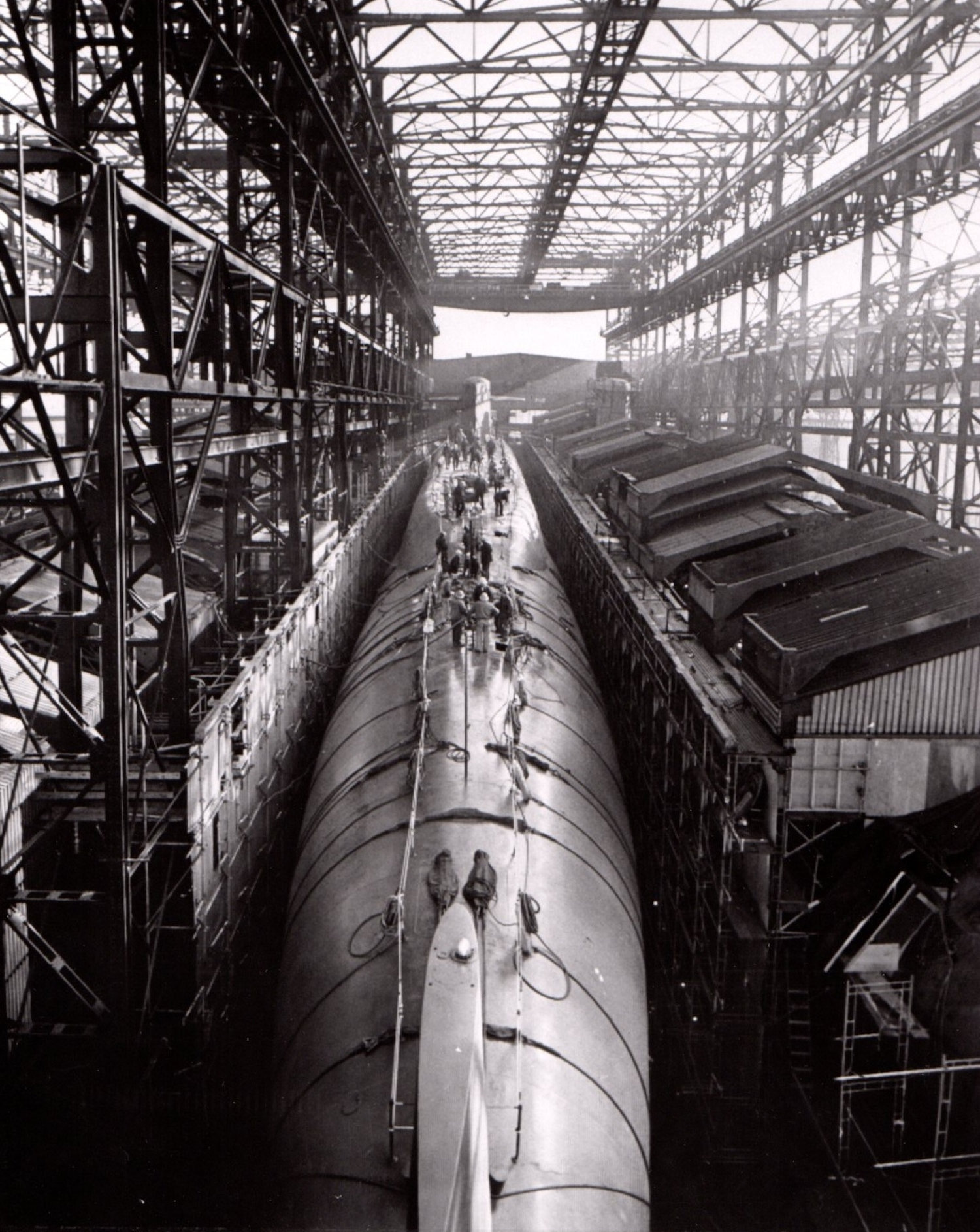 | 553k | Nathan Hale (SSBN-623) at the Electric Boat Division of General Dynamics Corp., Groton, CT., taken a few days before her launching on 12 January 1963. I believe that the ship on the right is the Daniel Webster (SSBN-626). | Photo courtesy of Dale Hargrave. | |
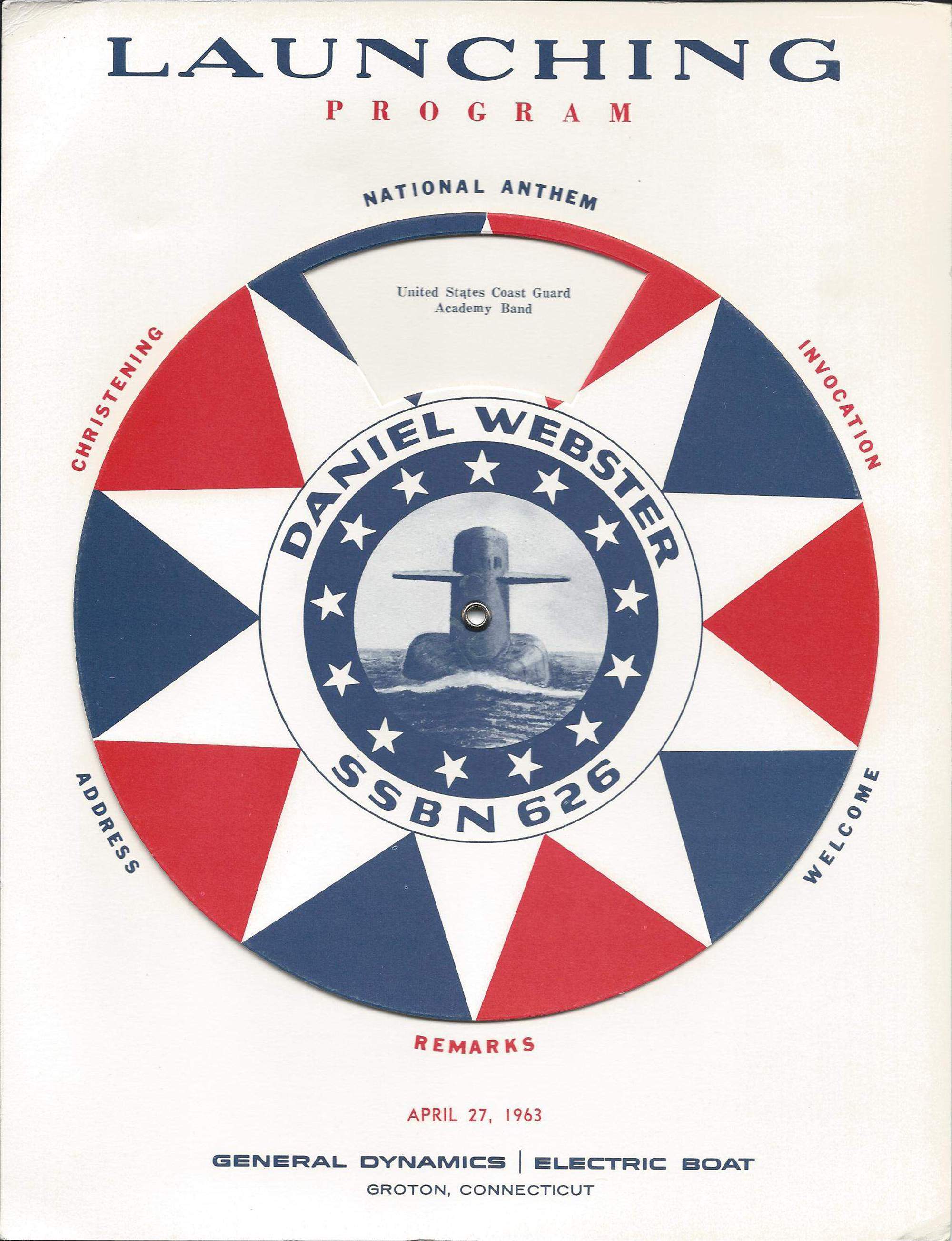 | 412k | Launching program of the Daniel Webster (SSBN-626) on 27 April 1963. | Photo courtesy of Dale Hargrave. | |
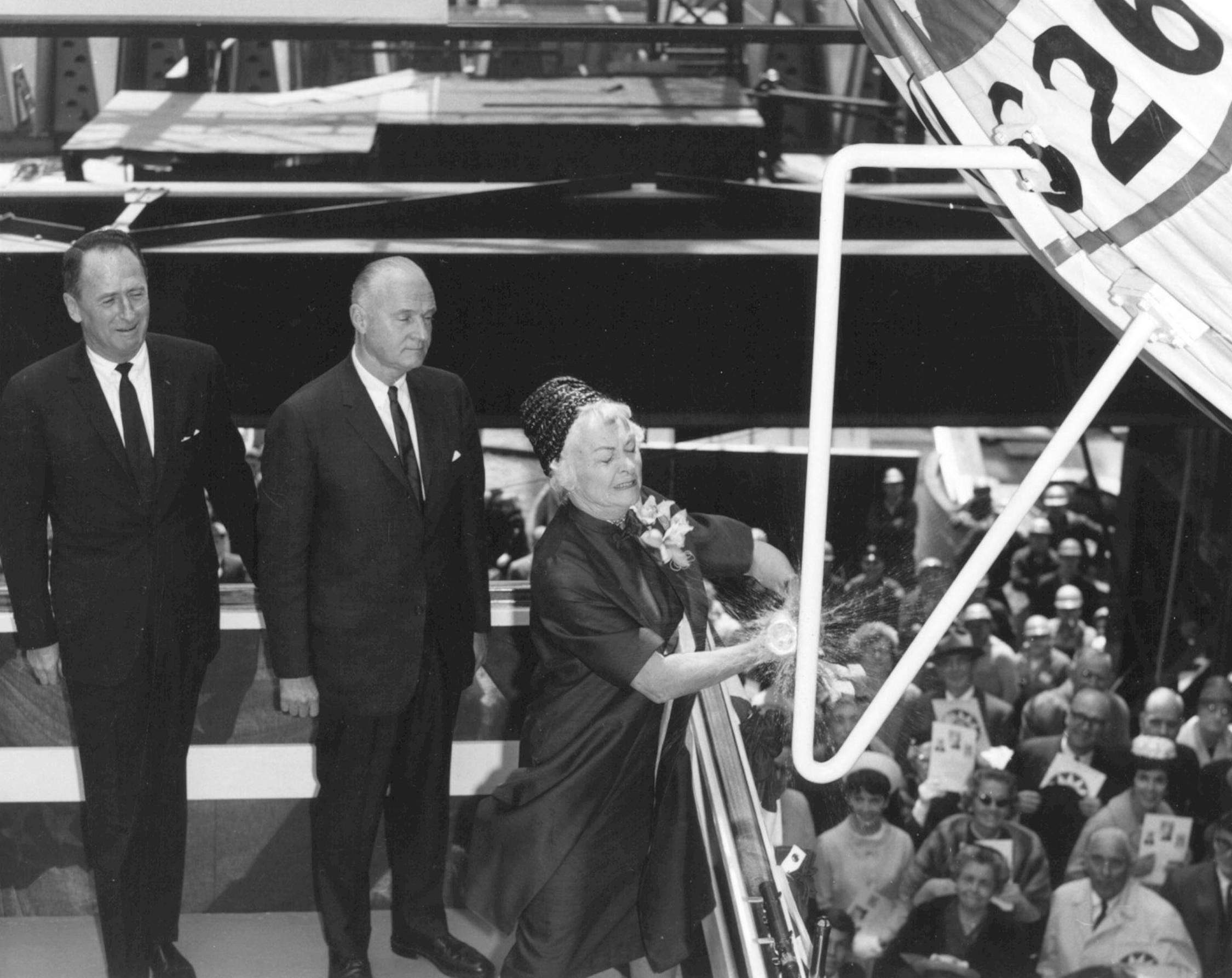 | 273k | Mrs. W. Osborn Goodrich, Jr. makes contact with Daniel Webster's (SSBN-626) bow on 27 April 1963. | USN photo courtesy of Scott Koen & ussnewyork.com. | |
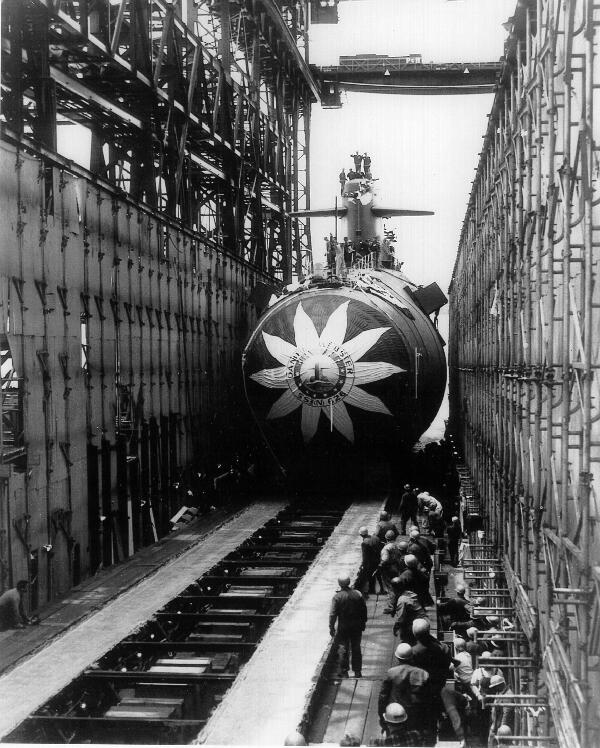 | 101k | The Daniel Webster (SSBN-626) slides down the launching ways 27 April 1963. She was launched with sailplanes and modified with bowplanes prior to commissioning. | USN photo courtesy of USS Bowfin Submarine Museum archives / members.aol.com. Photo i.d. courtesy of David Johnston |
|
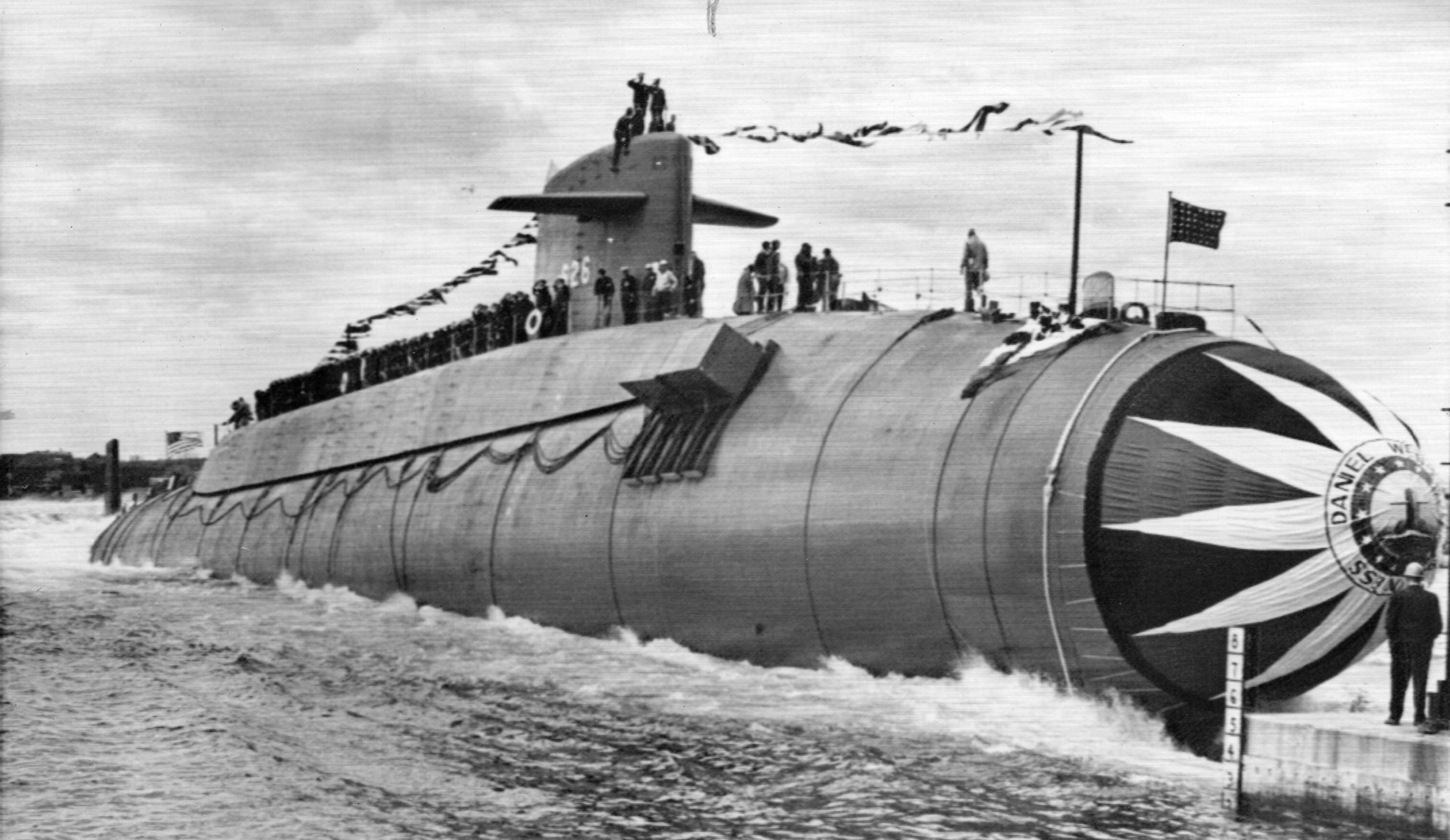 | 1.83k | Launching of the Daniel Webster (SSBN-626). | Photo from the files of the Vallejo Naval & Historical Museum courtesy of Darryl L. Baker. | |
 | 627k | 11 page Welcome Aboard PDF of the Daniel Webster (SSBN-626). | USN photo courtesy of Scott Koen & ussnewyork.com. | |
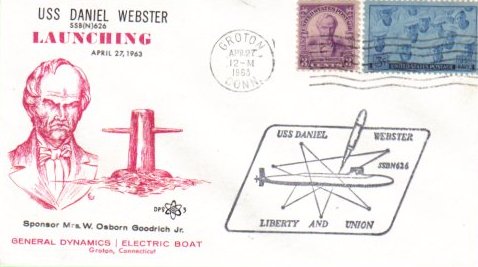 | 33k | Commemorative post mark on the occasion of the launching of the Daniel Webster (SSBN-626), 27 April 1963. | Courtesy of Jack Treutle (of blessed memory). | |
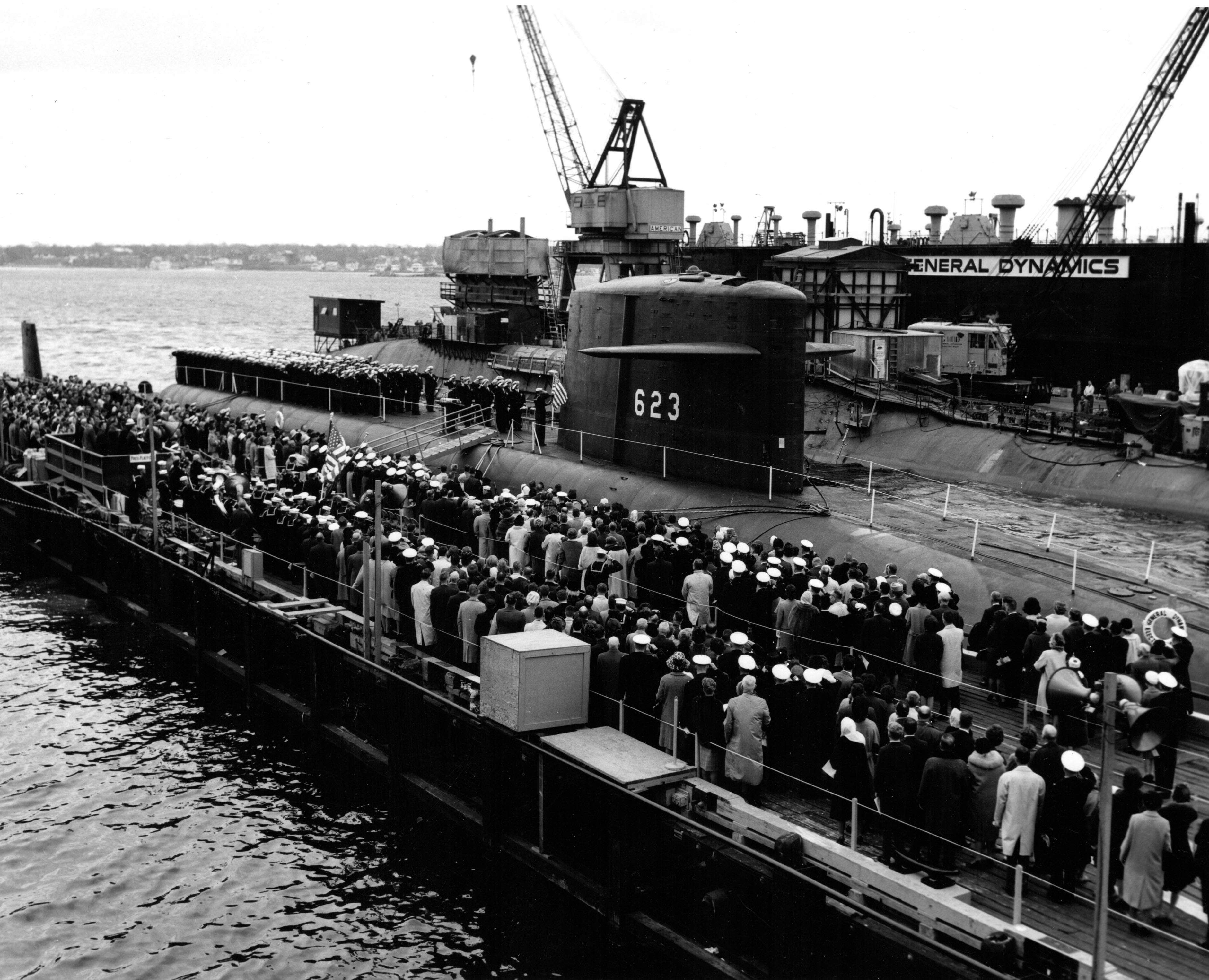 | 919k | The Nathan Hale (SSBN-623) crowd at the commissioning at General Dynamics Electric Boat on 23 November 1963. The Daniel Webster (SSBN-626) is the boat to the right, I believe. She would be commissioned on 9 April 1964. | Photo from the files of the Vallejo Naval & Historical Museum via Darryl L. Baker. | |
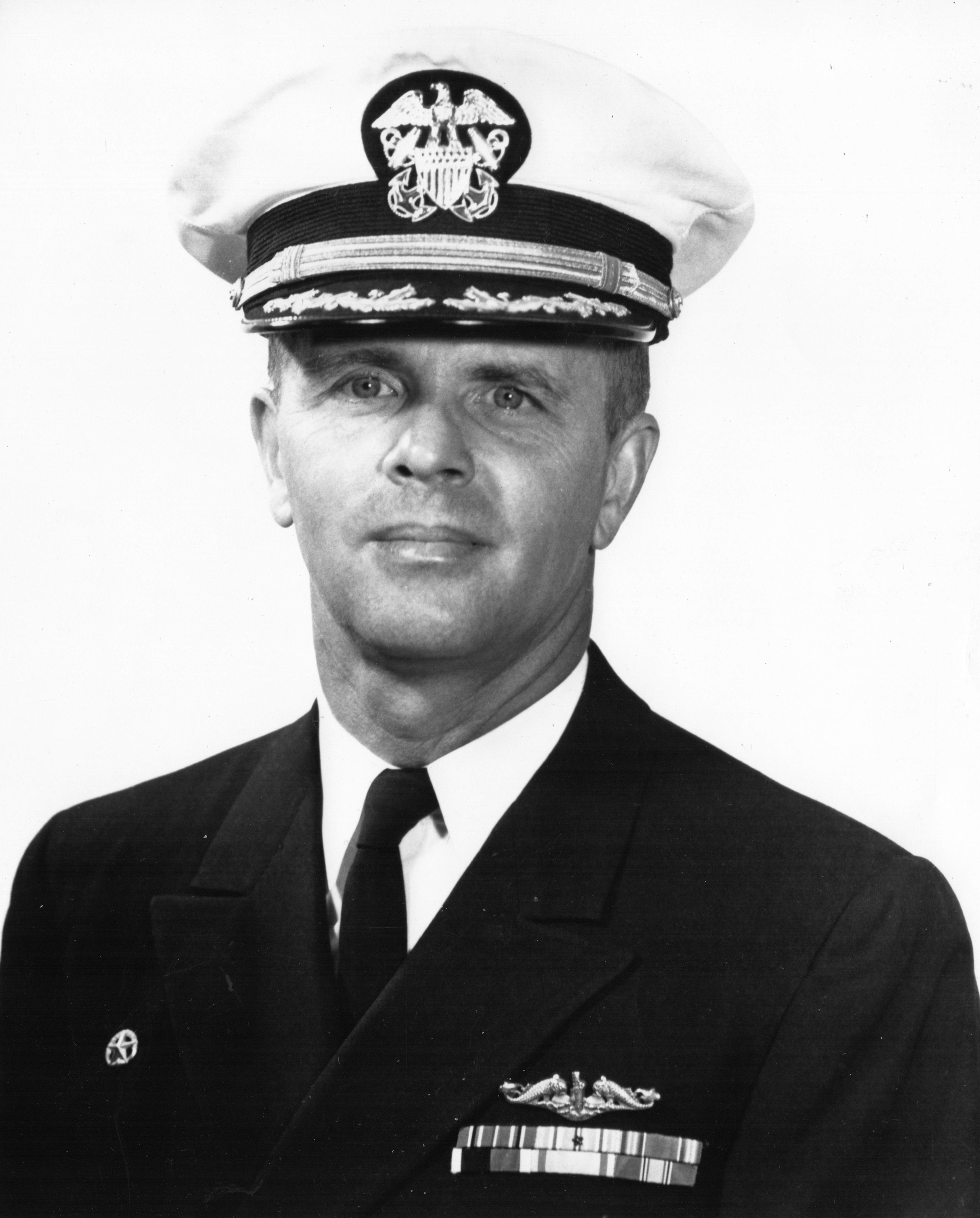 0862625 | 1.98k | Capt. Lloyd S. Smith as the Commander of Naval Support Activity Mare Island (1972-1975). He was the first Gold crew CO of Daniel Webster (SSBN-626), 09.04.1964 / 00.10.1966. | Text info via Wolfgang Hechler. Photo courtesy of Darryl L. Baker. |
|
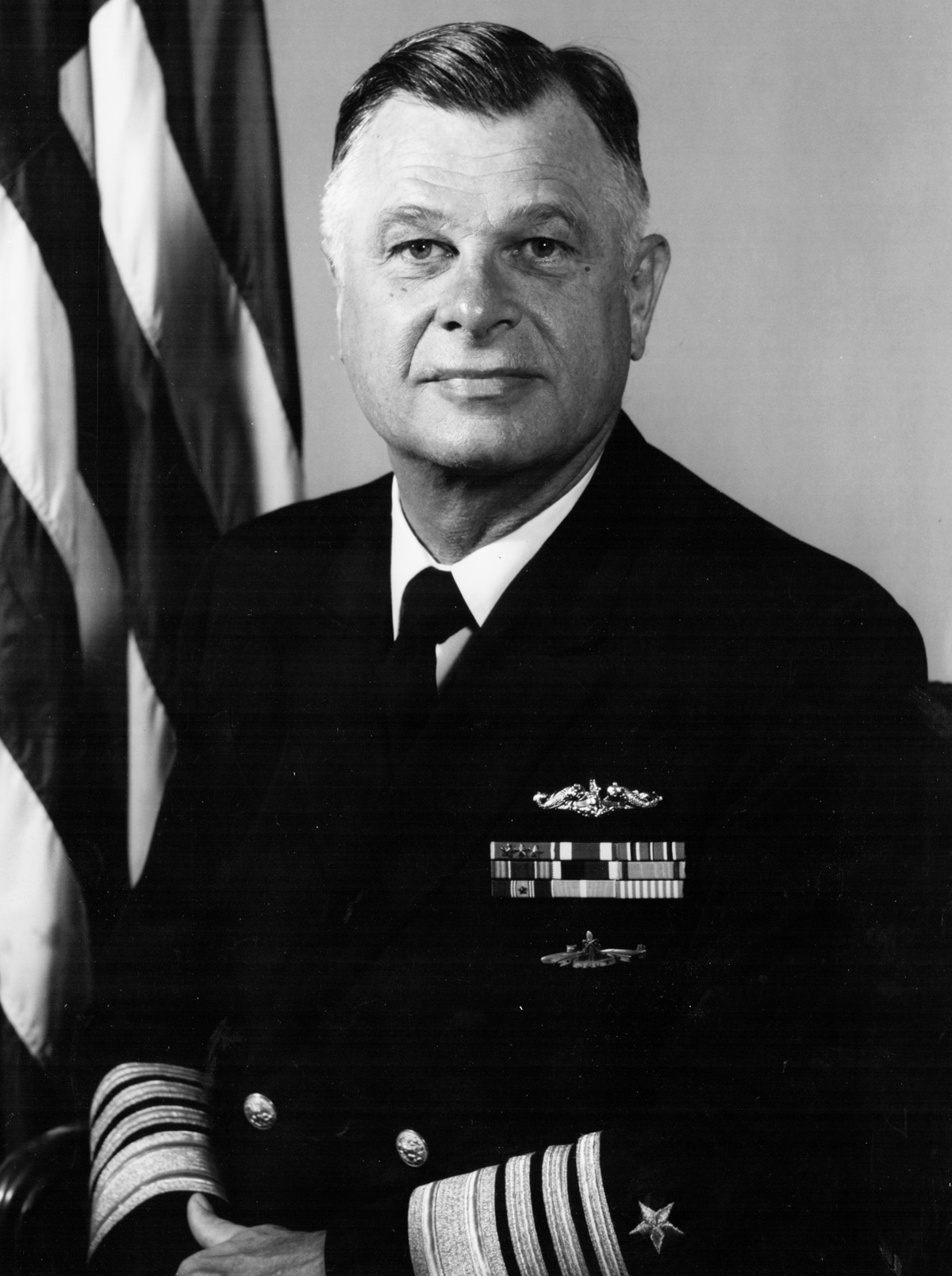 0839223 | 371k | CDR John G. Williams, Jr. commanded Daniel Webster (SSBN-626) from 5 May 1966 to June 1968. | Photo courtesy of Darryl L. Baker. | |
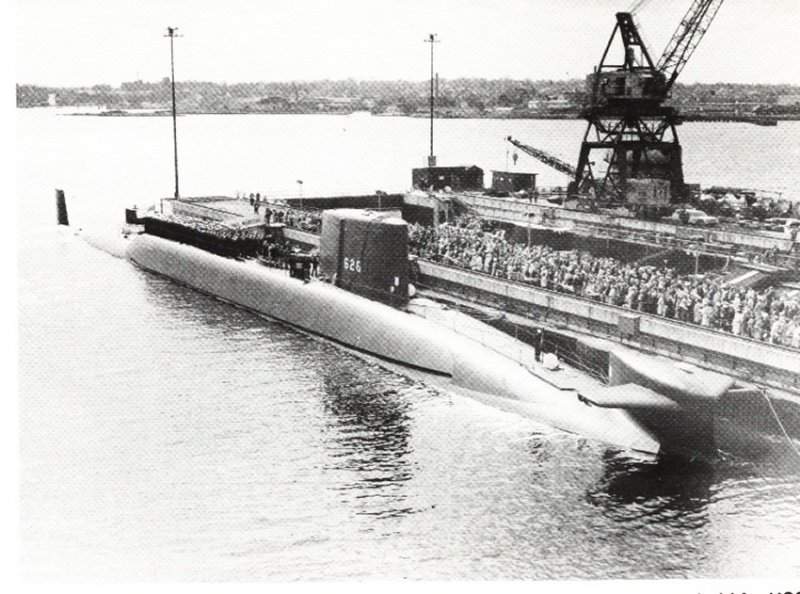 | 64k | Bow mounted diving planes fitted for the commissioning ceremonies of the Daniel Webster (SSBN-626) on 27 April 1964. | USN photo courtesy of Electric Boat. | |
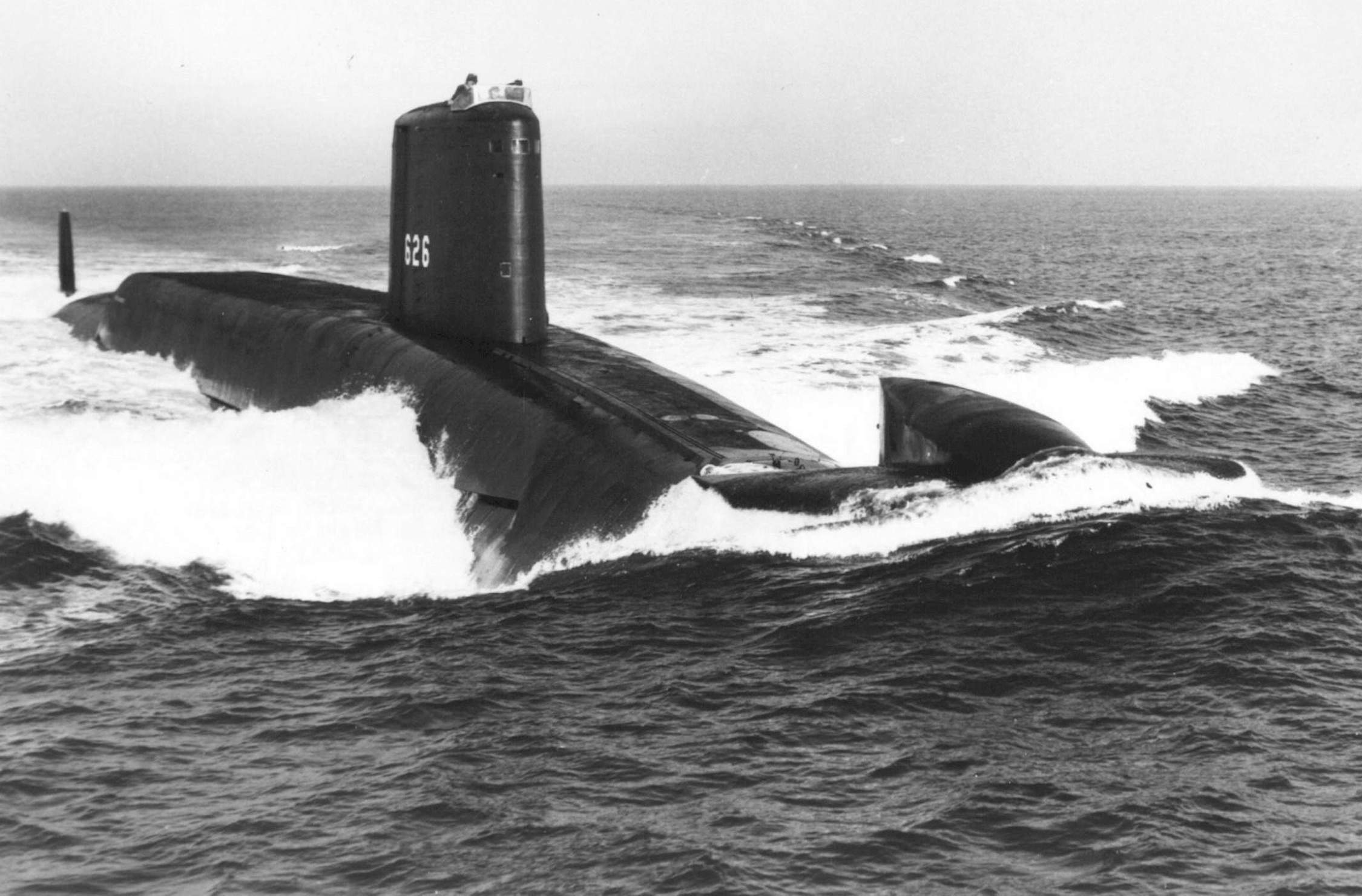 | 1.10k | Bow on view of the Daniel Webster (SSBN-626) during tests of her diving planes in April 1964. The idea behind the bow planes was to reduce the effect of porpoising, but they increased water resistance and lowered her overall speed. They were subsequently removed during a refit between 1976-78. Slightly different color photo appears here. | Partial text courtesy of Bill Roberts CDR, USN (Retired). US Navy Photo # NPC 711453 courtesy Scott Koen & ussnewyork.com. | |
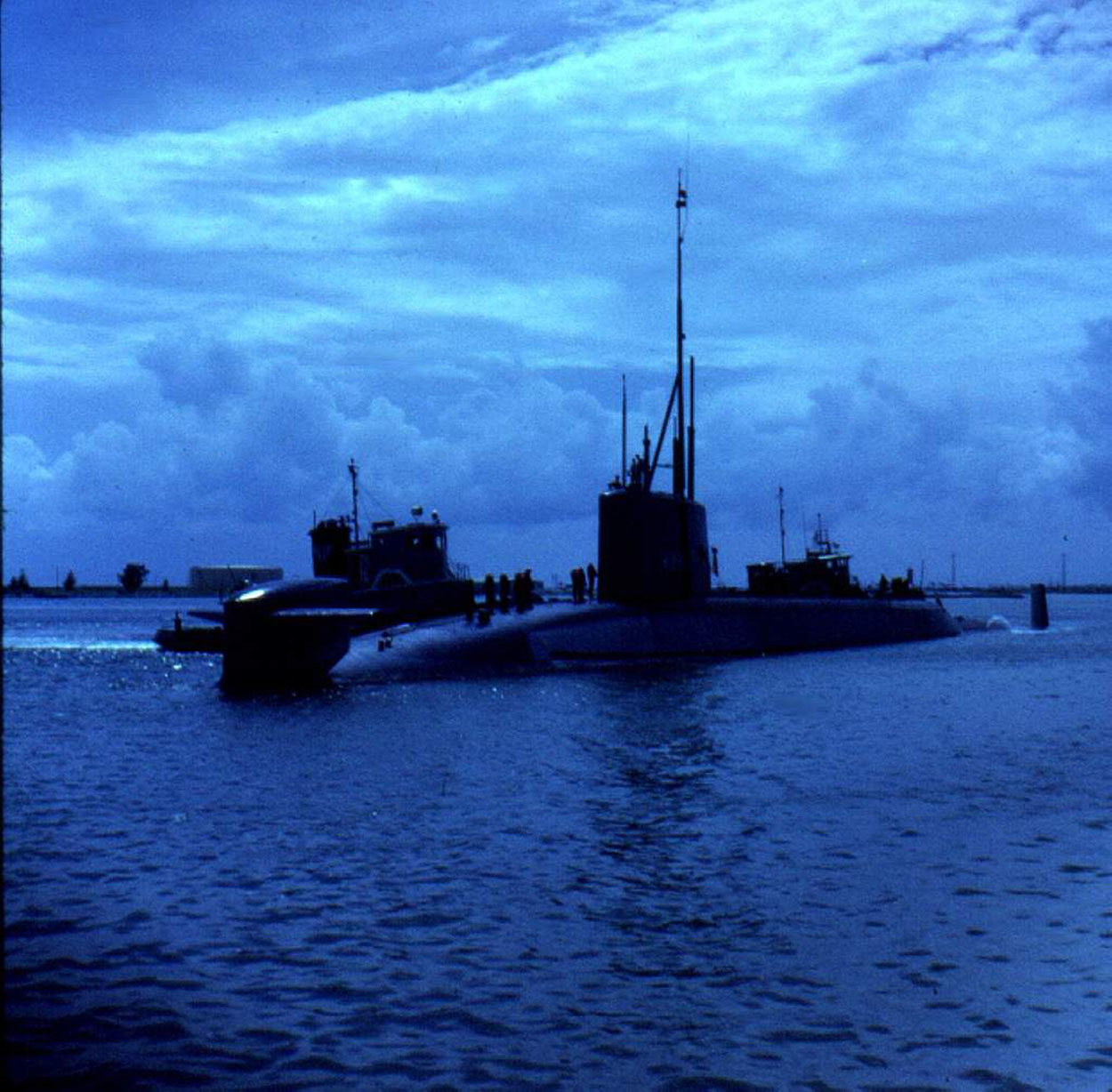 | 199k | Daniel Webster (SSBN-626) in Port Canaveral, Florida, fitted with special masts in preparation for the first shots of hardened A-3 missiles, in August 1968. | Photo courtesy of Fred Tollison. | |
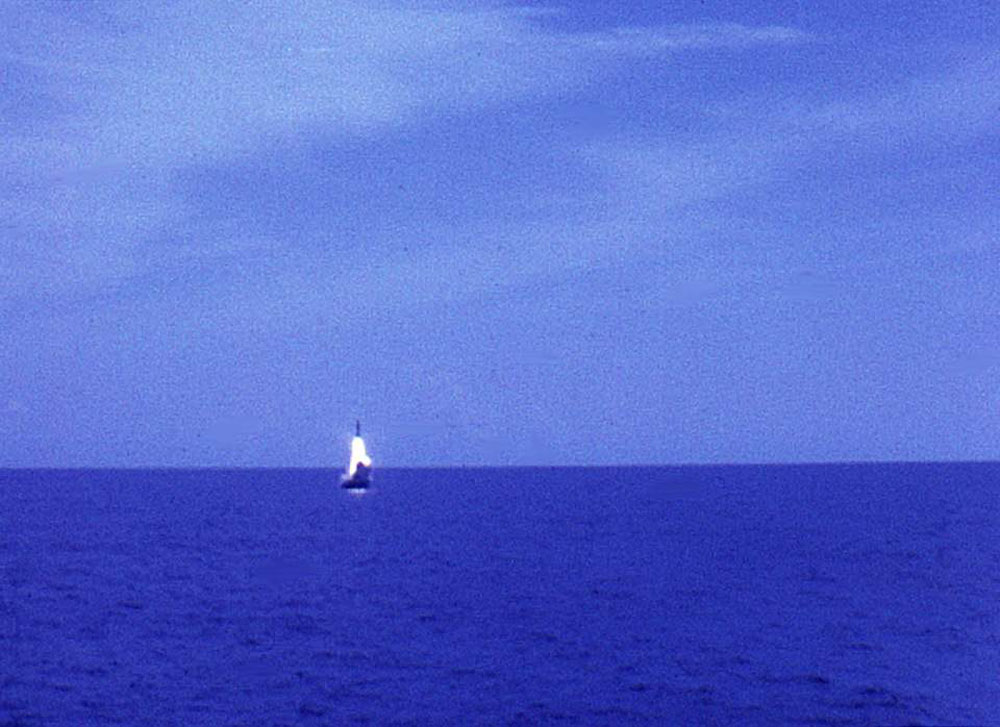 | 138k | Daniel Webster (SSBN-626) firing first of two shots of hardened A-3 missiles, August 1968. | Photo courtesy of Fred Tollison. | |
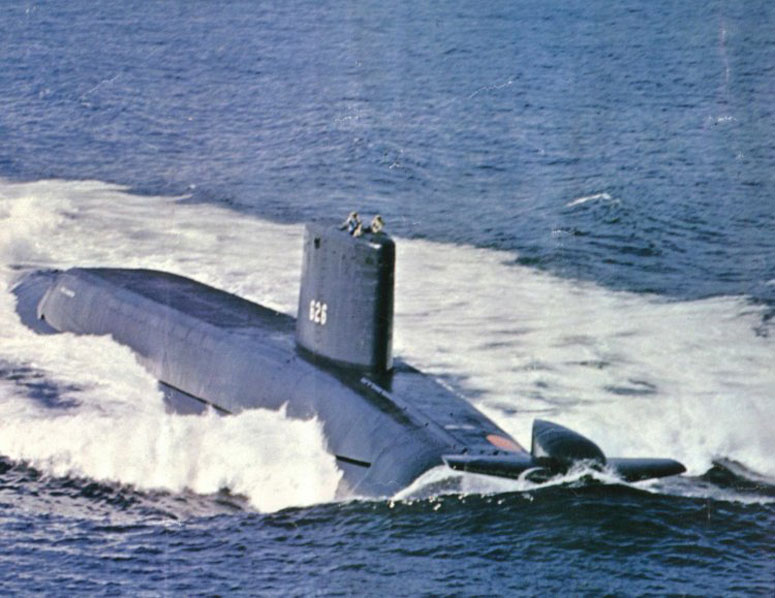
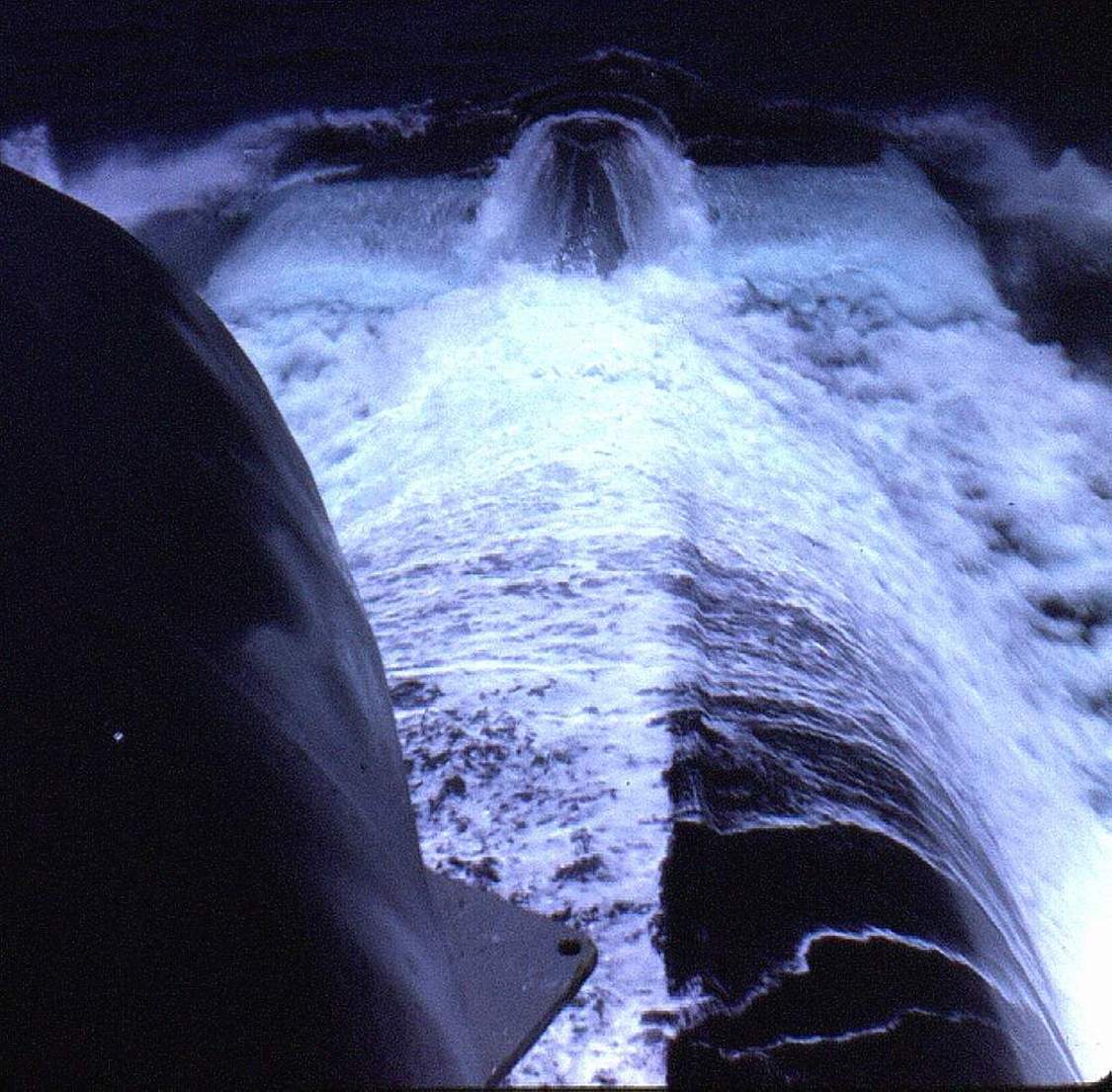 | 176k | Daniel Webster (SSBN-626) underway in September 1968. | USN photo courtesy of Scott Koen & ussnewyork.com. | |
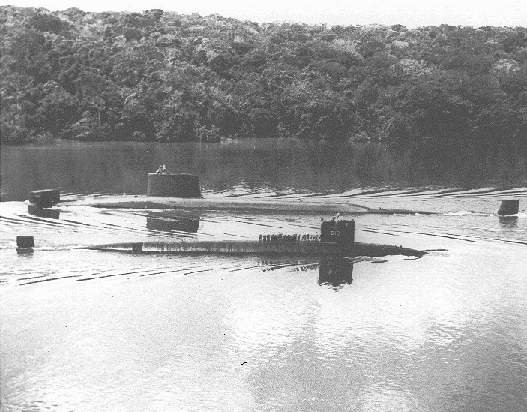 | 53k | Guardfish (SSN-612) and the Daniel Webster (SSBN-626), in the Panama Canal, 14 March 1970. We were heading back to Pearl after the shipyard in Miss. If I remember right this was the only time two nukes were in the canal at one time. It was some kind of a first. | Courtesy of Jeff Kelly / USS Guardfish web page. Partial text info courtesy of Skip Spahr, TM02 (SS) |
|
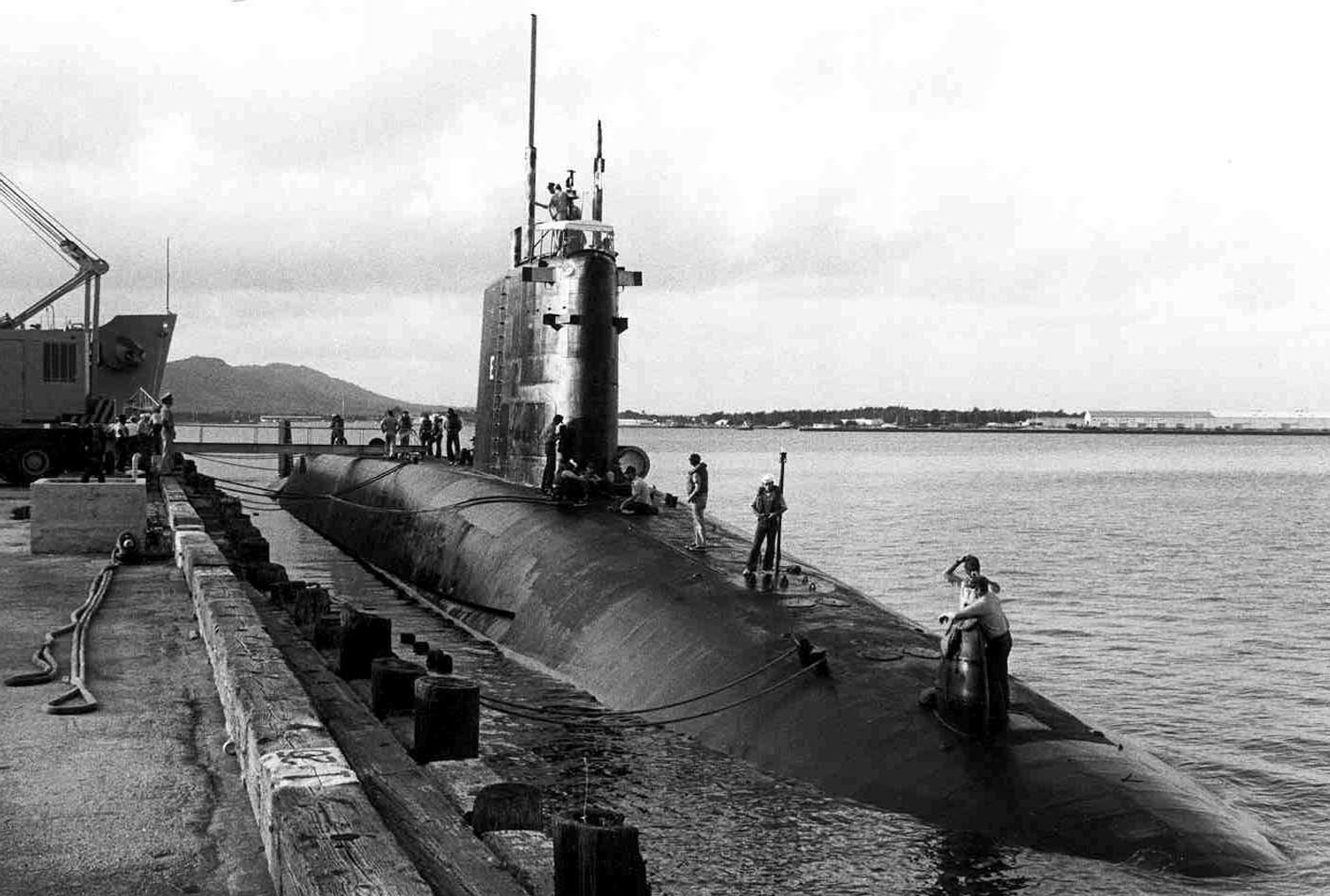 | 629k | The E is marked on Daniel Webster (SSBN-626). | Photo i.d. via Keith Holman & Ric Hedman. USN photo courtesy of Scott Koen & ussnewyork.com. |
|
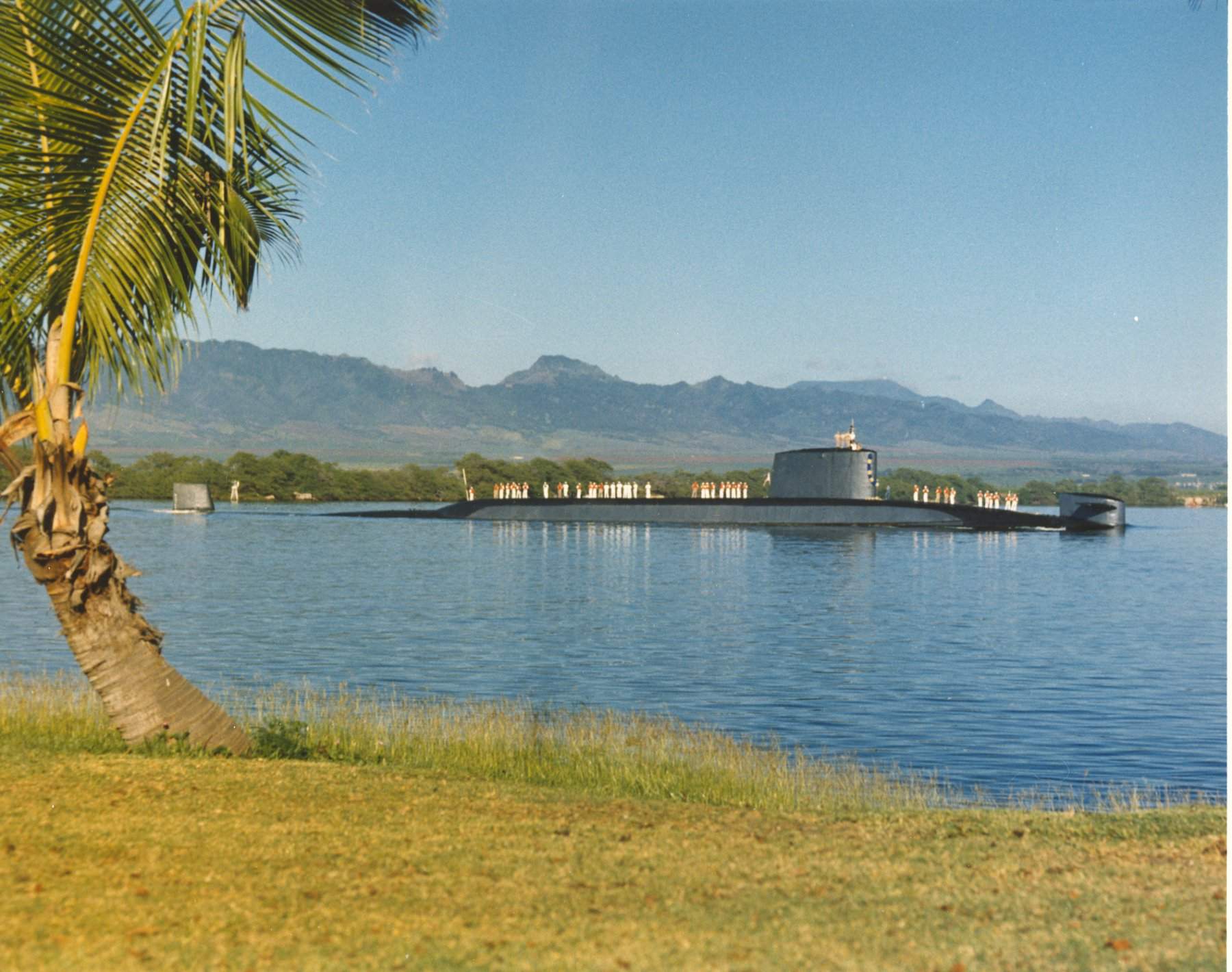 | 229k | Pulling into Pearl Harbor shortly afterwards the above photo was taken, the Daniel Webster (SSBN-626) glides past the palm tree in Pearl Harbor, Hawaii that seems to be in most submarines Photo in this section. | Photo courtesy of Don Hulse, EMC9SS0 (USN RET.) Partial text info courtesy of Skip Spahr, TM02 (SS). |
|
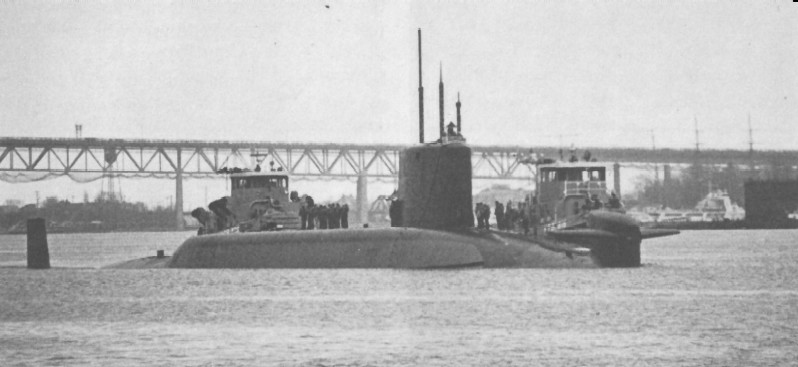 | 59k | Daniel Webster (SSBN-626) being helped by Navy yard tugs alongside a pier at the New London sub base sometime before 1974. | USN photo by JO2 Gwyneth J. Schulz from The American Submarine, by Norman Polmar, submitted by Robert Hurst. | |
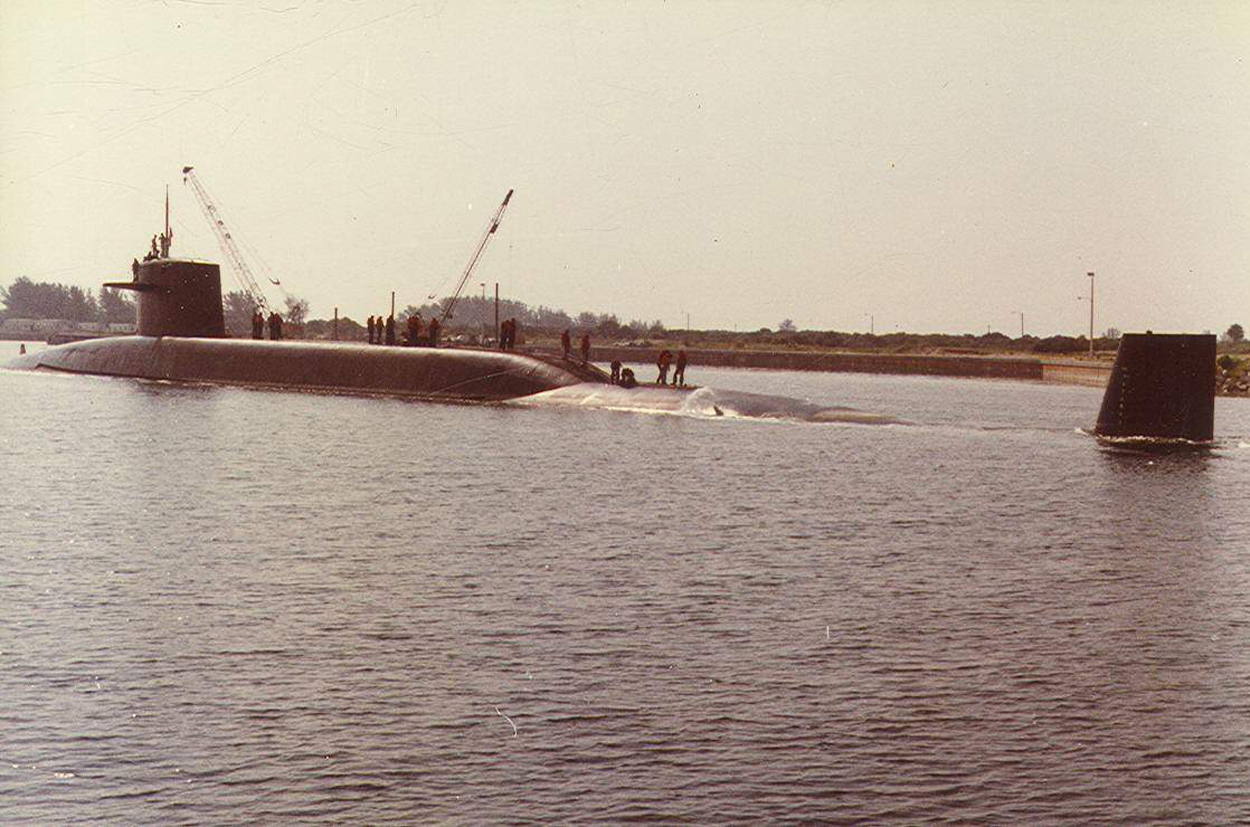 | 650k | Daniel Webster (SSBN-626) moves down the way in 1976. | USN photo courtesy of Scott Koen & ussnewyork.com. | |
 | 487k | A port quarter view of the nuclear-powered strategic missile submarine Daniel Webster (SSBN-626) going outbound from Port Canaveral in 1978 for DASO post-shipyard. | Text I.d. courtesy of Geoff Grant. Defense Visual Information Center photo # DN-SC-85-09576, courtesy of dodmedia.osd.mil. |
|
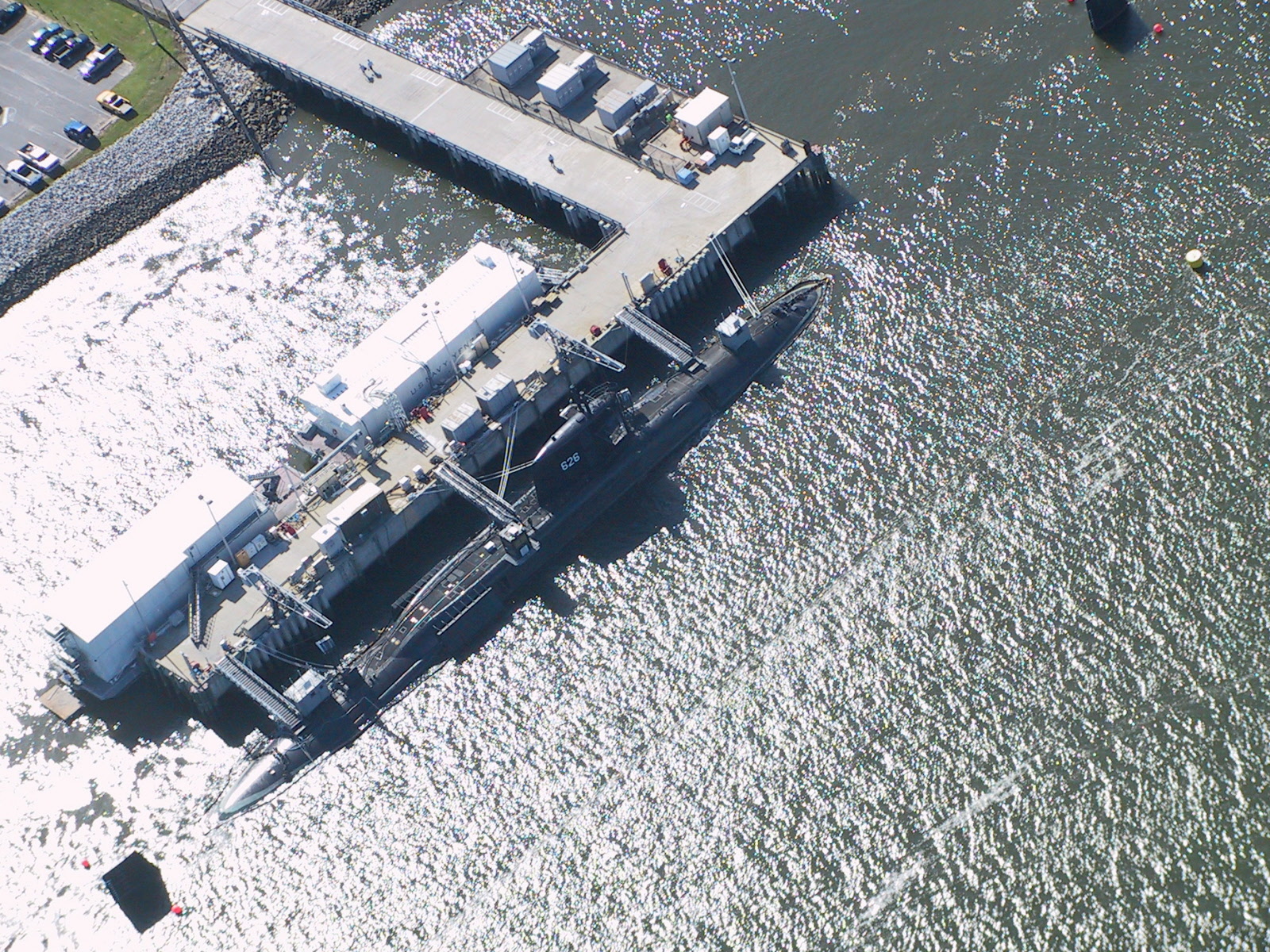 | 1.02k | An aerial view of the decommissioned submarine Daniel Webster (MTS-626) tied at NPTU Goose Creek, SC., 16 April 2002. | Photo courtesy of xpda.com/Goose Creek via Robert Hurst. | |
 | 513k | Sam Rayburn (MTS-635) and Daniel Webster (MTS-626) tied at NPTU Goose Creek, SC., 16 April 2002. | Photo courtesy of xpda.com/Goose Creek via Robert Hurst. | |
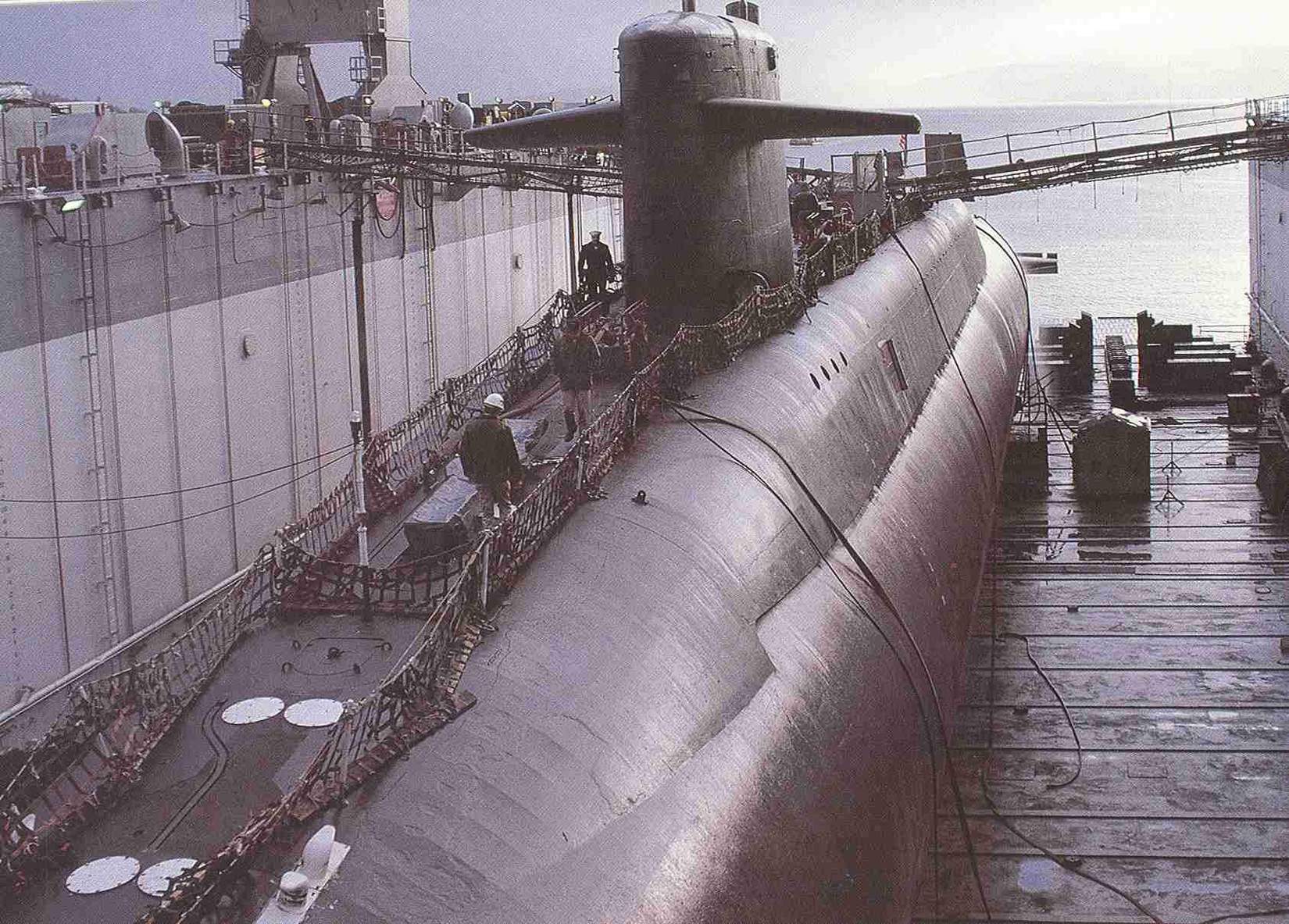 | 390k | Daniel Webster (SSBN-626) in dry dock. | USN photo courtesy of Scott Koen & ussnewyork.com. | |
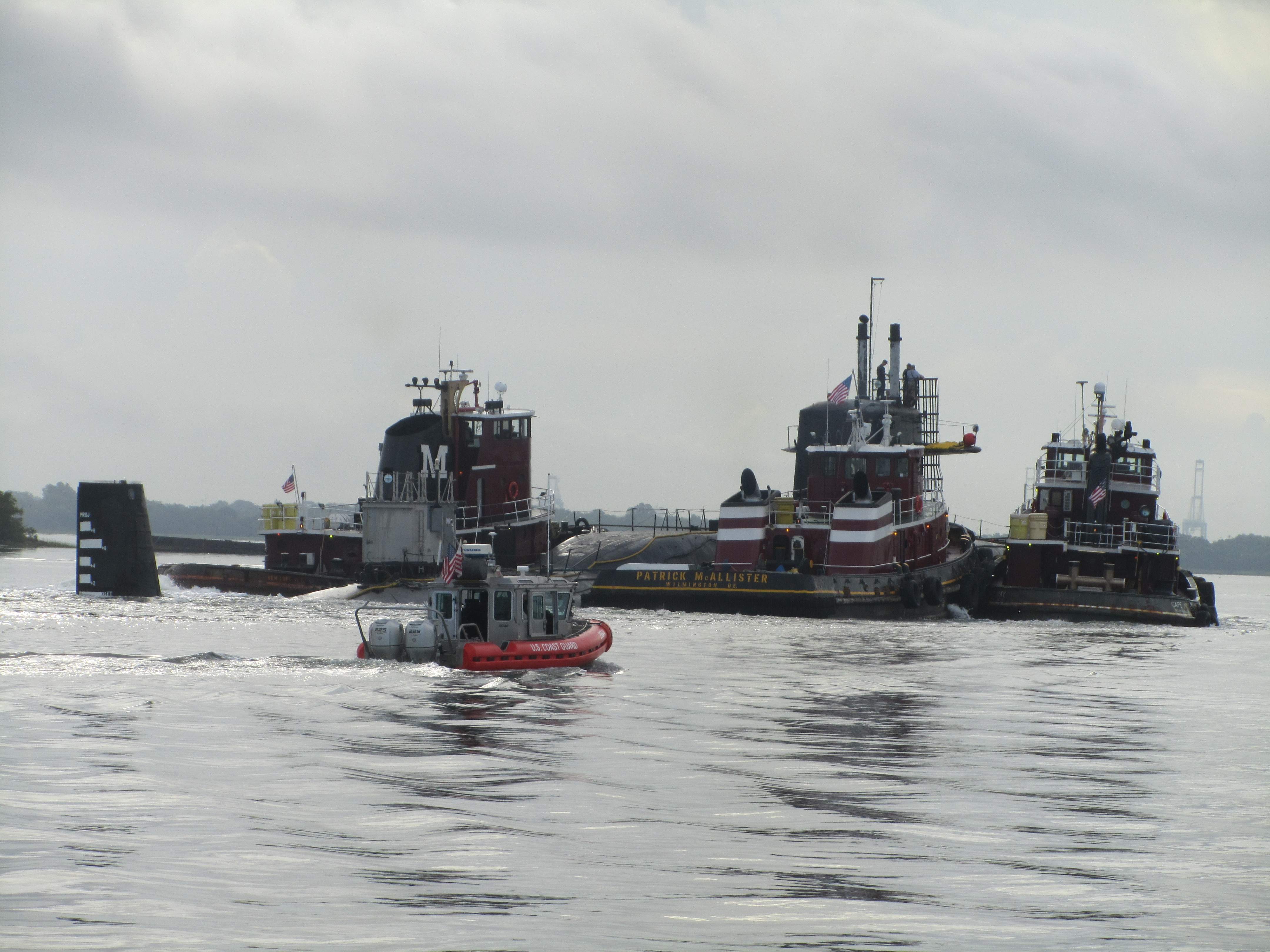 | 1.00k | Three tugs crowd the Daniel Webster (MTS-626) as she sailed under tow from Charleston,SC. to a scheduled overhaul in Virgina on 26 September 2011. | Photo courtesy of Captain Zane Johnston via Manning J. Harvey III. | |
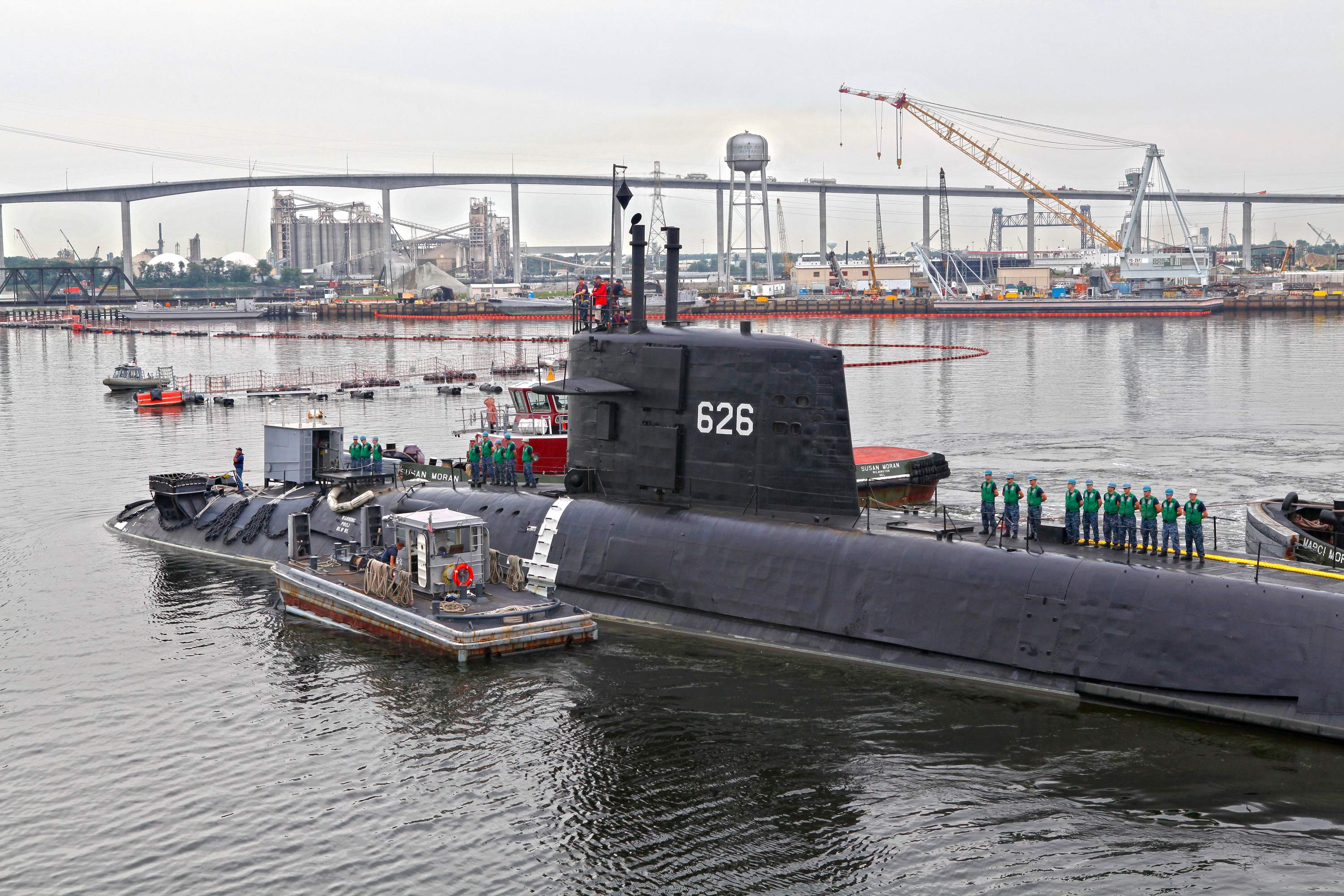 | 787k | The moored training ship Daniel Webster (MTS-626) begins its tow from Norfolk Naval Shipyard to Charleston, S.C. on 21 August 2012 for the final quarter of its 16-month dry docking engineered maintenance availability more than three weeks ahead of schedule as she sailed under tow from Charleston,SC. to a scheduled overhaul in Virgina on 26 September 2011. | USN photo # N-SY521-001 courtesy of navy.mil. via Ron Reeves (of blessed memory). | |
| Back To The Main Photo Index | Back To the Submarine Index |
| Problems and site related matters, E-mail Webmaster |
| This page is created and maintained by Michael Mohl All Pages © 1996 - 2023, NavSource History All rights reserved. |