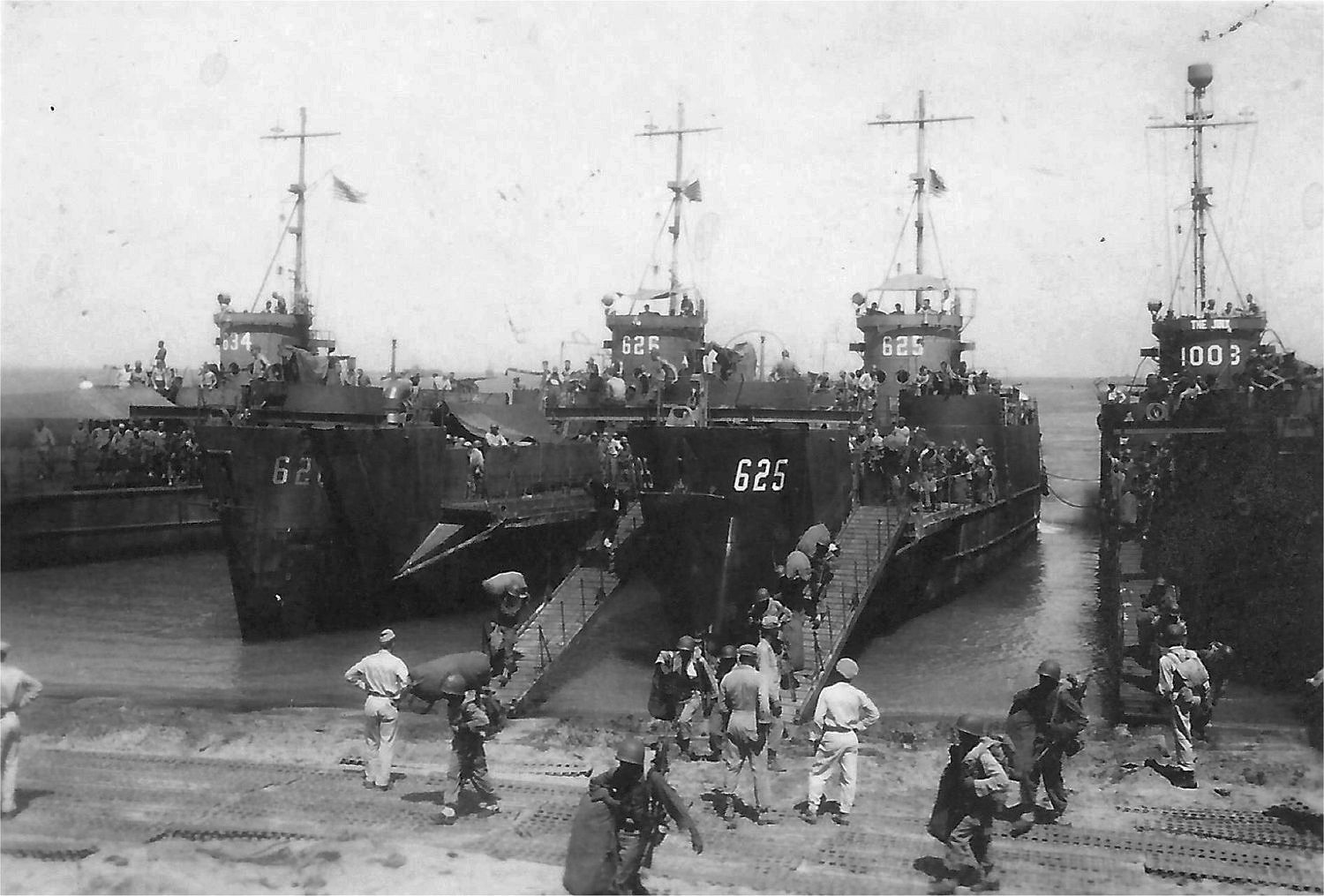
LCI Specifications: Displacement 216 t.(light), 234 t.(landing), 389 t.(loaded); Length 158' 5½"; Beam 23' 3"; Draft, Light 3'1½" mean, Landing, 2' 8" forward, 41'10" aft, Landing, 5'4"forward, 5'11" aft; Speed 16 kts (max.), 14 kts maximum continuous; Complement two officer, 21 enlisted; Troop Capacity, six Officers, 182 Enlisted; Cargo Capacity, 75 tons; Armor, 2" plastic splinter protection on gun turrets, conning tower and pilot house; Endurance 4,000 miles at 12 kts, loaded, 500 miles at 15 knots; and 110 tons of fuel; Armament four single 20mm guns one forward, one amidship, two aft, later added two .50 cal. machine guns; Fuel Capacity, 130 tons, lube oil 200 gal.; Propulsion two sets of four General Motors diesels, 4 per shaft, 1,600 bhp, twin variable pitch propellers.
| Click On Image For Full Size Image |
Size | Image Description | Source | |
|---|---|---|---|---|
| No image of Sandpiper (MHC 38) is available at this time |
Sandpiper
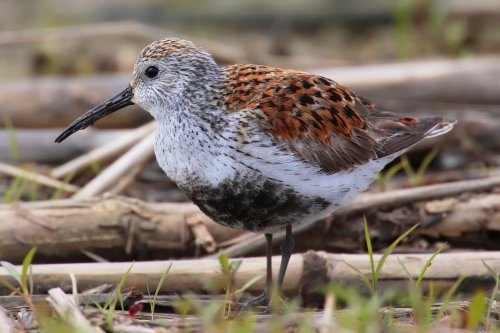
A shore bird related to the plovers and snipes.
The LCI(L) returned to San Pedro Bay on the 13th and, on the 1Dth, got underway for New Guinea. Arriving at Hollandia on the 25th, she continued on to Finschhafen on the 27th; loaded troops of the 93d Infantry, and, on the 31st, sailed for Morotai to prepare for the assault on Tarakan, Operation "Oboe I." From 10 to 23 April, she conducted training exercises off Morotai. On the 23d, she loaded Royal Australian Air Force personnel and equipment; and, on the 27th, she sailed for Borneo. On 1 May, she participated in the landings on the south coast of Tarakan, offloaded her "passengers" near Lingkas, then assumed towing duties. On 5 May, she headed back to Morotai.
Gunnery, beaching, towing, and salvage exercises took LCI(L)-1008 into June. On the 21st, loading for Operation "Oboe II" began, with the LCI(L) shuttling troops of the 7th Australian Infantry Division to ships waiting off the Morotai beaches. On the 25th, she embarked her contingent of 165 officers and men, and, on the 26th, she sailed for Balikpapan. The attack force arrived off its objective soon after 0500 on 1 July. The naval bombardment began at 0700; and, at 0900, the first waves went in. LCI(L)1008 remained in the transport area throughout the day; and, on the morning of the 2d, moved onto "Green Beach," lowering her ramps at 0815 and retracting at 0846. Ten hours later, she sailed for Morotai, whence, on the 12th, she continued on to Leyte. Arriving at mid-month, the LCI(L) participated in Leyte-to-Luzon troop movements through the end of July; and, on 5 August, began ferrying passengers, mail, and cargo on a regular run between Tacloban, Leyte, and Guinan, Samar. She remained in the Philippines after the end of World War II and continued that shuttle service until detached with orders to return to the United States on 17 November. Three days later, LCI(L)-1008 departed the Philippines; and, after stops at Eniwetok and Pearl Harbor, arrived at San Diego toward the end of January 1946. Then ordered inactivated, she departed California in April and proceeded to New Orleans, where she was decommissioned on 5 August 1946. In October, she was berthed with the Reserve Fleet at Green Cove Springs, Fla.LCI(L)-1008 was redesignated LSIL-1008 on 28 February 1949. She was named Sandpiper and reclassified AMCU-38 on 7 March 1952. She remained at Green Cove Springs until 1954, when she was transferred to the Charleston Group, Atlantic Reserve Fleet. There, redesignated MHC-38 on 7 February 1955, she remained until struck from the Navy list on 1 January 1960. Nine months later, she was transferred to the Miami (Fla.) Power Squadron.
LCI(L)-1008 earned two battle stars for her service during World War II.
| Comments, Suggestions, E-mail Webmaster |
|
This page created by and maintained by Joseph M. Radigan © 2005 Joseph M. Radigan © 1996 - 2005 NavSource Naval History. All Rights Reserved. |