NavSource Online: Service Ship Photo Archive
Troy (ID 1614)


George - Jig - King - Dog
Specifications:
| Click on thumbnail for full size image | Size | Image Description | Source | |
|---|---|---|---|---|
| SS Minnesota | ||||
 |
92k | |||
 |
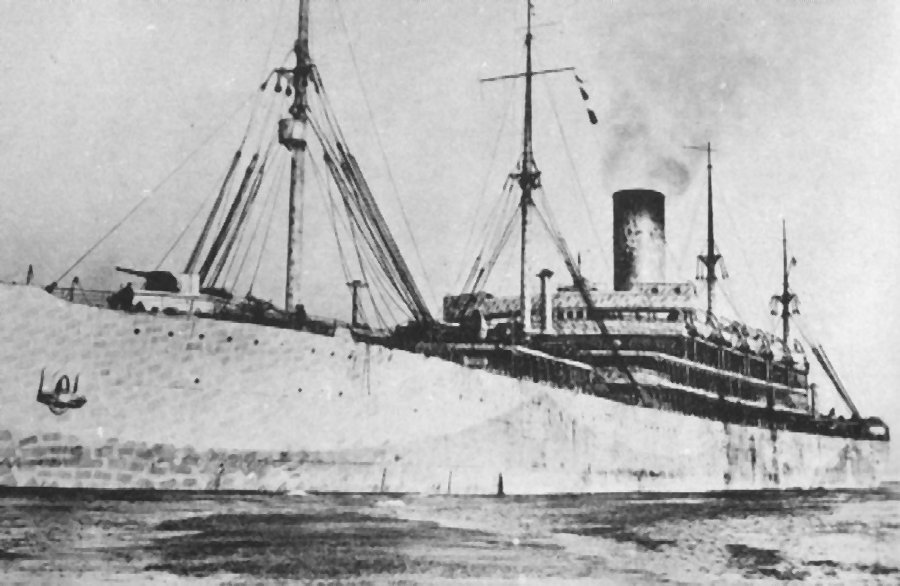
115k | C. 1910 Japanese post card showing Minnesota coaling ship |
Tommy Trampp | |
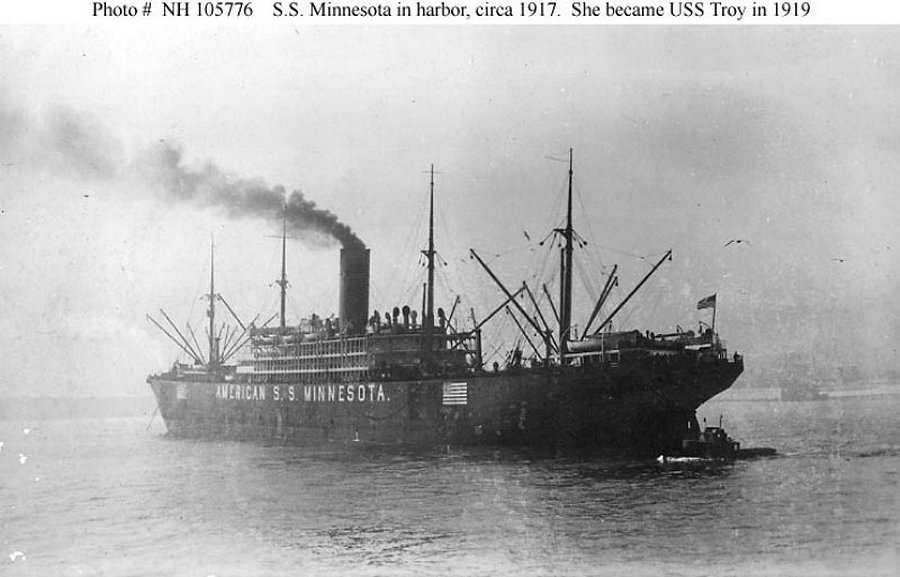 |
81k | In harbor, wearing World War I neutrality markings, circa early 1917 Donation of Charles R. Haberlein Jr., 2008 Naval Historical Center photo NH 105776 |
Robert Hurst | |
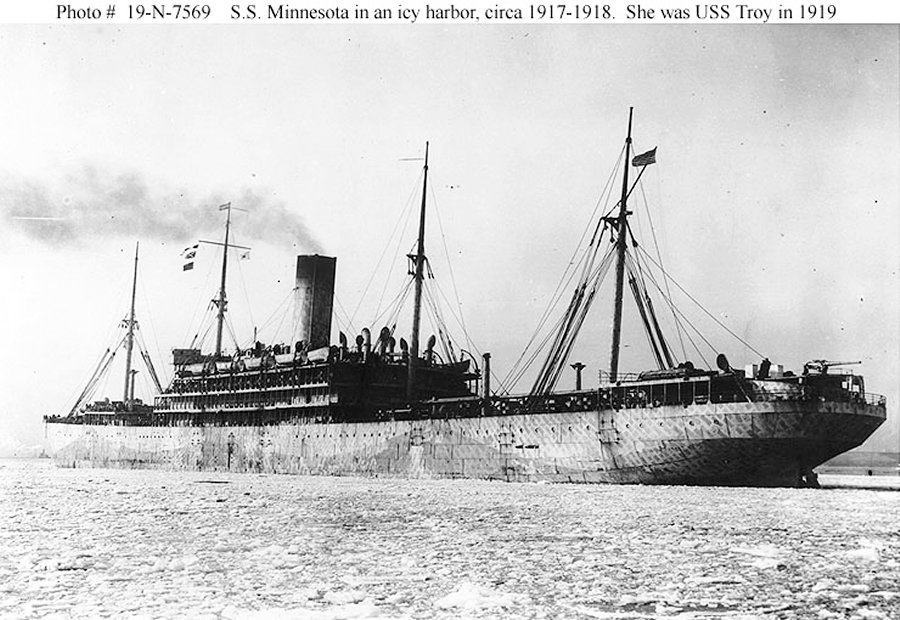 |
132k | In an icy harbor, during the winter of 1917-1918. She is painted in Mackay low visibility camouflage National Archives photo 19-N-7569 |
Naval Historical Center | |
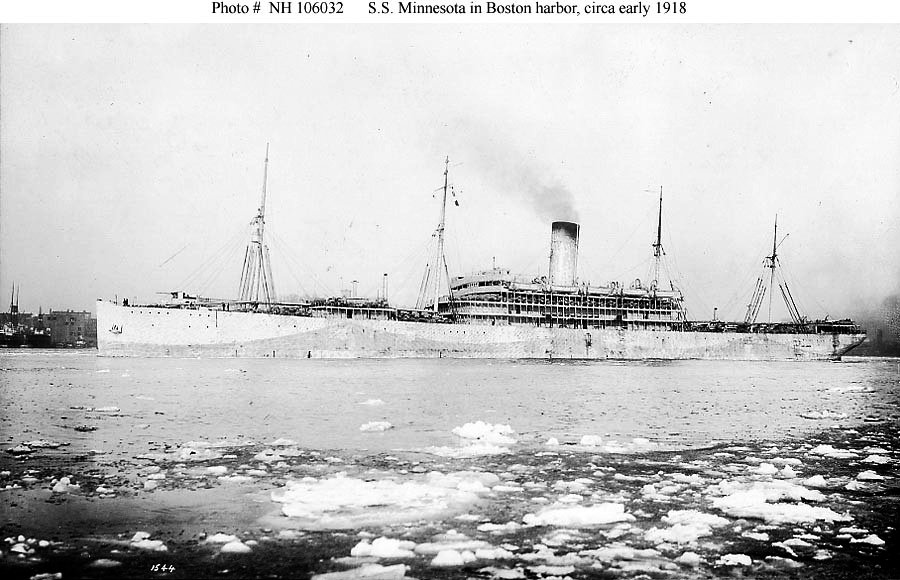 |
113k | S.S. Minnesota in Boston harbor, Massachusetts, in early 1918. Minnesota is painted in Mackay low visibility camouflage. The original print, originally belonging to the Publicity Department of the International Mercantile Marine Company, bears a penciled inscription stating that it was later owned by the noted maritime historian and artist Frank O. Brainard (1916-2007). Donation of Mark Kulikowski, 2008 Naval Historical Center photo NH 106032 |
Robert Hurst | |
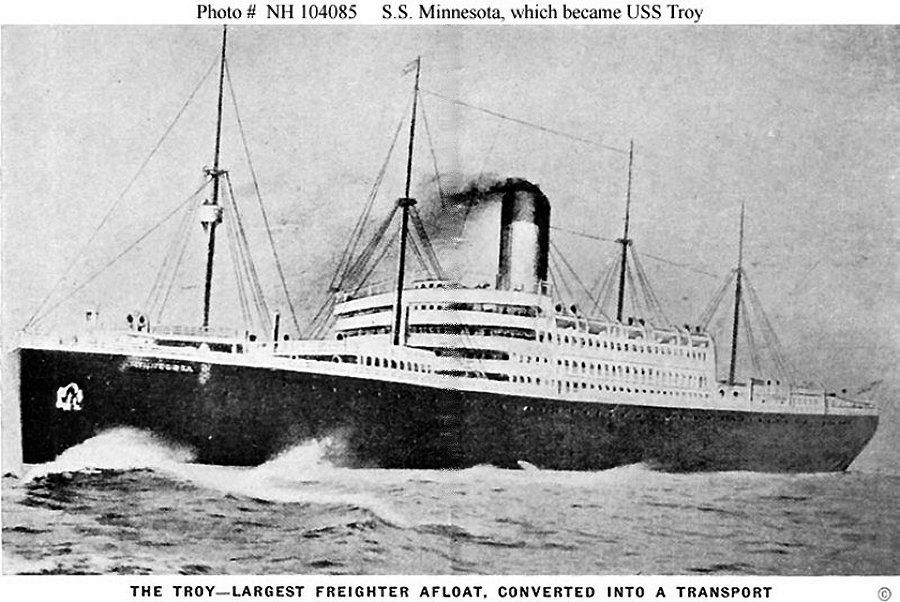 |
126k | Haftone reproduction of an artwork of the S.S Minnesota, published in 1919 by the National Specialities Company of New York City as one of ten images in a 'Souvenir Folder' of views concerning USS Troy (ID-1614). Donation of Dr. Mark Kulikowski, 2005 Naval Historical Center photo NH 104085 |
||
| USS Troy (ID 1614) | ||||
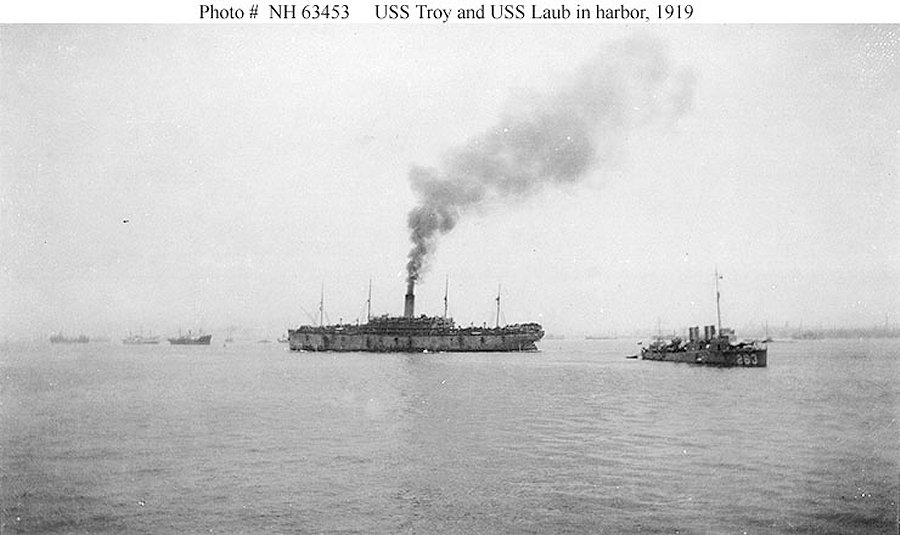 |
78k | "Bringing home 5000 troops", 1919. At right is USS Laub (Destroyer No. 263), which was commissioned in March 1919. U.S. Navy photo NH 63453 |
Naval Historical Center | |
 |
92k | In a European area harbor, 1919 Photographed by Putnam Donation of Dr. Mark Kulikowski, 2006 Naval Historical Center photo NH 104122 |
Robert Hurst | |
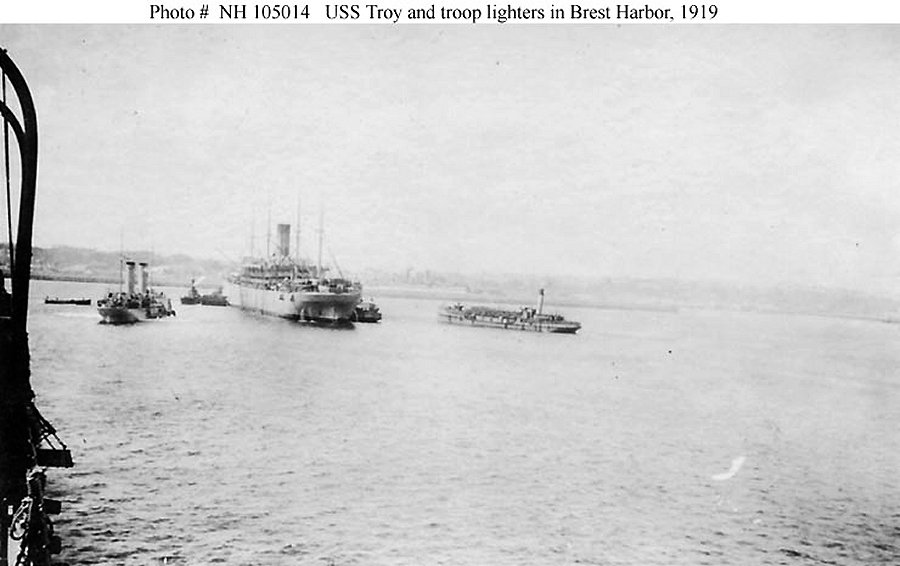 |
92k | At Brest, France, circa May-June 1919, probably while embarking troops for passage home to the United States. Two personnel lighters are nearby: Tudno at left and either Rin Tin Tin or Nenette in the center of the view.Photographed from on board USS Patricia Photograph from the album of Lieutenant (Junior Grade) Edward D. Porges. Donated by his daughter, Gail Porges Guggenheim, 2007 Naval Historical Center photo NH 105014 |
||
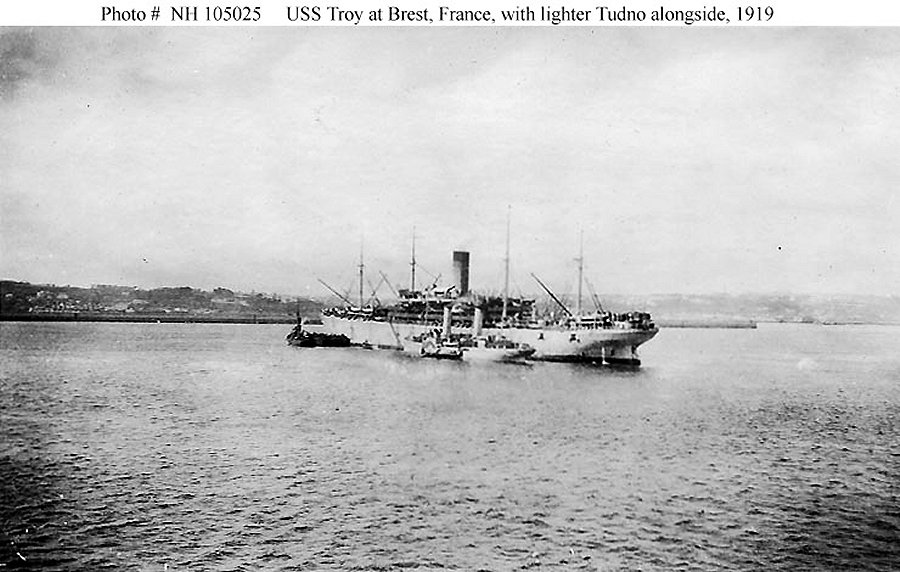 |
92k | At Brest, France, circa May-June 1919, probably while embarking troops for passage home to the United States. The paddle-wheel personnel lighter Tudno is alongside. Photographed from on board USS Patricia Photograph from the album of Lieutenant (Junior Grade) Edward D. Porges. Donated by his daughter, Gail Porges Guggenheim, 2007 Naval Historical Center photo NH 105025 |
||
| Commanding Officers | ||
| 01 | LCDR Thomas W. Garlick, USNRF | 27 February 1919 |
| 02 | CDR John M. Enochs, USN | 1919 |
|
|
| Back To The Main Photo Index | Back to the Identification Numbered Vessel (ID) Photo Index |
| Comments, Suggestions, E-mail Webmaster |
This page created by Joseph M. Radigan and maintained by David Wright
|