NavSource Online: Battleship Photo Archive
BB-26 USS SOUTH CAROLINA


Please Report Any Broken Links Or Trouble You Might Come Across To The Webmaster.
Please Take A Moment To Let Us Know So That We Can Correct Any Problems And Make Your Visit As Enjoyable And As Informative As Possible.
| Click On Image For Full Size Image | Size | Image Description | Contributed By And/Or Copyright |
||||||||||||||||||||||||||||||||||||||||||||||||||||||||||||||||||||||||||||||||||||||||||||||||||||||||||||||||||||||||||||||||||||||||||||||||||||||||||||||||||||||||||||||||||||||||||||||||||||||||||||||||||||||||||||||||||||||||||||||||||||||||||||||||||||||||||||||||||||||||||||||||||||||||
|---|---|---|---|---|---|---|---|---|---|---|---|---|---|---|---|---|---|---|---|---|---|---|---|---|---|---|---|---|---|---|---|---|---|---|---|---|---|---|---|---|---|---|---|---|---|---|---|---|---|---|---|---|---|---|---|---|---|---|---|---|---|---|---|---|---|---|---|---|---|---|---|---|---|---|---|---|---|---|---|---|---|---|---|---|---|---|---|---|---|---|---|---|---|---|---|---|---|---|---|---|---|---|---|---|---|---|---|---|---|---|---|---|---|---|---|---|---|---|---|---|---|---|---|---|---|---|---|---|---|---|---|---|---|---|---|---|---|---|---|---|---|---|---|---|---|---|---|---|---|---|---|---|---|---|---|---|---|---|---|---|---|---|---|---|---|---|---|---|---|---|---|---|---|---|---|---|---|---|---|---|---|---|---|---|---|---|---|---|---|---|---|---|---|---|---|---|---|---|---|---|---|---|---|---|---|---|---|---|---|---|---|---|---|---|---|---|---|---|---|---|---|---|---|---|---|---|---|---|---|---|---|---|---|---|---|---|---|---|---|---|---|---|---|---|---|---|---|---|---|---|---|---|---|---|---|---|---|---|---|---|---|---|---|---|---|---|---|---|---|---|---|---|---|---|---|---|---|---|---|---|---|---|---|---|---|---|---|---|---|---|---|---|---|---|---|---|---|---|---|
| Keel Laying / Commissioning 1906 - 1910 |
|||||||||||||||||||||||||||||||||||||||||||||||||||||||||||||||||||||||||||||||||||||||||||||||||||||||||||||||||||||||||||||||||||||||||||||||||||||||||||||||||||||||||||||||||||||||||||||||||||||||||||||||||||||||||||||||||||||||||||||||||||||||||||||||||||||||||||||||||||||||||||||||||||||||||||
 | 689k | Types of proposed battleship & Armored Cruiser | Image and text provided by University of Nebraska-Lincoln Libraries, Lincoln, NE. Photo from Omaha Daily Bee.(Omaha [Neb.]) 187?-1922, 13 May 1906, COMIC SECTION, Image 35, via chroniclingamerica.loc.gov. | ||||||||||||||||||||||||||||||||||||||||||||||||||||||||||||||||||||||||||||||||||||||||||||||||||||||||||||||||||||||||||||||||||||||||||||||||||||||||||||||||||||||||||||||||||||||||||||||||||||||||||||||||||||||||||||||||||||||||||||||||||||||||||||||||||||||||||||||||||||||||||||||||||||||||
 | NR | AMERICA'S RIVAL TO GREAT BATTLESHIP DREADNOUGHT WILL HAVE A DIAMETRICAL FIRING RANGE OF 50 MILES | Image and text provided by The New York Public Library, Astor, Lenox and Tilden Foundation. Photo from The Evening World. (New York, N.Y.) 1887-1931, 15 November 1906, Evening Edition, Final Results Edition, Image 16, via chroniclingamerica.loc.gov. | ||||||||||||||||||||||||||||||||||||||||||||||||||||||||||||||||||||||||||||||||||||||||||||||||||||||||||||||||||||||||||||||||||||||||||||||||||||||||||||||||||||||||||||||||||||||||||||||||||||||||||||||||||||||||||||||||||||||||||||||||||||||||||||||||||||||||||||||||||||||||||||||||||||||||
 | NR | OUR PROPOSED 20,000 TON BATTLESHIP TO BEAT THE DREADNOUGHT. PLANNED TO BE THE MOST POWERFUL MAN-OF-WAR ON EARTH. |
Image and text provided by Library of Congress, Washington, DC. Photo from The Washington Times. (Washington [D.C.]) 1902-1939, 2 December 1906, Image 55, via chroniclingamerica.loc.gov. |
||||||||||||||||||||||||||||||||||||||||||||||||||||||||||||||||||||||||||||||||||||||||||||||||||||||||||||||||||||||||||||||||||||||||||||||||||||||||||||||||||||||||||||||||||||||||||||||||||||||||||||||||||||||||||||||||||||||||||||||||||||||||||||||||||||||||||||||||||||||||||||||||||||||||
 012650 |
14.1k | 9 page PDF of the South Carolina (BB-26) Booklet of General Plans showing: - Cover Sheet of 7 October 1907. Lower Platform Deck / Upper Platform Deck, Inner Bottom / Hold, Midship Section, Search Lights / Boat Deck / Arrangement of Armor, Upper Deck / Superstructure Deck, Outboard Profile, Inboard Profile / General Information, Berth Deck / Main Deck. | National Archives Identifier: 53487429. Photo courtesy of catalog.archives.gov, via Daniel Hacker. | ||||||||||||||||||||||||||||||||||||||||||||||||||||||||||||||||||||||||||||||||||||||||||||||||||||||||||||||||||||||||||||||||||||||||||||||||||||||||||||||||||||||||||||||||||||||||||||||||||||||||||||||||||||||||||||||||||||||||||||||||||||||||||||||||||||||||||||||||||||||||||||||||||||||||
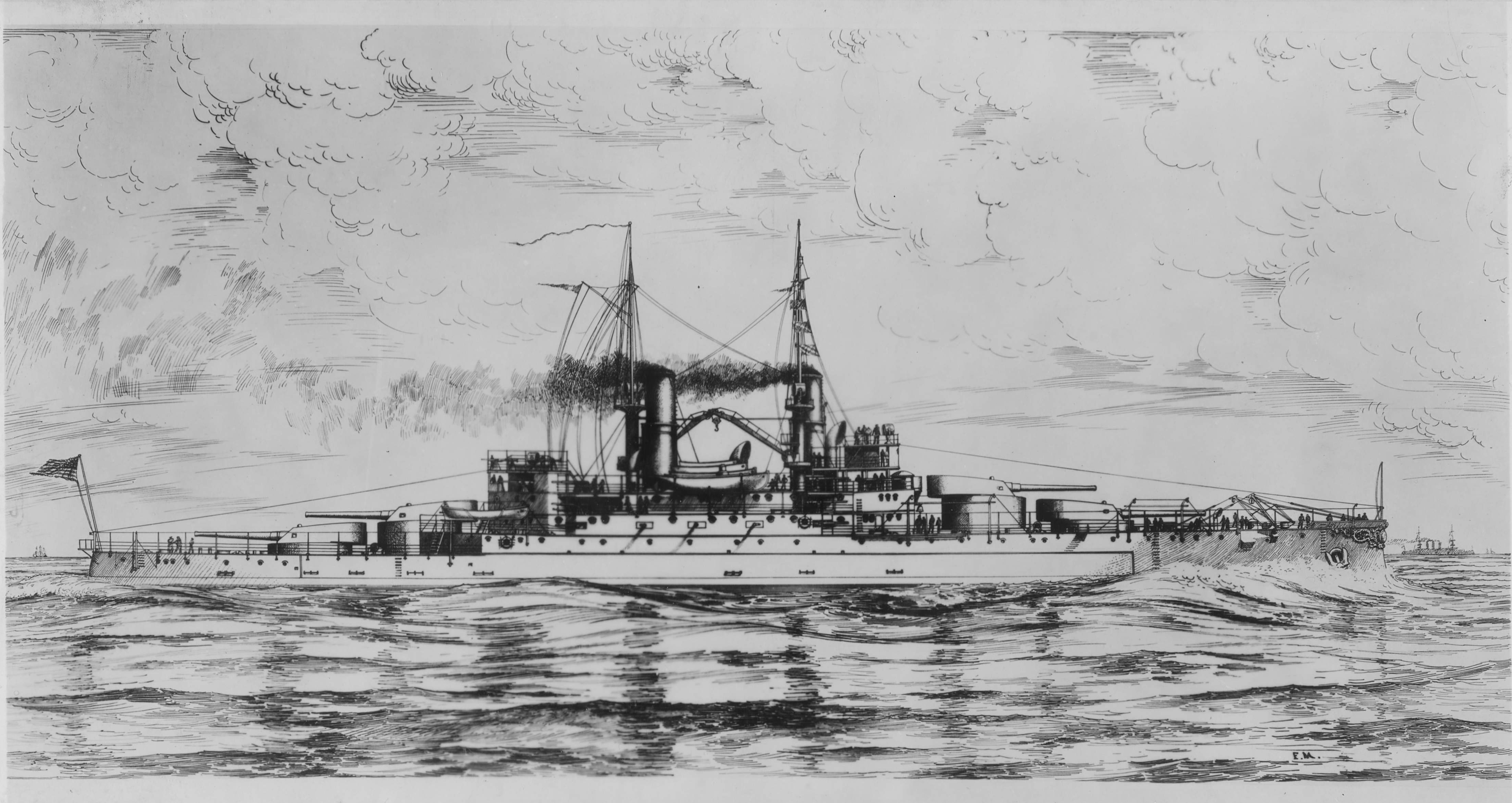 012659 |
3.12k | Bureau of Construction and Repair drawing of the South Carolina (BB-26) . | National Archives Identifier: 496081215. Local Identifier 19-N-14945 Photo courtesy of catalog.archives.gov. | ||||||||||||||||||||||||||||||||||||||||||||||||||||||||||||||||||||||||||||||||||||||||||||||||||||||||||||||||||||||||||||||||||||||||||||||||||||||||||||||||||||||||||||||||||||||||||||||||||||||||||||||||||||||||||||||||||||||||||||||||||||||||||||||||||||||||||||||||||||||||||||||||||||||||
 | NR | Our Navy Equals Any Says Admiral Capps To Senate Committee Declares South Carolina Greater Than English Dreadnought |
Image and text provided by Library of Congress, Washington, DC. Photo from The Washington Times. [volume] (Washington [D.C.]) 1902-1939, 26 February 1908, Last Edition, Image 1, via chroniclingamerica.loc.gov. | ||||||||||||||||||||||||||||||||||||||||||||||||||||||||||||||||||||||||||||||||||||||||||||||||||||||||||||||||||||||||||||||||||||||||||||||||||||||||||||||||||||||||||||||||||||||||||||||||||||||||||||||||||||||||||||||||||||||||||||||||||||||||||||||||||||||||||||||||||||||||||||||||||||||||
 | NR | LAUNCHED TODAY. SOUTH CAROLINA (BB-26) LAUNCHING A SUCCESS New Battleship South Carolina Takes the Water. Daughter of Gov Ansel Performs Christening Act. CHEERS FROM THOUSANDS |
Image and text provided by Library of Congress, Washington, DC. Photo from Evening Star. [volume] (Washington, D.C.) 1854-1972, 12 July 1908, Image 9, via chroniclingamerica.loc.gov. | ||||||||||||||||||||||||||||||||||||||||||||||||||||||||||||||||||||||||||||||||||||||||||||||||||||||||||||||||||||||||||||||||||||||||||||||||||||||||||||||||||||||||||||||||||||||||||||||||||||||||||||||||||||||||||||||||||||||||||||||||||||||||||||||||||||||||||||||||||||||||||||||||||||||||
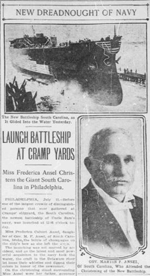 | NR | NEW DREADNOUGHT OF NAVY. The New Battleship South Carolina (BB-26) as it glided into the water yesterday. GOV. MARTIN F. ANSEL Of South Carolina Who Attended the Christening of the New Battleship |
Image and text provided by Library of Congress, Washington, DC. Photo from The Washington Times. (Washington [D.C.]) 1902-1939, 12 July 1908, Image 7, via chroniclingamerica.loc.gov. | ||||||||||||||||||||||||||||||||||||||||||||||||||||||||||||||||||||||||||||||||||||||||||||||||||||||||||||||||||||||||||||||||||||||||||||||||||||||||||||||||||||||||||||||||||||||||||||||||||||||||||||||||||||||||||||||||||||||||||||||||||||||||||||||||||||||||||||||||||||||||||||||||||||||||
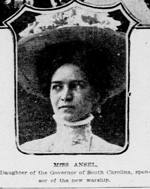 | NR | Miss Frederica Ansel, sponsor of the South Carolina (BB-26). | Image and text provided by Library of Congress, Washington, DC. Photo from New-York Tribune. (New York [N.Y.]) 1866-1924, 12 July 1908, Image 3, via chroniclingamerica.loc.gov. | ||||||||||||||||||||||||||||||||||||||||||||||||||||||||||||||||||||||||||||||||||||||||||||||||||||||||||||||||||||||||||||||||||||||||||||||||||||||||||||||||||||||||||||||||||||||||||||||||||||||||||||||||||||||||||||||||||||||||||||||||||||||||||||||||||||||||||||||||||||||||||||||||||||||||
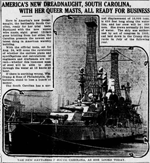 | NR | AMERICA'S NEW DREADNOUGHT, SOUTH CAROLINA (BB-26), WITH HER QUEER MASTS, ALL READY FOR BUSINESS | Image and text provided by Washington State Library; Olympia, WA. Photo from The Tacoma Times. (Tacoma, Wash.) 1903-1949, 19 August 1909, Image 1, via chroniclingamerica.loc.gov. | ||||||||||||||||||||||||||||||||||||||||||||||||||||||||||||||||||||||||||||||||||||||||||||||||||||||||||||||||||||||||||||||||||||||||||||||||||||||||||||||||||||||||||||||||||||||||||||||||||||||||||||||||||||||||||||||||||||||||||||||||||||||||||||||||||||||||||||||||||||||||||||||||||||||||
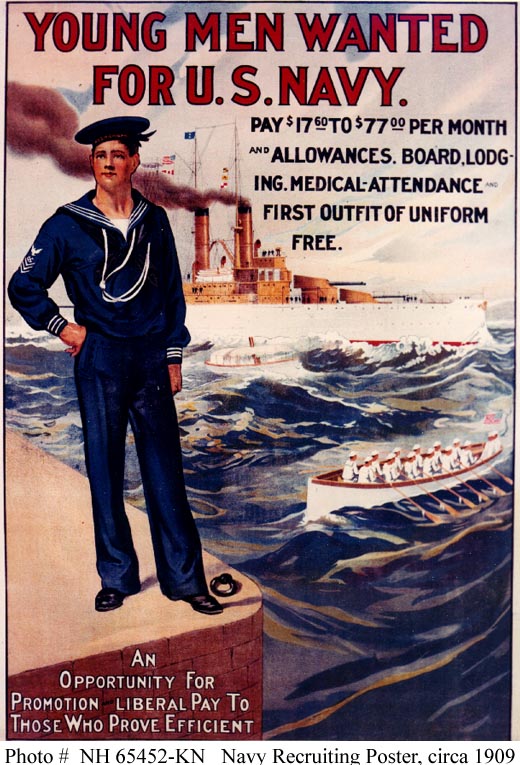 | 118k | Navy Recruiting Poster, circa 1909. Poster featuring a sailor, a South Carolina class battleship, small craft and details on pay and benefits, published about 1909. | Naval History and Heritage Command # NH 65452-KN. | ||||||||||||||||||||||||||||||||||||||||||||||||||||||||||||||||||||||||||||||||||||||||||||||||||||||||||||||||||||||||||||||||||||||||||||||||||||||||||||||||||||||||||||||||||||||||||||||||||||||||||||||||||||||||||||||||||||||||||||||||||||||||||||||||||||||||||||||||||||||||||||||||||||||||
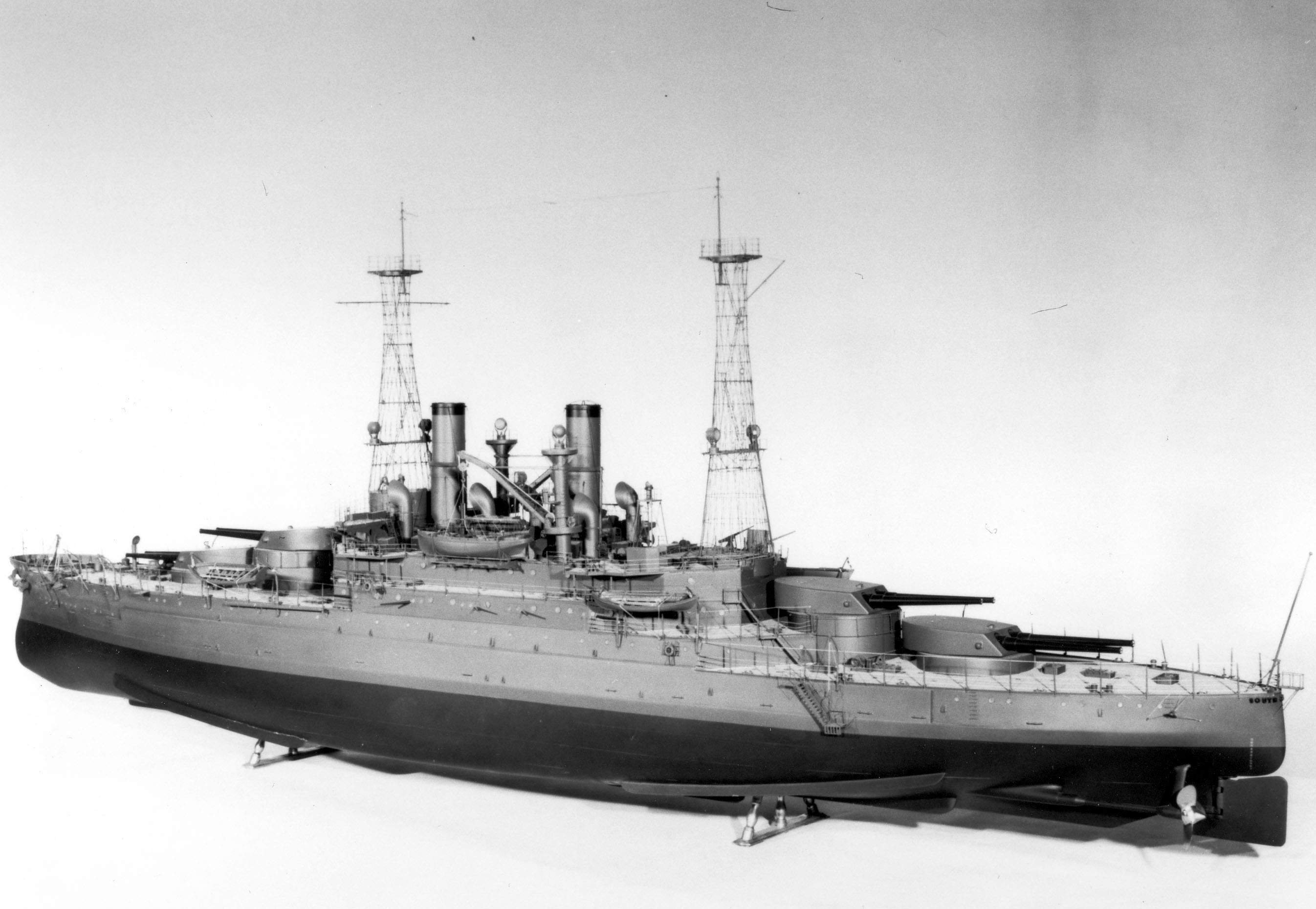 | 364k | Port side view of a model of the South Carolina (BB-26) at US Navy's Modeling Basin in VA. | Courtesy of Mike Ley. | ||||||||||||||||||||||||||||||||||||||||||||||||||||||||||||||||||||||||||||||||||||||||||||||||||||||||||||||||||||||||||||||||||||||||||||||||||||||||||||||||||||||||||||||||||||||||||||||||||||||||||||||||||||||||||||||||||||||||||||||||||||||||||||||||||||||||||||||||||||||||||||||||||||||||
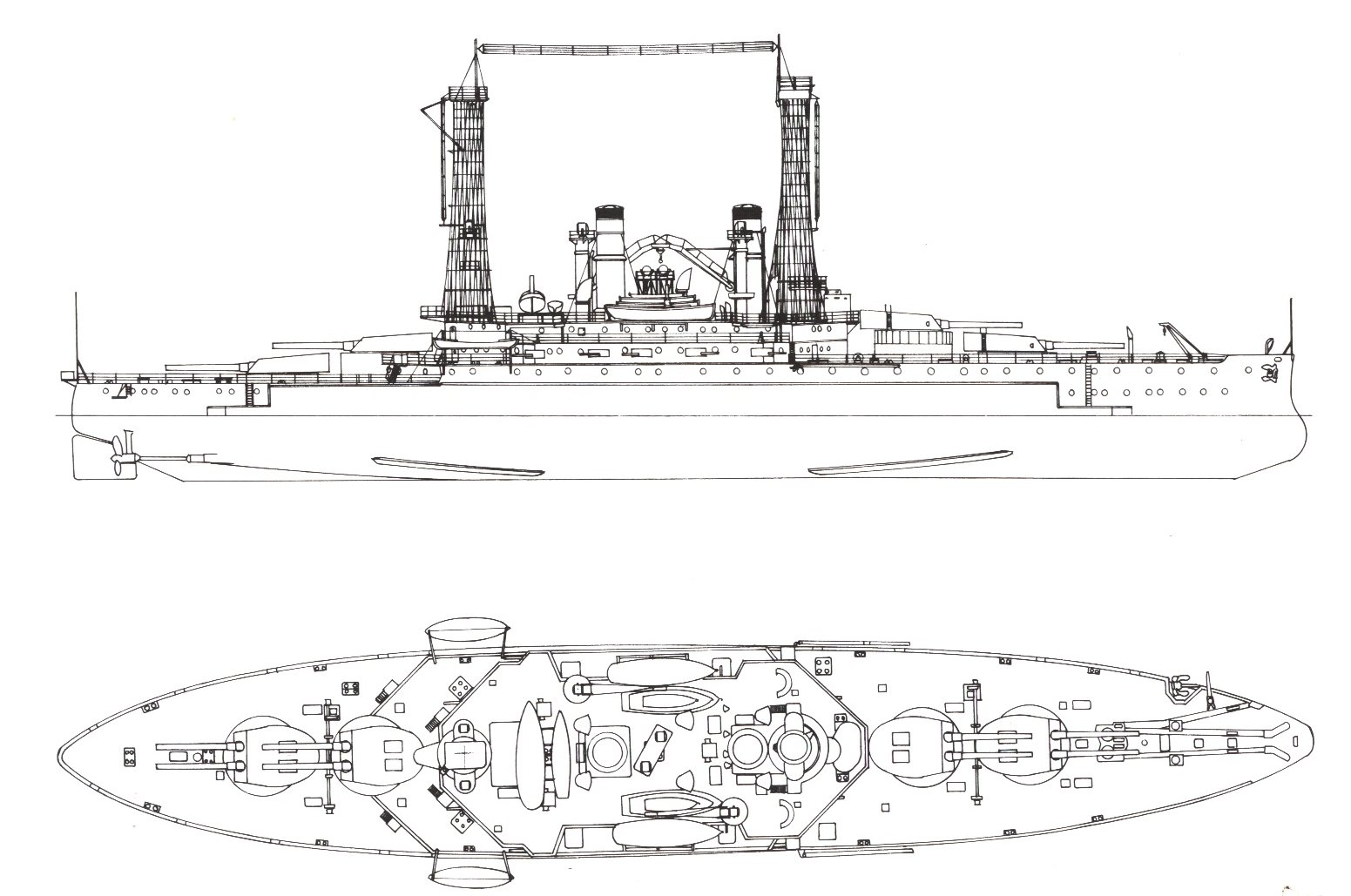 | 187k | Starboard and mast view of the South Carolina (BB-26) as completed, Drawing by A.L. Raven. | Photo and text courtesy of U.S. Battleships: An Illustrated Design History by Norman Friedman. | ||||||||||||||||||||||||||||||||||||||||||||||||||||||||||||||||||||||||||||||||||||||||||||||||||||||||||||||||||||||||||||||||||||||||||||||||||||||||||||||||||||||||||||||||||||||||||||||||||||||||||||||||||||||||||||||||||||||||||||||||||||||||||||||||||||||||||||||||||||||||||||||||||||||||
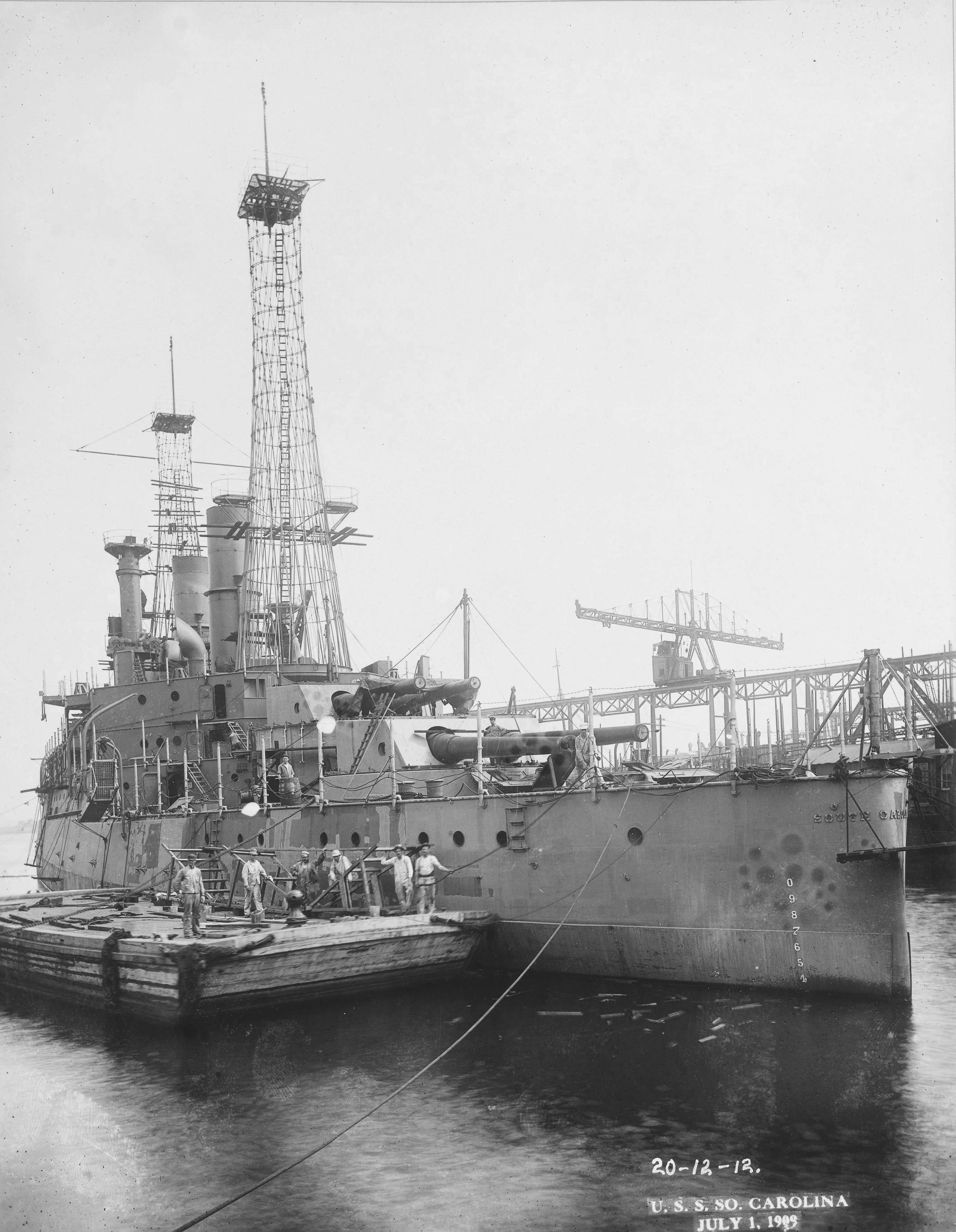 | 1.11k | South Carolina (BB-26) stern view, undergoing final touches of TLC at the Philadelphia Navy Yard, 1 July 1909. | National Archives Identifier: 45512635 Local Identifier: 165-WW-334A-80. Photo courtesy of catalog.archives.gov | ||||||||||||||||||||||||||||||||||||||||||||||||||||||||||||||||||||||||||||||||||||||||||||||||||||||||||||||||||||||||||||||||||||||||||||||||||||||||||||||||||||||||||||||||||||||||||||||||||||||||||||||||||||||||||||||||||||||||||||||||||||||||||||||||||||||||||||||||||||||||||||||||||||||||
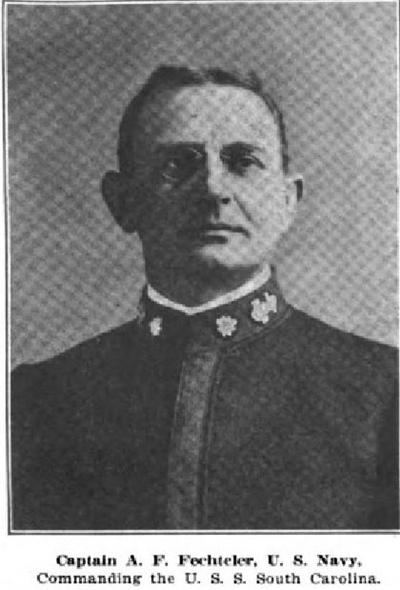 | 100k | Capt. A.F. Fechteler, 1st Captain of the South Carolina (BB-26). | Photo courtesy of Ron Reeves (of blessed memory). | ||||||||||||||||||||||||||||||||||||||||||||||||||||||||||||||||||||||||||||||||||||||||||||||||||||||||||||||||||||||||||||||||||||||||||||||||||||||||||||||||||||||||||||||||||||||||||||||||||||||||||||||||||||||||||||||||||||||||||||||||||||||||||||||||||||||||||||||||||||||||||||||||||||||||
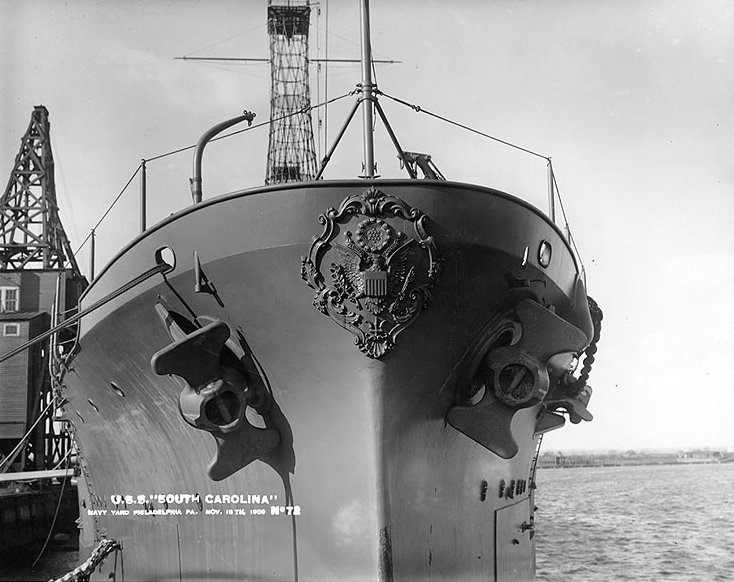 | 78k | Bow decoration, photographed by the Philadelphia Navy Yard, 18 November 1909, during the final months of her outfitting. This fancywork had been removed by March 1910. Note anchors. | Naval History and Heritage Command # 19-N-20-12-16. | ||||||||||||||||||||||||||||||||||||||||||||||||||||||||||||||||||||||||||||||||||||||||||||||||||||||||||||||||||||||||||||||||||||||||||||||||||||||||||||||||||||||||||||||||||||||||||||||||||||||||||||||||||||||||||||||||||||||||||||||||||||||||||||||||||||||||||||||||||||||||||||||||||||||||
| 1910's |
|||||||||||||||||||||||||||||||||||||||||||||||||||||||||||||||||||||||||||||||||||||||||||||||||||||||||||||||||||||||||||||||||||||||||||||||||||||||||||||||||||||||||||||||||||||||||||||||||||||||||||||||||||||||||||||||||||||||||||||||||||||||||||||||||||||||||||||||||||||||||||||||||||||||||||
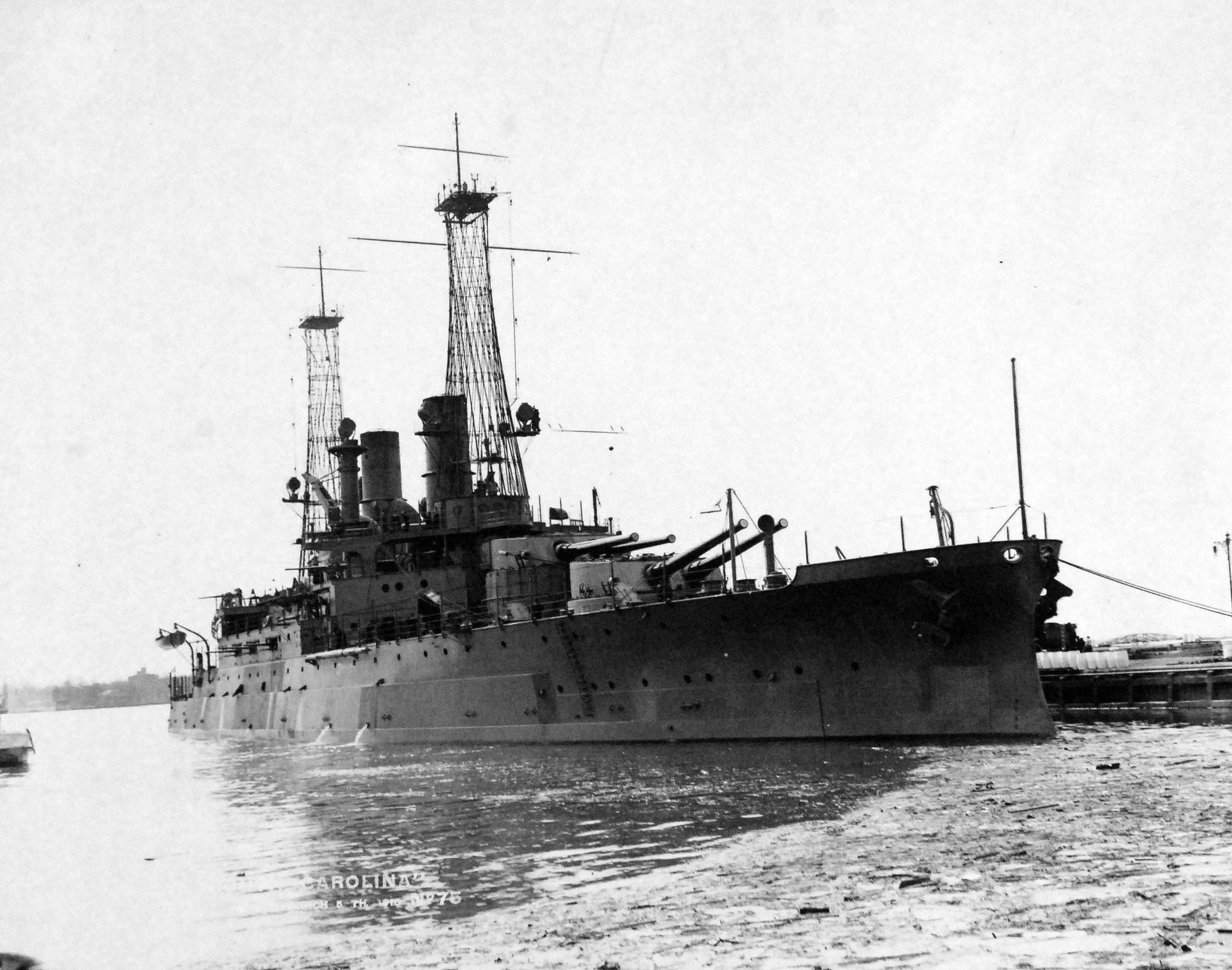 | 3.90k | Seen four days after commissioning on 5 March 1910, the first American Dreadnought. | USN photo # 19-N-14978. | ||||||||||||||||||||||||||||||||||||||||||||||||||||||||||||||||||||||||||||||||||||||||||||||||||||||||||||||||||||||||||||||||||||||||||||||||||||||||||||||||||||||||||||||||||||||||||||||||||||||||||||||||||||||||||||||||||||||||||||||||||||||||||||||||||||||||||||||||||||||||||||||||||||||||
 | 2.48k | South Carolina (BB-26) passing Morro Castle during her departure at Havana Harbor, Cuba, during her shakedown cruise, 7 April 1910. | Photo history.navy.mil | ||||||||||||||||||||||||||||||||||||||||||||||||||||||||||||||||||||||||||||||||||||||||||||||||||||||||||||||||||||||||||||||||||||||||||||||||||||||||||||||||||||||||||||||||||||||||||||||||||||||||||||||||||||||||||||||||||||||||||||||||||||||||||||||||||||||||||||||||||||||||||||||||||||||||
 | NR | OUR NAVAL GUNNERS BEAT THE WORLD UNCLE SAM'S NAVAL MARKSMEN HAVE BEEN MAKING REMARKABLE SCORES, FIRING ON WAVES WHILE BEING TOWED AT DISTANCE COXSWAIN J. R. EDWARDS, OF THE BATTLESHIP SOUTH CAROLINA (BB-26). He made sixteen bull's-eyes out of sixteen shots in about four minutes. Photograph taken on the battleship, standing outside of turret, beside his guns. | Image and text provided by University of Hawaii at Manoa; Honolulu, HI. & Library of Congress, Washington, DC. Photo by Evening Bulletin. (Honolulu [Oahu, Hawaii) 1895-1912, 27 May 1910, 3:30 EDITION, Image 1 & New-York Tribune.(New York [N.Y.]) 1866-1924, 24 July 1910, Image 16, courtesy of chroniclingamerica.loc.gov. |
||||||||||||||||||||||||||||||||||||||||||||||||||||||||||||||||||||||||||||||||||||||||||||||||||||||||||||||||||||||||||||||||||||||||||||||||||||||||||||||||||||||||||||||||||||||||||||||||||||||||||||||||||||||||||||||||||||||||||||||||||||||||||||||||||||||||||||||||||||||||||||||||||||||||
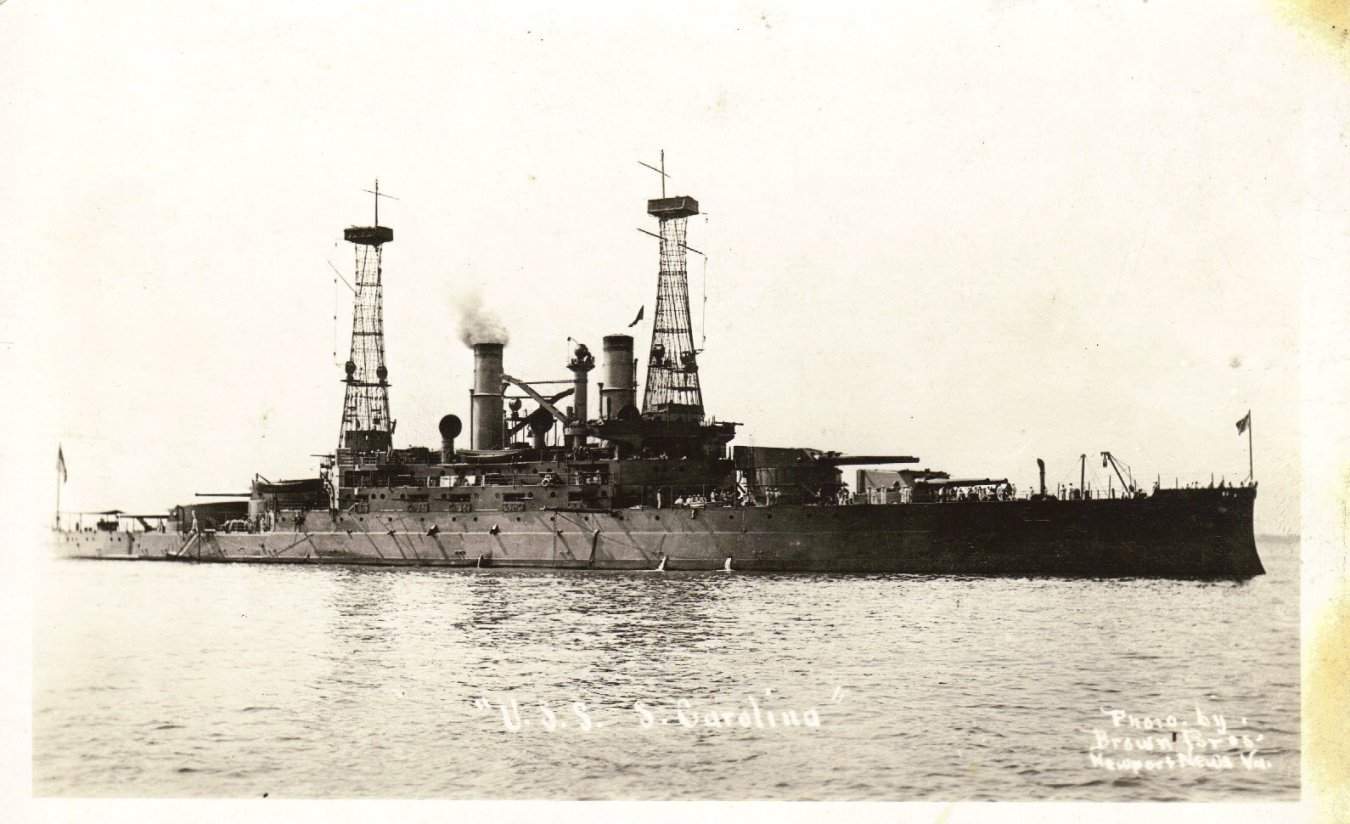 | 90k | South Carolina (BB-26), possibly at Newport News, VA., shortly after commissioning. Probably when she sailed for repairs at Norfolk, naval militia training duty, and Atlantic Fleet maneuvers off Provincetown and the Virginia Capes, from the end of June until the beginning of November, 1910. | USN photo by Brown Brothers, courtesy of Robert M. Cieri. Partial text courtesy of DANFS. | ||||||||||||||||||||||||||||||||||||||||||||||||||||||||||||||||||||||||||||||||||||||||||||||||||||||||||||||||||||||||||||||||||||||||||||||||||||||||||||||||||||||||||||||||||||||||||||||||||||||||||||||||||||||||||||||||||||||||||||||||||||||||||||||||||||||||||||||||||||||||||||||||||||||||
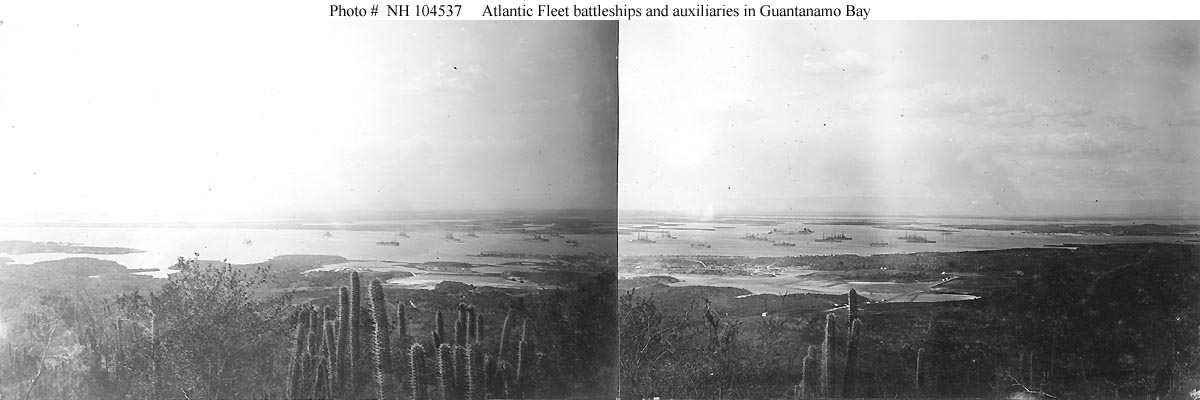 | 62k | Panoramic image (made from two individual views), showing U.S. Atlantic Fleet battleships and auxiliaries in Guantanamo Bay, circa the early or middle 1910s. Ships present include (in left half of image): four Virginia class (BB-13 / 17) battleships, one South Carolina class (BB-26 / 27) battleship, one Delaware class (BB-28 / 29) battleship, two unidentified auxiliaries and a collier; (in right half of image): all six Connecticut class (BB-18 / 22 & 25) battleships, both Mississippi class (BB-23 / 24) battleships, two unidentified auxiliaries, hospital ship Solace (AH-2) and a gunboat. | Naval History and Heritage Command # NH 104537. Photo from the 1909-1924 album of Vice Admiral Olaf M. Hustvedt, USN (Retired). Courtesy of Rick Hauck, 2006. | ||||||||||||||||||||||||||||||||||||||||||||||||||||||||||||||||||||||||||||||||||||||||||||||||||||||||||||||||||||||||||||||||||||||||||||||||||||||||||||||||||||||||||||||||||||||||||||||||||||||||||||||||||||||||||||||||||||||||||||||||||||||||||||||||||||||||||||||||||||||||||||||||||||||||
 | 2.76k | Tender Severn, Snapper (SS-16), Tarpon (SS-14), Bonita (SS-15), Salmon (SS-19), Stingray (SS-13) in Dry Dock # 2, Navy Yard Norfolk VA., 24 February 1911. Time to prepare dock 8 hours: Dock commenced to flood 8:30 AM. Yard workmen taking off manhole plate 12:30 PM. Between 1 November 1910 and 12 January 1911, South Carolina (BB-26) voyaged to Europe and back with the 2d Battleship Division. This visit took her to Cherbourg, France, and Portland, England. Upon her return to Norfolk, she entered the navy yard for repairs, and then conducted tactics training and maneuvers off the New England coast. The South Carolina is the battleship in the background. | Partial text courtesy of DANFS. US National Archives photo from National Archives and Records Administration (NARA), College Park, Maryland, courtesy of Sean Hert. |
||||||||||||||||||||||||||||||||||||||||||||||||||||||||||||||||||||||||||||||||||||||||||||||||||||||||||||||||||||||||||||||||||||||||||||||||||||||||||||||||||||||||||||||||||||||||||||||||||||||||||||||||||||||||||||||||||||||||||||||||||||||||||||||||||||||||||||||||||||||||||||||||||||||||
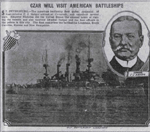 |
NR | CZAR WILL VISIT AMERICAN BATTLESHIPS The American battleship fleet under command of Rear-Admiral C. J. Badger arrived at Cronstadt, and remained several days. Emperor Nicholas did the United States the unusual honor of visiting the vessels, and also received Admiral Badger and the fleet officers in the palace in this city. The fleet comprises the battleships Louisiana (BB-19), South Carolina (BB-26), Kansas (BB-21) and New Hampshire (BB-25). |
Image and text provided by University of California, Riverside. Photo by The San Francisco Call. (San Francisco [Calif.]) 1895-1913, 09 April 1911, Image 17, courtesy of chroniclingamerica.loc.gov. 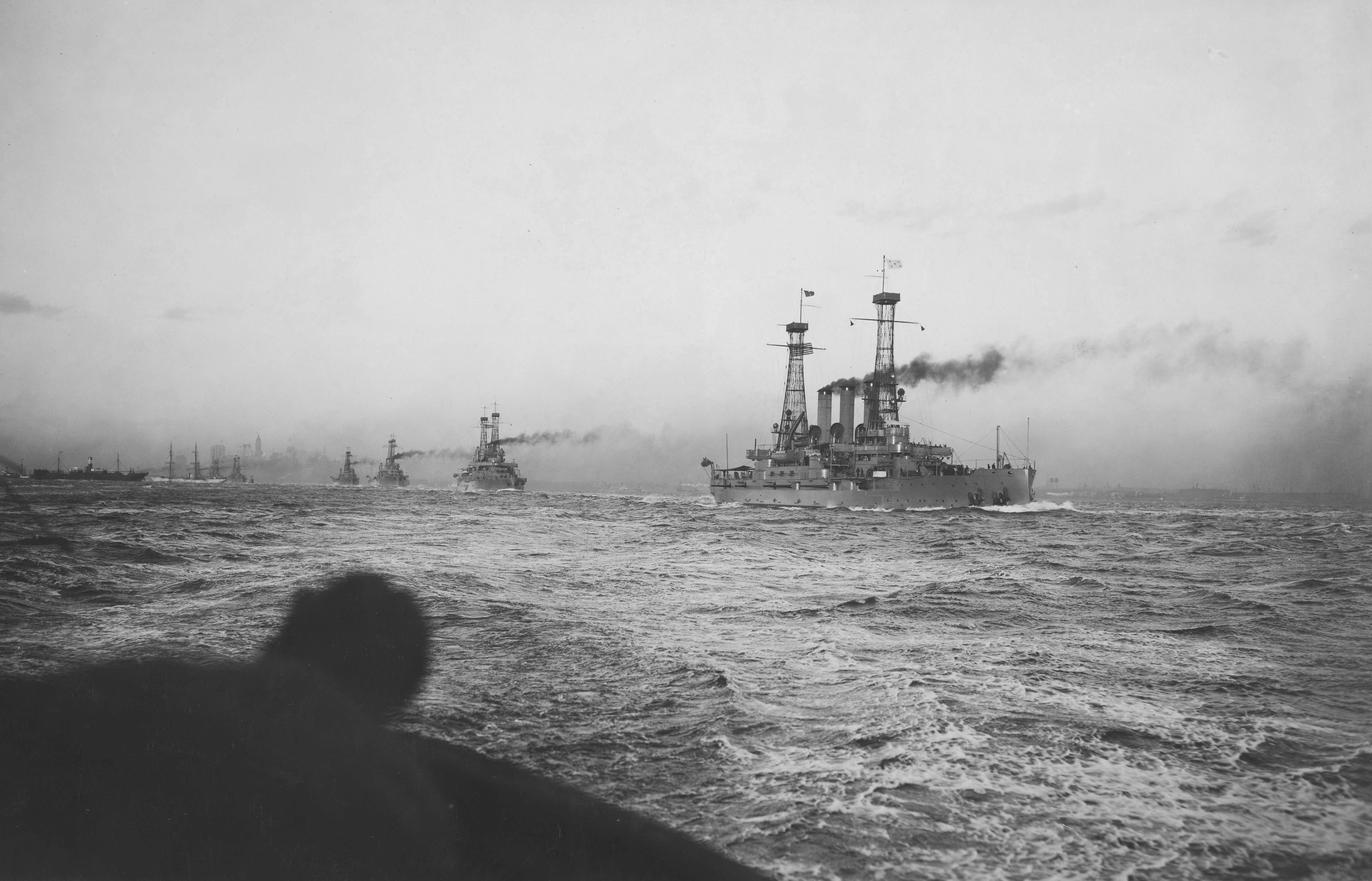 1.54k |
First Division under way steaming out of New York harbor. | The Connecticut (BB-18) is flying the 2 star flag of Admiral Osterhaus, commander of the fleet, 3 October 1911. Either South Carolina (BB-26) or Michigan (BB-27) behind the Connecticut. National Archives Identifier:45513426 | Local Identifier: 165-WW-337D-60. Photo courtesy of catalog.archives.gov 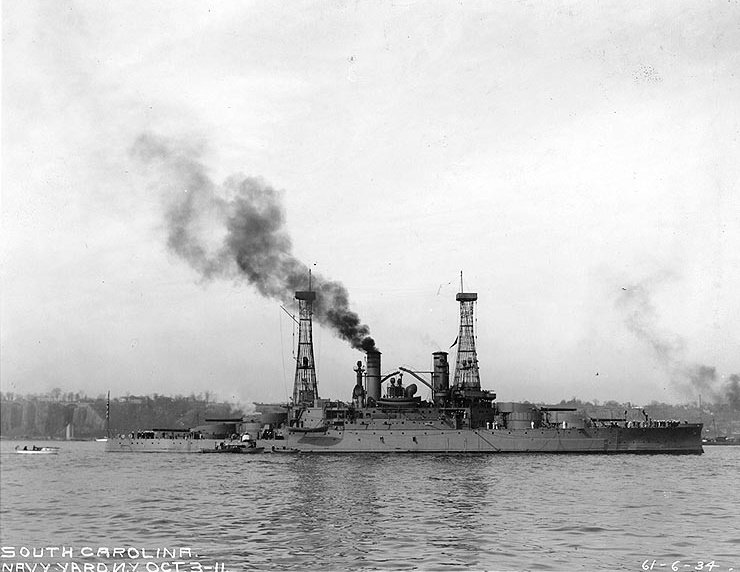 67k | In New York Harbor, 3 October 1911. Photographed by the New York Navy Yard. | Naval History and Heritage Command # NH 44250. |  NR | What Navy Offers to Young Men - Secretary Meyer Tells How It Has Been Americanized and Discusses Its Efficiency. |
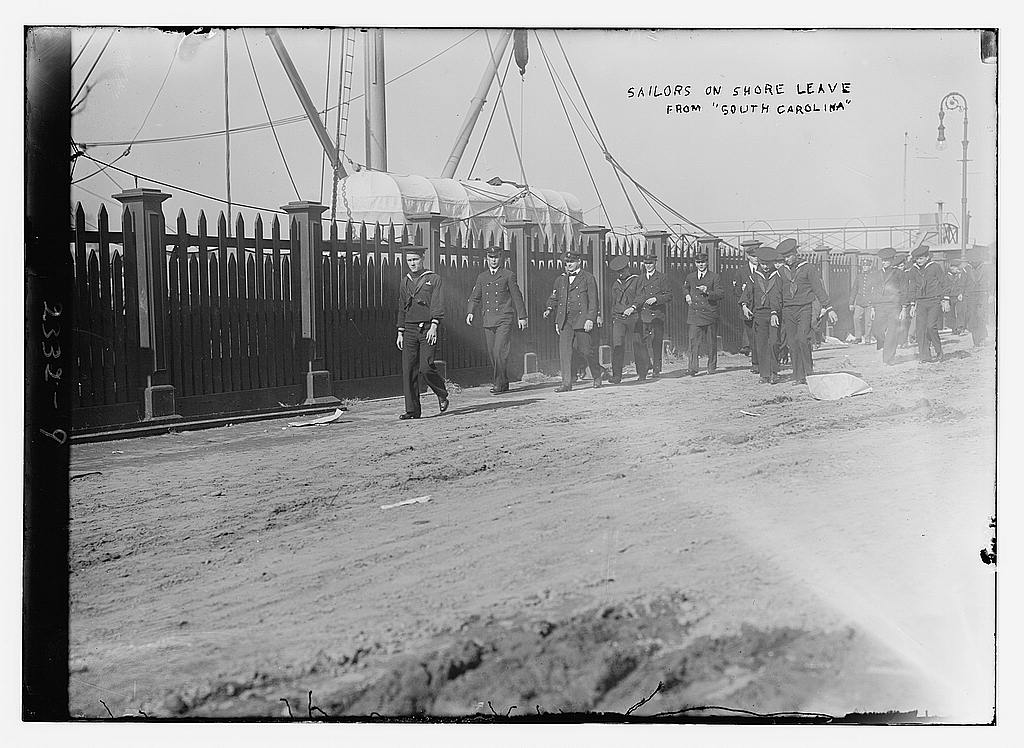
NAVAL RESERVISTS ON THE SOUTH CAROLINA (BB-26) Image and text provided by Library of Virginia; Richmond, VA. | Photo from The Times Dispatch. (Richmond, Va.) 1903-1914, 15 October 1911, Image 13, via chroniclingamerica.loc.gov.  113k | Sailors on shore leave from South Carolina (BB-26) on 22 October 1911. | Late in 1911, she took part in the naval review at New York and maneuvers with the 1st Squadron out of Newport, R.I. Digital ID: # ggbain 09957, LC-B2-2333-3 & LC-B2-2332-9 Source: Library of Congress Prints and Photographs Division, from the George Grantham Bain Collection, courtesy of Tom Kermen. Text courtesy of DANFS. | 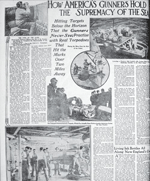 NR | HOW AMERICA'S GUNNERS HOLD THE SUPREMACY OF THE SEA | THE EYES OF THE GUNS Above is the Ordinance Officer who sits in the Foretop and Directs by Telephone the Marksmanship of the Gunners Below. At the Bottom of the page is the Crew of a Seven inch Gun on the Utah (BB-31) Lowering a Pontoon Raft with Contact Mines from Battleship South Carolina (BB-26) to the Ship's Cutter Placing the Mines from the Bow to the Cutter Photos by Enrique Mueller. |
Image and text provided by University of Utah, Marriott Library. The Salt Lake Tribune. (Salt Lake City, Utah) 1890-current, 12 May 1912, Magazine Section, Image 38, courtesy of chroniclingamerica.loc.gov. 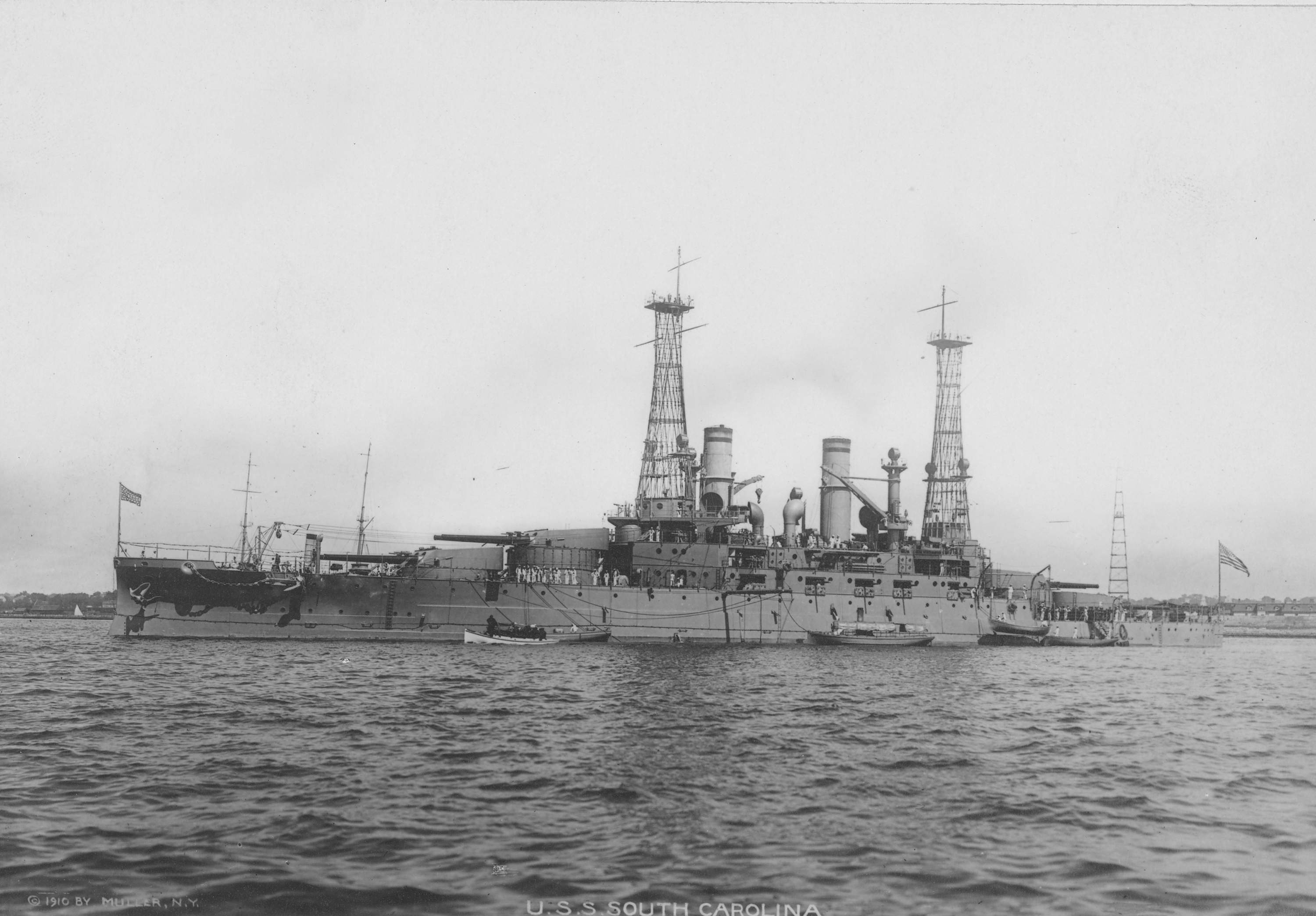 395k | Seems to be Liberty time on the South Carolina (BB-26), circa 1912. | Photographer: Enrique Muller Jr. | National Archives Identifier: 45512572 Local Identifier: 165-WW-334A-50. Photo courtesy of catalog.archives.gov Various Views of the 1912 Naval Review on the Hudson |
 012173m 4.51k |

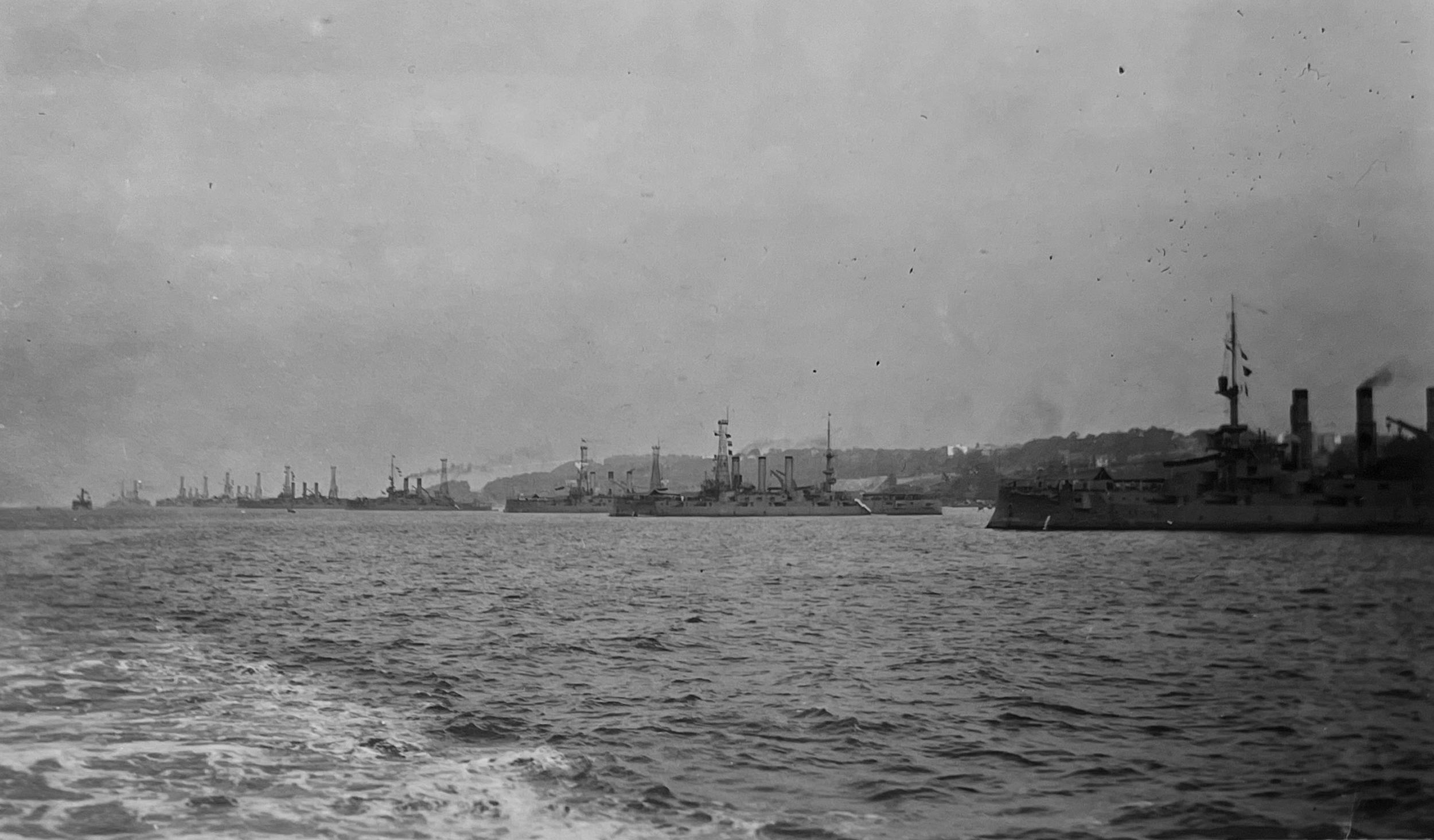
Mobilization of Atlantic Fleet at New York, 12 - 15 October 1912. |
Photo courtesy of David Fisher. |
 012173 1.36k |
U.S. Battleship Fleet during the 1912 Naval Review on the Hudson. |
The nearest ship half visible on the right is the New Hampshire (BB-25) based on the distinctive half-cased stacks. The two sister ships behind her are not clear enough to specifically ID. The fourth ship is one of the Mississippi class, but again, not clear enough to ID. Photo i.d. via Richard M. Jensen. |
Photo courtesy of David Fisher. 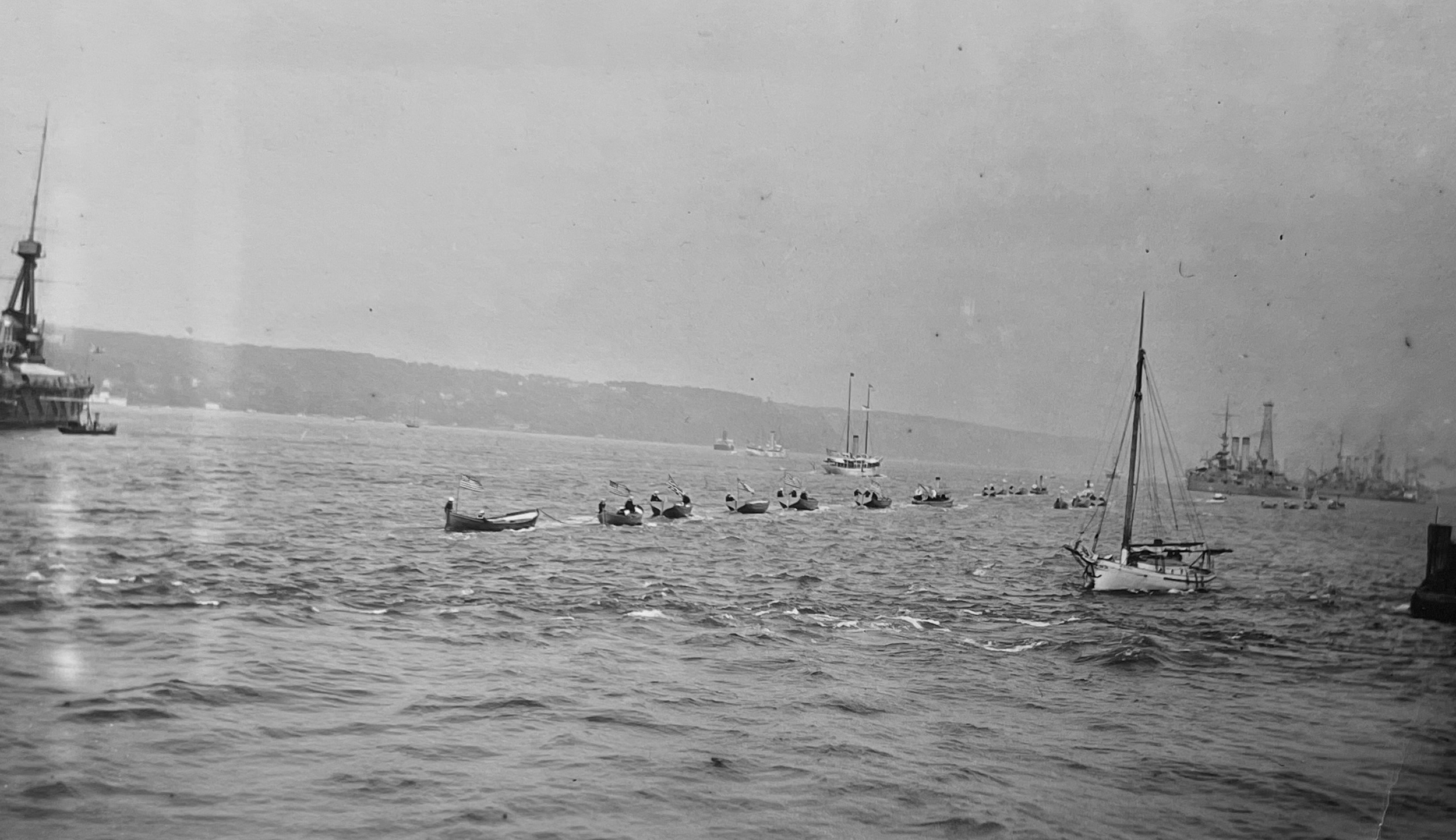 012173d 1.38k |
Small boats join during the 1912 Naval Review on the Hudson. |
Photo courtesy of David Fisher. |
 NR | SCENE OF UNUSUAL BEAUTY WHEN FLEET AND SHORE WERE ILLUMINATED BY MANY THOUSANDS OF FLAMING ELECTRIC BULBS | NEW YORK, Oct. 16—Pen cannot describe and even photography is inadequate in depicting the splendor of the scene at night during the visit of the fleet to this city. Thousands and thousands of electric lights were hung along Riverside drive, which parallels the Hudson river for miles, and all of the vessels in the fleet were outlined by lines of gleaming lamps. In the accompanying picture the soldiers’ and sailors’ monument appears in the foreground with the curved line of Riverside drive at the left. Several battleships are shown in the river, with the lights on the New Jersey shore in the distance. Image and text provided by Ohio Historical Society, Columbus, OH. | Photo by The Democratic Banner.(Mt. Vernon, Ohio) 1898-192?, 18 October 1912, Image 1, courtesy of chroniclingamerica.loc.gov. 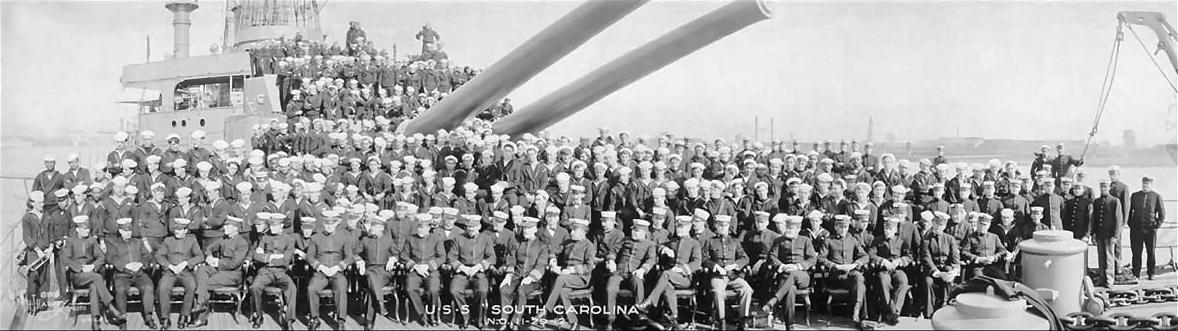 88k | Crew photo, 29 November 1912, possibly in Pensacola, Florida. | Contributed by Richard Leonhardt. |  450k | Photographed circa 1910-14. | National Archives Identifier: 45512637 | Local Identifier: 165-WW-334A-81. Photo courtesy of catalog.archives.gov 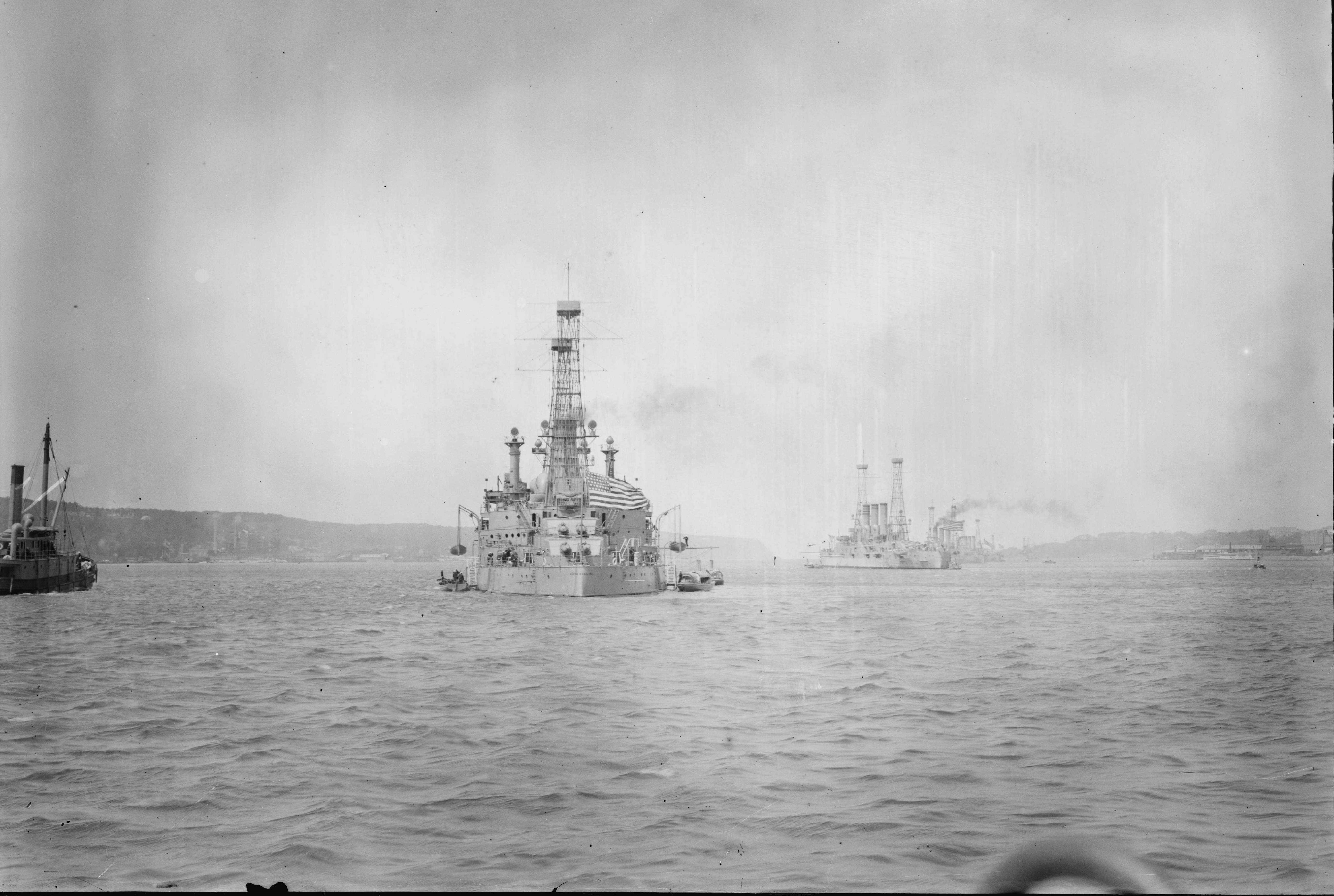 012613m 1.04k |
Warships in North River on 29 May 1913. |
Stern view of the South Carolina (BB-26) and to her right is the Vermont (BB-20) with what might be the New Jersey (BB-16) ahead of her with other battleships in the distance. Photo shows U.S. battleships in the Hudson River, possibly arriving to participate in the unveiling ceremonies for the memorial to the battleship Maine, which had exploded in the harbor of Havana, Cuba, during the Spanish-American War of 1898. In 1913, the monument was placed at the Columbus Circle and 59th Street entrance to Central Park in New York City. (Source: New York Times, Central Park Web site, and Flickr Commons project, 2009 and 2013). Photo by Bain News Service, courtesy of loc.gov.. | Reproduction Number LC-DIG-ggbain-08947. 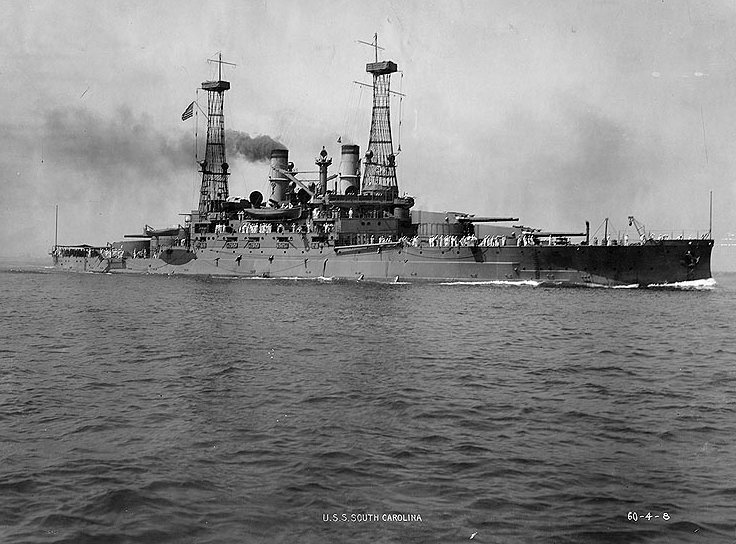 90k | Underway, circa 1910-14. | Naval History and Heritage Command # NH 61225. | 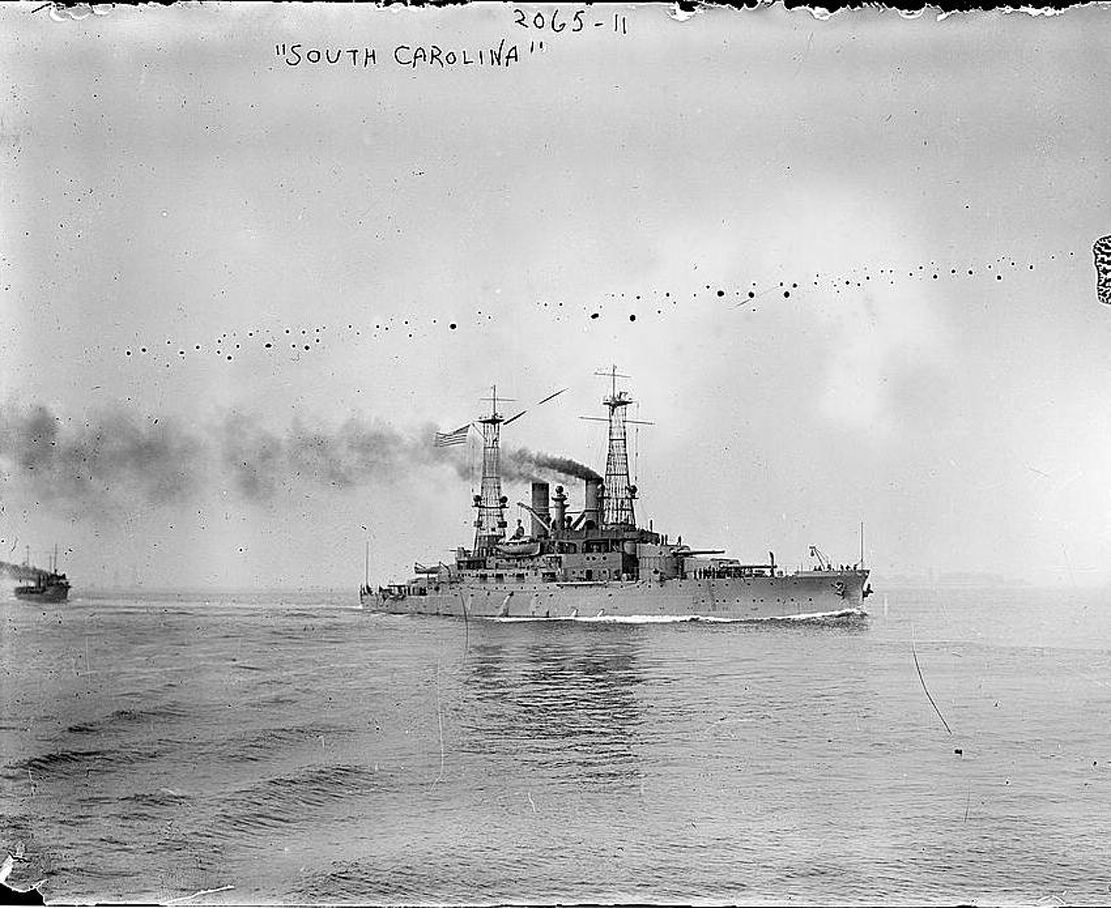 581k | South Carolina (BB-26) underway circa 1910-1914. | Source: Library of Congress, Photo No. LC-B2-2065-11, courtesy of Mike Green. |
 367k | Picture of tests of Spencer Miller's coaling-at-sea rig were conducted in 1913 between the collier Cyclops (AC-4) and the battleship South Carolina (BB-26). The battleship was equipped with a sliding padeye attached to a vertical spar mounted on South Carolina's fore deck that was used to raise and lower the high line along with the load. |
USN photo Gray Steel and Black Oil: Fast Tankers and Replenishment at Sea in the U.S. Navy, 1912-1995, via Robert Hurst.
|  246k |
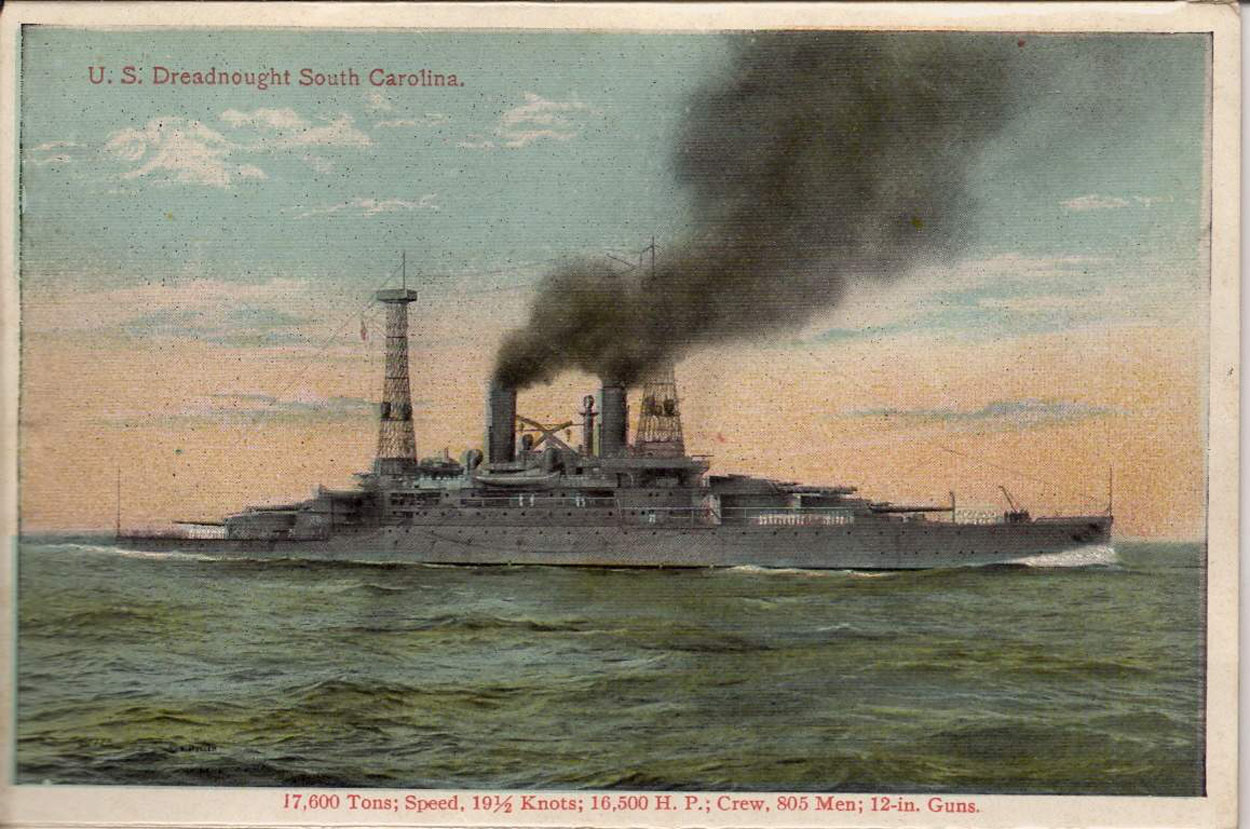
Postcard photo of the South Carolina (BB-26). | Photo courtesy of SK/3 Tommy Trampp. |
Veracruz Incident |
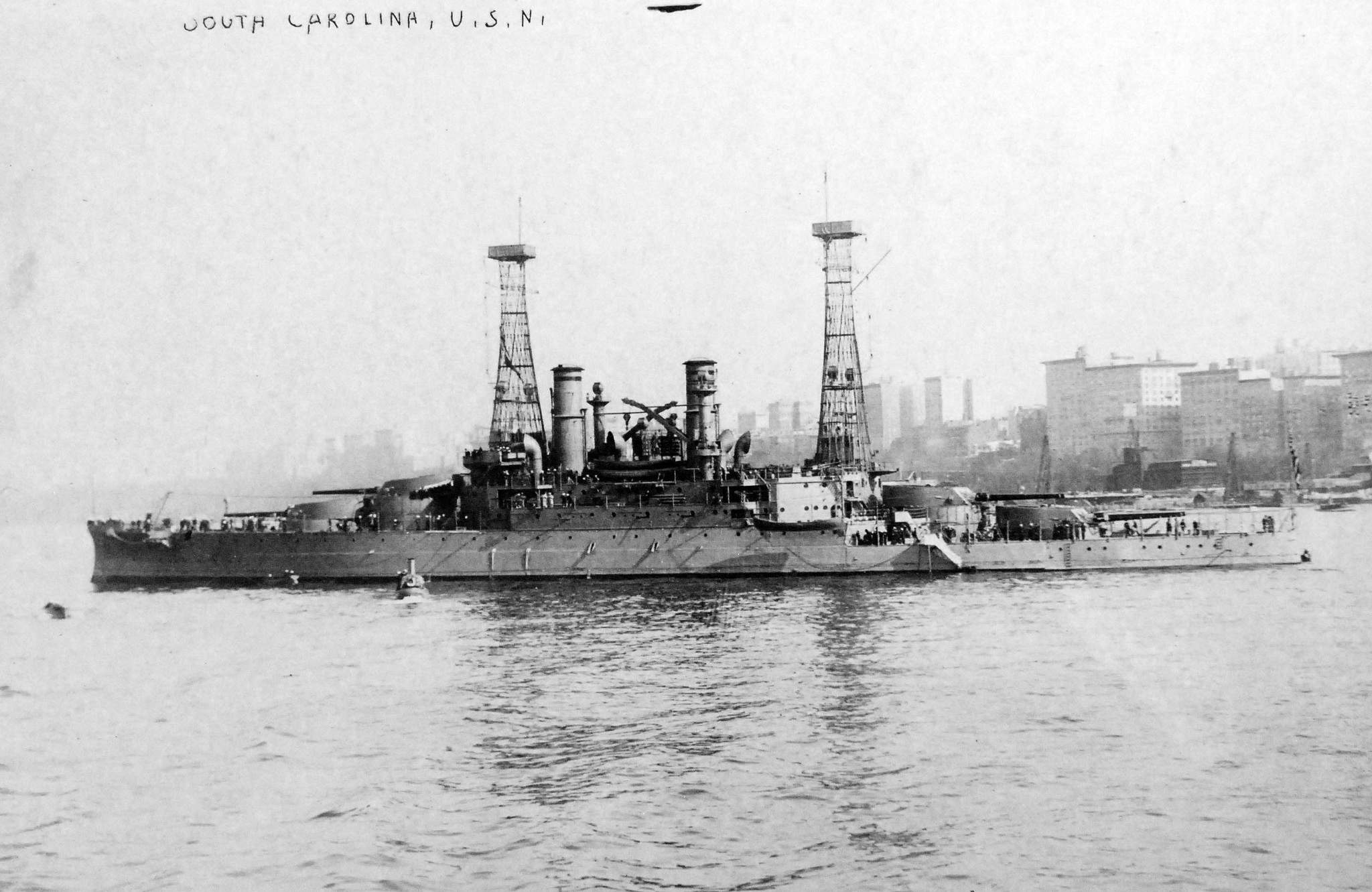 247k | South Carolina (BB-26) goes Gotham on 15 April 1914. | Library of Congress photo # LC-B2-2332-7, Source: Library of Congress Prints and Photographs Division, from the George Grantham Bain Collection courtesy of flickr.com.
|  NR | FLEET'S COMMANDER, AND BATTLESHIP |
Battleship South Carolina (BB-26), Which was Intercepted by Wireless While on Way From Santo Domingo to New York and Ordered to Join the Fleet at Veracruz. Inset is a Picture of Rear Admiral Charles J. Badger. Image and text provided by Library of Congress, Washington, DC. |
Photo from The Washington Times. (Washington [D.C.]) 1902-1939, 22 April 1914, LAST AND HOME EDITION, Image 2, via chroniclingamerica.loc.gov.  805k | TREMENDOUS POWER OF FLEET NOW OFF MEXICO |
Severe Trial of Big Guns Before They Are Mounted. Impenetrable Crust of Steel Blocks Mexican Ports. SOUTH CAROLINA (BB-26) FIRING A BROADSIDE. Image and text provided by Library of Congress, Washington, DC. | Photo from New-York Tribune. (New York [N.Y.]) 1866-1924, 26 April 1914, Image 45, via chroniclingamerica.loc.gov. 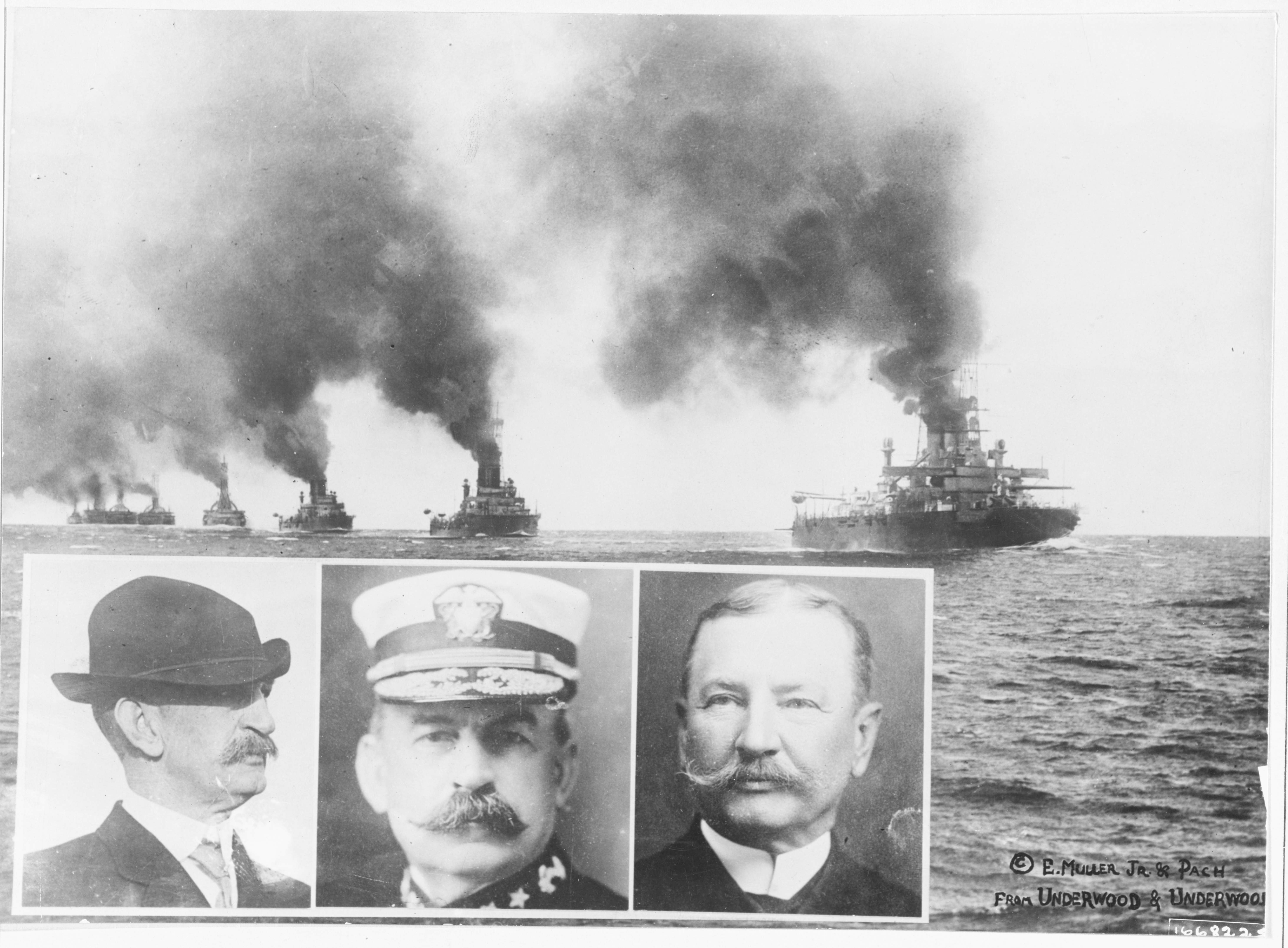 1.15k | U.S. Atlantic Fleet battleships steaming toward Mexican waters in 1914. Photograph copyrighted in 1914 by E. Muller, Jr., and Pach. | OUR POWERFUL NORTH ATLANTIC FLEET This is to considered be the most powerful battle fleet in the world. Recently it returned from the Mediterranean and left Hampton Roads for the south. During the last battle practice each of the vessels made a record for herself while the flagship Wyoming (BB-32) broke the world's record at target practice. The photograph shows the nine ships in the order in which they usually sail. The Wyoming is in the lead at the right, and is followed by the Florida (BB-30), Utah (BB-31), Delaware (BB-28), North Dakota (BB-29), South Carolina (BB-26), Rhode Island (BB-17), Georgia (BB-15),and New Jersey (BB-16). The following battleships that were dispatched to Mexican waters included the: Ohio (BB-12), Virginia (BB-13), Nebraska (BB-14), Connecticut (BB-18), Louisiana (BB-19), Vermont (BB-20), Kansas (BB-21), Minnesota (BB-22), Mississippi (BB-23), Idaho (BB-24), New Hampshire (BB-25), Michigan (BB-27), Arkansas (BB-33), New York (BB-34) & Texas (BB-35). In insets are (left to right): Rear Admiral Henry T. Mayo, Rear Admiral Frank F. Fletcher, Rear Admiral Charles J. Badger. Naval History and Heritage Command # NH 60322. | Insert PDF image and text provided by Louisiana State University; Baton Rouge, LA. Photo by The Madison Journal. (Tallulah, Madison Parish, La.) 1888-current, 07 February 1914, Image 3, courtesy of chroniclingamerica.loc.gov. 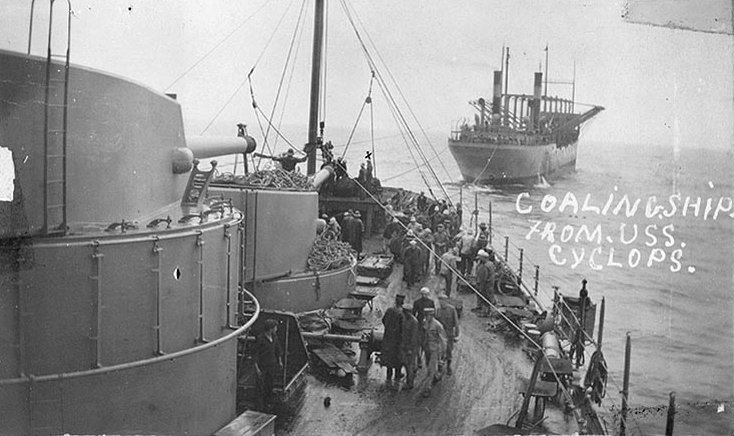 74k | Experimental coaling at sea while under way in April 1914. Rigging between the two ships was used to transfer two 800-pound bags of coal at a time. The bags were landed on a platform in front of the battleship's forward 12-inch gun turret, and then carried to the bunkers. Original photo is printed on a postal card, inscribed on the reverse: "This is a picture of us coaling at sea last April. I have put a cross over where I stood. I unhooked bags of coal when they came over. It is raining when this picture was taken. We were out of sight of land off coast of Virginia. "The donor, a seaman in South Carolina (BB-26) at the time, comments: "it showed that this was possible but a very slow method of refueling. Nothing was heard of the test afterwords." | Naval History and Heritage Command # NH 76012. | 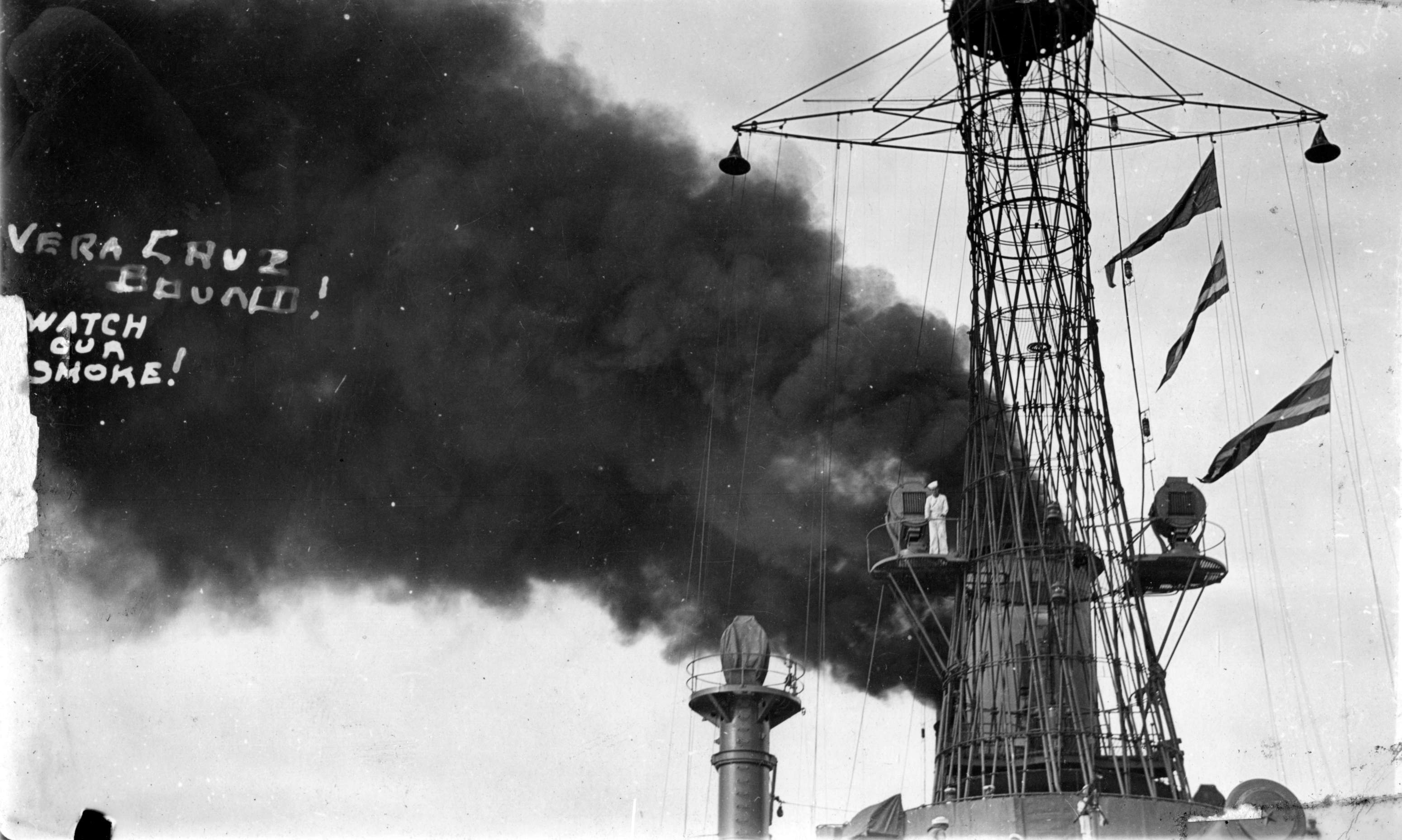 446k | South Carolina (BB-26) steaming under forced draft, bound for Veracruz, Mexico, in Mid-April 1914. View looks aft and up, with the battleship's "cage" foremast and the top of her starboard boat crane dominating the image. Note searchlights and signal hoists. | Naval History and Heritage Command # NH 76015. | 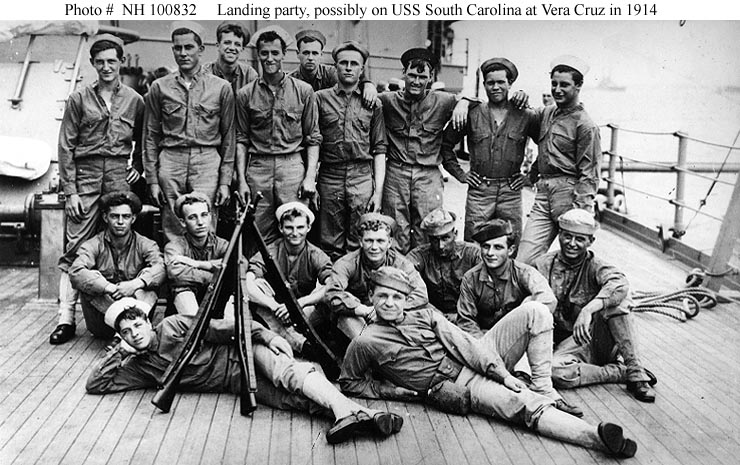 108k | U.S. Navy Landing Party. Photographed on board ship, probably at the time of the Veracruz incident, circa April 1914. These sailors are wearing Marine Corps flannel shirts and khaki trousers, with dyed "white hats". They are posing with M1903 "Springfield" rifles and at least one man is wearing an ammunition belt. The ship may be South Carolina (BB-26). | Naval History and Heritage Command # NH 100832. |
|
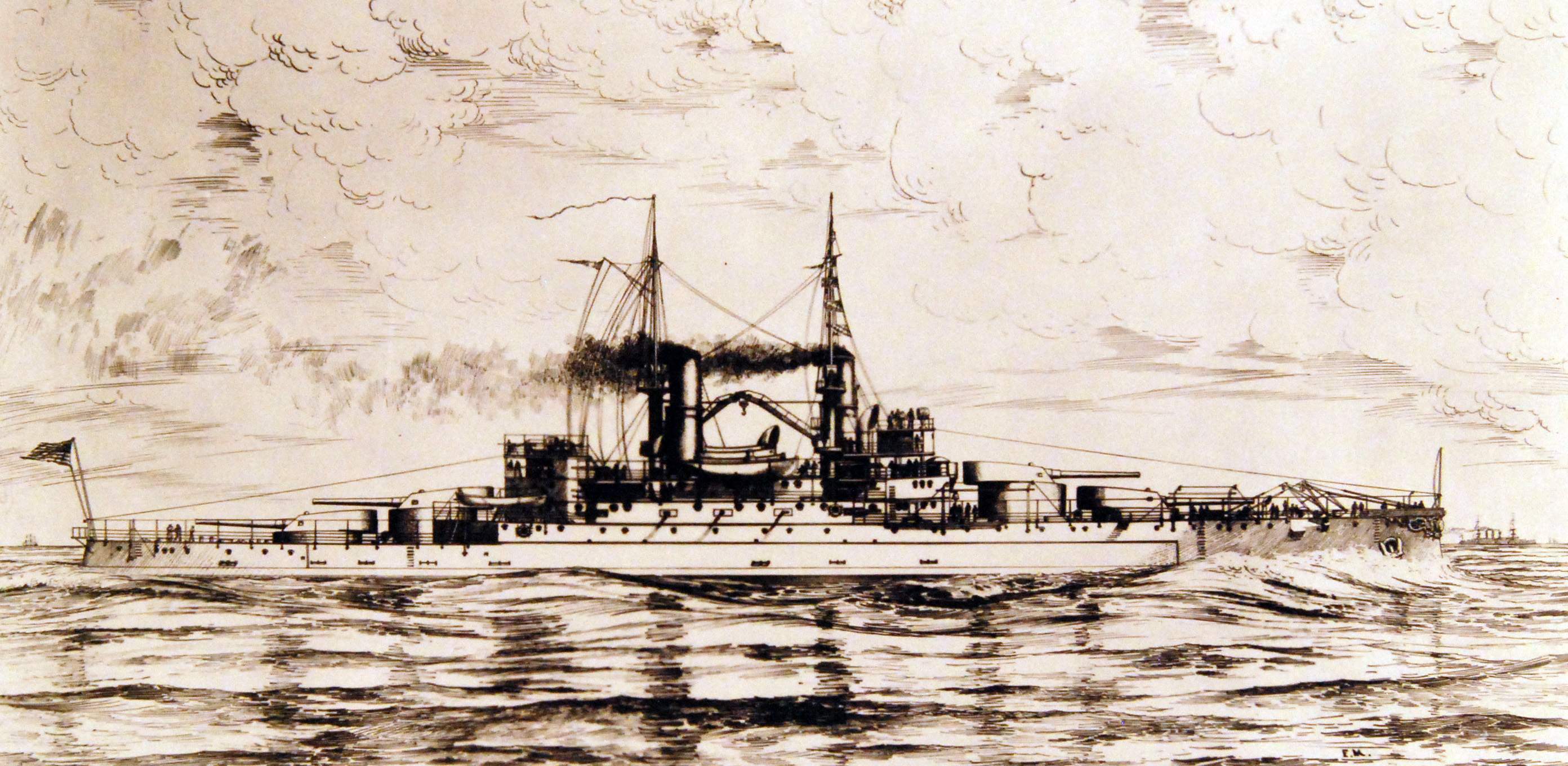 012646 814k | Haiti Intervention, 1914. French Cruiser Conde and South Carolina (BB-26) off Port Au Prince, Haiti, in early 1914. |
USNHC photo NH-76018 courtesy of history.navy.mil. | 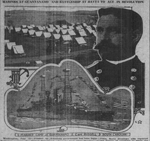 NR |
MARINES AT GUANTANAMO AND BATTLESHIP AT HAYTI TO ACT IN REVOLUTION |
CAPT. Robert Lee Russell of the South Carolina (BB-26) . Image and text provided by Connecticut State Library, Hartford, CT. | Photo by The Bridgeport Evening Farmer. (Bridgeport, Conn.) 1866-1917, 29 July 1914, Image 3, courtesy of chroniclingamerica.loc.gov. 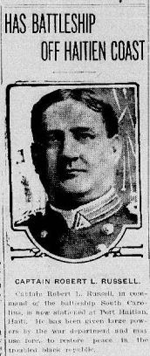 NR | HAS BATTLESHIP OFF HAITIEN COAST |
CAPTAIN ROBERT L. RUSSELL Image and text provided by Montana Historical Society; Helena, MT. | Photo from The Daily Missoulian. (Missoula, Mont.) 1904-1961, 07 August 1914, Morning, Image 7, courtesy of chroniclingamerica.loc.gov. Mid- Late 19 Teens / Early 20's |
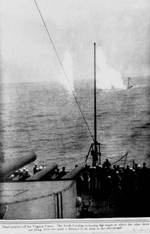 377k | Taken from the U.S. battleship Michigan (BB-27), the target, anchored in Chesapeake Bay, with the Rhode Island (BB-17) standing by passing a line to take it in tow. The ships take turns at towing the target. |
Photo by Enrique Mueller Jr. |
Image and text provided by Library of Congress, Washington, DC. Photo from New-York Tribune. (New York [N.Y.]) 1866-1924, 9 May 1915, Image 51. 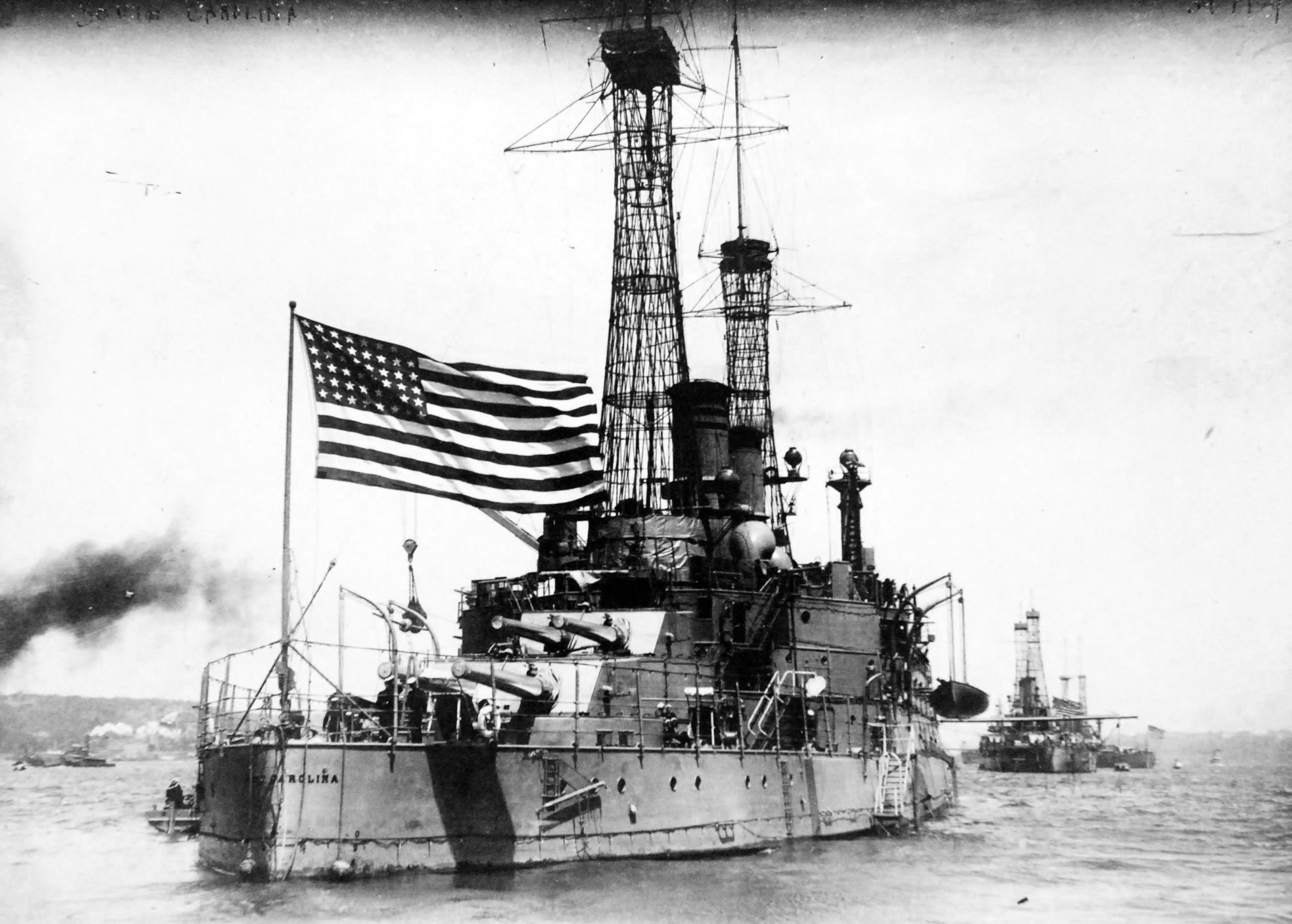 1.02k | South Carolina (BB-26) and other battleships pier side, maybe in Chesapeake Bay, on 10 May 1915. |
USN photo # Lot-10790-1 from the George C. Bain Collection. Courtesy of the Library of Congress, courtesy of National Museum of the U.S. Navy via flickr.com. |  012815h NR |
ATLANTIC FLEET IN THE HUDSON |
The picture shows, reading from left to right, the battleships Delaware (BB-28), North Dakota (BB-29), Michigan (BB-27), South Carolina (BB-26), Kansas (BB-21), Florida (BB-30) and Utah (BB-31). Image and text provided by Rutgers University Libraries. | Photo from Newark Evening Star and Newark Advertiser. [volume] (Newark, N.J.) 1909-1916, 11 May 1915, HOME EDITION, Image 2, via chroniclingamerica.loc.gov. 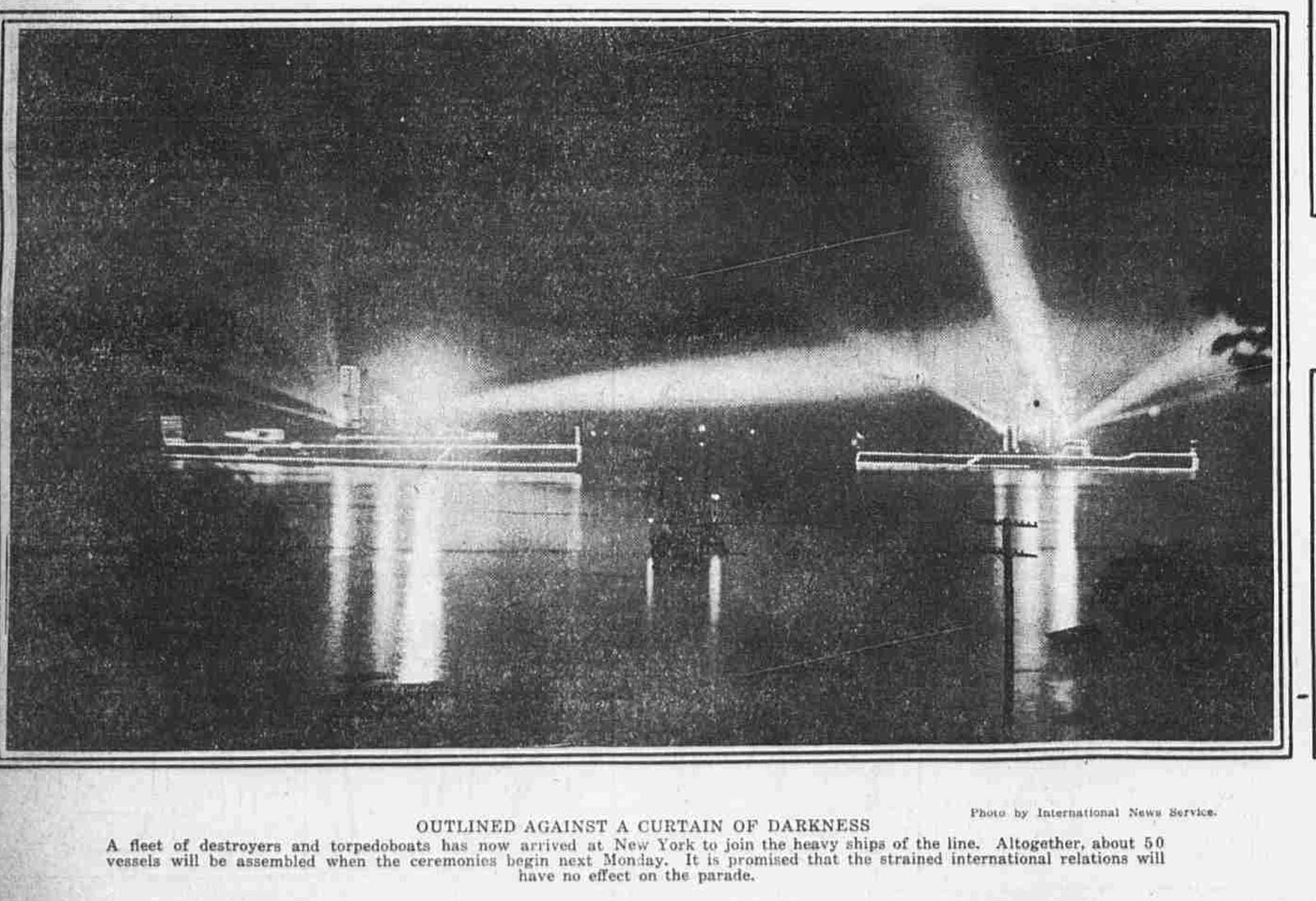 250k | OUTLINED AGAINST A CURTAIN OF DARKNESS | A fleet of destroyers and torpedo-boats has now arrived at New York to join the heavy ships of the line. Altogether, about 50 vessels will be assembled when the ceremonies began next Monday. It is promised that the strained international relations will have no effect on the parade. Photo by International News Service. | Image and text provided by Penn State University Libraries; University Park, PA. Photo & text by Evening Public Ledger. (Philadelphia [Pa.]) 1914-1942, 13 May 1915, Night Extra, Image 16, courtesy of chroniclingamerica.loc.gov.  750k | BATTLESHIP LANDS 230 RESCUED FROM South Carolina (BB-26), DAMAGED IN COLLISION. Ryndam passengers boarding South Carolina, 28 May 1915. On 25 May Ryndam was rammed by the Norwegian steamer Joseph J. Cuneo about 10 miles from the Nantucket Shoals. Responding to the SOS: the battleships, Louisiana (BB-27), Michigan (BB-27), South Carolina, and Texas (BB-34). |
Image and text provided by Library of Congress, Washington, DC. | Photo from New-York Tribune. (New York [N.Y.]) 1866-1924, 27 & 28 May 1915, Images 1 & 16, via chroniclingamerica.loc.gov. USN photo # Lot-10790-4 from the George C. Bain Collection. Courtesy of the Library of Congress, courtesy of National Museum of the U.S. Navy via flickr.com.  NR | RYNDAM HAD CLOSE CALL IN COLLISION |
Image and text provided by Indiana State Library. |
Photo from South Bend News-Times. (South Bend, Ind.) 1913-1938, 29 May 1915, AFTERNOON EDITION, Image 3, via chroniclingamerica.loc.gov. 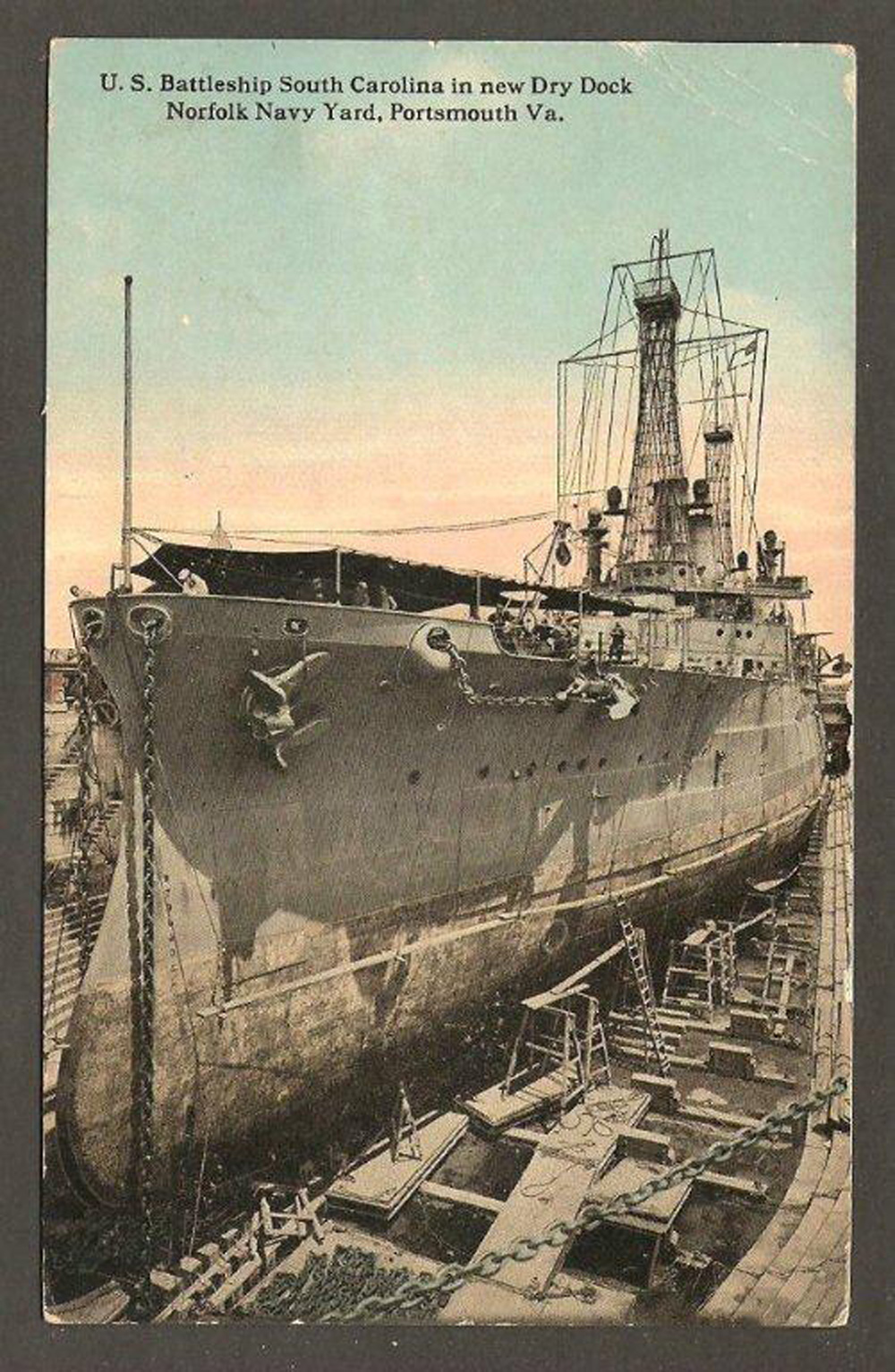 620k | South Carolina (BB-26) in the new Dry Dock at the Norfolk Navy Yard, Portsmouth, Virginia, 8 July, 1915. | Photo courtesy of Tommy Trammp.
| 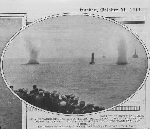 4.38k | "Battleship South Carolina (BB-26) at a distance of nine miles, firing on a target seen between the towers of water during the naval games in Chesapeake Bay, just concluded. The observers on a sister ship in the foreground are only a few hundred yards away." |
USN photo by Enrique Muller Jr, courtesy of memory.loc.gov. |
Text courtesy of N.Y. Times, 31 October 1915, page 8. 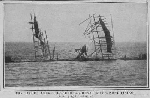 4.38k | "The target when the South Carolina (BB-26) had finished firing." |
USN photo by Enrique Muller Jr, courtesy of memory.loc.gov. |
Text courtesy of N.Y. Times, 31 October 1915, page 8. 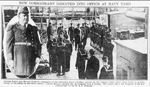 NR |
NEW COMMANDANT INDUCTED INTO OFFICE AT NAVY YARD | Captain Robert Lee Russell, formerly commander of the battleship South Carolina (BB-26), arrived at League Island Navy Yard today to assume charge of the affairs of the naval station. Captain Russell succeeds the late Captain John J. Knapp. The picture shows the reception of the new commandant on the Alabama (BB-8). Image and text provided by Penn State University Libraries; University Park, PA. | Photo from Evening Public Ledger. (Philadelphia [Pa.]) 1914-1942, 03 December 1915, Night Extra, Image 1, via chroniclingamerica.loc.gov.
|
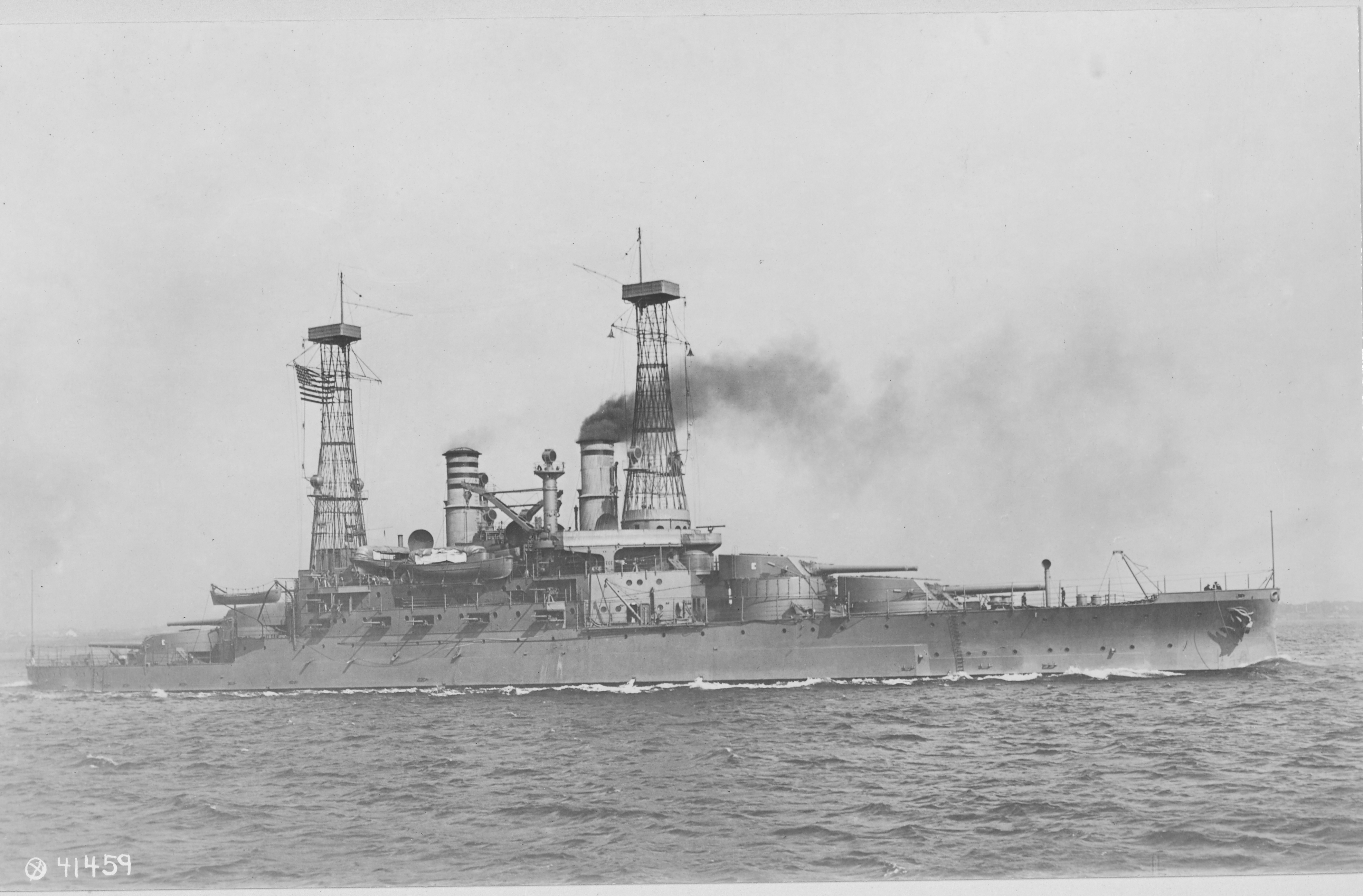 012649 4.06k | Broadside view of South Carolina (BB-26) sporting an "E" on her top turret, possibly circa late 1915. | Photographer: Enrique Muller Jr. | National Archives Identifier: 55242044. Local Identifier:111-SC-41459 Photo courtesy of catalog.archives.gov, via Daniel Hacker. 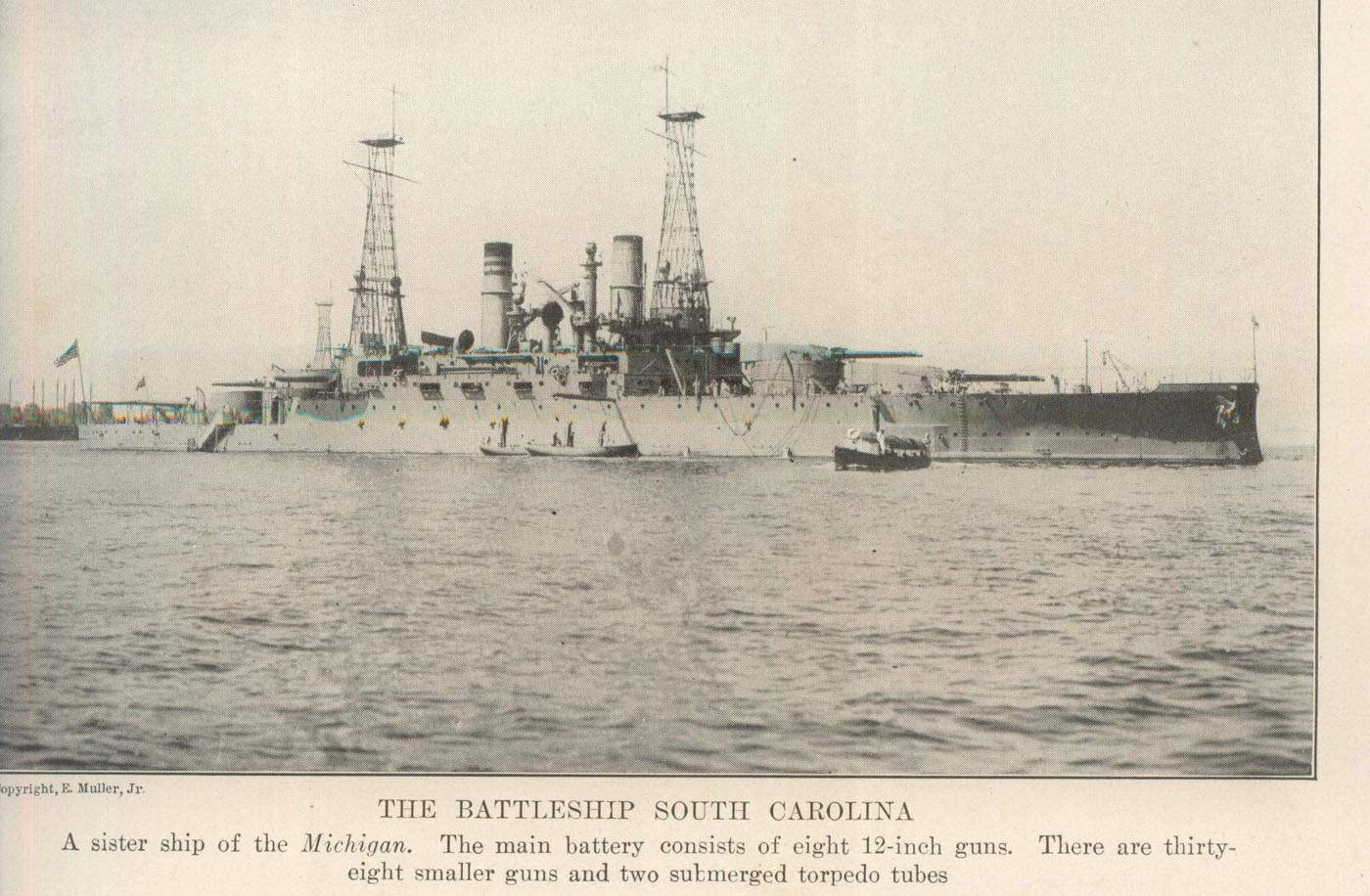 211k | Starboard view, circa 1916. | Photo by E. Muller, Jr. Contributed by Roy C. Thomas from the book, "The United States Navy", published in 1919. |  508k | United States Dreadnought South Carolina (BB-26). |
Image and text provided by University of Kentucky, Lexington, KY. | Photo from Crittenden Record-Press. (Marion, Ky.) 1909-191?, 12 October 1916, Image 2, via chroniclingamerica.loc.gov. 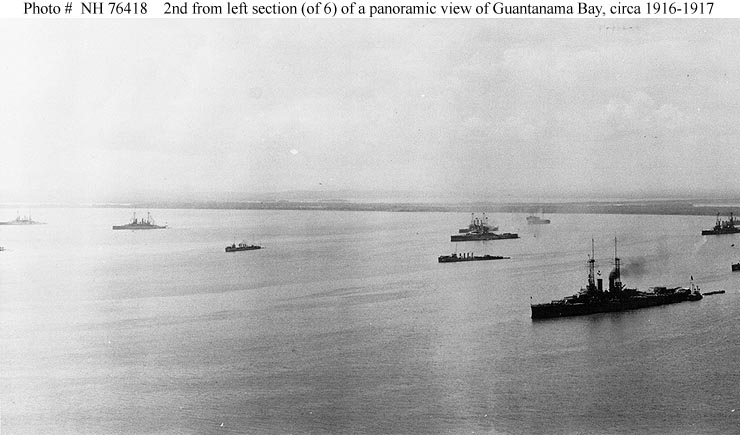 56k | U.S. Atlantic Fleet at Guantanamo Bay, Cuba, circa 1916-1917. Second section from left (of six) of a panoramic photograph taken from the Naval Station radio tower. Among the ships present are: battleships South Carolina (BB-26) and Michigan (BB-27)(toward the left, in no particular order); destroyers Drayton (left center) and Aylwin (center, middle distance); and a battleship that is either Wyoming (BB-32) or Arkansas (BB-33)(right foreground).
| Naval History and Heritage Command # NH 76418 photo courtesy of the Naval Historical Foundation, Washington, D.C. Donation of MMC Jesse Forton, USN (Retired), 1972.
| 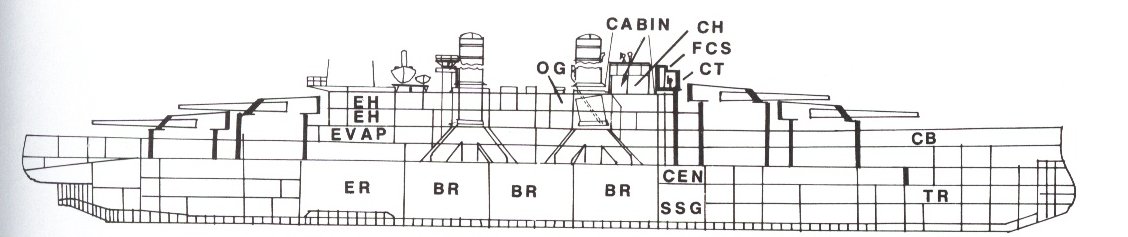 51k | Inboard profile of the South Carolina (BB-26) 1918. Her large mast base chart house has been removed and her conning tower enlarged, with a small fire control section ("tower") at its rear end. These ships had the base of their mainmasts covered in canvas through most of their careers. These bases covered the engine room hatches. |
Photo and text courtesy of U.S. Battleships: An Illustrated Design History by Norman Friedman. | 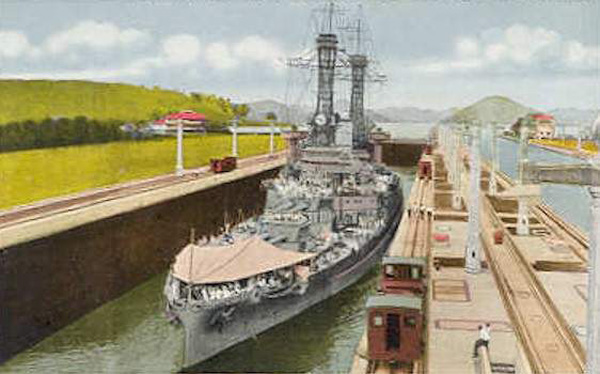 100k | On 6 January 1918 the South Carolina (BB-26) sailed to Colon, Panama, where her crew saw the newly completed canal. |
Text courtesy of DANFS. |
Photo Credits: Panama Canal Company, US Navy, I.L. Maduro, Skip Rowley, Louie Barbier via czbrats.com. 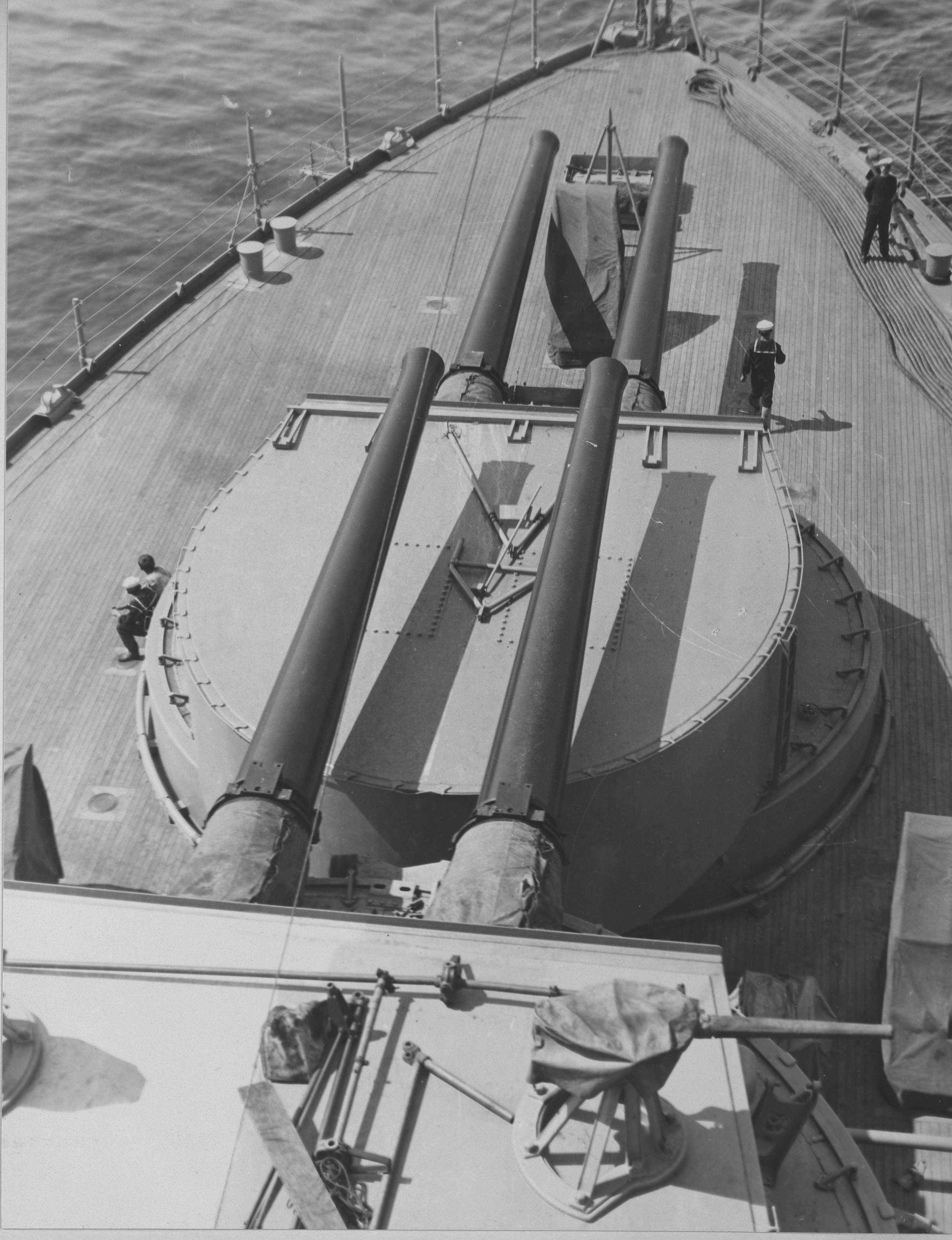 749k | Big guns on one of the U.S. Dreadnoughts of the South Carolina class, 1917/18. Photo taken from the crow's nest. | Photographer: Kadel & Herbert. |
National Archives Identifier: 45510058 Local Identifier: 165-WW-321C-41. Photo courtesy of catalog.archives.gov
|
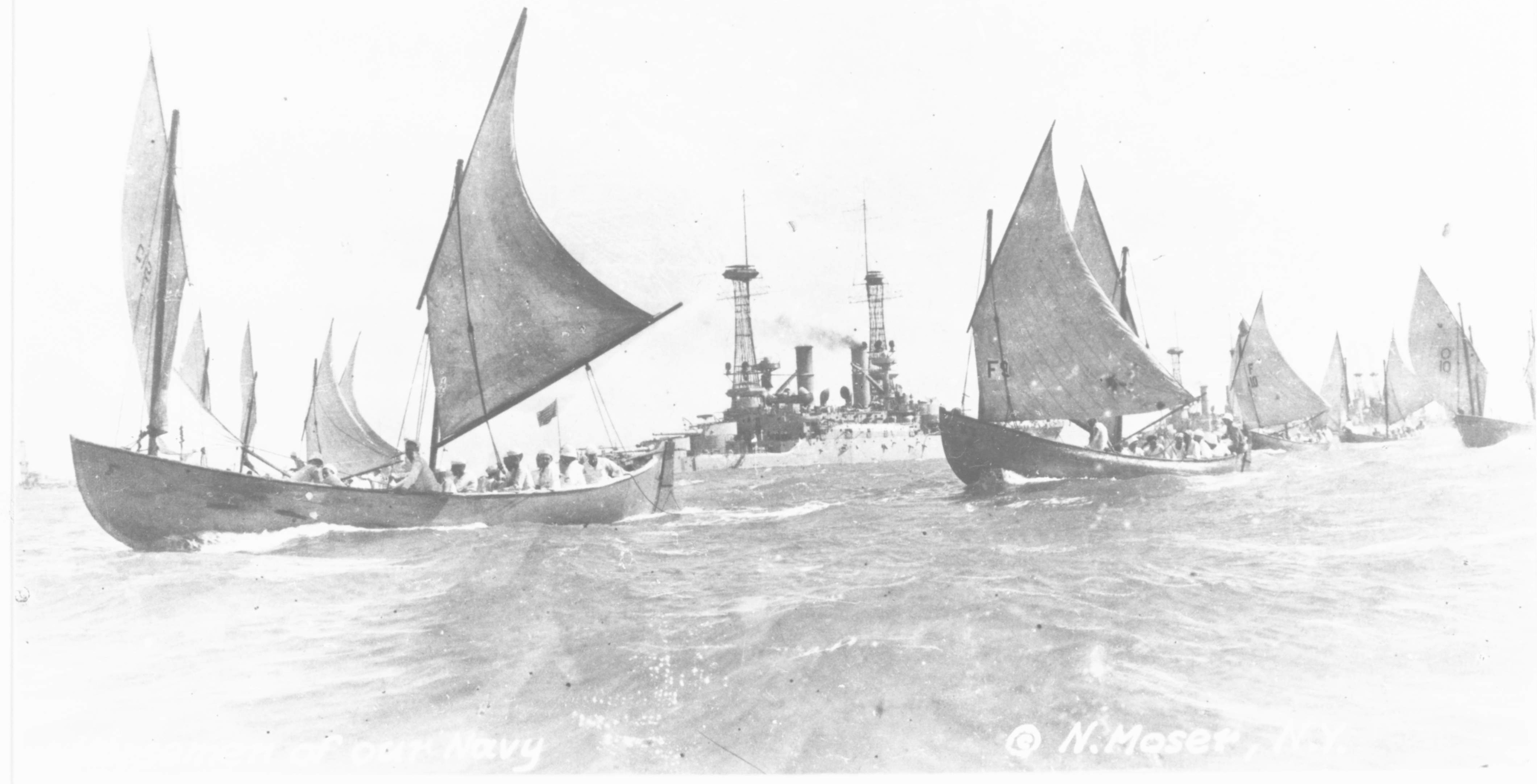 012660 921k | Photograph by N. Moser, New York, showing U.S. Navy sailors racing sailing whaleboats, circa 1919-1920. Among ships in background are South Carolina (BB-26) and Michigan (BB-27). | USNHC photo NH-102688 courtesy of history.navy.mil. | 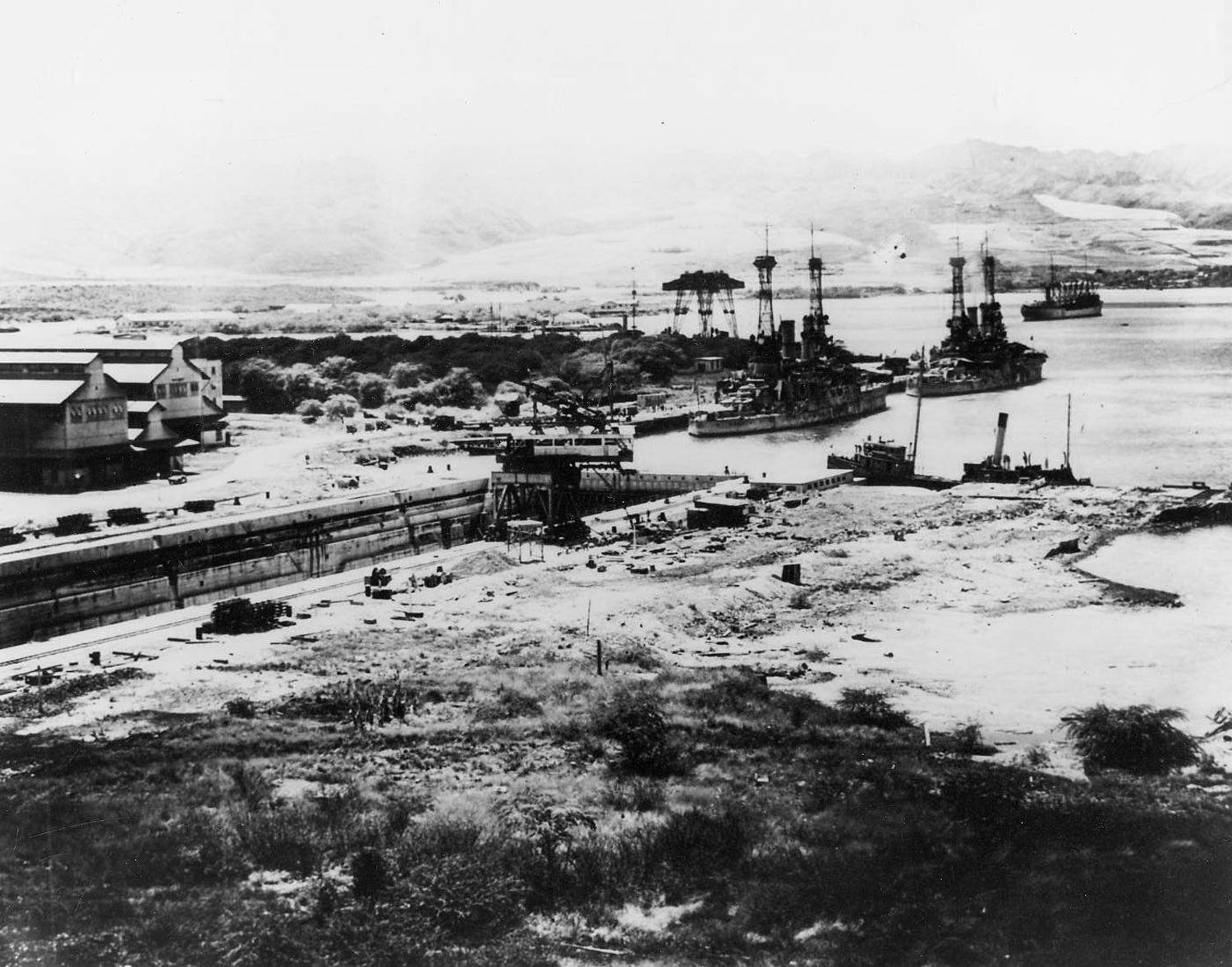 298k |
Photo taken at Pearl Harbor and the Michigan (BB-27) and South Carolina (BB-26) are moored at 1010 dock. The dry dock is the newly constructed dry dock #1 and the shipyard buildings are visible to the extreme right. YD-25 is also visible in the center distance.
|
Photo i.d. & text courtesy of Curtis Tammany. |
Photo courtesy of Scott Koen & ussnewyork.com. 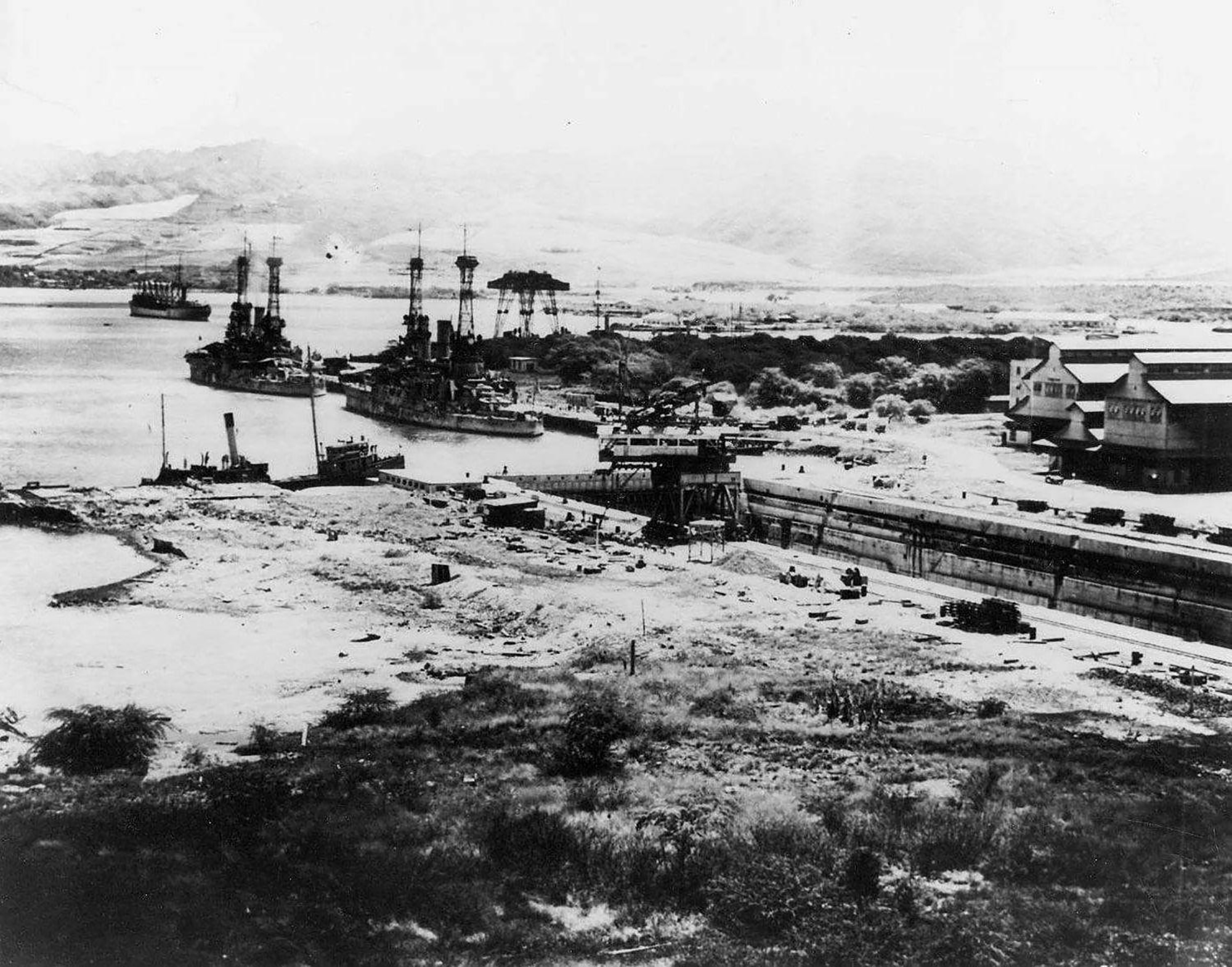 1.33k |
Mirror image of the above. |
Photo courtesy of Curtis Tammany.
|
|
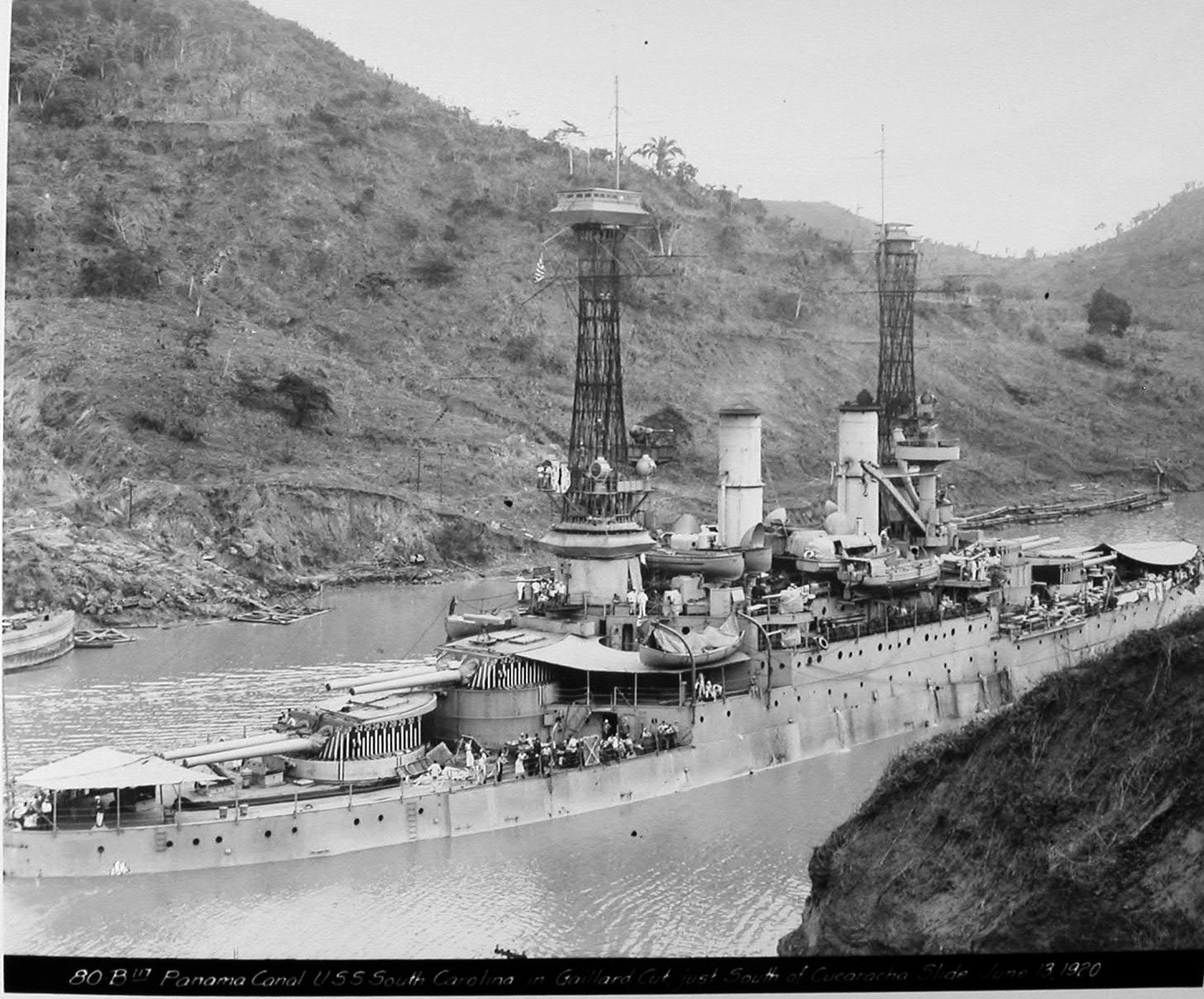 012648 1.37k | Panama Canal: South Carolina (BB-26) in Gaillard Cut, just South of Cucaracha Slide, 13 June 1920. | National Archives Identifier: 100996416. | Local Identifier: 185-G-918 Photo courtesy of catalog.archives.gov, via Daniel Hacker.
|
 012661 4.96k | Reserve Fleet Basin, Philadelphia Navy Yard, PA, ca. 1920-1921. Visible ships include (left to right): Dobbin (AD-3) fitting out, Kansas (BB-21), South Carolina (BB-26), and Hannibal (AG-1). | USNHC photo S-574-Q Philadelphia Navy Yard, PA, courtesy of history.navy.mil. | 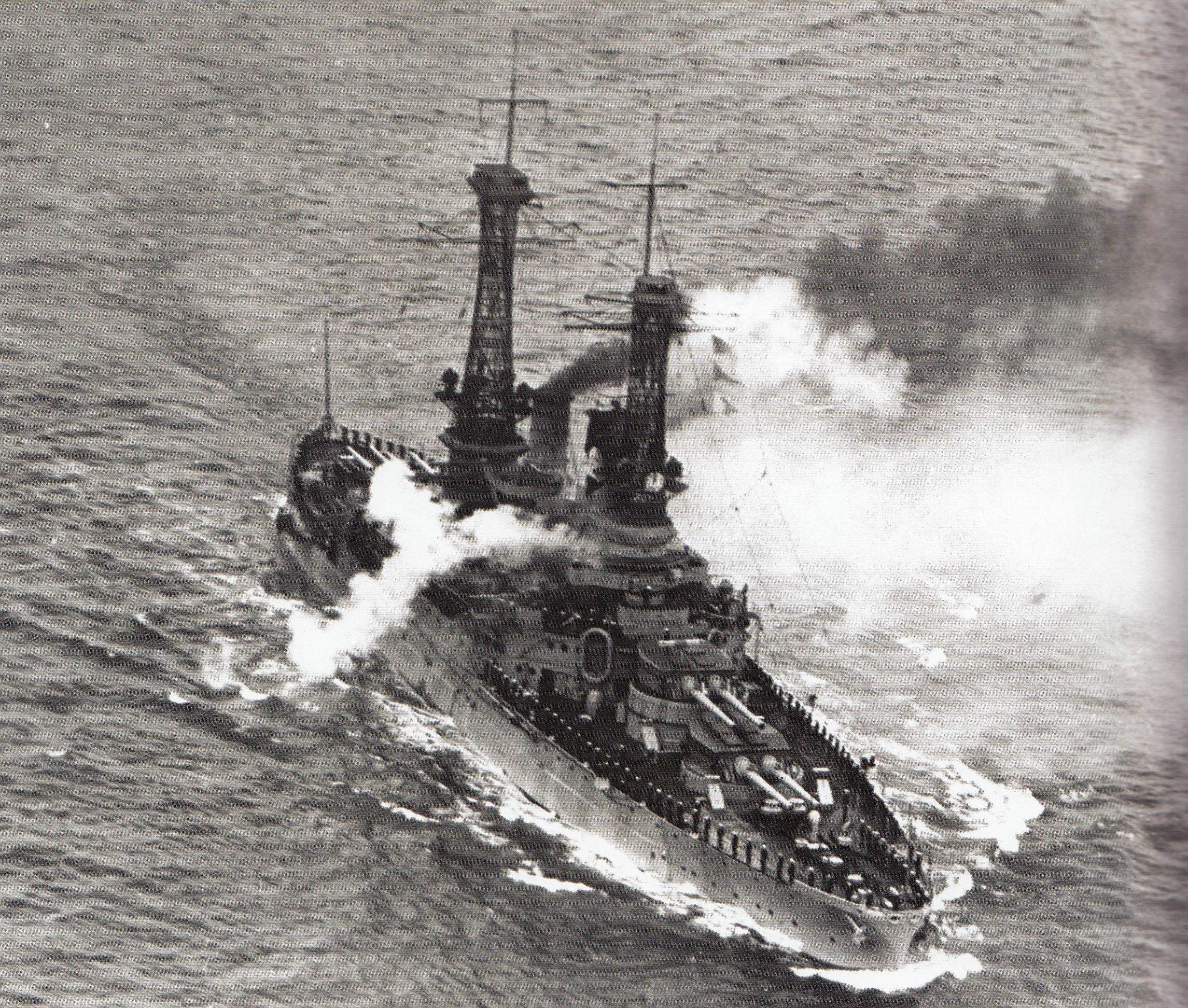 1.38k | April 1921, Rail manned and just fired a salute from one of her 3" secondary guns. | Photo # 80-G-21555 courtesy of Tracy White @ Researcher @ Large. via Robert Hurst & Scanned from Conway's Battleships: Revised Edition, edited by Ian Sturton. | 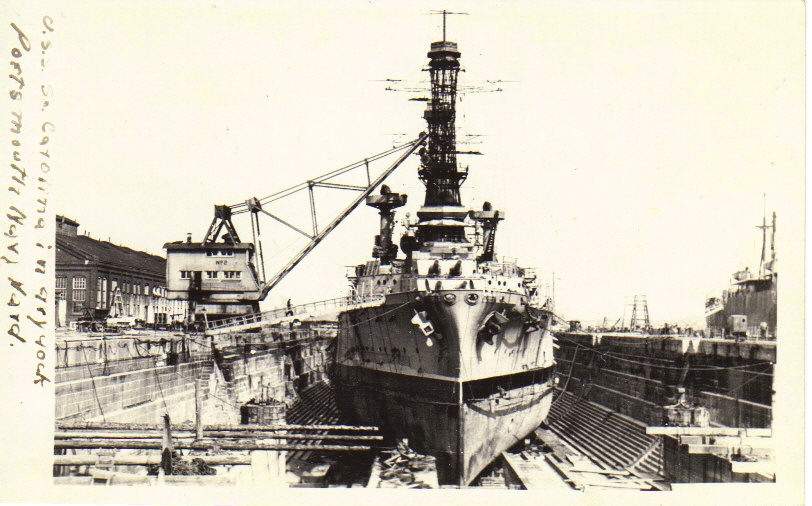 68k | The South Carolina (BB-26) lies high and dry at the Portsmouth Navy Yard Dry Dock in this undated photo. | USN photo courtesy of Robert M. Cieri. |
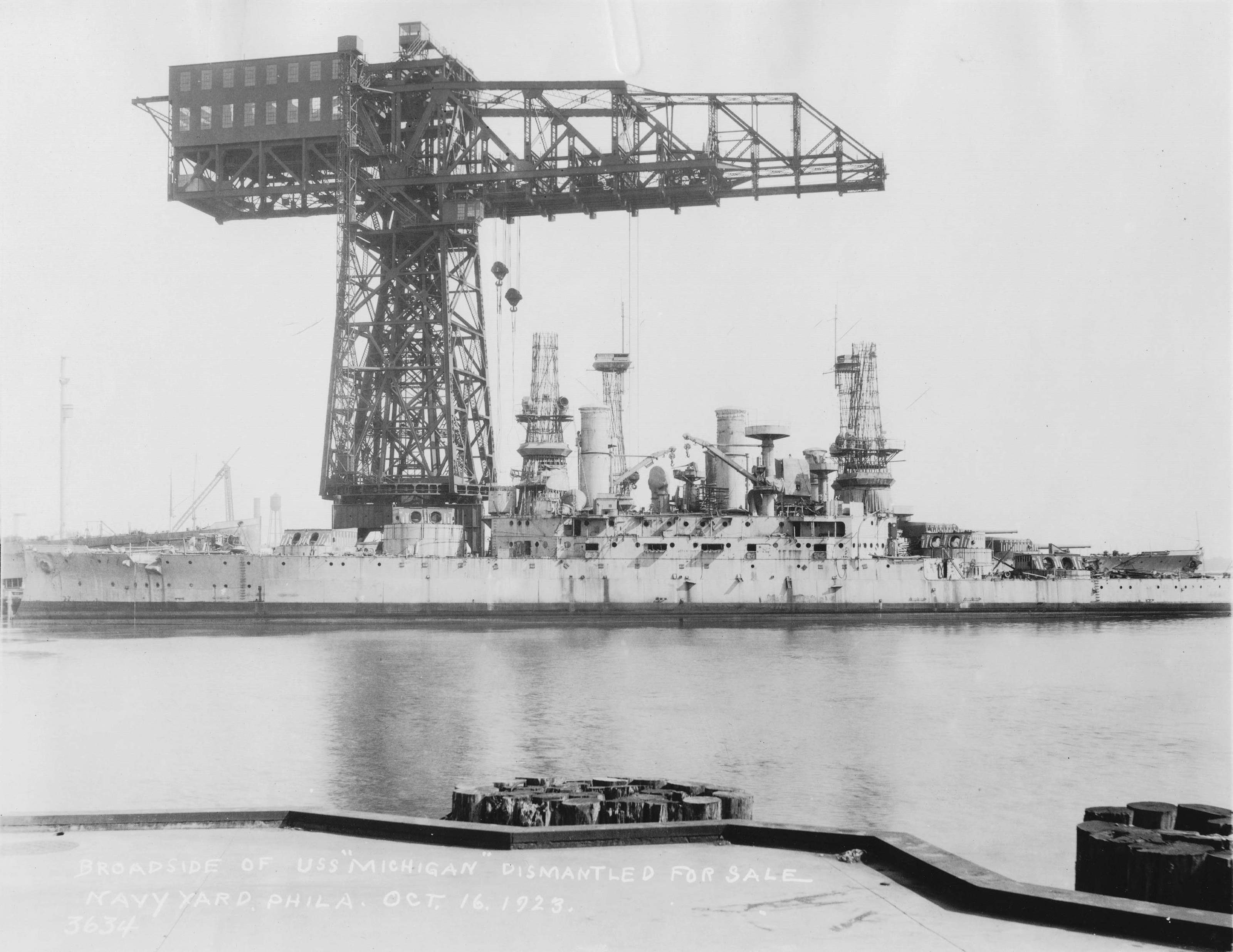 512k | Broadside of Michigan (BB-27) dismantled for sale, PNY, 16 October 1923. |
The battleship in the background is the South Carolina (BB-26). US National Archives photo # 19LC-21-G-3634, from NARA, College Park, Maryland, courtesy of Sean Hert. |
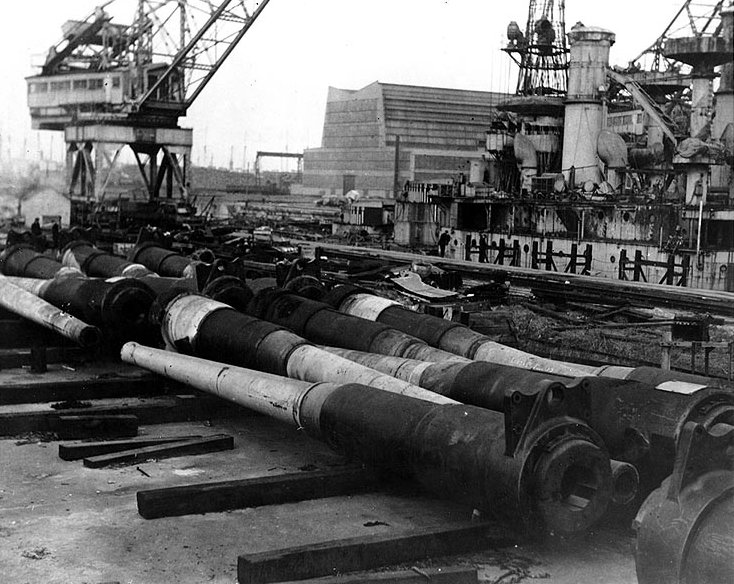 81k | Scene at the Philadelphia Navy Yard, Pennsylvania, December 1923, with guns from scrapped battleships in the foreground. One of these guns is marked "Kansas " presumably an indication that it came from Kansas (BB-21). Ship being dismantled in the background is South Carolina (BB-26). | Naval History and Heritage Command # NH 69035. | 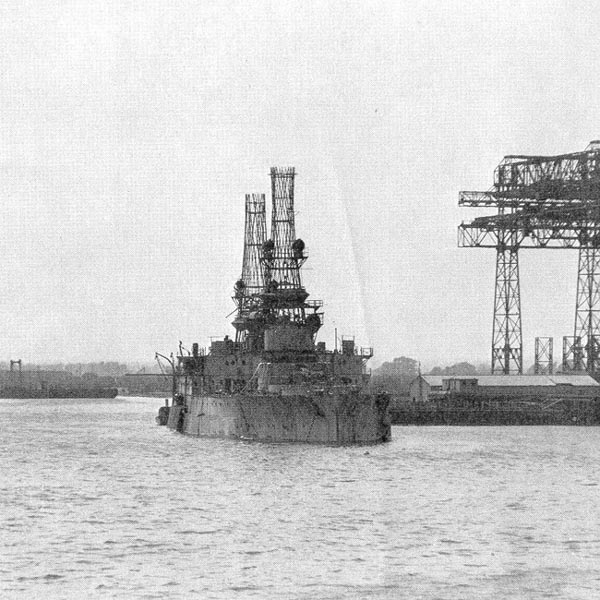 85k | South Carolina (BB-26) being used as a test hulk for anti-torpedo bulges on 26 May 1924. | USN photo. | 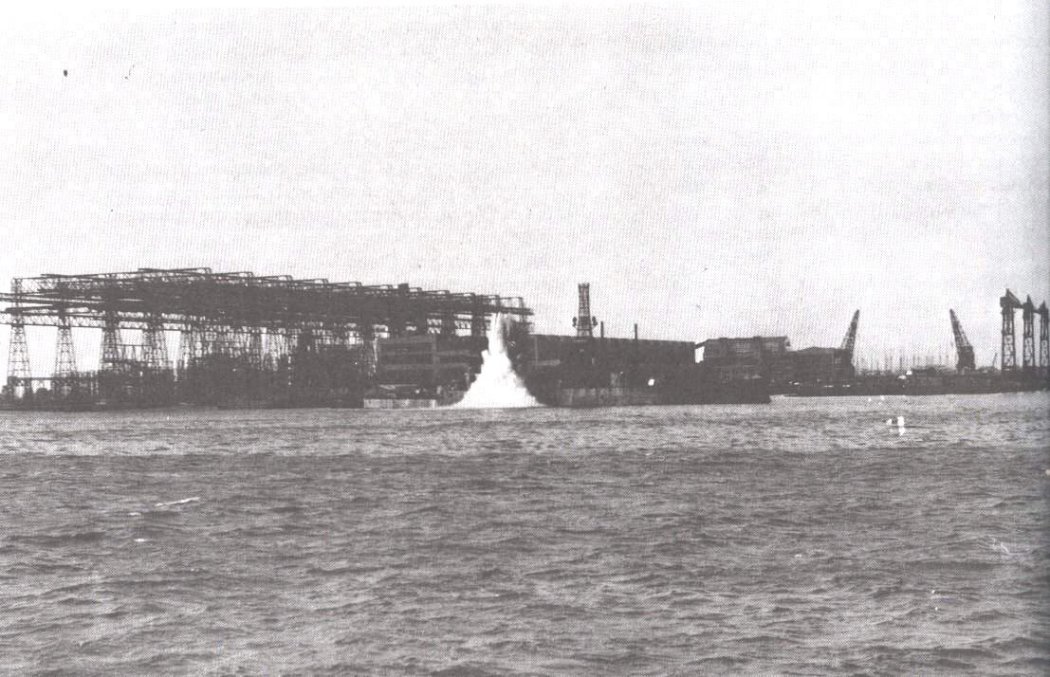 131k | The Washington Treaty provided both for discarding large numbers of ships and for reconstructing the survivors. The South Carolina (BB-26) was used to test the torpedo protection blisters planned for reconstruction of the existing battleships. She is shown at the Philadelphia Navy Yard, 26 May 1924, before and during the first explosion. The blister is the dark area amidships. Another experimental blister was built on her other side. Note the removal of her turrets and her fire control tops, as a measure of demilitarization in compliance with the new treaty. |
Photo and text courtesy of U.S. Battleships: An Illustrated Design History by Norman Friedman. | 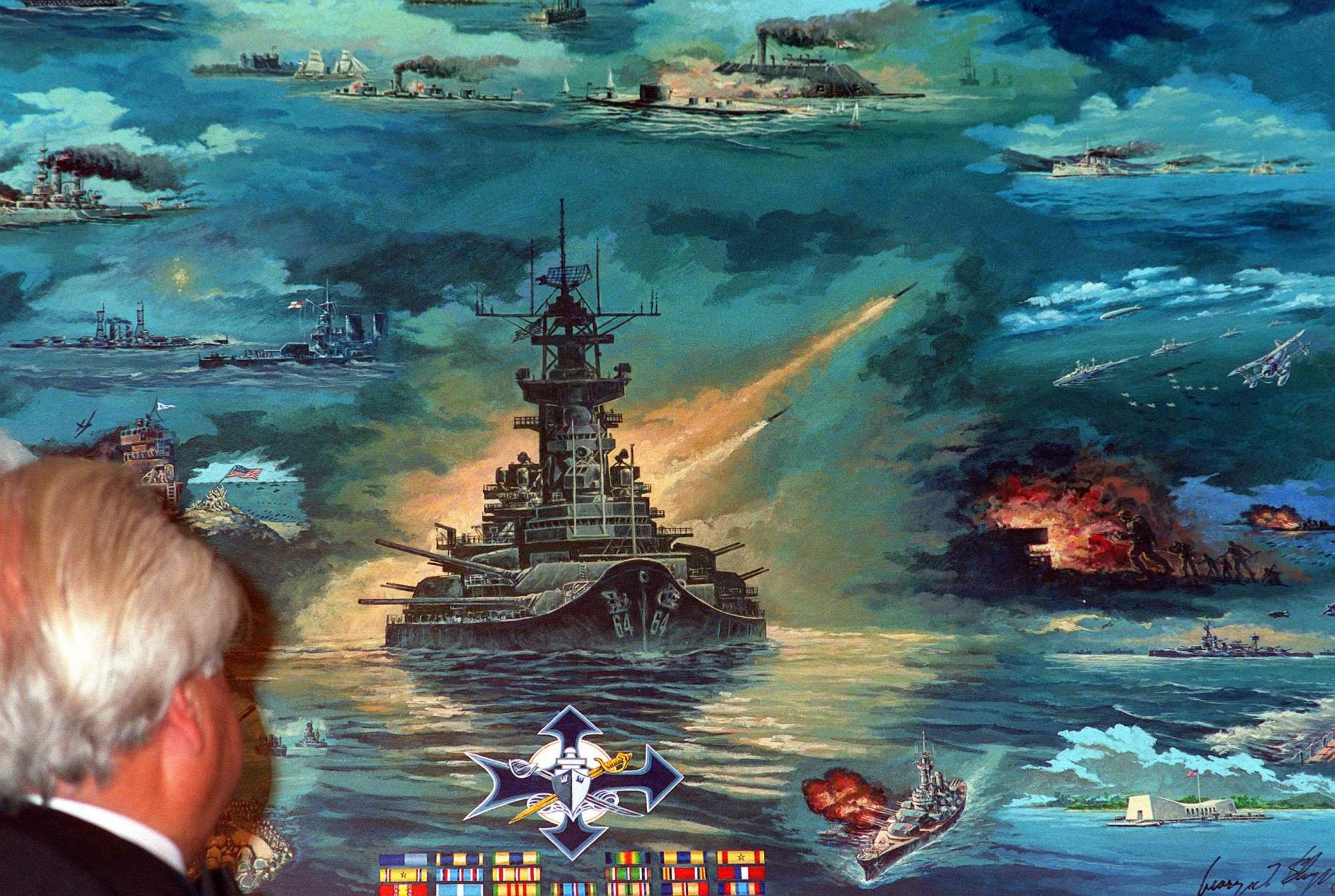 376k | A guest studies a painting depicting the history of battleships. The artwork was painted by George Skybeck and presented to the Pearl Harbor Survivors Association during their annual banquet at Honolulu, Hawaii, on 8 December 1991.
| USN photo # DN-SC-92-05391, by PHC Carolyn Harris, from the Department of Defense Still Media Collection, courtesy of dodmedia.osd.mil. |
| ||||||||||||||||||||||||||||||||||||||||||||||||||||||||||||||||||||||||||||||||||||||||||||||||||||||||||||||||||||||||
| Commanding Officers | |||
| 01 | CAPT. Fechteler, Augustus Francis, USN (USNA 1879) | 01.03.1910 - 13.11.1911 | |
| 02 | CAPT. Snowden, Thomas, USN (USNA 1879) :RADM | 13.11.1911 - 00.00.1912 | |
| 03 | CAPT. Russell, Robert Lee | ~1914 | |
| 04 | CAPT. Robison, Samuel Shelburne, USN (USNA 1890) :RADM | 30.10.1915 - 00.06.1917 | |
| 05 | CAPT. Brotherton, William Daniel, USN (USNA 1891) | 30.09.1918 - 05.11.1919 | |
| 06 | CAPT. Bennett, Ernest Linwood, USN (USNA 1894) | 05.11.1919 - 11.10.1920 | |
| 07 | CAPT. Schofield, Frank Herman, USN (USNA 1890) :RADM | 11.10.1920 - 15.12.1921 | |
| Back To The Main Photo Index | Back To The Battleship Photo Index Page |