| Click On Image For Full Size |
Size | Image Description | Source | |||||||||||||||||||||||||||||||||||||||||||||||||||||||||||||||||||||||||||||||||||||||||||||||||||||||||||||||||||||||||||||||||||||||||||||
|---|---|---|---|---|---|---|---|---|---|---|---|---|---|---|---|---|---|---|---|---|---|---|---|---|---|---|---|---|---|---|---|---|---|---|---|---|---|---|---|---|---|---|---|---|---|---|---|---|---|---|---|---|---|---|---|---|---|---|---|---|---|---|---|---|---|---|---|---|---|---|---|---|---|---|---|---|---|---|---|---|---|---|---|---|---|---|---|---|---|---|---|---|---|---|---|---|---|---|---|---|---|---|---|---|---|---|---|---|---|---|---|---|---|---|---|---|---|---|---|---|---|---|---|---|---|---|---|---|---|---|---|---|---|---|---|---|---|---|---|---|---|---|---|---|
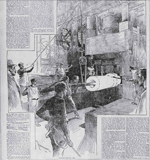 |
328k | MAKING BIG GUNS AND ARMOR PLATE FOR UNCLE SAM A Thousand Men Are Working Night and Day at the Bethlehem Iron Works |
Image and text provided by University of Utah, Marriott Library. Photo from Deseret Evening News. (Great Salt Lake City [Utah]) 1867-1920, 05 March 1898, Part 2, Image 16, via chroniclingamerica.loc.gov. | |||||||||||||||||||||||||||||||||||||||||||||||||||||||||||||||||||||||||||||||||||||||||||||||||||||||||||||||||||||||||||||||||||||||||||||
 |
NR | TREMENDOUS COST OF MODERN WARFARE | Image and text provided by University of California, Riverside. Photo from The San Francisco Call. (San Francisco [Calif.]) 1895-1913, 20 March 1898, Page 19, Image 19, via chroniclingamerica.loc.gov. | |||||||||||||||||||||||||||||||||||||||||||||||||||||||||||||||||||||||||||||||||||||||||||||||||||||||||||||||||||||||||||||||||||||||||||||
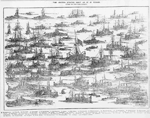 | 633k | THE UNITED STATES NAVY AS IT IS TODAY. (From the New York Ledger.) |
Image and text provided by University of Nebraska-Lincoln Libraries, Lincoln, NE. Photo & text by The McCook Tribune. (McCook, Neb.) 1886-1936, 29 April 1898, Image 2, via chroniclingamerica.loc.gov. | |||||||||||||||||||||||||||||||||||||||||||||||||||||||||||||||||||||||||||||||||||||||||||||||||||||||||||||||||||||||||||||||||||||||||||||
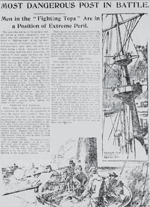 |
601k | MOST DANGEROUS POST IN BATTLE .Men in the Fighting Tops Are in a Position of Extreme Peril. |
Image and text provided by University of North Texas; Denton, TX. Photo courtesy of The Houston Daily Post.(Houston, Tex.) 1886-1903, 06 May 1898, Mailable Edition, Image 5, via chroniclingamerica.loc.gov. |
|||||||||||||||||||||||||||||||||||||||||||||||||||||||||||||||||||||||||||||||||||||||||||||||||||||||||||||||||||||||||||||||||||||||||||||
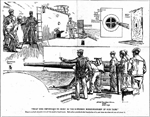 |
2.84k | JACK TAR CAN SHOOT. SUPERIOR SKILL OF AMERICAN GUNNERS DUE TO PRACTICE. |
Image and text provided by Minnesota Historical Society; Saint Paul, MN. Photo from The Appeal. (Saint Paul, Minn.;) 1889-19??, 28 May 1898, Image 1, via chroniclingamerica.loc.gov. | |||||||||||||||||||||||||||||||||||||||||||||||||||||||||||||||||||||||||||||||||||||||||||||||||||||||||||||||||||||||||||||||||||||||||||||
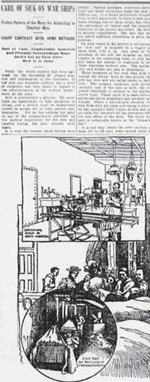 |
933k | CARE OF SICK ON WAR SHIPS Perfect System of the Navy for Attending to Disabled Men. SHARP CONTRAST WITH ARMY METHODS |
Image and text provided by University of Nebraska-Lincoln Libraries, Lincoln, NE. Photo from Omaha Daily Bee. (Omaha [Neb.]) 187?-1922, 07 October 1898, Image 9, via chroniclingamerica.loc.gov. | |||||||||||||||||||||||||||||||||||||||||||||||||||||||||||||||||||||||||||||||||||||||||||||||||||||||||||||||||||||||||||||||||||||||||||||
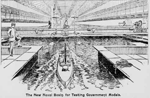 |
NR | MIMIC OCEAN FOR EXPERIMENTING WITH MODELS OF UNCLE SAM'S BATTLESHIPS | Image and text provided by University of California, Riverside. Photo from The San Francisco Call.(San Francisco [Calif.]) 1895-1913, 23 July 1899, Image 31, via chroniclingamerica.loc.gov. | |||||||||||||||||||||||||||||||||||||||||||||||||||||||||||||||||||||||||||||||||||||||||||||||||||||||||||||||||||||||||||||||||||||||||||||
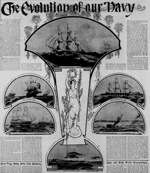 | NR | THE EVOLUTION OF OUR NAVY. The Monitor, Arkansas (M-7) & Maine (BB-10) appear here with other vessels. | Image and text provided by University of California, Riverside. Photo & text by The San Francisco Call.(San Francisco [Calif.] 1895-1913, 28 October 1900, Image 18, via chroniclingamerica.loc.gov | |||||||||||||||||||||||||||||||||||||||||||||||||||||||||||||||||||||||||||||||||||||||||||||||||||||||||||||||||||||||||||||||||||||||||||||
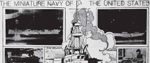 |
660k | THE MINIATURE NAVY OF THE UNITED STATES. Tiny Craft in Every Line Counterparts of Great Battleships Whose Names They Bear A Number of Skilled Workmen Employed on the Construction of Uncle Sam's Lilliputian Marine Service Work Done by Tools as Delicate as a Dentists Instrument. |
Image and text provided by Library of Congress, Washington, DC. Photo by The Washington Times.(Washington [D.C.]) 1901-1902, 23 March 1902, Magazine Features, Image 3, courtesy of chroniclingamerica.loc.gov. | |||||||||||||||||||||||||||||||||||||||||||||||||||||||||||||||||||||||||||||||||||||||||||||||||||||||||||||||||||||||||||||||||||||||||||||
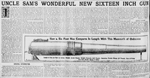 |
1.52k | UNCLE SAM'S WONDERFUL NEW SIXTEEN INCH GUN | Image and text provided by University of Utah, Marriott Library. Photo from Deseret Evening News.(Great Salt Lake City [Utah]) 1867-1920, 26 July 1902, Last Edition, Part 2, Image 10, via chroniclingamerica.loc.gov. |
|||||||||||||||||||||||||||||||||||||||||||||||||||||||||||||||||||||||||||||||||||||||||||||||||||||||||||||||||||||||||||||||||||||||||||||
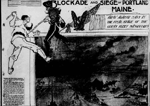 |
802k | BLOCKADE AND SIEGE OF PORTLAND MAINE ARMY AGAINST NAVY IN THE FINAL STAGE OF THE GREAT FLEET MANOEUVRES ........ First Squadron First Division battleship Kearsarge (BB-5), flagship of Rear Admiral Barker, and battleships Alabama (BB-8) and Illinois (BB-7), Second Division Battleship Texas flagship of Admiral Bands, and battleships Indiana (BB-1) and Massachusetts (BB-2). | Image and text provided by State Historical Society of Missouri; Columbia, MO. Photo from The St. Louis Republic. (St. Louis, Mo.) 1888-1919, 23 August 1903, MAGAZINE SECTION, Image 47, via chroniclingamerica.loc.gov. | |||||||||||||||||||||||||||||||||||||||||||||||||||||||||||||||||||||||||||||||||||||||||||||||||||||||||||||||||||||||||||||||||||||||||||||
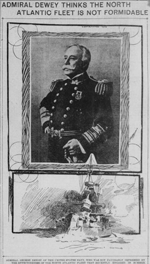 | NR | ADMIRAL DEWEY THINKS THE NORTH ATLANTIC FLEET IS NOT FORMIDABLE | Image and text provided by University of California, Riverside. Photo courtesy of The San Francisco Call. (San Francisco [Calif.]) 1895-1913, 14 September 1903, Image 4, via chroniclingamerica.loc.gov. |
|||||||||||||||||||||||||||||||||||||||||||||||||||||||||||||||||||||||||||||||||||||||||||||||||||||||||||||||||||||||||||||||||||||||||||||
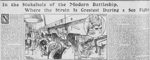 |
1.48k | In the Stokehole of the Modern Battleship Where the Strain Is Greatest During a Sea Fight | Image and text provided by University of Utah, Marriott Library. Photo from Deseret Evening News. (Great Salt Lake City [Utah]) 1867-1920, 16 July 1904, Last Edition, Part Two, Image 12, via chroniclingamerica.loc.gov. | |||||||||||||||||||||||||||||||||||||||||||||||||||||||||||||||||||||||||||||||||||||||||||||||||||||||||||||||||||||||||||||||||||||||||||||
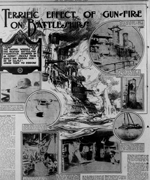 | NR | TERRIFIC EFFECT OF GUN-FIRE ON BATTLESHIPS | Image and text provided by University of California, Riverside. Photo from The San Francisco Call. (San Francisco [Calif.]) 1895-1913, 08 October 1905, Image 6, courtesy of chroniclingamerica.loc.gov. | |||||||||||||||||||||||||||||||||||||||||||||||||||||||||||||||||||||||||||||||||||||||||||||||||||||||||||||||||||||||||||||||||||||||||||||
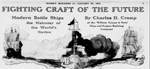 |
2.88k | FIGHTING CRAFT OF THE FUTURE Modern Battle Ships, the Mainstay of the World's Navies |
Image and text provided by Library of Congress, Washington, DC. Photo from New-York Tribune. (New York [N.Y.]) 1866-1924, 29 January 1905, Image 29, via chroniclingamerica.loc.gov. | |||||||||||||||||||||||||||||||||||||||||||||||||||||||||||||||||||||||||||||||||||||||||||||||||||||||||||||||||||||||||||||||||||||||||||||
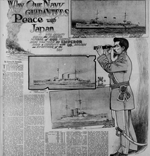 |
NR | WHY OUR NAVY GUARANTEES PEACE WITH JAPAN | Image and text provided by University of California, Riverside. Photo from The San Francisco Call. (San Francisco [Calif.]) 1895-1913, 06 January 1907, Image 5, via chroniclingamerica.loc.gov. |
|||||||||||||||||||||||||||||||||||||||||||||||||||||||||||||||||||||||||||||||||||||||||||||||||||||||||||||||||||||||||||||||||||||||||||||
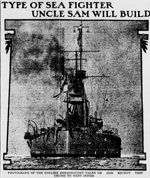 |
5.51k | TYPE OF SEA FIGHTER UNCLE SAM WILL BUILD PHOTOGRAPH OF THE ENGLISH DREADNOUGHT TAKEN ON HER RECENT TEST CRUISE TO WEST INDIES |
Image and text provided by Washington State Library; Olympia, WA. Photo from The Spokane Press. (Spokane, Wash.) 1902-1939, 30 April 1907, Image 1, courtesy of chroniclingamerica.loc.gov. |
|||||||||||||||||||||||||||||||||||||||||||||||||||||||||||||||||||||||||||||||||||||||||||||||||||||||||||||||||||||||||||||||||||||||||||||
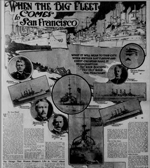 |
NR | WHEN THE BIG FLEET COMES TO SAN FRANCISCO | Image and text provided by University of California, Riverside. Photo from The San Francisco Call.(San Francisco [Calif.]) 1895-1913, 28 July 1907, Image 5, via chroniclingamerica.loc.gov. | |||||||||||||||||||||||||||||||||||||||||||||||||||||||||||||||||||||||||||||||||||||||||||||||||||||||||||||||||||||||||||||||||||||||||||||
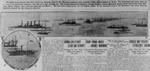 |
NR | The United States Atlantic fleet which sailed from Hampton roads for San Francisco yesterday under command of Rear Admiral Robley D. Evans. | Image and text provided by University of California, Riverside. Photo from The San Francisco Call.(San Francisco [Calif.]) 1895-1913, 17 December 1907, Image 2, via chroniclingamerica.loc.gov. | |||||||||||||||||||||||||||||||||||||||||||||||||||||||||||||||||||||||||||||||||||||||||||||||||||||||||||||||||||||||||||||||||||||||||||||
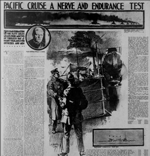 |
2.72k | PACIFIC CRUISE A NERVE AND ENDURANCE TEST | Image and text provided by University of California, Riverside. Photo from The San Francisco Call. (San Francisco [Calif.]) 1895-1913, 22 December 1907, Image 7, via chroniclingamerica.loc.gov. | |||||||||||||||||||||||||||||||||||||||||||||||||||||||||||||||||||||||||||||||||||||||||||||||||||||||||||||||||||||||||||||||||||||||||||||
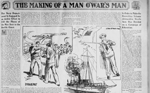 |
965k | THE MAKING OF A MAN O WAR'S MAN | Image and text provided by University of Utah, Marriott Library. Photo from Deseret Evening News.(Great Salt Lake City [Utah]) 1867-1920, 02 January 1908, Last Edition, Image 9, via chroniclingamerica.loc.gov. | |||||||||||||||||||||||||||||||||||||||||||||||||||||||||||||||||||||||||||||||||||||||||||||||||||||||||||||||||||||||||||||||||||||||||||||
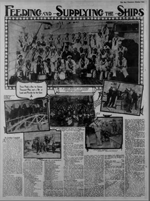 |
3.10k | FEEDING AND SUPPLYING THE SHIPS | Image and text provided by University of California, Riverside. Photo from The San Francisco Call.(San Francisco [Calif.]) 1895-1913, 26 April 1908, Image 2, via chroniclingamerica.loc.gov. |
|||||||||||||||||||||||||||||||||||||||||||||||||||||||||||||||||||||||||||||||||||||||||||||||||||||||||||||||||||||||||||||||||||||||||||||
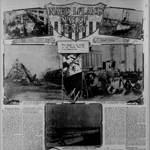 |
3.46k | MARE ISLAND MAKES READY What Happens at the Hospital for Sick Warships When the Dress Parade Is Over |
Image and text provided by University of California, Riverside. Photo from The San Francisco Call. (San Francisco [Calif.]) 1895-1913, 26 April 1908, Image 12, via chroniclingamerica.loc.gov. | |||||||||||||||||||||||||||||||||||||||||||||||||||||||||||||||||||||||||||||||||||||||||||||||||||||||||||||||||||||||||||||||||||||||||||||
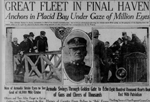 |
3.19k | GREAT FLEET IN FINAL HAVEN Rear Admiral Robley D.Evans, commander in chief of the Atlantic battleship fleet. On the left is a photograph showing the veteran naval officer going up the gangway of the flagship-from the launch, while on the right the admiral is shown while being assisted into the automobile that conveyed him to the St. Francis. |
Image and text provided by University of California, Riverside. Photo from The San Francisco Call.(San Francisco [Calif.]) 1895-1913, 07 May 1908, Image 1, via chroniclingamerica.loc.gov. | |||||||||||||||||||||||||||||||||||||||||||||||||||||||||||||||||||||||||||||||||||||||||||||||||||||||||||||||||||||||||||||||||||||||||||||
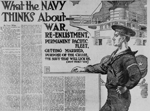 |
1.04k | WHAT THE NAVY THINKS ABOUT WAR | Image and text provided by University of California, Riverside. Photo from The San Francisco Call. (San Francisco [Calif.]) 1895-1913, 17 May 1908, Image 3, via chroniclingamerica.loc.gov. | |||||||||||||||||||||||||||||||||||||||||||||||||||||||||||||||||||||||||||||||||||||||||||||||||||||||||||||||||||||||||||||||||||||||||||||
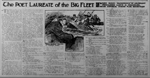 |
2.90k | THE POET LAUREATE OF THE BIG FLEET WARD ROOM WANDERINGS OF LIEUTENANT COMMANDER LLOYD H. CHANDLER, REAR ADMIRAL EVANS' FLAG SECRETARY |
Image and text provided by University of California, Riverside. Photo from The San Francisco Call. (San Francisco [Calif.]) 1895-1913, 07 June 1908, Image 11, via chroniclingamerica.loc.gov. | |||||||||||||||||||||||||||||||||||||||||||||||||||||||||||||||||||||||||||||||||||||||||||||||||||||||||||||||||||||||||||||||||||||||||||||
 |
3.59k | JACK TAR EATS HIS WAY AROUND THE WORLD THE GASTRONOMIC JOYS AND SORROWS-WHICH THE MEN OF THE GREAT FLEET ARE ENCOUNTERING IN MANY LANDS |
Image and text provided by University of California, Riverside. Photo from The San Francisco Call. (San Francisco [Calif.]) 1895-1913, 03 January 1909, Image 3, via chroniclingamerica.loc.gov. | |||||||||||||||||||||||||||||||||||||||||||||||||||||||||||||||||||||||||||||||||||||||||||||||||||||||||||||||||||||||||||||||||||||||||||||
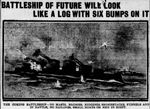 |
3.87k | BATTLESHIP OF FUTURE WILL LOOK LIKE A LOG WITH SIX BUMPS ON IT THE COMING BATTLESHIP—NO MASTS, BRIDGES, RIGGING'S, SMOKESTACKS, FUNNELS AND IN BATTLE, NO RAILINGS, SMALL BOATS OR MEN IN SIGHT. |
Image and text provided by Washington State Library; Olympia, WA. Photo from The Tacoma Times. (Tacoma, Wash.) 1903-1949, 06 April 1909, Image 5, via chroniclingamerica.loc.gov. | |||||||||||||||||||||||||||||||||||||||||||||||||||||||||||||||||||||||||||||||||||||||||||||||||||||||||||||||||||||||||||||||||||||||||||||
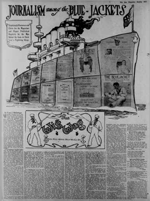 |
NR | JOURNALISM AMONG THE BLUE-JACKETS Surprisingly Numerous and Clever Are the Magazines and Papers Published Regularly by the Men Behind the Guns on Uncle Sam's Fighting Ships |
Image and text provided by University of California, Riverside. Photo from The San Francisco Call. (San Francisco [Calif.]) 1895-1913, 25 April 1909, Image 6, via chroniclingamerica.loc.gov. |
|||||||||||||||||||||||||||||||||||||||||||||||||||||||||||||||||||||||||||||||||||||||||||||||||||||||||||||||||||||||||||||||||||||||||||||
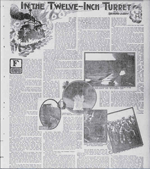 |
585k | IN THE TWELVE-INCH TURRET | Image and text provided by University of Utah, Marriott Library. Photo from The Spanish Fork Press. (Spanish Fork, Utah) 1902-current, 26 August 1909, Image 5, via chroniclingamerica.loc.gov. |
|||||||||||||||||||||||||||||||||||||||||||||||||||||||||||||||||||||||||||||||||||||||||||||||||||||||||||||||||||||||||||||||||||||||||||||
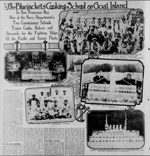 |
3.61k | THE BLUEJACKETS' COOKING SCHOOL ON GOAT ISLAND In San Francisco Bay One of the Navy Department's Two Commissary Schools Trains Cooks, Bakers, and Stewards for the Fighting Ships Of the Pacific and Asiatic Fleets |
Image and text provided by University of California, Riverside. Photo from The San Francisco Call. (San Francisco [Calif.]) 1895-1913, 27 February 1910, Image 4, via chroniclingamerica.loc.gov. | |||||||||||||||||||||||||||||||||||||||||||||||||||||||||||||||||||||||||||||||||||||||||||||||||||||||||||||||||||||||||||||||||||||||||||||
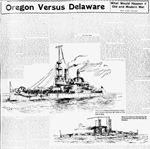 |
613k | Oregon (BB-3) Versus Delaware (BB-28). What Would Happen if Old and Modern Met? | Image and text provided by University of Hawaii at Manoa; Honolulu, HI. Photo from The Pacific Commercial Advertiser. (Honolulu, Hawaiian Islands) 1885-1921, 17 April 1910, Sunday Edition, Feature Section, Image 13, via chroniclingamerica.loc.gov. | |||||||||||||||||||||||||||||||||||||||||||||||||||||||||||||||||||||||||||||||||||||||||||||||||||||||||||||||||||||||||||||||||||||||||||||
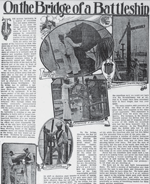 |
698k | On the Bridge of a Battleship | Image and text provided by Ohio Historical Society, Columbus, OH. Photo from Perrysburg Journal. (Perrysburg, Wood Co., O. [Ohio]) 186?-1965, 11 November 1910, Image 6, via chroniclingamerica.loc.gov. | |||||||||||||||||||||||||||||||||||||||||||||||||||||||||||||||||||||||||||||||||||||||||||||||||||||||||||||||||||||||||||||||||||||||||||||
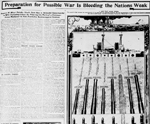 |
3.09k | Preparation for Possible War Is Bleeding the Nations Weak A WAR THAT NEVER CEASES. The expensive fight between the manufacturer of big guns that can penetrate anything, and the manufacturer of thick armor that cannot be penetrated One aide is victor to-day. Th« other is triumphant tomorrow. Where will it end? |
Image and text provided by Library of Congress, Washington, DC. Photo from New-York Tribune. (New York [N.Y.]) 1866-1924, 25 December 1910, Image 19, courtesy of chroniclingamerica.loc.gov. |
|||||||||||||||||||||||||||||||||||||||||||||||||||||||||||||||||||||||||||||||||||||||||||||||||||||||||||||||||||||||||||||||||||||||||||||
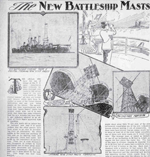 |
452k | The NEW BATTLESHIP MASTS | Image and text provided by Oklahoma Historical Society. Photo from The Beaver Herald.(Beaver, O.T. [Okla.]) 1895-1923, 16 February 1911, Image 6, via chroniclingamerica.loc.gov. |
|||||||||||||||||||||||||||||||||||||||||||||||||||||||||||||||||||||||||||||||||||||||||||||||||||||||||||||||||||||||||||||||||||||||||||||
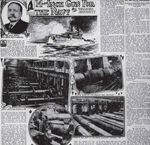 |
652k | A 14-INCH GUN FOR THE NAVY | Image and text provided by Oklahoma Historical Society. Photo from The Beaver Herald. (Beaver, O.T. [Okla.]) 1895-1923, 24 February 1910, Image 3, via chroniclingamerica.loc.gov. |
|||||||||||||||||||||||||||||||||||||||||||||||||||||||||||||||||||||||||||||||||||||||||||||||||||||||||||||||||||||||||||||||||||||||||||||
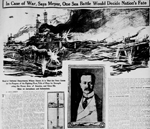 |
1.00k | In Case of War, Says Meyer, One Sea Battle Would Decide Nation's Fate | Image and text provided by Library of Congress, Washington, DC. Photo from New-York Tribune. (New York [N.Y.]) 1866-1924, 26 February 1911, Image 19, via chroniclingamerica.loc.gov. | |||||||||||||||||||||||||||||||||||||||||||||||||||||||||||||||||||||||||||||||||||||||||||||||||||||||||||||||||||||||||||||||||||||||||||||
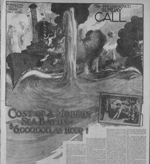 |
2.70k | COST OF A MODERN SEA BATTLE $ 6,000,000 AN HOUR | Image and text provided by University of California, Riverside. Photo from The San Francisco Call. (San Francisco [Calif.]) 1895-1913, 21 May 1911, Image 29, via chroniclingamerica.loc.gov. |
|||||||||||||||||||||||||||||||||||||||||||||||||||||||||||||||||||||||||||||||||||||||||||||||||||||||||||||||||||||||||||||||||||||||||||||
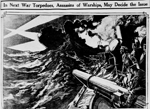 |
978k | In Next War Torpedoes, Assassins of Warships, May Decide the Issue TORPEDO BOATS DISCOVERED BY THE SEARCHLIGHTS OF MEN-OF-WAR JUST AS THEY ARE ABOUT TO DISCHARGE THEIR INGENIOUS MISSILES OF DESTRUCTION AGAINST THE SIDES OF THE BIG FELLOWS. FOR THE FIRST TIME IN ATLANTIC FLEET PRACTICE, THE TORPEDO POINTERS WERE PERMITTED TO MAKE ACTUAL HITS AGAINST THE SIDES OF RAPIDLY MOVING BATTLESHIPS. |
Image and text provided by Library of Congress, Washington, DC. Photo from New-York Tribune. (New York [N.Y.]) 1866-1924, 03 September 1911, Image 19, via chroniclingamerica.loc.gov | |||||||||||||||||||||||||||||||||||||||||||||||||||||||||||||||||||||||||||||||||||||||||||||||||||||||||||||||||||||||||||||||||||||||||||||
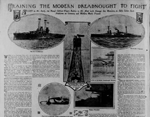 |
NR | TRAINING THE MODERN DREADNOUGHT TO FIGHT [A]LONE in His Study, the Naval Officer Wages Battles in His Mind with Foreign Sea Monsters, to Help Solve Such Problems as Gunnery and Military Masts Present | Image and text provided by University of California, Riverside. Photo from The San Francisco Call. (San Francisco [Calif.]) 1895-1913, 31 December 1911, Image 6, via chroniclingamerica.loc.gov. | |||||||||||||||||||||||||||||||||||||||||||||||||||||||||||||||||||||||||||||||||||||||||||||||||||||||||||||||||||||||||||||||||||||||||||||
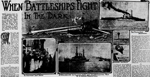 |
NR | WHEN BATTLESHIPS FIGHT IN THE DARK | Image and text provided by Library of Congress, Washington, DC. Photo from Evening Star.(Washington, D.C.) 1854-1972, 08 September 1912, Image 45, via chroniclingamerica.loc.gov.. | |||||||||||||||||||||||||||||||||||||||||||||||||||||||||||||||||||||||||||||||||||||||||||||||||||||||||||||||||||||||||||||||||||||||||||||
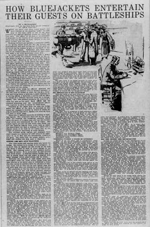 |
NR | HOW BLUEJACKETS ENTERTAIN THEIR GUESTS ON BATTLESHIPS | Image and text provided by University of California, Riverside. Photo from The San Francisco Call. (San Francisco [Calif.]) 1895-1913, 19 October 1912, Image 7, via chroniclingamerica.loc.gov. | |||||||||||||||||||||||||||||||||||||||||||||||||||||||||||||||||||||||||||||||||||||||||||||||||||||||||||||||||||||||||||||||||||||||||||||
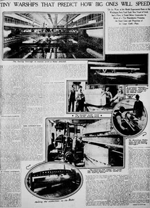 |
990k | TINY WARSHIPS THAT PREDICT HOW BIG ONES WILL SPEED On the Water of the Model Experimental Basin at the Washington Navy Yard Each New Vessel of Uncle Sam's Fleets Is Tested Before Construction by Means of a Toy Reproduction Possessing the Exact Lines and Proportions of the Large Craft's Plans |
Image and text provided by Library of Congress, Washington, DC. Photo from New-York Tribune. (New York [N.Y.]) 1866-1924, 05 January 1913, Image 21, via chroniclingamerica.loc.gov. |
|||||||||||||||||||||||||||||||||||||||||||||||||||||||||||||||||||||||||||||||||||||||||||||||||||||||||||||||||||||||||||||||||||||||||||||
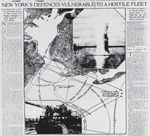 |
1.90k | NEW YORK'S DEFENCES VULNERABLE TO A HOSTILE FLEET Guns Relied On to Protect the Harbor Inferior to Those Which Arm Modern Dreadnoughts. Sea Coast Batteries Years Behind. |
Image and text provided by The New York Public Library, Astor, Lenox and Tilden Foundation Photo by The Sun. (New York [N.Y.]) 1833-1916, 22 June 1913, FOURTH SECTION PICTORIAL MAGAZINE, Image 44, courtesy of chroniclingamerica.loc.gov 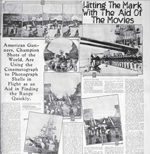 NR |
Hitting The Mark With The Aid Of The Movies |
American Gunners, Champion Shots of the World, Are Using the Cinematographic to Photograph Shells in Flight as an Aid in Finding the Range Quickly. Image and text provided by University of Utah, Marriott Library. | Photo by The Ogden Standard.(Ogden City, Utah) 1913-1920, 17 October 1914, 4 P.M. City Edition, MAGAZINE SECTION, Image 19, via chroniclingamerica.loc.gov. 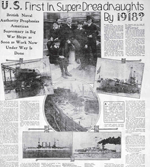 706k |
U.S. First in Super-dreadnoughts by 1918? |
British Naval Authority Prophesies American Supremacy in Big War Ships as Soon as Work Now Under Way Is Done Image and text provided by University of Utah, Marriott Library. | Photo from The Ogden Standard. (Ogden City, Utah) 1913-1920, 26 December 1914, 4 P.M. City Edition, MAGAZINE SECTION, Image 17, via chroniclingamerica.loc.gov. 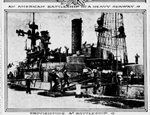 1.68k |
GETTING IN THE FIRST BLOW IN NAVAL BATTLE |
PROBLEMS FOR MEDICAL MEN IN PRESENT WAR Image and text provided by The New York Public Library, Astor, Lenox and Tilden Foundation | Photo by The Sun. (New York [N.Y.]) 1833-1916, 03 January 1915, FOURTH SECTION MAGAZINE SECTION, Image 24, courtesy of chroniclingamerica.loc.gov 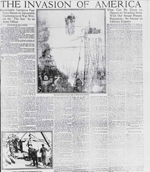 1.80k | THE INVASION OF AMERICA | Fire control station on top of mast on United States battleship Loading 14 inch shells on the dreadnought New York (BB-34). Image and text provided by The New York Public Library, Astor, Lenox and Tilden Foundation. |
Photo from the The Sun. (New York [N.Y.] 1833-1916, 28 March 1915, FIFTH SECTION, Page 3, Image 51, courtesy of chroniclingamerica.loc.gov. 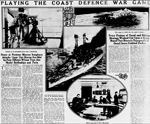 1.76k | PLAYING THE COAST DEFENCE WAR GAMES | Down at Fortress Monroe Imaginary Attacks Upon Our Shores Are Met by Four Officers Whose Toys Are Model Battleships and Forts. NOT THE BATTLESHIP KANSAS (BB-21), {But the AR-KANSAS (BB-33)}. Image and text provided by The New York Public Library, Astor, Lenox and Tilden Foundation |
Photo from The Sun. (New York [N.Y.]) 1833-1916, 25 April 1915, FOURTH SECTION PICTORIAL MAGAZINE, Image 44, via chroniclingamerica.loc.gov. 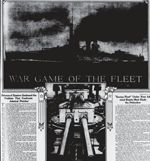 1.39k |
WAR GAME OF THE FLEET |
Defence of Eastern Seaboard the Problem That Confronts Admiral Fletcher Enemy Fleet Under Rear Admiral Beatty Must Elude the Defenders Image and text provided by The New York Public Library, Astor, Lenox and Tilden Foundation | Photo by The Sun. (New York [N.Y.]) 1916-1920, 23 May 1915, FOURTH SECTION PICTORIAL MAGAZINE, Image 33, courtesy of chroniclingamerica.loc.gov.
|
 24k |
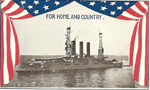
Four Years in the Navy. |
POPULAR MECHANICS MAGAZINE, September 1915, Volume 24, Number 3, courtesy of Arnold Putnam. |
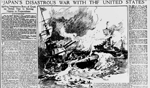 2.42k | JAPAN'S DISASTROUS WAR WITH THE UNITED STATES | Image and text provided by The New York Public Library, Astor, Lenox and Tilden Foundation. | Photo from The Sun. (New York [N.Y.]) 1833-1916, 09 January 1916, SIXTH SECTION, Image 37, courtesy of chroniclingamerica.loc.gov. 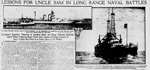 1.92k |
LESSONS FOR UNCLE SAM IN LONG RANGE NAVAL BATTLES
|
Image and text provided by The New York Public Library, Astor, Lenox and Tilden Foundation. | Photo from the The Sun. (New York [N.Y.] 1833-1916, 09 April 1916, SIXTH SECTION SPECIAL FEATURE SUPPLEMENT, Image 59, courtesy of chroniclingamerica.loc.gov. 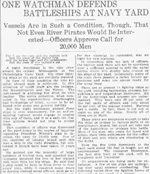 705k |
ONE WATCHMAN DEFENDS BATTLESHIPS AT NAVY YARD |
Vessels Are in Such a Condition, That Not Even River Pirates Would Be Interested Officers Approve Call for 20,000 Men Image and text provided by Penn State University Libraries; University Park, PA. | Photo from Evening Public Ledger. (Philadelphia [Pa.]) 1914-1942, 22 June 1916, Night Extra, Image 4, via chroniclingamerica.loc.gov. 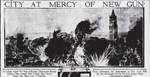 713k |
CITY AT MERCY OF NEW GUN |
Forts Defending the Approaches to New York Will Be Far Out ranged by the 18 Inch Naval Rifles Announced by England Skyscrapers would serve as range marks and would bring down destruction to lower Manhattan. No Longer Could We Hope to Escape Destruction Should Enemy Fleet Armed With Latest War Terror Break Our First Line of Defence What would happen if New York were bombarded by dreadnoughts provided with latest weapons. Image and text provided by The New York Public Library, Astor, Lenox and Tilden Foundation. | Photo from The Sun. (New York, [N.Y.]) 1916-1920, 08 October 1916, SECTION 5 SPECIAL FEATURE SUPPLEMENT, Image 53, via chroniclingamerica.loc.gov. 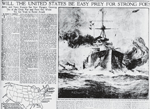 717k |
WILL THE UNITED STATES BE EASY PREY FOR STRONG FOE? |
Army and Navy Experts See New Dangers Growing Out of the Great War and Point Out Where We Are Weak to Resist Attack Image and text provided by The New York Public Library, Astor, Lenox and Tilden Foundation | Photo by The Sun. (New York [N.Y.]) 1833-1916, 05 November 1916, SECTION 5 SPECIAL FEATURE SUPPLEMENT, Image 52, courtesy of chroniclingamerica.loc.gov 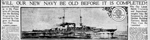 909k |
WILL OUR NEW NAVY BE OLD BEFORE IT IS COMPLETED? |
Question Is Raised as to the Possibility of Carrying Out the Building Programme Authorized by Congress to Provide New Fleet Image and text provided by The New York Public Library, Astor, Lenox and Tilden Foundation. | Photo from The Sun. (New York, [N.Y.]) 1916-1920, 21 January 1917, Section 5 Special Feature Supplement, Image 47, via chroniclingamerica.loc.gov 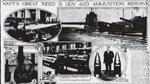 839k |
NAVY'S GREAT NEED IS GUN AND AMMUNITION RESERVE
|
Image and text provided by The New York Public Library, Astor, Lenox and Tilden Foundation. |
Photo from The Sun. (New York [N.Y.]) 1916-1920, 18 February 1917, Section 5 Special Feature Supplement, Image 49, via chroniclingamerica.loc.gov. 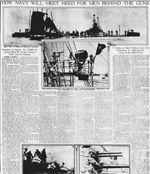 813k |
HOW NAVY WILL MEET NEED FOR MEN BEHIND THE GUNS |
HOW TRAINING TELLS: A TARGET THAT HAS BEEN TORN TO PIECES BY SPLENDID GUNNERY Measures to Secure the 33,000 Recruits Called For in the Nation's First Line of Defence Image and text provided by The New York Public Library, Astor, Lenox and Tilden Foundation. | Photo from The Sun. (New York, [N.Y.]) 1916-1920, 01 April 1917, Section 5 Special Feature Supplement, Image 51, via chroniclingamerica.loc.gov. 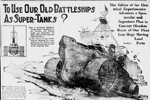 1.23k | TO USE OUR OLD BATTLESHIPS AS SUPER TANKS? |
How a Converted Battleship Would Appear "Squatting" on the Trenches and Dealing Death and Destruction for Miles with Its Great Guns and High Explosives. On the Left Is a Cross Section Diagram Showing the Arrangement of the Wheel Axles and the Braces Inside the Hull of the Converted Ship. The Editor of the Electrical Experimenter Advances a Spectacular and Ingenious Plan to Convert Obsolete Boats of Our Fleet Into Huge Moving Land Forts Image and text provided by Library of Virginia; Richmond, VA. | Photo & text by Richmond Times-Dispatch. (Richmond, Va.) 1914-current, 17 June 1917, Image 45, via chroniclingamerica.loc.gov. 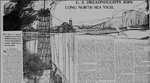 1.35k | U. S. DREADNOUGHTS JOIN LONG NORTH SEA VIGIL. | Image and text provided by Library of Congress, Washington, DC. | Photo from New-York Tribune. (New York [N.Y.]) 1866-1924, 09 June 1918, Image 36, via chroniclingamerica.loc.gov. 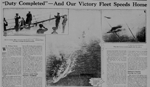 1.09k | "Duty Completed" And Our Victory Fleet Speeds Home | Image and text provided by Library of Congress, Washington, DC. | Photo from New-York Tribune. (New York [N.Y.]) 1866-1924, 13 April 1919, Image 63, courtesy of chroniclingamerica.loc.gov. 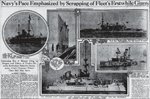 897k |
Navy's Pace Emphasized by Scrapping of Fleet's Erstwhile Giants |
Image and text provided by The New York Public Library, Astor, Lenox and Tilden Foundation | Photo by The Sun. (New York [N.Y.]) 1916-1920, 15 June 1919, Section 7 Magazine Section, Image 82, courtesy of chroniclingamerica.loc.gov. 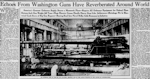 NR |
Echoes From Washington Guns Have Reverberated Around World. |
America s Greatest Ordinance Supply Source a Mammoth Plant—Repairs All Ordnance Equipment for Federal Fleet. Sixteen-Inch Gun Weighs 140 Tons — Huge Electric Cranes Handle Heavy Guns Like Jackstraws — Shrinkage Pit Is Electrical, Cook Stove of Big Gun Repairs — Beating Steel Into Naval Rifles Adds Romance to Industry. Image provided by: Library of Congress, Washington, DC. | Photo & text by Evening Star. [volume] (Washington, D.C.) 1854-1972, 17 October 1926, Image 91, courtesy of chroniclingamerica.loc.gov. 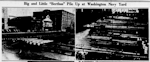 NR |
Big and Little "Berthas" Pile Up at Washington Navy Yard |
In various stages of completion are many 5-inch and 16-inch guns, the production of which has been speeded up to keep pace with the turnout of new ships and the looming race in armaments. Image provided by: Library of Congress, Washington, DC. | Photo & text by Evening Star. [volume] (Washington, D.C.) 1854-1972, 07 March 1938, Image 19, courtesy of chroniclingamerica.loc.gov.  577k |
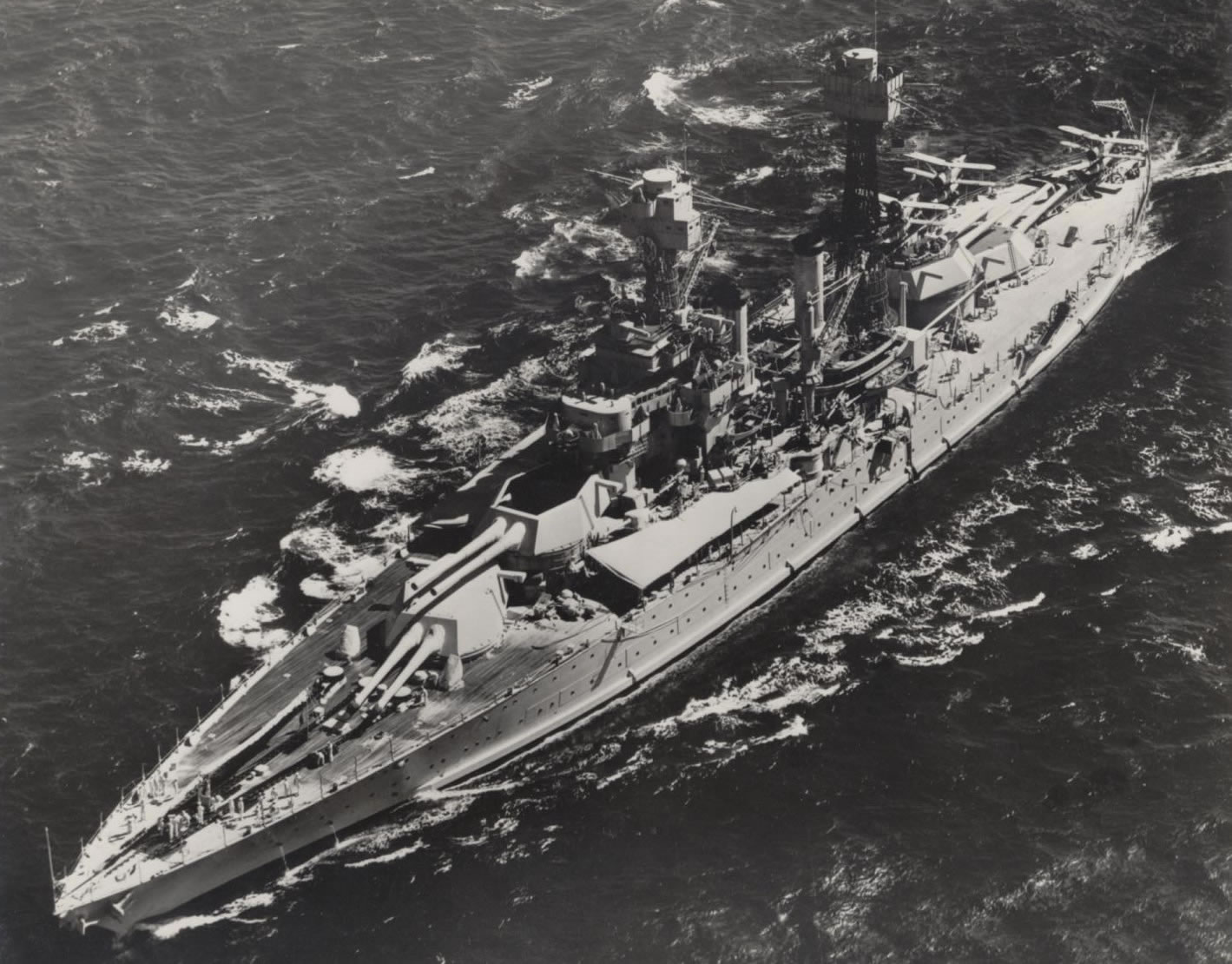
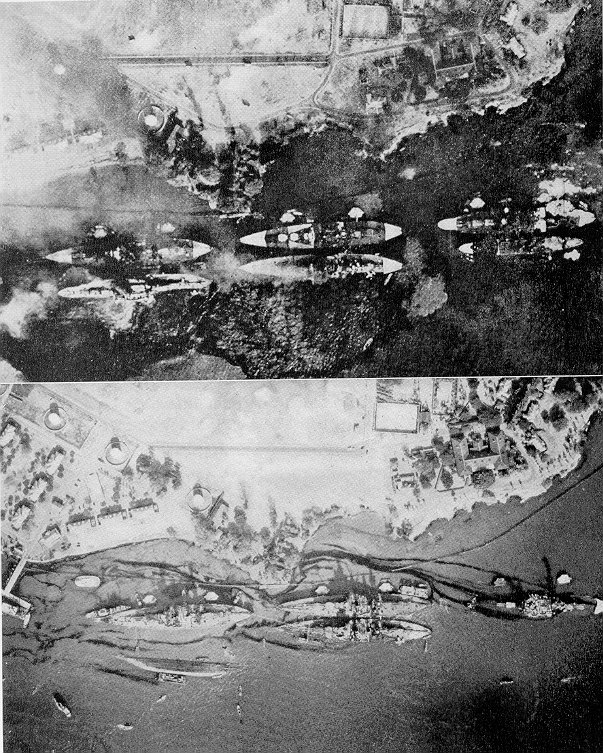
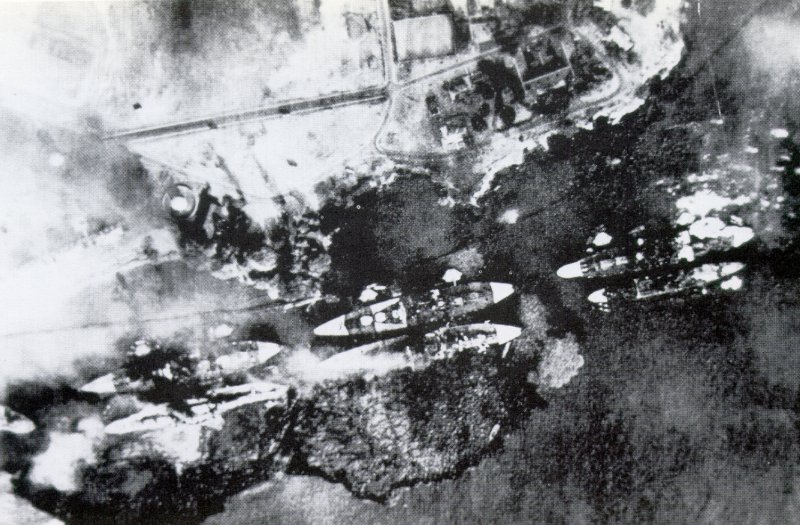
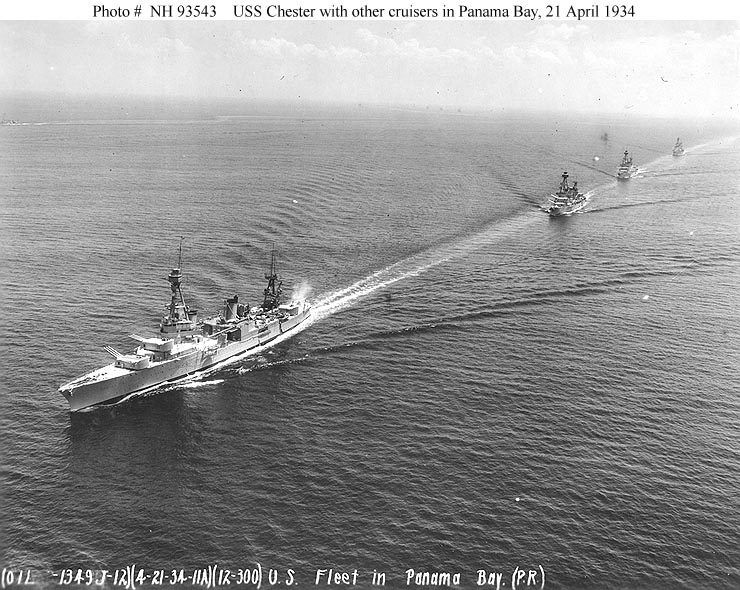
Turret top colored markings on cruisers and battleships at the time of the attack on Pearl Harbor. |
From the time that aircraft were first carried on ships there was a problem for the aviators. How to identify their parent ship from the air? Note the following photo in the inset. Pumping out the California (BB-44) after installation of a cofferdam along her bows port side, while she was under salvage at Pearl Harbor on 27 February 1942. Note that her turret is trimmed with paint. Aircraft carriers have a distinct appearance, and early USN ships carried identification letters on the flight deck. But catapult launched scout planes still had a problem. By the time aviation scouting and observation squadrons became an integral part of the fleet in the late 1930s a system was devised to help pilots pick out their own ships. It was based upon the colorful squadron livery that also adorned the aircraft at that time. Squadron identification colors were painted on the tops of the forward turrets of the cruisers and battleships that carried scout planes. Individual sections were assigned to specific ships, and a section color was carried on an after turret to provide positive identification. In 1938 the battleships carried colors on "B" and "Y" turrets, but from 1939 to 1941 this was extended to include "A" turret also. The color codes were in use at the time of the Japanese attack on Pearl Harbor and can be easily seen on several photographs. The bright identification colors were gradually painted out in the early months of 1942. Squadrons assigned to battleships were used primarily for observation to assist gunnery and were designated as Observation Squadrons using the initials "VO" (V for heavier than air aircraft, O for Observation). Cruisers carried the same type of aircraft, but the planes were used for scouting as well as observation. The squadrons assigned to the cruisers were called Scouting squadrons and used the letters "VCS" for identification (CS for cruiser scouting). Each Battleships Division and each cruiser division had its own squadron. In the days prior to World War II the aircraft of all squadrons were painted with distinctive colors. The following colors were in effect prior to the Pearl Harbor attack: Battleship Divisions were assigned VO squadrons with numbers matching the division number. Within each division a section was assigned to each ship, usually in order of seniority as listed below. Section colors were Red, White, Blue, Black, and Green (Yellow was reserved for section 6, but never actually used except for carrier planes). Section colors were painted on the after turret tops. The tails of VO squadron aircraft were painted in solid colors, as were the forward turret tops of the ships. From Oct 1940 until the decision to drop colorful peacetime markings the section leaders also carried the squadron color on the entire engine cowling. The next senior leader carried it on the upper half of the cowling and the third in line carried it on the lower half of the cowling. Note: The order of ships given here may not match the actual order used for section assignments. It follows the best data I have, but there is a possibility that the actual sections were not assigned the way I have listed them - {Aryeh Wetherhorn} BATDIV 1 - Red Arizona (BB-39), Nevada (BB-36) & Pennsylvania (BB-38). BATDIV 2 - White Tennessee (BB-43), Oklahoma (BB-37) & California (BB-44). BATDIV 3 - Blue Idaho (BB-42), Mississippi (BB-41) & Mexico (BB-40). BATDIV 4 - Black West Virginia (BB-48), Colorado (BB-45) & Maryland (BB-46). BATDIV 5 - Yellow Texas (BB-35), New York (BB-34) & Arkansas (BB-33). Cruiser squadrons carried one or two horizontal stripes on their rudders in colors as indicated below. The forward turrets of their parent ships were given stripes to match. A circle in the section color was painted on the top of the after turret. CRUDIV 2 - Two Yellow Stripes Memphis (CL-13), Milwaukee (CL-5), Cincinnati (CL-6), Omaha (CL-4) & Marblehead (CL-12). CRUDIV 3 - Two red stripes Richmond (CL-9) Concord (CL-10) Trenton (CL-11) CRUDIV 4 - One Blue Stripe Pensacola (CA-24), Salt Lake City (CA-25), Chicago (CA-29) & Indianapolis (CA-35). CRUDIV 5 - One Yellow Stripe Northampton (CA-26), Chester (CA-27), Louisville (CA-28) & Portland (CA-33). CRUDIV 6 - One Black Stripe Minneapolis (CA-36), Astoria (CA-34), New Orleans (CA-32) & San Francisco (CA-38). CRUDIV 7 - One Green Stripe Wichita (CA-45), Quincy (CA-39), Tuscaloosa (CA-37) & Vincennes (CA-44). CRUDIV 8 - Two Black Stripes Philadelphia (CL-41), Brooklyn (CL-40), Savannah (CL-42) & Nashville (CL-43). CRUDIV 9 - Two Green Stripes Honolulu (CL-48), Phoenix (CL-46), Boise (CL-47), Helena (CL-50) & St Louis (CL-49). VCS ? - Two Blue Stripes (flotilla leaders - not assigned to a Cruiser division) Raleigh (CL-7) & Detroit (CL-8) VCS ? - One Red Stripe Augusta (CA-31) & Omaha (CL-4) (assigned this color by Pacific Fleet commander Adm Kimmel in Mar 1941 despite the fact that she was in the Atlantic in CRUDIV 2) Aircraft Carriers were given a specific color for the tails of all embarked aircraft. The deck letters and colors used from 1937 on were: Lexington (CV-2) - LEX - Yellow, Saratoga (CV-3) - SARA - White, Ranger (CV-4) - RNGR - Green, Yorktown (CV-5) - YKTN - Red, Enterprise (CV-6) - EN - Blue, Wasp (CV-7) - WASP - Black, Hornet (CV-8) - HNT - no color ever assigned. Carrier squadrons normally were divided into 6 three plane sections. Before the war, each section used the colors mentioned in the battleship VO squadrons in a chevron on the upper wing, and on the engine cowling. Section leaders had the entire cowling in color and also had a colored band around the fuselage,. The number 2 aircraft had the color on the top of the cowl, and number 3 carried it on the bottom of the cowl. This was in addition to the numbers and letters carried on the fuselage. All the bright colored markings on aircraft were being phased out in 1941 in favor of light grey camouflage, but the ship turret top colors remained in use. NAVSOURCE photographs that show turret top markings include: Battleships: Oklahoma, 013721b,& 013731, Pennsylvania, 013823, Arizona, 013904b, West Virginia, 014805, and 3 pictures in the special Pearl Harbor collection , PH105,& PH202,& PH202. Cruisers: Chester, 0402717. Indianapolis, 0403503. Minneapolis, 0403612. Chicago, 0402910. Quincy, 0403901. Philadelphia, 0404103. Vincennes, 0404402, & 0404403. Wichita, 0404501. Honolulu, 0404803. Official USN photo USNHC # NH 55034, from the collections of the Naval Historical Center. Text courtesy of Aryeh Wetherhorn. |
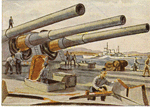 1.90k |
Fore deck of a battleship. |
PDF article entitled "Soviet Policy in the Baltic", by Major Henry G. Morgan Jr. This article appeared in the April 1960 edition of U.S. Naval Institute Proceedings, pgs 82-89. Photo & article courtesy of Pieter Bakels. |
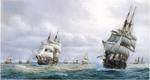 577k |
Convoy off the Cornish Coast. |
PDF article entitled "Naval Gunfire, Today & Tomorrow", September 1966 by Lt. Col. James B. Soper, USMC. Photo & article courtesy of USNIP via Pieter Bakels. |
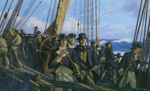 1.30k |
A ship-sloop of war while on patrol in the English Channel has just come about after sighting a strange sail on the horizon and closes to investigate. |
PDF article entitled "The Battleship in the U.S. Navy" from the Naval History Division, Navy Department 1970. Photo courtesy of Pieter Bakels. Article courtesy of Darryl L. Baker. | 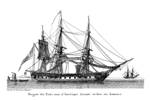 387k |
Field day aboard an American frigate. |
PDF article entitled "The Gun Gap and How To Close It". Photo & article courtesy of Pieter Bakels. |
 175k |
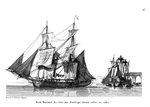
American Brig-of-War airing her sails. |
PDF article entitled "Options for Naval Surface Fire Support". Article by the Honorable Roscoe G. Bartlett, Chairman Subcommittee on Projection Forces, Committee on Armed Services, House of Representatives, 19 November 2004. Photo & article courtesy of Pieter Bakels. |
 2.47k |
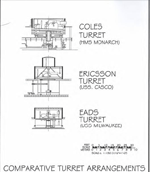
The Eads Steam-Powered Revolving Turret |
Written by Arnold A. Putnam.
| | ||||||||||||||||||||||||||||||||||||||||||||||||||||||||




| Back To The Main Photo Index | Back To The Battleship Photo Index Page |
This page is created and maintained by Michael Mohl
All Pages © 1996 - 2025, by Paul R. Yarnall NavSource Naval History. All Rights Reserved.