Click On Image
For Full Size Image |
Size |
Image Description |
Contributed
By And/Or Copyright |
0623801 |
148k |
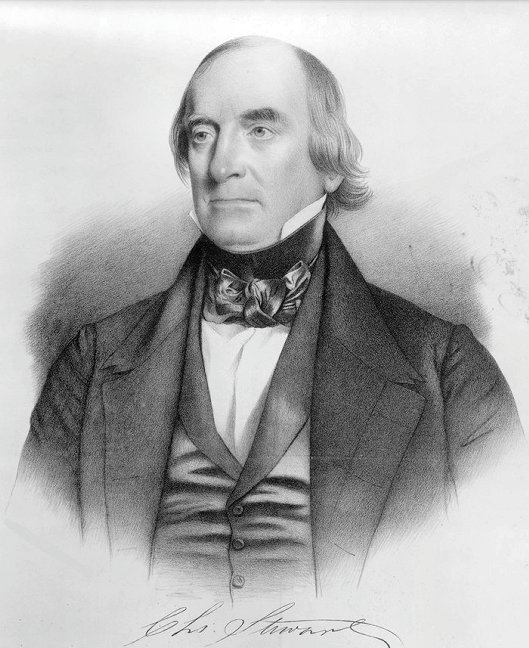
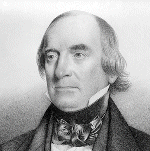
Charles Stewart was born at Philadelphia, Pa. on 28 July 1778. He went to sea at the age of thirteen as a cabin boy and rose through the grades to become master of a
merchantman. During the Quasi-War with France, Stewart was commissioned a lieutenant in the United States Navy on 09 March 1798 and joined the frigate United States for a cruise in
the West Indies. He took command of the schooner Experiment on 16 July 1800 and soon captured two armed French vessels and freed several captured American ships. After brief command
of Chesapeake in 1801 and service in Constellation in 1802, Stewart sailed to the Mediterranean in command of the brig Siren. There he participated in the
destruction of Philadelphia after her capture by Tripoli, helped to maintain the blockade of Tripoli, and distinguished himself in assaults on the enemy in August and September 1804.
After the war, he participated in a show of force at Tunis and returned home as captain in 1806. On the outbreak of war in 1812, Stewart commanded, successively, Argus, Hornet,
and Constellation. But, as the latter was closely blockaded in Norfolk, he took command of Constitution at Boston in 1813. He made two brilliant cruises in her between
1813 and 1815. The frigate captured HMS Cyane and HMS Levant on 20 February 1815. Stewart's later service included command of a squadron in the Mediterranean from 1816
to 1820 and of one in the Pacific from 1820 to 1824. He served as a Naval Commissioner from 1830 to 1832 and commanded the Philadelphia Navy Yard from 1838 to 1841, in 1846, and again from 1854 to
1861. By a bill passed on 02 March 1859, Congress made Stewart "senior flag officer," an office created for him in recognition of his distinguished and meritorious service. He became rear admiral on
the retired list on 16 July 1862, and he died at Bordentown, N.J., on 06 November 1869.
USS Stewart (DE 238) (1942-1946) was the third ship named in his honor, she was preceded by DD 13 (1902-1919) and
DD 224 (1920-1942). (Photo from the Library of Congress) |
Bill Gonyo
Downey, Cal.
Assoc. Researcher
Navsource |
 1.) 94k 1.) 94k
 2.) 132k 2.) 132k
 3.) 143k 3.) 143k
 4.) 158k 4.) 158k
 5.) 207k 5.) 207k
 6.) 153k 6.) 153k
 7.) 68k 7.) 68k
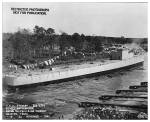 8.) 64k 8.) 64k
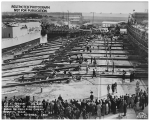 9.) 66k 9.) 66k
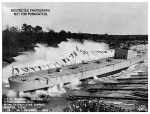 10.) 443k
11.) 127k
12.) 206k 10.) 443k
11.) 127k
12.) 206k
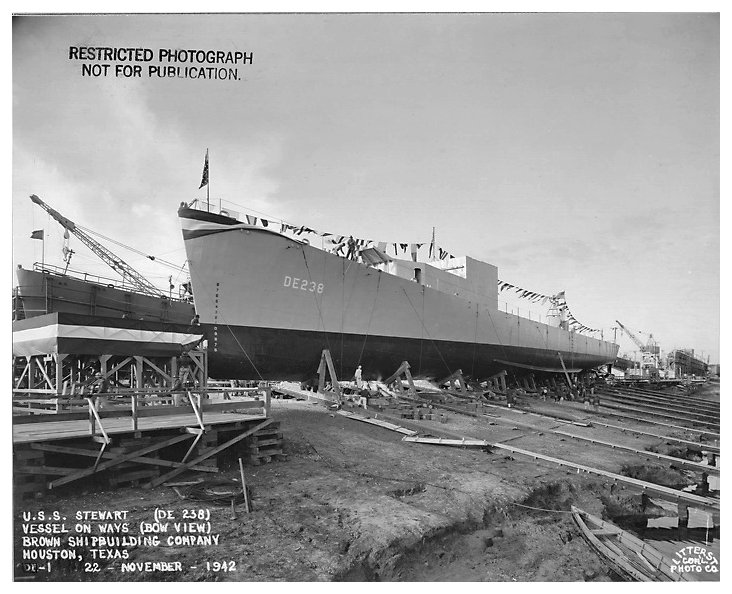
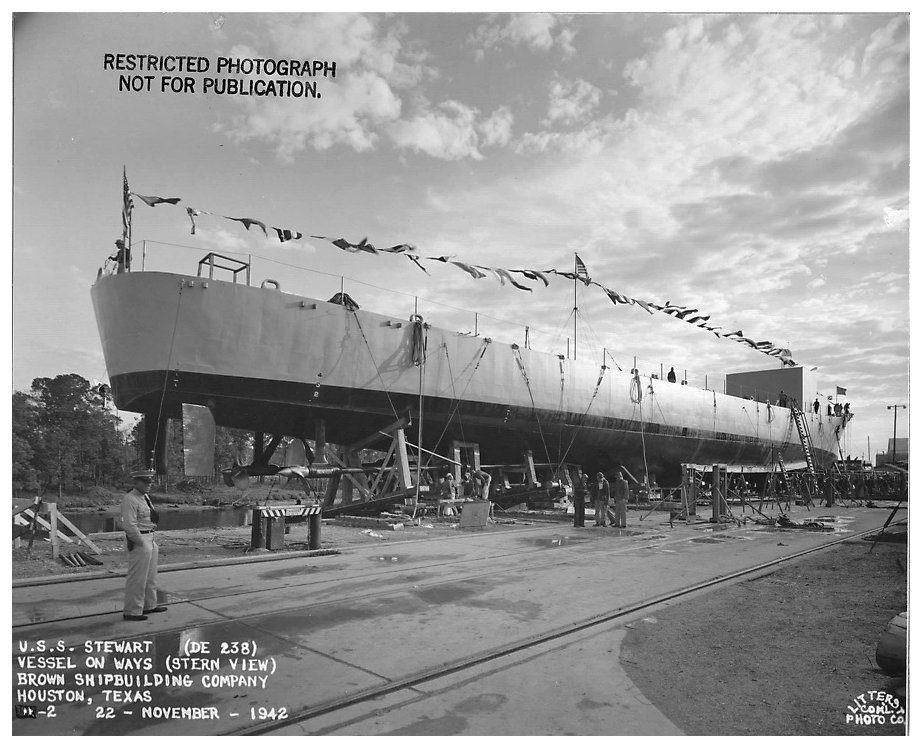
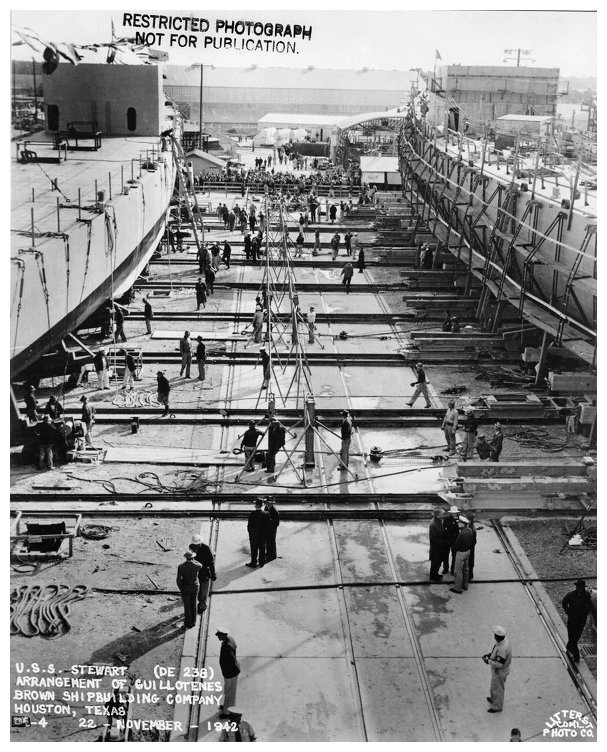
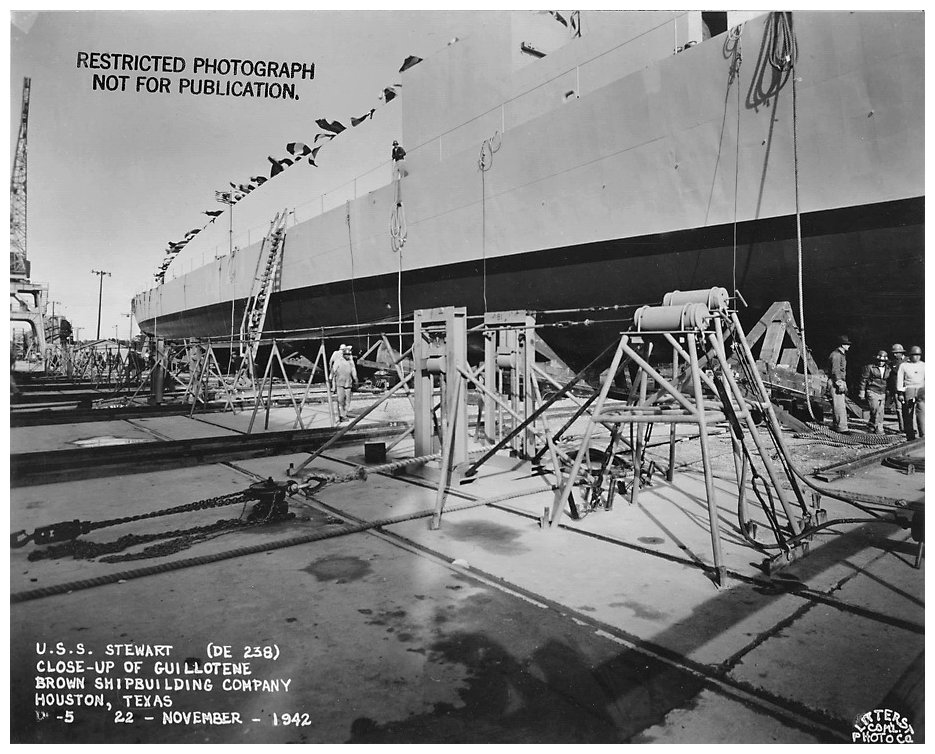
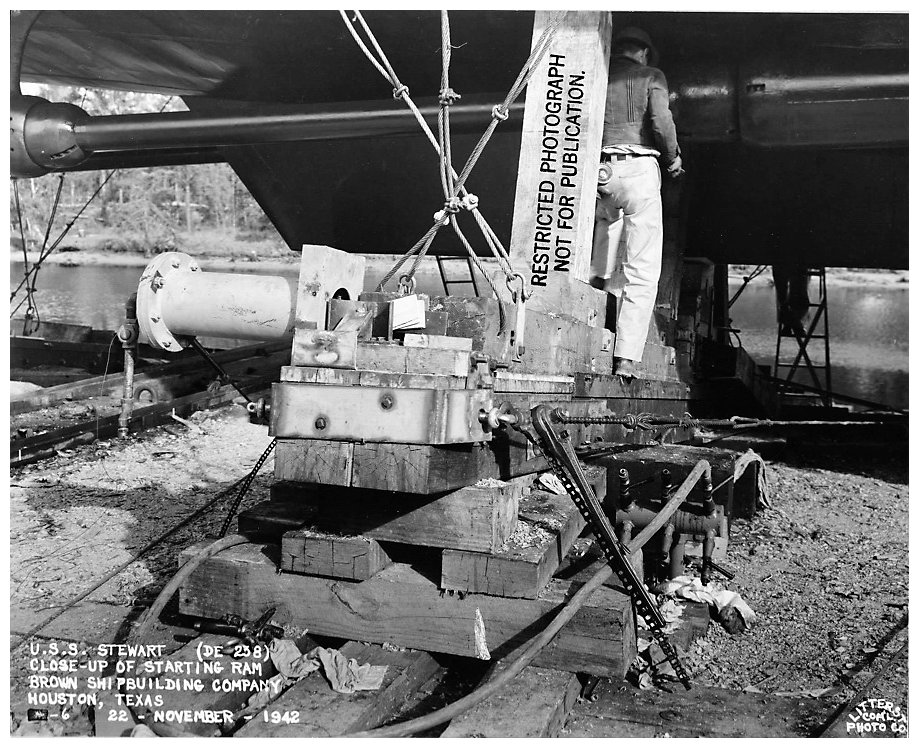
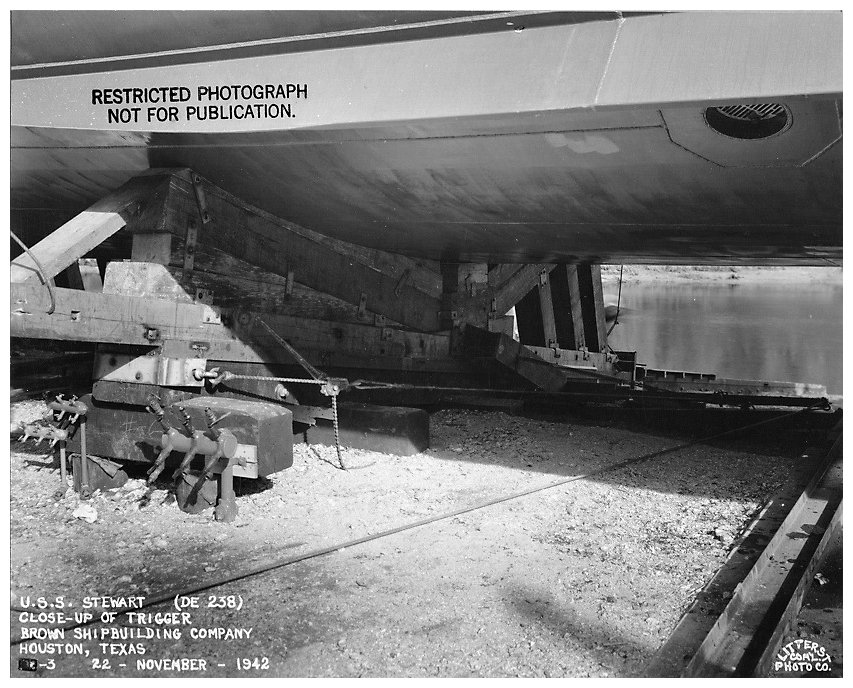
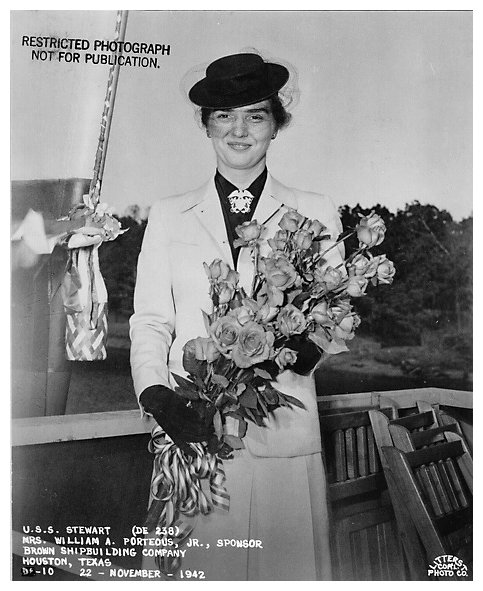
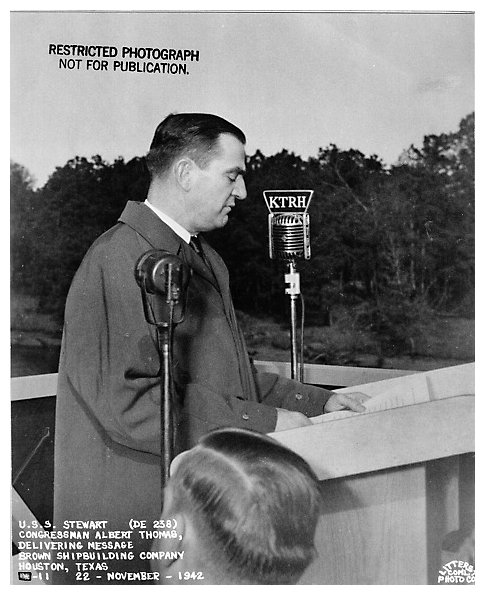
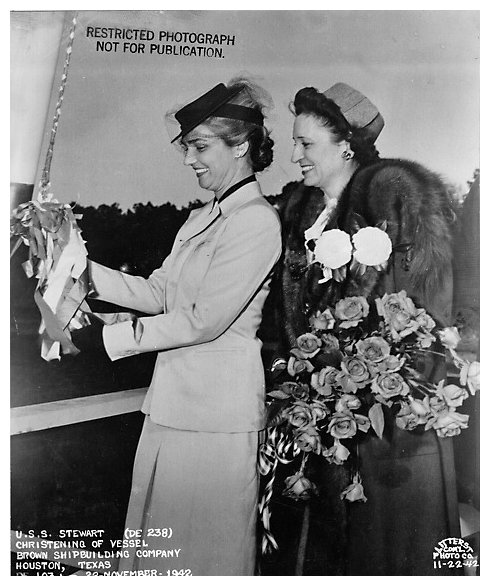
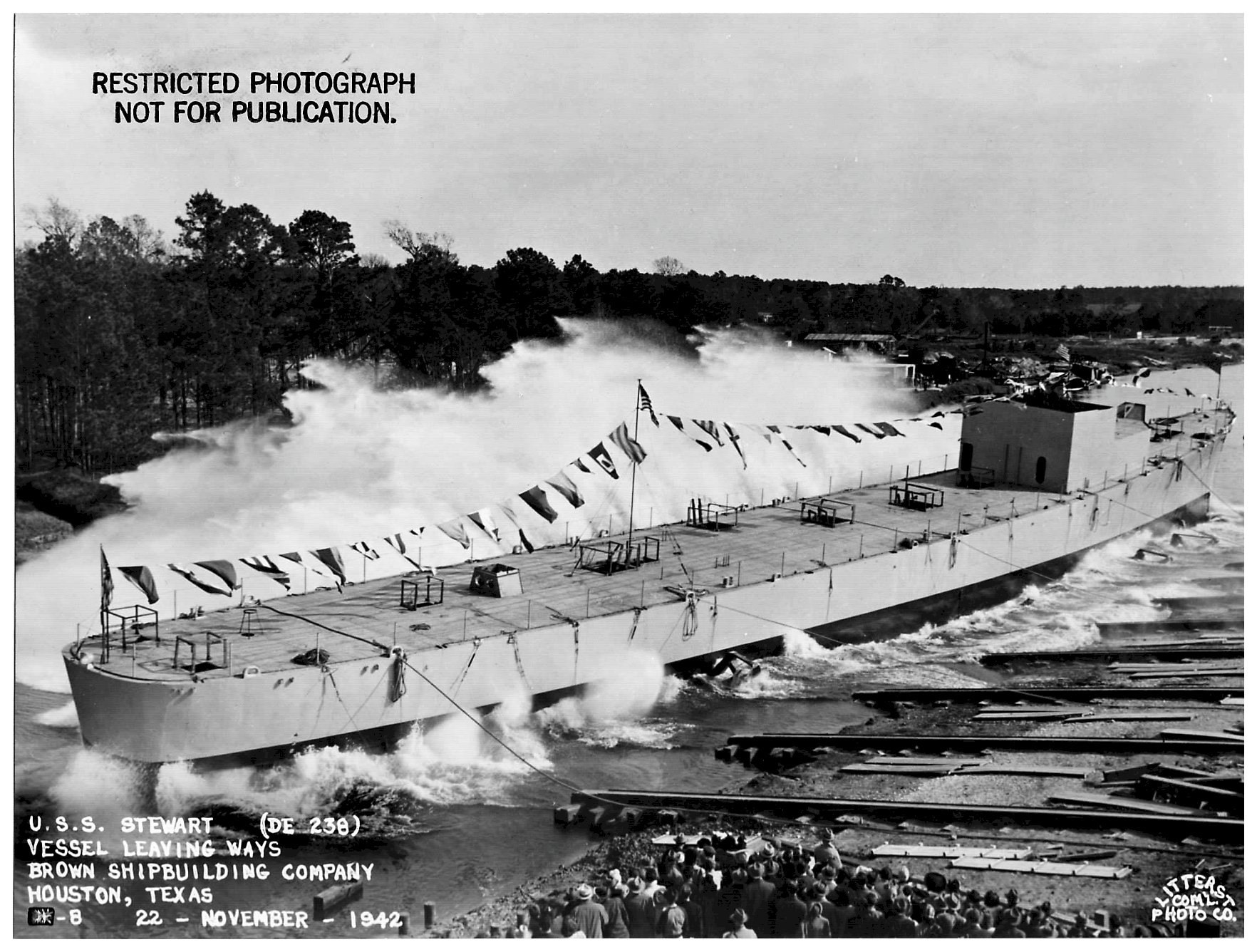
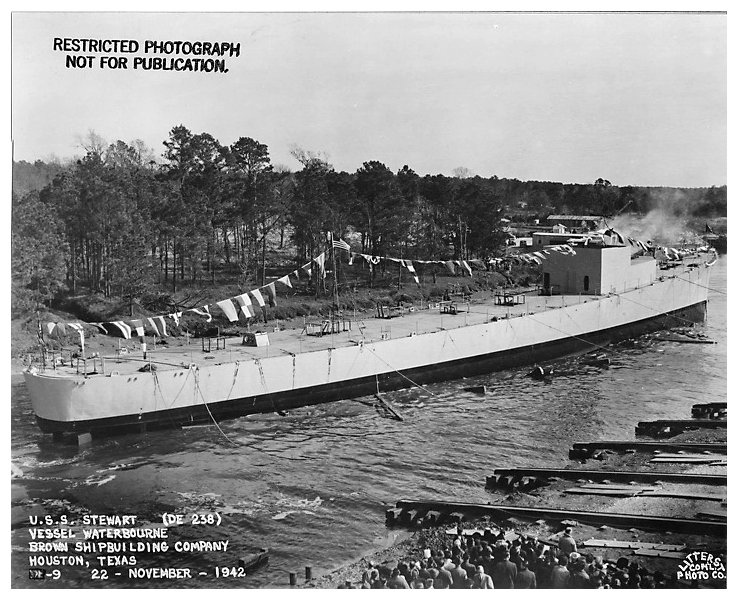
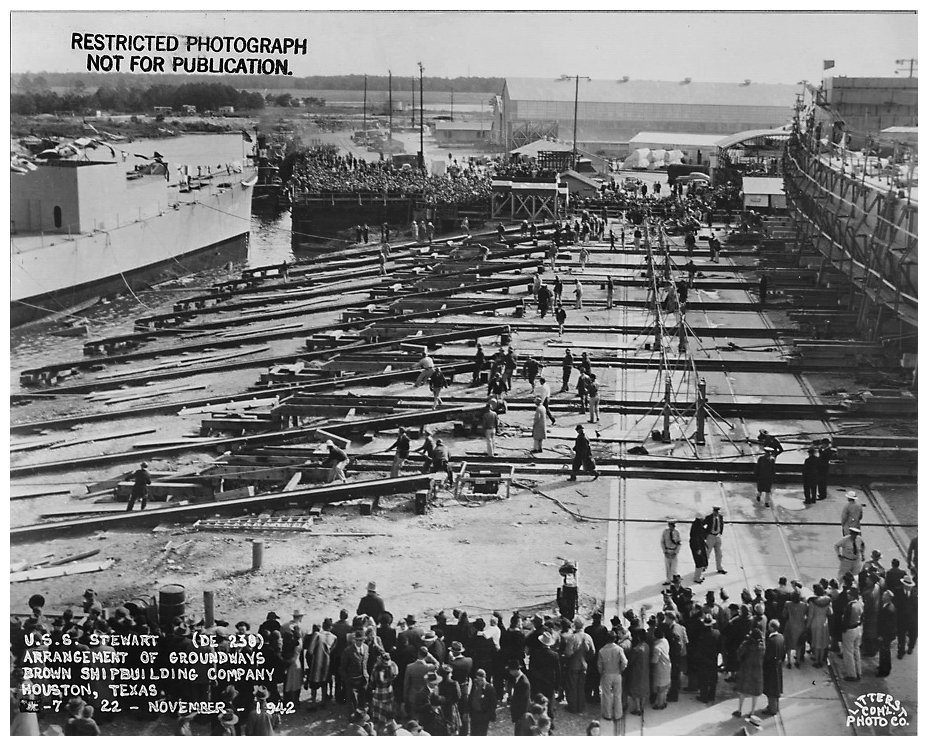
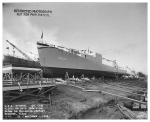
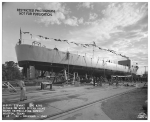
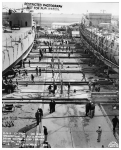
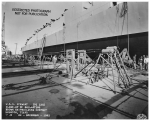
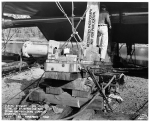
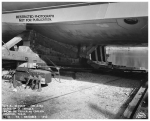
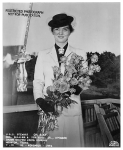
22 November 1942: Houston, Tex. - A twelve view series of the future USS Stewart (DE 238) being launched and christened at the Brown Ship Building Co. in Houston.
(Photos No. 1, 8 - 10, 12 from Nathan Clay) (Photos No. 2 - 7, 10 from Nick Tiberio)
0623807 - 0623808 - 0623809 - 0623810 - 0623811 - 06238012>
0623813 - 0623814 - 0623815 - 0623816 - 0623817 - 0623818 - |
Nathan Clay
Dallas, Tex.
and
Nick Tiberio
Shelton, Conn. |
0623803 |
34k |
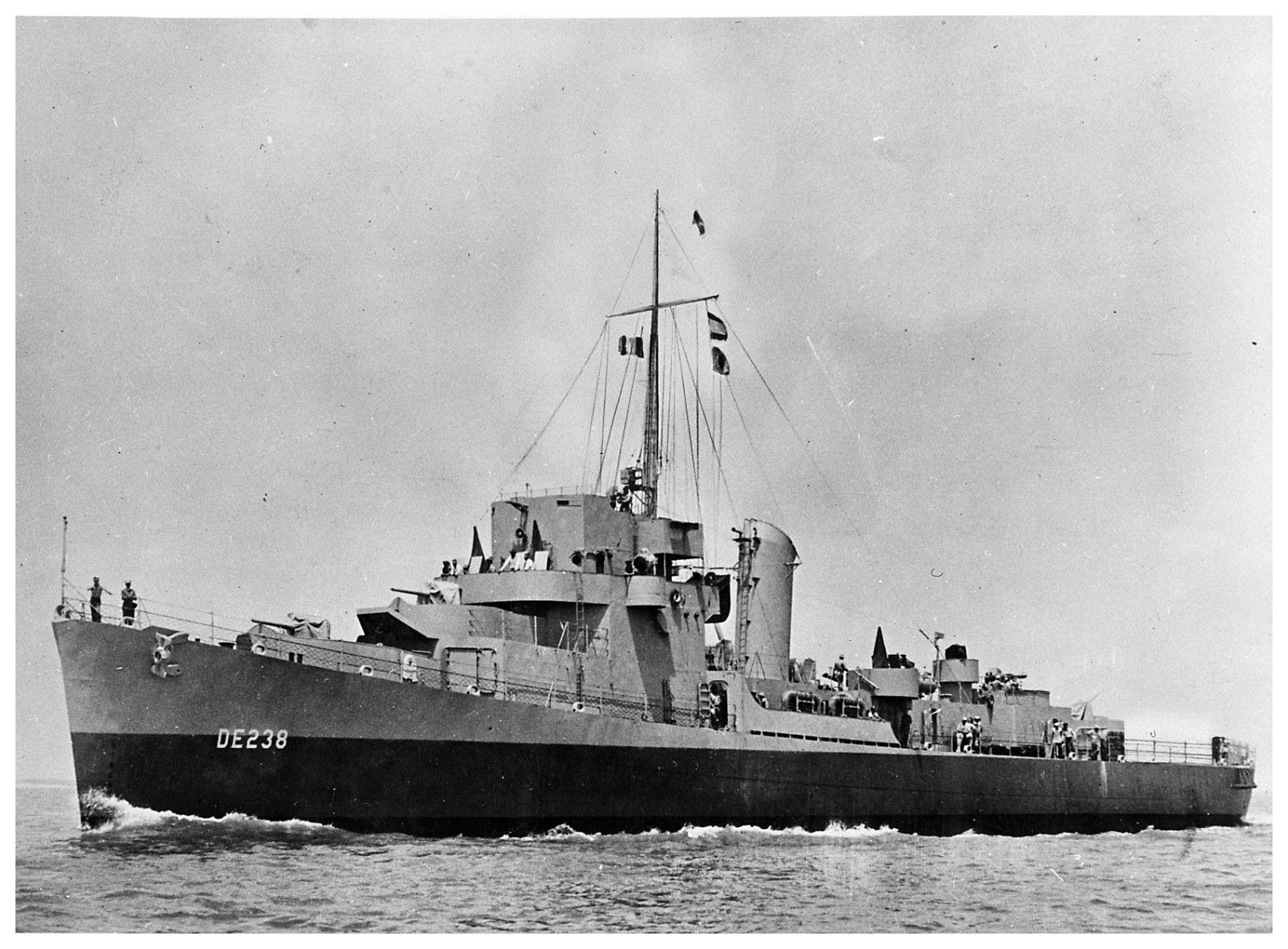
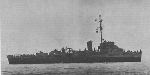
20 May 1943: USS Stewart (DE 238) as completed. Like many other DE's at this time, she had a triple torpedo tube mount originally removed from on of
the old "flushdeck" destroyers.
(U.S. Navy Photo, Photo and text from the Dictionary of American Naval Fighting Ships) |
Bob Hurst
Worksop, Nottinghamshire,
England, United Kingdom |
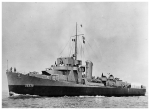
0623802 |
331k |
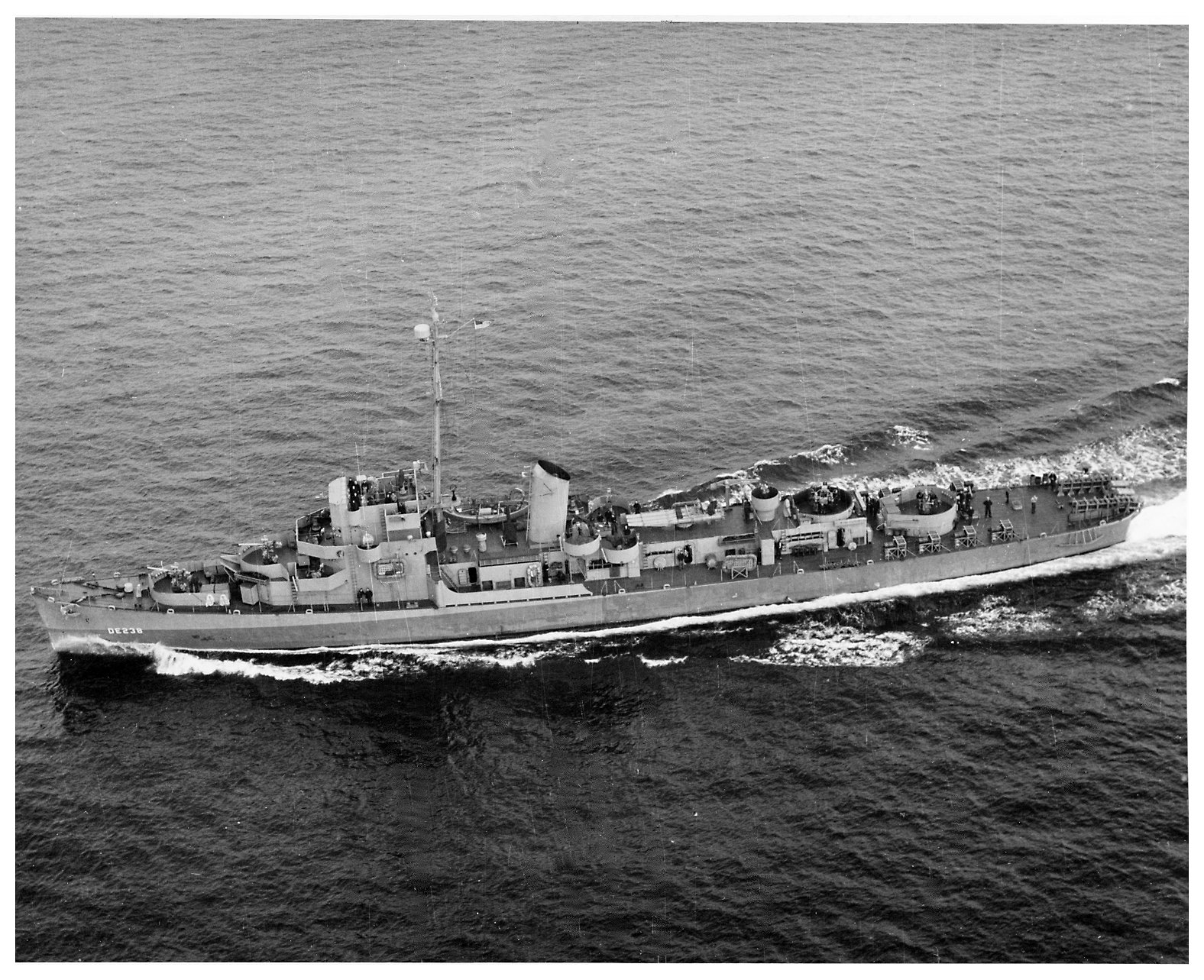
Undated wartime image of USS Stewart (DE 238), shortly after being commissioned on 31 May 1943.
(U.S. Naval Historical Center photo #NH 108845 from the Naval History and Heritage Command) |
Mike Smolinski
Clifton, N.J.
Navsource Archive Manager
DE / FF / LCS Archive |
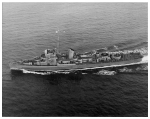
0623806 |
94k |
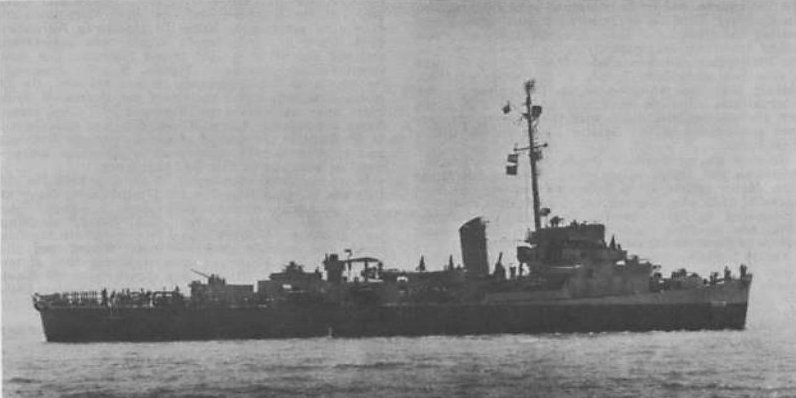
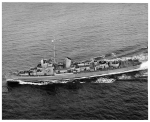
21 November 1943, Sunday: off Norfolk, Va. - Two views of USS Stewart (DE 238) at sea returning from a routine coastal patrol that began when she
departed Norfolk on 11 November. She returned to Norfolk this date, mooring to USS Childs (DD 241) on the south side of Pier Five at 1225.
Top Photo Unnumbered; Bottom Photo (U.S. Navy National Archives photo #80-G-200282 from the Naval History and Heritage Command) |
Nathan Clay |
0623805 |
491k |
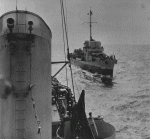
063018 |
141k |
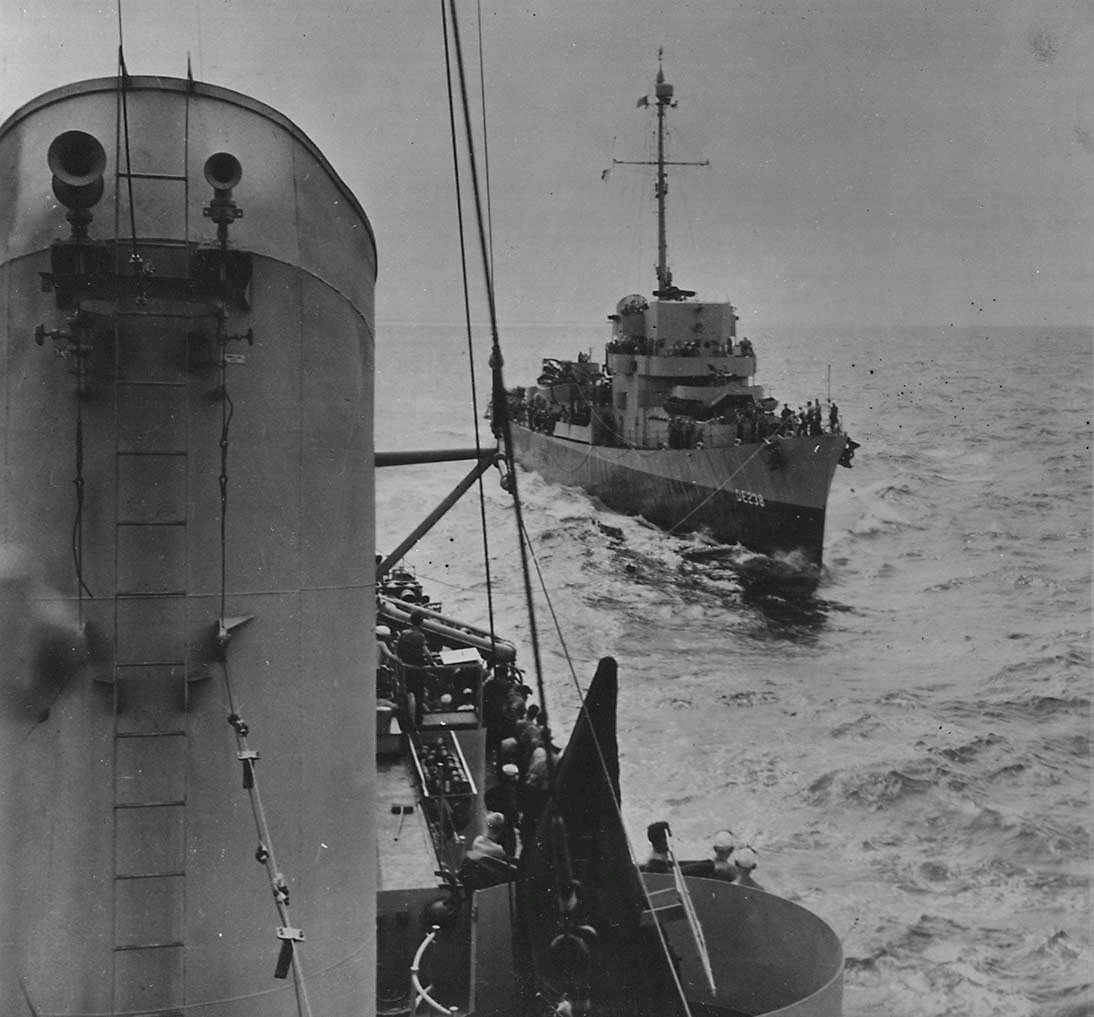
January 1944: USS Stewart approaches Jacob Jones (DE 130) to deliver mail. Stewart reports in her War Diary: "operating directly
under COTCLant (CTF 23) in Hampton Roads and Lower Chesapeake Bay training prospective Destroyer Escort Crews, returning to N.O.B. Norfolk every night."
(U.S. Navy Photo #80-G-44444 from the United States National Archives)
| Tracy White
Seattle, Wash. |
0623804 |
289k |
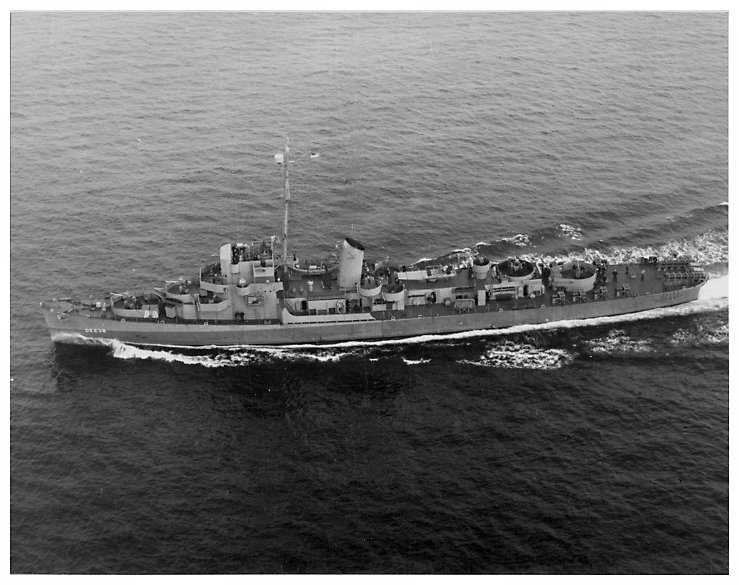
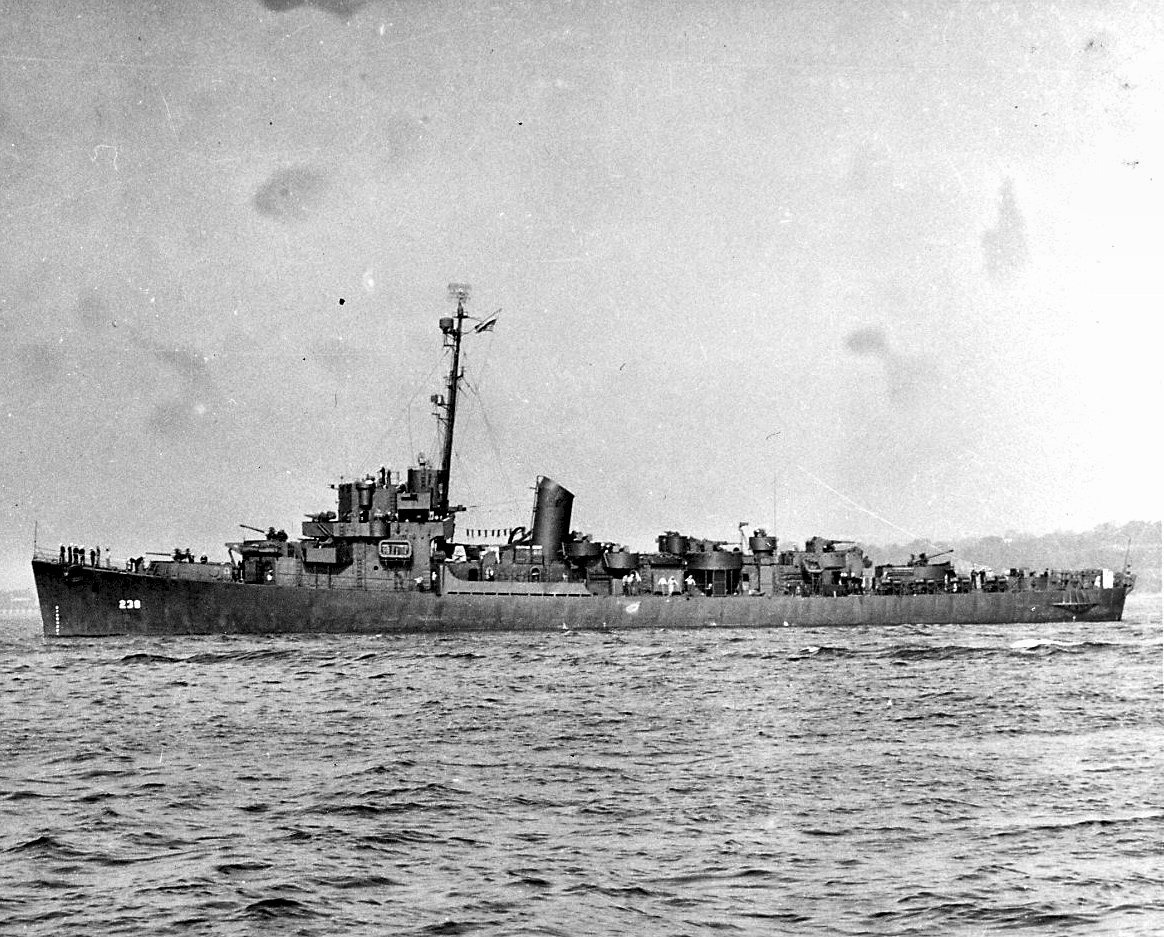
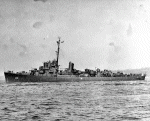
22 June 1945: New York, N.Y. - USS Stewart (DE 238) in New York Harbor.
(U.S. Navy Photo #19-N-89448 from the United States National Archives)
| Mike Green
Port Angeles, Wash. |
0623810 |
226k |
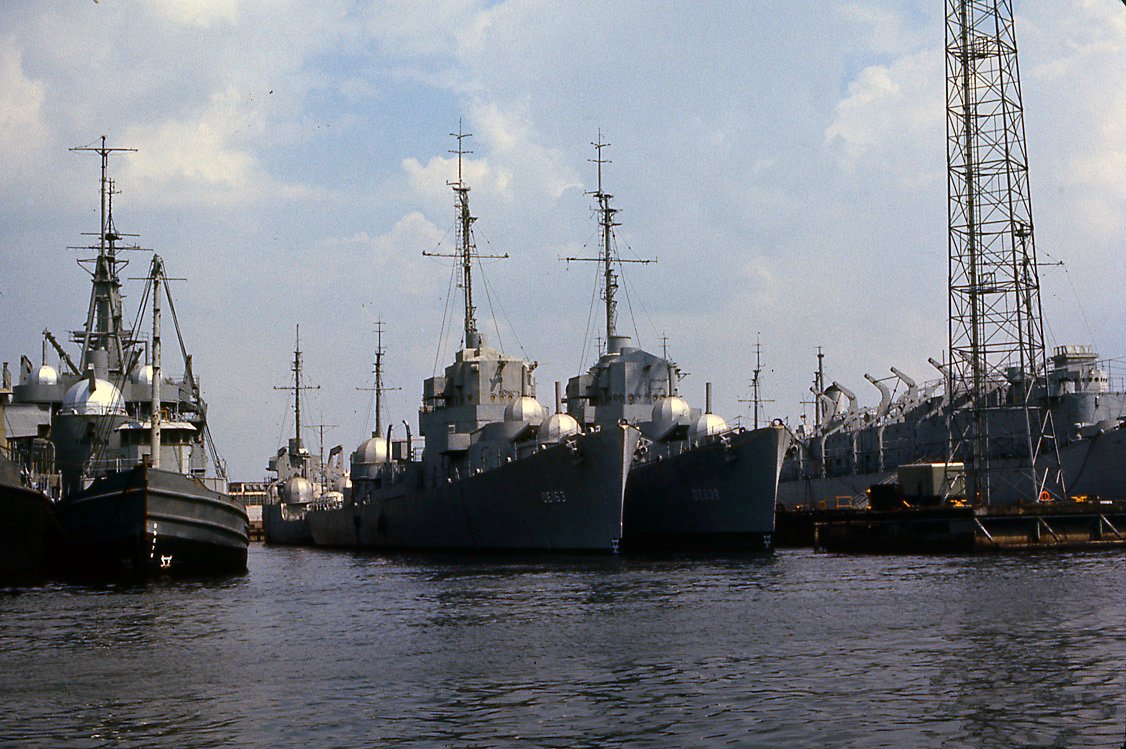
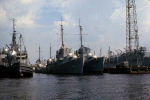
September 1960: Green Cove Springs, Fla. - USS McConnell and USS Stewart laid up in reserve at the U.S. Navy's Atlantic Reserve Fleet,
Naval Station, Green Cove Springs. |
John Chiquoine
West Chester, Pa. |
Stewart's Commanding Officers
Thanks to Wolfgang Hechler & Ron Reeves |
| Dates of Command |
Commanding Officers |
| 1.) 31 May 1943 - 18 Jan. 1944 | Lcdr. Blaney Calatis Turner, USNR (Comm. CO) (Cleveland, Oh.) |
| 2.) 31 Jan. 1944 - 01 Oct. 1945 | Cmdr. Alvin Chesley Wilson Jr., USNR (Homeland, Md.) |
| 3.) 01 Dec. 1945 - 28 Dec. 1945 | Lt. Everett Terry Shahan, USNR (Lipscomb, Tex.) |
| 4.) 28 Dec. 1945 - 13 Feb. 1946 | Lt. Jerry P. Simmons, USNR (Miami, Fla.) |
| 5.) 13 Feb. 1946 - 27 Mar. 1946 | Lt.(jg) Richard H. Dennis, USNR (Decomm. CO) |
Crew Contact And Reunion Information
Contact Name: Charles H. Sprague, Jr.
Address: 1807 Firwood Drive
City/State: Pasadena TX 77502
E-mail: de238@ev1.net
Note About Contacts
Contact information is compiled from various sources over a period of time and may, or may not, be correct. Every effort has been
made to list the newest contact. However, our entry
is only as good as the latest information that's been sent to us. We list only
a contact for the ship if one has been sent to us. We do NOT have crew lists, rosters, or deck logs
available. Please see the
Frequently Asked Questions section on NavSource's Main Page for that information.
Additional Resources
Galveston Naval Museum
Virtual Museum Tour
Tin Can Sailors
The U.S. Navy Memorial
The Destroyer Escort Historical Museum
The Destroyer History Foundation
Comments, Suggestions, E-mail: Webmaster.
This Page Created And Maintained By Mike Smolinski

by Paul R. Yarnall, All Rights Reserved.
Page Last Updated: 15 September 2024
|