0670101
|
36k |
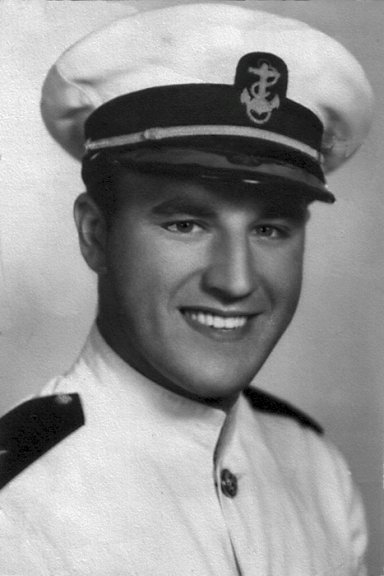
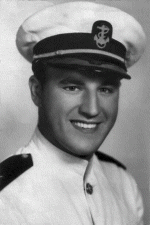
Wesley Frank Osmus was born on 02 September 1918 in Chicago, Illinois. He attended the University of Illinois, and later enlisted in the U.S. Naval Reserve at the U.S. Naval
Reserve Aviation Base, Chicago (Glenview), on 26 March 1940 as a seaman 2d class. He reported for elimination flight training at Glenview on 14 April. Upon completion of that period of
instruction, he was released from active duty on 14 May, issued a discharge on 03 September 1940, and accepted an appointment as an aviation cadet the following day. Reporting to the Naval
Air Station at Pensacola, Florida, on 09 September 1940, for flight training, he later transferred to NAS Miami, Florida, for further instruction, on 12 March 1941, reporting for duty
two days later. He received the designation as naval aviator on 25 March. Orders directed him to the Fleet Air Detachment, San Diego, California, for further flight training and he accepted his
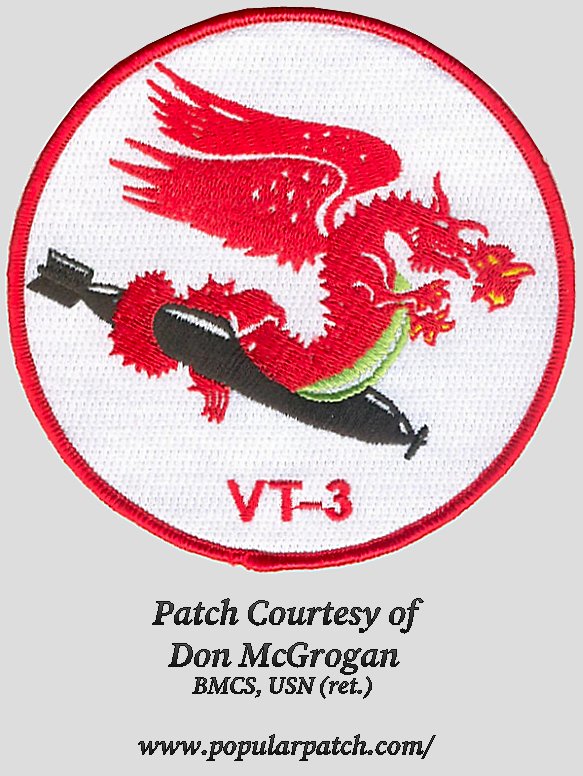
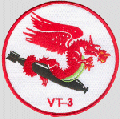
appointment as ensign, USNR, on 22 April. He reported to Torpedo Squadron (VT) 3, a unit of the Saratoga (CV 3) Air Group, on 15 August 1941.
Torpedo Three carried out its training through the autumn of 1941. The Japanese attack on the U.S. Pacific Fleet at Pearl Harbor on 07 December 1941 found Saratoga at San Diego,
following her refit at Puget Sound. She sailed for Hawaiian waters and over the next few weeks operated from Pearl, initially to cover a portion of the abortive attempt to relieve Wake Island
in December 1941. Saratoga’s torpedoing by Japanese submarine I-6 on 11 January 1942, however, meant sending her air group ashore to serve as a pool for the other carriers. Torpedo
Three came to be based at NAS Kaneohe Bay, whence they flew out to Yorktown (CV 5) on 30 May 1942 as the ship headed out to a point northeast of Midway Island in Task Force 17. On
the morning of 04 June 1942, with definite word of the position of the Japanese carrier striking force (Kido Butai) having been received, Yorktown launched her striking group. VT-3,
screened by fighters from Fighting Squadron (VF) 3 and accompanied by Bombing Squadron (VB) 3, encountered Japanese Zero fighters that soon engaged the outnumbered VF-3 in desperate dogfights,
drawing off the American escort. Only two of the 12 Devastators from VT-3 escaped the deadly melee, both ultimately ditching en route to friendly flight decks. Piloting the last plane in VT-3’s
formation, Osmus was shot down during the run-in toward the Japanese fleet. While he managed to bail out of his burning Devastator, his radio-gunner, ARM3c Benjamin R. Dodson, either already dead
or unable to do so, did not. Osmus was awarded a Navy Cross, posthumously.
Post-war research in Japanese records of the Battle of Midway revealed that Osmus was picked up by the destroyer IJN Arashi, which was proceeding independently to rejoin the Kido
Butai after an unsuccessful hunt for a U.S. submarine. Arashi soon arrived to find three of the force’s four carriers burning and out of action. Subjecting the injured young pilot
to torture yielded information concerning the composition of the U.S. carrier task groups at Midway, but it availed the enemy little, for by the end of the day the last operational Japanese carrier
had been disabled and the outcome of battle decided. Sometime later, most likely on the night of 04 June, Osmus was murdered by his captors. It seemed to be a fairly common practice of Japanese ship
captains to tie weights to their bound prisoners and throw them overboard.
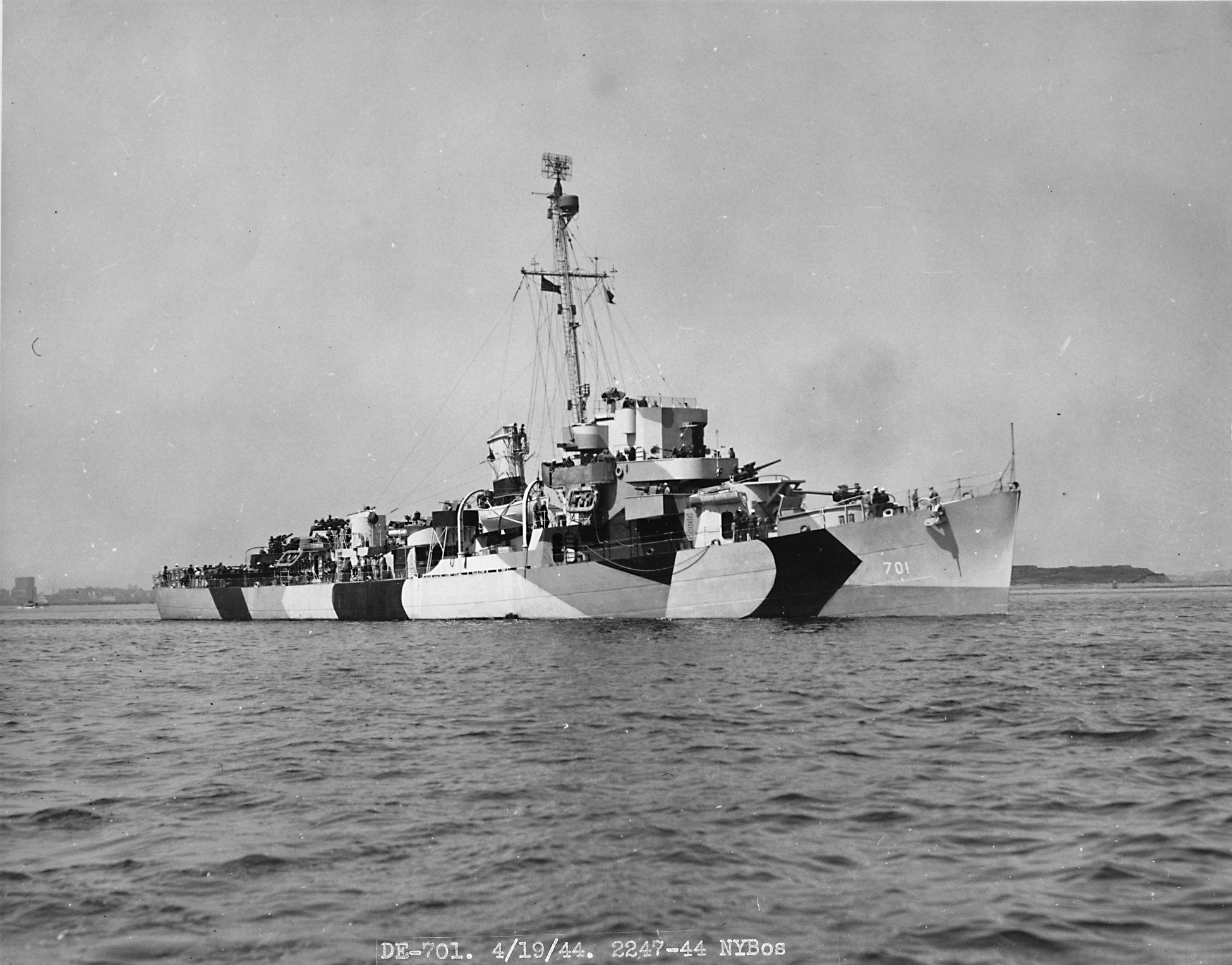
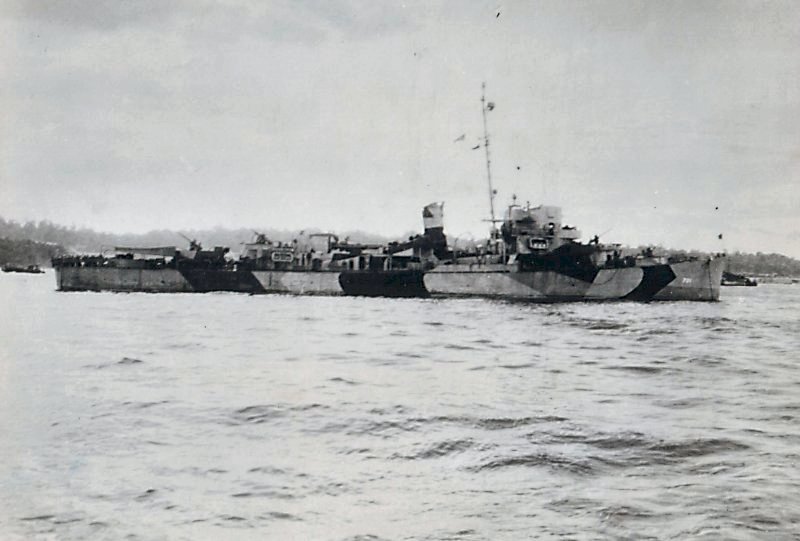
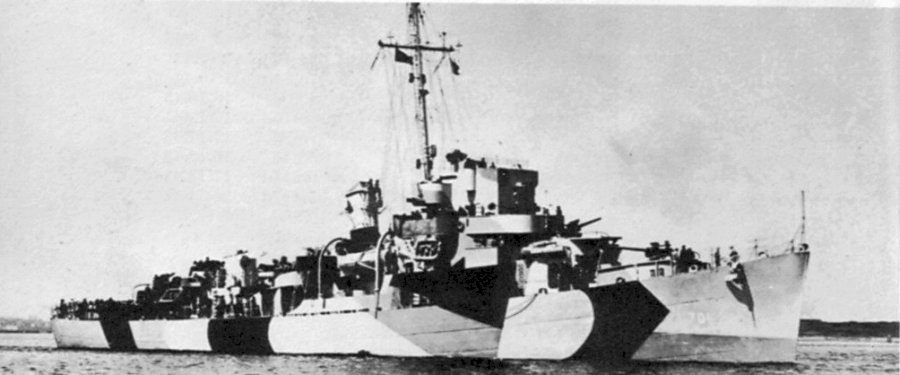
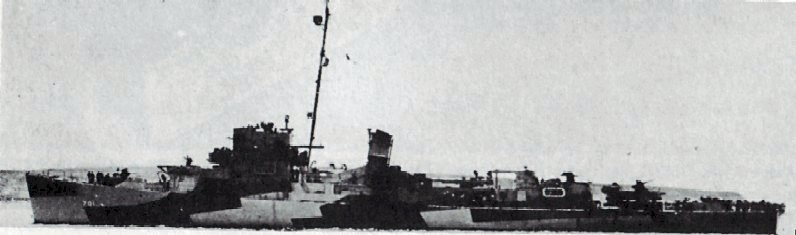
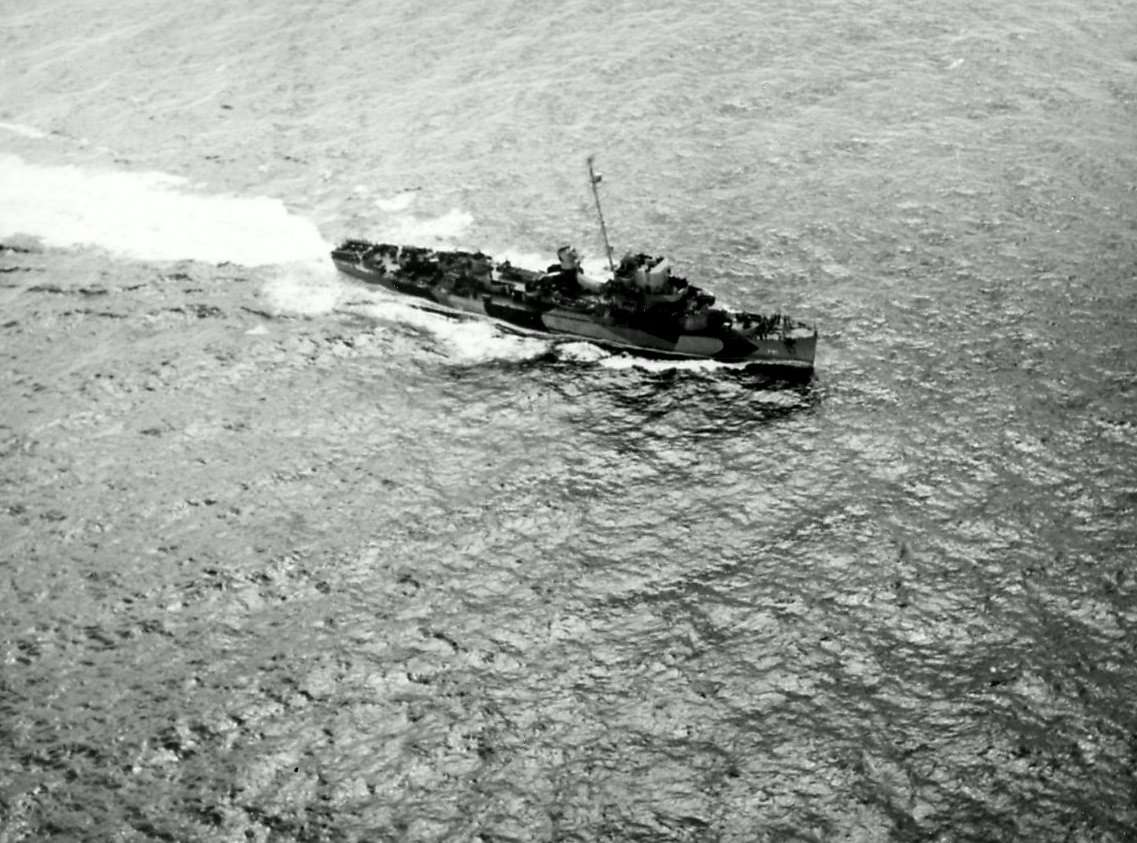
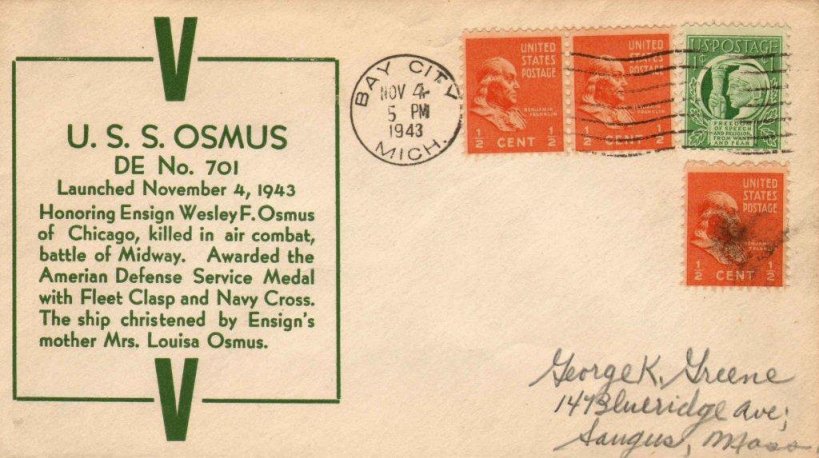
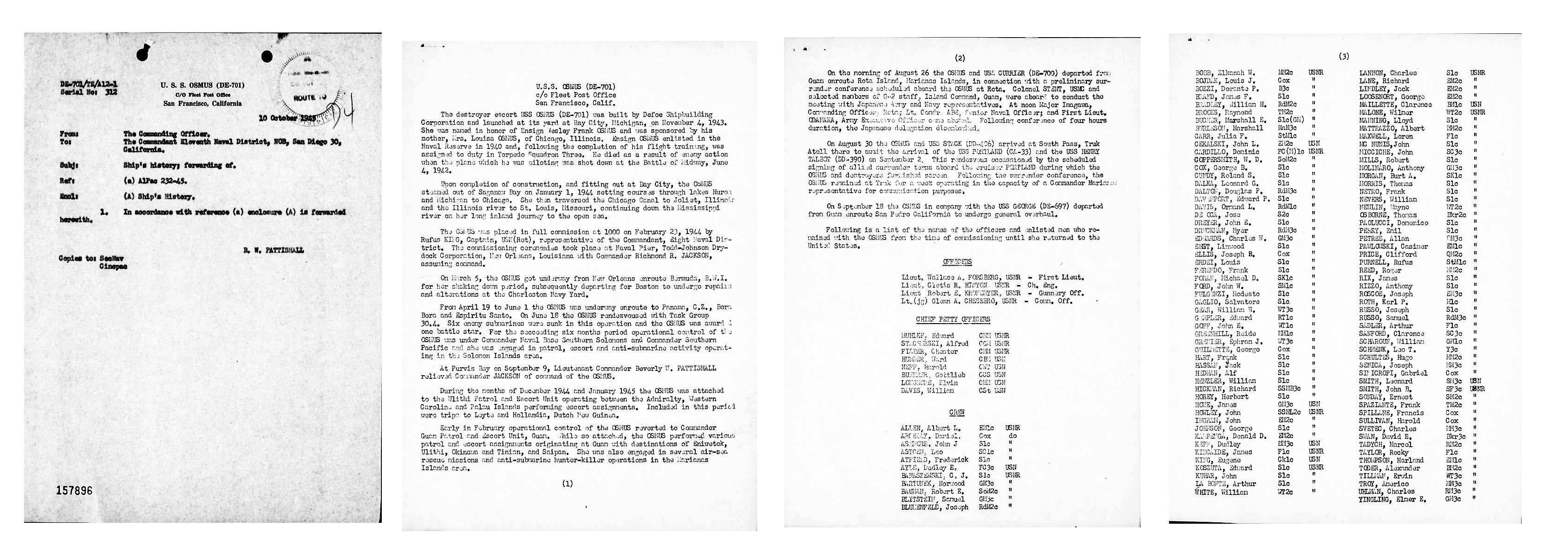
USS Osmus (DE 701) (1944-1947) was the first ship to be named in his honor.
(Photo Courtesy of the University of Illinois thanks to Eileen Goodchild - Veterans’ Memorial Biographer) |
Bill Gonyo
Downey, Cal.
Assoc. Researcher
Navsource |