NavSource Online: Submarine Photo Archive
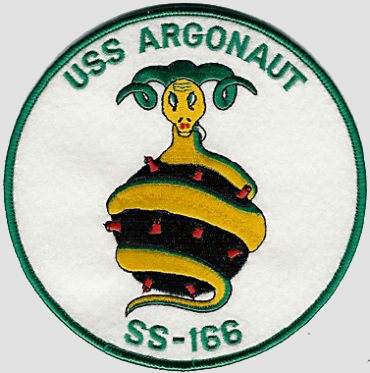
Contributed by Mike Smolinski
V-4 (SF-7)
Argonaut (SM-1 / APS-1 / SS-166)



| Click On Image For Full Size | Size | Image Description | Source | |
|---|---|---|---|---|
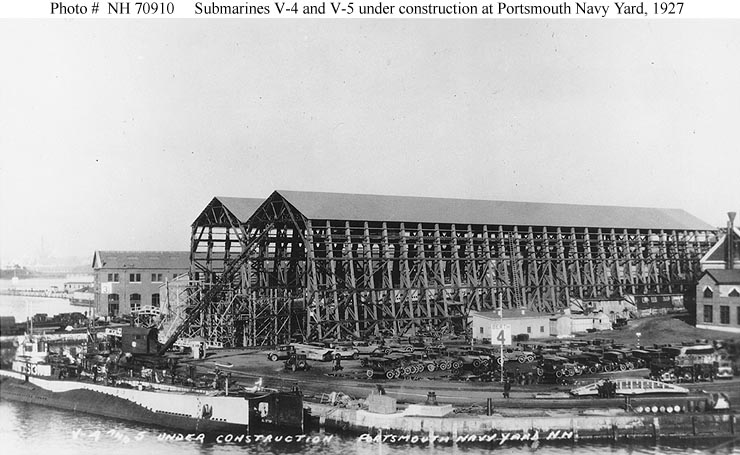 |
82k | Portsmouth Navy Yard, Kittery, Maine. Waterfront and covered shipways, circa summer-fall 1927.V-4 (SF-7) and V-5 (SC-1) are under construction in inside shipways building.V-4 (later renamed Argonaut) is on the nearer way and appears to be nearly ready for her launching, which took place on 10 November 1927. V-5 (later renamed Narwhal) is in a much earlier stage of construction, having been laid down on 10 May 1927. S-13 (SS-118) and another "S"-type submarine are alongside the waterfront, at left. Note automobiles parked in the center and right. | USNHC photograph # NH 70910. Courtesy of Lieutenant Gustave Freret, USN (Retired), 1970. | |
 |
267k | Four photo PDF Launching Program for the V-4 (SF-7) at Portsmouth Navy Yard, Kittery, Maine on 10 November 1927. | Photos by Leslie R. Jones, Boston Herald-Traveler, courtesy of Ron Reeves (of blessed memory). | |
 | 333k | 2 photo PDF Compartment Access Plans. | National Archives Identifier: 70646224 Photo courtesy of catalog.archives.gov | |
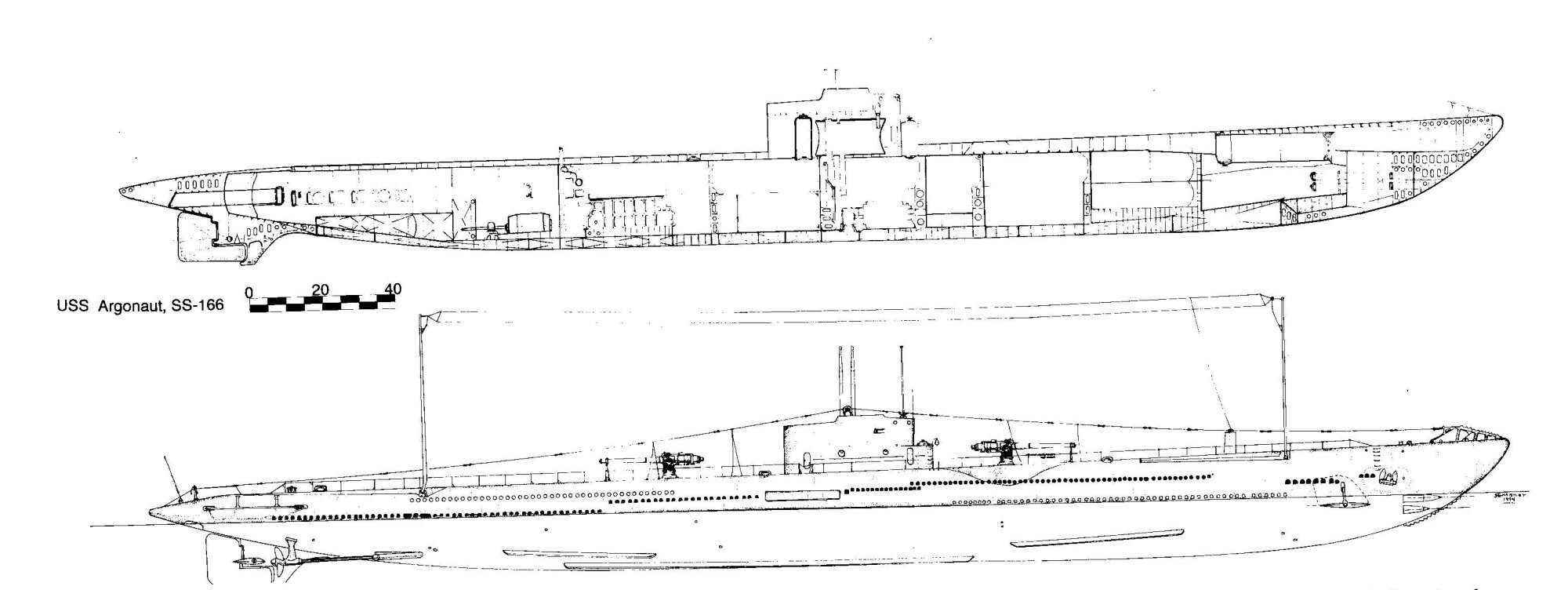 | 113k | V-4 (SF-7) was built specifically as a mine-layer. Her special mine stowage tube, compensating tank, and mine-laying tube are visible aft in the inboard view. As a long-range cruiser, she had special habitability features: just abaft the torpedo room forward was a large crew's mess, with refrigerated stowage below it. Abaft those spaces were officer's quarters above a 6-in magazine. Below the control room (directly below the conning tower) were pumps and forward (battery charging) engine rooms. Abaft them were CPO quarters and the maneuvering room above the after battery and the after 6-in magazine. Mines were stowed above and abaft the motors. The space above the torpedo room was a windlass room. This was the first U.S. submarine design to have a horizontal cylindrical conning tower. This type later became standard. | Drawing by Jim Christley. Text courtesy of U.S. Submarines Through 1945, An Illustrated Design History by Norman Friedman. Naval Institute Press. |
|
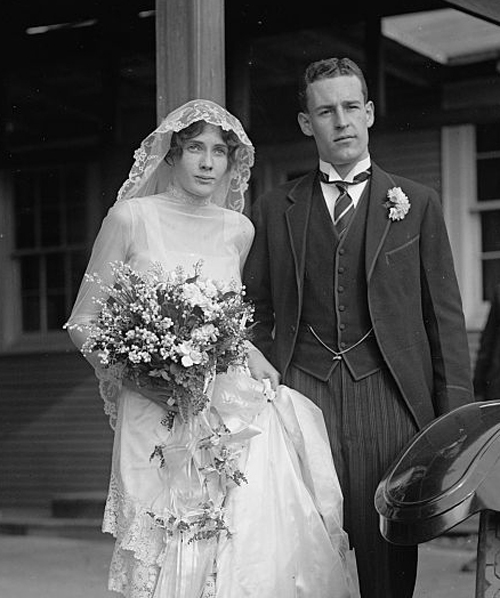 | 166k | Zilla MacDougall, the daughter of Admiral William D. MacDougall on her wedding day with Philip Mason Sears, 3 years before she would sponsor the V-4 (SS-166) on 10 November 1927. | Photo courtesy of wikipedia.org | |
 | 226k | Two page PDF Launching Program of V-4 (SF-7) on 10 November 1927. | Photo courtesy of Tommy Trampp. | |
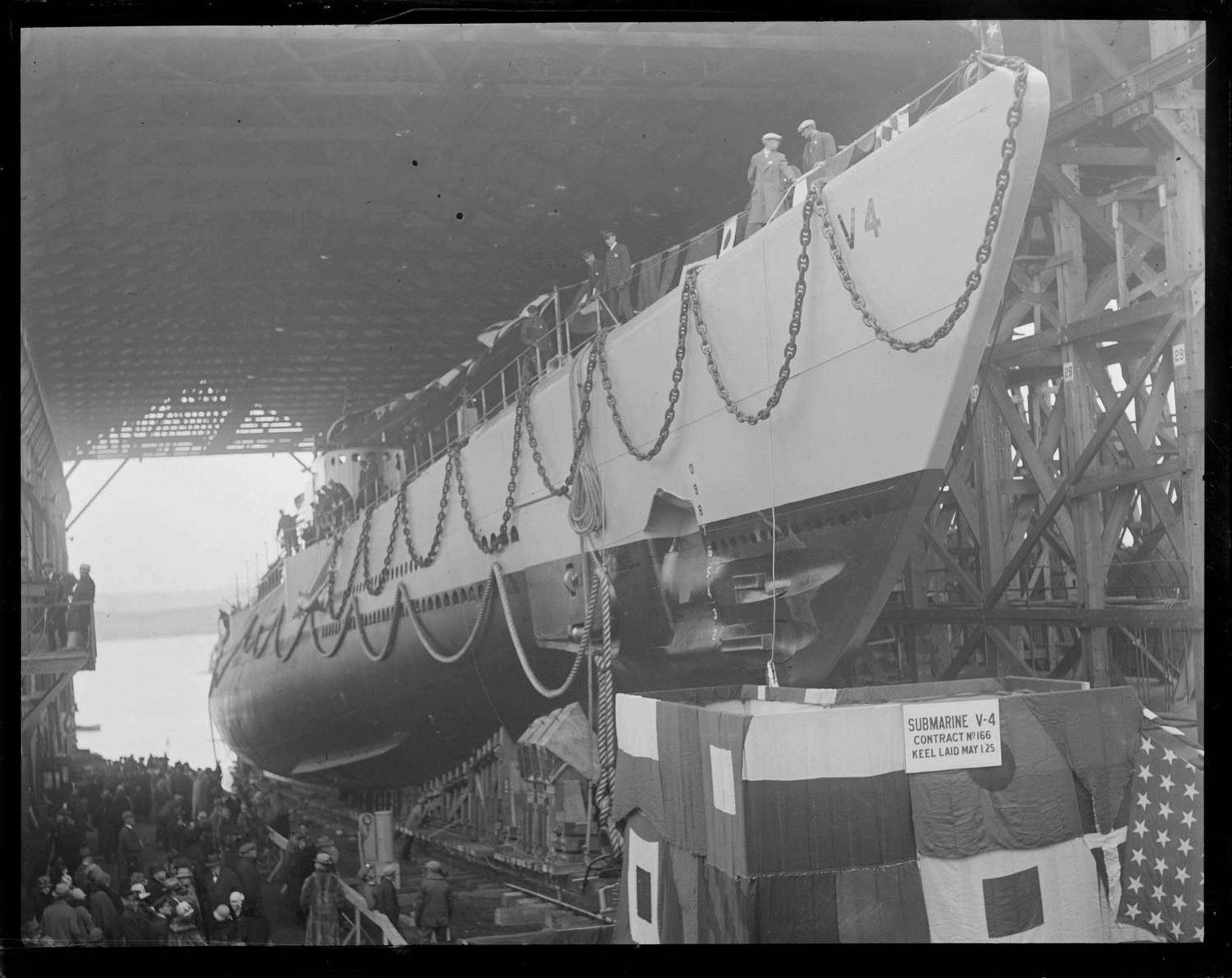 |
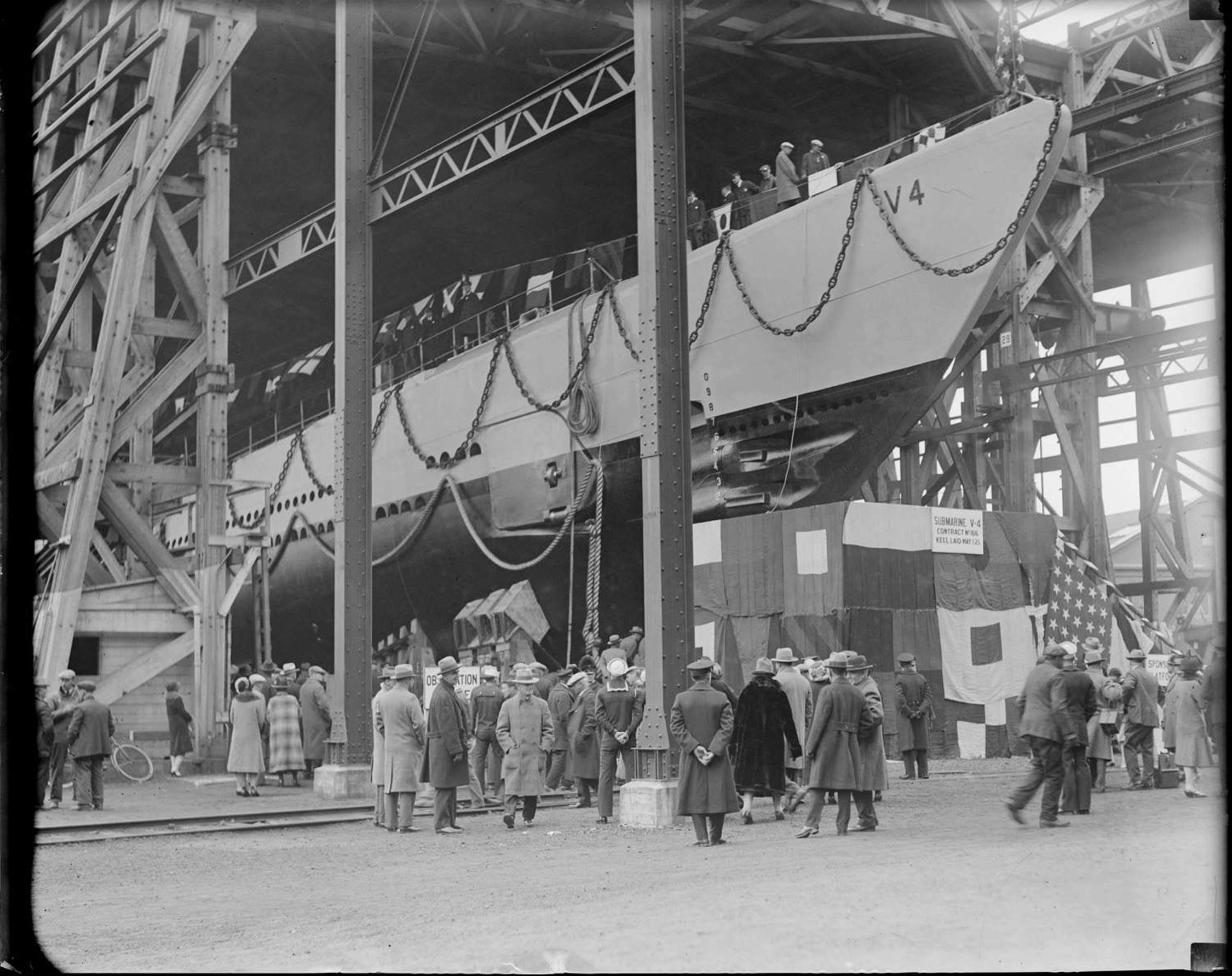
263k | Largest sub, the V-4 (SS-166) soon to be launched in Portsmouth, N.H. | Photo courtesy of the Boston Public Library, Leslie Jones Collection via Sean Hert & flickr.com. | |
 | 117k | V-4 (SF-7) just before launching, at the Portsmouth Navy Yard, Kittery, Maine, on 10 November 1927. This view, taken from off the submarine's starboard quarter, shows the twin mine-launching tubes fitted to her stern, just below the waterline. | USNHC photograph # NH 69136. Courtesy of the San Francisco Maritime Museum, San Francisco, California, 1969. | |
 0816659 |
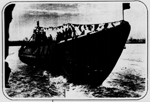
NR | Uncle Sam launches the wor1d's largest submarine. The V-4 (SF-7) just after sliding from the ways at Portsmouth, N. H. The big submersible is the first mine-laying submarine built for the American Navy. |
Underwood & Underwood photo. Image and text provided by Library of Congress, Washington, DC. Photo & text by Evening Star. [volume] (Washington, D.C.) 1854-1972, 20 November 1927, Image 107, courtesy of chroniclingamerica.loc.gov. | |
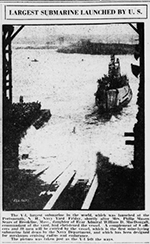 | 347k | LARGEST SUBMARINE LAUNCHED BY U. S. The V-4 (SF-7), largest submarine in the world, which was launched at the Portsmouth. N. H., Navy Yard Friday, shortly after Mrs. Philip Mason Sears of Brookline, Mass., daughter of Rear Admiral William MacDougall, commandant of the yard, had christened the vessel. | Text courtesy of Library of Congress, Washington, DC. Photo from the Evening Star. [volume] (Washington, D.C.) 1854-1972, 13 November 1927, Image 21, via chroniclingamerica.loc.gov. | |
 | 198k | V-4 (SF-7) enters the water stern first at the Portsmouth Navy Yard, New Hampshire, 10 November 1927. | USN photo courtesy of Scott Koen & ussnewyork.com. | |
 0816695 |
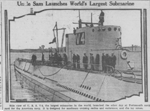
NR | Side view of V-4, the largest submarine in the world, launched the other day at Portsmouth navy yard for the American navy. It is designed for maximum cruising radius and endurance, and can lay mines. | Image and text provided by Montana Historical Society; Helena, MT. Photo & text by The Bozeman Courier. (Bozeman, Mont.) 1919-1954, 02 December 1927, Image 1, courtesy of chroniclingamerica.loc.gov. | |
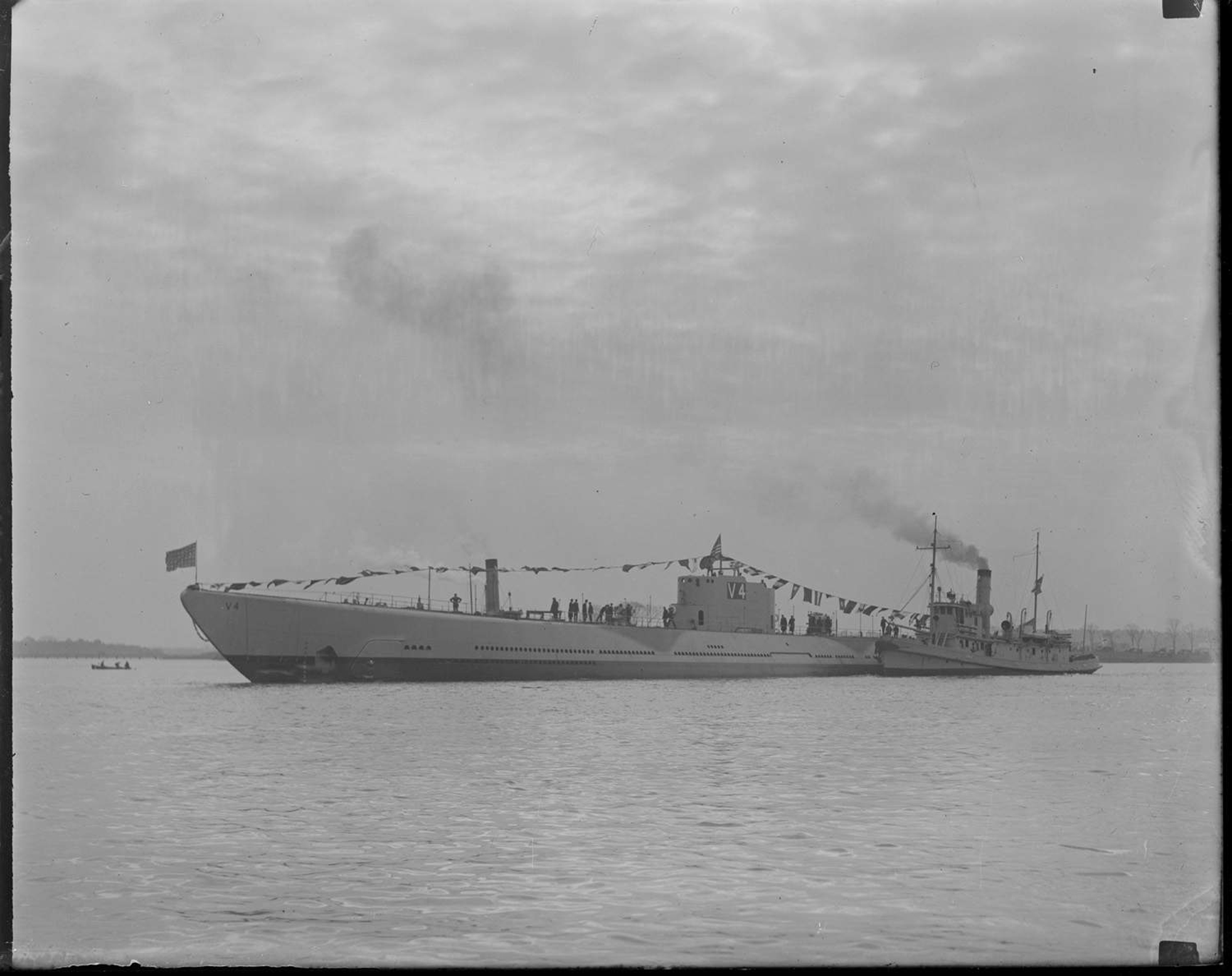 |
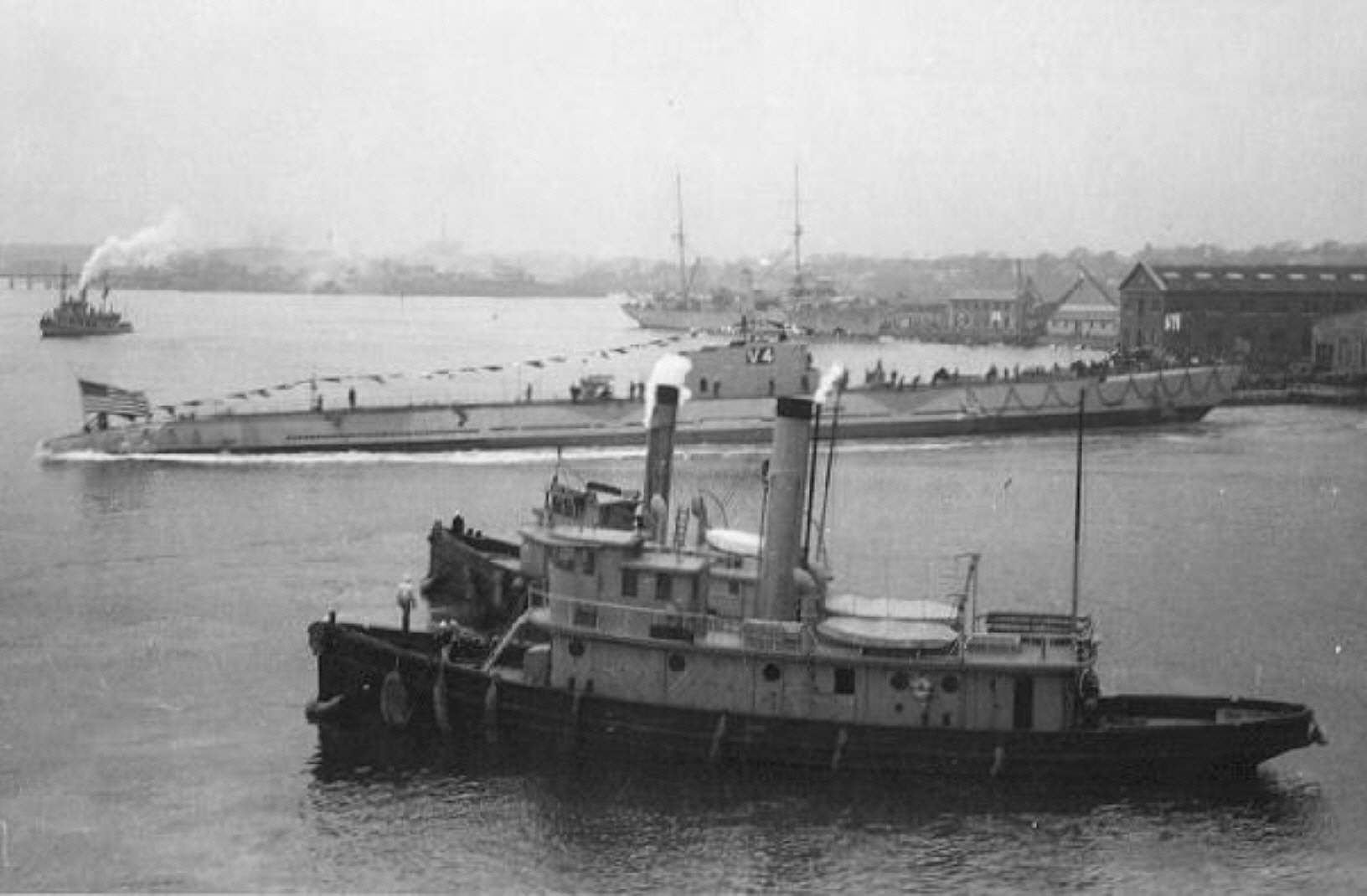
594k | V-4 (SS-166) with a smokestack from her escorting tug rising above her deck after her launching. NAVY PUTS LARGEST SUBMARINE IN COMMISSION Ready for commissioning at Portsmouth, New Hampshire, April 1928" (quoted from the original picture" caption. Though this view might show the ship when ready for commissioning (which took place on 2 April 1928), it is more probable that it shows V-4 (SF-7) immediately after she was launched, at the Portsmouth Navy Yard, on 10 November 1927. | Photo courtesy of the Boston Public Library, Leslie Jones Collection via Sean Hert & flickr.com. Text courtesy of Library of Congress, Washington, DC. Photo from the Evening Star. [volume] (Washington, D.C.) 1854-1972, 02 April 1928, Image 5, via chroniclingamerica.loc.gov. | |
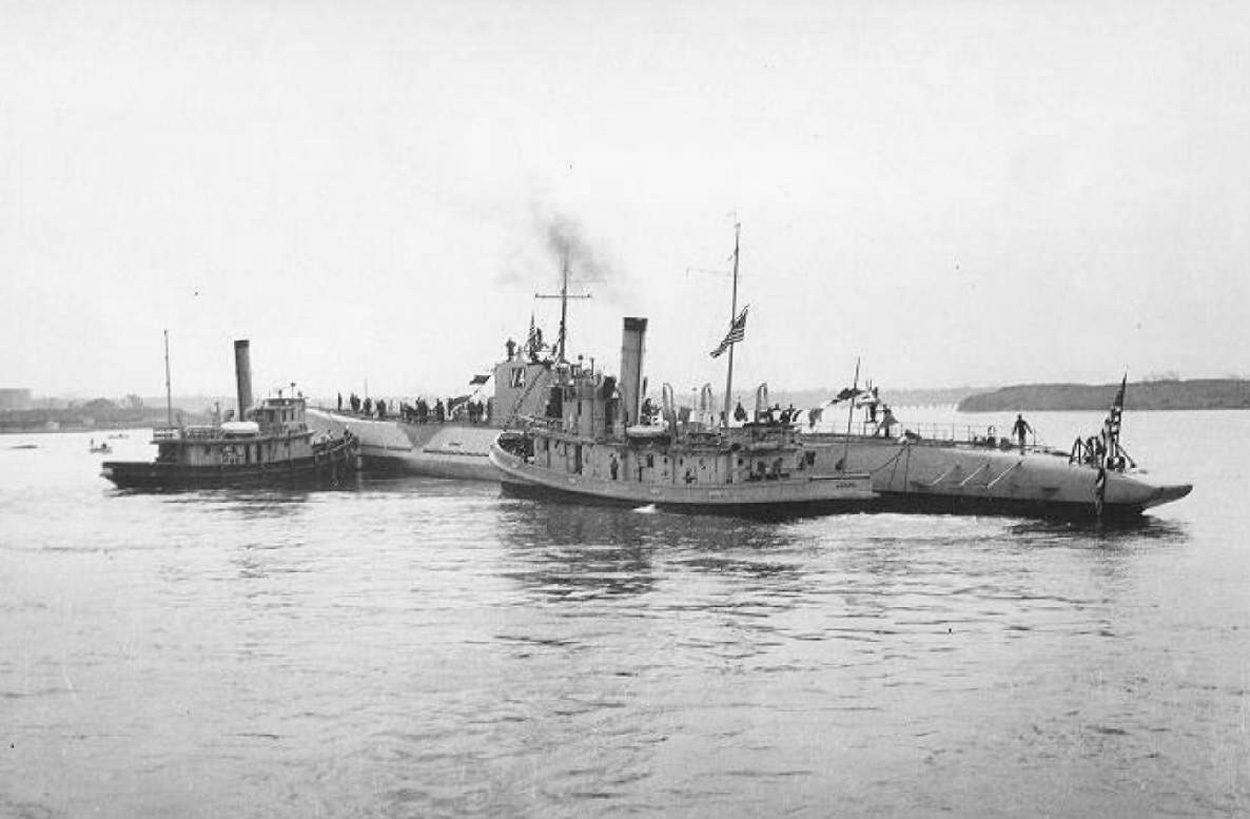 | 198k | Surrounded by tugs to push her dockside, the V-4 (SF-7) will begin her fitting out process over the next five months before her commissioning. | USN photo courtesy of Scott Koen & ussnewyork.com. | |
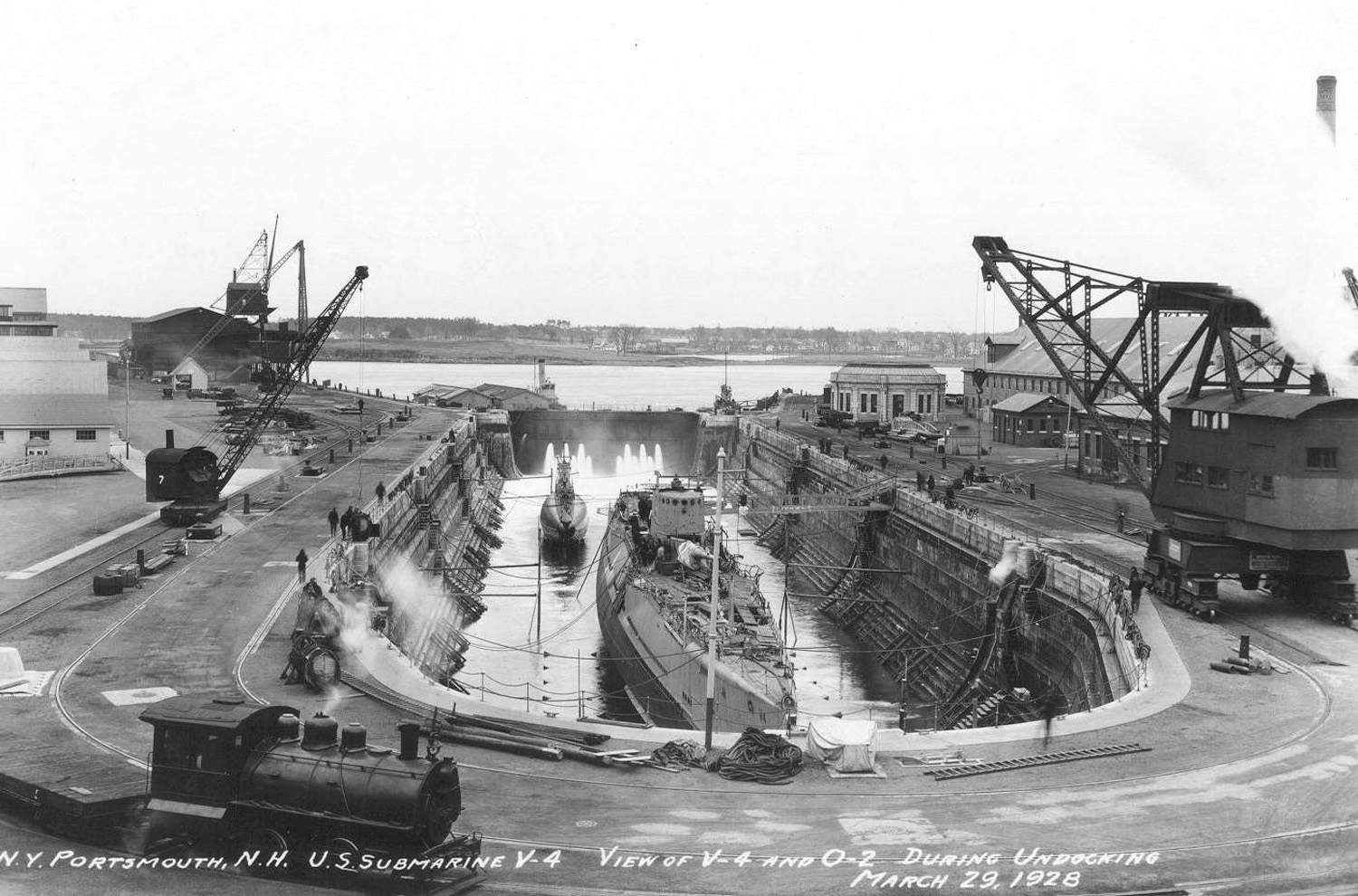 | 173k | The flood gates open for V-4 (SF-7) in dry dock during undocking, 29 March 1928 at Portsmouth Navy Yard. Note how she dwarfs the smaller O-2 (SS-63). | Photo from Conway's All The World's Fighting Ships, 1947-1995, and submitted courtesy of Robert Hurst. | |
 | 213k | V-4 (SF-7) view during undocking, 29 March 1928 at the Portsmouth Navy Yard, New Hampshire. | USN photo courtesy of Scott Koen & ussnewyork.com. | |
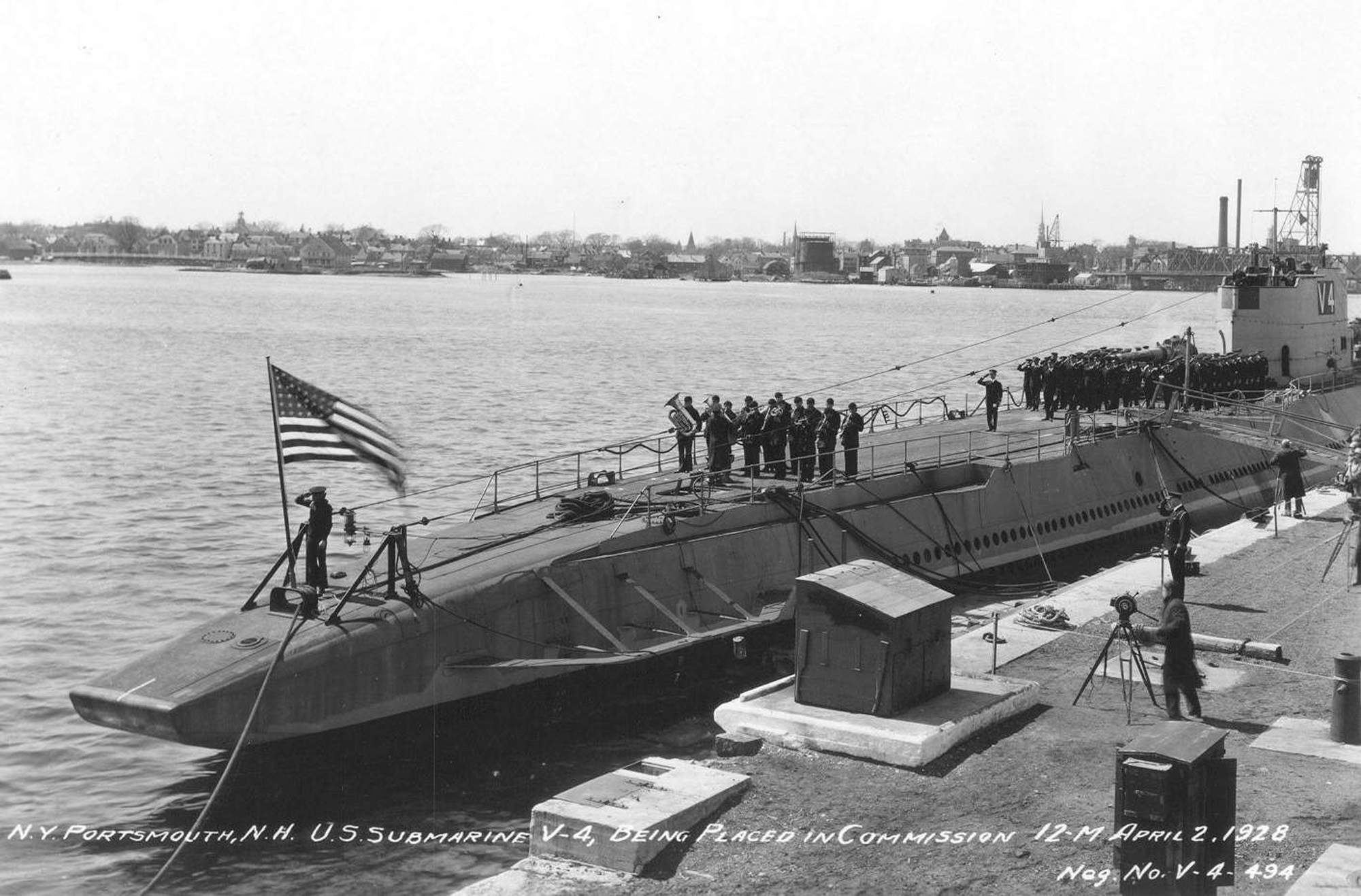 | 256k | RAISING OLD GLORY OVER THE WORLDS LARGEST SUBMARINE. Commissioning of the submarine V-4 (SF-7) at the Portsmouth. N. H., Navy Yard. The seven officers and 89 men of the crew are standing at attention as the colors are unfurled on the giant submersible for the first time. The V-4 is the first mine-laying submarine to be constructed for any navy. Most like being serenaded by the tunes of "Anchors Away" by the band on her stern. | USN photo courtesy of Scott Koen & ussnewyork.com. Text courtesy of Library of Congress, Washington, DC. Photo from the Evening Star. [volume] (Washington, D.C.) 1854-1972, 04 April 1928, Image 17, via chroniclingamerica.loc.gov. | |
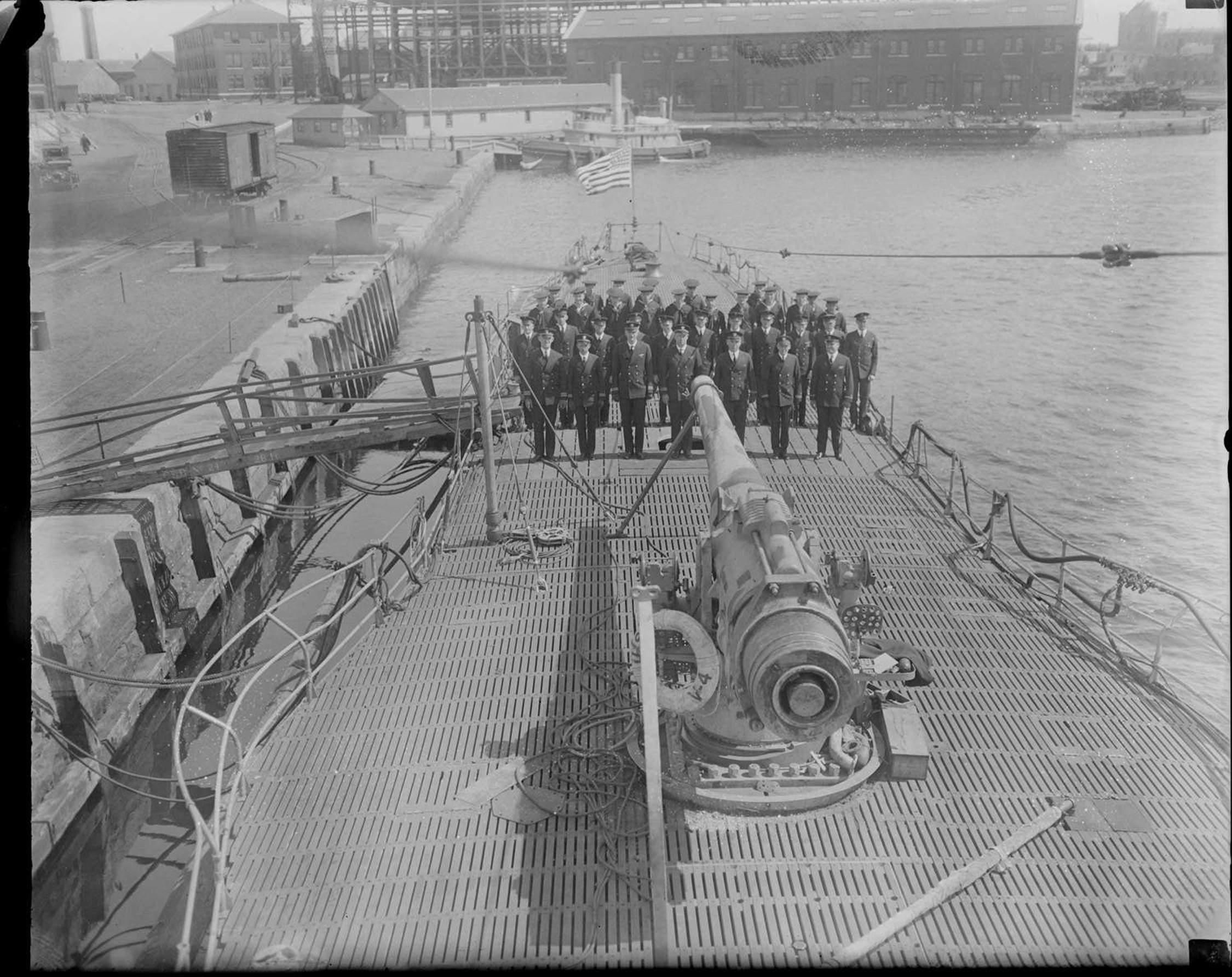 |
400k | Uncle Sam's largest sub commissioned in Portsmouth, N.H. Navy Yard. V-4 (SS-166) is mine laying sub. | Photo courtesy of the Boston Public Library, Leslie Jones Collection via Sean Hert & flickr.com. | |
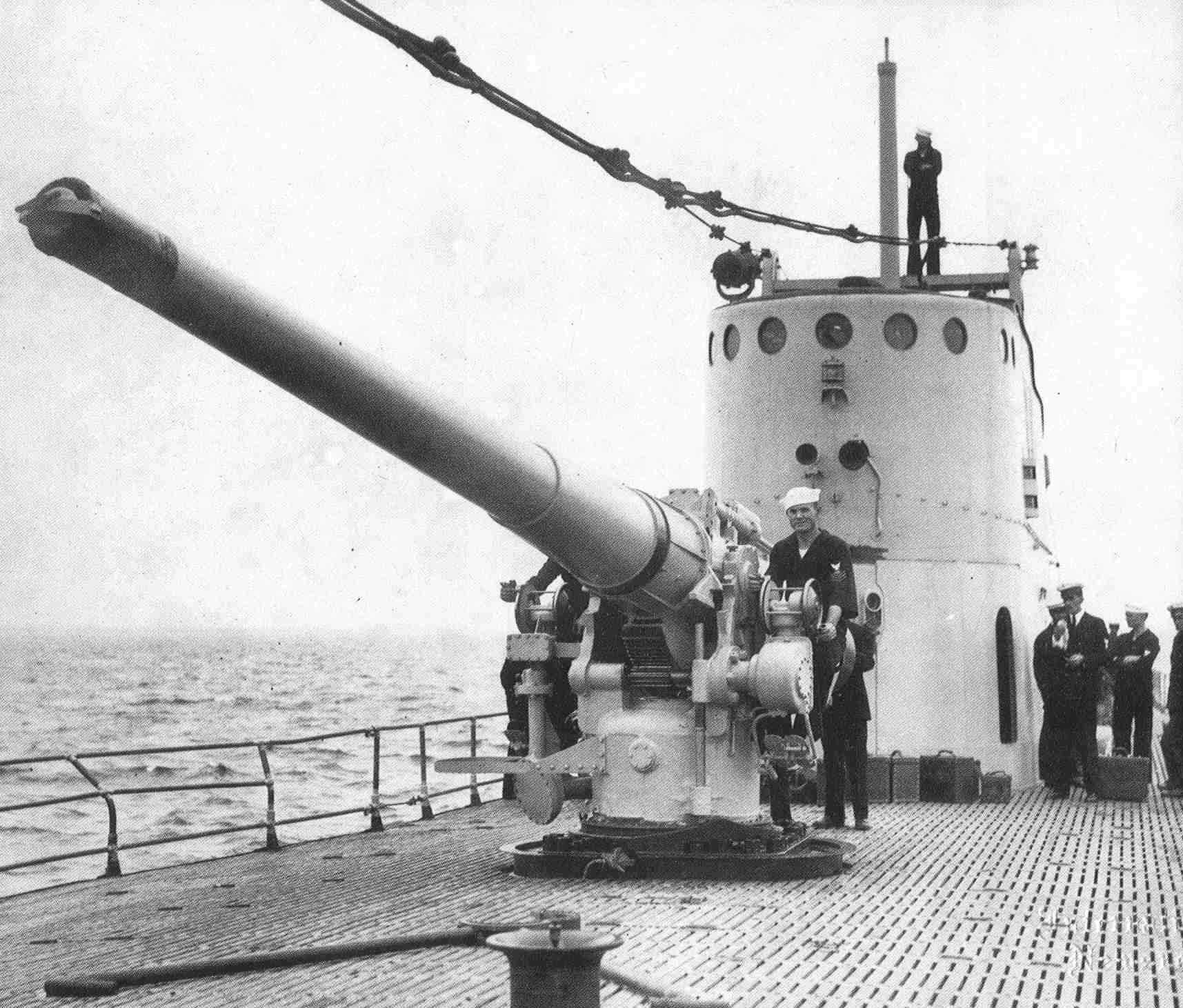 | 320k | V-4 (SF-7) crewman training the submarine's forward 6"/53" deck gun, during shakedown tests off Provincetown, Massachusetts, 21 June 1928. | USN photo courtesy of Scott Koen & ussnewyork.com. | |
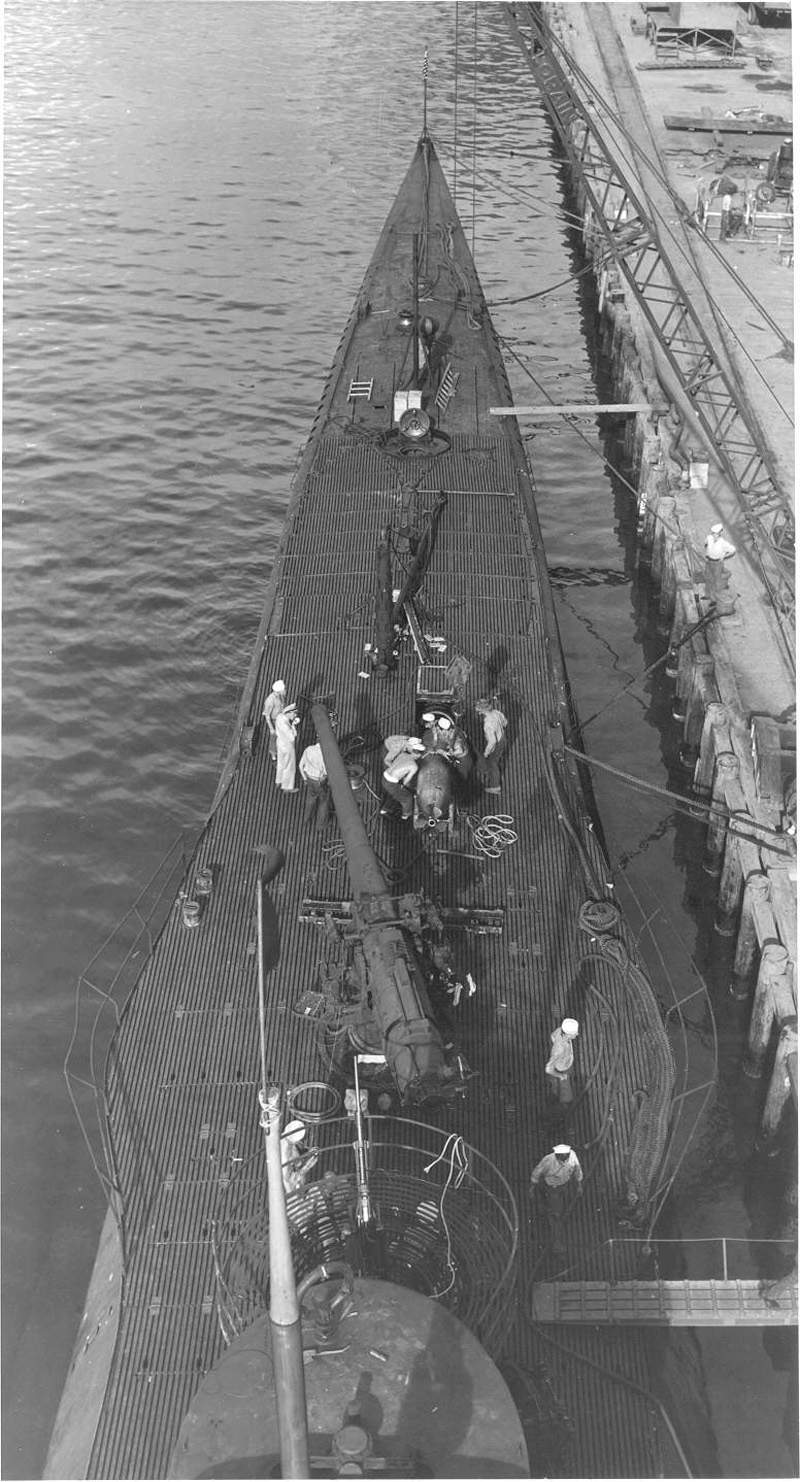 | 159k | Seen from above the forward 6"/53" deck gun of V-4 (SF-7) during shakedown tests off Provincetown, Massachusetts, 21 June 1928. | USN photo courtesy of Scott Koen & ussnewyork.com. | |
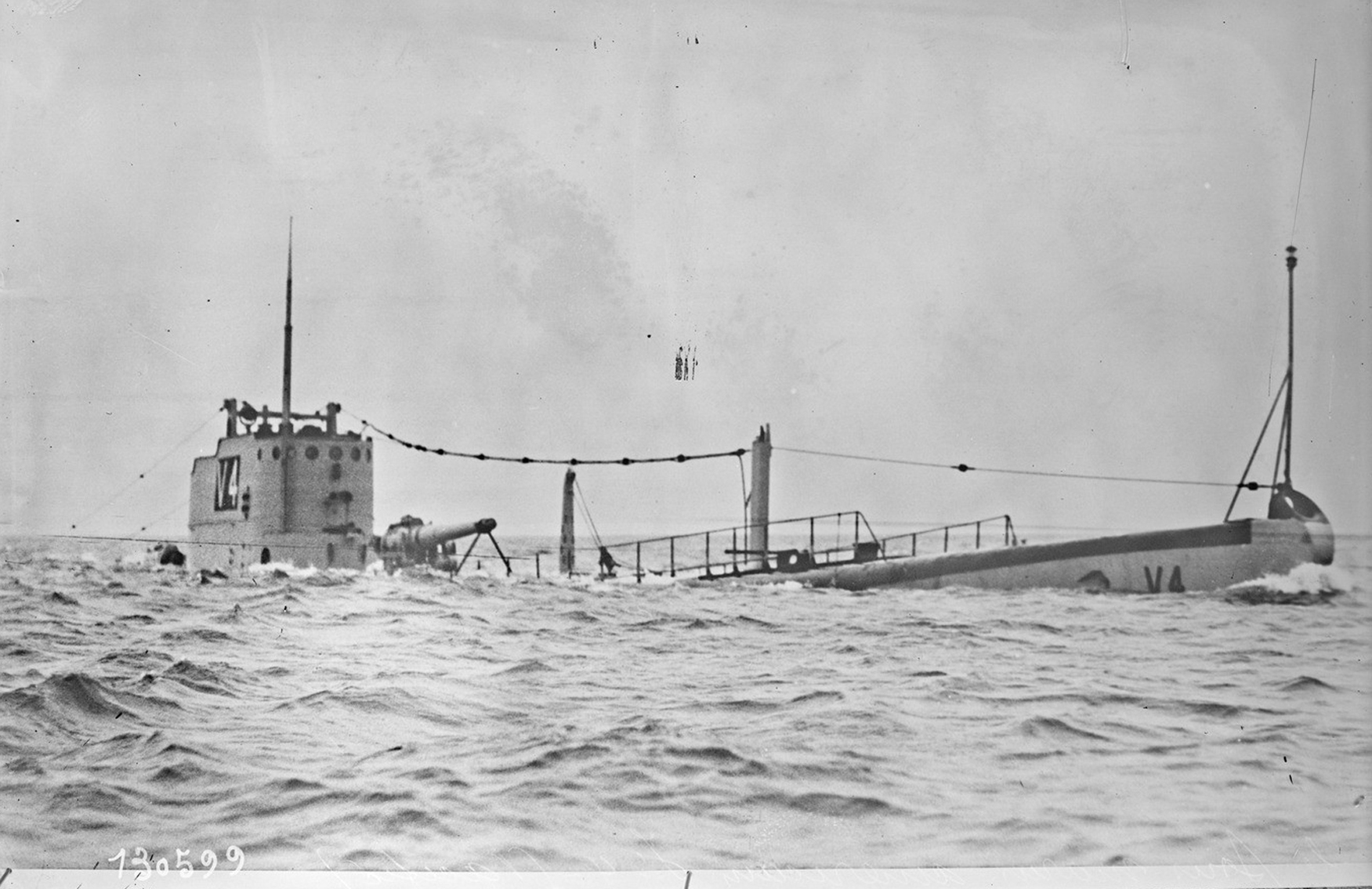 0816610 | 745k | V-4 (SF-7) emerging from a crash dive, while making her shakedown tests off Provincetown, Massachusetts, 21 June 1928. | Photo courtesy of gallica.bnf.fr via Daniel Hacker. | |
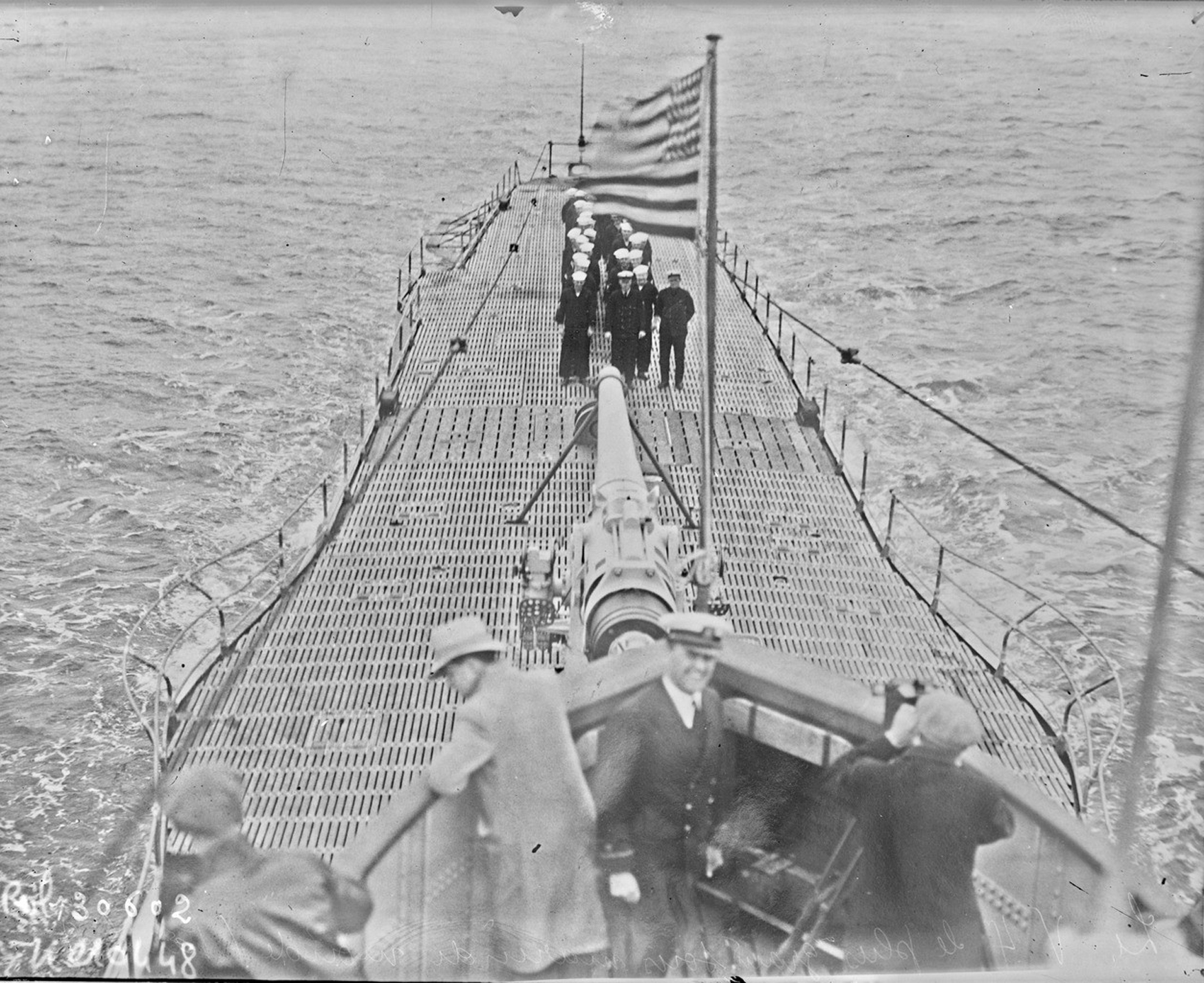 0816628d | 1.20k | Smile for the camera: A few civilians & crew get ready for a photo on V-4 (SF-7) while making her shakedown tests off Provincetown, Massachusetts, 21 June 1928. | Photo courtesy of gallica.bnf.fr via Daniel Hacker. | |
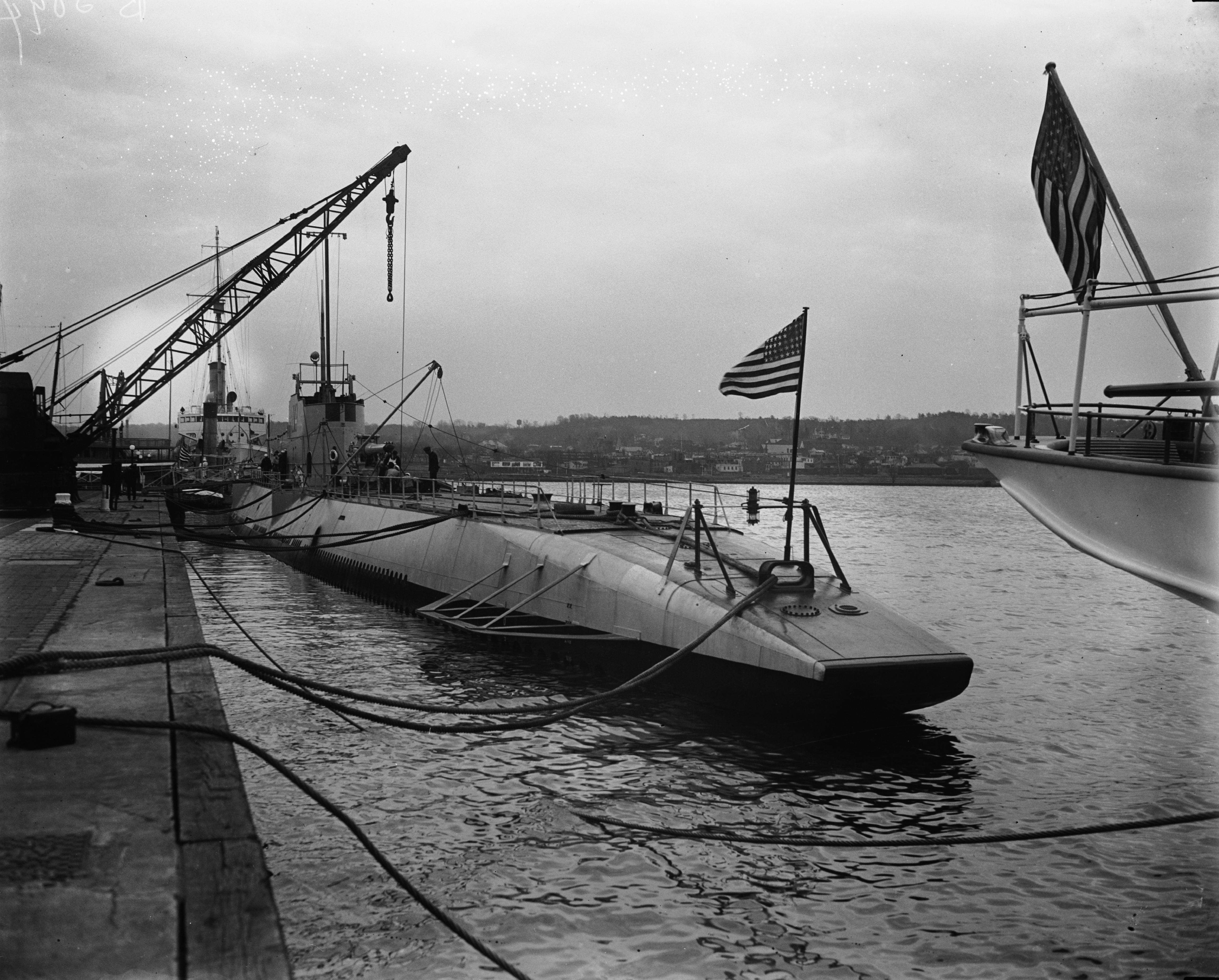 | 1.87k | Uncle Sam's largest submarine arrives at Washington Navy Yard. The fleet submarine V-4 (SF-7), largest, latest and only mine-laying submarine of the United States Navy, as she appeared after docking at the Navy Yard in the National Capital on 20 November 1928. Lieut. Comd. W.M. Quigley is in command of this submarine. | Source: Library of Congress, LC-DIG-hec-35178, courtesy of Mike Green. | |
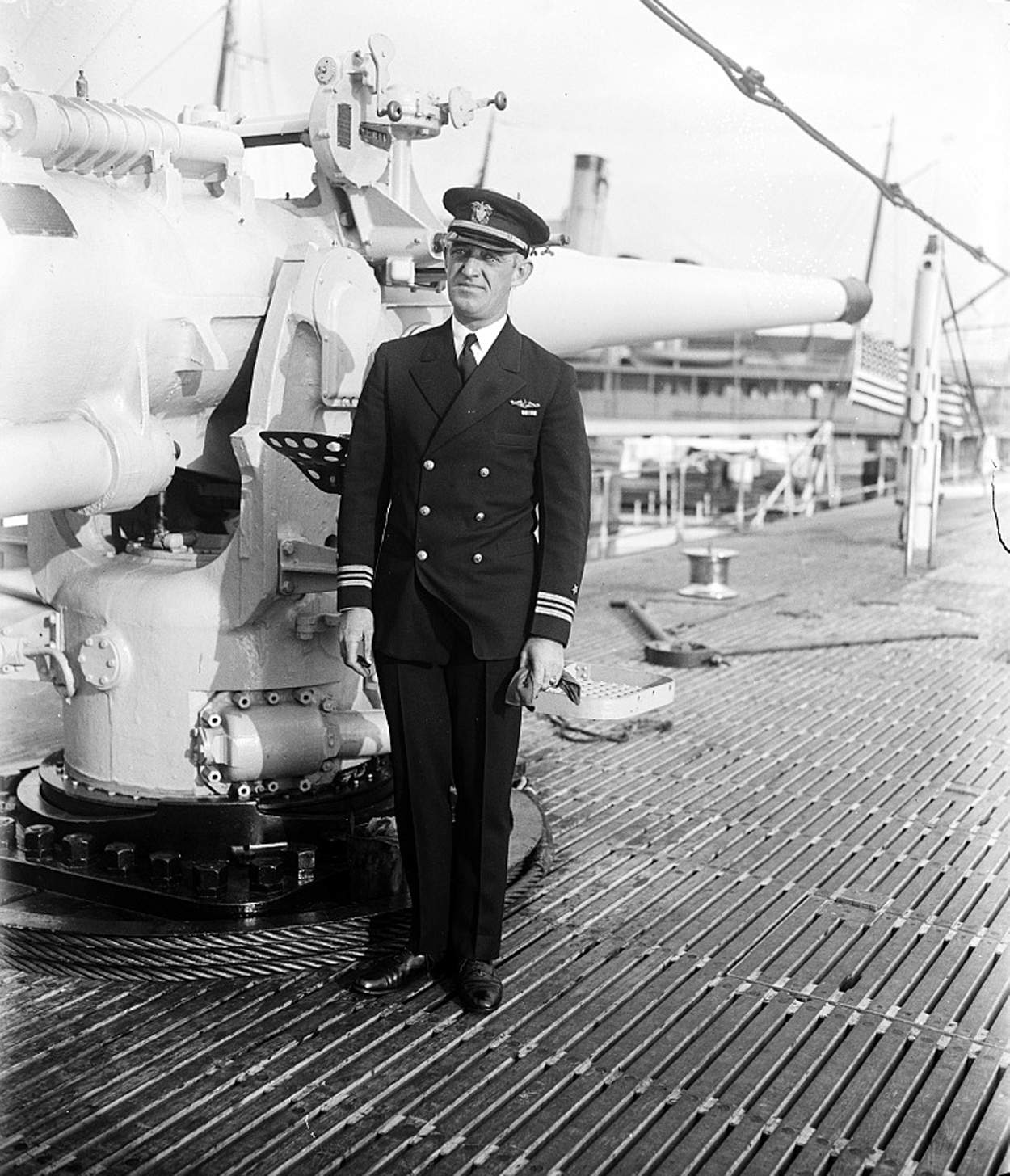 | 929k | Lieut. Comdr. W.M. Quigley, who is in command of the V-4 (SF-7), the largest, latest and only mine-laying submarine of the United States Navy which docked at the Navy Yard in Washington, D.C., on 20 November 1928. | Source: Library of Congress, LC-H2-B-3095, courtesy of Mike Green. | |
 | 365k | V-4 (SF-7) seen here on 1 July 1929 off San Diego. | USN photo # 80-G-20292, from National Archives and Records Administration (NARA), College Park, Maryland, courtesy of Sean Hert. | |
 0816629s |
NR | ALL HANDS SAVED Tests made off San Diego, Cal., reveal Submarine V-4, America's largest undersea boat, was saved in 23 minutes. The craft is equipped with new emergency lungs into which air was pumped from salvage ship Ortolan (AM-45). |
International News reel. Image and text provided by Connecticut State Library, Hartford, CT. Photo & text by New Britain Herald. [volume] [volume] (New Britain, Conn.) 1890-1976, 27 July 1929, FIRST EDITION, Image 14, courtesy of chroniclingamerica.loc.gov. | |
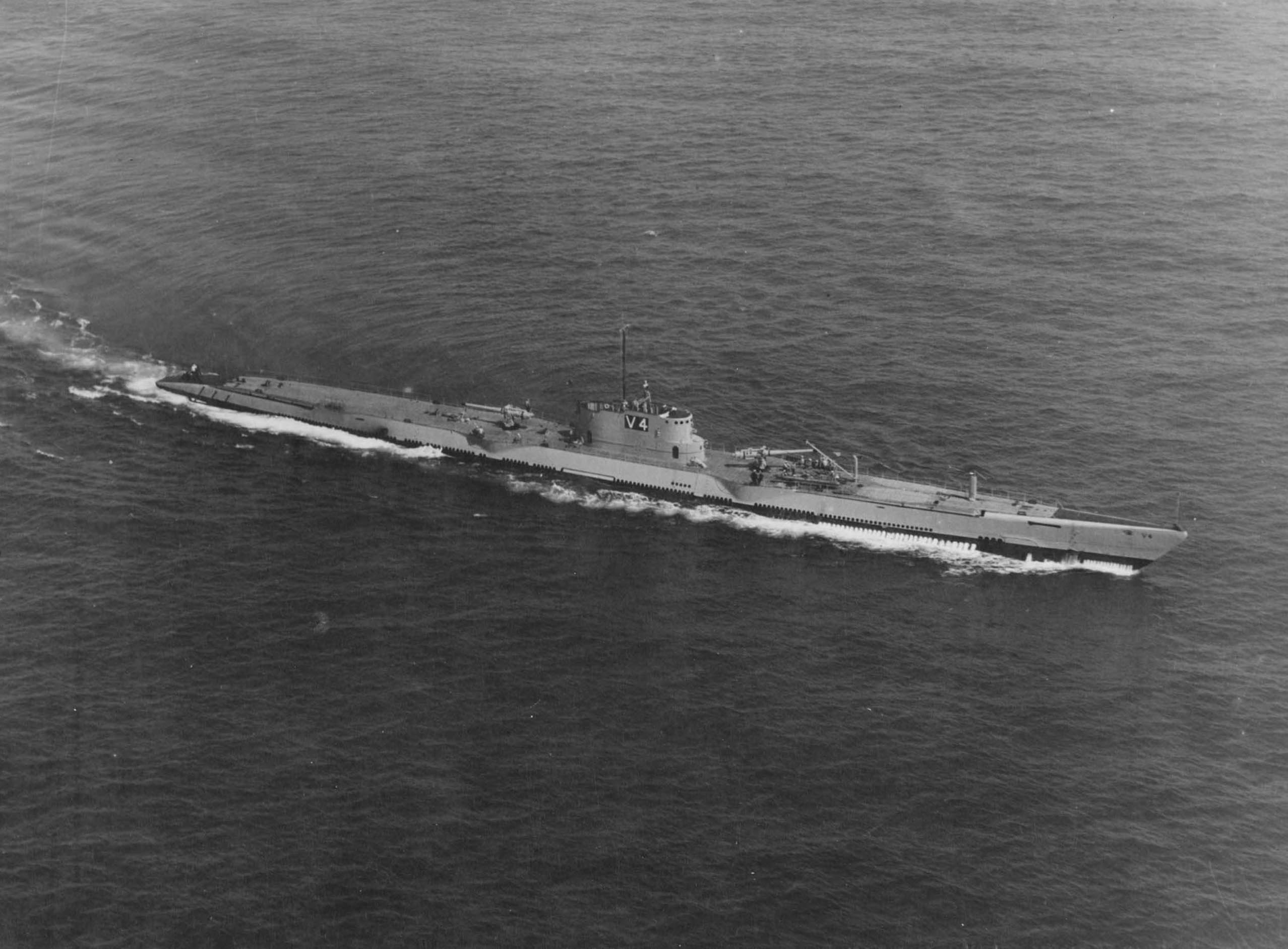 | 305k | Argonaut (SM-1) seen here on 18 September 1929. Note the 6-inch guns forward and aft of the conning tower, and what appear to be exercise torpedoes on deck just forward of mount one. Also note her alphanumeric "name," V-4, in white on a black rectangle on the tower structure, and repeated in black at the bow. | USN photo # 80-G-20291, from National Archives and Records Administration (NARA), College Park, Maryland, courtesy of Sean Hert. | |
 | 180k | V-4 (SF-7), seen forward of the Nautilus V-6 (SC-2). View on deck, looking forward from the bridge. Taken while she was fitting out at the Mare Island Navy Yard, California, 12 April 1930. Note that her forward 6"/53 deck gun has not yet been fitted.Argonaut (SM-1) and barge YR-5 are in the background.V-6 was renamed Nautilus in 1931. | U.S. National Archives Photo # 70676. Courtesy of the Mare Island Naval Shipyard, 1970. | |
 | 59k | View on the V-4 (SF-7), the largest submarine in the world, as it lay in the harbor of Los Angeles where it joined the battle fleet. Inset is Leut. Com. William Quigley, who commands the vessel. | Image and text provided by University of Maryland, College Park, MD. Photo from the Maryland Independent.(Port Tobacco, Md.) 1874-current, 10 October 1930, Image 3, via chroniclingamerica.loc.gov. | |
 | 548k | Argonaut (SS-166) was used in the filming of the John Ford directed motion picture titled "Seas Beneath," released in 1931. She was made up as the German submarine U-172 in this 10 photo PDF. Lt. Comdr. W. M. Quigley is her commanding officer. | Photos courtesy of Robert Morgan & Wendy S. Gulley, Archivist, Submarine Force Museum, Naval Submarine Base NLON,Groton, CT. | |
 | 700k | Argonaut (SS-166) at sea, probably in Hawaiian waters, 1931-1935. | Text i.d. courtesy of David Johnston (USN, retired) Courtesy of ussubvetsofworldwarii.org. |
|
 |
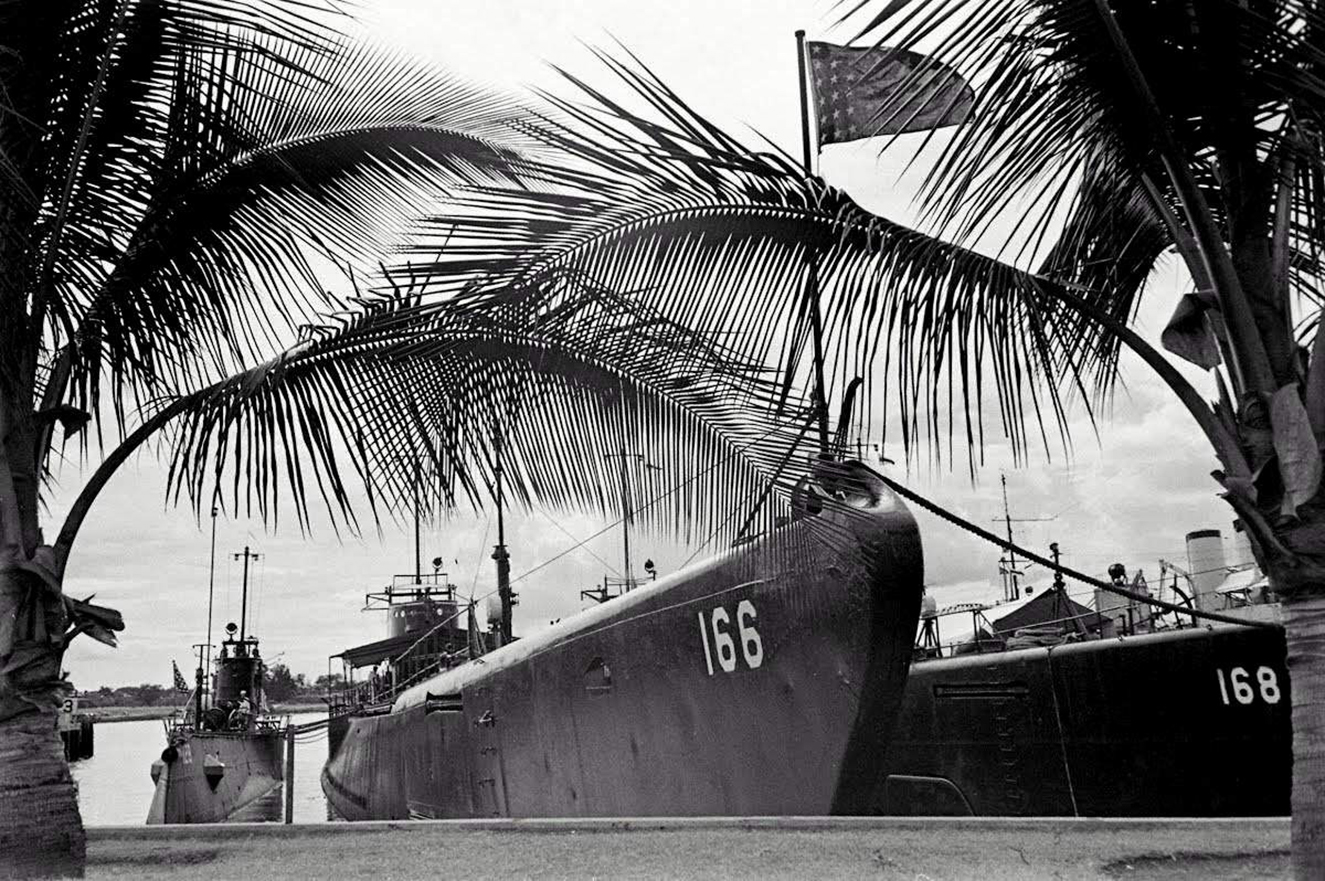
94k | Nautilus (SS-168), Argonaut (SS-166); and Narwhal (SS-167); (listed left to right) moored three abreast in an unknown port sometime in the years 1931-1935. | Text i.d. courtesy of David Johnston (USN, retired) USNHC photograph # NH 45667. Courtesy of J.A. Casoly. |
|
 |
67k | Commemorative postal cover marking Independence Day aboard the Argonaut (SS-166), 4 July 1932. | Courtesy of Jack Treutle (of blessed memory). | |
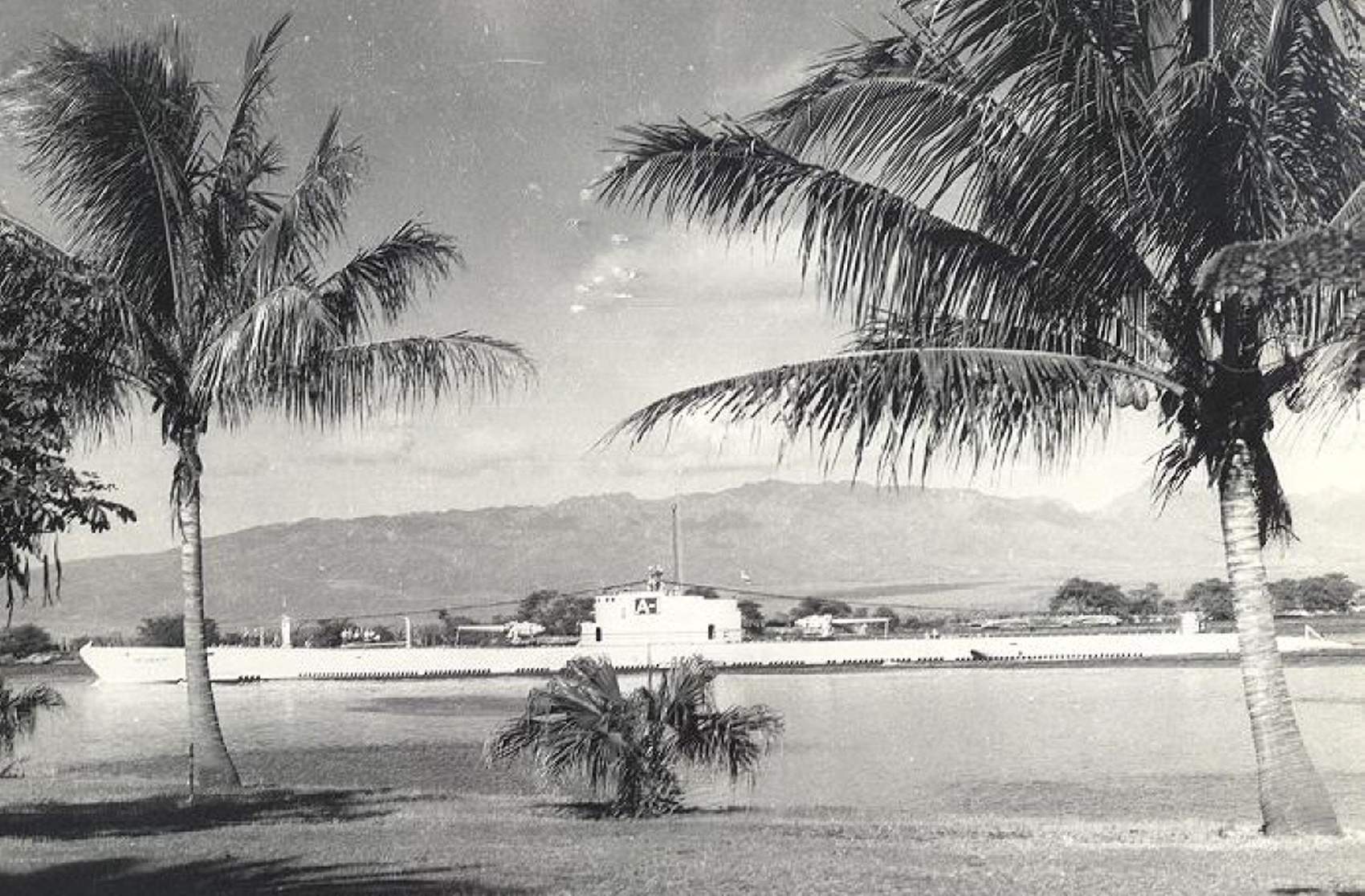 | 1.04k | Argonaut (SS-166) shown exiting Pearl Harbor between 1932 and 1935. Photo is by local photographer Tai Sing Loo and was taken as the boat was in mid channel right off Hospital Point. On 19 February 1931 V-4 was renamed Argonaut. After this point she carried on her conning tower fairwater the class designator A-1. This was not the boat's name, it was a simple way of identifying the boat at a distance. Sometime in the 1935 range she was repainted black. She carried the A-1 until February of 1939 when it was replaced by the boat's hull number 166. | Text i.d. courtesy of David Johnston (USN, retired) USN photo # courtesy of Scott Koen & ussnewyork.com. |
|
 |
262k | Stern view of the S-31 (SS-136), S-33 (SS-138), and S-32 (SS-137) (just visible) at Pearl Harbor circa 1932-1935. On the far left of the photo, on the other side of the pier, the bow of the Argonaut (SS-166) is just visible. | Text courtesy of David Johnston (USN, retired) USN photo courtesy of Darryl L. Baker. |
|
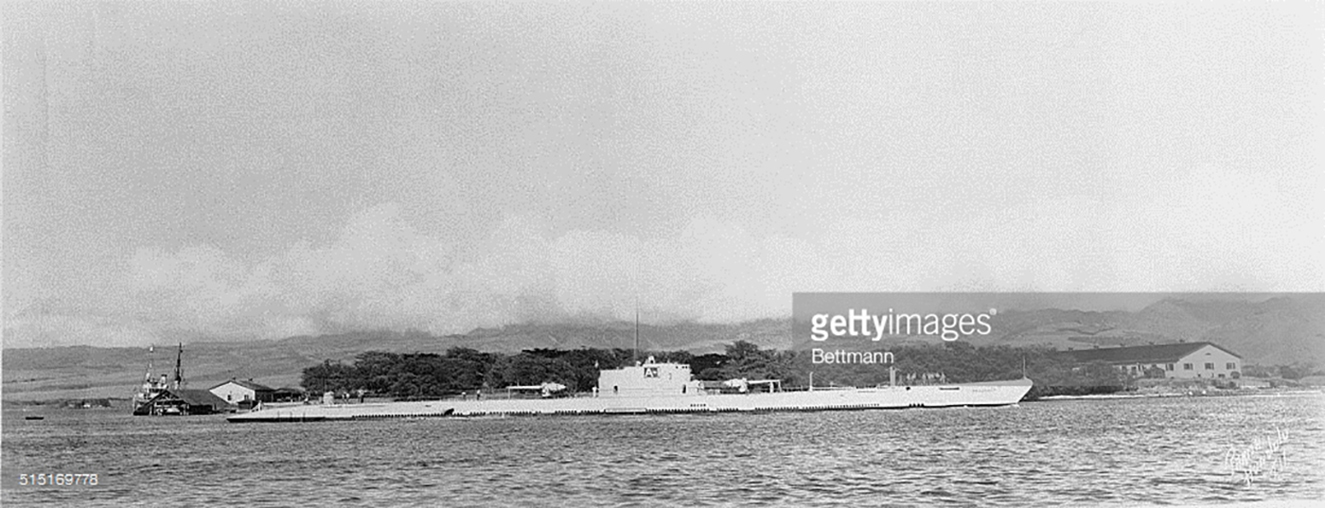 | 353k | Argonaut (SS-166) entering Pearl Harbor during the period 1932-1935. The photo was taken from the Navy Yard, looking across the channel to the west. Behind the boat is the end of Waipio Penninsula and the entrance to West Loch. | Text i.d. courtesy of David Johnston (USN, retired) Photo by Bettmann via Getty Images courtesy of gettyimages.com. | |
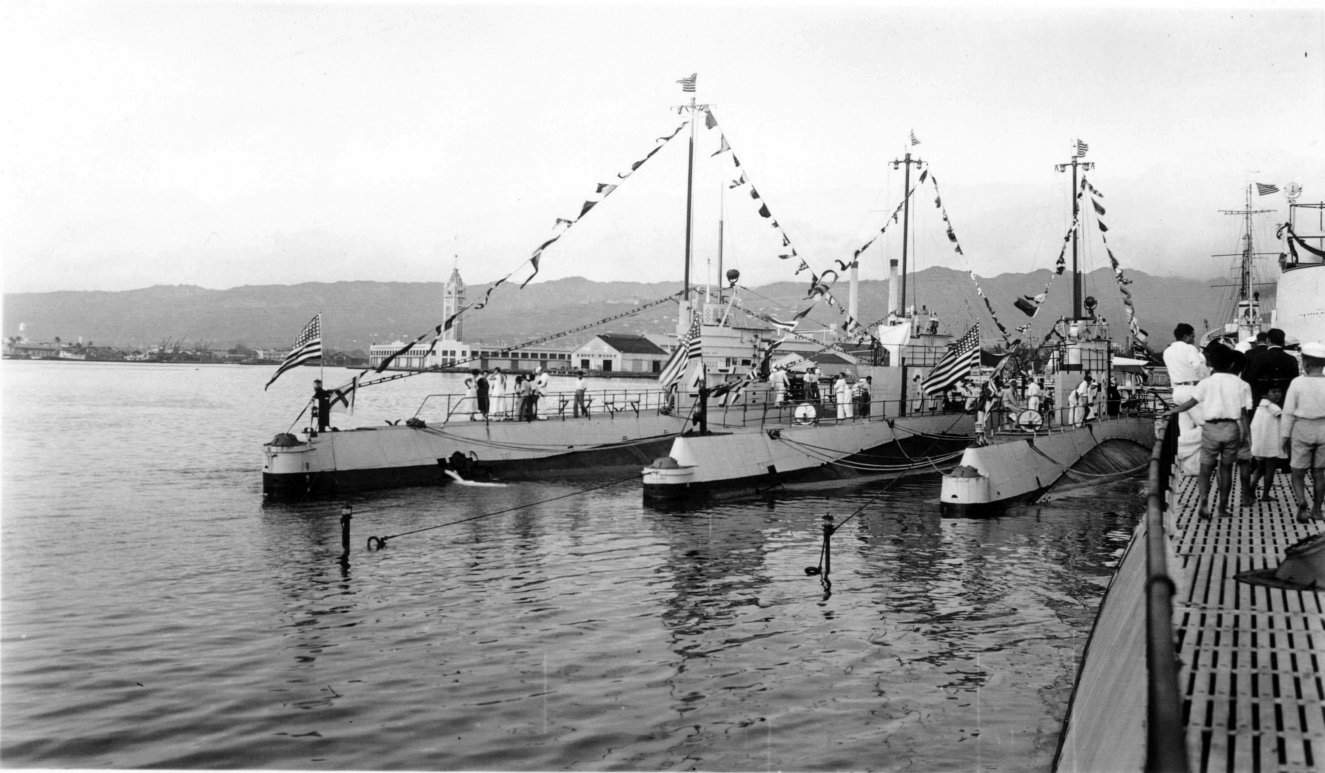 | 450k | Submarines S-47 (SS-158), S-32 (SS-137), S-26 (SS-131) & Argonaut (SS-166) in Honolulu Harbor 1932-1935. | Partial text & i.d. courtesy of David Johnston (USN, retired) Photo by Edward Cwalinski, submitted by Barry Litchfield. |
|
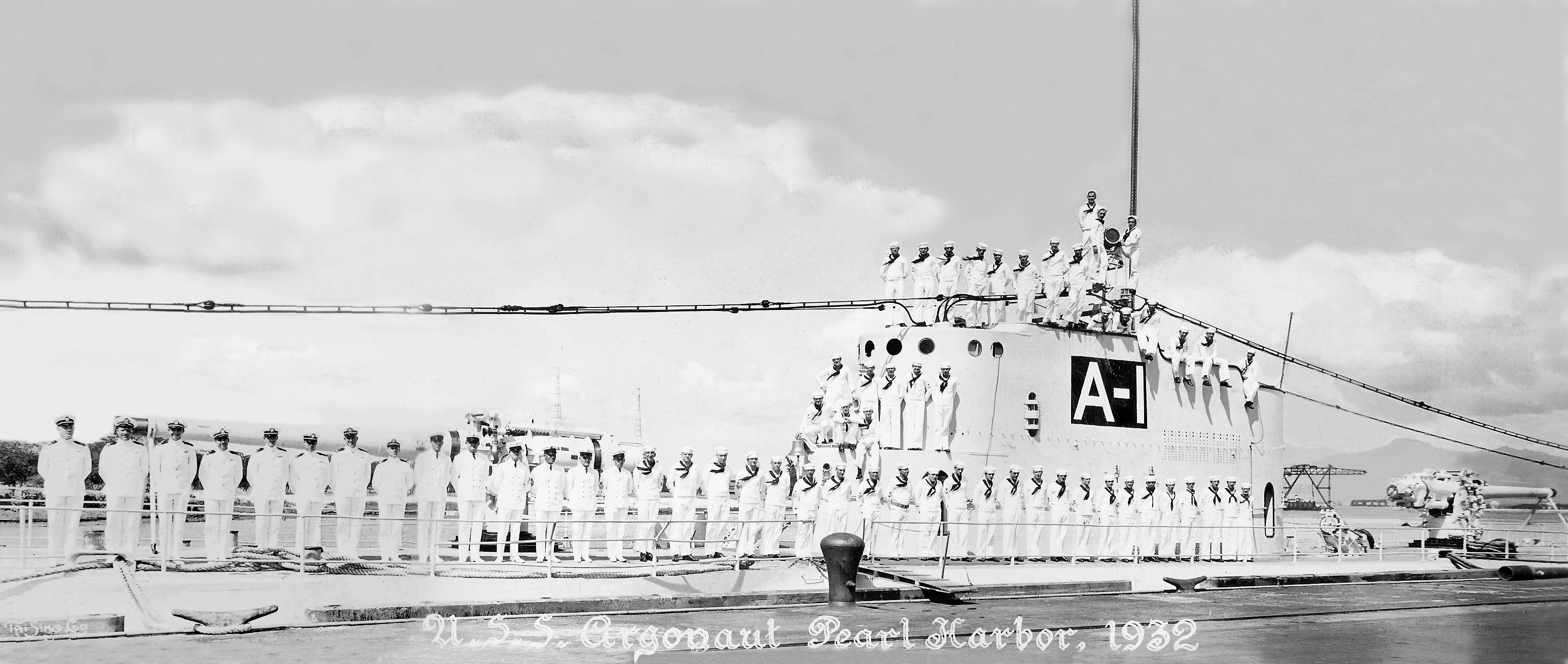 | 362k | Crew photo of the Argonaut (SS-166) taken at Pearl Harbor in 1932 by Tai Sing Loo. The 6th officer on the left is XO Louis Shane Jr. This photo was most likely taken shortly after the boat arrived in Pearl Harbor on 30 June 1932, having shifted her home port from San Diego. | Text i.d. courtesy of David Johnston (USN, retired) USN photo courtesy of Darryl L. Baker & Tom Kermen. Photo i.d. courtesy John Shane. |
|
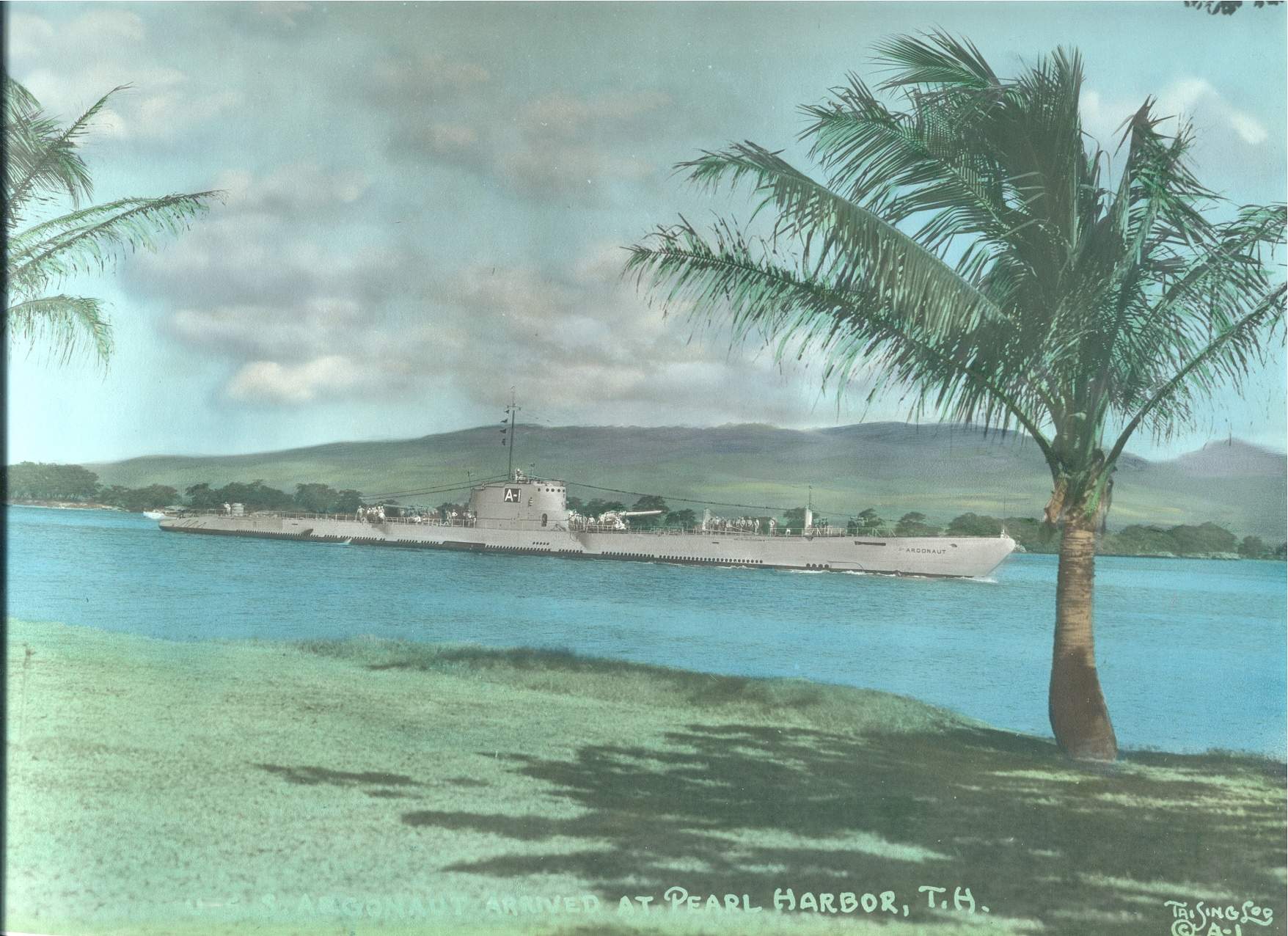 | 256k | Color photo of the Argonaut (SS-166) entering Pearl Harbor sometime before April 1933. During that period of time her XO was Louis Shane Jr., who would subsequently go on to climb the command ladder and rise to the rank of Lieutenant Commander (Commanding Officer) of the Shark (SS-174), the first U.S. sub lost at sea, 11 February 1942. | Photo courtesy of his grandson, John Shane. | |
 |
734k | September 1933. VIEW OF THE MAIN SHIPYARD BERTHING. BY THIS DATE THE ORIGINAL 1010 DOCK (FACILITY B2) HAD BEEN EXTENDED AT EITHER END (FACILITIES B1 AND B3). THE SMALL BOAT LANDING (FACILITY N2) IS IN THE FOREGROUND. - U.S. Naval Base, Pearl Harbor, Waterfront Facilities, Various locations throughout base, Pearl City, Honolulu County, HI. Bow view of the S-34 (SS-139) tied up to wharf, taken in Pearl Harbor. The sub is getting a new battery. The new cells are loaded on the rail-cars to the right. Also, the S-34's skeg has been cut away as part of a safety and maintenance mod, and that was done in April, 1932. The sub moored behind S-34 is the Argonaut (SS-166). There is a boat moored outboard of the barge, aft of the first tug. It is a EB design R or S-class boat. My first impression was to go with R-class because the photo gives the impression of that boat being considerably smaller than the S-34 However, I downloaded the photo and blew it up as far as I could and a feature caught my eye. The superstructure forward of the conning tower fairwater appears to be too large and too high to be R-class It reminded me a lot of the S-1 (SS-105), because she carried a unique superstructure configurtation from the rest of the EB S-boats It was beefed up because she carried the seaplane hangar in the early part of her life. Although the details are blurry, compare it to some excellent pics that are on the S-1 page and you will see the similarity, and the divergence from the R-class I would bet that this boat is the S-1. The appearance of looking smaller than the S-34 is probably a trick of angle and photography. There are indeed TWO more submarines aft of the Argonaut, and both appear to be EB design S-class, but this is uncertain. By the date of this photo, the Navy had just shifted over to a black paint scheme for all submarines. The Argonaut and the two unknown boats behind her have already gotten the new paint job. The S-34 and the S-1 still sported the haze gray scheme and probably would soon be painted. Also notice all the way at the end of the pier is the minelayer Oglala (CM-4). She is the large ship with the opening in the stern and the two cylinders on her fantail. |
LOC PHOTO # 219563pu, Title: Photocopy of photograph (original photograph located in the National Park Service, Arizona Memorial, 14th Naval District Photograph Collection), 14th ND C.W. No. P88-7864, courtesy of Steven Gower. Photo i.d. courtesy of David Johnston (USN, retired) , Darryl L. Baker, John Hummel & Steven Gower. Text i.d. courtesy of David Johnston (USN, retired) & Darryl L. Baker & Steven Gower. |
|
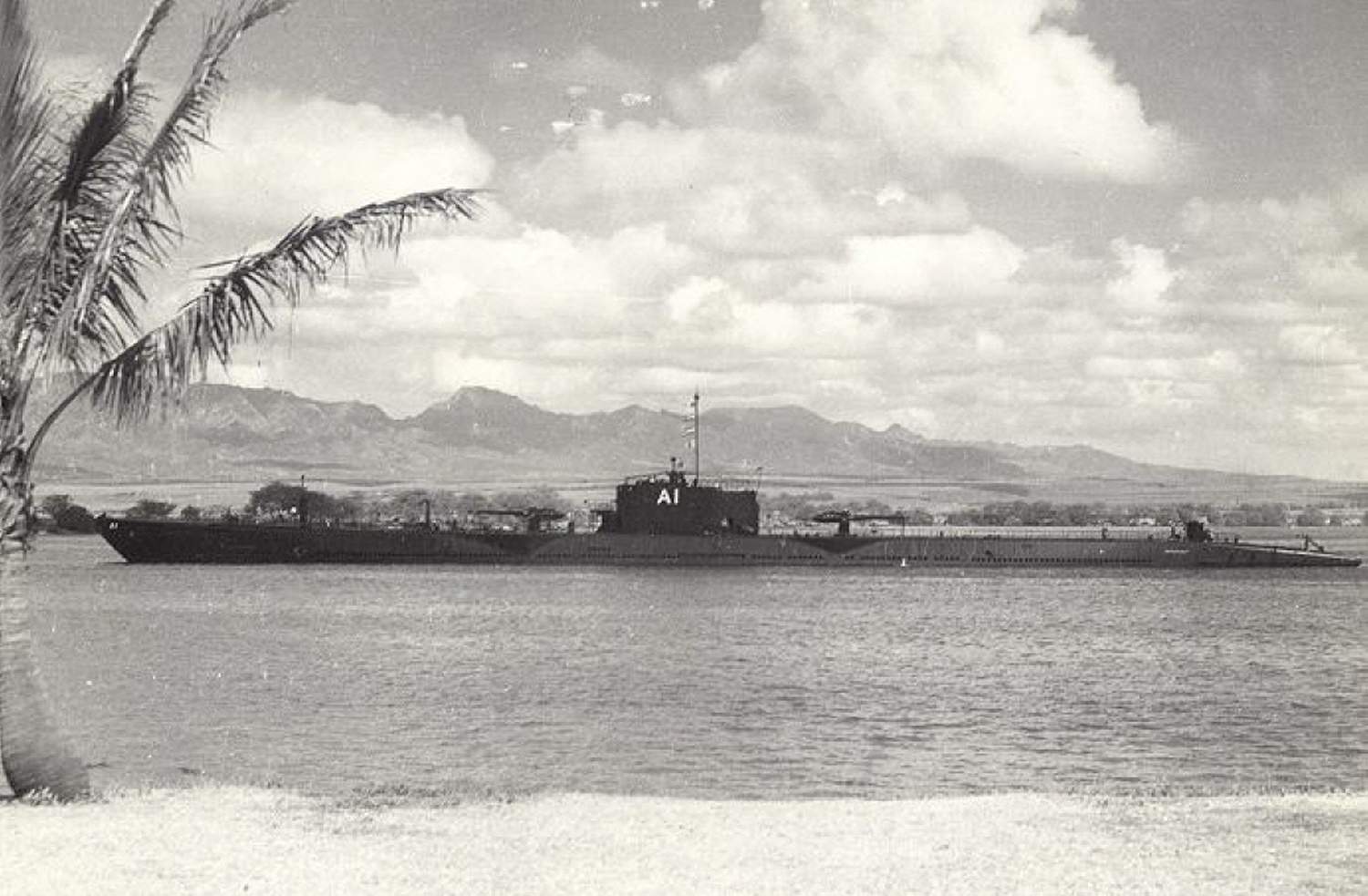 | 362k | Argonaut (SS-166) shown exiting Pearl Harbor between 1935 and early 1939. Photo is by local photographer Tai Sing Loo. The date is established by the fact that she is painted black, and that she is still carrying her class designator A-1. | Text i.d. courtesy of David Johnston (USN, retired) USN photo # courtesy of Scott Koen & ussnewyork.com. |
|
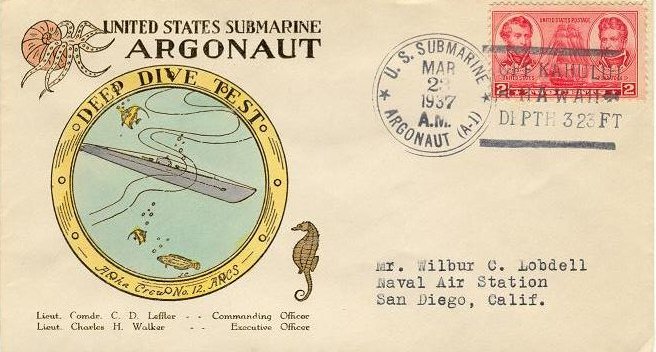 |
64k | Commemorative postal cover marking the Argonaut's (SS-166) deep dive test on 23 March 1937. | Courtesy of Jack Treutle (of blessed memory). | |
 |
17k | Commemorative postal cover marking Fleet Maneuvers of the following subs off Midway, 5 April 1937: Argonaut (SS-166), Nautilus (SS-168), Dolphin (SS-169), Porpoise (SS-172), Pike (SS-173), & Shark (SS-174) . |
Courtesy of Jack Treutle (of blessed memory). | |
 |
67k | Commemorative postal cover marking the Argonaut's (SS-166) 10th anniversary, 2 April 1938. | Courtesy of Jack Treutle (of blessed memory). | |
 | 256k | Argonaut (SS-166) in Hawaiian waters, 4 January 1939. | USN photo courtesy of pelicanharborsubvets.com via Bill Gonyo. | |
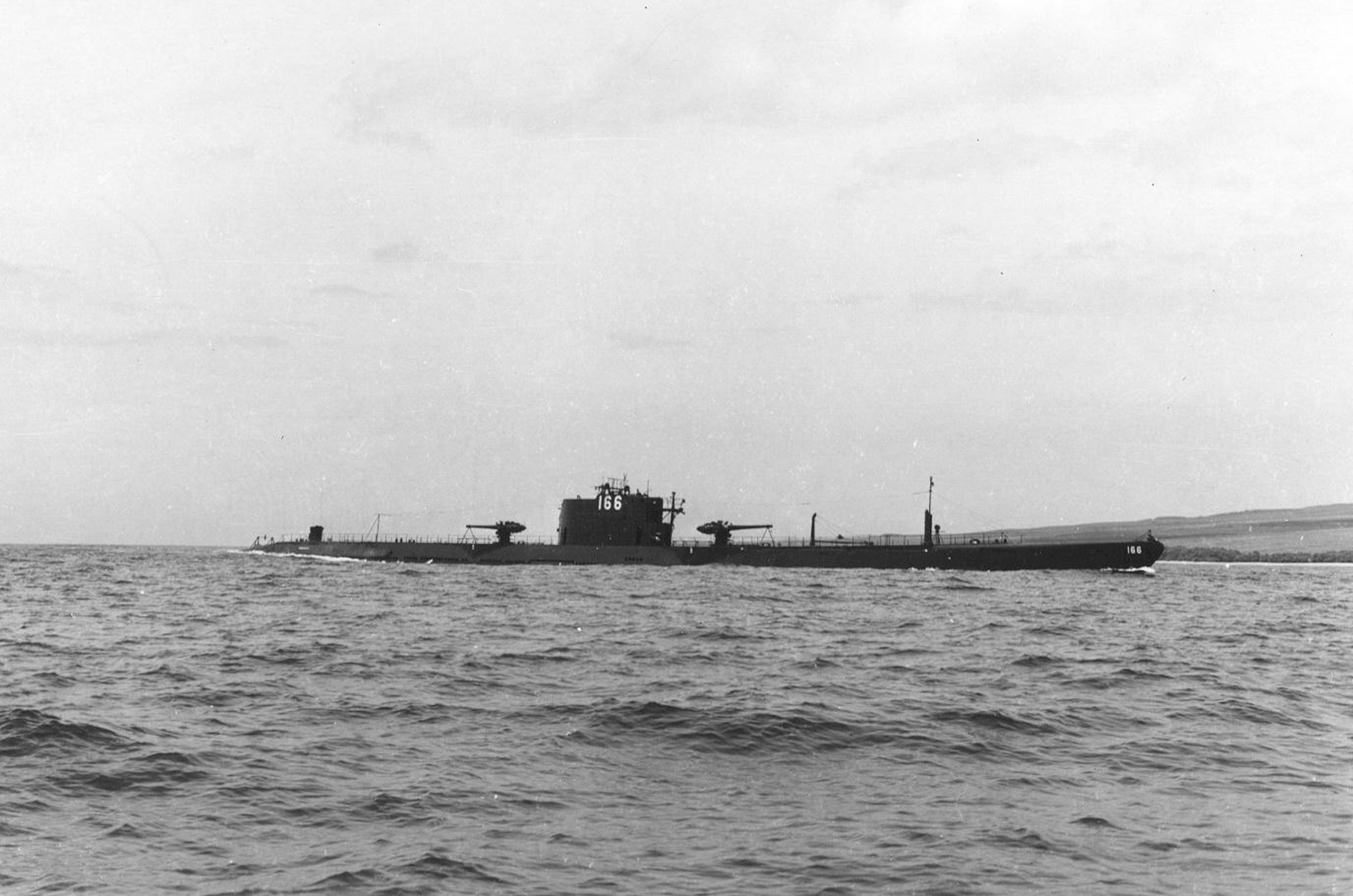 | 719k | Argonaut (SS-166) underway off Oahu, 1939-1941. The boat is sitting low in the water, most likely having just recently surfaced from a submerged run. The crew would have still been in the process of fully emptying her ballast tanks to bring her to surface trim, hence the low profile. By the date of this photo, all USN submarines had the class identifiers (in the case of Argonaut the A-1) removed and they were replaced with the boat's hull number. It was found that the class identifiers were causing confusion regarding the boat's identity. | Text i.d. courtesy of David Johnston (USN, retired) USN photo # courtesy of Scott Koen & ussnewyork.com. |
|
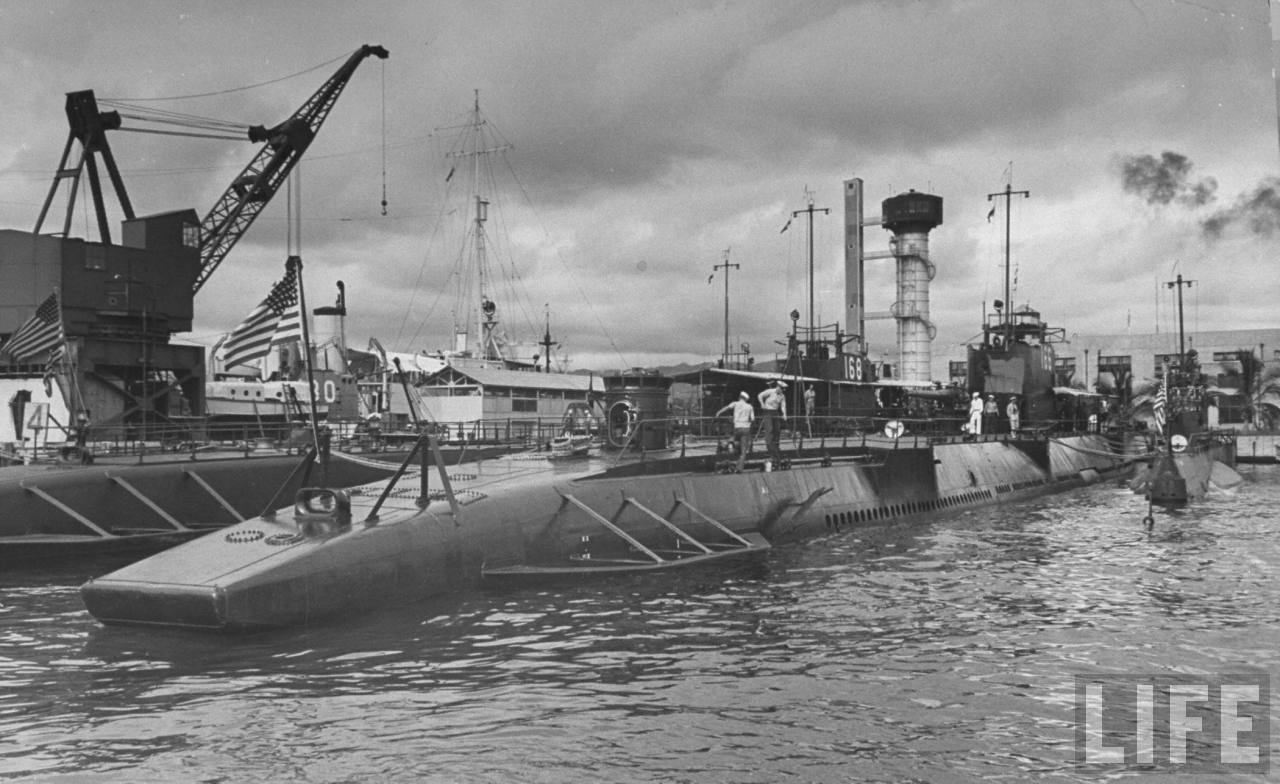 | 134k | Submarines at Pearl Harbor include the Pollack (SS-180) at far left, Nautilus (SS-168) & Argonaut (SS-166) and unidentified S-boat, 1940. | Photographer: Carl Mydans, courtesy of time.com. via Life. Partial photo i.d. courtesy of David Johnston (USN, retired) | |
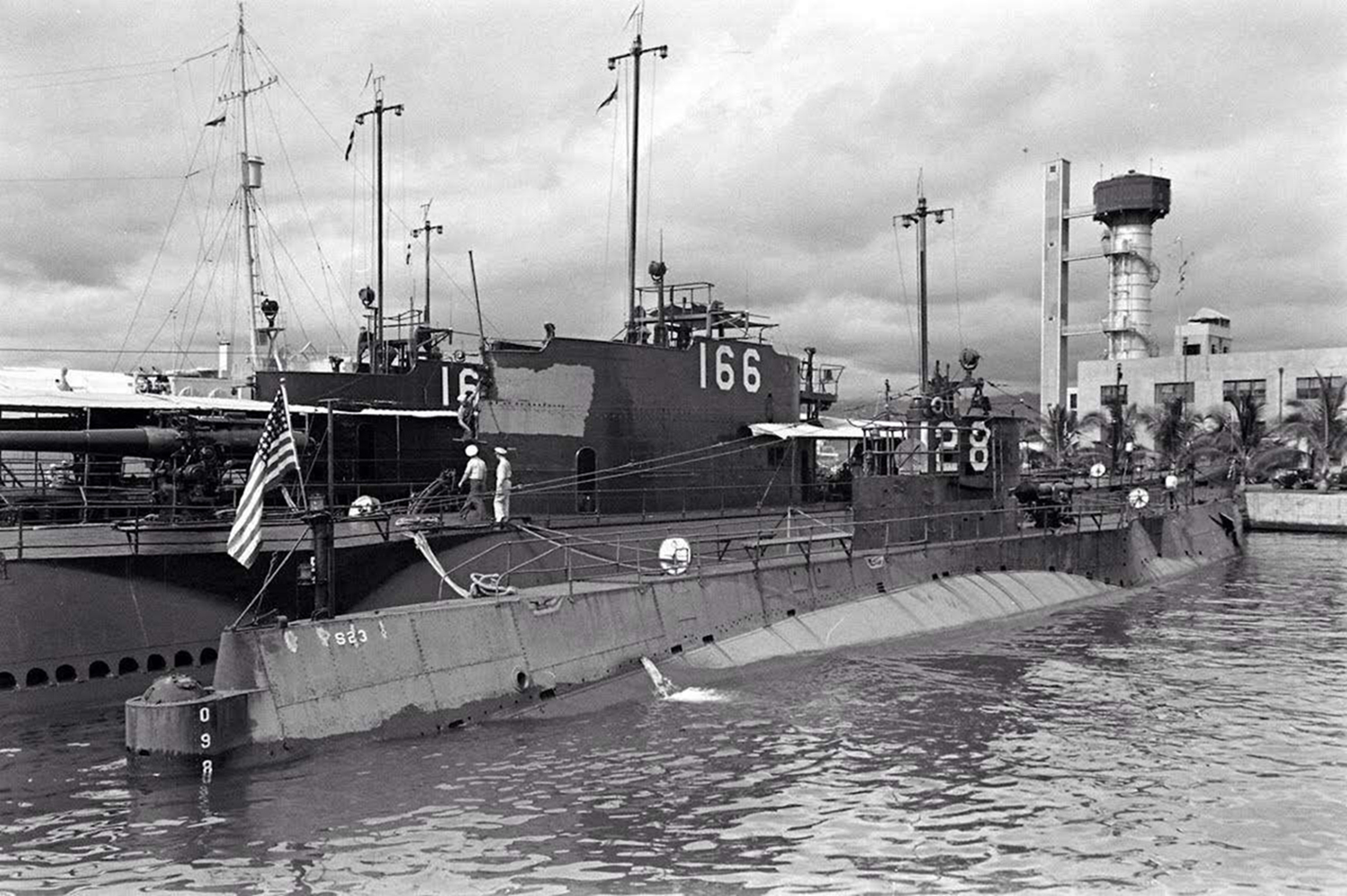 |
628k | Two views of Nautilus (SS-168), Argonaut (SS-166) and S-23 (SS-128) (L to R) moored at the Pearl Harbor Naval Base in September, 1940. | Source: LIFE Magazine Archives - Carl Mydans Photographer, shared by Peter DeForest via Mike Green. | |
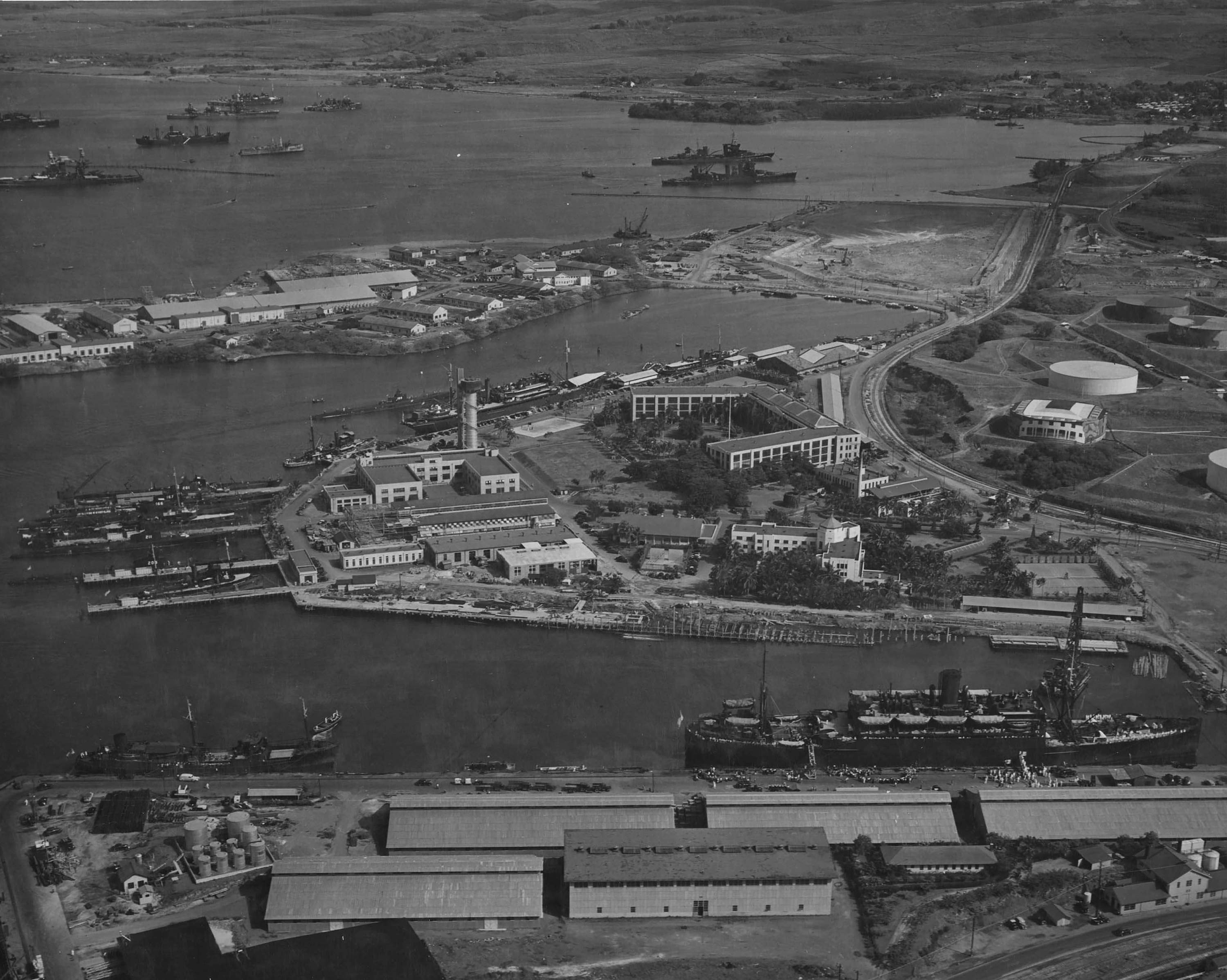 |
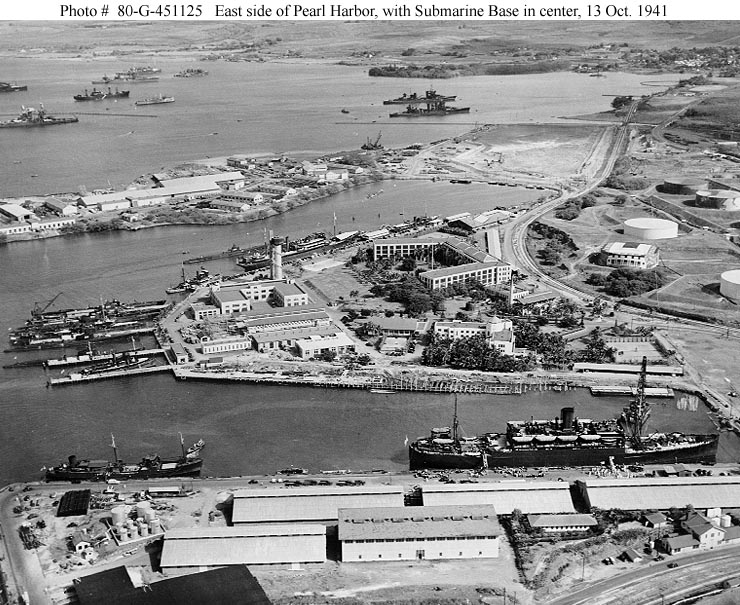
1.14k | Aerial view of the Submarine Base, Pearl Harbor, Oahu, Hawaii, with part of the supply depot beyond and the fuel farm at right, looking north on 13 October 1941. Note the fuel tank across the road from the submarine base, painted to resemble a building.
The building beside the submarine ascent tower (in left center, shaped like an upside-down "U") housed the U.S. Fleet Headquarters at the time of the Japanese attack on 7 December 1941. Office of Admiral Husband E. Kimmel, the Fleet's Commander in Chief, was in the upper left corner of the building's top floor. Wharton (AP-7) is in right foreground. Among the submarines at the base are Tuna (SS-203), Gudgeon (SS-211), Argonaut (SS-166), Narwhal (SS-167), Triton (SS-201) and Dolphin (SS-169). Holland (AS-3) and Niagara (PG-52) are alongside the wharf on the base's north side. In the distance (nearest group in upper left) are the battleship Nevada (BB-36), at far left, Castor (AKS-1) and the derelict old mine-layer Baltimore. Cruisers in top center are Minneapolis (CA-36), closest to camera, and Pensacola (CA-24), wearing a Measure 5 painted "bow wave". |
Text from USN photo # 80-G-451125, now in the collections of the National Archives. USN photo # 80-G-651517 from NARA, College Park, Maryland, courtesy of Sean Hert. |
|
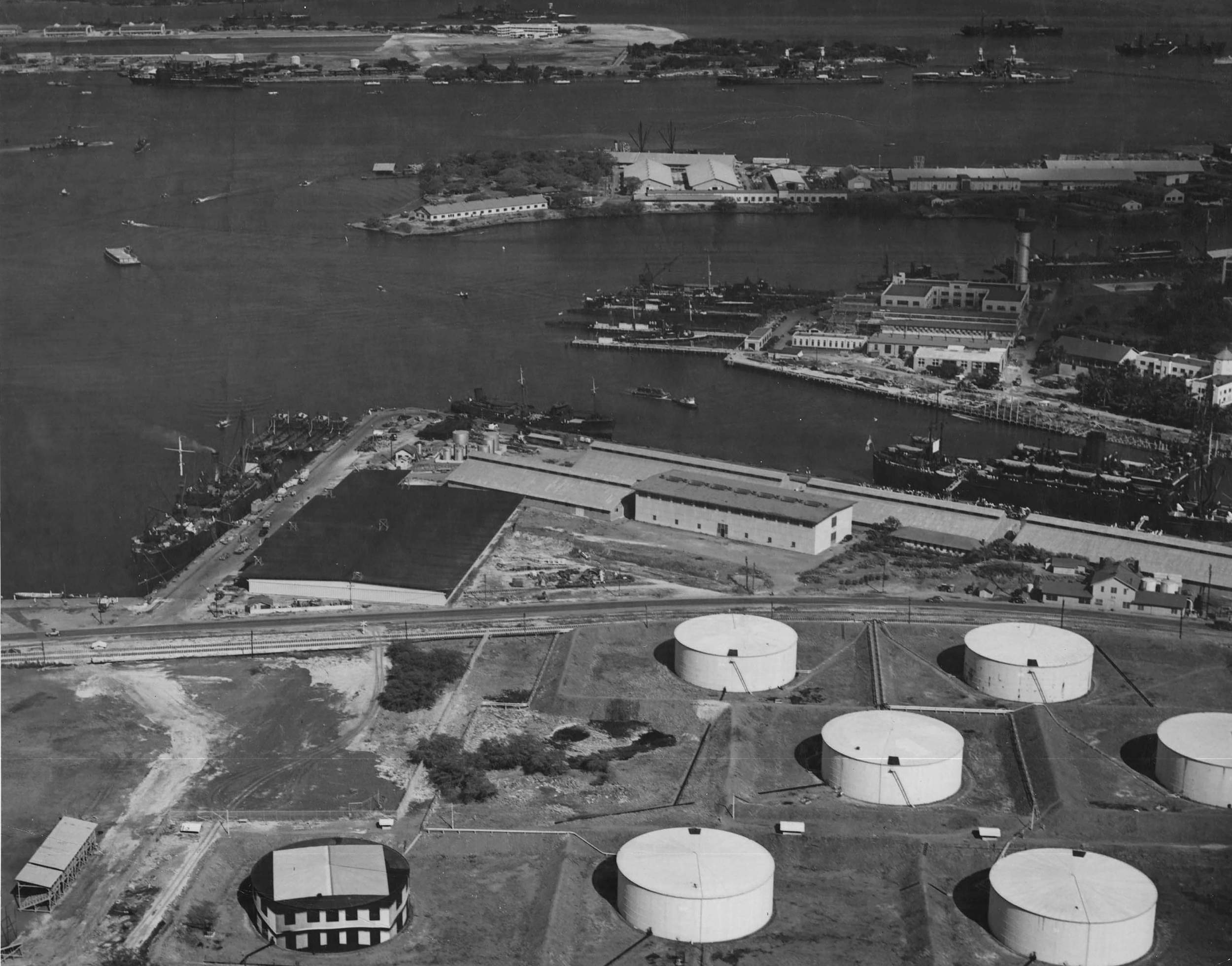 |
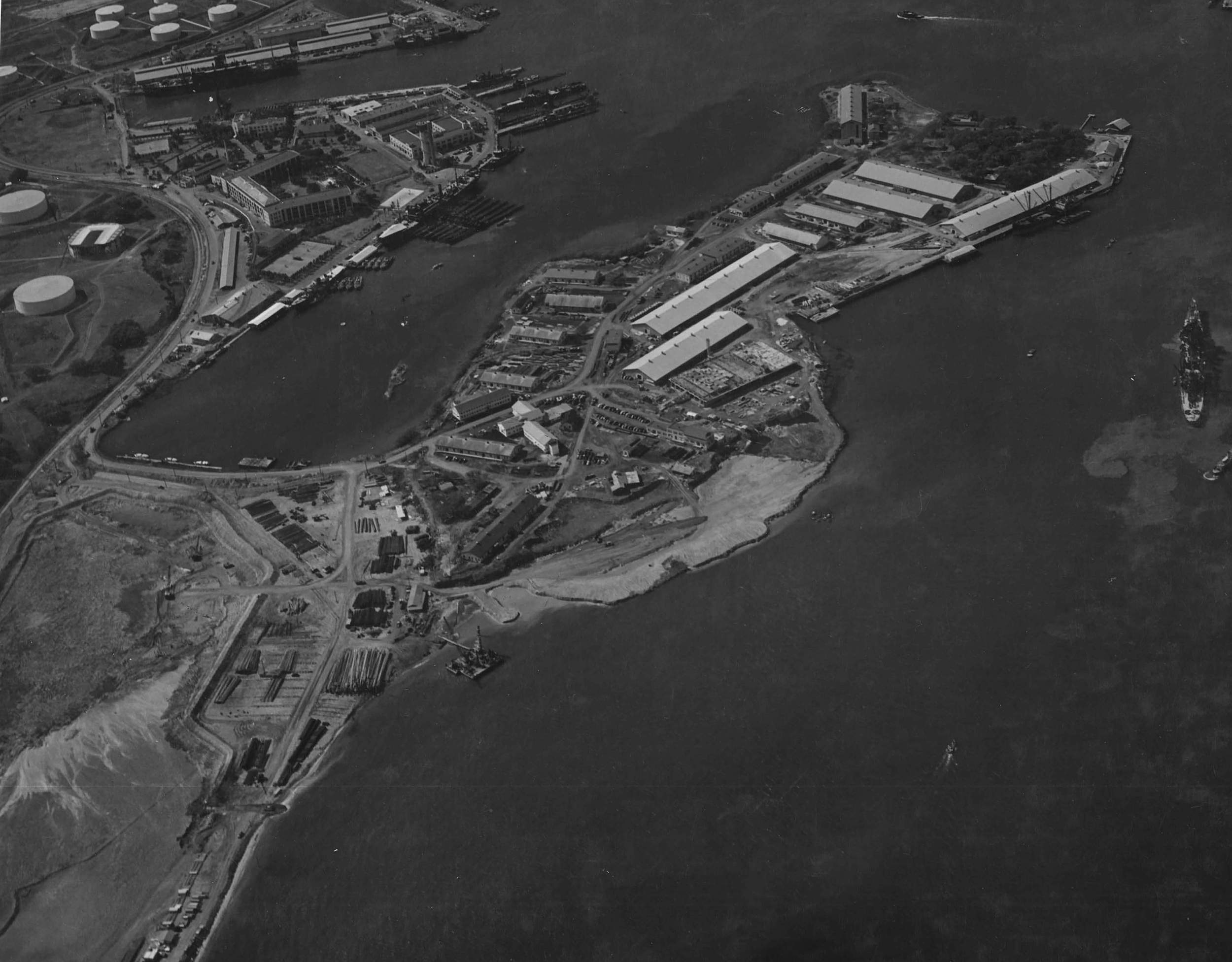
1.07k | Two additional aerial views of the Submarine Base, Pearl Harbor, Oahu, Hawaii, with part of the supply depot beyond and the fuel farm at right, looking north on 13 October 1941. | USN photo # 80-G-651516 & 651518 from NARA, College Park, Maryland, courtesy of Sean Hert. | |
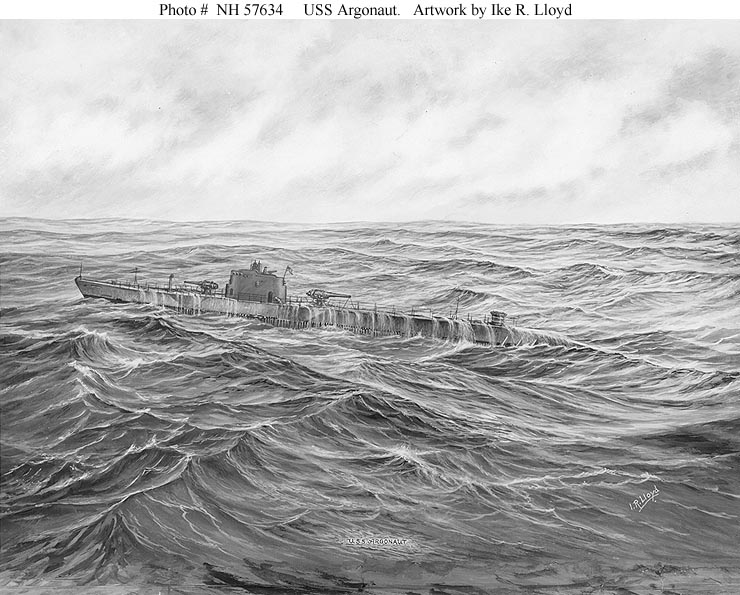 | 110k | Photograph of an artwork of the Argonaut (SS-166) by Ike R. Lloyd, circa 1942. | Courtesy of Ike Lloyd. USNHC photograph # NH 57634. | |
 |
319k | Progress photo, stern view, at Mare Island on 2 July 1942. The Tunny (SS-282) is alongside. In front of the two boats are the Pike (SS-173) & Porpoise (SS-172). Beyond them lies the Argonaut (SS-166) and new Destroyer Escorts under construction. |
Text i.d. courtesy of Darryl L. Baker. USN photo # BS 34397 via NARA College Park, courtesy of Tracy White @ Researcher @ Large. |
|
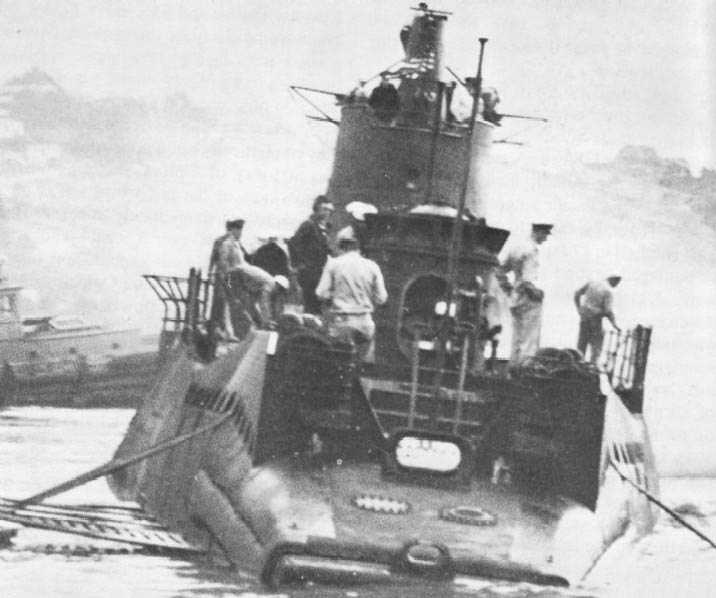 | 71k | On 22 January 1942, Argonaut (SS-166) returned to Pearl Harbor and, after a brief stop there, proceeded to the Mare Island Navy Yard for conversion to a troop transport submarine. Argonaut is pictured here underway after her modernization sometime around July 1942. | Courtesy of Robert Hurst. Text courtesy of DANFS. | |
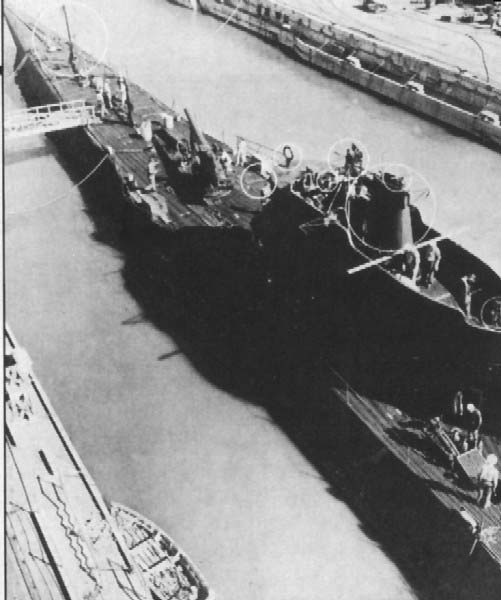 | 55k | Argonaut (SS-166) in July 1942 during her conversion, with alterations ringed. | USN photo courtesy of Robert Hurst. | |
 | 666k | Argonaut (SS-166) off California - July 1942. | USN photo # courtesy of Scott Koen & ussnewyork.com. | |
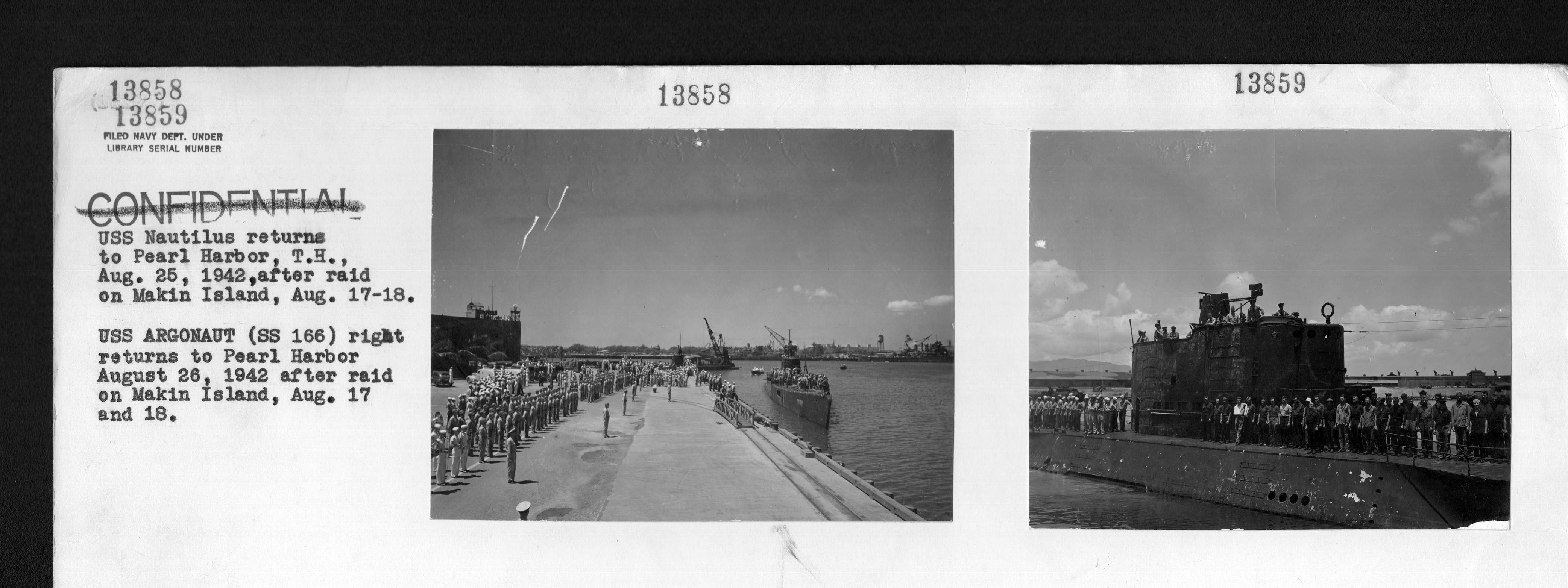 | 521k | Nautilus (SS-168) returns to Pearl Harbor, T.H., August 25 after raid on Makin Island, August 17-18. Argonaut (SS-166) right, returns as well. | Photos # 80-G-13858 & 59 from NARA, College Park, Maryland, courtesy of Sean Hert. | |
 | 555k | HEROES RETURN This photo, released in Washington today, shows Marine raiders lining the deck of the U.S. submarine [ Argonaut (SS-166)] from which they conducted their surprise raid on Makin Island last August 17-18, as the ship pulled into Pearl Harbor. Submarine officers who took part in the successful attack, are shown looking down from the conning tower as they came into the harbor to receive the "well done" accolade from their commander-in-chief in the Pacific, Admiral Chester W. Nimitz. | US National Archives photos # 80G-11739 & 40 from NARA, College Park, Maryland, courtesy of Sean Hert. | |
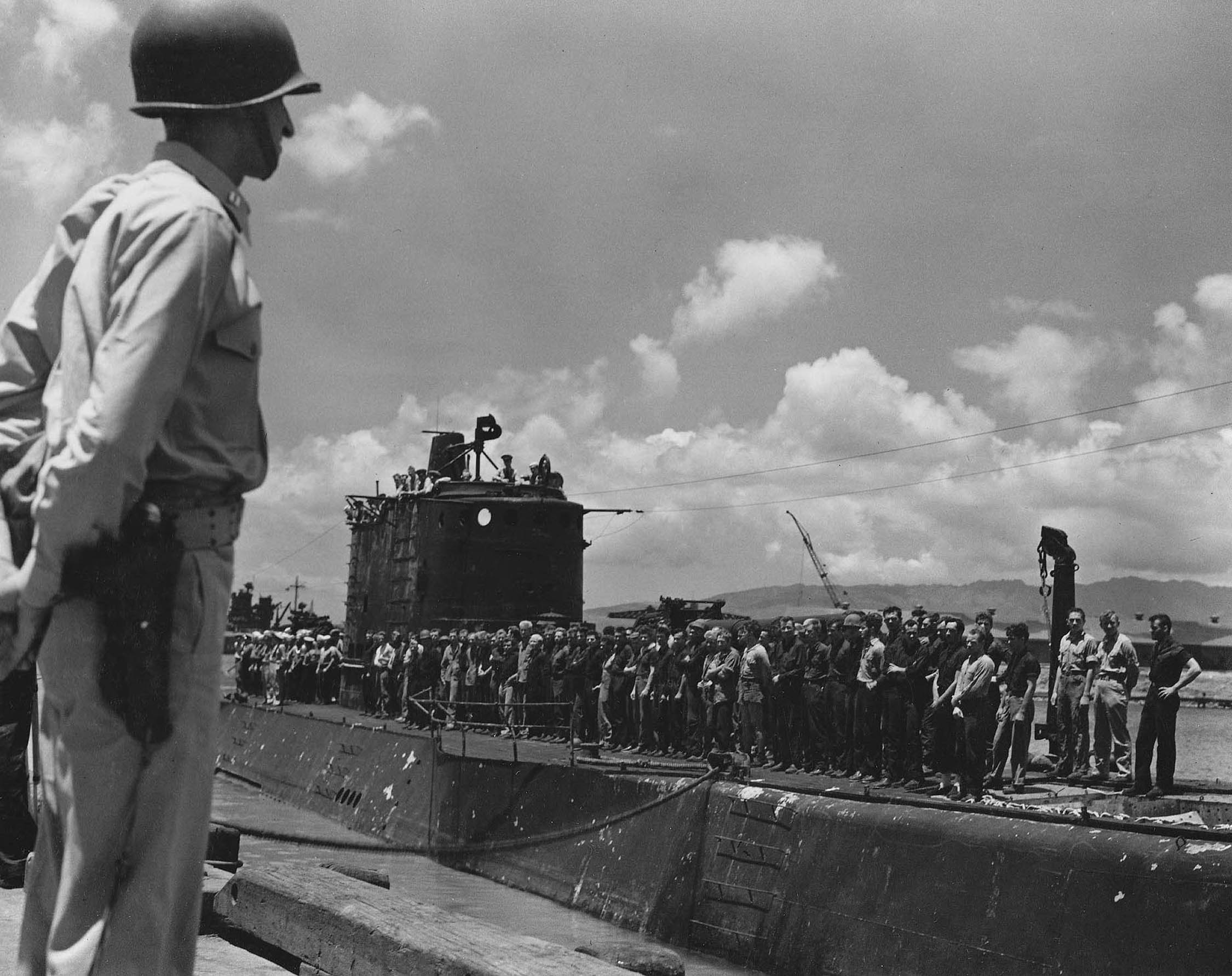
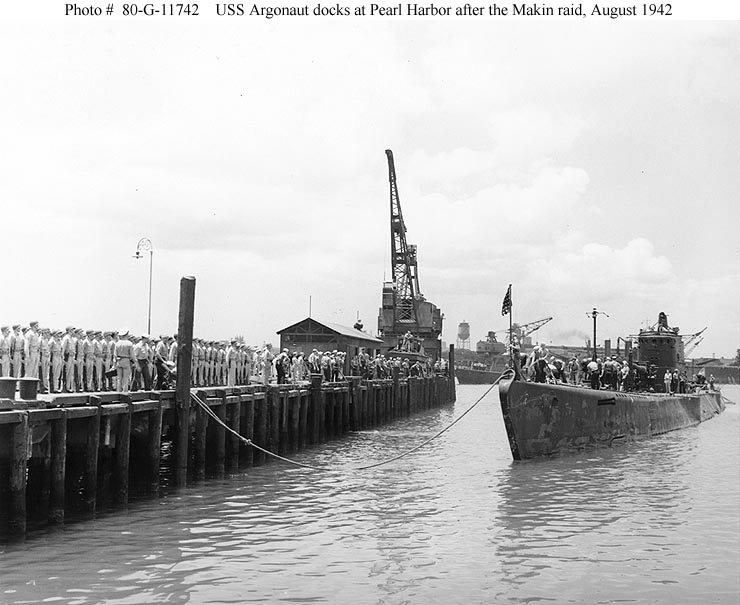 | 76k | Argonaut (SS-166) docks at Pearl Harbor upon her return from the Makin raid, 26 August 1942. | Official USN photo # 80-G-11742, now in the collections of the National Archives, courtesy of the U.S. Naval Historical Center. | |
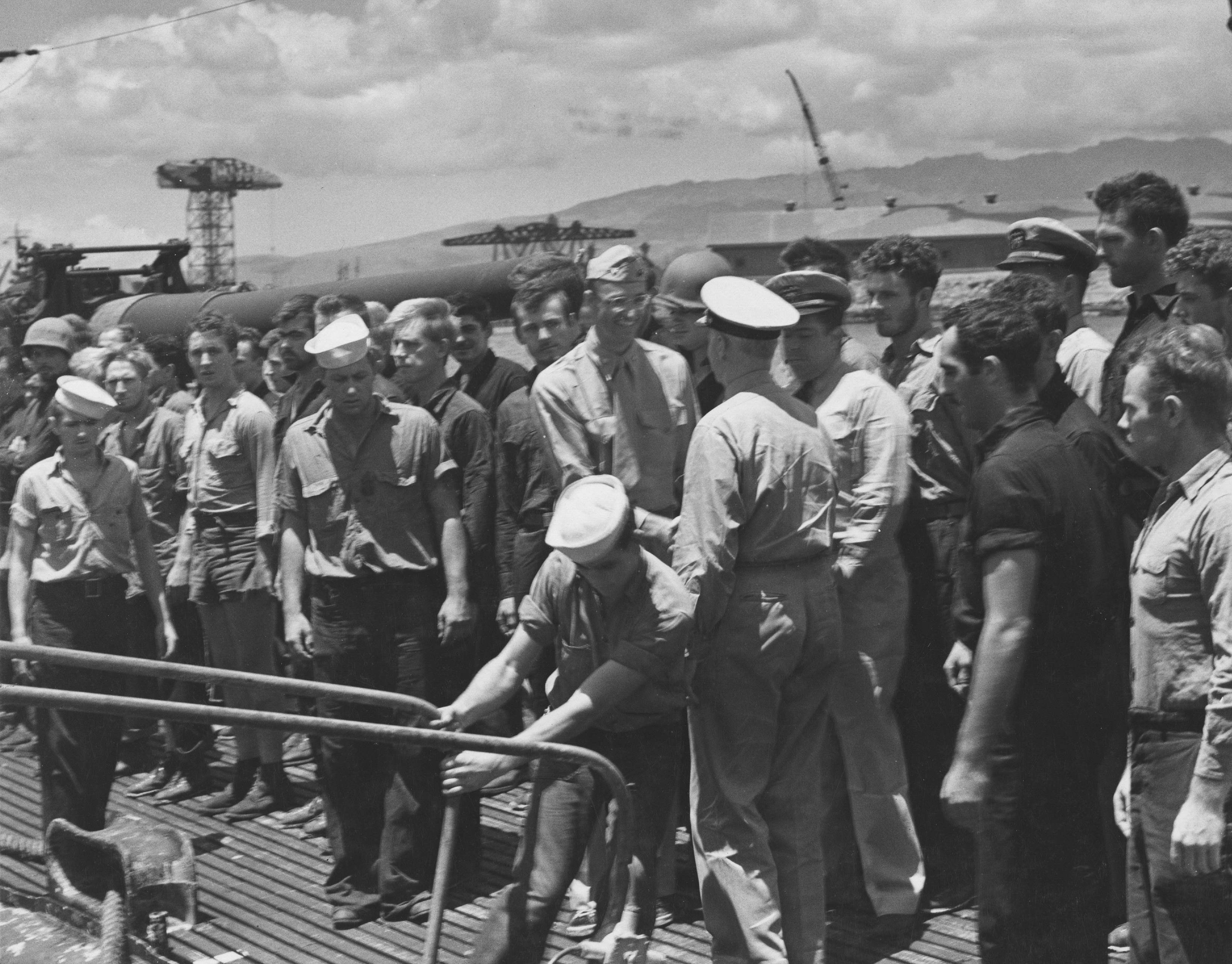 | 761k | Admiral Chester W. Nimitz Boarding Argonaut (SS-166) as She Docks in Pearl Harbor after Makin Island Raid. | USN photo # 80-G-34499, US National Archives Identifier: 6952487 Photo courtesy of catalog.archives.gov | |
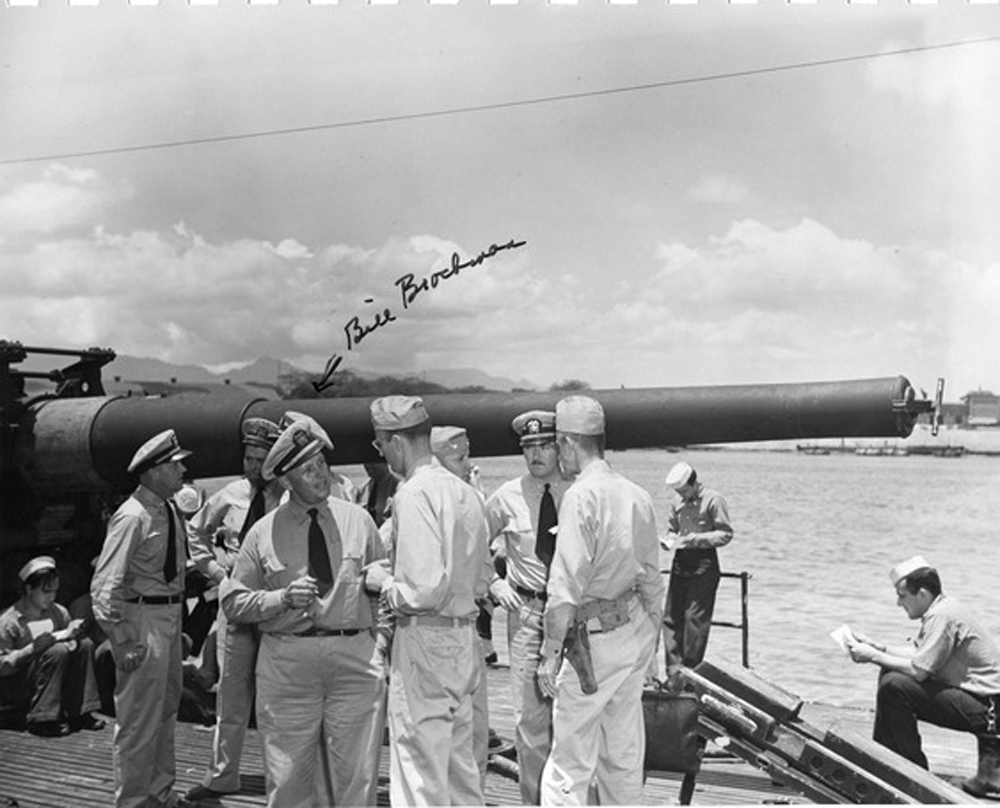 | 312k | Aboard the submarine that carried them to Makin Island for their surprise raid and back to Pearl Harbor, United States Marine Raider chiefs talk the situation over with Navy officers who cooperated in the successful atack. In the foreground are Lieutenant Commander William Brockman (United States Navy) and Major James Roosevelt (United States Marine Corps). At the right, holding a dispatch case is Lieutenant Colonel Evans F. Carlson, commanding officer of the Marine Raider batallion. Others are unidentified. | The photograph is included in Lewis Parks's photo album entitled "Submarine Pictures W. War II." Photo # 2015-46 courtesy of trumanlibrary.org. | |
 | 388k | Argonaut (SS-166) crewmen reading their mail, after returning to Pearl Harbor from the Makin Island Raid, 26 August 1942. The gun behind them is a 6"/53. | US National Archives photo # 80G 11741 from NARA, College Park, Maryland, courtesy of Sean Hert. | |
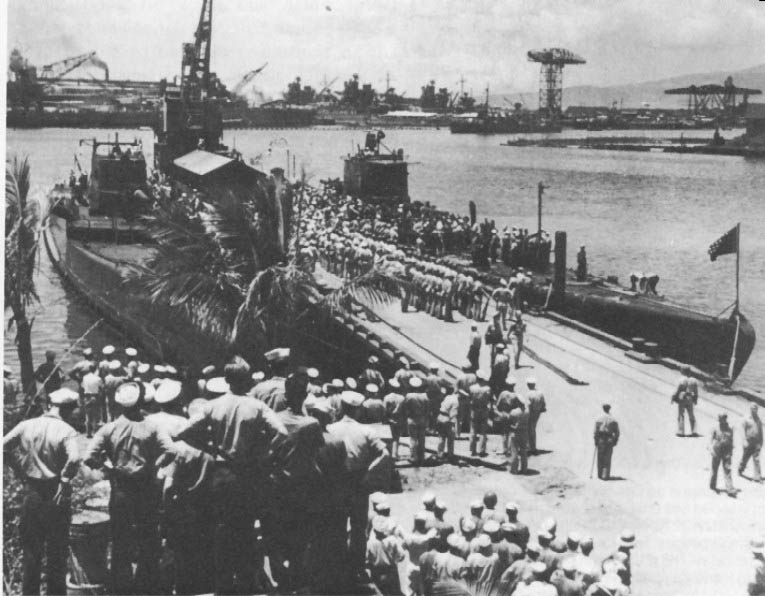 |
96k | Nautilus (SS-168) & Argonaut (SS-166) tied up to the dock at Pearl Harbor after returning from Makin Island Raid, 26 August 1942. | Photo courtesy of Robert Hurst. | |
 |
NR | TWO AMERICAN SHIPS LOST—The submarine Argonaut (SS-166), largest in the United States Navy, has been lost in the Pacific, the Navy announced yesterday. The Argonaut was a 2,710-ton vessel. Note that this photo shows the Argonaut with her previous name V-4, the name she carried from her commissioning on 02 April 1928 to 19 February 1931. At the time of her loss she would have been painted black, not the haze gray shown here. | Text i.d. courtesy of David Johnston (USN, retired) Image and text provided by Library of Congress, Washington, DC. Photo from Evening Star. [volume] (Washington, D.C.) 1854-1972, 22 February 1943, Image 3, via chroniclingamerica.loc.gov. | |
 | 229k | The Kagero class Japanese destroyer Isokaze which sank the Argonaut (SS-166) on 10 January 1943, between New Britain and Bougainville, south of St. George's Channel, in the Solomon Sea. | Courtesy of ibiblio.org. | |
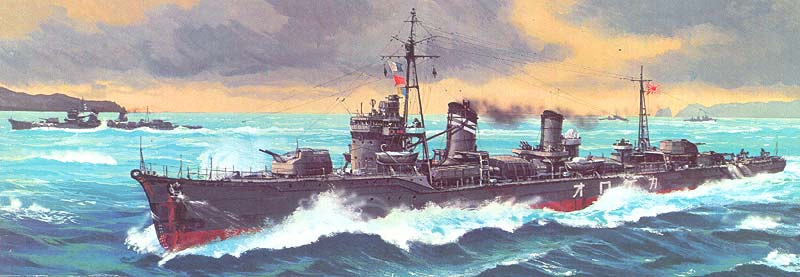 | 46k | A drawing of the Kagero class Japanese destroyers Isokaze & Maikaze which sank the Argonaut (SS-166) on 10 January 1943, between New Britain and Bougainville, south of St. George's Channel, in the Solomon Sea. | Courtesy of combinedfleet.com. | |
 | 68k | St. George's channel looking southeast toward New Ireland looking torward Cape St. George in far distance at right. The Argonaut (SS-166) was lost not far from here. | Courtesy of destroyerhistory.org by D.W. McComb. | |
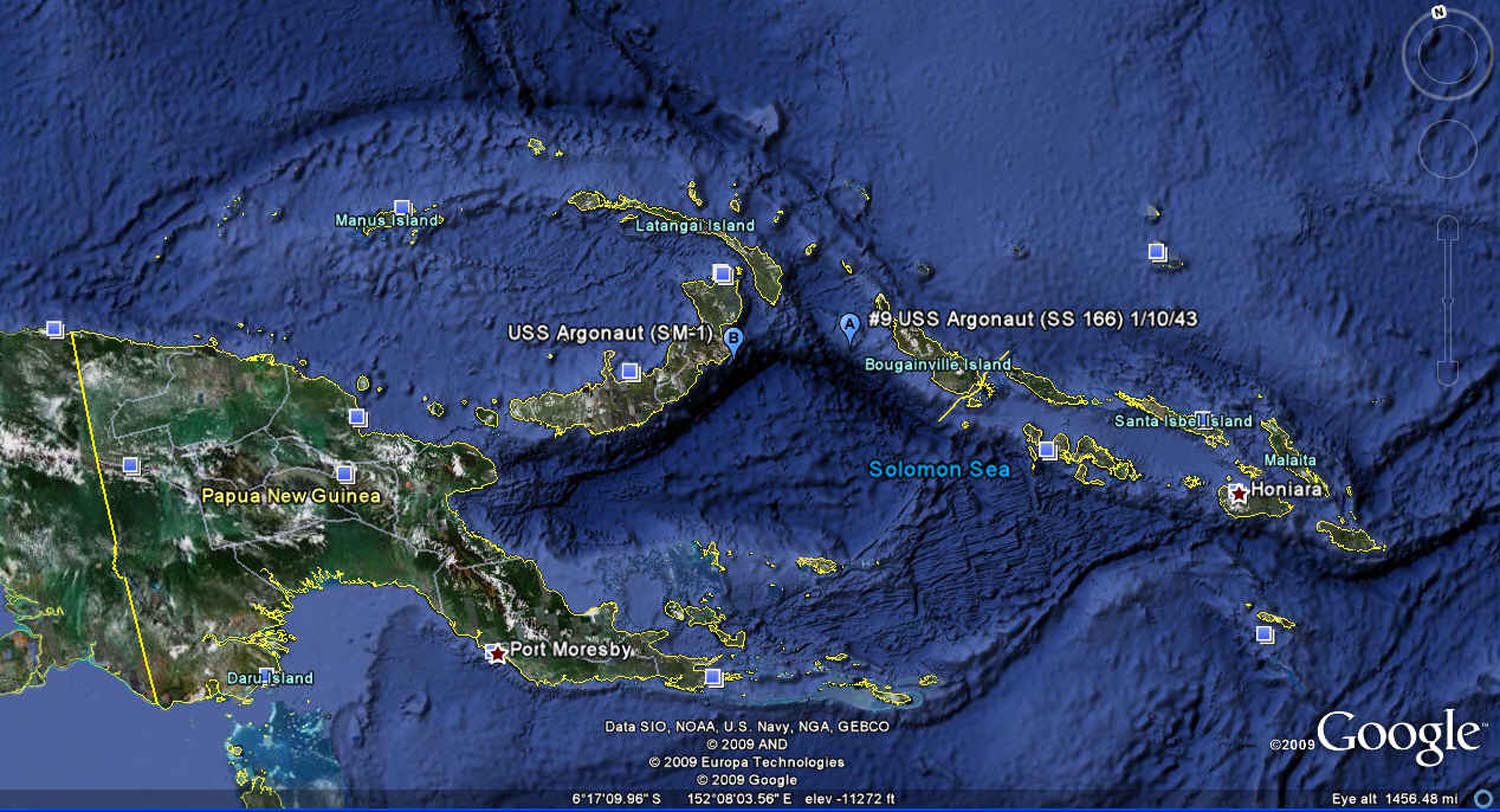 | 61k | Google Earth satellite photo of the general area in which Argonaut (SS-166) is assumed to have been lost. | View courtesy of Google Earth. | |
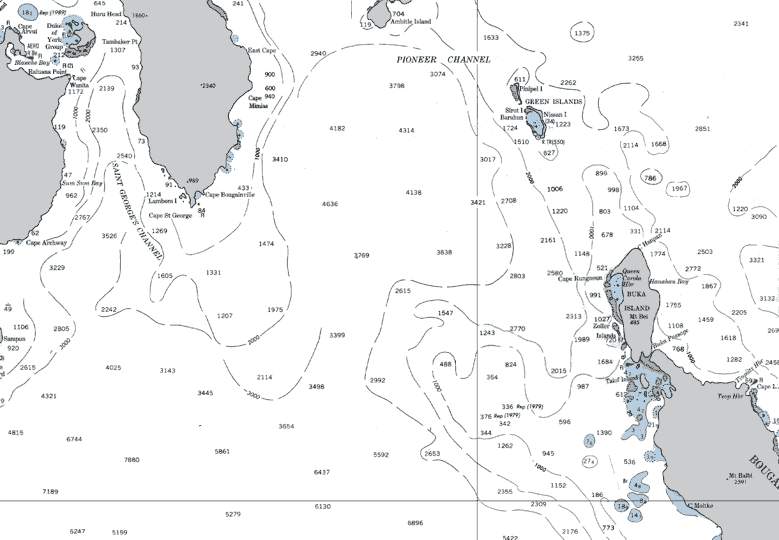 | 48k | Map area showing the general location between New Britain and Bougainville, south of St. George's Channel, in the Solomon Sea where the Argonaut (SS-166) was sunk. The average depth varies from 1600 to 3500 feet. | Courtesy of destroyerhistory.org by D.W. McComb. | |
 | 23k | John Reeves Pierce, Commander (Commanding Officer) of the Argonaut (SS-166) on her last patrol. | USN photo courtesy of oneternalpatrol.com. | |
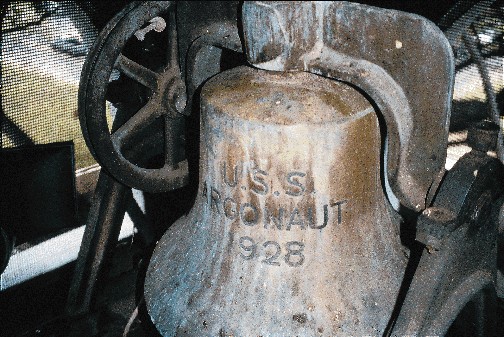 | 87k | The ship's bell of Argonaut (SS-166), lost in combat in 1943 - still serves at the chapel of the Submarine base, Pearl Harbor. | Photo courtesy of Bill Gonyo. | |
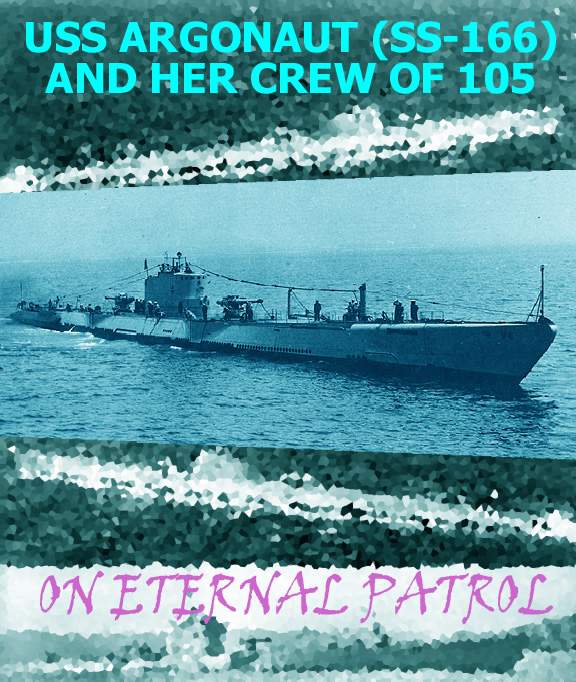 | 167k | Commemorative photo honoring the memory of the crew of the Argonaut (SS-166). | Photo courtesy of Tom Kermen. Dante's Prayer courtesy of Loreena McKennitt via loreenamckennitt.com | |
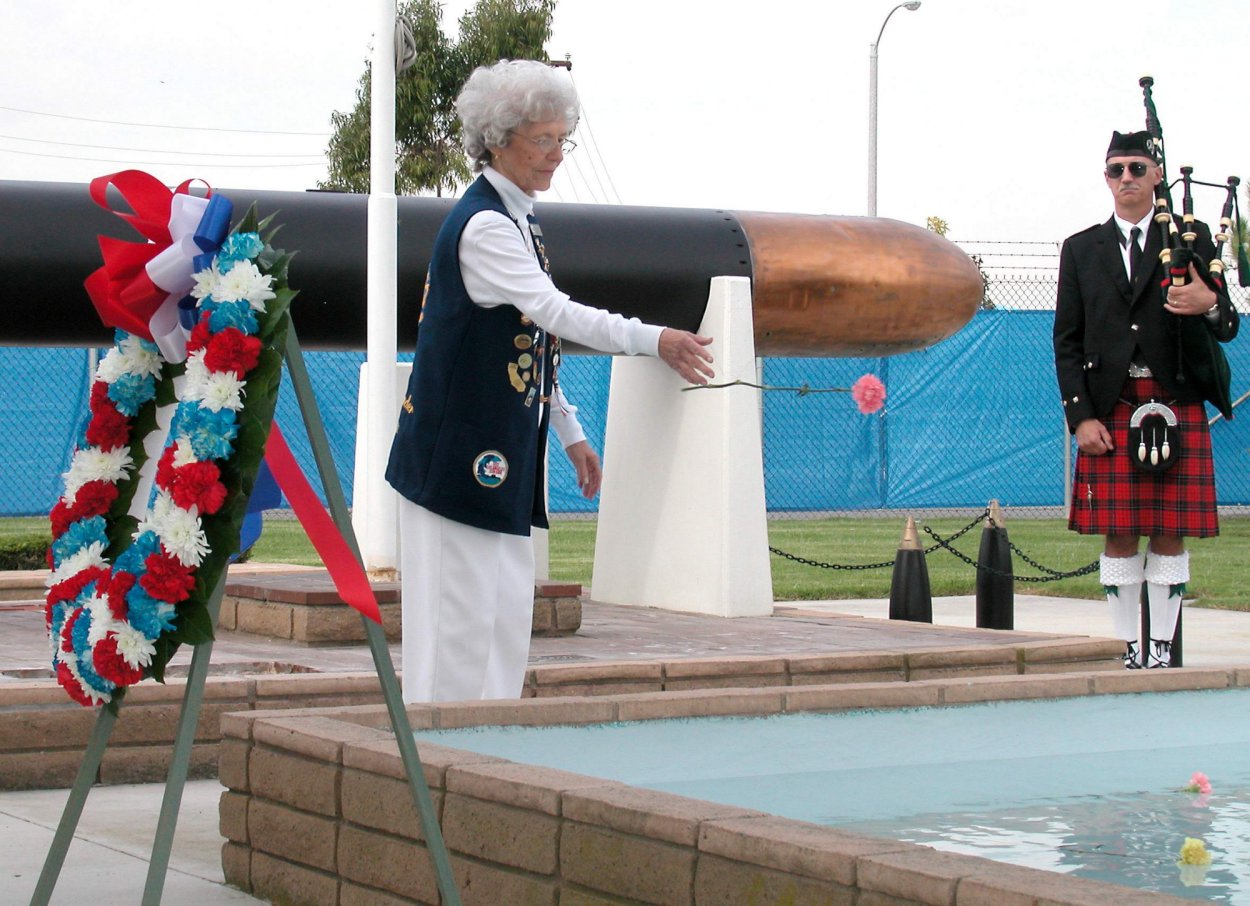 |
117k | Joyce DaSilva, the wife of Jesse DaSilva of the Tang (SS-306), one of the nine survivors of the boat, tosses a flower into a reflecting pool to honor the memory of one of the 52 submarines lost during World War II at the National Submarine Memorial-West on board Naval Weapons Station Seal Beach, Calif. On this Veterans Day, the Submarine Veterans of World War II transferred ownership of the memorial to the U.S. Navy. The following text is from The Coming Fury by Bruce Catton., pg. 478. "Major Sullivan Ballou of Rhode Island was killed in the battle, and just before it he had wrote to his wife, Sarah, to tell her that he believed he was going to be killed and to express a tremulous faith that could see a gleam of light in the dark: "But O Sarah! If the dead can come back to this earth and float unseen around those they loved, I shall always be near you in the gladdest days and in the gloomiest nights, always, always, and if there be a soft breeze upon your chest it shall be my breath, as the cool air fans your throbbing temple it shall be my spirit passing by. Sarah, do not mourn me dead; think I am gone and wait, for we shall meet again!" |
Text i.d. courtesy of Marlynn Starring. Photo i.d. courtesy of Chuck Senior, Vice Commander, Los Angeles-Pasadena Base, USSVI. USN photo # N-1159B-021 by Journalist 2nd Class Brian Brannon, courtesy of news.navy.mil. |
|
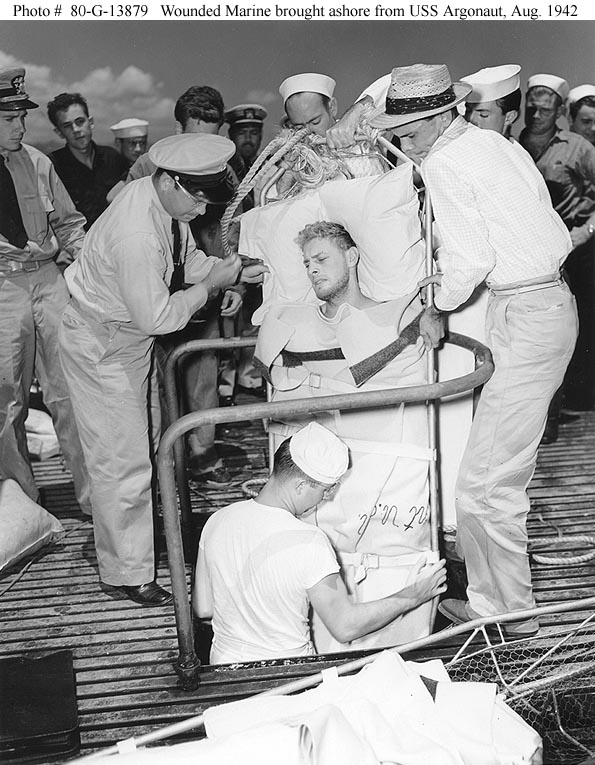 | 114k | A Marine Raider, injured during the Makin operation, is lifted through a hatch on Argonaut (SS-166) to be taken ashore at Pearl Harbor, 26 August 1942. In less than 5 months time, the boat and her entire company would be listed as M.I.A. In Memorium: In the Second Book of Shmuel (Samuel), 22nd chapter, 5th through the 20th verses, translated from the original in Hebrew and published by the Koren Publishers of Jerusalem, Israel, 1982, can perhaps aptly describe the fate of the crew and all other U.S. submariners who died defending their county: "When the waves of death compassed me / the floods of ungodly men made me afraid; / the bonds of She'ol encircled me; / the snares of death took me by surprise; / in my distress I called upon the Lord, / and cried to my G-D: / and he heard my voice out of his temple, / and my cry entered into his ears. / Then the earth shook and trembled; /the foundations of heaven moved / and shook because of his anger /...the heavy mass of waters, and thick clouds of the skies /... And the channels of the sea appeared, / the foundations of the world were laid bare, / at the rebuking of the Lord, at the blast at the breath of his nostrils. / He sent from above, he took me; / he drew me out of many waters; / he delivered me from my strong enemy, and from those who hated me; for they were too strong for me. / They surprised me in the day of my calamity: / but the Lord was my stay..." | Official USN photo # 80-G-13879, now in the collections of the National Archives., courtesy of the U.S. Naval Historical Center. | |

View the V-4 / Argonaut (SF-7, SM-1, APS-1, SS-166)
DANFS history entry located on the Haze Gray & Underway Web Site.
Crew Contact And Reunion Information
U.S. Navy Memorial Foundation
Fleet Reserve Association
Additional Resources and Web Sites of Interest
Ep-21 (1) - Victory At Sea ~ Full Fathom Five - HQ
On Eternal Patrol
ComSubPac Report of loss of USS Argonaut (SS 166) January 10, 1943 - 102 Men Lost
PigBoats.COM TM, A Historic Look at Submarines.
Carlson's Raiders
HISTORIC SUBMARINE DOCUMENTARY AND TRAINING FILMS
| Back To The Main Photo Index | Back To the Minelaying Submarine (SM) Photo Index | Back To the Submarine Index |
| Problems and site related matters, E-mail Webmaster |
| This page is created by Gary Priolo and maintained by Michael Mohl All Pages © 1996 - 2024 NavSource History |