 |
78k |
Namesake
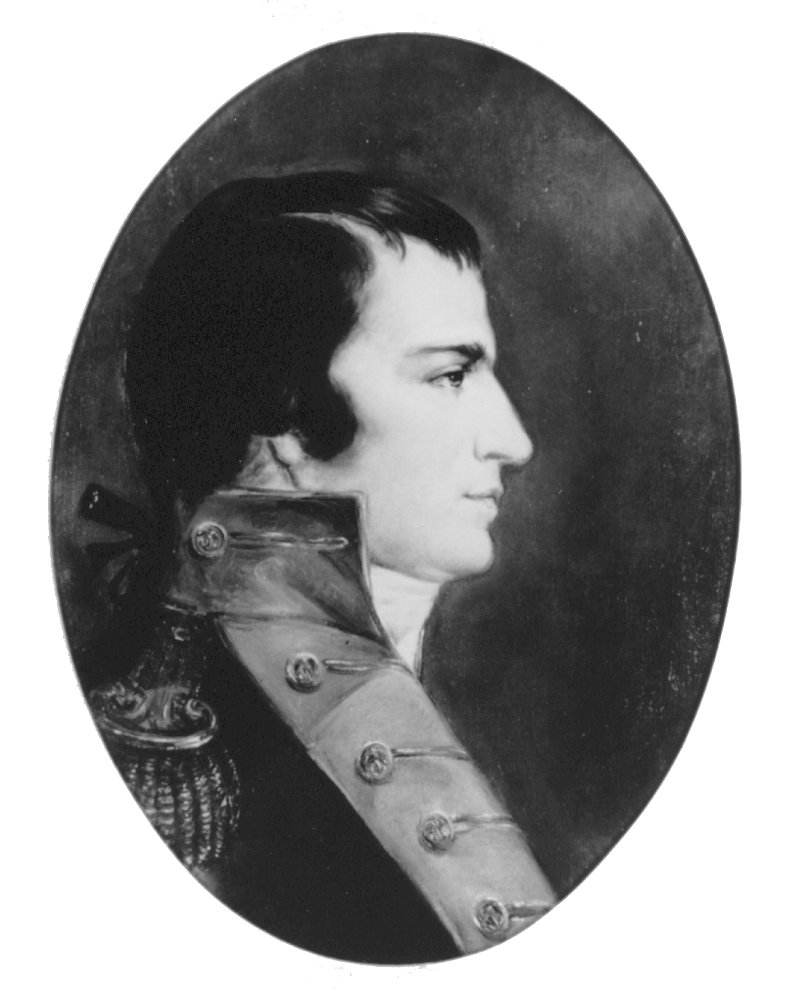
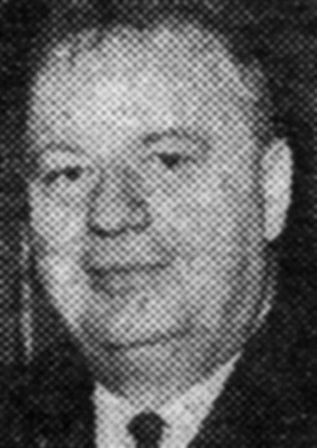
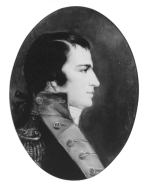
William Ward Burrows—born in South Carolina on 16 January 1758—was described by a contemporary, Washington Irving, as a "gentlemen of accomplished mind and polished manner." Burrows served with the state troops of South Carolina in the American Revolution, before he moved to Philadelphia. There, on 12 July 1798, he was made Commandant of the Marine Corps—newly established by President John Adams. The first Marine Corps units to be organized by the industrious new commandant were those that served in the ships of the fledgling United States Navy. During the first seven months in which Burrows held the office of commandant, the United States embarked on the Quasi-War with the French Republic. At that time, the headquarters of the Corps was at Philadelphia, then the capital of the country. In addition to organizing his headquarters staff and securing a barracks for transient personnel, Burrows established the Marine Band under the original leadership of Drum Major William Farr. On 4 July 1800, that musical organization first appeared in public at Tun Tavern, in probably the last social function attended by marines while they retained their headquarters at Philadelphia. Burrows reached Washington, D.C., on 15 July, to establish the new Marine Corps headquarters there in the wake of an advance detachment sent down in March to protect the Washington Navy Yard, then under construction. The remainder of the marines in Philadelphia were soon shifted down to Washington, and during that time, Burrows received a promotion to Lieutenant Colonel Commandant. Although the Quasi-War with France continued into the autumn of 1800, Congressional pressure to reduce the cost of a naval establishment frustrated some of Burrows' efforts to establish the Marine Corps on a solid, permanent footing. Nevertheless, the Corps was able to weather the storm because another armed conflict, the Barbary Wars, highlighted the nation's need for marines. Burrows resigned his post as Commandant for health reasons on 6 March 1804, and he died exactly one year later, on 6 March 1805. Under his leadership, the United States Marine Corps gained a firm and enduring foundation upon which succeeding leaders built the Corps of later years.
Photo: USMC History Division |
Bill Gonyo |
19-N-32040 |
83k |
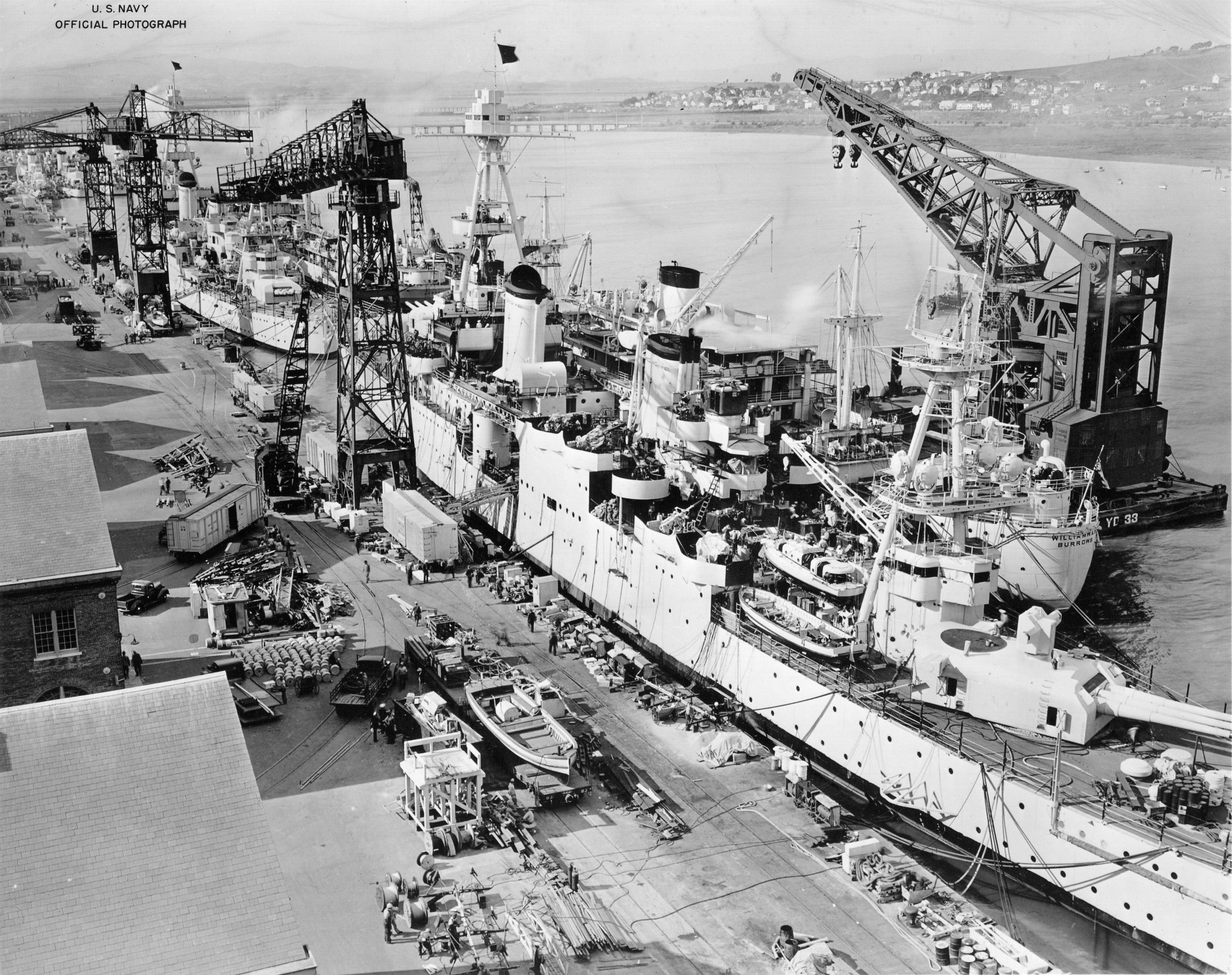
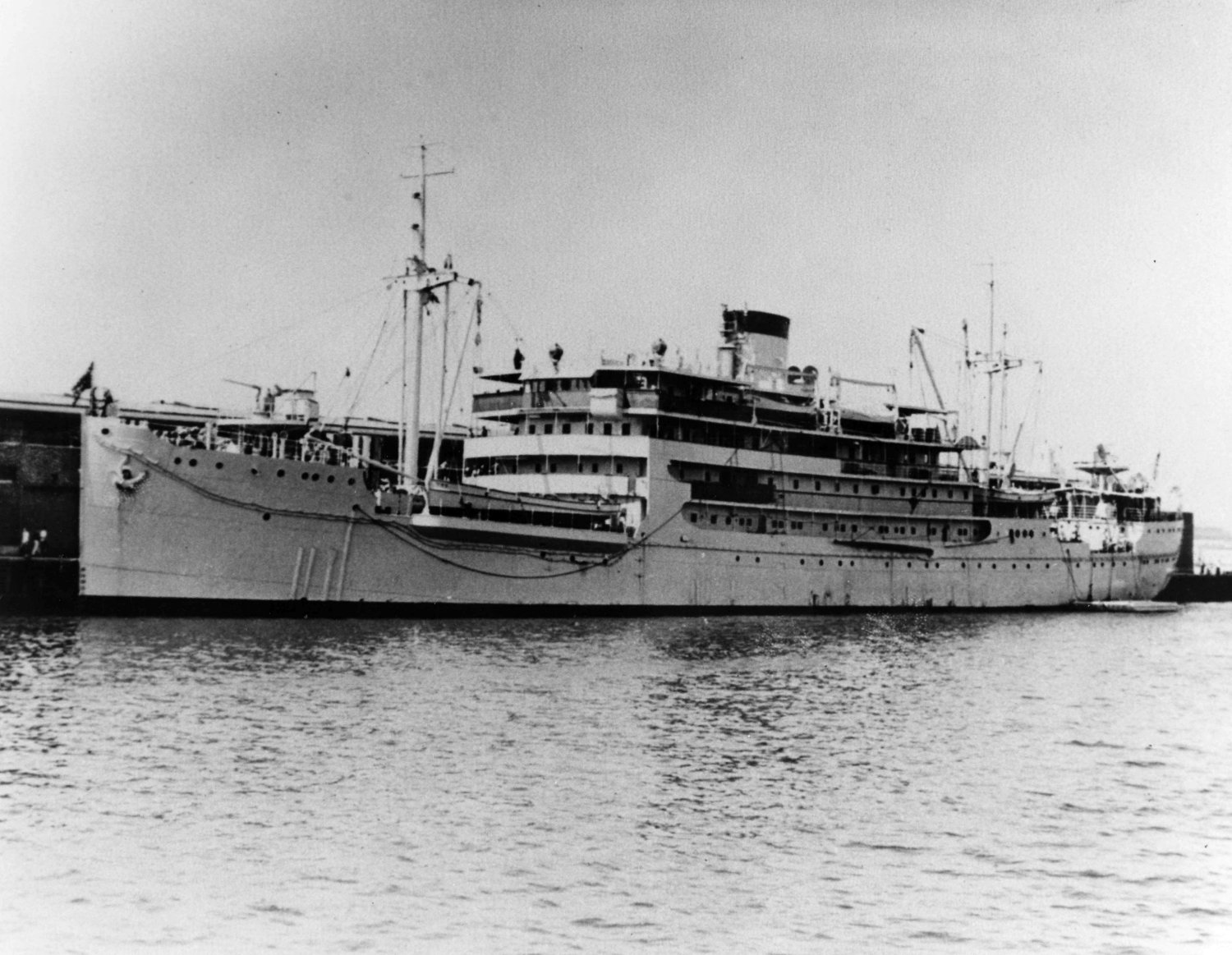
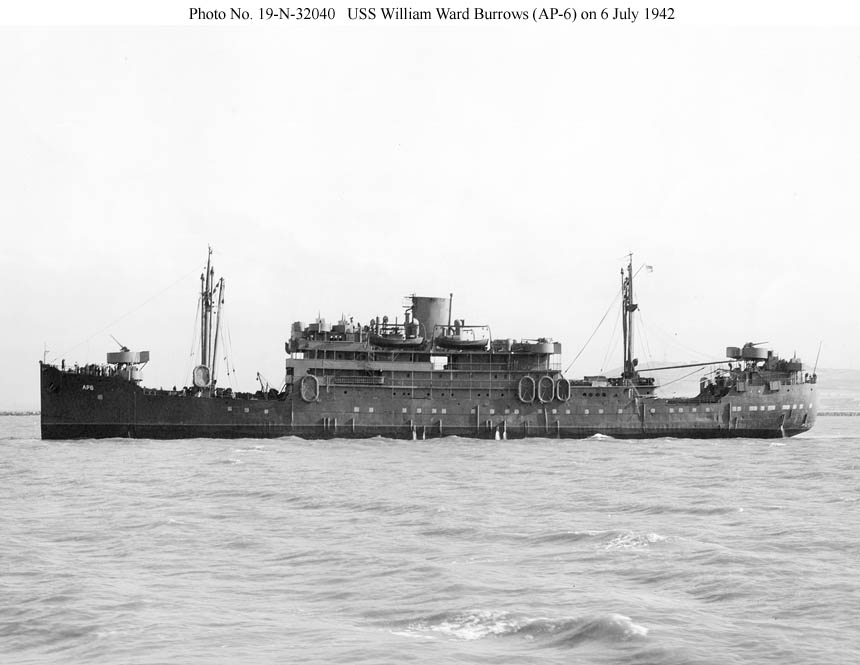
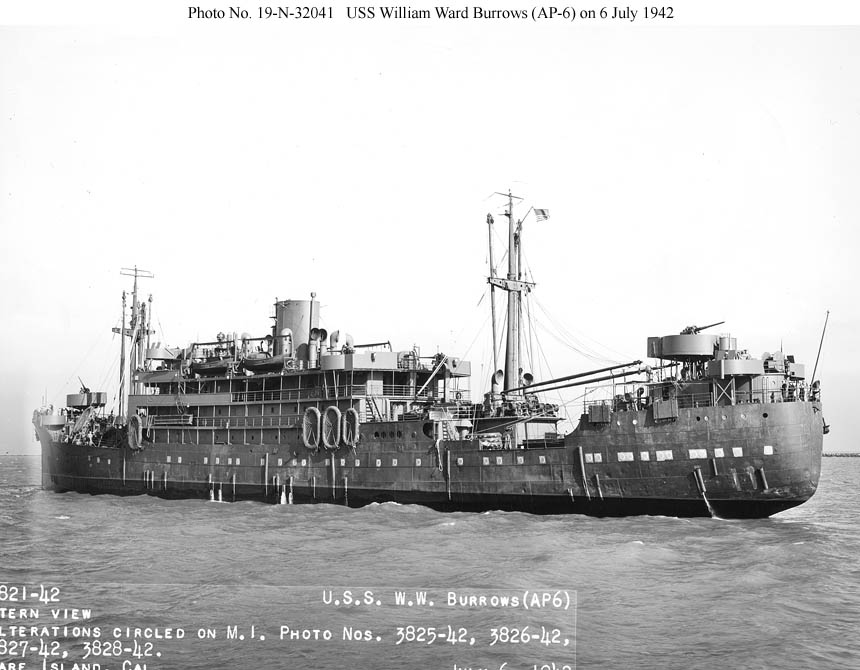
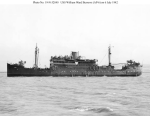
USS William Ward Burrows (AP-6) underway in San Francisco Bay near Mare Island Navy Yard, 6 July 1942.
Her 3"/23 guns have been replaced with 3"/50 guns, note the two 3"/50 guns at the after end of the main superstructure, and the sponson in the forward well deck for
the 50-foot motor launches has been removed.
US National Archives, RG-19-LCM, Photo #'s 19-N-32040 and 19-N-32041 US Navy Bureau of Ships photos
now in the collections of the US National Archives. courtesy Shipscribe.com. |
Mike Green |