Click On Image
For Full Size Image |
Size |
Image Description |
Contributed
By |
 |
27k |
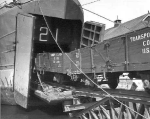
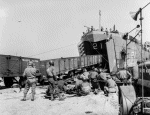
The Coast Guard-manned USS LST-21 ferries rolling stock from a British port to a French beach railhead, forming a floating link between the railroads of the
two countries. Priceless hours, unloading and reloading, are saved by running packed cars into the track-equipped tank deck of the LST and carrying them across the
English Channel to roll down a tracked ramp onto French rails. From this point, trainloads of war equipment and supplies move smoothly and swift off the fighting fronts.
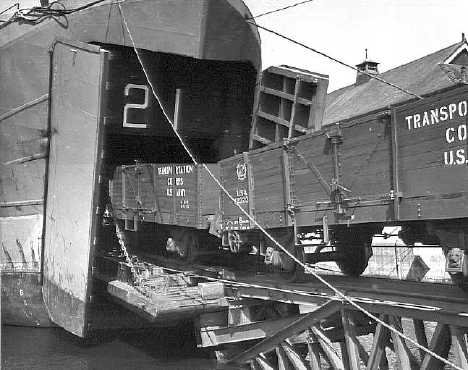
USS LST-21 loading railroad cars at Southhampton, England in June 1944. |
LST Home Port Web Site |
 |
20k |
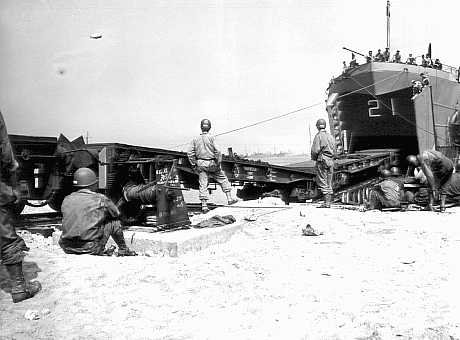
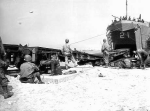
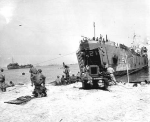
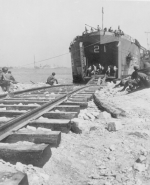
USS LST-21 unloading at Normandy in June 1944 |
LST Home Port Web Site |
 |
22k |
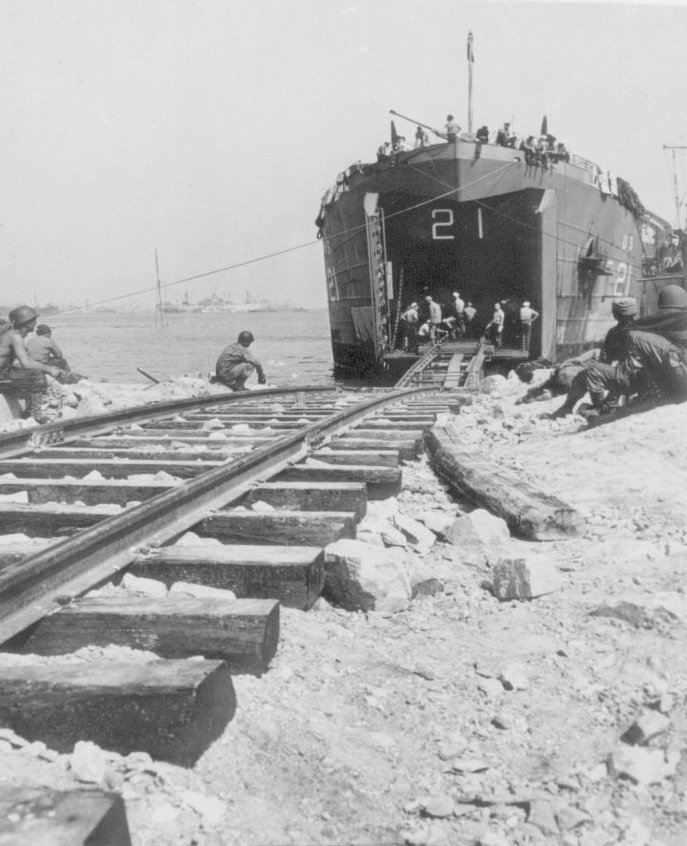
USS LST-21 unloading at Normandy in June 1944 |
LST Home Port Web Site |
 |
27k |
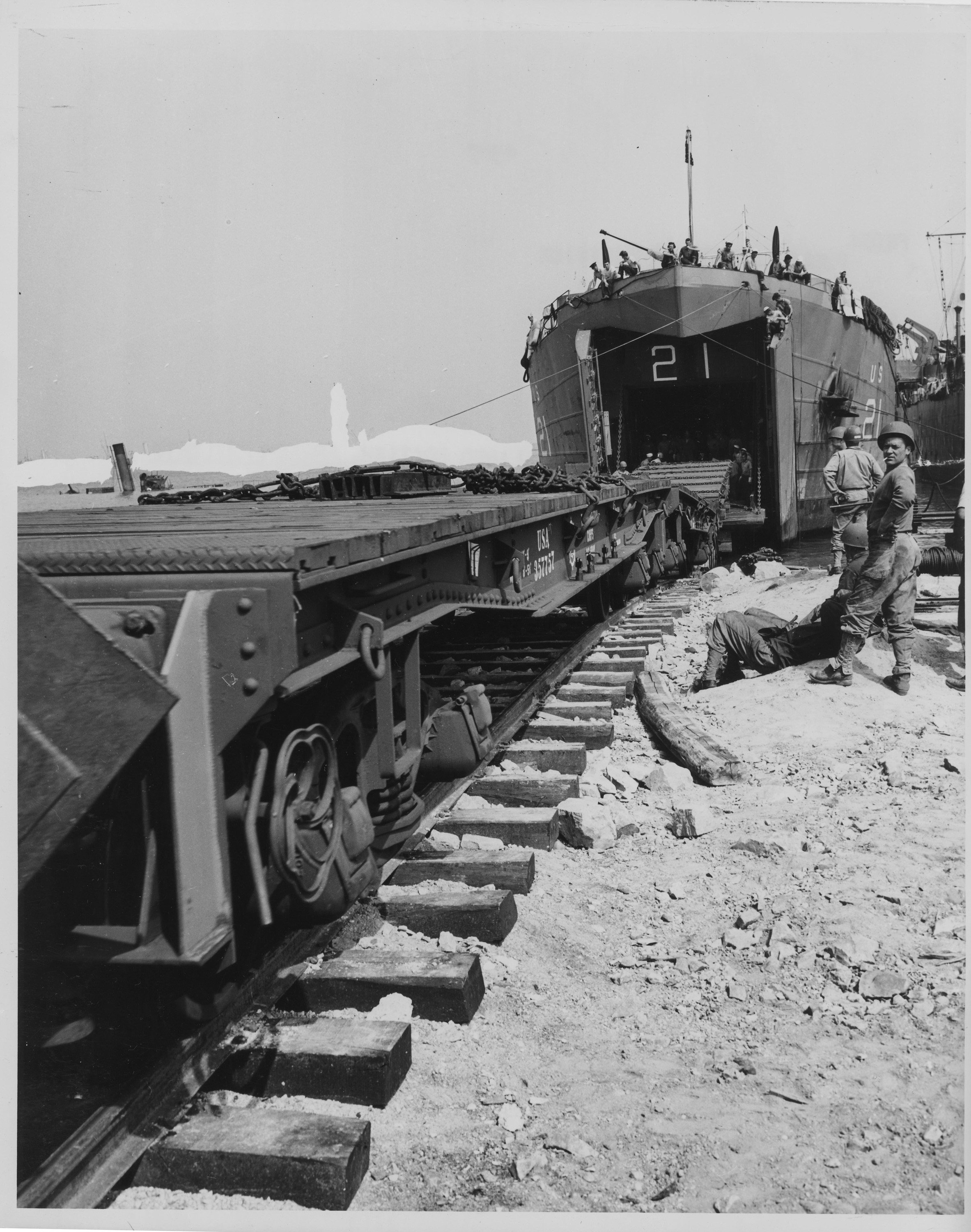
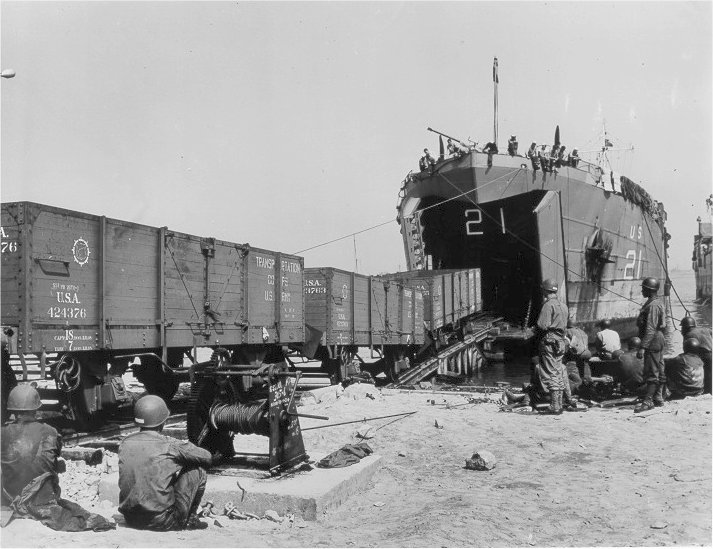
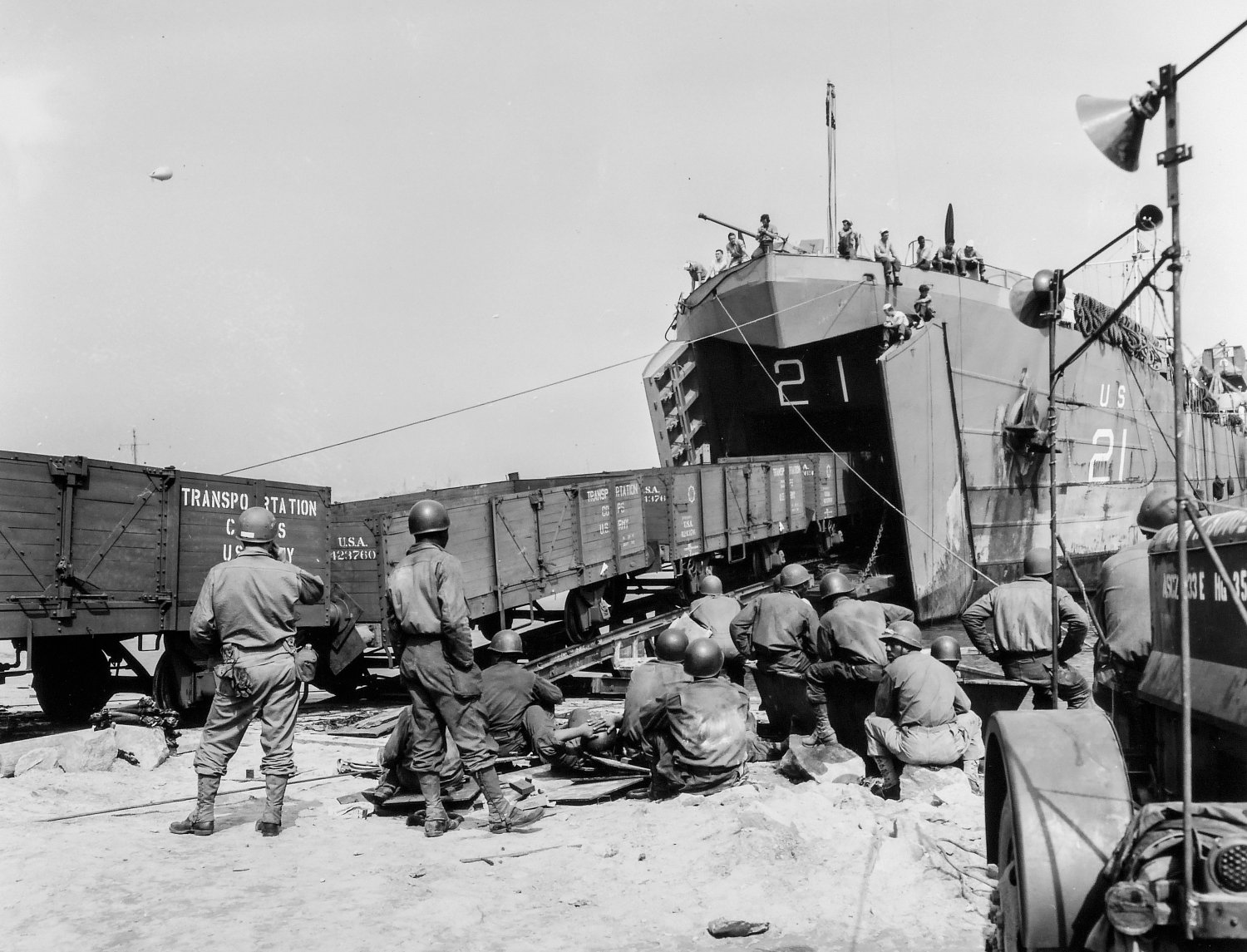
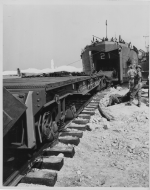
USS LST-21 unloading railroad cars at Normandy in June 1944. LST-21 served as a railroad bridge between the United Kingdom and France.
US Coast Guard photo #220-8 |
John H. Kellers GM3/c USS LCT-539 |
 |
1079k |
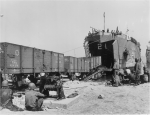
A slightly different view of USS LST-21 unloading railroad cars at Normandy in June 1944. Note the censors erasure of the ships in the background.
US National Archives photo # 26-G-4389, a US Coast Guard photo now in the collections of the US National Archives |
Dave Kerr |
 |
86k |
USS LST-21 unloading railroad cars at Normandy in June 1944.
US Coast Guard photo # Photo No. 4387 from the US Coast Guard Historian's Office. |
Mike Green |
1016002111 |
309k |
USS LST-21 unloading railroad cars at Normandy in June 1944.
U.S. National Archives Identifier 12003981, a U.S. Coast Guard photo. |
David Upton |
 |
96k |
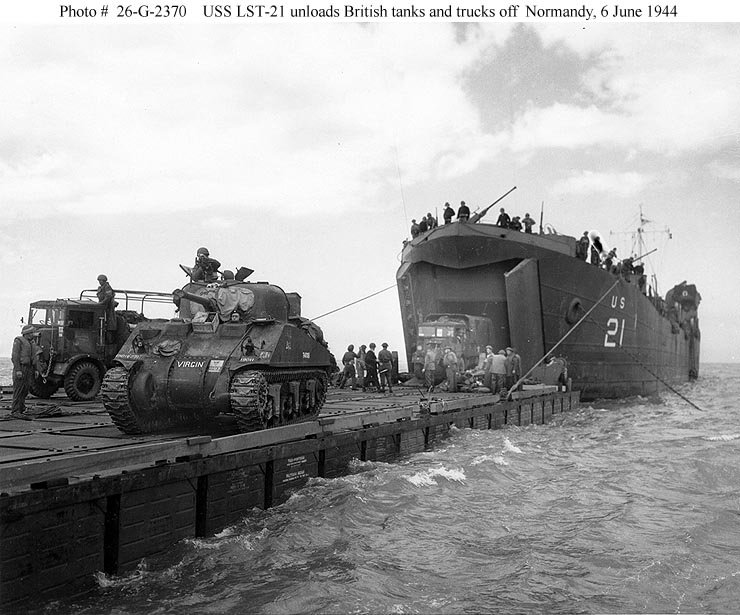
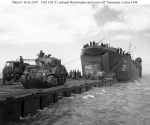
USS LST-21 unloads British Army tanks and trucks onto a "Rhino" barge during the early hours of the invasion, 6 June 1944. Note the nickname "Virgin" on the "Sherman" tank at left.
USCG photo # 26-G2370 from the US Coast Guard collection in the US National Archives.
| John H. Kellers GM3/c USS LCT-539 |
 |
77k |
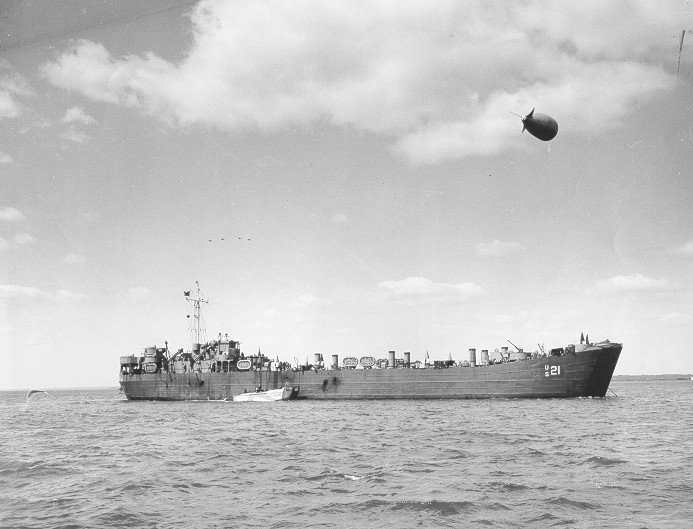
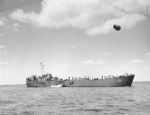
US LST-21 at anchor, date and location unknown.
US Coast Guard photo from the US Coast Guard Historian's Office. |
Don Leal USS LST-19 and USS LST-67 |
 |
51k |
USS LST-21 unloading supplies onto a "Rhino" ferry after D-Day. LST-21 supported the initial British landings off Gold Beach on 6 June 1944 and thereafter continued to supply Allied forces along the Normandy coast.
US Coast Guard photo # 2366 from the US Coast Guard Historian's Office. |
Mike Green |
 |
113k |
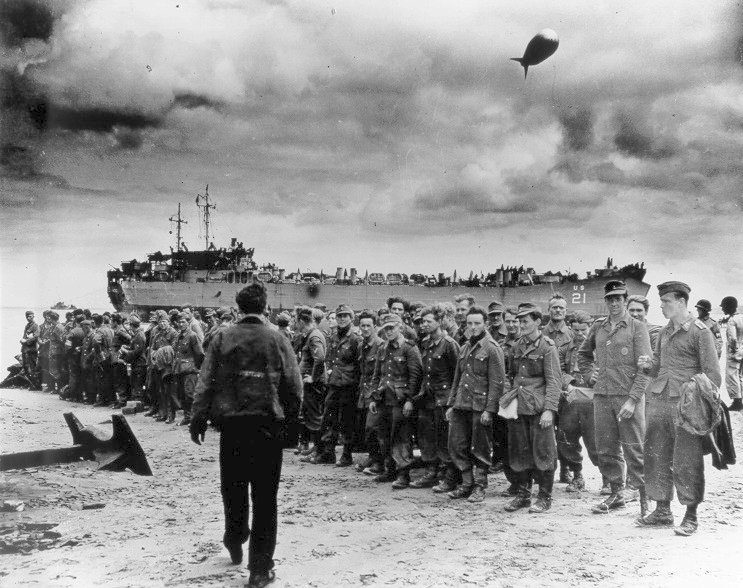
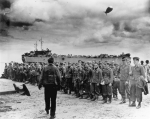
USS LST-21, 12 July 1944, in the background, flying a barrage balloon to discourage attacks from low-flying German aircraft. In the
foreground German POWs, captured in the St. Lo. area during the Battle of Normandy lined up on the beach awaiting transportation to England. Many of this group of prisoners are Poles, Austrians and Czechs.
US Coast Guard photo from the US Coast Guard Historian's Office. |
Mike Green |
 |
51k |
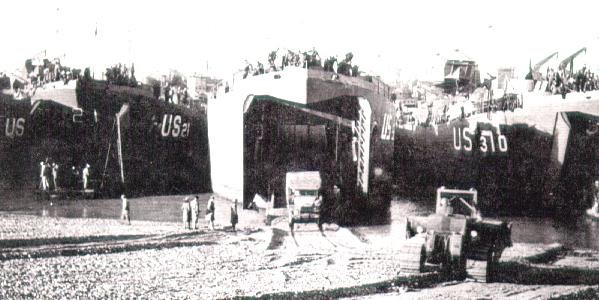
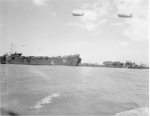
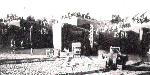
USS LST-21, USS LST-519 and USS LST-310, off-loading vehicles and equipment at La Havre, France summer of 1944 |
LST 519 web site |