| Click On Image For Full Size Image |
Size | Image Description | Contributed By And/Or Copyright |
|
|---|---|---|---|---|
 | 4.3m |
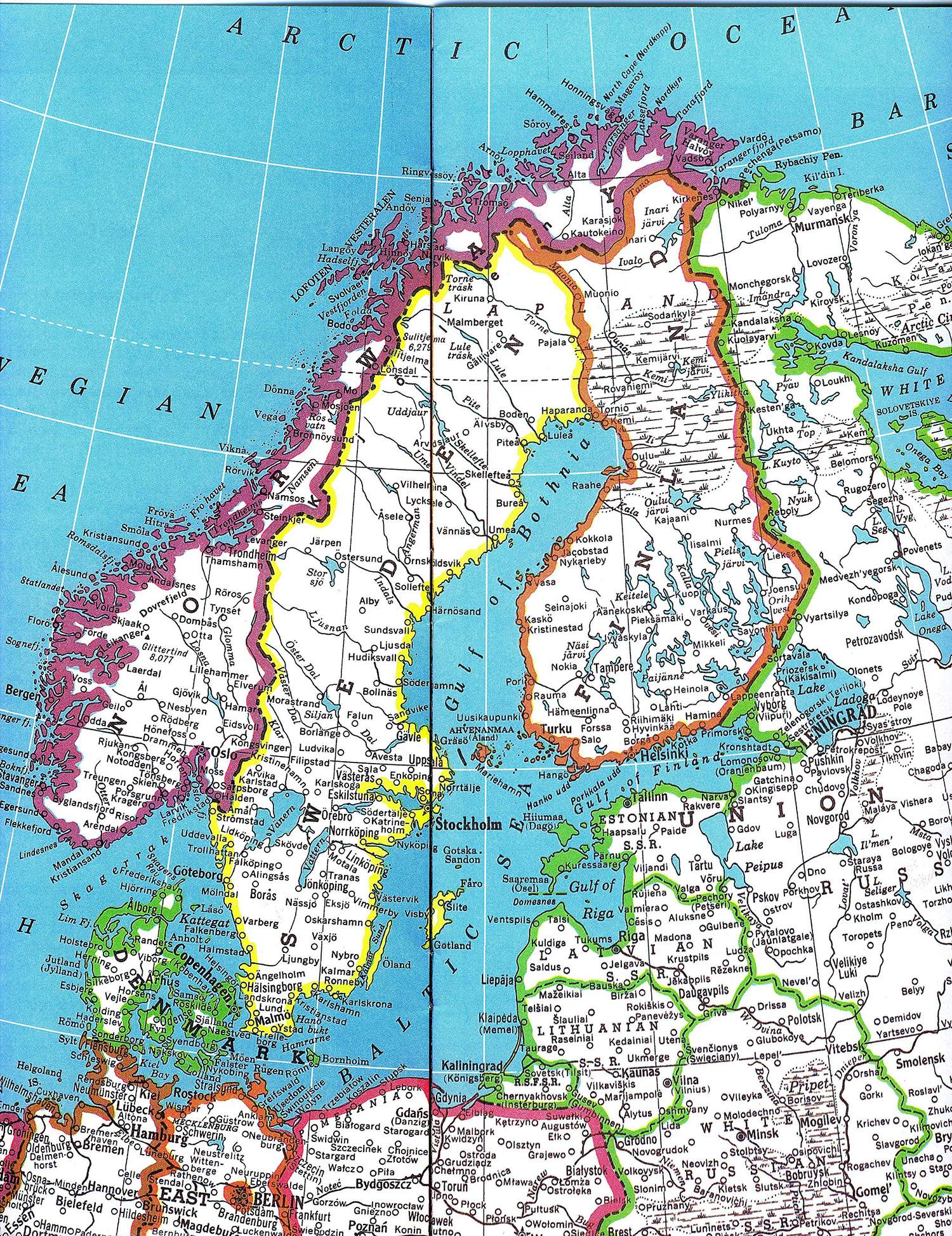
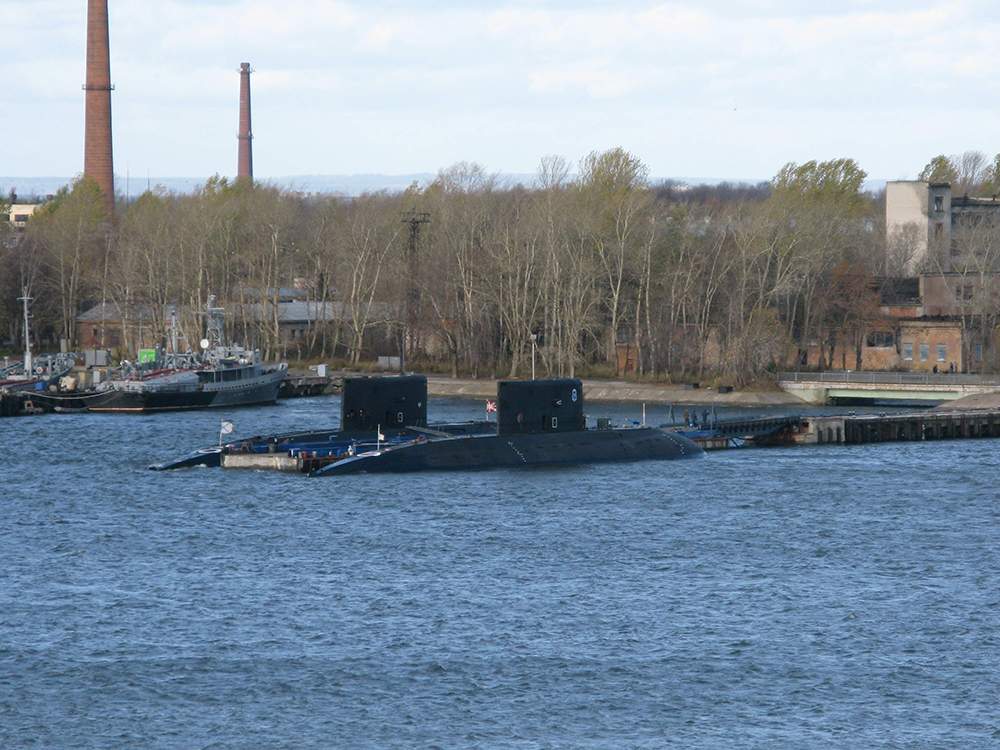
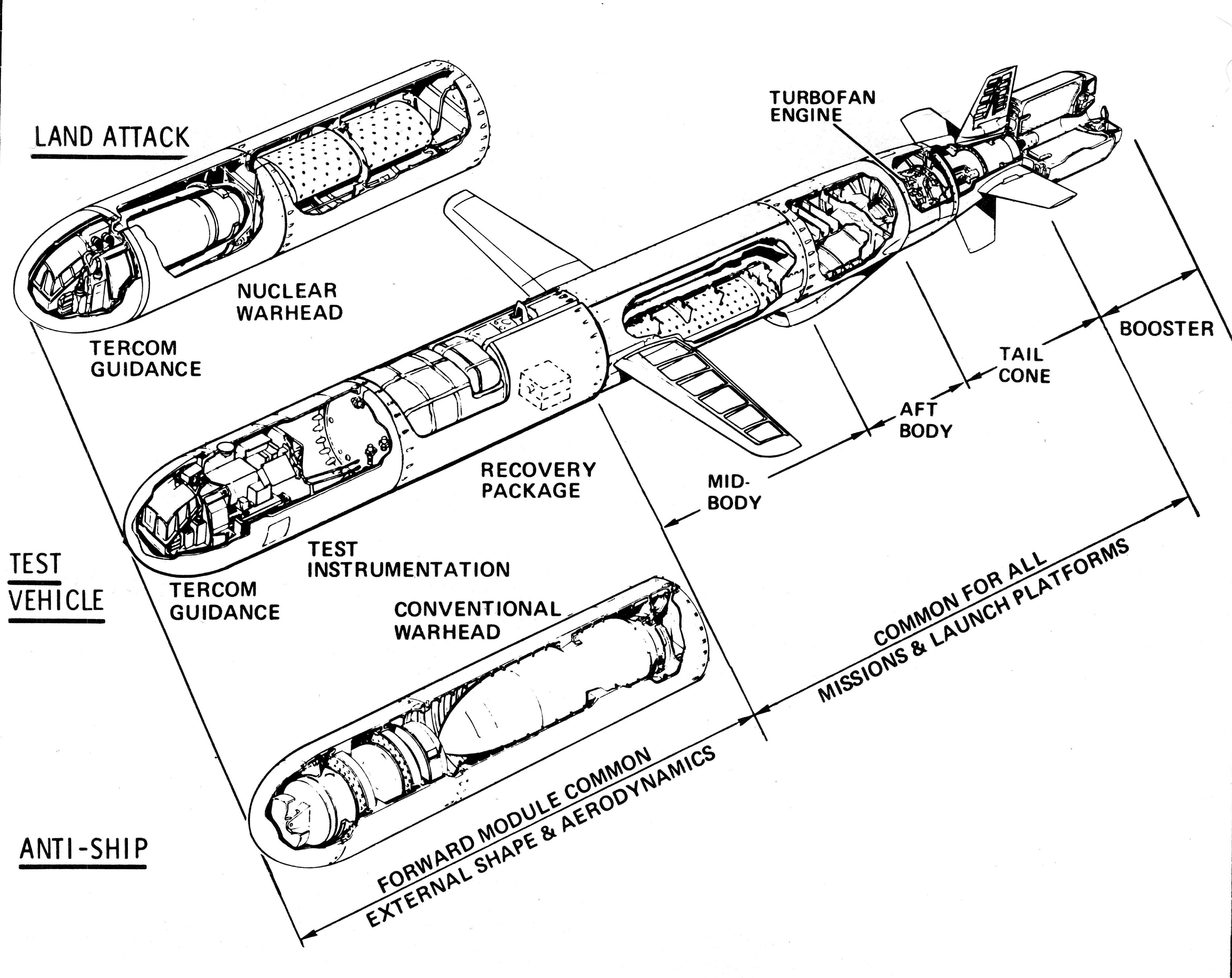
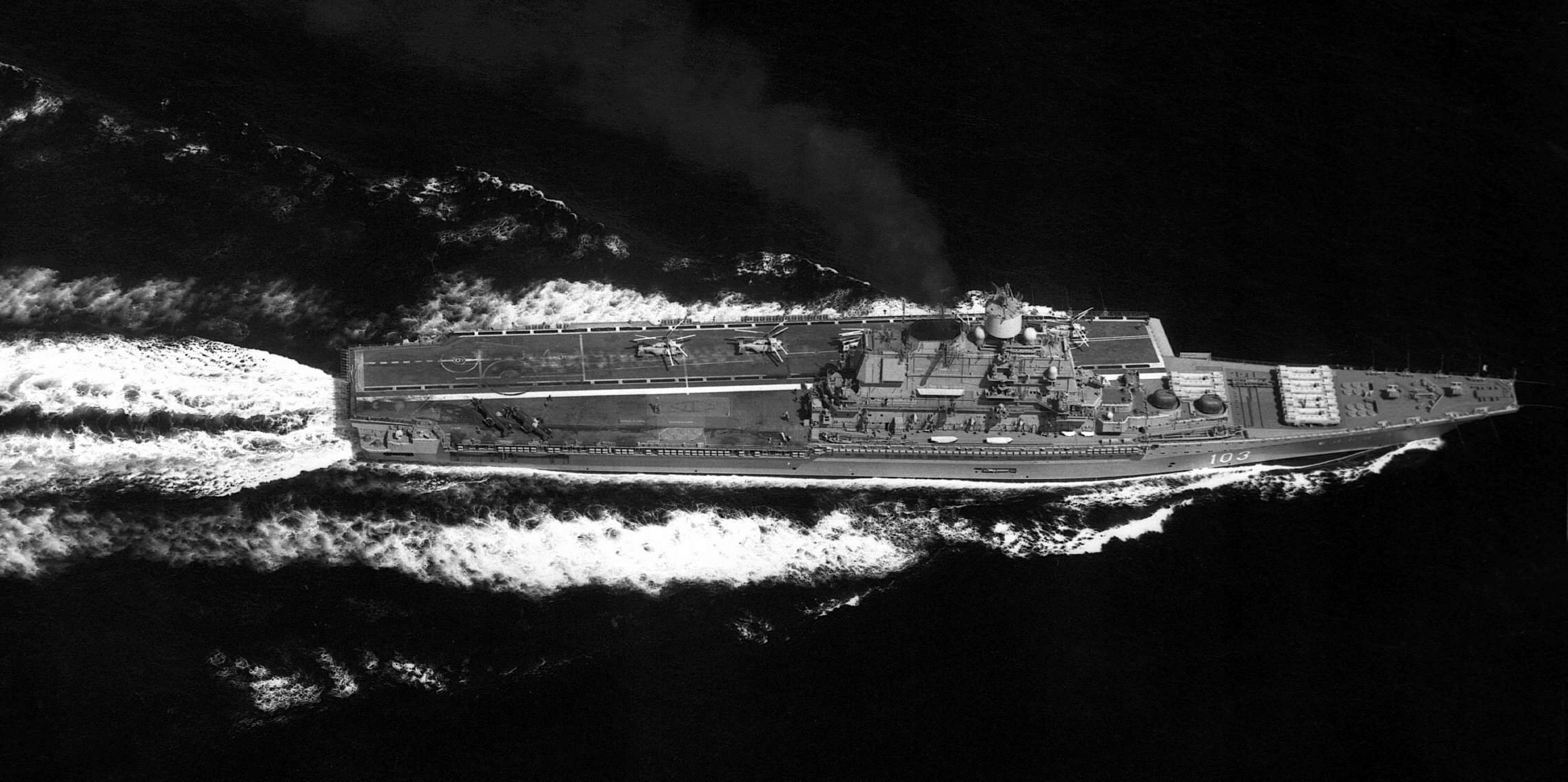
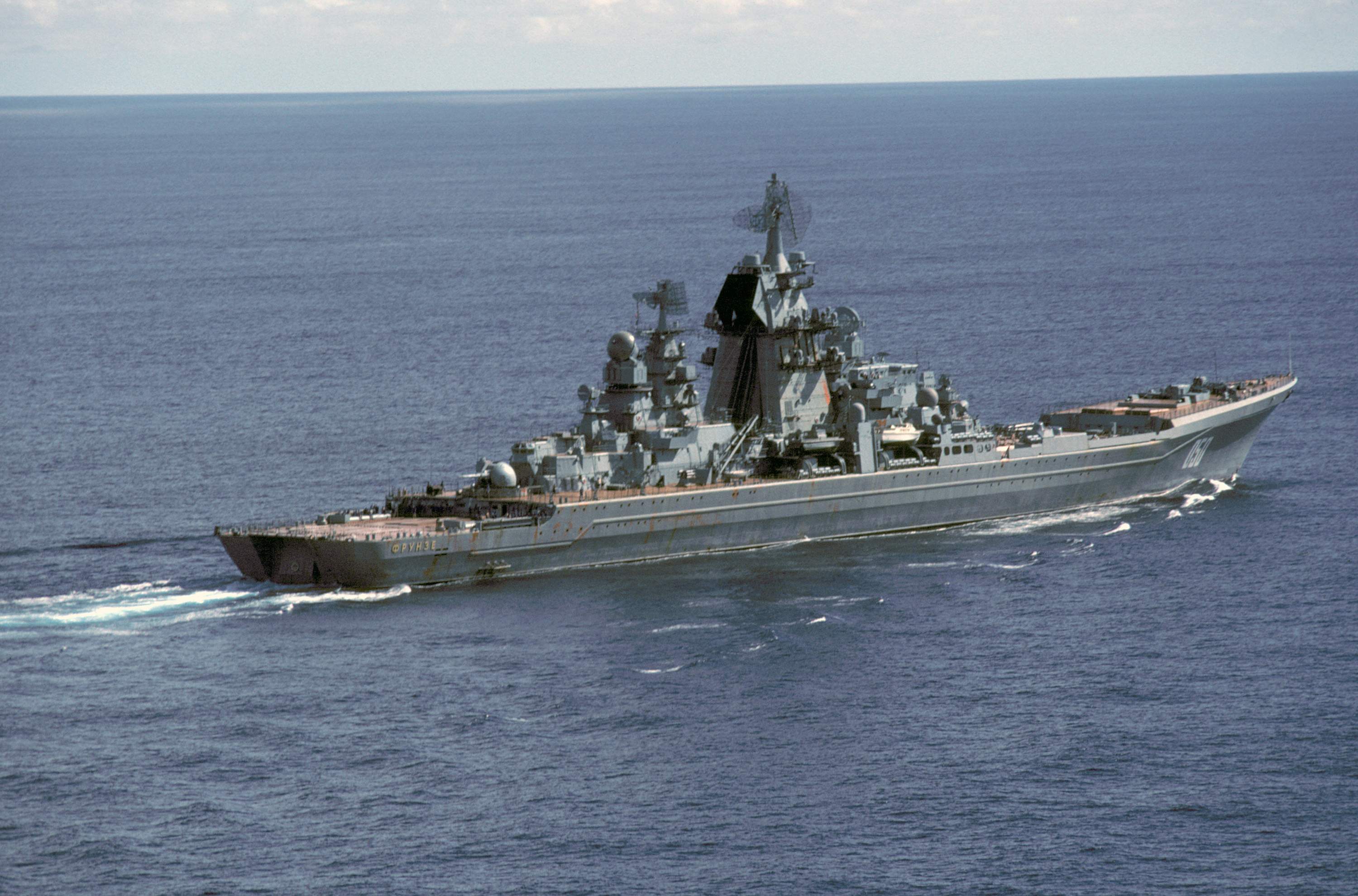
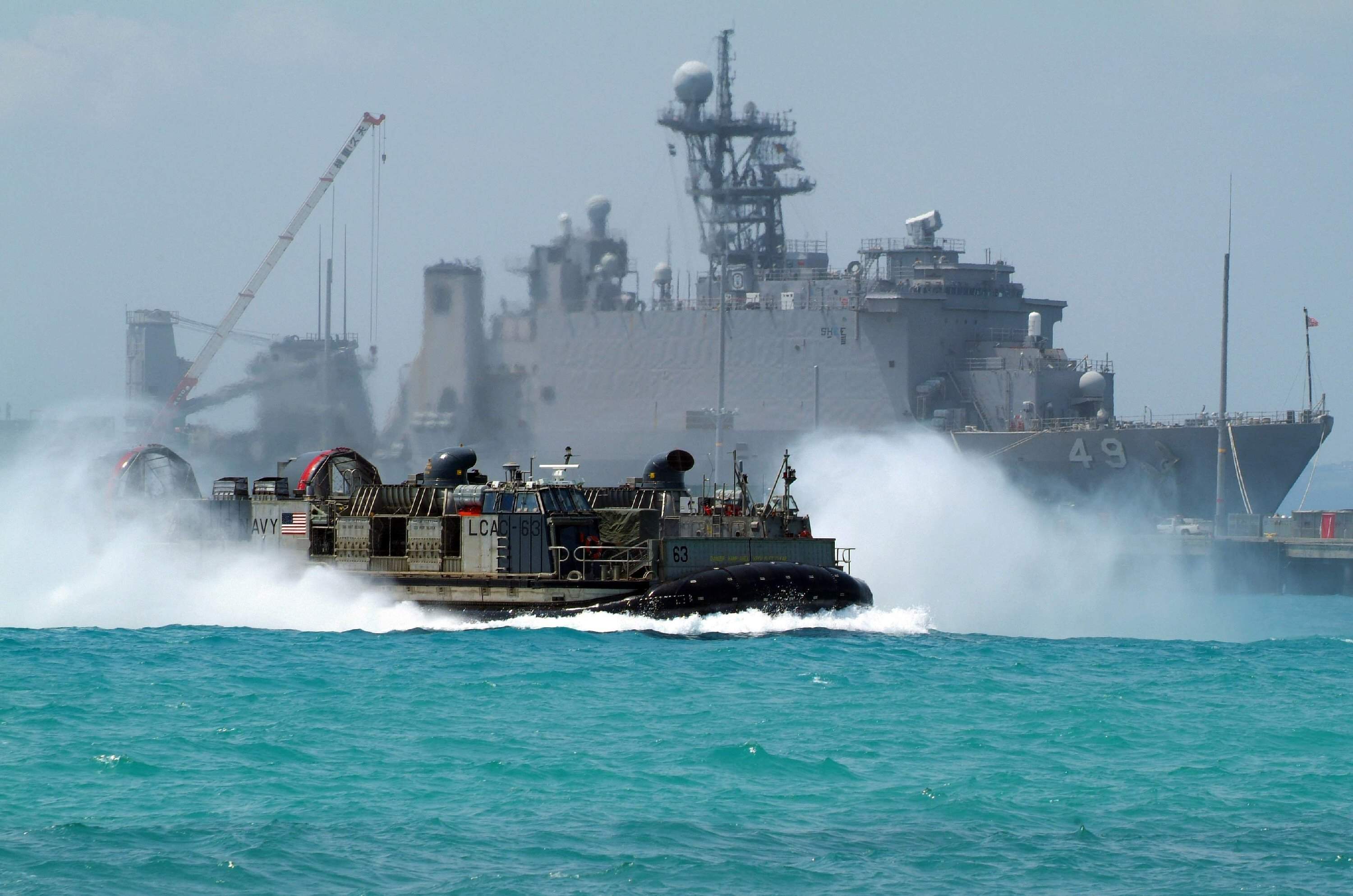
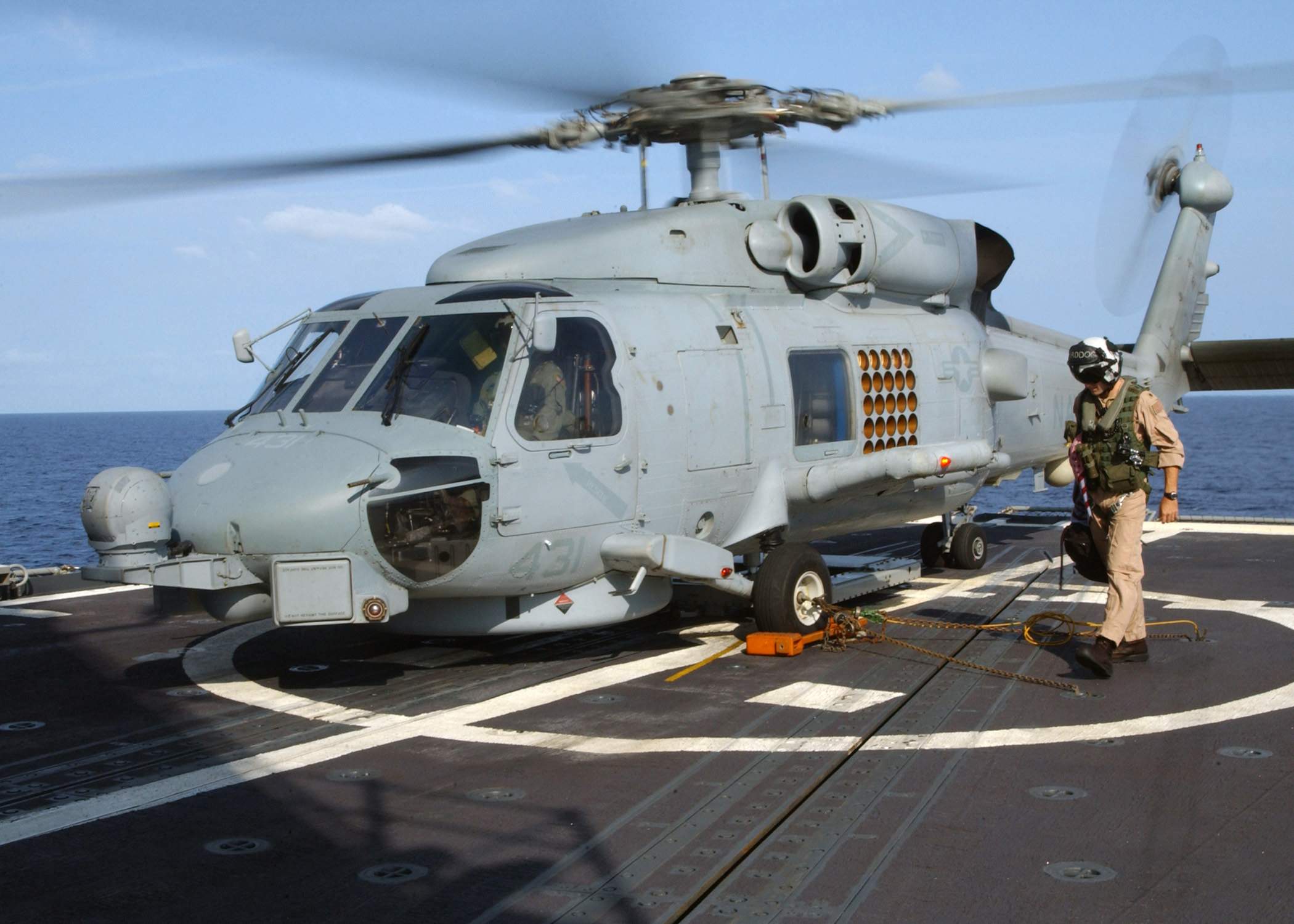
In 1980 Ronald Reagan won a landslide election. He promised to revive American power and the American economy and to stop the Soviet advance. The former president Carter had obviously failed to do both. President Reagan insisted that the issue was not a long-term competition with the Soviets but what it had been in 1946: a fight to the finish between the free West and a Soviet Russian Communist system bent on enslavement, a thing he called the "Evil Empire". The president and George Shultz, his secretary of state, revived the old idea of the 1940's and 1950's, that the Soviets were expansionist abroad because they were unaccountable at home. Reagan probably was convinced that he could win the cold war by his new director of central intelligence, William Casey, a veteran of the World War II Office of Strategic Services and even before Reagan was inaugurated, chairman of his Interim Foreign Policy Group. He convinced Reagan that the Soviets were already in such deep economic trouble that, if enough stress was applied, they might, in the president's words, "implode". One of the new ideas, reflected in a Maritime Strategy, evolved since 1979 at the Naval War College, was a return to a more aggressive concept of operations the Navy had espoused in the 1950's and 1960's and this reversed thinking of the 1970's that feared that pressure on Soviet strategic submarines would lead a panicky Soviet leadership to fire before they were lost. They did not realize that the Soviets planned to surge submarines into the Atlantic to split NATO and hunt down U.S. strategic submarines from the outset. The Diesel-electric "Kilo" class with eight 21-Inch torpedotubes and their shorter hull form was well suited to the enclosed waters of the Baltic and was built at Komsomolsk. They appeared in the late 1970's and were intially produced at a rate of one a year. This rate later increased. Non-nuclear submarines construction continued in view of the high quality listening capabilities of these boats. In addition, certain specialised submarines were built. "Kilo" class and "Tango" class operational boats were coated with cluster Guard anechoic tiles and alll had a minelaying capability from their torpedo tubes. Others, many of them of European NATO navies, thought that convoy operations (i.e. direct protection of shipping) surely sufficed; why the dangerous run north? Instead of concentrating on directly protecting the sea route to Europe, the United States would seize maritime supremacy by advancing toward Soviet bases in a crisis, to track and promptly annihilate Soviet warships and submarines, including land-based aircraft in their bases, to prevent them from setting up a first-salvo ambush, keeping the Atlantic safe for NATO. U.S. submarines would attack Soviet strategic submarines, their most valuable naval assets, in their protected holding areas. At the least, that would tie down much of the Soviet submarine fleet, which would try to protect the strategic submarines. All of this was practical because the new administration was buying enough of the new systems developed over the previous decade, such as the F-14 fighter and Aegis. Once the Fleet had triumphed, it could change the dynamics of a war in Europe. It could, for example, afford to undertake risky attacks on the Soviet flanks, for example in the Baltic or on the North Sea coast as a Soviet army advanced through the willing Netherlands. Thus threatened, a Soviet army might have to stop or even pull back. Concern arose that if a fleet arrived close offshore in a crisis, the Soviets might attack it with nuclear weapons. Deterring such an attack became the major reason for nuclear Tomahawk land-attack missiles. Secretary Lehman once told reporters that conventional Tomahawks would destroy Soviet nuclear missile-carrying bombers at their bases. Tomahawk strikes could come from any coast or direction. Most Soviet air defenses could not detect Tomahawks and indeed air defense facilities would themselves be targets as they were in Iraq, to clear routes for bombers to penetrate inland. Other strategic targets would be ballistic missile submarine bases and ammunition depots. With Tomahawk, the United States could launch strategically destabilizing raids without nuclear weapons. A Battleship Surface Action Group with Ticonderoga class cruisers might proceed as a surface action group far ahead of other forces to attack Soviet barrier ships such as the Kiev classes (pictured here is the Soviet Aircraft Carrier Baku with Kamov Ka-27 helicopters and Yak-38 visible on her deck)& Kirov classes [pictured here is an aerial starboard quarter view of the Soviet Kirov class guided missile cruiser Frunze underway] with Tomahawk anti-ship missiles. Surface action groups could attack ground targets from 700 miles' range, forcing the Soviets to dilute their surveillance and attack forces away from aircraft carriers. Nuclear Tomahawk land-attack missiles became operational in June 1984. As a national strategic asset, Tomahawk was a reserve weapon for trans-attack and post-attack coercion of surviving Soviet authorities. As a theatre reserve nuclear weapon in NATO and the Far East, it was a deterrent against any Soviet hope of pre-emptively destroying all U.S. nuclear forces. Most important, since carrier battle group escorts could attack Soviet bases and command posts with nuclear Tomahawks, this weapon removed any perception on the part of the Russians that they might attack aircraft carriers with nuclear weapons and get away without nuclear retaliation. At the time it was known that the Soviets took the threat of amphibious operations, even in places like the Kola Peninsula in the North and near Leningrad very seriously. This credible threat forced the Soviets to hold back large forces, which would otherwise have been used on the Central Front. The U.S. Navy bought new air-cushion landing craft which could operate over a far wider variety of beaches than their predecessors, hence could more easily threaten the areas the Soviets considered most sensitive. The Soviets understood. Their naval exercises began to concentrate on home defense against an attacking U.S. fleet rather than on open-ocean attacks on Western shipping. They strengthened their coast defenses- which meant reducing the treat they could deploy against a NATO army on the Central Front. The new U.S. naval strategy was associated with a new force goal: fifteen operational carrier battle groups (which meant more than fifteen carriers) and a six-hundred-ship fleet. Both the Maritime Strategy and the U.S.Army's dOctober rine, AirLand Battle showed an aggressiveness hitherto absent in NATO. NATO Europeans were less than enthusiastic but it suggested to many in Eastern Europe that, in the event of war, Allied forces might liberate their countries. If the Soviets wanted to preserve the status quo they had better avoid war. Exercises supporting the Maritime Strategy were elements of psychological warfare intended to demoralize Soviet leaders. The navy practiced the initial contingency operation, the immediate advance of ASW forces to threaten Soviet submarine bases and transit lanes. Western fleets practiced strikes from the Norwegian Sea and the North Pacific. Clearly concerned about this, Soviet leaders focused on negotiating arms treaties at a time when the Soviet Union's economic survival needed all their efforts. The Baltic Sea, a body of water which the U.S. Navy's surface warriors seldom saw in the 1980's refers in the minds of many Americans to Scandinavia. It is a finger of water jabbing 1,000 miles inland from the North Atlantic. It runs along the Northern coast of Europe and extends northward between Sweden and Finland. It washed the shores of Denmark, the Federal Republic of Germany (West Germany), the former German Democratic Republic (East Germany), Poland and the USSR, including Latvia, Lithuania and Astonia, independent countries before WWII but then claimed by the Soviet Union. Entrance to the Baltic is through the Skagerrak and Kattegat straits between Denmark on the south and Norway and Sweden on the north and east. The Baltic is about the size of California. It's deepest near Stockholm, at almost a quarter of a mile and at it's shallowest near the east and south. Submerged rocks, sandbanks and shoals make the Baltic a navigator's nightmare. It becomes especially treacherous as thick fogs roll in to cover the iron grey sea in the fall and winter winds whip the sea into a frenzy, finally freezing much of it over each year. In the first half of that decade, however, others thought it was primarily the province of the Soviet Union with the Soviet Fleet, homeported at Kronshtadt near Leninggrad. For hundreds of years, the Baltic Sea has served as a strategic waterway for its surrounding states, providing access to the North Sea and beyond. But the Baltic is much more than a 1,000-mile-long body of water. She is a source of food, a livelihood for some of the nearly 400,000,000 people who live in the eight countries that border her blue-grey waters. She is history, having seen the rise of the Vikings, who called her shores home. She has seen great battles between Sweden and Russia throughout the 17th and 18th centuries; battles that rivalled Trafalgar in ferocity and size. She witnessed deadly, quiet duels between German and Russian submarines in both World Wars. She had seen the number of independent states shrink from eleven before World War I to eight in the early 1980's, all victims of Soviet conquests. In those days, merchant vessels and fully armed warships flying the hammer and sickle were plying her waters. Her importance to that Eastern Bloc had grown rapidly as had the Warsaw Pact merchant and naval fleets. She had four of the USSR's top ten ports and all the coastlines of East Germany and Poland. The Baltic had a geographic and economic position for the USSR that was not unlike that of the Gulf of Mexico for the United States. But the "Great Northern Sea," as the Scandinavians call it, was also the site of capitals of both Norway and Denmark, 90% of Denmark's port facilities and 30% of West Germany's harbors. She boasted all the havens for the sea-going trade for Sweden and Finland, as well as the capitals of these strictly neutral, though western-oriented countries. This great concentration of maritime and industrial activity, coupled with nearly the entire populations of NATO allies Norway and Denmark and friendly neutral Sweden, made this body of water an area of prime concern for the United States and her allies in Northern Europe. The Baltic would also become the northern flank of any potential war in Central Europe. The mission of BALTOPS'85 had changed little since the first BALTOPS, show-the-flag exercise to maintain the U.S. right to sail in international waters, even those in the Soviet Union's backyard, 15 years before and increase U.S. Navy tactical proficiency in a strategically vital and challenging sea and air environment. Commander, Destroyer Squadron Fourteen CDS 14 was tasked with exercising freedom of navigation in the Baltic and U.S. support for Northern European NATO countries and neutral alike. To do this, he was assigned a BBSAG (Battleship Surface Action Group) of six ships: Aylwin (FF-1081), Halyburton (FFG-40), Iowa (BB-61), Merrimack (AO-179), Pharris (FF-1094), and Ticonderoga (CG-47). Together with naval and air forces from the Federal Republic of Germany, Denmark, the Netherlands and the United Kingdom, multilateral tactics in the areas of anti-aircraft, anti-surface, anti-submarine and amphibious attack and defense were conducted. Also, for the first time in BALTOPS'85 a Personnel Exchange Program (PEP) to swap officers and sailors among the participating units was implemented to sustain interoperability, promote goodwill and to foster professional understanding among NATO countries. While BALTOPS had been an annual event for some time, BALTOPS'85 brought several new ships and systems into the Baltic. The Soviets regarded Spruance class destroyers and the new Ticonderoga class cruisers, large new surface combat ships, ordered by Secretary of the Navy John Lehman to be armed with deepened vertical-launch systems to permit them to fire Tomahawks, with alarm. They had armed themselves to make saturation attacks on perhaps two to four concentrated aircraft carrier battle groups. Through the Walker - Whitworth spy ring and a similar spy ring in the Netherlands they were aware that these ships with Outboard Tactical Intelligence Systems would confront the Soviet Union with a dispersed capability to spy on their command posts and to call in strikes. Tomahawk land-attack missiles could evade most Soviet air defenses. The guided missile cruiser Ticonderoga was equipped with the Aegisphased array radar and computer system capable of providing a complete picture of all air and surface units for miles in all directions. With a large communications system and up-to-the-second data provided by AEGIS, Ticonderoga made an ideal flagship for CDS 14. But she was not just another good-looking radar. Ticonderoga was armed with a pair of 5-Inch guns, anti-air, anti-surface and anti-submarine missiles and torpedoes, ready to defend her battle group or take the fight to the enemy. The Perry Class guided missile frigate Halyburton (FFG-40) was the first ship of this class to operate with two of the newest helicopters in the U.S. Navy, the SH60B "Sea Hawk." The "Sea Hawks" of HSL 42 worked close with Halyburton in providing long-range antisubmarine defense as well as anti-ship missile targeting information. Two Knox-Class frigates, operating bow-mounted and variable-depth sonars, gave added protection against the quiet diesel-electric driven submarines that are so much at home in the shallow waters of the Baltic. Aylwin and Pharris also carried Seasprite helicopters to help carry out their antisubmarine warfare assignment. The reactivated battleship Iowa brought state-of-the-art electronics, anti-surface missiles and electronic warfare capabilities, along with her massive, unmatched capability of those wonderful 16"- and 5"-batteries to BALTOPS'85. By far the largest warship in the exercise, the 58,000 ton dreadnought was the first battleship to operate in the Baltic since the end of World War II. Capable of engaging targets at long range with anti-ship missiles, other assorted weapons & and her nine 16"-guns, Iowa also provided the battle group with the gunnery muscle needed to effect a simulated landing on the Danish island of Falster. The ability of a battle group to project force was directly proportional to its ability to stay in the area where it was needed. Their ability to stay on station was greatly aided by the addition of Merrimack to the task force. During BALTOPS'85, Merrimack conducted underway refuelings with ships from all the participating countries. Obraztovyy …Druzhnyy…Berlin…Modka …Nawigator were not the names of Baltic port cities but names of Warsaw Pact ships that took turns monitoring the battle group. The daily presence of East German, Polish and Soviet ships, patrol planes and helicopters was proof of their concern over the battle group's presence in the Baltic. It was easy to understand the high surveillance the battle group attracted when you take up again the example given of the Gulf of Mexico. This task group, combined with allied ships, constituted one of the most powerful naval groups ever to sail the Baltic and its presence near the coastal waters of East Germany, Poland and the Soviet Union was regarded with as much attention as a major Soviet task force operating off the U.S. Gulf Coast. Having Warsaw Pact ships and aircraft tailing the task force in the Baltic had been expected and was for many a sailor the first time to see Eastern Bloc ships up close. Watching a guided missile destroyer like Obraztovyy or a guided missile frigate Druzhnyy, bristling with missiles, guns and radars, brought home the reality of a well-equipped and capable Soviet Fleet. Other Eastern Bloc shadowers included the East German frigate Berlin, their largest warship and a Soviet Modka hydrofoil boat armed with anti-ship missiles. The task force was closely examined by the East German intelligence collection ship Jasmund and the Polish intelligence gathering vessel Nawigator, both of which carried communications monitoring equipment and were designed from the keel up as intelligence collectors. Units from "the other side" were watched as they closed the battle group. As they steamed near the task group's formation, their crewmembers were observed taking photos and writing notes. With their sensors listening and their radars turning, they would close and dangerously maneuver through the formation, like Berlin, change courses to circle around or simply fall in alongside for a time. The list of ports visited reads like a travel guide to Skandinavia and Northern Europe: Aylwin stopped at Copenhagen and Aarhus, Denmark and Kiel, West Germany. Halyburton showed the flag in Aalborg, Denmark, Kiel and Goteborg, Sweden. Iowa visited Le Havre, France before entering the Baltic Sea by way of Copenhagen, Aarhus and Oslo, Norway. Iowa's final European port visit was to Kiel, West Germany. Merrimack visited Copenhagen, Kiel and Oslo. Pharris tied up in Aalborg, Aarhus and kiel, while Ticonderoga with Commander Destroyer Squadron Fourteen staff embarked, was seen in Aarhus, Kiel and Goteburg. In each port, the Danish, Norwegians, Swedish and German people opened their homes to these sailors, sharing customs, traditions, lifestyles and cuisine. This person-to-person contact made for the most favourable memories of the cruise. In between nights, that were spent dining with gracious local hosts, the restaurants located in each port offered a wide variety of foods, ranging from native cuisine to such exotic foreign fare as Chinese, French, Italian and even McDonalds. The Danish, Norwegian and Swedish ports were filled with historical sights to see, particular from the age of the Vikings and the Renaissance. In Germany, guided tours to West Berlin and Luebeck (Lübeck) - the old Hanseatic capital, then on the former East German border, brought home the stark line dividing the East and West. Organized tours of Hamburg and Kiel showed the horrors of war through the scars of battle, still evident amid the tremendous growth of the rebuilt German cities. The King of Norway, the Crown Prince of Denmark, dozens civilian officials ranging from prime ministers to mayors and military leaders from several countries were hosted and given VIP tours of the ships. After the visits were over, many a sailor, comparing notes, was heard praising the liberty ports in Northern Europe, one of the reasons they joined the Fleet… | Based on text, courtesy BALTOPS'85 Public Affairs Officers Lt.Cdr. Alan Dooley, CINCUSNAVEUR and Lt.Cdr. Charles Smith, Iowa and Surface Warfare, courtesy of Pieter Bakels. | |
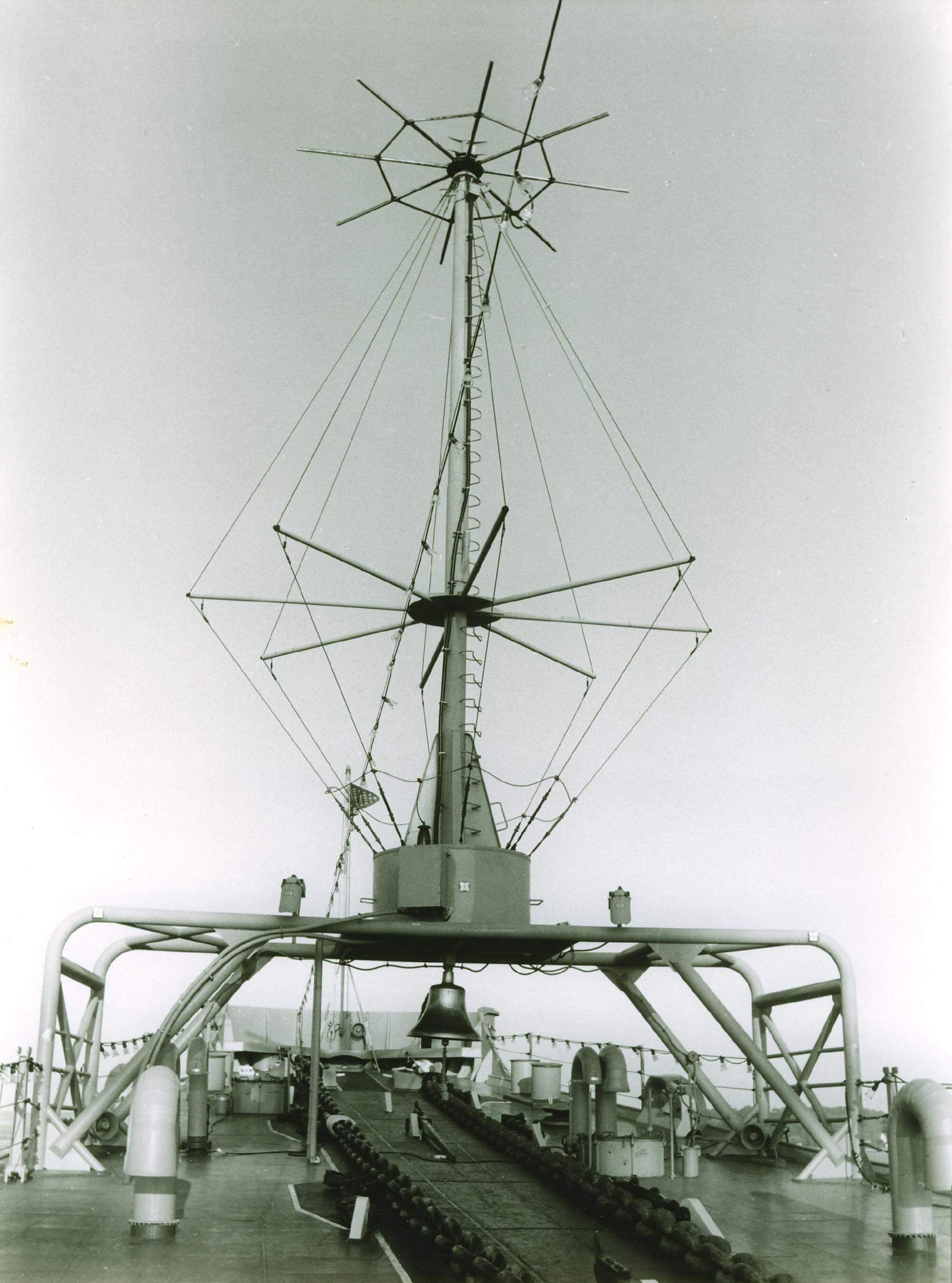 | 375k | View of the Iowa's (BB-61) bow section; conical-monopole high frequency antenna anchor chain & ship's bell while at Kiel in the Federal German Republic in 1985 during (Baltops"85). | Photograph courtesy of Pieter Bakels via Fred Willshaw. | |
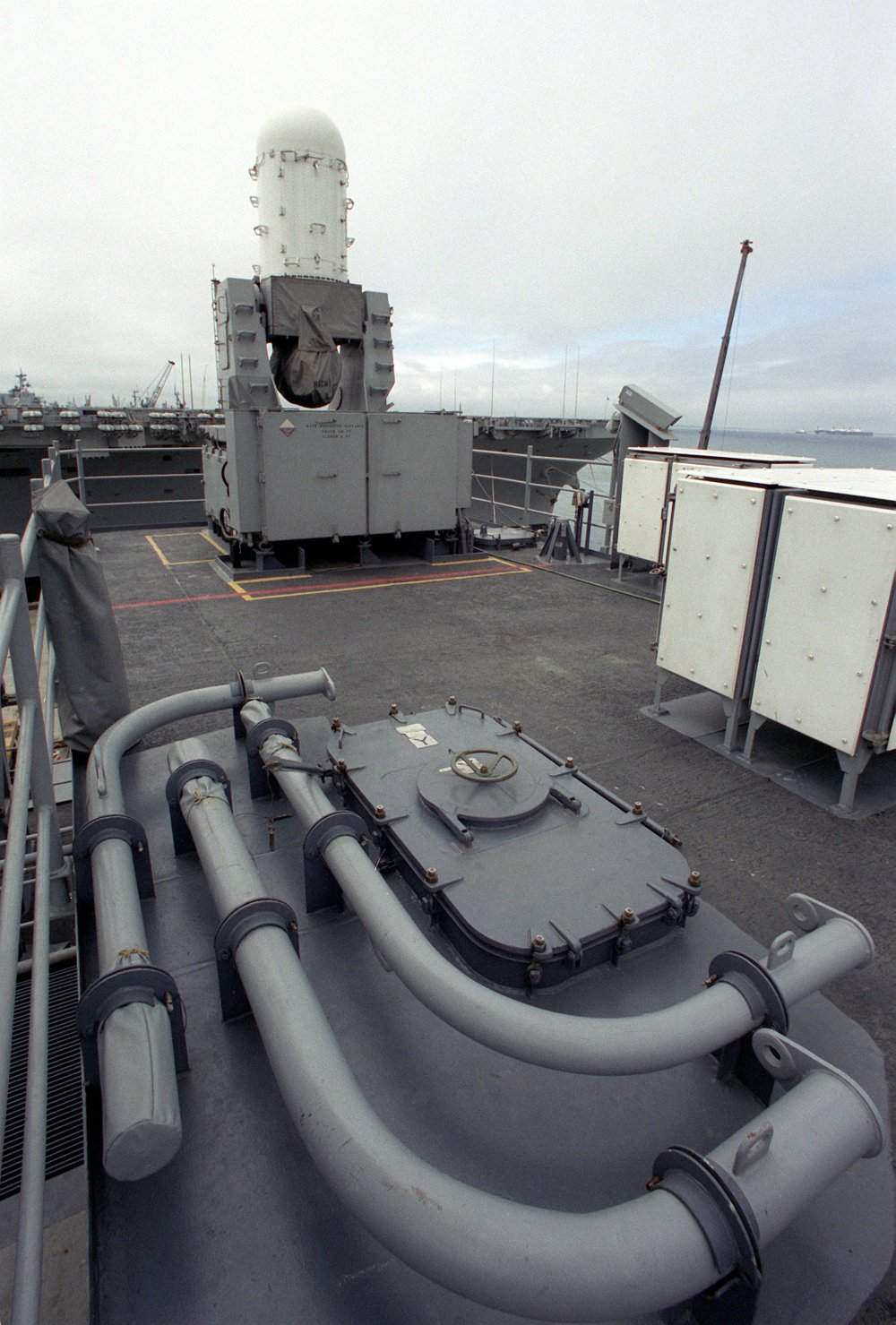 | 120k | A Mark 16 20mm/76-caliber Phalanx close in weapons system on the 05 level deck area of the battleship Iowa (BB-61). | Official USN photo # DN-SC-86-09564, by PHC Jeff Hilton, from the Department of Defense Still Media Collection, courtesy of dodmedia.osd.mil. | |
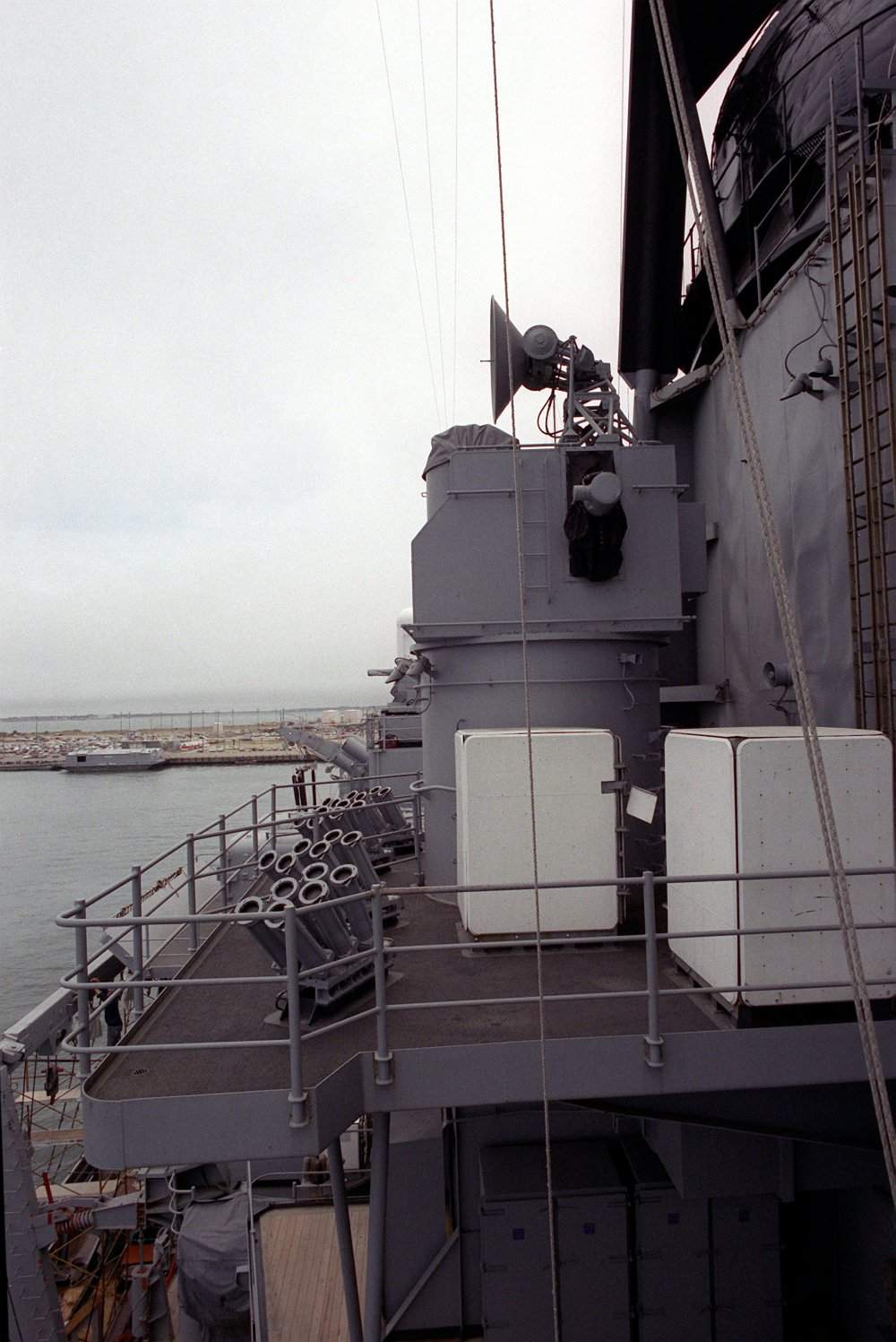 | 123k | A starboard view looking aft of the secondary battery director, the forward stack and the super rapid blooming offboard chaff launchers on the battleship Iowa (BB-61). | Official USN photo # DN-SC-86-09512, by PHC Jeff Hilton, from the Department of Defense Still Media Collection, courtesy of dodmedia.osd.mil. | |
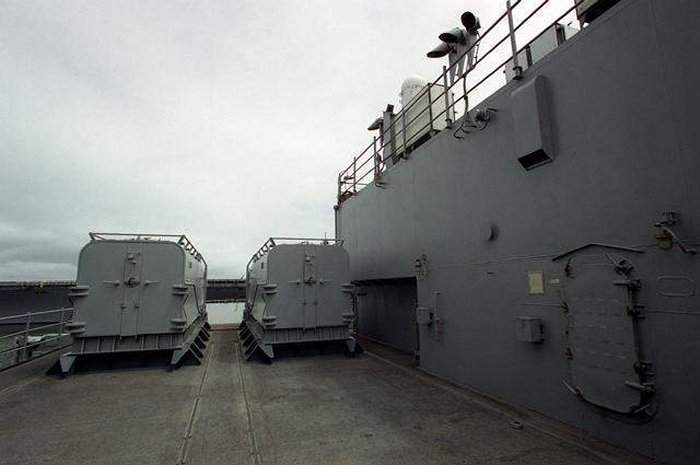 | 36k | The forward armored box launcher deck of the battleship Iowa (BB-61) showing the No. 1 and No. 3 Mark 143 Tomahawk armored box launchers. | Official USN photo # DN-ST-86-09505, by PH1 Jeff Hilton, from the Department of Defense Still Media Collection, courtesy of dodmedia.osd.mil. | |
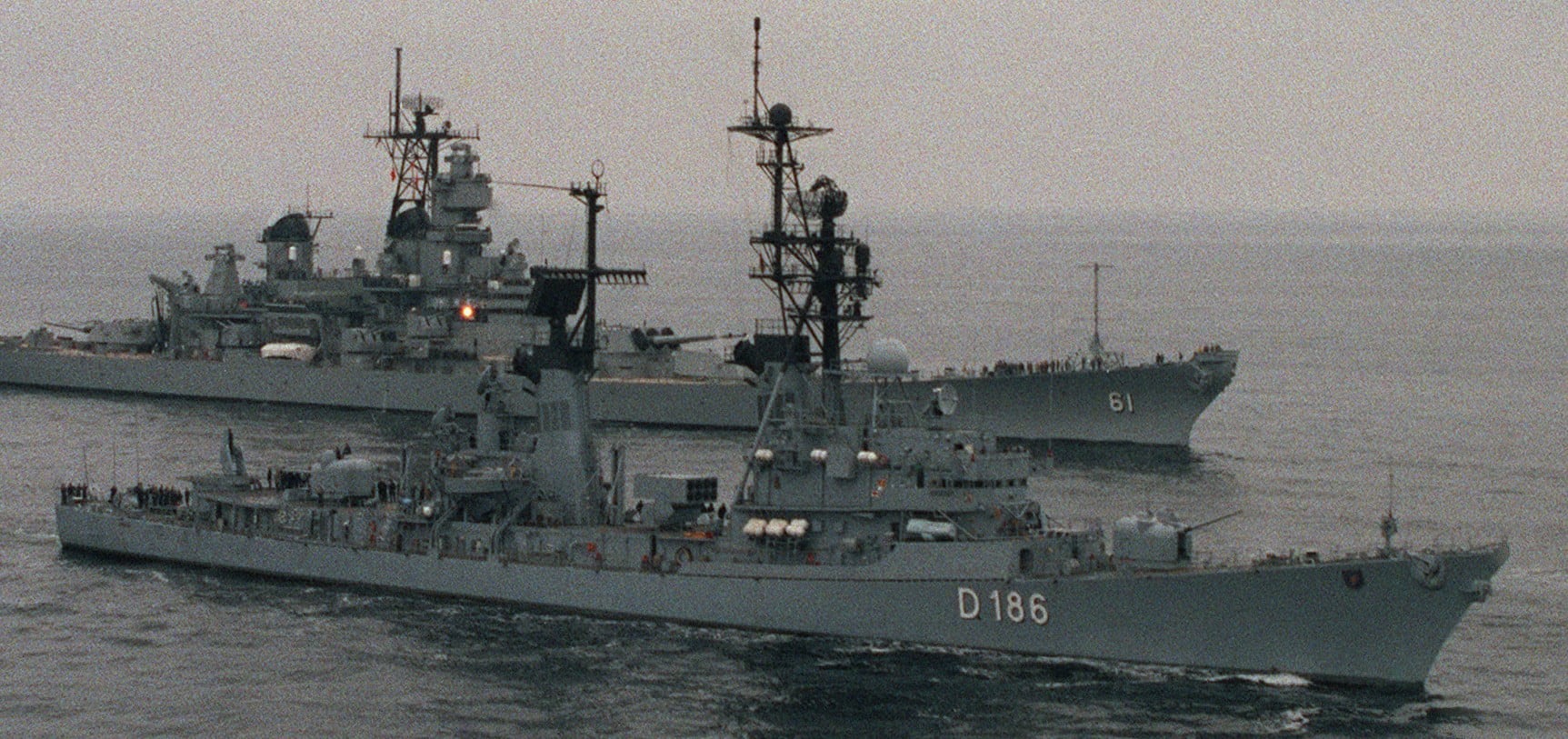 | 442k | On 20 September 1969, Lutjens-class guided-missile destroyer FGS Molders (D186) was commissioned, Kapitän zur See Gunther Fromm commanding. Here seen underway with Iowa (BB-61) during the NATO Exercise "BALTOPS '85" in the Baltic Sea, on 1 October 1985. | Photo courtesy of Deutsches Marinemuseum, Wilhelmshaven, Germany / Battleship Iowa, Pacific Battleship Center via Yu Chu. Photo added 10/02/19. |
|

| Back To US Battleship Construction Index | Back To The Main Photo Index | Back To The Battleship Photo Index Page |
This page is created by Pieter Bakels and Michael Mohl & maintained by Michael Mohl
All Pages © 1996 - 2025, by Paul R. Yarnall NavSource Naval History. All Rights Reserved.