Click On Image
For Full Size Image |
Size |
Image Description |
Contributed
By And/Or Copyright |
060100601
|
46k |
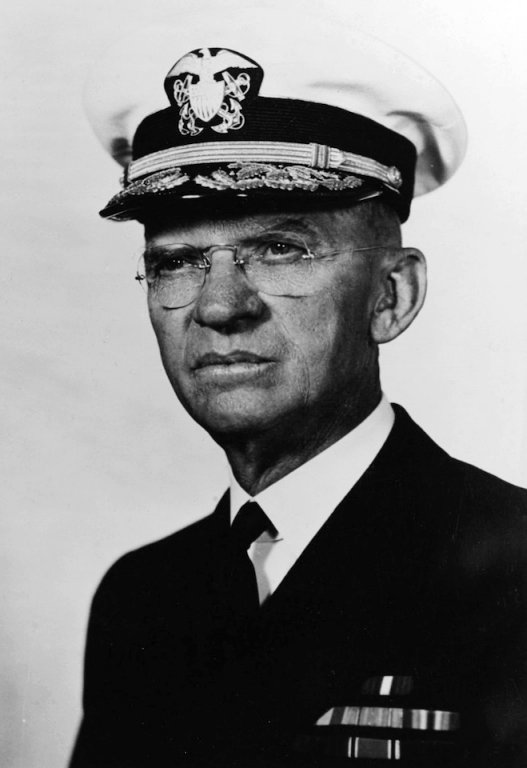
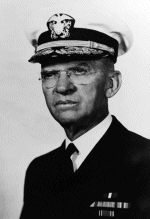
Julius Augustus Furer was born 09 October 1880 at Mosel, Wisconsin. Appointed to the United States Naval Academy in 1897, he graduated at the head of his class in
1901. After sea duty in Indiana (BB1) and Shubrick (TB 31), in 1905 he acquired a Master of Science degree from MIT. In the era of great naval expansion after the
Spanish- American War, Furer established a reputation for professional competence in his expeditious outfitting of the Navy Base at Charleston, South Carolina, which at that time lacked a physical
plant, natural resources, and a skilled shipbuilding labor force. While serving in the Philadelphia Navy Yard in 1911, he applied new theories of scientific management. His advanced thinking and
methods of procurement brought him the added task of purchasing all tools, machinery, and dock facilities for the Navy’s new base for the Pacific Fleet: Pearl Harbor. He installed the equipment
in 18 months, but delayed his departure when submarine F-4 sank in 50 fathoms off Honolulu. He insisted on salvaging her, and invented a submersible pontoon which raised the boat and enabled her
to be moved to drydock. An investigation of her hull revealed a design error which was corrected to avoid similar accidents. Returning to Washington late in 1915 he took charge of the Supply Division,
Bureau of Construction and Repair. Against some opposition by advocates of smaller vessels, he proposed the construction of 110-foot submarine chasers to meet the threat of the German U-boat. His
arguments persuaded the Navy’s General Board to order 450 vessels constructed on Furer’s basic design. These contributions to the American war effort earned him the Navy Cross. Following the war,
he reported to the staff of the Commander in Chief, Pacific Fleet, devoting himself to the improvement of damage control, ship design, and crew comfort. From December 1922 to April 1927, he was a
member of the U.S. Naval Mission to Brazil. He was next assigned to the Asiatic Station, where he developed extensively the aircraft facilities at Cavite, Philippine Islands. In 1928, he became
Manager of the Industrial Department of the Philadelphia Navy Yard, and supervised the modernization of battleships Pennsylvania (BB 38) and New Mexico (BB 40). Under
his management, the yard set records for low costs and speed of construction. Between July 1935 and December 1937, Furer was Naval Attache at embassies in London, Paris, Berlin, and Rome. His
technical advice aided the American delegation to the London Naval Conference in 1936. A Rear Admiral at the outbreak of World War II, he became the Coordinator of Research and Development, and
the senior member of the National Research and Development Board. He coordinated widespread research that speeded development of modern weapons systems for the Navy. These services won Furer the
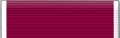
Legion of Merit 30 June 1945. Julius Furer retired from active service in 1945, but was recalled to duty in the Navy’s History Division in 1951. During a second retirement, he wrote the widely
acclaimed study, that the Naval History Division published: Admiral Furer's 1042-page volume titled "Administration of the Navy Department in World War II" (Washington, DC: U.S. Government Printing
Office, 1959). Rear Admiral Julius A. Furer died 06 June 1963 and is buried at Arlington National Cemetery.
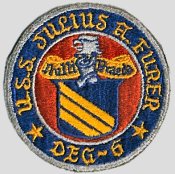
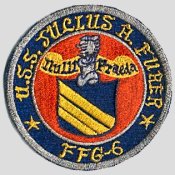
USS Julius A. Furer (DEG 6) was the first ship to be named in his honor. |
Robert M. Cieri |
060100612 |
106k |
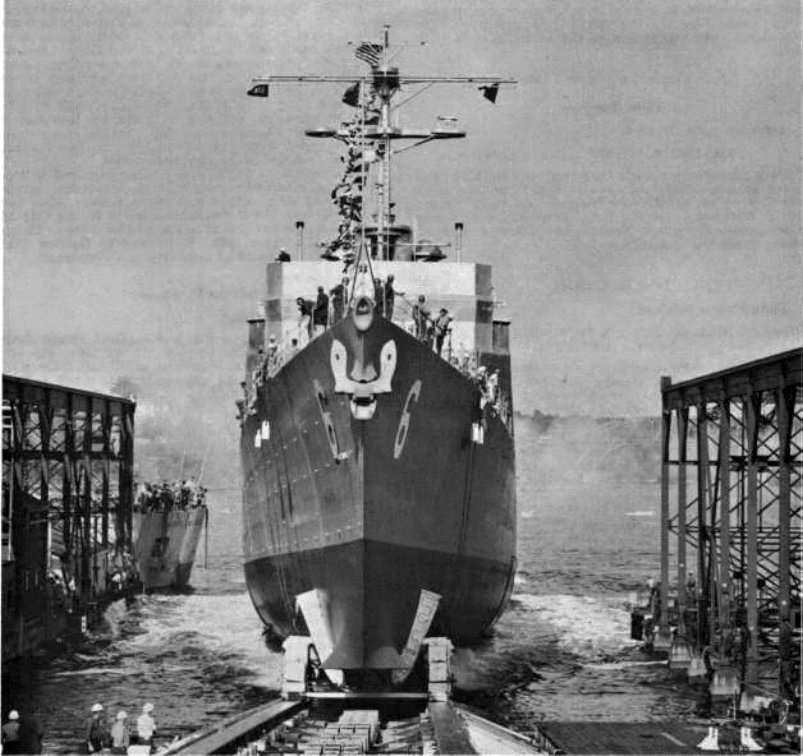
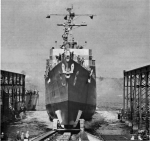
22 July 1966: Bath, Me. - USS Julius A. Furer (DEG 6) going down the launch way at Bath Iron Works Corp.
(Photo and text from the Dictionary of American Naval Fighting Ships) |
Bob Hurst
Worksop, Nottinghamshire,
England, United Kingdom |
060100614 |
188k |
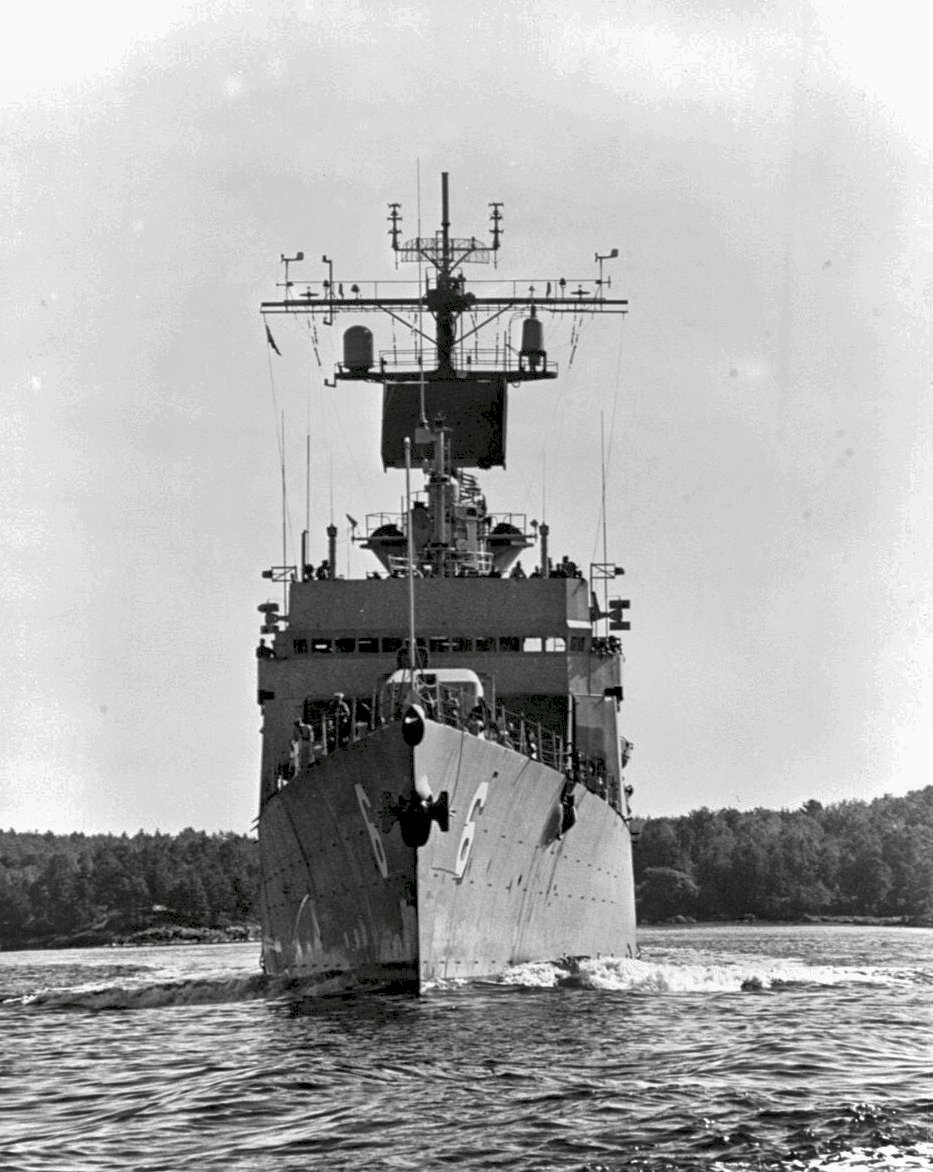
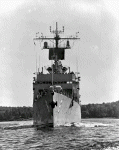
September 1967: Bath, Me. - The future USS Julius A. Furer heads to the Atlantic Ocean for sea trials.
(U.S. Navy Photo #USN1126066 from the United States National Archives) |
Mike Green
Port Angeles, Wash. |
060100602 |
115k |
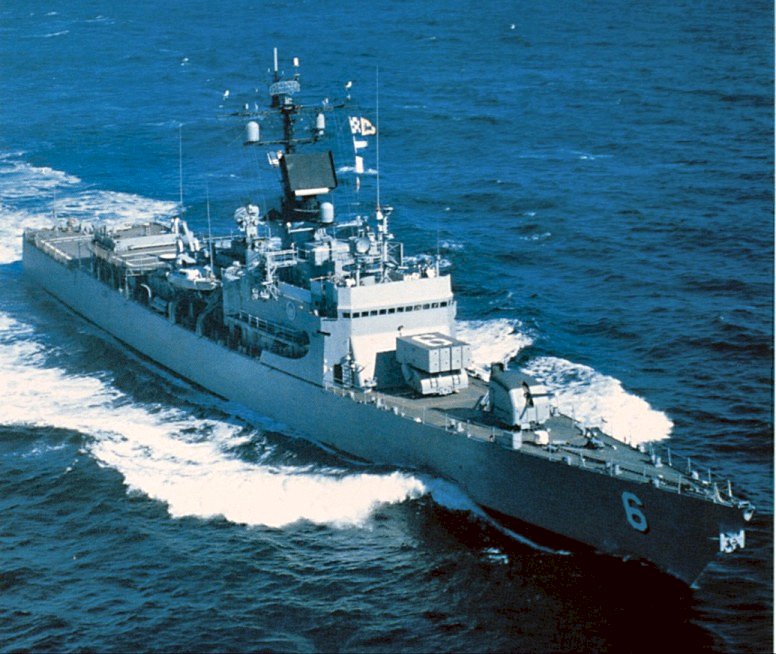
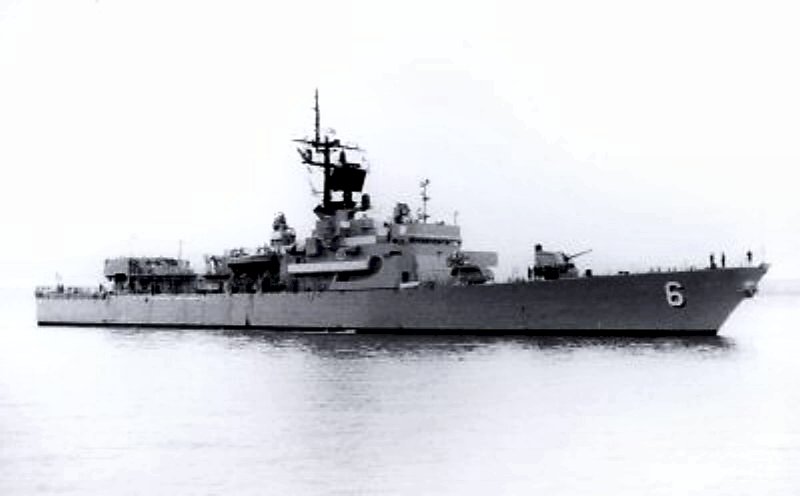
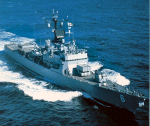
unknown date / location |
- |
060100609 |
202k |
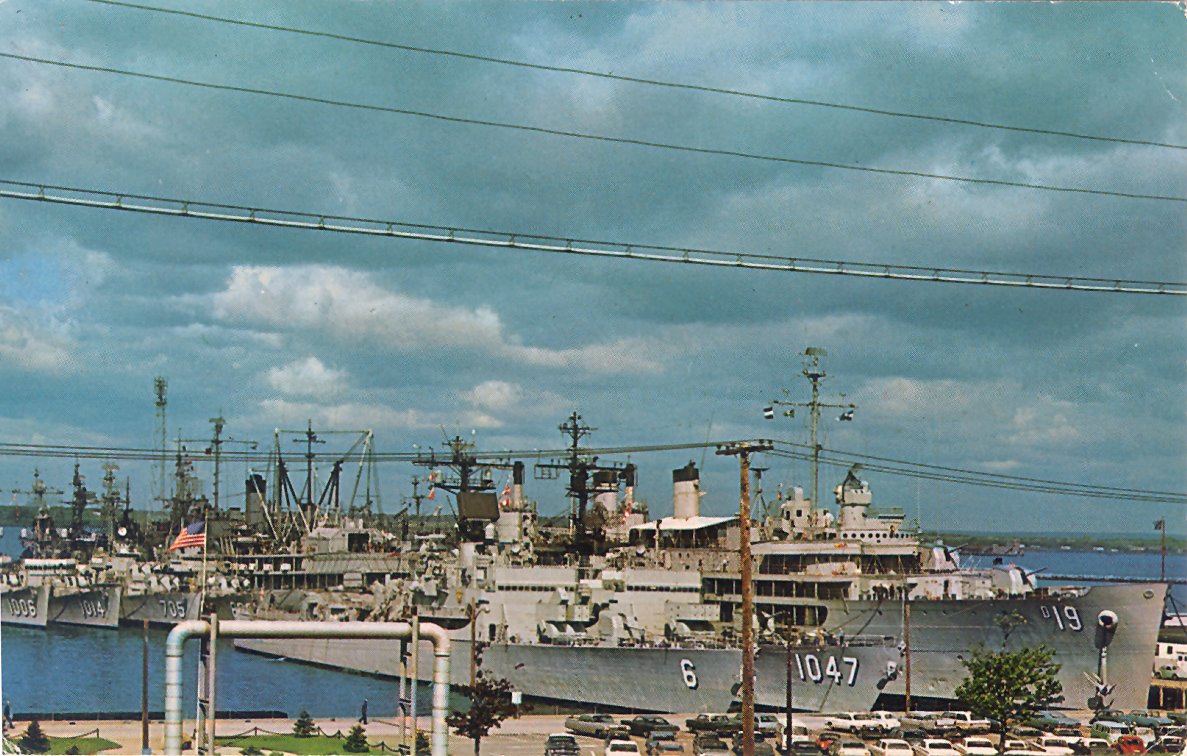
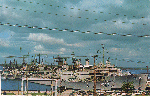
undated: Newport, R.I. - Postcard view of Pier 1. Julius A. Furer and USS
Voge (DE 1047) are alongside USS Yosemite (AD 19). USS
Dealey (DE 1006), USS
Cromwell (DE 1014), and USS Compton (DD 705) are behind them nested alongside another tender.
(Photo © The John Twomey Distributing Co., Newport, R.I.) |
Mike Smolinski
Clifton, N.J. |
060100607 |
108k |
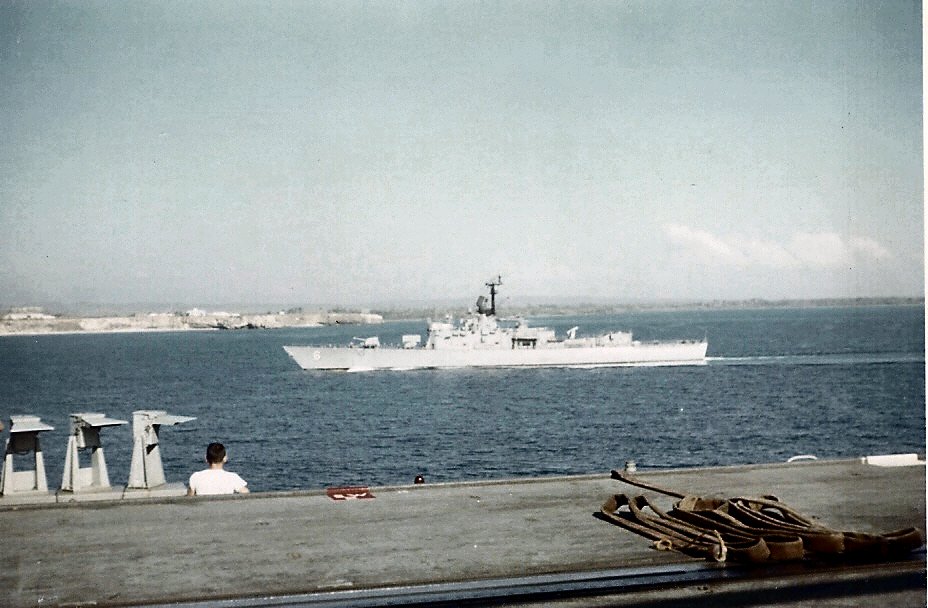
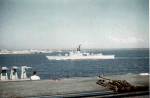
early 1968: Guantanamo Bay, Cuba - USS Julius A. Furer (DEG 6) taken from USS Wasp (CVS 18) during Wasp's ORI. |
Ben Brooks |
060100604 |
75k |
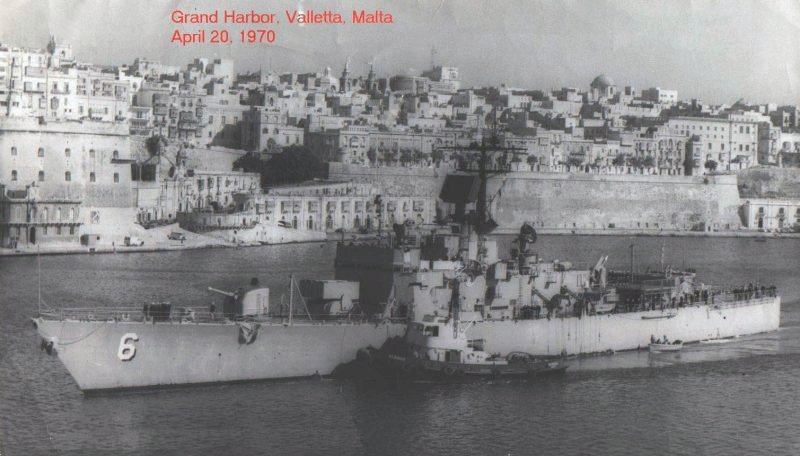
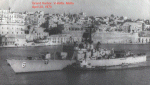
20 April 1970: Valletta, Malta - Julius A. Furer entering Grand Harbor. |
Tom Sirignano |
060100618 |
367k |
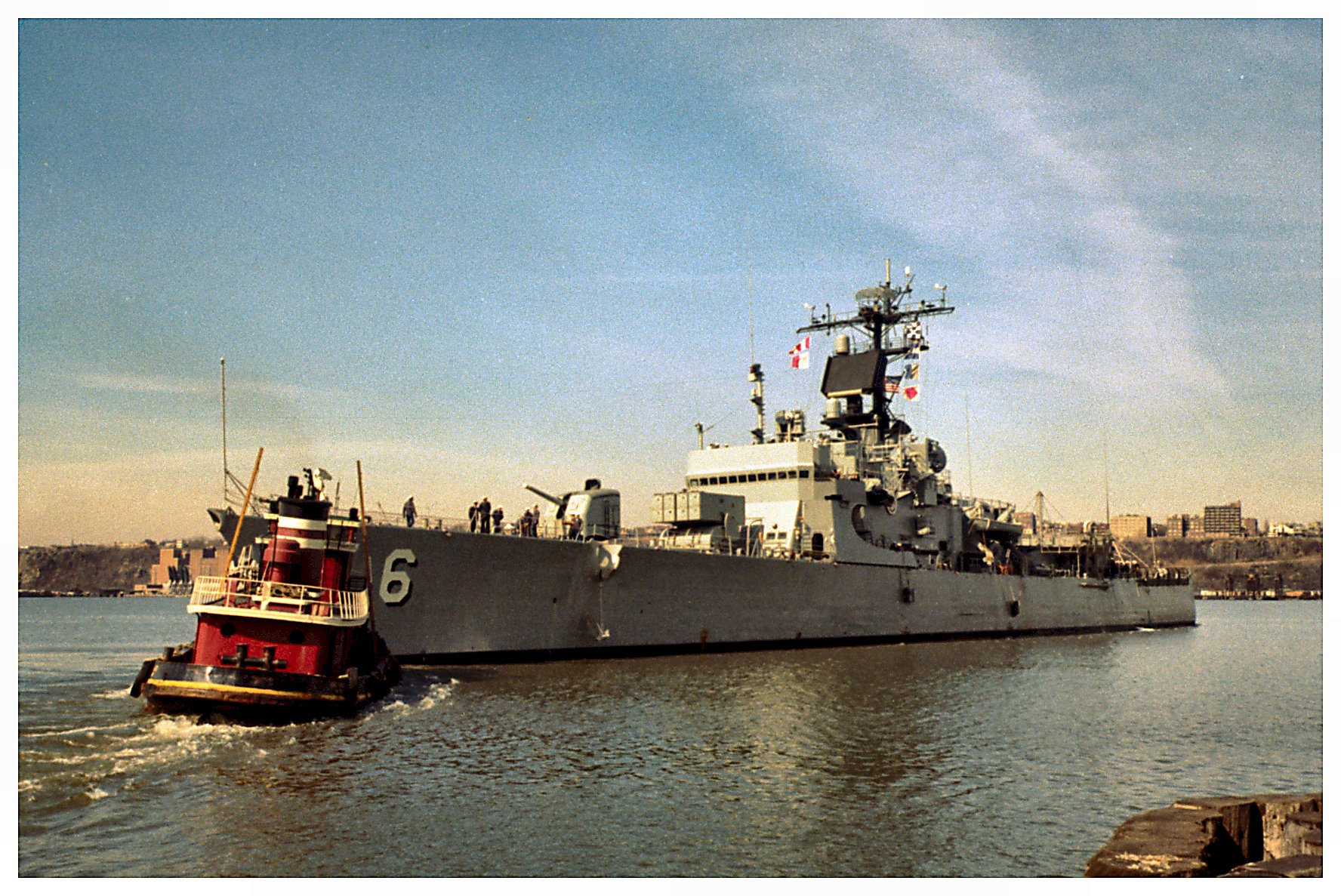
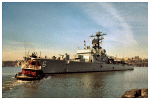
December 1972: New York, N.Y. - A commercial tugboat assists USS Julius A. Furer (FFG 6) away from her mooring at the New York Naval Shipyard in Brooklyn.
(Heilenday photo #II 0447A from the Heilenday Collection) |
Mark Heilenday
Virginia Beach, Va,
Captain, USN (ret.)
June 1974 - July 2004 |
060100603 |
124k |
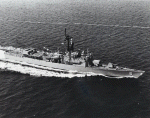
unknown date / location |
Wendell R. McLaughlin, Jr. |
060100608 |
31k |
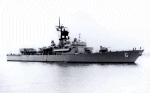
June 1974: location unknown |
Bob Hurst
Worksop, Nottinghamshire,
England, United Kingdom |
060100613 |
106k |
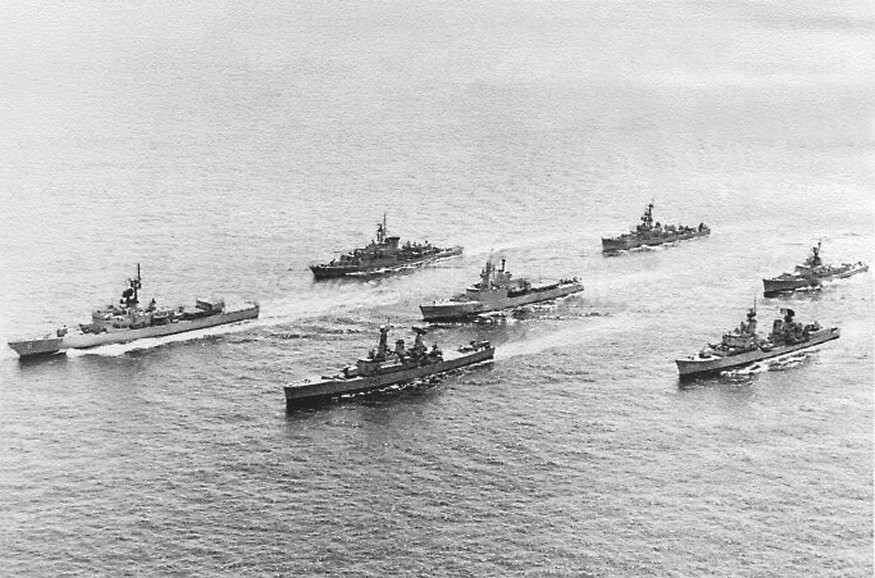
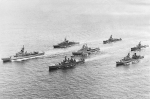
1974: at sea - The NATO Standing Naval Force Atlantic ships underway: USS Julius A. Furer (DEG 6), U.S. Navy; HMS Sirius (F40), Royal Navy; FGS
Augsburg (F222), West Germany; HMCS Annapolis (DDH 265), Royal Canadian Navy; NRP Almirante Pereira da Silva (F472), Portugal; Hr.Ms. Rotterdam
(D818), the Netherlands; and KNM Narvik (F304), Norway.
(Photo from the USS Julius A. Furer (DEG 6) 1974 Cruise Book) |
060100610 |
114k |
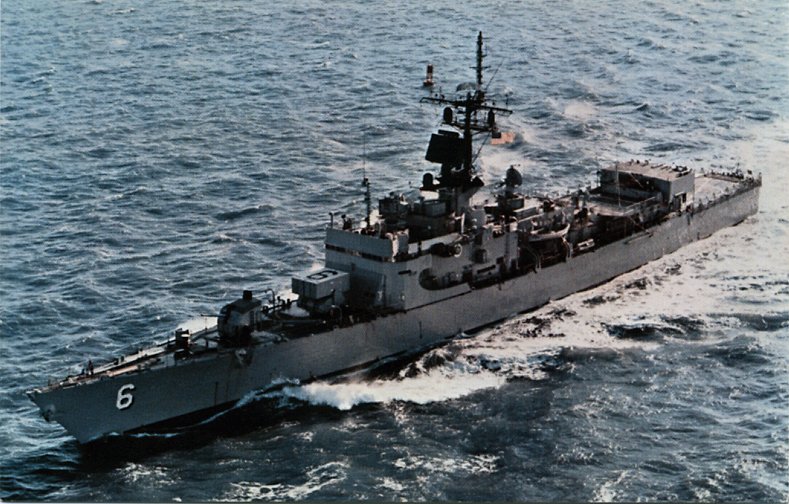
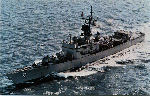
An undated postcard view of Julius A. Furer as FFG 6. (Postcard #P2903 ©
Atlantic Fleet Sales, Norfolk, Va.; shown at 150% of original size)
Caption reads: U.S.S. Julius A. Furer (FFG-5) "Guided Missile Frigate" Built by Bath Iron Works
Corp., Bath, Maine, and commissioned 11 November 1967. |
Mike Smolinski
Clifton, N.J. |
060100611 |
81k |
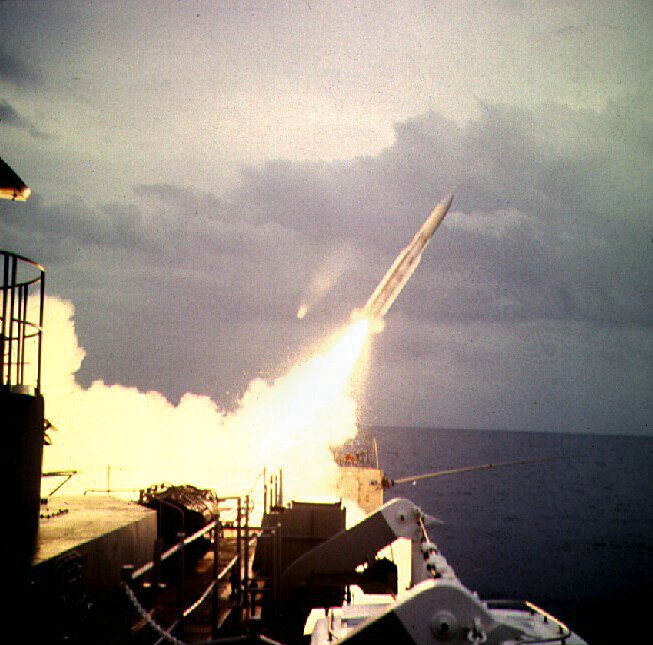
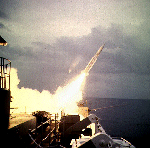
undated: Tartar missile launch from Furer
(I was ship's photographer as a collateral duty for awhile). |
John Locke
Austin, Tex.
STG1, FFG 6, 1977-1980 |
0602104442 |
367k |
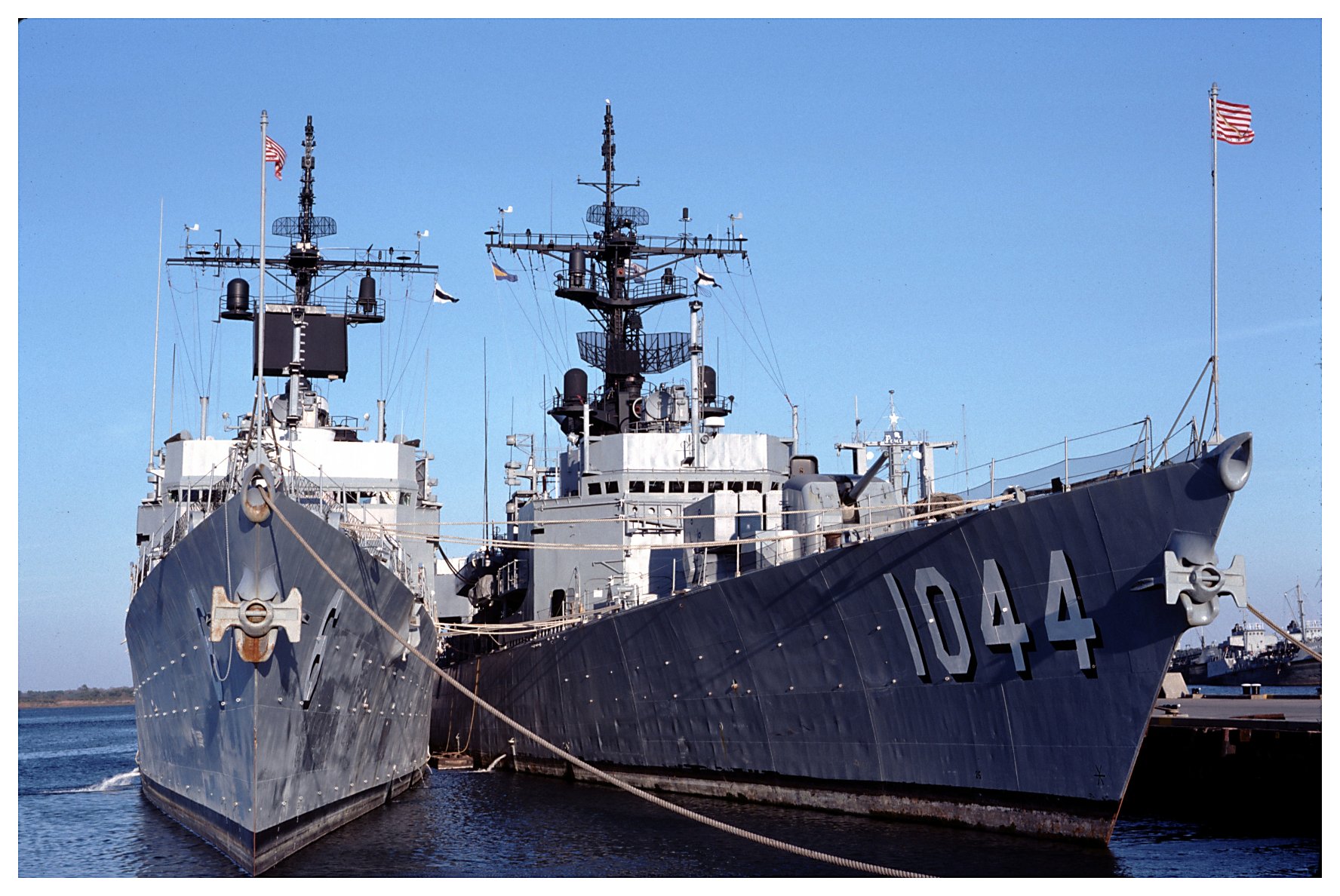
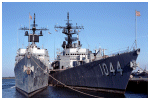
December 1975: Charleston, S.C. - USS Brumby (FF 1044) and USS Julius A. Furer (FFG 6) moored at Naval Station Charleston. Brumby had
just returned from UNITAS XVI in South America on 08 December.
(Heilenday photo #II 0440A from the Heilenday Collection) |
Mark Heilenday
Virginia Beach, Va,
Captain, USN (ret.)
June 1974 - July 2004 |
060100616 |
141k |
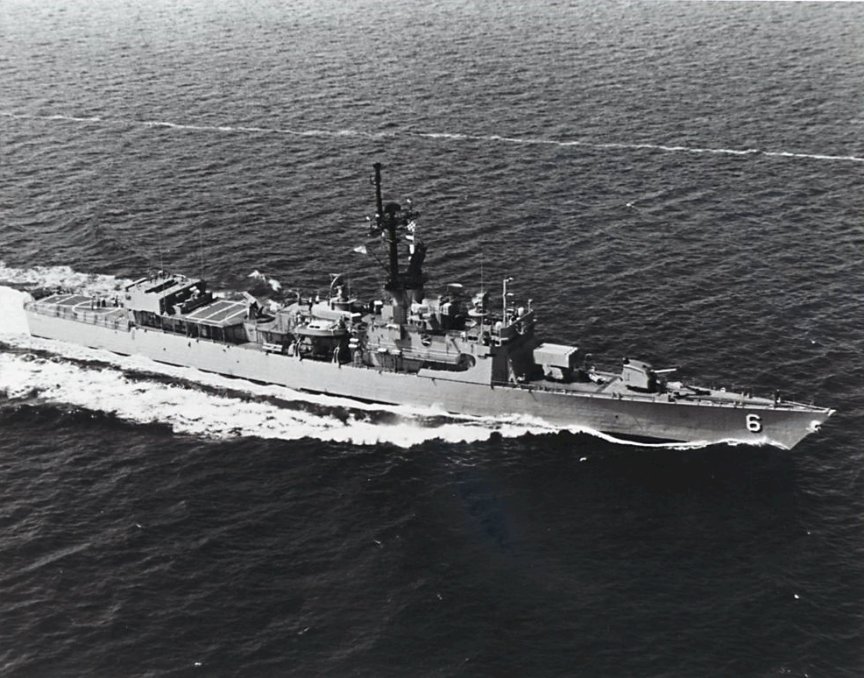
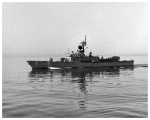
22 March 1976: the Atlantic Ocean - Julius A. Furer underway off Mayport, Fla.
(U.S. Navy Photo #USN1166686 from the United States National Archives) |
Mike Smolinski
Clifton, N.J.
Navsource DE/FF/LCS
Archive Manager |
060100617 |
150k |
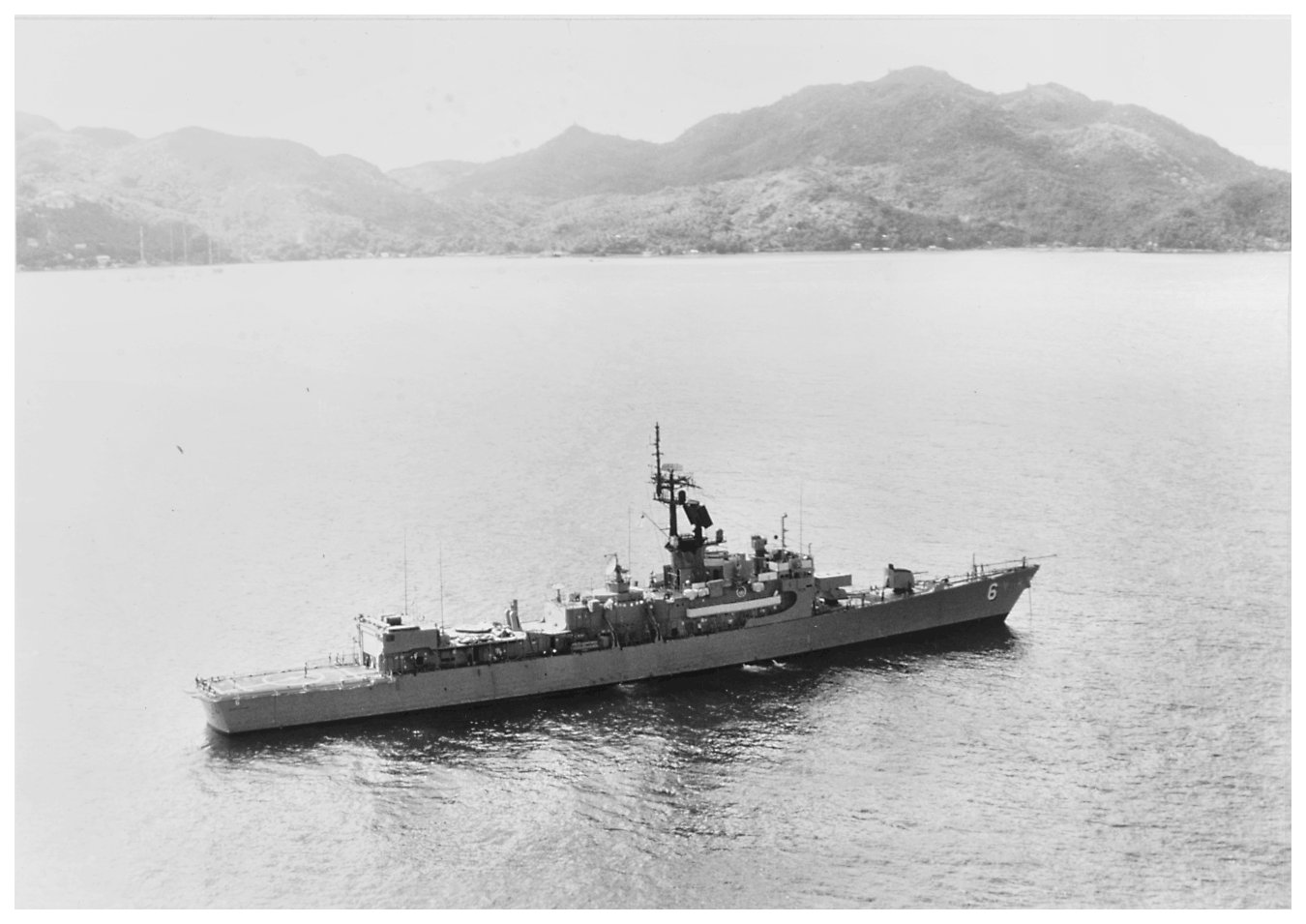
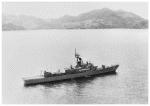
13 January 1978: the Indian Ocean off East Africa - Julius A. Furer lies to off the city of Victoria in the Seychelles Islands.
(U.S. Naval Historical Center photo #K-119811 from the Naval History and Heritage Command) |
060100605 |
39k |
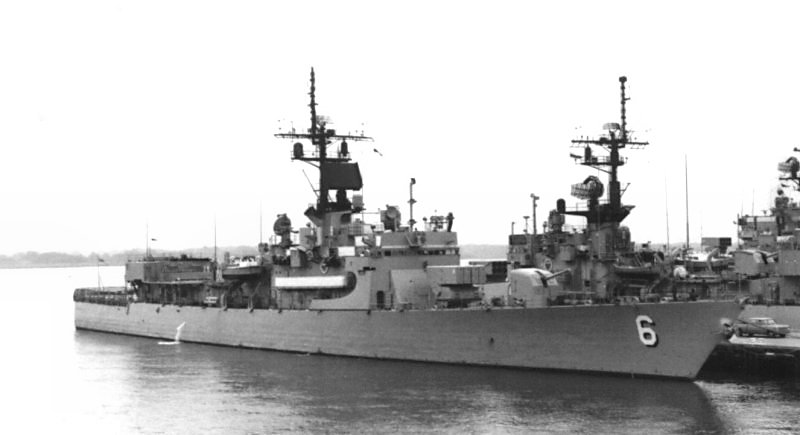
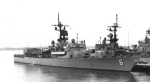
November/December 1979: Naval Station, Charleston, S.C. - Julius A. Furer moored at pier Quebec. |
Walter Bengtson |
060100606 |
150k |
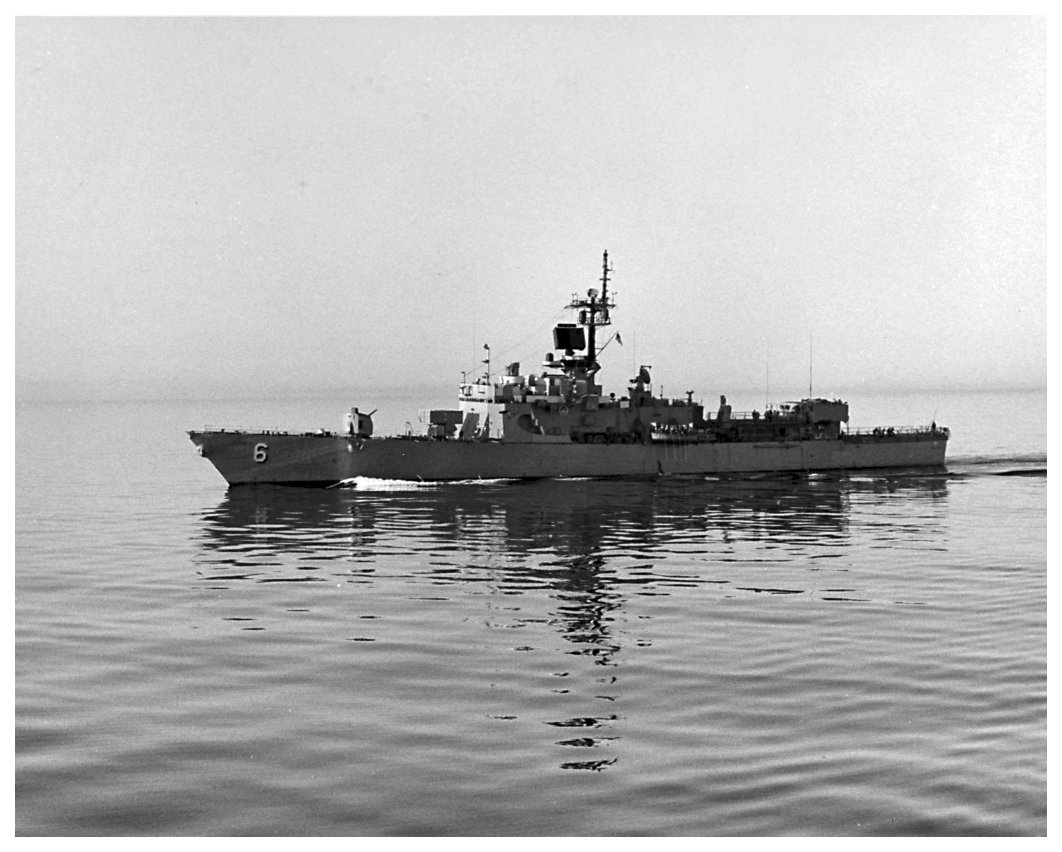
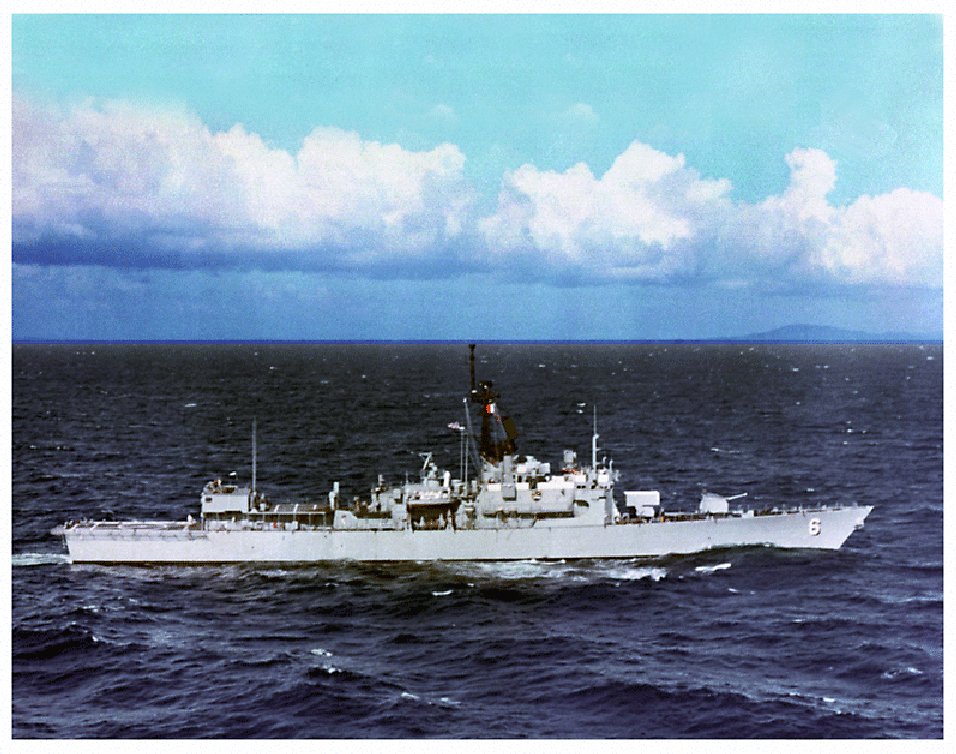
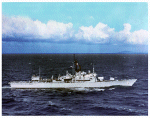
01 September 1984: At sea - A starboard beam view of the Brooke class guided missile frigate USS Julius A. Furer (FFG 6) underway in the Mediterranean.
(U.S. Navy photo DVID #DN-SC-86-00432 from the Defense Visual Information Center) |
Mike Smolinski
Clifton, N.J.
Navsource DE/FF/LCS
Archive Manager |