Click On Image
For Full Size Image | Size |
Image Description |
Contributed
By |
USS Admiral C. F. Hughes (AP-124)
|
 |
24k |
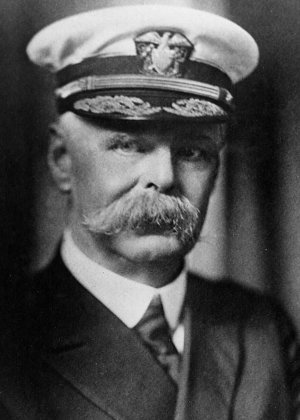
Namesake
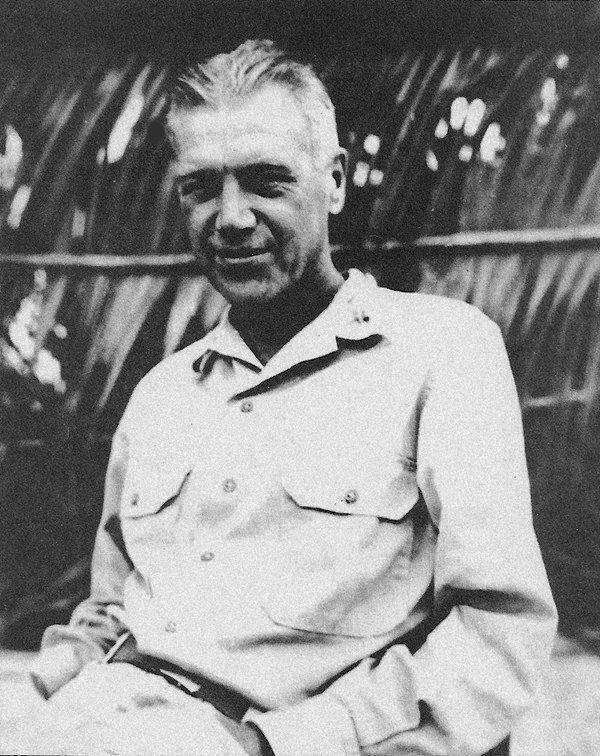
Charles Frederick Hughes
4th Chief of Naval Operations (14 November 1927 – 17 September 1930) As Chief of Naval Operations, Admiral Hughes worked to strengthen the fleet with the design,
construction, and deployment of aircraft carriers and cruisers |
Tommy Trampp |
 |
233k |
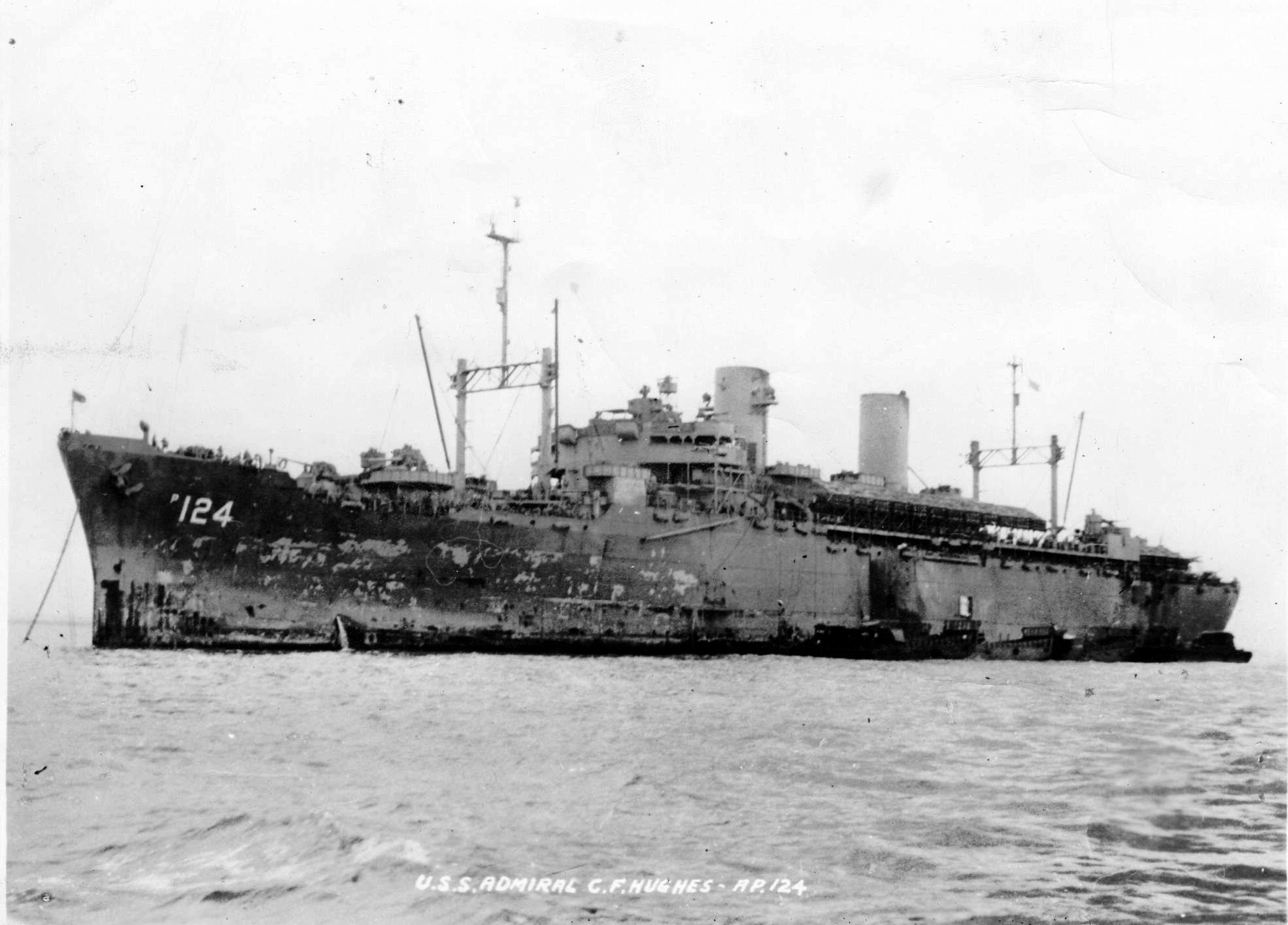
USS Admiral C. F. Hughes (AP-124) with landing craft alongside, date and location unknown. |
Pat Garrison |
 |
359k |
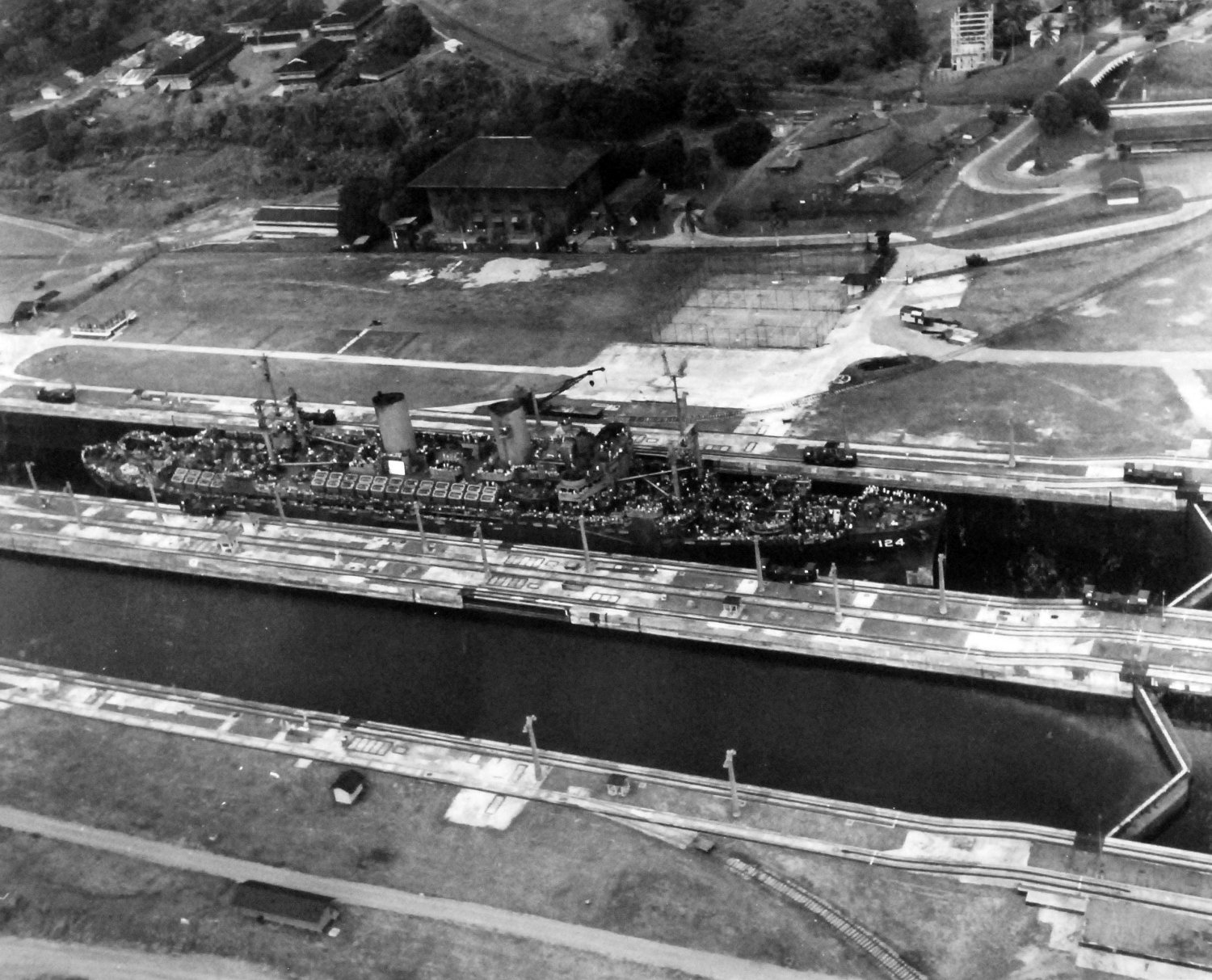
USS Admiral C. F. Hughes (AP-124) transiting the Panama Canal, 30 June 1945, enroute to Manila, Philippines,
where she arrived a month later. She was carrying troops to the Pacific that were being redirected from Europe to the Pacific. Image taken by US Navy aircraft stationed
at NAS Coco Solo.
US National Archives Photo # 80-G-339269, a US Navy photo now in the collections of the US National Archives. |
David Wright |
 |
149k |
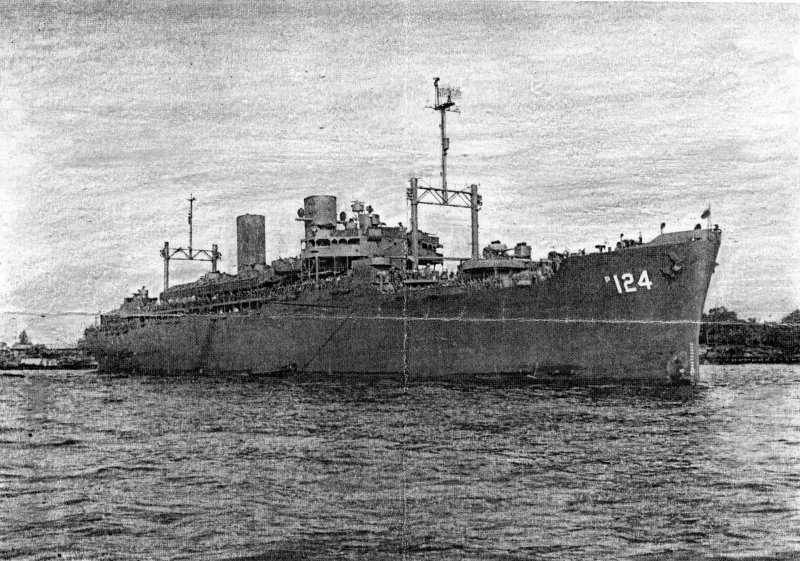
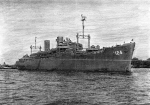
USS Admiral C. F. Hughes (AP-124) underway during Operation "Magic Carpet", circa 1945-46. |
Courtesy, Chuck Ulrich, coordinator/historian AP Transport Group |
 |
93k |
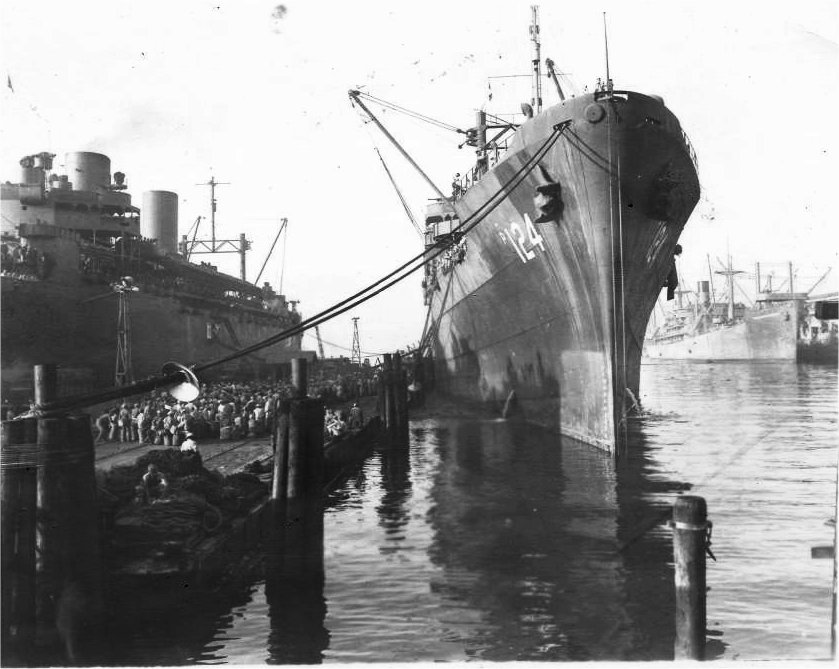
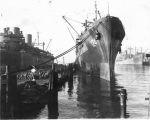
USS Admiral C. F. Hughes (AP-124), moored pierside during Operation "Magic Carpet", circa 1945-46. |
John Rubin for his father CPhM Seldon L. Rubin USS Admiral C. F. Hughes |
 |
165k |
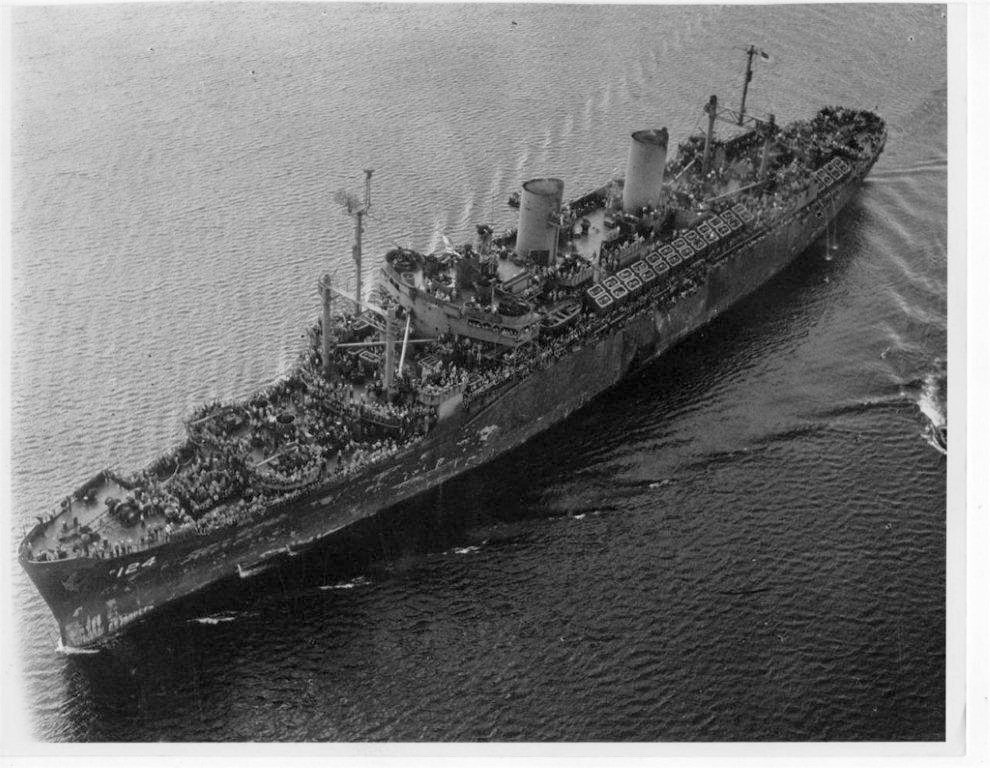
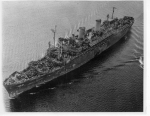
Aerial view of USS Admiral C. F. Hughes (AP-124) with returning Pacific war veterans during Operation "Magic Carpet", date and location unknown |
Tommy Trampp |
 |
135k |
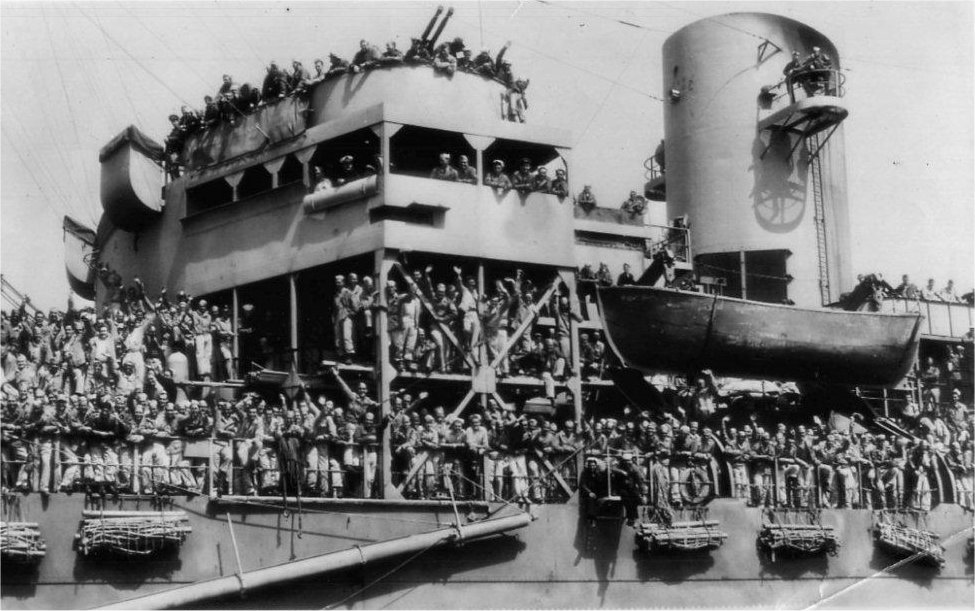
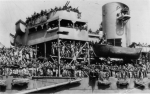
1,200 Pacific war veterans line the rails of USS Admiral C. F. Hughes (AP-124) as she arrives at San Francisco, CA. 18 August 1945. Admiral C. F. Hughes was the first transport to arrive at the West Coast after the Japanese surrender.
AP wirephoto. |
Tommy Trampp |
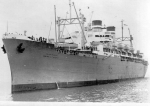
USAT Admiral C. F. Hughes
|
 |
78k |
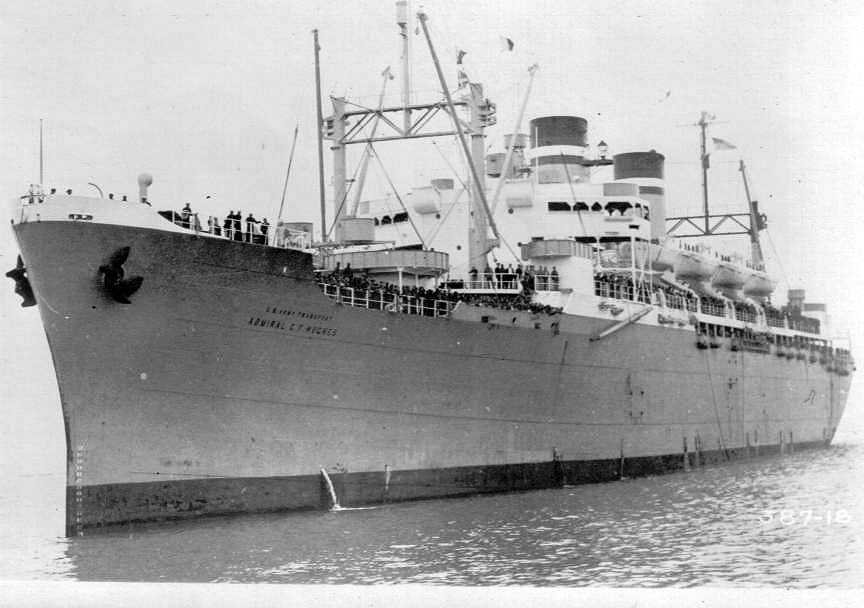
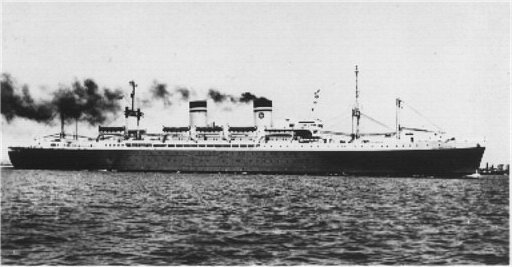
USAT Admiral C. F. Hughes underway in 1946, during Operation "Magic Carpet". |
Mike Abrams, photos by his uncle John Thomas Brady |
092212450 |
193k |
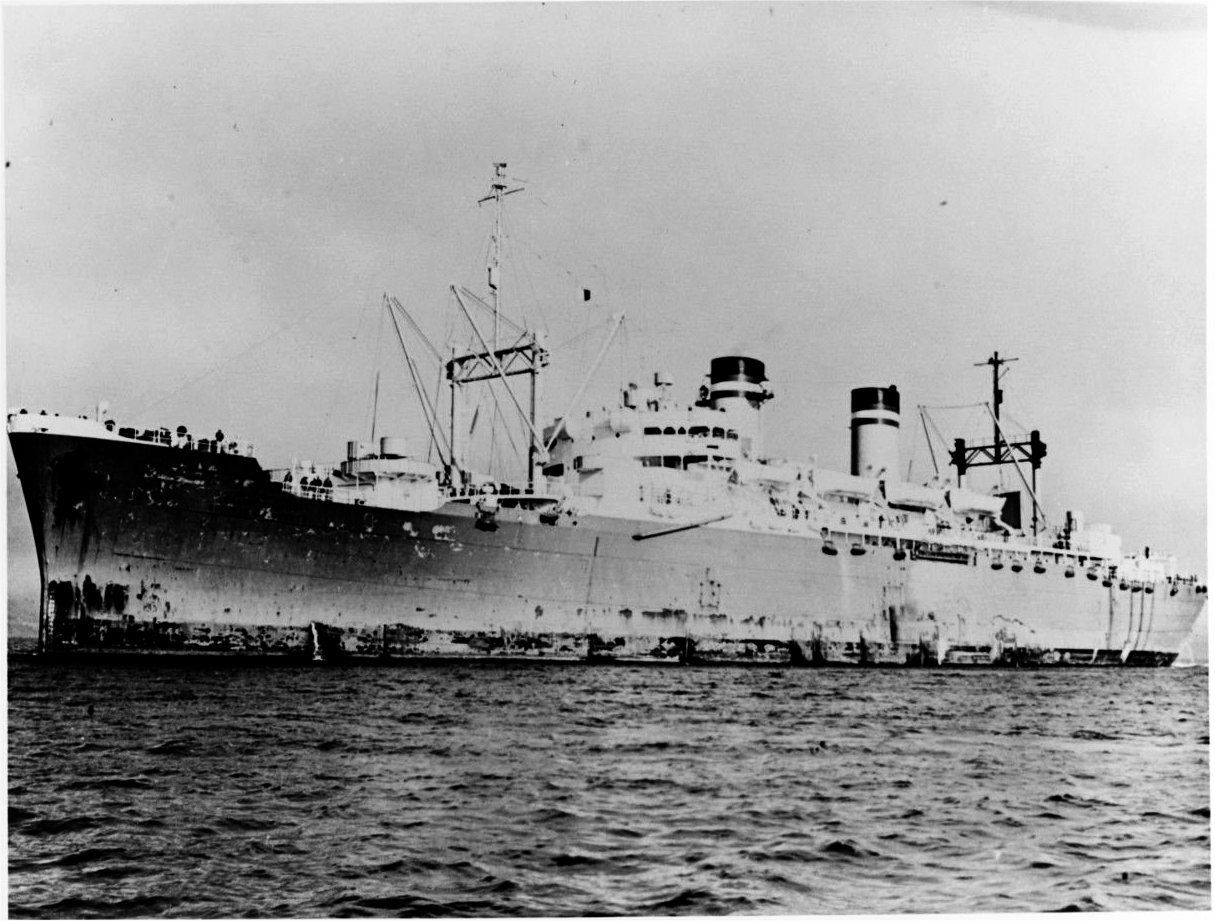
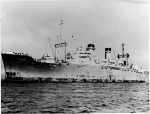
Ex-USAT Admiral C. F. Hughes underway, date and location unknown.
US Naval History and Heritage Command photo # NH 80020 |
Tommy Trampp |
USAT General Edwin D. Patrick
|
 |
130k |
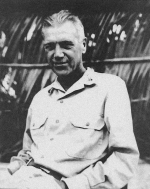
Namesake
Major General Edwin D. Patrick, born 11 January 1894 at Tell City, Ind., entered the Indiana National Guard 11 February 1915 and was commissioned 'Second Lieutenant in the Infantry 21 March 1917. After duty in Kansas, California, Oklahoma, and North Carolina, he joined the 14th Machine Gun Battalion in France to participate in the St. Mihiel and Meuse-Argonne offensives. Following his return to the United States in July 1919, he was stationed at various posts until May 1926 when he went to Tientsin, China, to serve with the 15th Infantry. He returned to the United States in July 1929 to remain until after the start of World War II. Assigned to the Southwest Pacific in December 1942, he was promoted to Brigadier General 26 April 1943, and in June was appointed Chief of Staff of the 6th Army. Appointed commander of a regimental combat team in May 1944, he participated in the conquest of New Guinea. In September he assumed command of the 6th Infantry and saw action in the Philippines. General Patrick was mortally wounded by Japanese machine gun fire near Mountain Mataba, south of Montalban, Luzon, and was buried in the American military cemetery in Manila on 26 November 1944.
U.S. Army Photo |
Bill Gonyo |
 |
45k |
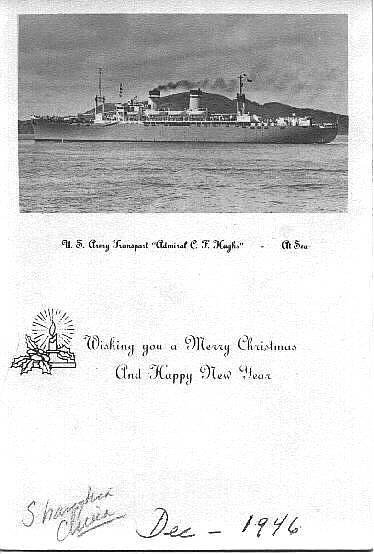
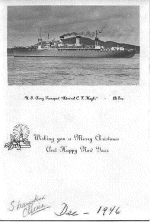
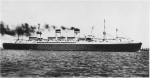
Note this Christmas card is from USAT Admiral C. F. Hughes, December 1946. This must have been immediately after the US Army acquired control of the vessel and prior to changing her name to USAT General Edwin D. Patrick. |
Ramon Jackson courtesy
Craig Saunders |
 |
30k |
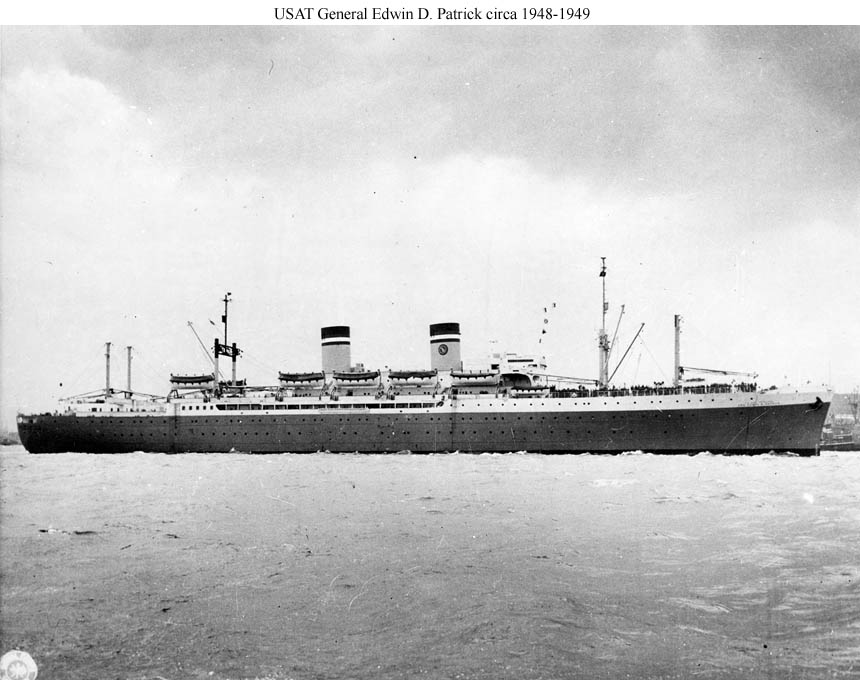
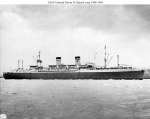
USAT General Edwin D. Patrick postcard photo, circa 1948. |
Lisa J. Slaughter |
 |
101k |
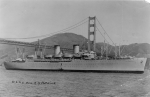
USAT General Edwin D. Patrick underway after completing her full Army peacetime conversion in April 1948 and before her
transfer to the Navy in March 1950. She was one of seven ships of this class that received an extensive full conversion to peacetime transports and dependents carriers
in 1947-1948. In these ships the area between the bridge and the forecastle was filled in with additional accommodations, additional kingposts were fitted, and
numerous other changes were made.
US Army Signal Corps photo # SC-30-182-5385-2 now in the collections of the US Naval History and Heritage Command, courtesy Shipscribe.com. |
Mike Green |
USNS General Edwin D. Patrick (T-AP-124)
|
 |
67k |
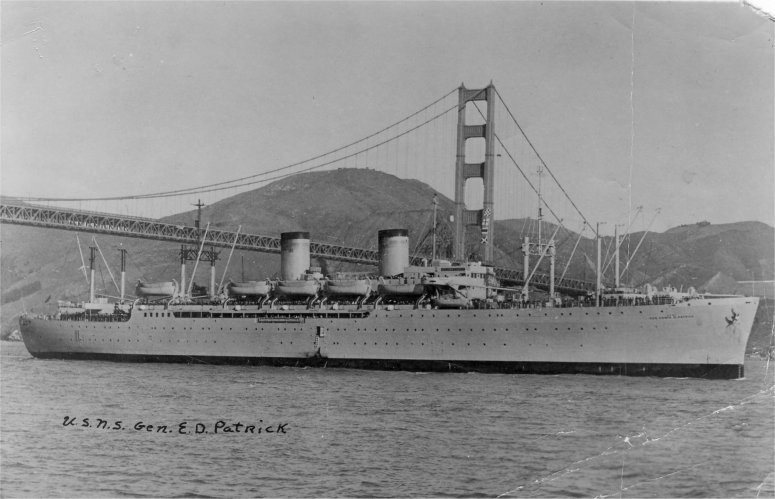
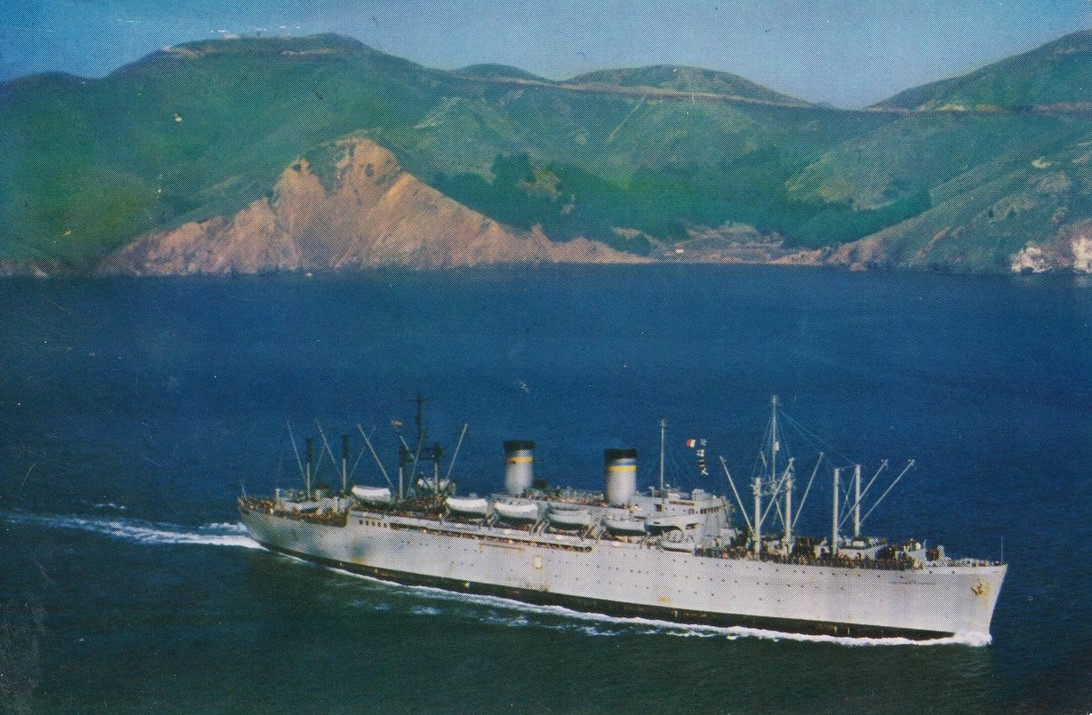
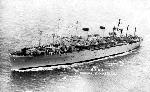
USNS General Edwin D. Patrick (T-AP-124) passing under the Golden Gate Bridge, San Francisco, CA., date unknown.
US Navy photo |
Tom Langford
US Navy photo |
 |
29k |
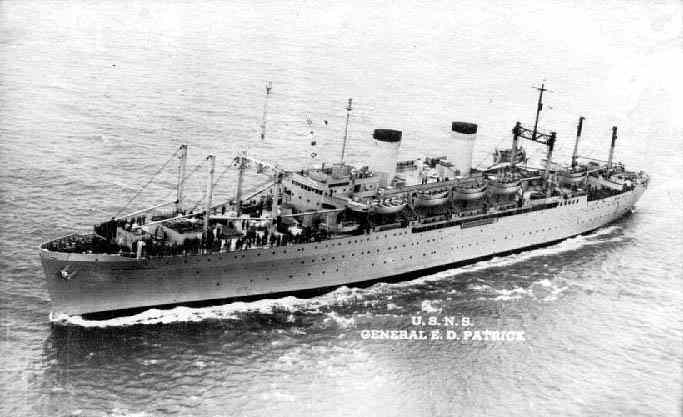
USNS General Edwin D. Patrick (T-AP-124) underway, date and place unknown.
US Navy photo |
Military Sea Transportation Service Society |
 |
77k |
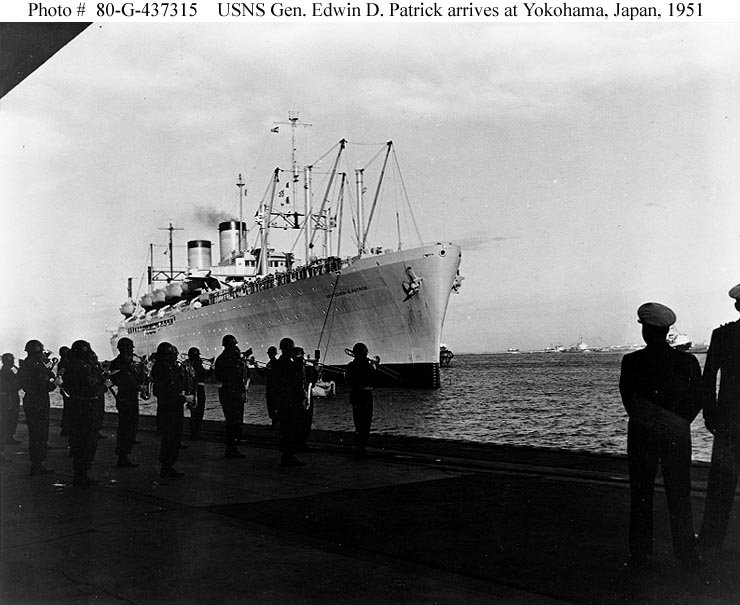
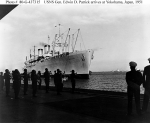
USNS General Edwin D. Patrick (T-AP 124) arrives at Yokohama, Japan, with Servicemen's families, November 1951. They were the first dependents to arrive since the outbreak of the Korean War. Note Army band playing welcoming tunes at left. Photo by AFAN T. G. Donegan, dated 3 November 1951.
US National Archives photo # 80-G-437315, a US Navy photo now in the collections of the US National Archives |
US Navay History and Heritage Command |
 |
90k |
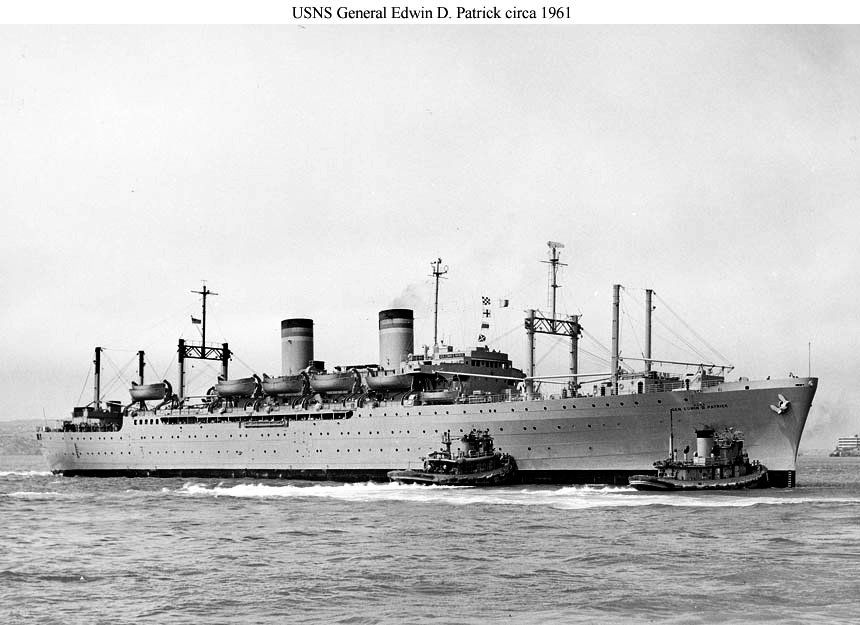
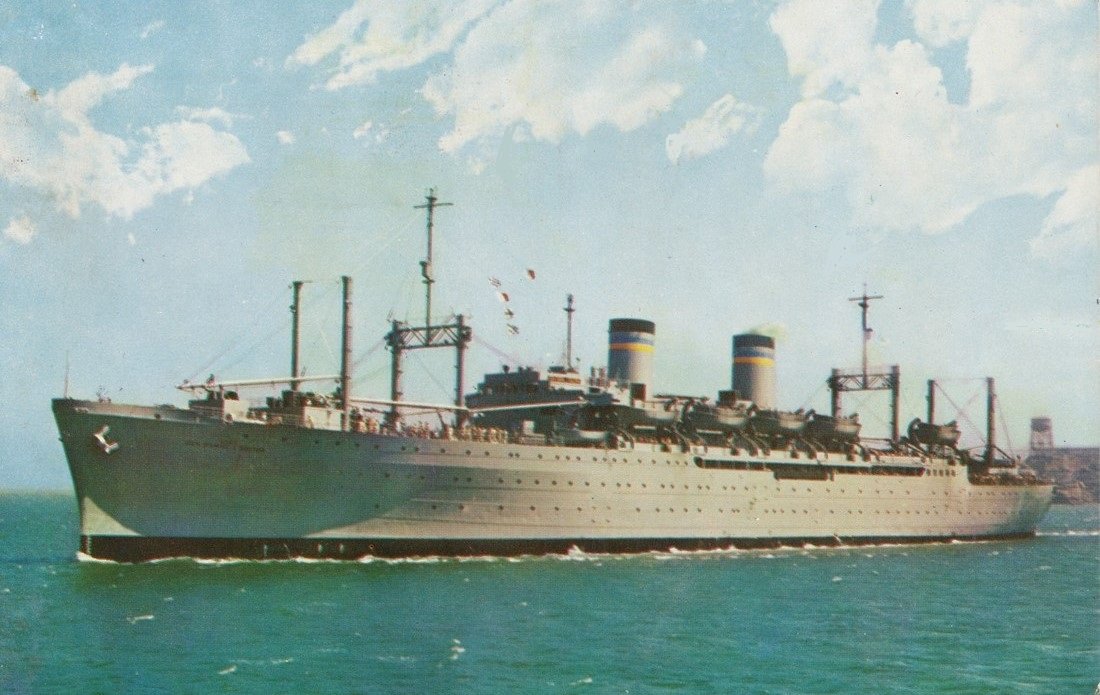
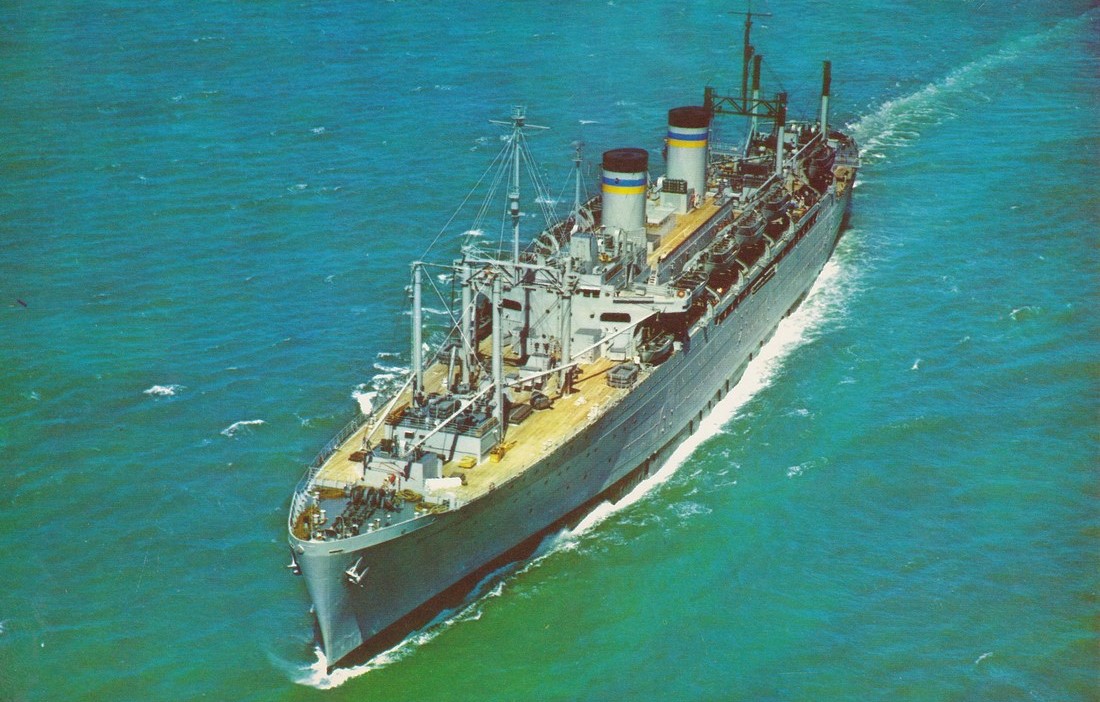
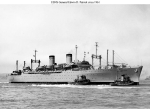
USNS General Edwin D. Patrick (T-AP-124 prior to November 1961. Numerous refinements, such as the graceful bridge wings, made
the fully converted ships far more attractive than the original transports. Note also the addition of kingpost pairs fore and aft for improved cargo handling.
US Naval History and Heritage Command, photo # unknown, courtesy Shipscribe.com. |
Mike Green |
092212451 |
225k |
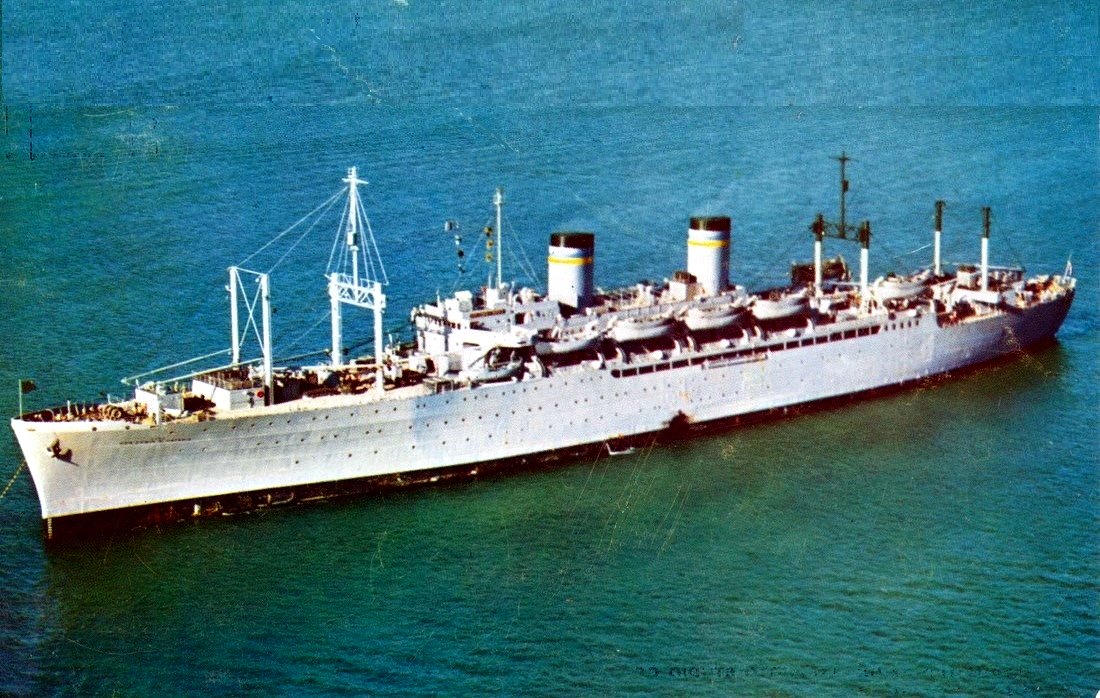
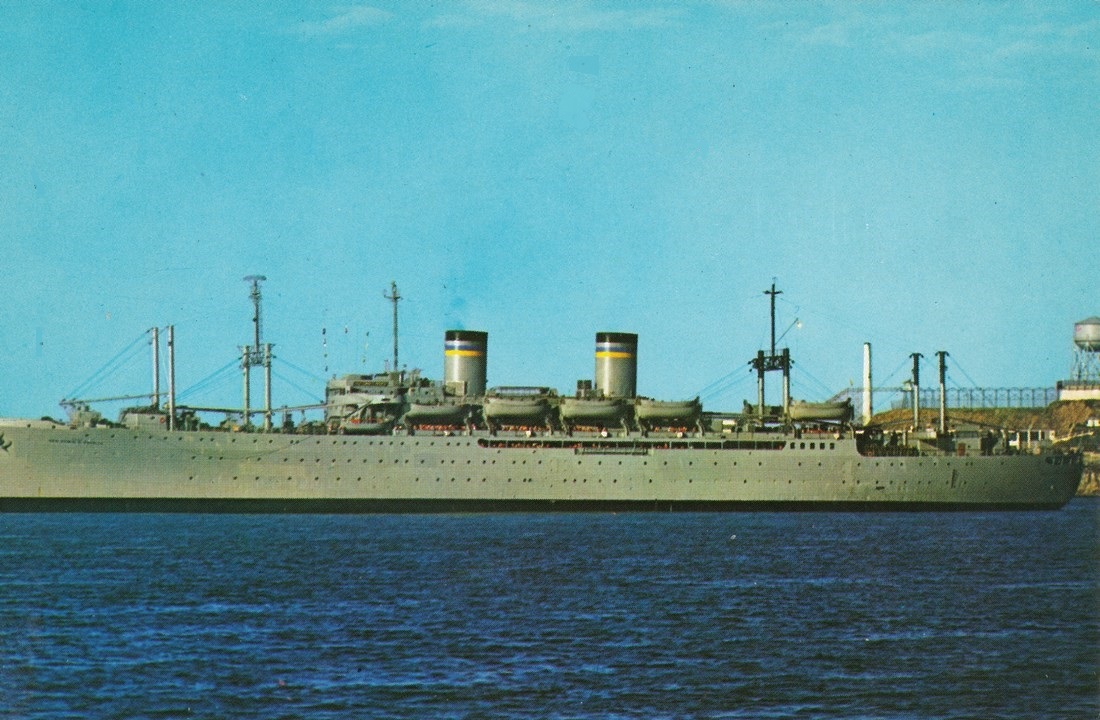
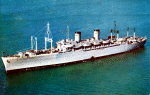
USNS General Edwin D. Patrick (T-AP-124) at anchor, date and location unknown
U.S. Navy Military Sealift Command photo |
Nicholas Tiberio |
092212452 |
207k |
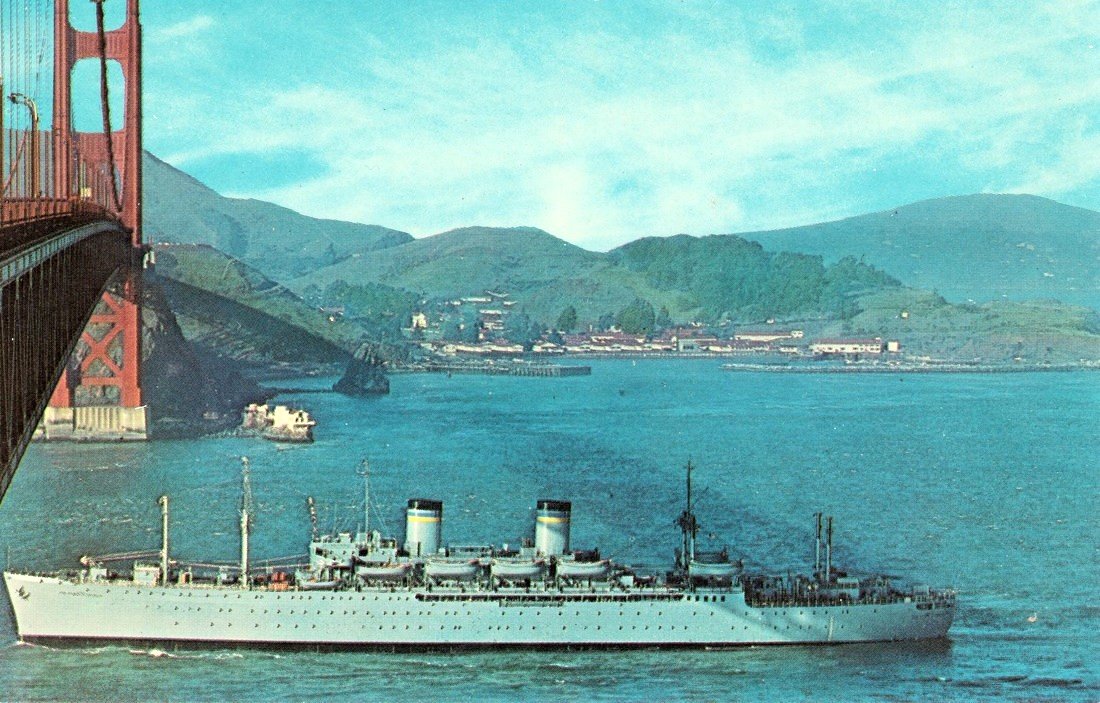
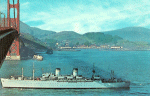
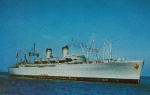
USNS General Edwin D. Patrick (T-AP-124) outbound to sea passing under the Golden Gate Bridge at San Francisco, CA., date unknown.
U.S. Navy Military Sealift Command photo |
Nicholas Tiberio |
092212453 |
237k |
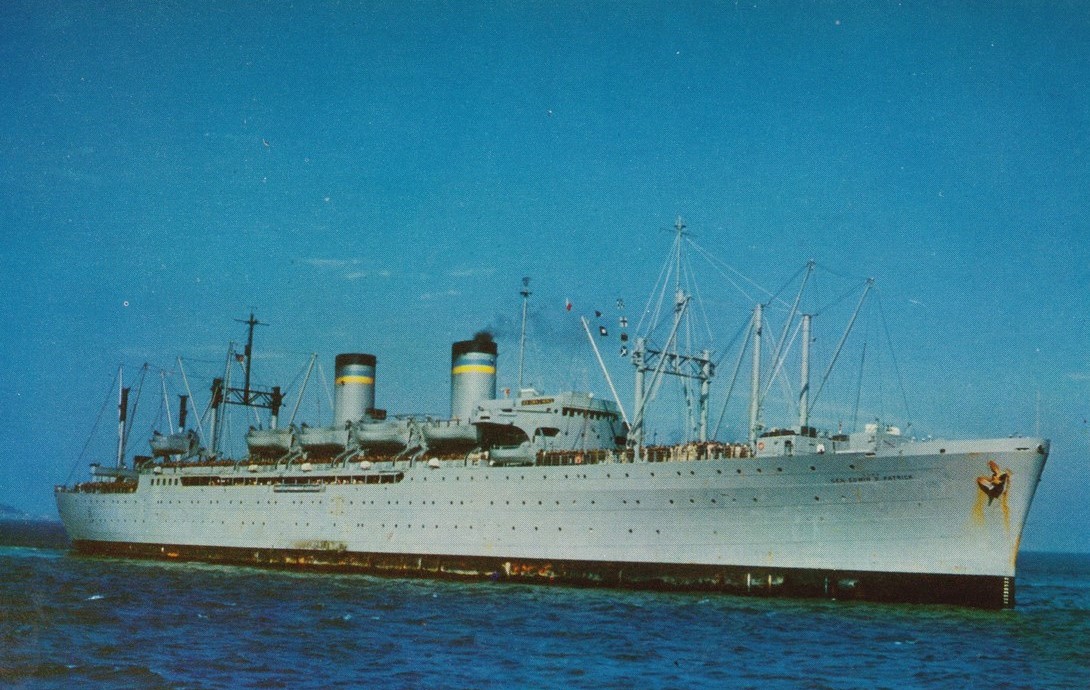
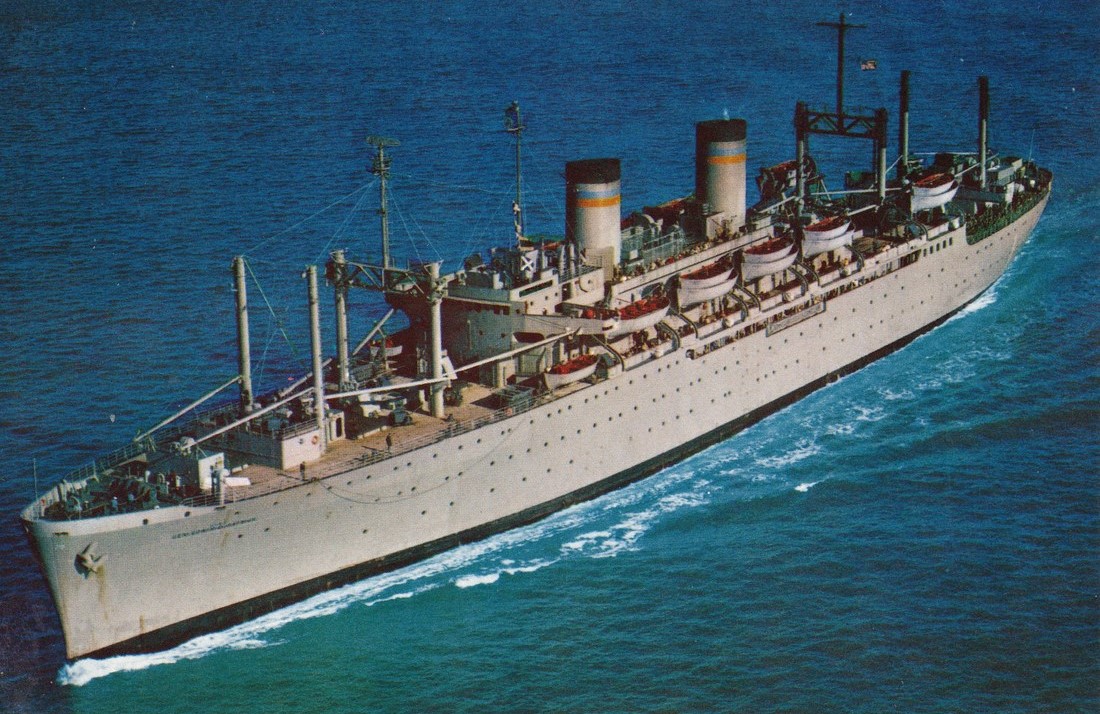
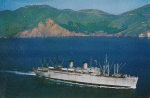
USNS General Edwin D. Patrick (T-AP-124) underway, date and location unknown.
U.S. Navy Military Sealift Command photo |
Nicholas Tiberio |
092212454 |
240k |
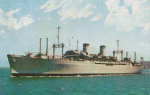
USNS General Edwin D. Patrick (T-AP-124) inbound from sea to San Francisco, CA., date unknown.
U.S. Navy Military Sealift Command photo |
Nicholas Tiberio |
092212455 |
152k |
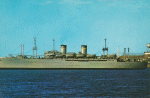
USNS General Edwin D. Patrick (T-AP-124) underway in San Francisco Bay. date unknown.
U.S. Navy Military Sealift Command photo |
Nicholas Tiberio |
092212456 |
277k |
USNS General Edwin D. Patrick (T-AP-124) underway in San Francisco Bay, date unknown.
U.S. Navy Military Sealift Command photo |
Nicholas Tiberio |
092212457 |
278k |
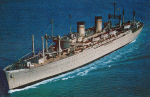
USNS General Edwin D. Patrick (T-AP-124) underway, date unknown and location unknown.
U.S. Navy Military Sealift Command photo |
Nicholas Tiberio |
092212458 |
225k |
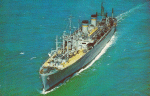
USNS General Edwin D. Patrick (T-AP-124) underway, date unknown and location unknown.
U.S. Navy Military Sealift Command photo |
Nicholas Tiberio |
092212410 |
84k |
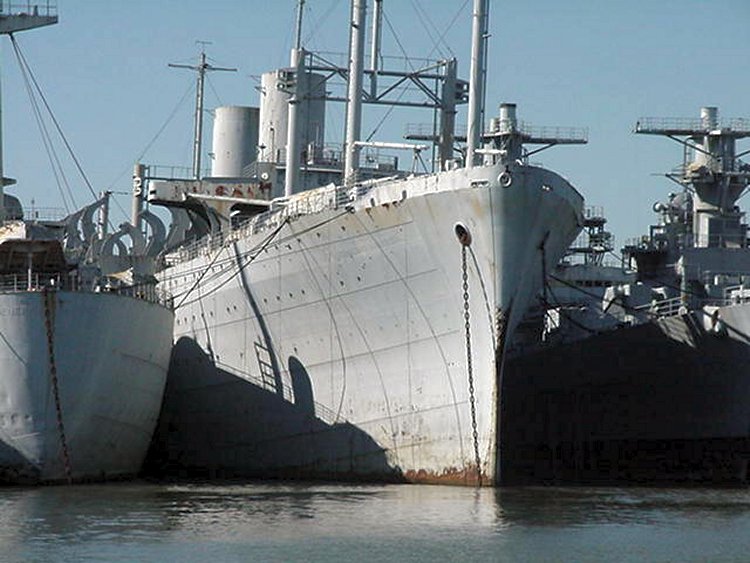
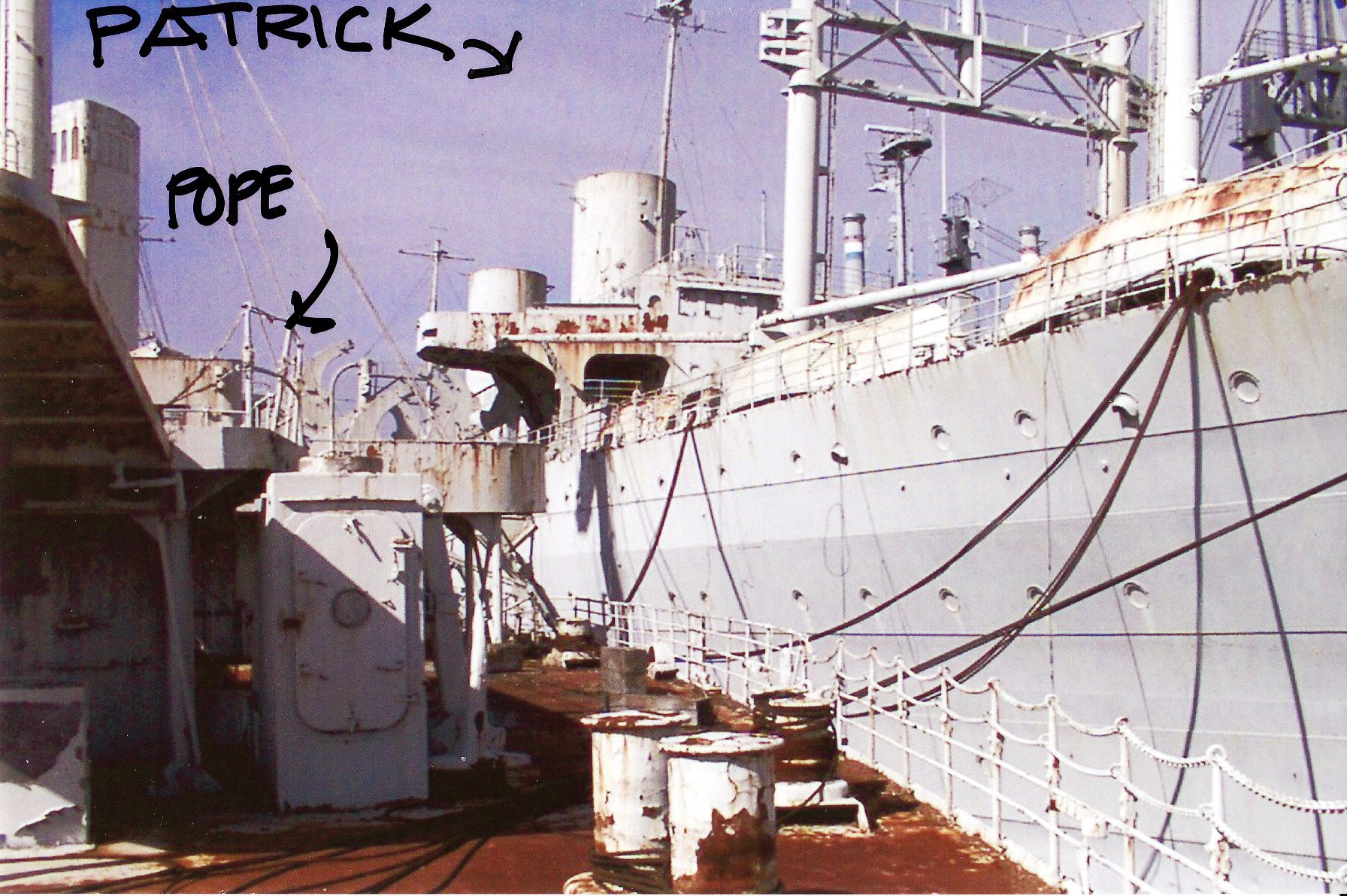
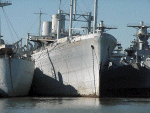
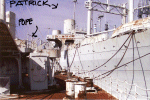
Ex-USNS General Edwin D. Patrick (T-AP 124) laid up in reserve at Suisun Bay, Benecia, CA. alongside ex-USNS General John Pope (T-AP-110) in 2009. |
092212410 - Maritime Administration
092212411 - Phil Mattingly |
092212411 |
593k |
 |
1119k |
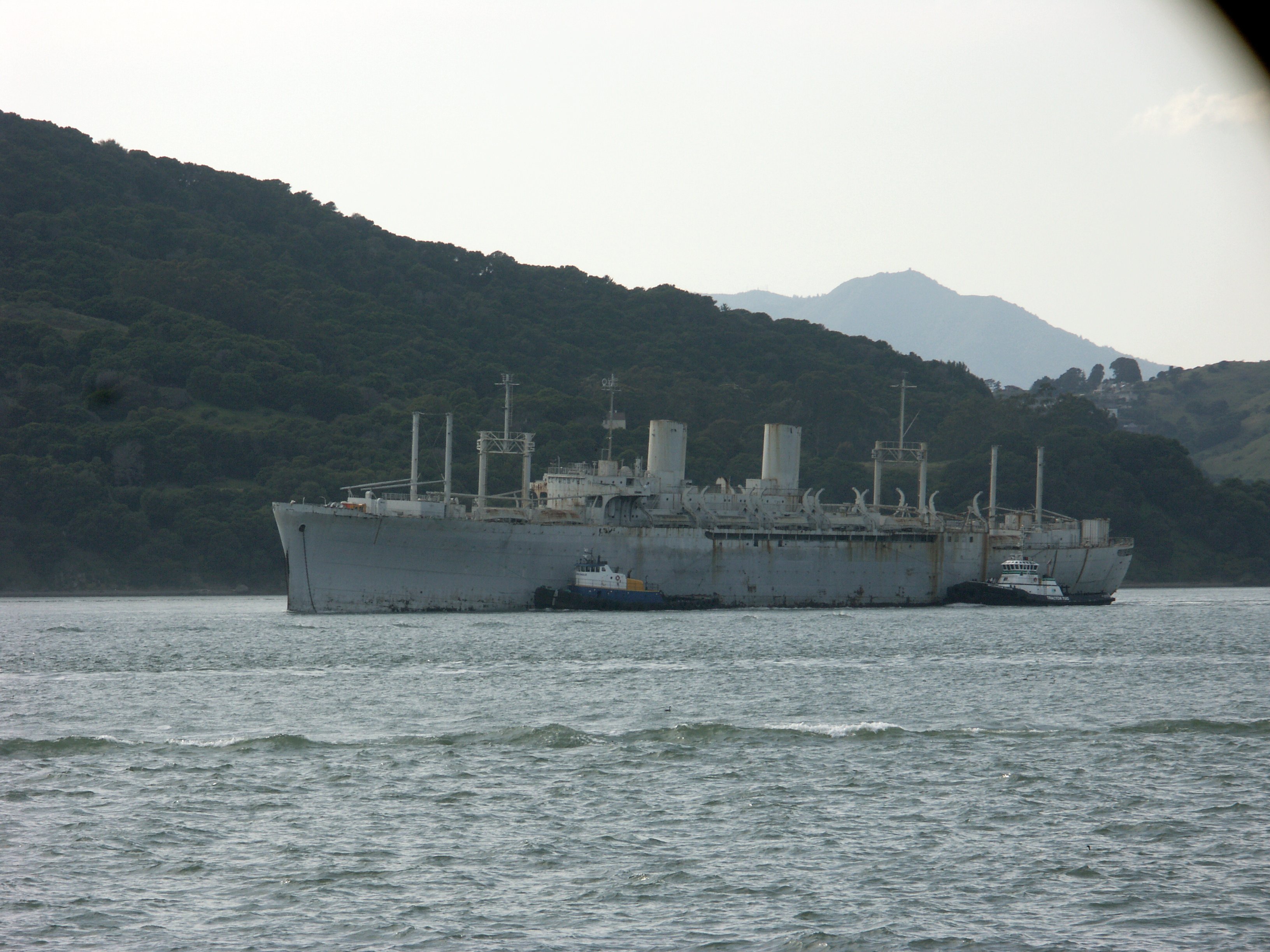
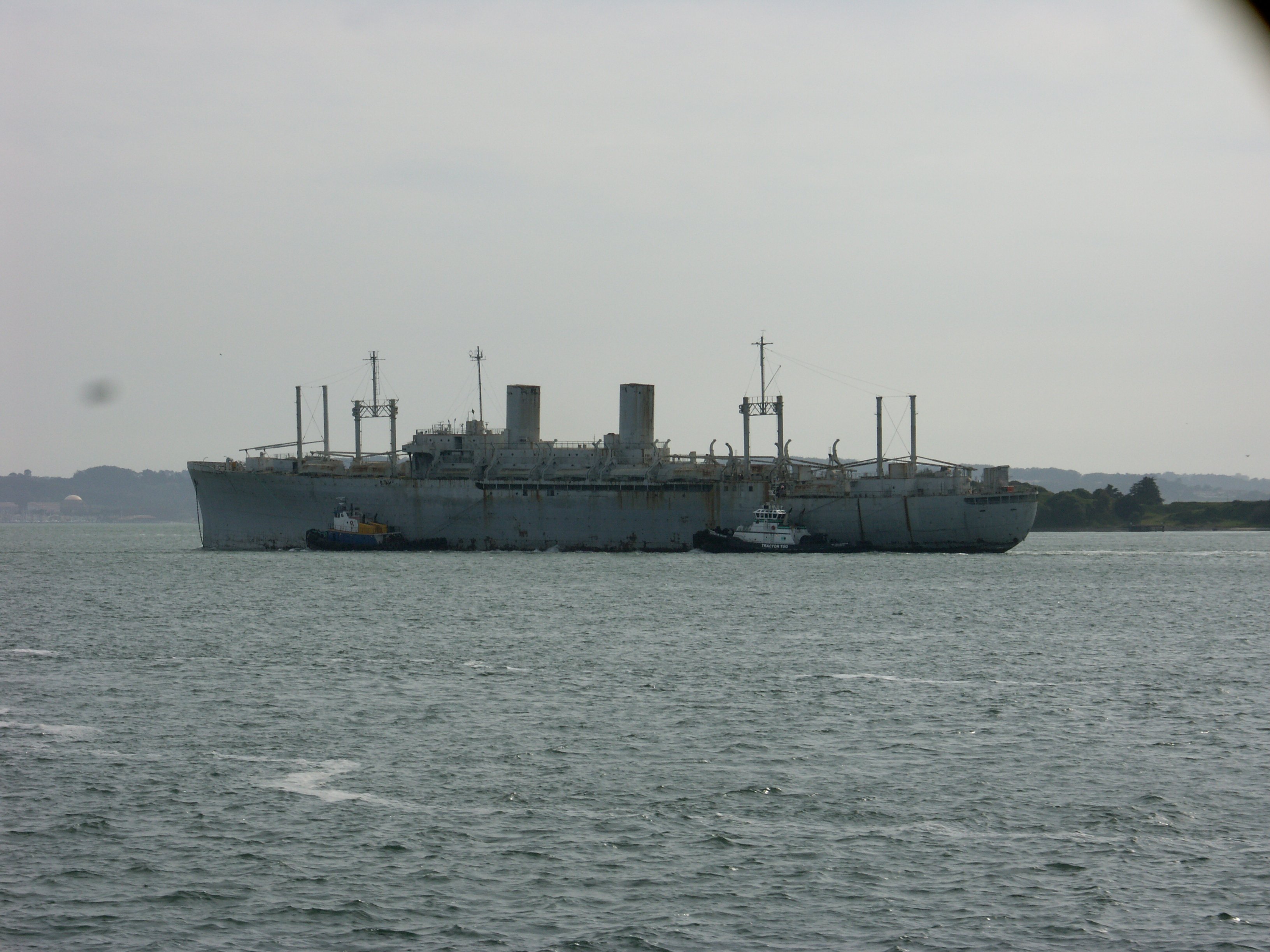
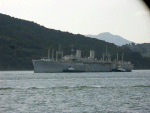
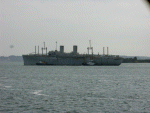
Ex-USNS General Edwin D. Patrick (T-AP 124) underway as a flat tow in the North Channel, San Francisco Bay, 15 April 2010. Tugs were moving General Edwin D. Patrick from the National Reserve Defense Fleet, Suisun Bay, CA to a shipyard in San Francisco for cleaning of her hull. The vessel is bound for TX and the breaker's yard. |
Photos by CAPT. Jack C. Goldthorpe, USCG (Ret.) |
 |
923k |