Click On Image
For Full Size Image |
Size |
Image Description |
Contributed
By And/Or Copyright |
Name
|
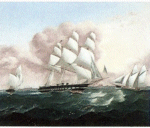
NS098630901 |
43k |
CV-13 was named for "two famous old vessels in the Navy bearing
th[e] name [Franklin]." (Very special thanks to Robert J. Cressman, Naval History
& Heritage Command.)
There had been four previous American warships named for Benjamin Franklin:
- A Continental Navy schooner, 1775–1776.
- A brigantine, 1805–1807.
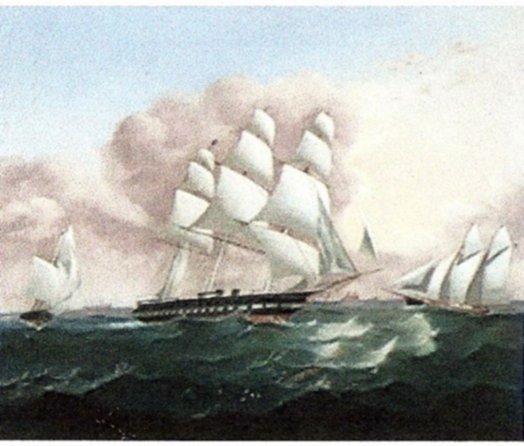
- A ship-of-the-line, built under
the supervision of Samuel Humphreys, was the first vessel to be laid down at the Philadelphia Navy
Yard (1815–1852, NS098630901).
- A screw frigate, 1854–1915.
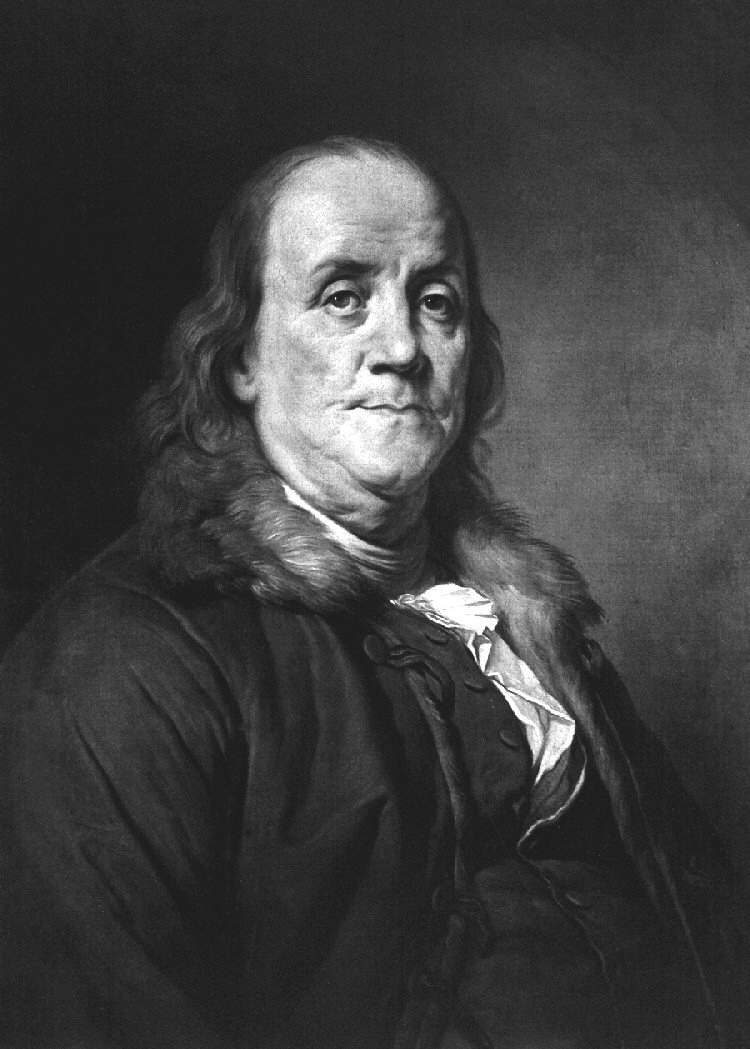
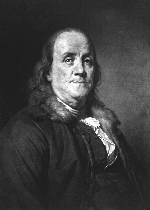
Benjamin Franklin (1706–1790) was born in Boston but moved at an early
age to Philadelphia where his countless talents and unlimited energies found expression in successful
contributions as a statesman, diplomat, scientist, editor-author, and philosopher. During the Revolution
he was appointed American Minister Plenipotentiary to the French Court enabling him to function also
as the Navy's representative in Europe. He promoted the plan to bring the war to British shores, supporting
Lambert Wickes's spectacular raids and enabling John Paul Jones to perform his daring feats by providing
funds, attending to purchases and repairs, and determining questions of authority and discipline.
His astute and visionary policies merit for him deserved recognition in the annals of the infant Navy
as well as esteem as a founder of the United States. |
NavSource |
NS0864076 |
59k |
World War II
|
NS021356 |
535k |
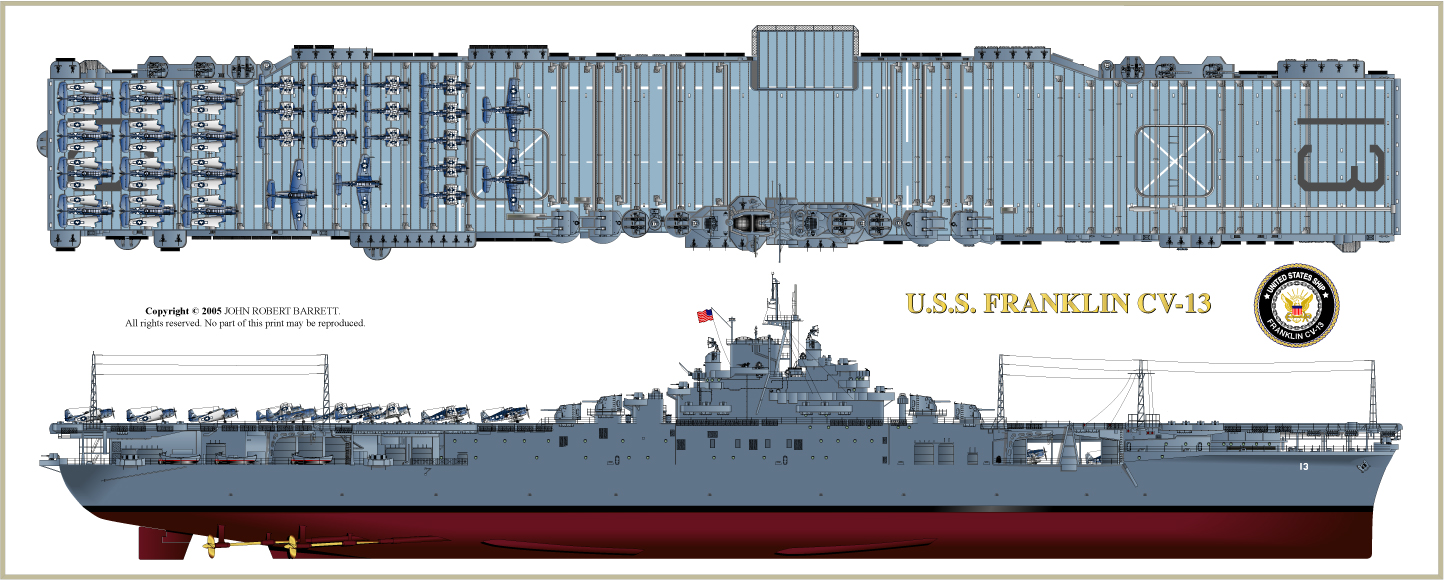
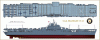
USS Franklin (CV-13), World War II.
Overhead plan and starboard profile meticulously drawn by John Robert Barrett. |
Navy Yard Associates |
NS021361 |
159k |
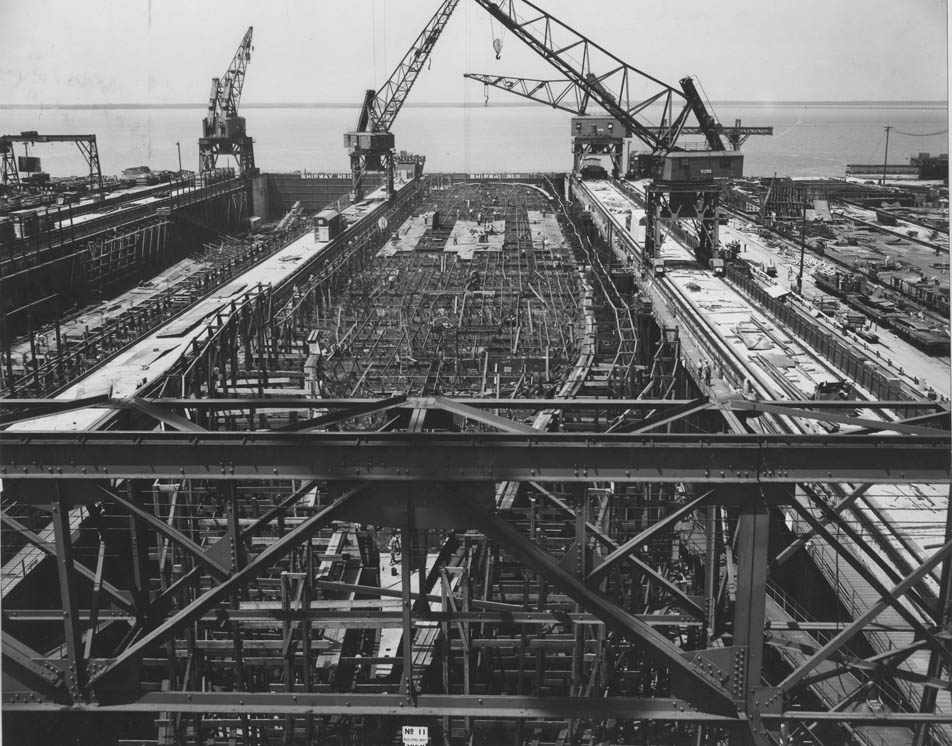
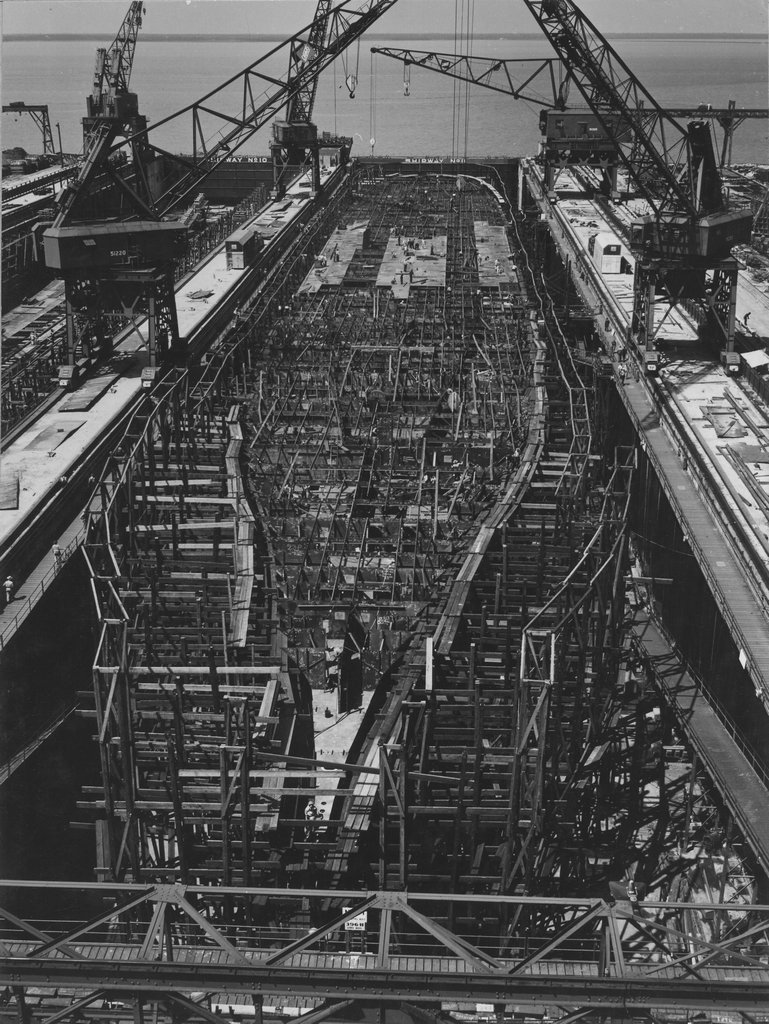
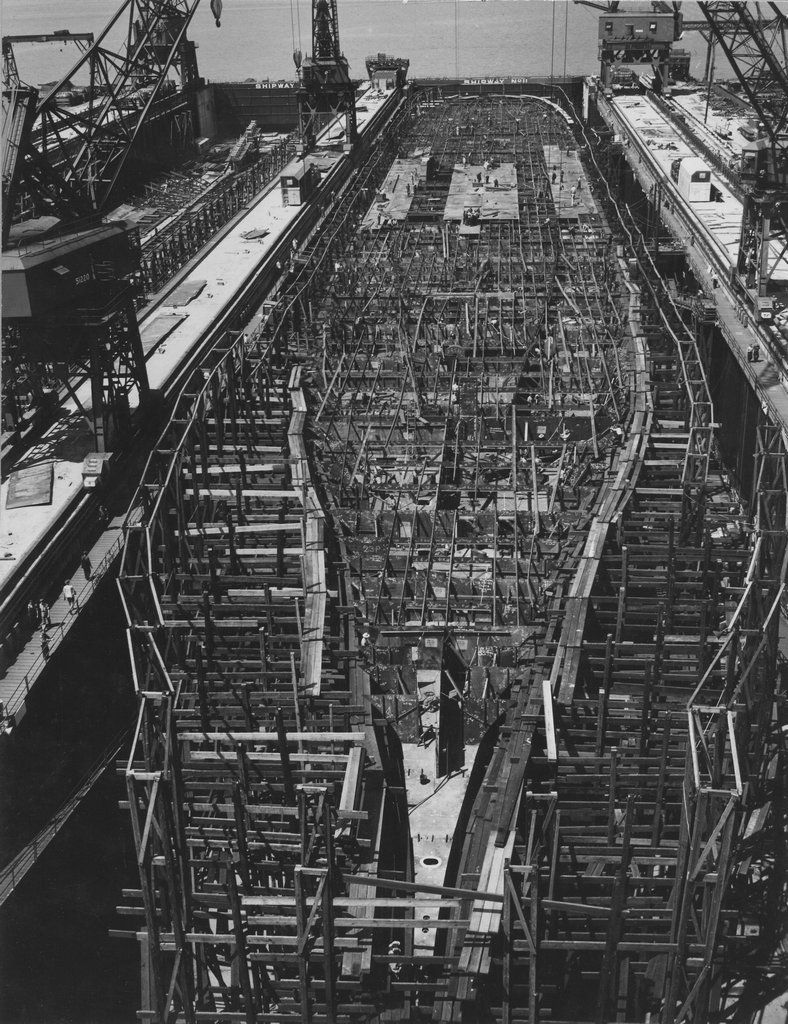
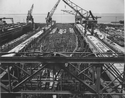
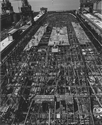
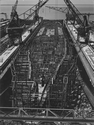
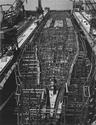
The deck pieces for the second deck (just below the hangar deck) are starting
to be placed in this May 1943 shot of CV-13 in Shipway number 11 at Newport News Shipbuilding. To
the left is her sister ship CV-15 Randolph.
(See also NS021362.)
US Navy photo now in the 80-G collection at NARA College Park (# 80-G-474219). |
Tracy White, Researcher @ Large |
NS021361a |
260k |
May 1943.
US Navy photo now in the 80-G collection at NARA College Park (# 80-G-474220). |
Tracy White, Researcher @ Large |
NS021361b |
222k |
May 1943.
US Navy photo now in the 80-G collection at NARA College Park (# 80-G-474221). |
Tracy White, Researcher @ Large |
NS021361c |
235k |
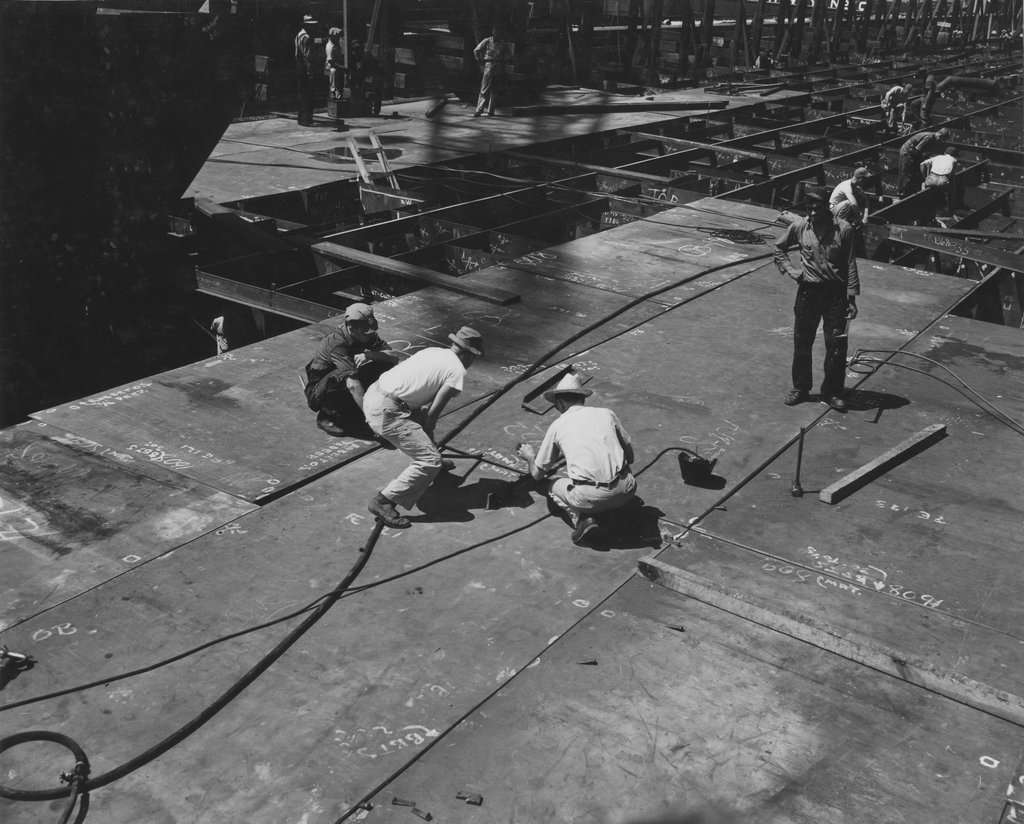
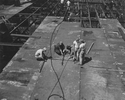
May 1943.
US Navy photo now in the 80-G collection at NARA College Park (# 80-G-474222). |
Tracy White, Researcher @ Large |
NS021361d |
121k |
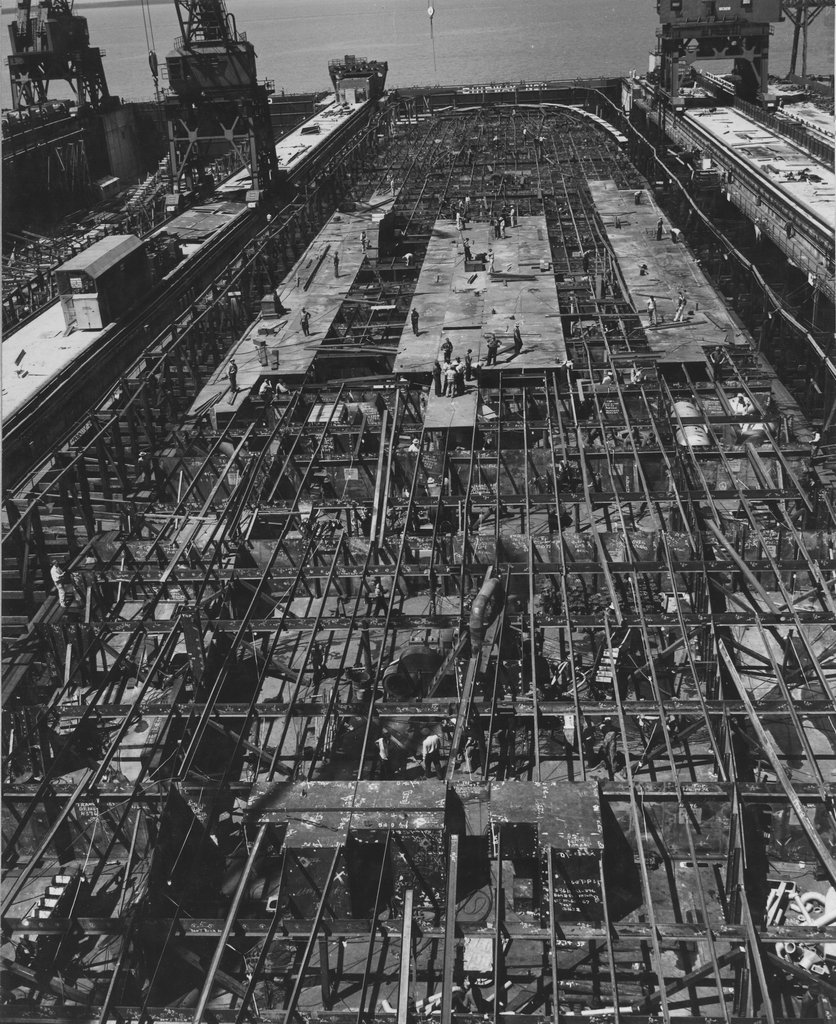
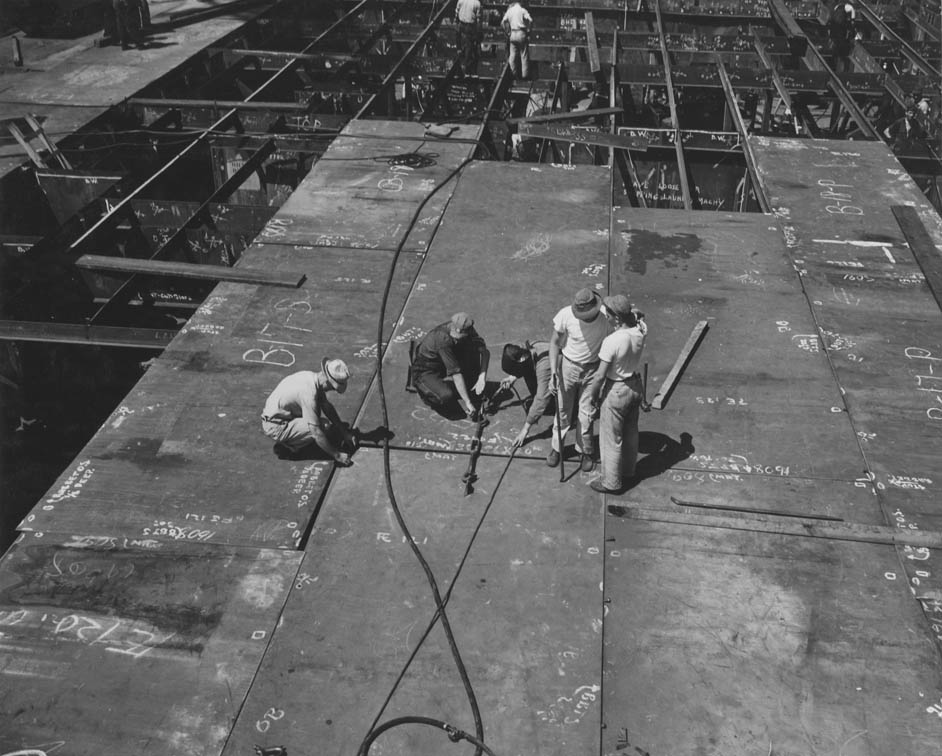
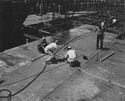
Construction workers at Newport News Shipbuilding pull sections of Franklin's
second deck into careful alignment before welding in May 1943.
US Navy photo now in the 80-G collection at NARA College Park (# 80-G-474223). |
Tracy White, Researcher @ Large |
NS021361e |
163k |
May 1943.
US Navy photo now in the 80-G collection at NARA College Park (# 80-G-474226). |
Tracy White, Researcher @ Large |
NS021313a |
782k |
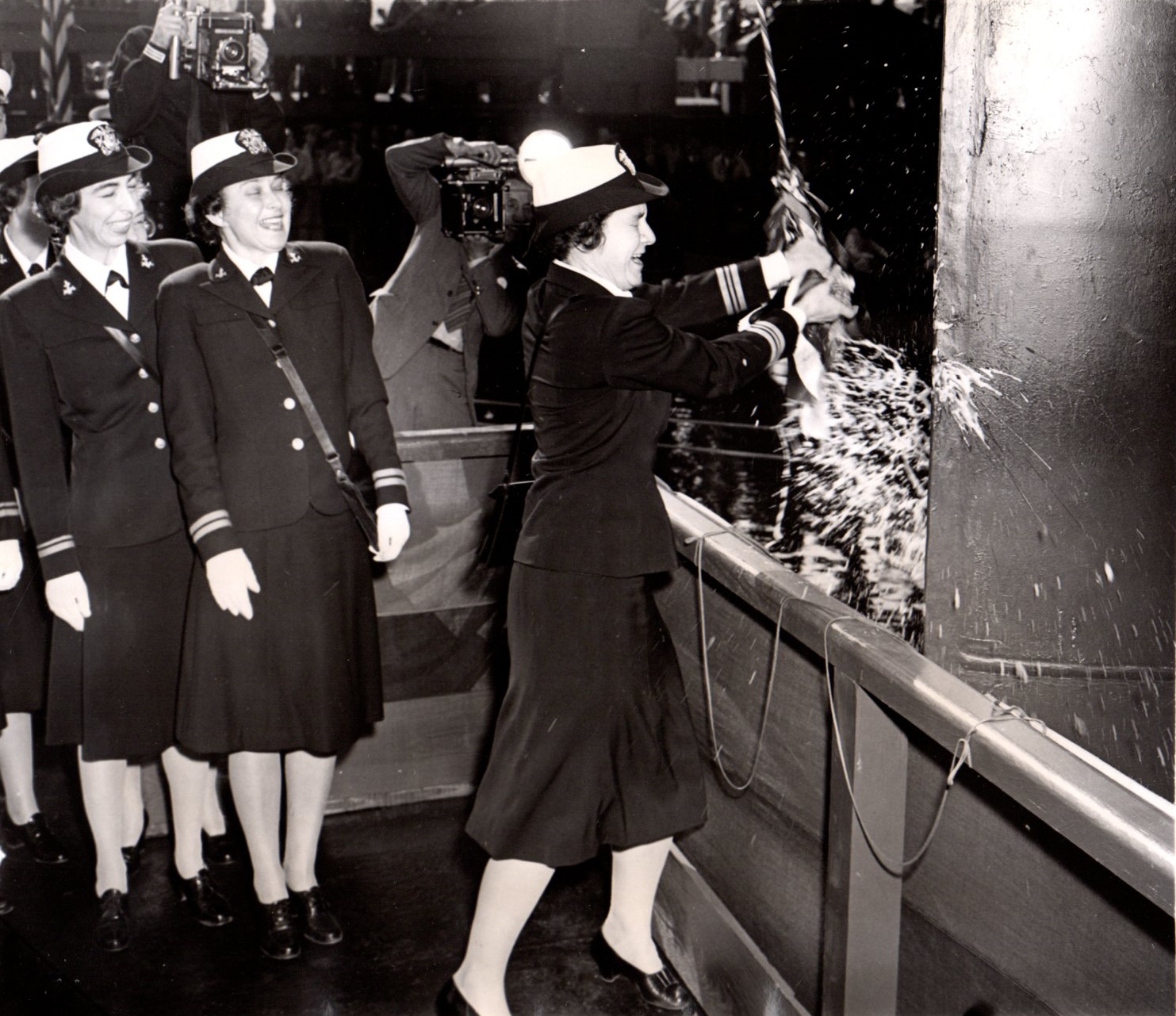
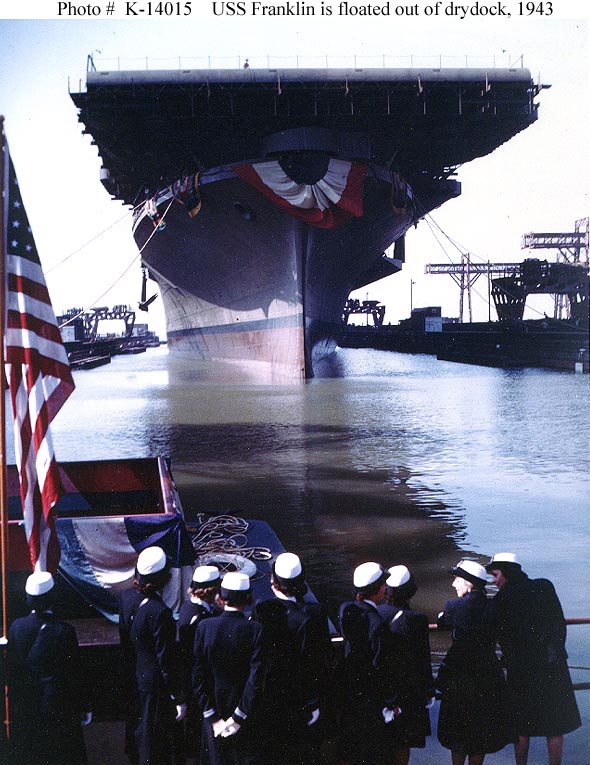
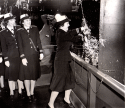
Franklin (CV-13) was christened at the Newport News Shipbuilding
and Dry Dock Company, Virginia, on Thursday, 14 October 1943, by Lieutenant Commander Mildred H. McAfee,
USNR, Director of the WAVES (Women Accepted for Volunteer Emergency Service). |
S. Dale Hargrave |
NS021313 |
107k |
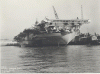
The ship is floated out of her building dock immediately after
christening, at the Newport News Shipbuilding and Drydock Company shipyard, Newport News,
Virginia, on 14 October 1943. Note WAVES officers in the foreground. The WAVES' Director,
Lieutenant Commander Mildred H. McAfee, USNR, was Franklin's sponsor.
Official U.S. Navy Photograph, now in the collections of the National Archives (photo # 80-G-K-14015). |
Scott Dyben |
NS021357 |
170k |
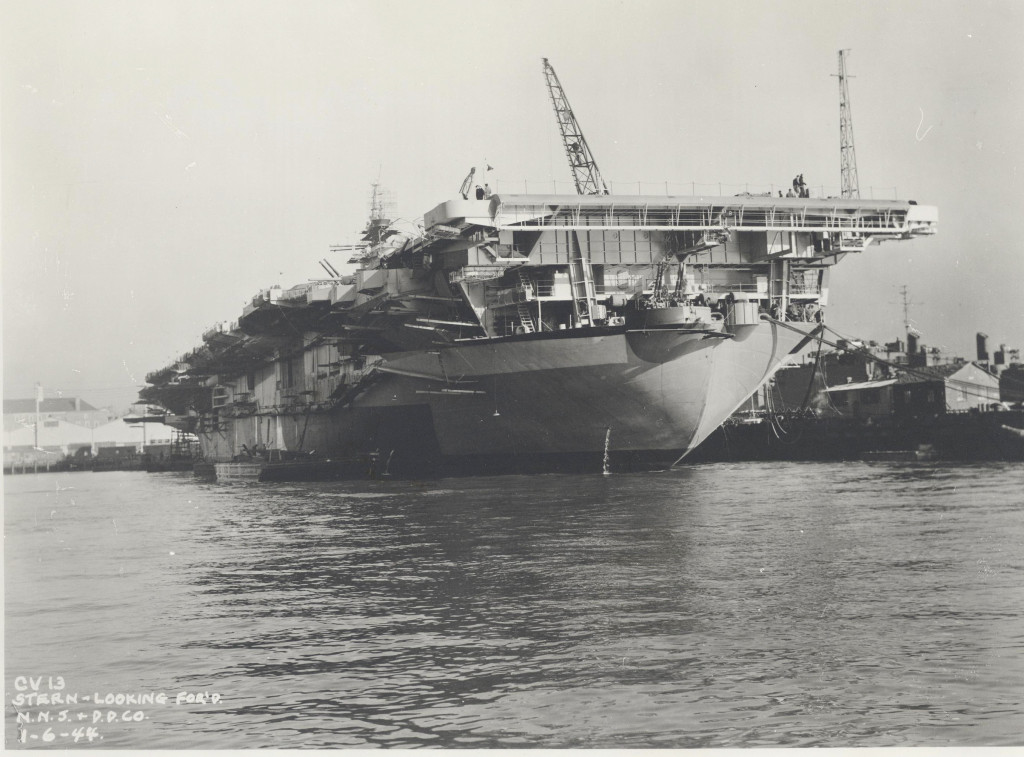
Franklin (CV-13). Stern, looking forward. Newport News Shipbuilding
& Dry Dock Co. 6 January[?] 1944. |
Ed Zajkowski |
NS021301 |
651k |
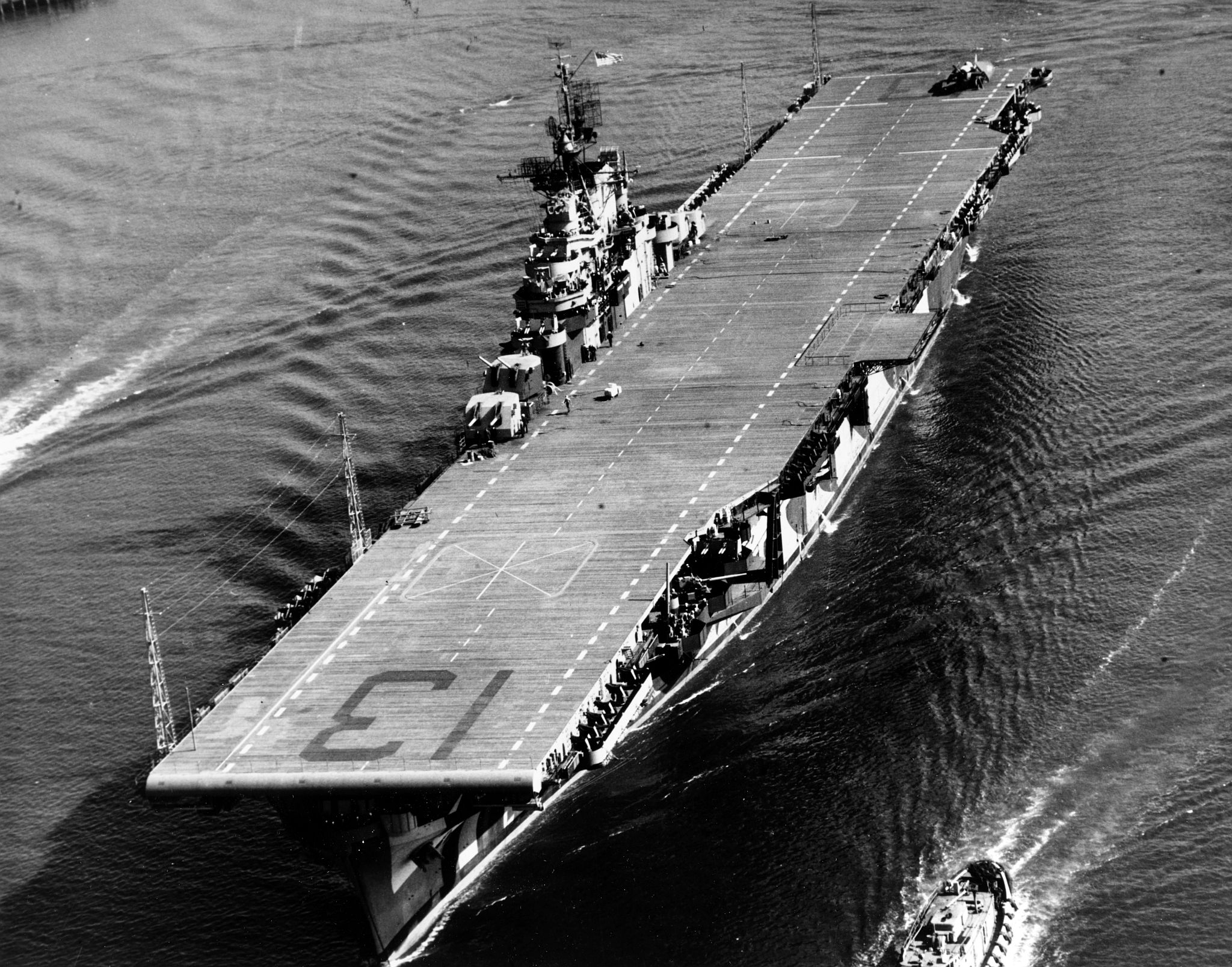
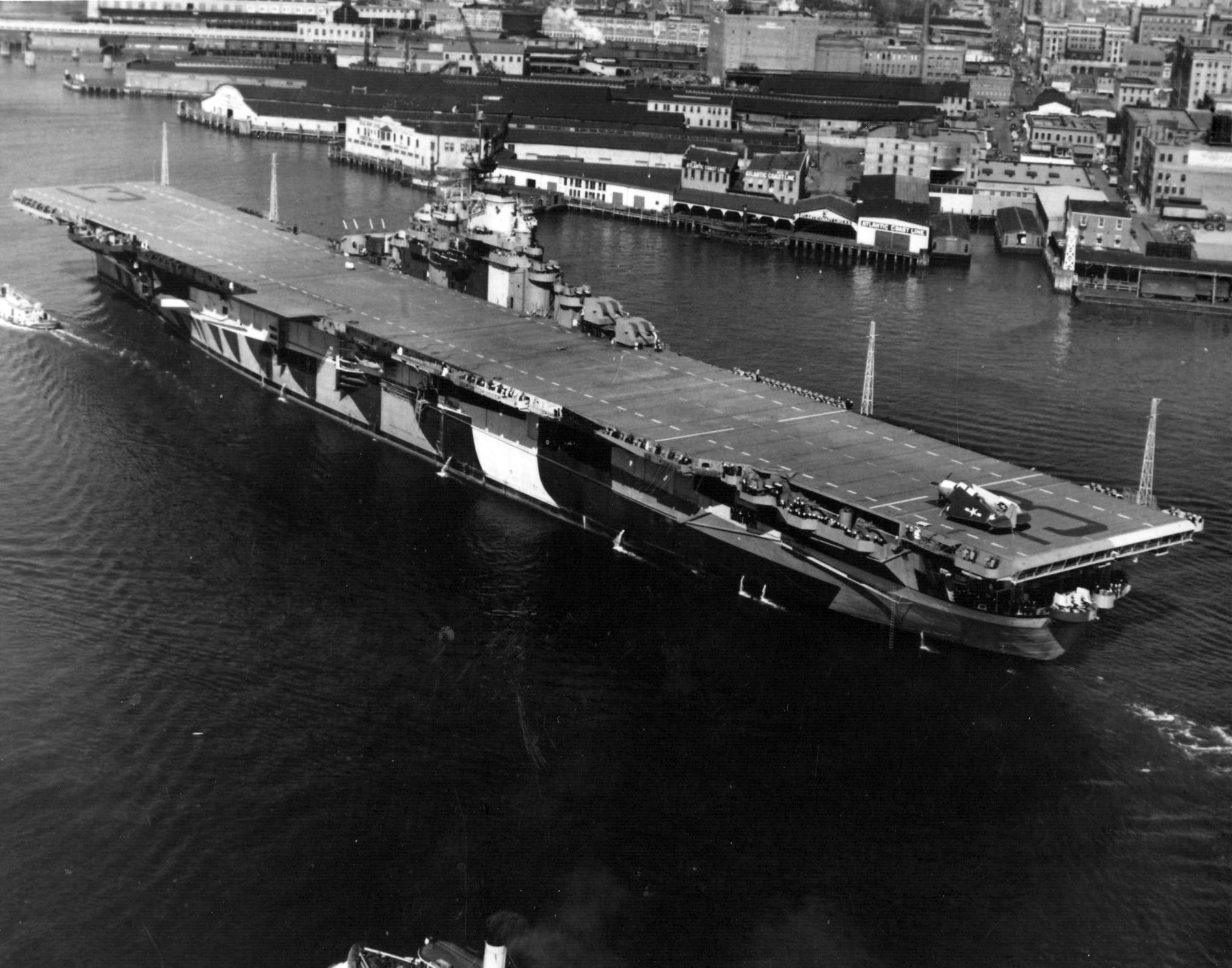
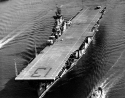
In the Elizabeth River, off Norfolk, Virginia, 21 February 1944.
She has the "early" island structure, with two quad 40-mm/56-cal gun mounts forward (see NS021319
for a later view). There is a single flight deck catapult (stbd) and a hangar deck catapult, with its
port outrigger stowed. The ship has four deck-edge radio masts and is fitted with arresting gear forward,
adjacent to the twin 5"/38 gun mounts. (Thanks to Robert Hurst, who provided additional info).
Official U.S. Navy Photograph, now in the collections of the
National Archives and Records Administration,
# 80-G-224596. |
Naval History & Heritage Command |
NS021301a |
99k |
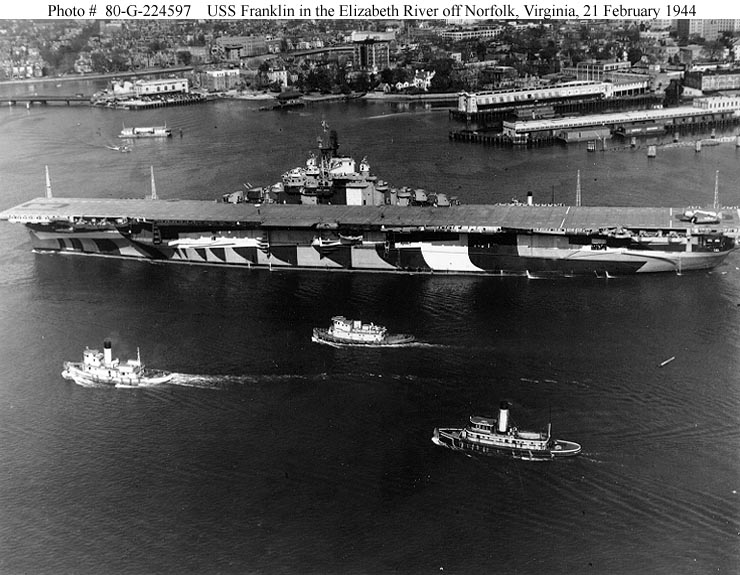
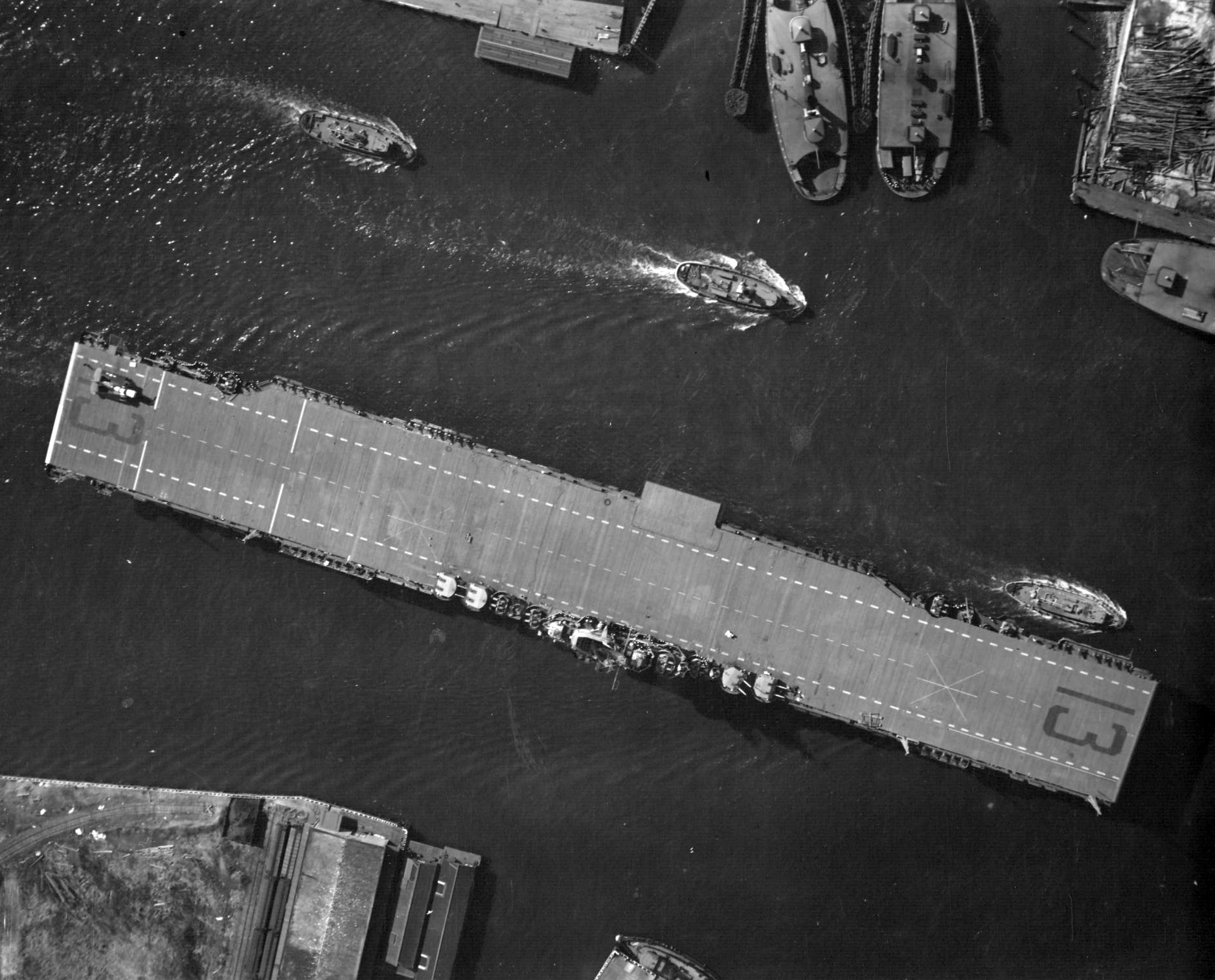
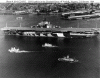
In the Elizabeth River, off Norfolk, Virginia, 21 February 1944. She
is accompanied by three local harbor tugs. Franklin is painted in camouflage Measure
32, Design 6a. This paint scheme was changed a few months later, on the port side only, to Measure
32, Design 3a. The ship's starboard side retained the Design 6a pattern.
Official U.S. Navy Photograph, now in the collections of the National
Archives and Records Administration photo, # 80-G-224597. |
Naval History & Heritage Command |
NS021301b |
586k |
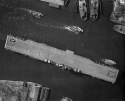
USS Franklin (CV-13) in the Elizabeth River, off Norfolk, Virginia,
21 February 1944.
National Naval Aviation Museum
photo, R.L. Lawson Photograph Collection, via David Stubblebine. |
Bob Canchola, BT, USN (Ret.) |
NS021301c |
575k |
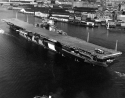
USS Franklin (CV-13) in the Elizabeth River, off Norfolk, Virginia,
21 February 1944.
National Naval Aviation Museum
photo, R.L. Lawson Photograph Collection, via David Stubblebine. |
Bob Canchola, BT, USN (Ret.) |
NS021332 |
92k |
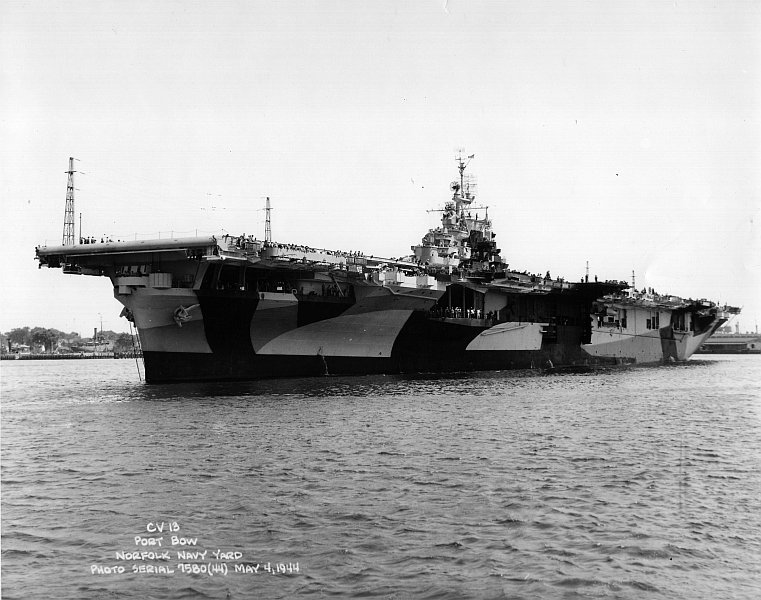
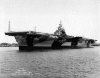
USS Franklin (CV-13), Norfolk Navy Yard, Photo Serial 7580(44),
4 May 1944. |
Steve Whitby |
NS021332a |
231k |
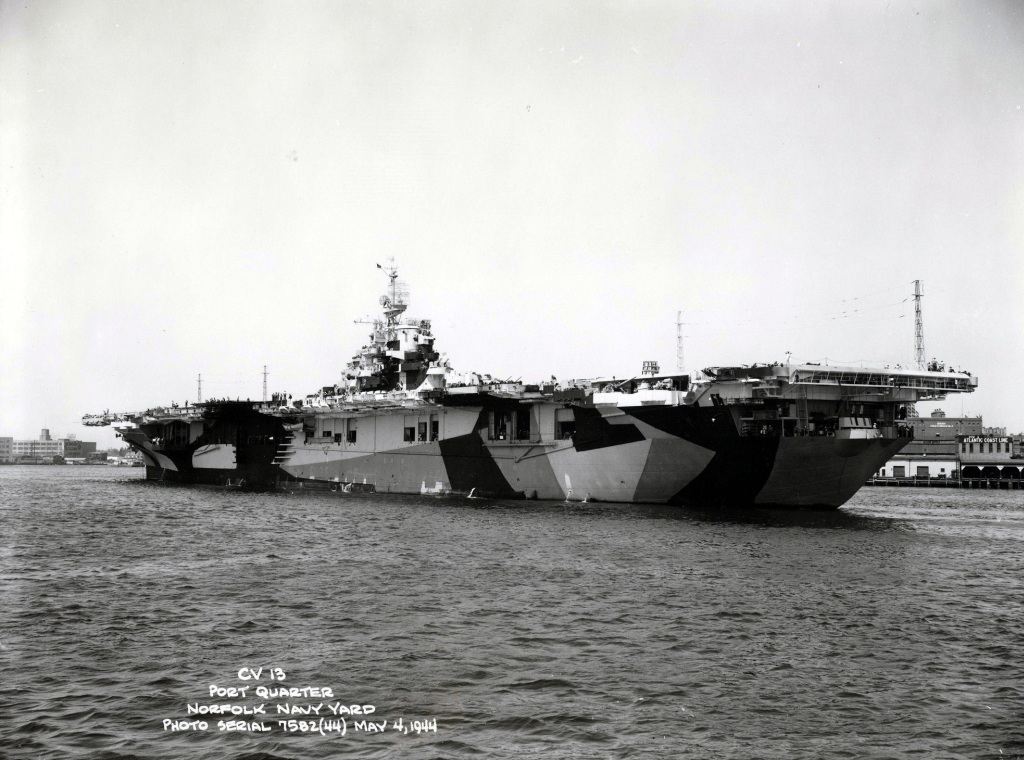
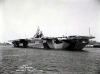
USS Franklin (CV-13), port quarter, Norfolk Navy Yard, Photo
Serial 7582(44), 4 May 1944. |
Ed Zajkowski |
NS021332b |
254k |
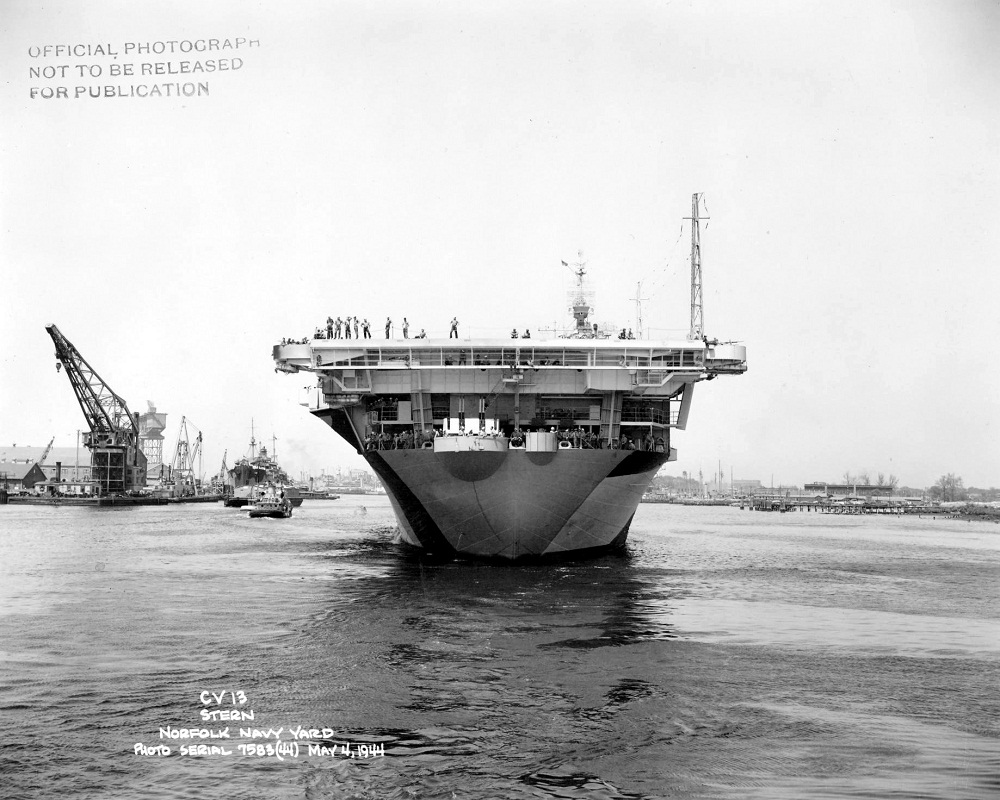
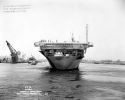
Stern view of USS Franklin (CV-13) underway at Norfolk Navy
Yard on 4 May 1944. The ship has an unusual camouflage scheme: Measure 32 Design 3A on the port side
and Ms. 32 Design 6A on the starboard.
Norfolk Navy Yard photo serial 7583(44).
National Naval Aviation Museum photo,
# 1996.488.246.002. |
Mike Green |
NS021319 |
413k |
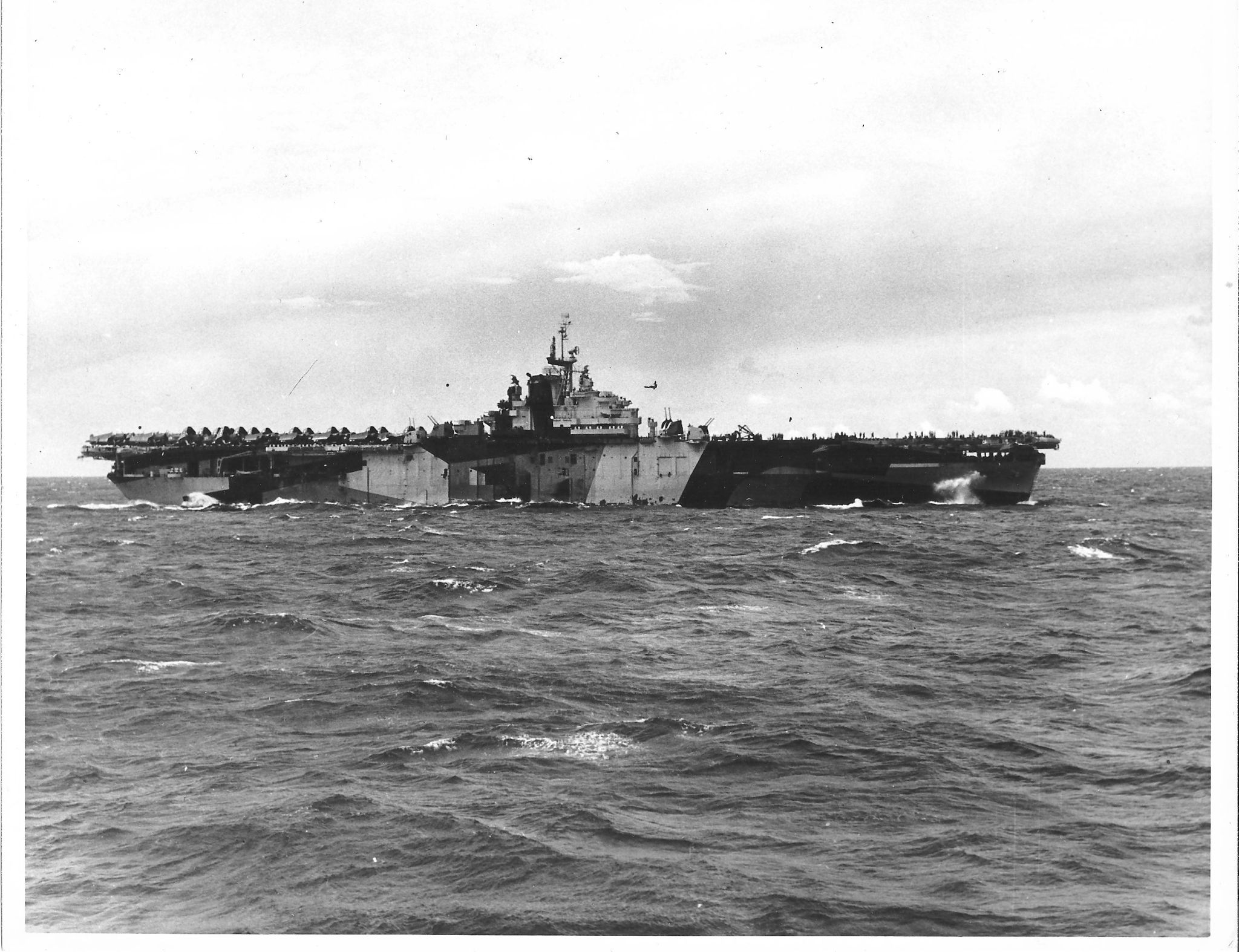
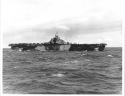
USS Franklin (CV-13) operating near the Marianas, 1 August
1944. Photographed from USS Hornet (CV-12). Franklin
is painted in camouflage Measure 32, Design 6a. At this time, Design 6a was applied only to her
starboard side. She wore Design 3a on the port side.
Compared to NS021301, the island structure has been modified by removing the
forward quad 40/56 mount and extending the flag bridge. (Thanks to Robert Hurst, who provided additional
info).
Official U.S. Navy Photograph, now in the collections of the National Archives (photo # 80-G-367248).
|
Robert M. Cieri |
Battle of Leyte Gulf, October 1944
|
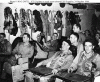
NS021320 |
138k |
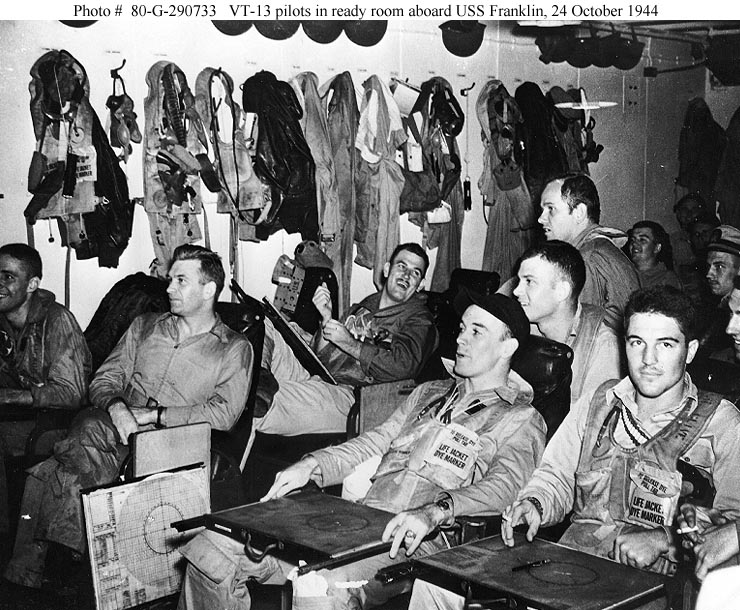
Pilots of Torpedo Squadron (VT) 13 in their ready room aboard USS Franklin
(CV-13), 24 October 1944, just before the Battle of the Sibuyan Sea. They are watching as the position
of the Japanese fleet is posted. VT-13's Commanding Officer, Lieutenant Commander Larry French, is
second from the left, with a navigation board beside his chair. Note life vests, with die marker pouches,
worn by several of these men. Other life vests, and .38 caliber revolvers, are hanging on the bulkhead.
Official U.S. Navy Photograph, now in the collections
of the National Archives and Records Administration
(NARA), # 80-G-290733. |
Naval History & Heritage Command |
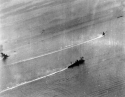
NS021320a |
544k |
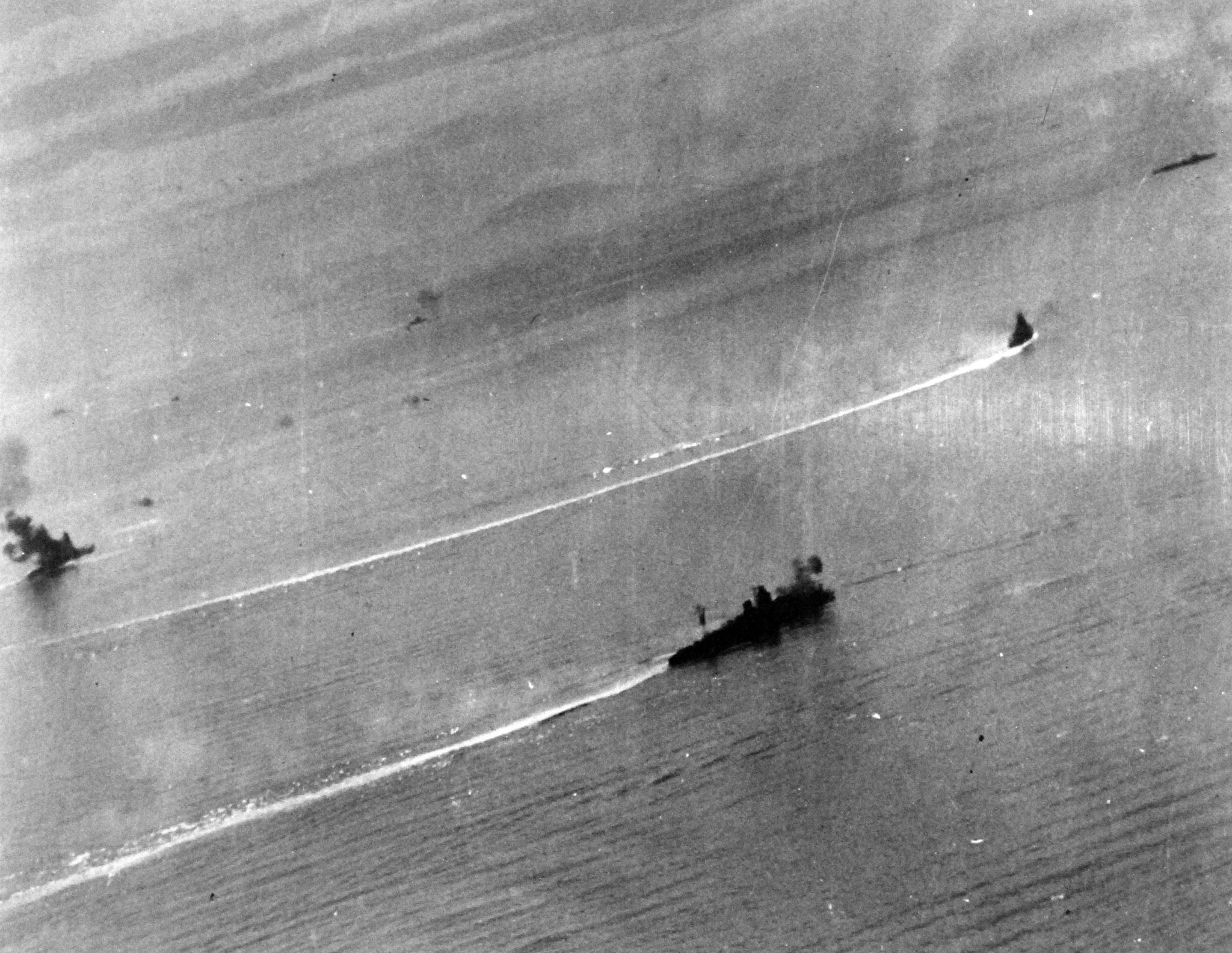
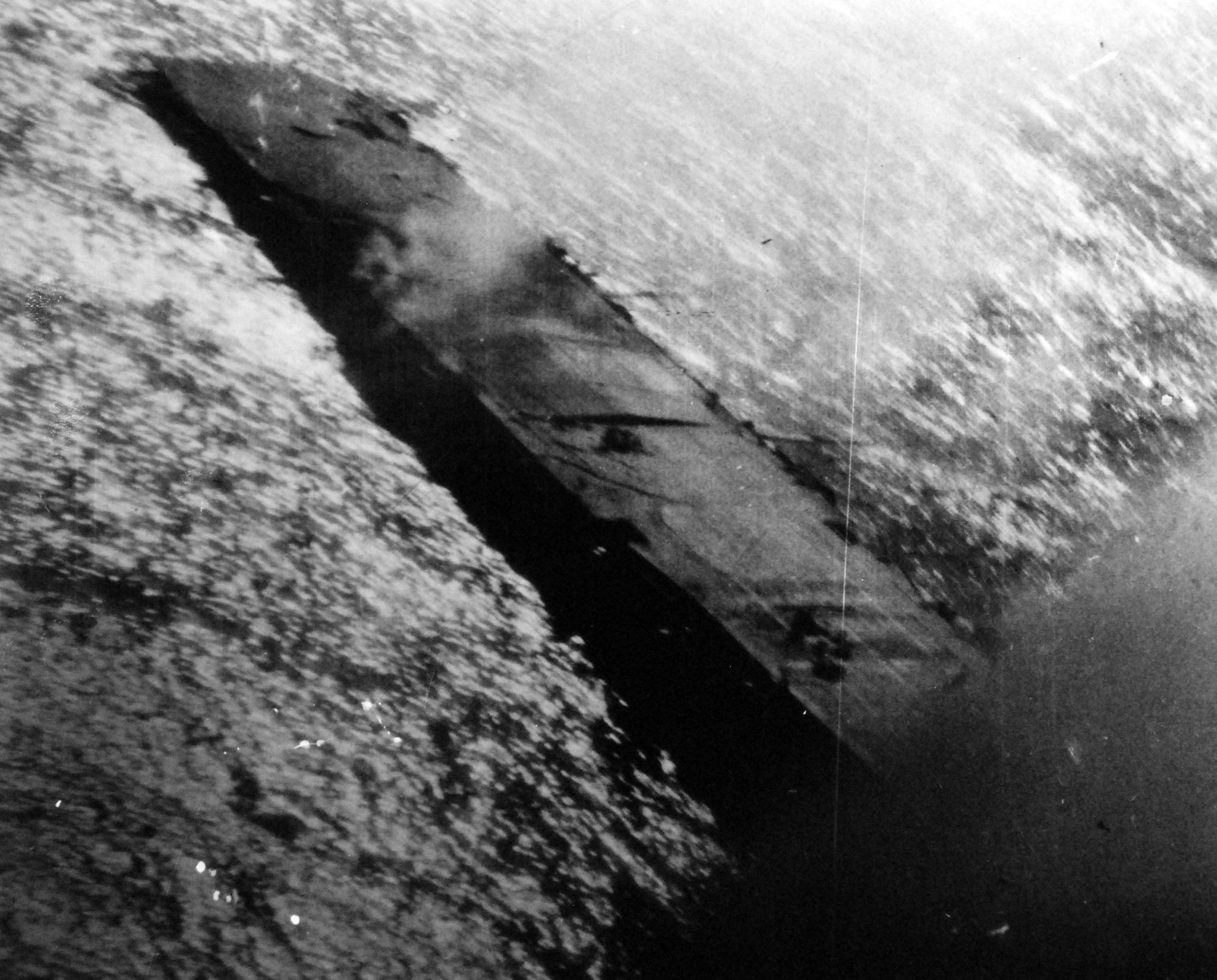
Battle of the Sibuyan Sea. Japanese warships under attack by carrier-based
planes. Note the Japanese light cruiser of the Agano
class. Taken from a plane from USS Franklin (CV-13), 24 October 1944.
National Archives and Records Administration
(NARA) photo, # 80-G-272551. |
NARA |
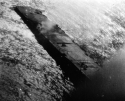
NS021320b |
446k |
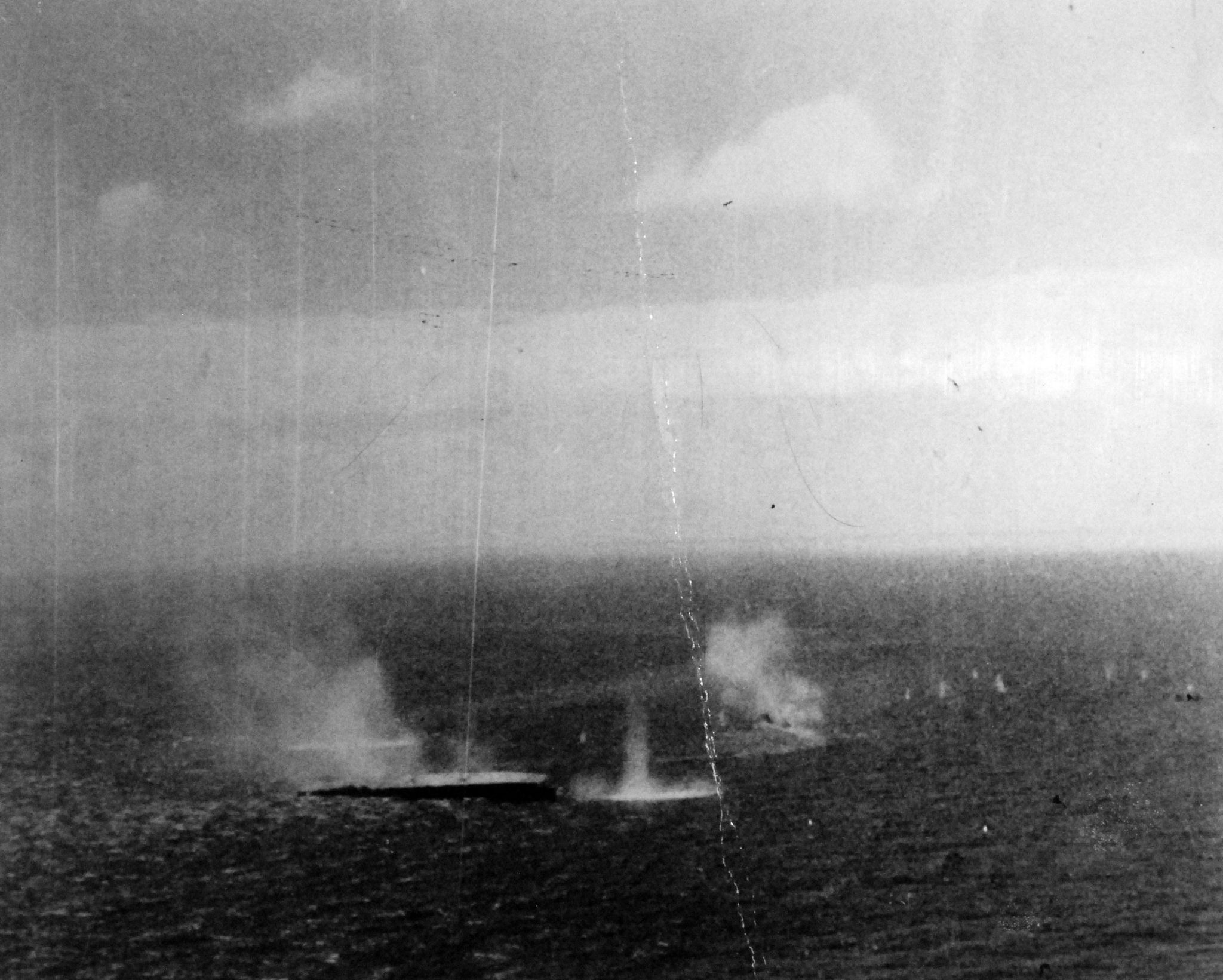
Battle of the Sibuyan Sea. Japanese warships under attack by carrier-based
planes. Note the light aircraft carrier, Zuiho.
Taken from a plane from USS Franklin (CV-13), 24 October 1944.
National Archives and Records Administration
(NARA) photo, # 80-G-272552. |
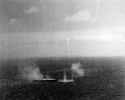
NS021320c |
392k |
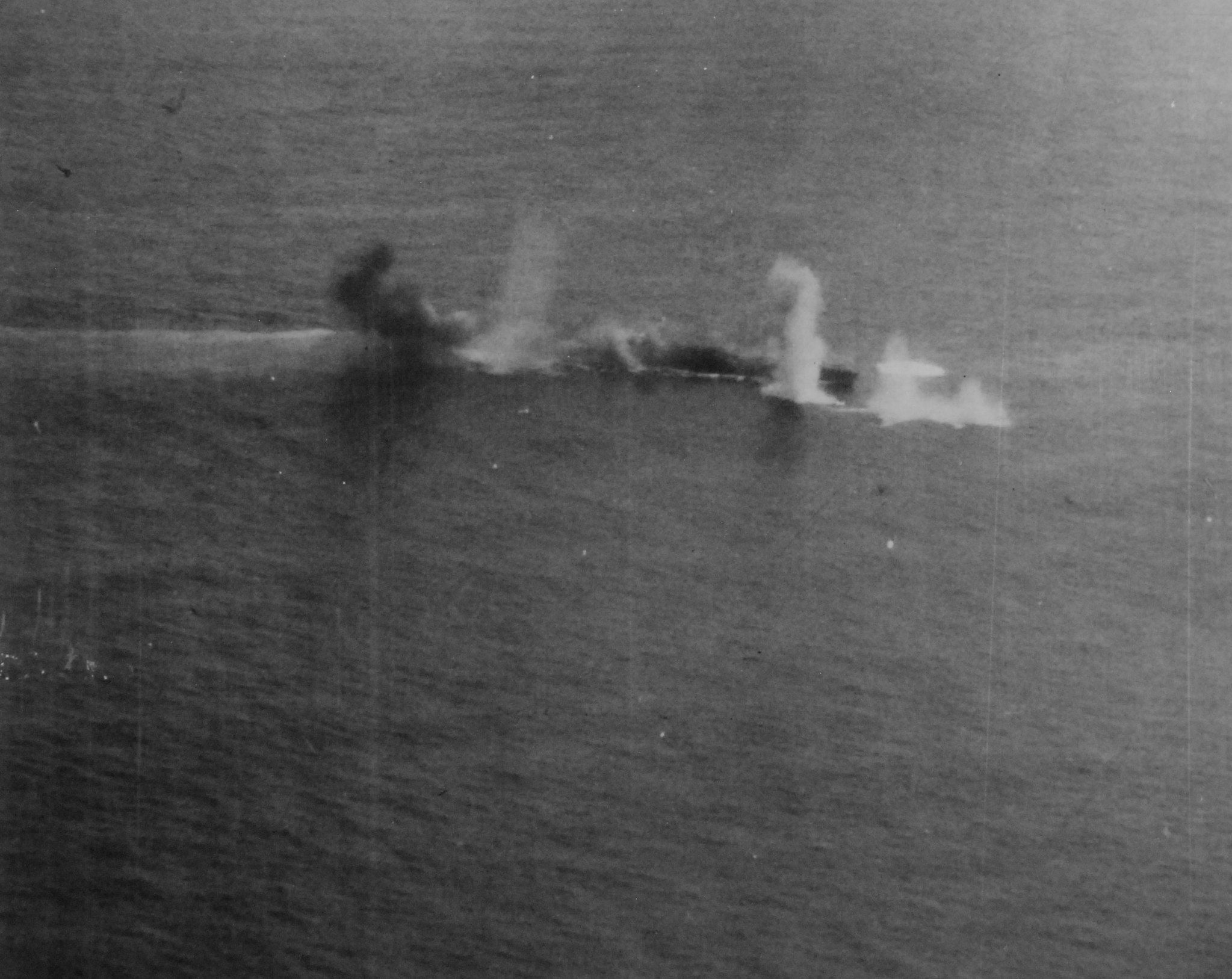
Battle of the Sibuyan Sea. Japanese warships under attack by carrier-based
planes. Note the light aircraft carrier, Zuiho,
listing in the water. Taken from a plane from USS Franklin (CV-13), 24 October 1944.
National Archives and Records Administration
(NARA) photo, # 80-G-272553. |
NS021320d |
362k |
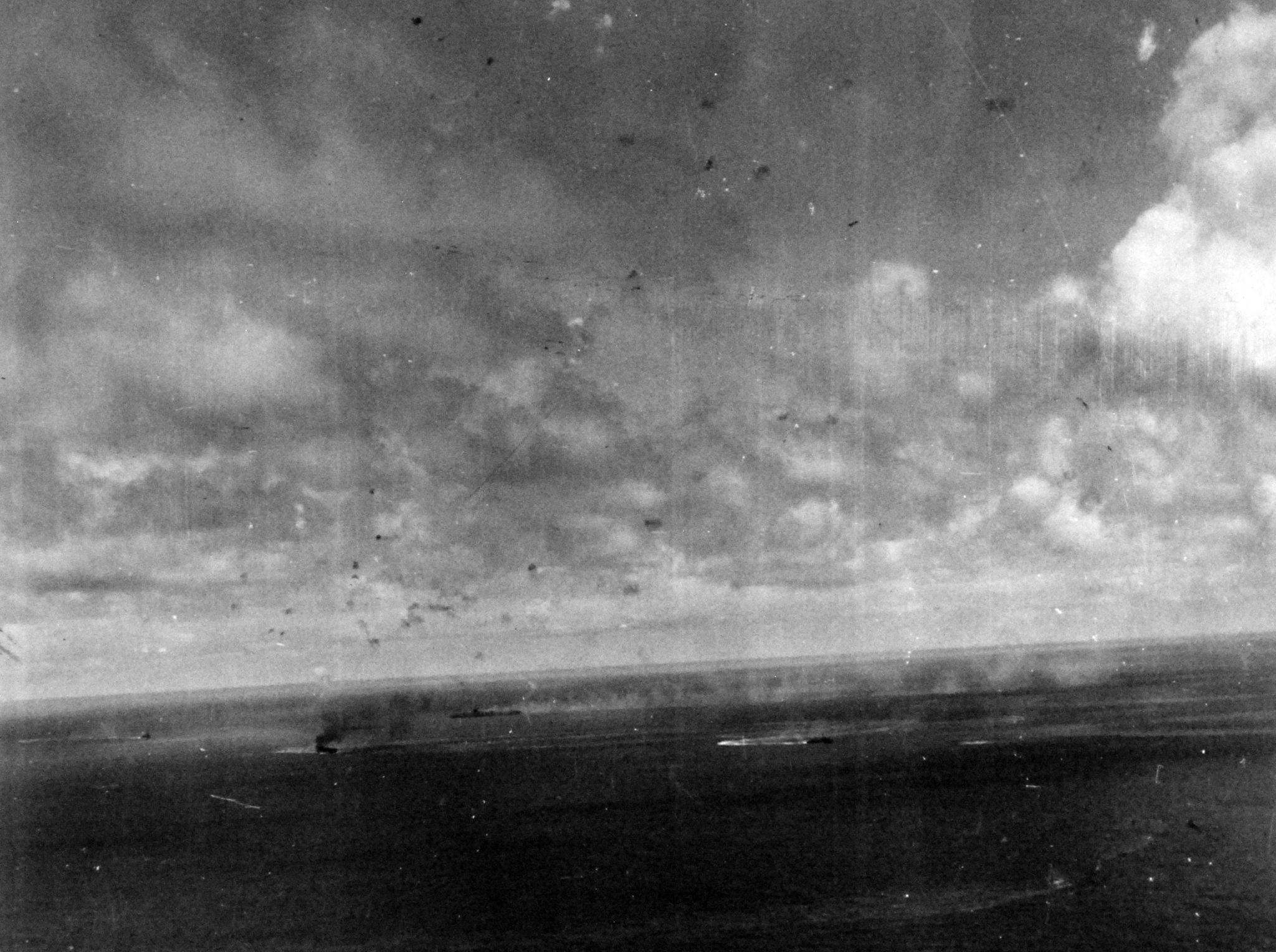
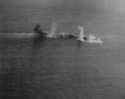
Battle of the Sibuyan Sea. Japanese warships under attack by carrier-based
planes at Northeast Luzon. Taken from a plane from USS Franklin (CV-13), 24 October 1944.
National Archives and Records Administration
(NARA) photo, # 80-G-272554. |
NS021320e |
420k |
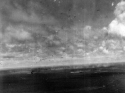
Battle of the Sibuyan Sea. Japanese warships under attack by carrier-based
planes at Northeast Luzon. Note the Shokaku-class
aircraft carrier Zuikaku in
the background. The carriers are burning. Note, the Japanese heavy burst of anti-aircraft fire overhead.
Taken from a plane from USS Franklin (CV-13), 24 October 1944.
National Archives and Records Administration
(NARA) photo, # 80-G-272556. |
NS021320f |
491k |
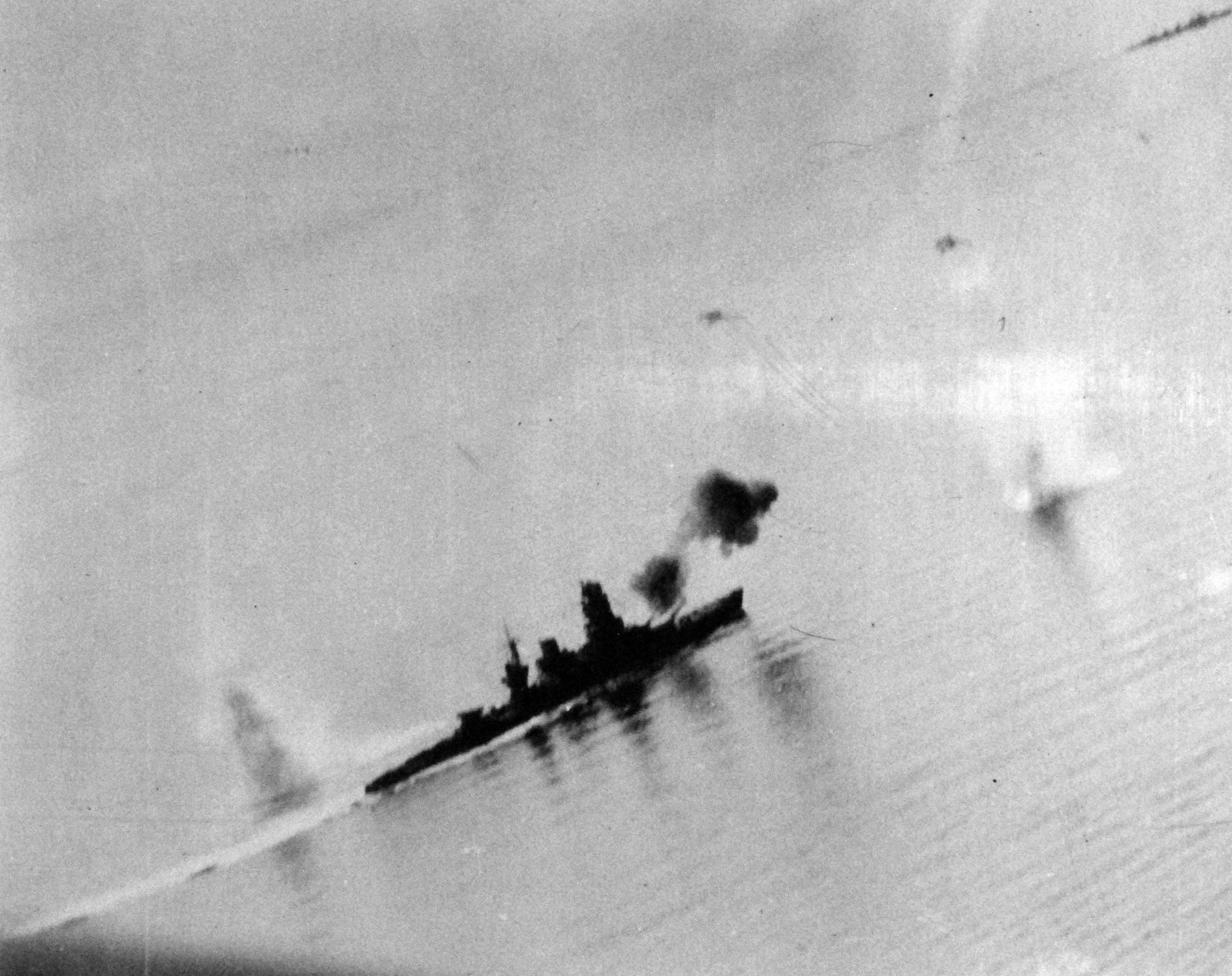
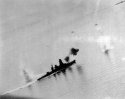
Japanese Nagato-class
battleship. Photo taken by plane from USS Franklin (CV-13) during the Battle of the Sibuyan
Sea, 24 October 1944.
National Archives and Records Administration
(NARA) photo, # 80-G-272557. |
NS021320g |
544k |
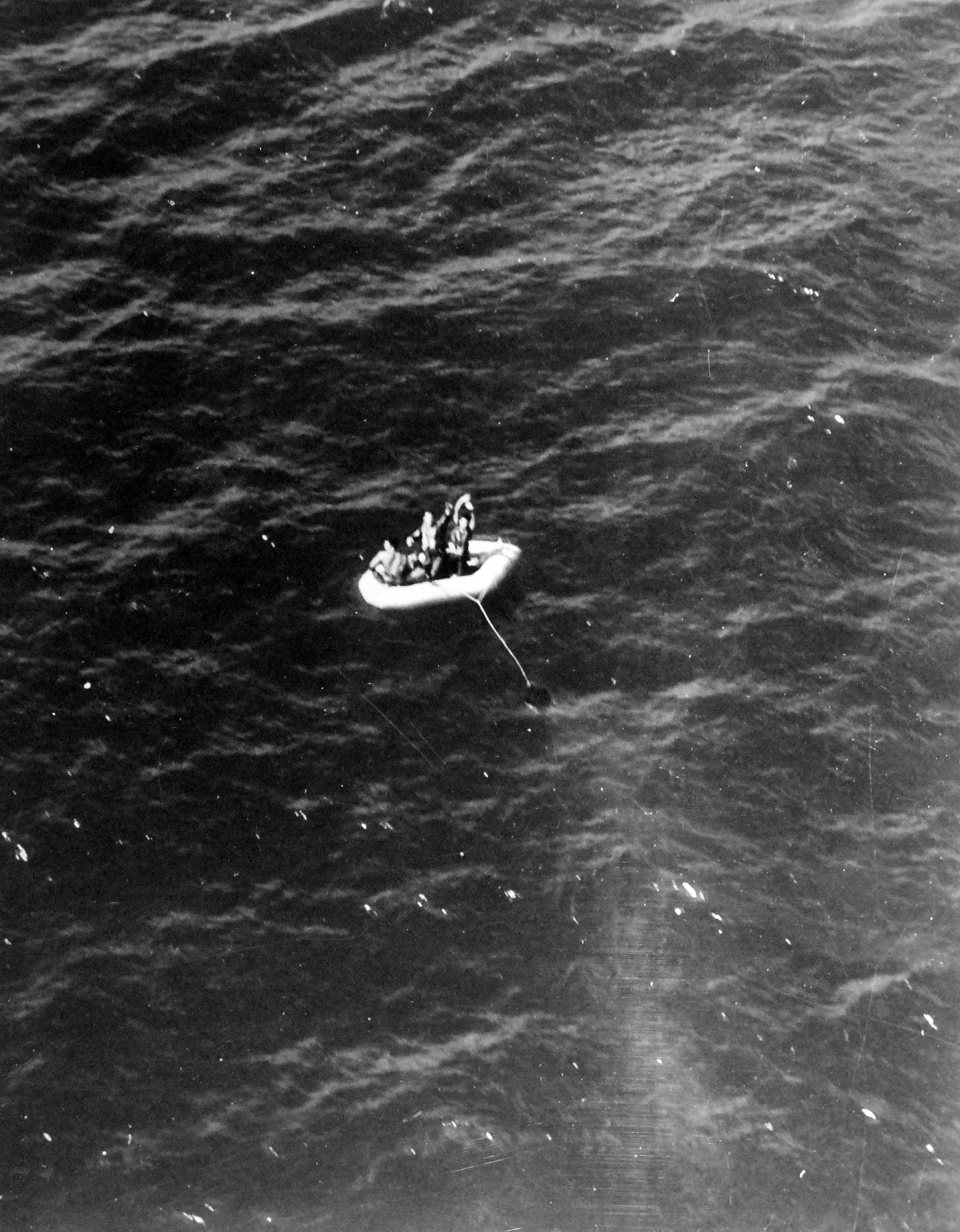
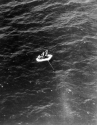
Plane survivors (names unknown) in life rafts, probably during the North
East Luzon fleet action. Taken by plane from USS Franklin (CV-13), 24 October 1944.
National Archives and Records Administration
(NARA) photo, # 80-G-272558. |
Kamikaze attack, October 30, 1944
|
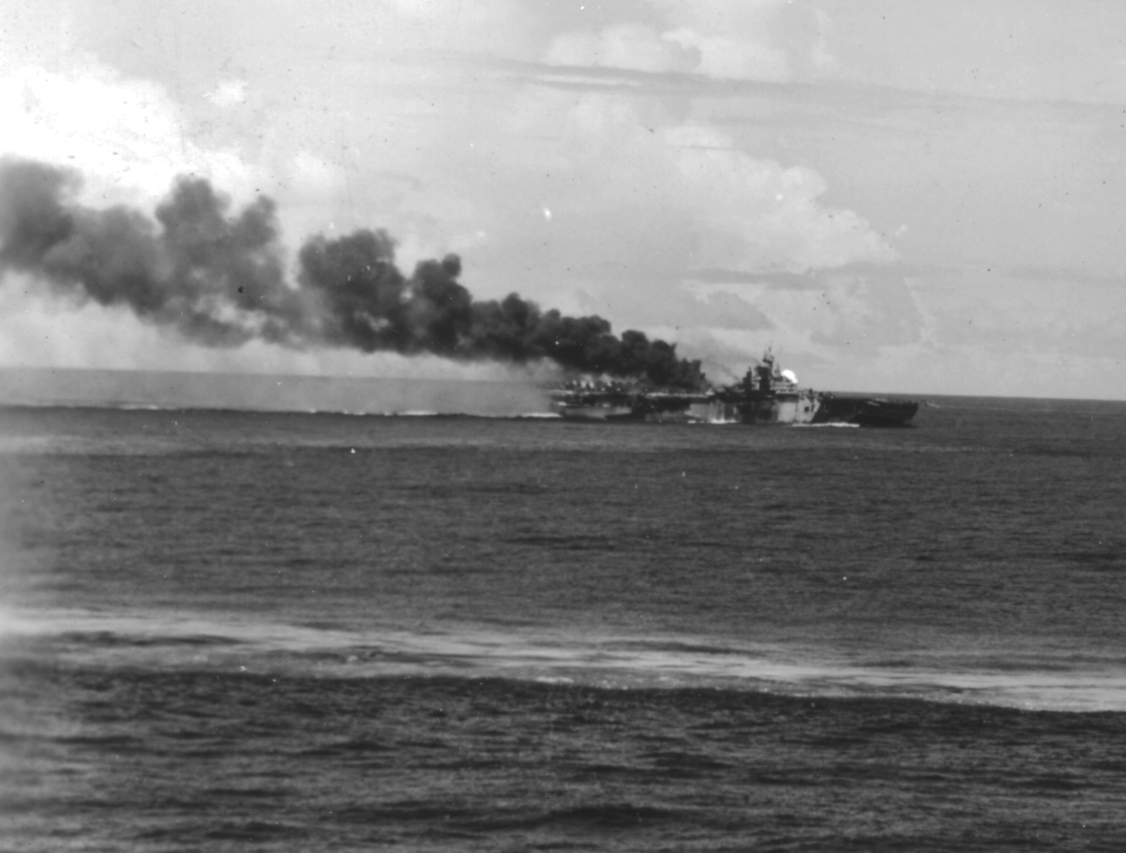
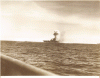
[USS Franklin] was underway about 1,000 miles
off Samar on 30 October [1944] when enemy bombers appeared, bent on a suicide mission. Three doggedly
pursued Franklin, the first plummeting off her starboard side; the second hitting the
flight deck and crashing through to the gallery deck, showering destruction, killing 56 and wounding
60; the third discharging another near miss at Franklin before diving into the flight
deck of the small carrier Belleau Wood. Both carriers retired to Ulithi
for temporary repairs and Franklin proceeded to Puget Sound Navy Yard, Bremerton, Washington,
arriving 28 November 1944 for repairs to her battle damage.
She departed Bremerton on 2 February 1945 and after training exercises and pilot qualification joined
TG 58.2 for strikes on the Japanese homeland in support of the Okinawa landings.
(From DANFS, "Dictionary of American
Naval Fighting Ships," Naval Historical Center website.)
Read a narrative and reports
on this attack, at the Researcher @ Large website. |
NS021334 |
106k |
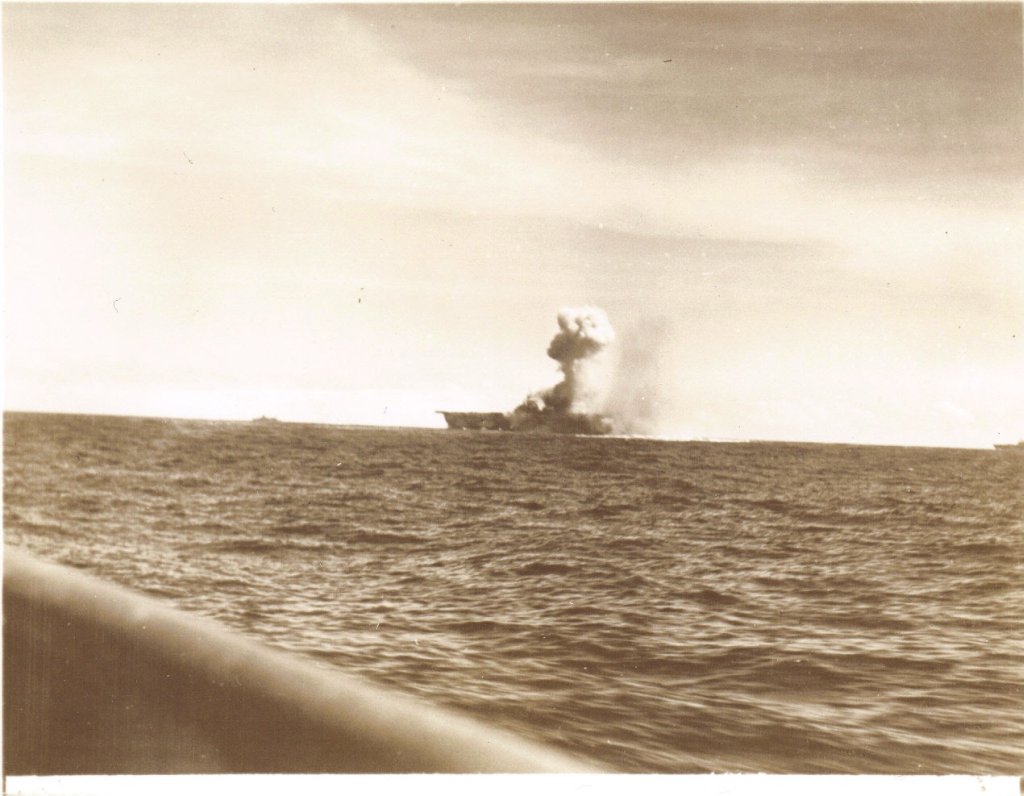
A Japanese kamikaze hits the flight deck of USS Franklin
(CV-13), October 30, 1944.
Official U.S. Navy Photograph.
|
Robert M. Cieri |
NS021335 |
85k |
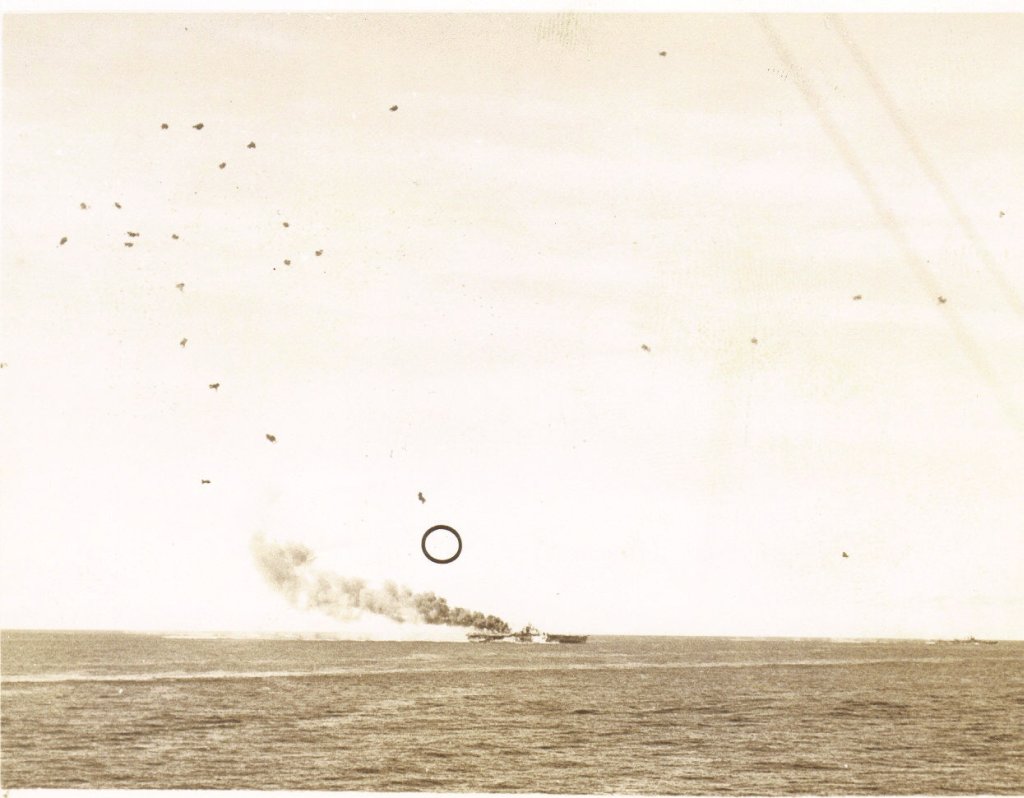
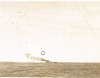
A Japanese dive bomber (encircled) plunges downward USS Franklin
(CV-13). As Big Ben had already been hit this is, perhaps, the kamikaze that
hit USS Belleau Wood (CVL-24) moments later.
Official U.S. Navy Photograph.
|
Robert M. Cieri |
NS021308 |
199k |
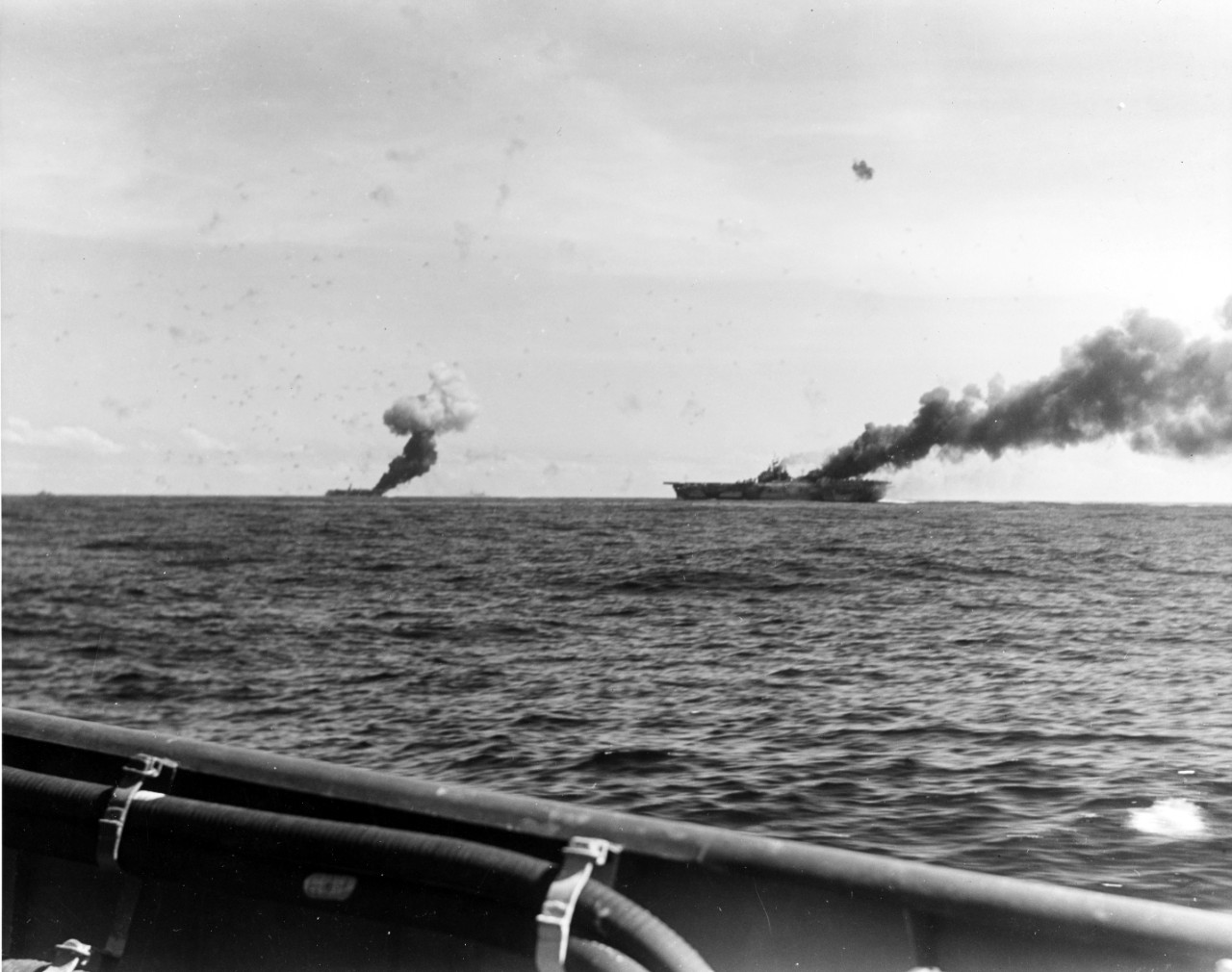
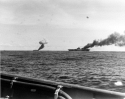
USS Franklin (CV-13), at right, and USS Belleau Wood
(CVL-24) afire after being hit by Japanese kamikaze suicide planes, while operating off the
Philippines on 30 October 1944. Photographed from USS Brush
(DD-745). Note "flak" bursts over the ships.
Official U.S. Navy Photograph, now in the collections
of the National Archives and Records Administration
(NARA), photo # 80-G-326798. |
Scott Dyben |
NS021329 |
32k |
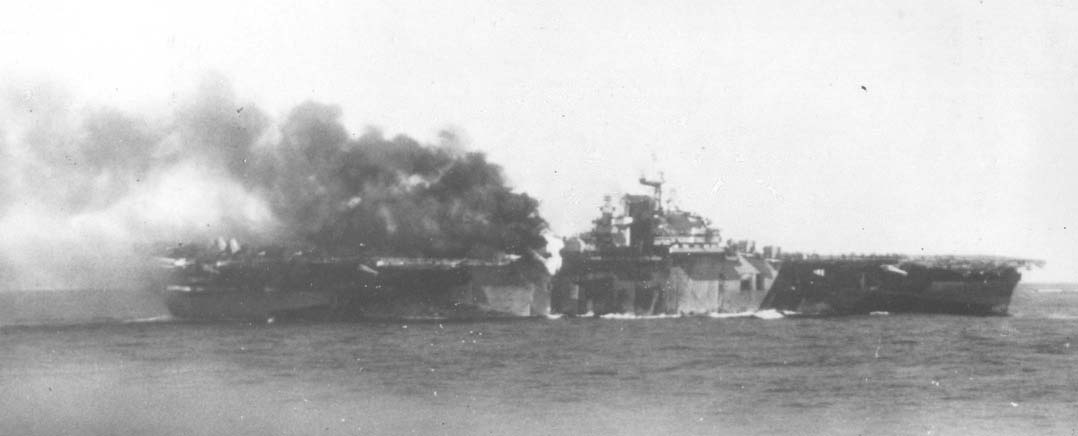
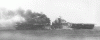
USS Franklin (CV-13) afire after kamikaze hit, 30 October 1944.
|
Tracy White |
NS021329a |
306k |
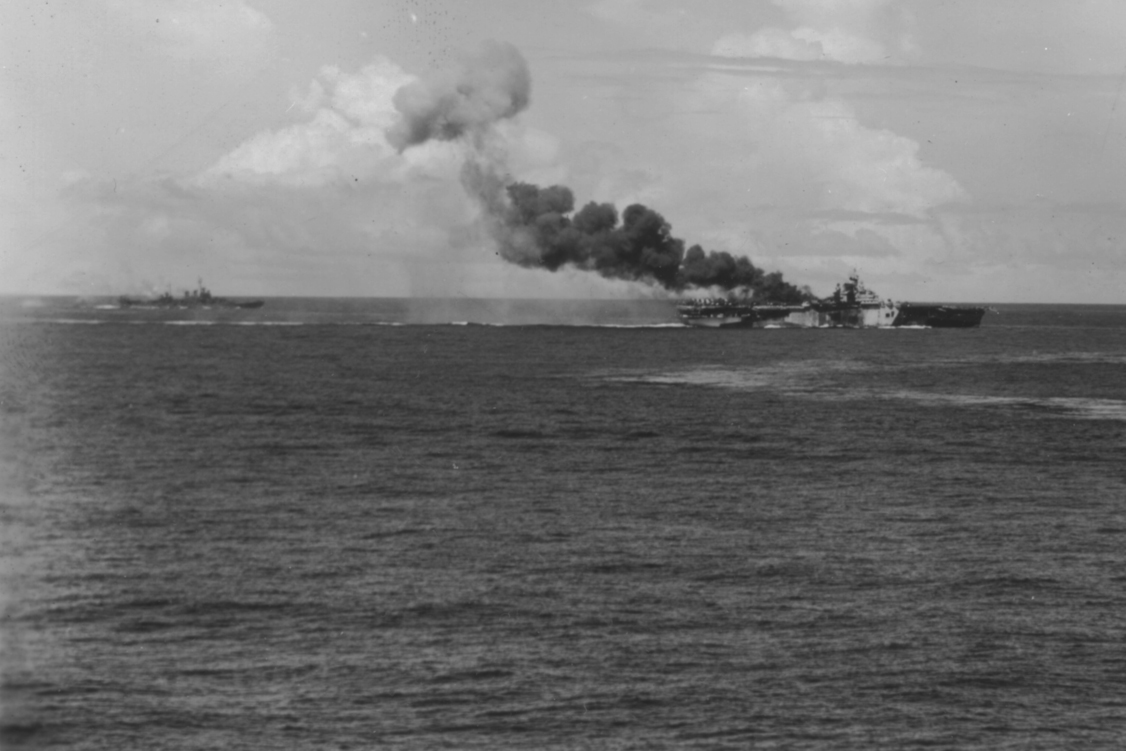
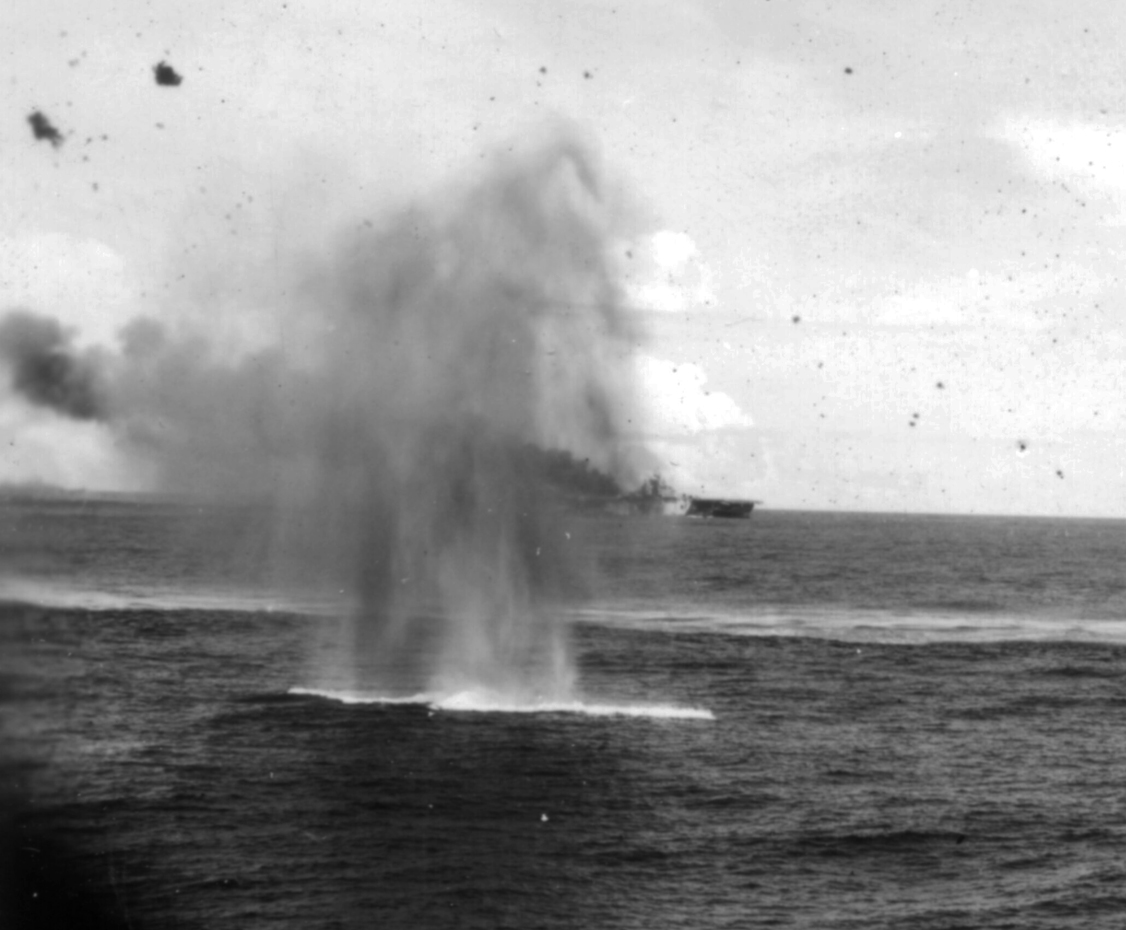
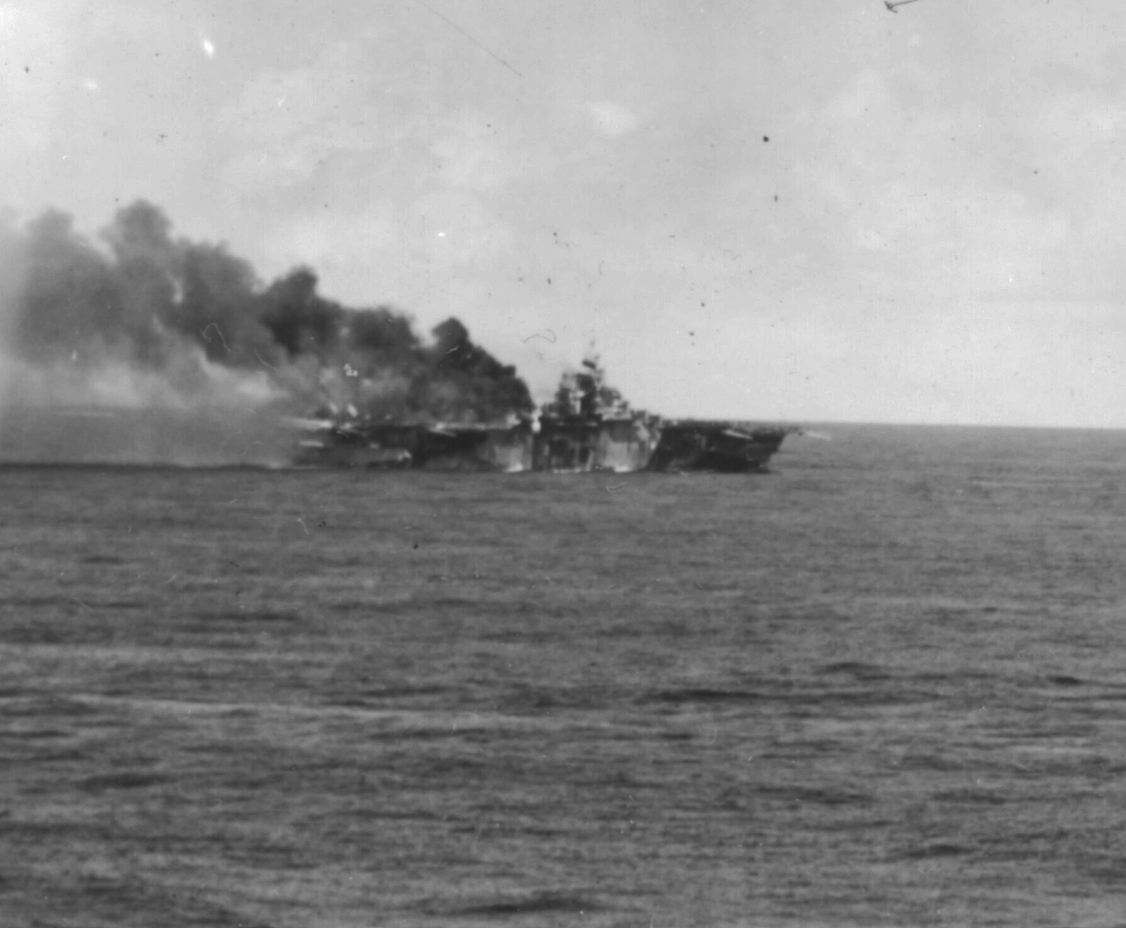
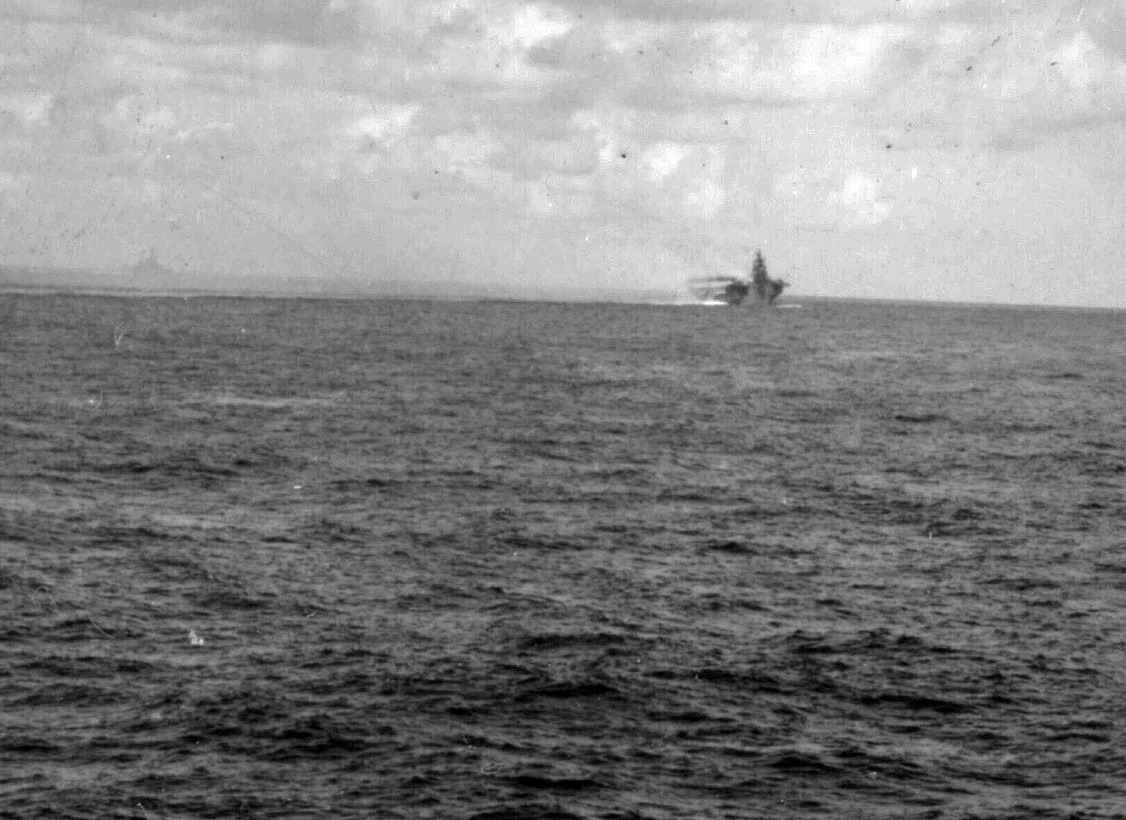
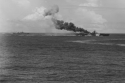
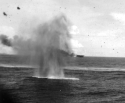
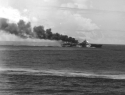
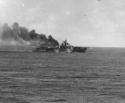
This is a set of views of USS Franklin (CV-13)
underway in Task Group (TG) 38.4 after being hit by a Zero kamikaze on the afternoon
of 30 October 1944. Seen from USS South
Dakota (BB-57) while operating east of the Philippines.
Photos by S.Zalkind PhoM1/c. |
John Chiquoine and Mitch Zalkind |
NS021329b |
343k |
NS021329c |
328k |
NS021329d |
273k |
NS021329e |
335k |
NS021330 |
125k |
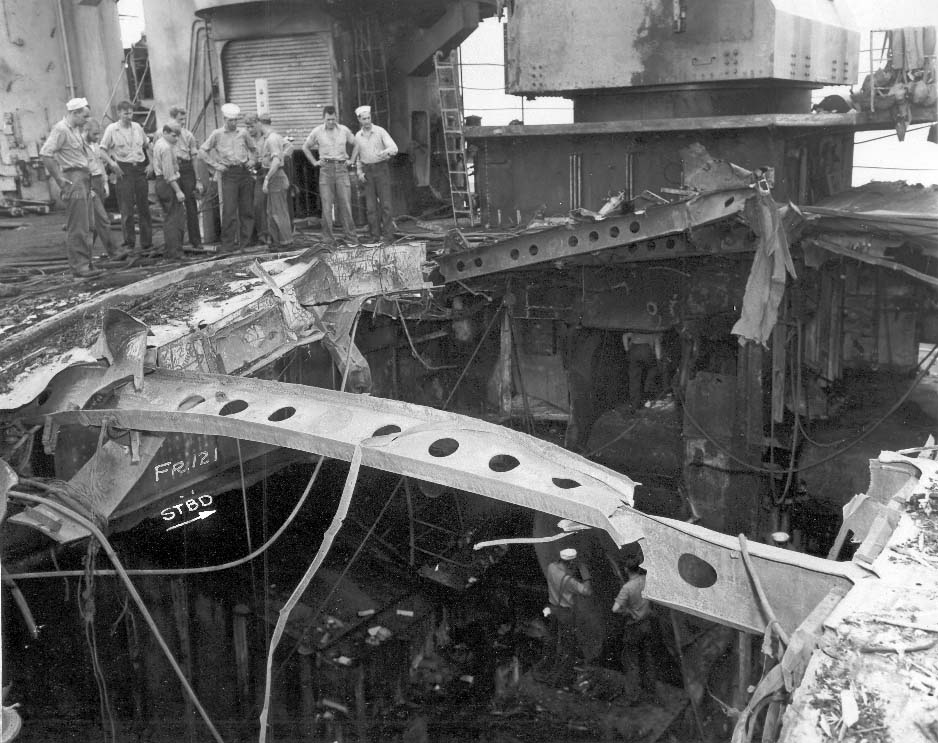
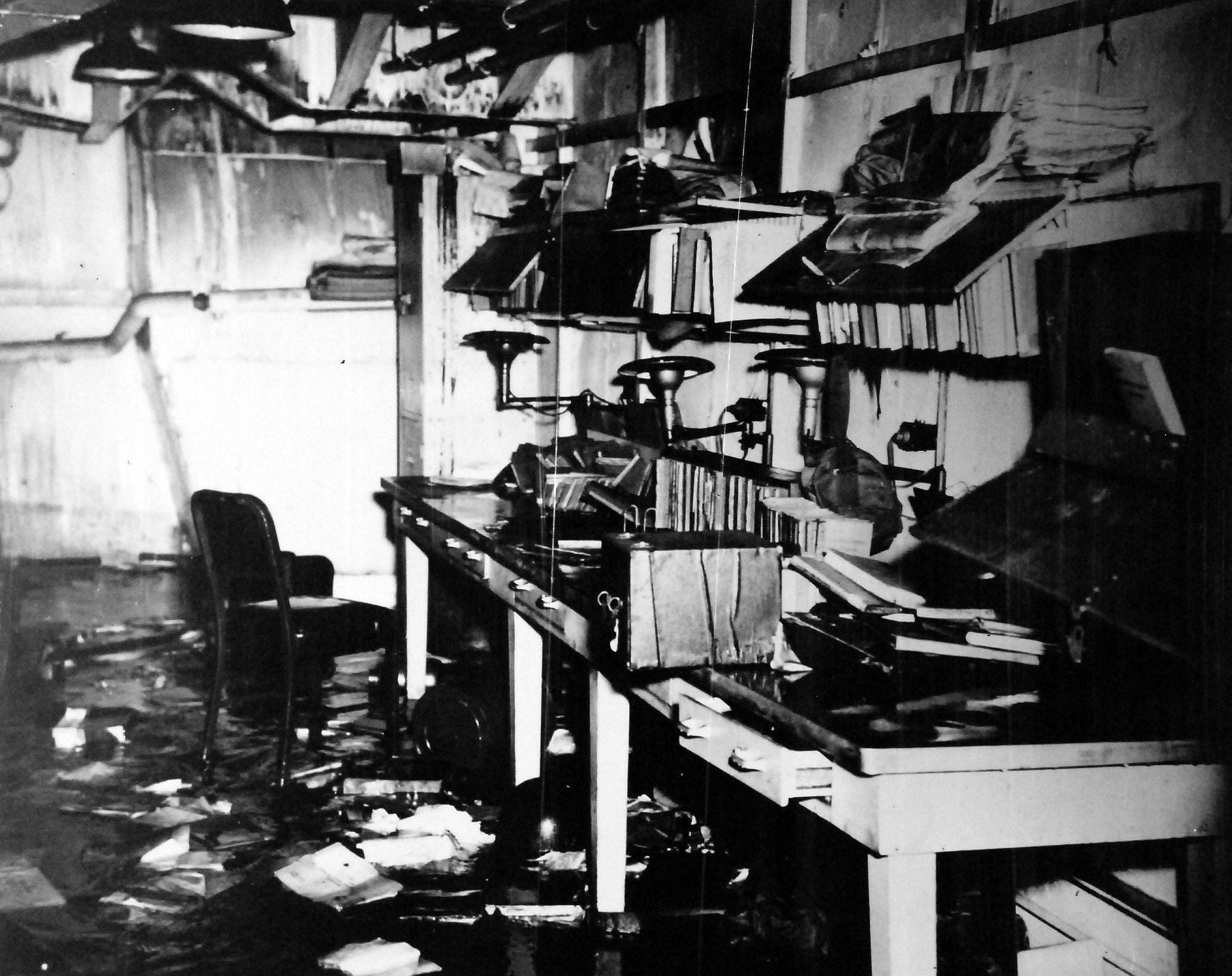
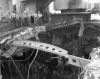
Damage in action of 30 October 1944. View showing work progress on 3 November
1944 at 1230 – flight deck at Fr. 125. (Ship's Photo No. 1003, taken 3 November 1944.) Puget
Sound Navy Yard photo # 3984-44. |
Tracy White, Researcher @ Large |
NS021375 |
468k |
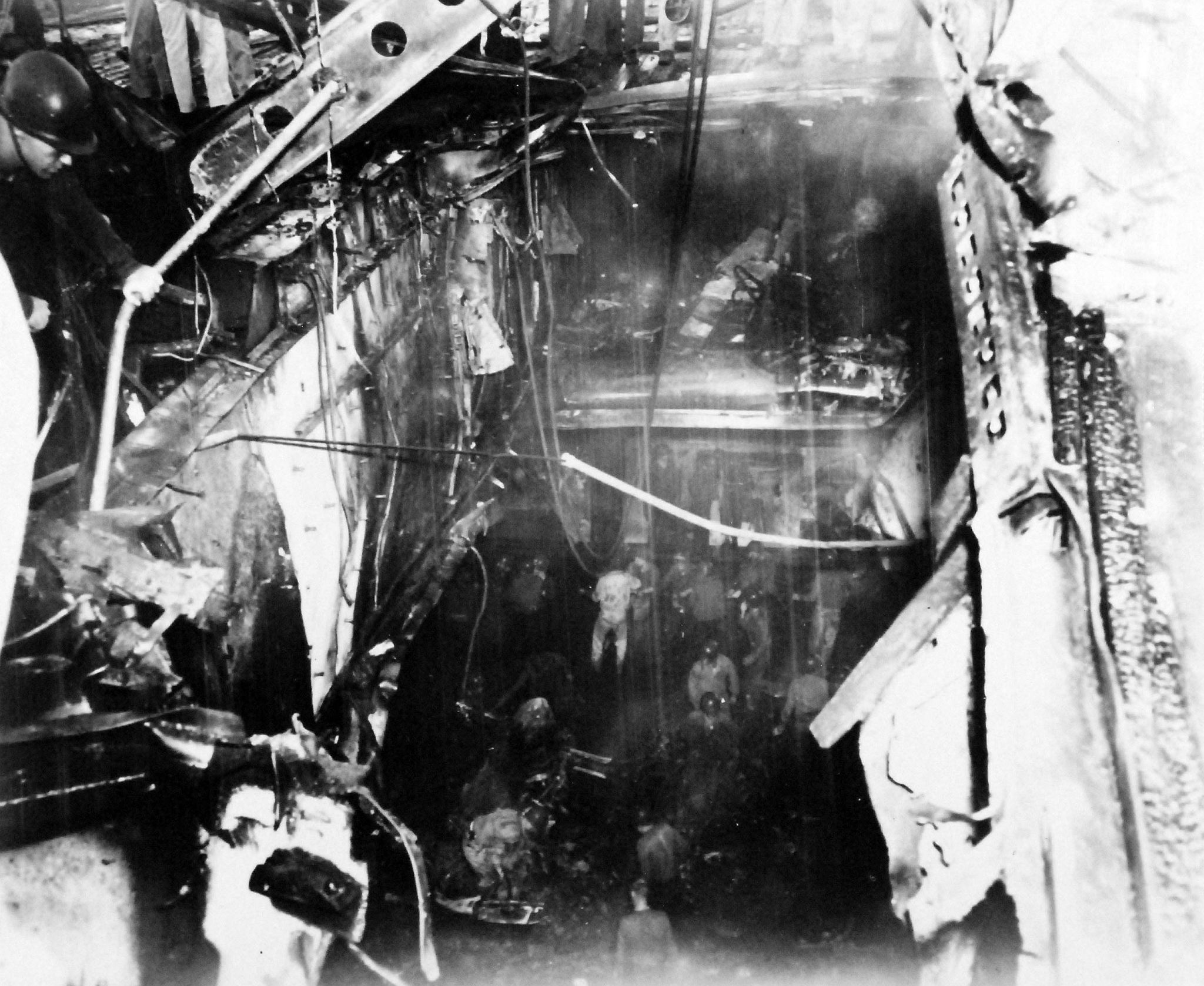
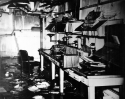
USS Franklin (CV-13), damage to V-2 spaces following Japanese
kamikaze attack on 30 October 1944.
National Archives and Records Administration
(NARA) photo, # 80-G-270811. |
NARA |
NS021375a |
477k |
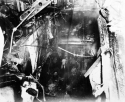
USS Franklin (CV-13), damage to flight deck following Japanese
kamikaze attack on 30 October 1944.
National Archives and Records Administration
(NARA) photo, # 80-G-270814. |
NS021362 |
65k |
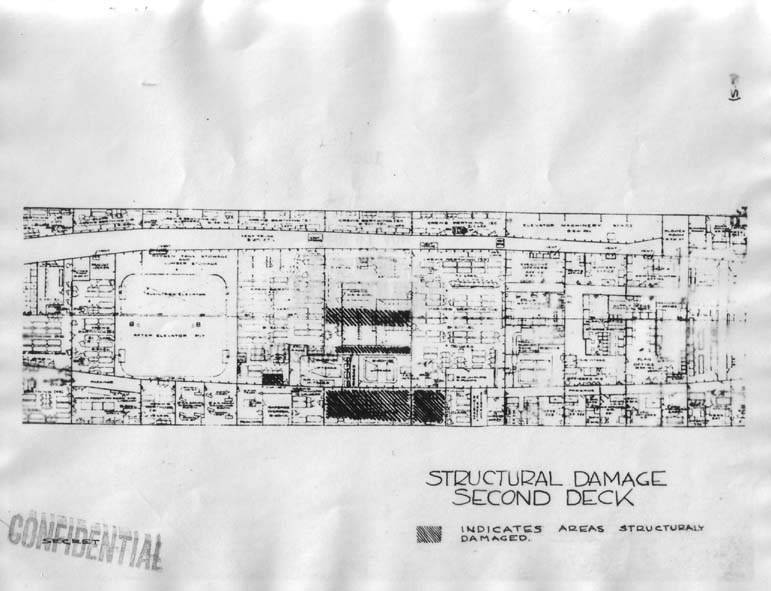
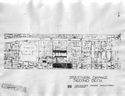
USS Franklin (CV-13) War Damage Report for the Action with
Enemy Aircraft on 30 October 1944. Sketches showing Areas of Structural Damage. Second Deck.
(See also photos NS021361–NS021361e.) |
Tracy White, Researcher @ Large |
NS021362a |
1.25M |
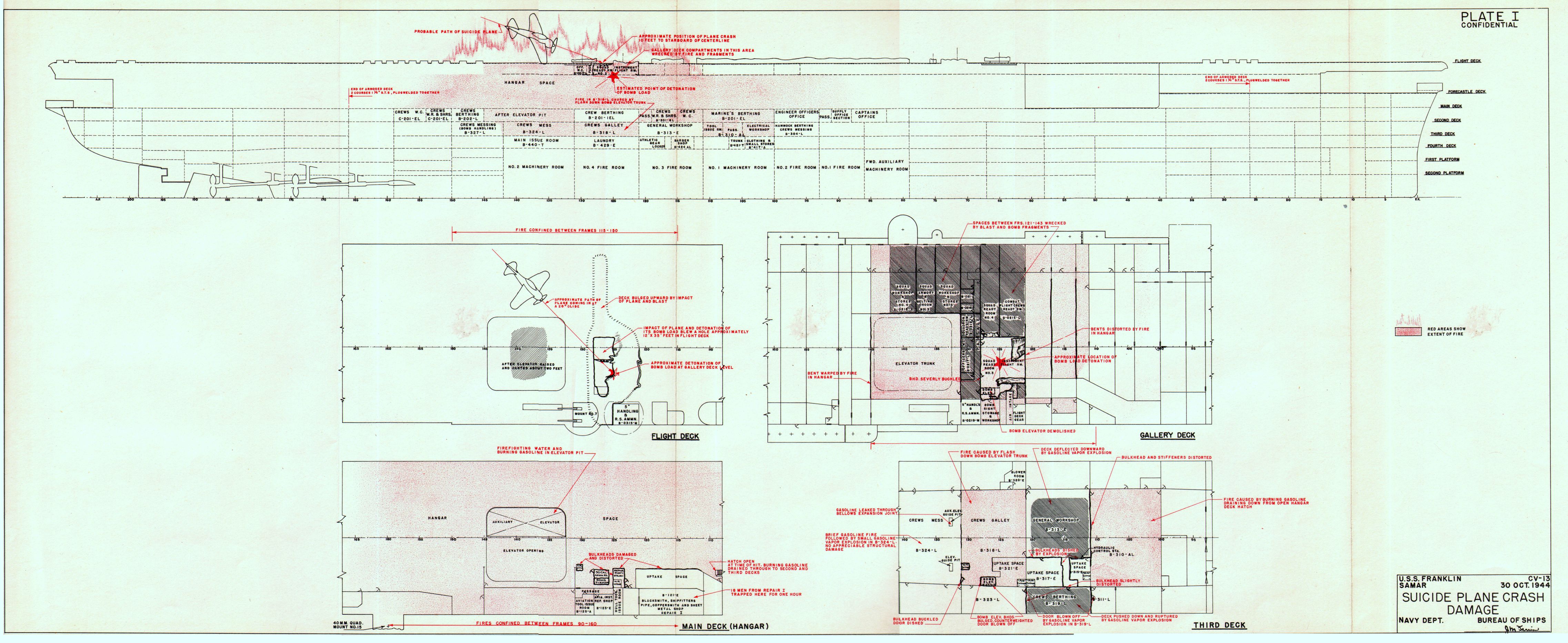
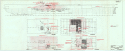
USS Franklin (CV-13), Suicide Plane Crash Damage, Samar, 30
October 1944.
Navy Dept., Bureau of Ships, War Loss/Damage Report No. 56, United States Navy. |
Mike Green |
NS021366 |
351k |
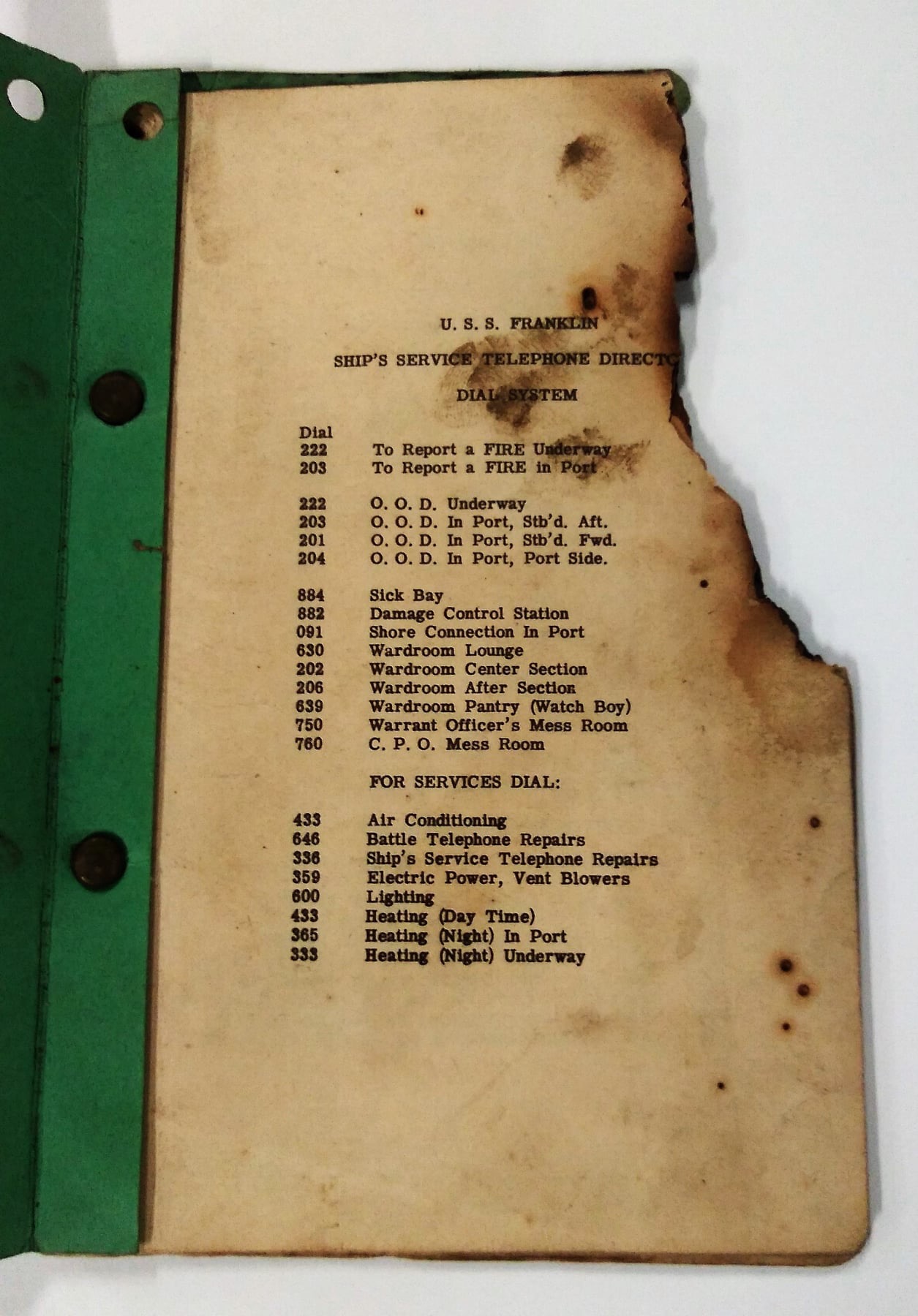
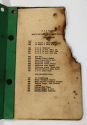
USS Franklin (CV-13), Ship's Service Telephone
Directory, probably burned after the kamikaze attack. |
Puget Sound
Navy Museum,
via Yu Chu |
|

NS021358 |
49k |
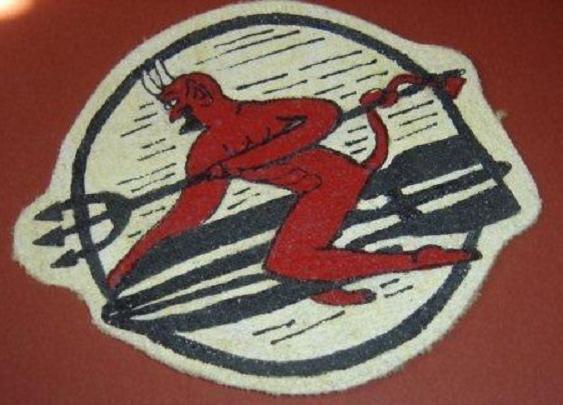
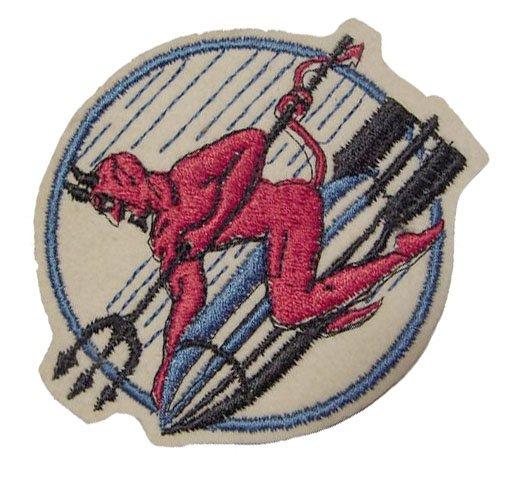
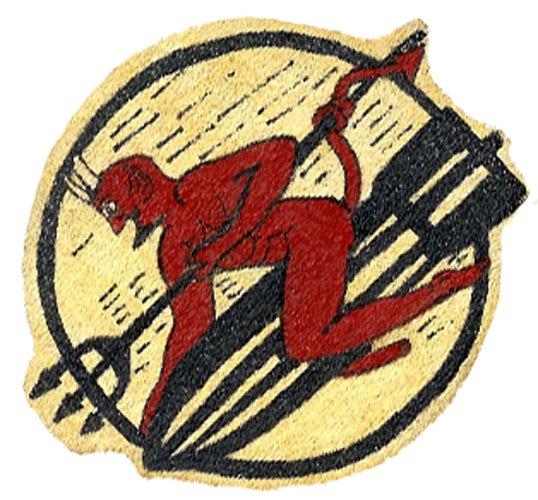
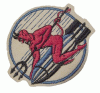
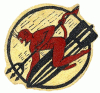
Bombing Squadron (VB) 13 operated from USS Franklin
(CV-13), November 1943–November 1944, as part of Aircraft Carrier Group (CVG) 13. |
Tommy Trampp |
NS021358a |
49k |
NS021358b |
59k |
NS021358c |
696k |
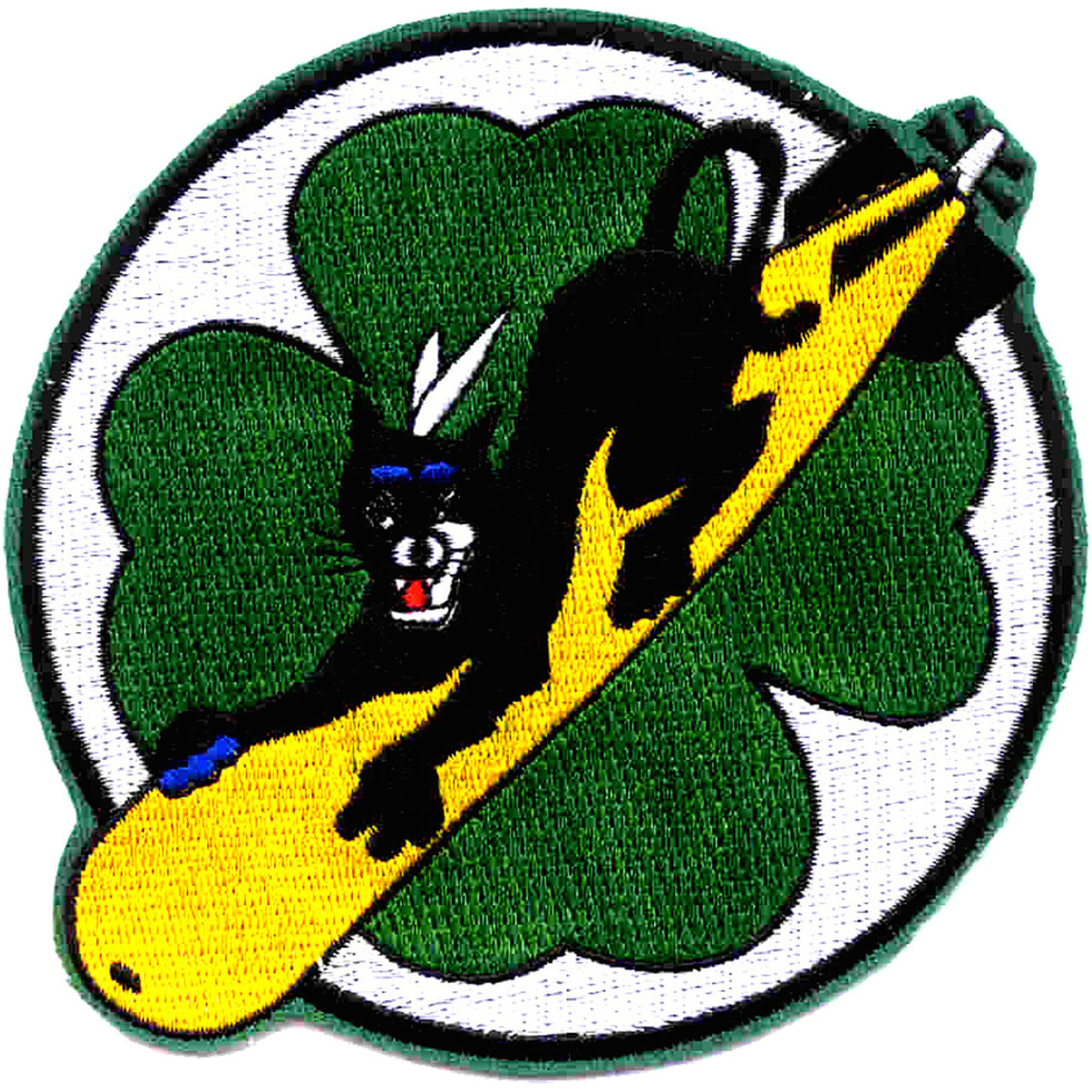
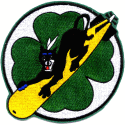
Torpedo Squadron (VT) 13 was attached to USS Franklin (CV-13),
November 1943–November 1944, as part of Aircraft Carrier Group (CVG) 13. Patch is a four-leaf
clover and a black cat riding a torpedo. |
Popular Parch,
via Tommy Trampp |
NS021359 |
134k |
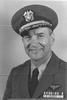
"Fighting Squadron 13 (VF-13) 'Black Cats' was established 2 November 1943
and decommissioned 20 October 1945. The 'Black Cats' were embarked aboard USS Franklin
(CV-13) from 29 July to 2 November 1944. During this period the squadron shot down 86 enemy planes.
CDR Wilson McConnell Coleman (USNA 1934) shot down a total of six to join the ranks of 'Navy Aces of
WWII.'"
Photo courtesy of the National Naval Aviation Museum
(# 2005.196.008.018). |
Bill Gonyo |
|
NS021351 |
49k |
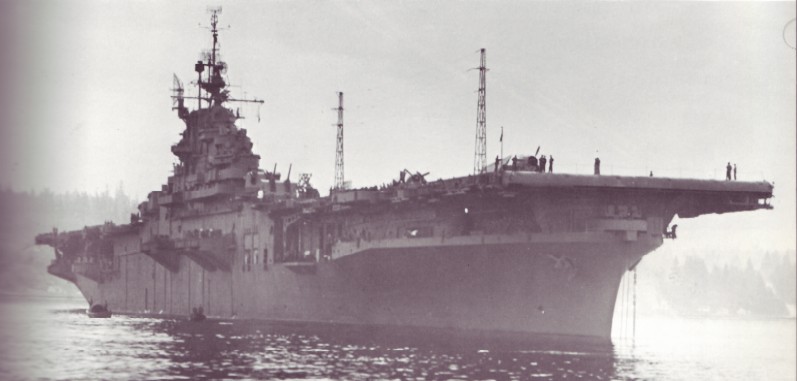
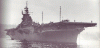
USS Franklin (CV-13) in January 1945, after repairs. Note she
had been repainted in Ms. 21 camouflage; two lattice radio masts abaft the island had been removed;
three quad 40's had been added starboard amidships, just under the island. US Navy photo. |
Robert Hurst |
NS021371 |
310k |
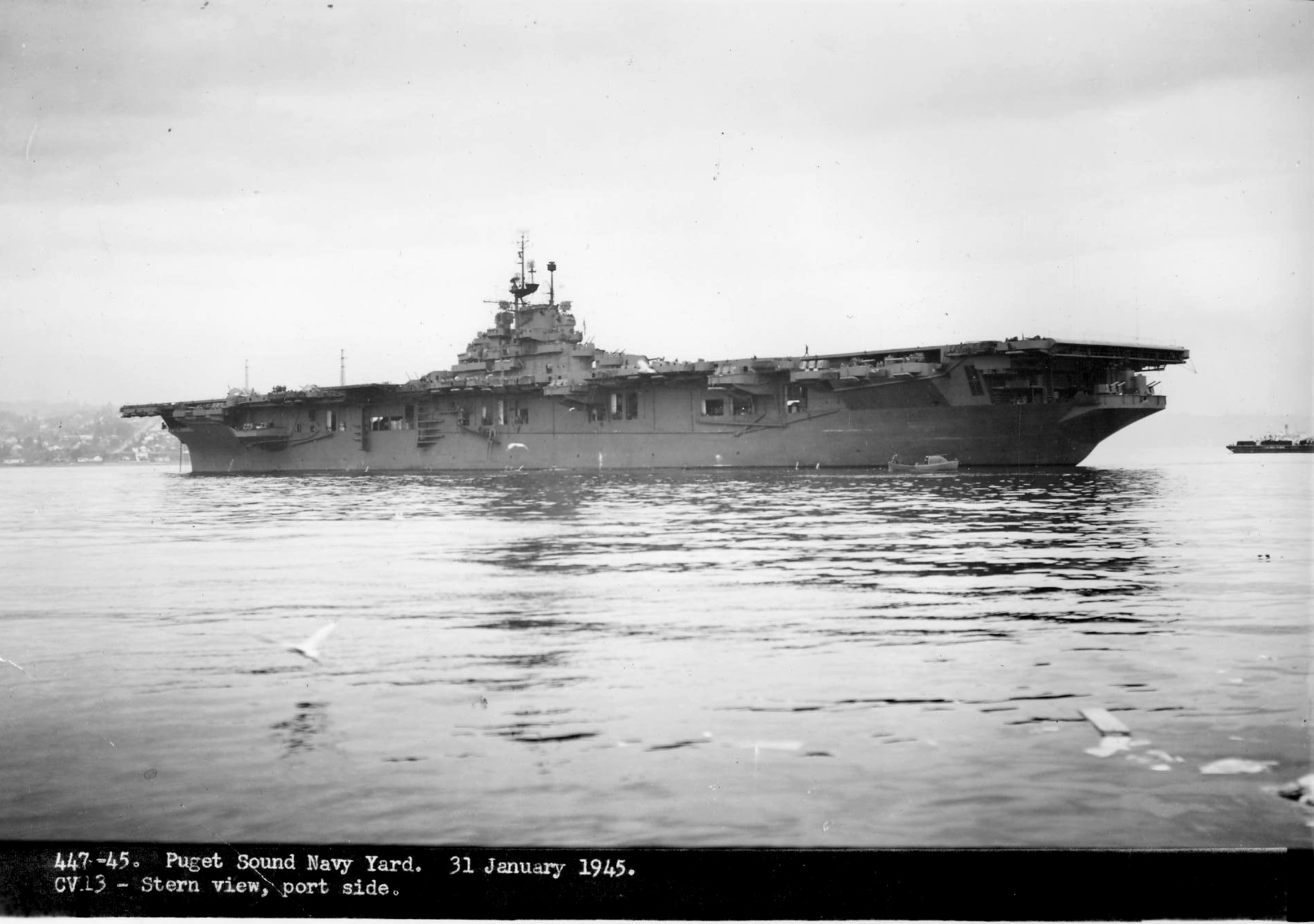
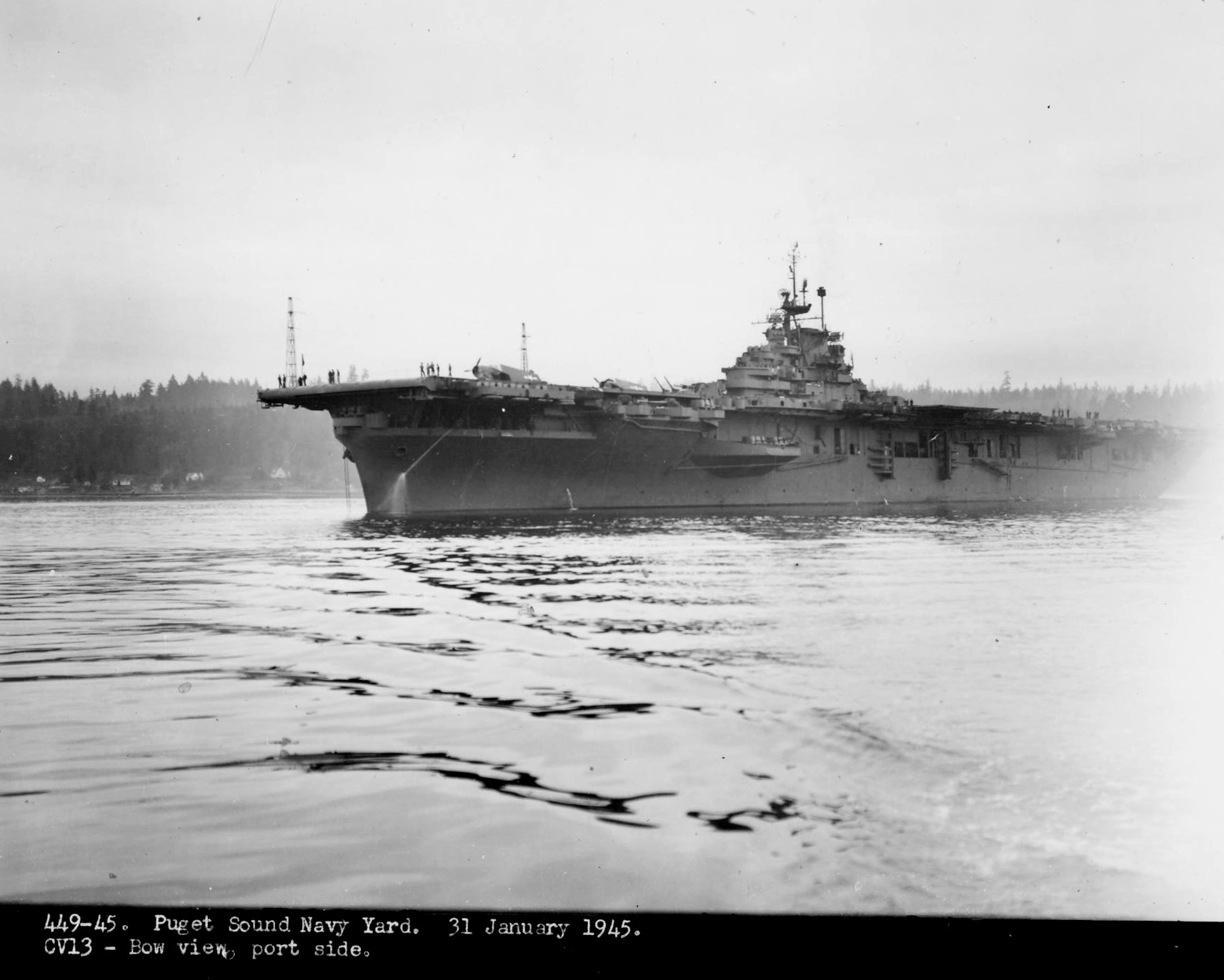
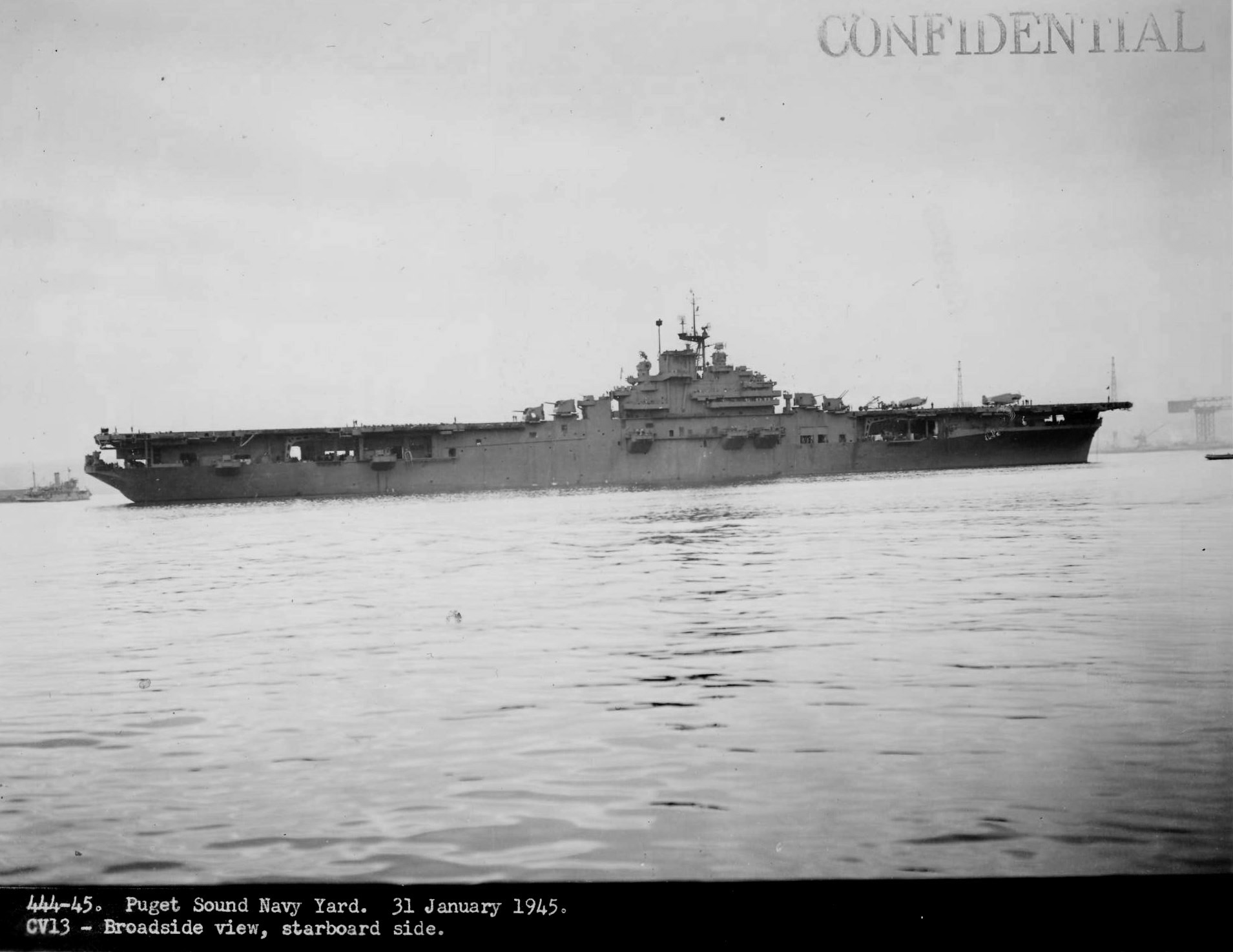
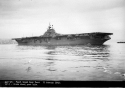
USS Franklin (CV-13), Puget Sound Navy Yard, 31 January 1945.
Stern view, port side. Photo #447-45. |
David Buell |
NS021371a |
283k |
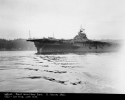
USS Franklin (CV-13), Puget Sound Navy Yard, 31 January 1945.
Bow view, port side. Photo #449-45. |
NS021371b |
298k |
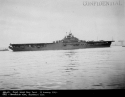
USS Franklin (CV-13), Puget Sound Navy Yard, 31 January 1945.
Broadside view, starboard side. Photo #444-45. |
NS021367 |
35k |
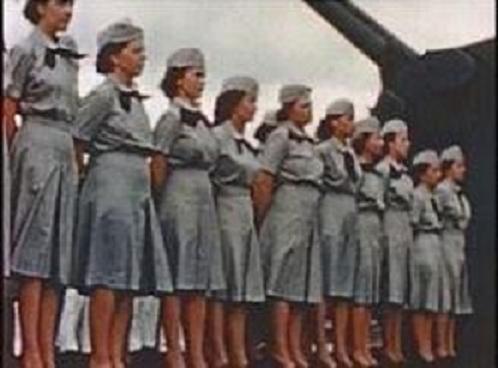
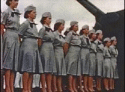
USS Franklin (CV-13) was welcomed to Pearl Harbor and toured
by 50 WAVES, mid-February 1945.
Frame from Saga of
The USS Franklin. |
Tommy Trampp |
NS021372 |
239k |
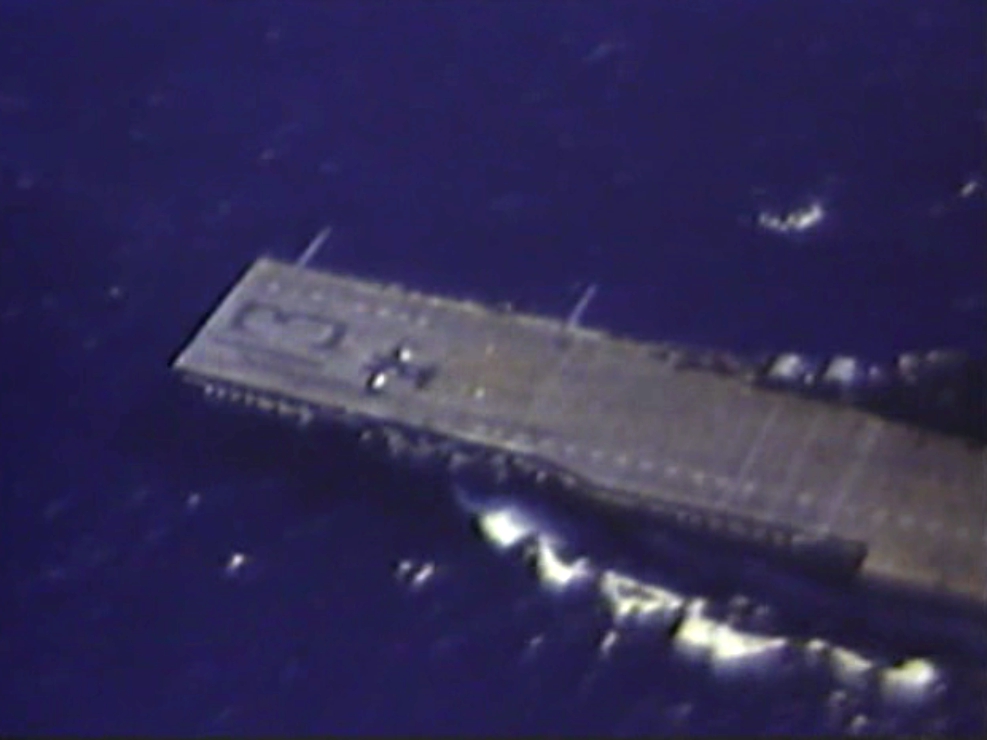
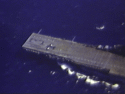
A fighter launching from USS Franklin (CV-13), circa March
1945. This is a frame from a film
showing aerial footage of clouds, a man looking out the window of an aircraft, brief footage of the
damage to Franklin's flight deck, and aerial views of ships.
National Archives and Records Administration
(NARA). NARA Identifier 2457530, Local Identifier 428-NPC-11119, Search Identifier SAMMA File 428-NPC-11119. |
Robert Hurst |
NS021352 |
1.79M |
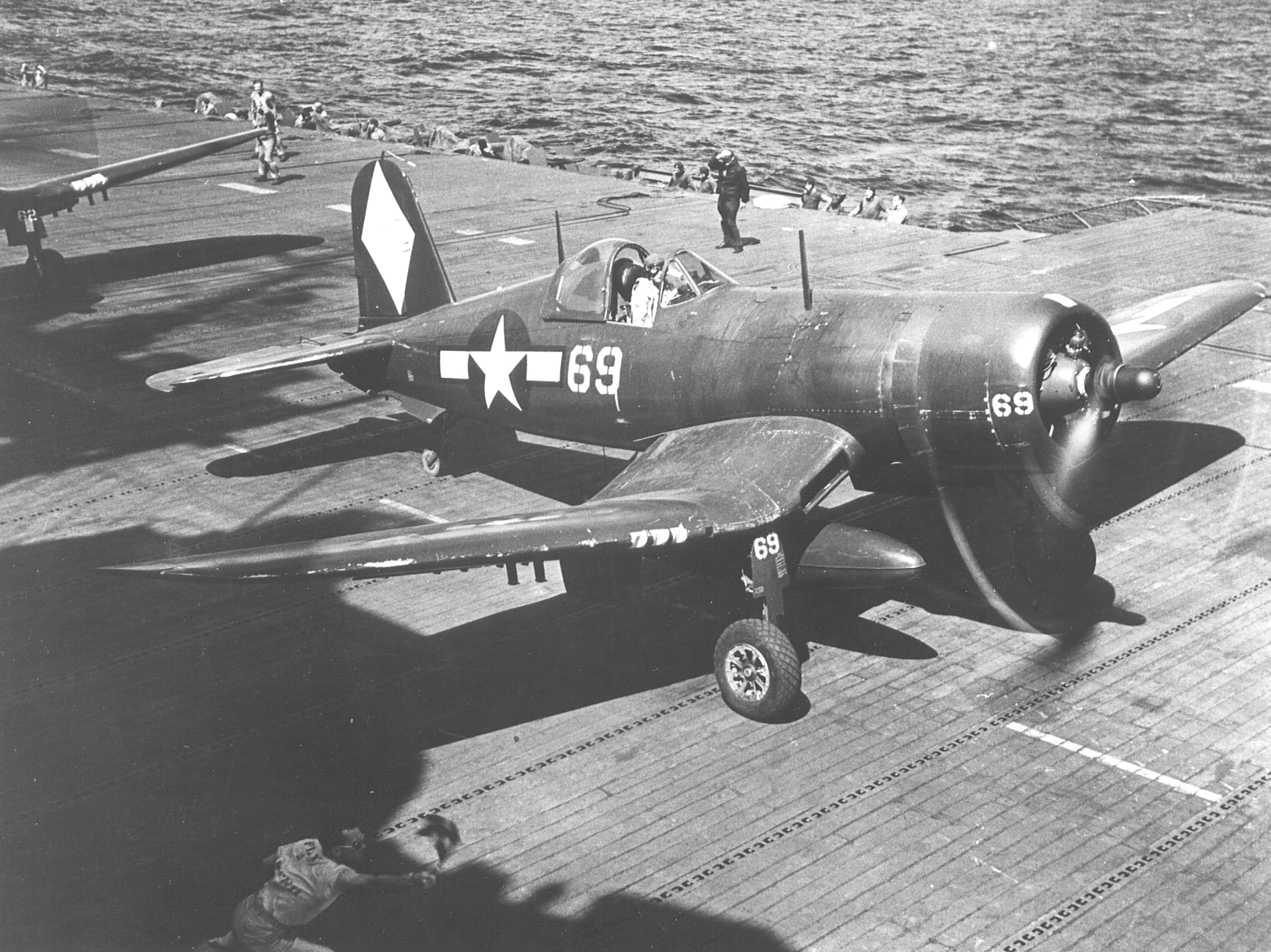
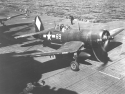
U.S. Navy Vought F4U-1D Corsairs of Fighting Squadron (VF) 5 "Fighting
Hellcats" on the flight deck of USS Franklin (CV-13), March 1945. Note Franklin's
geometric air group identification symbol on the Corsair. Photo by LCDR H. Bristol, U.S. Navy.
National Naval Aviation Museum photo, No. 1996.253.7141.032. |
Robert Hurst |
NS021318 |
3.13M |
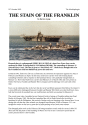
The Stain of the Franklin. Analysis of National
Archives and Records photograph 80-G-K-3815,
by Darren Large. |
Darren Large |
NS021374 |
1010k |
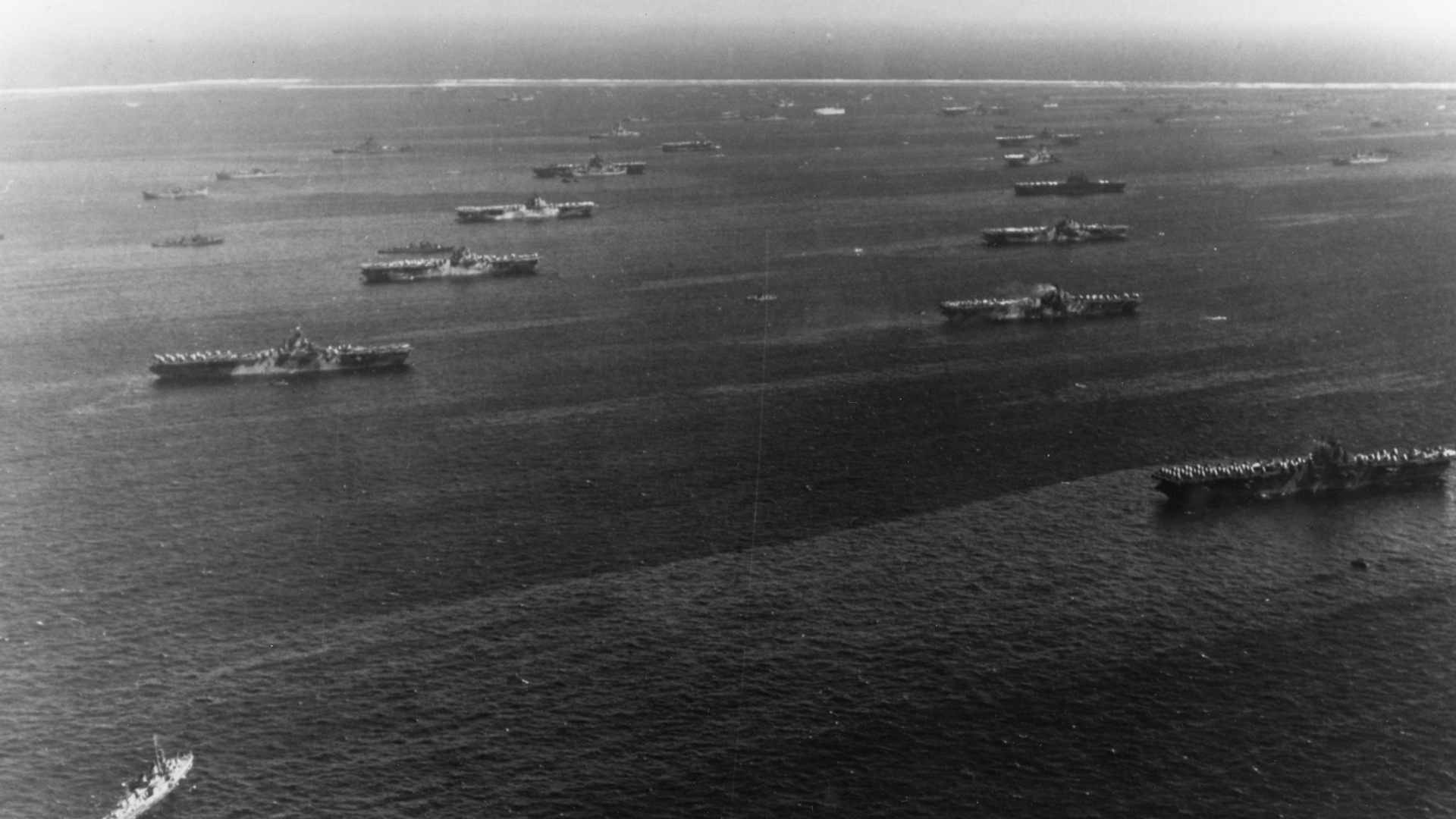
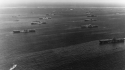
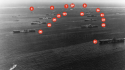
"Probably the ultimate "Murderers' Row" photo with 10 Essex-class
carriers plus the Enterprise in the anchorage. It must also have been taken on the 13th March
1945 shortly after the arrival of Task Group 12.2. The Randolph in berth #27 had been hit two
days previously whilst at anchor by a long range kamikaze strike. The repair ship USS Jason
(AR-8) is visible alongside (unknown source)."
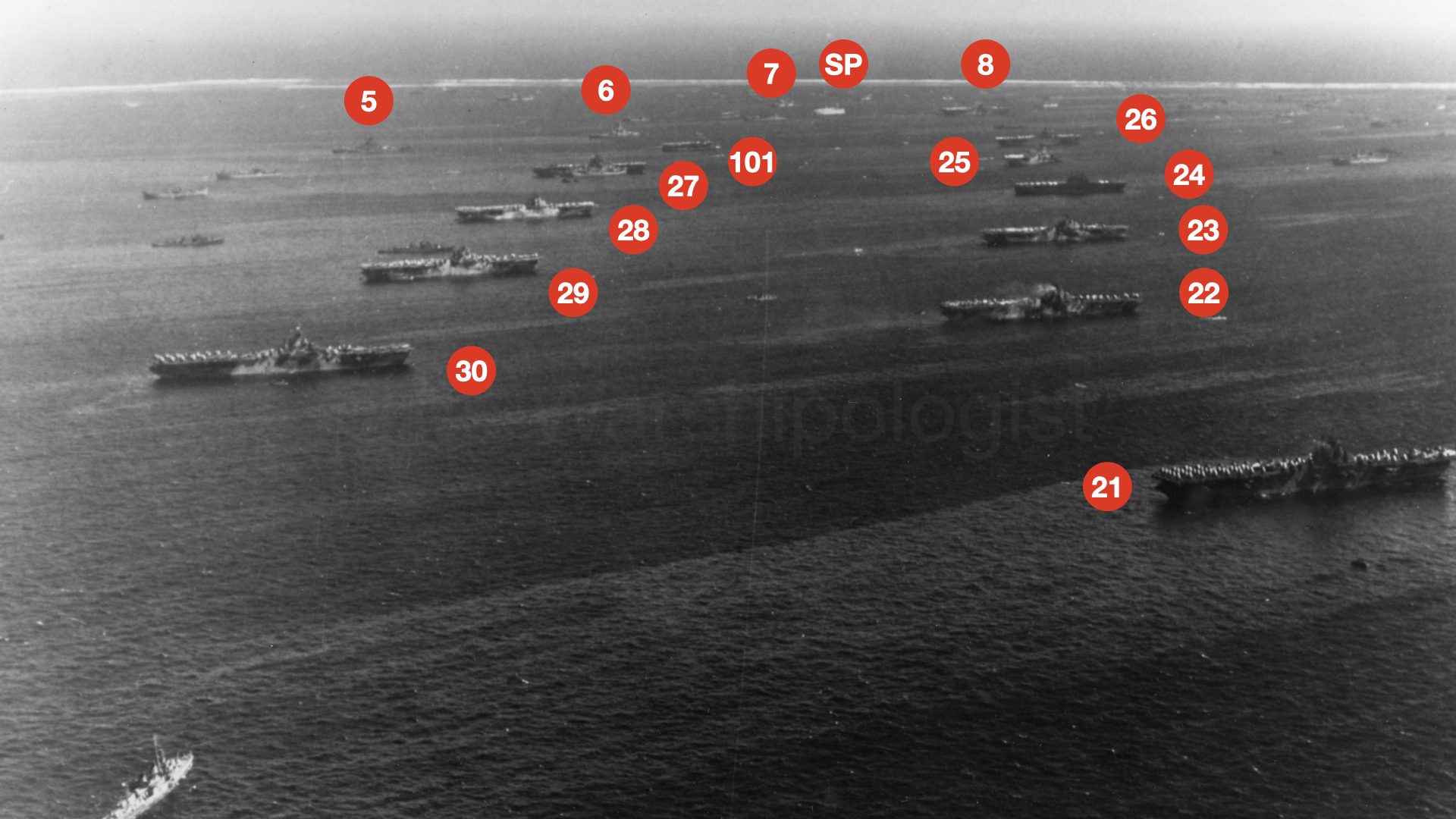
"Ulithi Anchorage looking north: Berth #5: USS South
Dakota (BB-57), #6 USS Massachusetts
(BB-59), #8 USS Bunker Hill (CV-17), #101 USS San Jacinto
(CVL-30), #27 USS Randolph (CV-15) and USS Jason
(AR-8), #28 USS Hornet (CV-12), #29 USS Wasp
(CV-18), #30 USS Bennington (CV-20), #26 USS Essex
(CV-9), #25 USS Intrepid (CV-11), #24 USS Enterprise
(CV-6), #23 USS Yorktown (CV-10), #22 USS Hancock
(CV-19), #21 USS Franklin (CV-13). (All positions correlate with war logs of each ship
and the mooring plan.)" |
Darren
Large |
NS021374a |
1.07M |
NS021353 |
2.38M |
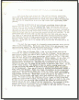
"My Cruise Aboard The 'Big Ben' U.S.S. Franklin CV-13," February–April
1945, by J. Harold "Hal" Smith. |
Brenda Mullen, daughter of Dixie Smith, niece of Phil and J. Harold "Hal" Smith |
NS021353a
.PDF file

Get FREE Adobe Reader |
68k |
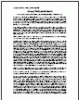
"Story of Phil and Hal Smith, two brothers aboard USS Enterprise
and USS Franklin," by Dixie Smith. |
NS021353b |
220k |
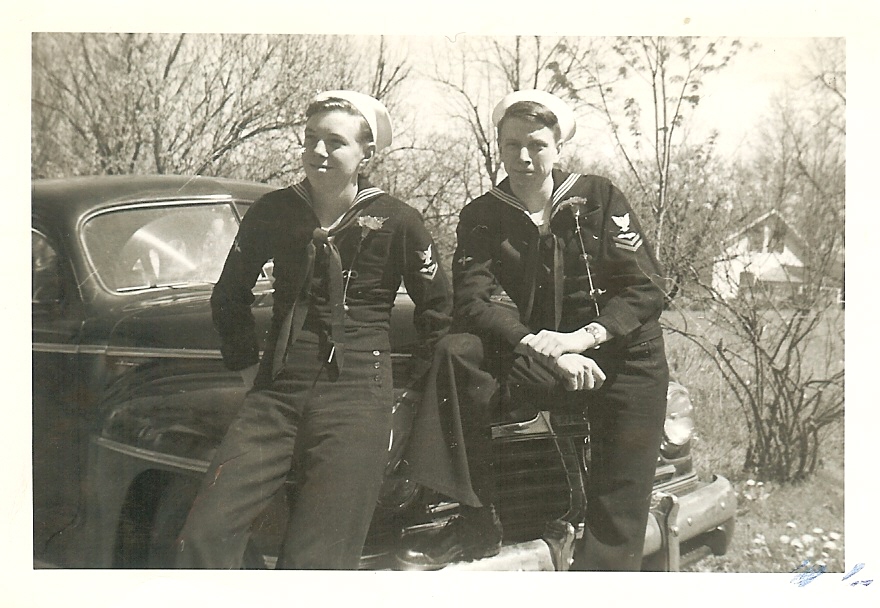
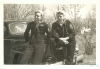
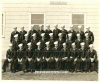
Kermit (left) and Hal Smith in the Navy, 1946. |
NS021353c |
197k |
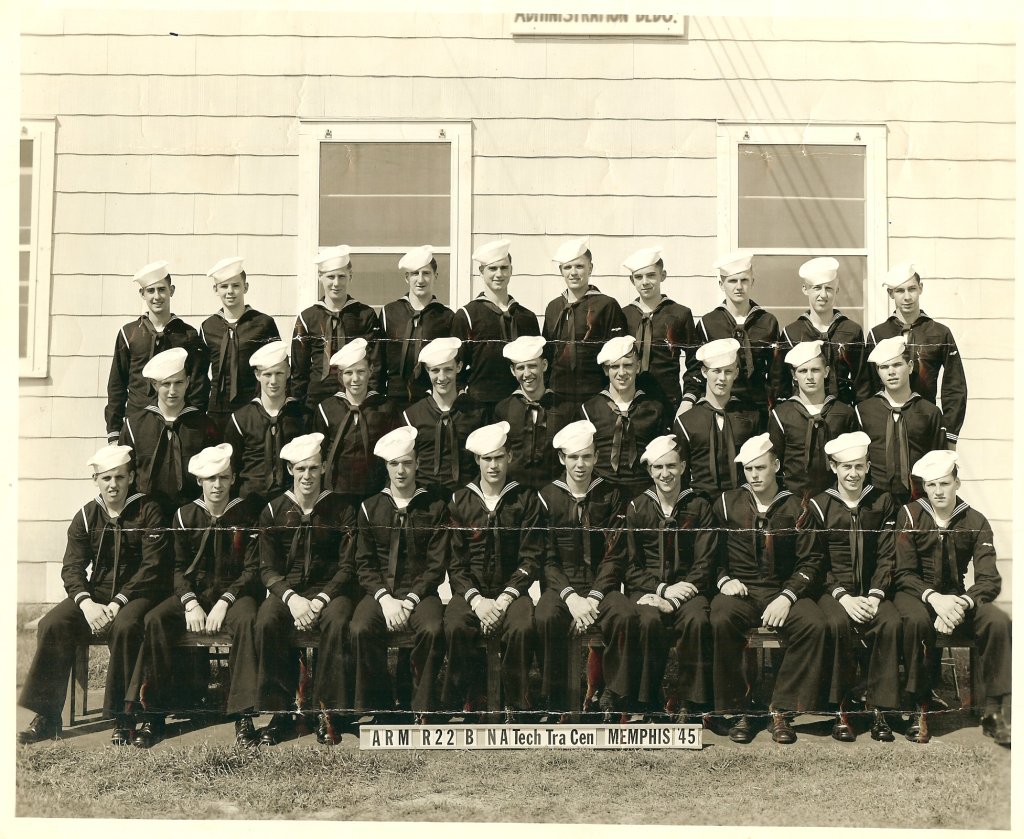
ARM R22 B NATechTraCen Memphis '45. Kermit Smith is 3rd from left, middle
row. |
NS021353d |
115k |
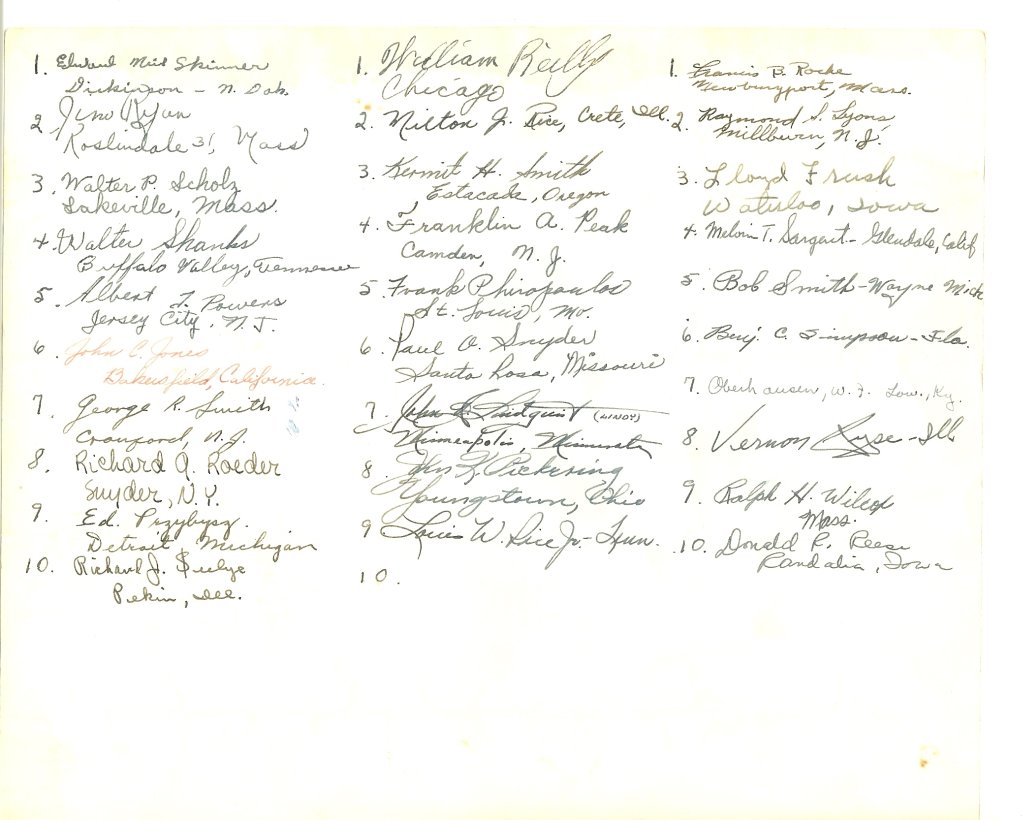
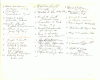
Back of NS021353c. |
NS021368 |
71k |
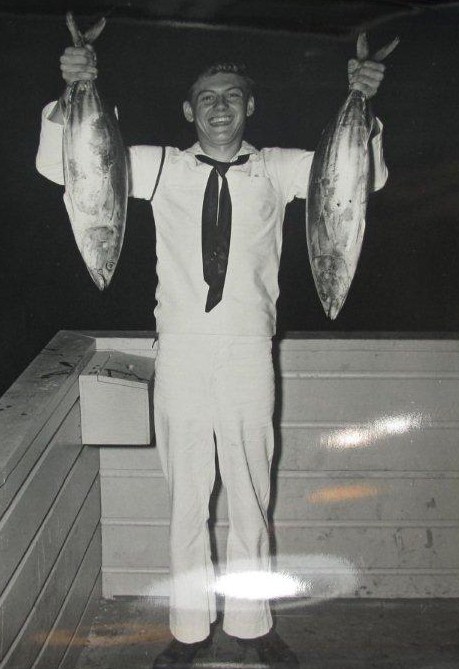
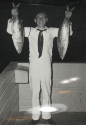
"US Navy Sailor With Two Large Fish, USS Franklin (CV-13), WWII."
From the Estate of a WWII US Navy Combat Photographer. |
Tommy Trampp |
Air attack, March 1945
|
| See Air Attack on USS Franklin (CV-13), March 19, 1945 |
NS021369 |
179k |
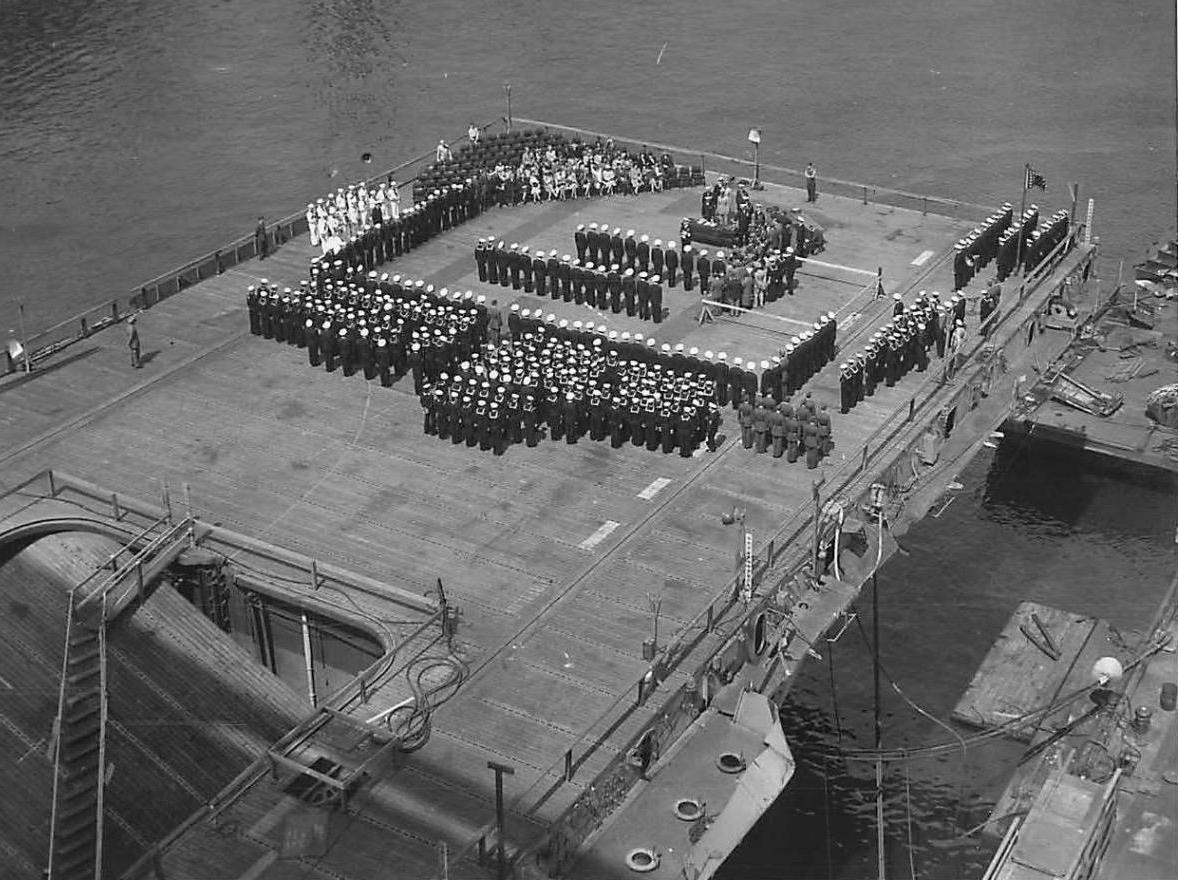
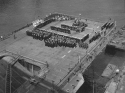
"(NY1)—NEW YORK, May 22[, 1945]—BOMB-WRECKED U.S.S. FRANKLIN'S
CREW DECORATED—In ceremonies on the flight deck of the U.S.S. Franklin in Brooklyn
Navy Yard here yesterday, officers and men of the bomb-smashed vessel receive decorations. The carrier,
hit by two bombs while operating near Japan, suffered heavy damage and personnel loss but limped the
12,000 miles home. (AP Wirephoto)"
Deputy Chief of Naval Operations (Air Warfare) Vice Admiral Aubrey
W. Fitch gives awards aboard USS Franklin (CV-13), 1945. Two-hundred and thirty-two
officers and men of the aircraft carrier were rewarded for their courageous efforts during the attack
on 19 March 1945. In two ceremonies at the New York Navy Yard, where the ship was being repaired, presentations
of 12 Navy Crosses, 20 Silver Star Medals and 92 Bronze Star Medals were made. The remainder of the
awards included Purple Hearts and Letters of Commendation.
All Hands magazine, August
1945 issue, p.56–57. |
Tommy Trampp
David Buell |
NS021376 |
288k |
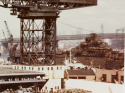
USS Franklin (CV-13) under repair at New York Naval Shipyard,
27 October 1945 (the commissioning ceremony for USS Franklin D. Roosevelt
(CVB-42) was being held on the opposite side of the pier). The entire flight deck and supporting upper
hull was removed and rebuilt because of the extensive damage caused by two Japanese bombs that penetrated
the flight deck on 19 March 1945, exploding on the hangar deck, igniting fuel and ordnance from the
aircraft below decks.
National Archives and Records Administration
(NARA) photo, # 80-G-K-14557 (cropped). |
Robert Hurst |
Ex-USS Franklin
|
NS015535 |
112k |
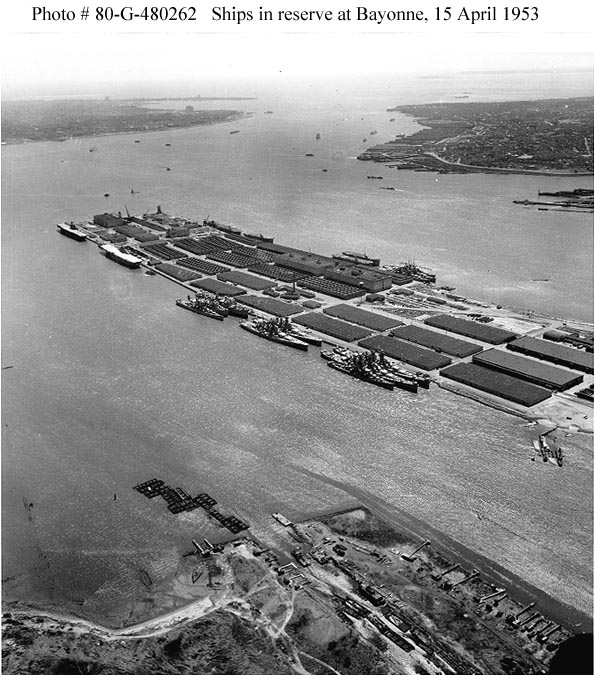
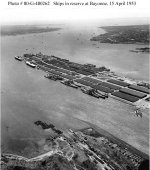
Bayonne Naval Supply Depot, New Jersey. Photographed on 15 April 1953 with
ships in reserve. The two large ships at right on the near side of the peninsula are Alaska
(CB-1) and Guam (CB-2).
The next two ships astern are North Carolina
(BB-55) and Washington (BB-56).
Further astern are (from outboard to inboard) Fargo
(CL-106), Albemarle (AV-5) and
Wakefield (AP-21). The carriers
Enterprise (CVA-6) and Franklin (CVA-13) are at the far left.
Also present are the escort carriers Card
(CVE-11), Croatan (CVE-25), Mission
Bay (CVE-59) and Guadalcanal
(CVE-60) along with the cruisers Providence
(CL-82), Little Rock (CL-92),
Spokane (CLAA-120) and Fresno
(CLAA-121). One of the two CLAAs is tied up outboard of the Alaskas.
National Archives and Records Administration
(NARA) photo, # 80-G-480262. |
Via Robert Hurst |
NS021317 |
43k |
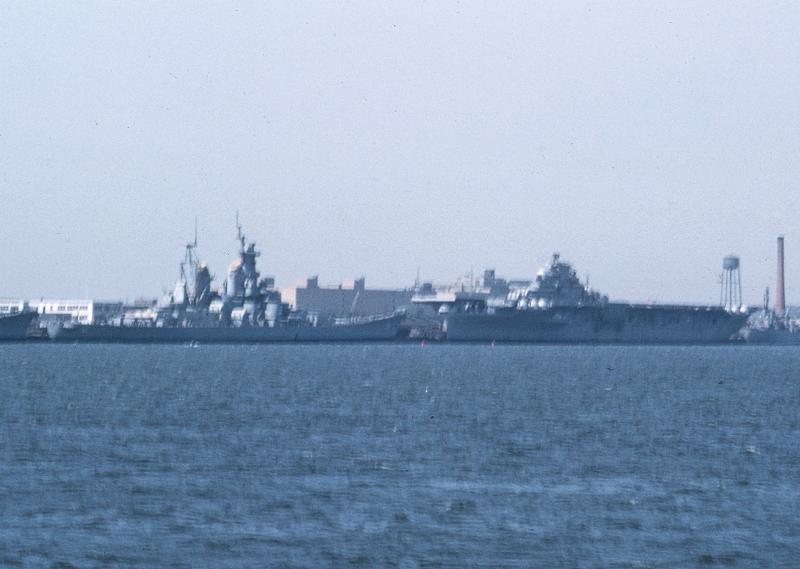
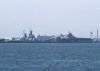
Bayonne, N.J., August 1960; with Wisconsin
(BB-64).
|
© Richard Leonhardt |
NS021325 |
66k |
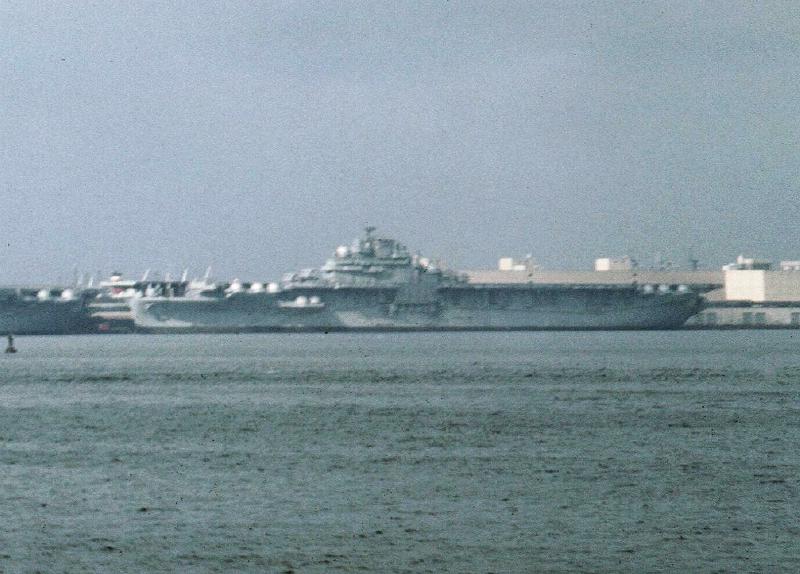
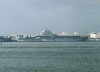
Bayonne, N.J., August 1961. Note the missing portion of her flight deck which
was used in 1959 to fix that of Valley Forge (CVS-45).
|
© Richard Leonhardt |
NS021377 |
281k |
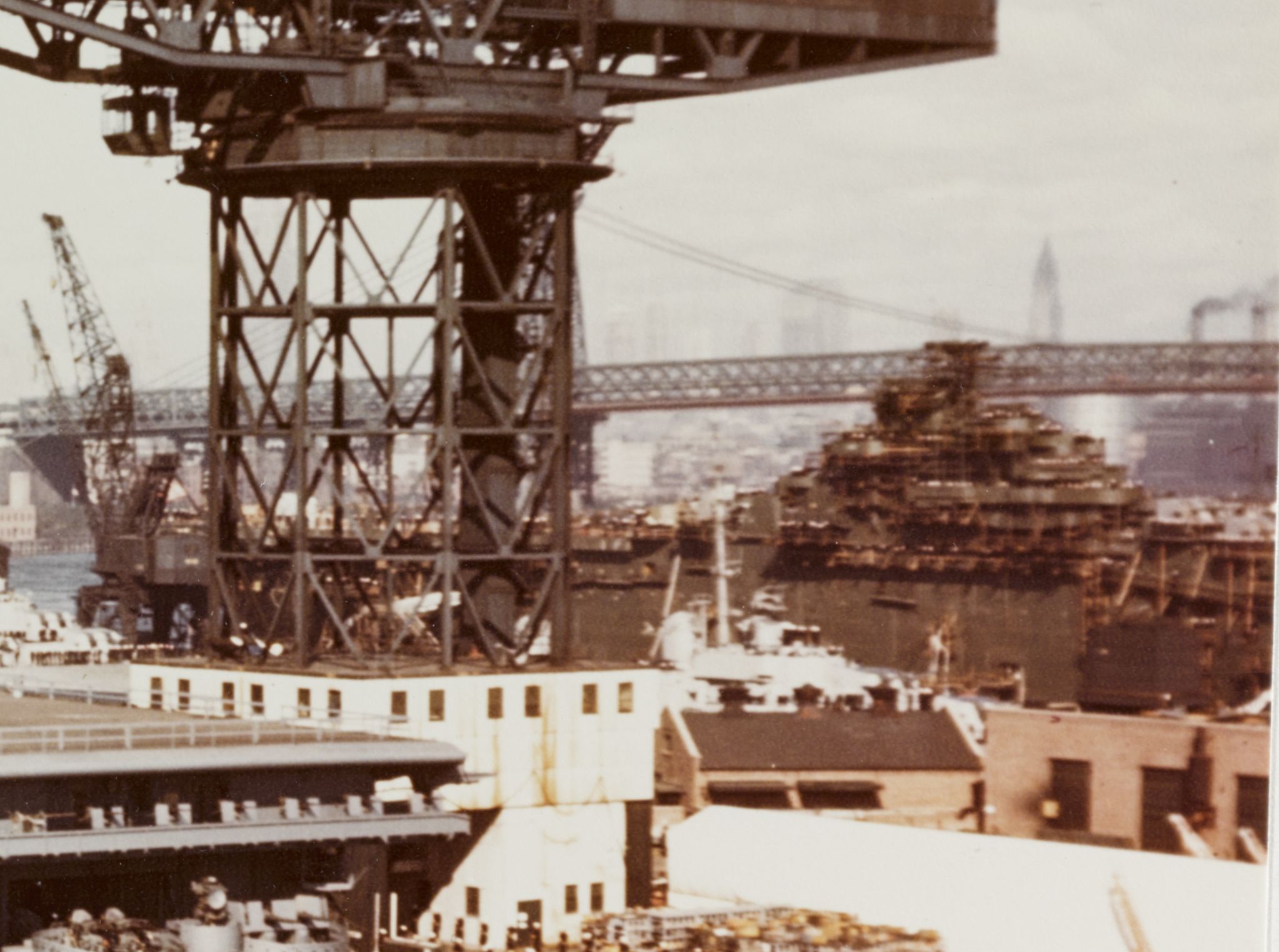
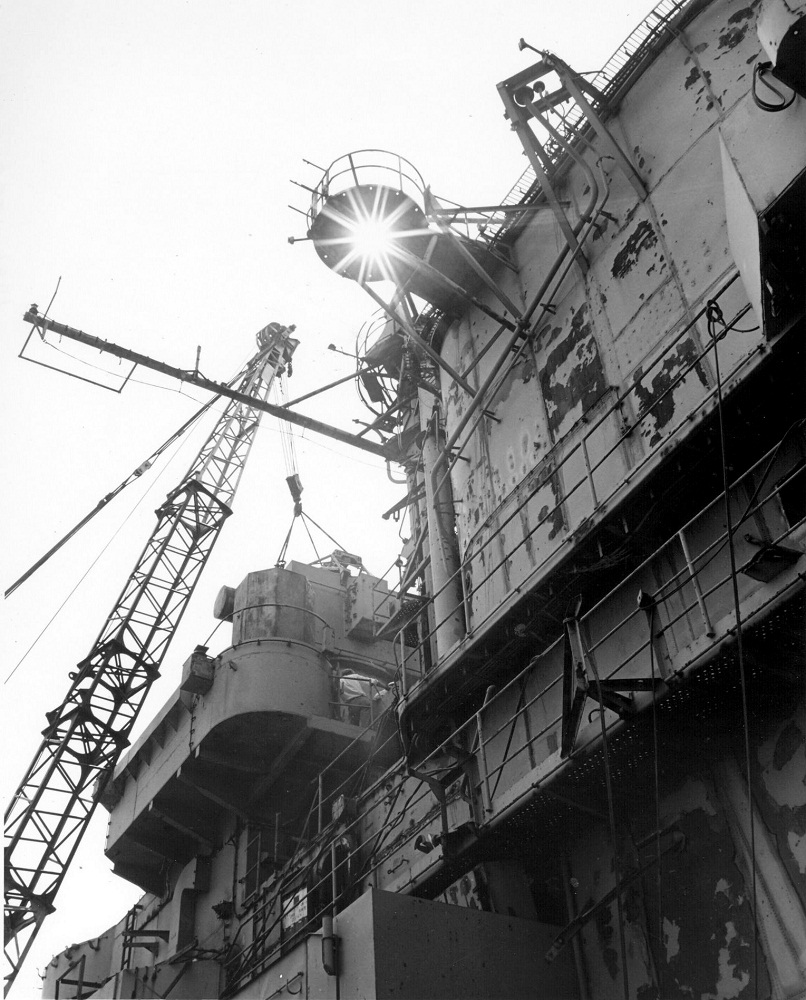
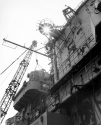
View of part of the island of the former carrier Franklin (AVT-8)
while she was in mothballs at Bayonne, New Jersey, circa 1960. A crane appears to be removing part
of the island superstructure.
National Naval Aviation Museum photo,
# 1996.488.246.013. |
Mike Green |
NS021363 |
165k |
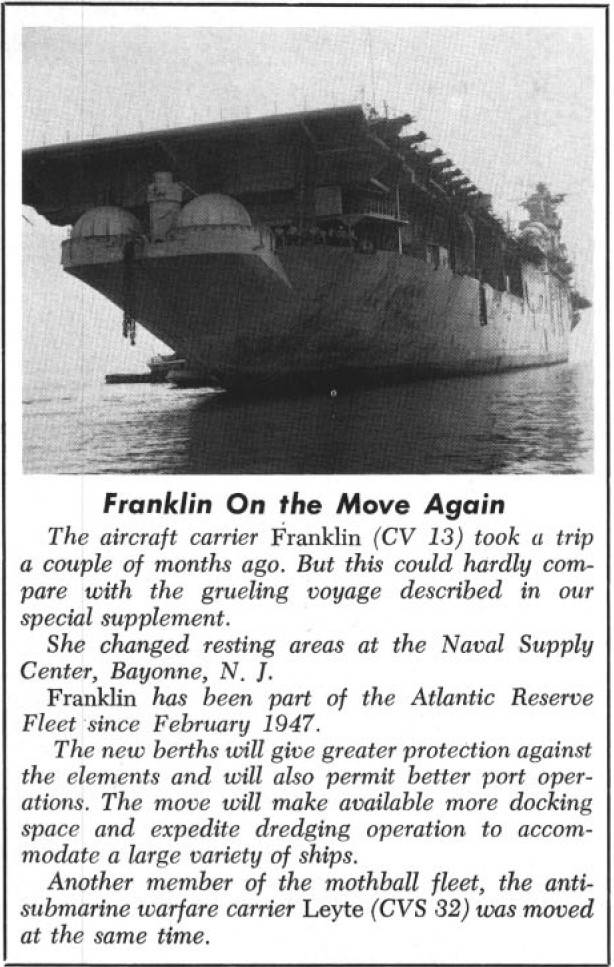
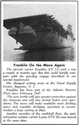
"Franklin On the Move Again—The aircraft carrier Franklin
(CV 13) took a trip a couple of months ago. But this could hardly compare with the grueling voyage
described in our special supplement."
"She changed resting areas at the Naval Supply Center, Bayonne, N.J."
"Franklin has been part of the Atlantic Reserve Fleet since February 1947."
"The new berths will give greater protection against the elements and will also permit better port
operations. The move will make available more docking space and expedite dredging operation to accommodate
a large variety of ships."
"Another member of the mothball fleet, the anti-submarine warfare carrier Leyte
(CVS 32) was moved at the same time."
All
Hands magazine, November 1964 issue, page 60. |
Ron Reeves |
NS021364 |
37k |
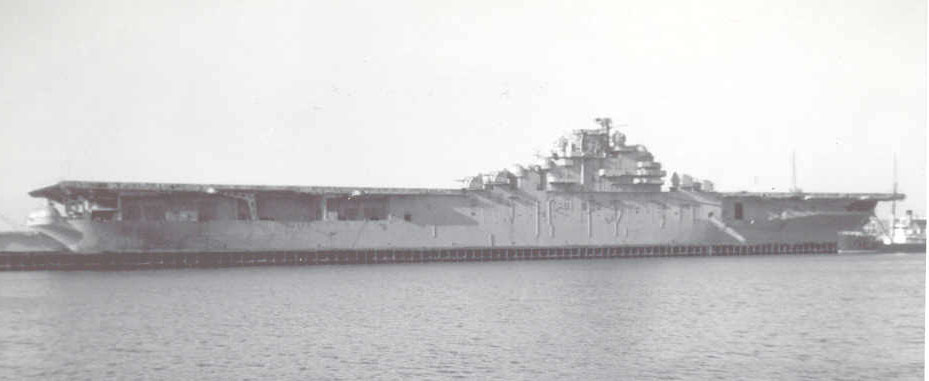
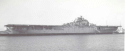
Norfolk, Virginia, 1965. Ex-Franklin was towed there from Bayonne,
New Jersey, to be stripped (MILSTRIP) before being sold for scrapping. |
Ron Reeves |
NS021360 |
85k |
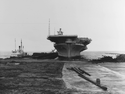
Ex-USS Franklin awaiting her fate, April 1967. |
Ron Reeves |
NS021354 |
73k |
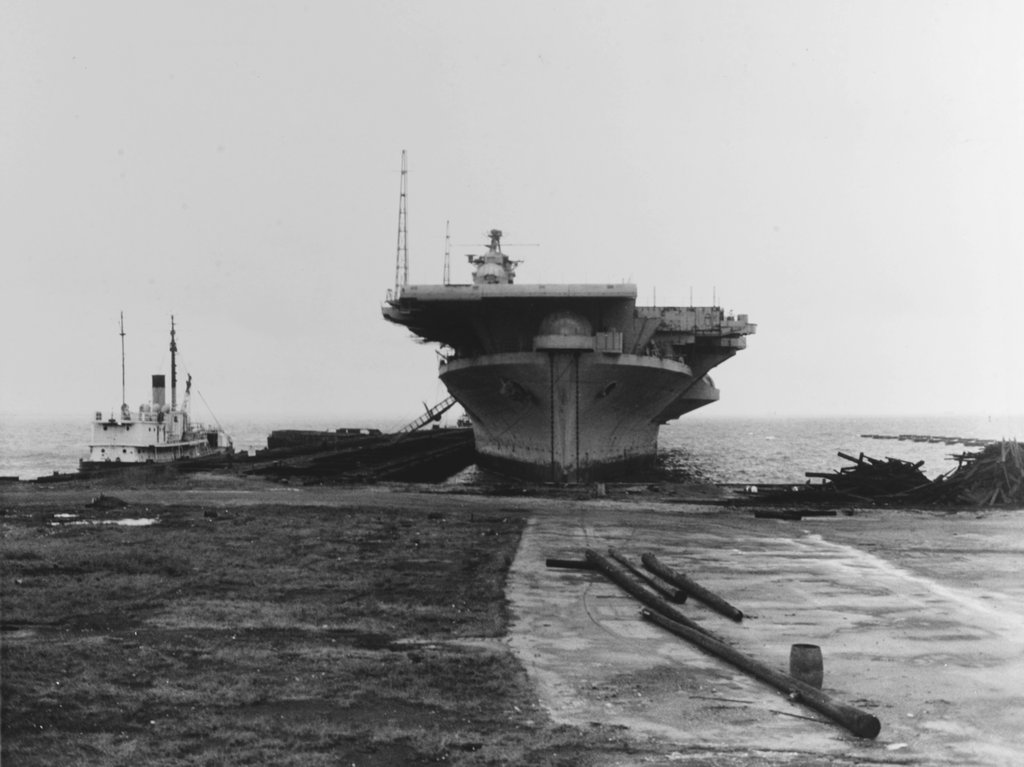
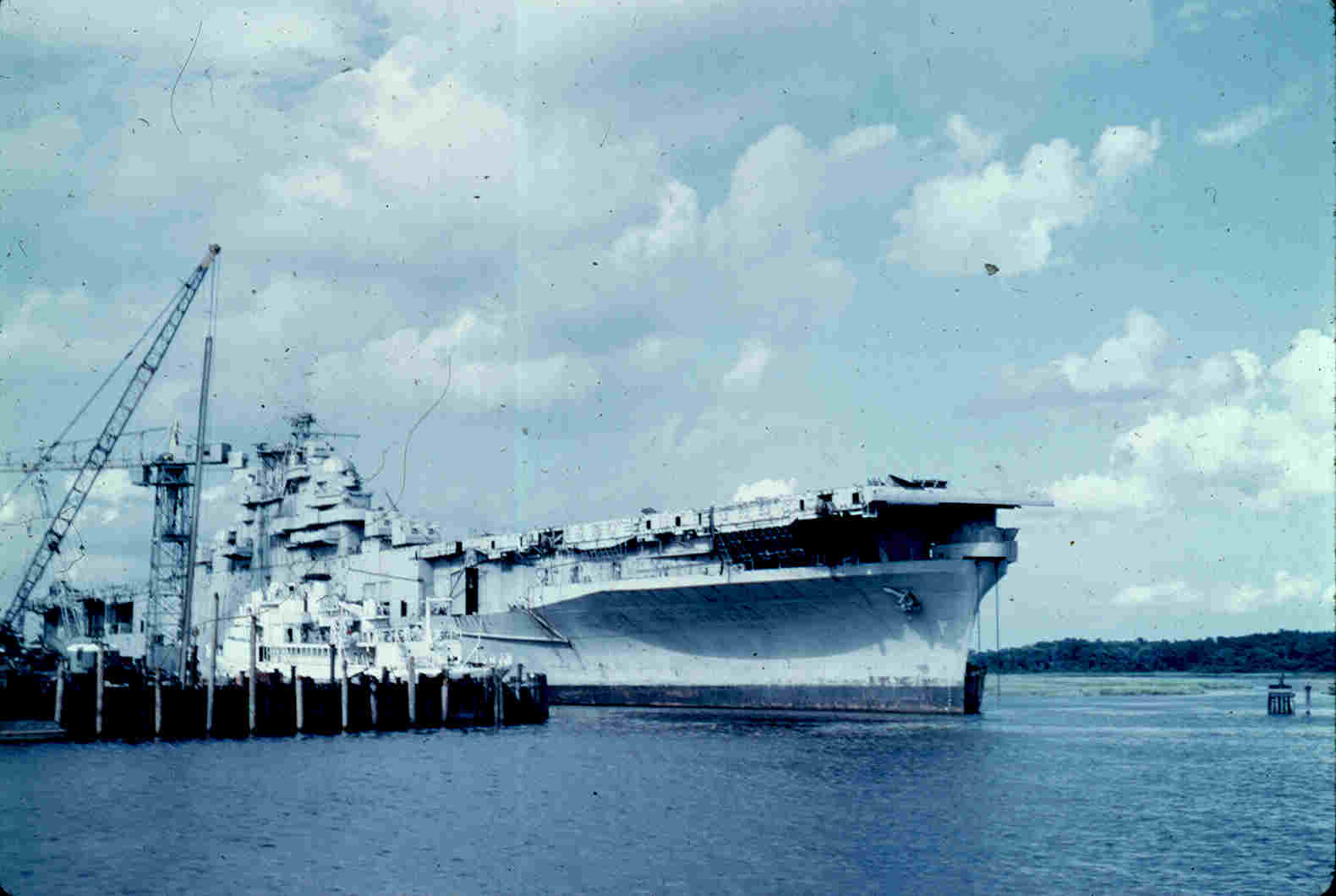
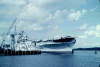
Ex-USS Franklin at Jacobson Salvage in Chesapeake, VA prior to
scrap, August 1967. |
Photo by William L Baxter |
NS021333 |
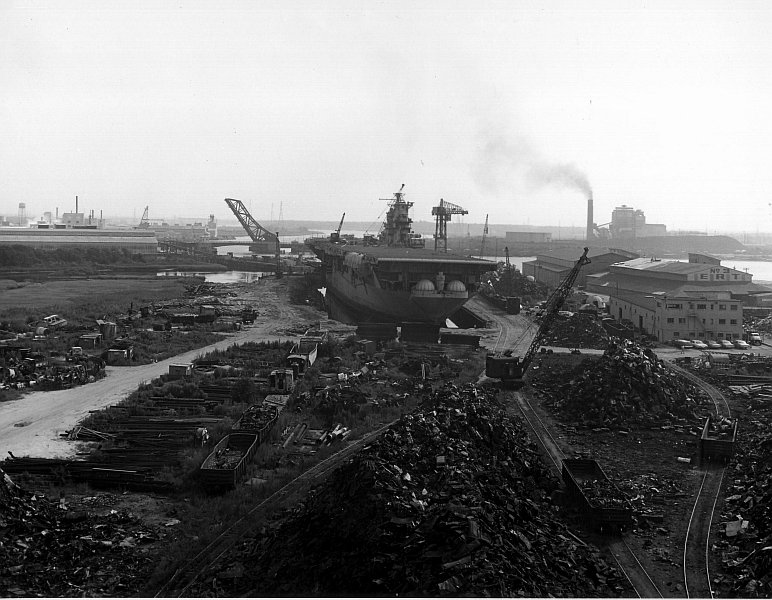
103k |
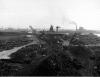
Ex-USS Franklin being scrapped.
|
Steve Whitby |
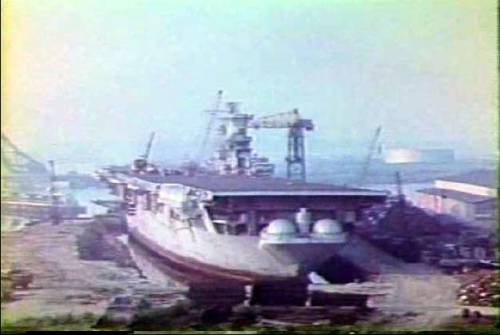
NS021333a |
20k |
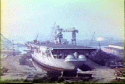
Color image, as above. Jacobson Salvage, 1966. |
Ron Reeves |
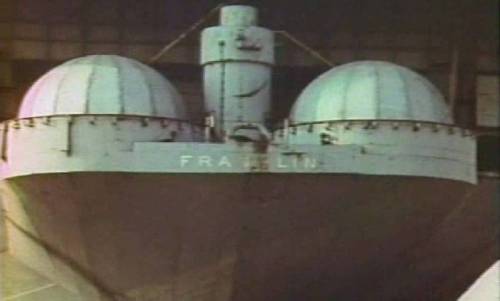
NS021333b |
13k |
As above, stern view, 1967. |
Ron Reeves |
For more photos and information on this ship, see:
|